Summary
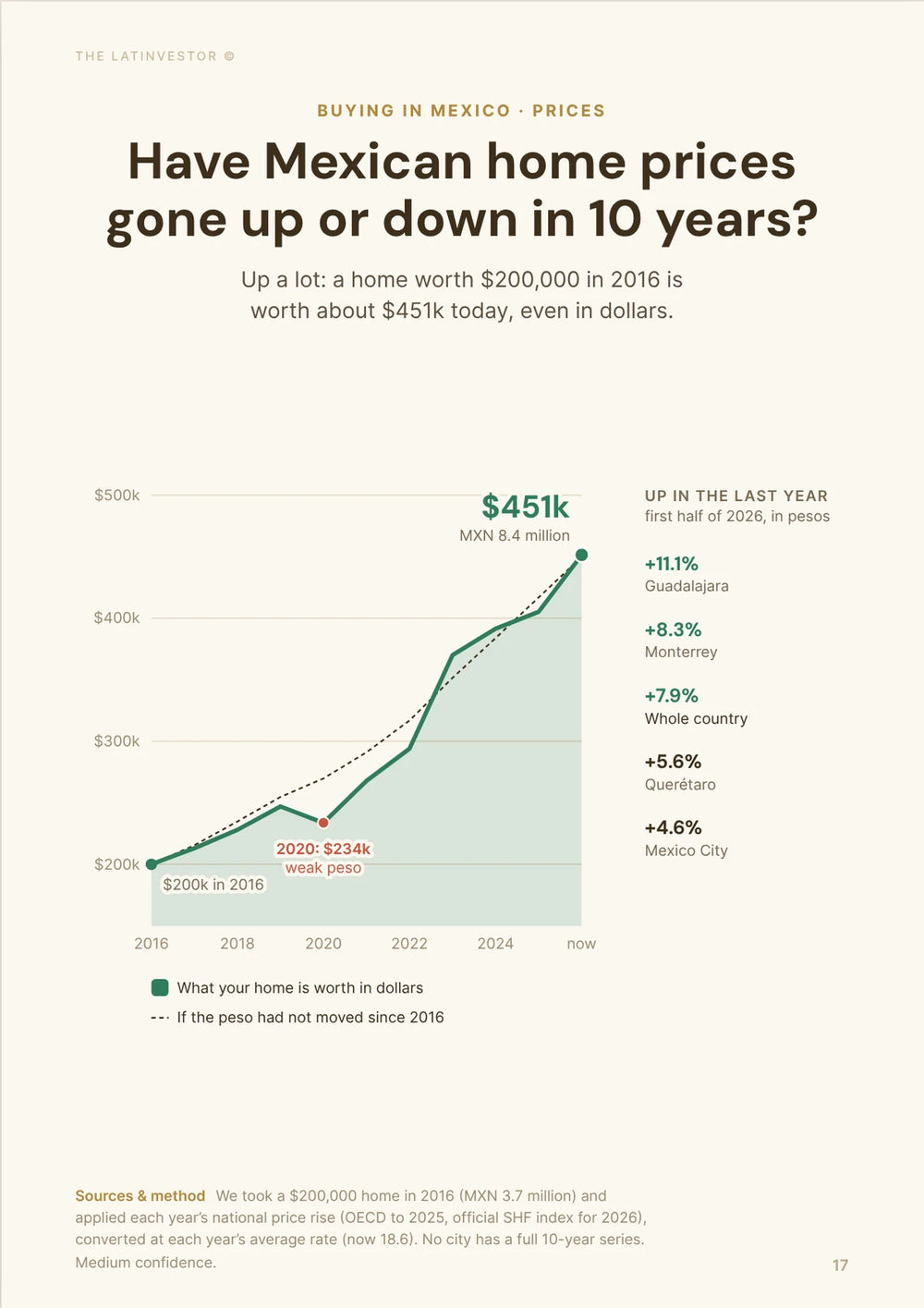
Yes, but more slowly: prices of homes bought with a mortgage in the Querétaro metro area rose 5.6% in a year in the first half of 2026, down from 6.7% in the first quarter and below the 7.9% national pace.
With inflation at 3.45% in September 2026, that's only about 2 points of real growth. Querétaro is cooling, not falling.
Homes take longer to sell than in 2022 to 2024. A correctly priced home usually sells in about 45 to 90 days, and most close about 6% to 10% below the asking price, by our estimate.
Sales are slowing faster than prices. Developers say homes priced at MXN 3 million to 3.8 million went from about 70 sales a month last year to fewer than 40 in 2026, while mortgage lending in Mexico is flat.
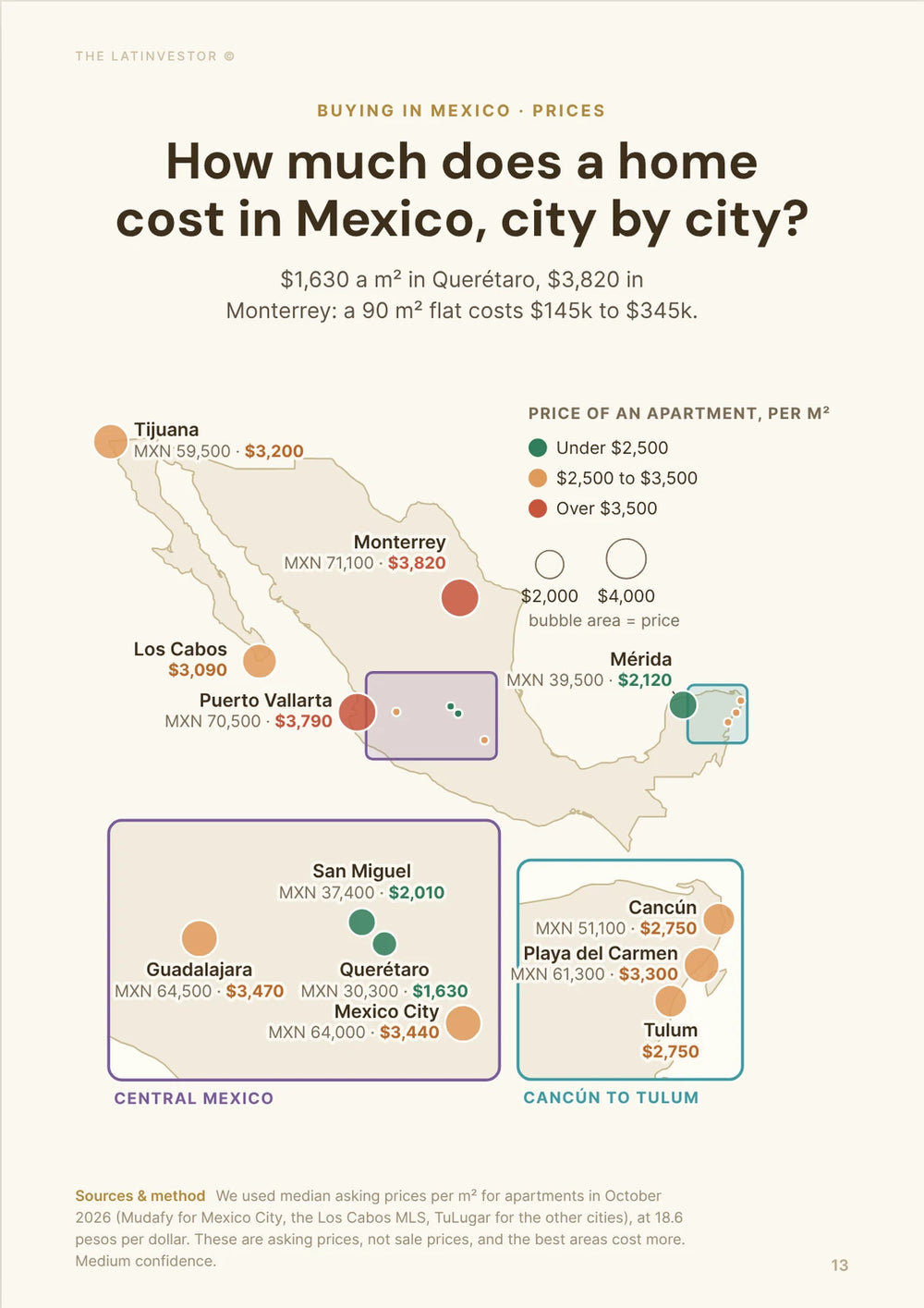
In October 2026, a median two-bedroom apartment asks about USD 174,000 (MXN 3.24 million) and a three-bedroom house about USD 235,000 (MXN 4.37 million). Apartments ask about MXN 29,500 per square meter.
The gains have moved east: apartment asking prices rose 12.0% in El Marqués and 6.6% in Zibatá between April 2025 and October 2026, but only 2.4% in El Refugio, and fell 1.9% in Juriquilla (Propiedades.com). Central areas like Hércules, La Cañada and Álamos are upgrading too.
Don't pay extra for the train yet: the Mexico City to Querétaro line was 30.38% built in September 2026, with opening targeted for the second half of 2027 at the earliest. The airport is the growth you can already see, with 11.7% more passengers in January to August 2026.
Water is the local risk to check: when Acueducto II stopped in September 2025, 336 neighborhoods went on rotating supply, and the state is rewriting its water law in 2026.
Locals find homes overpriced for local salaries: a 65 m² two-bedroom asked about MXN 1.97 million in April 2026, while the same apartment rented for about MXN 11,600 a month in June.
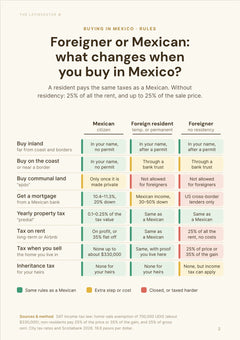
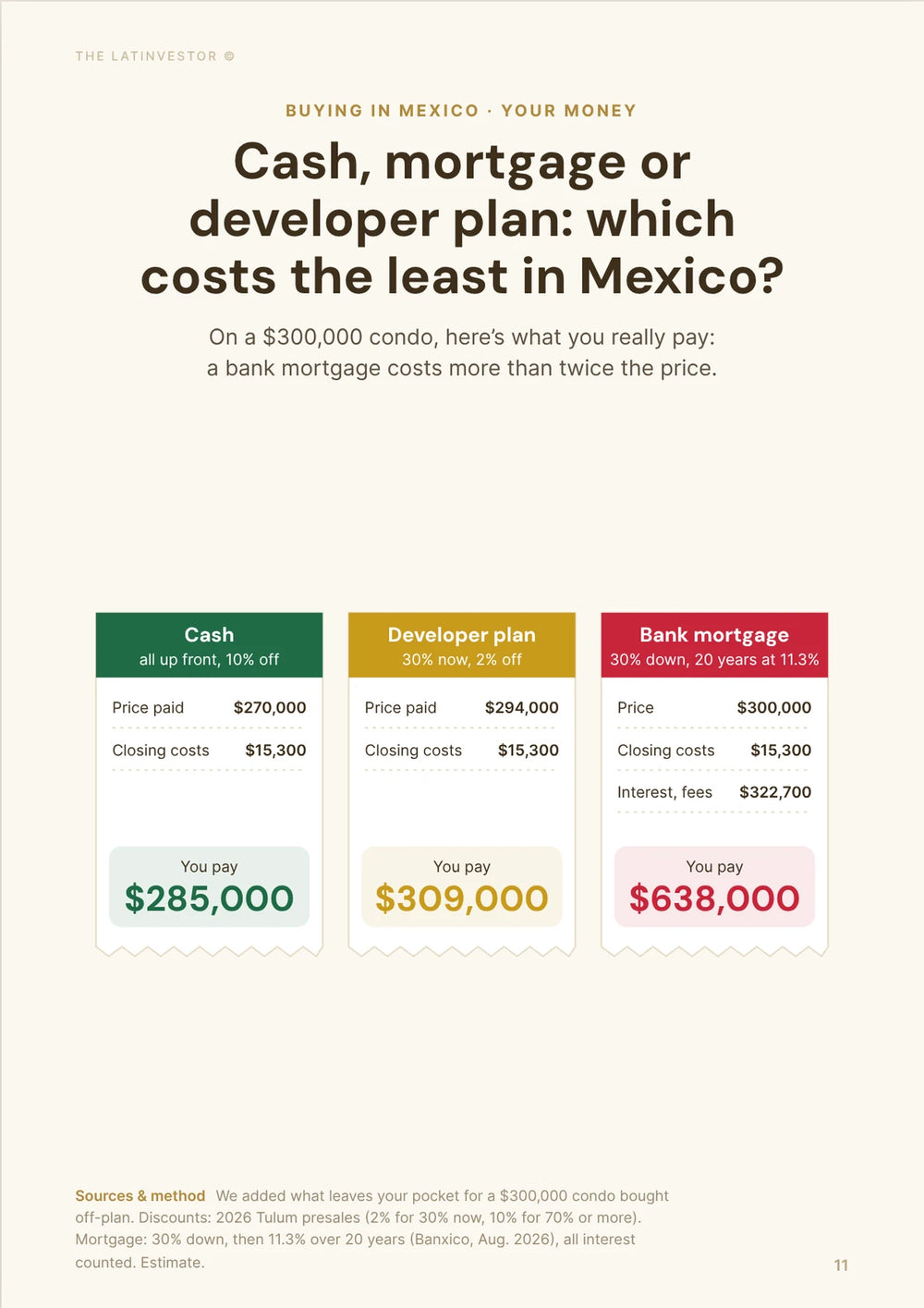
Foreigners can buy directly in their own name, with no bank trust (fideicomiso), and only sign the SRE foreigner agreement (MXN 5,250). Bank loans are hard to get: new mortgages cost about 10% to 11%, and cross-border lenders usually ask for at least 35% down.
Querétaro is less volatile than more speculative markets: the official index rose about 56% in the five years to the end of 2025, with no boom-and-bust swing.
Rents have stalled at about MXN 11,600 for a 2-bedroom, and Airbnb listings fell 34.9% in a year, to 2,583. Those still running were booked 57% of the time.
We expect prices to rise about 3% to 6% over the next 12 months, with weak spots in far-out suburbs and generic new-build projects.
The bottom line: Querétaro is still a solid market, but buyers now have the upper hand. Pay cash if you can, negotiate 8% to 10% off, and check the water before you sign.

How fast are prices rising in Querétaro right now?
Prices are still rising, but less each quarter. The official SHF index for the Querétaro metro area was up 5.6% in a year in the first half of 2026, down from 6.7% in the first quarter. Mexico as a whole rose 7.9% over the same half-year. With inflation at 3.45% in September 2026, the real gain is only about 2 points.
Homes bought with a mortgage in Querétaro state cost MXN 2.38 million (USD 128,000) on average in the second quarter of 2026, the third highest in Mexico. Demand is still backed by jobs, people moving in from Mexico City, the universities and the industrial parks.
So Querétaro is cooling, not collapsing. Buying here still makes sense, but only when the price, the area, the commute and the water supply all work together.
How long do homes take to sell in Querétaro in 2026?
A correctly priced home in Querétaro usually sells in about 45 to 90 days in 2026, by our estimate. Overpriced homes, older houses with costly finishes and luxury homes above MXN 12 million (USD 645,000) can sit for 6 to 12 months.
Well-priced apartments and townhouses in Juriquilla, Zibatá, El Refugio, Centro Sur, Milenio III and Corregidora move faster.
Sales are slower than in the tight 2022 to 2024 period, because mortgages are still expensive and buyers are more careful about overpaying.
Do homes sell below the asking price in Querétaro?
Yes. Most homes in Querétaro close about 6% to 10% below the asking price in 2026, with 8% as a practical middle figure. This is our estimate: no official source publishes closed prices against listing prices.
Selling above asking is rare. It happens for scarce, well-priced homes in Juriquilla, Milenio III, Centro Sur, Centro Histórico with parking, and family homes near good schools. The gap is bigger for anything that has been listed for months.
Why are sales slowing while prices keep rising in Querétaro?
Because sellers still price on past growth, while fewer buyers can borrow. In the first half of 2026, the amount lent for mortgages in Mexico fell 0.1% in real terms and the number of loans rose only 0.3%, according to BBVA Research. Over the same period, SHF prices in Querétaro rose 5.6%.
Developers feel it. In an August 2026 column in Publimetro, unofficial developer estimates put sales of homes priced at MXN 3 million to 3.8 million (USD 161,000 to 204,000) at fewer than 40 a month, against about 70 a month last year. Homes above MXN 5 million (USD 269,000) were down nearly 30%, while the very top of the market, above MXN 12 million, held up. The construction chamber (CMIC) expects the state's construction activity to shrink 20% to 30% this year.
What this means for you: if you pay cash, you're in a strong spot. Developers with unsold units in Zibatá, El Refugio or El Marqués have fewer buyers who can get a loan. Aim for 8% to 10% off, ask for parking, finishes or fees to be included, and don't believe a "price goes up next month" deadline.
What kinds of homes can you actually buy in Querétaro?
Apartments, townhouses, houses in gated communities, luxury homes and lots, with the most choice in mid-market gated communities and the newer growth areas.
As a rough guide, apartments run from about MXN 1.8 million to 4.5 million (USD 96,800 to 242,000), townhouses from about MXN 2.5 million to 5.5 million (USD 134,000 to 296,000), and family houses from about MXN 3.5 million to 8 million (USD 188,000 to 430,000). These are asking-price ranges from listings.
What type of home is most common in Querétaro?
The house or townhouse inside a gated community (fraccionamiento) is still the main product, especially in El Marqués, Corregidora, Juriquilla, Zibatá, Zakia, El Refugio and El Mirador. Apartments are growing in Centro Sur, Zibatá, El Refugio and the master-planned areas.
Families moving in want security, parking, private amenities and easy access to schools and business parks, which is why the gated house became the default.
- How much should you pay for a house in Querétaro?
- How much should you pay for an apartment in Querétaro?
Are there many new builds in Querétaro right now?
Yes. We estimate that new or recently delivered homes make up about 30% to 45% of visible listings in the most active growth areas: Zibatá, Zakia, El Refugio, El Mirador, Juriquilla, Centro Sur, Corregidora and the El Marqués belt.
That's also the risk. When several similar projects deliver at the same time, resale gets crowded. New homes usually cost about 12% to 18% more than similar existing ones, so compare the price per square meter with resale homes nearby before paying that premium.
Which neighborhoods are improving fastest in Querétaro in 2026?
Two kinds: central neighborhoods getting renovated, and suburbs along the new job and transport corridors. They don't carry the same risks.
A fashionable area isn't automatically a good buy if the commute, water service, HOA fees or future supply are weak.
Which areas in Querétaro are gentrifying in 2026?
The clearest upgrading areas are Hércules, La Cañada, the edges of Centro Histórico, Álamos, Carretas, Milenio III and parts of Centro Sur.
The signs are renovated old homes, new cafés and restaurants, gyms, coworking spaces and more buyers arriving from Mexico City.
Measured asking prices show where the money is going. Between April 2025 and October 2026, apartment asking prices rose 12.0% in El Marqués and 6.6% in Zibatá, against 5.0% for Querétaro as a whole, while El Refugio gained only 2.4% and Juriquilla fell 1.9% (Propiedades.com). In the renovated central pockets, we estimate the best-located homes gained about 12% to 25% over two to three years, depending on condition, parking and walkability, but no series measures them. In El Campanario, the top of the market, apartments ask about MXN 40,400 per square meter, against about MXN 29,500 citywide.
Is the new train or the airport pushing prices up in Querétaro?
The airport, yes; the train, not yet. The Mexico City to Querétaro passenger train was 30.38% built in September 2026, and the target is the second half of 2027 at the earliest. Querétaro gets two stations, one in El Marqués and one near the old downtown station.
The airport (AIQ) is the growth you can already see: it handled 1,575,580 passengers from January to August 2026, 11.7% more than a year earlier, and the state plans to announce an expansion at the end of 2026. That supports demand along the El Marqués corridor and around Paseo 5 de Febrero.
Announcements can lift nearby asking prices by about 5% to 10%, by our estimate, but the real effect comes once people actually save time on the commute. If a seller near a future station adds a "train premium", push back.
Should you worry about water when you buy in Querétaro?
Yes, it's the main local risk to check. Querétaro is one of the most water-stressed states in Mexico, with 8 of its 11 aquifers overexploited, and a large part of the metro area depends on Acueducto II.
When Acueducto II stopped in September 2025, 336 neighborhoods went on rotating supply: 264 in Querétaro municipality, 54 in Corregidora and 17 in El Marqués. In 2026, the state Congress started rewriting the water law, and lawmakers said it must also cover how new housing gets water. Power is the other weak point: the state counted more than 1,500 power cuts in the first half of 2026.
What to do: ask neighbors and the building manager how often water was cut last year, check the size of the cistern and rooftop tank, and for a new development ask for the final water feasibility from the state water commission (CEA), not just a provisional contract. A home with good storage in an area with a steady supply is worth more than a nicer kitchen.
What do locals say about the Querétaro market right now?
That it's active, expensive and more split than before. Good homes in good areas still sell, while generic investor units and far-out homes need lower prices.
Are homes overpriced in Querétaro in 2026?
For local salaries, many locals think so, even if prices still look fair to buyers from Mexico City, Monterrey, the United States or Europe.
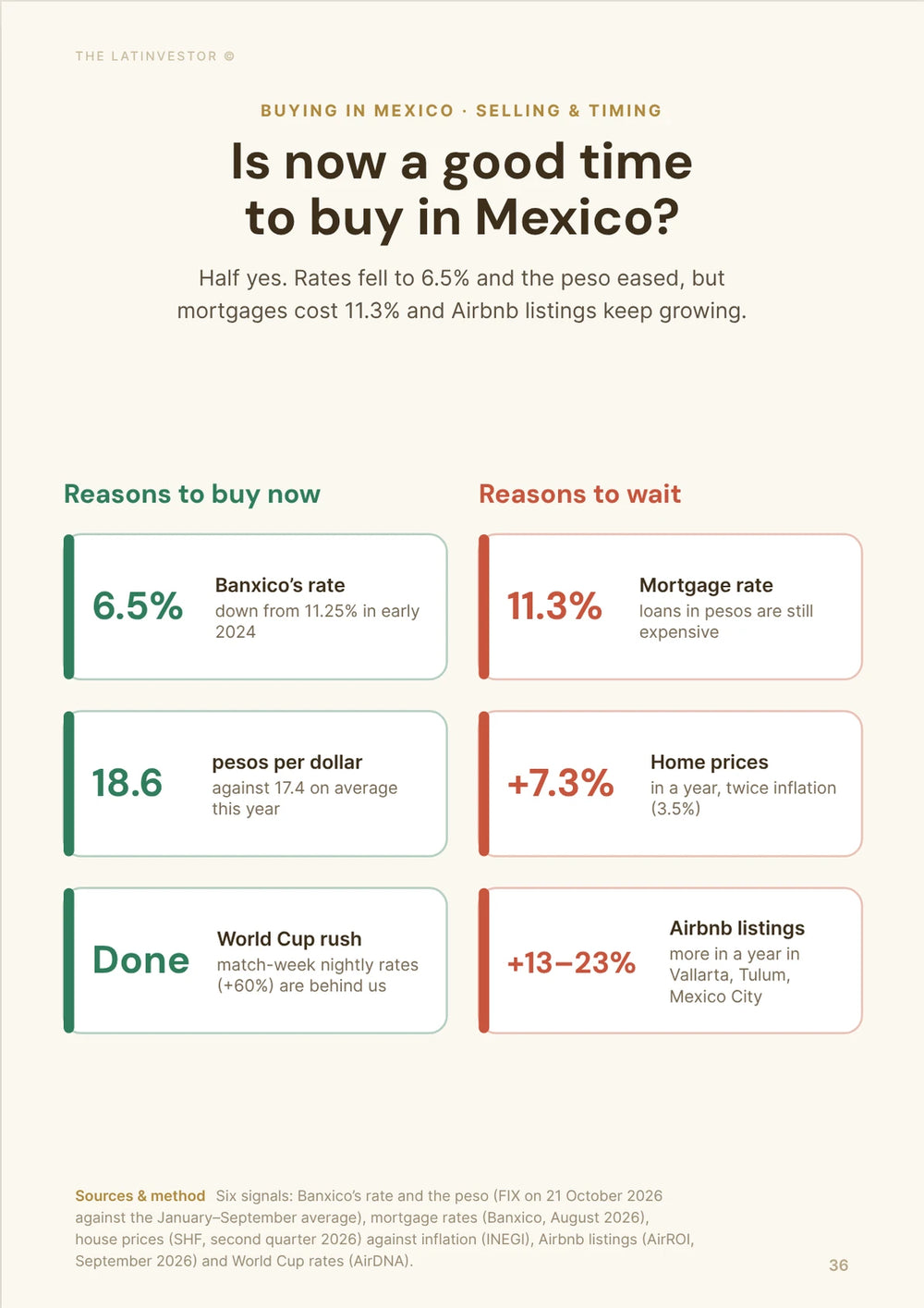
The numbers they point to: apartments ask about MXN 29,500 per square meter in October 2026, and a 65 m² two-bedroom asked about MXN 1.97 million (USD 106,000) in April, while the same apartment rented for about MXN 11,600 a month in June. For dollar buyers, Querétaro got about 9% dearer over the year, though the peso's slide since early September (from under 17 to about 18.6 per dollar) has given some of that back.
The other side: prices are backed by jobs, industry, universities, a city that feels safer than most, and the fact that Querétaro is still cheaper than the expensive parts of Mexico City.
What mistakes do buyers regret in Querétaro?
The most common one is buying far out because the house looks cheaper, then finding out that daily traffic on Fray Junípero Serra, Paseo 5 de Febrero or Bernardo Quintana changes your life.
The second is overpaying for a generic new-build unit in an area where many similar projects are coming, because resale competition gets heavy when several deliver at once. The third, since 2025, is not checking the water supply before buying.
How easy is it for foreigners to buy in Querétaro in 2026?
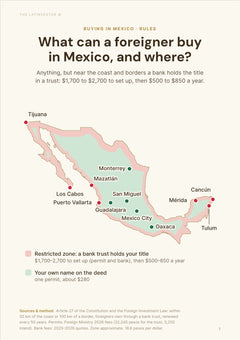
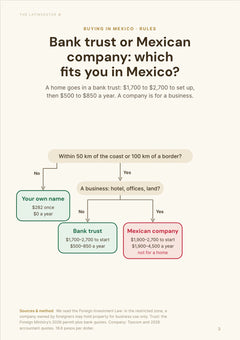
Easier than on the coast or near the border. Querétaro is inland, outside the restricted zone, so foreigners don't need a bank trust (fideicomiso).
Do foreigners face extra hurdles in Querétaro?
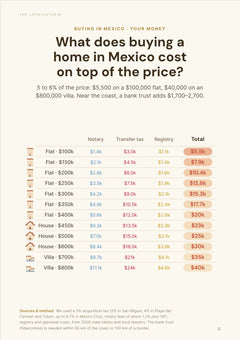
Only a few. You hold the title in your own name and sign the foreigner agreement with the foreign ministry (SRE), which costs MXN 5,250 (about USD 282) in 2026. The notary usually handles it, along with identity, source-of-funds and tax checks.
The real hurdles are practical: reading developer contracts, checking water and services in fast-growing areas, negotiating in Spanish, and testing rental promises against real listings.
Do banks lend to foreigners in Querétaro in 2026?
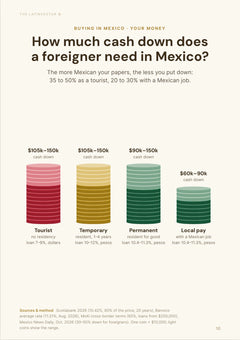
Some do, but mostly to foreigners with Mexican residency, a tax number (RFC), a local banking history and income they can prove. Cross-border lenders usually ask for 35% to 50% down.
Loans are still expensive. Mortgages actually granted averaged 9.99% in June 2026 (ABM), and the average fixed-rate quote was about 11.3% in August 2026, even though the central bank rate is down to 6.5%.
Expect to provide your passport or residency card, RFC, proof of income, bank statements, credit history, source-of-funds documents and sometimes apostilled translations.
How risky is Querétaro compared with nearby markets?
Medium risk. The economy is strong and diverse, but Querétaro is no longer cheap.
The main risk isn't a citywide crash. It's overpaying for the wrong street or the wrong kind of home.
Is Querétaro more volatile than nearby cities?
No, it's less volatile than more speculative markets, but already pricier than most of Guanajuato, San Luis Potosí, Puebla and Aguascalientes.
The official SHF index for Querétaro rose about 56% between the end of 2020 and the end of 2025, about the same pace as Mexico overall, without sharp swings. The 2026 data shows a slowdown, not panic.
Has Querétaro held up well in past downturns?
Fairly well. The state has industrial jobs, logistics, aerospace, data centers, universities and steady arrivals from other states. In the last big shock, the market slowed more than it crashed, and well-located homes recovered faster than far-out or high-end ones.
The homes that usually hold value best are mid-market family houses and two-bedroom apartments in Juriquilla, Centro Sur, Milenio III, El Refugio, Zibatá, Corregidora and the better parts of Centro Histórico or Hércules.
Is rental demand still strong in Querétaro in 2026?
Tenants are still there, but rents have stopped rising in real terms. The best demand comes from people who need to be close to jobs, schools, universities and hospitals.
Are long-term rents still going up in Querétaro?
Barely. A 65 m² two-bedroom asked MXN 11,601 a month in June 2026 (about USD 624), only 3.5% more than two years earlier and flat since April. With inflation at 3.45%, rents are slipping in real terms.
On the April 2026 benchmark, that apartment gives a gross yield of about 7.1% on its asking price, before costs and vacancy.
Tenants are young professionals, engineers, managers, families moving for work, students, medical staff and some foreigners testing the city before buying. The strongest demand is in Juriquilla, Zibatá, El Refugio, Centro Sur, Milenio III, Corregidora, Álamos, Centro Histórico and near the El Marqués industrial parks.
Is Airbnb still worth it in Querétaro?
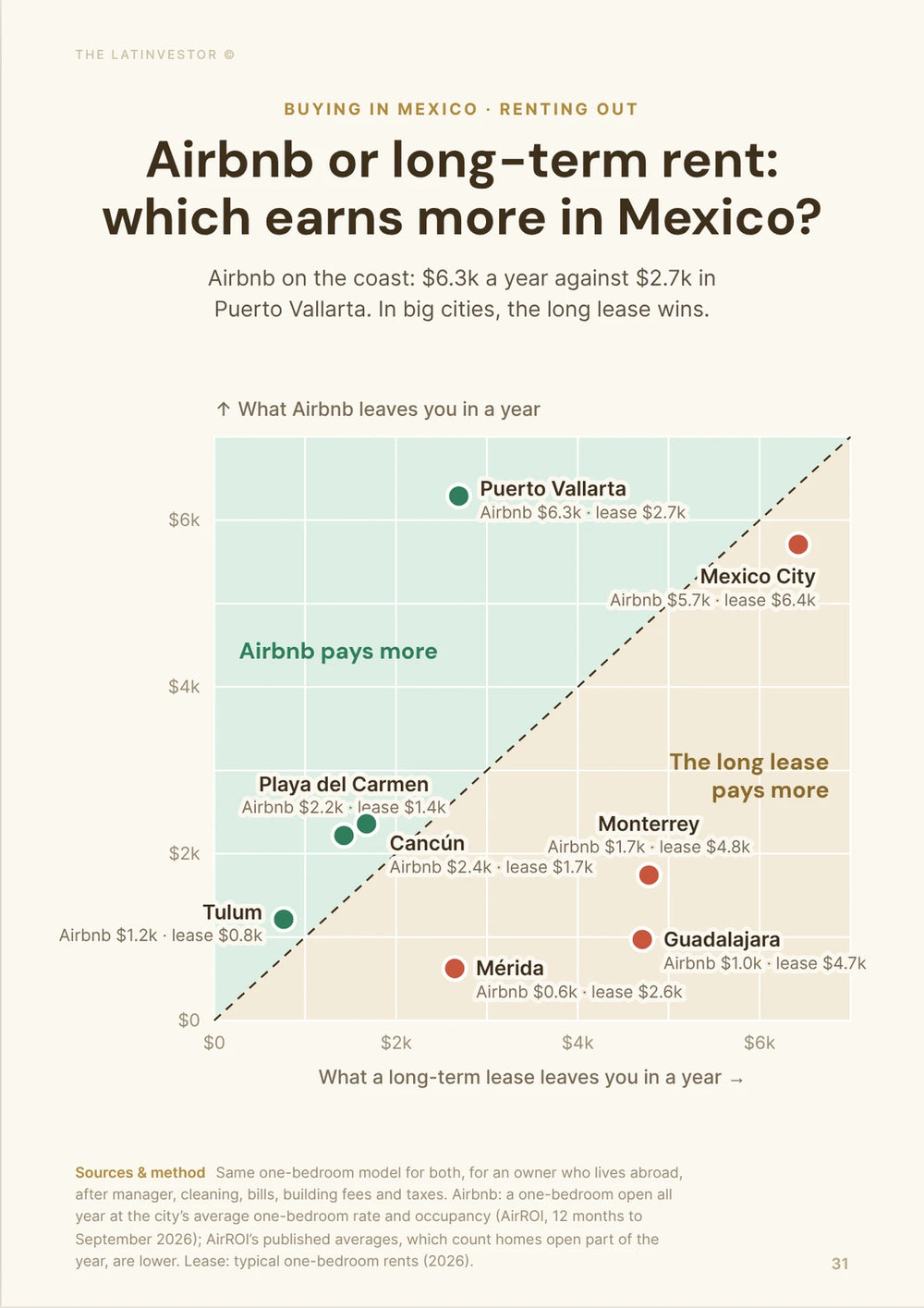
Less than before. Active short-term listings fell 34.9% in a year, to 2,583 in September 2026. Those still running were booked 57% of the time, at about USD 44 a night, and made about USD 8,700 (MXN 162,000) in a year before costs.
That's not far from a long lease on a two-bedroom at MXN 11,600 a month (about MXN 139,000 a year), which comes with much less work. Guests here are mostly business travelers, domestic tourists, wedding guests and visiting families, not beach holidaymakers.
There's no citywide ban. The limits come from condo rules, the 5% lodging tax collected on platform stays, and income tax. Check the condo rules before you buy for Airbnb.
What's the outlook for Querétaro over the next few years?
Positive, but not explosive. Focus on a safe, rentable, well-located home rather than a quick price jump.
What will happen to Querétaro prices in the next 12 months?
We expect prices to rise about 3% to 6% over the next 12 months, roughly in line with or a bit above inflation. This is our estimate, not an official forecast: the SHF pace has already slowed from 6.7% to 5.6%, and developer sales are down.
What will move it: mortgage rates, industrial hiring, the train's progress, airport growth and people moving in from bigger cities. Areas that combine jobs, schools, security and rental depth should do better.
What's the 3 to 5 year outlook for housing in Querétaro?
Still positive. If jobs and migration hold, good locations could gain about 15% to 30% in nominal terms over five years, by our estimate.
The projects that will shape it are the train, the airport expansion, industrial growth in El Marqués, the build-out of Zibatá and Zakia, and more apartments in Juriquilla and Centro Sur.
The biggest uncertainty is whether water, roads and services can keep up with the population and the new homes.
Are population and jobs still pushing prices up in Querétaro?
Yes. The state keeps attracting families, workers, students and people leaving bigger cities. The state government counts 233 investment projects worth MXN 139 billion and 63,000 new jobs over its first five years, and Querétaro holds a large share of Mexico's data centers.
Remote workers, people leaving Mexico City and investors looking for rentable apartments add to it. The effect is strongest where homes have real access to jobs, schools and daily transport.
What could cause a downturn in Querétaro?
A mix of expensive mortgages, slower industrial hiring, fewer people moving in and too many similar new builds in investor-heavy areas. Some of that is already visible in 2026: flat mortgage lending and falling developer sales.
Warning signs to watch: longer selling times, bigger developer discounts, more empty rentals in Zibatá, Zakia, Juriquilla and El Marqués, and repeated price cuts on large suburban houses.
A realistic downturn would mean flat prices, or a 5% to 10% drop after inflation in the weaker areas, rather than a citywide crash.
Our methodology
This article estimates where the Querétaro property market stands in 2026: price growth, selling times and discounts, the homes on offer, the areas moving fastest, rents and Airbnb, the rules for foreigners, and the outlook.
Price trends come first from official data: the SHF housing price index (homes bought with a mortgage) for the Querétaro metro and state, INEGI for inflation and Banxico for mortgage rates. We add market data: TuLugar and NOCNOK asking prices (October 2026), the Inmuebles24 index reported by El Economista and Real Estate Market, BBVA Research for mortgage lending, and AirDNA for short-term rentals. Selling times, discounts, new-build shares, neighborhood gains and forecasts are our own estimates, because no official source publishes them.
The rules for foreigners come from the Constitution's Article 27 and the SRE foreigner agreement. News on the train, the airport, water, power cuts, investment and developer sales comes from Proyectos México and local press dated 2025 and 2026 (ADN40, Publimetro, Uno TV).
We checked these figures in October 2026. Conversions use about 18.6 pesos per US dollar and 20.9 pesos per euro.
Limits: listing prices are asking prices, not sale prices. The SHF index only covers mortgage-financed homes. The developer sales figures are unofficial estimates quoted in a newspaper column. Airbnb figures are city-wide averages.
Key sources used for this analysis include SHF, IIEG, El Economista, El Contribuyente (INEGI inflation), Global Property Guide, TuLugar, NOCNOK, Real Estate Market, BBVA Research, Banxico, AirDNA, Proyectos México, ADN40 on the train, ADN40 on the airport, Publimetro on housing sales, Publimetro on investment, Uno TV on water cuts, ADN40 on the water law, Publimetro on power cuts, Data México, INEGI and SRE.