Summary
Yes, Querétaro is one of the safer places in Mexico to buy property: in June 2026, 36.1% of residents said their city felt unsafe, against 59.8% across urban Mexico. The risk is in the deal, not the city.
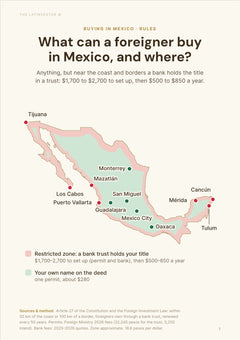
Foreigners can hold direct title here, with no bank trust (fideicomiso), because Querétaro is far from the 50 km coastal and 100 km border zones. You only sign the SRE "convenio de renuncia".
People feel safer here than in most Mexican cities, but phone extortion is rising: the state logged 428 extortion reports from January to September 2026, against 308 in all of 2025, and 401 of them were by phone or online.
Scams are not rare. In August 2026, prosecutors raided a house in Corregidora that held fake deeds and notary seals from Querétaro, Jalisco, Guanajuato and Hidalgo, used to make property sales look legal.
The biggest warning sign is a request for a deposit before the ownership has been checked at the state property registry by your own notary.
Check that the project itself is legal. Of the 555 developments rated by the city's Semáforo Inmobiliario, only 26% had a clean record and 3% were in red; the state also counts 1,168 irregular settlements, 435 still waiting for regularization.
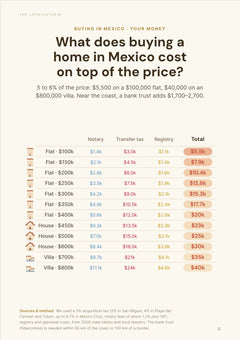
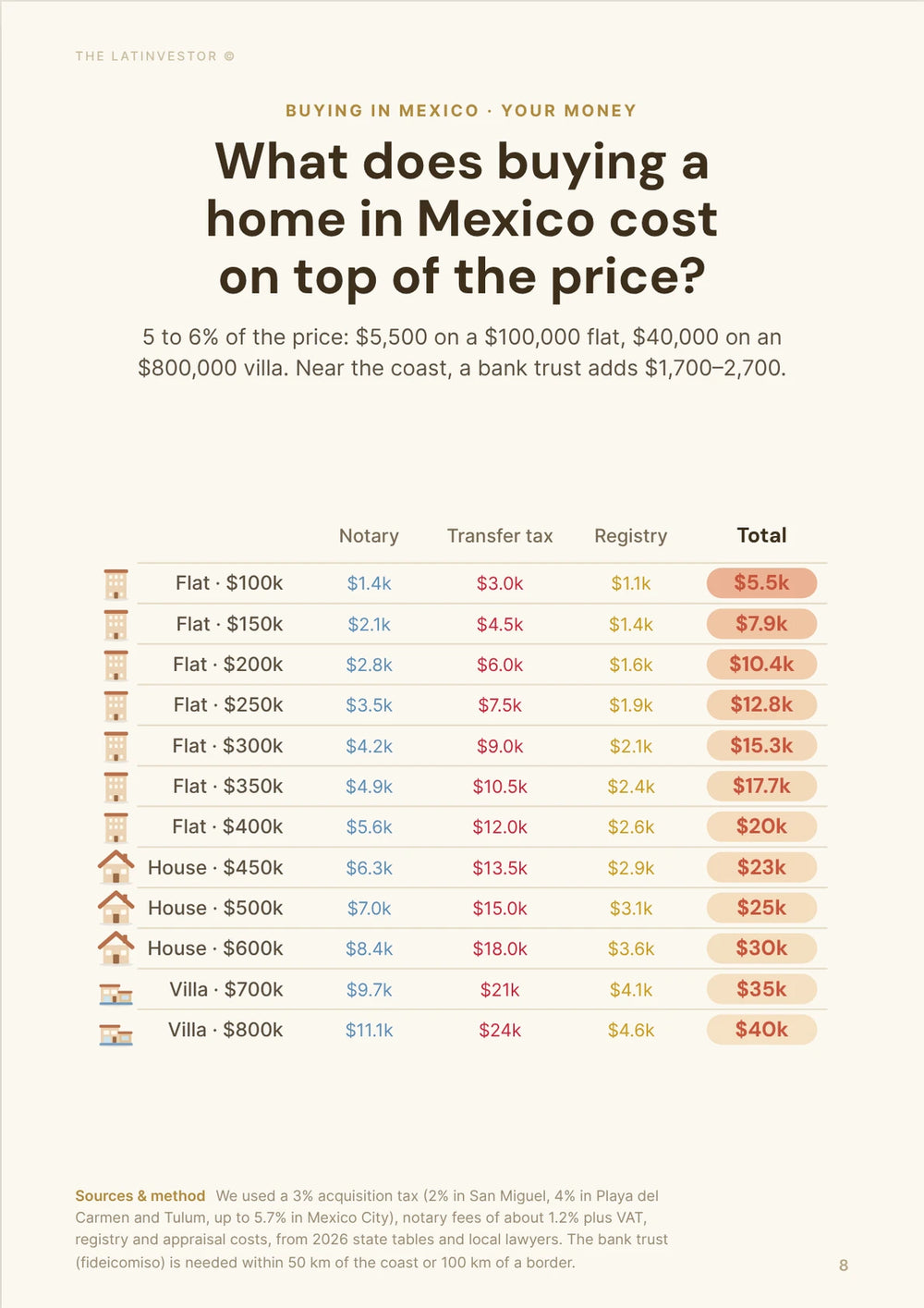
Closing costs run about 7% to 9% for a cash buyer, mostly because of the transfer tax (about 5.6% on a MXN 2.5 million home). The old idea that you pay 2% to 3% is wrong.
Agents in Querétaro are covered by a specific state law, which is rare in Mexico. Ask for the agent's registration and check complaints on Profeco's Buró Comercial before you sign anything.
Water and power are the local risks people underestimate: 336 neighborhoods went on rotating water supply in September 2025, and the state counted more than 1,500 power cuts in the first half of 2026.
The most common regret foreign buyers share is paying too early. Choose your own notary first, and never pay before the registry check.
Bottom line: buy finished, registered property or a development with a clean Semáforo rating, pay through the notary's process, and check the water before you sign.

Where does the real risk sit for a foreign buyer in Querétaro?
Can foreigners legally own property in Querétaro?
Yes. Foreigners can own residential property in Querétaro outright, in their own name, because it sits well outside the restricted zone (50 km from the coast, 100 km from a border).
The one condition: you sign a "convenio de renuncia" with the Ministry of Foreign Affairs (SRE), the Calvo clause. You agree to be treated as a Mexican for anything about the property and not to ask your own government for diplomatic protection.
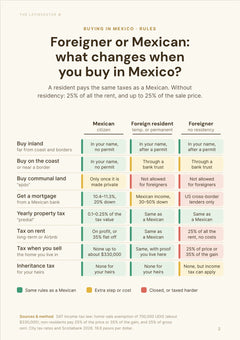
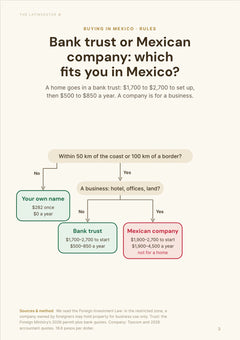
You don't need a bank trust (fideicomiso), so buying here is simpler and cheaper than buying a beach condo in Cancún or Puerto Vallarta.
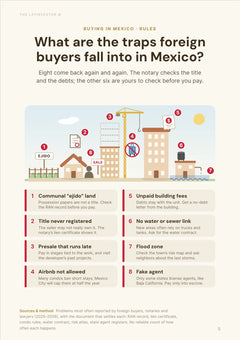
The exception is ejido land (communal farm land). It can't be bought like normal private property, and it has to go through a full conversion to private title before any normal sale. On the edges of the city, where new subdivisions grow on former farmland, this is the first thing to check.
What rights do foreigners actually have once they own?
Once the deed is signed before a notary and registered, you have the same rights as a Mexican owner: you can use, rent, sell, pass on and renovate the property, with only the usual municipal permits.
If a seller breaks a contract, you can sue in the Mexican courts for cancellation and damages. Expect it to be slow and expensive, and you'll need a local lawyer.
The right foreigners wrongly assume they have: enforcing a verbal or private deal. A property transfer only counts once it goes through a notary (notario público) and the state registry. A "private contract" on its own gives you almost no protection.
Can you count on the courts if something goes wrong?
Not really, and that's true almost everywhere in Mexico. Querétaro does better than most states on institutional quality, but Mexico ranks 121st out of 143 countries on rule of law.
The real problem is time: civil cases can take years. Your protection comes from checks done before you pay, not from a judge afterward.
Is Querétaro itself safe to live in right now?
Yes, by Mexican standards. In INEGI's June 2026 urban security survey, 36.1% of adults in Querétaro said living in their city felt unsafe, against 59.8% across the 91 cities surveyed. That put Querétaro 13th among the cities where people feel safest, just ahead of Mérida (38.2%).
The number going the wrong way is extortion. The state recorded 428 extortion reports from January to September 2026, already 39% more than the 308 of all 2025, and 401 of them were by phone or online. Querétaro ranks sixth in the country for this crime.
What this means for a buyer: the neighborhood matters less than how you handle money and contacts. Don't share your purchase details, deposit dates or bank details with anyone outside your notary and lawyer, and treat any call "from the notary" or "from the developer" asking for an urgent transfer as fake until you've called back on a number you found yourself.
Which scams target foreign buyers in Querétaro right now?
Are scams against foreigners common in Querétaro?
Less common than in Tulum or Playa del Carmen, but they happen, and they've become more professional. In August 2026, Querétaro's prosecutors raided a house in Corregidora used to produce fake documents: blank formats of public deeds and notary seals from Querétaro, Jalisco, Guanajuato and Hidalgo. Three people were arrested; some had posed as lawyers to make property sales look legal.
The deals scammers like most are "too good to be true" listings: new units or resales below market, with pressure to pay a deposit before anyone checks the paperwork.
The typical target doesn't speak much Spanish, buys remotely or in a rush, and relies on one intermediary (agent, friend, "facilitator") without checking anything independently.
The biggest warning sign: any request for money before your own notary has checked ownership at the state registry. A real seller expects that check and won't push you to skip it.
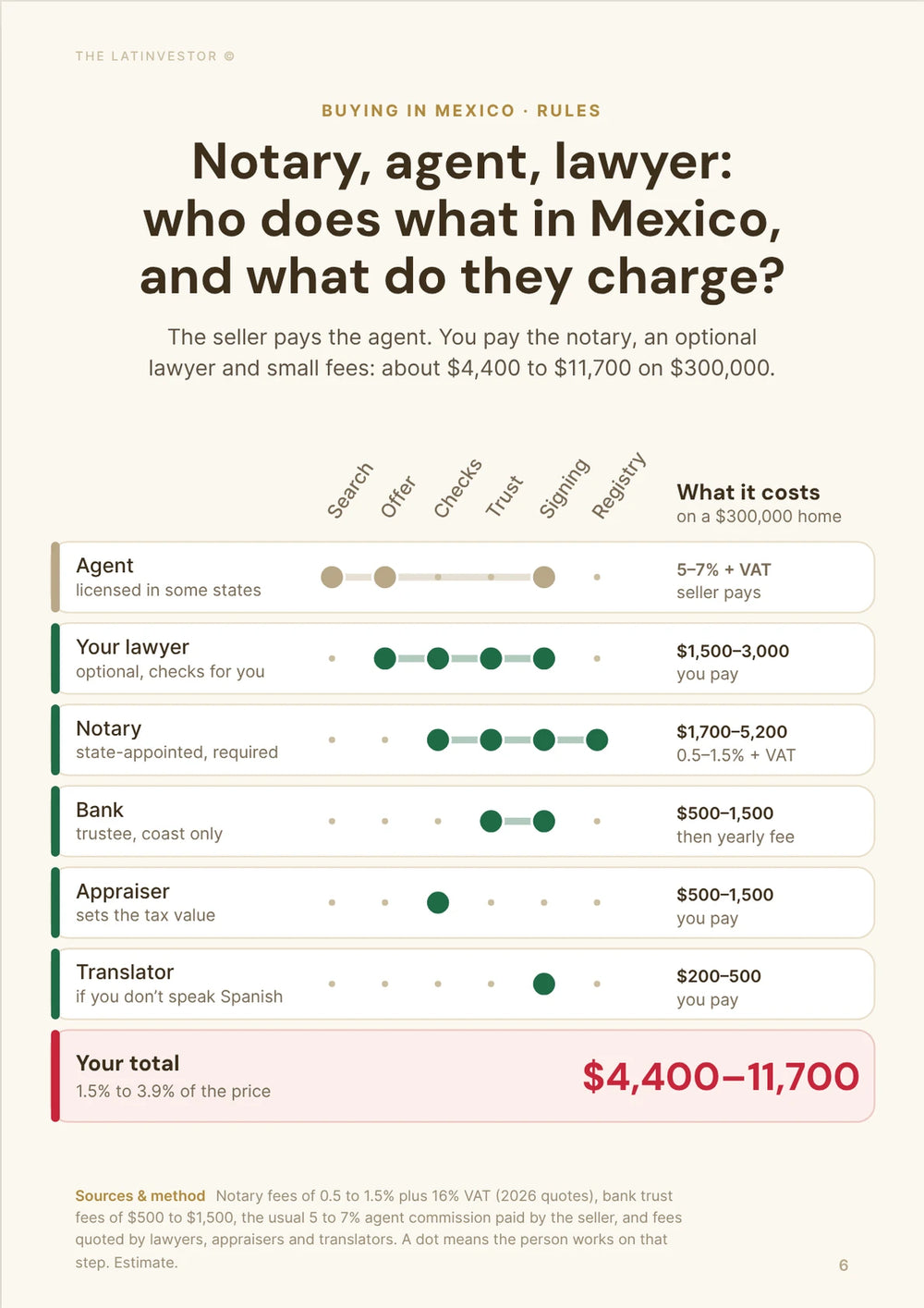
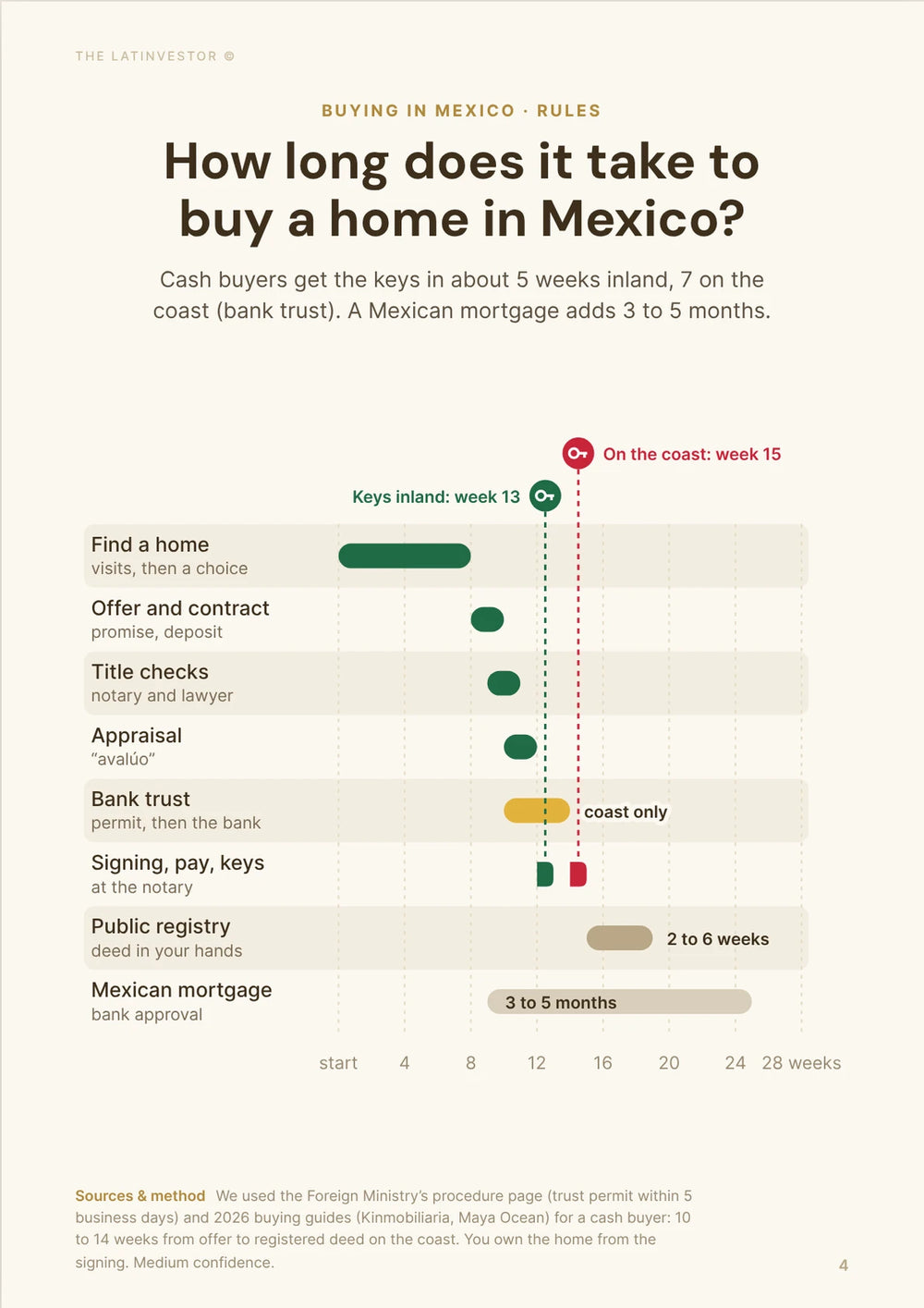
What are the top three scams foreigners face in Querétaro?
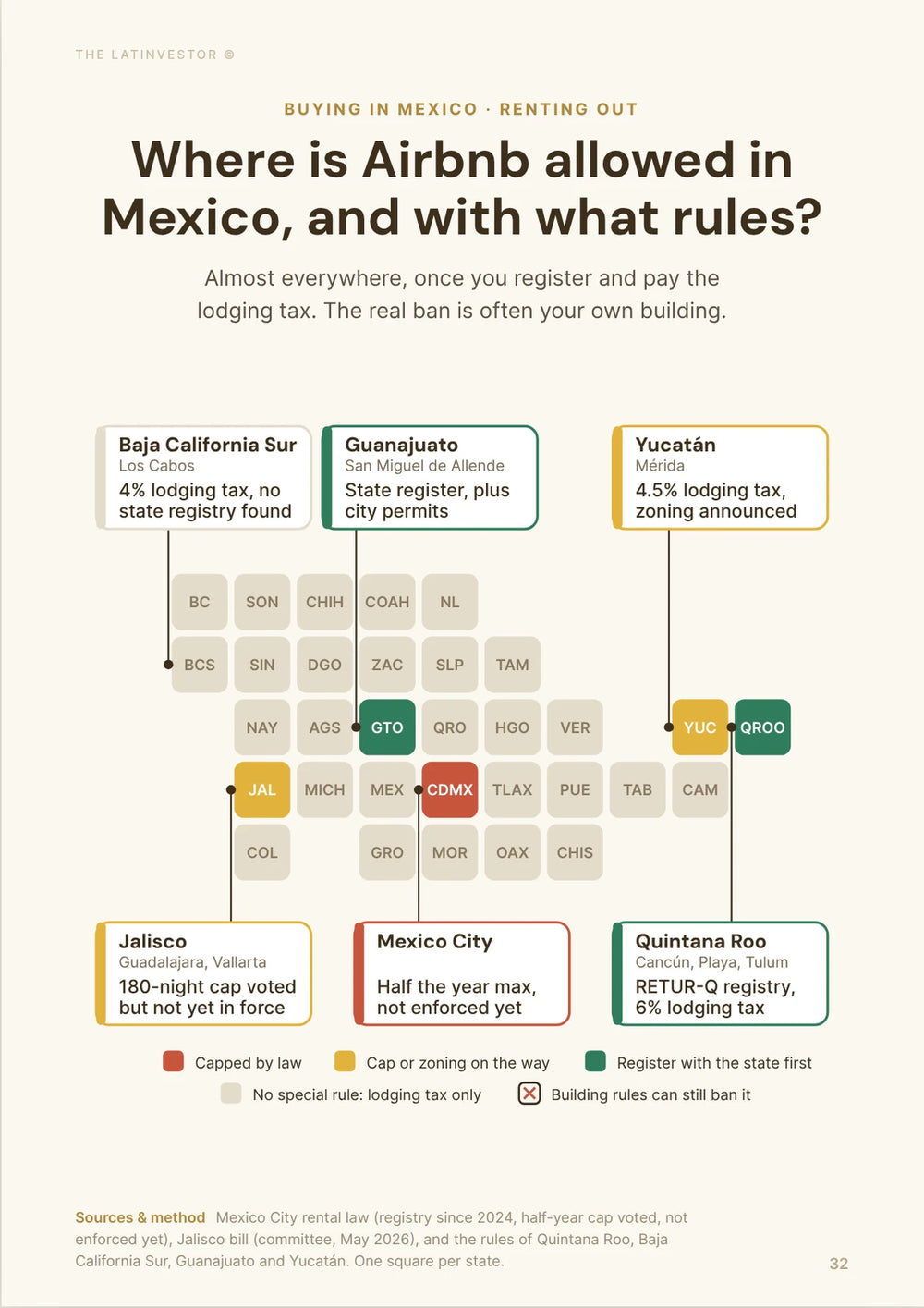
First, the "deposit to hold": someone takes money to reserve a property they don't own or can't sell. Second, the bank auction ("remate bancario") that looks like a bargain but is really a court process with no guarantee you'll ever get the keys. Third, a fake owner or fake power of attorney: the person selling isn't the one in the registry, or signs with a forged mandate.
The deposit scam usually goes like this: a cheap listing online or through a contact, a "seller" who says other buyers are lined up, a deposit to reserve, and then either silence or new "fees" until the money runs out.
Your protection is the same for all three. Don't send money until (1) your notary has pulled a fresh certificate from the state registry, (2) your own notary, not the seller's, has confirmed the seller can sell, and (3) every payment goes through traceable channels tied to the notary's process.
How do I verify the seller and ownership in Querétaro without getting fooled?
How do I confirm the seller is the real owner?
Your notary requests a certificate of no encumbrances ("certificado de libertad de gravamen") from the state property registry (Registro Público de la Propiedad). It shows the registered owner, any mortgage or lien, and any restriction on the property.
The name on that certificate must match the seller's ID, and the property description must match what you're buying.
The usual trick: screenshots, photocopies or unofficial "constancias" instead of a fresh certificate. After the Corregidora case, where fake notary seals were seized, don't accept any document the seller sends you as proof. Only what your notary pulls from the registry counts.
Where do I check liens or mortgages on a property in Querétaro?
At the state property registry, through the same certificate of no encumbrances. It lists mortgages (hipotecas), court seizures (embargos) and other notes on the property.
Ask your notary to confirm there's no mortgage, seizure, co-ownership claim, open inheritance or any note that would block a clean transfer.
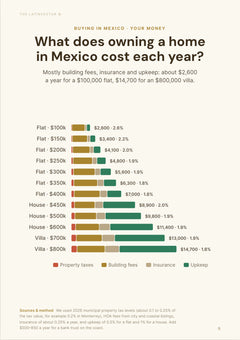
What foreign buyers miss most: unpaid maintenance fees (cuotas de mantenimiento) in gated communities and condos. They don't always show in the registry and can land on you after the sale. Ask the administration, not the seller, for a written "no debt" letter. In 2026, fees in amenity complexes like Juriquilla run about MXN 25 to 60 per m² a month, so a few months of arrears adds up fast.
How do I spot forged documents in Querétaro?
The documents most often faked are deeds (escrituras), registry certificates and powers of attorney. The 2026 Corregidora case shows forgers now copy real deed formats and seals, so a document that looks perfect proves nothing.
Red flags: documents sent only as photos or on WhatsApp; dates that don't fit the story; missing seals or signatures; a seller who resists an independent check.
The only reliable test is independent: your notary requests fresh certificates from the registry and compares them with whatever the seller provides. If a power of attorney is used, the notary should confirm it with the notary who issued it.
Is the development legal? What to check before you buy new or buy land
Check the project's rating first: most developments in Querétaro have at least one problem on record. The city's Semáforo Inmobiliario, launched in July 2025, had rated 555 developments by June 2026: only 26% were green (no violations), 67% yellow (one to three), 4% orange (four to seven) and 3% red (more than eight, or serious ones).
Yellow doesn't mean "don't buy", but it does mean asking the developer what the violations are and getting written proof they've been fixed before you pay more than a small deposit. Red means walk away. The Semáforo covers Querétaro municipality; for El Marqués or Corregidora, ask the municipality for the project's urban permits directly.
Land is riskier. In July 2026, the state counted 1,168 irregular settlements, of which only 241 had been regularized, 492 were in process and 435 were still pending. Lots in these areas are sold cheap, but without a registered title and often without guaranteed water or power. If the seller can't show a registered deed, or talks about "papers coming later", it's not a bargain.
Which grey-area practices should I watch for in Querétaro?
What hidden costs surprise foreigners when buying in Querétaro?
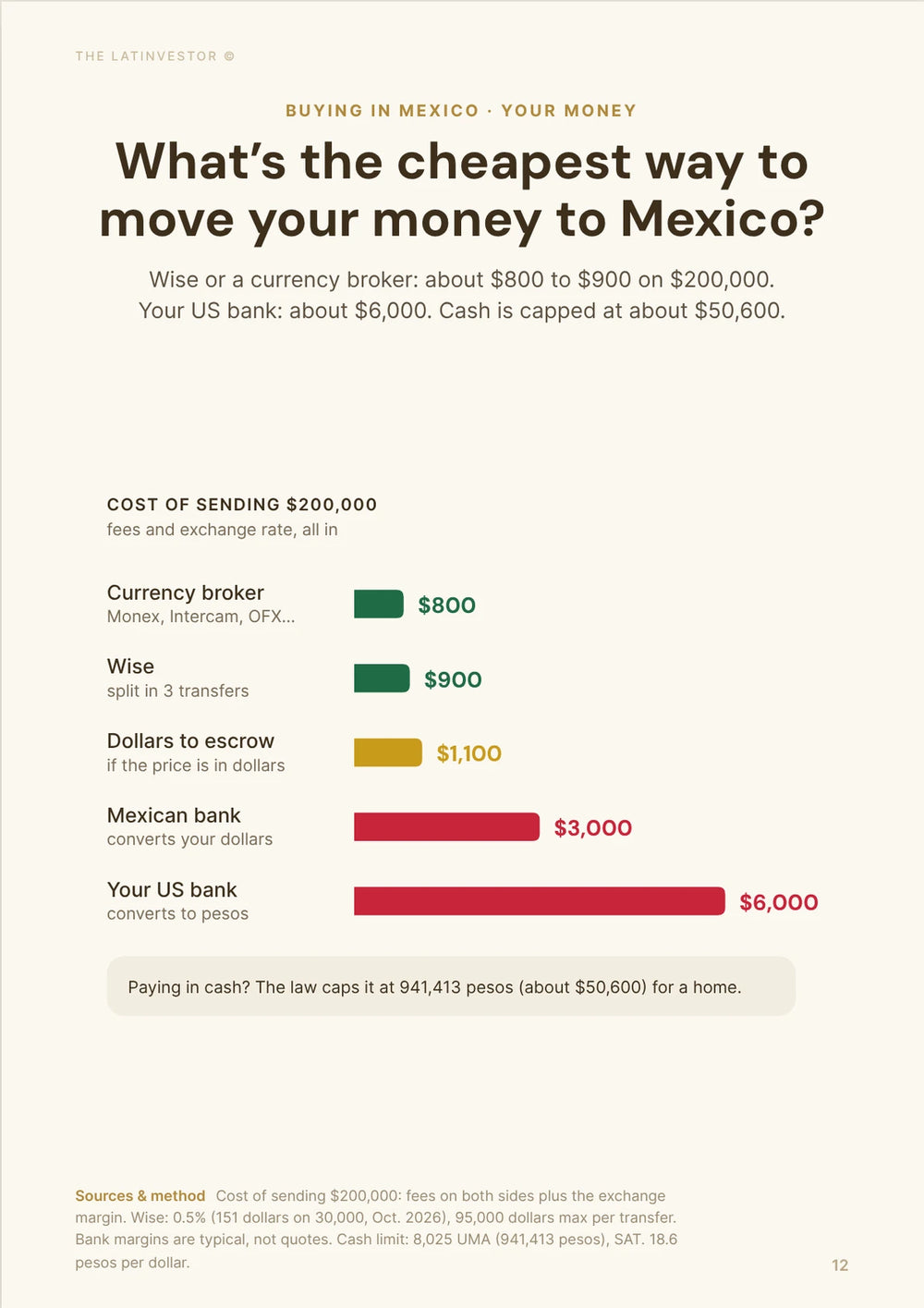
The surprise is usually the transfer tax. Querétaro's ISAI is progressive, from about 2.8% to about 6.9% of the value: on a MXN 2.5 million home (USD 134,000) it comes to about 5.6%, or MXN 141,000 (USD 7,580).
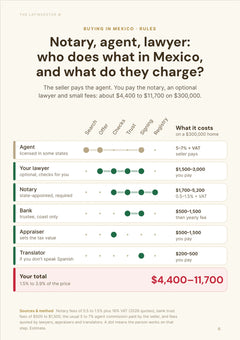
Add notary fees (about 0.5% to 1.5%), registry, certificates and appraisal, and a cash buyer pays about 7% to 9% on top of the price. On the median 2-bedroom condo asking USD 174,000 (MXN 3.24 million), that's about MXN 227,000 to MXN 292,000 (USD 12,200 to USD 15,700).
The cost sellers most often hide: unpaid property tax (predial) and maintenance fees. Ask for paid receipts for both, up to the current period, before signing.
Are "cash under the table" requests common in Querétaro?
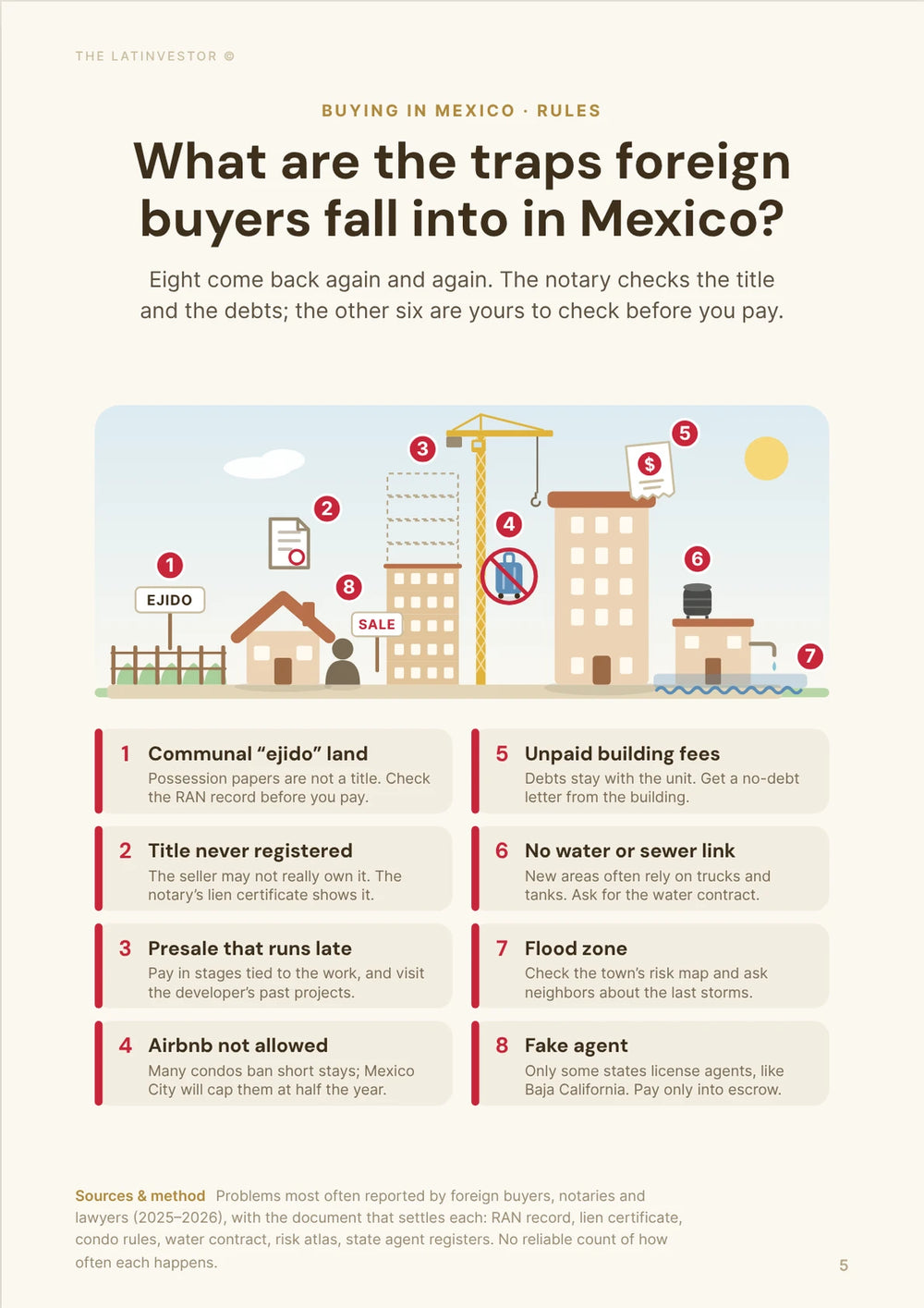
They're not rare. Some sellers suggest declaring a lower price to cut taxes, or ask for part of the payment in undeclared cash.
The pitch is always "we both save money". With a transfer tax around 5.6%, the saving looks real, which is why it keeps coming up.
For you, it's a bad deal: you can't prove what you paid if there's a dispute, you may face tax problems when you sell (your gain will be calculated from the lower declared price), and it's exactly the kind of informal arrangement scammers use to take money and vanish.
Are side agreements used to bypass the rules in Querétaro?
Yes, often. And foreigners are the easiest audience, because they don't always know which promises are binding.
The classic one: "we'll fix the permits later" or "the extra room will be added to the deed eventually", for a house with additions that don't match the registry description.
If it goes wrong, the side agreement is worthless (it never went through a notary), you pay to regularize the construction yourself, and you struggle to resell because the property doesn't match the official records.
Can I trust real estate agents in Querétaro?
Are real estate agents regulated in Querétaro?
Yes, which is rare in Mexico. Querétaro has a specific law on real estate agents and companies (Ley que Regula a los Agentes y Empresas Inmobiliarias), with an implementing regulation that sets registration and fines.
In practice, plenty of people still sell property part-time without being registered. Ask the agent for their state registration number and the legal name of their company.
Then check the company on Profeco's Buró Comercial for complaints. An agent who can't give you a registration number isn't automatically a scammer, but shouldn't be the one handling your deposit.
What agent fee is normal in Querétaro?
Usually around 4% to 6% of the sale price, by our estimate; there's no official figure.
The lower end is for expensive homes or when one agent handles both sides; the higher end when two agents split the commission.
The seller normally pays, but it's negotiable. Get it in the written service agreement, not as an informal "extra" at closing.
What due diligence actually prevents disasters in Querétaro?
What structural inspection should you get in Querétaro?
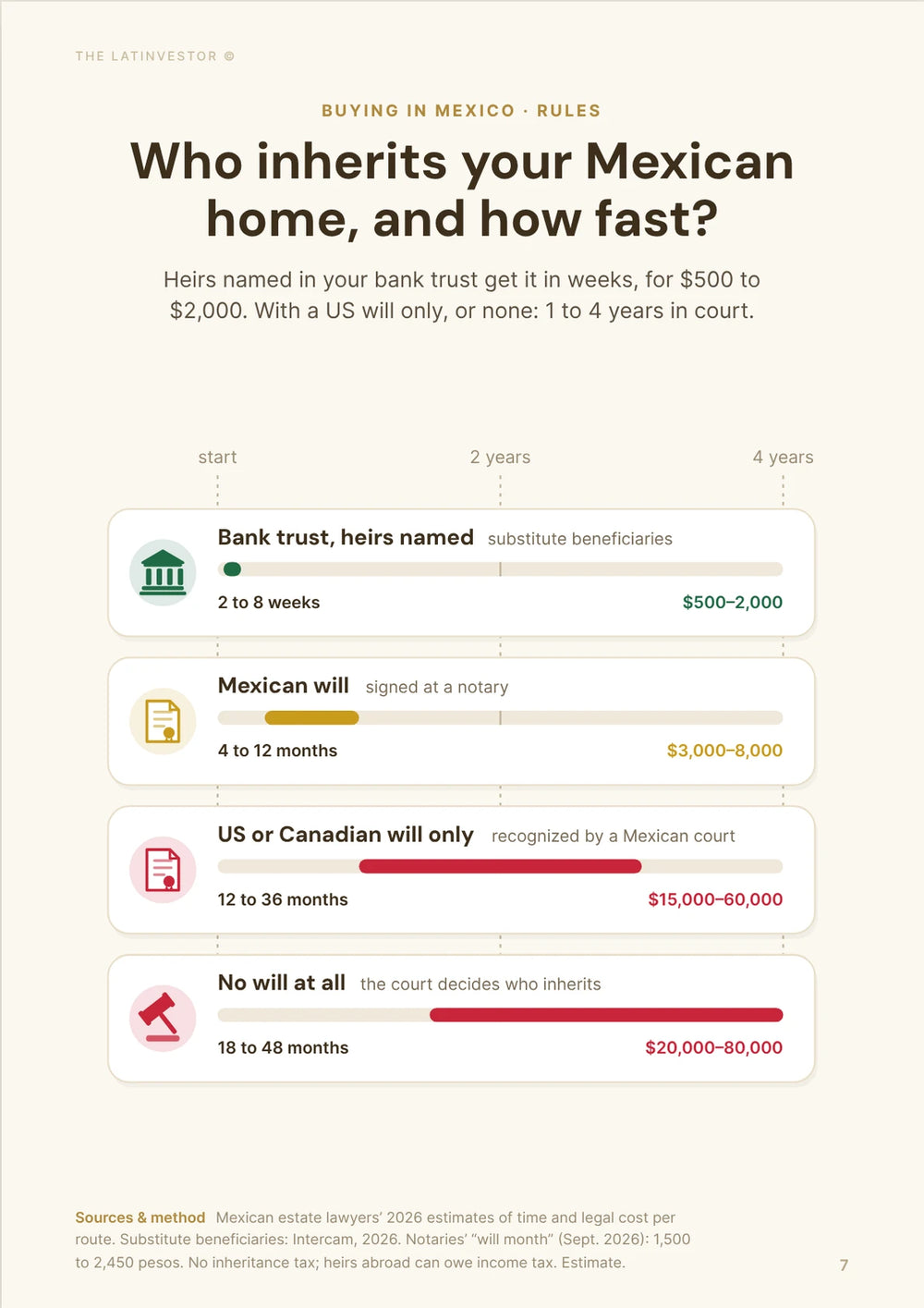
Get your own. No home inspection is required by law, so "standard" here means very little.
A good inspector checks the foundations and cracks (some areas have expansive clay soils), the roof and its waterproofing, the wiring and its capacity, the plumbing and water pressure, the gas installation, and signs of damp or mold.
Hire a civil engineer (ingeniero civil) or an architect with residential experience, and a structural engineer (ingeniero estructural) if serious cracks show up.
The usual findings: cracks and settling on expansive soils, leaking flat roofs, old or unsafe wiring, and plumbing problems in older homes or in developments built in a hurry.
How do I confirm the exact boundaries?
Match three things: the "medidas y colindancias" in the deed, the registry record, and a fresh survey on the ground.
The deed (escritura) gives the legal dimensions and neighbors, and it should match the registry.
The usual dispute: walls or fences that don't follow the deed, because neighbors agreed informally or someone built over the line.
Hire a surveyor (topógrafo) to measure the lot and compare it with the deed before you commit.
What defects are commonly hidden in Querétaro?
Three come up again and again: additions that don't match the registry (common), unpaid maintenance fees in gated communities (common), and weak water supply in developments that grew faster than their infrastructure (increasingly common).
To catch them: an inspection by an engineer or architect, recent water and power bills, and a direct question to the community administrator (not the seller) about debts and upcoming special charges.
Will the water and power hold up in the home you buy?
Not always, and in 2026 that's the most local risk in Querétaro. When the Zimapán dam had to release water in September 2025, the Acueducto II stopped and 336 neighborhoods went on rotating supply: 264 in Querétaro, 54 in Corregidora and 17 in El Marqués.
Power is fragile too: the state counted more than 1,500 power cuts in the first half of 2026, about one every three hours, including outages at the wells that pump the city's water. And the new state water law, meant to fix the system, was still stuck in the state congress in late August 2026.
What to do: ask neighbors how often the water stops, check the size of the cistern and roof tank, ask whether the development has its own well, and for a new project ask the developer for the final water feasibility from the state water commission (CEA), not just a provisional contract. A home with a large cistern and a backup pump is worth paying a bit more for here.
What do foreigners who bought in Querétaro wish they'd known?
What do foreigners say they did wrong?
Paying too early, before the registry check and before a notary confirmed the seller could sell.
The other regrets that come up most: trusting a single intermediary, underestimating closing costs (the transfer tax alone is about 5.6% on a MXN 2.5 million home, not the 2% to 3% many expect), and using the seller's notary instead of their own.
The advice they give: pick your own notary first, let them check everything before any money moves, and never let urgency push you to skip a step.
What cost them the most: unpermitted additions that were expensive to regularize, and maintenance debts or water problems nobody mentioned before the sale.
What do locals do differently when buying in Querétaro?
They put the notary in charge from day one, as their main adviser, not as someone who stamps papers at the end.
They also ask around: neighbors and building administrators tell you about water cuts, noise and how the area really works, which no record shows.
And they know what similar homes actually sold for, so they spot an unrealistic price quickly. Asking prices on portals are not sale prices; ask your notary or a local appraiser for recent comparable sales.
Our methodology
This article looks at how safe it is for a foreigner to buy property in Querétaro: the legal rules, the scams and grey-area practices that show up in 2026, the checks that prevent them, and the local risks (security, water, power) that affect the value of a home.
Legal rules come from official texts: the Constitution's Article 27, SRE's procedure for foreign buyers outside the restricted zone, Querétaro's Notary Law and its law on real estate agents. Costs come from the municipal transfer tax tariff, a 2026 ISAI calculation and published notary fee ranges; prices are TuLugar asking prices from October 2026.
Recent facts come from official data and dated local press: INEGI's June 2026 urban security survey, the state's 2026 extortion figures, the Querétaro prosecutor's August 2026 fake-documents case, the city's Semáforo Inmobiliario ratings, the state's count of irregular settlements, and reports on water and power cuts.
We checked these figures in October 2026. Amounts are converted at about 18.6 pesos per US dollar and 20.9 pesos per euro.
Limits: asking prices are not sale prices, the agent commission range is our own estimate, and security perception is a survey, not a crime count. Scam patterns vary deal by deal, so treat this as a checklist, not legal advice.
Key sources used for this analysis include SRE, Querétaro's public property registry, Querétaro's Notary Law, Querétaro's real estate agent law, INEGI's ENSU (June 2026) and its city ranking, Publimetro on 2026 extortion figures, Publimetro on the Corregidora fake-documents case, Publimetro on the Semáforo Inmobiliario, Publimetro on irregular settlements, Publimetro on the 2025 water cuts, Publimetro on 2026 power cuts, Publimetro on the pending water law, the Municipality of Querétaro, Rivenza, Compass Abroad, TuLugar, PROFECO, CONDUSEF and the World Justice Project.