Summary
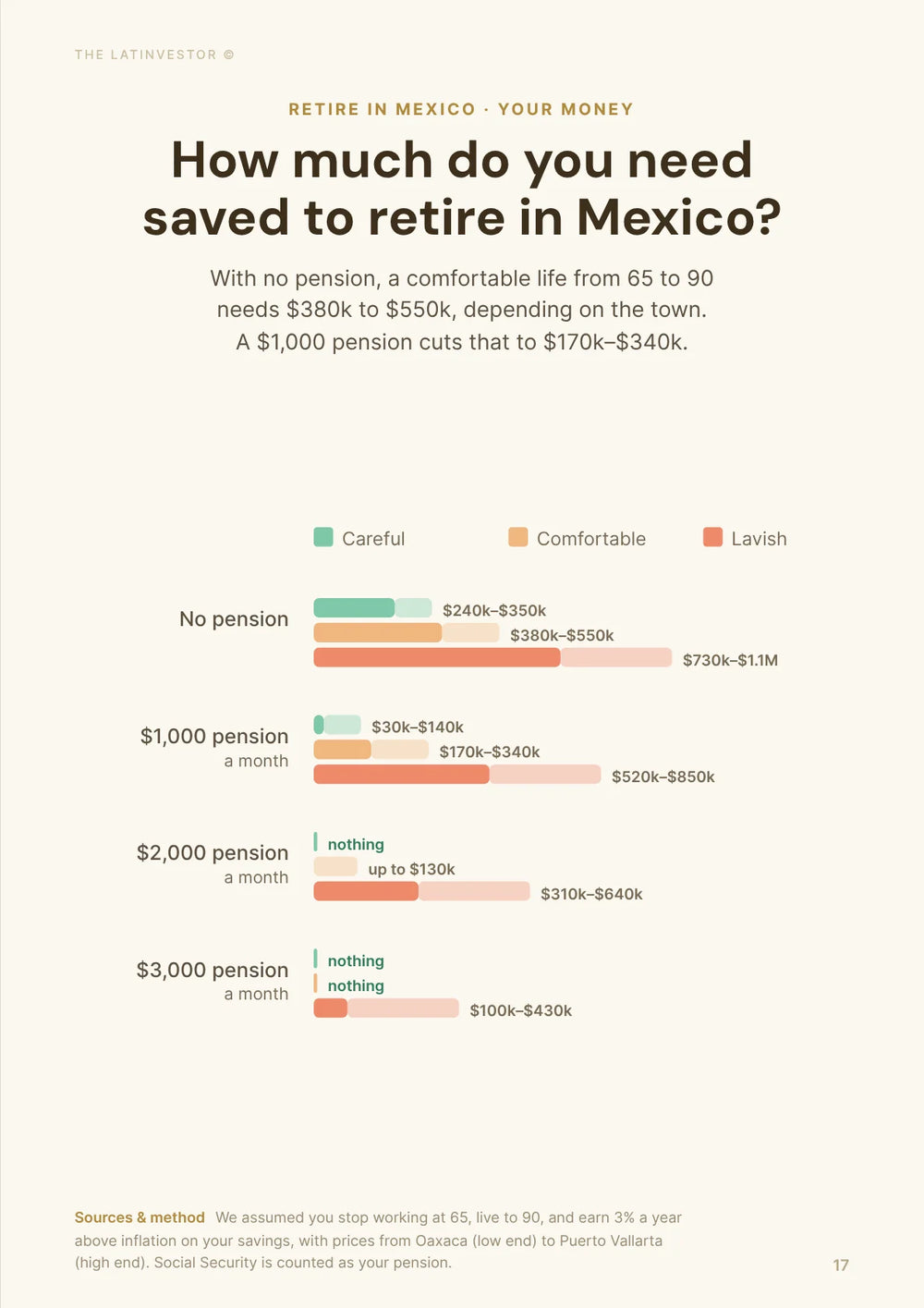
How much money do you need to retire in Querétaro? About MXN 35,000 to MXN 45,000 a month ($1,890 to $2,430) for a comfortable life as a single retiree. Keep a 20% buffer on top.
The bare minimum is around MXN 20,000 to MXN 24,000 a month ($1,080 to $1,300), which means a modest place outside the popular areas and little room for surprises.
At $2,000 a month (about MXN 37,000), you can rent a one-bedroom in Milenio III for MXN 9,000 to 13,500 or in Centro Histórico for MXN 12,000 to 18,000.
At $3,000 (about MXN 55,500), a newer two-bedroom in Zibatá or Juriquilla fits. Luxury starts around MXN 80,000 a month ($4,320), with gated-community houses in El Campanario at about MXN 64,000.
A one-bedroom costs about MXN 15,550 a month in the center and MXN 10,200 outside it. Advertised rents rose about 5.6% from April 2025 to October 2026, and more in Milenio III and Zibatá.
Utilities are cheap: about MXN 1,100 a month for an 85 m² apartment, plus about MXN 460 for internet.
A Qrobus ride costs MXN 11 (MXN 9 for older adults), and a meal in an inexpensive restaurant about MXN 200.
Apartments cost about MXN 40,700 per m² in the center and MXN 22,850 outside it. Median listings are around MXN 3.25 to 3.6 million in Zibatá, Juriquilla and Centro.
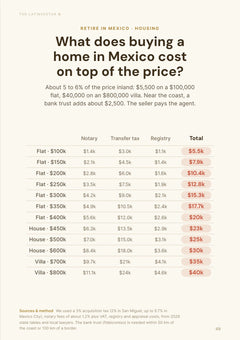
Buying adds a transfer tax of about 5.7% on a MXN 3 million home, plus notary and registration fees. A mortgage near 12% costs about MXN 23,100 a month, far more than rent.
The temporary resident visa asks for about $4,510 a month of income or $75,950 in savings (San Diego consulate, 2026). Visa fee and one-year card cost about MXN 12,180.
Tax residency depends on where your home is, not on a 183-day rule, and US Social Security is generally taxed only in the United States.
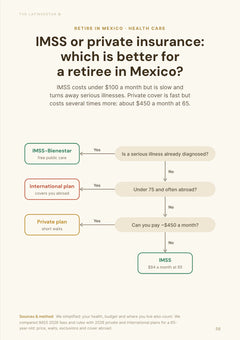
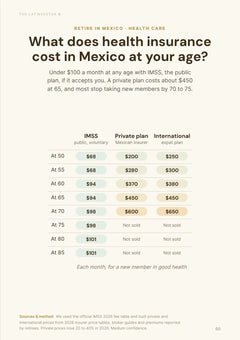
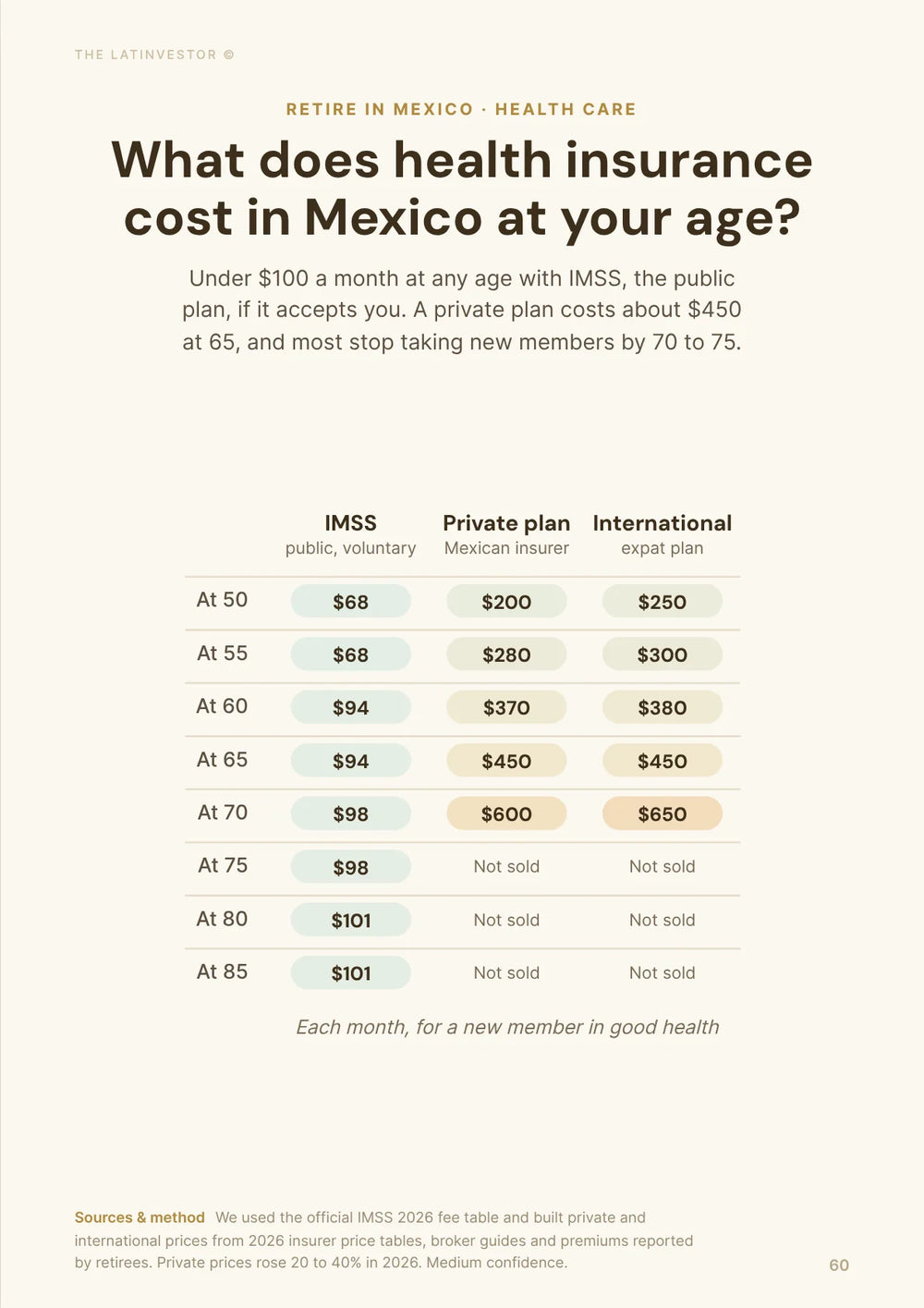
Health care is the line that varies most: IMSS costs MXN 20,600 a year at 60 to 69, while private insurance costs roughly MXN 66,350 to MXN 92,200 a year around 60.

What lifestyle can each budget buy you in Querétaro?
What's the absolute minimum monthly budget to survive in Querétaro?
The absolute minimum monthly budget for a single foreign retiree to survive in Querétaro in 2026 is around MXN 20,000 to MXN 24,000, which works out to roughly $1,080 to $1,300 USD or €960 to €1,150 EUR. It is a tight budget: a one-bedroom outside the center alone costs about MXN 10,200.
At this survival level in Querétaro, your budget covers basic rent for a small studio or one-bedroom in a non-premium neighborhood, essential utilities, groceries with minimal eating out, basic healthcare through IMSS voluntary coverage if eligible, and local transportation.
Living on this minimum budget in Querétaro means accepting significant trade-offs: you'll likely need to use air conditioning sparingly during hot months, limit social outings, choose older housing stock in areas like peripheral colonias rather than popular expat zones, and have little room for travel or unexpected expenses.
What lifestyle do I get with $2,000/month in Querétaro in 2026?
In 2026, a budget of $2,000 USD per month (around MXN 37,000) gives you a solid "comfortable local" lifestyle in Querétaro where you can enjoy a good quality of life without constantly watching every peso.
With $2,000/month in Querétaro, you can afford a one-bedroom in Milenio III for around MXN 9,000 to MXN 13,500 ($485 to $730 USD or €435 to €650 EUR) or in Centro Histórico for around MXN 12,000 to MXN 18,000 ($650 to $975 USD or €575 to €865 EUR). Newer two-bedrooms in El Refugio usually cost MXN 18,000 or more, which is a stretch at this budget.
This budget in Querétaro opens up regular dining at local restaurants, a gym membership, occasional ride-hailing trips around the city, weekend excursions to nearby Pueblo Mágicos like Bernal or Tequisquiapan, and comfortable air conditioning during the hot spring months.
The main limitation at $2,000/month in Querétaro is that premium neighborhoods like Juriquilla or Carretas remain mostly out of reach for housing, and you'll need to be selective about private healthcare options rather than accessing top-tier hospitals freely.
What lifestyle do I get with $3,000/month in Querétaro in 2026?
In 2026, a budget of $3,000 USD per month (around MXN 55,500) puts you in the "upper-comfortable" tier in Querétaro, where you have meaningful financial breathing room and can live without many compromises.
At $3,000/month in Querétaro, you can rent a newer two-bedroom apartment in sought-after areas like Zibatá for around MXN 20,000 to MXN 34,000 ($1,080 to $1,840 USD or €960 to €1,640 EUR) or Juriquilla for MXN 22,000 to MXN 38,000 ($1,190 to $2,050 USD or €1,060 to €1,830 EUR), choosing the lower half of these ranges, or a small townhouse in family-friendly neighborhoods.
This budget level in Querétaro unlocks regular dining at nicer restaurants, private doctor visits when needed, quality groceries including imported items, more frequent weekend trips to wine country in nearby valleys, and comfortable domestic travel to beach destinations like Puerto Vallarta or Cancún.
The key upgrade from $2,000 to $3,000/month in Querétaro is access to premium neighborhoods with modern amenities, the ability to use private healthcare without stress, and having a genuine financial cushion for unexpected expenses or spontaneous experiences.
What lifestyle do I get with $5,000/month in Querétaro in 2026?
In 2026, $5,000 USD per month (around MXN 92,500) delivers a high-comfort lifestyle in Querétaro with premium housing and no daily budget anxiety, while $10,000/month (MXN 185,000) puts you in global luxury territory where you're essentially unconstrained by local costs.
At $5,000/month in Querétaro, you can rent upscale properties in gated communities: the median advertised house rent is about MXN 21,650 ($1,170 USD or €1,040 EUR) in Cumbres del Lago in Juriquilla and about MXN 63,950 ($3,460 USD or €3,080 EUR) in El Campanario, while $10,000/month opens doors to the most exclusive residences in the city.
At these budget levels in Querétaro, you gain access to concierge-level private healthcare at hospitals like Hospital Angeles, membership at premium country clubs, frequent international travel, high-end dining multiple times per week, and the ability to run air conditioning without ever checking your electricity bill.
How much for a "comfortable" retirement in Querétaro in 2026?
In 2026, a comfortable retirement budget for one person in Querétaro ranges from MXN 35,000 to MXN 45,000 per month, which equals roughly $1,890 to $2,430 USD or €1,680 to €2,160 EUR.
We recommend adding a 20% buffer to your comfortable target, meaning if you calculate MXN 40,000/month as your baseline, you should plan for MXN 48,000/month (about $2,590 USD or €2,310 EUR) to sleep well at night.
A comfortable retirement budget in Querétaro covers what a basic budget cannot: quality housing in safe neighborhoods like Milenio III or Álamos, reliable private healthcare access, regular dining out and entertainment, occasional domestic travel, and a meaningful emergency fund for rent increases or currency fluctuations.
How much for a "luxury" retirement in Querétaro in 2026?
In 2026, a luxury retirement budget for one person in Querétaro ranges from MXN 80,000 to MXN 120,000 per month, equivalent to roughly $4,320 to $6,490 USD or €3,850 to €5,770 EUR.
A luxury retirement in Querétaro means renting or owning in premium gated communities with 24/7 security, where houses can rent for MXN 35,000 to MXN 64,000/month ($1,890 to $3,460 USD or €1,680 to €3,080 EUR; the median in El Campanario is about MXN 63,950), having a personal driver or high-end vehicle, accessing top private hospitals without hesitation, and enjoying fine dining multiple times weekly.
The most popular neighborhoods for luxury retirees in Querétaro include Juriquilla (especially Cumbres del Lago and Colinas de Juriquilla), El Campanario, Jurica, and the newer upscale developments in Zibatá.
Beyond comfort and convenience, the main advantage of a luxury budget in Querétaro is the ability to fully participate in the city's growing international community, including country club memberships, wine events in nearby valleys, and frequent trips to Mexico City's cultural scene just two hours away.
What are the real monthly expenses for retirees in Querétaro in 2026?
What is a realistic monthly budget breakdown by category in Querétaro?
A realistic monthly budget for a single retiree living comfortably in Querétaro in 2026 is around MXN 40,000 ($2,160 USD or €1,920 EUR). Our estimate splits it roughly into housing (about 40%), food (about 20%), miscellaneous (about 20%), healthcare, utilities and transportation, but your own split will depend on where you live and your health.
Housing is the largest line of your budget in Querétaro: plan on about MXN 16,000 ($865 USD or €770 EUR) for a comfortable one-bedroom or modest two-bedroom in a good neighborhood. A one-bedroom costs about MXN 15,550 in the center and MXN 10,200 outside it.
Food and groceries in Querétaro cost roughly MXN 8,500 ($460 USD or €410 EUR) a month in our estimate, covering groceries plus moderate restaurant dining.
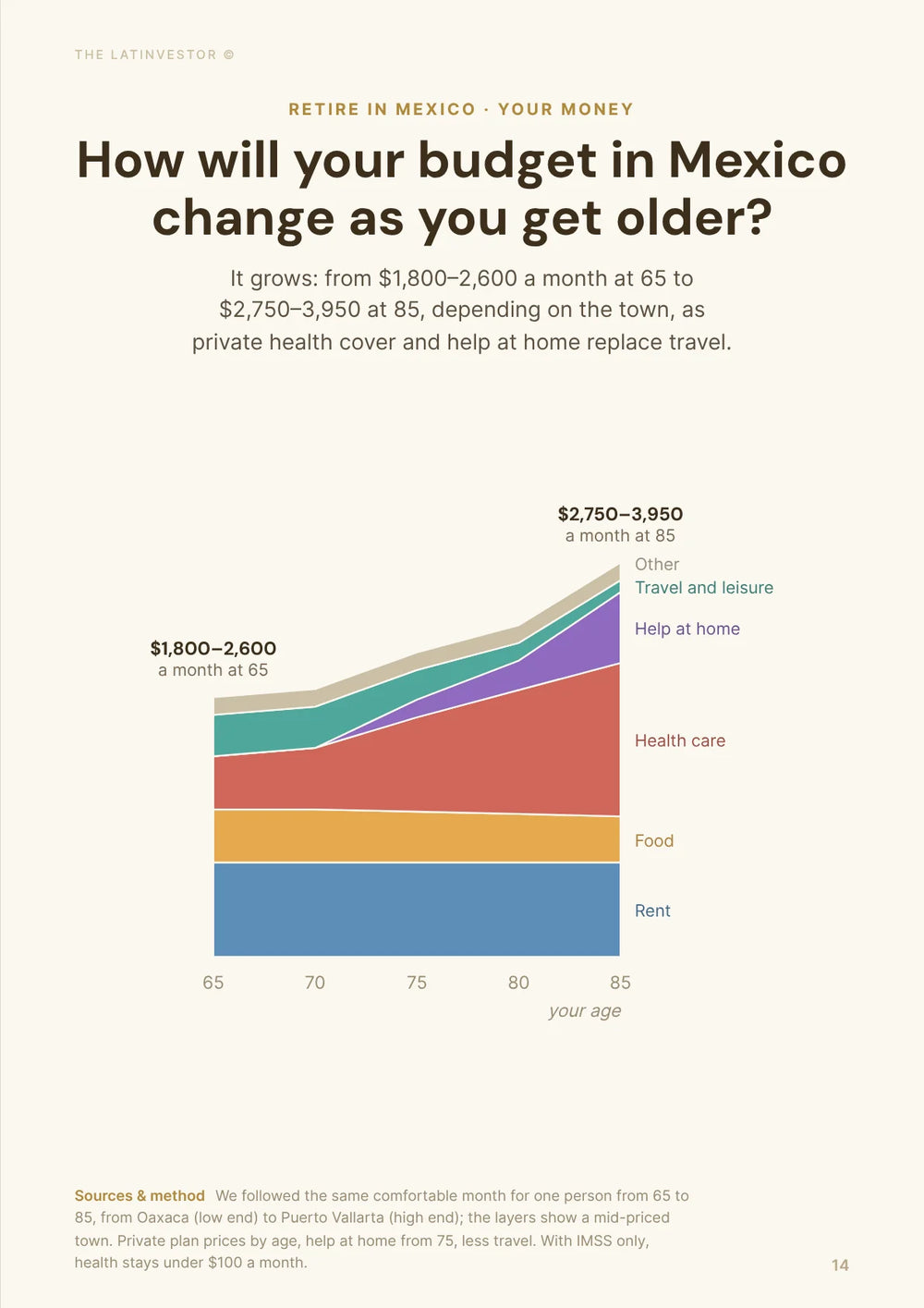
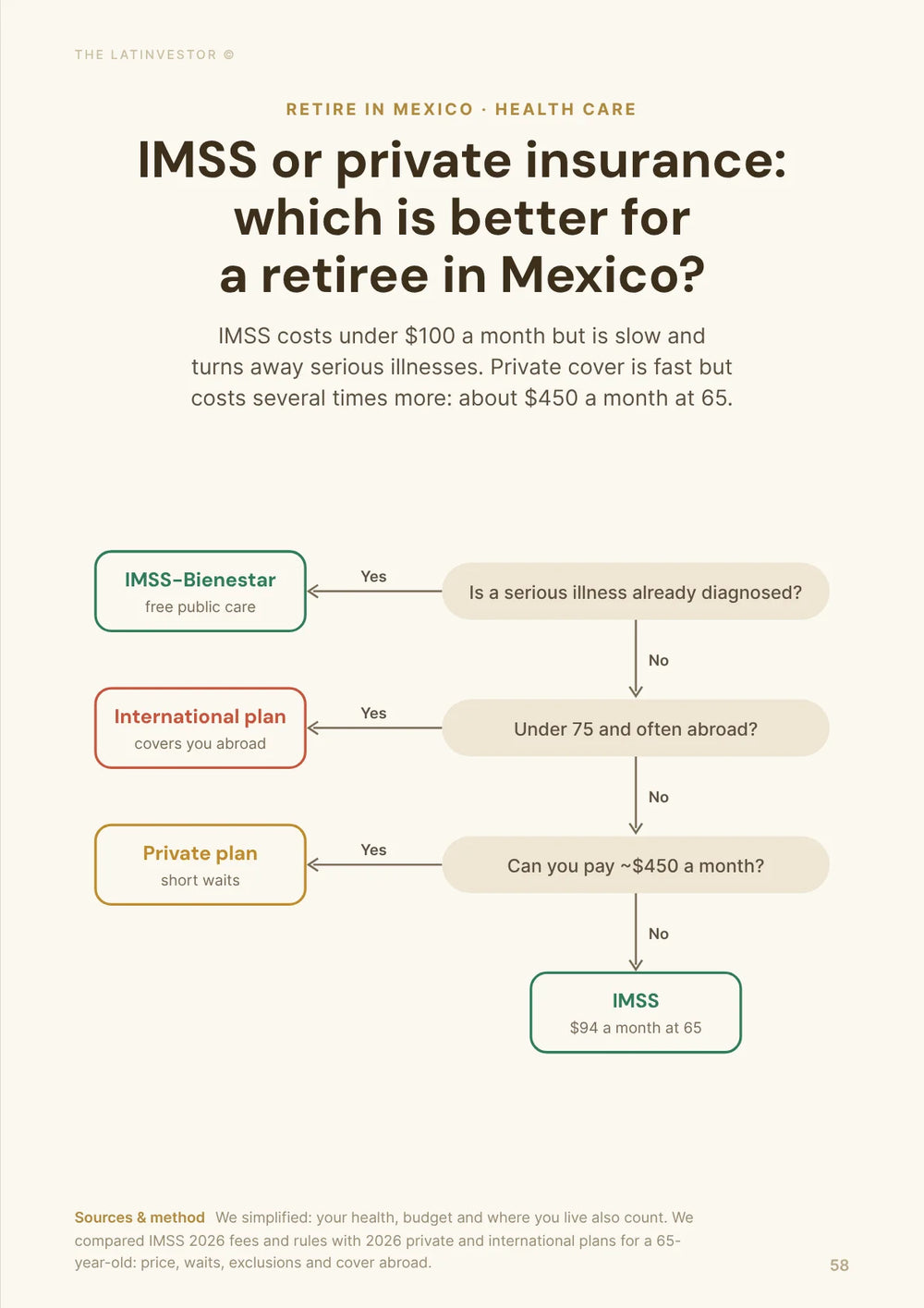
The budget category that varies most in Querétaro is healthcare, which can range from about MXN 1,700/month ($92 USD or €82 EUR) with IMSS voluntary coverage to MXN 7,700 or more ($415 USD or €370 EUR) with private insurance, depending on your age and health needs.
What fees surprise foreigners most after moving to Querétaro?
The top three fees that surprise foreigners in Querétaro are the progressive property transfer tax (Impuesto Sobre Traslado de Dominio), about 5.7% on a MXN 3,000,000 home (MXN 170,306) in 2026, the notary and registration fees that come on top, and ongoing condo maintenance fees (mantenimiento) in newer developments that act like a second rent payment.
When first arriving in Querétaro, foreigners should budget for one-time setup costs including a rental deposit of one or two months (MXN 12,000 to MXN 36,000, or $650 to $1,950 USD, for a central one-bedroom), utility connection fees, basic furnishing if needed, and immigration fees (about MXN 12,180 for the consular visa fee and a one-year residence card).
What's the average rent for a 1-bedroom or a 2-bedroom in Querétaro in 2026?
In 2026, a one-bedroom apartment in Querétaro rents for about MXN 15,550 ($840 USD or €750 EUR) in the center and MXN 10,200 ($550 USD or €490 EUR) outside it. There is no reliable citywide average for two-bedrooms: listings run about MXN 10,000 to MXN 15,500 in Corregidora or El Marqués and MXN 16,000 to MXN 26,000 in Centro Histórico. Advertised rents rose about 5.6% from April 2025 to October 2026.
For a one-bedroom in Querétaro, listings range from around MXN 6,500 ($350 USD or €315 EUR) for small apartments in more peripheral areas to MXN 18,000+ ($975 USD or €865 EUR) in premium neighborhoods like Carretas or Juriquilla.
For a two-bedroom in Querétaro, expect to pay from MXN 9,000 ($485 USD or €435 EUR) in budget-friendly colonias up to MXN 25,000+ ($1,350 USD or €1,200 EUR) in upscale areas like Jurica or Cumbres del Lago.
Neighborhoods offering the best value for retirees seeking affordable rent in Querétaro include Centro Histórico for walkability, Milenio III for a balance of price and amenities, and parts of El Refugio and Zibatá where newer mid-range developments offer good value.
What do utilities cost monthly in Querétaro in 2026?
In 2026, basic utilities for an 85 m² apartment in Querétaro average about MXN 1,100 ($59 USD or €53 EUR) a month, with most bills between MXN 700 and MXN 1,500, and more if you use air conditioning a lot.
For a two-bedroom, a local rental guide gives these typical bills: electricity MXN 580 to MXN 900 ($31 to $49 USD or €28 to €43 EUR), with big swings based on A/C use, water MXN 150 to MXN 200 ($8 to $11 USD), and LP gas for cooking and hot water MXN 320 to MXN 450 ($17 to $24 USD).
Internet service in Querétaro costs about MXN 460 ($25 USD or €22 EUR) monthly for a 60 Mbps plan, while a basic mobile phone plan runs MXN 200 to MXN 500 ($11 to $27 USD or €9.50 to €24 EUR).
What's the monthly food and transportation budget for one person in Querétaro in 2026?
In 2026, we estimate a combined monthly food and transportation budget for one person in Querétaro at MXN 7,200 to MXN 18,000 ($390 to $975 USD or €345 to €865 EUR), depending mostly on how often you eat out and whether you own a car.
A single retiree cooking mostly at home in Querétaro can usually manage groceries for MXN 4,500 to MXN 7,000 ($245 to $380 USD or €215 to €335 EUR) monthly in our estimate, with the higher end covering imported products and specialty items from stores like Costco or City Market.
Dining out regularly in Querétaro adds significantly to your food budget: a meal at an inexpensive restaurant costs about MXN 200 ($11 USD), while a three-course dinner for two at a mid-range restaurant runs about MXN 1,155 ($62 USD), easily adding MXN 4,000 to MXN 8,000 monthly if you eat out frequently.
A Qrobus ride costs MXN 11, or MXN 9 for older adults, in 2026. Transportation in Querétaro costs MXN 1,200 to MXN 2,500 ($65 to $135 USD or €58 to €120 EUR) monthly using public transit and occasional Uber rides, while owning a car pushes costs to MXN 5,000 to MXN 8,000 ($270 to $430 USD or €240 to €385 EUR) including fuel, insurance, and maintenance.
Can I retire in Querétaro if I want to buy property in 2026?
What's the average home price in Querétaro in 2026?
In 2026, apartments in Querétaro cost about MXN 40,700 per square meter in the center and MXN 22,850 outside it (Numbeo), so a 90-square-meter apartment costs roughly MXN 2,055,000 to MXN 3,665,000 ($110,000 to $200,000 USD or €99,000 to €175,000 EUR). Median advertised apartment prices are about MXN 3.25 million in Zibatá, MXN 3.3 million in Juriquilla and MXN 3.6 million in Centro.
Home prices in Querétaro vary dramatically by neighborhood: premium areas like Carretas and parts of Juriquilla command much higher prices per square meter, while more accessible colonias offer entry points well below the citywide average, creating a realistic range from MXN 1,800,000 ($97,500 USD) to MXN 6,000,000+ ($325,000 USD) depending on location and property type.
For retirees in Querétaro, mid-market apartments in neighborhoods like Milenio III, El Refugio, or Centro Sur often represent the best value, offering modern construction with good amenities at prices between the extremes, while Centro Histórico appeals to those prioritizing walkability over new builds.
What down payment do foreigners usually need in Querétaro in 2026?
In 2026, foreigners purchasing property in Querétaro with financing should plan for a large down payment, often 30% to 40% of the purchase price (each lender decides case by case), plus closing costs, meaning roughly MXN 810,000 to MXN 1,080,000 ($44,000 to $58,500 USD or €39,000 to €52,000 EUR) on a MXN 2,700,000 apartment.
Foreigners in Querétaro often face higher down payment requirements than locals because Mexican banks typically offer more conservative loan-to-value ratios to borrowers without established local credit history, though cash purchases eliminate this concern entirely.
What's the all-in monthly cost to own in Querétaro in 2026?
In 2026, the all-in monthly cost to own a typical MXN 3,000,000 property in Querétaro with a mortgage runs around MXN 25,000 to MXN 28,000 ($1,350 to $1,510 USD or €1,200 to €1,350 EUR) in our estimate, while cash buyers pay only MXN 3,000 to MXN 8,000 ($160 to $430 USD or €145 to €385 EUR) for ongoing costs.
The all-in ownership figure in Querétaro includes your mortgage payment (about MXN 23,100 monthly on 70% financing over 20 years at about 12%), HOA or maintenance fees (about MXN 700 to MXN 3,000 depending on the neighborhood), home insurance, and your predial property tax contribution.
Typical monthly property tax (predial) in Querétaro is relatively low, often just MXN 200 to MXN 600 monthly equivalent, but HOA fees in newer vertical developments in Zibatá, El Refugio, or Centro Sur can run MXN 2,000 to MXN 4,000 ($110 to $215 USD or €96 to €190 EUR) and represent a significant recurring cost.
The hidden ownership cost that catches new buyers off guard in Querétaro is the combination of high property transfer tax (5% to 7% at closing) and the ongoing HOA fees in newer developments, which together can make a seemingly affordable purchase much more expensive than anticipated.
Is buying cheaper than renting in Querétaro in 2026?
In 2026, renting is typically cheaper month-to-month than buying with a mortgage in Querétaro: a two-bedroom rents for about MXN 10,000 to MXN 15,500 ($540 to $840 USD or €480 to €745 EUR) in Corregidora or El Marqués and MXN 16,000 to MXN 26,000 in Centro Histórico, while the mortgage on a MXN 3,000,000 home is about MXN 23,100 ($1,250 USD or €1,110 EUR) a month.
There is no fixed break-even point in Querétaro: it depends on the transfer tax and closing costs, your loan, maintenance, how much prices and rents rise, and what your money would earn elsewhere. With a mortgage near 12%, buying takes many years to pay off; paying cash shortens that a lot.
For retirees in Querétaro, the buy-versus-rent decision depends heavily on whether you're paying mostly cash (buying wins on stability and inflation protection), how long you plan to stay (shorter horizons favor renting), and whether you value the flexibility to change neighborhoods as you learn the city versus the security of owning your home outright.
What visas, taxes, and healthcare costs should I plan for in Querétaro in 2026?
What retirement visa options exist in Querétaro in 2026?
In 2026, the main retirement visa option for Querétaro is Mexico's Temporary Resident visa based on economic solvency. The consular visa fee is MXN 1,036 ($56) and the one-year residence card MXN 11,141 ($600 USD or €535 EUR), about MXN 12,180 in total.
To qualify for Temporary Residence in Querétaro based on economic solvency, you need to show a monthly income of about MXN 83,435 ($4,510 USD) over the last 6 months, or savings of about MXN 1,405,075 ($75,950 USD) over the past 12 months. These are the 2026 figures of the San Diego consulate; thresholds vary between consulates.
Renewing the temporary card costs MXN 11,141 for one year up to MXN 25,058 for four years ($600 to $1,350 USD or €535 to €1,210 EUR), plus administrative time, copies, photos, and occasional legal assistance.
The most common visa mistake foreign retirees make in Querétaro is underestimating the administrative burden of annual Temporary Resident renewals and not budgeting adequately for the time and costs involved, which can be stressful if you're planning tight finances.
Do I pay tax on foreign income in Querétaro in 2026?
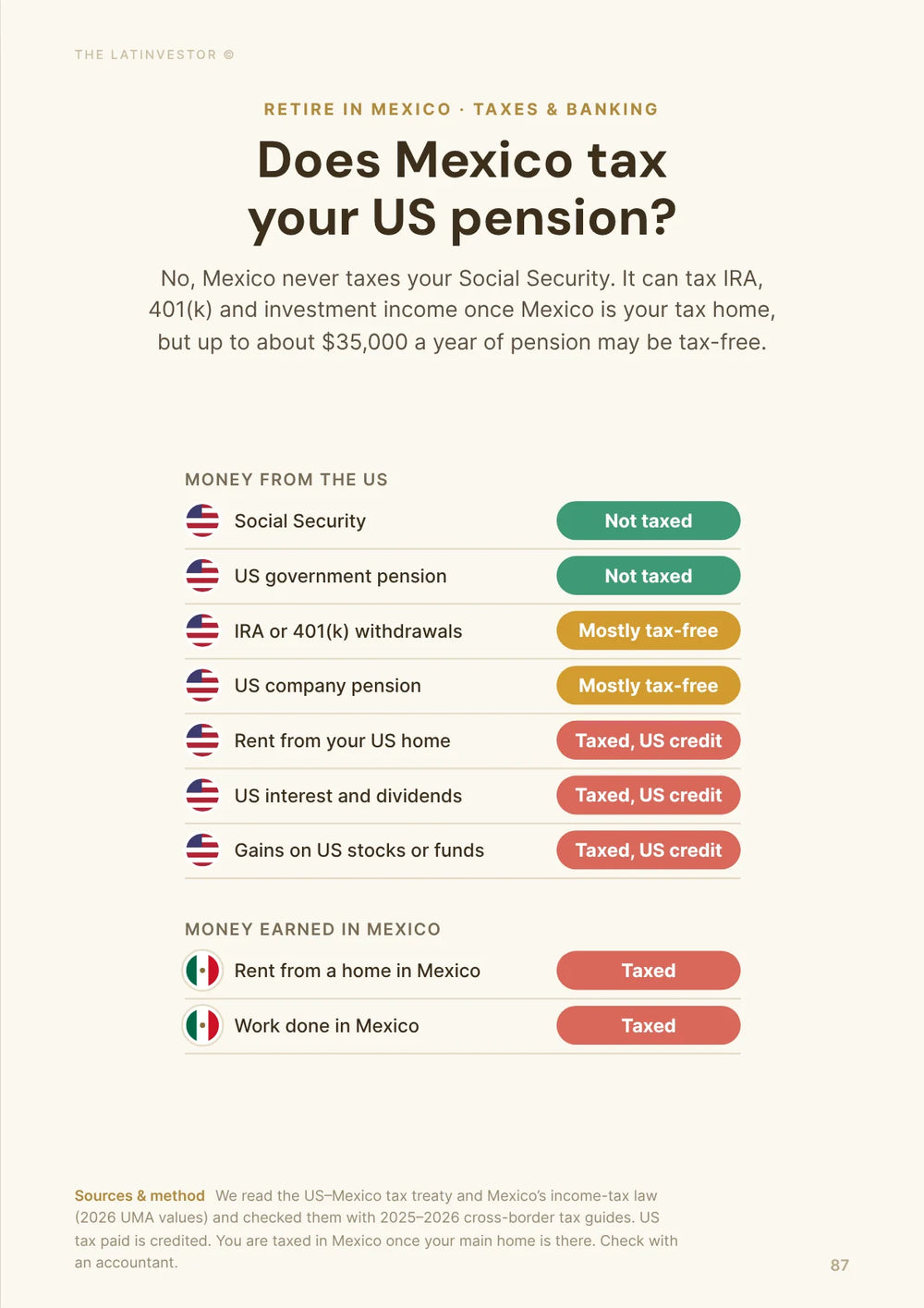
In 2026, whether you owe Mexican tax on foreign income depends entirely on your tax residency status: non-residents only pay tax on Mexico-source income, while Mexican tax residents may owe tax on worldwide income, making this determination crucial for your retirement planning.
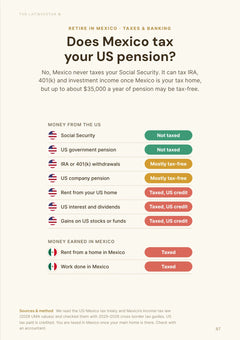
For retirees in Querétaro, foreign pensions and investment income are generally not taxed by Mexico if you remain a non-resident for tax purposes. If you become a Mexican tax resident (Mexico looks at where your home is and, if you have homes in several countries, where your center of vital interests is; there is no simple 183-day rule), the rules change significantly. US Social Security is generally taxed only in the United States under the US-Mexico tax treaty.
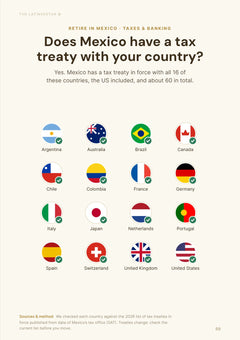
Mexico has tax treaties with about 60 countries, including the United States, Canada, and many European countries, that can prevent double taxation, though the specific treatment of your income depends on the treaty provisions and your individual circumstances.
The single most important tax rule foreign retirees should understand before moving to Querétaro is that becoming a Mexican tax resident triggers potential worldwide income taxation under the ISR law, so you should consult a cross-border tax professional once you know your exact income sources and residency plans.
What health insurance do retirees need in Querétaro in 2026?
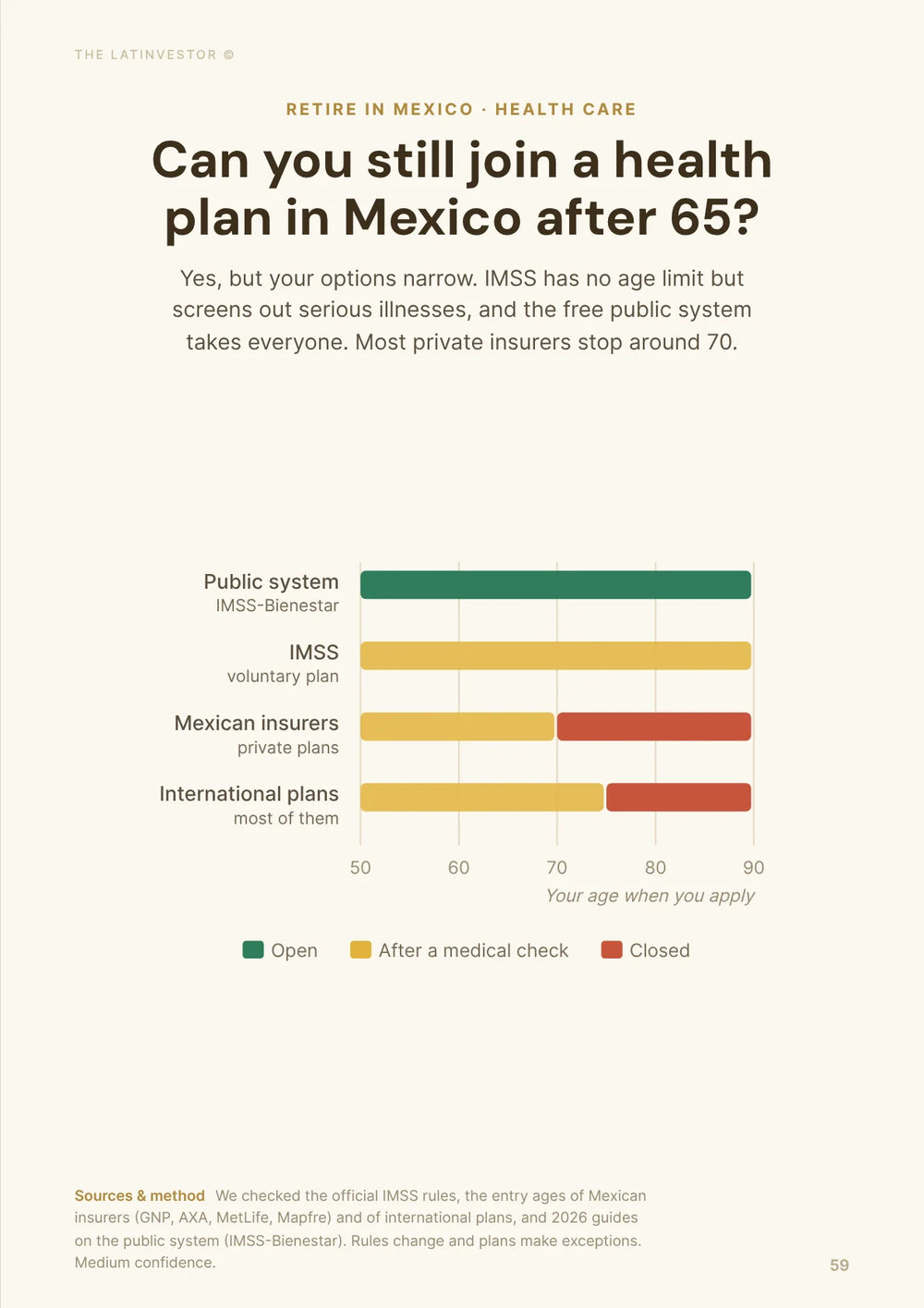
In 2026, retirees in Querétaro typically need either voluntary IMSS public coverage, which costs MXN 20,600 a year ($1,110 USD or €990 EUR, about MXN 1,720 a month) between 60 and 69 and MXN 21,500 between 70 and 79, or private health insurance, which costs roughly MXN 66,350 to MXN 92,200 a year ($3,590 to $4,980 USD) around age 60 and much more later, depending on age and coverage level.
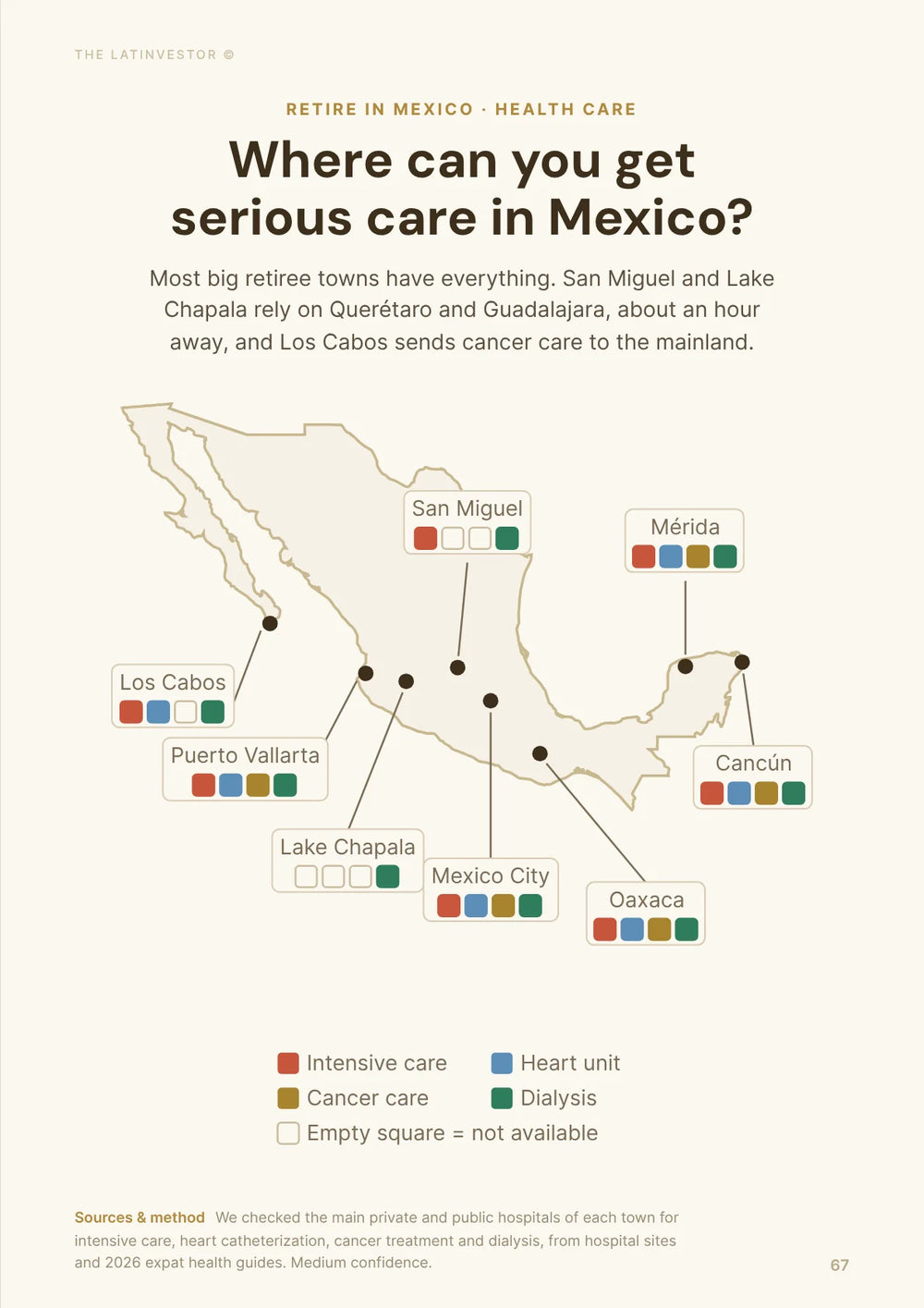
Foreigners can access IMSS voluntary coverage through the "Seguro de Salud para la Familia" program if eligible, though many expats in Querétaro find that private insurance offers more predictable access, shorter wait times, and coverage at preferred private hospitals like Hospital Angeles or Star Médica.
A total annual healthcare budget for a retiree in Querétaro, including insurance premiums, out-of-pocket costs for routine care, medications, and dental, can range from about MXN 45,000 to MXN 150,000 ($2,430 to $8,110 USD or €2,160 to €7,220 EUR) in our estimate, depending on your age, health needs and coverage choices.
Our methodology
This article estimates how much a single retiree needs each month to live in Querétaro, from a bare-minimum budget to a luxury one. We cover rent, utilities, food, transport, health care, the residency visa and taxes, and what changes if you buy a home instead of renting.
We built each budget line by line. Rents and home prices come from Numbeo, Propiedades.com neighborhood listings and local rental guides (October 2026). Everyday costs come from Numbeo and official Qrobus fares, and the transfer tax from the 2026 municipal schedule of Querétaro.
Health care costs come from the IMSS 2026 fee schedule and 2026 private insurance examples. Visa costs come from INM's 2026 fees and the San Diego Mexican consulate's 2026 requirements, and tax rules from the Federal Fiscal Code (article 9), SAT and the US-Mexico tax treaty.
We last checked the figures in October 2026. Dollar amounts use about 18.5 pesos per US dollar (Banxico FIX), and euro amounts about 20.8 pesos per euro. Since most costs are paid in pesos, the dollar figures move with the exchange rate.
Where we had no direct figure, such as the budget split by category, we estimated it from several sources and rounded it. Your own costs will depend on the neighborhood, your health and your habits.
Key sources used for this analysis include Diario Oficial de la Federación (DOF), CONEVAL Poverty Lines, INEGI INPC Inflation Bulletin, INEGI ENIGH 2024 Survey, IMSS Seguro de Salud para la Familia, Líder Empresarial Rent Report, Inmuebles24 Price Reports, CFE Tarifa 1, CEA Querétaro Tariff Calculator, SAT Foreigner Tax Guidance, INM 2026 Fee Schedule, Numbeo, Propiedades.com, IMSS 2026 fees and San Diego Mexican consulate.