Summary
Parts of it, yes. The median condo sold for about $400,000 from January to September 2026, up 7.7%, while condo closings fell 21.1%. Prices have held up; buyers haven't.
The ten-year run was real. MLSVallarta puts the average condo sale at about $310,000 in 2015 and $490,000 in 2025, roughly 4.7% a year, and about 9.6% a year in Central Vallarta North.
Asking prices are now splitting. Since April 2025, Propiedades.com has Amapas apartments up 28.0% and Emiliano Zapata up 8.1%, while Centro is down 4.9% and Versalles down 2.5%.
Condo listings are shrinking, down 17.5% to 2,672, but supply is still heavy: the Bay Report counts about 23 months of resale homes for sale, and 31 months with presales.
Buyers are already getting discounts at the closing table. 69% of homes sold below asking, the median sale closed 8% below its first price, and the median condo took 262 days to sell.
Presales carry the biggest premium: about $4,194 per m² against $3,762 for resale condos, while they are 46% of listings but only 26% of closings.
Airbnb income can't rescue a bad price. AirDNA's average of $31,300 a year is a 7.8% gross yield on a $400,000 condo, but only about 3.9% after a 25% manager and the 25% tax a non-resident owes on gross rent.
Nightly rates are already falling. AirDNA has the average nightly rate down 17.5% to $178, and international passengers at the airport fell 19.4% from January to September 2026.
The peso has just weakened, which helps dollar buyers. An MXN 8 million condo costs about $430,000 at 18.6 pesos per dollar, against about $470,000 in early September.
Local wages can't carry these prices. At the national IMSS average of about MXN 20,400 a month, an Emiliano Zapata apartment costs more than 31 years of gross pay.
Growth is also straining the city: about 40% of neighborhoods faced water cuts in August 2026, and Versalles had sewer backups in October.
Houses are the softer segment. House listings are up 26.5% to 750, and several recent house sales closed 12% to 24% below their last asking price.
A crash still looks unlikely, because about 94% of sales went through without a bank mortgage and owners can wait.
Our take: pay up only for what is truly scarce, like a real ocean view or a top walkable street. Offer at least 8% below asking on generic condos, and much more on anything that has sat for most of a year.

Why does Puerto Vallarta real estate suddenly feel overpriced?
Because asking prices are still near their peak while fewer people are buying.
The price rise itself was big. MLSVallarta's ten-year review found that the average condo sale went from about US$310,000 in 2015 to US$490,000 in 2025, close to 60% more. Central Vallarta North rose about 150%, while Central South and the Hotel Zone roughly doubled.
Those increases were easy to explain for a while: recovery after 2008, more foreign buyers, developers back in town, and then the post-pandemic boom.
The backdrop is much less forgiving now. Coldwell Banker La Costa's October 2026 report, built on MLS data for Puerto Vallarta and Riviera Nayarit, counted 750 condo closings from January to September 2026, down 21.1%. In September alone, only 48 condos closed, 41.5% fewer than a year earlier, and new pending sales fell 51.0%.
Yet prices haven't broken. The year-to-date median condo sale was about $400,000, up 7.7%. Buyers have pulled back much faster than prices have.
Have Puerto Vallarta condo prices actually gone crazy?
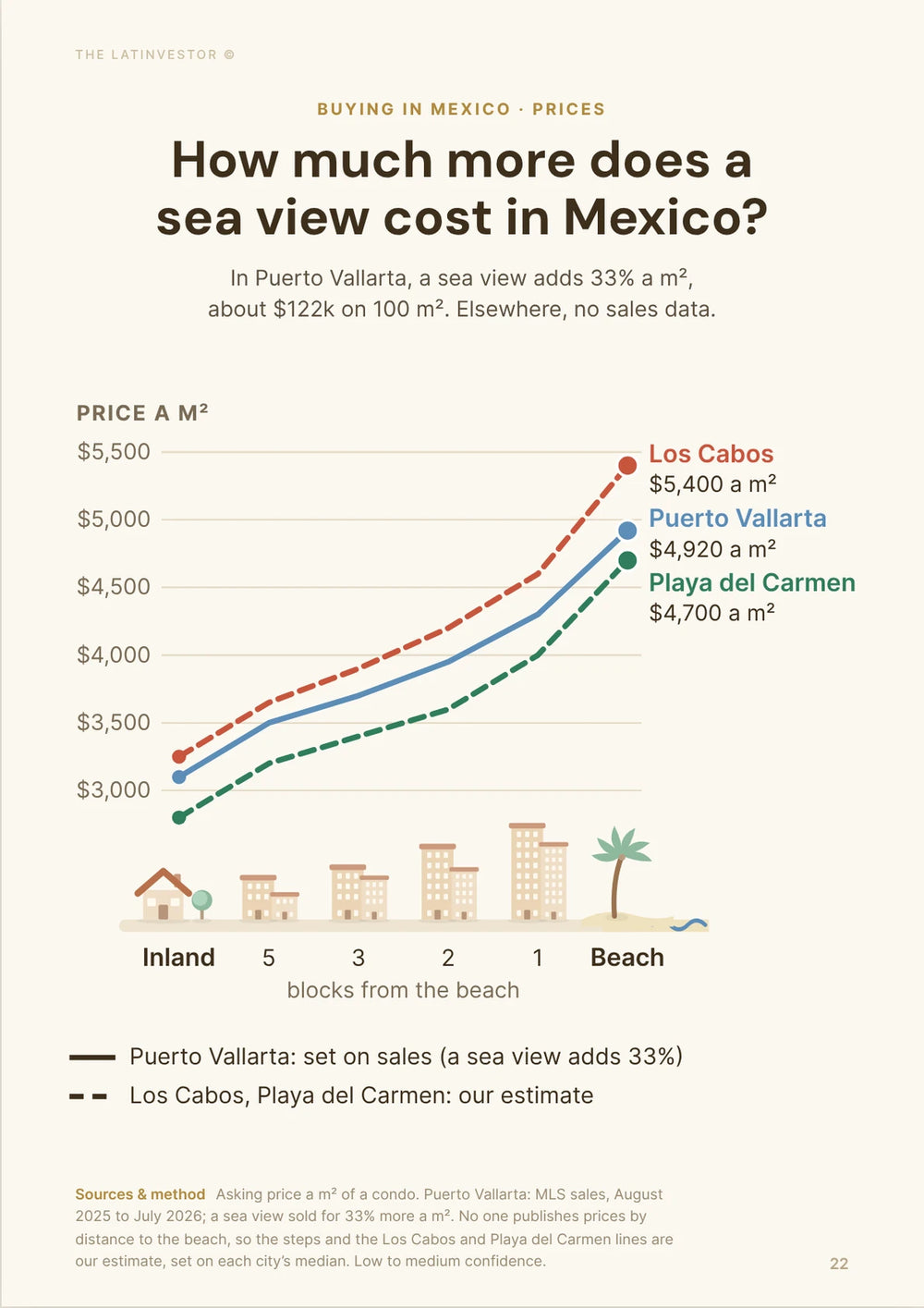
They rose a lot, but the citywide ten-year rise looks like a big repricing, not a speculative explosion.
Going from about US$310,000 to US$490,000 in ten years sounds huge. Annualized, it's about 4.7% a year.
The fast gains were local. A 150% rise in Central Vallarta North is close to 9.6% a year. Doubling in ten years, as Central South and the Hotel Zone roughly did, is about 7.2% a year.
The comparison isn't perfectly clean. MLSVallarta notes that more large developments began reporting through the MLS after 2017, and agencies from outlying areas joined too. Today's sales include more new and high-end units than the 2015 sales did, so the 60% isn't the same condo tracked for ten years.
The point still stands: Puerto Vallarta became much more expensive, and nobody should assume the next ten years will look like the last ten.
| Puerto Vallarta condo market | 2015 | 2025 | Approx. change |
|---|---|---|---|
| Average condo sale price | US$310,000 | US$490,000 | +58% |
| Annualized increase | — | — | ~4.7% |
| Central Vallarta North | Base | ~2.5× | +150% |
| Central Vallarta South | Base | ~2× | ~+100% |
| Hotel Zone | Base | ~2× | ~+100% |
Are Puerto Vallarta real estate prices finally coming down?
In some neighborhoods, yes. Across the whole city, not yet.
Propiedades.com's asking-price data, from April 2025 to October 2026, shows the split clearly. Average apartment asking prices fell 4.9% in Centro and 2.5% in Versalles. Over the same period, Amapas climbed 28.0% and Emiliano Zapata 8.1%, against 7.3% for Puerto Vallarta as a whole. Marina Vallarta was up 7.8% between February 2025 and August 2026.
Actual sales point the same way. The Vallarta Seaside Bay Report, built on MLS closings across Puerto Vallarta and Bahía de Banderas over the twelve months to September 2026, has the Romantic Zone's median sale down 6.3%.
Monthly data is mixed too. In September 2026 the median condo sale was $432,500, up just 1.6%, while the average sale was down 7.7%. One low-season month proves little, but the steady climb is over. Sellers of rare units are holding their price; owners of interchangeable condos are already giving ground.
| Apartment area | Average asking price | Median price/m² | Change since April 2025 |
|---|---|---|---|
| Amapas | MXN 10.39M (US$559,000) | MXN 53,500 | +28.0% |
| Emiliano Zapata | MXN 7.65M (US$411,000) | MXN 81,300 | +8.1% |
| Marina Vallarta* | MXN 7.24M (US$390,000) | MXN 48,300 | +7.8% |
| Puerto Vallarta Centro | MXN 5.61M (US$302,000) | MXN 56,000 | -4.9% |
| Versalles | MXN 4.01M (US$215,000) | MXN 44,500 | -2.5% |
*Marina Vallarta: February 2025 to August 2026. Asking prices, not sale prices.
Does Puerto Vallarta have too many condos for sale?
Yes, even though fewer condos are listed than a year ago.
Coldwell Banker La Costa counted 2,672 active condo listings in September 2026, down 17.5% in a year. New condo listings were down 32.0% from January to September. Owners who don't need to sell are simply staying off the market.
But fewer listings doesn't mean a tight market. The Bay Report puts resale supply at about 23 months of sales, and 31 months once presales are added. Six months is usually seen as balanced.
So supply is shrinking and demand is shrinking too. That's why there's no classic glut with panic selling, but also no shortage that justifies boom-time prices. We cover this in detail in our article on Puerto Vallarta's condo oversupply.
Houses are a different story; we come back to them below.
Are Puerto Vallarta sellers still getting away with high asking prices?
On the listing, yes. At the closing table, mostly not.
The median condo that sold in September 2026 took 262 days to find a buyer, 10.1% longer than a year earlier. Almost nine months is a long time to carry HOA fees, property tax and an empty unit.
The Bay Report shows how deals actually close: over the twelve months to September 2026, 69% of homes sold below their asking price, only 11% above, and the median sale closed 8% below its first price.
So sellers still ask ambitious prices, but buyers make them wait, then negotiate. A seller who has sat for nine months, already cut once and has several similar units for sale in the same tower is in a very different spot from an owner listing a rare oceanfront unit for the first time.
How can you tell if a Puerto Vallarta listing is overpriced?
Check four numbers before you make an offer: price per m², days on market, the price history and a realistic rental test.
Price per m²: across the bay, resale condos sell for about $3,762 per m² and presales for about $4,194, according to the Bay Report. TuLugar's October 2026 asking medians run from about $3,646 per m² in Versalles to $6,205 in Emiliano Zapata. A generic condo listed well above its neighborhood's level needs a reason you can see: the view, the floor, the building.
Time and history: if the unit has been listed longer than the 262-day condo median, ask for the original price, every cut and the listing date. Then compare price per m² with the other units for sale in the same tower; the cheapest similar one sets the real price.
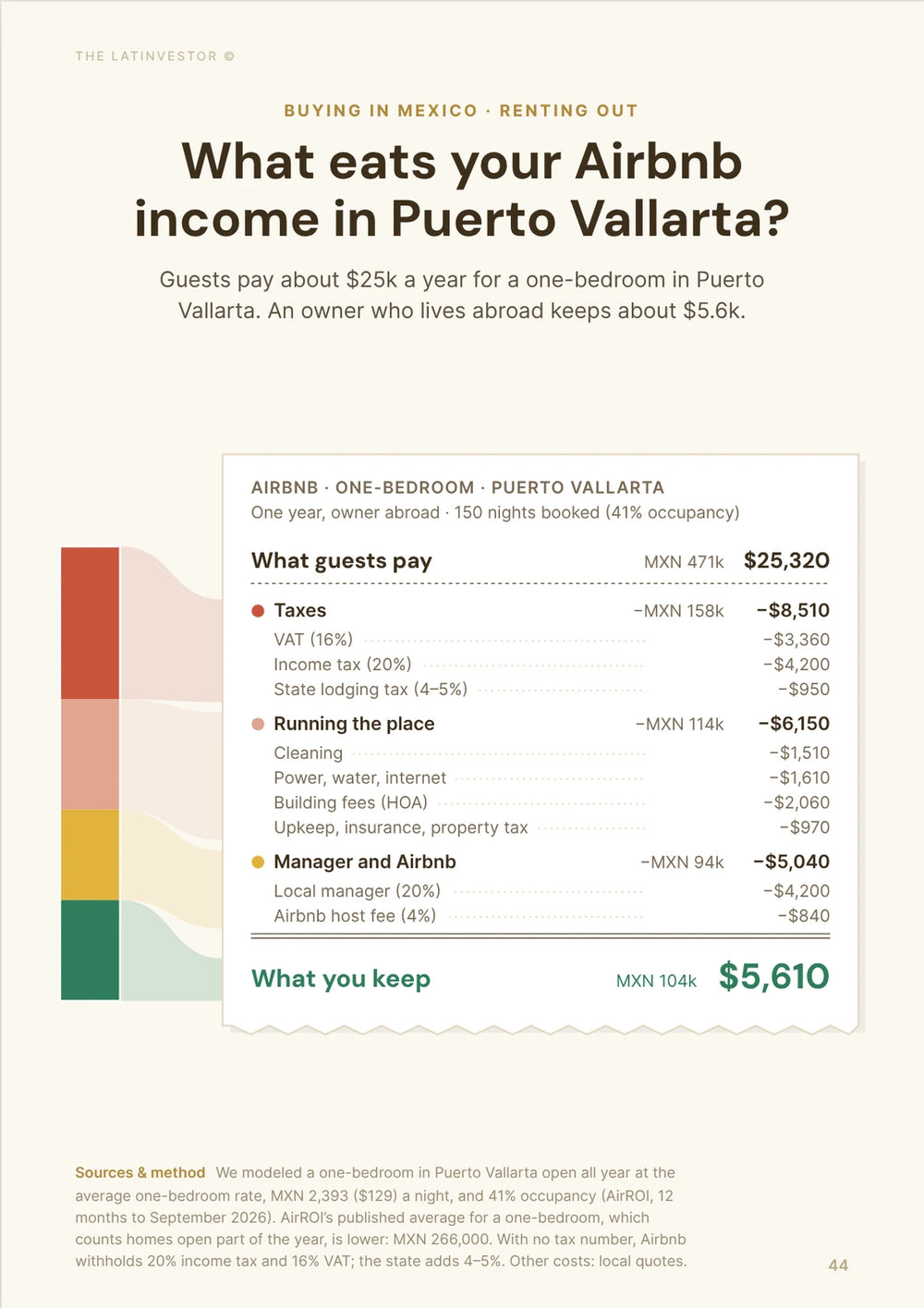
Rental test: if the price only works with high-season nightly rates all year, it's too high. Use AirDNA's market average of about $178 a night and $31,300 a year, take off 25% for a manager and 25% of the gross for a non-resident's income tax, and see what's left (we run the numbers below).
Then make the offer. Start around 8% below the asking price, the Bay Report's median cut, and go further on anything stale or generic. Don't expect much on scarce oceanfront units that sell within a couple of months.
Which Puerto Vallarta neighborhoods look the most expensive now?
Emiliano Zapata is the priciest mainstream condo area per m², while Versalles gives much more space for the money.
Propiedades.com's October 2026 data puts Emiliano Zapata at about MXN 81,300 per m² (US$4,370), with an average listed apartment of about MXN 7.65 million (US$411,000).
Centro comes in around MXN 56,000 per m² and Amapas around MXN 53,500, although Amapas apartments are much larger and pricier on average, at about MXN 10.39 million (US$559,000).
Versalles sits at about MXN 44,500 per m², with an average asking price of about MXN 4.01 million (US$215,000).
These are different mixes of property, so a lower price per m² in Amapas doesn't make it "cheaper." Views, building age, unit size and exact location change everything.
But the gap is now large enough to change behavior. Someone paying more than MXN 81,000 per m² in Emiliano Zapata needs a good reason to turn down a Versalles apartment at about half the total price.
Are new Puerto Vallarta condos too expensive compared with resales?
Often, yes. Be skeptical when the premium mostly comes from the word "new."
The Bay Report puts presale condos at about $4,194 per m² against $3,762 for resale condos, about 11% more.
Some premium makes sense. New buildings can have better elevators, modern wiring, newer air conditioning and layouts designed for short-term rentals, and older buildings may need work soon after purchase.
The problem is that dozens of projects now offer the same thing. Presales are 46% of active listings but only 26% of closings, and about 1,534 more units are due by 2028, 607 of them in 2027. A rooftop pool feels scarce when two buildings have one; it's standard when ten nearby projects advertise it.
Demand for new builds hasn't disappeared: MLSVallarta counted 520 pre-construction condo sales in 2025, up from 422 a year earlier. But a new condo priced above a comparable resale should earn the gap with something concrete: a better location, a better view, stronger construction, a rare layout or real payment terms. A newer kitchen isn't enough.
Do Puerto Vallarta Airbnb returns still justify expensive condo prices?
Only if you buy at the right price. Average rental income won't rescue a bad entry price.
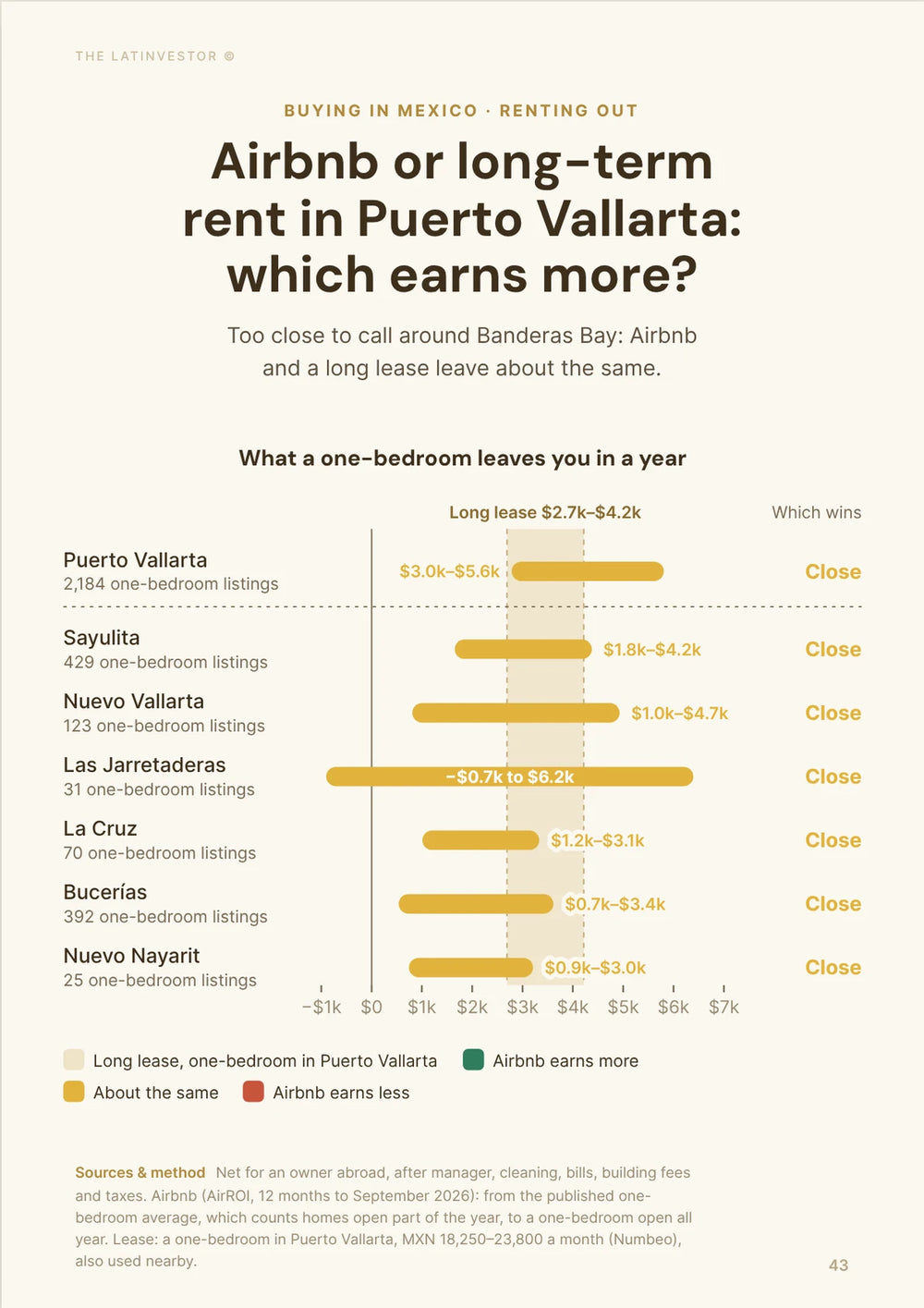
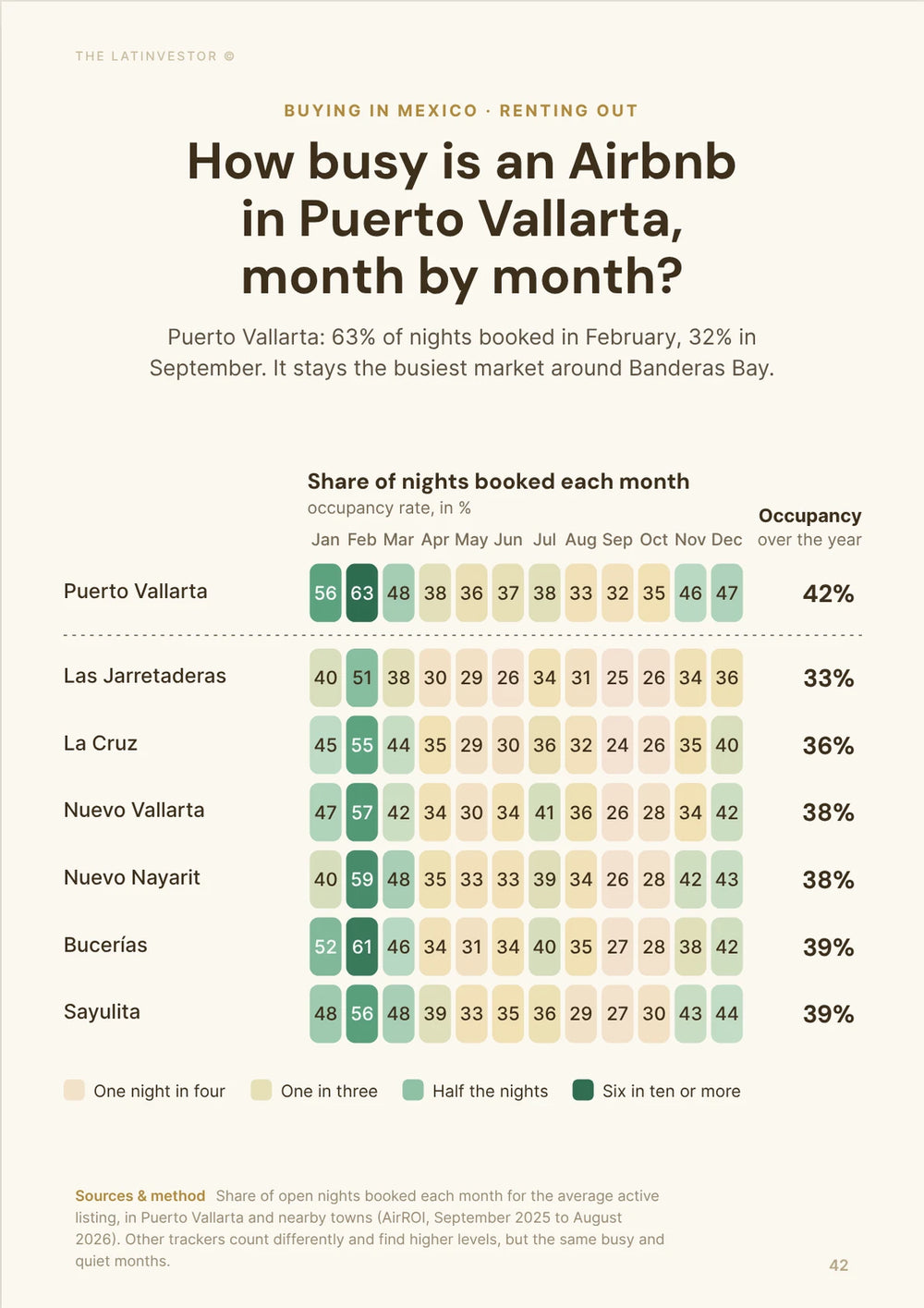
AirDNA puts the average active short-term rental in Puerto Vallarta at about US$31,300 of revenue over the twelve months to September 2026, with 57% occupancy.
On a US$400,000 condo, that's a 7.8% gross yield. At US$500,000, it's 6.3%.
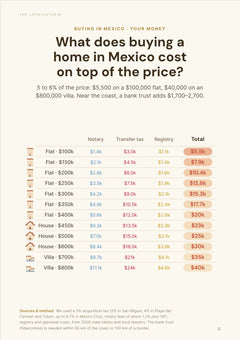
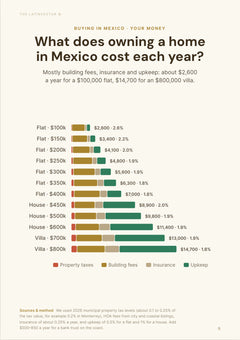
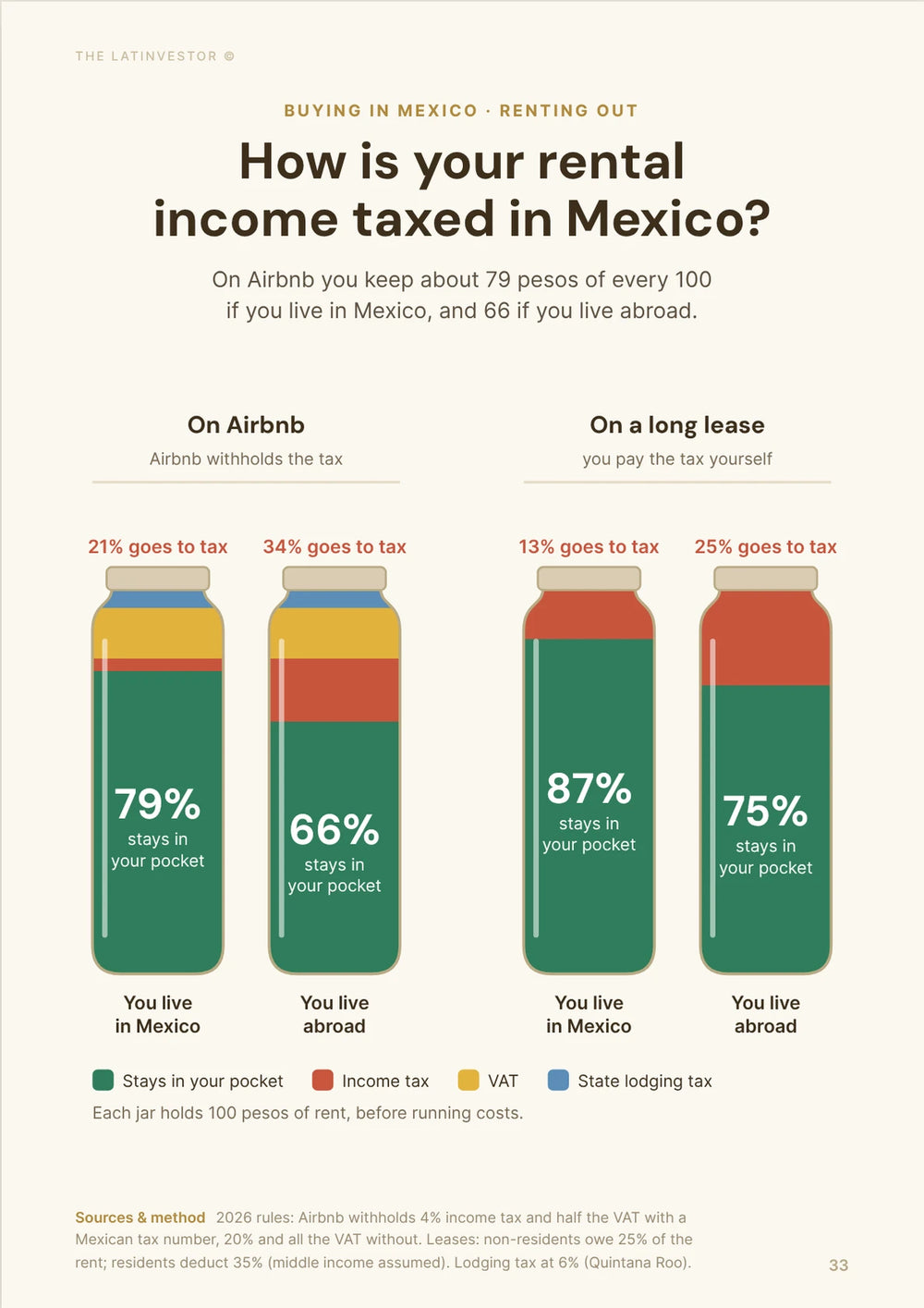
Then the money starts leaving. A local manager usually takes 18% to 25% of revenue; we use 25%. A non-resident owner owes income tax of 25% of the gross rent, with no deductions. That leaves about US$15,650, or 3.9% on US$400,000 and 3.1% on US$500,000, before HOA fees, electricity, repairs, insurance and furniture. Foreigners also pay roughly 5% to 8% in closing costs before getting the keys.
That's where many high-priced Airbnb condos stop making sense. The math still works when the entry price is right.
| Example rental economics | US$400k condo | US$500k condo |
|---|---|---|
| Annual gross bookings (AirDNA average) | US$31,300 | US$31,300 |
| Gross booking yield | 7.8% | 6.3% |
| 25% management fee | US$7,825 | US$7,825 |
| 25% non-resident income tax on gross | US$7,825 | US$7,825 |
| Left before running costs | US$15,650 (3.9%) | US$15,650 (3.1%) |
| HOA, utilities, repairs, insurance | Still to pay | Still to pay |
| Closing costs | Roughly 5–8% | Roughly 5–8% |
Are Puerto Vallarta Airbnb owners having to cut prices?
Yes. Hosts are still filling nights, but at lower rates.
AirDNA has the average booked nightly rate down 17.5% to $178 over the twelve months to September 2026, and revenue per available night down 10.4% to about $101. Occupancy around 57% isn't bad for a seasonal resort; the pricing is what's slipping.
Well-known buildings are discounting too. In October 2026, PVRPV's deals page listed about 40 discounted rentals, mostly 20% to 30% off, with up to 50% off at Residences by Pinnacle in Amapas. October is low season, but those are established buildings in good locations.
For a buyer, that changes the math. A developer's model with 60% occupancy can still be badly wrong if it assumes US$250 a night when the market average is US$178. Test any projection with both lower occupancy and a lower rate; if it only works with the optimistic combination, the price is too high.
Is Puerto Vallarta tourism still strong enough to support property prices?
Not at the moment. Fewer foreign visitors are arriving, and they are the main pool of future buyers.
Grupo Aeroportuario del Pacífico counted about 4.54 million passengers at Puerto Vallarta airport from January to September 2026, 12.3% fewer than a year earlier. International traffic fell 19.4%. That matters because Americans and Canadians fill vacation rentals and later buy second homes.
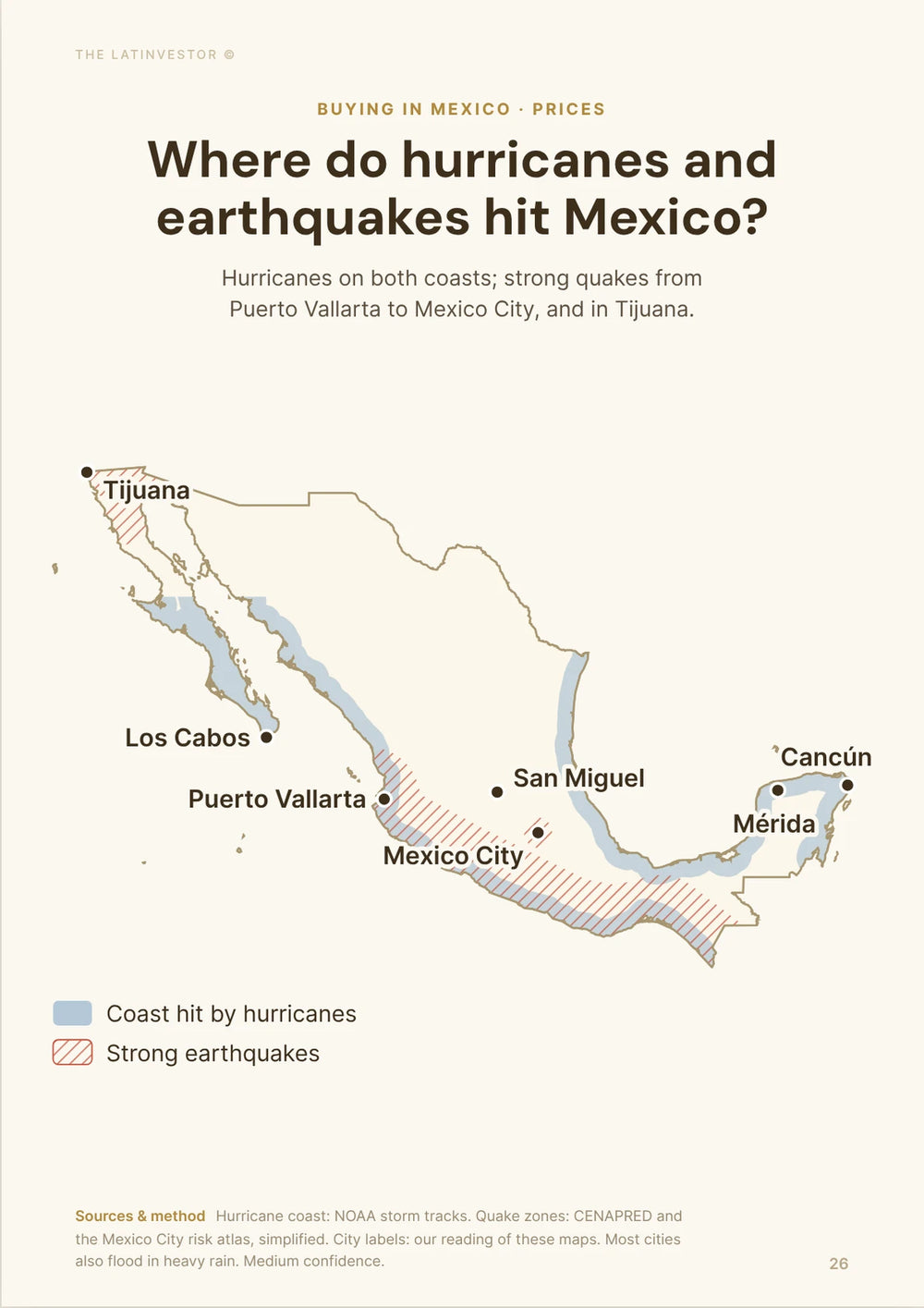
Then Hurricane Simón passed off the coast on October 11 and closed the airport until October 13, just before high season. No major damage was reported.
Tourism isn't collapsing, and winter can bring visitors back quickly. But you don't need a collapse for the math to change: a condo priced as if visitors, nightly rates and foreign demand will keep rising every year deserves a hard look when all three are going the other way.
Has the weaker peso made Puerto Vallarta cheaper for Americans again?
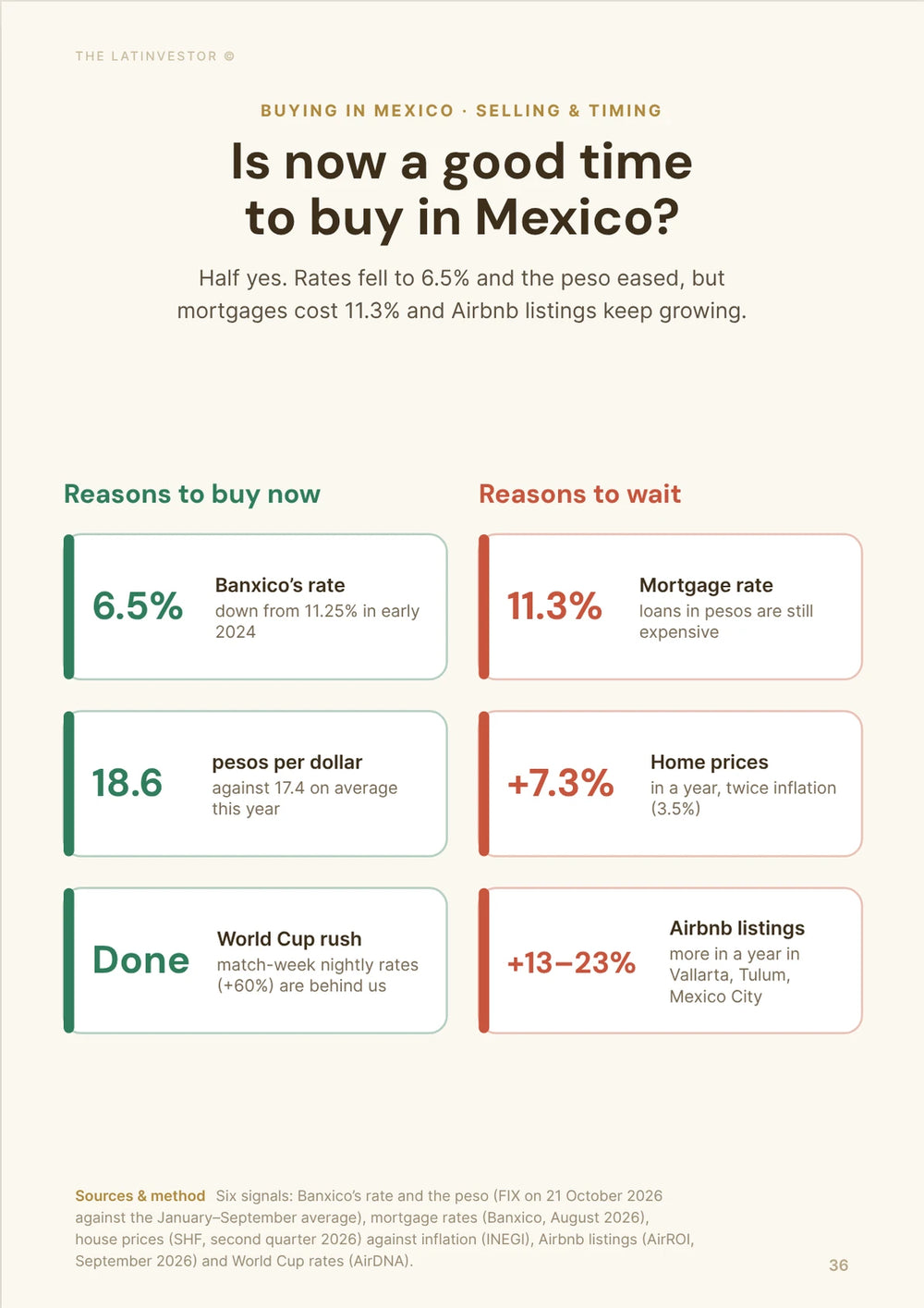
A little, for homes priced in pesos. The peso has just weakened, from under 17 per dollar in early September 2026 to about 18.6.
Take an MXN 8 million property. At 17 pesos per dollar it cost about US$470,000; at 18.6 it costs about US$430,000. That's roughly US$40,000 less without the seller cutting anything. It's still more than the roughly US$417,000 it cost at the 2025 average of about 19.2.
Many homes aimed at foreign buyers are listed in US dollars, so they don't get cheaper when the peso moves. Peso-priced homes, often in local neighborhoods, are where the exchange rate works for you right now.
What to do: compare listings in the currency they're priced in. If you buy in pesos, ask to fix the price in pesos in the contract; if the peso keeps weakening before closing, you gain. If it strengthens again, you lose that edge.
Can local people still afford Puerto Vallarta real estate?
No. Prime condos are far beyond what local wages can support, which shows how much the market depends on outside money.
There's no clean city wage series to set against condo prices. As a benchmark, the IMSS average wage for formal workers in Mexico hit a record MXN 671.3 a day in May 2026, about MXN 20,400 a month (US$1,100).
Compare that with today's listings: about MXN 4.01 million for an average Versalles apartment, MXN 7.65 million in Emiliano Zapata and MXN 10.39 million in Amapas.
At MXN 20,400 a month, an Emiliano Zapata apartment equals more than 31 years of gross pay, before food, rent or taxes.
That alone doesn't tell you what a Romantic Zone condo is worth. The central market is paid for by foreigners, retirees, second-home owners and wealthier Mexicans, mostly in cash. But it shows where the risk sits: if foreign buyers step back, local salaries can't replace them.
Are buyers already leaving Puerto Vallarta's expensive neighborhoods for cheaper areas?
Yes, and they have been for years.
MLSVallarta's ten-year study found that Central Vallarta South and the South Shore made up 55% of the bay's sales in 2015 and only 26% in 2025. Areas such as Mezcales, Jarretaderas, Pitillal, Aramara and Sayulita/San Pancho went from less than 2% of sales to about 13%. Francisco Villa, the MLS area that includes Versalles, went from about 2% to more than 10%.
Part of that comes from better MLS coverage outside the center, so not every point is buyers fleeing high prices. But MLSVallarta itself points to lower prices as a main reason buyers moved outward.
Versalles is the clearest case: close to restaurants, services and the Hotel Zone, without Emiliano Zapata prices. Developers followed the buyers, though. The Bay Report puts Versalles and Fluvial at about 16 months of resale supply, and Versalles asking prices have slipped 2.5% since April 2025. Cheaper doesn't mean short of supply.
Can Puerto Vallarta's water and sewers keep up with all the new towers?
Not always, and buyers should check before paying a premium for a new building.
In August 2026, SEAPAL, the city's water utility, warned that highway works would cut water to about 40% of the city's neighborhoods. In October, it reported that two failed pumps at the Norte I treatment plant were behind sewer backups in Versalles, where many of the new towers went up. In July, COFEPRIS listed Playa del Cuale as failing bathing-water standards.
None of this makes a neighborhood unbuyable. But a condo priced on "modern living" loses some of its shine when the street floods with sewage or the tap runs dry for days.
What to check: ask the HOA whether the building has its own cistern and how many days of water it holds, ask neighbors about outages and drainage in the rainy season, and visit after a heavy rain if you can. In a building without a decent cistern, push the price down.
Does paying extra for Zona Romántica still make sense?
Only when you're getting something another building can't copy.
Location is the strongest argument. Zona Romántica packs Los Muertos Beach, restaurants, nightlife and walkability into a small area where land is limited. A direct ocean view is scarce too, and so is a good corner unit on a quiet street a few minutes from the beach.
Prices there are already giving way, though. Listings ask around $5,450 per m², according to the ZEPTO listing map, but the Bay Report has the Romantic Zone's median sale down 6.3% over the twelve months to September 2026, with about 14 months of resale supply.
The weak argument is the amenity package. Rooftop pools, gyms and modern common areas used to set a few projects apart; today they're everywhere. Paying US$550,000 for an ordinary one- or two-bedroom because of a rooftop infinity pool can look bad when three newer buildings offer the same thing two years later. Paying extra for a view or a street that can't be reproduced is a much safer bet.
Are Puerto Vallarta houses a better deal than condos now?
For buyers with time, often yes. House supply is growing while condo supply shrinks.
Coldwell Banker La Costa counted 750 active house listings in September 2026, up 26.5% in a year, against 2,672 condos, down 17.5%. House closings were down 4.0% from January to September.
The year-to-date median house sale was about $425,000, up 2.3%, but the average sale was down 5.2%. Monthly figures swing wildly with a few luxury deals: September's median jumped 59.3% on just 17 sales.
Houses don't necessarily sit longer than condos: the September median was 154 days, against 262 for condos. The pressure shows in the price. SearchPV's recent house closings include Hacienda Versalles at 87.9% of its final asking price and Villa Amanda in Upper Conchas Chinas at 76.1%, after 361 days.
If you want a real home rather than the easiest rental, houses deserve a serious look, and a firm offer.
| Wider Vallarta market (Sept. 2026) | Condos | Houses |
|---|---|---|
| Active listings | 2,672 | 750 |
| Listings change YoY | -17.5% | +26.5% |
| Median days on market, September | 262 | 154 |
| Closings, January to September | -21.1% | -4.0% |
| Year-to-date median sale | ~$400,000 (+7.7%) | ~$425,000 (+2.3%) |
| Buyer leverage | Moderate | Stronger |
Could Puerto Vallarta real estate prices crash again?
It's possible, but the data points to a slow adjustment, not a sudden collapse.
Puerto Vallarta has fallen hard before. MLSVallarta found that average condo prices dropped more than 20% after the 2007 peak and took about a decade to fully recover. Anyone saying Vallarta "never goes down" is ignoring the city's own history.
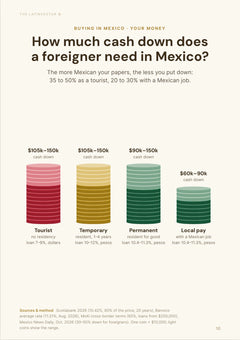
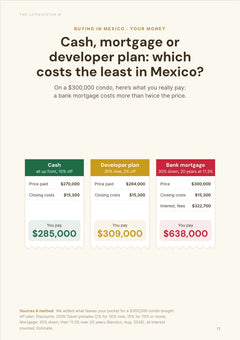
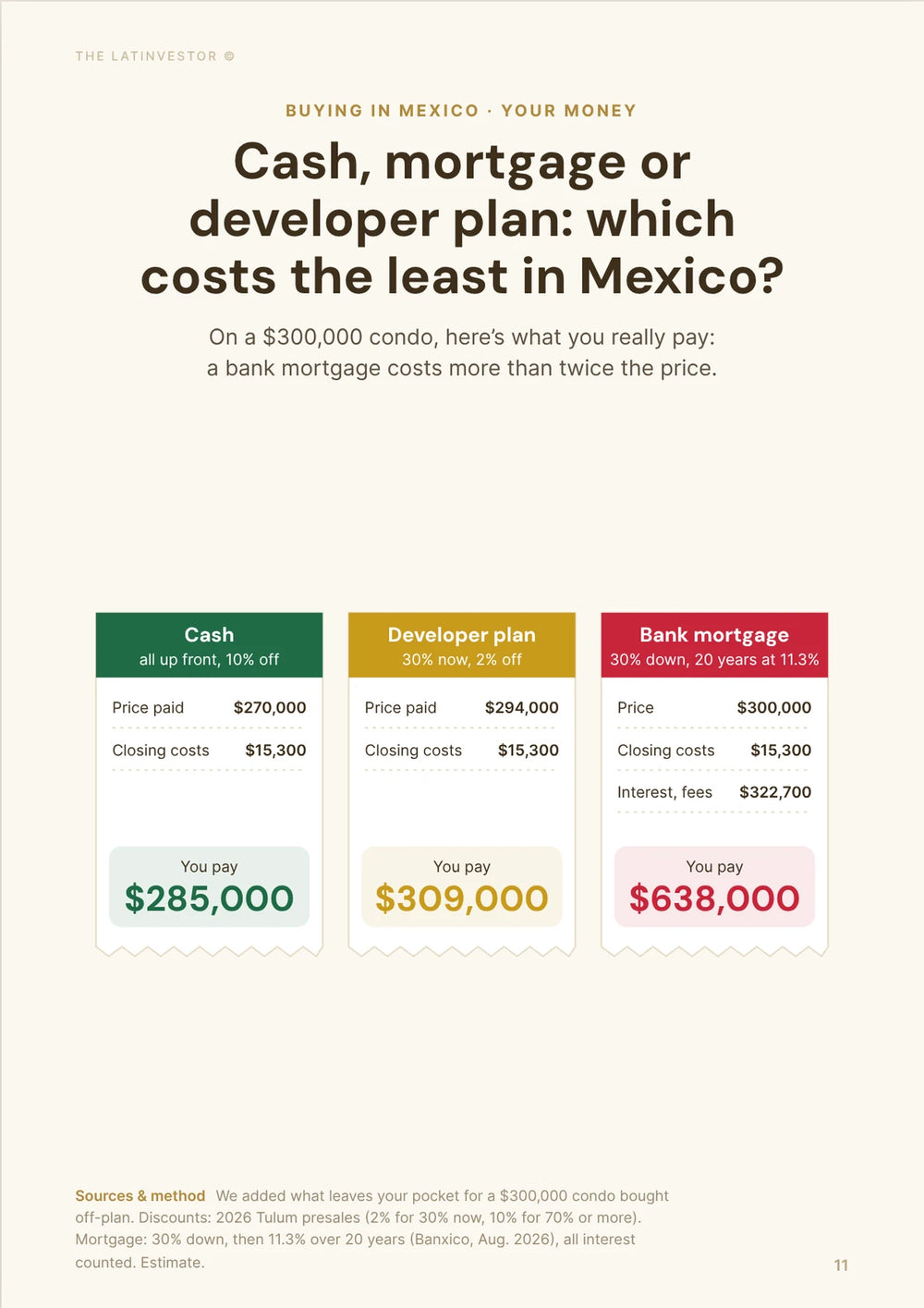
Today's market has a buffer: in the Bay Report's twelve months to September 2026, about 94% of sales went through without a bank mortgage. Owners without a mortgage are rarely forced to sell. You can see it in the data: new condo listings are down 32.0% this year while existing ones take longer to sell.
That sets up a drawn-out correction: fewer sales, long listing times, discounts at closing and headline prices that barely move. Inflation does the rest quietly. A property that stays at US$450,000 for five years while other prices rise 4% a year loses almost 18% of its real value without any visible price drop.
You don't need a crash to have overpaid.
What would tell us Puerto Vallarta real estate is seriously overpriced?
Rising condo inventory and repeated price cuts at the same time as falling sales. We're not fully there yet.
The demand side is already weak: condo closings are down 21.1% this year, and September's new pending sales were down 51.0%.
The supply side hasn't broken: active condo listings are down 17.5%. Weak demand still isn't pushing large numbers of owners to sell.
Watch whether that changes over the 2026–27 winter season. If listings start climbing while condos still take 262 days to sell, the neighborhoods already cutting prices, like the Romantic Zone and Centro, will face more pressure. If nightly rates keep falling too, investor condos get much harder to justify.
The most bearish mix would be simple: more condos for sale, fewer buyers, lower rental income and more developer incentives. Puerto Vallarta has some of those ingredients today, not all of them.
So, is Puerto Vallarta real estate overpriced now?
Partly, yes, especially generic premium condos and investment units whose prices still assume boom-time demand and rental income.
We don't see enough to call the whole city a bubble. Puerto Vallarta's long-term rise has real foundations: a major international airport, established tourism, hospitals, a large foreign community and neighborhoods where land really is scarce.
But the market is much less forgiving than a few years ago. Condo closings are down 21.1% this year, condos take about 262 days to sell, 69% of homes sell below asking, Airbnb nightly rates are down 17.5% and foreign air traffic is down 19.4%. Shrinking condo listings and cash owners are the main reasons prices have held.
So the overpricing is selective. We'd pay a high price for something hard to replace: real ocean frontage, a rare view, a clearly better building or one of the best walkable streets. We wouldn't pay the same premium for a standard two-bedroom surrounded by similar projects and sold with optimistic Airbnb numbers.
You don't need a crash to get a better deal today. Start 8% below asking, push harder on anything that has sat for most of a year, and stop treating every listing as if it were scarce. Right now, most aren't.
Our methodology
This article estimates whether Puerto Vallarta real estate is overpriced today. Instead of relying on one citywide number, we looked at long-term appreciation, recent sales, inventory, time on market, discounts, neighborhood asking prices, the presale premium, short-term rental income, tourism, the exchange rate, local wages and infrastructure strain.
Recent market figures come from MLS data: Coldwell Banker La Costa's October 2026 report (Puerto Vallarta and Riviera Nayarit, to September 2026) for closings, pending sales, listings, prices and days on market, and the Vallarta Seaside Bay Report (MLS closings across Puerto Vallarta and Bahía de Banderas, twelve months to September 2026) for months of supply, discounts, neighborhoods and the presale pipeline. MLSVallarta's studies give the 2015–2025 history and the shift of sales to cheaper areas, and SearchPV gives individual house closings.
Neighborhood asking prices come from Propiedades.com (April 2025 to October 2026), TuLugar and ZEPTO. Rental figures come from AirDNA and PVRPV, tourism from Grupo Aeroportuario del Pacífico, wages from IMSS, and infrastructure from SEAPAL and COFEPRIS. The 25% non-resident tax on gross rent comes from Mexico's income tax rules for foreign landlords.
We checked these figures in October 2026. Conversions use about 18.6 pesos per US dollar and 20.9 pesos per euro; the peso comparison also uses its early September 2026 level (just under 17) and the 2025 average (about 19.2).
Limits: asking prices are not sale prices, and medians move with the mix of homes sold. MLS data covers agent-listed sales, not every private sale. Small neighborhood samples and single months can swing a lot. The rental example uses a market average, not a forecast for any specific unit, and the IMSS wage is a national figure.
Key sources used for this analysis include Coldwell Banker La Costa's October 2026 market pulse, the Vallarta Seaside Bay Report, MLSVallarta's 2015–2025 market review, MLSVallarta's 2024 market review, Propiedades.com on Versalles, Propiedades.com on Amapas, Propiedades.com on Emiliano Zapata, Propiedades.com on Puerto Vallarta Centro, Propiedades.com on Marina Vallarta, TuLugar's Puerto Vallarta market data, ZEPTO, SearchPV house closings, AirDNA's Puerto Vallarta short-term-rental overview, PVRPV's current rental promotions, Grupo Aeroportuario del Pacífico's September 2026 traffic report, Crónica on the airport reopening after Hurricane Simón, IMSS's May 2026 employment bulletin, SEAPAL on the August 2026 water cuts, SEAPAL on the Versalles drainage backups and COFEPRIS beach monitoring.