Summary
Yes, for a patient buyer who negotiates. Condo closings across Puerto Vallarta and Riviera Nayarit fell 21.1% from January to September 2026, and the median condo now takes 262 days to sell, but prices have not crashed.
September was especially weak: only 48 condo closings, 41.5% fewer than a year earlier, and new pending condo sales down 51%.
Buyers have the upper hand on time and choice. There are about 23 months of resale homes for sale across the bay, and 69% of homes sold below asking in the year to September 2026.
Prices are holding, not falling. The year-to-date condo median is about $400,000, up 7.7%, and the house median about $425,000, up 2.3%.
Sellers are pulling back instead of cutting. New listings are down 32% this year and active condo listings fell 17.5% to 2,672.
The pipeline is still heavy: about 1,534 new units are due by 2028, more than the 1,338 homes sold across the bay in the twelve months to September 2026.
Houses give the most choice. Active house listings are up 26.5% to 750, and the biggest discounts are on homes asking $1 million or more.
Expect to negotiate around 8%, not 20%. The median sale closed 8% below its first asking price, with much more possible on listings that have sat for most of a year.
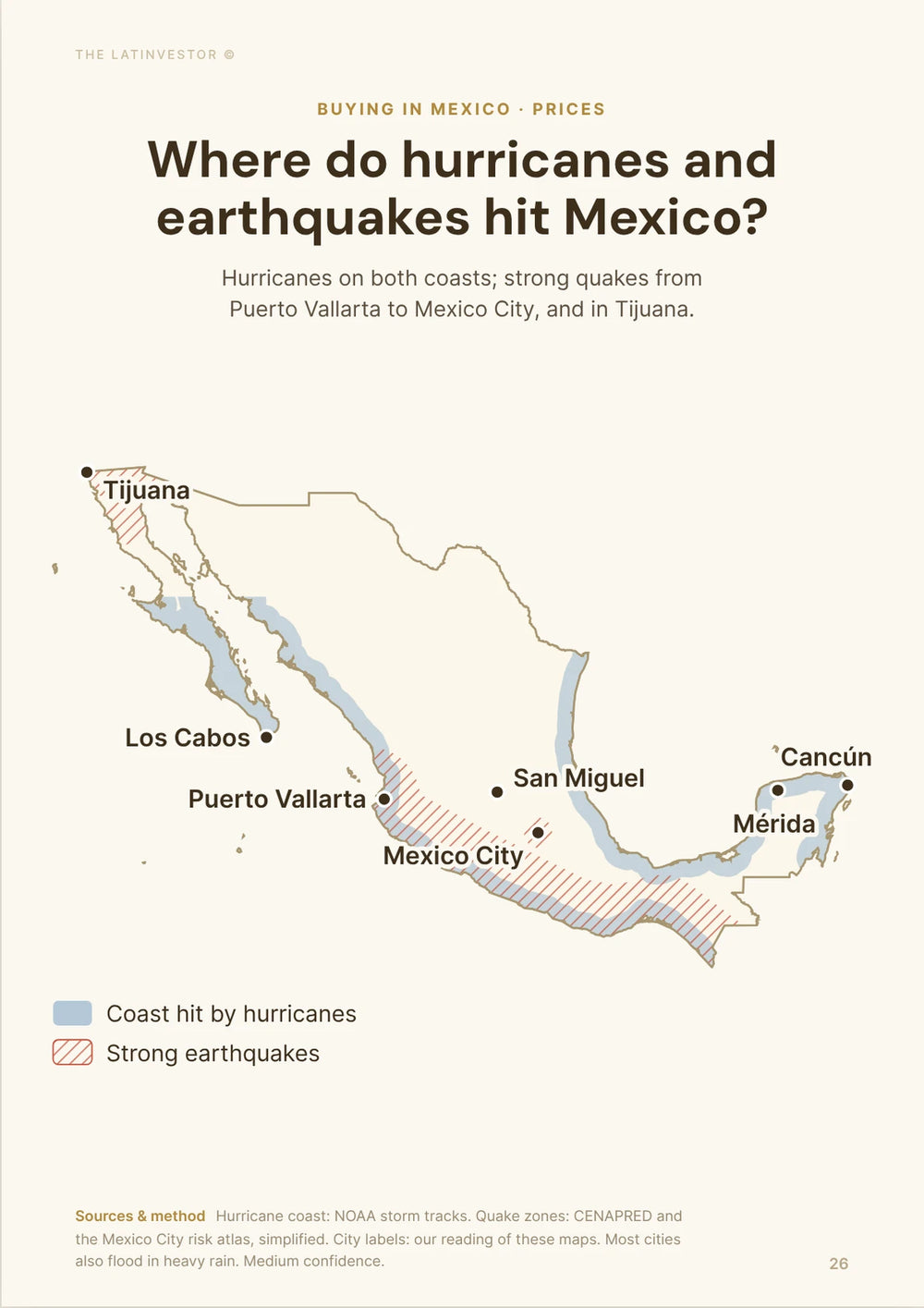
This winter is the test. Hurricane Simón closed the airport until October 13, 2026, and international passengers fell 19.4% from January to September.
The February 2026 violence still weighs on perception: 65.4% of residents said they felt unsafe in June 2026, against 27.3% a year earlier.
Airbnb won't rescue a bad price. AirDNA puts revenue per available night down 10.4%, with average yearly earnings of about $31,300 per listing.
Presales are the weakest bet: 46% of the listings, but only 26% of closings.
Neighborhoods are splitting. Average asking prices are up 28.0% in Amapas since April 2025 but down 2.5% in Versalles and 4.9% in Centro.
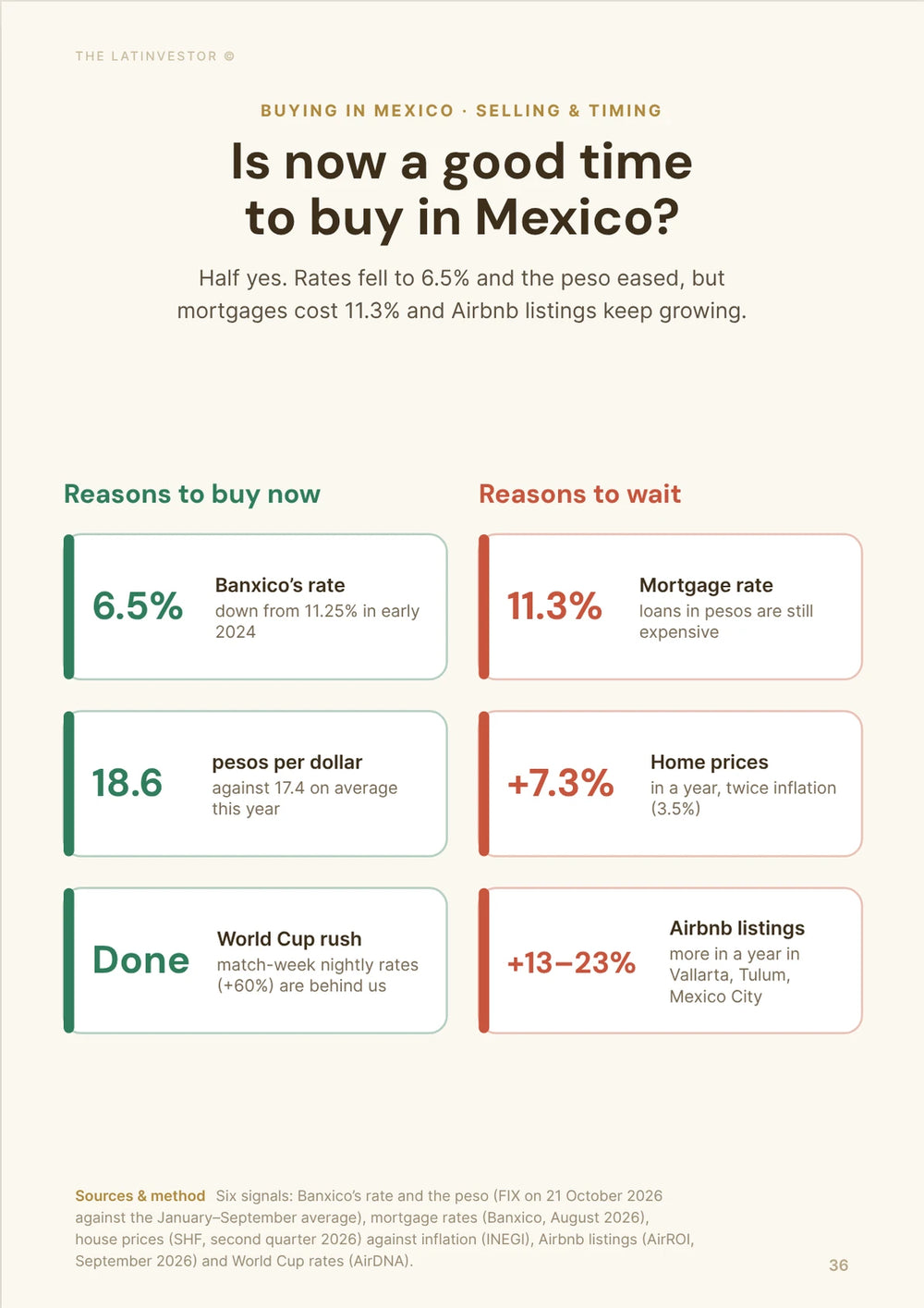
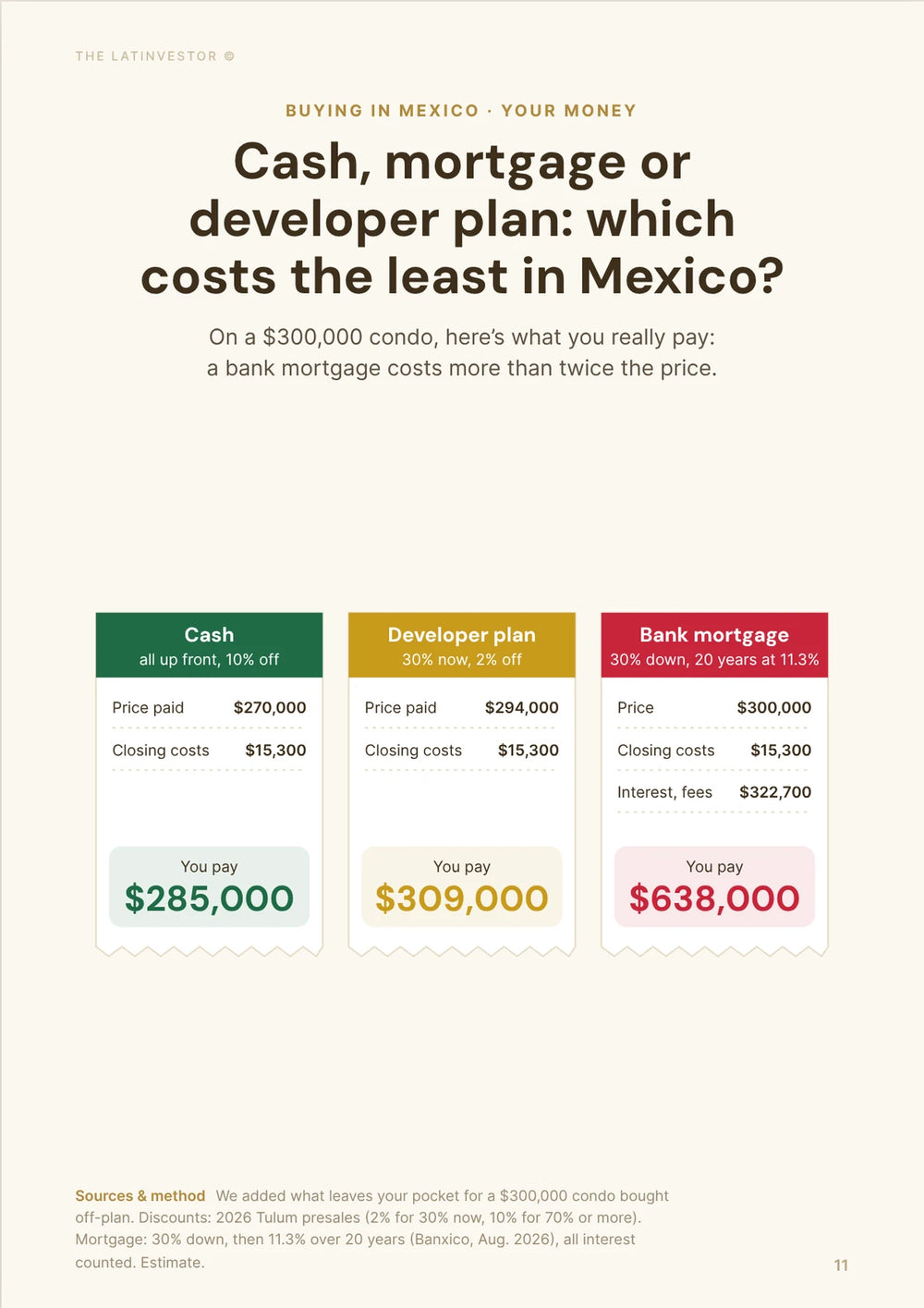
Cash matters. Mexican mortgages averaged 11.31% in August 2026. The peso has weakened since early September (from under 17 to about 18.6 per dollar), so peso-priced homes are cheaper for dollar buyers than a few weeks ago, though still a bit dearer than on the 2025 average.
Our take: buy now if you pay cash, plan to hold for years and target stale listings; don't buy a generic condo or presale at the asking price, and don't wait for a crash that the numbers don't show.

What do the latest September 2026 numbers say?
They say sales are sliding while prices hold. Coldwell Banker La Costa's October 2026 report, built on MLS data for Puerto Vallarta and Riviera Nayarit, counted 750 condo closings from January to September 2026, 21.1% fewer than a year earlier.
September itself was worse: 48 condo closings, down 41.5%, and new pending condo sales also at 48, down 51.0%. Pending sales are the next few months of closings, so the slowdown is not over.
The median condo that sold in September still took 262 days to find a buyer, 10.1% longer than a year earlier. Houses sold faster in September (154 days), but over the whole year the median house took 222 days, up from 200.
Houses are where choice is piling up: 750 are for sale, 26.5% more than a year ago. Condo listings went the other way, down 17.5% to 2,672.
| Puerto Vallarta and Riviera Nayarit, September 2026 | Latest reading | Change vs. a year earlier |
|---|---|---|
| Active condo listings | 2,672 | -17.5% |
| Condo closings, January to September | 750 | -21.1% |
| Condo closings, September | 48 | -41.5% |
| New pending condo sales, September | 48 | -51.0% |
| Median condo days on market, September | 262 | +10.1% |
| Active house listings | 750 | +26.5% |
| House closings, January to September | 237 | -4.0% |
| Median house days on market, year to date | 222 | up from 200 |
Has Puerto Vallarta actually become a buyer's market?
Yes on time and choice, no on price. Buyers can take months to decide and compare a lot of homes, but sellers are not handing out big discounts across the board.
The Vallarta Seaside Bay Report, built on FlexMLS data for Puerto Vallarta and Bahía de Banderas, puts resale supply at about 23 months of sales in the twelve months to September 2026. Add presales and it reaches 31 months. Six months is usually seen as a balanced market, so this is a lot of stock.
Only 11% of sales in the twelve months to September 2026 closed above asking, and 69% closed below it. The median home took 229 days to sell, 13.9% longer than a year earlier.
Price is where it gets messier. Many owners would rather leave a property listed for another season, or not list at all, than chase the market down. So you can reject overpriced homes and push hard, but don't expect every $500,000 listing to become a $400,000 sale.
Are Puerto Vallarta property prices finally falling?
Not on average. Medians are still up on last year, but the price paid per square meter has stopped rising, and the expensive end is giving ground.
Coldwell Banker La Costa's year-to-date condo median is about $400,000, up 7.7%, and the September condo median was $432,500, up just 1.6%. The house median for the year is about $425,000, up 2.3%, while the average house sale is down 5.2%, which points to fewer big-ticket deals rather than broad cuts.
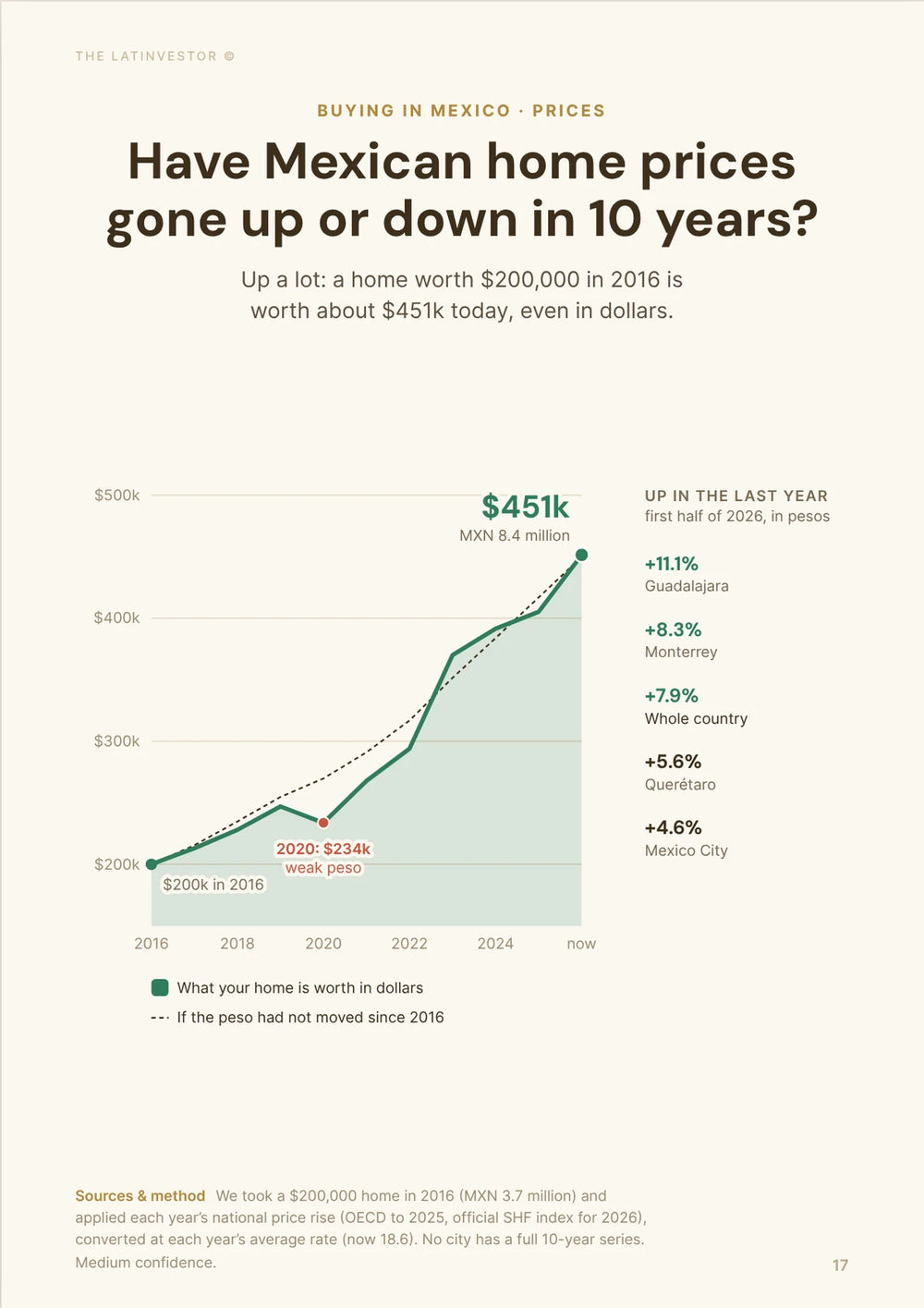
The Bay Report shows the same split. The median sale over the twelve months to September 2026 reached $415,000, up 9.2%, but the median condo price per square meter held flat at about $3,948. People are buying bigger or better homes, not paying more for the same space.
Puerto Vallarta closes few sales compared with a big city, so one month's median can swing a lot depending on whether a few luxury units close. Mexico as a whole is still rising: Sociedad Hipotecaria Federal reported mortgage-financed home values up 7.3% in a year to the second quarter of 2026.
| Price measure | Latest reading | Change |
|---|---|---|
| Condo median, January to September 2026 | ~$400,000 | +7.7% |
| Condo median, September 2026 | $432,500 | +1.6% |
| House median, January to September 2026 | ~$425,000 | +2.3% |
| House average, January to September 2026 | — | -5.2% |
| Bay median sale, 12 months to September 2026 | $415,000 | +9.2% |
| Bay median condo price per m², 12 months to September 2026 | $3,948 | Stable |
| Mexico SHF housing index, Q2 2026 | — | +7.3% |
Why are Puerto Vallarta condo prices holding up when sales are falling?
Because owners are waiting instead of cutting. New listings are falling even faster than sales.
New listings across Puerto Vallarta and Riviera Nayarit are down 32.0% so far in 2026, according to Coldwell Banker La Costa. Active condo listings fell from 2,801 in the August report to 2,672 in September, even though closings were weak.
Many sellers can afford to wait. A US or Canadian second-home owner is not under the pressure of a family that has to sell before buying elsewhere. If the price isn't reached, leaving the condo on the market, or renting it out for another winter, is a realistic option.
That's why the slowdown shows up in sales volumes and selling times rather than in falling condo prices.
Does Puerto Vallarta still have too many condos?
Yes. Even with fewer resale listings, a lot of new condos are still on the way.
The Bay Report to September 2026 tracks about 1,534 presale units still to be delivered through 2028: about 401 in 2026, 607 in 2027 and 480 in 2028, plus a few late 2025 projects. That's more than the 1,338 homes sold across the whole bay in the latest twelve months.
Presales already make up 46% of active listings across the bay, but only 26% of closings. And presales cost more: about $4,194 per m² against $3,762 for resale condos.
The units won't all land at once, but many presale buyers will try to resell while developers are still selling the last units in the same towers. That keeps a lid on condo prices for years.
| Bay-wide supply indicator | Latest reading |
|---|---|
| Units due for delivery in 2026 | ~401 |
| Units due for delivery in 2027 | ~607 |
| Units due for delivery in 2028 | ~480 |
| Total pipeline to 2028 | ~1,534 |
| Homes sold, 12 months to September 2026 | 1,338 |
| Resale supply | ~23 months |
| Supply including presales | 31 months |
Is Puerto Vallarta's condo oversupply finally starting to clear?
Not really. Resale condo listings are falling, but mostly because owners are listing less, not because buyers are snapping units up.
Active condo listings were down 15.4% year on year in Coldwell Banker La Costa's August report and 17.5% in September. Over the same months, condo closings kept falling. If buyers were clearing the excess, sales would be rising while listings fell. That's not what is happening.
For a buyer, this is a window rather than a trend. The stock built up over the boom has already weakened sellers, and fewer new resale listings means the best units are not multiplying. If you find one that fits, there is no reason to assume a better choice will appear next season.
Are Puerto Vallarta houses a better buy than condos right now?
For choice and leverage, yes. Not because house prices have dropped: the year-to-date house median is still up 2.3%.
House listings reached 750 in September, up 26.5% from a year earlier, the mirror image of condos. House sales held up better than condo sales (237 from January to September, down only 4.0%), so this is mainly a supply story.
The leverage is at the top end. About 28.3% of active houses ask $1 million or more, and that's where the deep discounts show up in MLS closings: one Sierra del Mar home sold for $1.8 million against $2.099 million asked after 378 days, and Villa Amanda sold at 76% of its final asking price after 361 days. Houses around $400,000 to $500,000 in Fluvial closed at roughly 95% to 99% of their asking price.
So we would push hardest on expensive houses that have been listed for most of a year, and expect a normal negotiation on well-priced family homes.
| Measure (September 2026) | Houses | Condos |
|---|---|---|
| Active listings | 750 (+26.5%) | 2,672 (-17.5%) |
| Closings, January to September | 237 (-4.0%) | 750 (-21.1%) |
| Median price, year to date | ~$425,000 (+2.3%) | ~$400,000 (+7.7%) |
| Median days on market | 222 (year to date) | 262 (September) |
| Where the leverage is | Homes asking $1 million+ | Towers with several similar units |
How much can buyers negotiate in Puerto Vallarta today?
Expect around 8% off on a typical home, and 10% to 25% on overpriced listings that have sat for most of a year.
Across the twelve months to September 2026, the median sale closed 8% below its first asking price and 69% of homes sold below asking, according to the Bay Report. That's the realistic starting point, not the 20% discounts people talk about.
Where to push harder: anything listed for more than 262 days (the condo median), towers where four or five similar units are for sale at once, and houses asking $1 million or more. In a building with several competing units, compare price per m², floor, view, furniture, HOA fees and rental history before you offer.
What to ask for: the listing history (original price and every cut), the last twelve months of HOA receipts and, for a rental, the real booking statements. A seller who has waited most of a year already knows what buyers think the place is worth.
Should you buy before this winter's high season or wait for spring?
Start looking now, but don't rush to sign before the season starts. Sellers' leverage is at its peak from December to March, and the motivated ones show up when the season ends without a sale.
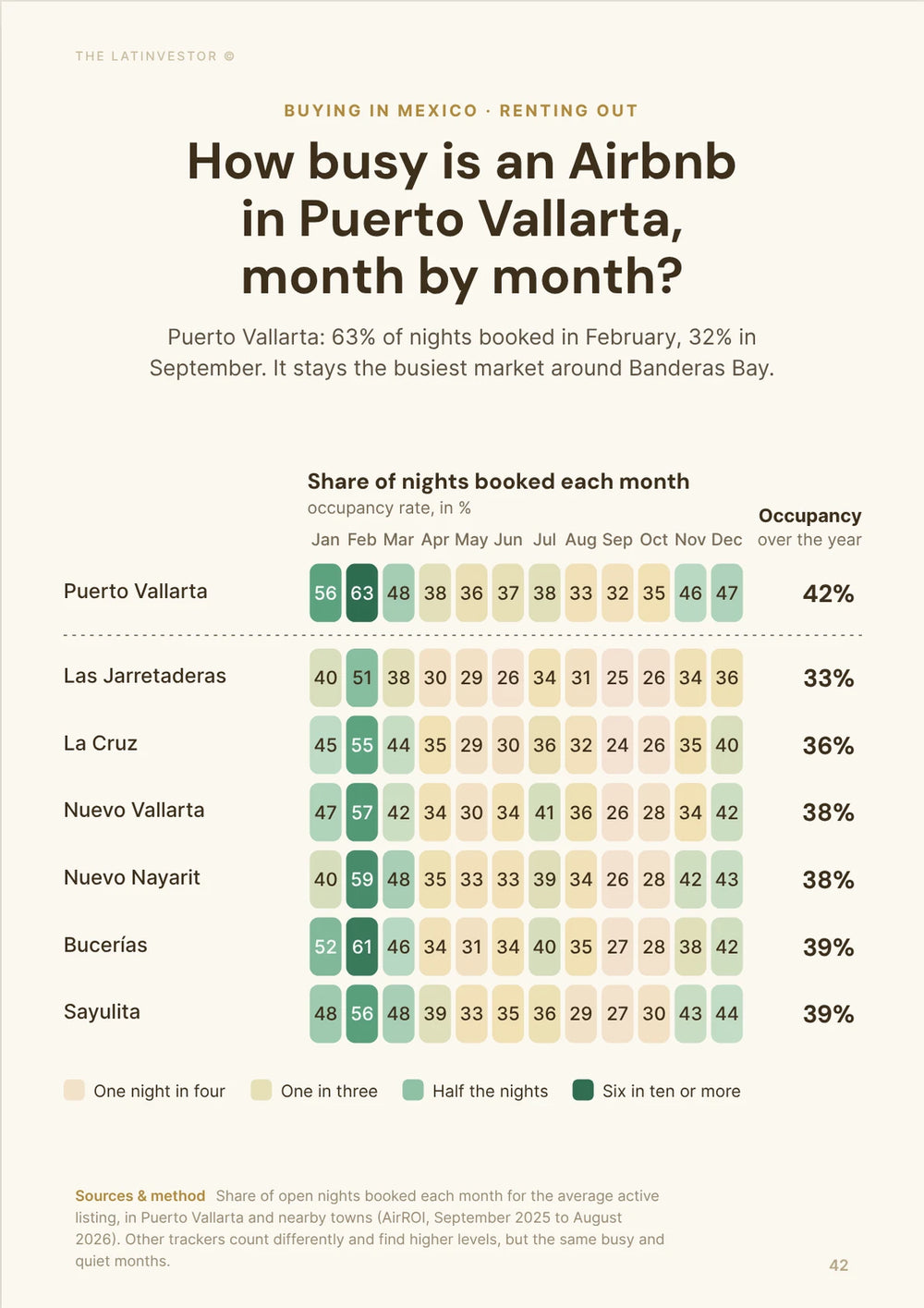
Winter is when buyers fly in and when owners earn the most from rentals. AirROI's Airbnb data show occupancy at 63.1% in February 2026 against 33.4% in August, so an owner who can rent the condo this winter has little reason to cut now.
This season starts on a weak note. Hurricane Simón passed off the coast as a Category 3 storm on October 11, 2026, and the airport was closed to commercial flights until October 13. No major damage was reported, but storm headlines a few weeks before high season can slow bookings and viewings. On flights, Porter adds an Edmonton route from November 3, while Delta paused Seattle from October 6 to November 8.
What to do: use November and December to visit, shortlist and note how long each listing has been on the market. Make offers on stale listings any time, but keep a list for April and May: a seller who has gone through another high season without an offer is usually the most flexible one.
Is weaker tourism a real risk for Puerto Vallarta property?
Yes, especially for anyone buying for rental income. Puerto Vallarta airport handled about 4.54 million passengers from January to September 2026, down from 5.17 million a year earlier, a 12.3% drop, according to Grupo Aeroportuario del Pacífico.
The drop is mostly foreign visitors, the ones who pay the higher winter rates. International traffic fell 19.4% to about 2.27 million, while domestic traffic fell only 3.7%. September was a little better, with international passengers down 12.0%.
The city still gets millions of visitors and has a large base of residents and second-home owners, so it can take a bad year. But a condo that only works if foreign arrivals bounce back to record levels next winter is a bet on a recovery we haven't seen yet.
Does the February 2026 violence still matter for buyers?
It matters for rentals and resale demand more than for the property itself. The city went back to normal within days, but the perception has stuck.
On 22 February 2026, the Mexican army killed CJNG leader "El Mencho" in Jalisco. Roads were blocked, international flights to Puerto Vallarta were canceled that day and the US Embassy told Americans in the city to shelter in place, an order lifted on 24 February.
The aftermath shows in the data. In INEGI's urban safety survey, 65.4% of Puerto Vallarta residents said they felt unsafe in June 2026, against 27.3% in June 2025. International passengers fell 19.4% over the first nine months of the year.
What to do: ask any seller of a rental for bookings and cancellations around February and March 2026 compared with 2025. Favor buildings with controlled access and on-site staff, and check the current US State Department advisory for Jalisco before you plan a long absence.
Is Airbnb still a good reason to buy a Puerto Vallarta condo?
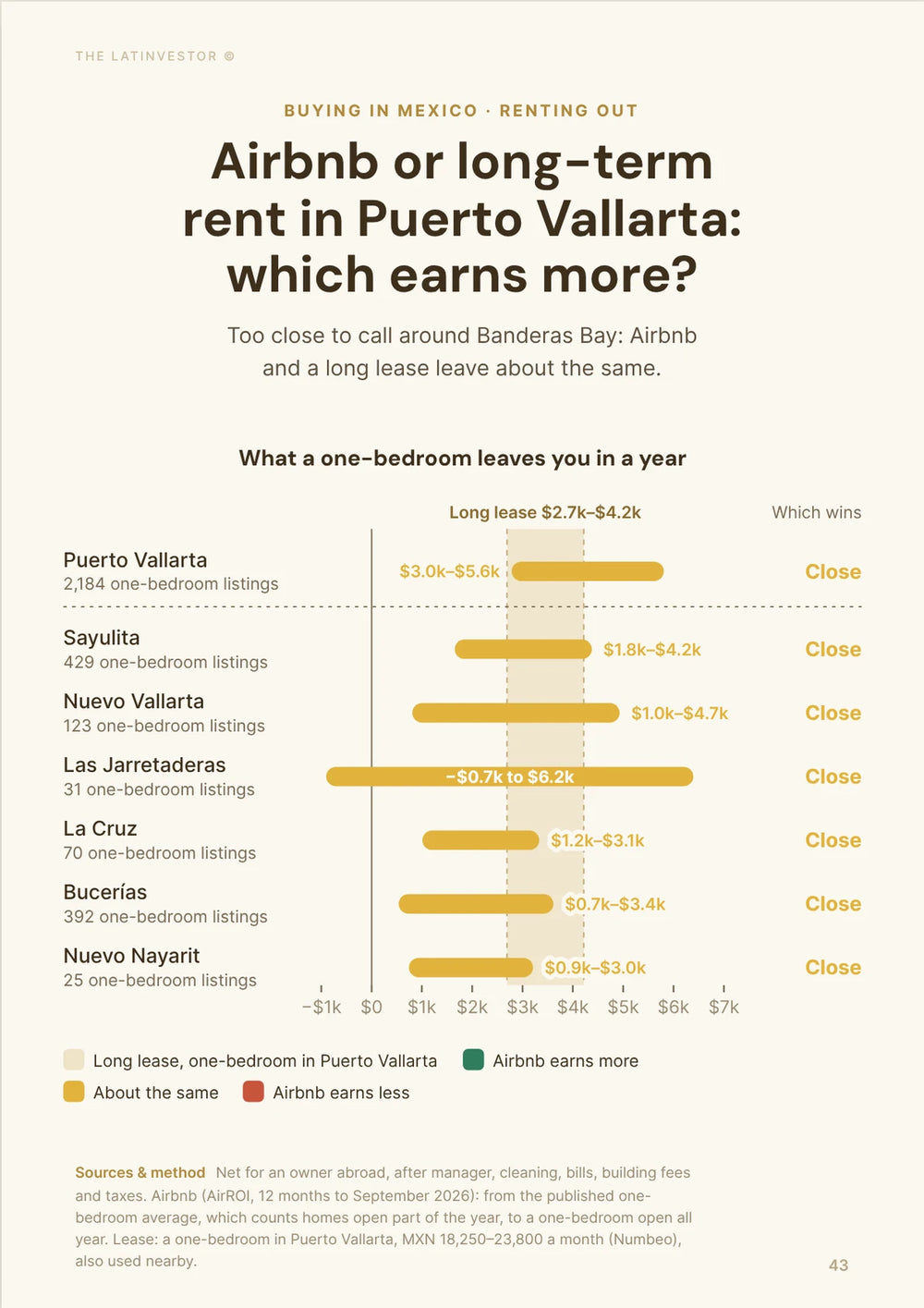
Only if the numbers work on a cautious estimate. Current rental data won't rescue an overpriced condo.
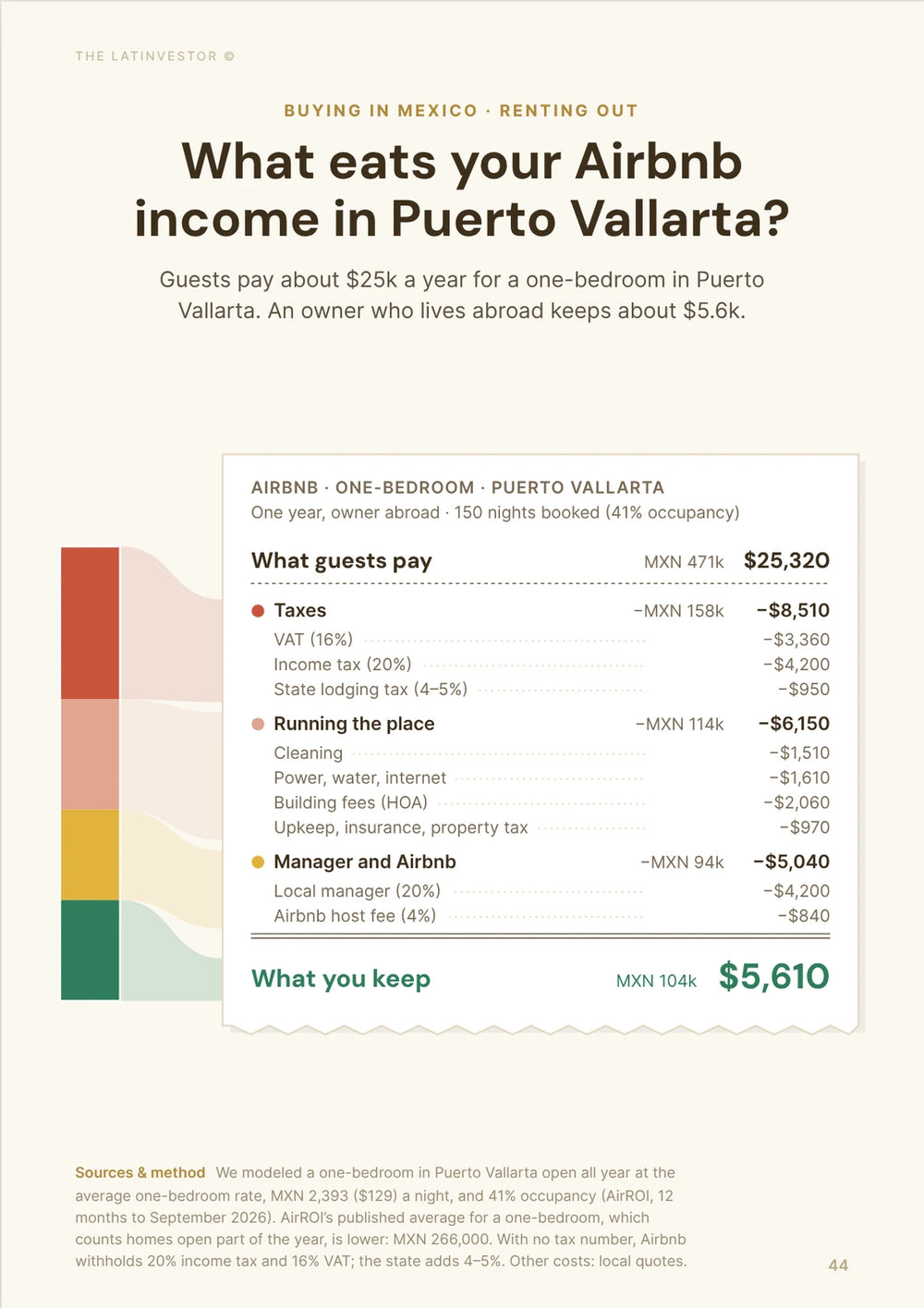
AirDNA puts average occupancy at 57% over the twelve months to September 2026, with an average nightly rate of about $178, down 17.5% in a year, and average earnings of about $31,300 per active listing. Revenue per available night, at about $101, is down 10.4% on a year earlier, so each night on the calendar earns less.
The listing counts are confusing. AirDNA counted 5,943 active listings in September 2026, 54.3% fewer than a year earlier, while AirROI, which tracks Airbnb only, counts about 6,975, up 13%. Whatever the true count, revenue per night is falling, and the tax risk is rising: a May 2026 proposal in the Jalisco Congress would add a 5% to 11% levy on owners with several short-term rentals, and a committee approved a 180-night yearly cap on second-home rentals on May 25, 2026. Neither is law yet.
Gross revenue is only the start. Management, HOA fees, utilities, cleaning, repairs, platform fees and empty weeks take a big share. Buy for Airbnb only when the specific unit's last twelve months of bookings still work with those costs taken out.
| Puerto Vallarta short-term rentals | Latest reading | Change |
|---|---|---|
| AirDNA occupancy, 12 months to Sep 2026 | 57% | — |
| AirDNA average nightly rate | $178 | -17.5% |
| AirDNA revenue per available night | ~$101 | -10.4% |
| AirDNA average yearly earnings per listing | ~$31,300 | — |
| AirDNA active listings, Sep 2026 | 5,943 | -54.3% |
| AirROI active Airbnb listings | ~6,975 | +13% |
Are Puerto Vallarta presale condos still worth buying?
Rarely, unless the developer gives a real discount or something no finished building offers. Presales are 46% of the listings across the bay but only 26% of closings.
The old logic was simple: buy early, wait, and let the market rise before delivery. Today you pay more per m² for a presale (about $4,194 against $3,762 for resale condos) and you'll take delivery in a market with about 1,534 more units on the way, 607 of them in 2027.
A finished building removes the guesswork: you see the real view, the noise, the maintenance, the true HOA fee and how the existing units actually rent. A presale can still be a good deal when the price reflects the extra risk. Paying a premium just because it's new makes little sense right now.
Which Puerto Vallarta neighborhoods look expensive or better value right now?
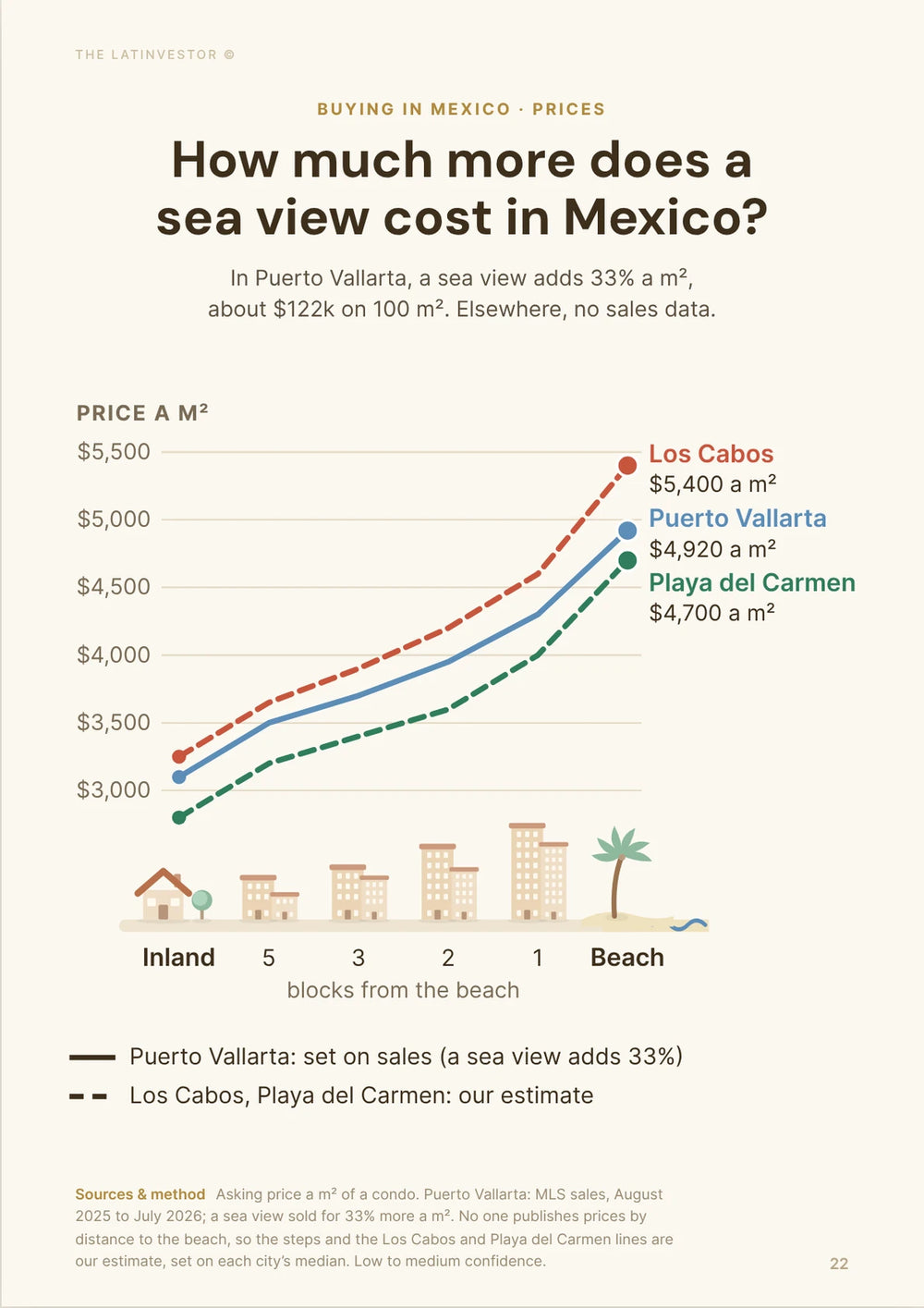
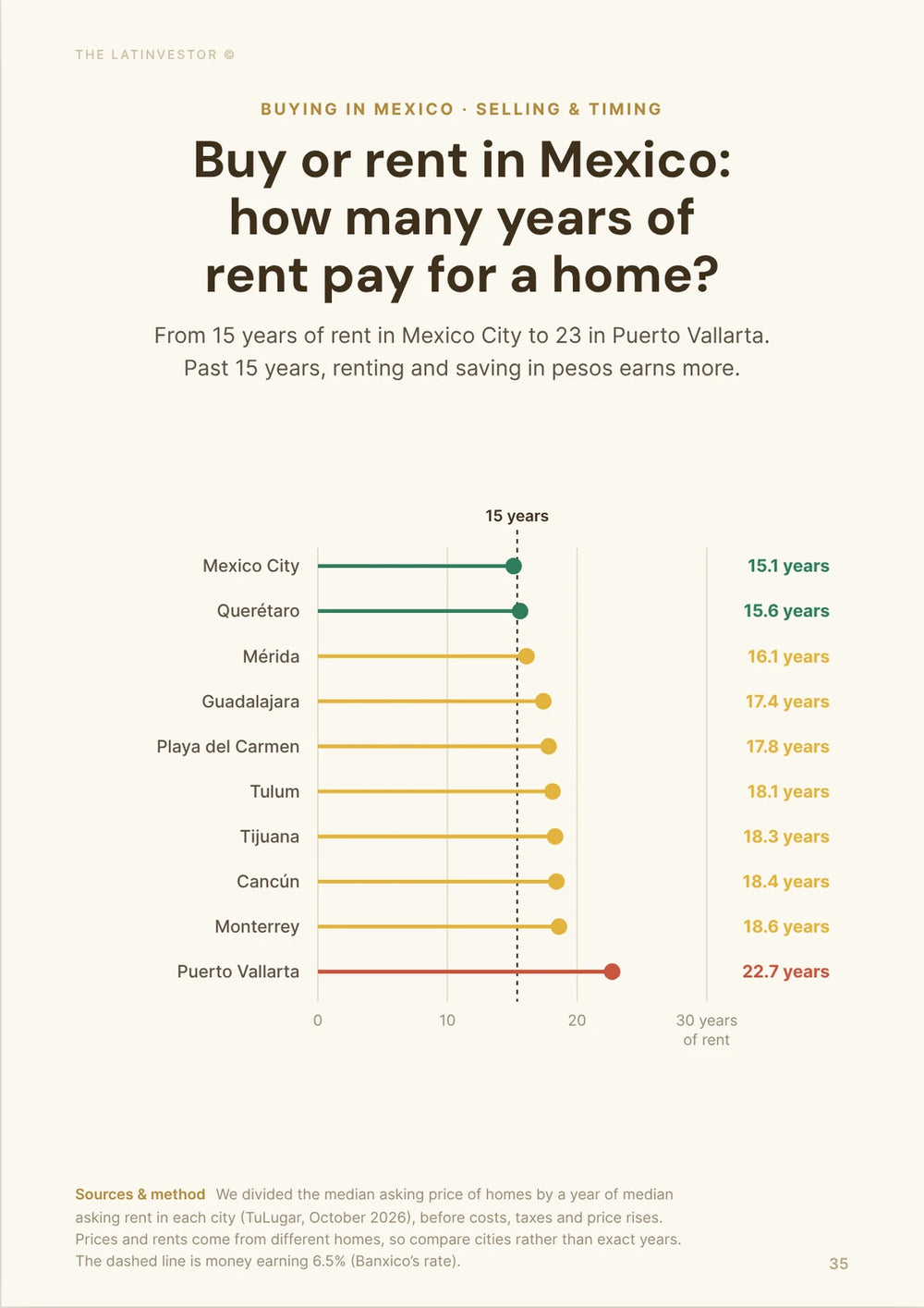
The neighborhood matters more than market timing: asking prices range from about $3,650 to $6,200 per m² depending on where you buy.
TuLugar's October 2026 listing data put the citywide condo asking median at about $3,853 per m². Emiliano Zapata (the Romantic Zone side) is the most expensive at about $6,205, followed by Las Glorias at $5,275, the Hotel Zone at $4,953 and Marina Vallarta at $4,627. Versalles is around $3,646 and Fluvial around $4,114.
The direction differs too. Propiedades.com's data show average asking prices up 28.0% in Amapas and 8.1% in Emiliano Zapata between April 2025 and October 2026, while Versalles slipped 2.5% and Centro 4.9%. Marina Vallarta rose about 7.8% over a similar period.
These are asking prices from different samples, not appraisals. Use them to spot where sellers are still ambitious, then compare a building with its nearest rivals, not with the city average.
| Area | Condo asking price per m² (TuLugar, Oct 2026) | Average asking price change (Propiedades.com, since 2025) |
|---|---|---|
| Emiliano Zapata | ~$6,205 | +8.1% |
| Las Glorias | ~$5,275 | — |
| Hotel Zone (north) | ~$4,953 | — |
| Marina Vallarta | ~$4,627 | +7.8% |
| Fluvial | ~$4,114 | — |
| Versalles | ~$3,646 | -2.5% |
| Amapas | — | +28.0% |
| Centro | — | -4.9% |
| Puerto Vallarta, citywide | ~$3,853 | +7.3% |
Are Puerto Vallarta's long-term property fundamentals still good?
Yes, and that's why the slowdown hasn't turned into a sell-off. Puerto Vallarta is a real city with a bay-wide metro area behind it, not just a resort.
Infrastructure keeps improving. The Amado Nervo bridge between Bahía de Banderas and Puerto Vallarta was finished in September 2026 at a cost of about MXN 704 million (about $37.9 million), and the government says the new road links cut about 25 minutes from the Riviera Nayarit trip. The airport's second terminal, meant to double international capacity, is targeted for early 2027.
Mexico's housing market is still rising, with mortgage-financed home values up 7.3% in a year according to Sociedad Hipotecaria Federal. Puerto Vallarta is cooling inside a country where prices still go up.
Those fundamentals make a long hold easy to defend. They don't justify paying whatever a seller asks today.
Would waiting another year probably get a better Puerto Vallarta price?
Maybe a little, but nothing points to homes being 15% or 20% cheaper next year.
The reasons to wait are real: fewer foreign visitors, condo closings down 21.1%, falling Airbnb revenue per night and about 1,534 new units on the way. If another winter disappoints, more sellers will have to cut, starting with houses and luxury homes.
The brake is the sellers themselves. New listings are down 32% and condo listings are shrinking, so owners are holding on rather than dumping. The market could just as well move sideways for a long time.
It also depends on what you're buying. Any generic two-bedroom investment condo can wait. A rare terrace, a great view or a real beachfront unit gains little from trying to time the bottom.
Who should buy Puerto Vallarta property now, and who should stay out?
Cash buyers who plan to hold for years are in the best spot; leveraged buyers and anyone counting on Airbnb from day one are in the worst.
Credit is expensive. Banco de México's average mortgage rate was about 11.31% in August 2026; at that rate, a MXN 5 million, twenty-year loan costs roughly MXN 52,700 a month before insurance. That can wipe out what you saved by negotiating.
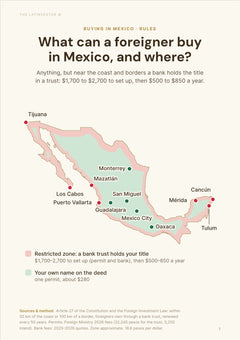
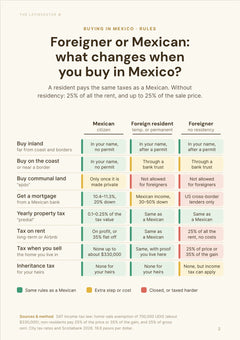
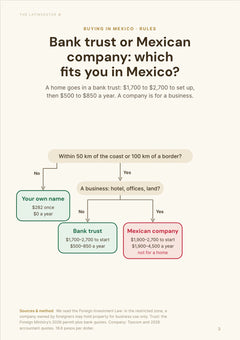
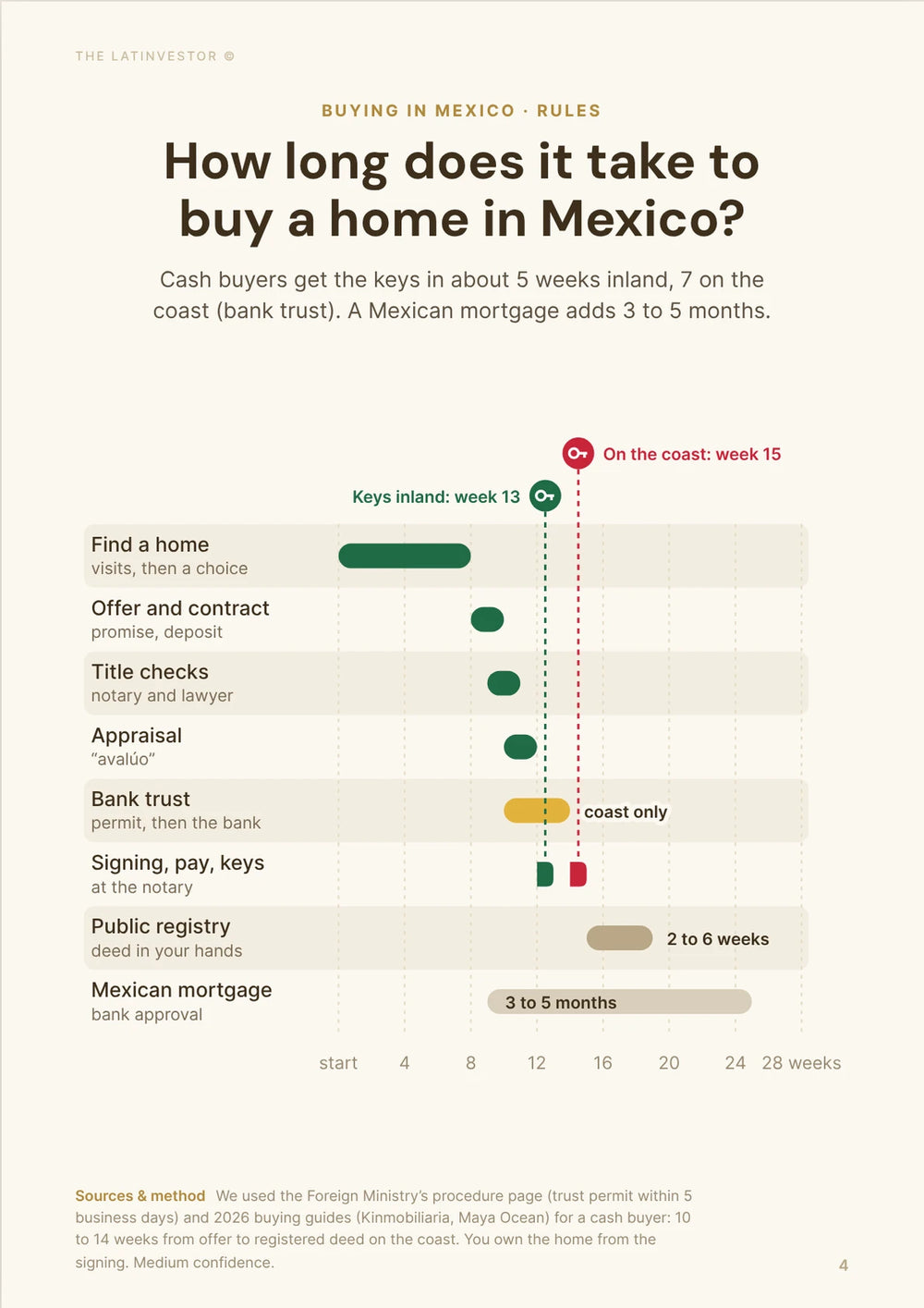
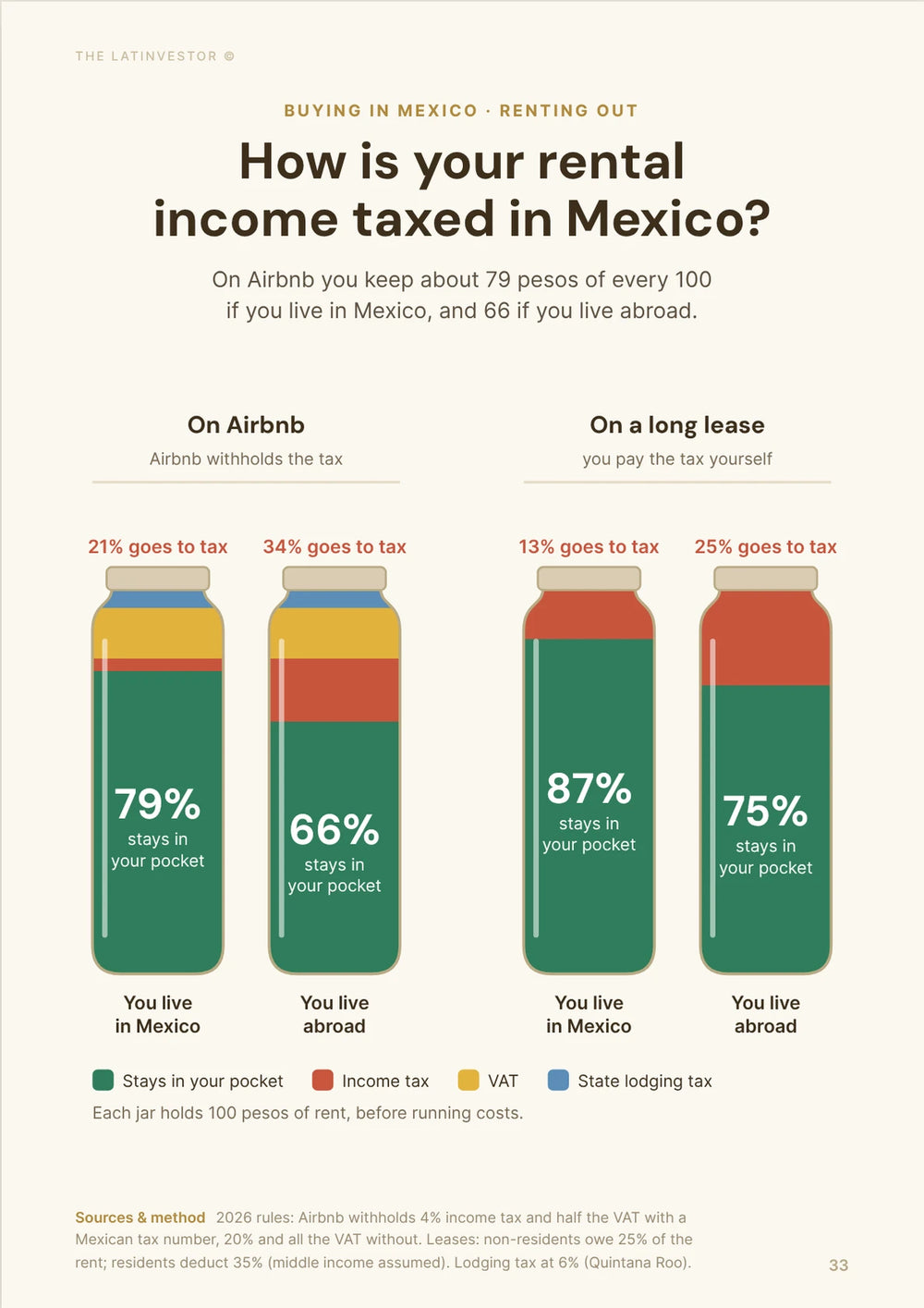
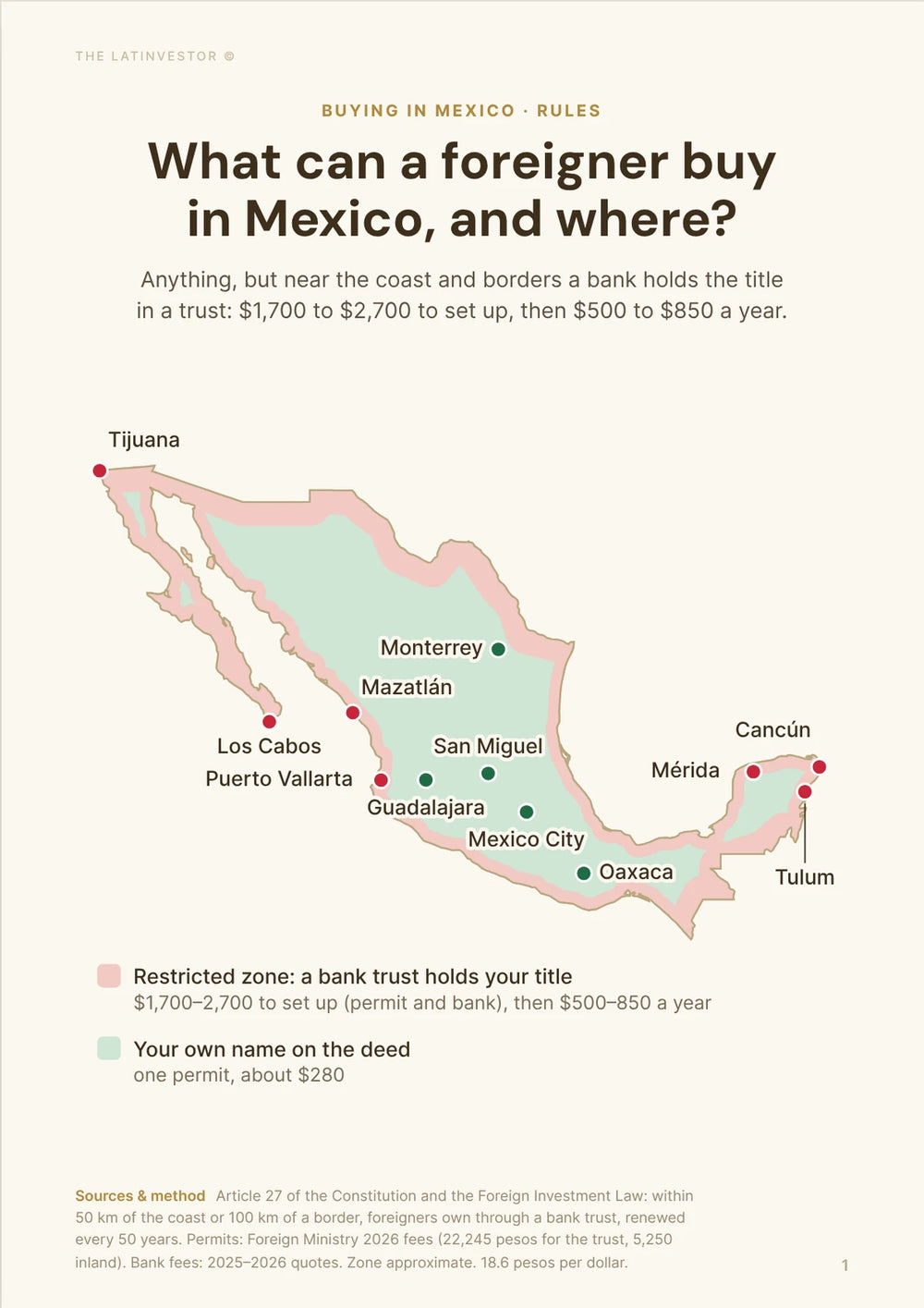
Foreigners buy through a bank trust (fideicomiso) here, since Puerto Vallarta is in Mexico's restricted coastal zone. The Foreign Ministry permit alone is MXN 21,650 in 2026 (about $1,160), plus the bank's setup and yearly fees, notary costs and taxes. Short holding periods don't pay.
The peso has turned in dollar buyers' favor lately. It was under 17 per dollar in early September and is about 18.6 in October 2026, so an MXN 8 million condo now costs about $430,000, against more than $470,000 a few weeks ago, though still a bit more than the $417,000 it cost at the 2025 average of about 19.2. Many listings here are in dollars, so it shows less in ads, but sellers live in pesos: when a home is priced in pesos, negotiate in pesos.
| Buyer | Our view today | Why |
|---|---|---|
| Cash lifestyle buyer | Good time | Time and choice; can hold through a flat market |
| Cash house buyer | Good time, selectively | 750 houses for sale, +26.5%; big discounts above $1 million |
| Long-term condo buyer | Selectively | Plenty to compare, but condo prices still firm |
| Airbnb investor | Careful | Revenue per night -10.4%, foreign visitors -19.4% |
| Presale buyer | Weak setup | 46% of listings, 26% of closings, ~1,534 units coming |
| Highly leveraged buyer | Stay out | Mortgages around 11.3% |
| Short-term flipper | Stay out | 262 days to sell a condo, high buying and selling costs |
So, is now a good time to buy in Puerto Vallarta?
Yes, if you're selective, patient and ready to negotiate; no, if you're about to pay an optimistic asking price for an average condo.
The opportunity comes from the slowdown in sales: condo closings down 21.1% this year and 41.5% in September, listings sitting for most of a year, 750 houses for sale and towers full of similar units.
But this is not a crash. Medians are still up, owners are listing less, Mexico's housing prices are still rising and the city keeps a large base of lifestyle and second-home buyers.
We would be most aggressive on expensive houses, stale resale listings and buildings where several owners compete for the same buyer. We would be much tougher on generic condos, Airbnb-driven purchases and presales priced above resale.
The two mistakes to avoid: waiting for a crash just because sales are slow, and assuming every slow listing is a bargain. Watch how this winter goes. If foreign visitors stay down, the best deals will come in spring 2027.
Our methodology
This article estimates whether now is a good time to buy in Puerto Vallarta by looking at what decides a buying opportunity: sales, prices, listings, selling times, new supply, tourism, rental income, credit, the peso and neighborhood prices.
Market figures come from MLS-based reports: Coldwell Banker La Costa's October 2026 market pulse (Puerto Vallarta and Riviera Nayarit, January to September 2026), its August 2026 pulse for the earlier listing count, the Vallarta Seaside Bay Report (Puerto Vallarta and Bahía de Banderas, twelve months to September 2026) and SearchPV's closed-sales records for individual house sales. Neighborhood asking prices come from TuLugar and Propiedades.com.
Tourism comes from Grupo Aeroportuario del Pacífico's traffic reports, short-term rentals from AirDNA (with AirROI as a separate Airbnb-only view, never mixed in one calculation), national prices from Sociedad Hipotecaria Federal, mortgage rates from Banco de México, safety from INEGI's ENSU survey, and the February 2026 events and Hurricane Simón from dated press reports. Ownership rules come from the Foreign Investment Law and the Foreign Ministry's fideicomiso permit procedure.
We checked these figures in October 2026. Conversions use about 18.6 pesos per US dollar and 20.9 pesos per euro; the comparisons use the 2025 average of about 19.2 pesos per dollar and the early-September 2026 rate of just under 17.
Limits: the MLS reports cover different areas and periods, so we don't add them up; MLS data miss private sales; monthly medians move with the mix of homes sold; TuLugar and Propiedades.com show asking prices, not sale prices; the house sales quoted are examples, not an average discount; and the Jalisco short-term rental levy is a proposal, not law.
Key sources used for this analysis include Crónica Jalisco on the 180-night committee vote, Coldwell Banker La Costa's October 2026 market pulse, Coldwell Banker La Costa's August 2026 market pulse, the Vallarta Seaside Bay Report, SearchPV's house sales, TuLugar's Puerto Vallarta market data, Propiedades.com on Emiliano Zapata, Amapas, Versalles, Centro and Marina Vallarta, Grupo Aeroportuario del Pacífico's September 2026 traffic report, AirDNA's Puerto Vallarta overview, AirROI's Puerto Vallarta data, the Jalisco Congress on the May 2026 proposal, Sociedad Hipotecaria Federal's Q2 2026 housing-price index, Banco de México, INEGI's ENSU results for June 2026, Euronews on the February 2026 violence, the US State Department Mexico travel advisory, AP on Hurricane Simón, Crónica on the airport reopening, GayPV on 2026-27 flights, SICT on the Amado Nervo bridge, the Foreign Investment Law and the Foreign Ministry's fideicomiso permit procedure.