Summary
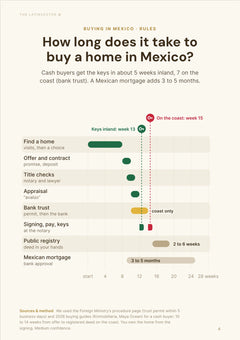
Yes, for a patient cash buyer who negotiates. Puerto Vallarta condo closings fell 21.1% from January to September 2026, and the median condo now takes 262 days to sell.
The market has slowed, but it is not cheap. The year-to-date condo median still rose 7.7% to about $400,000, so sellers are giving ground on time and terms before price.
Price cuts are real but modest. 69% of baywide sales in the year to September 2026 closed below asking, and the median cut from the first price was about 8%.
Supply is the buyer's best argument. There are about 23 months of existing homes for sale across the bay, 31 months with presales, and around 1,534 new units are due by 2028.
Houses are where stock is piling up. Active house listings rose 26.5% to 750, and 28.3% of them ask $1 million or more, while that price band made only 12.2% of house sales.
Autumn is a good moment to make an offer. September was slow, with new condo pending sales down 51%, and sellers who missed the summer want a deal before the winter buyers arrive.
Waiting for a crash is a weak plan. Mexican home prices still rose 7.3% in a year. The peso is the wild card: its slide from under 17 to about 18.6 per dollar since early September cut about $40,000 off an MXN 8 million home for a dollar buyer, and a rebound would take that back.
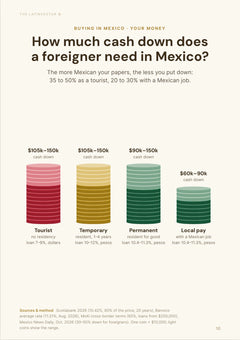
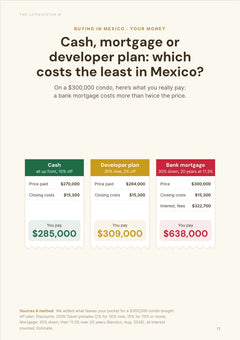
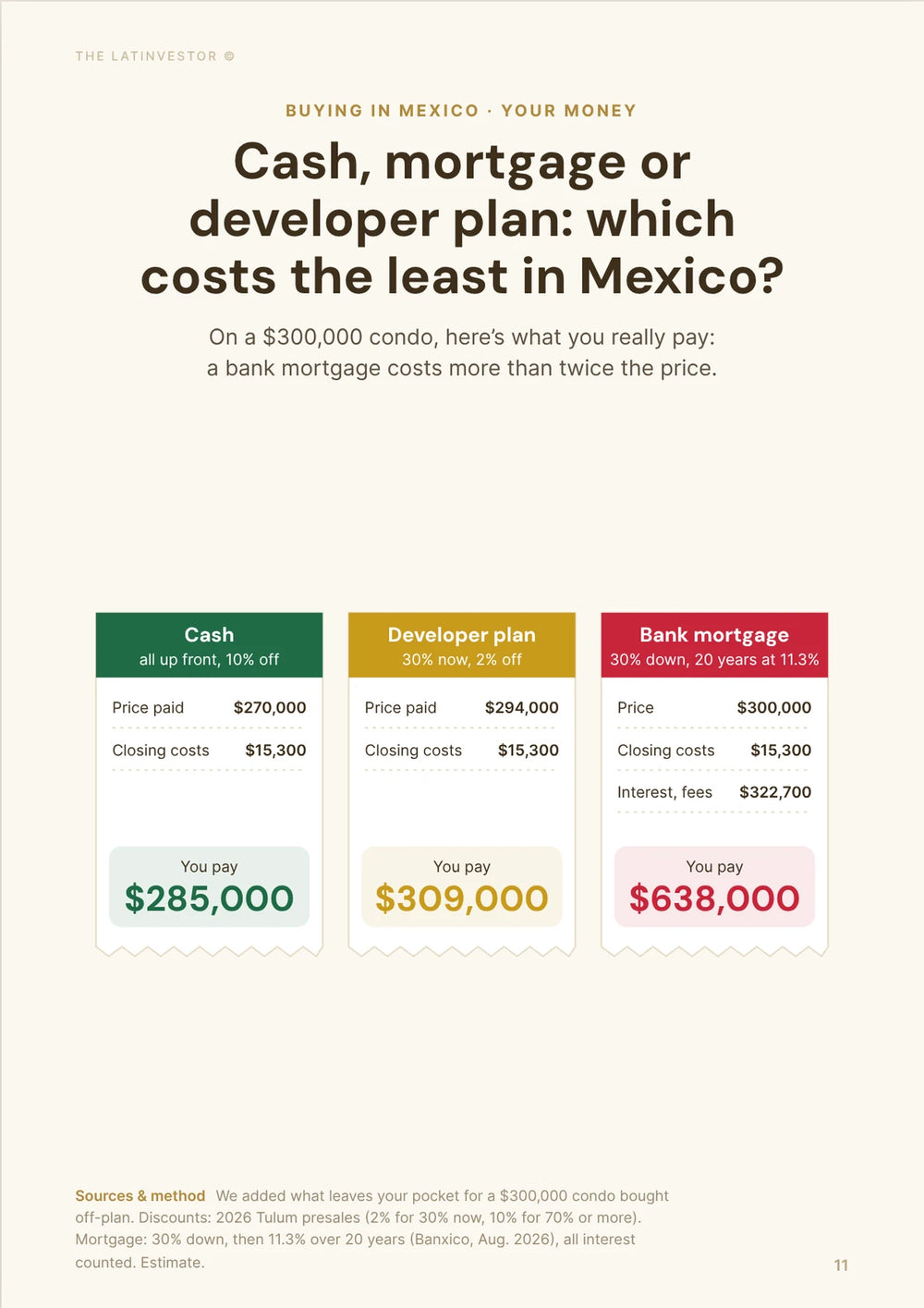
Mortgages remain the weak spot. Banxico's policy rate is down to 6.5%, but a fixed mortgage still costs about 11.31%, so MXN 5.6 million over 20 years means about MXN 59,000 a month.
Rents do not rescue an expensive purchase. Median apartment asking prices and rents give a gross yield of about 5.2% before any costs.
Airbnb is mixed. AirDNA shows occupancy at 57%, but the nightly rate fell 17.5% to $178, and airport traffic was down 12.3% from January to September.
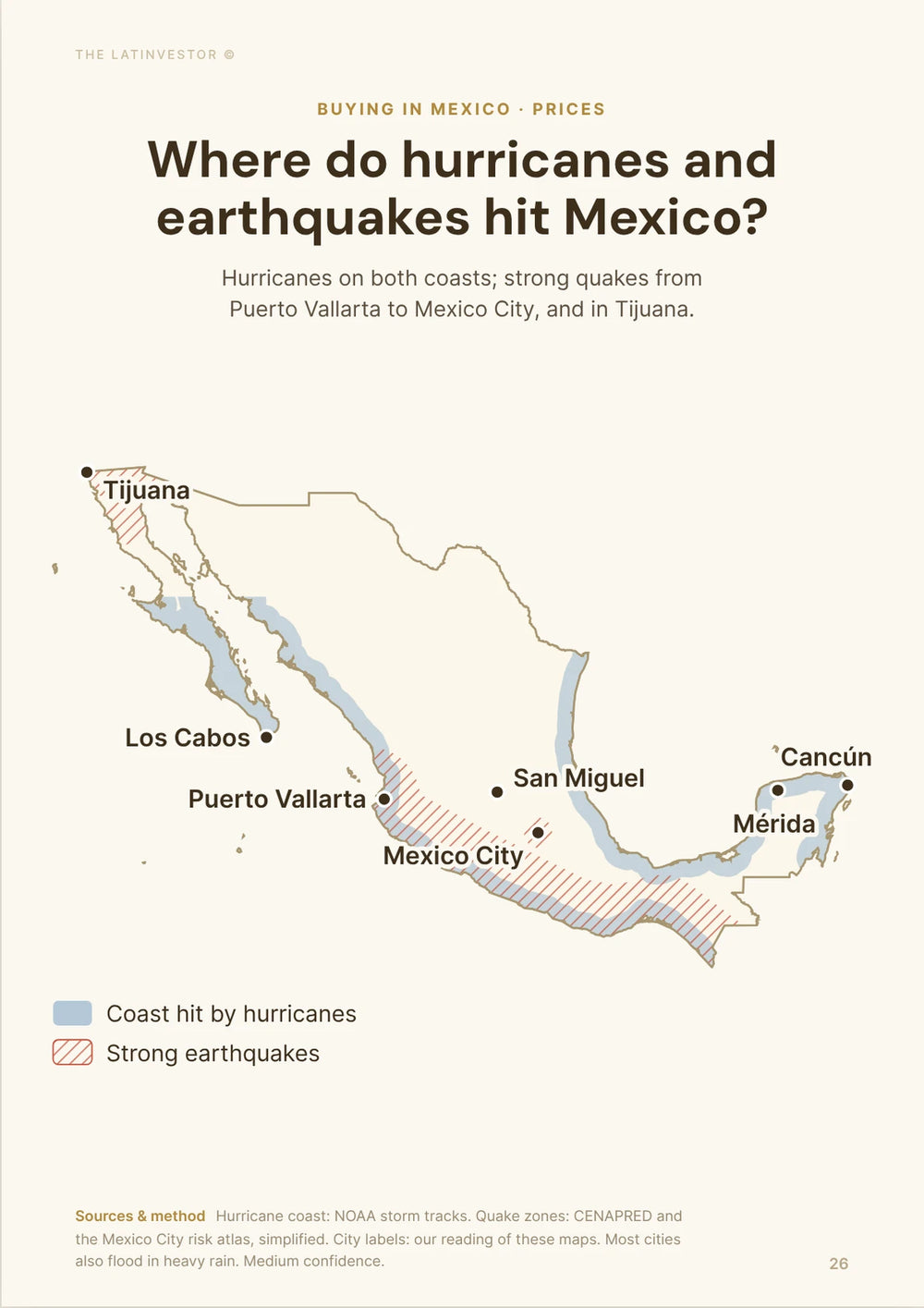
Hurricane Simón passed close in October 2026, with no major damage reported in the city, but it is a reminder to check drainage, roofs and insurance before you sign.
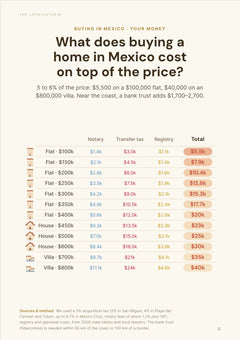
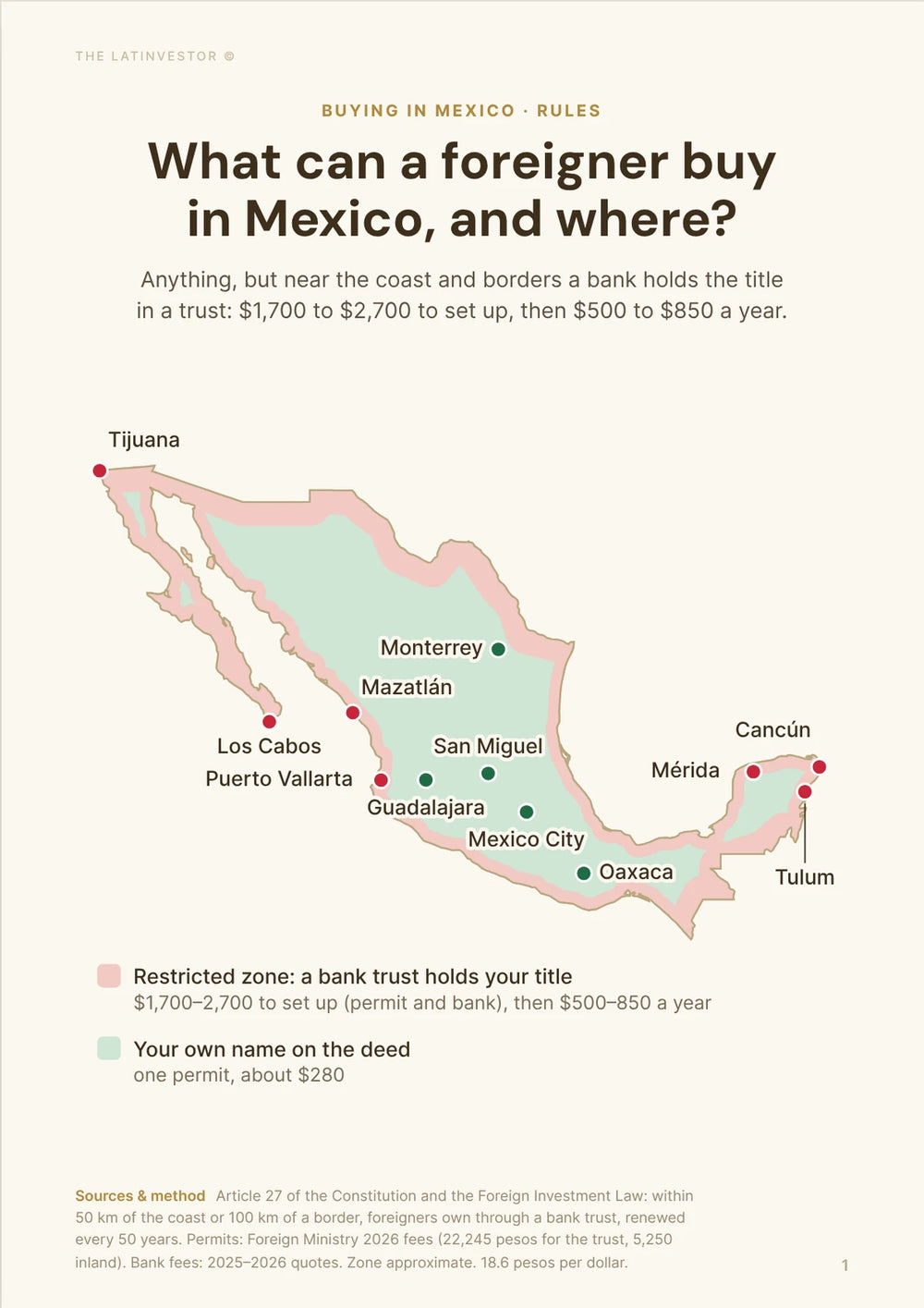
Foreigners buy through a bank trust: the government permit alone costs MXN 21,650 (about $1,160), plus bank fees every year.
The best targets are hard-to-copy resales that have sat for months: a view, a walkable street, a strong building. Generic presale condos and leveraged flips are the weakest bets.

Is Puerto Vallarta still a hot property market?
No. Puerto Vallarta is still expensive, but fewer homes are selling and buyers have more time to negotiate.
Coldwell Banker La Costa's MLS data show 750 condo closings from January to September 2026, 21.1% fewer than a year earlier. September alone was much weaker: 48 condo closings against 82 a year before, down 41.5%, and new condo pending sales fell 51%.
The median condo now takes 262 days to sell, close to nine months. Houses move faster, at about 154 days, but the number of houses for sale is up 26.5%.
Prices have not followed the slowdown yet. The year-to-date condo median rose 7.7% to about $400,000, and the house median rose 2.3% to about $425,000. That is a slower market, not a falling one.
| Puerto Vallarta indicator | Period | Latest reading | Change in a year | What buyers should notice |
|---|---|---|---|---|
| Condo closings | Jan-Sep 2026 | 750 | -21.1% | Fewer deals are closing |
| Condo closings | Sep 2026 | 48 | -41.5% | A weak low season |
| Active condo listings | Sep 2026 | 2,672 | -17.5% | Condo sellers are not flooding in |
| Active house listings | Sep 2026 | 750 | +26.5% | Much more choice in houses |
| Median condo days on market | Sep 2026 | 262 days | +10.1% | Buyers can afford to wait |
| Median condo sale price | Jan-Sep 2026 | ~$400,000 | +7.7% | Condo prices remain stubborn |
| Median house sale price | Jan-Sep 2026 | ~$425,000 | +2.3% | Barely keeping up with inflation |
Are Puerto Vallarta property prices actually falling now?
Not overall. Medians are still slightly up, but the expensive end and some neighborhoods are already selling for less.
Asking prices barely show the slowdown. TuLugar's October 2026 data put the median condo asking price at about $371,000 and the typical two-bedroom at about $356,000, or about $3,850 per square meter.
Closed sales tell a more mixed story. The Bay Report's median sale price rose 9.2% to $415,000 over the 12 months to September 2026, while the median condo price per square meter stayed flat at about $3,948. Buyers are paying more per home because they are buying bigger or better homes, not because each square meter got dearer.
Medians also move with the mix of what sells. The average house sale price fell 5.2% from January to September even as the median rose. If the cheaper units sit unsold while a few good ones close, the median can climb while negotiating gets easier.
So do not wait for one headline to announce a correction. Some sellers are already cutting, others still ask boom-era prices, and that split is where a buyer finds a deal.
Are Puerto Vallarta sellers finally willing to negotiate?
Yes, but expect around 8% off a fair listing, not 20% off everything.
Only 11% of sales across the bay closed above asking in the twelve months to September 2026, and 69% closed below it. The median cut from the first asking price was about 8%, according to the Bay Report.
The bigger discounts sit on homes that have been listed for close to a year. With a median of 262 days for condos, many owners have already watched a full summer go by without an offer.
Look for stale listings, repeated price cuts, vacant units and owners who have already bought elsewhere. Those tell you more about negotiating room than a developer's advertised discount.
Some owners can still wait, especially foreigners with no mortgage. The difference now is that buyers can wait too.
Is Puerto Vallarta building too many condos?
Yes, across the bay there is more new condo supply than buyers are taking, mostly in presales.
The Bay Report to September 2026 counts about 31 months of total residential supply across Puerto Vallarta and Bahía de Banderas. Take out presales and there are still about 23 months of existing homes for sale.
Presales are 46% of active listings but only 26% of recent closings. Developers are offering far more than buyers want, and around 1,534 more units are due by 2028, 607 of them in 2027.
There is one nuance in the city itself: active condo listings in Puerto Vallarta fell 17.5% in a year, to 2,672. Resale owners are pulling listings rather than cutting hard, which keeps condo prices firm for now.
Be skeptical when a salesperson says ordinary condos are getting scarce. The pipeline says the opposite for at least two more years.
| Supply measure | Latest reading | Area | What it means |
|---|---|---|---|
| Total supply including presales | ~31 months | Bay | Heavy supply |
| Existing homes only | ~23 months | Bay | Still buyer-friendly |
| Presale share of active listings | 46% | Bay | Developers hold a lot of stock |
| Presale share of closings | 26% | Bay | Buyers prefer finished homes |
| Units due by 2028 | ~1,534 | Bay | Competition for resales will last |
| Active condo listings (Sep 2026) | 2,672 (-17.5%) | Puerto Vallarta | Resale sellers are holding back |
Is a house a better buy than a condo in Puerto Vallarta now?
For a cash buyer, often yes. House stock is growing fastest, and expensive houses are the hardest homes to sell.
Active house listings rose 26.5% to 750 in a year. More than a quarter of them, 28.3%, ask $1 million or more, yet that price band made only 12.2% of house sales from January to September. Above $1 million, a buyer has a lot of choice and little competition.
Cheaper houses still sell. In September, 18 of the 28 new pending house sales were priced under $500,000, and house sales overall fell only 4.0% this year. A well-priced family house will not sit for a year.
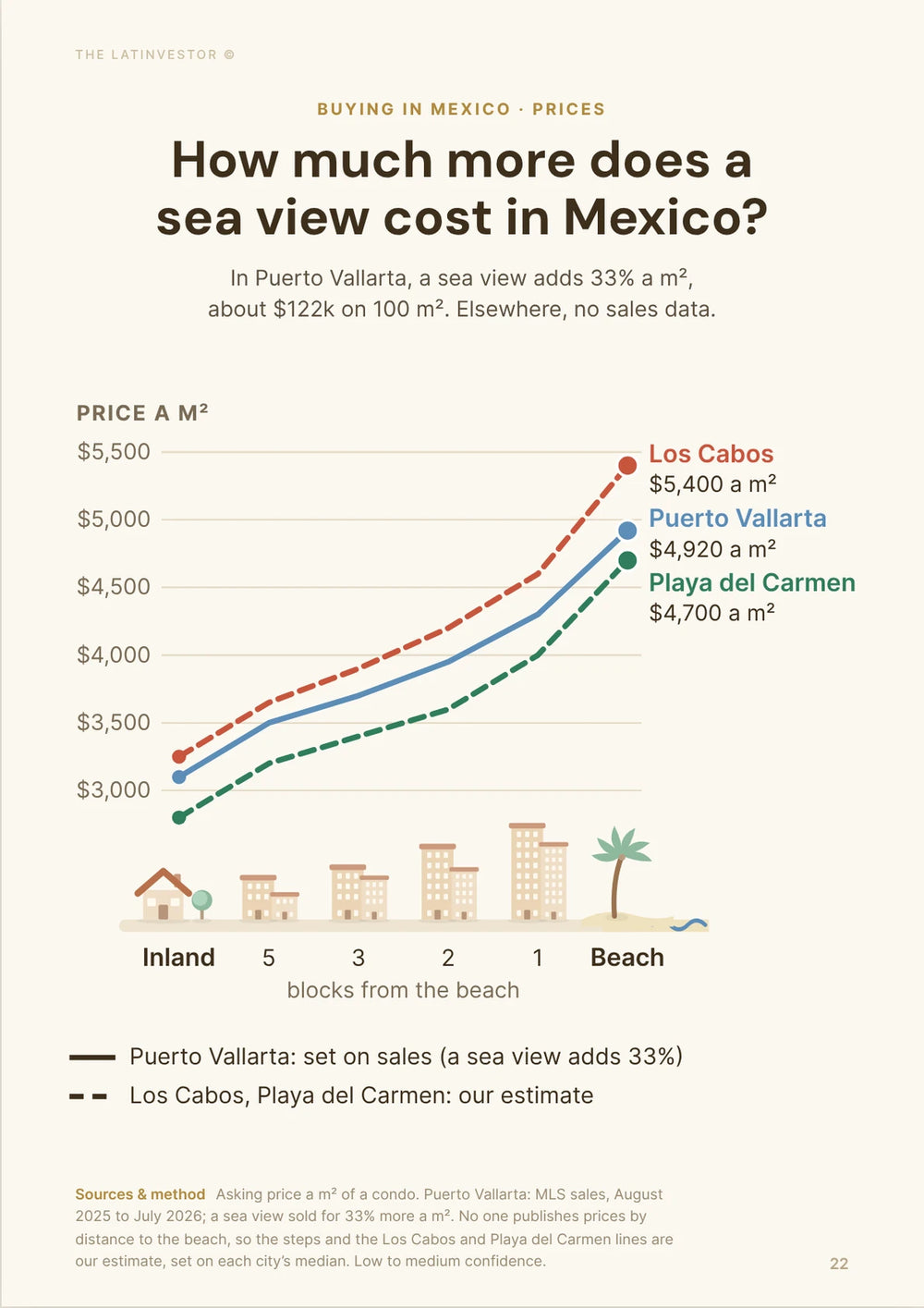
Condos are harder to generalize. Sales have dropped sharply, but the median price held up. Prime condos in the Romantic Zone, Conchas Chinas or near the beach compete differently from identical units in large new towers.
A presale only makes sense if you are paid for the construction risk, through a lower price, better payment terms or both. Paying extra just because a building is new makes little sense with this much supply coming.
| Property type | What is happening now | Buyer leverage | Main concern |
|---|---|---|---|
| House over $1 million | 28.3% of listings, 12.2% of sales | High | Small pool of buyers when you sell |
| House under $500,000 | Most of the new pending sales | Moderate | Condition and flood risk |
| Prime resale condo | Slower market but scarce locations | Moderate | Expensive entry price |
| Generic resale condo | Many similar units for sale | High | Future competition |
| Presale condo | 46% of listings, 26% of sales | Potentially high | Paying too much before completion |
Is this autumn a good moment to make an offer in Puerto Vallarta?
Yes. October and November are when sellers have just sat through the slow season and the winter buyers have not yet arrived.
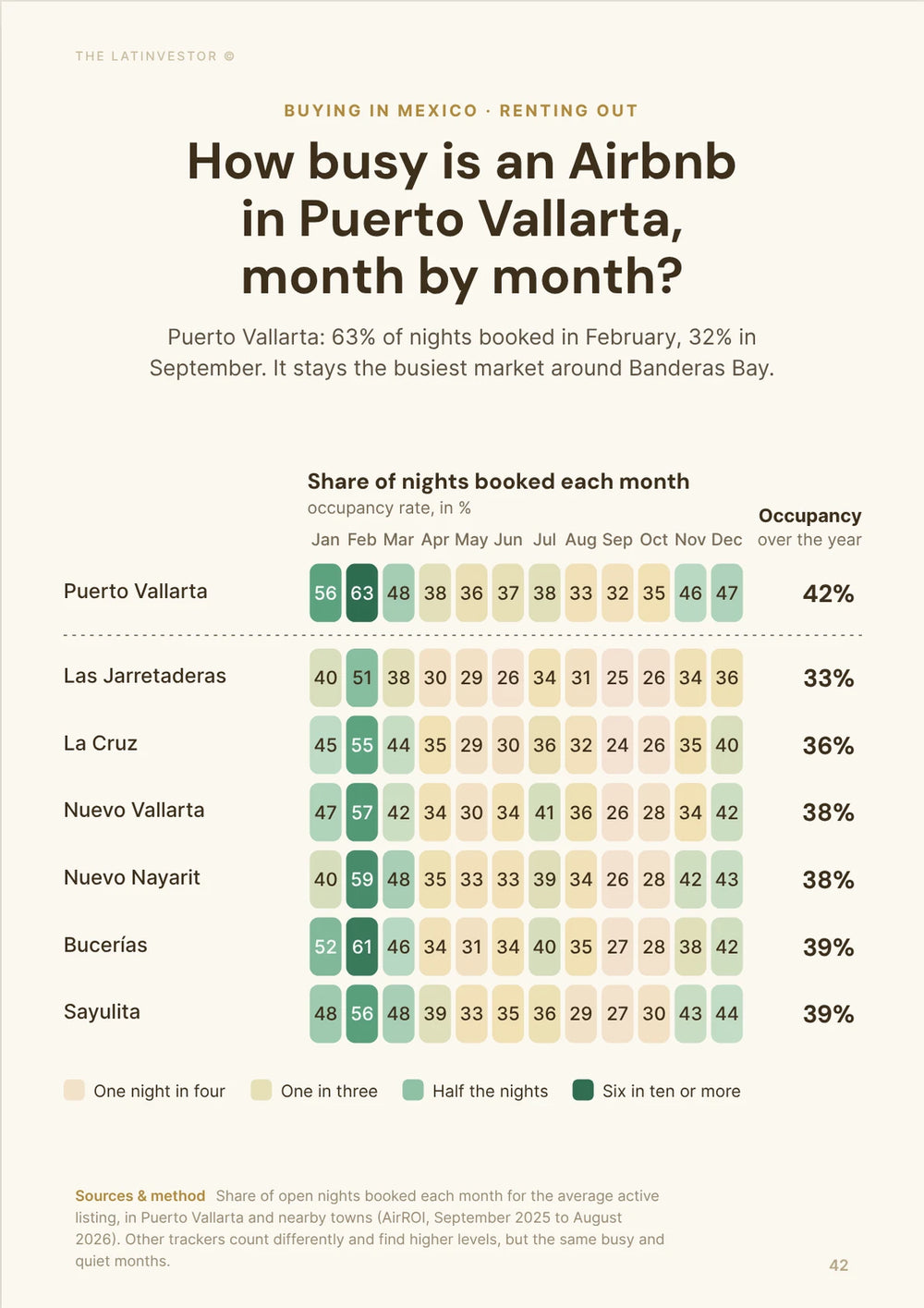
The calendar matters here. AirROI's Airbnb data show occupancy at 63.1% in February 2026 against 33.4% in August: Canadians and Americans fill the winter, and many buyers come to look while they are in town. September 2026 was especially quiet, with condo closings down 41.5% and new condo pending sales down 51% from a year earlier.
A seller who listed in spring and has had no serious offer by October is your best target. From December, the same seller will hope a winter visitor pays more, and may stop listening.
What to do: ask the agent for the listing date and every price change, and for recent closed sales in the same building or street. Offer based on those, not on the asking price. Ask for a short closing timeline, and make the offer conditional on an inspection after the rainy season, when leaks and damp show.
Should buyers wait for Puerto Vallarta prices to fall further?
Waiting for a crash is a weak plan. Waiting for the right seller is a good one.
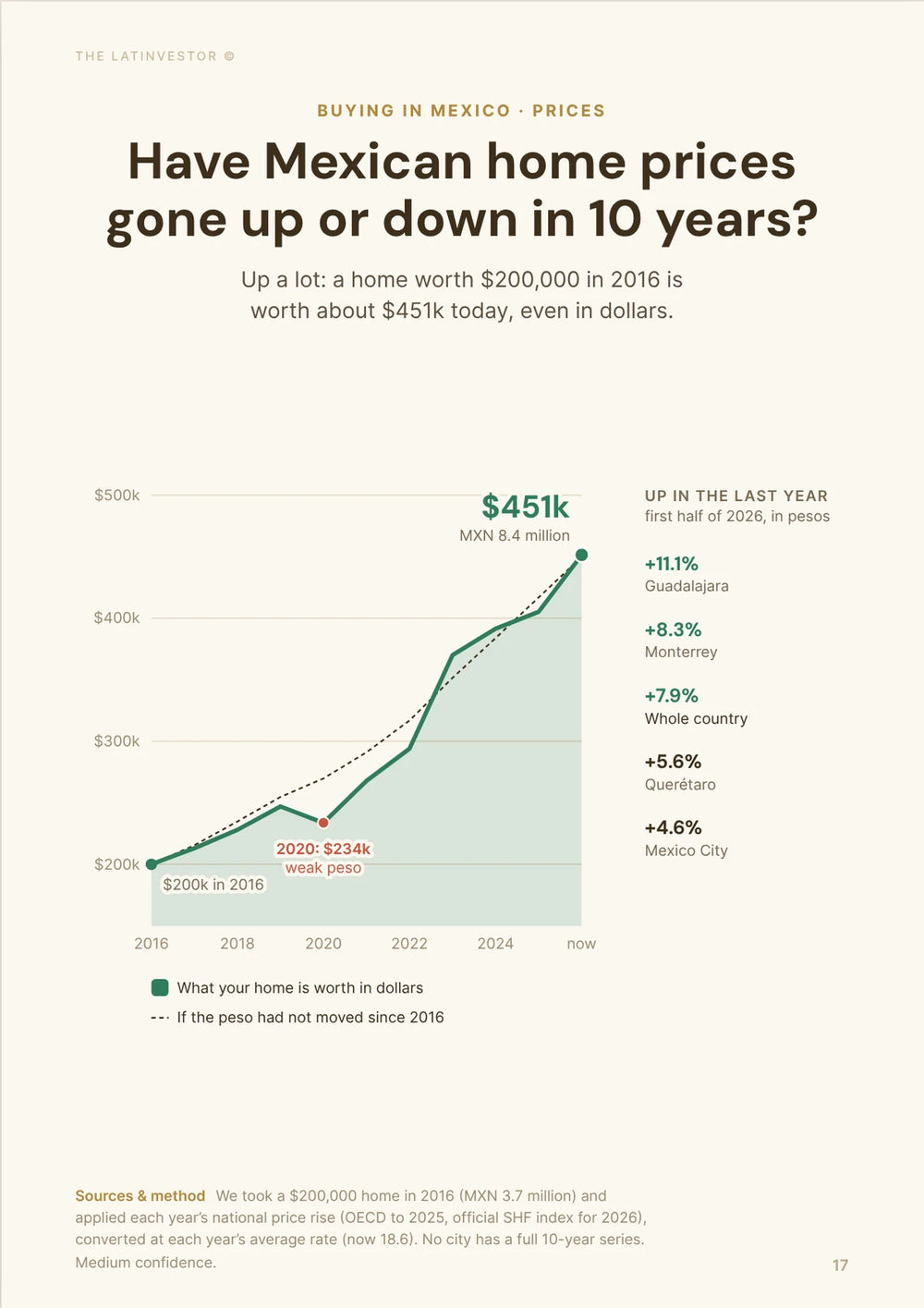
The national market still puts a floor under prices. Sociedad Hipotecaria Federal's index of mortgaged homes rose 7.3% in the year to the second quarter of 2026, and 7.9% over the first half.
Puerto Vallarta can do worse than Mexico as a whole, and its supply gives it reason to. But established coastal neighborhoods have little land left, and the year-to-date medians are still up.
The likeliest outcome is a frustrating market for sellers rather than a crash for buyers: longer selling times, more concessions, some cuts on expensive homes, and prices that lag inflation.
For a dollar buyer, the exchange rate cuts both ways. The peso's slide since September has made peso-priced homes cheaper in dollars; if it recovers, that saving shrinks (see below). The better deals are coming through individual negotiations, not a market-wide drop.
Has the weaker peso made Puerto Vallarta property cheaper for Americans?
Yes, compared with a few weeks ago, though not compared with last year.
In early September 2026 the peso was under 17 per dollar; by October 21 it was about 18.6, one of the sharpest currency falls anywhere this autumn. It is still a bit stronger than its 2025 average of about 19.2.
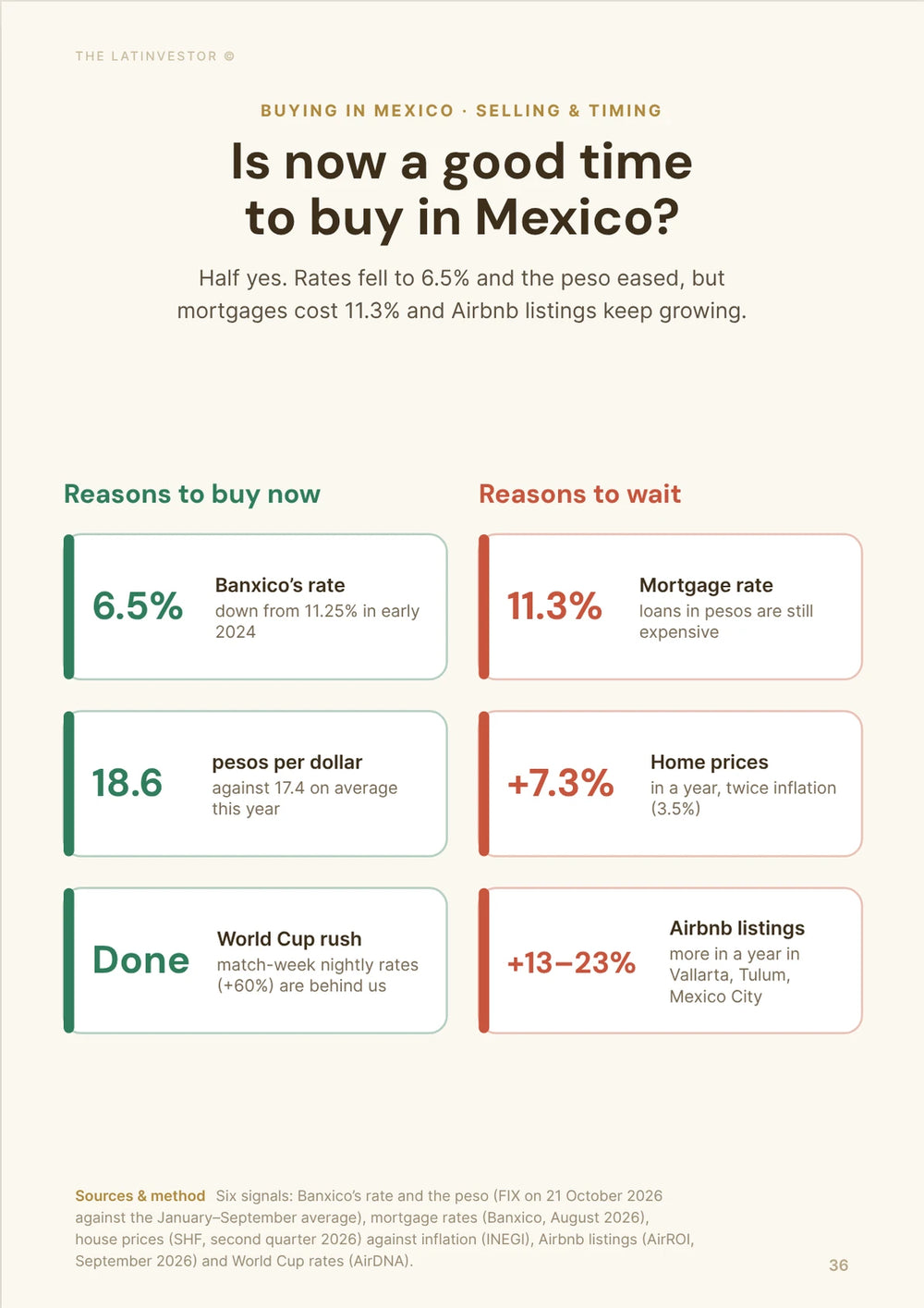
An MXN 8 million property costs a dollar buyer about $430,000 today, against more than $470,000 in early September and about $417,000 at last year's average rate. The seller cut nothing, and the buyer saves about $40,000 compared with six weeks ago.
That is why the market can look pricey one month and negotiable the next for an American. A peso-priced home moves in dollars even when the seller doesn't.
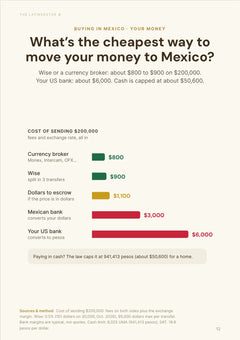
Do not build a purchase on a currency forecast. But if most of your money is in dollars and the home is priced in pesos, consider fixing the exchange rate or moving the money in steps once the price is agreed, so a peso rebound does not eat your discount.
| Property price | At 19.2/USD (2025 average) | At ~17/USD (early Sep 2026) | At 18.6/USD (Oct 2026) | Change since early September |
|---|---|---|---|---|
| MXN 5M | $260,400 | $294,100 | $268,800 | -$25,300 |
| MXN 7.5M | $390,600 | $441,200 | $403,200 | -$38,000 |
| MXN 10M | $520,800 | $588,200 | $537,600 | -$50,600 |
| MXN 15M | $781,200 | $882,400 | $806,500 | -$75,900 |
Have Banxico's rate cuts made a Puerto Vallarta mortgage worth it?
Not yet. The central bank has cut, but mortgage rates have barely moved.
Banxico's policy rate stood at 6.5% in October 2026. Yet the average fixed mortgage rate quoted by banks was about 11.31% in August 2026, and the weighted rate on new mortgages was about 10.13% in March. Mortgage lending was flat in the first half of the year, according to BBVA Research.
The arithmetic is tough. Take an MXN 8 million property with 30% down. Borrowing the remaining MXN 5.6 million over 20 years at about 11.31% costs roughly MXN 59,000 a month (about $3,170), before insurance, condo fees, repairs, property tax or empty months.
Few rentals cover that. Cash buyers avoid the problem entirely and can use the slowdown to negotiate.
So we are much less keen for anyone who needs a large Mexican mortgage. If lower policy rates finally reach mortgages, that could change. For now, expensive debt is one of the best reasons to wait.
Do Puerto Vallarta rents still justify buying at today's prices?
Only if you buy well. Typical rents do not make today's prices look cheap.
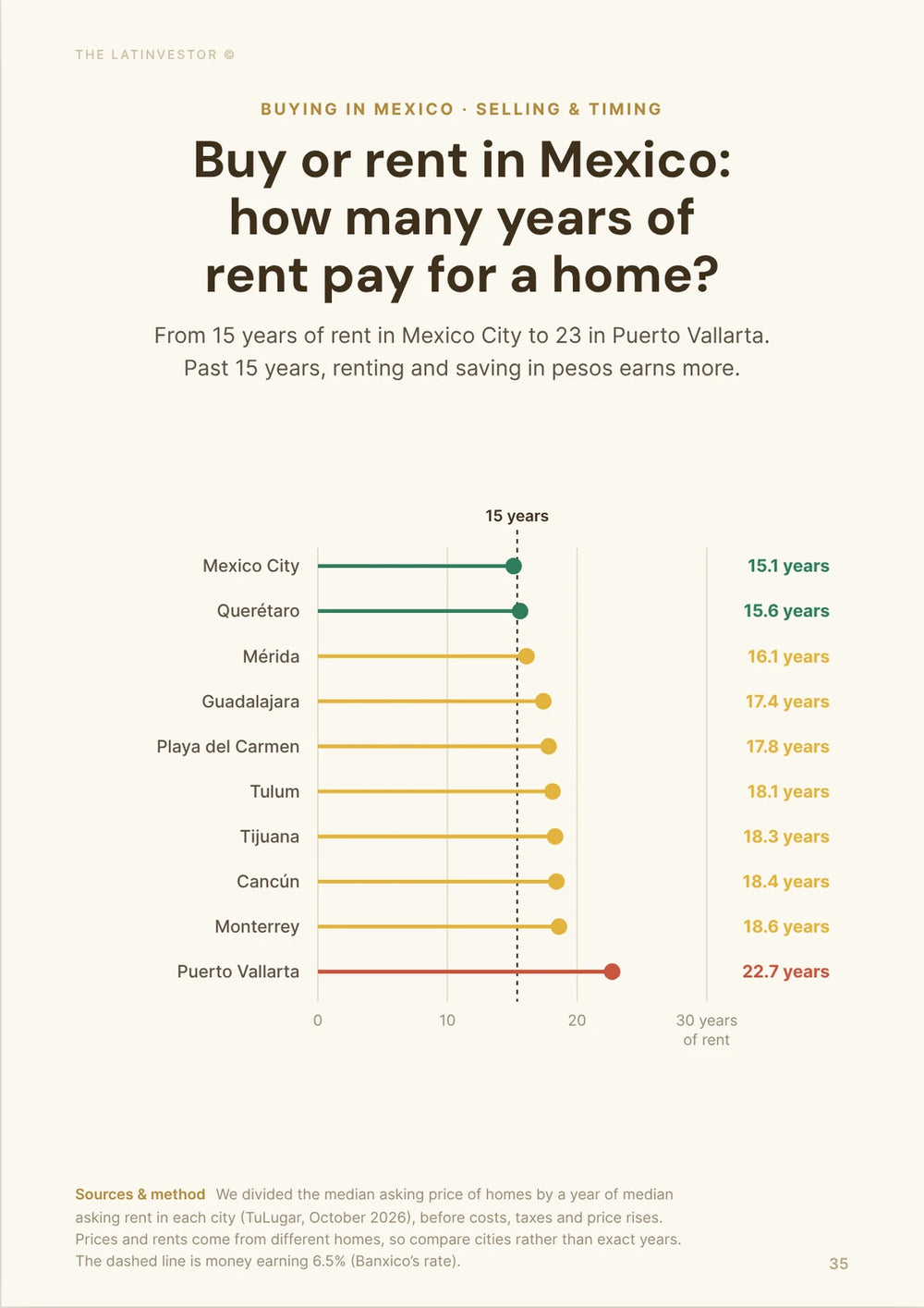
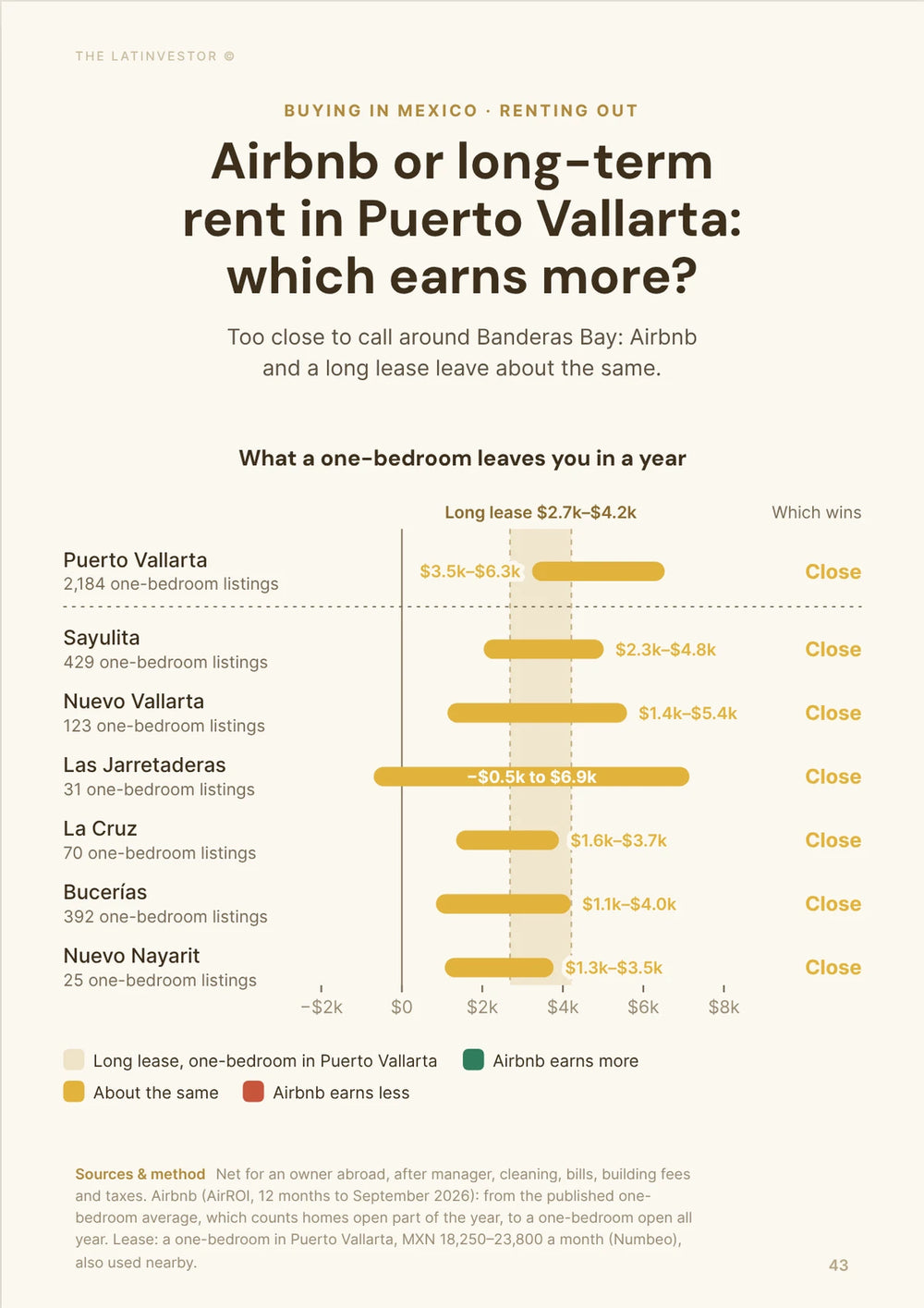
Pincali's October 2026 listings put the median apartment asking price at about MXN 8.08 million ($434,000) and the median asking rent at about MXN 35,000 a month ($1,880).
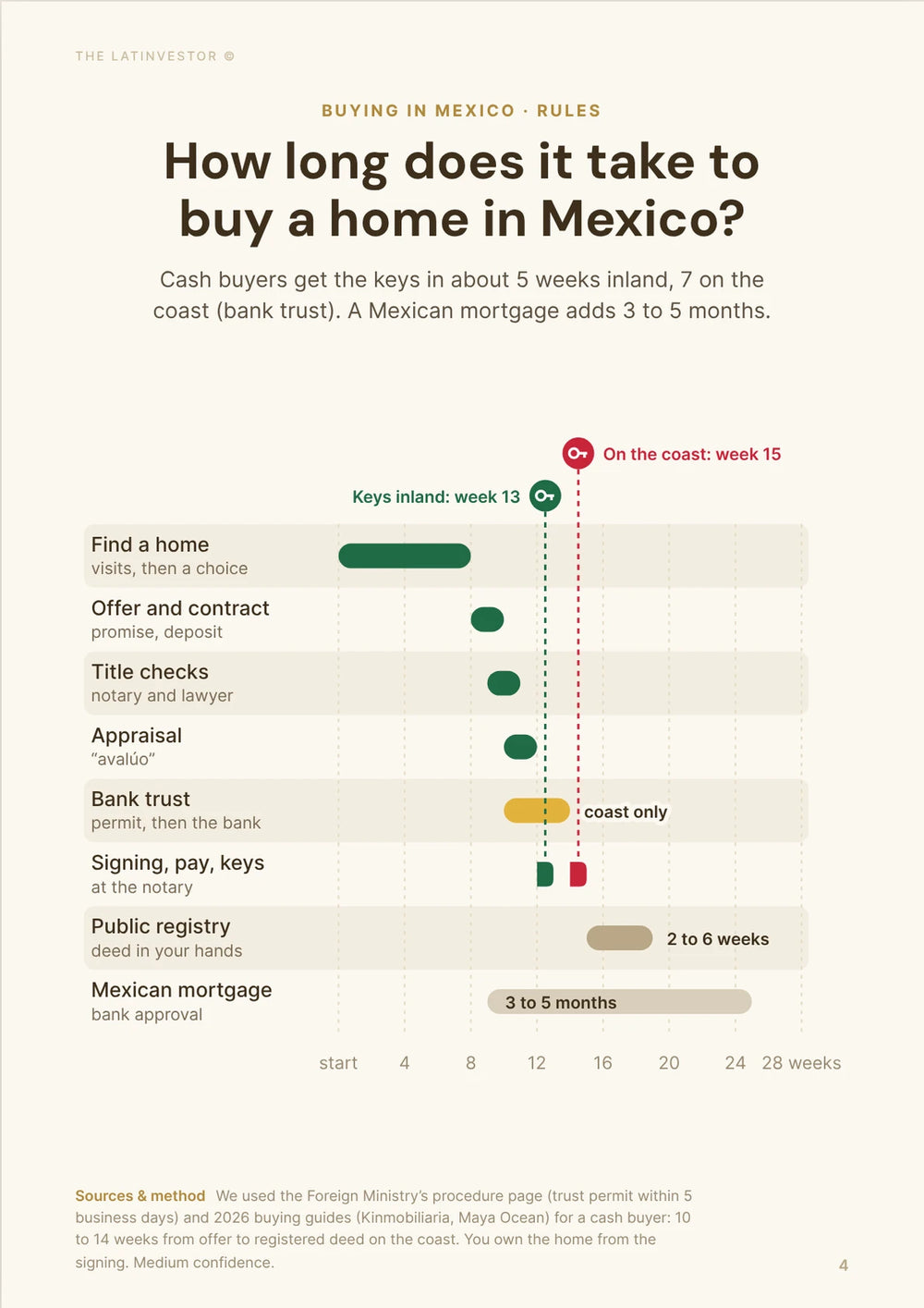
That is about MXN 420,000 a year, or a gross yield of about 5.2%. Those are asking figures on both sides, so the real number can be a little better if you negotiate the price.
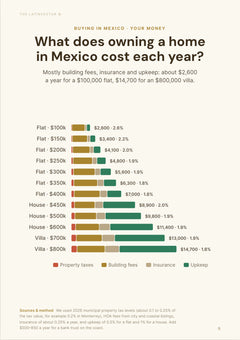
Condo fees, maintenance, insurance, empty months, repairs, management and tax all come out of that. A buyer with an 11% mortgage has a much bigger cost on top.
A home bought well below asking, or in a cheaper neighborhood such as Versalles, can do better. But the city's popularity will not rescue a weak purchase price.
Is Airbnb still strong enough to justify buying in Puerto Vallarta?
Bookings are holding up, but hosts earn less per night and fewer foreign visitors are flying in.
AirDNA's data for Puerto Vallarta, Jalisco, track about 5,943 active short-term rentals, 54.3% fewer than a year earlier. Occupancy is around 57%, and the average daily rate fell about 17.5% to roughly $178.
RevPAR, which combines occupancy and price, is about $101, still 10.4% below the previous year. Guests are booking, but each available night earns less.
Demand is also softer. Puerto Vallarta airport handled about 4.54 million passengers from January to September 2026, 12.3% fewer than a year earlier, and international traffic fell 19.4%, according to Grupo Aeroportuario del Pacífico.
The city still has decades of tourism behind it and direct flights to North America. But with thousands of rentals and a large condo pipeline, a new owner needs a unit that stands out or a price low enough to compete. Buying a generic condo at a full price and counting on Airbnb to make it work is a bad bet.
| Puerto Vallarta STR metric | Latest 12 months (to Sep 2026) | Change in a year | What it tells us |
|---|---|---|---|
| Active listings | ~5,943 | -54.3% | Many hosts left or switched |
| Average occupancy | ~57% | +13.3% | Booking demand remains solid |
| Average daily rate | ~$178 | -17.5% | Hosts get less per booked night |
| RevPAR | ~$101 | -10.4% | Nightly income has weakened |
| Annual revenue per listing | ~$31,300 | +62.3% | Strong headline, but distorted by fewer listings |
Did Hurricane Simón change anything for Puerto Vallarta buyers?
Not prices, but it is a good reminder of what to check before you buy.
Simón came close as a Category 3 hurricane on October 11, 2026, with its eye about 45 miles south of Cabo Corrientes, the southern tip of the bay, according to AP. The boardwalk was closed and some hotels were evacuated. The airport reopened to commercial flights at 00:01 on October 13, earlier than planned, and the worst damage was further south, in Guerrero.
The city's real weak points this year were water and drainage. In August, highway works disrupted water in about 40% of neighborhoods, according to SEAPAL, and an August storm affected at least 18 homes. In October, failed pumps contributed to sewer backups in Versalles.
What to do: visit after heavy rain if you can, and ask the building administrator about leaks, roof repairs, pumps and water tanks. Ask whether the condo fund paid for any storm repairs this year, and get a quote for hurricane insurance before signing. Local guides put homeowner insurance at roughly $600 to $900 a year for a typical condo.
Storm headlines a few weeks before high season can also make some sellers nervous. That is one more reason to make an offer this autumn.
Can foreigners still buy Puerto Vallarta property easily?
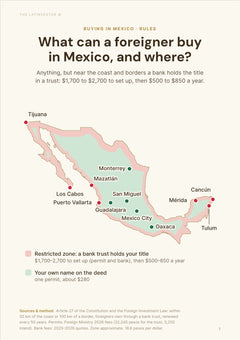
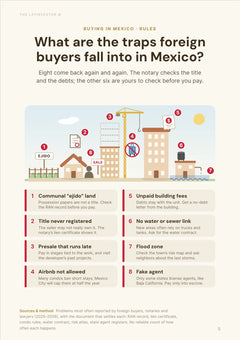
Yes. Foreigners get practical ownership rights, but the coast adds a bank trust and its costs.
Puerto Vallarta is within 50 kilometers of the coast, in Mexico's restricted zone. A foreign individual buying a home there uses a fideicomiso, a bank trust in which a Mexican bank holds title for the foreign beneficiary.
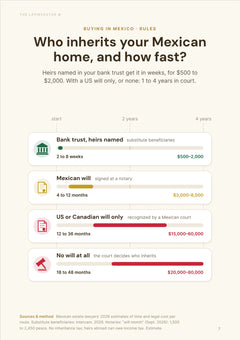
The trust lasts up to 50 years and can be renewed. You can live in the home, rent it out, sell it and name heirs. This has been routine in Puerto Vallarta for decades.
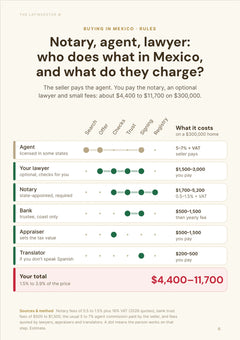
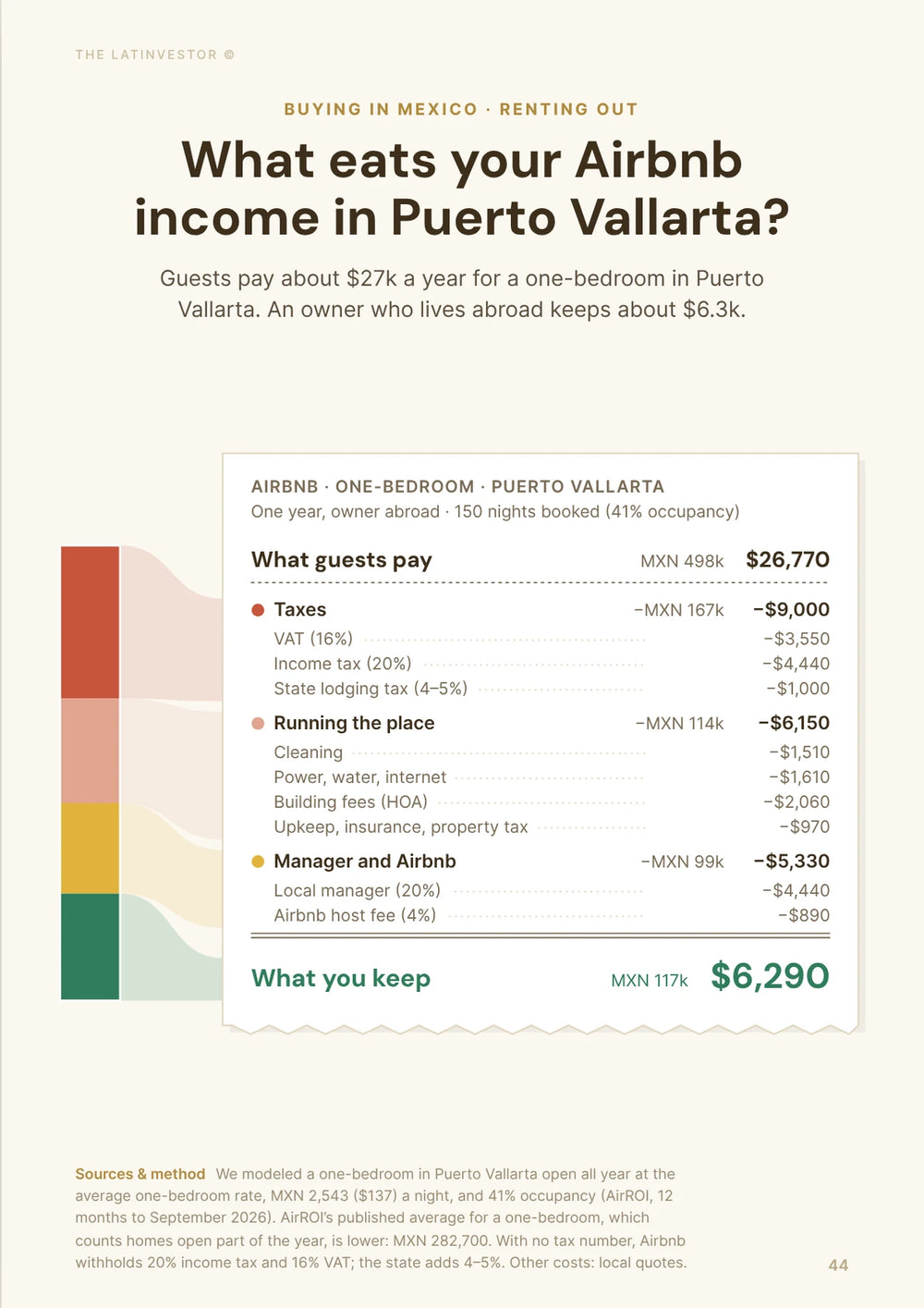
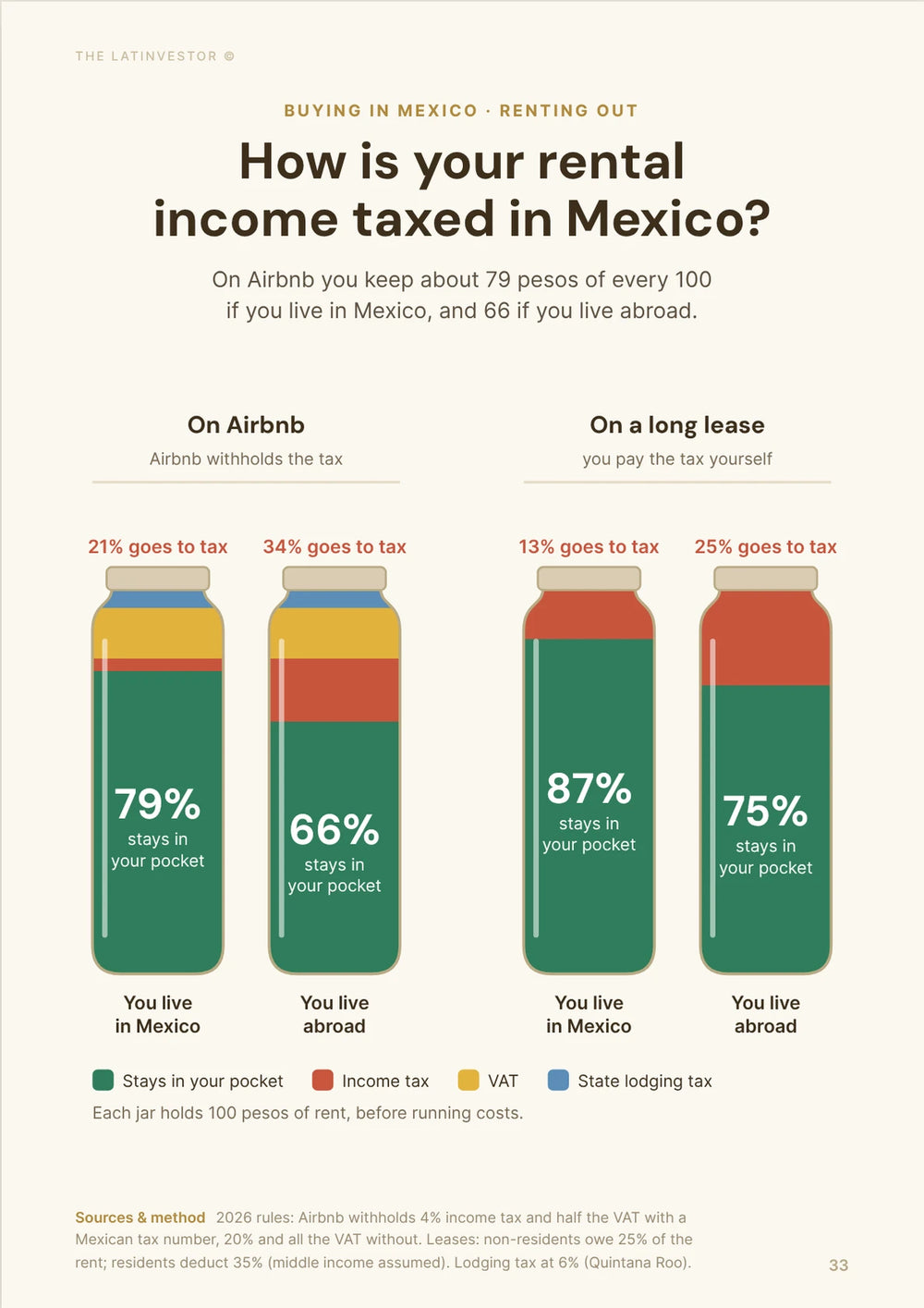
It still adds cost. The Foreign Ministry's permit costs MXN 21,650 (about $1,160) in 2026. Banks charge roughly $550 to $800 to set up the trust and about $550 to $700 a year after that, on top of notary fees and transfer tax.
For a long-term owner that is manageable. For someone hoping to flip, it is one more cost to recover on both the purchase and the sale.
Which Puerto Vallarta properties look most attractive to buy now?
Well-located resales that are hard to replace, owned by a seller who has become flexible.
A discount only matters if the starting price was fair. Taking 8% off a condo listed 20% above recent sales still means overpaying. Start from recent closed sales, not from the asking prices next door.
Long time on the market helps you find the right sellers. So do repeated price cuts, empty units, estates, owners who are moving and units that compete with several near-identical listings.
The property itself needs something scarce: a real view, a walkable street, beach access, a big terrace, a well-run building or a layout new towers do not copy. That protects resale value much better than a fancy lobby.
Houses deserve a close look, especially above the price band most buyers target. Among condos, we prefer good resales over identical investor units, unless a presale developer offers a real discount.
Who should buy Puerto Vallarta property now, and who should wait?
Patient cash buyers and long-term owners have a good setup. Leveraged investors and flippers do not.
A cash buyer planning to use the home for years can use the slower market without needing a rebound next quarter. A house buyer has more choice than at any time in the past year.
A rental investor can buy too, but the deal has to work with real costs and conservative income. At typical prices, neither long-term rent nor Airbnb justifies overpaying.
Mortgage buyers face the hardest numbers, with fixed rates around 11%. Flippers face slow sales, trust and closing costs, agent commissions and flat price growth, which is too much friction for a quick resale.
| Buyer | Conditions today | Main advantage | Main problem | Our view |
|---|---|---|---|---|
| Cash lifestyle buyer | Good | More choice and negotiating room | Still-high prices | Buy selectively |
| Cash house buyer | Good | House listings up 26.5% | Harder resale above $1 million | Attractive |
| Long-term rental investor | Mixed | Can negotiate entry price | About 5.2% gross before costs | Deal dependent |
| Prime condo buyer | Mixed | Scarce locations hold value better | High purchase price | Selective |
| Generic presale buyer | Weak | Developer incentives possible | ~1,534 units due by 2028 | Be cautious |
| Mortgage buyer | Weak | Long holding period can help | Fixed rates around 11% | Usually wait |
| Short-term flipper | Poor | Occasional motivated sellers | 262-day median sale time and transaction costs | Avoid |
So, is it a good time to buy property in Puerto Vallarta now?
Yes, if you pay cash, plan to hold and negotiate. The opportunity comes from the slowdown, not from another price surge.
Several things now favor buyers. Condo closings are down 21.1% this year, homes take months to sell, house listings are up 26.5%, and there are about 23 months of existing homes for sale across the bay, with more presales coming.
We still would not call Puerto Vallarta cheap. Median prices are still up, the peso is still a bit stronger than on the 2025 average even after its September slide, mortgages cost about 11%, gross rental yields sit around 5%, and foreign visitors are fewer.
That makes selection matter far more than during the boom. Resale houses and distinctive condos backed by recent closed sales are worth a close look, and this autumn is a good time to make offers.
Anyone who needs heavy financing, wants an ordinary presale at full developer price or expects a quick gain should be patient. Sellers have lost leverage without a crash, and that is a useful setup for a serious buyer.
Our methodology
This article estimates whether now is a good time to buy in Puerto Vallarta by looking at what buyers face today: sales volumes, time on market, closed and asking prices, supply and presales, financing, the exchange rate, rental income, short-term rentals, storm and water risks, and the rules for foreigners.
Market figures come from MLS data: Coldwell Banker La Costa's report on the Puerto Vallarta market for September 2026 and January to September 2026, and the Vallarta Seaside Bay Report for the 12 months to September 2026 across Puerto Vallarta and Bahía de Banderas. Asking prices and rents come from TuLugar and Pincali in October 2026. Short-term rental figures come from AirDNA and AirROI, and airport traffic from Grupo Aeroportuario del Pacífico.
The national backdrop comes from official sources: Sociedad Hipotecaria Federal for home prices, Banco de México for the policy rate and mortgage rates, and BBVA Research for mortgage volumes. Foreign-buyer rules and the trust permit fee come from the Secretaría de Relaciones Exteriores; bank trust fees come from a 2026 broker comparison and are estimates. Storm, water and drainage facts come from AP, SEAPAL and dated local press.
We checked these figures in October 2026. Conversions use about 18.6 pesos per US dollar and 20.9 pesos per euro; the comparisons use the 2025 average of about 19.2 pesos per dollar and the early-September 2026 rate of just under 17.
Limits: asking prices are not sale prices; MLS data miss private sales; medians move with the mix of homes sold; the Bay Report and Coldwell Banker cover different areas and periods, so their counts are not added together; AirDNA and AirROI use different samples and are not mixed in one calculation; and yields are gross, before any costs.
Key sources used for this analysis include Coldwell Banker La Costa's October 2026 market pulse, its April 2026 market analysis, the Vallarta Seaside Bay Report, TuLugar's Puerto Vallarta market data, Pincali on apartments for sale, Pincali on apartment rentals, AirDNA's Puerto Vallarta overview, AirROI's Puerto Vallarta data, Grupo Aeroportuario del Pacífico's September 2026 traffic report, Sociedad Hipotecaria Federal's Q2 2026 housing-price index, Banco de México, Banco de México's Q1 2026 mortgage-rate data, BBVA Research, Calcu.mx on historical exchange rates, the Secretaría de Relaciones Exteriores on restricted-zone trusts, SRE's 2026 fees, Homia on 2026 bank trust fees, Compass Abroad on homeowner insurance, AP on Hurricane Simón, Crónica on the airport reopening, Euronews on the storm's toll, SEAPAL on the August water cuts, SEAPAL on drainage in Versalles and Quadratín Jalisco on the August flooding.