Summary
Yes, but only in value and size, not in sales. The median condo sold for about $400,000 in the first nine months of 2026, up 7.7%, while condo closings fell 21.1%.
Puerto Vallarta's own MLS counted 798 closings from September 2025 to July 2026, against 904 a year earlier, down 11.7%. Strong late-2025 months hid a weak 2026.
September 2026 was the worst sign yet: 48 condo closings, down 41.5% from a year earlier, and new pending condo sales down 51%.
Condos still sell, just more slowly. Resale condos closed 238 times in about five months, at a median of $405,000, but the median condo now needs 262 days to sell.
Prices are flat underneath the headline. Across the bay, the median sale rose 9.2% to about $415,000 in the year to September 2026, yet the median condo price per m² stayed flat at about $3,948.
Buyers negotiate again. Recent closings landed at 73% to 88% of the final asking price on properties that had sat for months.
Houses are the new pressure point: 750 houses are for sale, up 26.5% in a year, and more than a quarter are listed at $1 million or more.
The map keeps moving. Versalles asks about $3,646 per m² against $6,205 in Emiliano Zapata, and Central Vallarta South and the South Shore fell from about 55% to 26% of the bay's sales in ten years.
The pipeline is big: presales are 46% of listings but only 26% of closings, with about 1,534 units due by 2028.
Growth is also straining the city: in August 2026 about 40% of neighborhoods had their water disrupted, and Versalles had sewer backups in October.
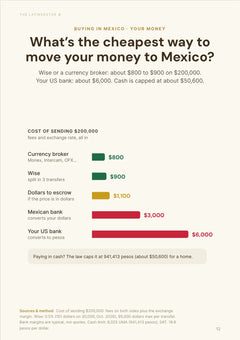
Credit is the hard part: Mexican mortgages still cost about 11.31%. The peso helps dollar buyers again: an MXN 8 million condo costs about $430,000 at today's 18.6 pesos per dollar, against more than $470,000 in early September.
Tourism is the biggest worry: international passengers at the airport fell 19.4% from January to September 2026, and active Airbnb listings fell 54.3%.
No bubble about to burst, but no boom either. A well-priced condo still sells; an overpriced house or generic presale can sit for a year and close 15% to 25% below asking.

Is Puerto Vallarta's market growing or just getting more expensive?
Mostly getting more expensive. Prices and the size of the market keep rising, but fewer homes change hands than a year ago.
The long trend is real. MLSVallarta's review of 2015 to 2025 found that sales volume around Puerto Vallarta and Banderas Bay grew several times over, and that average condo prices rose roughly 80% between the start of the 2017 recovery and 2025.
The recent trend is not. SearchPV's Puerto Vallarta MLS data show 798 closings from September 2025 to July 2026, down from 904 a year earlier, an 11.7% fall. Coldwell Banker La Costa, which covers Puerto Vallarta and Riviera Nayarit, counted 750 condo closings from January to September 2026, down 21.1%, and 237 house closings, down 4.0%.
Prices have not followed sales down. Coldwell Banker puts the year-to-date median condo sale at about $400,000, up 7.7%. So we would still call it a growth market, but the easy phase is over: buyers take longer and turn down more properties.
| Measure | Earlier level | Latest evidence | What we see |
|---|---|---|---|
| Puerto Vallarta MLS sales, Sept–July | 904 | 798 | Sales down 11.7% |
| Condo closings, Jan–Sep 2026 | — | 750 | Down 21.1% |
| Median condo sale, Jan–Sep 2026 | — | About $400,000 | Up 7.7% |
| Average condo price since 2017 | Baseline | About +80% by 2025 | Large long-term repricing |
| Active listings, September 2026 | — | 2,672 condos, 750 houses | Condos -17.5%, houses +26.5% |
| New pending sales, September 2026 | — | 48 condos, 28 houses | Condos -51.0%, houses -6.7% |
Are Puerto Vallarta property sales still increasing?
No. Sales are falling, and the drop got worse through 2026.
SearchPV's monthly MLS figures show the turn clearly. Late 2025 was strong: September sales rose from 47 to 62, October from 49 to 82 and November from 38 to 56 compared with a year earlier. December was also slightly up.
Then 2026 started badly. January dropped from 71 sales to 43, April from 145 to 67, May from 100 to 79 and June from 112 to 58. July was flat at 55 versus 54. Over the whole period, closings fell from 904 to 798.
The wider bay, which includes the Nayarit side, tells the same story on timing. The Vallarta Seaside Bay Report counted 1,338 closings in the twelve months to September 2026, down 7.5%. Every quarter of 2026 ran below 2025: 327 against 375 in Q1, 380 against 501 in Q2 and, on preliminary figures, 291 against 323 in Q3.
| Month | Previous period | Latest period | Change |
|---|---|---|---|
| September 2025 | 47 | 62 | +31.9% |
| October 2025 | 49 | 82 | +67.3% |
| November 2025 | 38 | 56 | +47.4% |
| January 2026 | 71 | 43 | -39.4% |
| April 2026 | 145 | 67 | -53.8% |
| May 2026 | 100 | 79 | -21.0% |
| June 2026 | 112 | 58 | -48.2% |
| Sept 2025–July 2026 total | 904 | 798 | -11.7% |
Why did condo sales collapse in September 2026?
Because buyers stopped committing over the summer. Only 48 condos closed in September 2026, 41.5% fewer than in September 2025, and all closings combined fell 38.7%, to 65 from 106.
Closings lag the decision to buy by a month or two, so the pending numbers matter more. New pending condo sales fell to 48 in September, down 51.0%. That points to a weak autumn for closings too, before the winter season brings buyers back.
It is not a fire sale. Active condo listings fell 17.5% to 2,672 and new condo listings were down 32.0% from January to September: owners are pulling back or holding, not dumping. The median condo that did sell in September closed at $432,500, up 1.6%.
What to do: if you are looking now, this is the quiet window. Ask the agent how many units in the same building sold in 2026 and at what closed price, and make offers before the winter crowd arrives. A seller who has had no visits since spring is more open to a number than one in February.
Are Puerto Vallarta condos holding up better than the rest of the market?
On price, yes. On speed, no: condos keep their value, but they now take longer to sell than houses.
SearchPV counted 238 resale-condo closings between early March and early August 2026, worth about $126 million, at a median of $405,000. Recent median sold prices were about $240,000 for studios, $328,000 for one-bedroom units, $405,000 for two bedrooms and $953,000 for three bedrooms or more.
The monthly pattern was uneven. Resale-condo sales rose from 27 to 30 in October, 22 to 31 in November and 36 to 45 in December, then 46 to 48 in March, 43 to 54 in May and 34 to 45 in July, while April and June were weaker.
The cost is time. Coldwell Banker's September 2026 data put the median condo at 262 days on the market, up 10.1% in a year. Location, building quality, view, HOA fees and the asking price now decide which ones sell in weeks and which ones sit.
Are Puerto Vallarta property prices still going up?
The headline is, the underlying price mostly isn't. Prices are stubbornly high rather than rising fast.
The Bay Report puts the median sale across Puerto Vallarta and Bahía de Banderas at about $415,000 over the twelve months to September 2026, up 9.2%. But the median condo price paid per m² held flat at about $3,948. Bigger and pricier homes sold; the same space did not get more expensive.
Asking prices sit around the same level. TuLugar's October 2026 data puts the median condo asking price in Puerto Vallarta at about $371,000 and $3,853 per m². Asking prices are not sale prices, but they show that sellers have not cut.
Medians also jump with the mix. A quarter with more beachfront two-bedrooms looks like a price rise; one with more inland studios looks like a fall. Read the median sale and the price per m² together.
Has Puerto Vallarta become a buyer's market?
For properties that have sat for months, yes. Buyers now set the price on stale listings.
The Bay Report shows the median home took 229 days to sell over the twelve months to September 2026, 13.9% longer than a year earlier. 69% of homes sold below asking, and the median sale closed 8% under its first price.
Recent closings make it concrete. Agave Vallarta 13 in Emiliano Zapata sold for $600,000 after a final ask of $685,000. Nayri Life & Spa 205 sold for $325,000 against $380,000. Villa Amanda in Upper Conchas Chinas sold for $799,000 after being offered at $1.05 million.
Well-priced homes still sell close to asking, so don't expect a blanket 20% off. But on a listing that has been up for six months or more, opening 10% to 15% under the final ask is reasonable.
| Recent sale | Final asking price | Sold price | Sold/list | Days on market |
|---|---|---|---|---|
| Agave Vallarta 13 | $685,000 | $600,000 | 87.6% | 116 |
| Nayri Life & Spa 205 | $380,000 | $325,000 | 85.5% | 340 |
| Encanto Vallarta 301 | $456,086 | $357,500 | 78.4% | 375 |
| Villa Amanda | $1,050,000 | $799,000 | 76.1% | 361 |
| Lomas de Mismaloya | $1,500,000 | $1,100,000 | 73.3% | 134 |
Is there now too much expensive housing for sale in Puerto Vallarta?
At the top end, yes. Sales of houses held up better than condos in 2026, but the stock of houses for sale is piling up.
Coldwell Banker counted 237 house closings from January to September 2026, down only 4.0%, at a year-to-date median of about $425,000. Meanwhile active house listings rose 26.5% to 750, and 28.3% of them ask $1 million or more.
The expensive end is where discounts are biggest. Villa Amanda sold at 76% of its final ask after 361 days. A Sierra del Mar home sold for $1.8 million against $2.099 million after 378 days, and another for about $2.49 million against $2.95 million. A Marina Vallarta five-bedroom sold for $1.55 million and a four-bedroom Versalles house for $725,000.
Cheaper houses behave differently. Two recent Fluvial houses closed at roughly 95% and 99% of their final asking prices, around $400,000 to $500,000. Above $1 million, a buyer has enough choice to wait, and should.
Which Puerto Vallarta neighborhoods are still moving?
The walkable beach areas and the cheaper newer districts. Expensive hillside homes move slowest.
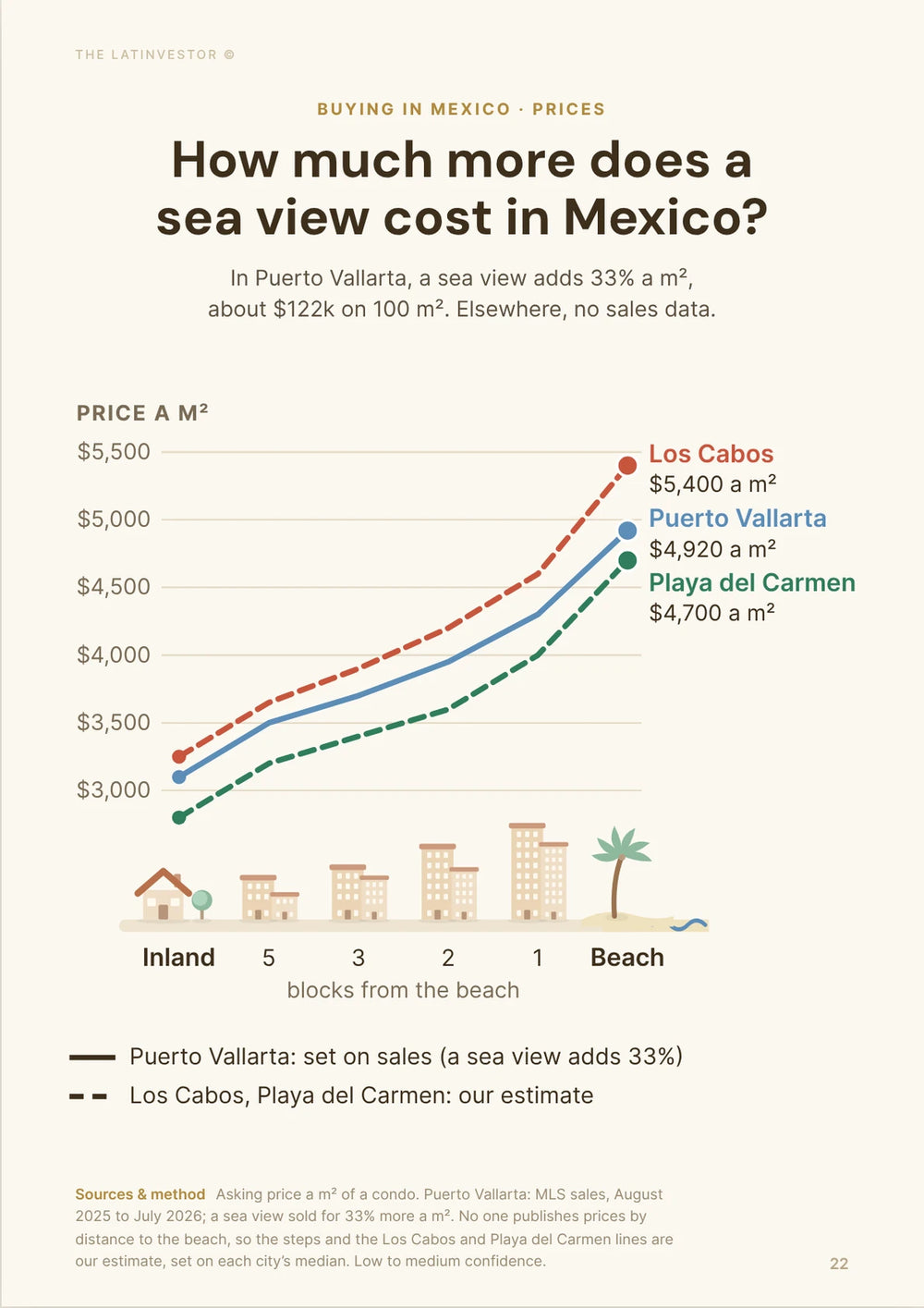
Asking prices show how far apart the areas are. In October 2026 condos asked about $6,205 per m² in Emiliano Zapata, $5,451 in Zona Romántica (ZEPTO), $5,275 in Las Glorias, $4,953 in the Hotel Zone, $4,627 in Marina Vallarta, $4,114 in Fluvial and $3,646 in Versalles, according to TuLugar unless stated.
Emiliano Zapata sells on walkability, restaurants and Los Muertos Beach. Versalles draws buyers who want newer buildings and a lively street life without coastal prices; its median condo asks about $220,000. Marina Vallarta sells larger units, the marina and quick airport access, with condos asking around $545,000.
Amapas and Conchas Chinas command much higher prices, but SearchPV's recent sales there include properties that sat for 200, 300 or nearly 600 days before closing. Liquidity now depends on the neighborhood, the building and the price band, not on Puerto Vallarta as a whole.
Is Puerto Vallarta's growth moving beyond Zona Romántica?
Yes. Sales have been moving away from the old core for ten years, and that is one of the biggest changes in the market.
MLSVallarta's decade review shows Central Vallarta South and the South Shore made up about 55% of the region's sales in 2015 and roughly 26% by 2025. Francisco Villa, which includes Versalles, went from about 2% to more than 10%. Central Vallarta North grew from around 5% to above 10%.
Buyers didn't stop liking the beach. Downtown prices pushed them out, and better restaurants, newer condos and familiarity with areas outside the old expat zone pulled them in. The Amado Nervo bridge, finished in September 2026 at a cost of MXN 704 million (about $37.9 million), should add to this: the transport ministry SICT says it saves up to 25 minutes between Nayarit and the city.
Are developers still building lots of condos in Puerto Vallarta?
Yes. The construction pipeline has not slowed, even though sales have.
MLSVallarta's development directory lists dozens of projects across the city and the bay. Unatú near the airport has 117 units starting around $186,000; Terra 242 in Río Pitillal South has 23 units from a little above $210,000. Others are being sold in Marina Vallarta, Las Glorias, Versalles and Emiliano Zapata.
The Bay Report tracks about 1,534 units due for delivery through 2028, 607 of them in 2027, more than the 1,338 homes sold across the whole bay in the latest twelve months. They will arrive over several years, but they will compete with resale owners for the same buyers.
That hits older resale condos first. A ten-year-old unit asking the same as a new building nearby needs a real reason: more space, a better view, lower HOA fees or a better street.
Are Puerto Vallarta developers having trouble finding buyers?
Yes, more than they admit. Presales are 46% of active listings across the bay but only 26% of closings.
Developers still find buyers, but they have to work for them: staged payment plans, early-payment discounts, upgraded finishes and lower launch prices. Buyers can compare towers in Versalles, the Hotel Zone, Marina Vallarta, downtown and the airport corridor.
The old logic, buy off-plan and sell on delivery for more, only works when finished units are scarce. With this pipeline, many presale buyers will try to resell while the developer is still selling the last units in the same building.
What to check: compare the presale price per m² with closed resale prices nearby (resale condos closed at about $3,762 per m² across the bay, presales at $4,194), not with the developer's price list. Ask for the building permit, the land title and who holds your deposits, and tie payments to construction stages, not dates.
Has Puerto Vallarta become too expensive to keep growing?
Too expensive for locals, not yet for the market. High prices have changed where people buy rather than stopped them.
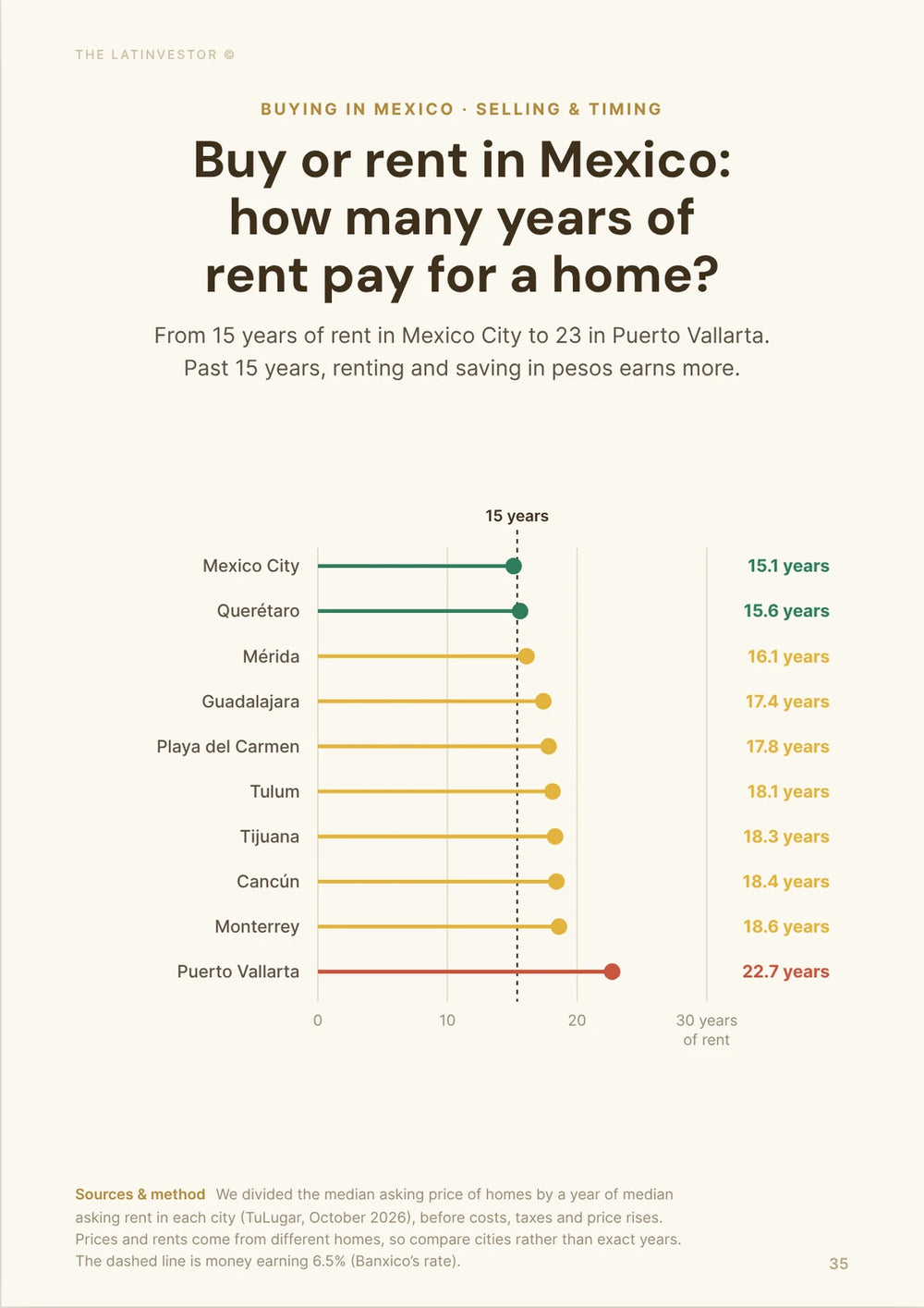
The gap with local incomes is huge. The median condo on TuLugar asks about $371,000, roughly MXN 6.9 million, while crowdsourced Numbeo data, an estimate, puts average take-home pay at about MXN 17,600 a month.
The market has spread outward instead. Versalles became a major condo market as downtown climbed, Fluvial draws buyers who want space, and airport-area projects offer new condos below central prices.
The limit: every step up in price makes Puerto Vallarta more dependent on cash from the United States and Canada, and more exposed to those economies.
Do water and sewage problems now matter when buying in Puerto Vallarta?
Yes. The city's pipes have not kept up with its towers, and 2026 made that visible.
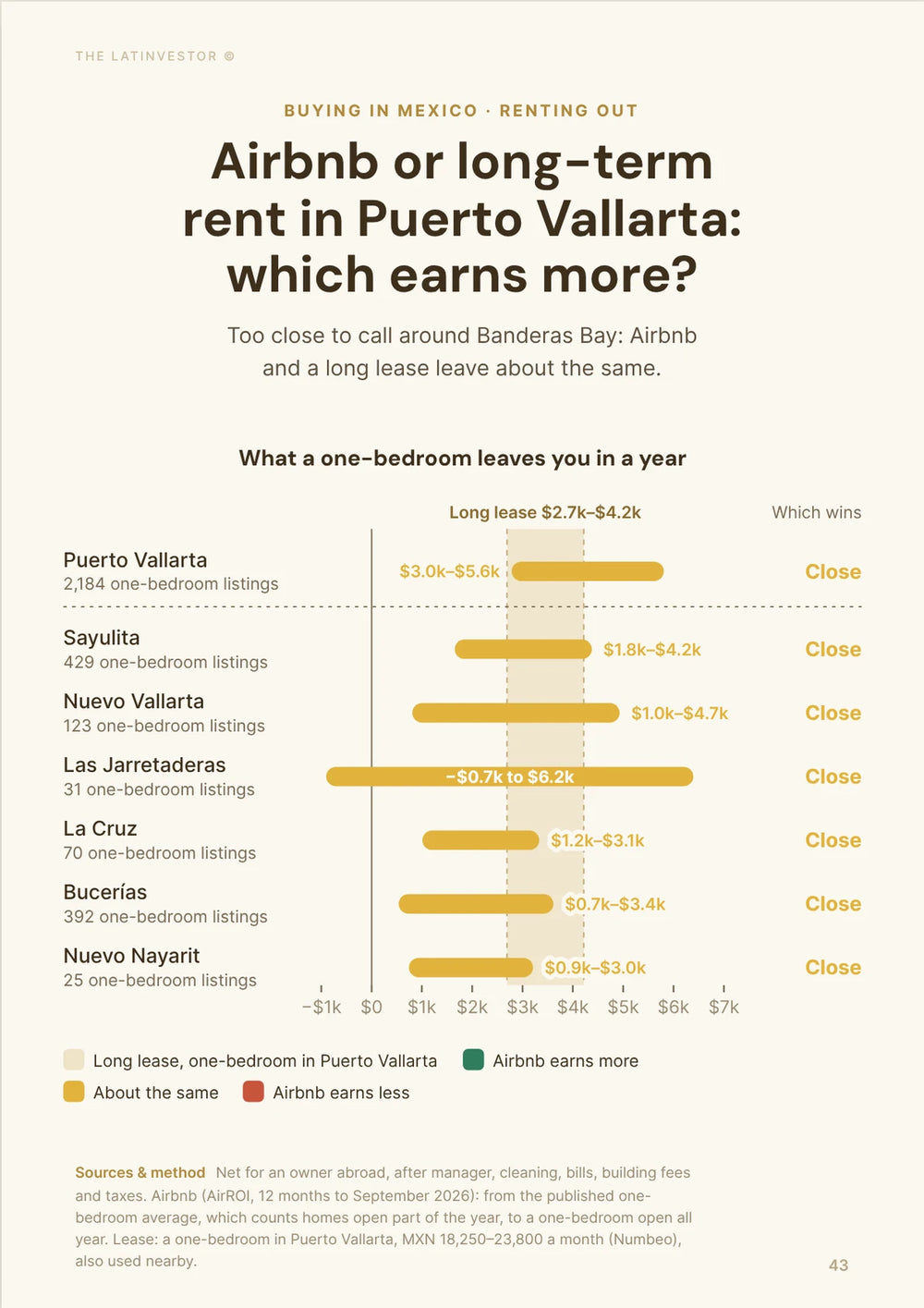
In August 2026, highway works disrupted the water supply in about 40% of Puerto Vallarta's neighborhoods, according to the water utility SEAPAL. In October, SEAPAL said two failed pumps at the Norte I treatment plant contributed to sewer backups in Versalles, where many of the new towers went up. In July, COFEPRIS listed Playa del Cuale as failing bathing-water standards.
What to check: ask the building administrator how many days the building went without water in 2026 and whether it has a cistern and pump. For a new tower, ask to see the approved SEAPAL water connection, not a promise. Ask neighbors about street flooding in the rainy season. Buildings with storage tanks, on higher ground, should resell more easily if these problems return.
Are the peso and high mortgage rates making Puerto Vallarta harder to buy?
Credit, yes. The peso, less than a few weeks ago: it has weakened since early September, which helps dollar buyers on peso-priced homes.
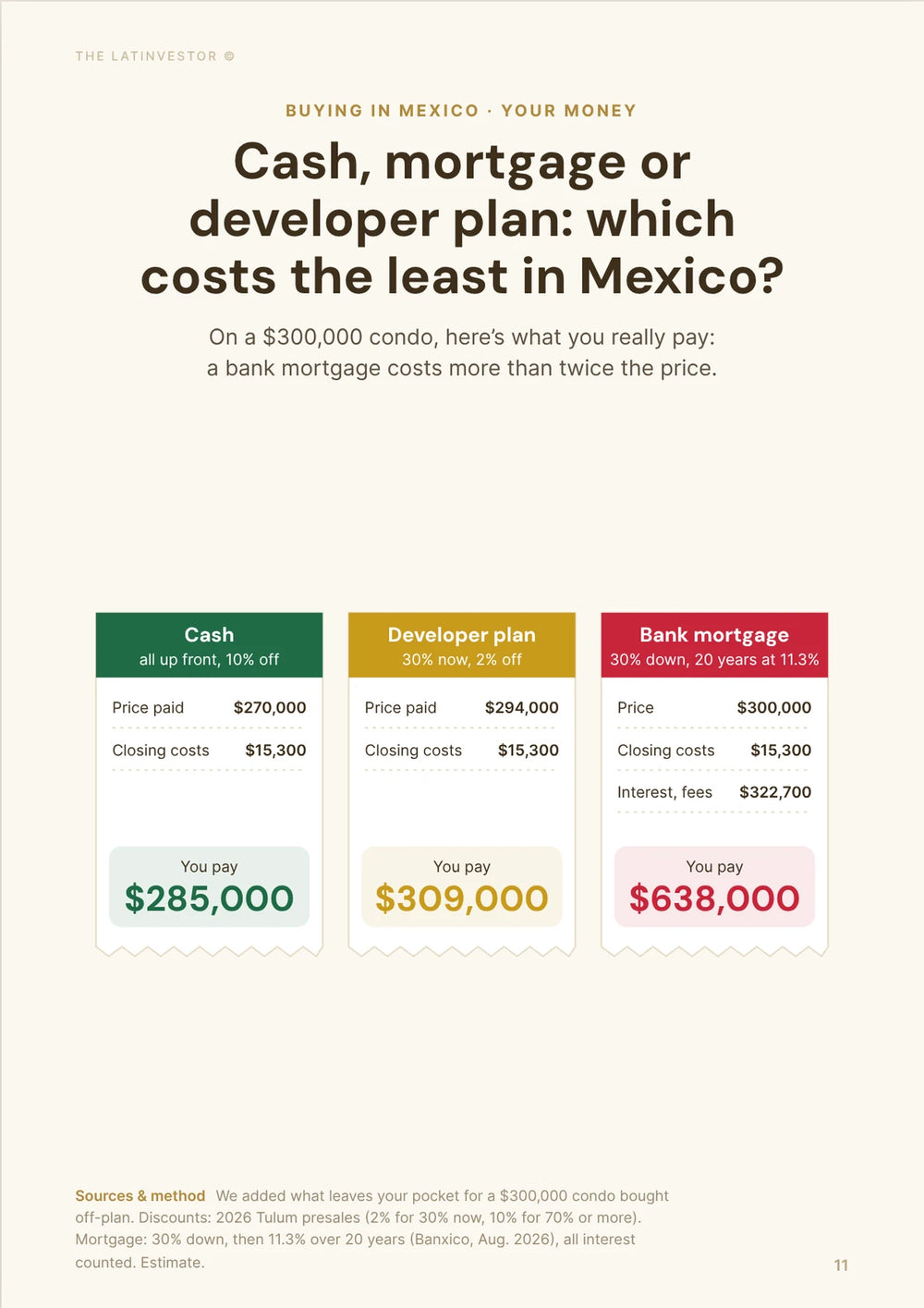
The peso was under 17 per dollar in early September 2026 and about 18.6 on October 21. An MXN 8 million condo now costs a dollar buyer about $430,000, against more than $470,000 in early September, though still a bit more than the $417,000 it cost at the 2025 average of about 19.2. The seller changed nothing.
Many listings here are priced directly in dollars, so the effect shows less in ads. But sellers and builders live in pesos: when a home is priced in pesos, agree the price and lock the exchange rate rather than betting on the peso staying weak.
Mortgages barely help. Banco de México's average mortgage rate was about 11.31% in August 2026. A MXN 5 million, twenty-year loan at that rate costs roughly MXN 52,700 a month before insurance. That's why the market runs on foreign cash, and why it depends on buyers' economies back home.
| MXN property price | At 19.2/USD (2025 average) | At ~17/USD (early Sep 2026) | At 18.6/USD (October 2026) |
|---|---|---|---|
| MXN 4M | $208,000 | $235,000 | $215,000 |
| MXN 6M | $312,000 | $353,000 | $323,000 |
| MXN 8M | $417,000 | $471,000 | $430,000 |
| MXN 12M | $625,000 | $706,000 | $645,000 |
Is falling tourism starting to hurt Puerto Vallarta property?
It's starting to. Tourism still supports the market, but the foreign visitors who buy second homes are the ones disappearing.
Puerto Vallarta airport handled about 4.54 million passengers from January to September 2026, down from 5.17 million a year earlier, a 12.3% drop, according to Grupo Aeroportuario del Pacífico. International traffic fell 19.4%, to about 2.27 million; domestic only 3.7%. September alone was a little better, with international passengers down 12.0%.
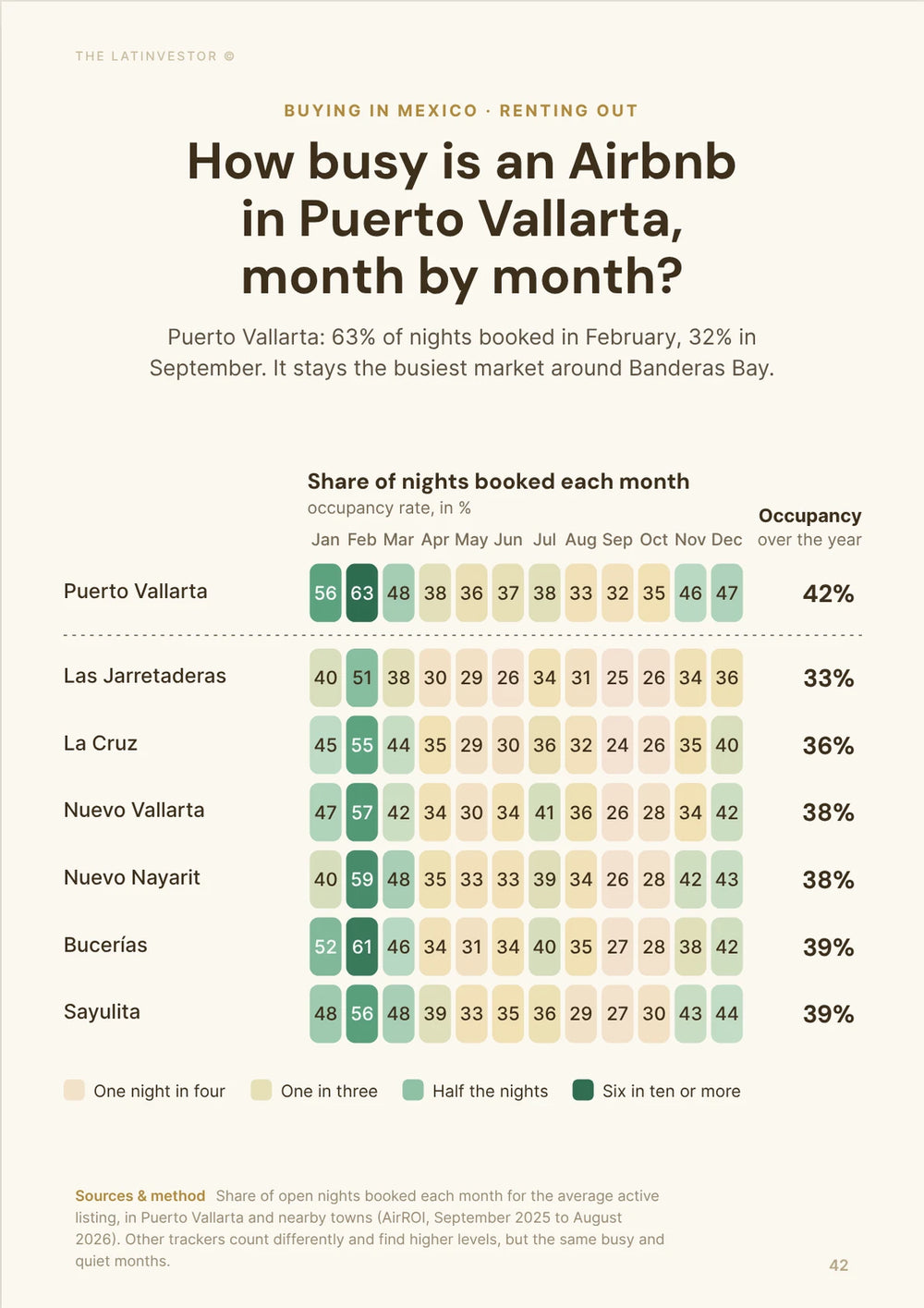
Short-term rentals have shrunk fast. AirDNA counted 5,943 active listings in Puerto Vallarta in September 2026, 54.3% fewer than a year earlier, with the average nightly rate down 17.5% to $178 and average annual revenue of about $31,300 per listing. Buying a condo because Airbnb will pay for it is a much weaker argument than two years ago.
We have not yet seen this turn into a broad price fall. But the 2026–2027 winter season matters: a rebound removes one of the biggest risks, another year like this one would be hard to ignore.
Is Puerto Vallarta real estate still beating the Mexican housing market?
Over ten years, by far. Right now, probably not.
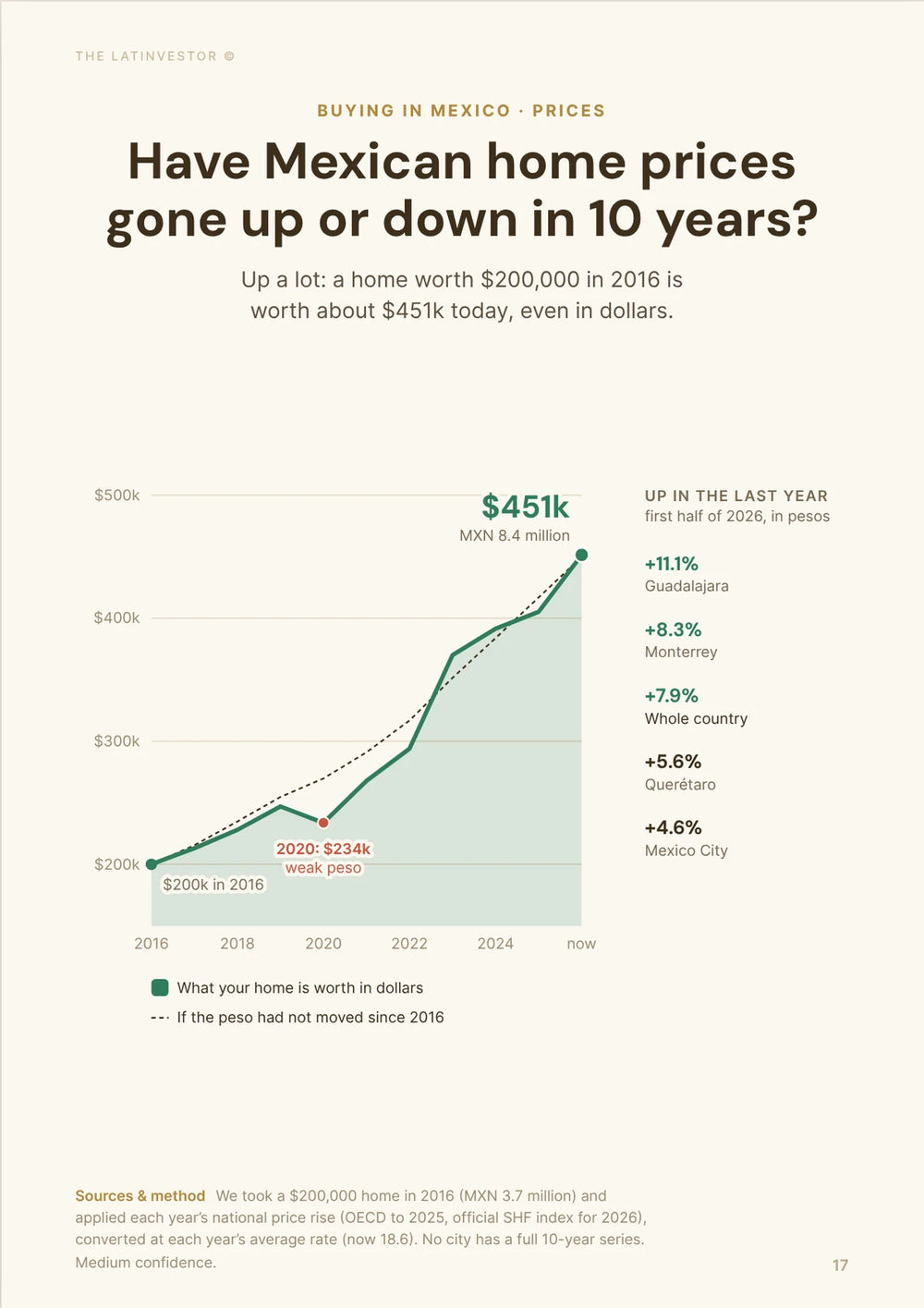
Sociedad Hipotecaria Federal reported a 7.3% year-on-year rise in mortgage-financed home values in the second quarter of 2026 and 7.9% over the first half. New housing rose 8.3% and used housing 7.5%.
Puerto Vallarta has no official index for its foreign, cash-heavy condo market. Its long-run record is much stronger, with condo prices up around 80% from 2017 to 2025. But the latest local condo price per m² is flat, so the national market is currently rising faster than comparable homes here.
Is Puerto Vallarta real estate in a bubble right now?
No. It's expensive and some sellers ask far too much, but it doesn't look like a bubble about to burst.
The market has already lost the signs of a mania. Buyers negotiate, some homes sit for a year, expensive houses close 10% to 25% under asking, and sales are down.
At the same time, hundreds of deals still close, condo prices hold and developers keep investing. Much of the demand comes from retirees, second-home owners and people who live here, not flippers. Puerto Vallarta did fall after the 2007 boom, and MLSVallarta notes that prices took years to recover, so the risk is real, but today it points to corrections in places, not a crash.
What could actually make Puerto Vallarta property prices fall?
Weak foreign demand, slow tourism and new supply all lasting at once. Part of that is already here.
Condo closings are down 21.1% this year, international air traffic down 19.4% and about 1,534 new units are on the way. None of that forces owners to sell on its own.
The danger is persistence. If another high season is weak, Airbnb income slips further and presale units are delivered into a slow market, more sellers will have to cut. That would show up first in longer selling times and bigger discounts, which is already happening for houses and luxury homes. A broad fall would need it to spread to ordinary resale condos.
So, is the property market in Puerto Vallarta still growing?
Yes, but slowly and selectively. Prices are still edging up; sales are not.
Over ten years, Puerto Vallarta grew enormously: condo prices up about 80% since 2017, new neighborhoods such as Versalles, and builders still launching projects.
In 2026, buyers pulled back. Condo closings are down 21.1% for the year and 41.5% in September, the median home takes 229 days to sell, and ambitious asking prices fail. The median condo still sold for about $400,000, up 7.7%.
What has gone is the idea that any property rises with the market. A well-priced condo in a good building still sells. An overpriced house or a generic presale may sit for months and close well below asking. That is the real state of Puerto Vallarta today.
Our methodology
This article checks whether Puerto Vallarta's property market is still growing by separating long-term growth (prices, market size, geography) from current momentum (sales, selling times, discounts).
Closed sales carry more weight than asking prices. Sales counts, sold prices, sold-to-list ratios and selling times come from Coldwell Banker La Costa's September 2026 report (Puerto Vallarta and Riviera Nayarit), the Vallarta Seaside Bay Report (MLS closings across Puerto Vallarta and Bahía de Banderas) and SearchPV's Puerto Vallarta MLS data. The long-term view and the shift in market share come from MLSVallarta's 2015–2025 review. Asking prices by neighborhood come from TuLugar and ZEPTO and are used only to compare areas.
Demand and risk are tested through airport traffic (Grupo Aeroportuario del Pacífico), short-term rentals (AirDNA), the national housing index (Sociedad Hipotecaria Federal), mortgage rates (Banco de México), the exchange rate, water and drainage (SEAPAL, COFEPRIS) and infrastructure (SICT).
We checked these figures in October 2026. Conversions use about 18.6 pesos per US dollar and 20.9 pesos per euro; the comparisons use the 2025 average of about 19.2 pesos per dollar and the early-September 2026 rate of just under 17.
Limits: the three MLS sources cover different areas and periods, so their counts are not added together; MLS data miss private sales; medians move with the mix of homes sold; the house sales shown are examples, not an average discount; and Numbeo wages are crowdsourced.
Key sources used for this analysis include Coldwell Banker La Costa's October 2026 market pulse, the Vallarta Seaside Bay Report, SearchPV's closed-sales database, SearchPV's resale-condo sales, SearchPV's house sales, MLSVallarta's 2015–2025 review, MLSVallarta's development directory, TuLugar's Puerto Vallarta market data, Grupo Aeroportuario del Pacífico's September 2026 traffic report, AirDNA, Sociedad Hipotecaria Federal's Q2 2026 housing-price index, Banco de México, SEAPAL on water supply, SEAPAL on drainage, COFEPRIS, SICT and Numbeo.