
Summary
Over time, a little; right now, no. Puerto Vallarta's Terminal 2 adds about 74,000 m² of terminal space, but airport traffic fell 12.3% from January to September 2026, so there's no airport-driven price jump coming soon.
Puerto Vallarta isn't getting a new airport. GAP is building a second terminal next to the existing one, which adds 134% more terminal space and should open in 2027.
The new terminal can handle about as many people as the whole airport does today. PVR had about 6.9 million passengers in 2025, so the extra capacity is room to grow, not travelers already booked.
The expansion was justified. Traffic grew about 38% between 2019 and 2025, from roughly 5 million to 6.9 million passengers.
The timing is bad. International passengers fell 19.4% over the first nine months of 2026, the group that buys second homes, while domestic traffic only slipped 3.7%.
Airlines are mixed. GAP blames the September drop on fewer seats, yet United moves its daily Denver flight to a 200-seat jet from October 25 and Porter starts Edmonton on November 3.
Prices already moved. MLSVallarta estimates the average condo sale rose from about $310,000 in 2015 to about $490,000 in 2025, so better access was priced in long before Terminal 2.
Supply is the brake. Teseo Data Lab counts active condos up from about 800 in 2020 to 3,211 in 2025, and the Bay Report puts the bay at 31 months of supply once presales are counted.
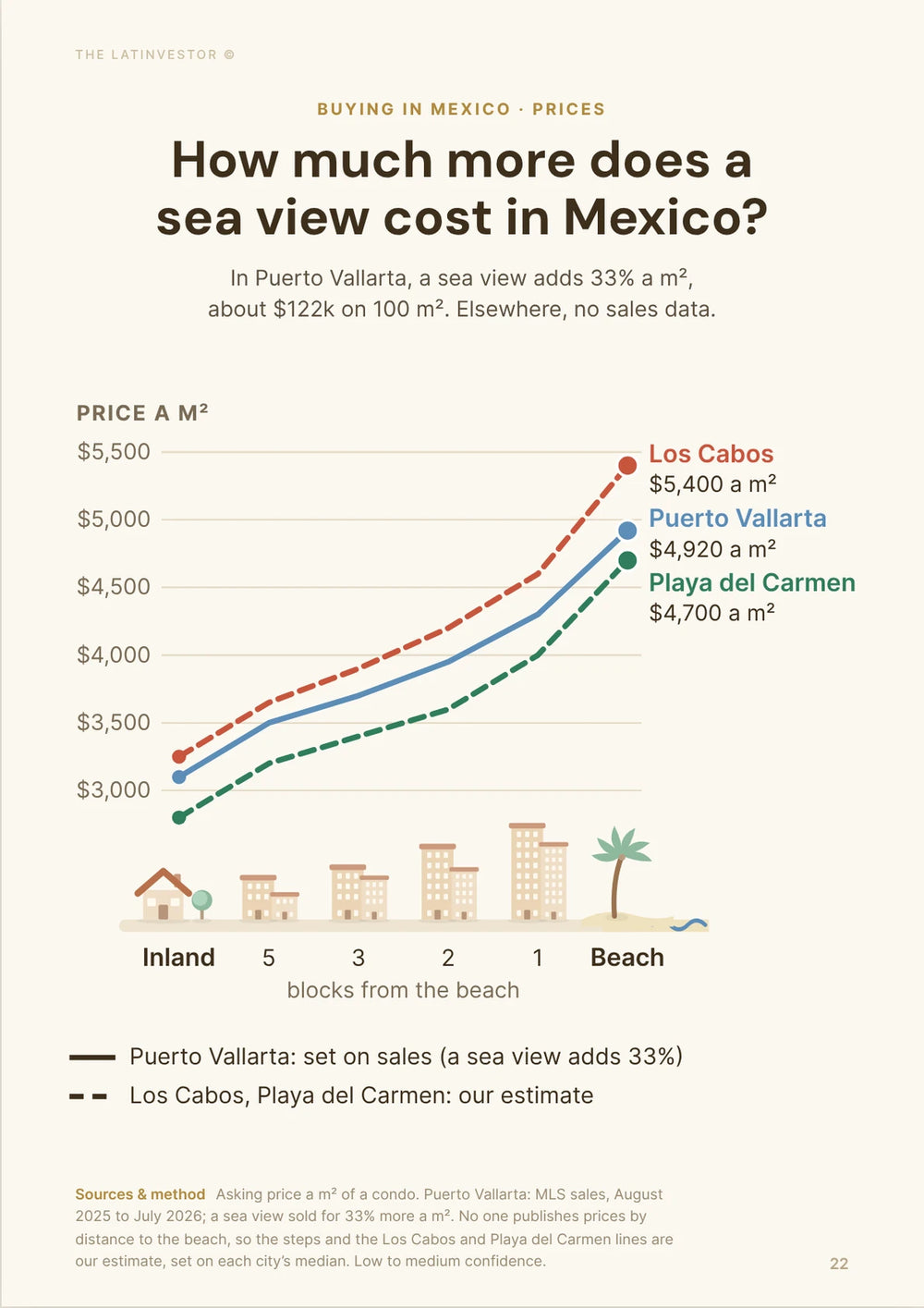
Don't pay an "airport premium." Presales ask about $4,194 per m² against $3,762 for resale condos, and 69% of homes sold below asking in the year to September 2026.
Being near the airport isn't what lifts value. Marina Vallarta is minutes from PVR, yet views, building quality and competing inventory matter more, and more flights could bring noise (about 0.58% off value per extra decibel in North American studies).
Roads may matter more. The Amado Nervo bridge, finished in September 2026, saves up to 25 minutes between Nayarit and Puerto Vallarta.
Rentals will show the first effect. Hotel occupancy peaked at only 65% this summer against 85% in 2025, and AirDNA has the average nightly rate down 17.5% to $178.
Our take: Terminal 2 removes a future bottleneck, but it won't rescue an ordinary condo bought at a full price today. Watch for record international traffic and shrinking inventory before betting on an airport effect.

Is Puerto Vallarta really getting a new airport?
No. Puerto Vallarta is adding a large second terminal to its existing PVR airport, not building a new airport somewhere else.
That matters for property. A brand-new airport can suddenly make remote land valuable. Terminal 2 sits beside an airport that already has direct flights to major cities in Mexico, the United States and Canada.
The project is still big. Grupo Aeroportuario del Pacífico (GAP) says it adds roughly 74,000 m² of terminal space and increases total terminal area by 134%. Plans include 58 check-in counters, 16 self-service kiosks, 10 security lanes, 11 contact gates and seven remote gates, plus new aircraft stands. GAP put the investment at about MXN 9.2 billion (about $495 million).
Construction was about two-thirds done in May 2026, according to local reports, and GAP expects the terminal to start handling passengers in 2027.
So the property story starts simply: Puerto Vallarta is removing a long-term airport bottleneck, not creating a new economic zone from scratch.
| Airport feature | Current airport | Terminal 2 expansion | Why it matters |
|---|---|---|---|
| Passenger terminals | 1 | 2 | More room for future traffic |
| New terminal area | — | ~74,000 m² | Large physical expansion |
| Terminal-space increase | — | +134% | Removes a long-term bottleneck |
| Contact gates | Existing Terminal 1 | 11 new | More airline capacity |
| Expected operations | — | 2027 | Any effect builds gradually |
How much bigger will Puerto Vallarta airport actually become?
Big enough to roughly double what the airport can handle, but extra capacity isn't the same as extra travelers.
Airport officials have described the new terminal as able to process more than 6.5 million passengers a year. PVR handled about 6.9 million passengers across the whole airport in 2025. So the new terminal alone can handle about as many people as the entire airport does today.
Some project descriptions put future total capacity at 13 or 14 million passengers. Those are ceilings, not forecasts.
For property, that difference is everything. If PVR grows from about seven million passengers to ten or twelve million, Terminal 2 will have supported a much larger tourism economy. If traffic stays around seven million for years, Puerto Vallarta simply gets a more comfortable airport.
Did Puerto Vallarta actually need a bigger airport?
Yes. Traffic grew enough over the past several years to justify it.
PVR handled roughly 5 million passengers in 2019 and about 6.9 million in 2025, according to GAP figures. That's about 1.9 million more passengers a year, or roughly 38%, despite the pandemic in between.
Flights grew more slowly. Aircraft movements rose about 19% to roughly 67,200 in 2025, so airlines were already carrying more people per flight with bigger or fuller planes.
International travelers are more than half of PVR's traffic: about 54% from January to September 2025. That's a lot of exposure to US and Canadian demand, in both directions.
| PVR indicator | 2019 | 2025 | Change |
|---|---|---|---|
| Terminal passengers | ~5.0m | ~6.9m | ~+38% |
| Additional passengers | — | ~1.9m | Large increase |
| Aircraft operations | ~56,500 | ~67,200 | ~+19% |
| International share (Jan–Sep 2025) | — | ~54% | High exposure |
| Domestic share (Jan–Sep 2025) | — | ~46% | Steady base |
Is Puerto Vallarta airport still growing fast right now?
No. Traffic is falling, which makes a near-term airport-driven property boom hard to argue.
GAP counted about 4.54 million passengers at PVR from January to September 2026, down from 5.17 million a year earlier. That's a 12.3% drop.
The weakness is international. Domestic passengers fell only 3.7%, while international passengers dropped 19.4%. The second quarter was the worst, with total traffic down 16.7% and international down 27.1%. September was a little less bad: total traffic fell 10.4% and international 12.0%.
One bad year doesn't make a long-term expansion pointless; airports are built for decades. But Terminal 2 will open into an airport with spare room, not one bursting at the seams, and that lowers the odds of a price jump when the doors open.
| PVR traffic | Jan–Sep 2025 | Jan–Sep 2026 | Change |
|---|---|---|---|
| Domestic passengers | 2.355m | 2.268m | -3.7% |
| International passengers | 2.820m | 2.273m | -19.4% |
| Total passengers | 5.175m | 4.540m | -12.3% |
| September international traffic | 107,400 | 94,500 | -12.0% |
Are airlines cutting Puerto Vallarta flights this season?
Some are, some are adding. GAP says September's drop came mainly from airlines offering fewer seats, with the biggest international falls on the San Francisco and Phoenix routes.
The weather didn't help. Hurricane Polo disrupted operations at the end of September, and Hurricane Simón closed PVR to commercial flights until just after midnight on October 13, right before high season. Delta also paused its Seattle route from October 6 to November 8.
On the other side, United moves its daily Denver flight to a 200-seat A321neo from October 25, and Porter launches a three-times-weekly Edmonton route on November 3. So this winter looks like a reshuffle, not a collapse.
What to do with that: if a seller or developer leans on "record tourism" or "new flights," ask for the latest GAP monthly numbers. The October to December figures, published early each month, will show whether the international drop is easing before you commit.
Are airlines still adding Puerto Vallarta routes despite the slowdown?
Yes. Puerto Vallarta keeps gaining routes even while passenger numbers fall.
GAP and the airlines have kept promoting new and returning connections in 2026, including Southwest's return from San Diego in March and its first Las Vegas flights in June, alongside new Canadian service such as Porter's Edmonton route.
For housing, routes matter more than the size of the terminal. A buyer in Vancouver or California doesn't care how many square meters the terminal has. A direct flight that makes a second home easy to reach several times a year is what counts.
The tension right now is that routes and passengers are moving in opposite directions. We'd want to see the newer routes survive a few seasons before counting them as lasting demand for property.
Has Puerto Vallarta real estate already gone up before Terminal 2 opens?
Yes. Prices went through a big repricing long before Terminal 2 existed.
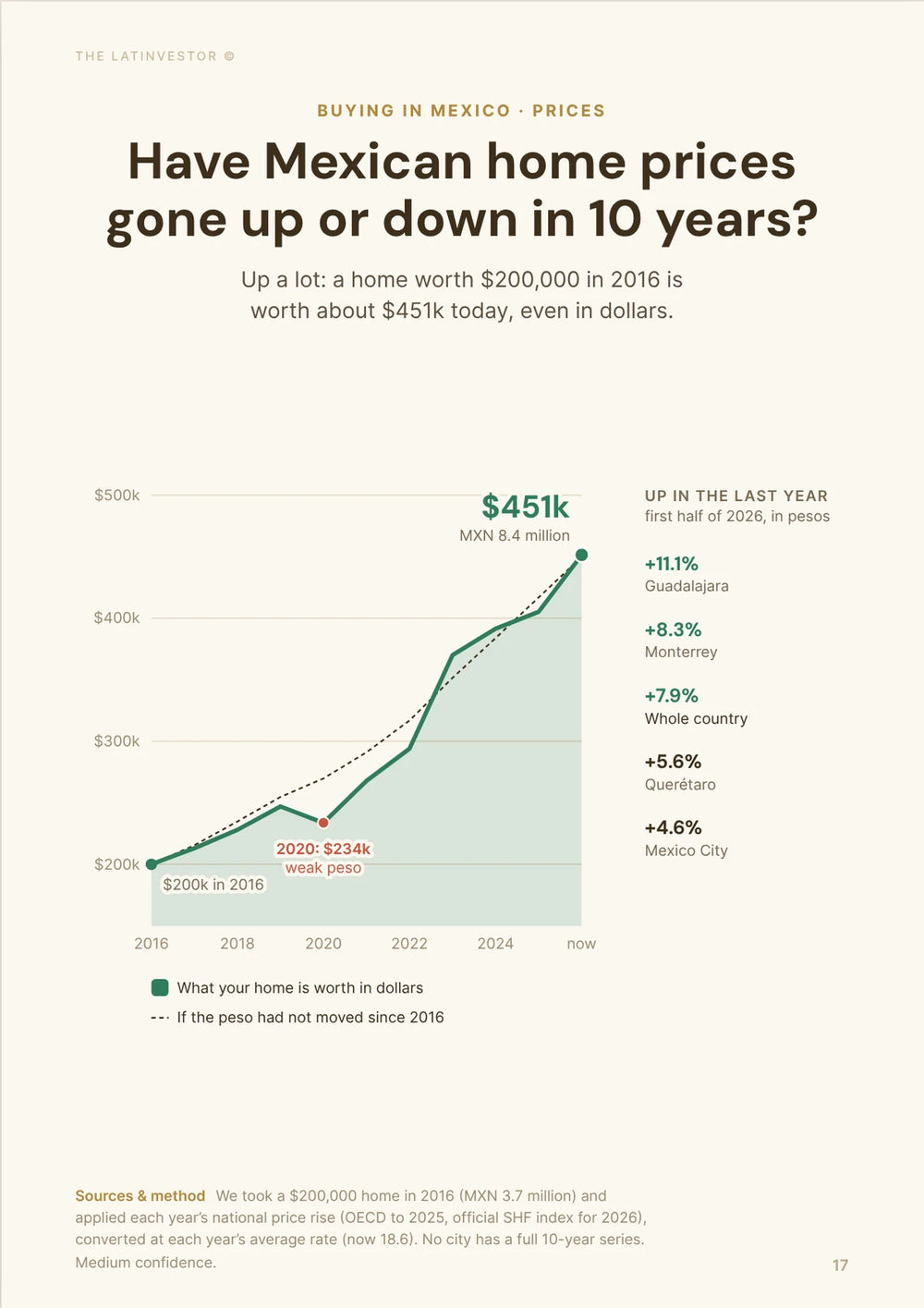
MLSVallarta's decade review found that the average condo sold for around $310,000 in 2015 and close to $490,000 in 2025, roughly 60% more.
Some areas rose much more. Central North gained around 150% over the decade, while Central South and the Hotel Zone roughly doubled.
Sales also spread into areas that barely registered ten years ago. Mezcales, Jarretaderas, Pitillal, Aramara and the Sayulita–San Pancho corridor went from less than 2% of transactions in 2015 to roughly 13% in 2025. Francisco Villa, which includes Versalles, grew from about 2% to more than 10%.
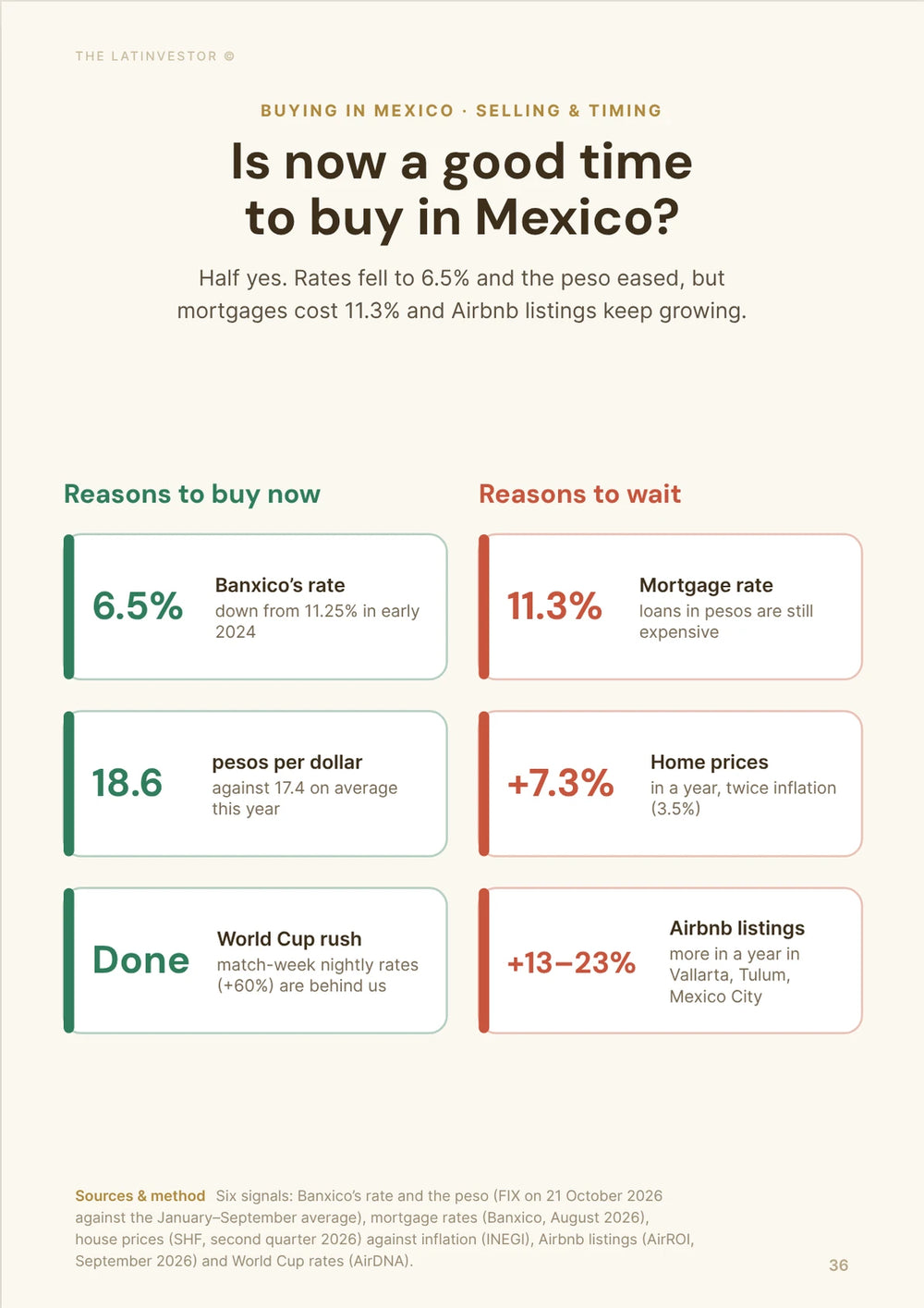
Prices are still holding, but not rising fast. Coldwell Banker La Costa puts the year-to-date median condo sale at about $400,000 in September 2026, up 7.7%, and the median house at $425,000, up 2.3%. Terminal 2 can extend that story, but most of the rerating has already happened.
| Property indicator | 2015 | 2025 | Approx. change |
|---|---|---|---|
| Average condo price | US$310k | US$490k | +58% |
| MLS sales volume | Baseline | ~5× | ~+400% |
| Number of sales | Baseline | ~4× | ~+300% |
| Outer-area share of sales | Under 2% | ~13% | Big shift |
| Francisco Villa share | ~2% | Over 10% | ~5× |
Is Puerto Vallarta's condo market too crowded for an airport boom?
Yes. There is too much condo supply for Terminal 2 alone to push prices sharply higher.
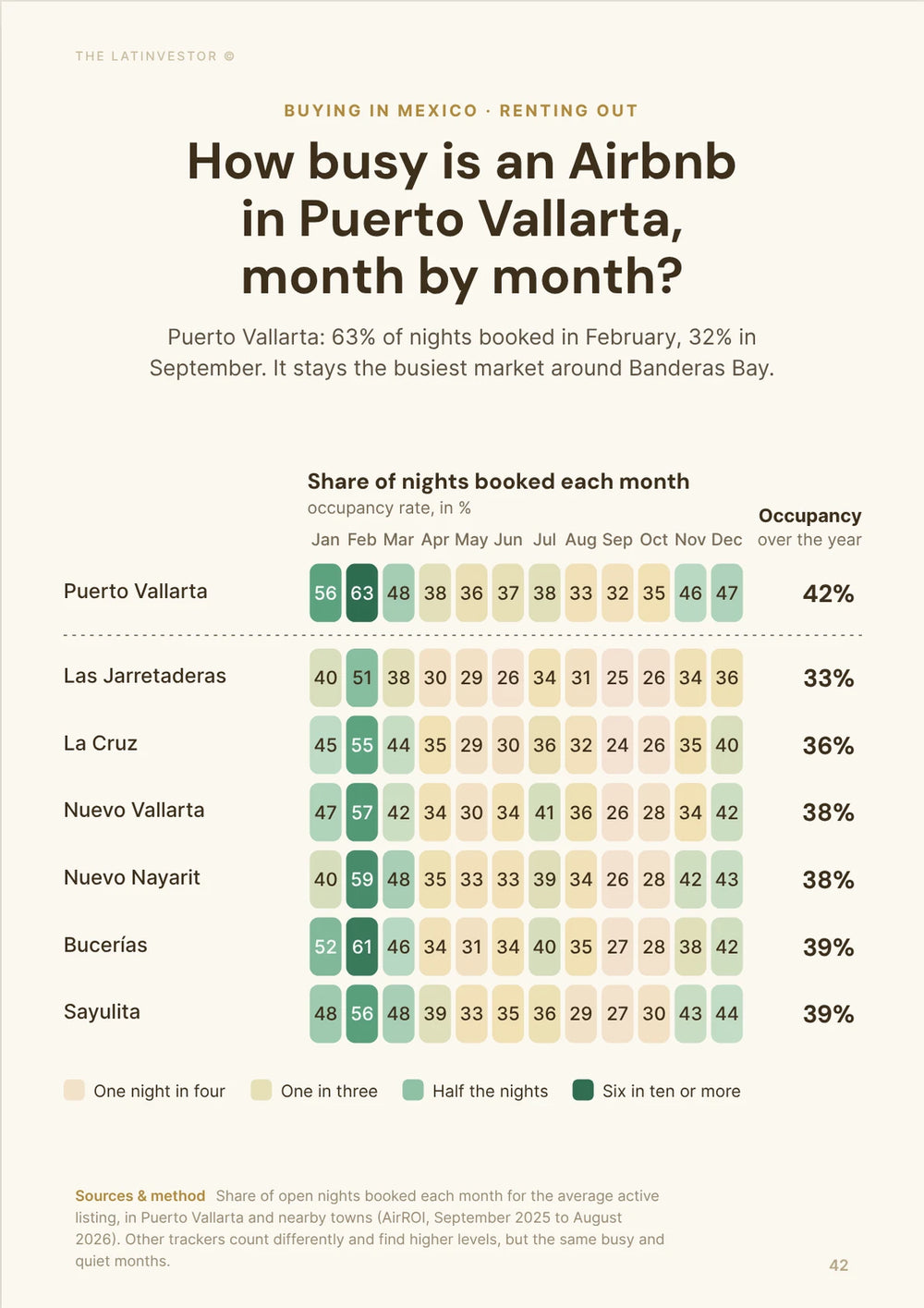
Teseo Data Lab, working with AMPI Riviera Nayarit, estimates active condo inventory grew from roughly 800 units in 2020 to 3,211 in 2025, and projects about 3,500 for 2026. That's more than four times as many in six years, while their estimated pool of potential buyers grew only about 38%, from roughly 457,000 to 630,000.
The newer MLS numbers say the same thing. The Vallarta Seaside Bay Report counts 1,338 home sales across the bay in the twelve months to September 2026, down 7.5%, and about 23 months of resale supply, or 31 months once presales are added. Six months is usually seen as balanced.
There is one better sign: Coldwell Banker La Costa counts 2,672 active condo listings in September 2026, down 17.5% in a year. But the median condo still takes 262 days to sell.
| Condo-market indicator | Earlier level | Recent level | Change |
|---|---|---|---|
| Active condos (Teseo), 2020–2025 | ~800 | 3,211 | ~+301% |
| Potential buyer pool (Teseo) | ~457k | ~630k | ~+38% |
| Active condo listings, Sept. (Coldwell Banker) | ~3,240 (2025) | 2,672 | -17.5% |
| Months of supply, presales included (Bay Report) | 6 = balanced | 31 | Buyer's market |
| Median condo days on market | — | 262 | +10.1% |
Could condo oversupply swallow the airport effect?
Yes. The bay can absorb a lot more buyers before anything starts to feel scarce.
Say better connections eventually bring a few hundred extra second-home buyers a year. That helps sellers, but a market with thousands of units for sale takes them in without any bidding wars.
Presales make it harder. They are 46% of active listings but only 26% of sales, and about 1,534 more units are due by 2028, 607 of them in 2027, the same year Terminal 2 should open. New projects keep competing with owners for the same buyer.
Supply also sits at the wrong prices. AMPI's work shows about 60% of active demand in Bahía de Banderas is between MXN 6 million and MXN 13 million (about $323,000 to $699,000), while a good share of inventory sits outside that range. Well-priced units in good areas can still tighten quickly; overpriced ones stay unsold, terminal or not.
Should you pay more for a condo because of Terminal 2?
No. Treat "near the new terminal" or "airport upside" in a sales pitch as marketing, not value.
The numbers are on the buyer's side. In the Bay Report's twelve months to September 2026, 69% of homes sold below asking and the median sale closed 8% below its first price. Presales ask about $4,194 per m² against $3,762 for resale condos, around 11% more, for units that will be delivered in 2027, the busiest delivery year.
What to do: start around 8% below the first asking price and push harder on units listed longer than the 262-day condo median. Compare price per m² with finished buildings nearby. If a presale's price relies on future tourism growth, ask the developer to show you the current GAP traffic numbers and a rental record from a building it has already delivered.
Will properties closest to Puerto Vallarta airport rise the most?
Probably not. Distance to the airport is a weak way to predict which areas gain from Terminal 2.
Marina Vallarta is the obvious example. It's minutes from PVR, but people buy there for the marina, the golf course, the restaurants and the waterfront. Airport access is a bonus, not the reason.
A condo with ocean views in Zona Romántica can still be worth more to a foreign buyer than an average unit next to the airport, even with a longer ride.
Nearby areas are already behaving very differently. The Bay Report puts Zona Romántica's median sale down 6.3% in the twelve months to September 2026, while Versalles and Fluvial were up 7.6%, though both had well over a year of resale supply. Areas a few kilometers apart, with the same access to PVR, moved in opposite directions. Building quality, views, walkability, supply and price matter much more than airport distance.
Could more flights hurt homes near PVR?
Yes, eventually. Homes under the flight path could lose part of the benefit if growth brings much more aircraft noise.
Research keeps finding lower values near noisy flight paths. A widely cited meta-analysis by economist Jon Nelson, covering North American airports, found an average drop of about 0.58% in property value for each extra decibel of airport noise, with big differences between places.
Puerto Vallarta is unlikely to feel this soon. Passengers rose about 38% between 2019 and 2025 while flights rose only about 19%, and traffic is falling in 2026.
If PVR heads toward ten million passengers or more, though, flights will rise too. A condo right under the approach could then see a very different airport effect from one a few kilometers away. If you buy near Marina Vallarta or the airport, check where the planes come in before you sign.
Could Puerto Vallarta's new roads matter more than Terminal 2?
Yes. For several areas, new roads and bridges change daily life more directly than a bigger terminal.
The Jala–Puerto Vallarta highway has already cut the drive from Guadalajara from about five hours to roughly two and a half, according to the federal government.
The Amado Nervo bridge, linking Bahía de Banderas in Nayarit with Puerto Vallarta in Jalisco, was finished in September 2026. The transport ministry (SICT) says it cost about MXN 704 million and saves up to 25 minutes between Riviera Nayarit and Puerto Vallarta.
Cutting 20 or 25 minutes from a daily trip changes where people are willing to live, work, rent and buy. Terminal 2 improves the trip into Puerto Vallarta; better roads shape what happens after people land.
Could Riviera Nayarit gain more than Puerto Vallarta from Terminal 2?
Possibly, in percentage terms. Parts of Bahía de Banderas have more to gain than mature Puerto Vallarta neighborhoods.
Marina Vallarta already has excellent airport access. Terminal 2 doesn't change that.
Farther north, the bigger terminal, the highway and the Amado Nervo bridge together reduce the old hassle of living or staying outside central Puerto Vallarta. Nuevo Nayarit, Mezcales, Bucerías and nearby towns often offer newer stock at different price points.
Buyers are already spreading out: the outer areas that were under 2% of MLS sales in 2015 reached roughly 13% by 2025. The airport didn't cause that, but easier access by air and road should reinforce it. Just keep in mind that much of the new presale supply is in those same areas.
Will more international flights actually create more property buyers?
Only if passengers come back. The strongest link between the airport and property is how easy it is for US and Canadian owners to use a second home.
International visitors also spend far more per head. Puerto Vallarta tourism authorities estimated that foreigners were roughly one-third of visitors in 2025 but spent around MXN 24.2 billion (about $1.3 billion), against about MXN 16.8 billion (about $903 million) for domestic visitors, who were roughly twice as many.
That's why the 19.4% fall in international passengers this year matters more than the total. We can't assume every new seat brings another well-off visitor or future buyer.
If international traffic starts setting records again after Terminal 2 opens, the property case gets much stronger.
Will Puerto Vallarta vacation rentals feel the airport effect before sale prices do?
Yes. Rentals react within a season; sale prices wait for proof that the extra income lasts.
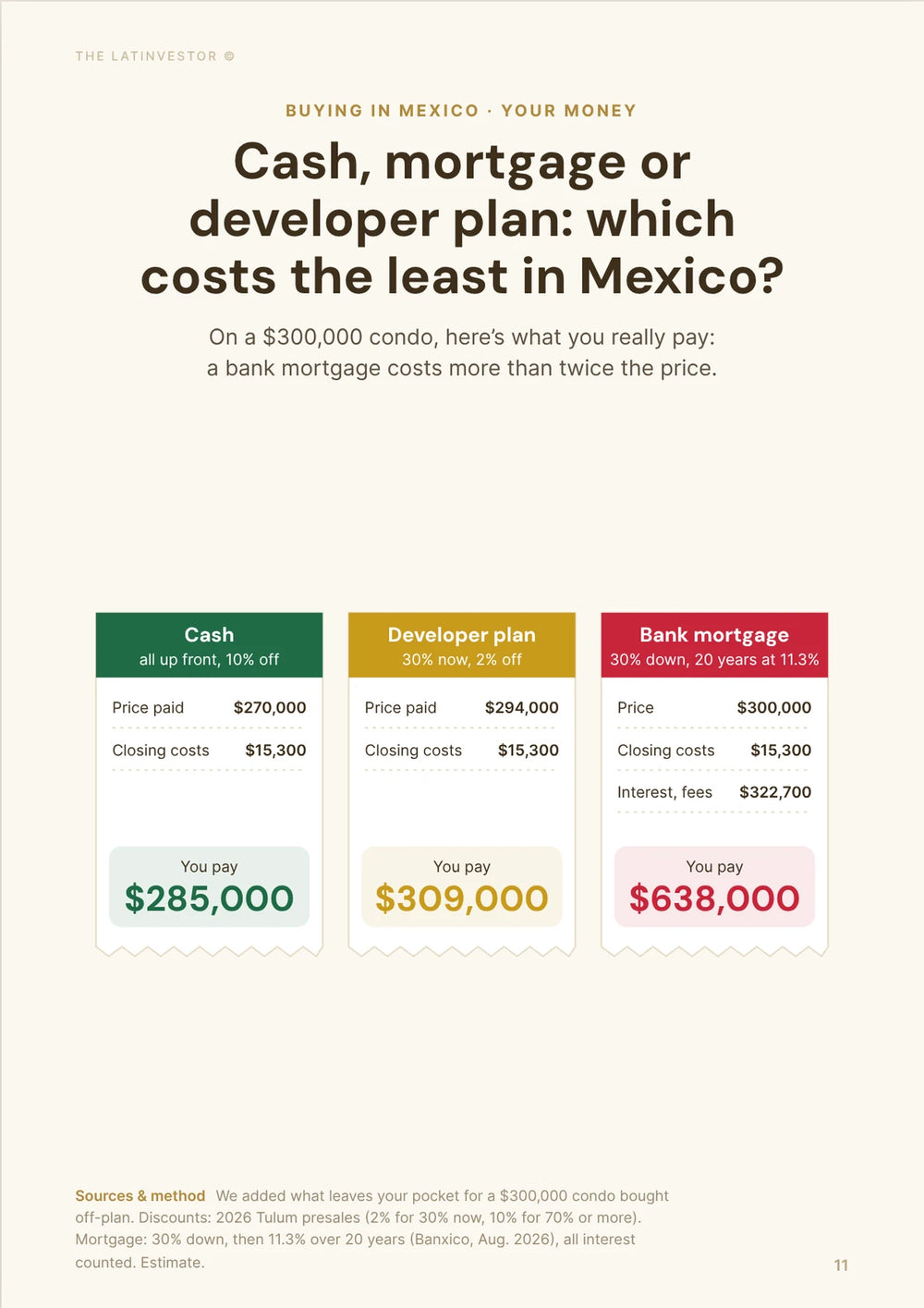
Right now rentals point the other way. Puerto Vallarta received about 6.27 million visitors in 2025 and hotel occupancy averaged around 70%, but the first half of 2026 slipped from about 75% to roughly 69%, and the summer peak reached only 65%, against 85% in 2025.
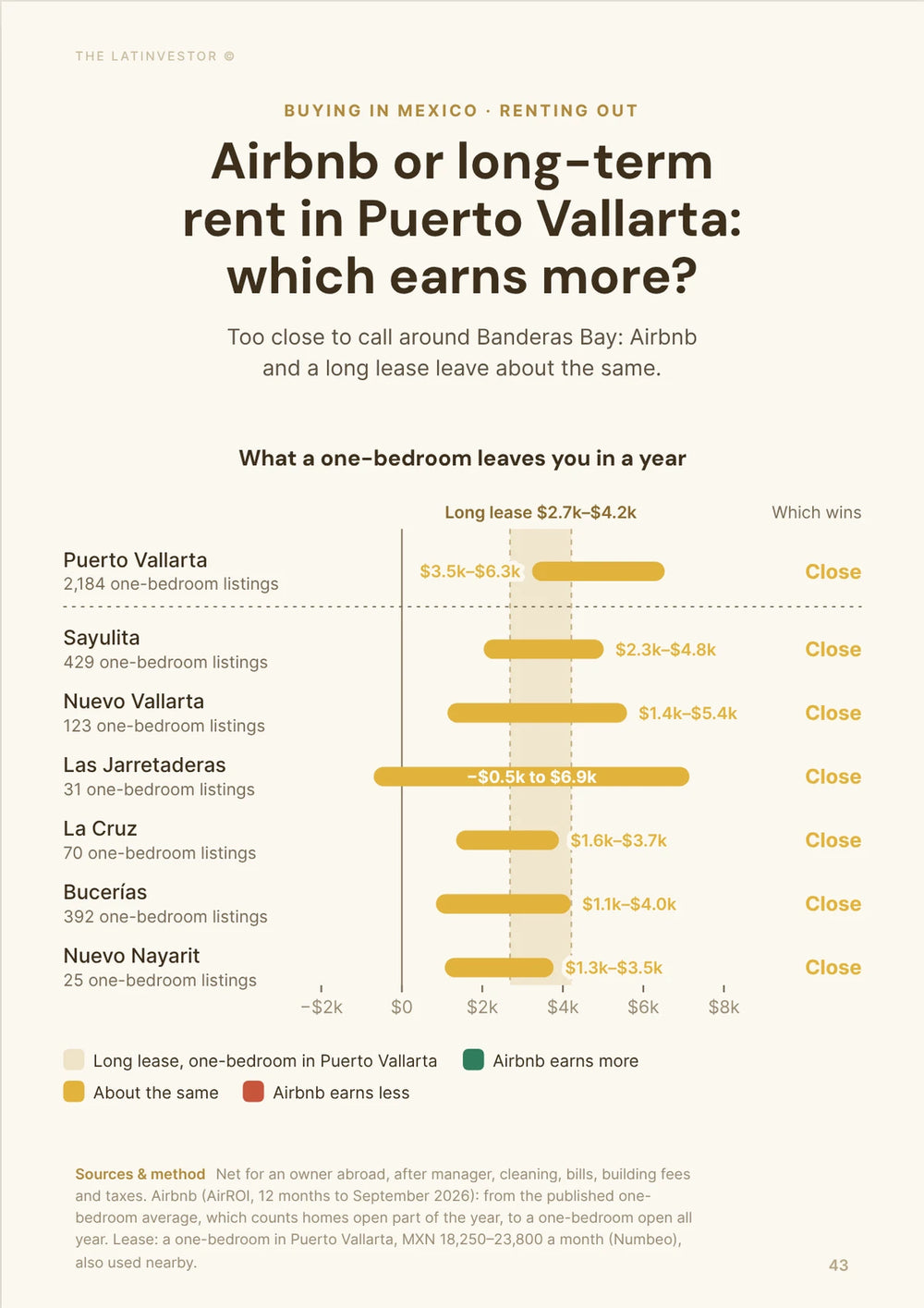
AirDNA shows the same pressure on short-term rentals: occupancy around 57% over the twelve months to September 2026, with the average nightly rate down 17.5% to $178. Hosts are filling nights by charging less.
So the test is simple. If airport traffic, hotel occupancy, rental occupancy and nightly rates all rise together after Terminal 2 opens, the airport is bringing new demand. Until then, don't buy a rental condo on a projection that assumes it will.
| Tourism indicator | Earlier level | Recent level | Direction |
|---|---|---|---|
| Annual visitors (2024 → 2025) | ~6.21m | ~6.27m | Slight increase |
| First-half hotel occupancy | ~75% | ~69% | Lower |
| Summer peak hotel occupancy | ~85% (2025) | ~65% (2026) | Much lower |
| Short-term rental nightly rate (AirDNA) | — | $178 | -17.5% |
| PVR passengers, Jan–Sep | 5.17m (2025) | 4.54m (2026) | -12.3% |
What would actually make Terminal 2 push Puerto Vallarta prices much higher?
Two things at once: passengers growing fast again and condo supply shrinking.
First, PVR needs to recover from this year's drop and move clearly above the 6.9 million passengers of 2025. International traffic matters most, since it tells you whether the pool of foreign buyers and high-spending visitors is growing again.
Second, the housing market needs to tighten. Active condo listings are already down 17.5%, which helps. If that continues, completed projects sell through and developers stop replacing every sold unit with a new presale, extra demand from the airport would finally meet a tight supply.
That's when prices move. Eight or nine million passengers with shrinking inventory is one story; seven million passengers with 31 months of supply is another. The first creates scarcity. The second mostly helps sellers clear stock.
So, will Puerto Vallarta's new airport boost property prices?
Gradually, and not for everything. Terminal 2 is far more likely to support prices over the long run than to trigger a citywide jump.
The long-term case holds up. PVR grew from about 5 million passengers in 2019 to almost 7 million in 2025, and the new terminal adds 74,000 m² and room for airlines to keep adding routes. A resort town that can't be capped by its own airport is in a better position.
The near-term case is weak. Passengers are down 12.3% this year and international traffic 19.4%. Condo inventory has roughly quadrupled since 2020, the bay holds 31 months of supply with presales, and 69% of homes sell below asking.
The gains will be uneven. Homes that foreign buyers already want should benefit more than generic condos that happen to sit near the airport, and parts of Bahía de Banderas may gain more than mature Puerto Vallarta neighborhoods as roads and the new bridge erase their old disadvantage.
For now, the market has to absorb a lot of housing before better air access turns into real scarcity. Buy for what a property is worth today, and treat Terminal 2 as a bonus, not the reason.
Our methodology
This article estimates whether Puerto Vallarta's Terminal 2 is likely to push property prices higher. We treated "bigger airport, higher prices" as an idea to test, and looked separately at airport capacity, actual passenger traffic, airline routes, tourism, housing supply and sales, roads, and neighborhood differences.
Airport figures come from Grupo Aeroportuario del Pacífico: its 2025 annual report for the terminal, its traffic history, its Q2 2026 results and its September 2026 traffic release for the January to September decline. Terminal capacity is treated as a ceiling, not a forecast, and we gave more weight to the latest traffic figures. Route changes come from airline schedule reports and local news, and the October closure from reports on Hurricane Simón.
Housing figures come from MLS-based reports: Coldwell Banker La Costa's October 2026 market report (listings, sales, prices, days on market), the Vallarta Seaside Bay Report (months of supply, presales, neighborhoods, twelve months to September 2026), Teseo Data Lab with AMPI Riviera Nayarit (2020–2026 inventory and buyer pool) and MLSVallarta's 2015–2025 review. Tourism figures come from DataTur, Jalisco's MIDE indicators, local press for this summer's hotel occupancy and AirDNA for short-term rentals.
We checked these figures in October 2026. Prices are quoted in US dollars, as the local market does; where we convert pesos, we use about 18.6 pesos per US dollar and 20.9 pesos per euro.
Limits: asking prices are not sale prices; median sale prices move with the mix of homes sold; the Terminal 2 progress figure comes from local reports, not GAP; and the airport-noise effect comes from North American studies, not a Puerto Vallarta estimate.
Key sources used for this analysis include: GAP's 2025 Form 20-F, GAP's September 2026 traffic release, GAP's July 2026 filing, GAP's Q2 2026 results, Mexico Business News on the Terminal 2 investment, GAYPV's Terminal 2 update, Aeroroutes on United's Denver service, GAYPV on new 2026 routes, Crónica on the airport's reopening, AP on Hurricane Simón, Coldwell Banker La Costa's October 2026 market pulse, the Vallarta Seaside Bay Report, Teseo Data Lab's Puerto Vallarta–Riviera Nayarit outlook, MLSVallarta's 2015–2025 review, AirDNA's Puerto Vallarta overview, Jalisco's MIDE air-passenger series, DataTur hotel monitoring, DataTur's March 2026 occupancy report, Azteca Jalisco on summer 2026 occupancy, the Presidency on the Jala–Puerto Vallarta highway, SICT on the completed Amado Nervo bridge and Jon P. Nelson's airport-noise meta-analysis.