Summary
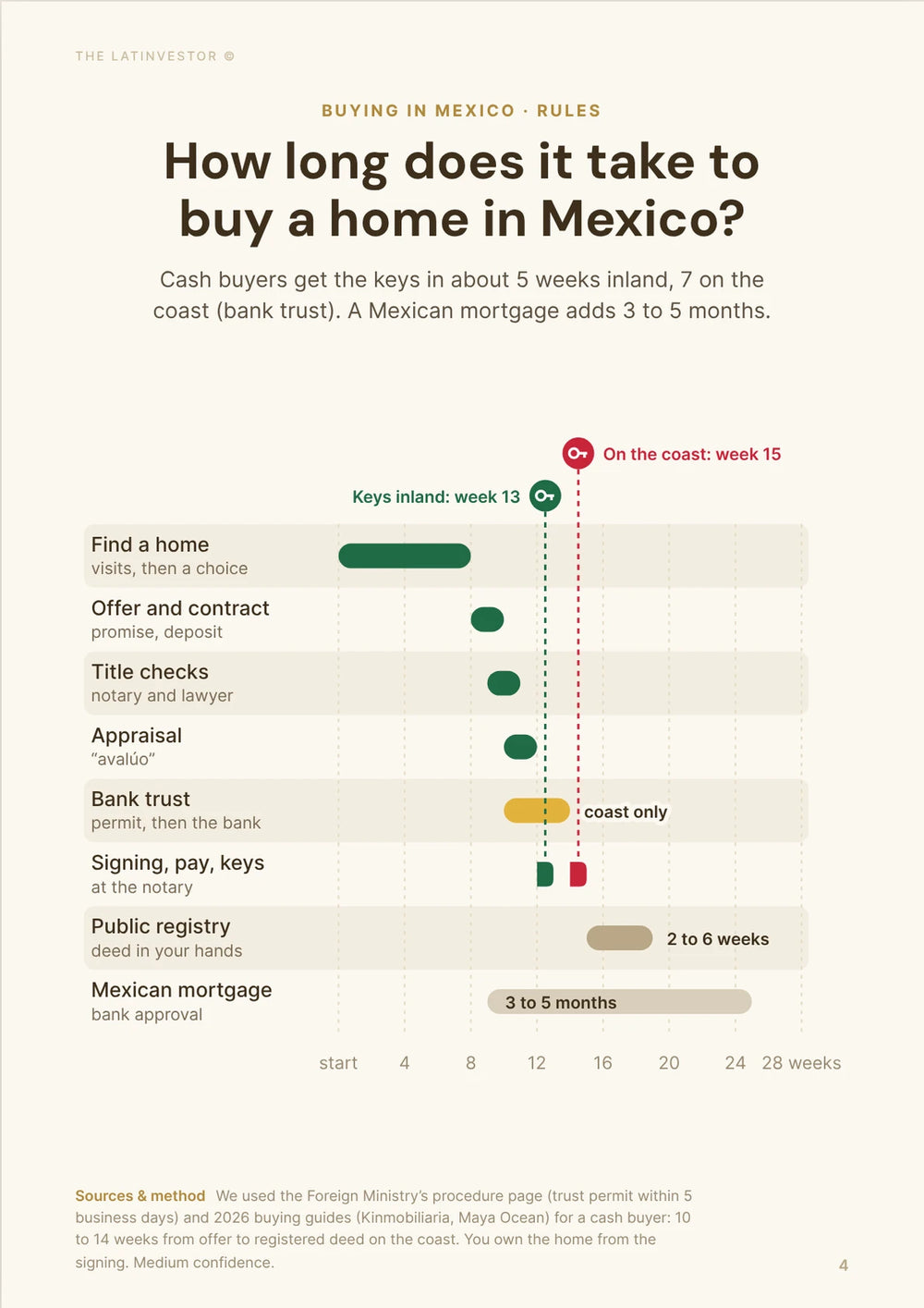
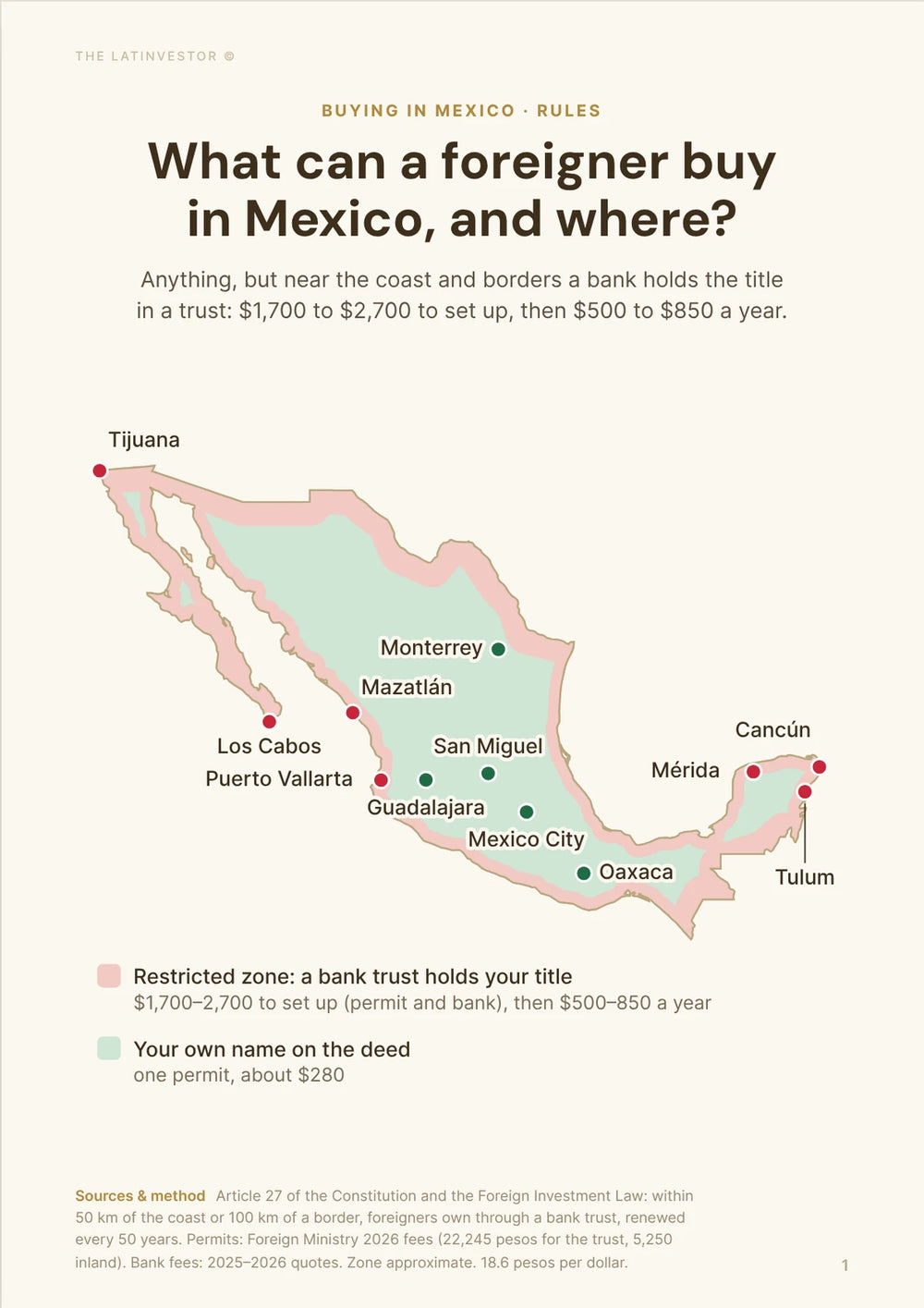
Yes. Foreigners can legally buy condos and houses in Playa del Carmen. Because the city is inside the 50 km coastal zone, a foreign individual holds the home through a bank trust (fideicomiso), with an SRE permit of MXN 21,650 (about USD 1,160) in 2026.
The bank holds title as trustee and you're the beneficiary. The trust runs up to 50 years and can be renewed: an on-time extension costs MXN 9,740 (about USD 524) plus MXN 595 in SRE fees.
Nothing big changed for buyers in 2026. A June 2026 decree only cut the SRE's maximum time to issue a trust permit from 5 to 3 business days, and the Foreign Investment Law reform the Senate passed on 30 September 2026 targets company takeovers, not homes.
The trust gives you the rights that matter: live in the home, rent it, sell it and name who inherits it, as set out in Article 12 of the Foreign Investment Law.
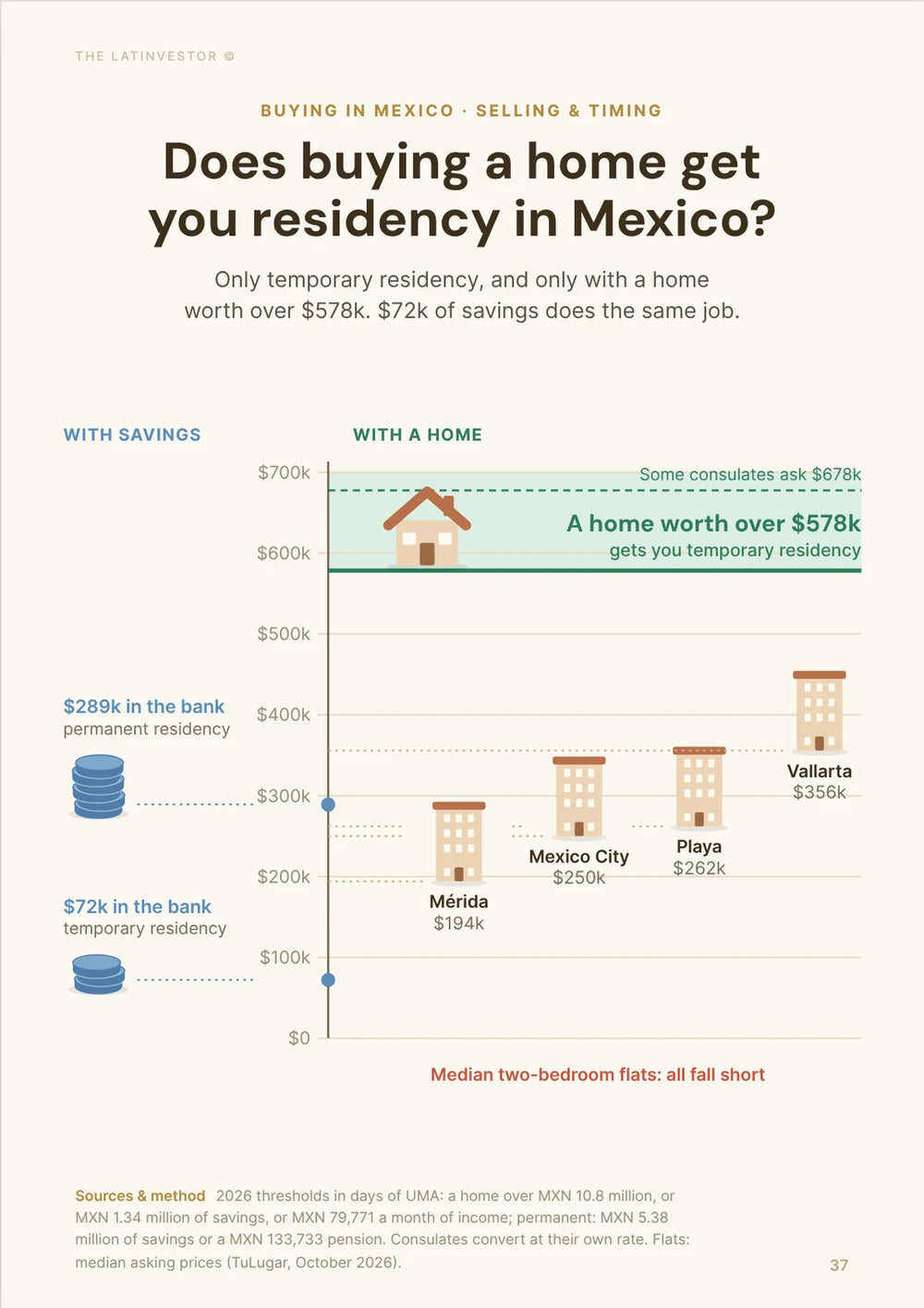
You don't need Mexican residency to buy. Owning a home doesn't make you a resident either, although a deed above about MXN 10.76 million (about USD 578,000) lets you apply for temporary residency.
The trust isn't the expensive part. Playa's acquisition tax has been 4% since December 2025, so MXN 240,000 on a MXN 6 million condo, and total closing costs land around 5% to 9%. Banks add about USD 550 to 800 to open the trust and USD 550 to 700 a year.
On a resale, the existing trust needs its own check: years left, unpaid bank fees and who the substitute beneficiaries are.
A Mexican company (about MXN 35,000 to 50,000 to set up) is not a shortcut for a holiday home. It only skips the trust for genuinely non-residential use.
Renting is allowed, but short stays now need state RETUR-Q registration and a municipal licence, guests pay a 6% lodging tax, and a non-resident landlord pays 25% of gross rent. AirDNA counts 6,498 active listings, 60% fewer than a year ago.
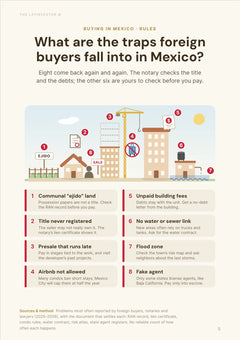
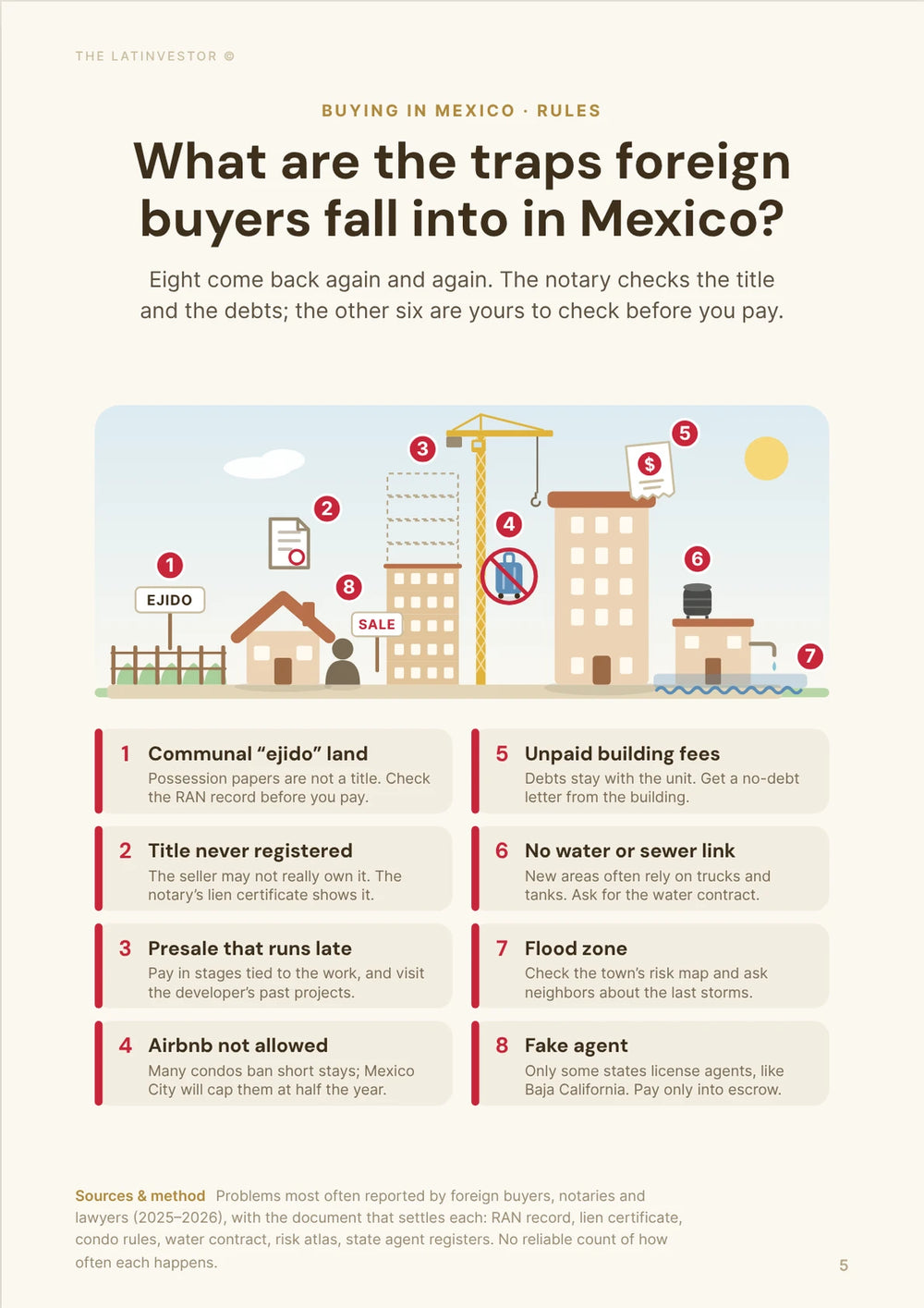
Presales are where foreigners lose money. In the SÚUT case, more than 50 buyers paid over MXN 200 million for 91 apartments never delivered, and Quintana Roo's blacklist of irregular developments reached 123 in August 2026.
Ejido land is still the clearest title trap. Playa created a municipal housing office in November 2025 specifically to fight irregular land sales.
Check title yourself at the Public Registry. A notary helps, but Quintana Roo had six open investigations against notaries in February 2026.
Beachfront doesn't mean owning the beach: the first strip is federal (ZOFEMAT), and Playa collected more than 45,000 tonnes of sargassum between January and late September 2026.
Selling works through the trust. A non-resident seller pays 25% of the gross price, or up to 35% of the net gain through a Mexican legal representative.
Bottom line: buying as a foreigner in Playa is routine. Spend your energy on the title, the developer, where your deposit goes and whether the building allows your rental plan.

How does a foreigner hold a home in Playa del Carmen?
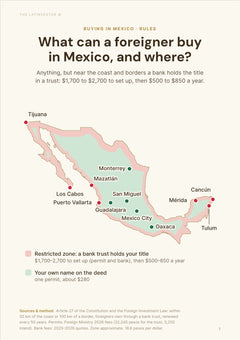
Through a fideicomiso. Foreigners can legally buy condos, houses and other homes in Playa del Carmen, but a foreign individual holds them through a Mexican bank trust because the city sits inside the coastal restricted zone.
Article 27 of the Constitution creates a zone 50 kilometers inland from the coast and 100 kilometers from the borders where foreigners can't hold residential land directly. Playa del Carmen is right on the coast, so there's no doubt it falls inside.
The Foreign Investment Law gives the way around it: a Mexican bank takes legal title as trustee and you become the beneficiary. The SRE, Mexico's foreign ministry, still issues these permits every day.
So a Canadian, American, French or British buyer can buy a Playa condo today. What's unusual is how ownership shows up on paper, not whether the purchase is allowed.
| Question | Mexican individual | Foreign individual |
|---|---|---|
| Can buy a Playa del Carmen home? | Yes | Yes |
| Can normally hold the land directly? | Yes | No |
| Usual ownership structure | Direct title | Fideicomiso |
| Why the difference? | No foreign-ownership restriction | Playa is inside the coastal restricted zone |
| Initial fideicomiso term | Not applicable | Up to 50 years, renewable |
| SRE permit in 2026 | Not applicable | MXN 21,650 |
Does a fideicomiso mean the bank owns your Playa del Carmen property?
No. The bank holds legal title, but you hold the rights that make the property worth anything.
Under the Foreign Investment Law, the beneficiary can use and enjoy the property and receive the income it generates. In practice you can live in it, rent it, improve it within the condo rules, sell your rights and name who gets them after you.
The bank can't move into your condo, collect your rent or sell it for itself. It acts on the trust agreement and Mexican trust law, which keeps trust assets separate from the bank's own.
Calling it a "50-year lease" is wrong. The trust runs for up to 50 years and can be extended through a dedicated SRE procedure. In 2026 an on-time extension costs MXN 9,740 (about USD 524), or MXN 10,615 if filed late, plus MXN 595 for review, according to the SRE's fee schedule. The bank charges its own fee on top.
On a resale, check how many years are left. Buying into an older trust doesn't restart the clock at 50.
Did the rules for foreign buyers change in 2026?
Not in substance. Foreign individuals buying in Playa still need a fideicomiso in 2026; only the paperwork got faster.
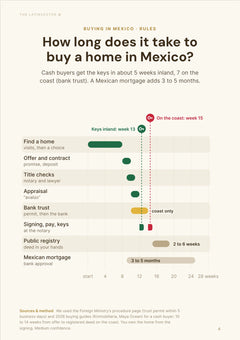
A simplification agreement published in the Diario Oficial on 16 June 2026 moved several documents into the SRE's online form and cut the maximum time to issue a trust permit from 5 to 3 business days. The permit fee stayed at MXN 21,650.
The Foreign Investment Law reform the Senate approved on 30 September 2026 adds a national-security review when foreigners take over more than 49% of a company in sensitive sectors such as energy, transport, telecoms or data, according to Foley's analysis. It doesn't touch the restricted zone or the trust articles, and in October 2026 it was still waiting for a vote in the Chamber of Deputies, per TaxToday México.
What to do: if a seller tells you to "buy before the new law" or that the trust is about to disappear, treat it as sales pressure. Neither is true as of October 2026.
What can a foreign owner actually do with a Playa del Carmen condo?
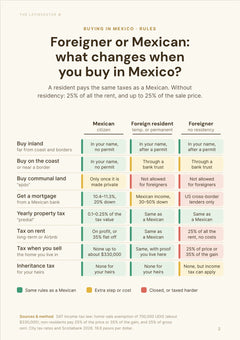
Almost everything a normal owner does: live in it, rent it out, renovate it, sell it and pass it on.
Article 12 of the Foreign Investment Law covers both the use of the property and the income and other returns it produces. That matters in Playa, where many buyers spend a few months a year in their condo and rent it the rest of the time, and others buy only for rental income.
There are still formalities. The bank has to sign off on changes to the trust, and rentals and renovations stay subject to municipal rules, tax law and the condominium regulations.
| Right | Foreign fideicomiso beneficiary? | Main limitation |
|---|---|---|
| Live in the property | Yes | Normal property rules |
| Rent it | Yes | RETUR-Q, municipal licence and condo rules for short stays |
| Receive rental income | Yes | 25% of gross rent for a non-resident |
| Renovate it | Yes | Permits and condo rules may apply |
| Sell it | Yes | Goes through the bank and a notary |
| Name successor beneficiaries | Yes | Must be written into the trust |
| Ignore the trustee | No | Some trust changes require bank involvement |
Do foreigners need Mexican residency to buy property in Playa del Carmen?
No. You can buy a home in Playa through a fideicomiso without temporary or permanent residency, which is why so many second-home buyers live abroad most of the year.
The reverse is also true: owning a condo doesn't make you a resident. In 2026, a property deed worth at least about MXN 10.76 million (about USD 578,000) lets you apply for temporary residency at a consulate, but most Playa condos are far below that line. Most people use the income or savings route instead.
Residency doesn't remove the trust either. The coastal rule is about nationality, not where you live.
How much does it cost a foreigner to buy in Playa del Carmen in 2026?
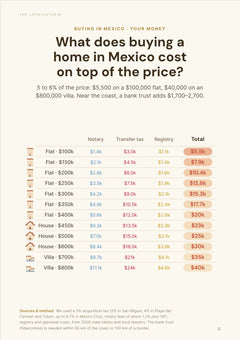
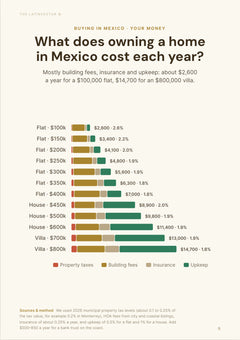
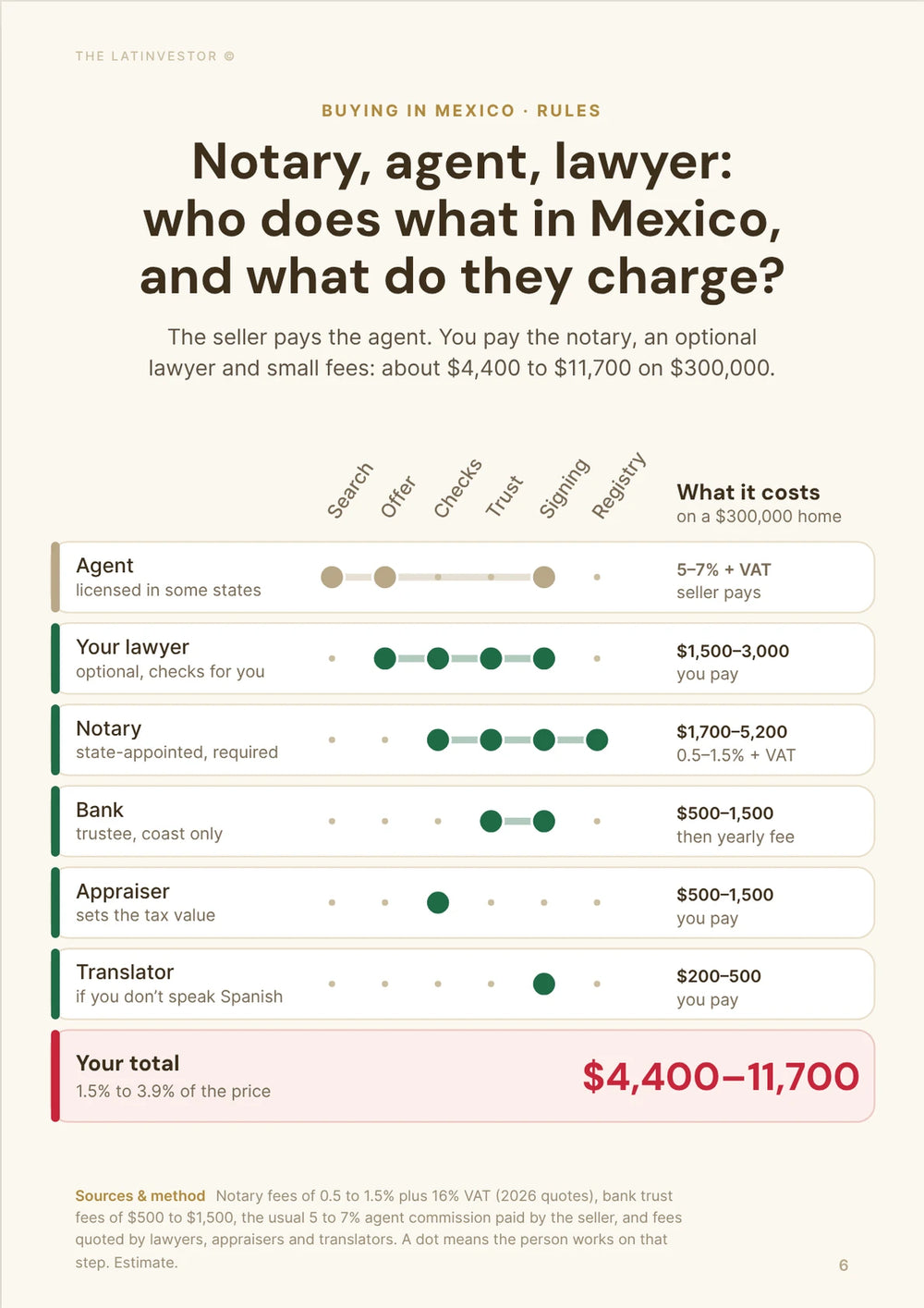
Budget around 5% to 9% on top of the price. The biggest item is Playa's 4% acquisition tax, not the trust.
The municipality's ISABI procedure applies 4% since December 2025, up from the 3% still quoted on many older websites. On a MXN 6 million condo (about USD 323,000), that's MXN 240,000 (about USD 12,900).
The SRE permit for the trust is MXN 21,650 (about USD 1,160), less than a tenth of the acquisition tax in that example. Banks then charge roughly USD 550 (Banorte) to USD 800 (HSBC) to open the trust and USD 550 to 700 a year to run it, according to a 2026 comparison by Homia. Those are broker figures, not official tariffs, and they're negotiable.
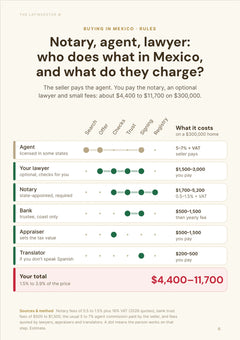
Notary, registry, appraisal and certificates come on top. A 2026 review of Riviera Maya purchases by Mayan Wealth Homes puts total foreign-buyer closing costs between about 4.1% and 9.3%, so a MXN 6 million purchase needs roughly MXN 300,000 to 540,000 (about USD 16,100 to 29,000) on top of the price. What to do: ask the notary for an itemized estimate in pesos and get two or three written bank quotes before the notary picks a bank for you.
| MXN 6 million purchase example | Amount |
|---|---|
| Playa del Carmen acquisition tax at 4% | MXN 240,000 |
| SRE fideicomiso permit (2026) | MXN 21,650 |
| Bank trust setup | About USD 550 to 800 |
| Notary, registration, appraisal and certificates | Varies by notary and price |
| Total closing costs (about 5% to 9%) | About MXN 300,000 to 540,000 |
| Ongoing trustee fee | About USD 550 to 700 a year |
What should you check on the trust of a resale condo in Playa?
Read the existing trust before you sign anything: how many years are left, whether the bank fees are paid and whether the seller is really the beneficiary.
Many Playa resales are already held in a fideicomiso. Depending on the deal, the seller's rights are transferred to you inside the same trust, or the trust is closed and a new one is set up with a new SRE permit. Ask the notary which route applies, because it changes the cost and the term you end up with.
A trust set up 20 or 30 years ago doesn't come with a fresh 50 years. If it's close to its end, or an extension is overdue (MXN 10,615 instead of MXN 9,740 when filed late), ask the seller to sort it out before closing.
What to do: ask for the trust deed and the bank's latest statement, check that the annual fees are up to date, and fill in your own substitute beneficiaries at closing.
Can foreigners skip the fideicomiso by opening a Mexican company?
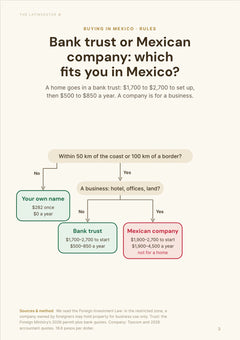
Not for a holiday home. A Mexican company only skips the trust when the property is genuinely used for non-residential purposes.
A Mexican company with foreign shareholders can buy restricted-zone property directly for commercial or similar use, as long as it notifies the SRE. A condo you use as a home stays on the residential side of that line, even if a company owns it.
A company also costs money every year. Setting one up runs about MXN 35,000 to 50,000 (about USD 1,880 to 2,690) according to Tandazo, before accounting, tax filings and beneficial-ownership reporting. For one condo, that's usually more work than the trust it was meant to avoid.
| Structure | Personal residential purchase | Genuine commercial use |
|---|---|---|
| Fideicomiso | The standard route | Can be used |
| Mexican company holding title | Not the shortcut it's sold as | Potentially useful |
| Setup cost | MXN 21,650 permit + bank fee | About MXN 35,000 to 50,000 |
| Ongoing administration | Bank fee, about USD 550 to 700 a year | Accounting and corporate compliance |
| Best reason to use it | Holding a home in the coastal zone | Running a real business |
Can a foreigner still Airbnb a Playa del Carmen condo in 2026?
Yes, the trust lets you earn rental income, but short stays now come with more paperwork and thinner numbers than a few years ago.
Quintana Roo requires short-term rentals to hold state and municipal operating licences and to be listed in the state tourism register (RETUR-Q). Guests pay a 6% state lodging tax collected by the platforms. On the owner's side, a non-resident landlord owes 25% of gross rent under Article 158 of the Income Tax Law, with no deductions.
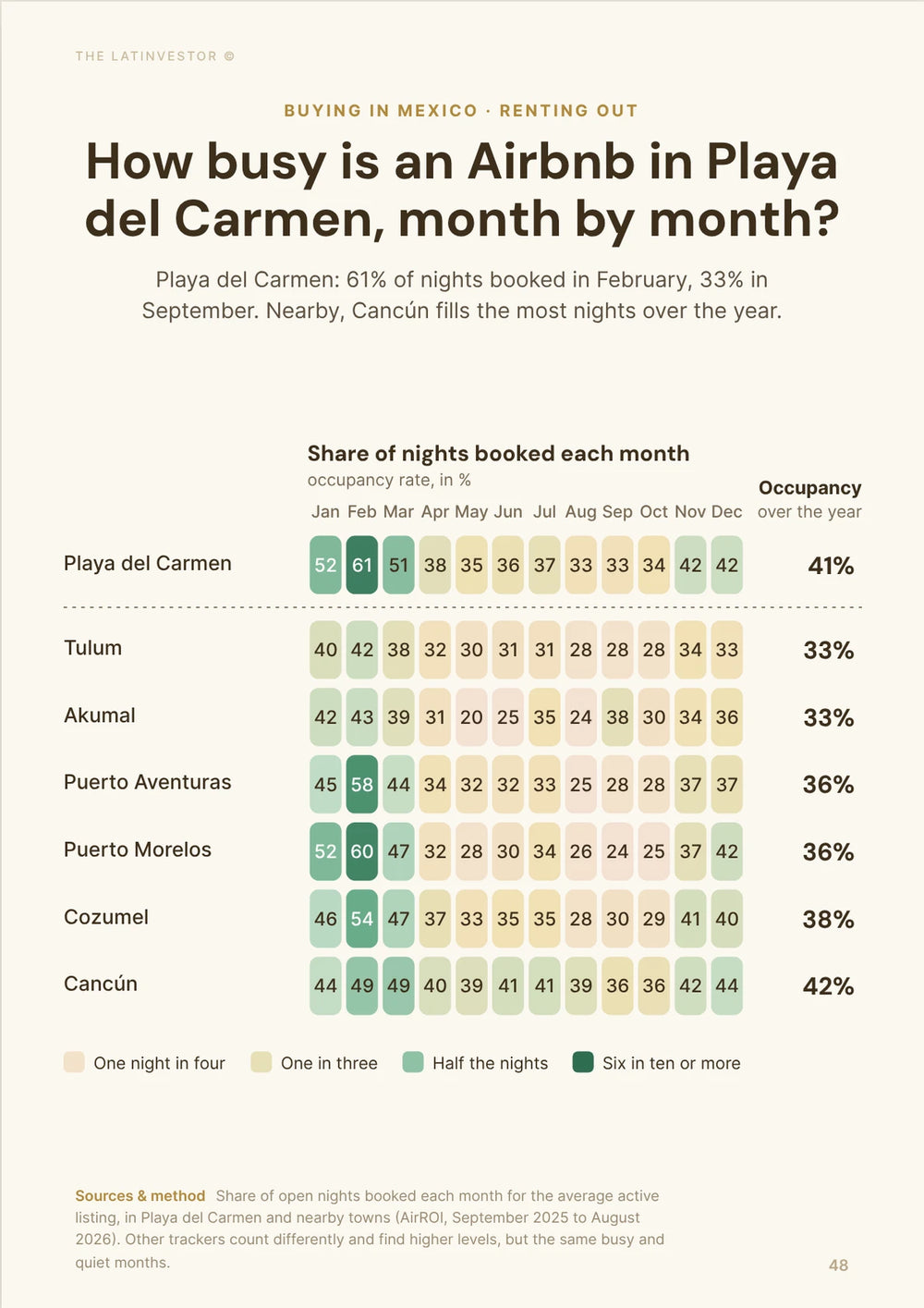
The market has also cooled. AirDNA counts 6,498 active short-term rentals in Playa in September 2026, 60% fewer than a year earlier, with 58% occupancy, about USD 103 a night and about USD 18,800 of yearly revenue per listing.
What to do: before signing, ask the seller for the municipal licence and RETUR-Q number, read the condo regulations on stays of a few nights, and run your numbers after the 25% tax. A building full of Airbnbs next door doesn't prove yours allows them.
Is buying a pre-construction condo in Playa del Carmen much riskier?
Yes. With a presale you're betting on the developer's ability to finish, and the fideicomiso does nothing about that.
The case everyone in Playa talks about is SÚUT: according to Por Esto!, more than 50 buyers paid over MXN 200 million (about USD 10.8 million) for 91 apartments that were never delivered. And Quintana Roo's state urban development agency (SEDETUS) had 123 irregular developments on its public list by August 2026, with Playa and Tulum the most affected. That's a statewide figure, not 123 projects in Playa.
The rules give you some tools. Under NOM-247, the developer must show its rights over the land, the permits and a contract registered with Profeco, and you usually get 5 business days to cancel after signing. None of that forces a weak developer to finish.
What to do: search the project in the SEDETUS registry of irregular developments, visit a building the developer already delivered, pay through the notary or escrow rather than to the developer's account, and tie payments to visible construction progress. A finished condo with registered title is the safer buy when the price gap is small.
Is ejido land the biggest trap for foreigners buying around Playa del Carmen?
For land, yes. Holding ejido rights is not the same as owning registered private property that can go into your fideicomiso.
The trap grows as buyers look at cheaper lots on the edges of Playa and along the Riviera Maya. An ejido parcel can become private property through dominio pleno: the ejido assembly approves it, the National Agrarian Registry (RAN) records it, a title is issued, and only then does the land enter the ordinary property registry.
Irregular land sales are a big enough problem that Playa's council created a municipal housing office in November 2025 to fight them, after the state government warned in September 2025 about groups selling plots they don't own.
What to do: if the seller says private title is "coming", price the land as if it never will. Don't pay until the conversion is finished and registered.
| Property situation | Risk for a normal foreign buyer | What needs checking |
|---|---|---|
| Finished condo with registered private title | Lower | Registry, liens, condo documents |
| Resale already held in fideicomiso | Lower to moderate | Trust term, bank fees, title and liabilities |
| Pre-construction condo | Moderate to high | Land, permits, SEDETUS list, contract, developer |
| Private lot outside established areas | Variable | Registry and land status |
| Ejido parcel without completed private title | High | Agrarian rights and dominio pleno |
| Seller promises future regularization | High | Current legal status, not future promises |
How do foreigners check whether a Playa del Carmen property has clean title?
At Quintana Roo's Public Property Registry, not by taking the seller's or agent's word for it.
The Registro Público de la Propiedad y del Comercio issues a Certificado de Libertad de Gravamen that shows registered liens and annotations on the property, and it has an office in Playa del Carmen. A freshly renovated condo can still carry a mortgage or a seizure.
Match that certificate with the deed, the cadastral record and the seller's identity and authority. For a condo, also ask about unpaid maintenance fees and approved special assessments.
The notary formalizes the sale, withholds the taxes and registers it, but isn't infallible. According to Por Esto!, Quintana Roo had six open investigations against notaries in February 2026 and 47 complaints filed in 2025, mostly about property sales. Choose the notary yourself, and add your own lawyer for presales, land and unusual title histories.
Does buying beachfront property in Playa del Carmen mean you own the beach?
No. A beachfront condo or lot in Playa doesn't give you the beach in front of it.
The first strip of land along the sea is federal: the Zona Federal Marítimo Terrestre, or ZOFEMAT. Using it takes a concession, not ordinary ownership. Playa's municipal ZOFEMAT office issues a certificate of use or non-use of the federal zone, which asks for proof of ownership of the neighboring lot and, where relevant, the concession number.
So "private beach" in an ad describes a feeling, not a legal boundary. If the price depends on beach rights, ask whether there's a concession, who holds it and what it allows.
Budget for the beach itself too: Playa del Carmen collected more than 45,000 tonnes of sargassum between January and late September 2026.
Can foreigners sell or pass down a Playa del Carmen property easily?
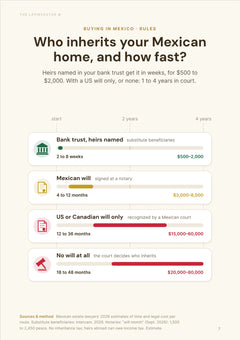
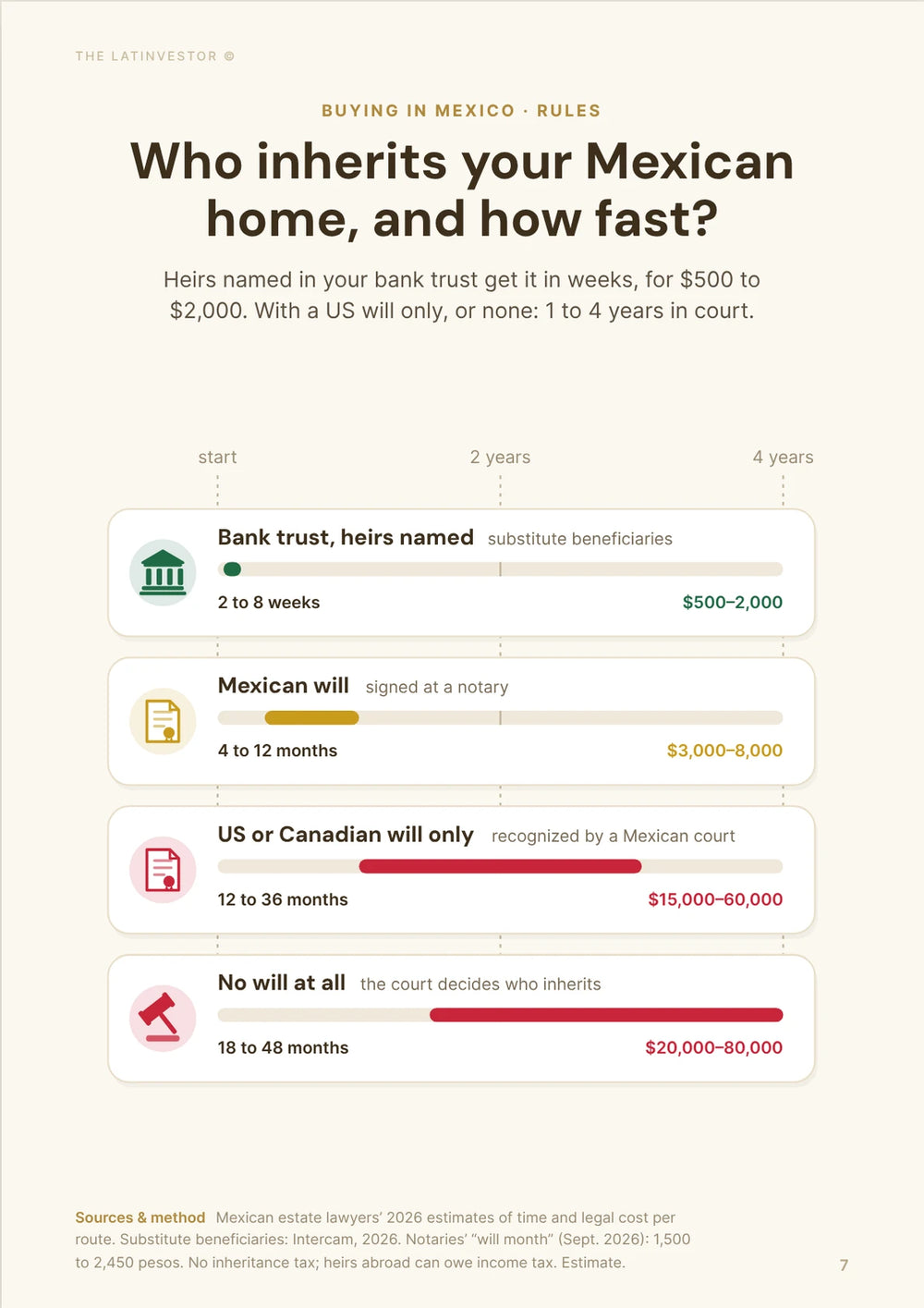
Yes. You can sell your rights in the trust and name substitute beneficiaries, so the fideicomiso covers both resale and inheritance.
A sale goes through the bank and the notary, and it's taxed. Under Article 160 of the Income Tax Law, a non-resident seller pays 25% of the gross price, or can opt for up to 35% of the net gain through a Mexican legal representative. The notary withholds it at closing.
Keep every paper from day one: the deed and invoices for real improvements lower the taxable gain if you use the net-gain route.
For inheritance, the substitute beneficiaries written into the trust receive the rights when you die, which is much simpler than a Mexican probate. It doesn't replace estate planning when several countries or heirs are involved, but the bank never ends up owning your home.
What is actually most likely to go wrong when a foreigner buys in Playa del Carmen?
Bad due diligence on the property, not the fideicomiso.
The trust is predictable: a bank holds title, you hold the rights, the term is 50 years and renewable, and the costs are known before closing.
The real problems are specific to the property: a broken title chain, ejido rights sold as private land, a lien, a developer that doesn't deliver, condo rules that kill your rental plan, beachfront claims that go past the private lot, or a building that runs dry. In July 2026, Por Esto! reported that at least 18 Playa neighborhoods, including Zazil-Ha and Colosio, went days without running water.
A yearly trustee fee is annoying but you can calculate it. A seller who can't deliver clean title is a different category of problem. That's where we'd spend the due-diligence effort.
| Issue | How worried should a buyer be? | Can it usually be checked before buying? |
|---|---|---|
| Fideicomiso requirement | Low | Yes |
| Trustee fees | Low | Yes |
| 50-year initial trust term | Low | Yes |
| 4% acquisition tax | Cost rather than ownership risk | Yes |
| Existing lien | High | Usually |
| Ejido or unclear title | Very high | Usually |
| Weak pre-construction developer | High | Partly |
| Project on the SEDETUS list | Very high | Yes |
| Condo rental restrictions | High for investors | Usually |
| Water supply in the building | Moderate | Usually |
| Unverified beachfront rights | High for beachfront buyers | Usually |
So, can foreigners safely buy property in Playa del Carmen?
Yes. Foreigners buy and control homes in Playa every day, and a properly set up fideicomiso gives you the rights to use, rent, sell and pass on the property.
The system is stable and getting faster: the SRE issues permits within 3 business days since June 2026, the permit costs MXN 21,650, and the 2026 reform in Congress doesn't touch homes.
Costs are what moved. Playa's acquisition tax is 4% since December 2025, so older guides quoting 3% understate what you need at closing, and the full bill lands around 5% to 9%.
For a finished condo with registered title, a clean lien certificate, condo rules that fit your plan and a properly documented trust, being a foreigner is not the hard part. Be far more careful with presales, ejido land, unclear beachfront rights and any deal that depends on promises you can't check.
Our methodology
This article checks whether foreigners can legally buy a home in Playa del Carmen, how they hold it, what it costs and what tends to go wrong. Playa is inside the 50 km coastal zone, so the fideicomiso is the core of the answer.
Ownership rules come from first-hand legal texts and official procedures: Article 27 of the Constitution, the Foreign Investment Law, the SRE's trust and extension procedures and its 2026 fee schedule, and the June 2026 Diario Oficial simplification agreement. The 2026 Foreign Investment Law reform comes from Foley and TaxToday México. Taxes on rent and sales come from the Income Tax Law.
Costs come from Playa del Carmen's ISABI procedure (4% since December 2025), the SRE fee schedule, a 2026 bank-fee comparison by Homia and a 2026 Riviera Maya closing-cost review by Mayan Wealth Homes. Bank fees and closing-cost ranges are third-party figures, not official tariffs. Rental figures come from AirDNA; short-stay rules from Quintana Roo's tourism register.
Property risks were checked against the authority in charge of each one: the RAN for ejido land, Quintana Roo's Public Registry for title and liens, NOM-247 for presales, SEDETUS for irregular developments and the municipal ZOFEMAT office for the beach. Fraud cases, notary complaints and water cuts come from local press (Por Esto!, Ruptura 360) and are reported as allegations or reports, not court findings.
We checked these figures in October 2026. Conversions use about 18.6 pesos per US dollar and 20.9 pesos per euro. SRE fees change every January, and total closing costs depend on the price, the bank and the notary, so treat the percentages as a range, not a quote.
Key sources used for this analysis include the Mexican Constitution, the Foreign Investment Law, the SRE procedure for restricted-zone trusts, the SRE procedure for extending a trust, the SRE's 2026 fee schedule, the June 2026 Diario Oficial simplification agreement, Foley on the 2026 Foreign Investment Law reform, TaxToday México on the Senate vote, the Playa del Carmen ISABI procedure, Homia on 2026 bank trust fees, Mayan Wealth Homes on 2026 Riviera Maya closing costs, Tandazo on company setup costs, Income Tax Law Article 158, Income Tax Law Article 160, the RETUR-Q state tourism register, AirDNA for Playa del Carmen, NOM-247-SE-2021, the SEDETUS registry of irregular developments, Riviera Maya News on the 123 blacklisted developments, Por Esto! on the SÚUT buyers, the RAN on converting ejido land to private property, Ruptura 360 on Playa's new housing office, Riviera Maya News on the state's land-fraud warning, the Quintana Roo Public Registry, Por Esto! on complaints against notaries, the SEMARNAT ZOFEMAT concession procedure, the Playa del Carmen ZOFEMAT certificate, Diario Cambio 22 on 2026 sargassum volumes and Por Esto! on the July 2026 water cuts.