Summary
Yes, but only for the right property at a negotiated price. Condos in Playa del Carmen are listed at about $3,353 per square meter in October 2026, so the city is not cheap, but sellers are under more pressure than they were a year ago.
Official prices are still going up: the SHF index for Solidaridad, Playa's municipality, rose 11.7% in the first half of 2026, against 7.9% for Mexico. Asking prices, though, slipped from $3,555 to $3,358 per square meter in September.
Buyers have choice. Maya Ocean tracks about 6,230 unsold new units in 238 developments, so there's little reason to pay the first asking price on a standard investor condo.
Even the coast is crowded: about 2,140 units were for sale within 500 meters of the sea in May 2026. Studios and one-bedrooms that look like hundreds of others are the weakest stock to resell.
Long-term rentals give a gross yield of about 4.6% to 6.0% depending on the area, before costs. That's thin next to mortgage quotes of about 11.3%.
Airbnb is getting tougher: AirDNA counts 6,498 active listings, 60% fewer than a year ago, with 58% occupancy and about $18,800 of yearly revenue per listing. Every listing now needs state and municipal registration.
Tourism has cooled. Playa's hotels were 72.58% full in the first half of 2026 against 77.05% a year earlier, and Cancún airport lost 8.6% of its passengers in September.
The Tren Maya and Tulum airport help Playa over the long run, but they don't justify a premium on an ordinary condo.
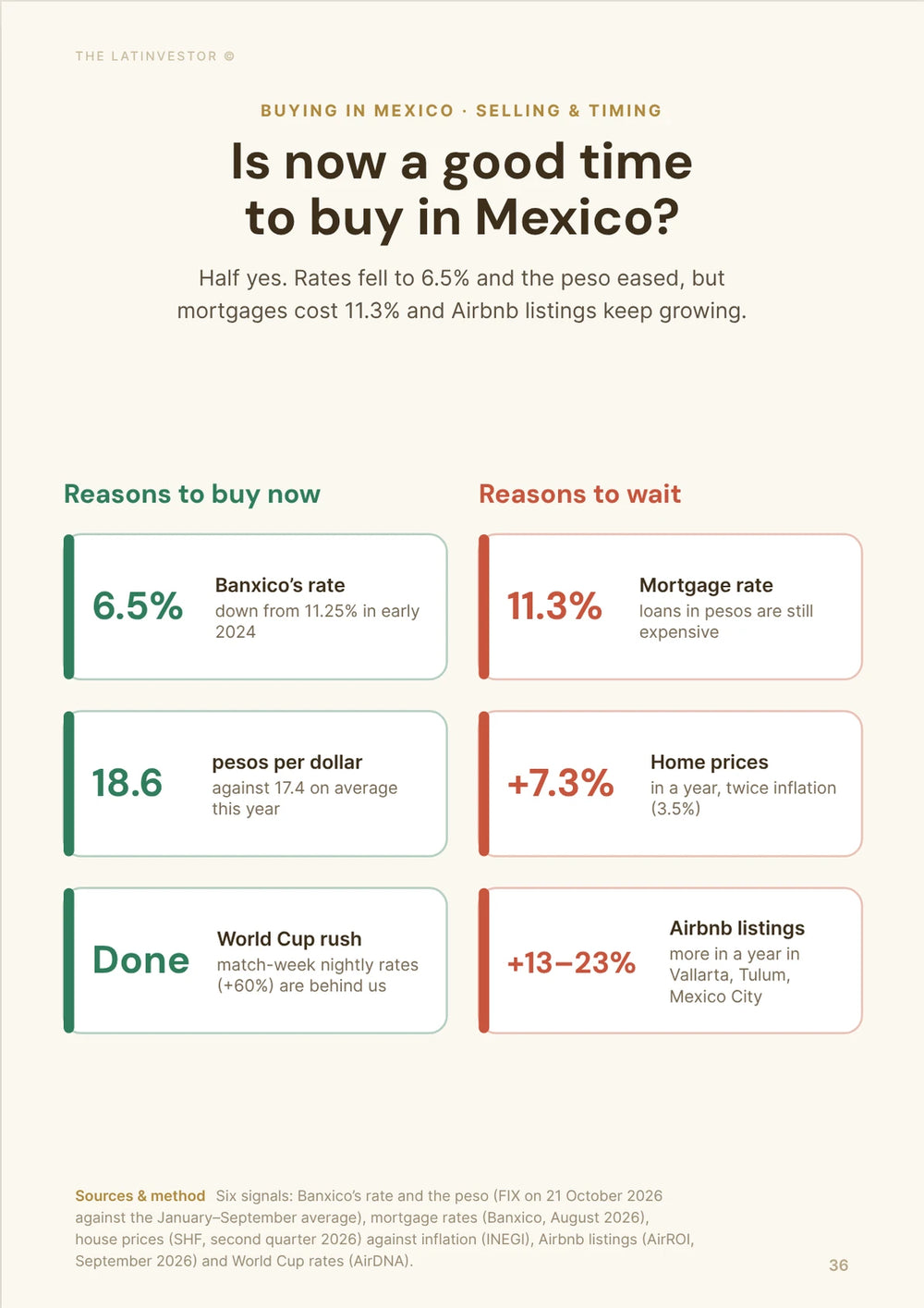
The peso's recent slide helps dollar buyers: at about 18.6 pesos per dollar, a MXN 5 million home costs about $269,000, against $294,000 at 17 pesos in early September.
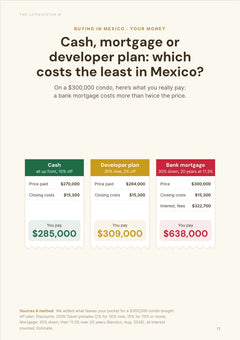
Cash buyers hold the cards. With mortgages above 11%, financed buyers are fewer, and closing costs of about 5% to 9% make quick flips a bad idea.
Resale beats presale for most buyers right now. Quintana Roo's list of irregular developments reached 123 in August 2026, and more than 50 buyers in one Playa project paid over MXN 200 million for units they never received.
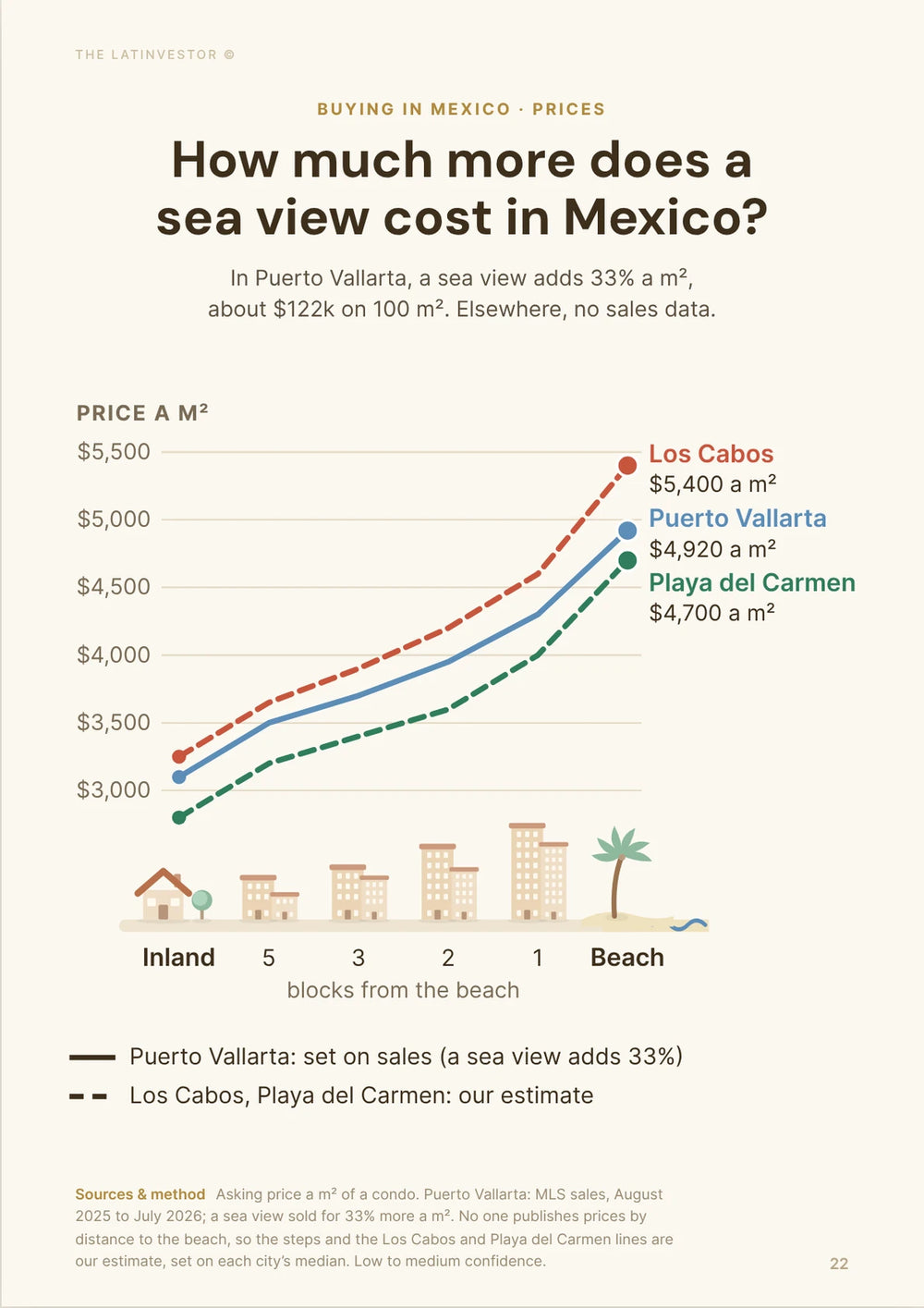
Among the main areas, Centro is the most expensive at about $4,120 per square meter, Gonzalo Guerrero and Zazil-Ha follow, Playacar sits at about $3,041, and inland areas drop to about $1,200 to $1,400.
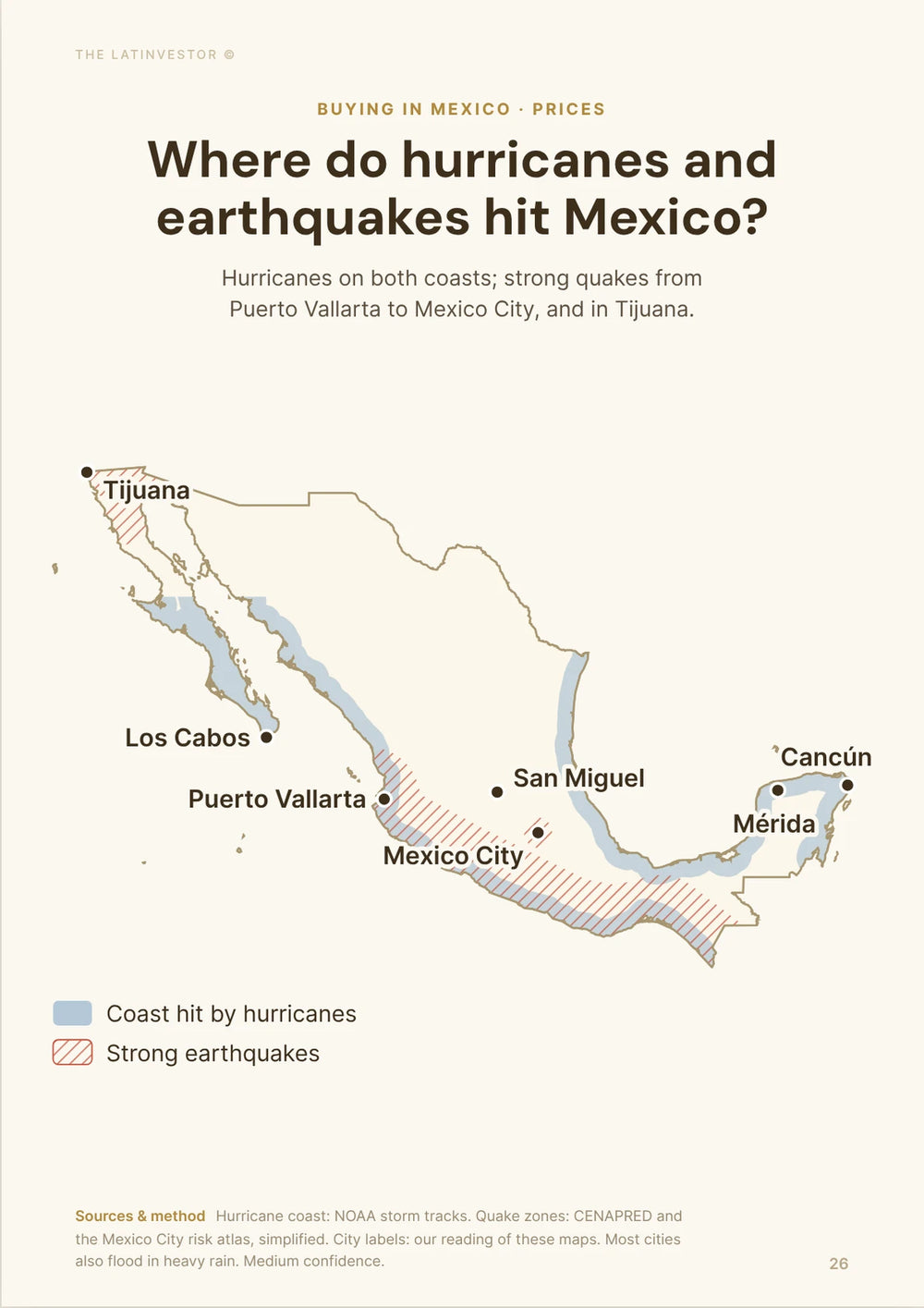
Beachfront is scarce but costly to run: Playa collected more than 45,000 tonnes of sargassum between January and late September 2026.
Foreigners can buy legally through a bank trust of up to 50 years. The real risks are the building, the developer and the paperwork, not the trust.
Bottom line: buy a walkable, well-run resale or a real beachfront unit with cash and a 7-year horizon, and negotiate hard. Skip the generic Airbnb studio sold on 75% occupancy.

Is Playa del Carmen property actually cheap right now?
No. Playa del Carmen is still expensive, even though buyers have more room to negotiate than they did a year or two ago.
TuLugar's October 2026 listing data put the citywide condo asking price at about $3,353 per square meter. The median two-bedroom condo is listed at about $262,000, and the median condo of any size at about $215,000. Central areas cost more: about $3,675 per square meter in Zazil-Ha, $3,796 in Gonzalo Guerrero and $4,120 in Centro.
Maya Ocean's database, which leans toward new developer inventory, puts the median closer to $4,300 per square meter. The two datasets measure different slices of the market, so we don't average them. Both say the same thing: Playa is nowhere near distressed pricing.
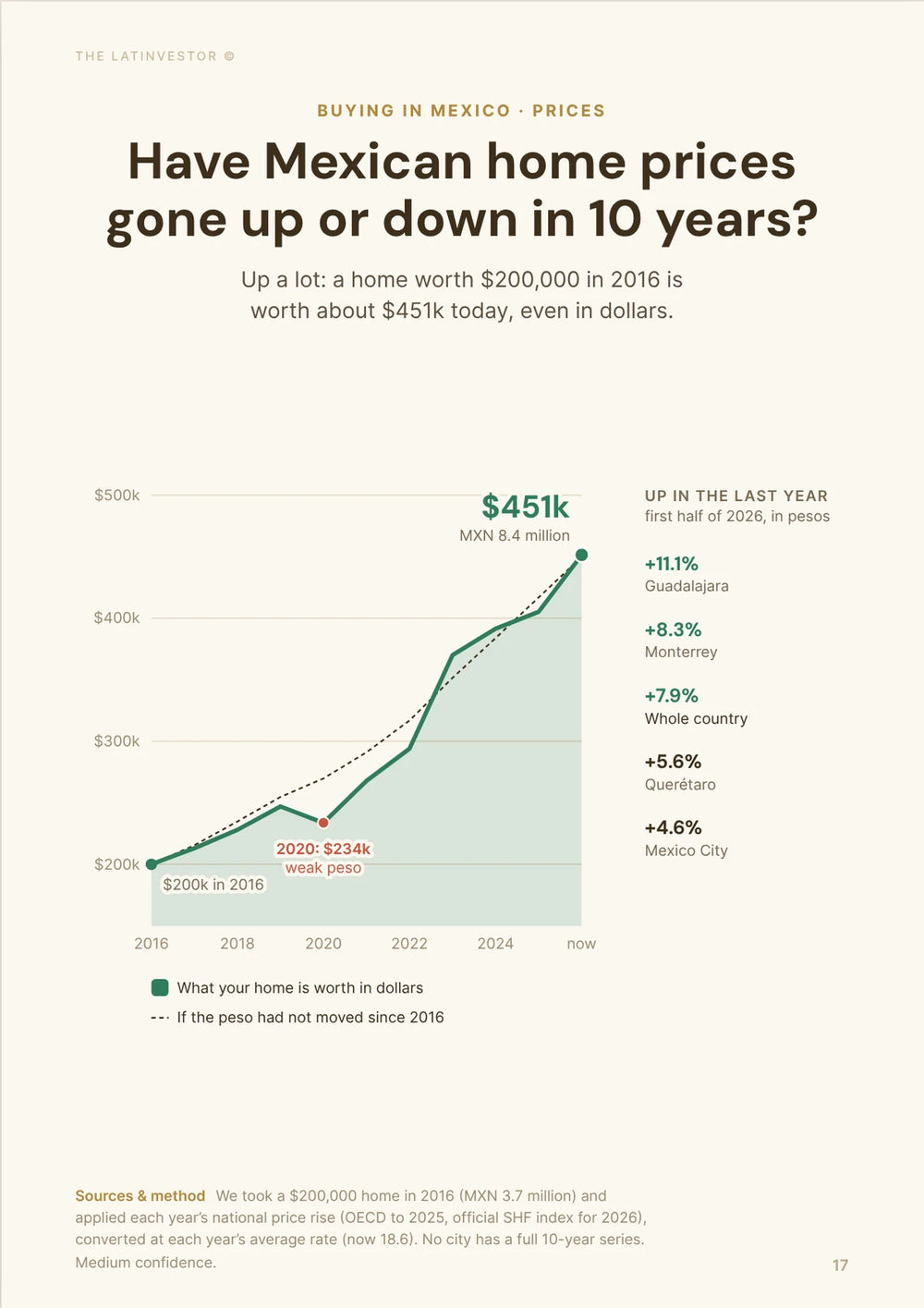
The official index agrees. Sociedad Hipotecaria Federal reported that homes bought with a mortgage rose 7.9% year over year across Mexico in the first half of 2026, and 11.7% in Solidaridad, the municipality that covers Playa.
So this is a market for negotiating, not for bargain hunting.
| Current market measure | Approximate level | What it tells us | Main limitation |
|---|---|---|---|
| TuLugar condo asking price | ~$3,353/m² | Broad citywide pricing | Asking, not closing price |
| Median 2-bedroom condo | ~$262,000 | Mainstream family-size budget | Varies heavily by area |
| Maya Ocean new-build median | ~$4,300/m² | Developer inventory is expensive | Mostly new projects |
| SHF index, Solidaridad (H1 2026) | +11.7% | Official prices still rising | Mortgage-financed homes only |
Are Playa del Carmen property prices still rising or starting to slip?
Both, depending on what you measure. Official prices are still rising fast, while condo asking prices have started to slip.
SHF's index for Solidaridad rose 11.7% in the first half of 2026, well above the national 7.9%. But that index tracks homes bought with a mortgage, mostly by Mexican families, not the cash-paid vacation condos most foreigners look at.
On the condo side, TuLugar's median asking price per square meter fell from about $3,555 to $3,358 in one month in September 2026. One month is not a trend, but it's the first clear sign that sellers are adjusting.
Inside the city, the gap between properties is widening. A well-run two-bedroom a few blocks from the beach still has real scarcity. A small investor studio surrounded by similar new projects has much less protection, and some owners are struggling to resell at what they paid.
Do buyers have more negotiating power in Playa del Carmen now?
Yes, especially on resale condos and standard investor units.
There's no public database of closing prices against asking prices for Playa, so nobody can give you an exact citywide discount. What we can measure is supply: Maya Ocean tracks about 6,230 available new units across 238 developments, most of them studios and one-bedrooms.
Developers compete with furniture packages, staged payments and closing incentives. Resale sellers have to compete against those offers and against other furnished units on the same street, sometimes in the same building.
Prime beachfront apartments, established Playacar homes and very walkable units still give sellers leverage. On a generic investor condo, start well below asking, show comparable listings, and be ready to walk away.
Is Playa del Carmen oversupplied with condos?
Parts of it, yes, especially units built mainly for foreign investors and short-term rentals.
Beyond the 6,230 units in 238 developments, Maya Ocean's study of properties within 500 meters of the sea found about 2,140 active units across 52 developments in May 2026. "Near the beach" is not rare anymore.
That changes resale. A furnished studio with a rooftop pool, a gym and Airbnb-friendly rules sounds great, but dozens of buildings offer almost the same thing. When you want to sell, newer projects nearby may be offering similar units with better payment terms.
Properties that are harder to copy hold up better: larger apartments, established Playacar homes, real beachfront, walkable condos with low HOA fees and buildings with a proven rental history. A rooftop pool is not scarcity when half the street has one.
| Property type | Supply pressure | Resale protection | Current view |
|---|---|---|---|
| Generic investor studio | High | Low | Weak |
| Inland new-build condo | High | Low to moderate | Needs a discount |
| Established walkable 1–2 bedroom | Moderate | Better | More attractive |
| Playacar home or condo | Lower | High | Defensive |
| Genuine beachfront | Limited by land | High | Scarce but expensive |
Are long-term rentals profitable enough in Playa del Carmen?
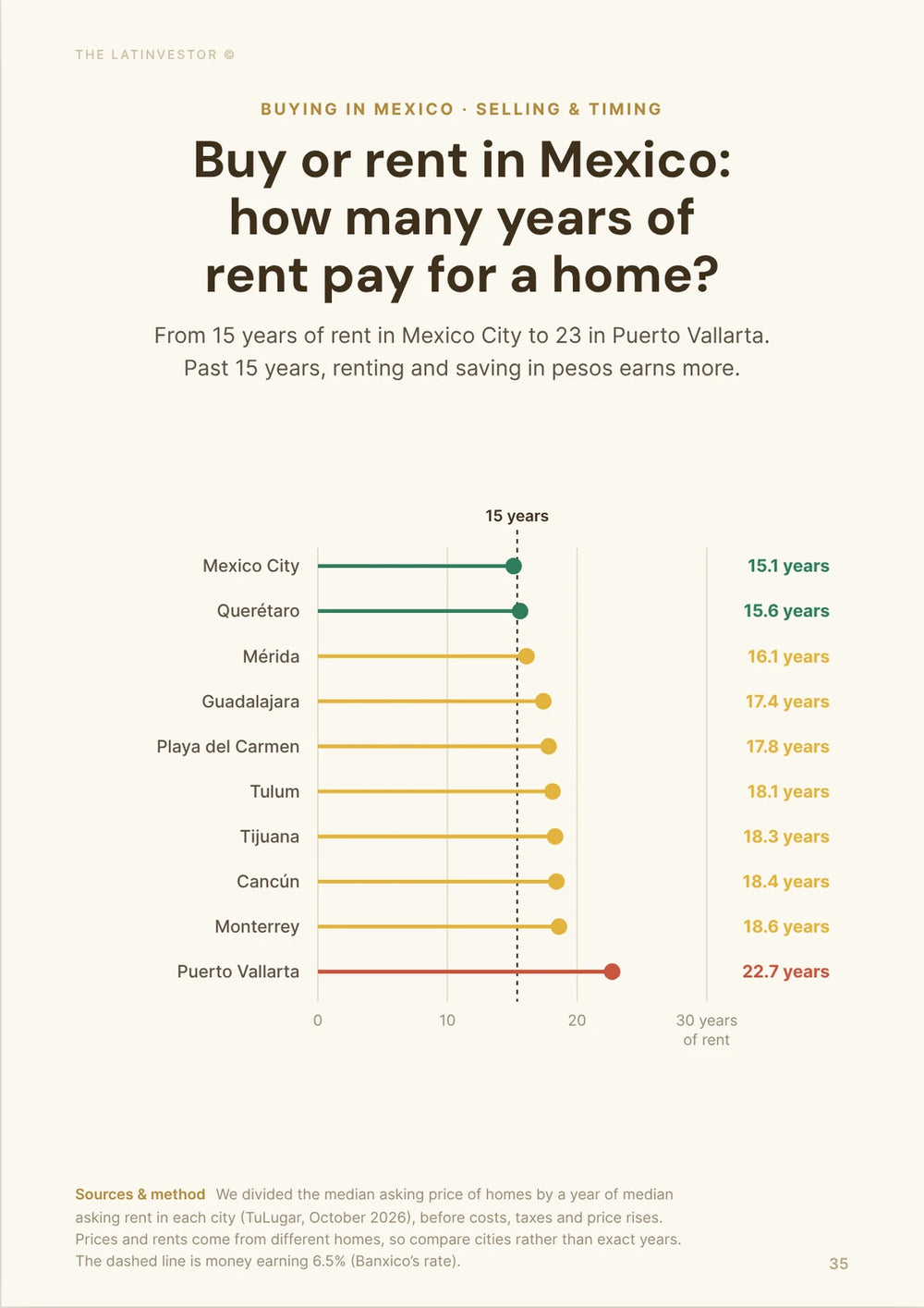
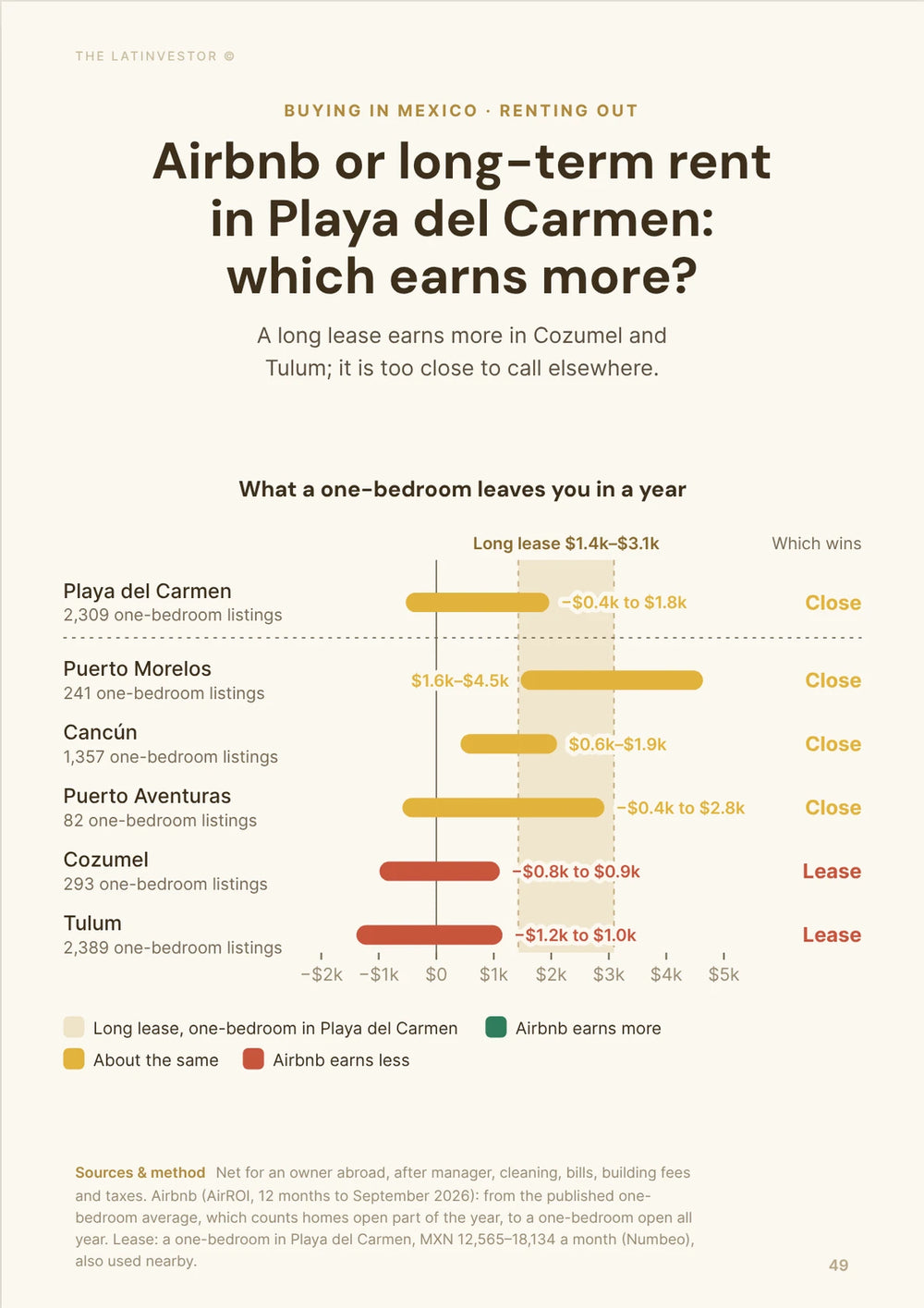
Only modestly. Long-term rentals in Playa give a gross yield of about 4.6% to 6.0% at today's asking prices, before any costs.
TuLugar's October 2026 data put the median condo at about $215,000 and the median advertised rent at about $1,009 a month. That's about $12,108 a year, or roughly 5.6% gross, before vacancy, HOA fees, repairs, property tax, insurance, management and the tax on rental income.
The spread by area is narrow. Centro, the most expensive area per square meter, gives the lowest yield (about 4.6%). Zazil-Ha and Playacar do better, near 6%.
And rents are not helping: Propiedades.com shows average apartment asking rents down 7.6% between April 2025 and October 2026. Plan with today's rents, not the ones in a sales deck. The purchase price is what makes or breaks the deal.
| Area (median condo) | Annual rent | Asking price | Approx. gross yield |
|---|---|---|---|
| Playa del Carmen, citywide | $12,108 | $215,000 | 5.6% |
| Centro | $10,476 | $229,000 | 4.6% |
| Colosio | $9,624 | $191,000 | 5.0% |
| Playacar | $19,644 | $344,000 | 5.7% |
| Zazil-Ha | $13,416 | $224,000 | 6.0% |
Does Airbnb still make buying property in Playa del Carmen attractive?
Sometimes. Airbnb can make a good property work, but today's numbers are too ordinary to rescue an overpriced condo.
Over the 12 months to September 2026, AirDNA puts Playa's short-term rentals at 58% occupancy, an average nightly rate of about $103 and about $18,800 of revenue per active listing.
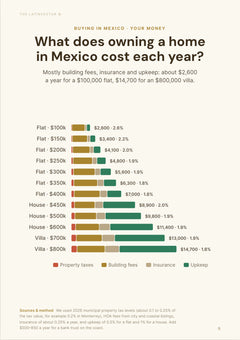
On a median one-bedroom listed at about $184,000, that's roughly 10% gross revenue. Then come management, platform fees, cleaning, electricity, internet, furniture replacement, HOA fees, repairs, taxes and empty weeks. A professionally managed unit can lose a big share of its revenue before the owner sees a profit.
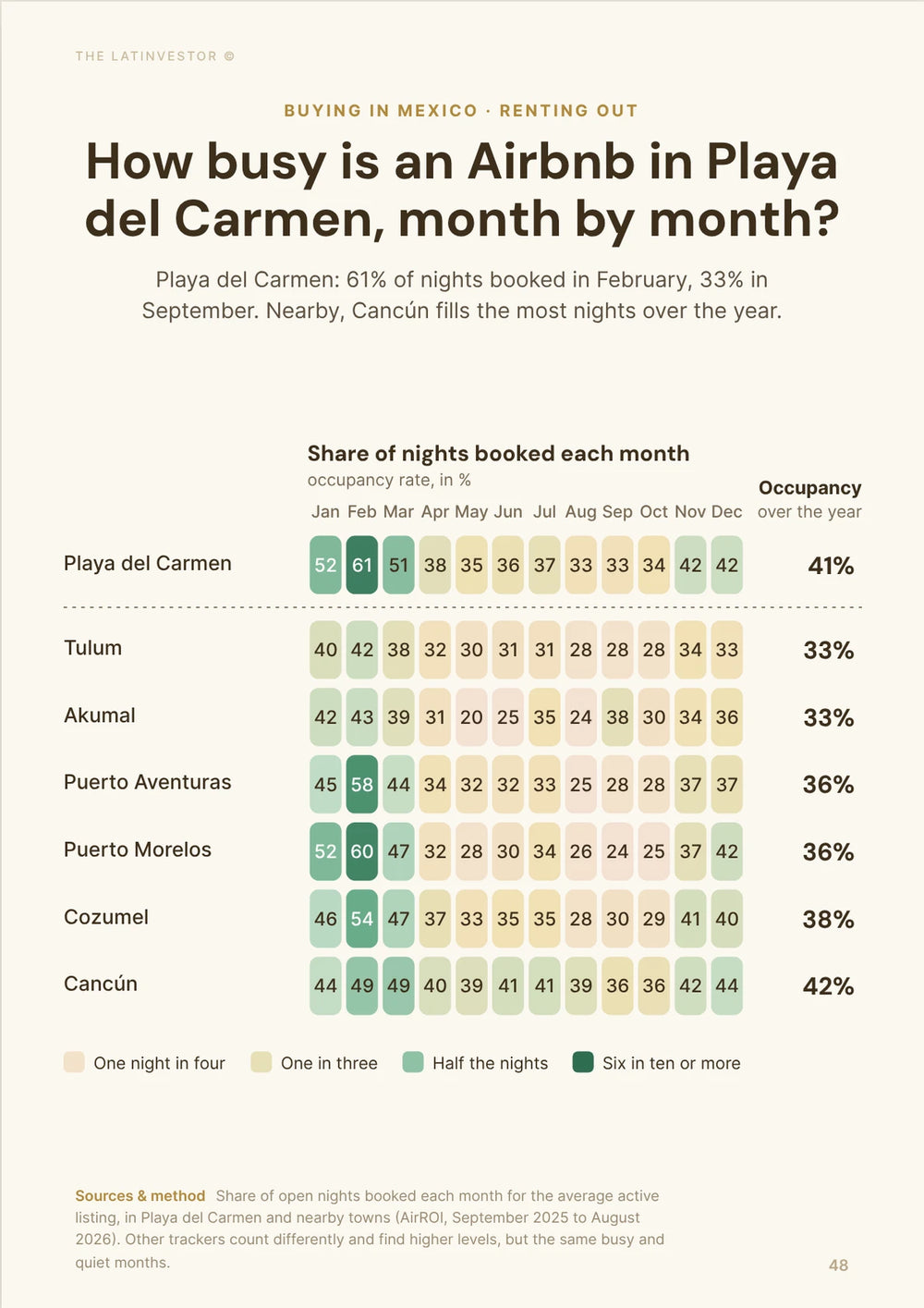
The occupancy number is the useful one. 58% means about 212 booked nights a year. Any project sold on 75% or 80% occupancy for a normal unit is selling a dream.
Why did Playa del Carmen lose 60% of its Airbnb listings this year?
Partly a shakeout, partly new rules. AirDNA counted 6,498 active short-term rentals in Playa in September 2026, about 60% fewer than a year earlier, and nightly rates are down about 19%.
Some of the drop may come from how the data are collected, so don't read it as an exact count. But it fits what's happening on the ground: weaker and informal listings are dropping out, and owners are cutting prices to fill.
The rules have tightened. Quintana Roo now requires short-term rentals to hold state and municipal operating licences and to be listed in the state tourism register (RETUR-Q), and platforms are meant to show that registration. Playa's municipal lodging licence costs roughly MXN 821 to 2,933 a year (about $44 to $158) and must be renewed every year. Guests also pay a 6% state lodging tax collected by the platforms.
What to do: if you buy for short stays, ask the seller for the municipal licence and the RETUR-Q number, and check that the condo regulations allow stays of a few nights. A unit that can't show those is a long-term rental, and you should pay a long-term rental price for it.
Is tourism in Playa del Carmen getting weaker?
Yes. Tourism has softened enough to matter for rental investors.
Quintana Roo's tourism observatory reported average hotel occupancy in Playa at 75.3% in 2024 and 70.8% in 2025. In the first half of 2026, it was 72.58%, against 77.05% a year earlier. The Riviera Maya fell from 76.63% to 72.77%, and Tulum dropped to about 66%.
The summer was worse. Small hotels in Playa were down to about 18% occupancy in September, according to their association (Por Esto!, September 2026). They compete directly with Airbnb condos for the same guests.
Cancún airport, where most Playa visitors land, handled about 1.61 million passengers in September 2026, down 8.6% on a year earlier, with international traffic down 11.8%. From January to September, traffic was down 5.9% (ASUR).
Playa still gets a huge number of visitors, and 70%+ hotel occupancy over a half-year is solid for a resort. But rental projections should now assume steady tourism, not another boom.
| Tourism indicator | Earlier level | Latest comparable level | Change |
|---|---|---|---|
| Playa hotel occupancy, full year (2024 vs 2025) | 75.3% | 70.8% | -4.5 pts |
| Playa hotel occupancy, first half (2025 vs 2026) | 77.05% | 72.58% | -4.47 pts |
| Riviera Maya, first half | 76.63% | 72.77% | -3.86 pts |
| Tulum, first half | 74.32% | 66.18% | -8.14 pts |
| Cancún airport passengers, September | ~1.76m | ~1.61m | -8.6% |
Should buyers wait because Playa del Carmen tourism has slowed?
Probably not. Softer tourism gives you more reason to negotiate, but the numbers are far from a crisis.
Playa has more depth than a pure resort town. Solidaridad had about 333,800 residents in the 2020 census, with schools, hospitals, offices, long-term renters and ferry traffic to Cozumel. Those people need housing whatever the tourist season looks like.
Tulum is the useful comparison. Both markets lost hotel occupancy, but Playa stayed above 72% in the first half of 2026 while Tulum fell to about 66%.
If your plan depends only on short-term rental growth, weaker tourism should lower the price you're willing to pay. If you're buying a strong property for seven to ten years, the slowdown is a negotiating tool, not a reason to walk away.
Are the Tren Maya and Tulum airport helping Playa del Carmen property values?
A little, over the long run. They improve Playa's connections, but they don't justify a big premium for an ordinary condo.
Playa now has a Tren Maya station linking it to the rest of the Yucatán Peninsula, and Tulum International Airport adds a second international gateway to the south of Cancún.
The catch: Cancún airport traffic is falling in 2026, so better access doesn't automatically mean more visitors. Playa was already a major destination before either project opened, so they reinforce an existing advantage rather than create a new market.
Count the infrastructure as support for a long ownership period. Don't pay a presale premium because a sales presentation mentions the train.
Has the peso's recent slide made Playa del Carmen cheaper for foreign buyers?
Yes, a little. The peso went from under 17 per dollar in early September 2026 to about 18.6 in late October, so dollar buyers get noticeably more for their money than a few weeks ago.
On a MXN 5 million property, that's about $269,000 today against roughly $294,000 at 17 pesos per dollar, around $25,000 saved without the seller moving on price.
Keep it in perspective. The dollar averaged 19.20 pesos over 2025, so peso-priced property is still more expensive in dollars than last year. And most end-2026 forecasts (BBVA Research, Banxico's analyst survey, Citi) sit between 17.3 and 18.2, all below today's rate.
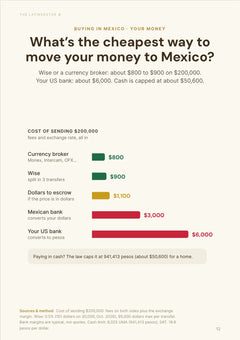
Many Playa developments quote directly in dollars, so the currency matters most on peso-priced resales. What to do: if you've found the property, agree the price in pesos where you can, convert in two or three tranches once the offer is accepted, and keep a 5% to 10% buffer in case the rate moves before closing.
Do high mortgage rates make buying in Playa del Carmen a bad idea right now?
For heavily financed buyers, yes. Mortgage rates are too high next to the rental yields Playa offers.
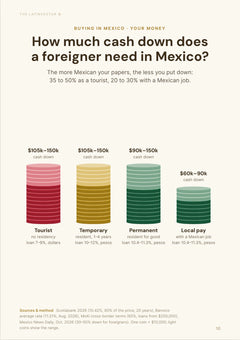
Banco de México's average fixed-rate mortgage quote was 11.31% in August 2026, even though the central bank's policy rate is down to 6.50%. Compare that with gross long-term yields of about 4.6% to 6.0%: borrowing at more than 11% to earn 5% before costs doesn't add up.
Cash buyers are in a different spot. High rates mean fewer financed buyers to compete with, and a fast, clean cash offer is worth a discount to most sellers.
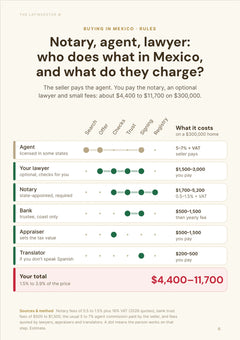
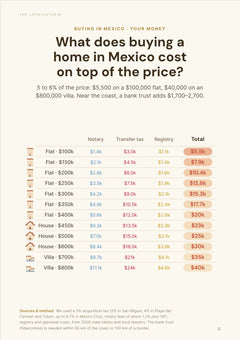
Closing costs also argue for a long hold. Count roughly 5% to 9% on top of the price, including Playa's 4% municipal acquisition tax, notary and registration fees, and the bank trust (fideicomiso) setup. Buy for seven years or more, not for a quick resale.
Is resale property better than pre-construction in Playa del Carmen now?
For most buyers, yes. Resale gives you facts at a time when Playa already has plenty of new condo supply.
With a resale unit you can see the real building, hear the street at night, check maintenance, read the HOA accounts, test the water pressure, spot nearby construction and look at real rental history.
Presale buyers give all that up for an earlier price or a payment plan. The problem now is that many projects are sold at premium prices on amenities, furniture packages and projected returns, and when the unit is delivered, the owner may be competing with unsold units from the same developer.
We'd want a clear advantage before choosing presale: a genuinely scarce site, a developer with finished buildings you can visit, a real discount per square meter or very good payment terms. Without one of those, resale is the better bet right now.
Are presale buyers in Playa del Carmen losing their money?
Some are. Quintana Roo's urban development agency (SEDETUS) flagged 116 irregular developments across the state in 2025, and the public list had reached 123 by August 2026, with Playa del Carmen and Tulum the most affected.
The case people in Playa talk about is SÚUT: more than 50 buyers paid over MXN 200 million (about $10.8 million) for apartments they never received, according to Por Esto! in April 2026. In a slower market, weak developers run short of cash when units stop selling, and late or missing deliveries become more likely.
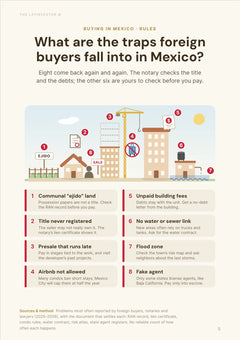
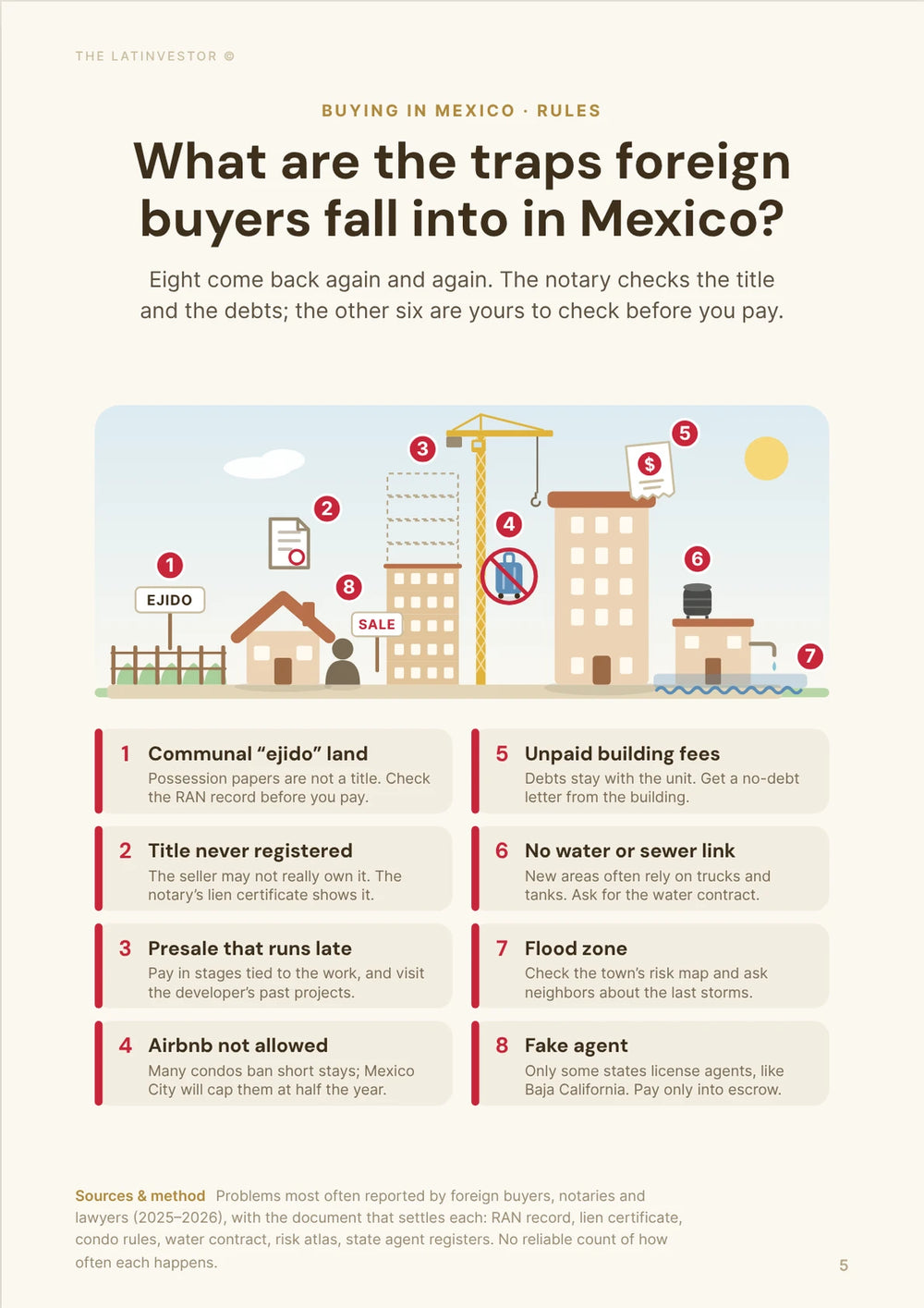
Before paying any deposit: check that the project is not on the SEDETUS list, ask for the municipal construction licence and land-use permit, check in the Public Property Registry that the land is privately titled (not ejido land), and get the condominium regime in writing. Pay through the notary or an escrow account, never to a personal or offshore account, and insist on a contract with a delivery date and a penalty if it slips.
If the developer pushes back on any of this, walk away. There are thousands of other units for sale.
Which Playa del Carmen neighborhoods look best for buying property now?
Playacar and the stronger walkable parts of central Playa look the most defensible, because they attract several types of future buyers, not just Airbnb investors.
Zazil-Ha is listed at about $3,675 per square meter in TuLugar's October 2026 data and combines beach access, walkability and residential demand. Gonzalo Guerrero is similar, at about $3,796.
Centro is the priciest of these areas at about $4,120 per square meter, mostly because units are small. It's popular and liquid, but noise, building quality and street conditions change from one block to the next, and it has the lowest rental yield of the main areas.
Playacar is different: about $3,041 per square meter, but bigger homes and a higher median price (about $344,000). Security, greenery, established infrastructure and little land left make it appealing for a long hold.
Colosio has the lowest median ticket of these areas (about $191,000) but is not cheap per square meter (about $3,562), and quality varies a lot from street to street.
Farther inland, areas like Paseo de los Olivos and Real Ibiza are listed around $1,200 to $1,400 per square meter. Resale demand there depends on local incomes, so a low price per square meter doesn't automatically mean better value.
| Area | Approx. asking price | Main advantage | Main risk | Current view |
|---|---|---|---|---|
| Zazil-Ha | ~$3,675/m² | Beach + walkability | High price | Good selectively |
| Gonzalo Guerrero | ~$3,796/m² | Central and scarce | Noise / price | Good selectively |
| Centro | ~$4,120/m² | Strong tourist demand | Saturation, low yield | Building-specific |
| Playacar | ~$3,041/m² | Established and defensive | Higher ticket price | Strong |
| Colosio | ~$3,562/m² | Lower entry ticket | Uneven streets | Selective |
| Outer inland areas | ~$1,200–$1,400/m² | Cheap entry | Weaker resale depth | Yield play |
Is beachfront property in Playa del Carmen safer than buying inland?
Not really. Beachfront has scarcity, but it also comes with environmental and running costs that inland owners avoid.
Sargassum is the clearest example. Playa collected more than 45,000 tonnes between January and September 23, 2026, according to the state environment ministry. The federal government has committed about MXN 2 billion (about $107.5 million) to a Quintana Roo plan with offshore collection, barriers and beach cleanup.
For a beachfront building, heavy sargassum hits swimming, smell, guest reviews, beach-maintenance costs and HOA budgets.
Real beachfront land still can't be recreated, and that supports resale value. But before paying the premium, ask how the condo has handled sargassum, erosion, insurance and beach maintenance over the last few seasons, and look at the HOA accounts. The view alone is not enough.
Is it legally safe for foreigners to buy property in Playa del Carmen?
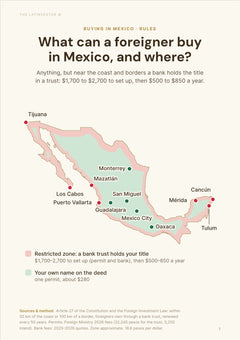
Yes. Foreigners can legally buy homes in Playa del Carmen, usually through a bank trust (fideicomiso).
Playa sits inside Mexico's restricted zone, the 50-kilometer strip along the coast. Foreign buyers of homes there hold their rights through a bank trust, authorized by the Foreign Affairs Ministry (SRE) for up to 50 years and renewable.
The trust itself is well established. The real risks are at the property level: unclear title, liens, ejido land, weak developers, missing construction permits, poor condo management or rental rules that differ from what the salesperson promised.
If you plan short-term rentals, check the condo regulations and the state and municipal registration yourself rather than trusting a brochure that says "Airbnb allowed."
What could actually make Playa del Carmen property prices fall?
A real correction would probably need several problems at once, and some of them are already showing.
Oversupply is the most obvious one. If developers keep delivering similar investor condos faster than the market absorbs them, resale owners will have to cut prices further. September's dip in asking prices is the first hint.
A longer tourism slump would add to it. One weak season is manageable. Several years of falling flights, weaker hotel occupancy and lower Airbnb revenue would hit investor demand hard.
Financing is already tight. Mortgage quotes above 11% limit what local buyers can afford, and a weaker economy would make that worse.
Environmental problems could also eat into the coastal premium: repeated heavy sargassum seasons, beach erosion and rising insurance or HOA costs.
None of these looks strong enough on its own to cause a citywide crash. Together, they're the downside scenario to watch, and they hit generic investor condos first.
So, should you buy property in Playa del Carmen now?
Yes, selectively. It's a good time to buy a strong property at a negotiated price, especially with cash and a long holding period.
Prices are high, but buyers have more leverage. Thousands of new units are competing for attention, tourism has cooled, Airbnb occupancy is about 58% rather than the 75% to 80% in sales projections, and mortgages are expensive. Sellers and developers have more reasons to negotiate than they did during the boom.
At the same time, there's no sign of a citywide crash. Official prices are still rising, central Playa is still expensive, tourism is still large and scarce locations still find buyers.
The best opportunities are established resale properties with several possible uses: long-term rental, vacation rental, your own use and resale to lifestyle buyers. Walkable one- and two-bedroom units, well-run Playacar properties and real coastal assets make more sense than generic studios built for investor marketing.
Avoid paying a big presale premium, borrowing at 11% to chase a 5% yield, or trusting an Airbnb projection with optimistic occupancy.
Waiting could bring lower asking prices in oversupplied buildings. But if you find a strong property at the right price, you already have something valuable today: negotiating power, a better exchange rate than in early September, and no need to settle for a weak building.
Our methodology
This article asks whether now is a good time to buy in Playa del Carmen. We look at the parts of the market that can move in different directions at once: prices, price direction, negotiating power, condo supply, long- and short-term rental returns, tourism, financing, the exchange rate, infrastructure, environmental risk and the legal side for foreign buyers.
Prices, rents and neighborhood figures come from TuLugar's October 2026 listing data, and developer supply from Maya Ocean. We keep the two separate because they cover different parts of the market, and neither shows final sale prices. Price direction comes from the official SHF housing price index, national and for Solidaridad, which only covers homes bought with a mortgage. Rent trends come from Propiedades.com. Gross yields and booked nights are simple calculations from those figures, before costs.
Short-term rental figures come from AirDNA. Tourism is checked against official hotel occupancy from Quintana Roo's tourism observatory (SITUR), local press for small hotels, and ASUR's monthly passenger reports for Cancún airport. Mortgage and policy rates come from Banco de México, and exchange-rate forecasts from BBVA Research, Banxico's analyst survey and Citi.
Rules come from official sources: the Foreign Affairs Ministry (SRE) for the restricted-zone trust, Quintana Roo's tourism register and Playa's municipal licence procedure for short-term rentals, the municipal acquisition tax page, and SEDETUS and dated 2026 press reports for irregular developments. Sargassum figures come from the state environment ministry (reported by Diario Cambio 22) and the federal government.
We checked these figures in October 2026. Conversions use about 18.6 pesos per US dollar and 20.9 pesos per euro.
Limits: listing prices are asking prices, not sale prices, and portals count different mixes of properties. The SHF index misses much of the cash-paid foreign market. AirDNA's listing counts can move with changes in data collection. We don't use a score to call the market a buy or a sell; the answer depends on the property and the price.
Key sources used for this analysis include TuLugar's Playa del Carmen market data, Maya Ocean's developer-inventory database, Maya Ocean on condos near the sea (May 2026), SHF's Q2 2026 housing price index, IIEG's Q2 2026 housing price report (municipal SHF data), Propiedades.com on Playa del Carmen apartment rents, AirDNA's Playa del Carmen short-term rental data, Quintana Roo SITUR hotel-occupancy data, Por Esto! on small hotels in Playa del Carmen (September 2026), ASUR's September 2026 passenger traffic report, Banco de México mortgage rate quotes, Banco de México's policy-rate series, Banco de México's FIX exchange-rate data, the official Tren Maya site, the Government of Mexico on Tulum International Airport, the SRE on restricted-zone trusts, Quintana Roo's tourism register (RETUR-Q), Playa del Carmen's lodging licence procedure, Playa del Carmen's municipal acquisition tax (ISABI), Mayan Wealth Homes on closing costs, SEDETUS on 116 irregular developments, Por Esto! on 121 irregular developments, Riviera Maya News on the 123 blacklisted developments (August 2026), Por Esto! on the SÚUT case, Diario Cambio 22 on 2026 sargassum collection, and the federal government's sargassum strategy.