Summary
Yes, in the right building. But Playa del Carmen beachfront now comes with real erosion, sargassum, legal and upkeep risks: the city collected more than 45,000 tonnes of sargassum between January and late September 2026 alone.
"Beachfront" is not one market. An old federal study measured one stretch losing about 86 metres of beach in eight years while Xaman-Ha gained about 50 metres, so two buildings a few kilometres apart can face very different coasts.
Nobody is about to fix the worst stretches. Locals say more than a kilometre of Playa's beach has lost its sand, and a recovery project still needs an environmental permit that takes about a year.
You don't own the beach. The first 20 metres of usable land beside the sea is federal (ZOFEMAT), anything a building puts there needs a concession, and that line moves inland as the beach erodes.
Foreigners buy through a bank trust that can run 50 years and be renewed. The trust is not the risk; bad title, missing concessions and weak condo finances are.
Hurricanes add cost more than they rule the market out. Beryl in 2024 was a real test, and the 2026 season had brought six tropical storms but no hurricane to Quintana Roo by late September, with the season running to November 30.
Sargassum is now a yearly cost, not a bad season. 2026 is already well above the 30,000-plus tonnes of 2025, the city doubled its barriers to 5 km and the federal government put in more than MXN 2 billion (USD 107.5 million).
The worst of 2026 is behind, with arrivals peaking in June and July and expected to fade into November and December, but fresh patches still landed in early October.
Tourism is softer. Playa hotels were 72.58% full in the first half of 2026 against 77.05% a year earlier, and Cancún airport handled 5.9% fewer passengers from January to September.
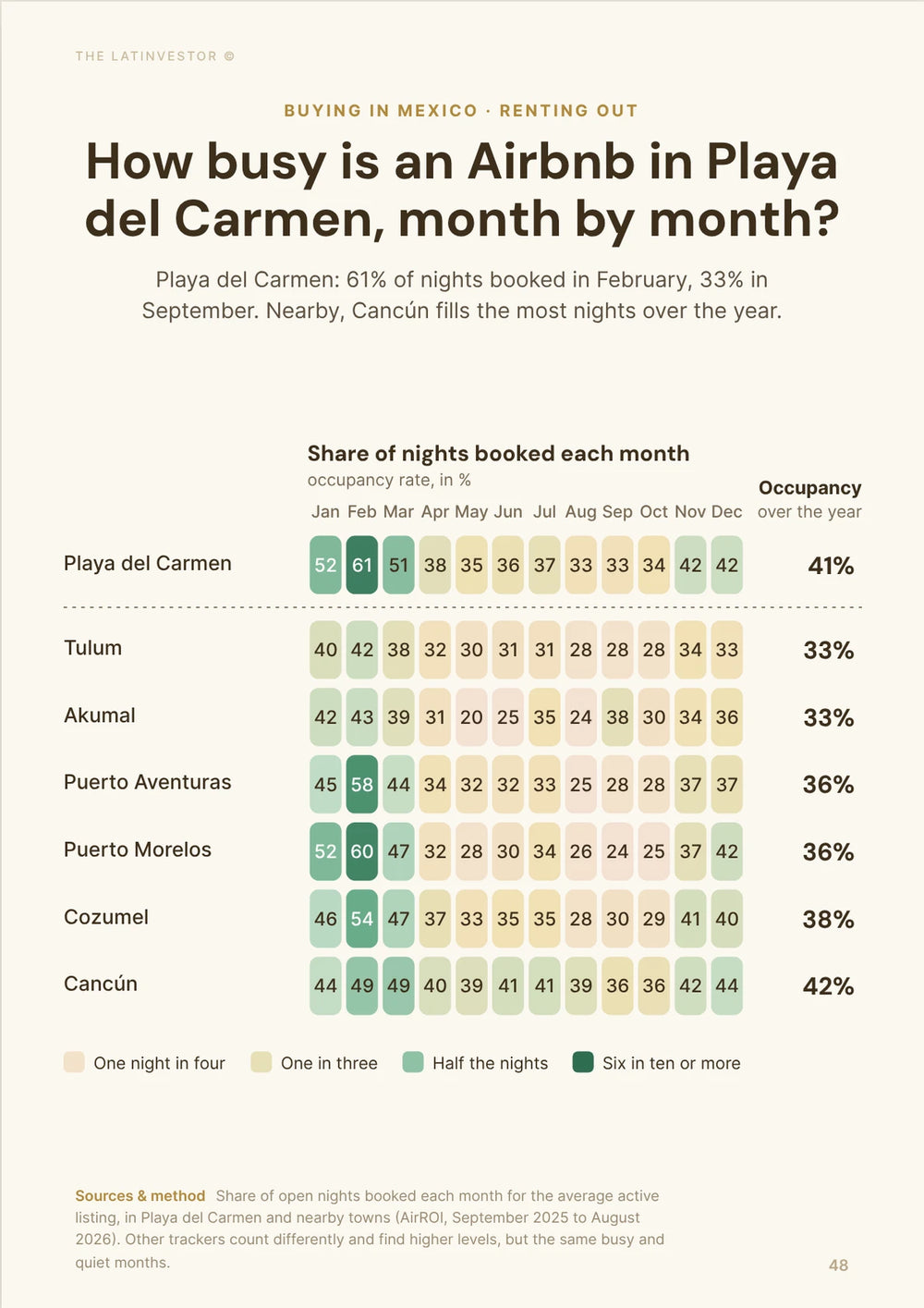
Short-term rentals still work, but not at the 75% to 80% occupancy many sales pitches use. AirDNA puts Playa at 58%, about USD 103 a night and USD 18,800 a year per listing, before a 25% tax on gross rent for non-residents.
Being right on the sand barely costs more per square metre. Listings within 100 metres of the sea averaged about USD 5,451/m² in May 2026, against USD 5,217/m² between 100 and 500 metres: only 4.5% more.
That makes the first few blocks inland worth a hard look: you keep the walk to the beach and lose most of the erosion, ZOFEMAT and salt exposure.
True beachfront is still scarce, with only 348 of 2,140 listings within 500 metres sitting inside the first 100 metres. Scarcity helps good buildings, not bad ones.
The safest buys are finished, well-funded buildings with clean coastal paperwork, some distance from the active shoreline, a few years of boring HOA accounts and rental numbers that work at 58% occupancy.

Has buying beachfront in Playa del Carmen become riskier lately?
Yes. It still makes sense in the right building, but the coastline itself now deserves more scrutiny than the price or the view.
The reasons are visible on the ground: repeated erosion, record sargassum and coastal programs that keep getting bigger. The municipality has studied erosion around El Recodo, and an older federal study measured an average shoreline retreat of about 1.7 metres a year across its Playa del Carmen points between 2004 and 2012.
Buyers are still paying top prices for it. A Maya Ocean count of listings in May 2026 found 348 units within 100 metres of the sea, asking about USD 947,000 on average, or USD 5,451 per square metre.
So beachfront is as expensive as ever while the beach in front of it costs more and more to keep.
| Current Playa del Carmen signal | Latest figure | What has changed | What it means for buyers |
|---|---|---|---|
| Units within 100 m of sea | 348 | Beachfront supply remains limited | True coastal property is still scarce |
| Average asking price | ~USD 947,000 | No sign of distress pricing | Buyers still pay heavily for beachfront |
| Average asking price/m² | ~USD 5,451 | Premium persists | Coastal risk has not killed demand |
| Historical average erosion | ~1.7 m/year | Physical retreat is measurable | Exact beach location matters |
| Sargassum collected, Jan to late Sep 2026 | Over 45,000 tonnes | Already well above all of 2025 | Beach upkeep is a running cost |
Is Playa del Carmen actually losing its beaches?
Yes. Playa has documented erosion, and some stretches have moved far more than the city average.
A federal Riviera Maya coastal study found an average retreat of about 13.6 metres across its Playa del Carmen points over eight years, or roughly 1.7 metres a year. The individual points tell the real story.
Near the former Grand Coco Bay, one point lost about 86 metres of shoreline in eight years, almost 11 metres a year. Around Mahékal it was about 4.6 metres a year, and near the former Royal Porto Real close to 5.9 metres.
Other stretches went the other way. Around Xaman-Ha, the same study measured sand building up rather than retreating.
So a neighbourhood name tells you very little. Two condos a few kilometres apart can face completely different shorelines.
It still holds today. The city keeps studying erosion and beach recovery, with El Recodo coming back again and again as a problem spot. Ask for historical satellite images and the current coastal plans for the exact building before paying a beachfront premium.
| Playa del Carmen observation area | Measured change over 8 years | Approx. annual rate | Historical behaviour |
|---|---|---|---|
| Grand Coco Bay area | -86.4 m | -10.8 m/year | Severe erosion |
| Mahékal area | -36.6 m | -4.6 m/year | Erosion |
| Royal Porto Real area | -47.1 m | -5.9 m/year | Erosion |
| Sunset Fishermen area | -25.6 m | -3.2 m/year | Erosion |
| Xaman-Ha area | +49.9 m | +6.2 m/year | Accretion |
Restoration can change things for a while. Playa already put sand back at El Recodo and widened the beach there, yet the spot later returned to the erosion list. Sand keeps moving, so treat any future nourishment as a bonus, not as protection for decades.
Will anyone rebuild Playa's eroded beaches soon?
Not soon. In May 2026, local specialists warned that a recovery project for Playa's eroded beaches needs a federal environmental impact permit (MIA) that takes about a year, so the current city government has no time to start the work and the next one will decide.
The damage is not small. The head of a local tourism cooperative said more than a kilometre of Playa's beaches had no sand left because of currents, and divers blame hotels built on the dunes, inside the federal coastal strip.
The steps are long: seabed surveys, the permit filed with SEMARNAT, expert opinions, then a decision before any work. A project that has not filed for its permit is at least a year from the first truck of sand.
What to do: price the beach as it is today, not as a seller says it will be. If a building's value depends on sand coming back, ask whether a permit has been filed, who pays (owners, concession holders or the city) and what the building looked like in the worst month of 2026.
Does buying beachfront in Playa del Carmen mean you own the beach?
No. A beachfront condo owner owns the private property, while the beach and the federal strip beside it stay public.
The Zona Federal Marítimo Terrestre, or ZOFEMAT, generally covers the 20-metre strip of usable land right beside the beach. Hotels, condos and other neighbours can get concessions to use that strip, but a concession does not turn the beach into private land.
This matters when a project sells a private beach club, a terrace, a pool deck, a retaining wall or anything else close to the water. You need to know where the private lot ends and whether anything built inside ZOFEMAT has its federal authorization.
Playa del Carmen even has a municipal procedure to confirm whether a property is using ZOFEMAT. For an expensive beachfront purchase, that paperwork deserves the same attention as the title deed.
Be suspicious when everyone says an arrangement has "always been like that" but nobody can show the concession or the official boundary documents.
Can foreigners safely buy beachfront property in Playa del Carmen?
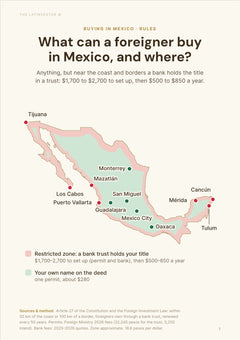
Yes. Foreigners buy beachfront homes in Playa through Mexico's long-established fideicomiso, and it works when the title and the deal underneath are clean.
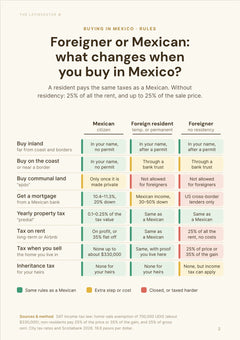
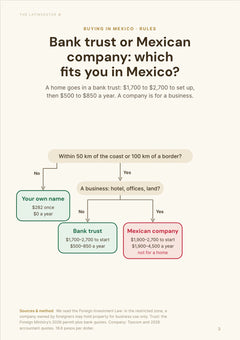
Playa sits inside the restricted coastal zone, where a foreigner cannot hold direct title to a home. A Mexican bank holds title as trustee and the buyer is the beneficiary of the trust.
The Foreign Affairs Ministry (SRE) issues the permit, currently MXN 21,650. The trust can run for up to 50 years and be renewed, and the beneficiary can live in the property, rent it, sell it and name successors.
Thousands of coastal homes are held this way, so the trust itself is not the worry.
The real risks sit underneath: bad title history, unpaid condo fees, building violations, undocumented coastal concessions or a developer selling something different from what was approved.
A bank trust cannot clean up a bad property.
Can beach erosion eventually affect the legal boundary of a Playa del Carmen property?
Yes. As the shoreline moves, the federal coastal zone can move closer to a beachfront building.
ZOFEMAT is measured from the legal shoreline, not from where a developer once drew the edge of the beach on a sales plan. SEMARNAT uses technical rules based on the highest tide line to set that zone.
A brochure showing 30 metres of sand in front of a building ten or fifteen years ago says very little about where the legal line sits today.
The owner keeps valid title while the beach in front gets narrower. That still hurts, because part of the price paid was for that buffer of sand.
For older beachfront buildings, ask for the most recent official coastal delimitation, not the original development plan.
Are hurricanes a serious reason to avoid Playa del Carmen beachfront property?
No, but they raise the cost of owning on the sand.
Hurricane Beryl was the last real test. It made landfall near Tulum in 2024 while Playa activated its highest alert, opened shelters and hotel refuges and deployed nearly 1,800 responders. The city reported no deaths or injuries, but fallen trees, power cuts and damage to public infrastructure.
2026 has been quiet so far. By late September, six tropical storms had formed in the Atlantic but no hurricane had hit Quintana Roo, which local forecasters put down to El Niño. They also warned that October and November can still bring Caribbean storms (Wilma hit in October 2005), and the season runs until November 30. One calm year does not change the risk.
For a condo, the risks are specific. Wind breaks windows and roofs, salt water gets into electrical systems, flooding reaches basements, and lifts or pumps can be out for weeks while the apartment upstairs looks untouched.
So the building matters more than the address. Ask where the electrical rooms and pumps are, whether the windows and roof are hurricane-rated, how the building did in past storms, what insurance it carries and whether the reserves can pay for a big repair.
A tenth-floor unit can stay dry while the building receives a very expensive repair bill.
Has sargassum become a permanent cost for Playa del Carmen beachfront owners?
Yes. On a beachfront building, sargassum is now part of the normal yearly budget.
The numbers are too big to call a bad season. Playa collected more than 30,000 tonnes in 2025, its highest in a decade. In 2026 it passed 20,000 tonnes by early June and more than 45,000 tonnes between January and late September, already well above all of last year. One public cleanup removed about 70 tonnes in a single day.
The response now looks permanent. Playa doubled its offshore barriers from about 2.5 to 5 kilometres, added daily satellite monitoring and works with the Navy, the state and hotels on collection. The federal government has put more than MXN 2 billion (USD 107.5 million) into a Quintana Roo plan meant to raise offshore collection toward 4,000 tonnes a day.
Governments are building a lasting system around the problem because they expect it to keep coming back.
For owners, the question is who pays to keep the beach usable. A large, well-run condo or resort spreads that cost over many units. A small beachfront building leaves each owner far more exposed.
| Playa del Carmen sargassum measure | Recent scale | What it tells us |
|---|---|---|
| 2025 collection | Over 30,000 tonnes | Highest volume of the prior decade |
| 2026 collection, Jan to late Sep | Over 45,000 tonnes | Already above the 2025 total |
| One major cleanup day | ~70 tonnes | Landings can be highly concentrated |
| Local barriers | 5 km | Mitigation has become permanent infrastructure |
| Federal Quintana Roo program | Over MXN 2 billion | The response has moved to national scale |
| Planned regional collection capacity | Up to ~4,000 tonnes/day | Authorities expect very large recurring volumes |
Is the 2026 sargassum season finally ending?
Mostly. The state sargassum monitoring network said in early October 2026 that arrivals peaked in June and July and should fade through November and December, though fresh patches still landed on Playa's beaches at the start of October.
The year is much heavier than 2025. Forecasters expected about 150,000 tonnes to reach Quintana Roo by year end, against about 94,000 tonnes in 2025, and Playa alone had collected more than 45,000 tonnes by late September.
It also hurt the Mexican Caribbean's hotels. Owners named sargassum as a main reason for an empty summer, along with fewer flights and global uncertainty, according to EFE.
What to do: visit or ask for photos of the building's beach from June and July, not from a clear November morning. Ask the HOA who cleans the beach, how often, what it cost in 2026 and whether owners were asked for extra money. If you plan to rent, assume a weaker summer and price it into your numbers.
Is Playa del Carmen tourism still strong enough to support beachfront property?
Yes, but it is softer than a year ago.
Quintana Roo's tourism data put Playa hotel occupancy at 72.58% in the first half of 2026, against 77.05% a year earlier, a drop of about 4.5 points. From January to July it was 71.27%, against 75.76%.
The wider Riviera Maya moved the same way, from 76.63% to 72.77% in the first half.
Cancún airport, where most visitors to Playa land, handled about 20.88 million passengers from January to September 2026, 5.9% fewer than in 2025. International traffic fell 6.5% over the same months, and September alone was down 8.6%.
Keep it in proportion: hotels above 70% full in one of Mexico's biggest resort areas is still a lot of visitors. Playa has not stopped attracting tourists.
But stop assuming each year brings more demand than the last. The data already show tourism softening while condo supply keeps growing.
| Tourism measure | Earlier period | Current period | Change |
|---|---|---|---|
| Playa del Carmen hotel occupancy, H1 | 77.05% | 72.58% | -4.47 pts |
| Riviera Maya hotel occupancy, H1 | 76.63% | 72.77% | -3.86 pts |
| Cancún airport passengers, Jan to Sep | ~22.20m | ~20.88m | -5.9% |
| Cancún international passengers, Jan to Sep | ~14.74m | ~13.78m | -6.5% |
Can a Playa del Carmen beachfront Airbnb still make good money?
Yes, but only with realistic numbers. Many condo sales pitches assume occupancy the market does not deliver.
AirDNA puts Playa's short-term rentals at 58% occupancy, about USD 103 a night and about USD 18,800 a year per active listing, over the year to September 2026. It also counts 6,498 active listings, about 60% fewer than a year earlier. Results vary a lot by building, size, management and distance to the sand.
58% occupancy means about 212 booked nights and 153 empty ones. A good beachfront unit with direct beach access, strong reviews and professional management can beat that.
The trouble starts when a purchase only works at 75% or 80%.
Beachfront also costs more to run. Salt eats outdoor equipment and fittings. Condo fees in beach-zone buildings are often estimated at MXN 4,500 to 12,000 a month (USD 242 to 645). Add insurance, beach cleaning, furniture, management, special assessments and, for a non-resident owner, a 25% tax on gross rent: about USD 4,700 on the average USD 18,800.
Test the deal in a normal year, a soft year and a strong one. If it turns ugly as soon as occupancy drops to the market's 58%, the price is too high.
Is direct beachfront actually worth much more than being two blocks from the sea?
Surprisingly, no. Current asking prices suggest you get most of the near-beach value without being on the sand.
Maya Ocean's count of listings in May 2026 found 348 units within 100 metres of the water, asking USD 5,451 per square metre on average.
The 1,792 units between 100 and 500 metres asked about USD 5,217 per square metre.
That is only about 4.5% more for being on the beach.
The gap in total price is much bigger because beachfront units are larger and fancier. Per square metre, though, the market values being near the sea almost as much as being on it.
That is a strong argument for looking a little inland. A condo 150 or 300 metres from the beach keeps most of the walkability, tourist appeal and resale story, with far less exposure to erosion, ZOFEMAT issues, salt and beach costs.
For an investor who cares more about returns than waking up on the Caribbean, that trade-off is hard to ignore.
| Distance from sea | Active units | Avg. asking price | Avg. asking price/m² |
|---|---|---|---|
| Under 100 m | 348 | ~USD 946,700 | ~USD 5,451 |
| 100–500 m | 1,792 | ~USD 319,100 | ~USD 5,217 |
| 500 m–2 km | 3,752 | ~USD 299,000 | ~USD 4,117 |
| 2–5 km | 3,328 | ~USD 201,100 | ~USD 1,839 |
Is Playa del Carmen beachfront still scarce if there are so many condos for sale?
Yes. True beachfront stays scarce even though the wider condo market has plenty of supply.
Within 500 metres of the sea, Maya Ocean counted 2,140 listings in May 2026.
Only 348 were inside 100 metres.
So if you just want a condo in Playa, or a walk to the beach, you have lots of choice. A unit right on the waterline is much harder to replace.
Scarcity still supports the best beachfront buildings, especially established ones with a good beach and strong management.
It cannot rescue a bad building. A rundown condo with high fees or a shrinking beach will compete at resale with hundreds of units that also advertise sea views, rooftop pools or a three-minute walk to the water.
That supply also gives you leverage now. There is no reason to accept weak paperwork or inflated rental numbers because a broker says beachfront never comes back.
Is an older beachfront condo safer than a Playa del Carmen presale?
Often, yes. A well-run older building is easier to judge because you can see how it has survived the coast.
In an existing building you can check the beach width, concrete, balconies, metalwork, waterproofing, lifts and machinery. You can read the HOA accounts, insurance history, special assessments and past storm damage, and see whether the view promised ten years ago still looks the same.
A presale gives you far less to go on. You depend on the developer, the schedule and the permits before the building has seen a single hurricane season.
Old is not automatically safer. Coastal buildings can hide corrosion, leaks and structural damage, and a nice lobby says nothing about the steel inside the concrete or the money set aside for repairs.
For a careful buyer, several years of boring HOA records are gold. They show what the building really costs to run and whether owners keep being asked for emergency money.
Which Playa del Carmen beachfront condos should make a buyer nervous?
Be careful when the beach is already narrowing, the coastal paperwork is unclear or the building's finances look thin for where it sits.
Start with the buffer between the building and the active shoreline. The old erosion data showed large retreats at some central and northern points, El Recodo keeps returning to the city's erosion list, and stretches near Mahékal and the former Grand Coco Bay lost a lot of beach.
Then the documents: the private lot boundary, the current ZOFEMAT line and any concession covering beach amenities should all be clear.
The condo needs enough money for coastal upkeep. Thin reserves, repeated special assessments, visible rust, unreliable lifts or unresolved leaks all count heavily against a purchase.
Walk away from a deal that depends on exceptional Airbnb occupancy, fast appreciation or a beach restoration that has not even filed for its permit.
None of this needs a disaster to hurt. A slowly narrowing beach, a sharp fee increase or a big structural assessment can wipe out years of rental income.
What does a relatively safe Playa del Carmen beachfront purchase look like today?
A finished building with clean coastal paperwork, some distance from the active shoreline and an HOA that has already shown it can handle the coast.
Ask for several years of financial statements, real reserves, proper insurance and a clear record of special assessments. Electrical and mechanical equipment should sit above the most exposed levels, and the building should have a plan for waterproofing, exterior repairs, rust and storms.
Check the beach separately. Compare today's beach with historical satellite images instead of judging from one visit; a wide beach today means less if the images show it retreating after every storm.
Keep the rental numbers conservative. A deal that works at 58% occupancy, with realistic costs and tax, leaves room for bad seasons.
The best coastal deals are usually the ones where very little has to go perfectly.
So, is buying beachfront in Playa del Carmen still safe?
Yes, but buy it much more selectively than a few years ago.
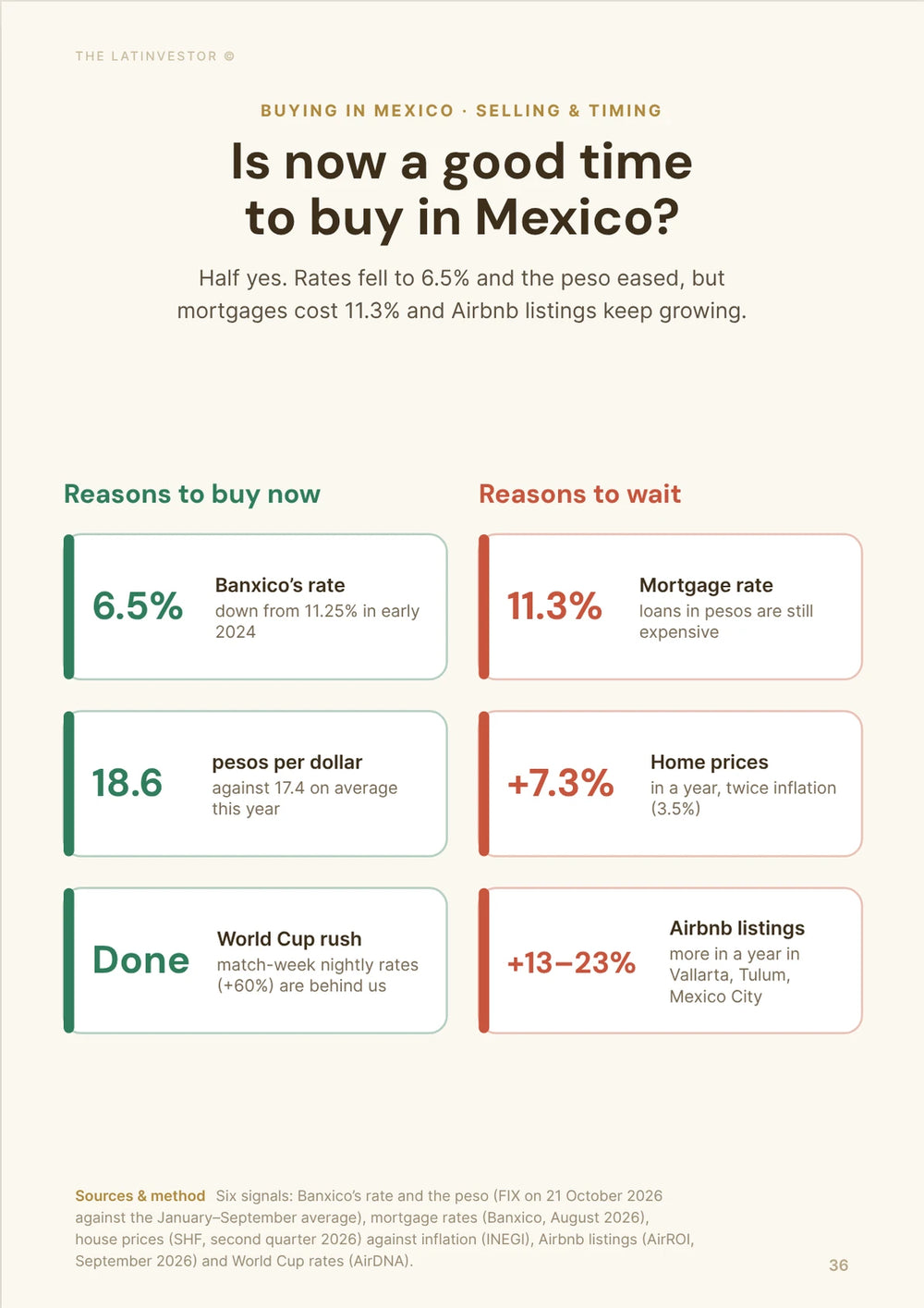
The case for Playa is still there. It is one of the Riviera Maya's deepest tourist and residential markets, the fideicomiso is well established, true beachfront is limited and buyers still pay high prices for it. Tourism remains large despite the slowdown.
The coast adds risks you can no longer ignore. Erosion varies a lot from one stretch to the next and nobody is about to rebuild the worst beaches. Sargassum passed 45,000 tonnes in Playa by late September 2026 and now needs 5 km of barriers and a federal plan of more than MXN 2 billion. Hotels are emptier than a year ago, and a building on the sand carries upkeep and legal issues that a unit a few hundred metres inland mostly avoids.
Prices make that last point stronger. Listings average about USD 5,451 per square metre within 100 metres of the sea and USD 5,217 between 100 and 500 metres, a gap of just 4.5%.
For many investors, the smarter buy sits one or two blocks back: most of the location, much less of the coastal exposure.
True beachfront is still buyable. But the building, the HOA's accounts, the ZOFEMAT line and the history of that exact stretch of beach now matter more than the words "oceanfront condo."
Our methodology
This article estimates whether buying beachfront in Playa del Carmen is still reasonably safe today. We split the question into what can change the answer: shoreline movement, the federal coastal zone (ZOFEMAT), hurricanes, sargassum, tourism, short-term rental demand, prices by distance from the sea, scarcity and the finances of the building itself.
Shoreline figures come from the federal SECTUR/CONACYT Riviera Maya coastal study (2004 to 2012 measurements), checked against recent municipal erosion and beach-recovery work and local reporting from 2026 on the beach-recovery permit. Sargassum figures come from the city of Playa del Carmen, the Presidency of Mexico and Quintana Roo state data reported in the press; hurricane context comes from the U.S. National Hurricane Center and local forecasters. Tourism figures come from Quintana Roo's official hotel-occupancy data and ASUR's Cancún airport traffic reports.
Rental figures come from AirDNA only (citywide averages, not a forecast for any one condo). Prices by distance from the sea come from Maya Ocean's count of listings checked on May 21, 2026: these are asking prices, not closed sales. Condo fee and insurance ranges are published estimates, not quotes.
The rules on ZOFEMAT come from the Diario Oficial de la Federación and the city's own verification procedure; the fideicomiso rules and the MXN 21,650 permit fee come from Mexico's Foreign Affairs Ministry (SRE); the 25% tax on gross rent for non-residents is Mexico's federal income tax rule.
We checked these figures in October 2026. Conversions use about 18.6 pesos per US dollar and 20.9 pesos per euro.
Limits: asking prices are not sale prices, hotel occupancy is not the same thing as condo rental occupancy, and erosion figures are old and point-by-point, so they show how much beaches can differ, not where each one stands today.
Key sources used for this analysis include: the SECTUR/CONACYT Riviera Maya coastal vulnerability study, the city of Playa del Carmen's beach-recovery project, the city's records on the El Recodo beach recovery, Por Esto on the beach-recovery permit (May 2026), the Diario Oficial de la Federación's ZOFEMAT delimitation rules, Playa del Carmen's ZOFEMAT verification procedure, the SRE on fideicomisos in the restricted zone, the National Hurricane Center's Hurricane Beryl record, Grupo Animal on the 2026 hurricane season (September 2026), Playa del Carmen's 2026 anti-sargassum barrier update, Diario Cambio 22 on sargassum collected to September 2026, Mexico News Daily on October 2026 sargassum arrivals, the Presidency of Mexico's federal sargassum strategy, EFE on the summer 2026 slump, SITURQ's official hotel-occupancy data, SEDETUR Quintana Roo's July 2026 tourism report, ASUR's September 2026 passenger traffic report, AirDNA's Playa del Carmen short-term rental data, The Mexico Handbook on condo fees and Maya Ocean's 2026 listings by distance from the sea.