Summary
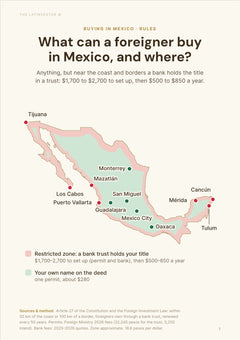
Yes, foreigners can buy houses, condos and lots in Mérida, but not in their own name: the city sits inside Mexico’s 50 km coastal restricted zone, so a foreign buyer holds the property through a bank trust (fideicomiso) that runs for up to 50 years and can be renewed.
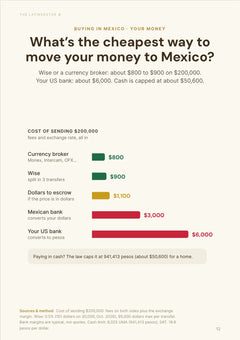
The trust has a cost. The SRE permit alone is MXN 21,650 (about USD 1,160), banks charge roughly USD 550 to USD 800 to open the trust, and then about USD 550 to USD 700 every year.
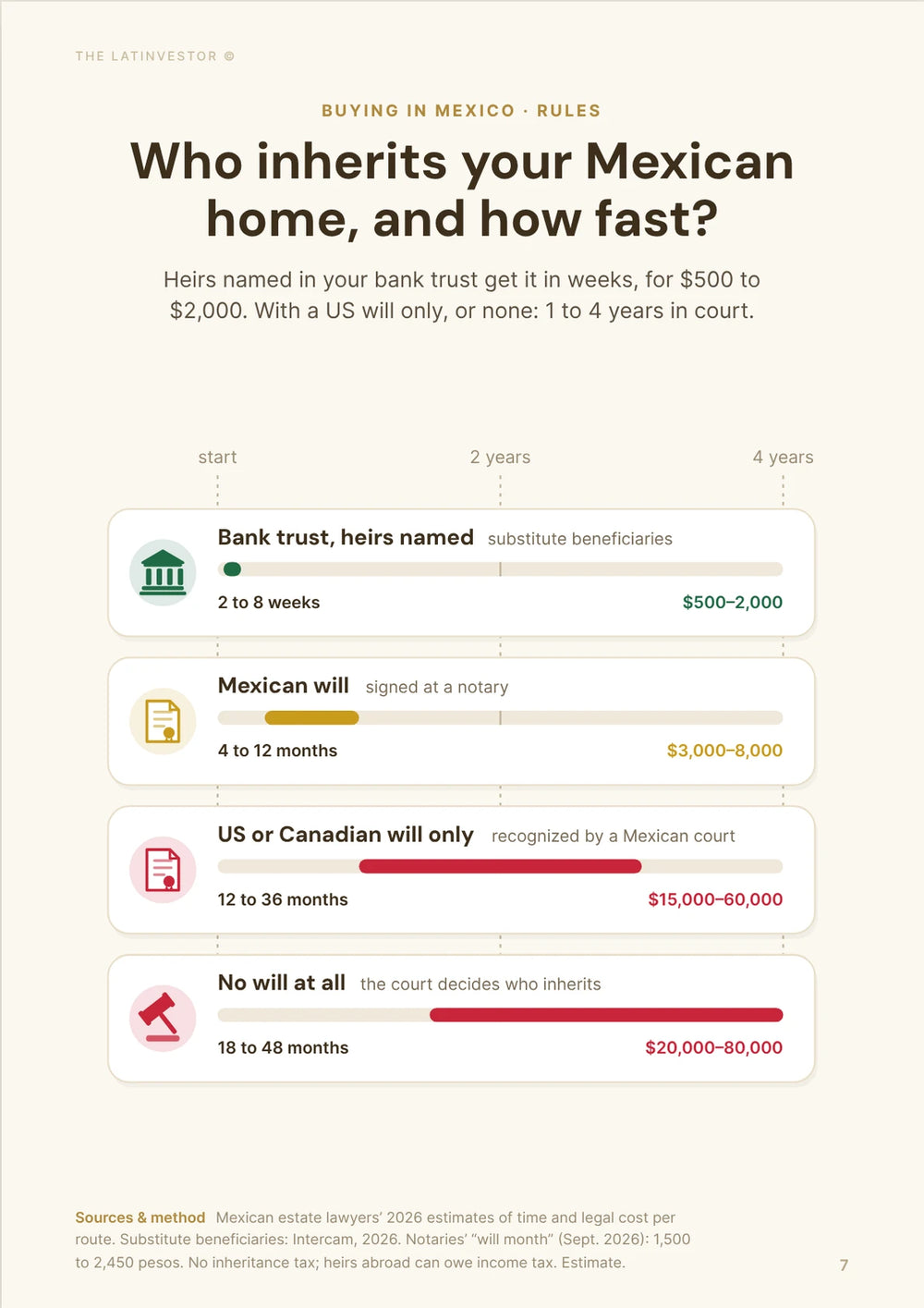
The trust also makes inheritance simpler: you name beneficiaries in it, and Mexico has no federal tax on inheritances (0%).
The costliest mistake is cheap land. The median asking price for an urban lot under 500 m² is about USD 92,000, and prices around Mérida rose about 11% in a year, which pushes buyers toward cheaper lots with ejido or unfinished titles.
You don’t need a visa to buy. But buying won’t get you residency unless the property is worth about MXN 10.76 million (about USD 578,000), more than twice the median asking price of a 3-bedroom house (USD 272,000).
If you plan short-term rentals, platforms withhold 4% income tax, 16% VAT applies, and Yucatán charges a 4.5% lodging tax since January 2026.
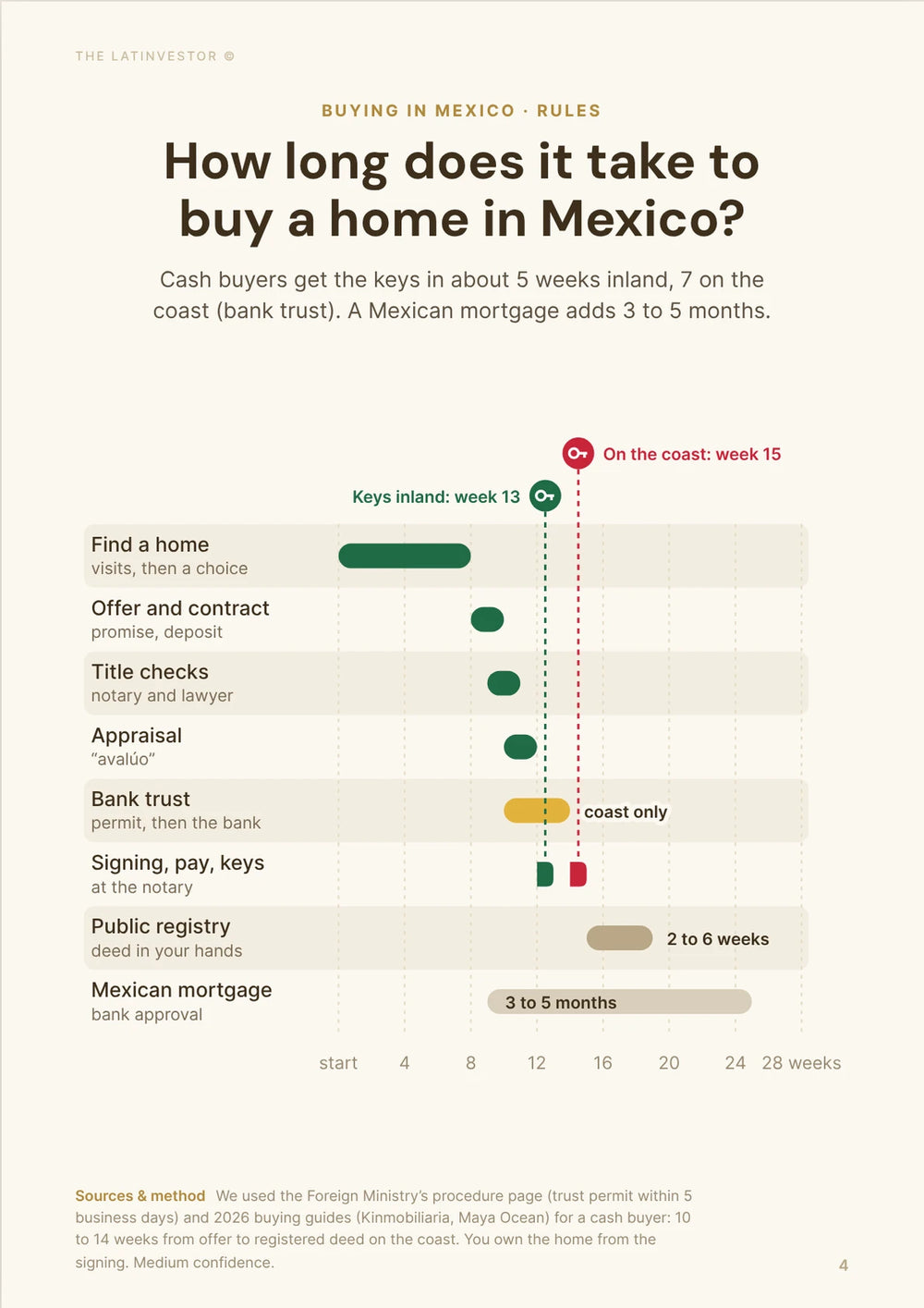
A clean cash purchase usually takes about 45 to 90 days from accepted offer to registered deed, and the notary is the one step you can’t skip.
Before signing, check title history over at least 10 years, get the official certificate of no liens, and confirm land use on the city’s PMDU map, especially if you want to rent the place out.
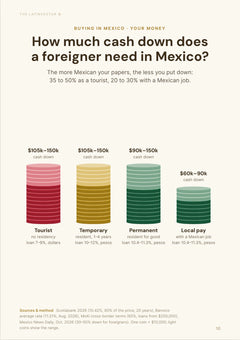
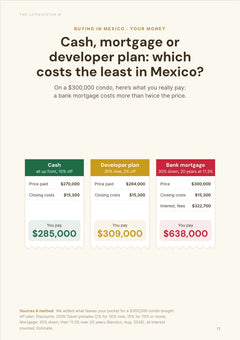
Mortgages exist but they’re hard to get: the average rate on loans actually granted was 9.99% in June 2026, and cross-border lenders usually finance only 50% to 65% of the price.
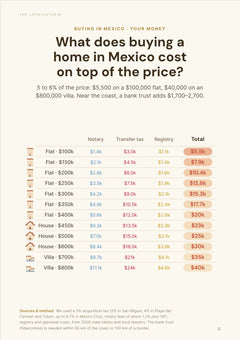
Budget 6% to 9% of the price for closing costs. The ISAI transfer tax alone works out to about 3.18% on a MXN 2.5 million home.
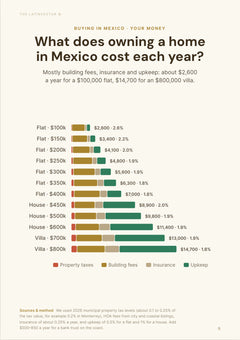
After that, yearly costs stay low: predial of roughly MXN 3,000 to MXN 12,000, insurance of MXN 5,000 to MXN 15,000, and MXN 1,500 to MXN 4,000 a month in condo fees for a gated building with a pool.
Bottom line: buying in Mérida as a foreigner is routine. Budget for the trust from day one, and spend your energy on the title and the land, not on the paperwork.

What do you actually own when you buy in Mérida?
What property types can foreigners buy in Mérida?
Foreigners can buy houses, colonial homes, villas, townhouses, condos, gated community homes and private residential lots in Mérida.
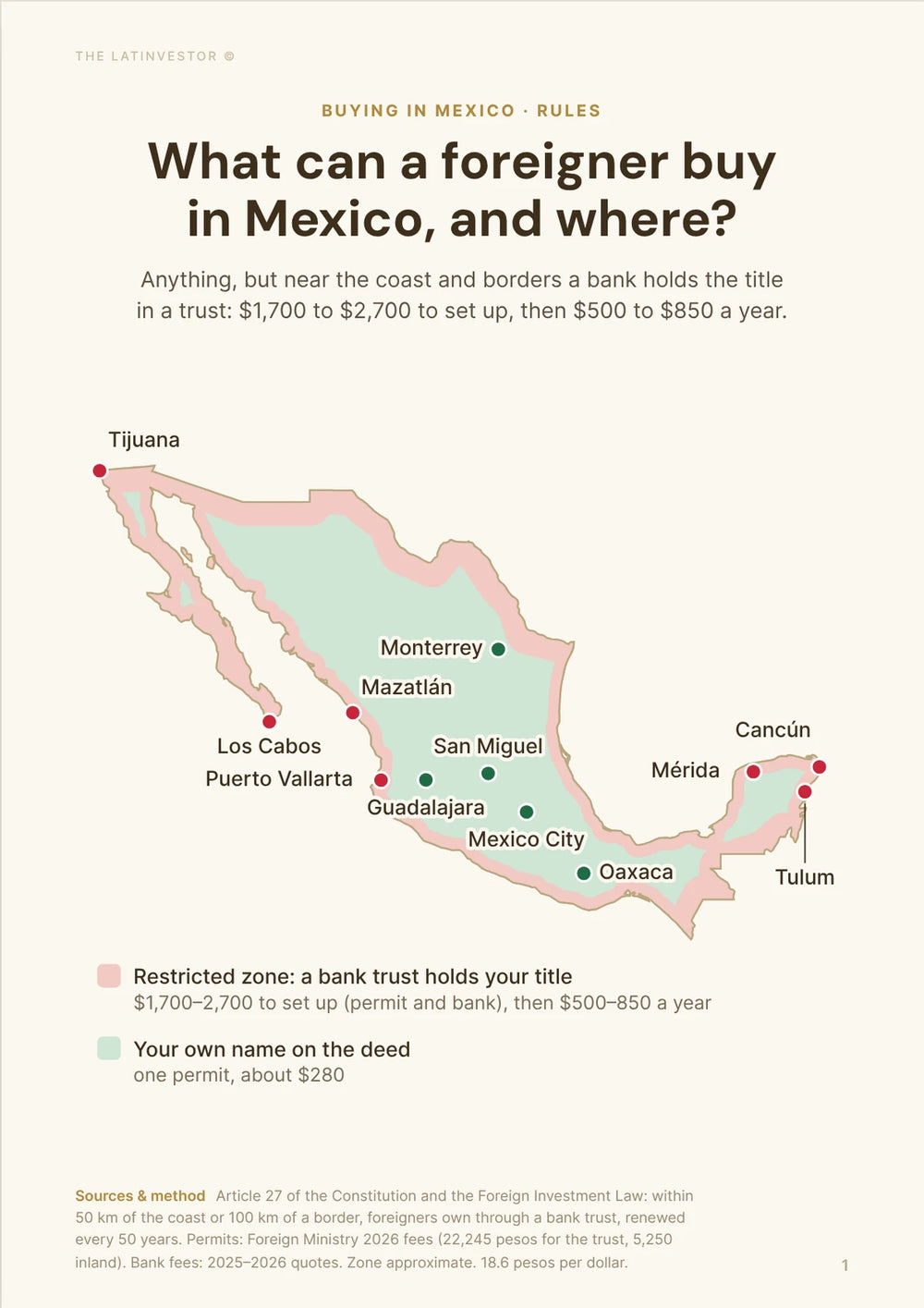
The catch is that the whole city sits inside Mexico’s coastal restricted zone, within 50 km of the Gulf coast. So a foreign individual buys a home through a bank trust called a fideicomiso.
That applies to a restored house in Santiago, a home near Paseo de Montejo, a condo in Altabrisa or a gated home in Temozón Norte, Cholul, Cabo Norte, Conkal or Dzityá.
The type of property matters less than the legal status of the land: clean private title is a different world from ejido land, informal lots or developments still waiting for approvals.
Can I own land in my own name in Mérida?
No. A foreign individual can’t hold direct title to residential land in Mérida, because the city is within 50 km of the coast.
With a fideicomiso, a Mexican bank holds the title and you keep the right to use, sell, rent out, renovate and pass on the property.
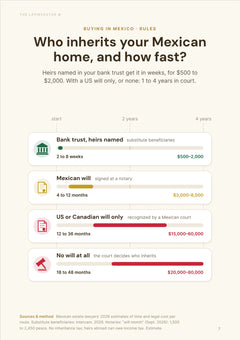
The trust runs for up to 50 years and can be renewed. You name your beneficiaries in it, and there’s no federal tax on an inheritance in Mexico (0%), although notary and registry costs still apply when the property changes hands.
What other foreign-ownership rules should I know in Mérida?
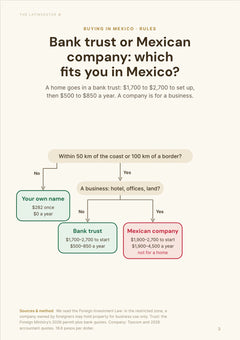
A Mexican company isn’t a shortcut for buying a personal home in the restricted zone: companies can hold property for business use, not to get around the trust for a home you live in.
There’s no limit on the number of foreign owners in a condo building. Condo checks are about the condo regime, HOA rules, reserve fund, parking, rental rules and recorded common areas.
The approval that matters is the SRE permit for the trust. It costs MXN 21,650 (about USD 1,160), a fee SRE updated in September 2026, and the bank and notary usually handle it during closing.
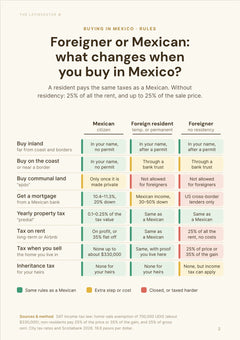
Plan your exit too. When a non-resident sells, the default tax is 25% of the gross sale price, or up to 35% of the net gain if you appoint a tax representative in Mexico. Residents can exempt up to 700,000 UDIS on the sale of their main home, once every 3 years.
No reform in 2025 or 2026 has removed the restricted zone, so the trust is still the rule.
What’s the biggest ownership mistake foreigners make in Mérida?
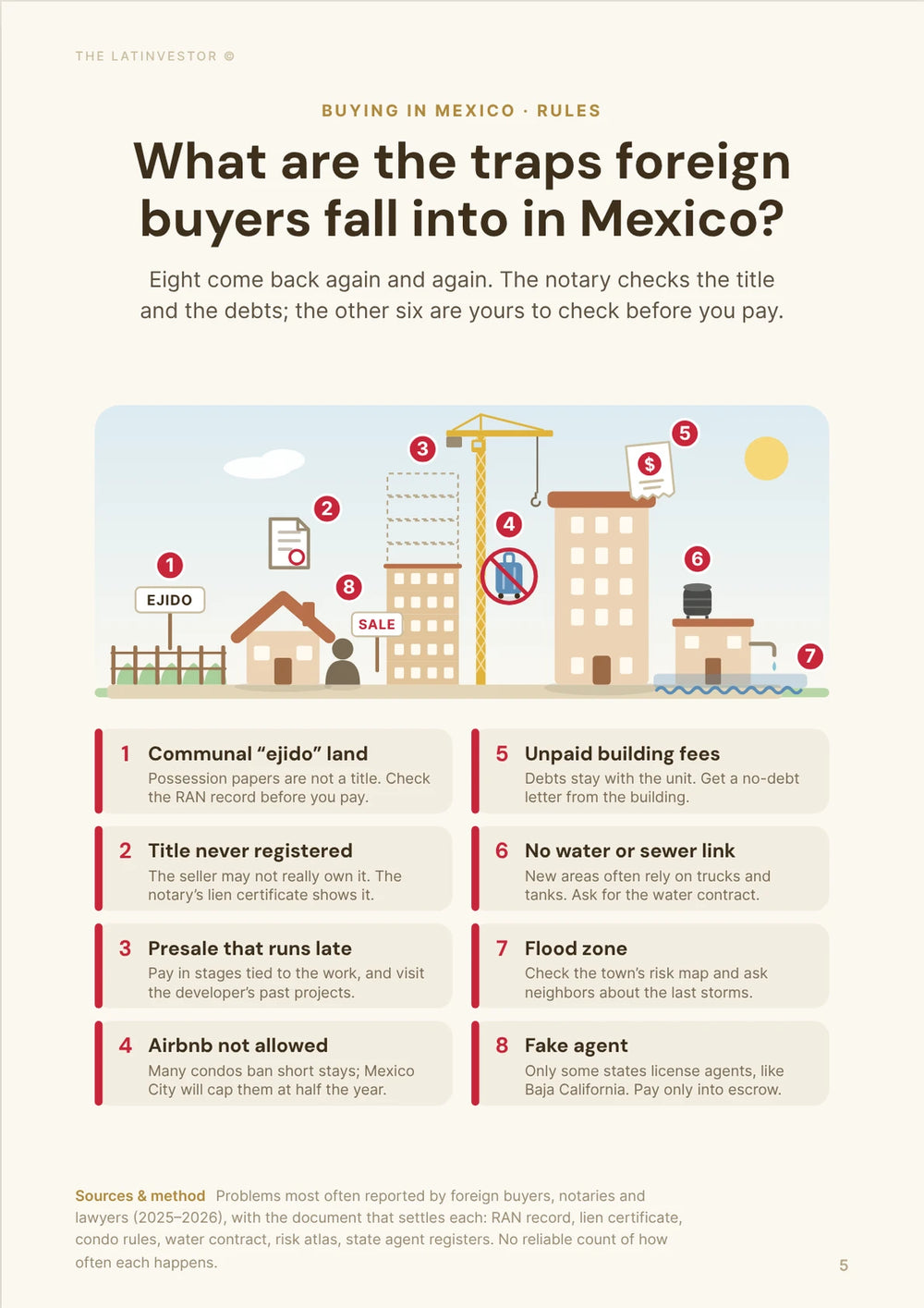
Buying cheap land around Mérida before confirming it’s fully private, properly subdivided, connected to services and ready for legal transfer.
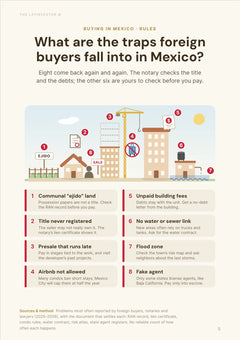
The pressure to do it is real. The median asking price for an urban lot under 500 m² is about USD 92,000, and prices around Mérida rose about 11% in a year, so lots further out that sell for much less look tempting. Skip the checks and you can end up with a nice brochure but no clean title, no buildable lot, no city services, or a resale problem that takes years to fix.
Other classic Mérida mistakes: ignoring humidity in old Centro homes, trusting informal seller claims, missing unpaid predial, assuming Airbnb is allowed everywhere, and buying in fast-growing northern areas before checking approvals.
Does your visa matter when you buy or rent out in Mérida?
Do I need a specific visa to buy property in Mérida?
No. A tourist can buy a home in Mérida, as long as identity, legal stay, funds and signing authority are properly documented.
The real blocker for non-residents is practical: banks, notaries, trustees, utilities and tax offices ask for documents that are easier to provide once you have residency.
You don’t always need an RFC (Mexican tax ID) to sign a simple purchase, but get one early if you plan to rent, sell, request invoices, open accounts or claim deductions later.
A typical buyer file: passport, immigration document, proof of address, marital status papers if needed, tax information, proof of where the money comes from, and a power of attorney if you won’t sign in Mérida.
Does buying property in Mérida get me residency?
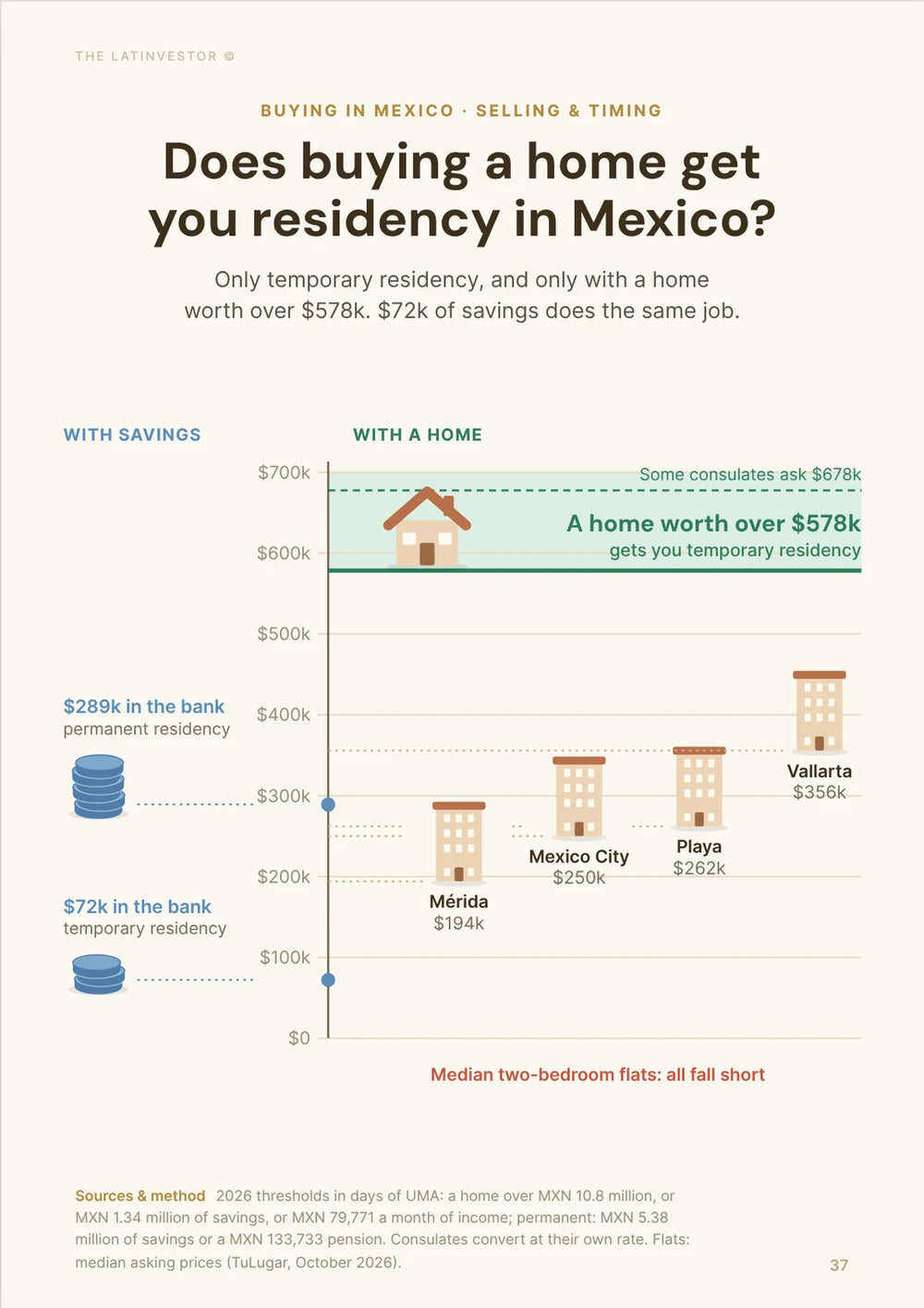
Not on its own. Buying property can support a temporary residence application, but the purchase doesn’t give you residency or citizenship automatically.
The property route asks for a high value. Consulates quote a deed value of about MXN 10.76 million (91,710 times the daily UMA), or about USD 578,000, and each consulate checks the papers case by case.
That’s more than twice the median asking price of a 3-bedroom house in Mérida (USD 272,000), so most buyers qualify through income or savings instead: about MXN 79,800 a month in net income (about USD 4,290) for temporary residence, according to 2026 calculations based on consular rules.
Can I legally rent out my property in Mérida on my visa?
You don’t need to live in Mexico to earn rent from a Mérida property, but a non-resident owner usually needs a local manager, an accountant and a tax setup.
Your visa does matter if you plan to run the rental yourself in Mexico, greeting guests, managing staff and advertising like a local host.
Short-term rentals carry more tax than most owners expect. Platforms withhold 4% income tax from individual hosts, 16% VAT applies to stays, and Yucatán charges a 4.5% lodging tax, cut from 5% in January 2026 (Airbnb’s help pages still show 4%).
Before you list a Centro house or a northern condo, check land use, HOA rules and insurance too.
How long does a purchase in Mérida take, from offer to deed?
What are the steps to buy property in Mérida?
The usual sequence: offer, reservation or promissory agreement, deposit, lawyer review, notary checks, trust permit, deed signing, tax payment, registry filing and utility transfers.
You don’t have to be in Mérida to sign. Many foreign buyers close through a power of attorney that is notarized, apostilled, translated and approved by the notary in advance.
The deal becomes binding with the signed promissory agreement, once the deposit, deadlines, penalties and closing conditions are written clearly.
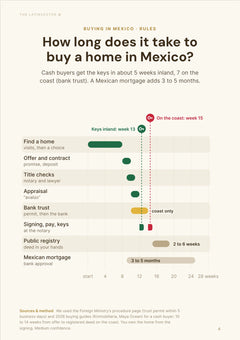
A clean cash purchase in Mérida usually takes about 45 to 90 days from accepted offer to registered deed. A mortgage, an inheritance or title issues make it longer.
Do I need a lawyer or a notary to buy a property in Mérida?
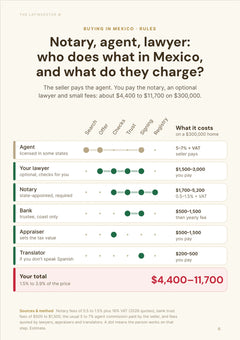
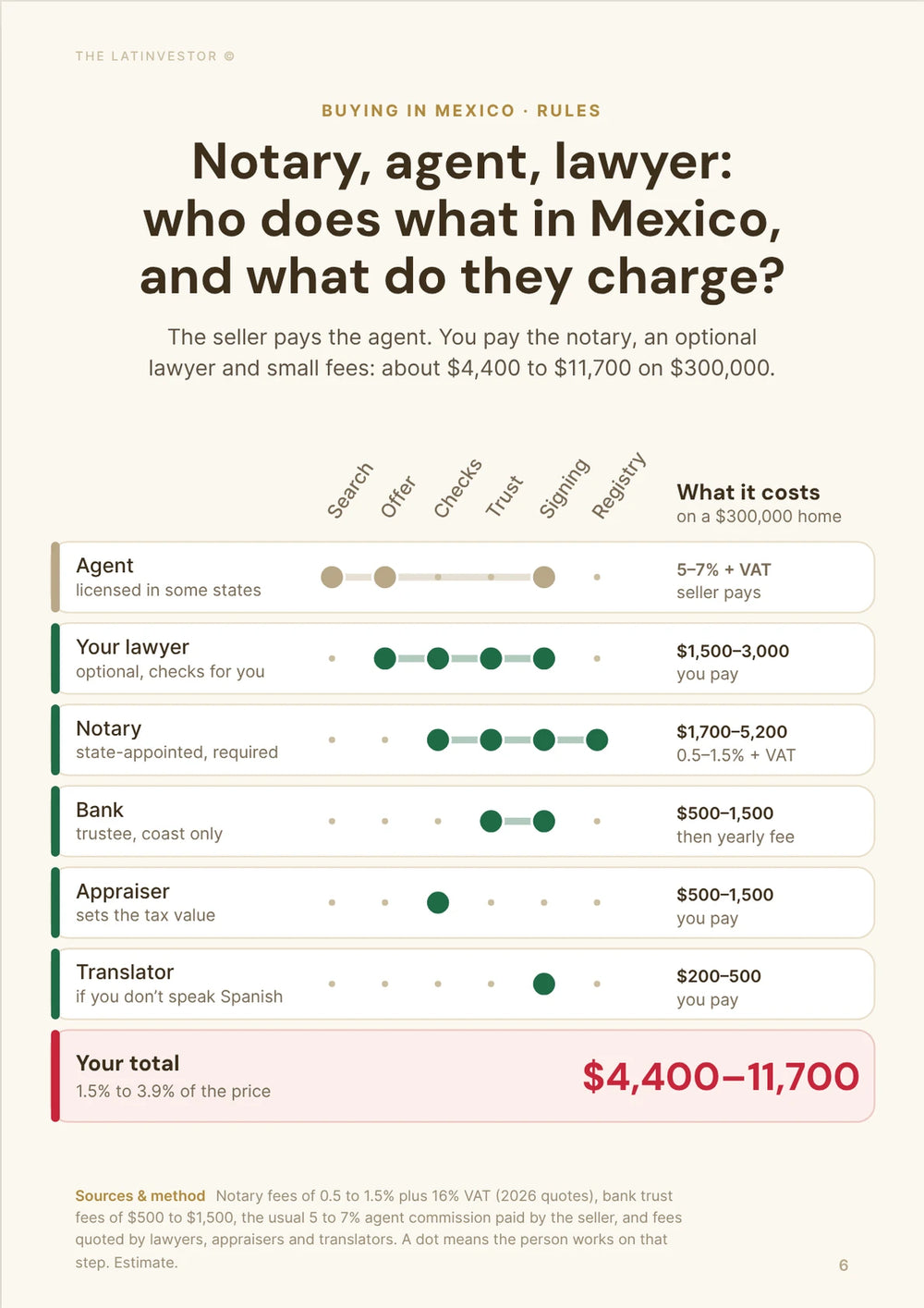
The notary is required to formalize and register the purchase. A private lawyer isn’t legally required, but foreign buyers should use one.
The notary prepares and records the deed. Your lawyer works for you before signing: risks, contract terms, trust wording and exit conditions.
Put it in writing that the lawyer checks title history, liens, the cadastral match, the trust, zoning, unpaid taxes, HOA debts and the seller’s authority to sell. Notary fees usually run about 0.5% to 1.5% of the price.
How do you avoid buying a problem property in Mérida?
How do I verify title and ownership history in Mérida?
Check title through the Yucatán public registry, the notary’s title search and the city cadastre records for that exact property.
The key document is the current registered deed, backed by the cadastral file, the predial account, the seller’s ID and the certificate showing registered status.
Look back at least 10 years. Inherited houses, old Centro properties, land that used to be ejido and developer land deserve a longer chain-of-title review.
Stop the purchase if the seller’s name, folio, tablaje, boundaries, marital status, heirs or trust beneficiary rights don’t match the documents.
How do I confirm there are no liens on a property in Mérida?
Have the notary or lawyer request the registry lien certificate, then match it with tax, water, HOA, mortgage and trust records.
Ask about old mortgages that were paid off but never cancelled: they can delay or block the final deed.
The proof you want is the official certificate of no liens, plus no-debt letters for predial, water, HOA and the trust when they apply.
How do I check zoning and permitted use in Mérida?
Start with the city’s Geoportal, the PMDU (urban development plan) and the land-use procedure of the Dirección de Desarrollo Urbano.
What you need is the land-use classification of that specific property, checked on the PMDU map and parcel data, and if needed through a land-use feasibility or license request.
Don’t assume a home in Centro, Paseo de Montejo, Santa Ana, Santiago, Altabrisa or Temozón Norte can automatically run as an Airbnb, office, clinic, café or guesthouse.
Can a foreigner still get a mortgage in Mérida?
Do banks lend to foreigners for homes in Mérida?
Yes, but most foreign buyers still pay cash, because it’s much easier for tourists, non-residents and anyone without Mexican income.
Banks aren’t lending more either: the number of new mortgages in Mexico rose just 0.3% in the first half of 2026, and the amount lent fell 0.1% in real terms, while prices around Mérida rose about 11% in a year.
Residents with Mexican income, a Mexican bank history and local tax papers get the best terms. Non-residents usually go through cross-border lenders, which finance about 50% to 65% of the price, so plan on putting down 35% to 50%.
Which banks are most foreigner-friendly in Mérida?
Start with HSBC, Scotiabank and BBVA, then Santander, Banorte, Banregio and specialist mortgage brokers.
These banks are used to formal income files, international clients, trust questions and higher-value homes. HSBC openly accepts foreigners who are legal residents.
Most banks prefer temporary or permanent residents with steady income, credit history and bank statements that fit Mexican lending rules. Lending to non-residents happens, but rarely.
What mortgage rates are foreigners offered in Mérida?
No public figure tracks rates for foreigners alone. The benchmarks: mortgages actually granted averaged 9.99% in June 2026 (Asociación de Bancos de México), and Banxico's average fixed-rate quote was 11.31% in August 2026.
A foreign resident with a solid file should expect something close to those numbers, while non-residents and unusual properties pay more. Cross-border lenders offer terms of 10 to 30 years depending on the program.
Fixed rates are the safer choice. Variable or promotional products look cheaper at first but can raise your payments later.
How much do you pay to buy and keep a home in Mérida?
What are the total closing costs in Mérida?
Plan on about 6% to 9% of the purchase price for a foreign cash buyer using a trust.
The biggest item is usually the ISAI transfer tax. Mérida uses a progressive rate from 2.5% to 5%, which works out to about 3.18% on a MXN 2.5 million home (about USD 134,000).
Foreign buyers then add the SRE permit (MXN 21,650, about USD 1,160) and the bank’s trust setup fee, roughly USD 550 to USD 800. Notary fees, registry, appraisal, certificates and legal review make up the rest.
A mortgage, a complex title or extra legal work pushes you toward the top of the range.
What annual property tax should I budget in Mérida?
Many standard homes in Mérida pay roughly MXN 3,000 to MXN 12,000 a year in predial, about USD 161 to USD 645 or EUR 144 to EUR 574.
Predial is based on the property’s cadastral value, which is often lower than the price a foreign buyer pays.
Predial isn’t the only yearly bill. The trust costs about USD 550 to USD 700 a year, and a gated condo with a pool charges about MXN 1,500 to MXN 4,000 a month in fees.
How is rental income taxed for foreigners in Mérida?
A non-resident landlord in Mérida usually pays 25% Mexican income tax on gross rent, with no deductions.
In practice, you handle withholding or filing through SAT with a local accountant, an RFC, invoices when needed and proper records. For short-term rentals, add the 4% platform withholding, 16% VAT and Yucatán’s 4.5% lodging tax.
How much does home insurance cost in Mérida?
A standard home policy in Mérida often costs around MXN 5,000 to MXN 15,000 a year, about USD 269 to USD 806 or EUR 239 to EUR 718.
The usual cover: fire, storms, heavy rain, civil liability, theft and contents.
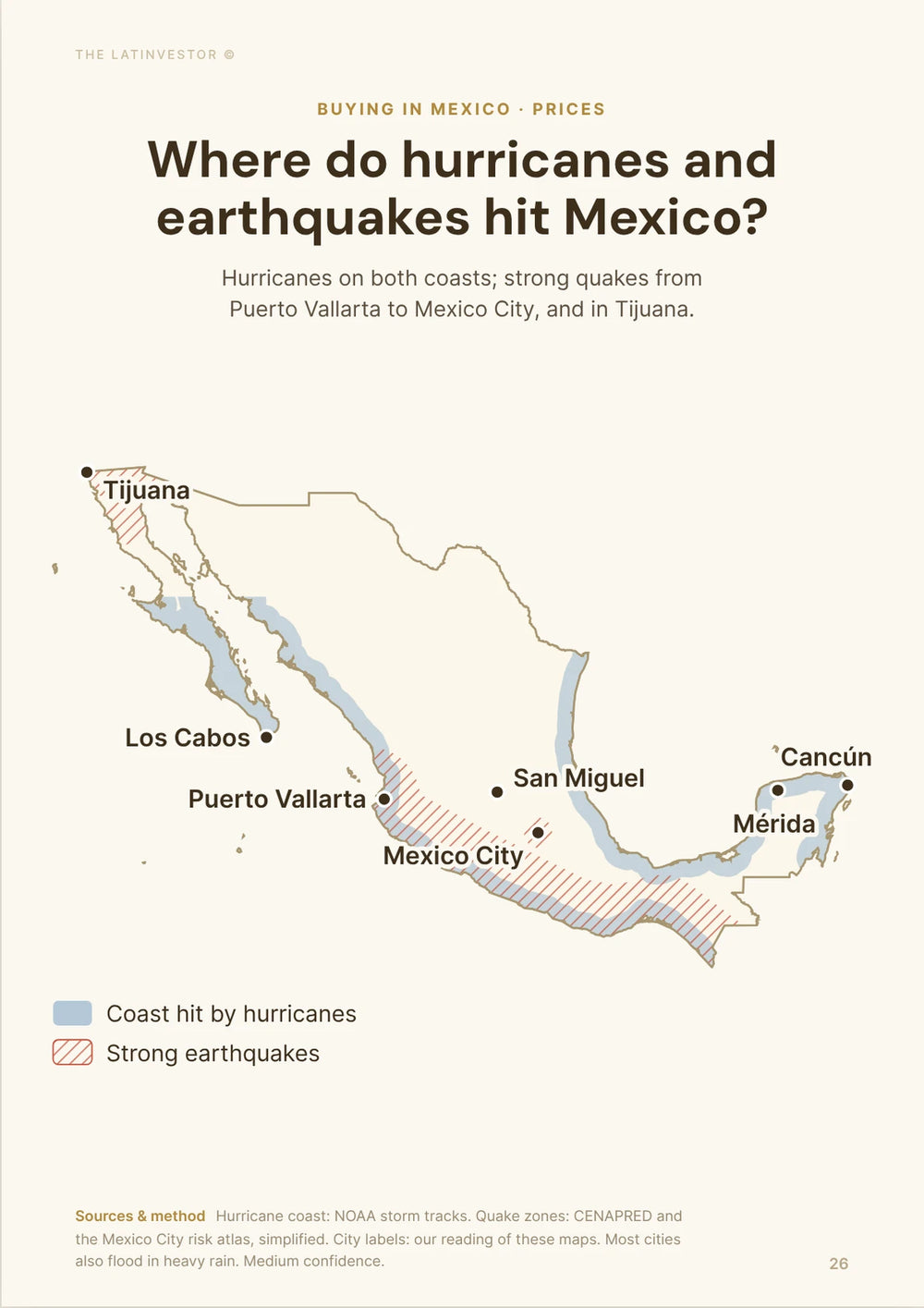
Premiums go up for older Centro homes, large roofs, pools, solar panels, rental use and hurricane cover.
Our methodology
This article explains what a foreigner can legally own in Mérida, how the bank trust works, what visas change, how a purchase runs, which checks to make, how financing works and what it costs to buy and hold a home.
The rules come from official sources first: the Foreign Investment Law, the SRE pages on restricted-zone trusts and their fees, the Income Tax Law and SAT, Banxico, consular visa guidance and the city of Mérida’s cadastre, predial, ISAI and land-use procedures. Where no official number exists, such as bank trust fees, cross-border loan terms, notary fees or condo fees, we used recent 2026 market guides and say so in the text.
Prices come from current asking-price medians on listing portals for the Mérida municipality, and the yearly price change comes from Tinsa data reported by El Economista for the Mérida metro area. The ISAI figure is an effective rate calculated on a MXN 2.5 million example under the city’s tariff.
We checked these figures in October 2026 and converted amounts at about 18.6 pesos per US dollar and 20.9 pesos per euro.
Some limits: asking prices aren’t sale prices, consulates apply residency thresholds case by case, bank fees and rates change with each file, and the predial and insurance ranges are planning estimates rather than quotes. Have a Mexican notary and accountant confirm your own case.
Key sources used for this analysis include: Crónica on ABM mortgage rates, SRE restricted-zone trust permit, SRE costs and timing, the Foreign Investment Law, its regulation, the consular guide to buying property in Mexico, temporary residence by property purchase, NorthAmericans’ 2026 solvency figures, SAT RFC for foreigners, Income Tax Law article 160, Income Tax Law article 93, Income Tax Law article 113-A, Yucatán Tourism Secretariat, Banxico mortgage rate data, BBVA Research’s housing report, CONDUSEF mortgage simulator, Global Mortgage, Homia’s 2026 trust fee comparison, Compass Abroad’s notary fee guide, Rivenza’s ISAI calculation, Mérida predial, the Mérida PMDU, Mérida Geoportal, TuLugar’s Mérida market data, El Economista on Mérida prices and a 2026 guide to Mérida condo fees.