Summary
It can be, but it pays less than most listings suggest: a typical 2-bedroom condo in Mérida earns about 6% gross a year, and roughly 2-4% once you've paid running costs and tax.
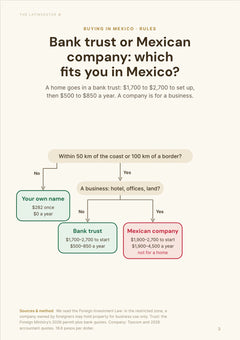
Foreigners can buy and rent out legally, but not in their own name: Mérida is within 50 km of the coast, so you hold the home through a bank trust (fideicomiso), with a MXN 21,650 permit and USD 550-700 a year in bank fees. Without an RFC, Airbnb withholds 20% of your income instead of 4%.
The average short-term listing earns about USD 13,300 a year (AirDNA), against about USD 11,700 for a 2-bedroom on a 12-month lease. After a 16% platform fee, cleaning, electricity and management, that gap mostly disappears.
Our worked example: a USD 194,000 condo renting at MXN 18,100 a month nets about 3.4% before income tax, once the trust's yearly fee is in. A non-resident owner pays 25% of the gross rent in tax, which brings it down to about 2.0%.
Holding a rental usually costs MXN 3,000-7,000 a month, and HOA fees of MXN 1,500-4,000 in a gated condo are the biggest line.
Plan for 4-6% vacancy on a well-priced unit. Overpriced houses with big electricity bills can sit empty for 45-75 days.
On asking prices and rents, yields in the north range from about 5.7% in Santa Gertrudis Copó to 7.1% in Cabo Norte. Cheaper areas don't clearly beat the premium ones.
A 2-bedroom asks around MXN 18,100 a month and a 1-bedroom around MXN 13,800. Strong air conditioning, furniture and covered parking can each add up to MXN 4,000 a month.
Leases run 12 months with a 1-month deposit, and there's no rent cap in Mérida.
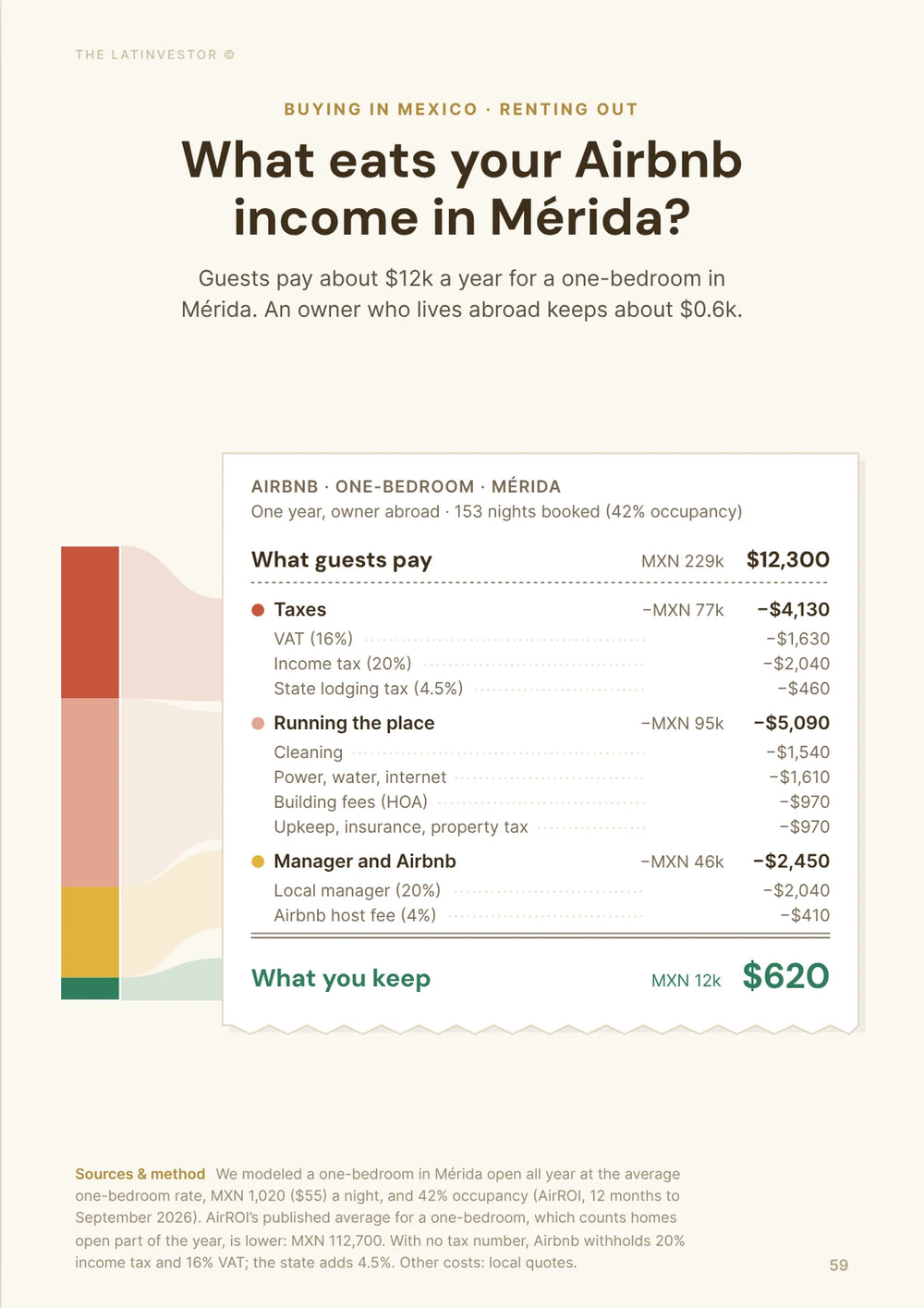
Airbnb hosts pay a 4.5% state lodging tax since January 2026. Occupancy averages 58% at about USD 67 a night, while active listings fell 35.7% in a year.
The city is tracking down more than 5,000 Airbnb-type homes, over half of them in Centro, starting with unpaid predial, water and garbage fees. The state tourism business council wants permits and inspections on top.
The bottom line: buy for a long-term lease you can fill at today's rents, check the condo rules and the predial before you sign, and don't count on Airbnb income to make the numbers work.

Can a foreigner buy and rent out property in Mérida?
Can a foreigner own and rent out a home in Mérida in 2026?
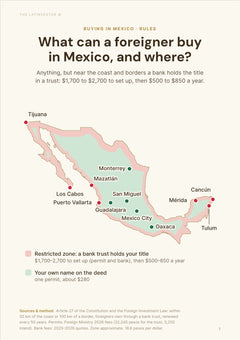
Yes. In 2026, foreigners can legally own and rent out residential property in Mérida, but through a bank trust, exactly as in the beach towns.
Mérida sits within 50 km of the Gulf coast, inside Mexico's restricted zone (100 km from borders, 50 km from the coast). So a foreign individual can't hold the deed directly: a Mexican bank holds it in a fideicomiso, and you keep the right to live in, rent out, sell and pass on the home. Ignore anyone who says Mérida is "inland" and you can skip the trust: a sale set up that way won't register.
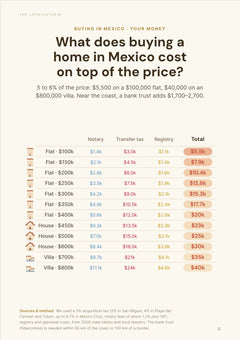
The trust needs a Foreign Ministry (SRE) permit of MXN 21,650 (about USD 1,160), plus about USD 550-800 for the bank to set it up and USD 550-700 every year. That yearly fee is a fixed cost your rent has to cover, and it's in our worked example below. The same rules apply on the coast, in Progreso or Chicxulub.
Do I need residency to rent out in Mérida right now?
No. You don't need Mexican residency to rent out a property in Mérida, and many foreign owners run their rentals from abroad through a local property manager.
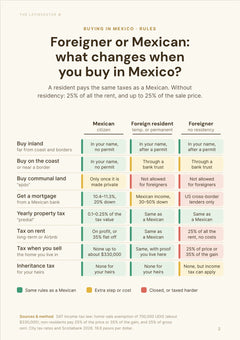
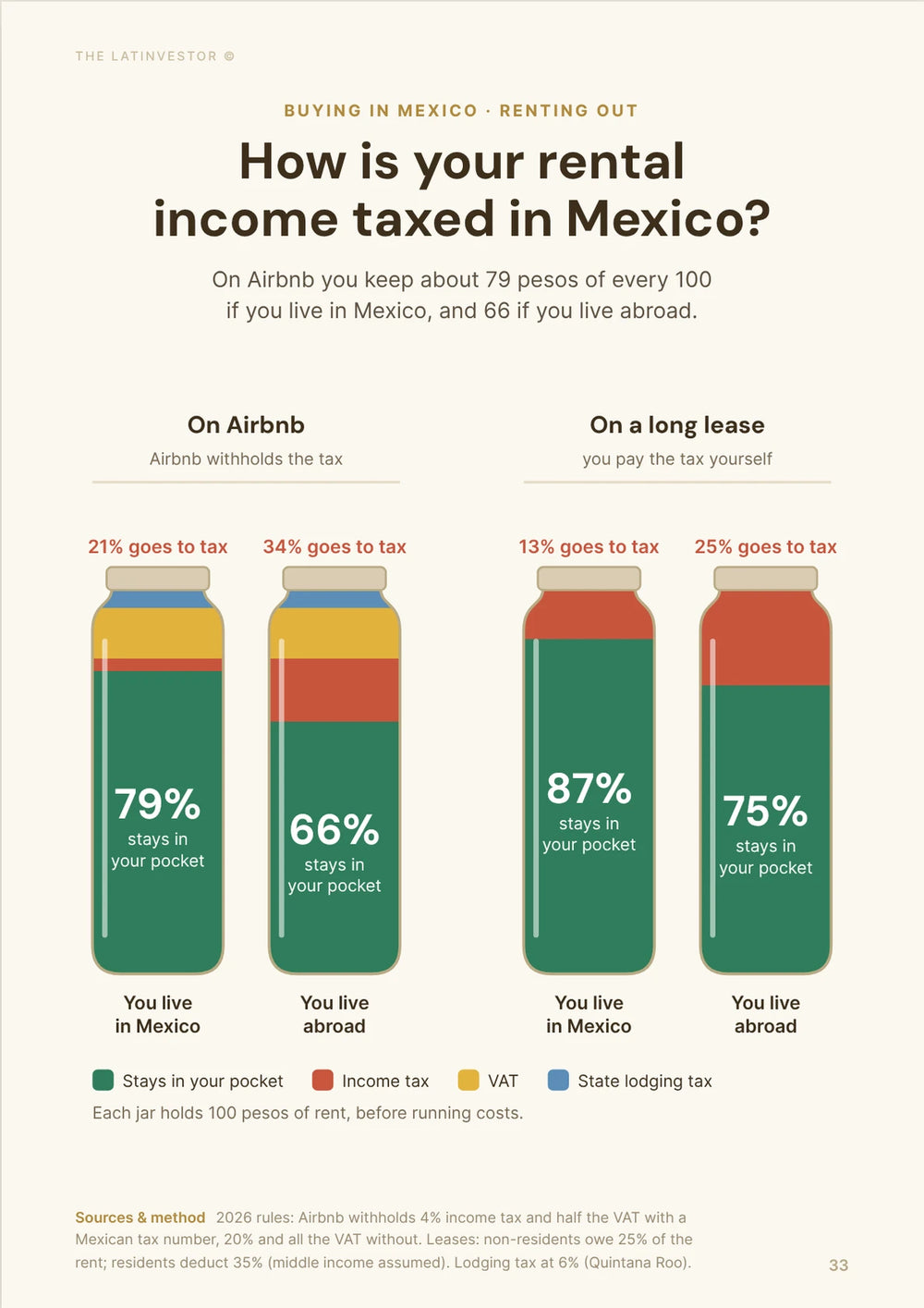
You do need an RFC (Mexican tax number) to stay clean with SAT. On Airbnb it matters a lot: with a valid RFC the platform withholds 4% income tax on your bookings, without one it withholds 20%.
A local bank account isn't required, but it makes life easier: most Mexican tenants pay by SPEI transfer, and you'll want to pay HOA fees and utilities in pesos.
Managing from abroad works as long as your manager handles repairs, tenants and official notices. Expect to pay around 8-12% of the rent for that on a long-term lease (our estimate).
Airbnb or long-term lease: which pays more in Mérida?
Is long-term renting more profitable than short-term in Mérida in 2026?
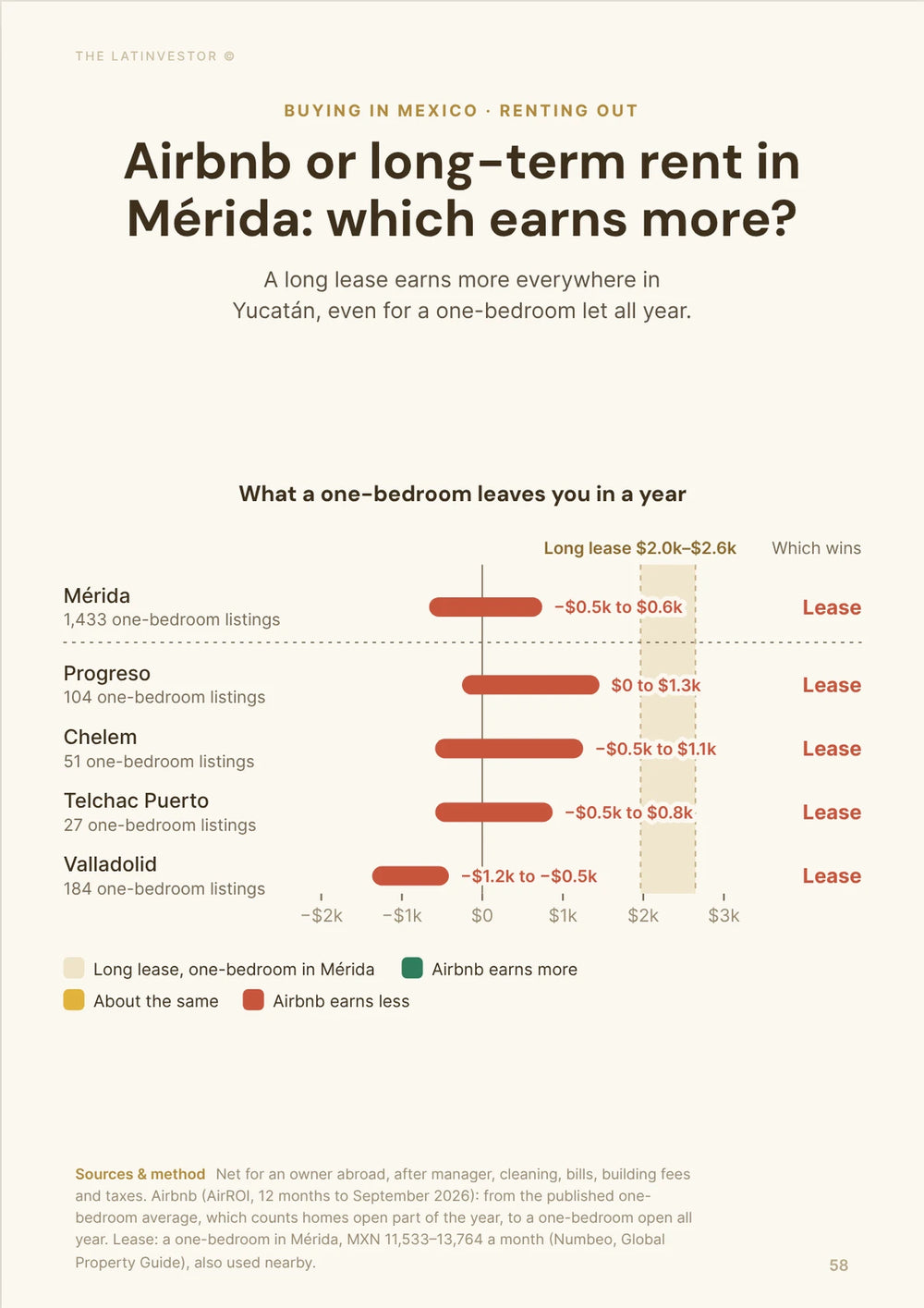
On paper Airbnb earns a bit more, but once costs come off, a long-term lease usually ends up close or ahead in Mérida, with far less work.
AirDNA puts the average short-term listing at about USD 13,300 a year (MXN 247,000), or about USD 1,100 a month. A 2-bedroom on a 12-month lease asks about USD 11,700 a year (MXN 217,000). But the Airbnb figure is before the 16% host fee, cleaning, electricity for the air conditioning, furniture and a co-host, and a long-term tenant pays their own electricity.
Short-term works best in walkable, tourist areas like Santa Ana, Santiago or near Paseo de Montejo. North-side residential areas like Altabrisa or Temozón Norte work better as long-term rentals for professionals and families.
What's the average gross rental yield in Mérida in 2026?
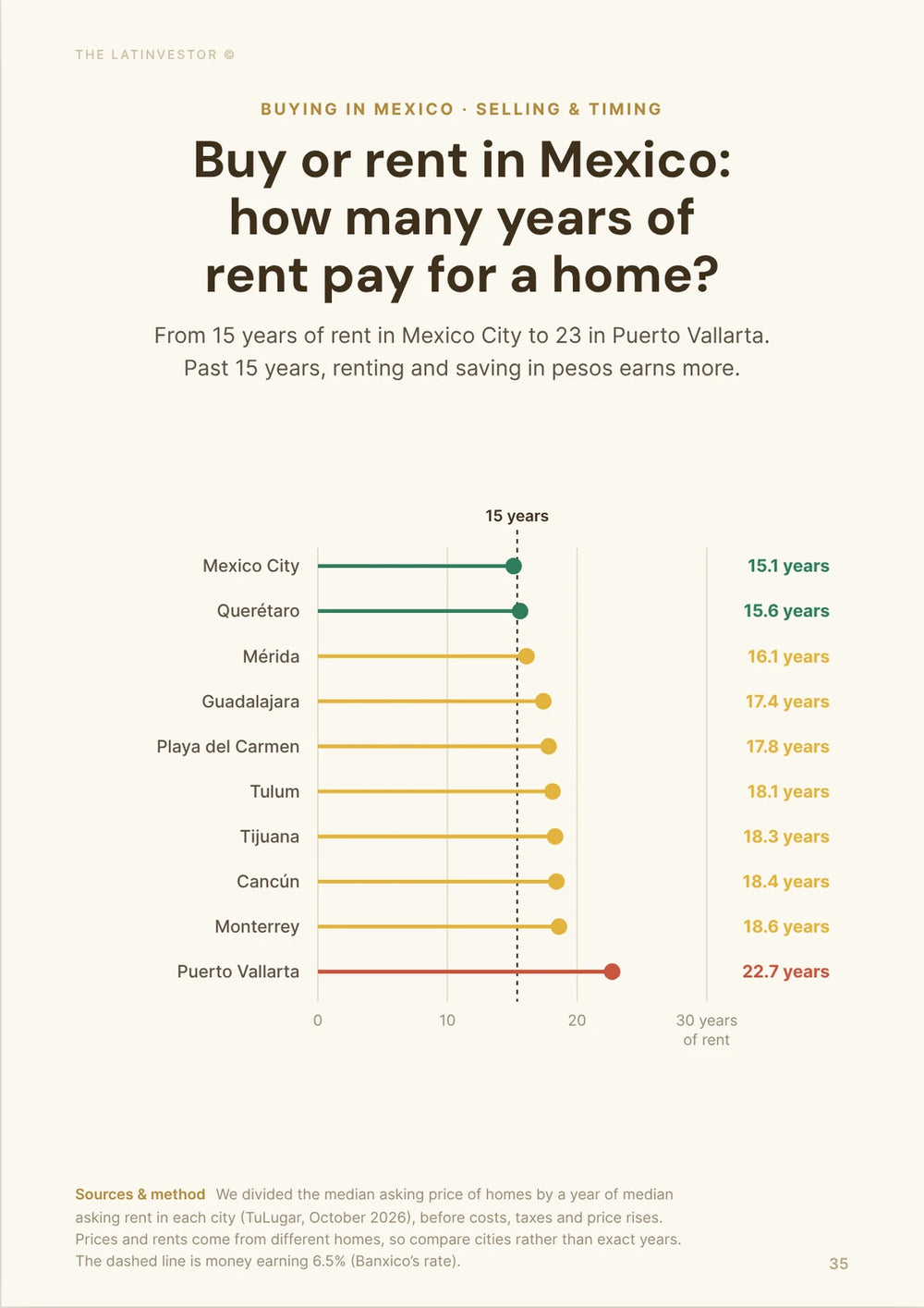
About 6% a year: Global Property Guide puts Mérida's gross yield at 6.08% in Q2 2026, based on asking rents and asking prices.
Most homes land between about 5% and 7%. It's lower in the priciest new buildings and a bit higher on well-bought older homes that rent easily.
The yield is being squeezed: home prices in Mérida rose about 11% in a year according to Tinsa, faster than rents (about 7%), so each new buyer gets a little less rent per peso spent.
Smaller apartments usually yield the most, because their price is low compared with what students, young professionals and expats pay for them.
What's the realistic net rental yield after costs in Mérida in 2026?
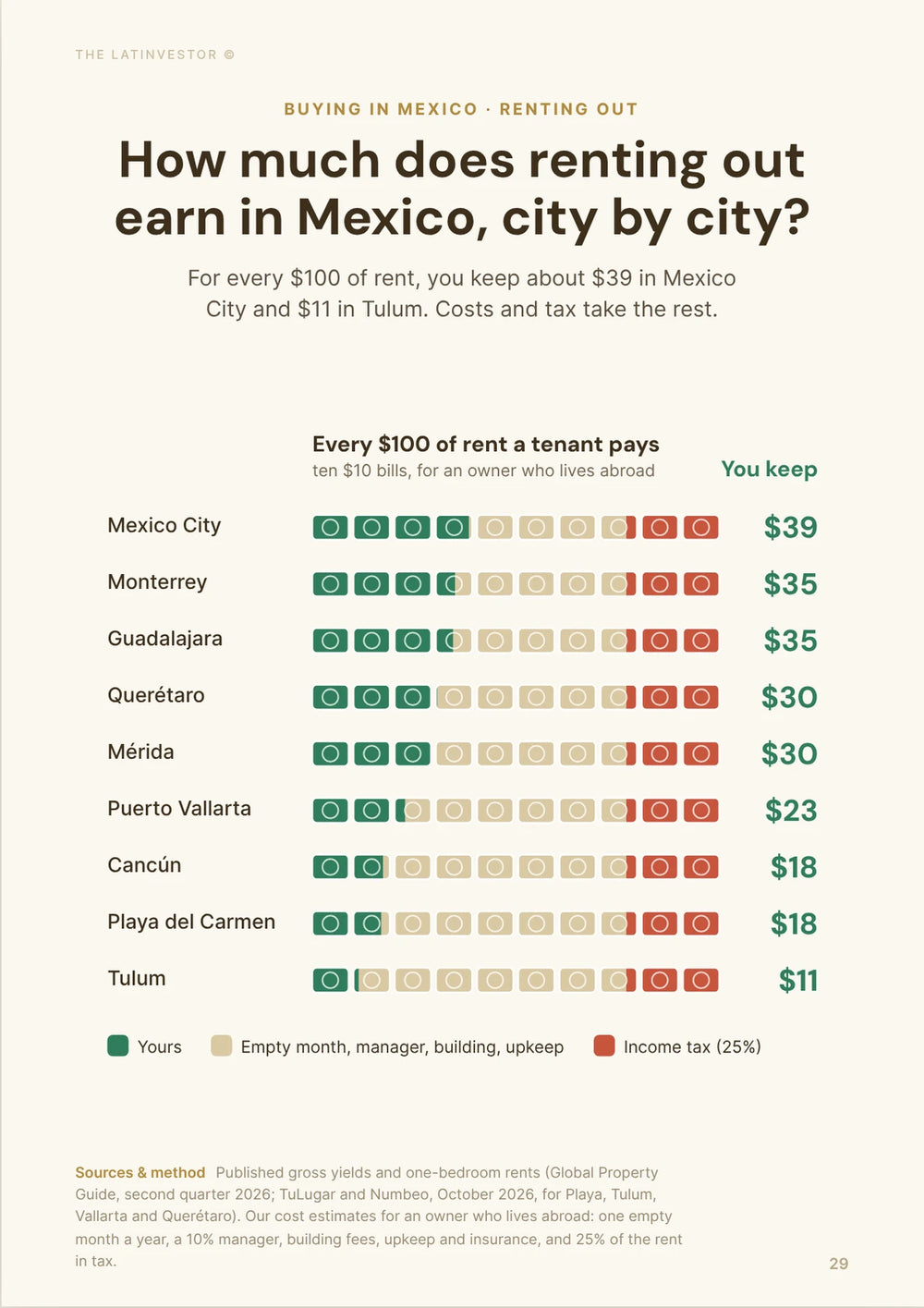
For a long-term rental, expect roughly 3-4% after running costs, and about 2-3% if you're a non-resident paying Mexico's 25% tax on gross rent.
The worked example below gets to about 3.4% before income tax and 2.0% after it for a non-resident. A well-bought home you manage yourself as a Mexican tax resident can reach 4% or a little more.
The costs that eat the yield in Mérida are HOA fees in gated condos, the fideicomiso's yearly bank fee, air conditioning repairs, the humidity that's hard on buildings, and a property manager if you live abroad.
What monthly rent can I get in Mérida in 2026?
In 2026, a studio in Mérida rents for around MXN 8,500 a month (USD 457 or EUR 407), a 1-bedroom asks around MXN 13,800 (USD 740 or EUR 659) and a 2-bedroom around MXN 18,100 (USD 975 or EUR 868).
Most studios go for MXN 7,000-10,000 (USD 376-538 or EUR 335-478), with the cheapest in Ciudad Caucel and Las Américas.
Most 1-bedrooms list for MXN 9,000-15,000 (USD 484-806 or EUR 431-718). The median sits near the top of that range because the portals are full of new furnished condos in the north. The cheapest are in Ciudad Caucel, Las Américas, Chuburná and older parts of Centro.
Most 2-bedrooms rent for MXN 15,000-23,000 (USD 806-1,240 or EUR 718-1,100), with Temozón Norte, Altabrisa and Montebello at the top.
What does a USD 194,000 condo really earn in Mérida after costs and tax?
About MXN 72,000 a year (USD 3,870), or 2.0% of the price, if you're a non-resident owner renting it out on a long-term lease. That's our estimate for a typical 2-bedroom bought at the median asking price.
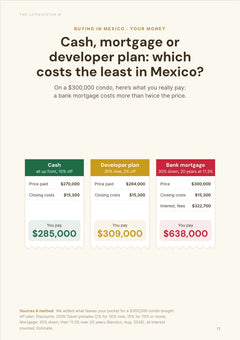
Here's the math. The median 2-bedroom condo in Mérida asks about USD 194,000 (MXN 3,610,000). At the median asking rent of MXN 18,100 a month, that's MXN 217,000 a year (USD 11,700), a 6.0% gross yield. Take off 5% vacancy and you collect about MXN 206,000 (USD 11,100).
Then come the costs: about MXN 30,000 a year in HOA fees (USD 1,610), MXN 20,600 for a manager at 10% (USD 1,110), around MXN 5,000 in predial (USD 269), MXN 15,000 for maintenance and air conditioning (USD 806) and about MXN 12,100 for the fideicomiso's yearly fee (USD 651). That leaves about MXN 123,000 (USD 6,610), or 3.4% before income tax. A non-resident then pays 25% of the gross rent collected, about MXN 51,500 (USD 2,770), with no deductions, which is how you end up at 2.0%. A Mexican tax resident who can deduct costs typically lands closer to 3%.
What to do: negotiate the price, because every 5% off adds more to your yield than any upgrade. Run the numbers on rents that similar units in the same building actually get, not on the developer's projection, and ask how many identical units are already listed for rent there. If you'll live in Mexico part of the year, ask a tax adviser whether becoming a tax resident makes sense for you.
What does it cost to hold a rental in Mérida?
What's the total "all-in" monthly cost to hold a rental in Mérida in 2026?
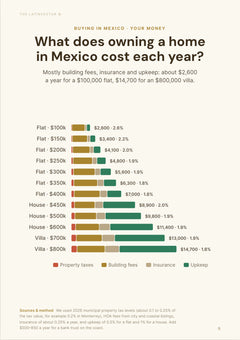
Most landlords spend about MXN 3,000-7,000 a month (USD 161-376 or EUR 144-335) to hold a typical rental in Mérida, depending on the building and whether they use a manager.
A simple apartment with low HOA fees can cost as little as MXN 2,500 a month (USD 134), while a big house or a condo with full amenities can pass MXN 10,000 (USD 538).
The biggest line is usually the HOA fee: MXN 1,500-4,000 a month (USD 80.6-215) in north-side developments with a pool, security and common areas. Add the fideicomiso's yearly bank fee, about MXN 850-1,100 a month once spread over the year (USD 550-700 a year).
What's the typical vacancy rate in Mérida in 2026?
We estimate vacancy at about 4-6% for a well-priced, well-kept long-term rental in Mérida, so two to three weeks a year.
A good unit usually finds a tenant in about 20-35 days. An overpriced or badly cooled house can sit 45-75 days, and its vacancy can climb to 8-12%.
What makes the difference is the tenant pool. Areas like Altabrisa or Montebello draw families, professionals and expats all year, while some new northern developments now compete with dozens of identical units.
Tenant demand peaks from January to March and again in July and August, and is slowest in April, May and parts of September, when the heat puts moves on hold.
Which Mérida neighborhoods give the best rental returns?
Which neighborhoods have the highest long-term demand in Mérida in 2026?
Altabrisa, Montebello and Francisco de Montejo have the strongest long-term demand, thanks to their hospitals, malls, schools and easy access.
Families go for Altabrisa, Montes de Amé, Temozón Norte and Santa Gertrudis Copó, or Las Américas, Ciudad Caucel and Cholul on a smaller budget.
Students look near the private universities in Cholul, Santa Gertrudis Copó and Temozón Norte, or in Centro and García Ginerés for buses and city access.
Expats and international professionals concentrate in Centro (especially Santa Ana and Santiago), the Paseo de Montejo corridor, García Ginerés and Itzimná.
Which neighborhoods have the best yield in Mérida in 2026?
On 2026 asking prices and rents for houses in the north, Cabo Norte (about 7.1%), Montebello (6.7%) and Altabrisa (6.4%) come out on top. Cheaper areas like Cholul (6.0%) don't do better.
| Neighborhood | House asking price (MXN) | Monthly rent (MXN) | Gross yield at midpoints |
|---|---|---|---|
| Cabo Norte | 7-10 million | 40,000-60,000 | 7.1% |
| Montebello | 5.5-8 million | 30,000-45,000 | 6.7% |
| Altabrisa | 4.8-6.5 million | 25,000-35,000 | 6.4% |
| Cholul | 2.8-4 million | 14,000-20,000 | 6.0% |
| Temozón Norte | 3.8-5.5 million | 18,000-28,000 | 5.9% |
| Santa Gertrudis Copó | 4.5-6.8 million | 22,000-32,000 | 5.7% |
Take the top of that table with care: a MXN 50,000-a-month house in Cabo Norte has far fewer possible tenants than a MXN 17,000 house in Cholul, so it can sit empty much longer. Older, cheaper areas like Francisco de Montejo and Las Américas can still yield well if you buy below the asking price, because their tenant pool is broad and price-sensitive. Averages from Propiedades.com's neighborhood statistics give Cholul and Dzityá more, about 8.4% to 8.6% for houses by our estimate, so the real figure depends on the development: check what similar houses there actually rent for.
Where do tenants pay the highest rents in Mérida in 2026?
The highest rents are in Cabo Norte, Montebello and Altabrisa, where houses typically rent for MXN 25,000-60,000 a month (USD 1,340-3,230 or EUR 1,200-2,870).
Montebello alone runs MXN 30,000-45,000 a month (USD 1,610-2,420). Restored colonial homes in Santa Ana and Santiago also reach the top of the market when they're furnished and well cooled.
What tenants pay for here: new homes in gated communities with pools, security and fiber internet, close to hospitals, malls and schools, or the colonial charm of Centro.
The tenants are mostly relocating executives, well-off Mexican families looking for good schools, and remote workers from the US and Europe.
What will tenants in Mérida pay extra for?
What features increase rent the most in Mérida in 2026?
Strong air conditioning comes first, then furniture, covered parking, a pool and private security. Each can add about MXN 800-4,000 a month (USD 43-215 or EUR 38.3-191).
Inverter mini-splits in every bedroom are the best money you can spend, because tenants who know the local heat look at the cooling and the CFE bill before anything else.
An overrated upgrade: a high-end kitchen with imported appliances. Tenants here care more about cooling and location than cooking gear.
A cheap one that pays: blackout curtains, window film and ceiling fans, which cut heat and electricity bills without a renovation.
Do furnished rentals rent faster in Mérida in 2026?
Yes, with expats, remote workers and relocating professionals, who want to move in right away. Local families usually prefer unfurnished.
A furnished apartment can often ask MXN 1,500-4,000 more a month (USD 80.6-215) than a similar unfurnished one, but it costs more upfront, wears faster and can lead to disputes over the inventory when the tenant leaves.
What are the rules for long-term leases in Mérida?
Can I freely set rent prices in Mérida right now?
Yes. There's no rent control in Mérida, so you set the starting rent yourself.
Increases during the lease depend on what the contract says. Most landlords raise the rent at renewal, usually in line with the market, rather than mid-lease.
What's the standard lease length in Mérida right now?
Twelve months is the standard lease in Mérida, though 6-month leases are common for tenants who want flexibility.
Landlords usually ask for a 1-month deposit, and often a guarantor (aval or fiador) or a rental insurance policy (póliza jurídica) on top.
The deposit goes back at the end of the lease minus documented damage or unpaid rent. Take photos and sign an inventory at move-in, or you'll have a hard time justifying deductions.
How does Airbnb hosting work in Mérida right now?
Is Airbnb legal in Mérida right now?
Yes. Short-term rentals are legal in Mérida, and for now the rules are mostly about tax, not bans or licenses.
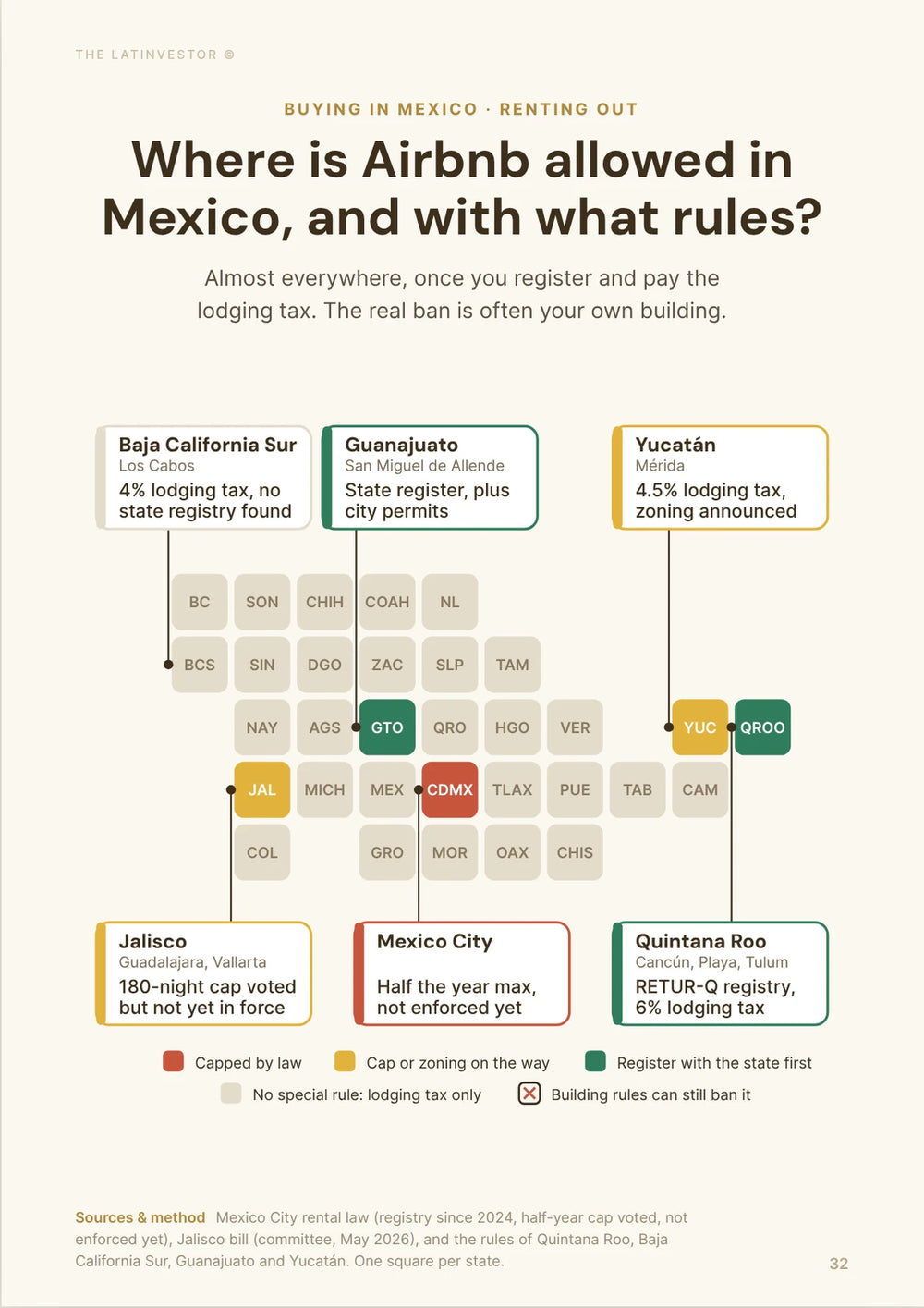
Hosts pay Yucatán's lodging tax, cut from 5% to 4.5% in January 2026, which Airbnb can collect for you. On top come federal income tax (withheld at 4% by the platform if you give it an RFC) and 16% VAT on the lodging.
Unlike Mexico City, which voted in 2024 to cap how long a home can be rented short-term each year, Mérida has no limit on nights.
That's changing, though: the city is now identifying Airbnb owners (see the next section). The most common consequence of not complying today is a bill for back taxes, penalties and interest, not a shutdown.
What's the average short-term occupancy in Mérida in 2026?
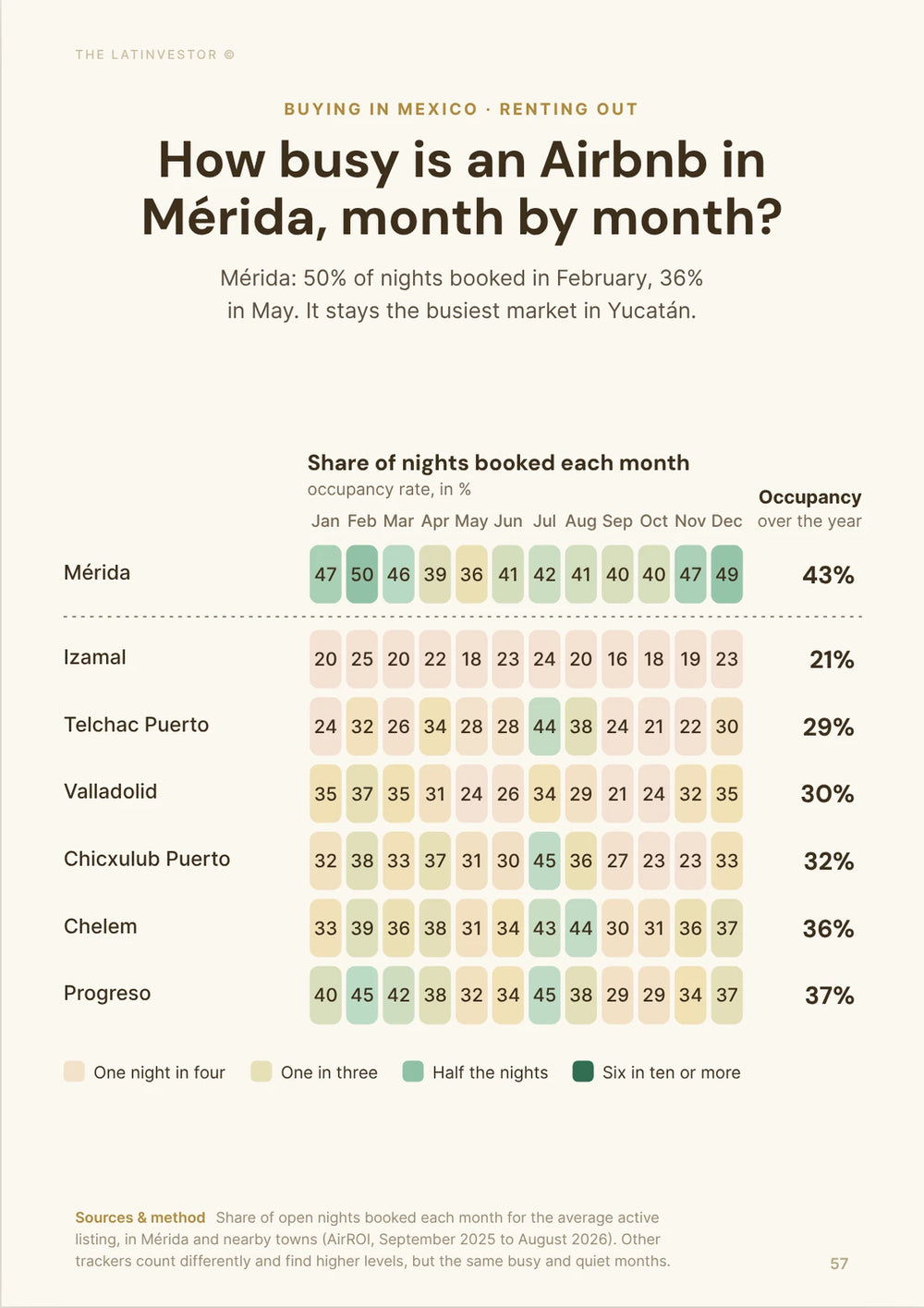
About 58% over the year to September 2026, or roughly 17 to 18 booked nights a month for a typical listing.
Most listings fall somewhere between about 40% (generic places with average photos) and 70% (professionally run homes in good spots with great reviews), by our estimate.
The busy season runs from November to March, when North Americans and Europeans escape the cold, with peaks at Christmas, Carnival and Semana Santa.
The slow months are May to September, when the heat keeps both foreign and Mexican visitors away.
What's the average nightly rate in Mérida in 2026?
About USD 67 a night (MXN 1,250 or EUR 59.6), averaged across all property types over the year to September 2026.
Most listings range from about MXN 700 (USD 37.6) for a basic studio to MXN 3,500 or more (USD 188) for a colonial home with a pool in Centro.
Rates are highest from November to March, and many hosts charge 30-50% more over Christmas and Carnival than in the summer.
Is short-term rental supply saturated in Mérida in 2026?
It's crowded in Centro, but supply is shrinking, not growing: AirDNA counted 4,856 active listings in September 2026, down 35.7% in a year.
Part of that is hosts giving up after lower returns and part is the city's crackdown. Airbnb itself still advertised more than 6,600 spaces in Mérida in June 2026, tenth in Mexico, because it counts every space offered, not only the active ones.
Competition is fiercest in Centro and along Paseo de Montejo: the city says over half of its 5,000-plus Airbnb-type homes are in the historic center. A generic listing there struggles.
Quieter areas like Cholul or parts of Temozón Norte have less competition, but also less tourist demand, so they suit longer stays for remote workers more than weekend visitors.
Is Mérida about to regulate Airbnb, and what should you check before buying?
Yes, it's starting: in January 2026 the city began tracking down the owners of more than 5,000 Airbnb-type homes to bring them under its "Mérida Ordenada" framework, closer to the rules hotels follow.
So far the focus is money owed to the city: predial, drinking water and garbage collection. City officials say the goal isn't to punish hosts. But in June 2026 the state's tourism business council (Cetur) asked for more: permits, inspections and civil protection (Protección Civil) requirements for platform hosts, like any other lodging business. Nothing of that is in force yet, but it's the direction of travel.
What to check before you buy a place to rent on Airbnb: that the condo rules allow short stays (many northern developments ban or limit them), that predial and water bills are paid up to the day of the deed, and that the seller can show you real booking history, not a projection. Get your RFC before your first booking, so you're withheld 4% instead of 20%.
And run your numbers as a long-term rental too. If the property only works with Airbnb income, it's riskier now than it was two years ago.
Our methodology
This article estimates whether buying a property to rent out in Mérida still pays: rents, gross and net yields, holding costs, vacancy, the best neighborhoods, and how long-term leases compare with Airbnb.
There's no official rent or yield index for Mérida, so our figures come from asking prices and rents: Global Property Guide's Q2 2026 medians (based on Inmuebles24), TuLugar's October 2026 asking prices, and Por Esto!'s January 2026 neighborhood ranges. Short-term rental figures come only from AirDNA (October 2025 to September 2026). Our worked example and net yields combine these with our own cost estimates.
Rules come from official sources first: the Foreign Ministry (SRE) for ownership and the fideicomiso permit, the income tax law (Articles 113-A, 113-C and 158) and SAT for tax, Yucatán's tourism secretariat for the 4.5% lodging tax, and Yucatán's Civil Code for leases. News on the city's Airbnb plan comes from Por Esto! (January and June 2026).
We checked these figures in October 2026. Conversions use about 18.6 pesos per US dollar and 20.9 pesos per euro.
Limits: asking prices and rents aren't what deals close at, AirDNA averages mix all listing sizes, and vacancy, management, maintenance and the furnished premium are our own estimates. Your tax bill depends on your residency, so check your case with a Mexican tax adviser.
Key sources used for this analysis include SRE on property acquisition, SRE restricted-zone permits, Homia, SAT for residents abroad, LISR Article 113-A, LISR Article 113-C, LISR Article 158, SAT VAT rules, Sefotur Yucatán, JA Del Rio, Yucatán General Tax Law, Yucatán Civil Code, INEGI Census 2020, Government of Yucatán, Global Property Guide, TuLugar, El Economista (Tinsa data), AirDNA Mérida, Airbnb host fees, Merida Yucatan City Real Estate, NorthAmericans, Por Esto! on north Mérida, Por Esto! on Airbnb regularization, Por Esto! on Airbnb listings, El País and Inmuebles24.