Summary
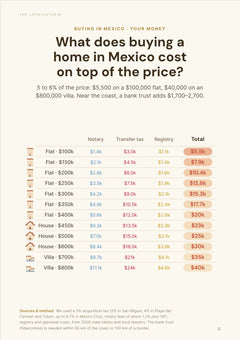
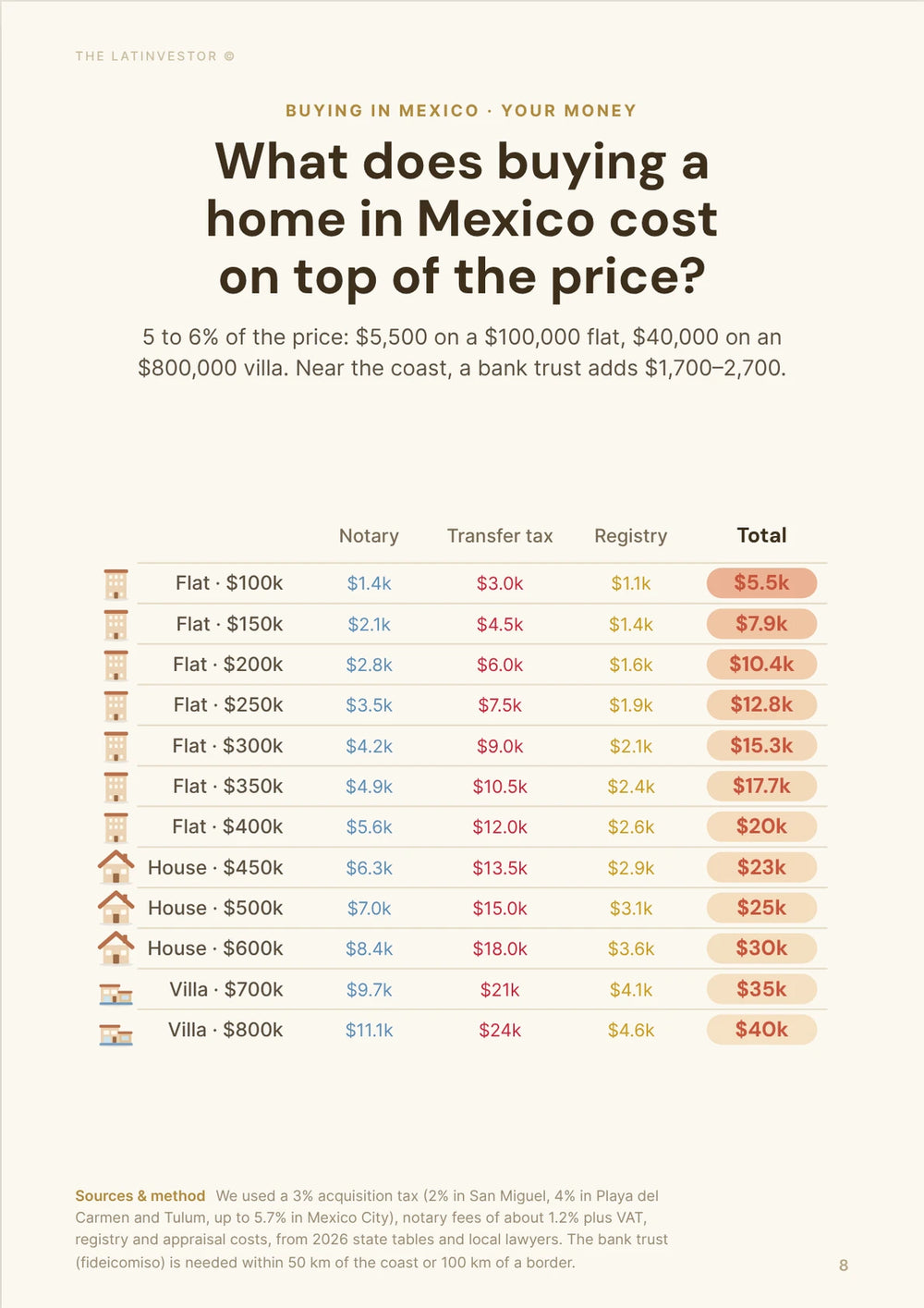
Most foreign buyers in Mérida pay 6% to 9% on top of the price. On a MXN 3 million home (about USD 161,000), that's roughly MXN 180,000 to MXN 270,000.
The floor is around 5%, for a clean resale with no new trust. The bill can pass 10% once you add a mortgage, paperwork fixes and a pricey notary.
The biggest cost is the ISAI transfer tax. It's progressive: about 2.97% at MXN 1.5 million, 3.23% at MXN 3 million and 4.12% at MXN 10 million. Some guides still quote a bracket table that doesn't match the law.
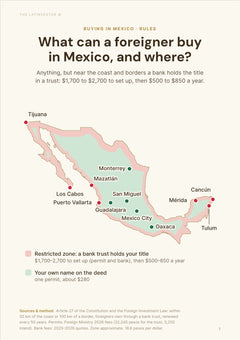
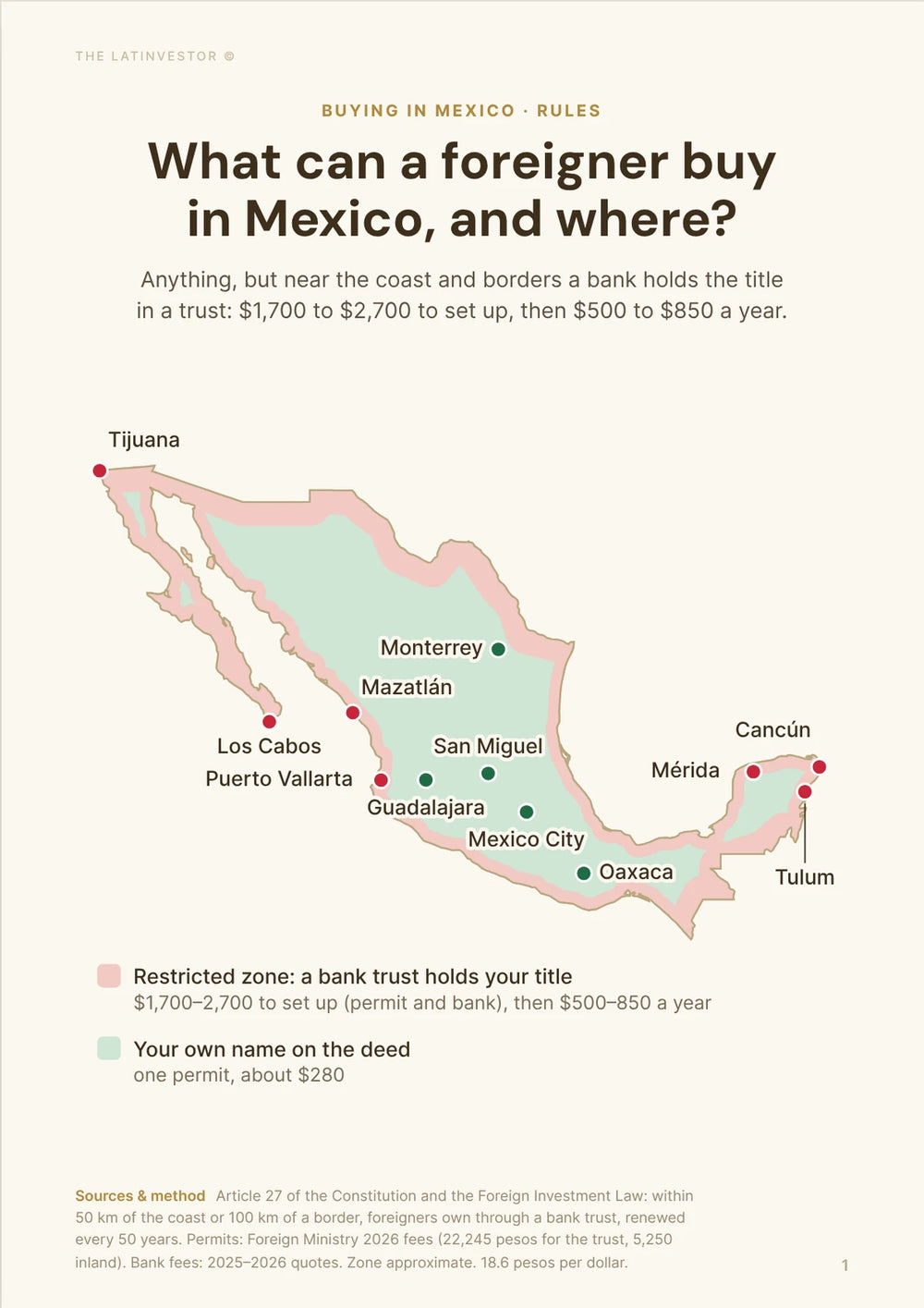
Mérida is inside the coastal restricted zone, so a foreign buyer needs a bank trust. Setting it up costs about MXN 32,000 to MXN 37,000, then USD 550 to USD 700 a year.
Notary fees usually run 1% to 2% of the price, plus 16% VAT. Legal checks cost MXN 3,000 to MXN 12,000 for a clean file.
Since 2026, anyone working as a real estate agent in Yucatán must hold a state license. By August, only 130 people had the full license, so ask for the number before you pay anything.
The common surprises are a tax value higher than your price, unpaid predial or HOA dues, and trust costs. Taxes and registry fees are fixed; the notary's own fee is not.
Asking prices rose about 11% in a year, but sales have slowed and 12,816 units are on offer. Aiming for 3% to 7% off is realistic, more on stale listings.
Owning is cheap: MXN 2,000 to MXN 8,000 a month for most homes, and predial of roughly MXN 1,500 to MXN 12,000 a year. Pay it in early January and you get 30% off.
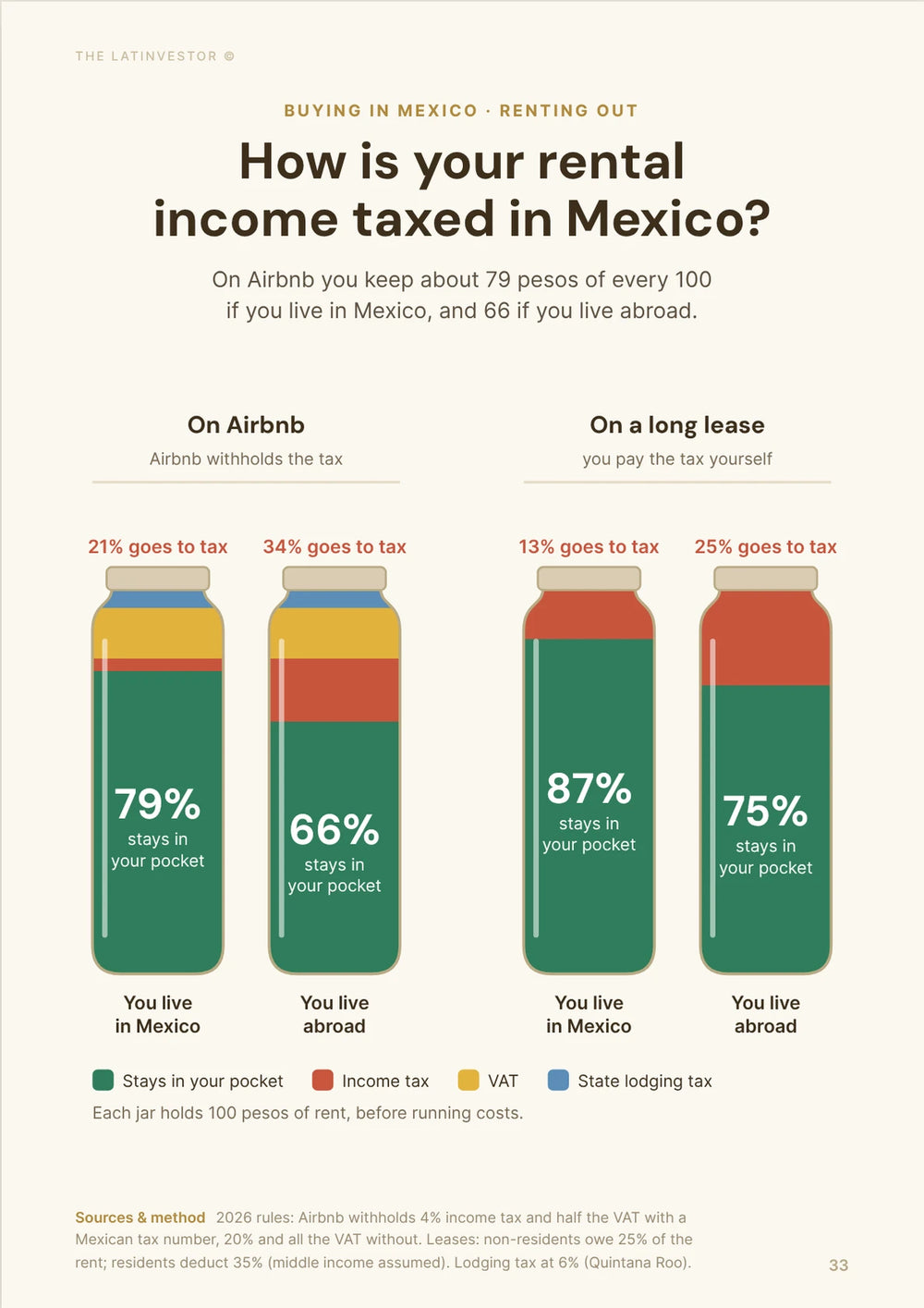
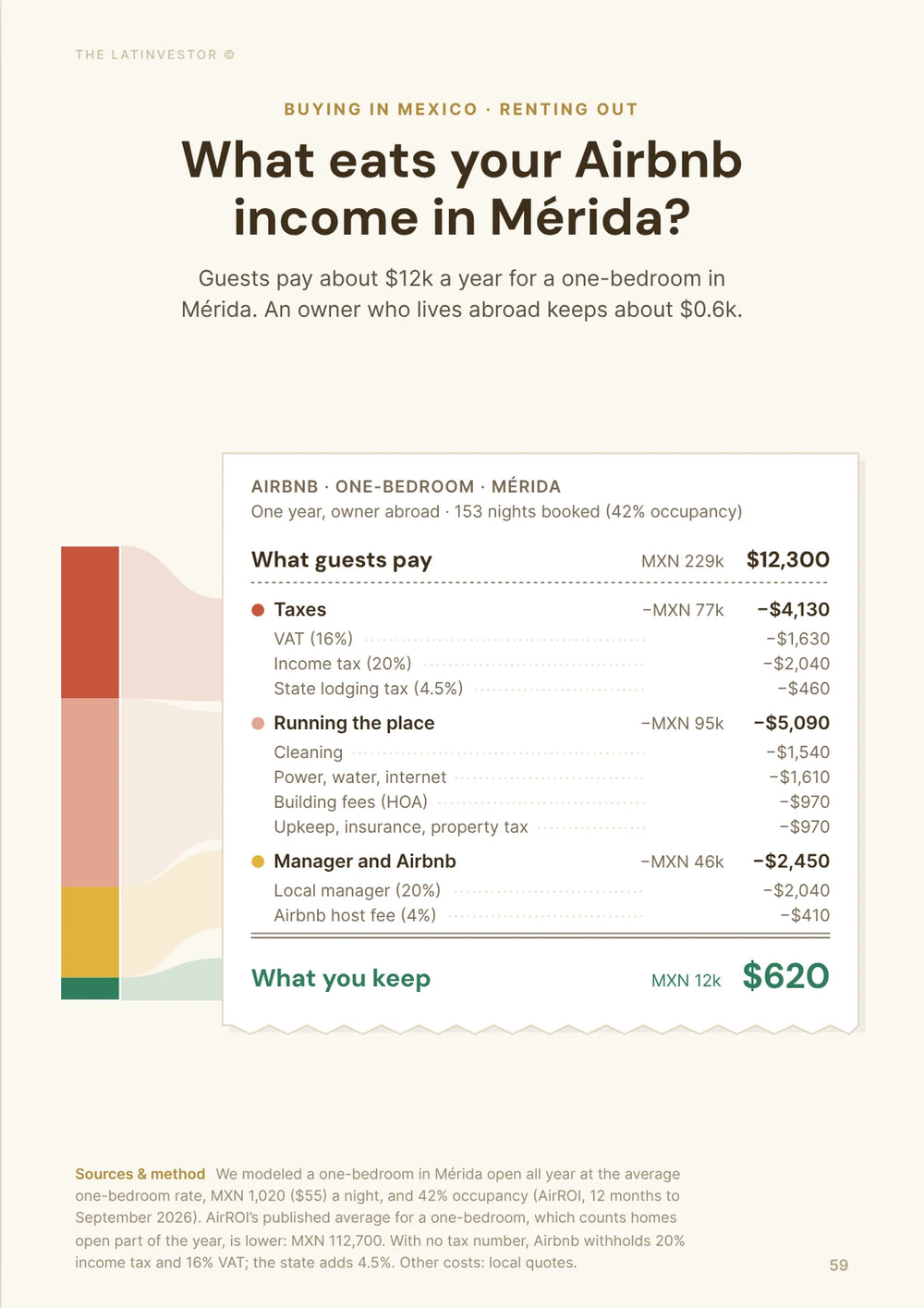
If you don't live in Mexico, rental income is taxed at 25% of the gross rent, with no deductions.
Mérida is now mapping its 5,000+ short-term rentals, and Yucatán's lodging tax is 4.5% since January 2026. Hosts without a tax ID lose 20% of their payouts to withholding.
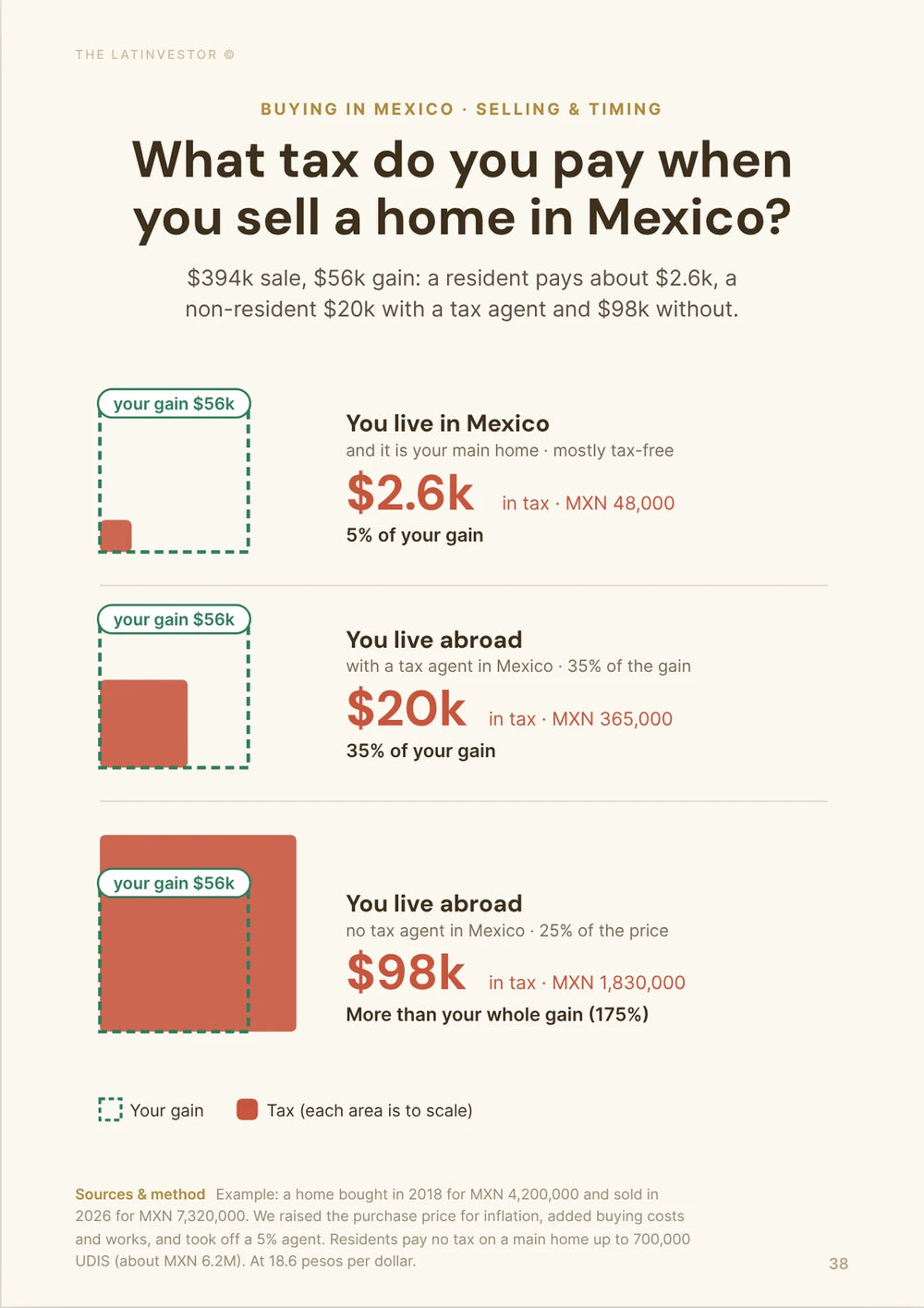
When you sell, non-residents pay 25% of the gross price, or up to 35% of the net gain through a Mexican representative. Selling costs usually total 6% to 10%.
Bottom line: budget 9% on top of the price, get the notary's written ISAI calculation before you sign, and check your agent's license.

How much should you budget on top of the price in Mérida?
How much are total buyer closing costs in Mérida?
In 2026, foreign buyers in Mérida should budget 6% to 9% of the purchase price for closing costs. On a MXN 3,000,000 home (about USD 161,000 or EUR 144,000), that's roughly MXN 180,000 to MXN 270,000 (USD 9,680 to 14,500, or EUR 8,610 to 12,900).
Here's how it adds up on that home: about MXN 97,000 of ISAI tax, MXN 30,000 to MXN 60,000 for the notary plus VAT, around MXN 33,000 for the appraisal, registry and certificates, and MXN 32,000 to MXN 37,000 to set up the bank trust.
The floor is around 5% (about MXN 150,000, USD 8,060 or EUR 7,180 on that home). You only get there with a clean resale, a modest notary bill and no new trust, for example when you take over the seller's fideicomiso.
The bill can pass 10% (MXN 300,000, USD 16,100 or EUR 14,400 on a MXN 3,000,000 home) when you add a mortgage, title corrections and a notary at the top of the range.
Three things decide where you land: the price (the ISAI rate climbs with it), the bank trust that every foreign buyer needs in Mérida, and how clean the paperwork is before the transfer.
What's the usual total % of fees and taxes over the purchase price in Mérida?
For most standard deals, taxes and fees add 6% to 9% to the price.
The realistic range runs from about 5% (simple, cheaper resale with no new trust) to 10% or more (mortgage, paperwork fixes, expensive notary).
Taxes are the biggest piece. The ISAI alone takes 2.5% to about 4.1% of the price for most homes, depending on value. Notary fees, registry rights, the appraisal and certificates add another 2% to 3.5%, and the trust about 1% on a MXN 3,000,000 home.
What costs are always mandatory when buying in Mérida?
Four costs are mandatory: the ISAI acquisition tax, the notary's fee for the deed, the Registro Público inscription rights, and the certificates showing the property is free of liens and debts. For a foreign buyer, the bank trust is mandatory too, because Mérida sits within 50 km of the coast.
Optional but worth paying for: your own lawyer to review the file separately from the notary, a survey to confirm the boundaries, and a home inspection. Inspections aren't standard in Mexico, and old Centro homes often hide humidity and roof problems.
What taxes do you pay when you buy in Mérida?
What is the property transfer tax rate in Mérida?
Mérida's transfer tax (ISAI) is progressive. Under Article 60 of the municipal tax law, you pay 2.5% on the first MXN 800,000, 3.5% on the part between MXN 800,000 and MXN 3,000,000, and 4.5% on the part above that. The law's top rate of 5% only applies to very expensive properties.
Because the higher rates only hit the part above each threshold, the real rate is lower than the bracket rate. Some guides still list a different table (3% from MXN 800,000, 4% from MXN 3,000,000), which overstates the tax on mid-range homes.
| Price | ISAI to pay | Effective rate |
|---|---|---|
| MXN 1,500,000 (USD 80,600) | MXN 44,500 (USD 2,390) | 2.97% |
| MXN 2,500,000 (USD 134,000) | MXN 79,500 (USD 4,270) | 3.18% |
| MXN 3,000,000 (USD 161,000) | MXN 97,000 (USD 5,220) | 3.23% |
| MXN 5,000,000 (USD 269,000) | MXN 187,000 (USD 10,100) | 3.74% |
| MXN 10,000,000 (USD 538,000) | MXN 412,000 (USD 22,200) | 4.12% |
The tax is calculated on the highest of three values: the price in the deed, the cadastral value and the bank-approved appraisal. If the appraisal comes in above your price, you pay ISAI on the appraisal.
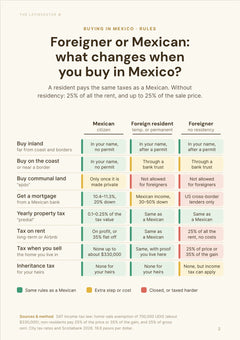
There's no extra transfer tax for foreigners. The ISAI is the same whatever your nationality; what foreigners pay on top is the bank trust, which is a fee, not a tax.
There's no VAT on the sale of a home, new or resale: land and housing are exempt. VAT can show up on a developer's extras billed separately (furniture, parking or storage sold as commercial space), so ask the notary for a written breakdown. There's no separate stamp duty.
Are there tax exemptions or reduced rates for first-time buyers in Mérida?
No. The ISAI tariff depends only on the value, and there's no permanent first-time buyer exemption. Social housing programs sometimes get relief, so ask the notary if anything applies at the time.
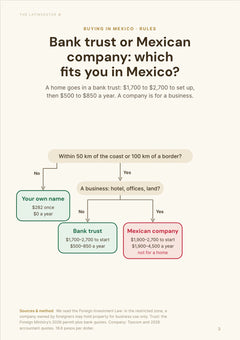
Buying through a company doesn't avoid the ISAI. It changes how rental income and a later sale are taxed, and it comes with accounting costs every year.
With a developer, check that extras like furniture or commercial parking aren't billed with VAT on top, and get the breakdown in writing before you sign.
How much does the bank trust add to the bill in Mérida?
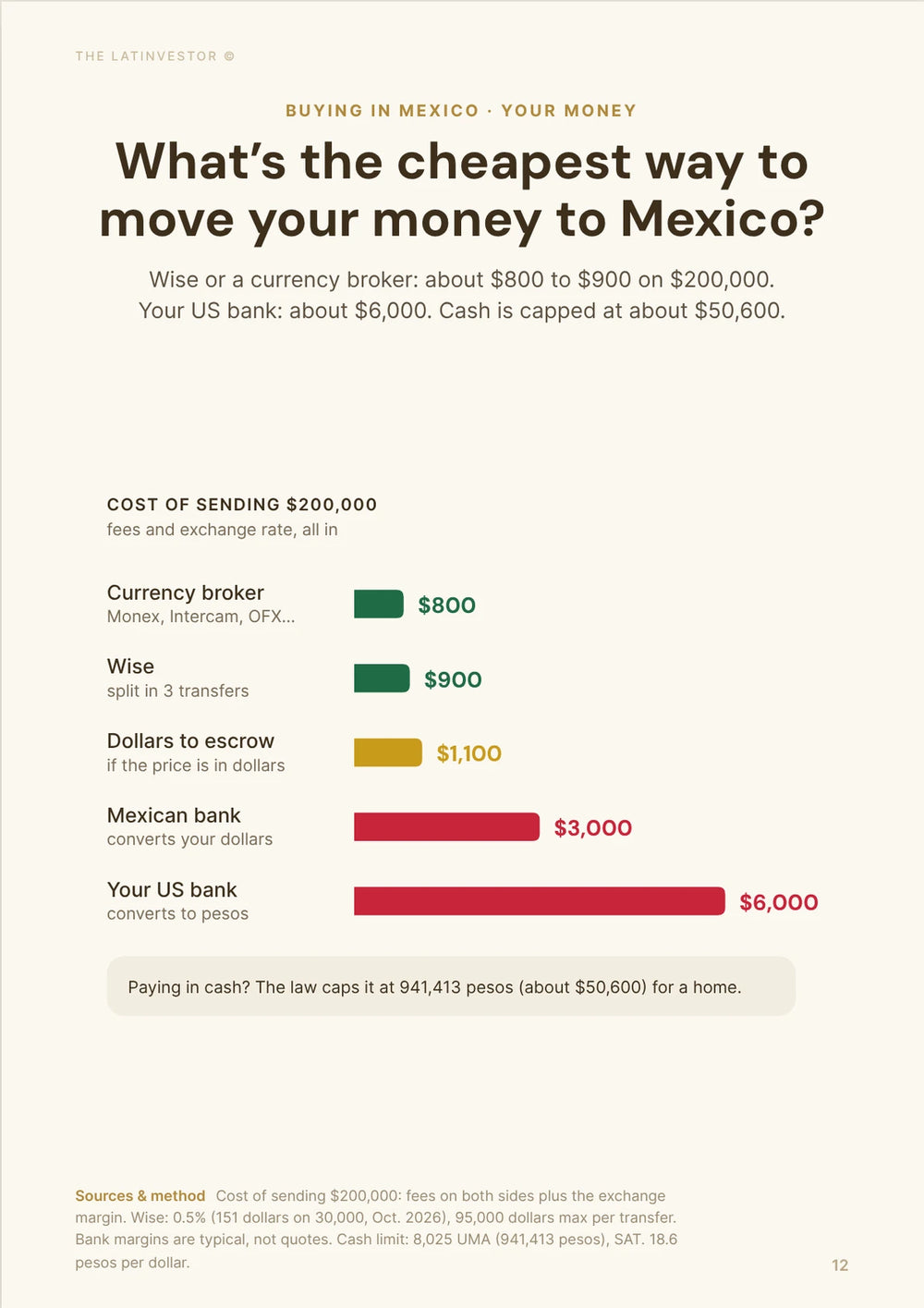
A new fideicomiso adds about MXN 32,000 to MXN 37,000 (USD 1,720 to 1,990, or EUR 1,530 to 1,770) at closing, then USD 550 to USD 700 a year (MXN 10,200 to 13,000) for as long as you own. Mérida is inside the 50 km coastal restricted zone, so a foreign buyer can't hold the title directly.
The setup cost has two parts: the SRE permit, which is MXN 21,650 (about USD 1,160) after SRE updated its fees in September 2026, and the bank's opening fee, which runs USD 550 to USD 800 depending on the bank. The notary also charges for the trust deed, so ask for it as a separate line.
The yearly fee is the part people forget. Over 10 years, at USD 550 to USD 700 a year, it costs more than the setup. Compare at least two banks on the annual fee, not just the opening fee, and ask whether VAT is included.
If the seller already has a trust, you can sometimes take it over instead of opening a new one. It doesn't remove the yearly fee, but it can cut the closing bill, so ask the notary early. A Mexican company is the other route, but it only makes sense for investors with several properties.
Which professional fees will you pay as a buyer in Mérida?
How much does a notary or conveyancing lawyer cost in Mérida?
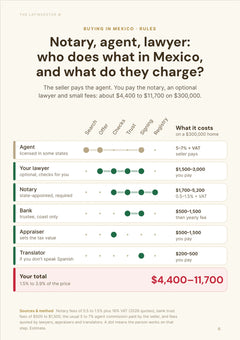
Notary fees in Mérida usually run 1% to 2% of the price, plus 16% VAT. On a MXN 3,000,000 home (about USD 161,000 or EUR 144,000), that's MXN 30,000 to MXN 60,000 (USD 1,610 to 3,230, or EUR 1,440 to 2,870) before VAT.
In Yucatán, the notary's fee is agreed between you and the notary, not fixed by a tariff. Very cheap properties can still hit a minimum fee, which pushes the percentage up.
Translation for foreign buyers costs about MXN 2,000 to MXN 6,000 (USD 108 to 323) for an interpreter on signing day, and MXN 6,000 to MXN 15,000 (USD 323 to 806) for certified document translations.
A tax advisor is optional but useful if you plan to rent out. Expect MXN 5,000 to MXN 20,000 (USD 269 to 1,080, or EUR 239 to 957) for advice on the purchase and on future rental or sale taxes.
What's the typical real estate agent fee in Mérida?
Agents in Mérida usually charge 5% to 8% of the sale price, plus VAT.
The seller normally pays it. You only pay if you sign a separate deal with your own buyer's agent.
Where you land in that range depends on the property type, the area and how hard the seller negotiates.
How much do legal checks cost (title, liens, permits) in Mérida?
Legal checks cost about MXN 3,000 to MXN 12,000 (USD 161 to 645, or EUR 144 to 574) for a clean file, and MXN 12,000 to MXN 30,000 or more (USD 645 to 1,610) when there are corrections or missing papers to sort out.
A residential appraisal costs about MXN 4,000 to MXN 12,000 (USD 215 to 645), more for large or luxury homes.
The check you never skip is the lien and encumbrance certificate from the Registro Público. Debts or claims against the property can become yours after you buy.
Do you need a licensed agent to buy in Mérida now?
Yes, anyone who sells or rents out property for others in Yucatán now needs a state license. The Ley del Registro Estatal de Asesores Inmobiliarios came into force in 2026, and INSEJUPY is the only body that issues the license, after 10 and then 50 hours of training.
Very few agents have finished the process. By August 2026, 1,272 people had signed up, 638 had done the first training phase and only 130 had the full license, which lasts five years. So many people still showing you houses aren't licensed yet.
A code of good practice published in August 2026 says the license must appear on contracts, ads, websites and social media, that deals must use contracts registered with PROFECO, and that the agent must show written authorization from the owner. The agent's name also goes in the notarial deed, and the agent has to invoice the fee.
What to do: ask for the license number and check it with INSEJUPY, ask to see the owner's written authorization, and pay deposits only through the notary or a traceable account, never in cash to an agent. Complaints go to INSEJUPY.
What hidden or surprise costs should you watch for in Mérida right now?
What are the most common unexpected fees buyers discover in Mérida?
The most common surprises are an ISAI based on an appraisal or cadastral value higher than your price, extra registry filings when the deed needs corrections, and trust costs that foreigners underestimate, especially the yearly fee.
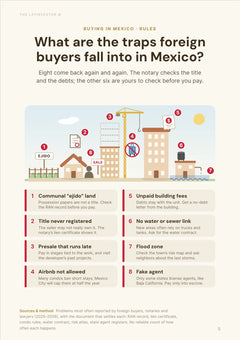
You can also inherit unpaid predial, water or HOA debts if the notary's file doesn't include no-debt letters. Insist on them before closing.
Scams usually take the form of "reservation deposits" paid to a personal account or invented "processing fees." Trust only the notary's fee sheet and official government receipts.
Costs that rarely come up front: fixing measurements or boundaries, sorting out condominium paperwork, and anything that triggers extra registry filings beyond the basic transfer.
Are there extra fees if the property has a tenant in Mérida?
Buying with a tenant in place usually adds MXN 5,000 to MXN 15,000 (USD 269 to 806, or EUR 239 to 718) for the lease assignment, a legal review of the tenant's rights and checking the deposit.
You take over the existing lease: its rent, its deposit and its notice periods.
You can't end the lease right after buying unless the contract has an early-exit clause or the tenant agrees to leave. Tenant protections stay in place when the owner changes.
A sitting tenant can help you negotiate, since many buyers want an empty home. It also means rental income from day one.
Which fees can you negotiate in Mérida, and who pays what?
Which closing costs are negotiable in Mérida right now?
You can negotiate the notary's own fee (not the taxes the notary collects), who pays for certificates and extra copies, and whether the seller fixes title or registry problems before closing.
The ISAI and the registry rights are set by law and can't be negotiated.
Comparing two or three notaries can realistically save 10% to 20% on the notary's fee. You can also ask the seller to pay for corrections and any unpaid predial.
Can I ask the seller to cover some closing costs in Mérida?
Yes, and it's normal when the checks turn up problems: unpaid taxes, title issues or boundary errors.
Sellers most often agree to pay for fixing what they caused: unpaid predial, missing permits or registry corrections needed to deliver a clean title. By law, deed and registry costs are split in half unless the contract says otherwise, which is why the contract should spell out who pays what.
Your odds go up when the home has been listed for months or the checks reveal something any buyer would ask to fix.
Is price bargaining still possible in Mérida with prices rising?
Yes. Asking prices rose about 11% in a year, according to Tinsa data published in October 2026, but there's a lot to choose from: 12,816 units are on offer. By August, the city also reported lower ISAI revenue because fewer properties were selling.
That gap between rising asking prices and slower sales is your leverage. Aiming for 3% to 7% off the asking price is realistic, which on a MXN 3,000,000 home (about USD 161,000) means MXN 90,000 to MXN 210,000 (USD 4,840 to 11,300, or EUR 4,310 to 10,000). Stale listings and homes priced in dollars give more room.
What does it cost to own a home in Mérida each year?
What's the realistic monthly owner budget in Mérida right now?
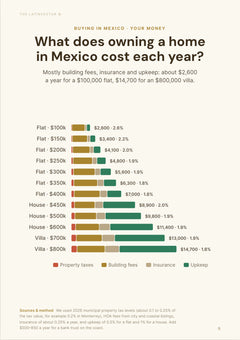
Excluding a mortgage, most owners spend MXN 2,000 to MXN 8,000 a month (USD 108 to 430, or EUR 96 to 383) on utilities, upkeep and a repair reserve.
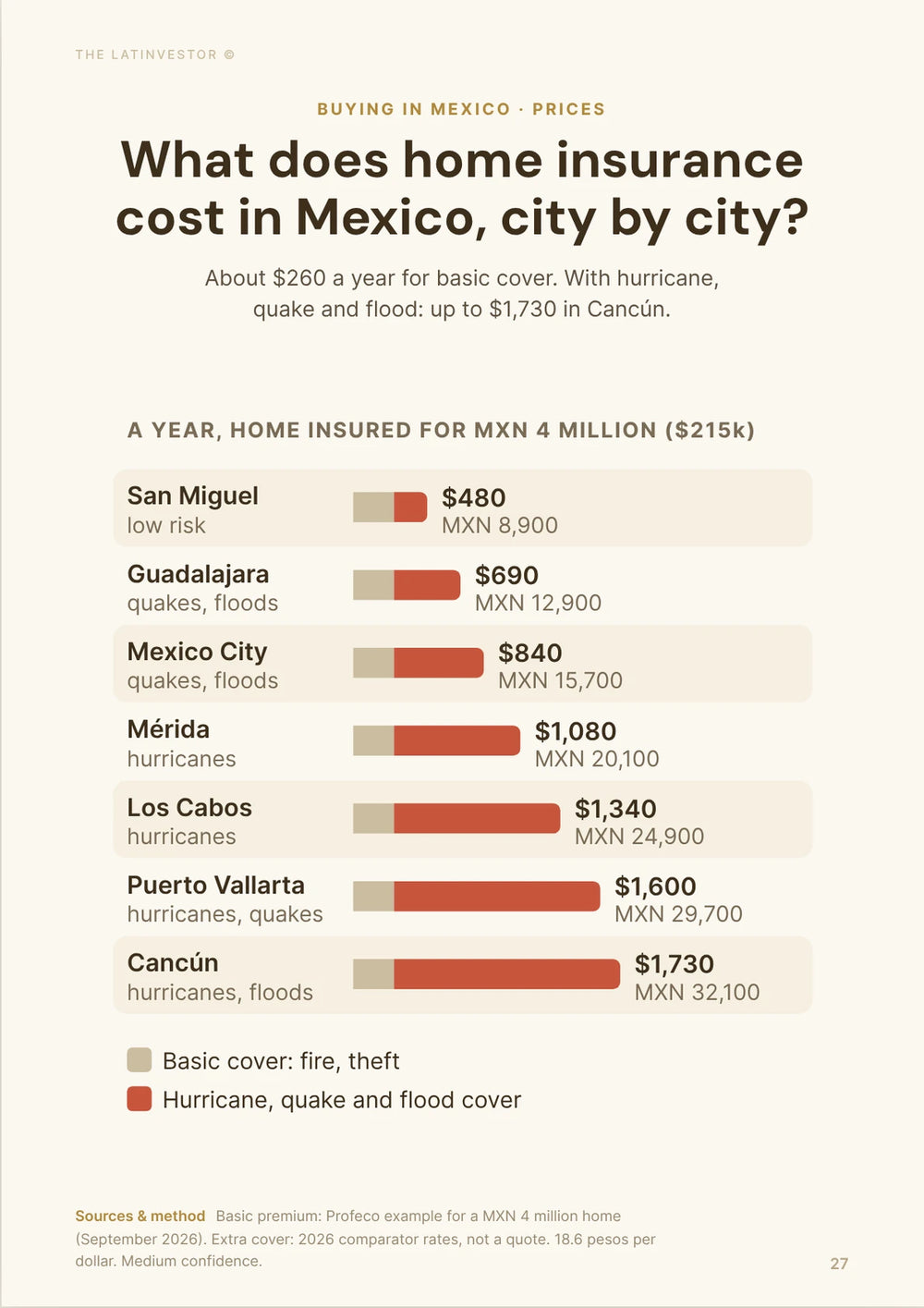
In a gated condo with a pool, HOA fees alone run about MXN 1,500 to MXN 4,000 a month (USD 81 to 215). Home insurance costs about MXN 4,910 to MXN 25,900 a year (USD 264 to 1,390), depending on the insurer, for a home insured at around MXN 4 million.
Larger homes with a pool, a garden or high-end finishes can pass MXN 15,000 a month (USD 806).
Electricity swings the most. In Mérida's heat, air conditioning can make up half the utility bill or more in the hottest months.
How much is property tax (predial) in Mérida?
Predial is low: roughly MXN 1,500 to MXN 12,000 a year (USD 81 to 645) for most homes, far less than in the US, Canada or Europe.
Large or high-value properties can pay MXN 25,000 a year or more (USD 1,340+).
It's based on the cadastral value set by the city, which is usually below the price you paid, not on the market price.
Pay early. In 2026, Mérida gave 30% off to owners who paid the full year between 2 and 15 January, and 25% off until the end of January. The city expects about MXN 1.3 billion from predial this year and had already collected MXN 973.8 million by the end of July, about 75% of the goal.
What taxes apply if you rent out your Mérida property?
What tax rate applies to rental income in Mérida?
If you don't live in Mexico, rental income is taxed at 25% of the gross rent, with no deductions. A company tenant withholds it; otherwise you pay it yourself each month.
Tax residents pay the normal progressive rates, from 1.92% to 35%, on their net rental income. They can deduct real expenses, such as predial, maintenance and insurance, or take a flat 35% deduction instead.
Some residents with modest income can use the simplified RESICO regime, which taxes gross income at 1% to 2.5%. Check that you qualify before counting on it.
Your residency for tax purposes changes everything here, so settle it with a Mexican accountant before you sign a lease.
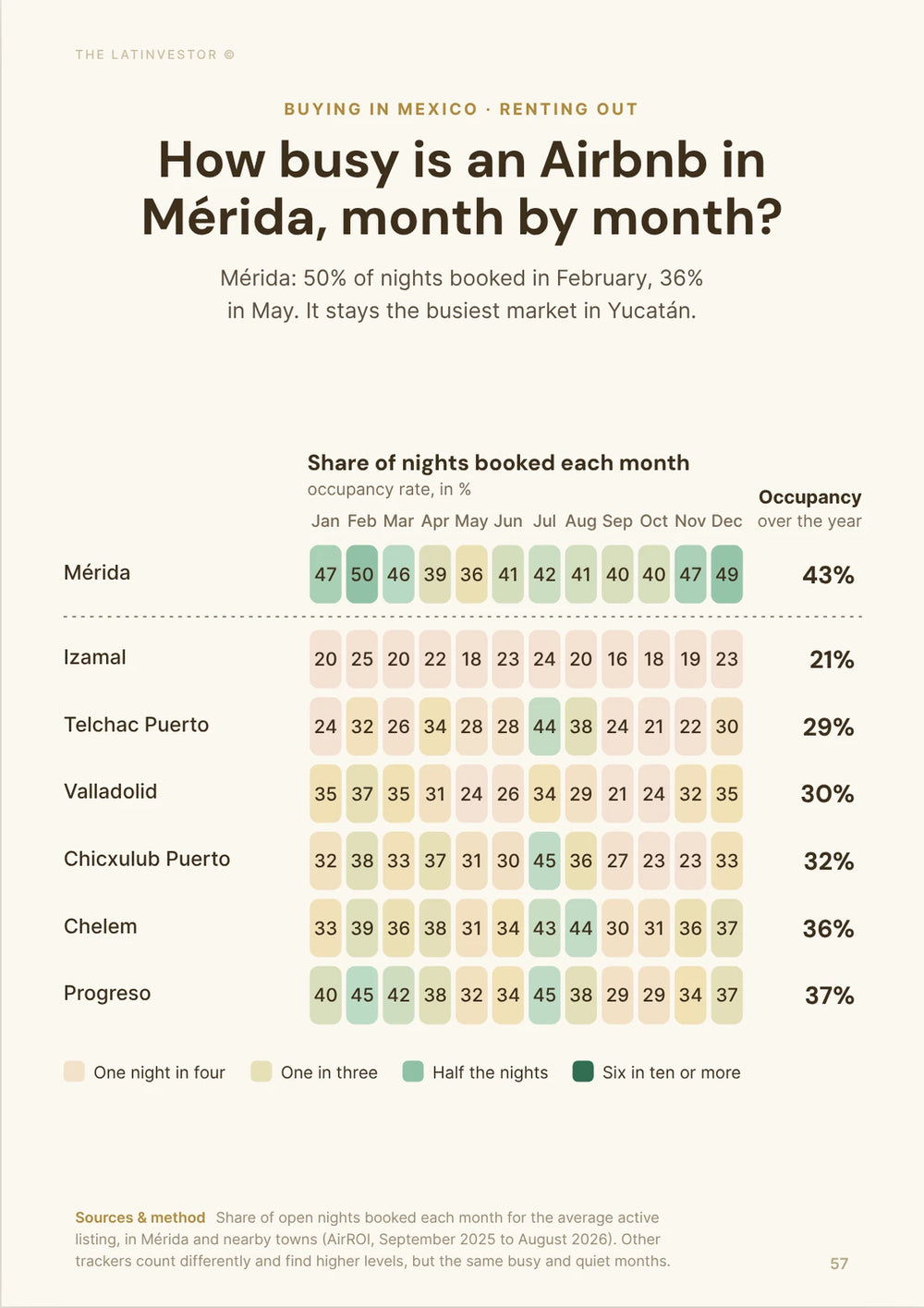
Do I pay tax on short-term rentals in Mérida?
Yes, and there are three layers. Platforms like Airbnb withhold 4% income tax if you give them a Mexican tax ID (RFC), or 20% if you don't. Short-term lodging also carries 16% VAT. And Yucatán charges its own lodging tax (ISH) of 4.5% since January 2026.
The platform withholding isn't always your final tax: non-residents and larger hosts still have to settle their income tax, so keep every receipt.
Is Mérida cracking down on Airbnb owners?
Not with bans, but the city now wants to know who you are. Under its "Mérida Ordenada" plan, announced in January 2026, the city is identifying the owners of its 5,000+ short-term rentals, more than half of them in the Centro Histórico, and bringing them under rules closer to hotels.
The first step is money owed to the city: owners are being asked to get their predial, garbage and water accounts up to date. Across Yucatán, the tourism ministry counts about 7,000 platform rentals, most of them without official registration.
Taxes moved too. Yucatán cut its lodging tax from 5% to 4.5% in January 2026, but larger lodging businesses now need a certified tax report. Airbnb's help page still shows 4% for Yucatán, so check what is actually collected on your bookings and declare the difference if needed.
What to do: if you buy to rent out in Centro, budget for the 4.5% lodging tax, VAT and income tax from the start, get an RFC so the platform withholds 4% instead of 20%, and make sure the predial and service accounts are clean before closing. Unpaid bills on a former rental are exactly what the city is chasing.
How much tax will you pay when you sell in Mérida?
What's the total cost of selling as a % of price in Mérida?
Selling usually costs 6% to 10% of the price, before any tax on your gain.
It's closer to 6% for a simple sale with a lower commission and a small gain, and it can pass 12% with a full commission, a large taxable gain and paperwork to fix.
The costs are the agent's commission (5% to 8%), notary and legal fees for the sale, clearing any predial or utility debts, and income tax on the gain.
The commission is usually the biggest line, at 5% to 8% plus VAT.
What capital gains tax applies when selling in Mérida?
Non-residents pay 25% of the gross sale price, with no deductions. The other option is up to 35% of the net gain, but only through a Mexican legal representative. The notary calculates and withholds the tax at closing.
Tax residents selling their main home can be exempt on up to 700,000 UDIS, once every three years, if they prove residency and the home was really their main home. Don't count on it until a notary or accountant confirms it.
Holding the property in a fideicomiso doesn't change the rate, but it adds paperwork, and the trust has to be transferred or closed.
The gain is the sale price minus what you paid, adjusted for inflation and documented improvements. Keep every invoice from day one; without them, you can't deduct the work.
Our methodology
This article estimates what a foreign buyer pays on top of the price in Mérida, and what owning, renting out and selling cost after that.
We built the closing costs line by line: the ISAI from the tariff in Mérida's municipal tax law, the trust from the official SRE permit fee plus bank fees from a 2026 comparison, and notary, registry, appraisal and legal costs from published ranges and local practice. We then compared the total with national closing-cost estimates.
The tax rules for rents and sales come from Mexico's income tax and VAT laws and SAT guidance. The 2026 lodging tax comes from the Yucatán tourism ministry. Local news covered the predial discounts, the city's collections, the agent licensing law and the Airbnb census, and El Economista reported the Tinsa price data.
We checked these figures in October 2026. Conversions use about 18.6 pesos per US dollar and 20.9 pesos per euro.
Limits: notary, legal, HOA and appraisal fees are ranges, not quotes. Bank trust fees come from a third-party comparison, not from each bank's tariff. Asking prices are not sale prices. The ISAI can be based on a value higher than your price, and tax treatment depends on your residency, so get advice before you rent out or sell.
Key sources used for this analysis include Mérida's Ley de Hacienda, Mérida's ISAI page, Rivenza's ISAI calculation, Tandacasa's Mérida closing-cost guide, INSEJUPY, the Yucatán notaries' fee reference, SRE's restricted-zone rules, SRE costs and times, Homia's 2026 fideicomiso fee comparison, BBVA México, Monex, Mexlife, Compass Abroad, Mexperience, SAT VAT Article 9, SAT rental income guidance, the income tax law's Article 158, Article 160, Article 126, Article 93 and Article 113-A, the Yucatán tourism ministry, El Contribuyente on the 2026 lodging tax, Por Esto on Mérida's Airbnb census, Por Esto on the agent licensing law, Por Esto on the agents' code of practice, Por Esto on ISAI and predial collections, Por Esto on the 2026 predial discounts, El Economista (Tinsa data), a 2026 Mérida HOA fee guide and PROFECO.