Summary
Yes, if you buy a practical home in a proven area, pay close to what similar homes sell for and hold for 5 years or more. Prices are still rising (about 11% in a year according to Tinsa data published in October 2026), but buyers now have far more choice and more room to negotiate.
In October 2026, apartments ask a median of about MXN 40,100 per square meter (USD 2,157) and houses about MXN 23,100 (USD 1,241). Homes usually close 5% to 8% below asking, by our estimate.
A crash isn't our base case. We expect good homes to gain about 5% to 8% in peso terms over the next 12 months, with overpriced fringe stock lagging. In a normal downturn, we'd expect typical homes to lose 3% to 7%, not more.
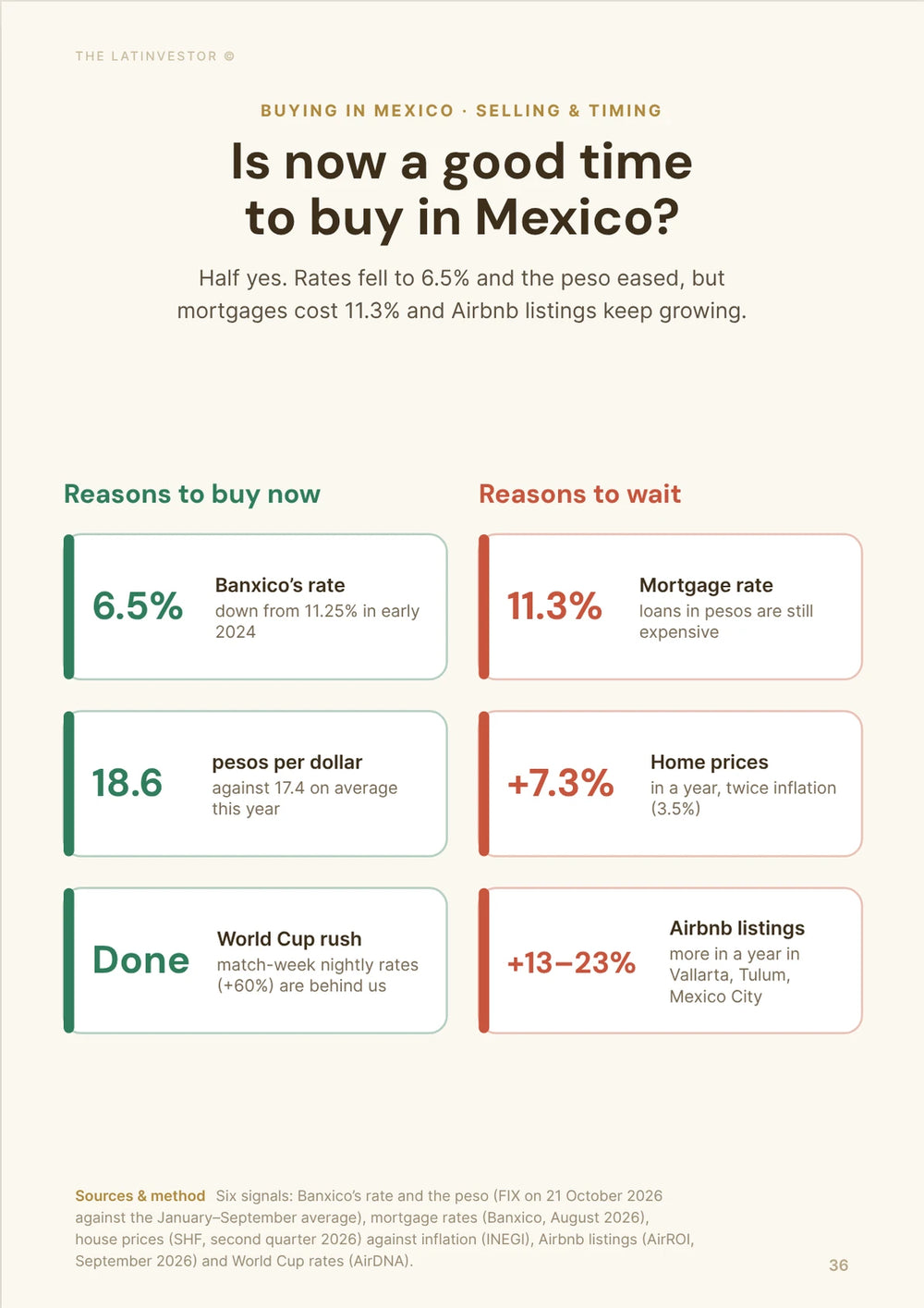
Don't wait for cheaper loans. Banks quote 11.31% on average and granted loans at 9.99% in June 2026, and analysts expect no further Banxico cut in 2026 or 2027. A 5% price rise would cost you about as much as six years of that rate gap.
Against rents, prices are fair: a median 2-bedroom apartment asks about 17 years of rent, a gross yield of about 6%. Against local wages, they're stretched: only 1 in 5 people in Yucatán can buy a home without spending more than 30% of their income.
Prices have run well ahead of their old pace: the SHF index for Mérida rose about 61% in the five years to the end of 2025.
The Tren Maya cargo line was 67% complete in September 2026, with service expected in the first half of 2027. The airport handled about 2.75 million passengers from January to August 2026.
Water is the new weak spot: in October 2026 alone, plant failures left 42 western neighborhoods without water and 46 northern areas, including parts of Montebello and Altabrisa, with low pressure or none.
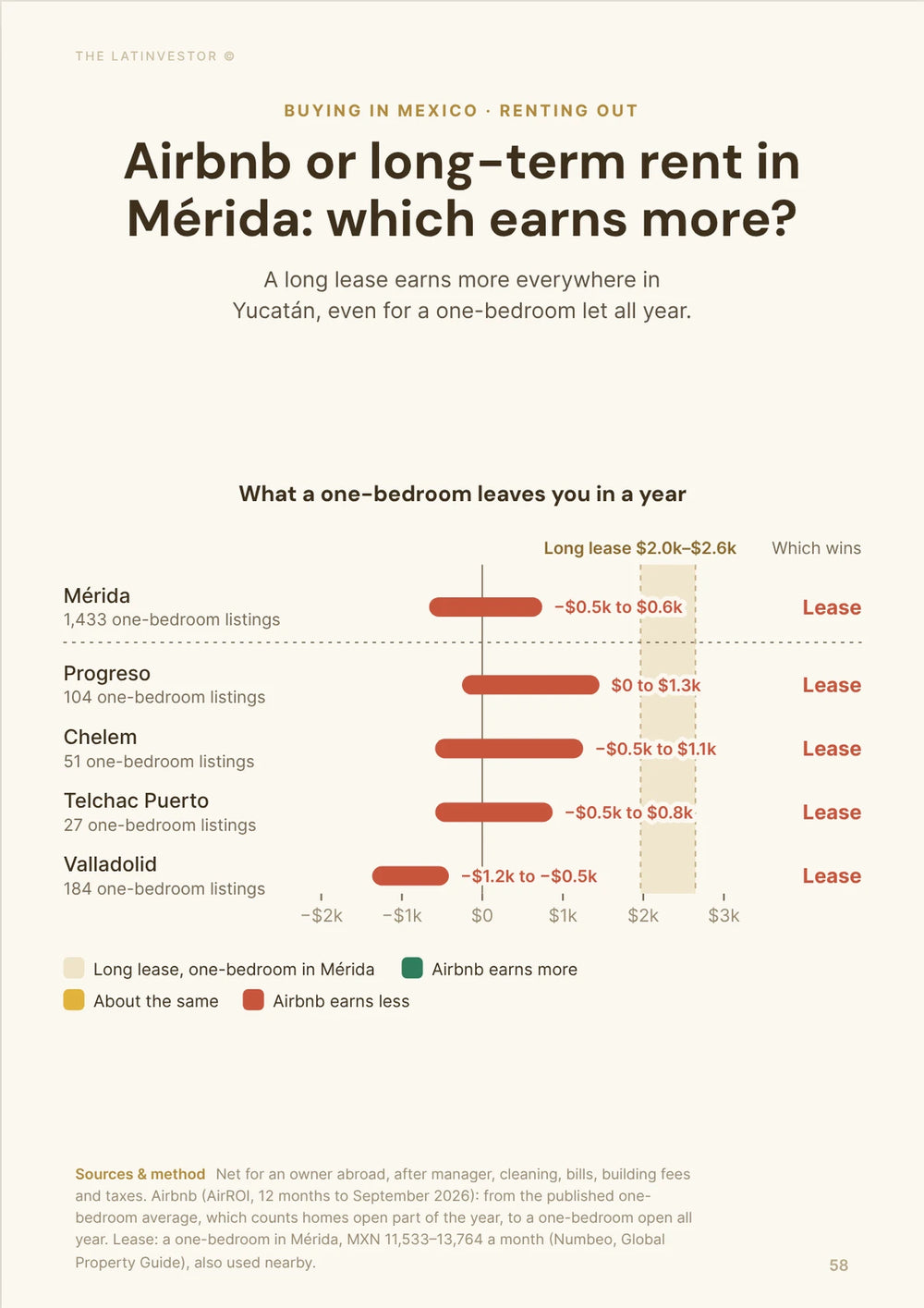
Long-term tenants are easy to find for good homes, and a 2-bedroom rents for about USD 975 a month. Airbnb is shrinking: AirDNA counts 4,856 active listings, down 35.7% in a year.
Supply is plentiful: about 12,816 homes are on offer, and developers had sold only 4,000 of the 7,000 homes they planned for 2026 by the end of May. Upscale apartments are the slowest to sell.
A normal resale takes about 80 to 100 days. Buying and selling costs eat about 8% to 12% of the price, or MXN 240,000 to MXN 360,000 on a MXN 3 million home.
For dollar buyers, the peso's slide since early September (from under 17 to about 18.6 per dollar) has cut about USD 25,600 off a MXN 5.06 million house, with no move from the seller.
The bottom line: buy a normal, easy-to-rent home in a known area, check the water supply, negotiate hard on anything listed for months, and don't count on Airbnb or a quick resale.

Where are Mérida prices heading?
Are prices too high in Mérida right now?
In the best areas, yes, for local buyers. Prices are up about 11% in a year according to Tinsa data published by El Economista in October 2026, and 8.5% on the official SHF index in the year to the second quarter of 2026, against 7.3% for Mexico as a whole.
In October 2026, apartments ask a median of about MXN 40,100 per square meter (USD 2,157) and houses about MXN 23,100 (USD 1,241). In the north, apartments ask about USD 2,328 per square meter in Montebello and USD 2,668 in Altabrisa. Many sellers in Temozón Norte, Cabo Norte, Santa Gertrudis Copó and Yucatán Country Club price for a foreign buyer who may never show up.
The market isn't expensive everywhere. Practical family homes in García Ginerés, Itzimná, Chuburná, Francisco de Montejo, Cholul and Conkal can still make sense when rents and recent sales back up the price.
Could prices drop in Mérida?
A real fall across the city looks unlikely. Demand comes mostly from people who live there, not from nightly tourism, so in past slowdowns Mérida prices stalled rather than collapsed.
In a normal downturn, we'd expect typical homes to lose about 3% to 7% in peso terms, and overpriced fringe or luxury stock 10% to 15%. These are our estimates, not an official forecast.
The biggest risk is a longer credit freeze. Mortgage lending in Mexico fell 0.1% in real terms in the first half of 2026 and the number of loans rose only 0.3%, according to BBVA Research. If that lasts, sellers asking well above the neighborhood median will have to cut, starting with new apartments and fringe houses.
Could prices jump again in Mérida?
Not across the whole city. Our base case for the next 12 months is about 5% to 8% in peso terms for good homes, below the latest 11% annual rise.
Some areas can beat that. By our estimates, the best projects in Temozón Norte, Cholul and Santa Gertrudis Copó are rising about 10% to 14% a year, because they combine land, services and buyers with money.
What could restart a broad jump is cheaper credit, and that isn't coming soon: Banxico held its rate at 6.50% in August and September 2026, and most analysts expect it to stay there through 2027.
Is Mérida a buyer's or a seller's market right now?
Seller-leaning for the best homes, buyer-leaning for everything else. Tinsa counts about 12,816 homes on offer in the metro area, so you have plenty of choice.
By our estimate, attractive resale homes have about 3 to 5 months of real supply, while generic new apartments, duplicated pre-sales and far-north homes with weak services sit much longer. Most homes close about 5% to 8% below asking.
Cash is the big lever. With mortgages flat, sellers who need a buyer with a loan face a thin pool. Ask for 5% to 10% off anything listed for more than three months.
Should you wait for mortgage rates to fall before buying in Mérida?
No. Rates are moving too slowly, and prices are rising faster than any saving you'd get by waiting.
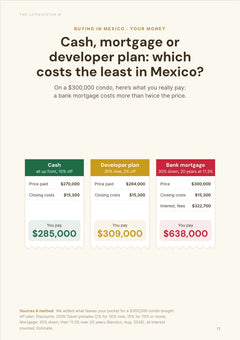
Banxico has cut its rate from 11.25% to 6.50%, but home loans barely followed. Banks' average fixed-rate quote was 11.31% in August 2026, and the loans they actually granted averaged 9.99% in June, according to the Asociación de Bancos de México. A Citi survey in October 2026 found most analysts expect no further cut in 2026 or 2027.
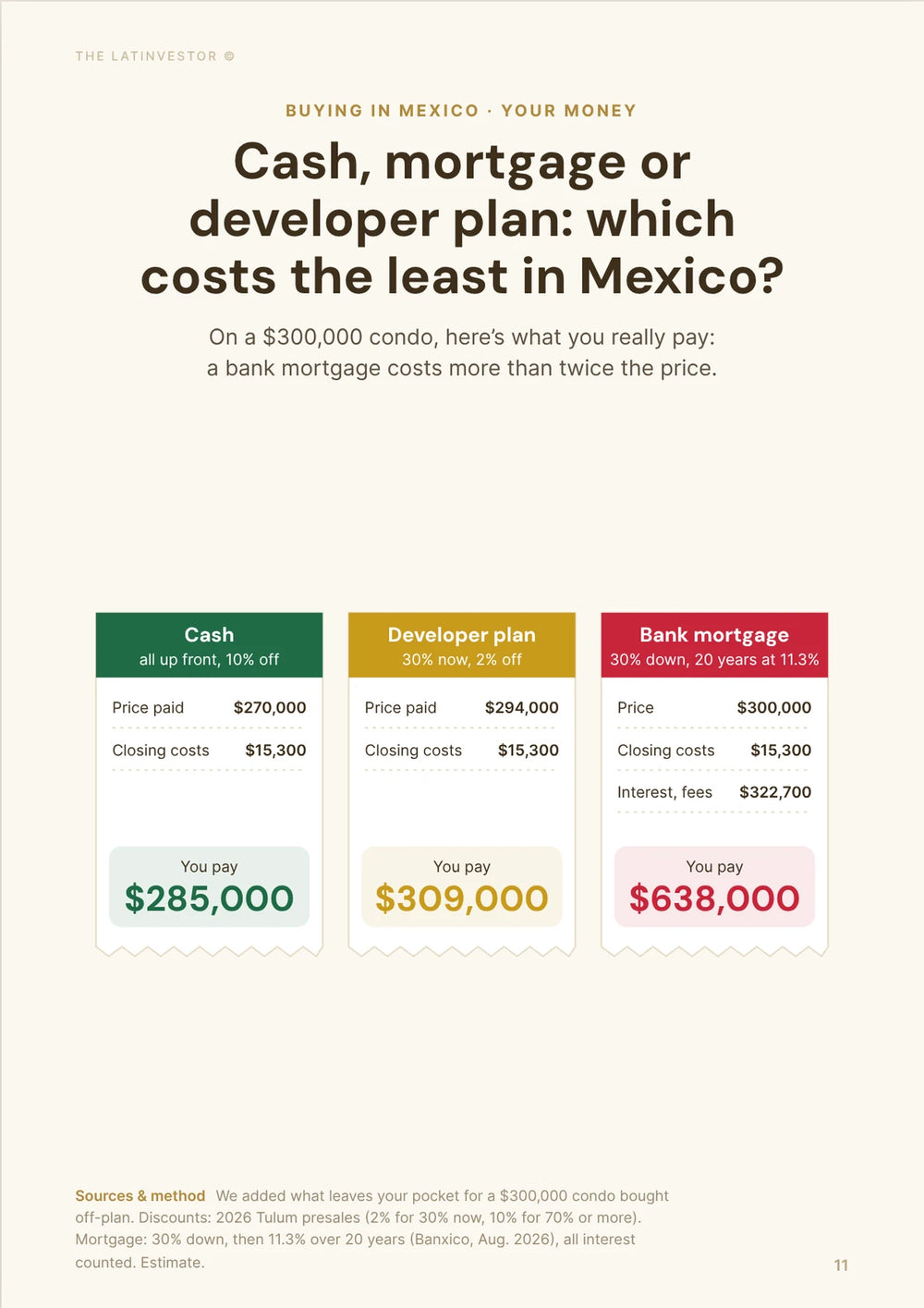
Take a median 2-bedroom apartment at about MXN 3.61 million (USD 194,000) with 20% down. Over 20 years, the MXN 2.89 million loan costs about MXN 30,400 a month (USD 1,630) at 11.31% and MXN 27,900 (USD 1,500) at 9.99%, a gap of about MXN 2,600. A 5% price rise on the same apartment adds about MXN 180,000 (USD 9,700), which equals almost six years of that gap.
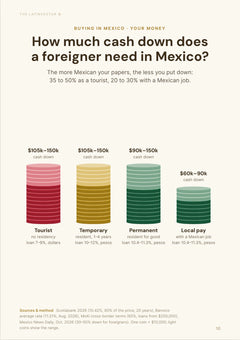
What to do: if you need a loan, get written offers from at least three banks and push for the granted rate, not the quote. Non-residents usually go through cross-border lenders, which want 35% or more down. If you can pay cash, that's your best negotiating card.
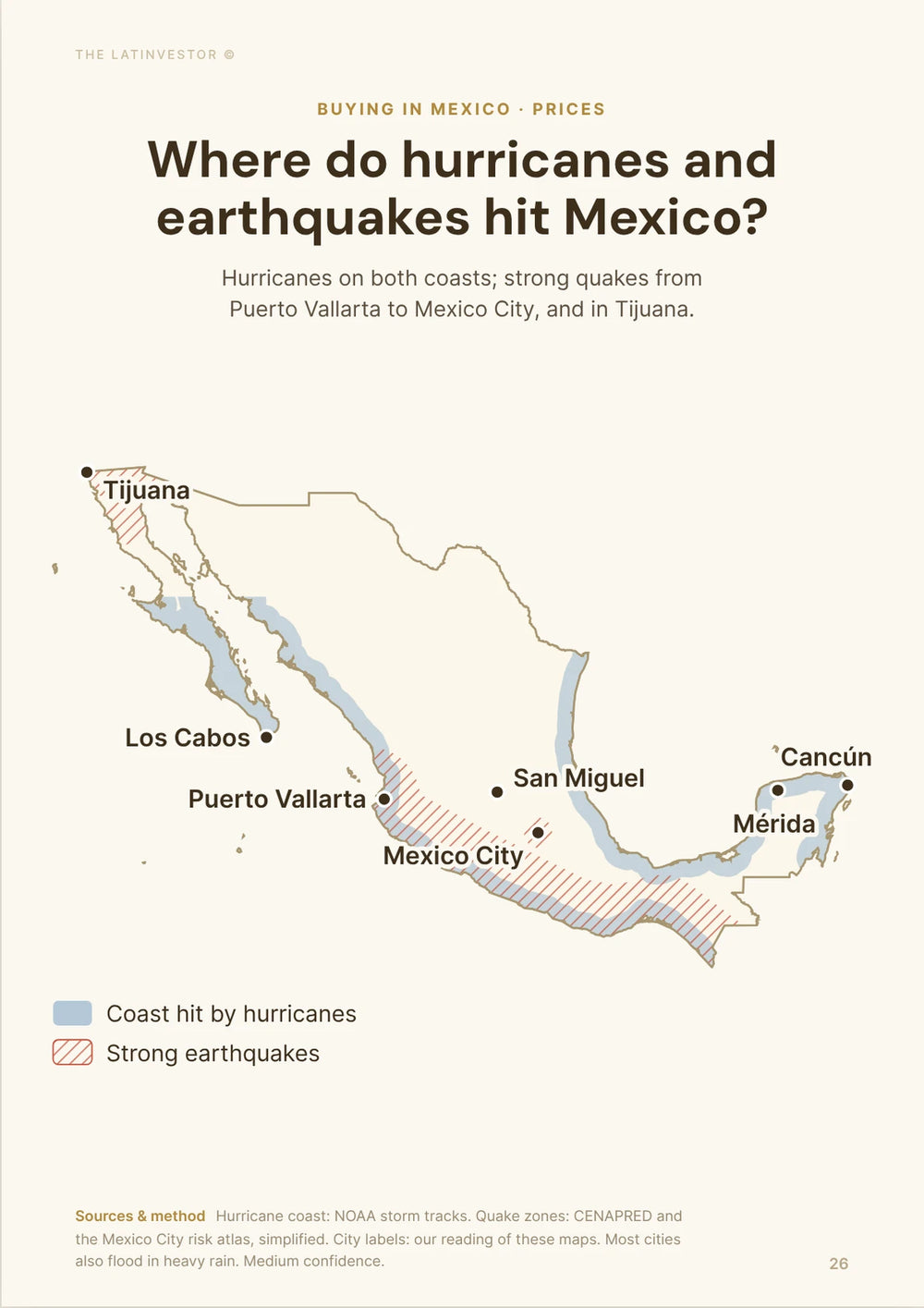
Are homes overpriced or fairly priced in Mérida?
Are homes overpriced compared with rents and incomes?
Against local incomes, clearly. Against rents, not much, as long as the home is in a strong rental area.
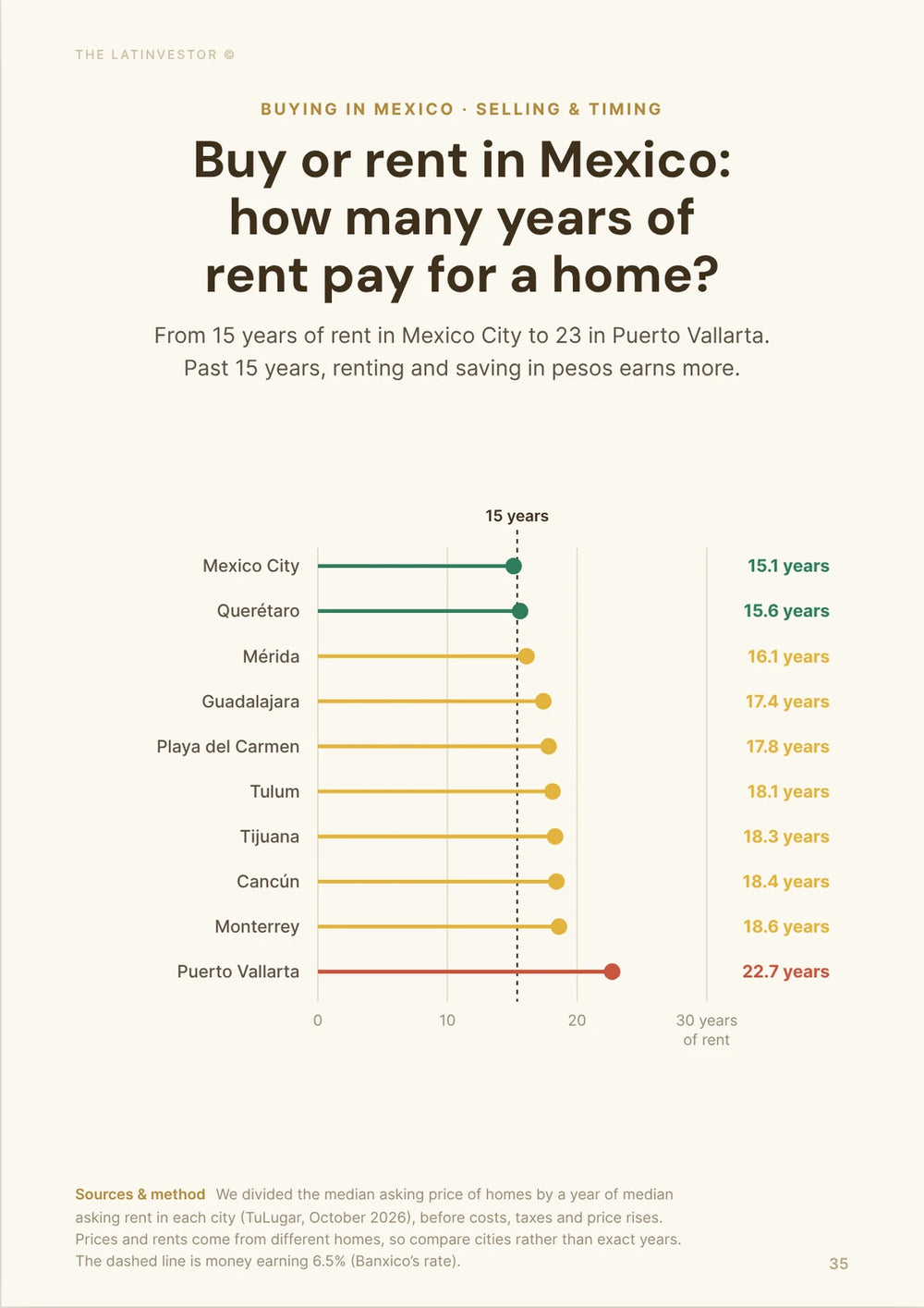
A median 2-bedroom apartment asks about MXN 3.61 million and rents for about USD 975 a month (MXN 18,100), so it costs about 17 years of gross rent, a gross yield of about 6%. Global Property Guide puts the city average at 6.08%. That's fair for a growing city, but below the cost of a mortgage, so buying to rent works best with cash.
Incomes are the real stretch. According to the Mérida real estate association (AMPI), only 1 in 5 people in Yucatán can buy a home without spending more than 30% of their income. Above about MXN 3 million (USD 161,000), you are selling to cash buyers, people moving from richer states and foreigners, not to local families.
Are prices above their long-term average in Mérida?
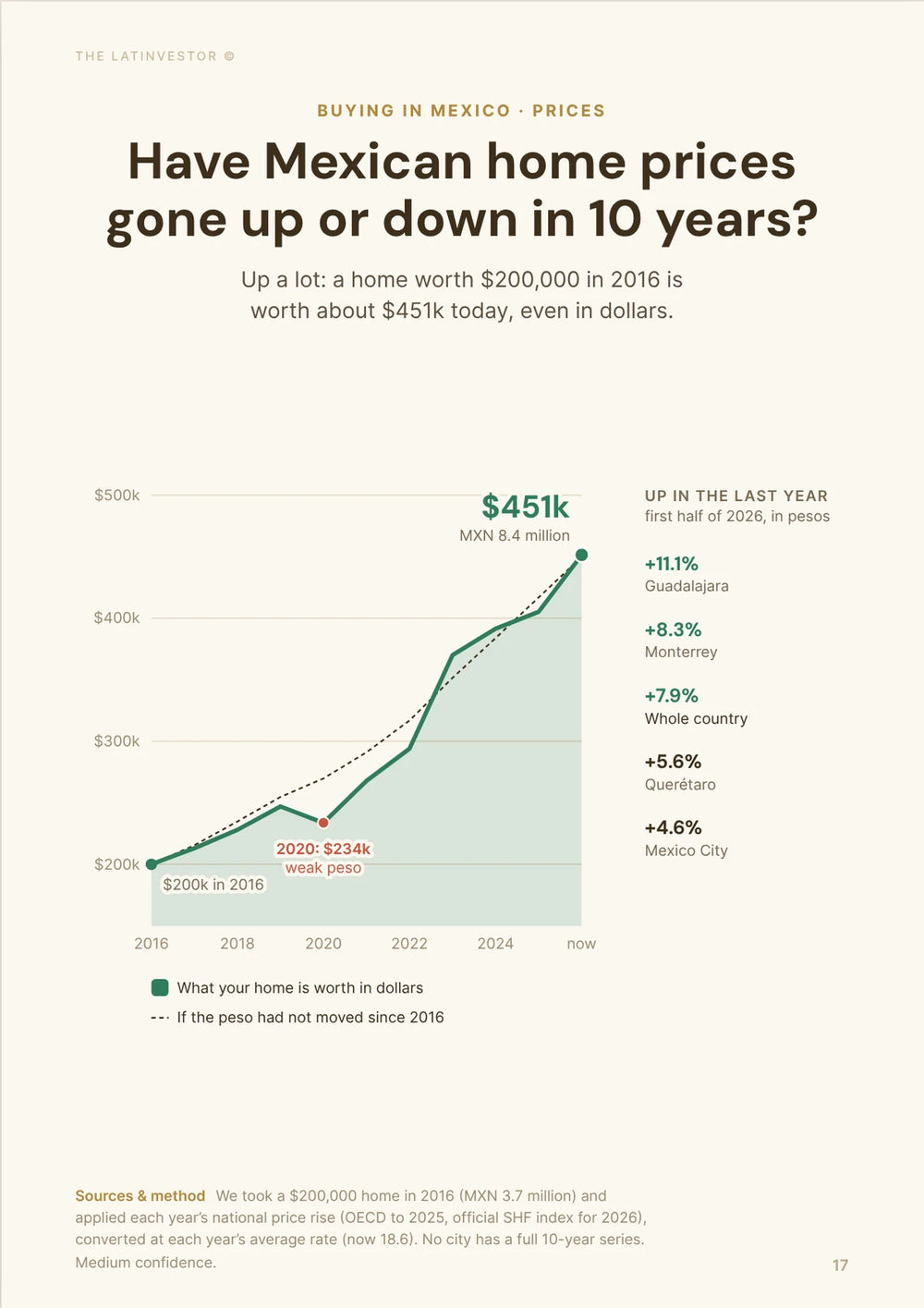
Yes. The SHF index for Mérida rose about 61% in the five years to the end of 2025, roughly 10% a year, and the Yucatán index almost doubled (+98.2%) between 2017 and the third quarter of 2025.
That's much faster than inflation, which was 3.45% in September 2026. Part of it is catch-up after years of cheap prices and the wave of people moving in for safety. But it also means future gains have to come from location, rent and scarcity, not from the market lifting everything.
What local changes could move prices in Mérida?
Are big infrastructure projects coming to Mérida?
Yes, and some are already running. The Tren Maya passenger station at Teya is open, the IE-TRAM electric bus network links it to Centro, and the Tren Maya cargo line was 67% complete in September 2026, with terminals at Poxilá, just south of Mérida, and at the port of Progreso. Cargo service is expected in the first half of 2027.
The airport keeps growing: about 2.75 million passengers from January to August 2026, with August up 6.9% on a year earlier.
This supports the Mérida-Progreso corridor and the north and northwest edge, but it arrives in phases. If a listing sells "the train" or "the port", check the real distance and timeline before paying a premium for it.
Are zoning or building rules changing in Mérida?
Slowly. The city's PMOTDUM Visión 2050 plan aims for more compact growth, tied to roads, water, drainage and services.
The net effect is mildly positive for legal, serviced homes and negative for fringe projects that rely on cheap land without infrastructure. The areas most affected are the urban edge, Cholul, Conkal, Dzityá, Teya, Kanasín and central infill zones.
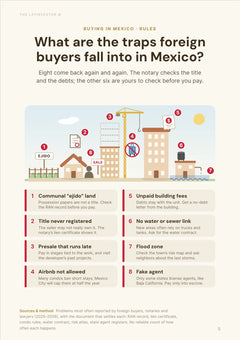
The risk is real: many lots outside the city are sold with no water, power or approved urban plan, and a Yucatán state deputy said in April 2026 that works without permits are more common than people think. Before buying anything new, check the land-use permit, the construction license and that services are connected, not promised.
Are foreign-buyer or mortgage rules changing in Mérida?
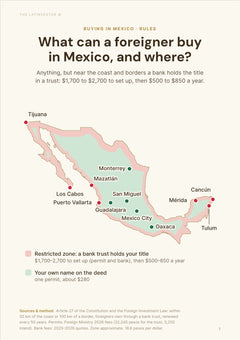
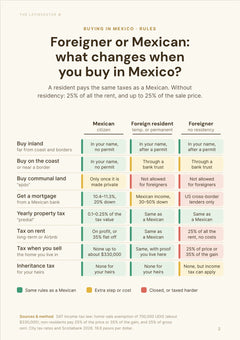
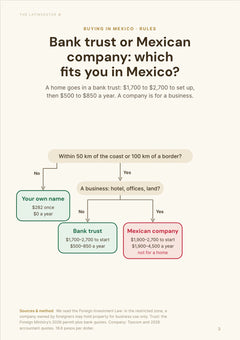
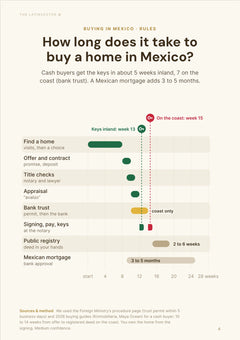
No. Mérida is less than 50 km from the coast, so it sits inside Mexico's restricted zone, and that hasn't changed: foreigners buy through a bank trust (fideicomiso), renewable every 50 years. A Mexican company is only an option for business property, not for a home you live in.
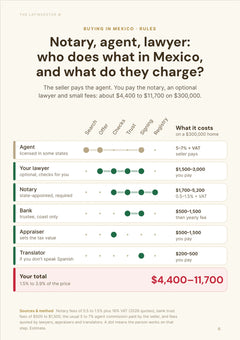
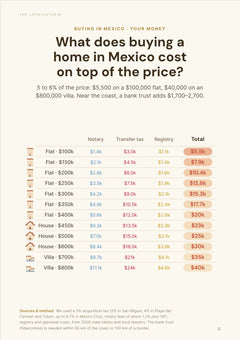
Budget for it. The SRE permit costs MXN 21,650 (USD 1,160), and banks charge roughly USD 550 to 800 to set up the trust and about USD 550 to 700 a year to run it. Expect stricter paperwork and anti-money-laundering checks at the notary, not a ban.
On credit, there's no new rule either. What matters is the gap between Banxico's 6.50% rate and the 10% to 11% that banks actually charge (see above).
Will the water outages hurt home values in Mérida?
Not across the city, but they can hurt the wrong home. Outages are now frequent: on October 8, 2026, a leak at the Mérida II plant left 42 western neighborhoods without water, and on October 11, the Mérida III plant was running at only 60%, leaving 46 areas with low pressure or none, including parts of Montebello and Altabrisa.
It's not new this month. On May 31, 2026, a power failure at the Mérida I plant hit 94 neighborhoods, Centro included. The north has grown faster than the network, and the water agency JAPAY is only now modernizing its plants.
What to do: ask neighbors how often the water failed this year, check for a cistern (cisterna) and a pump, not just a roof tank, and ask whether the development has its own well. In a new project, get in writing who supplies the water and who pays if the connection is late. A home with good water storage is worth more right now, and one without it is a reason to negotiate.
Will it be easy to find tenants in Mérida?
Is the renter pool growing faster than new supply?
For good homes, yes. For generic investor apartments, not necessarily.
Demand rests on people moving in: Mexican families from bigger cities, students, medical staff, remote workers, retirees and foreigners who rent before they buy. Safety is the big draw: in the second quarter of 2026, 38.2% of adults in Mérida said they felt unsafe, against 59.8% nationally, according to INEGI.
Supply is growing too. Developers in Yucatán aim to sell about 7,000 homes in 2026, and the federal Vivienda para el Bienestar program plans about 50,000 low-cost homes in the metro area and nearby towns. Those compete with cheap fringe rentals, not with a good 2-bedroom near hospitals or schools.
How long does it take to rent out a home in Mérida?
Good rentals usually lease in about 15 to 35 days, by our estimate from listing checks. A furnished apartment in Montebello or Altabrisa can go in a couple of weeks, while an overpriced unit on the far edge can sit for 60 to 90 days.
Asking rents are about USD 740 a month for a 1-bedroom (MXN 13,800) and USD 975 for a 2-bedroom (MXN 18,100). Tenants want a ready-to-live home near hospitals, schools, shopping or main roads, and many new units are farther out.
Is Airbnb still a safe bet in Mérida?
Less than before. AirDNA counts 4,856 active listings in September 2026, down 35.7% in a year, with 58% average occupancy and about USD 67 a night, or about USD 13,300 a year per listing.
The city is pushing hosts to register and pay property tax, water and garbage like a business, and Yucatán's lodging tax has been 4.5% since January 2026. A non-resident owner also pays 25% tax on gross rent, long or short term, which turns a 6% gross long-term yield into about 4.5% before any other costs.
Vacancies in well-priced homes in the best rental areas are about 3% to 5%, by our estimate, against 7% to 10% for weaker investor stock. If your numbers only work as an Airbnb, they probably don't work.
Are you buying into a tight market in Mérida?
Is for-sale inventory shrinking in Mérida?
No. Headline supply is large: about 12,816 homes on offer according to Tinsa, and about 34,000 houses and apartments listed on TuLugar, including duplicates.
What is tight is the stock of clean, well-priced homes. By our estimate, strong resale homes have about 3 to 5 months of supply, against more than 6 months for generic new-build apartments.
Are homes selling faster in Mérida?
No, slower. A normal home with a realistic price and clean title usually needs about 80 to 100 days to sell, by our estimate. Well-priced homes in Centro, Santiago, Santa Ana, Temozón Norte, Cholul and Montebello can move in 45 to 70 days.
That's slower than the post-pandemic rush, because buyers can compare thousands of listings and no longer grab the first decent house.
Are new listings slowing down in Mérida?
Not clearly. Developers keep launching, and many resale owners are still testing high prices.
Activity is usually stronger around relocation periods, school decisions and the winter visitor season, so today's inventory doesn't look unusually low.
Are developers struggling to sell in Mérida?
At the top, yes. By May 31, 2026, Yucatán developers had sold about 4,000 homes against a target of 7,000 for the year, and the head of the developers' chamber (Canadevi) said upscale and luxury apartments are the main slowdown.
Homes under MXN 1 million (USD 53,800) sell best, while buyers in the MXN 1 to 1.5 million range compare more and take longer. Canadevi still expects to hit its target, with most sales in the last four months of the year.
For you, that means leverage on new apartments: ask how many units are unsold, and push for a lower price or extras (parking, appliances, payment terms). The real shortage is well-located, serviced land, not homes in general.
Will it be easy to sell later in Mérida?
Is resale demand strong enough in Mérida?
Yes, for realistic sellers, especially between MXN 2 million and MXN 5 million (USD 108,000 to 269,000), where local families, people moving in and investors overlap.
What sells best is a practical home: 2 to 3 bedrooms, parking, clear title, low HOA fees, good ventilation, reliable water and quick access to hospitals, schools or shops.
Is selling time getting longer in Mérida?
For generic apartments, fringe houses and luxury homes, yes. For clean, fairly priced family homes, not really.
By our estimate, a well-priced home sells in about 45 to 70 days, a normal one in 80 to 100 days, and an overpriced home or fringe new build can sit for 120 to 180 days or more.
The reason is affordability: with loans at 10% to 11%, buyers compare neighborhoods, rents and HOA fees much more carefully than before.
Can you realistically sell at a profit in Mérida?
Yes, over 5 years or more, if you don't overpay at the start.
Buying and selling costs eat about 8% to 12% of the price: MXN 240,000 to MXN 360,000 (USD 12,900 to 19,400, or EUR 11,500 to 17,200) on a MXN 3 million home. You need time for rent and price gains to absorb that.
The best way to improve your odds is to buy 5% to 8% below comparable listings in a liquid area such as Montebello, Altabrisa, Itzimná, García Ginerés, Cholul or Francisco de Montejo.
Has the peso's slide made Mérida cheaper for dollar buyers?
Yes, for now. The peso was under 17 per dollar in early September 2026 and is about 18.6 now, so the same peso price costs about 8.6% fewer dollars.
On a median 3-bedroom house at MXN 5.06 million, that's about USD 297,600 in early September against USD 272,000 today, a saving of about USD 25,600 without the seller moving at all. Over a longer period, it's the other way: the peso averaged about 19.2 in 2025, and peso prices have risen about 11% since, so Mérida still costs a dollar buyer more than it did in 2025.
What to do: negotiate in pesos, not dollars, and be wary of sellers who quote in dollars at an old rate. If you are paying in stages (pre-sale), remember the peso can swing back, so don't stretch your budget on today's rate.
Related blog posts
- What are housing prices like in Mérida now?
- Where is the best place to buy in Mérida?
- Is the property market in Mérida still growing?
- How much money do you need to retire in Mérida now? (2026)
- Are property prices in Mérida likely to rise?
- Moving to Mérida? Here's everything you need to know (2026)
Our methodology
This article estimates whether now is a good time to buy a home in Mérida: price levels and trends, the risk of a fall, mortgage costs, rents, supply, selling times, water and the exchange rate. It covers houses, townhouses and apartments, not land, commercial property or haciendas.
Price trends come from the official SHF index (Mérida, second quarter of 2026, as compiled by IIEG) and Tinsa data reported by El Economista. Asking prices come from TuLugar, rents and yields from Global Property Guide, credit data from Banco de México, the Asociación de Bancos de México and BBVA Research, and short-term rental figures from AirDNA. Local news (Diario de Yucatán, Por Esto) covers Canadevi's sales, water outages, the Tren Maya, airport traffic and the city's Airbnb plan.
Ownership rules and permit costs come from the foreign ministry (SRE), with bank trust fees from a 2026 comparison. Supply in months, selling times, closing discounts, vacancy, time to let and the 12-month outlook are our own estimates from listing reviews, because no public database tracks them in Mérida.
We checked these figures in October 2026. Conversions use about 18.6 pesos per US dollar and 20.9 pesos per euro.
Keep the limits in mind: asking prices are not sale prices, SHF and Tinsa measure different things, rents are asking rents, and forecasts are scenarios, not promises. This is not financial advice.
Key sources used for this analysis include SHF, IIEG, El Economista (Tinsa), TuLugar, Global Property Guide, Banco de México, Crónica on rates granted, BBVA Research, AirDNA, SRE, INEGI, Mérida PMOTDUM, ASUR, Canadevi Yucatán, Diario de Yucatán and Por Esto.