Summary
Only partly. A clean, registered condo in eastern Colosio is a safer buy than a few years ago, but the neighborhood now asks about $3,562 per m², only about 3% below Zazil-Ha, while its title, water and flooding problems are still there.
The land question isn't settled. On July 17, 2026, the government announced 474 property titles and 30 deeds for Colosio families; residents' groups said about two weeks later that only around 250 had actually arrived.
The fight over land is still live. In August 2026, residents said INSUS was asking from MXN 400,000 (about $21,500) for some titles, and in April they said families without titles were being pushed to sell lots cheaply that then resell for MXN 3 to 5 million.
That matters to you because those lots are where new condos get built. A condo is only as safe as the chain of title under its land, so the deed, the registry and the condominium regime all have to match.
The cheap entry is mostly gone. TuLugar put Colosio near $3,052 per m² in our previous update; in October 2026 it's about $3,562, against $3,675 in Zazil-Ha and $4,120 in Centro.
Eastern Colosio, near Fifth Avenue, Avenida CTM and the beach, is the only part that behaves like central Playa. Farther inland, the same $3,562 neighborhood median hides a very different market, with other renters and other buyers.
Water is the risk people underestimate. In July 2026, Colosio was one of at least 18 neighborhoods with little or no running water, some for about two weeks, despite Aguakan's MXN 43.6 million network upgrade nearby.
Crime is moving the right way. The city reports a 51.6% drop in intentional homicides and 33.2% fewer home burglaries from January to August 2026, but these are citywide numbers, not Colosio's.
Long-term rental income is modest. A median $191,000 apartment renting at about $802 a month earns about 5.0% gross, or about 3.8% after the 25% tax a non-resident pays on gross rent.
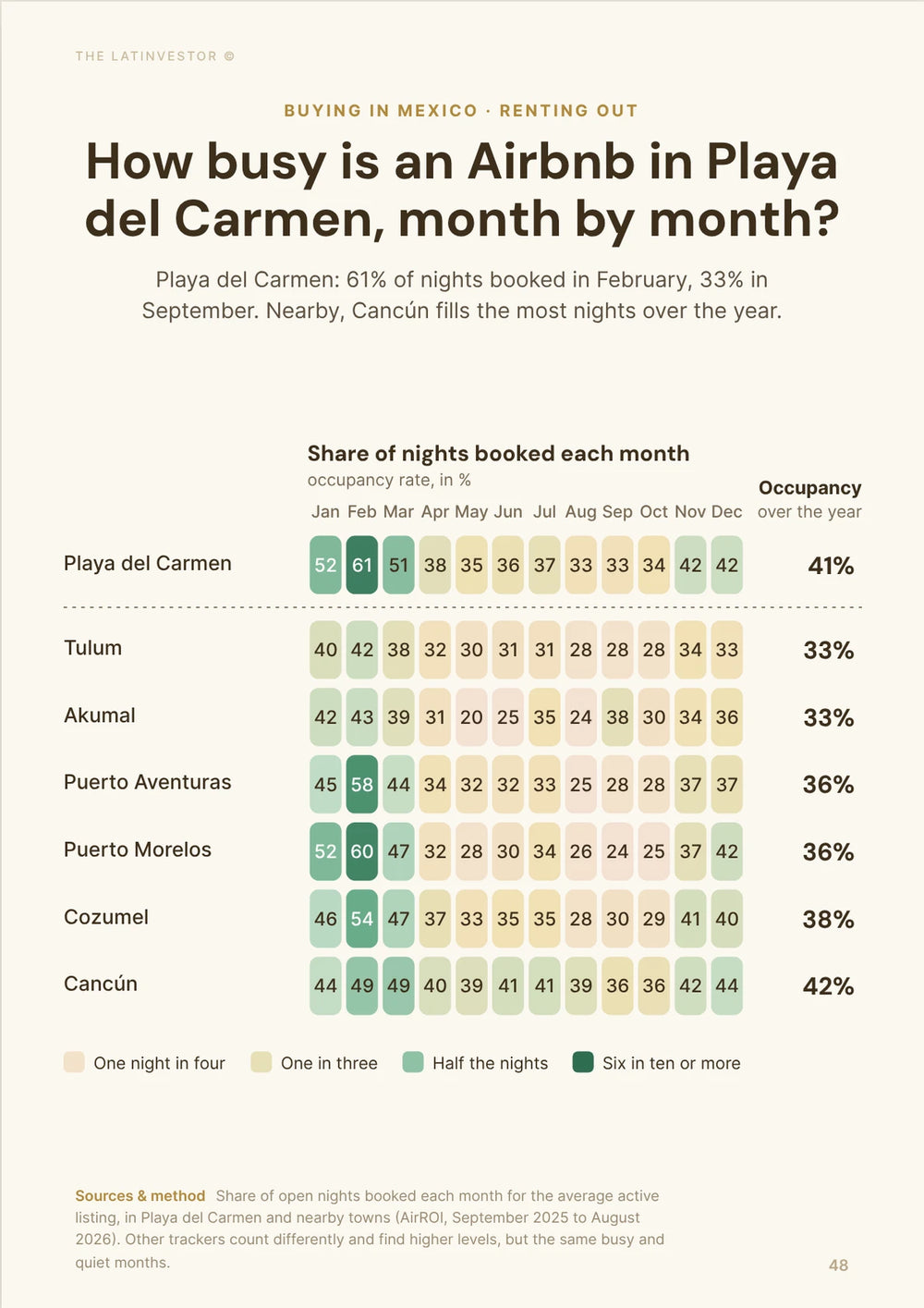
Airbnb is crowded. AirDNA counts 6,498 active short-term rentals in Playa, at 58% occupancy and about $18,800 a year per listing, and hotels were 71.27% full from January to July 2026, down from 75.76%.
Foreign ownership itself isn't the problem: a fideicomiso runs up to 50 years and the SRE permit costs MXN 21,650. The risk sits in the property under it.
Our take: only buy in Colosio if the unit is clearly cheaper than the same unit in Zazil-Ha, sits on an eastern block, has a registered deed with a clean chain of title, and has its own cistern. If it asks Zazil-Ha prices, buy in Zazil-Ha.

What has actually changed in Colosio since 2024?
Three things: more of the land has been titled, eastern Colosio has merged with northern central Playa, and prices have caught up. The third one cancels a good part of the first two.
Colonia Luis Donaldo Colosio grew out of a land occupation of roughly 280 hectares in 1994. For three decades, people lived, built and sold there without the paperwork you'd find in Centro or Zazil-Ha.
When the state launched its accelerated regularization program in 2024, it counted 5,109 properties in the process and only 1,184 with legal certainty, so about three-quarters still needed work. INSUS then handed titles to 1,632 families in 2024, and the federal and state governments announced another 474 titles and 30 deeds on July 17, 2026.
Meanwhile, restaurants, condos, small hotels and vacation rentals pushed north past Avenida CTM, and eastern Colosio now feels like part of the center. Buyers noticed: TuLugar's October 2026 data puts Colosio at about $3,562 per m², up from about $3,052 in our previous update.
| What has changed in Colosio? | A few years ago | October 2026 | Effect for a buyer |
|---|---|---|---|
| Land ownership | Widespread uncertainty | Large titling rounds, still disputed | Lower risk, not zero |
| Eastern Colosio | Clearly outside the tourist core | Blends into northern central Playa | Better location value |
| Water | Built for lower density | Upgrades under way, but cuts in July 2026 | Check the building's cistern |
| Price gap with Zazil-Ha | About 24% | About 3% | Less upside left |
| Property market | Highly speculative | About 462 listings tracked by TuLugar | Easier to compare units |
Has Colosio’s land-title problem finally been solved?
No. Titling has moved a lot since 2024, but the latest handover is disputed and many long-time occupants still don't have papers.
On July 17, 2026, President Sheinbaum and Governor Lezama announced 474 property titles and 30 deeds for Colosio families. Around July 29, founders of the neighborhood told the local press that only about half had actually been delivered, roughly 250, and that many families who've lived there for 30 years still can't get one.
Government announcements also mix categories: a "título" from INSUS isn't the same thing as a registered escritura, and later ceremonies can include cases from earlier rounds. Adding the headline numbers together would overstate how much of Colosio is fully clean.
So the useful change is narrower than the press releases suggest: you can now find Colosio properties with a complete, registered title. You can't assume a property has one because it's in Colosio.
| Regularization evidence | Reported scale | What we can conclude |
|---|---|---|
| Properties in the 2024 program | 5,109 | The problem was large |
| Legally certain at the start | 1,184 | About 23% of the pool |
| INSUS delivery, 2024 | 1,632 families | Titling reached real scale |
| Announced July 17, 2026 | 474 titles + 30 deeds | Process still going |
| Delivered, according to residents | About 250 | Official figures are contested |
Who is selling the land under Colosio’s new condos?
Often, people who only recently got a title, or who still don't have one. That's the part of Colosio's boom a condo buyer should look at hardest.
In April 2026, residents' unions said families without titles were being pushed to sell their lots for very little, and that those lots were later resold to real estate buyers for about MXN 3 to 5 million (roughly $161,000 to $269,000). In August 2026, residents said INSUS was asking from MXN 400,000 (about $21,500) to title some plots, which low-income families can't pay. A presidential decree had set a flat fee of MXN 25,000. Founders have also reported attempts to claim plots that families have occupied for decades.
None of this means every new building is built on shaky ground. It means the land under a Colosio project may have changed hands recently, under pressure, and possibly before its title was complete.
What to do: ask the developer for the land's deed and its registration at the Public Property Registry, and check when and from whom they bought it. If the title came from INSUS, ask for it and check it matches the lot. If the land deed is "in process," don't pay a deposit. Have your own notary or lawyer run the full chain of title, not just the last owner.
Can a Colosio condo still have legal problems today?
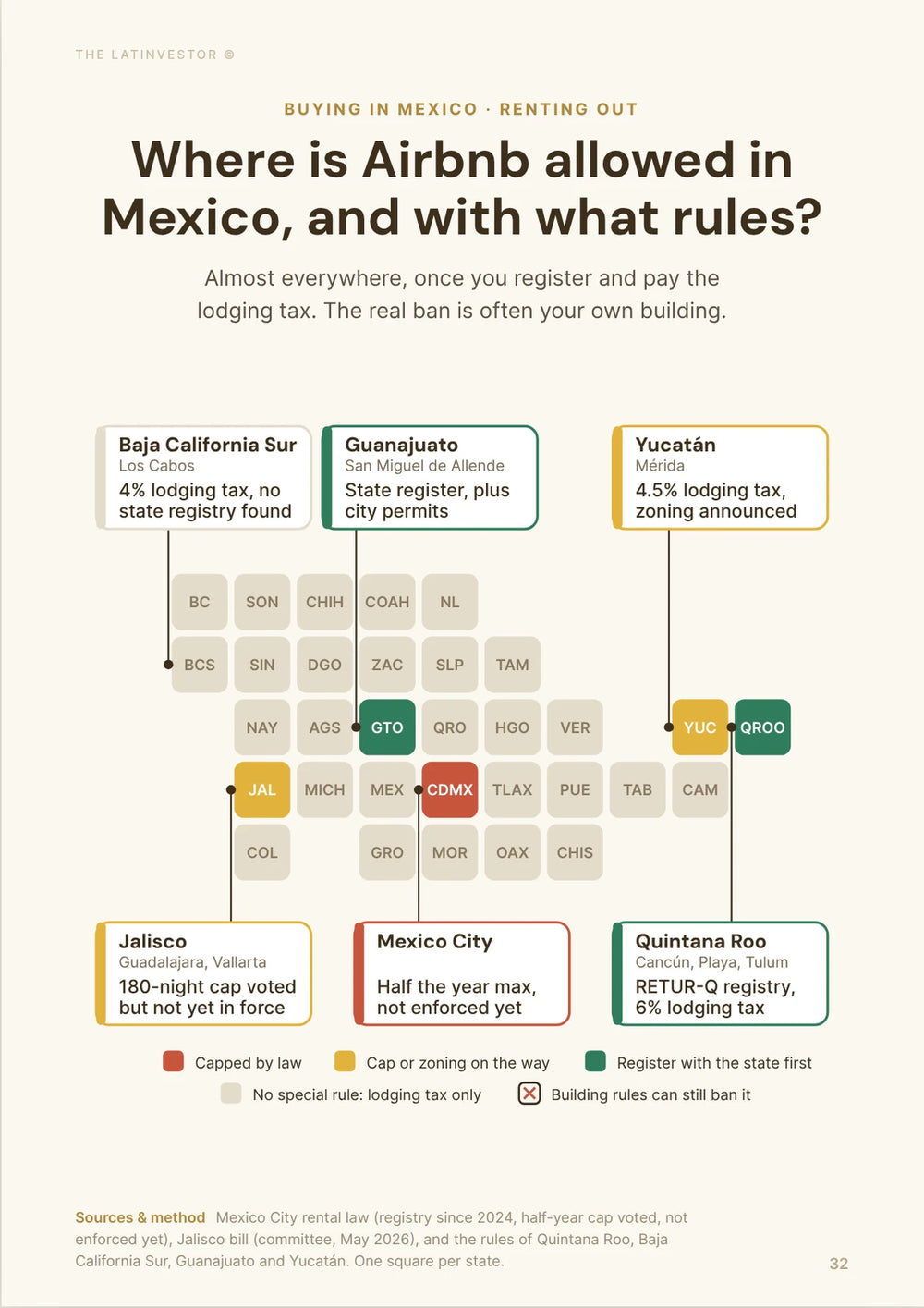
Yes. A condo in Colosio can have serious legal problems even when the building looks finished and the sales office looks professional.
The seller should show a registered escritura pública that matches the unit, a cadastral record that matches the deed, current property-tax receipts, a clean lien search and proof they have the right to sell.
For a condo, the building also needs a registered condominium regime, so your unit legally exists as a separate property with its share of common areas. Construction permits, land-use approval and completion paperwork matter too. In Colosio, small buildings often replace single houses on old lots, and a developer can finish the building before the paperwork is ready.
New isn't automatically safer. A resale with its own escritura, a few years of history and working utilities can be a lower risk than a presale from a small developer. For a presale, also check the land ownership, the construction license, the land use, the condominium documents and the contract rules under NOM-247. "Still being processed" is information about the risk, not routine paperwork.
Is Colosio still cheaper than Zazil-Ha and central Playa del Carmen?
Barely. TuLugar's October 2026 data puts Colosio at about $3,562 per m², only about 3% below Zazil-Ha.
In our previous update, based on older TuLugar data, Colosio asked about $3,052 per m² and the gap with Zazil-Ha was around 24%. Today, Zazil-Ha asks about $3,675, Gonzalo Guerrero $3,796 and Centro $4,120. Playacar Fase II, at about $3,041, is now cheaper per m² than Colosio.
Colosio still has the lowest median ticket near the center, about $191,000 for an apartment, mostly because units are smaller.
These are asking prices, not sale prices, and Colosio is a big, uneven area. A unit far west and one a few streets from the beach both say "Colosio" in the listing. But even with that caveat, the neighborhood discount that used to pay for its risks has mostly disappeared.
| Neighborhood | Asking price per m² (October 2026) | Difference with Colosio |
|---|---|---|
| Colosio | $3,562 | — |
| Zazil-Ha | $3,675 | +3% |
| Gonzalo Guerrero | $3,796 | +7% |
| Centro | $4,120 | +16% |
| Playacar Fase II | $3,041 | −15% |
Have Colosio prices already caught up?
Mostly, yes. The catch-up buyers were betting on has largely happened, at least in asking prices.
The eastern and southern blocks now blend into northern central Playa, and the market has priced that in: about $3,562 per m² against $3,675 in Zazil-Ha leaves a gap of only about $110 per m².
What hasn't caught up are the problems. Titles are still disputed, Colosio lost water in July 2026 and some streets flooded in January. So a buyer today pays close to Zazil-Ha prices for a neighborhood with more risk.
That kills the usual pitch that Colosio is "the next Zazil-Ha." If a Colosio unit asks about the same per m² as a comparable one in Zazil-Ha, we'd buy in Zazil-Ha.
Which part of Colosio is actually becoming part of central Playa del Carmen?
The eastern and southeastern blocks, around Fifth Avenue, Avenida CTM and the streets running to the beach. Farther inland, the case gets much weaker.
Playa's commercial center has pushed north past the old core around Calle 38. Restaurants, cafés, small hotels, apartments and vacation rentals now carry on into blocks that felt outside the tourist zone a decade ago. Local businesses call it the "new Fifth Avenue," which is marketing, but the movement is real.
From there, you can walk south into the established tourist zone, so tourists, remote workers and locals all want the same streets. That's also why the land there is under so much pressure.
The mistake is treating all of Colosio the same. A condo near the beach behaves like a northern Centro property; a home dozens of blocks west has different renters, different surroundings and different buyers when you sell.
Will your Colosio condo have water when you need it?
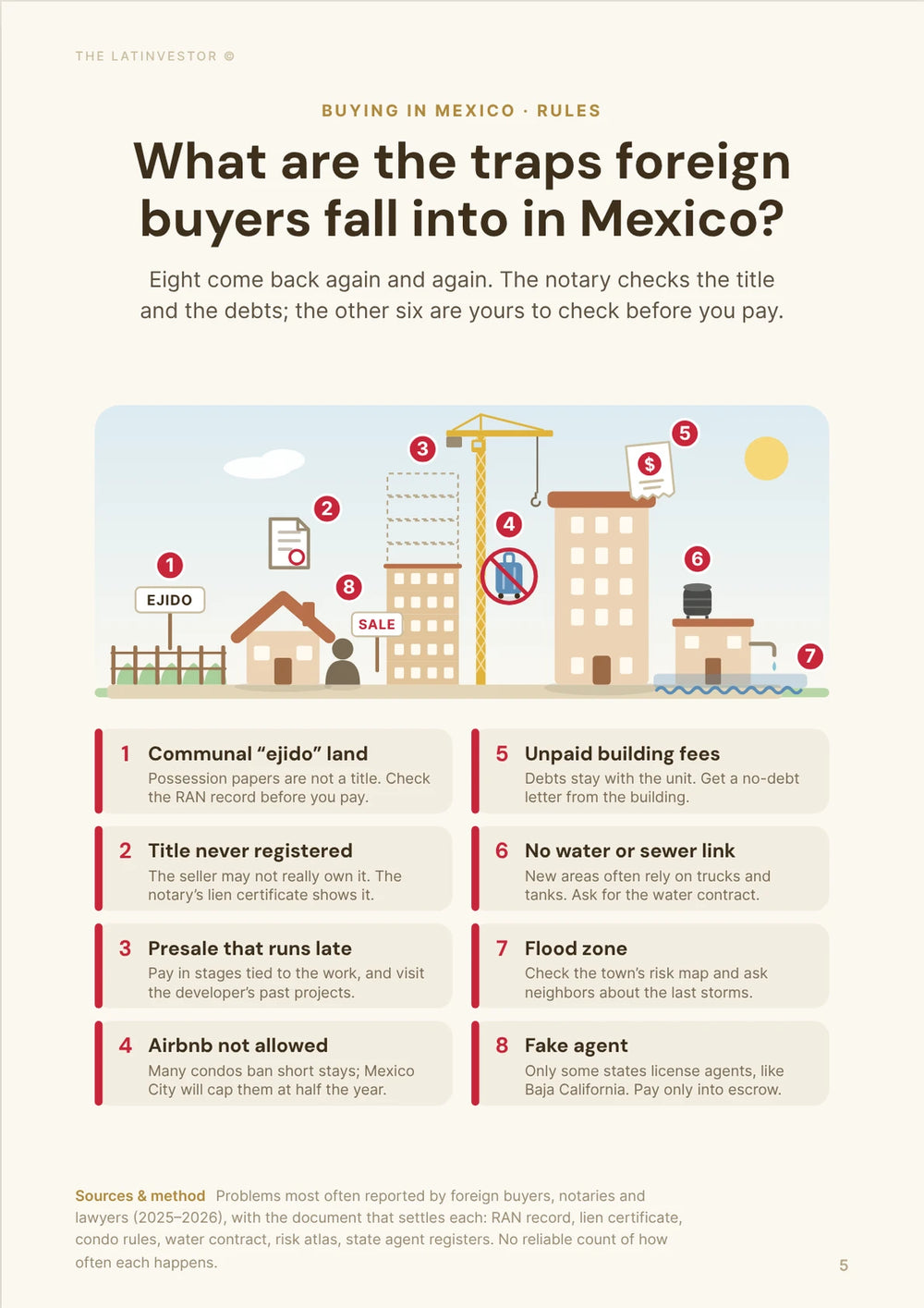
Not guaranteed. In July 2026, Por Esto! reported at least 18 Playa del Carmen neighborhoods with little or no running water, some for about two weeks, and Colosio was on the list.
Days later, residents of Colosio and several other neighborhoods were still reporting low pressure, and some said the shortage had come back again and again for more than two years. Their explanation: the network hasn't kept up with growth, as low-density homes turned into condo buildings.
The water company, Aguakan, has invested: a MXN 43.6 million (about $2.34 million) upgrade of the Sector 4 network around central Playa, with more than 18.4 km of new pipe and 2,155 household connections for more than 14,000 people, scheduled from September 2025 to March 2026. Its first stage, about 800 meters on Avenida 10 between CTM and Calle 34 Norte, sits right at Colosio's southern edge. The July cuts happened anyway.
What to check: does the building have its own cistern and pump, and how many days of water does it hold? Ask the administrator how often the building bought water by truck in 2026 and what it cost. A Colosio unit without a cistern is a much harder rental.
| Water in and around Colosio | Figure | What it means |
|---|---|---|
| Sector 4 investment (Aguakan) | MXN 43.6m | Real money spent nearby |
| New water network planned | >18.4 km | Replaces old pipes |
| Household connections | 2,155 | Large residential impact |
| First stage, Avenida 10 | About 800 m | Right at Colosio's southern edge |
| Neighborhoods without water, July 2026 | At least 18, Colosio included | Capacity still short |
Has Playa del Carmen actually become safer around Colosio?
Yes, on the city's numbers. But no public data breaks crime down to Colosio itself.
The municipality says intentional homicides fell 51.6% from January to August 2026, compared with the same period of 2025. Over the same months, it reports vehicle theft down 45.5%, motorcycle theft down 45.6% and home burglary down 33.2%. Over the year to September 2026, Playa had about 5.7 homicides per 100,000 people.
These are the city's own figures, so take them as a direction rather than an exact count. Not everything fell as much: general theft is down 12.2% and business robbery only 2.4%.
For an owner, the drops in burglary and vehicle theft matter most. Still, walk the surrounding blocks at night and ask nearby shops and guards before you buy.
| Crime in Playa del Carmen | Change, Jan–Aug 2026 vs 2025 |
|---|---|
| Intentional homicide | −51.6% |
| Vehicle theft | −45.5% |
| Motorcycle theft | −45.6% |
| Home burglary | −33.2% |
| General theft | −12.2% |
| Business robbery | −2.4% |
Is Colosio gentrifying fast enough to make property values rise?
Parts of it are, but the prices already reflect most of that. We'd only pay for change that has already reached the street you're buying on.
Capital has moved north through Playa for years, and Colosio's cheap land close to Fifth Avenue made it the obvious next step for developers. As titling removes part of the old legal discount, more lots get redeveloped.
That doesn't mean every block will get there. A presale presentation can show restaurants, landscaped sidewalks and tourists long before any of that exists outside the door.
We'd pay a premium for a street that already has walkability and shops. We wouldn't pay a Zazil-Ha price for a promise that the surroundings will look like Zazil-Ha later.
Does a long-term rental in Colosio make financial sense today?
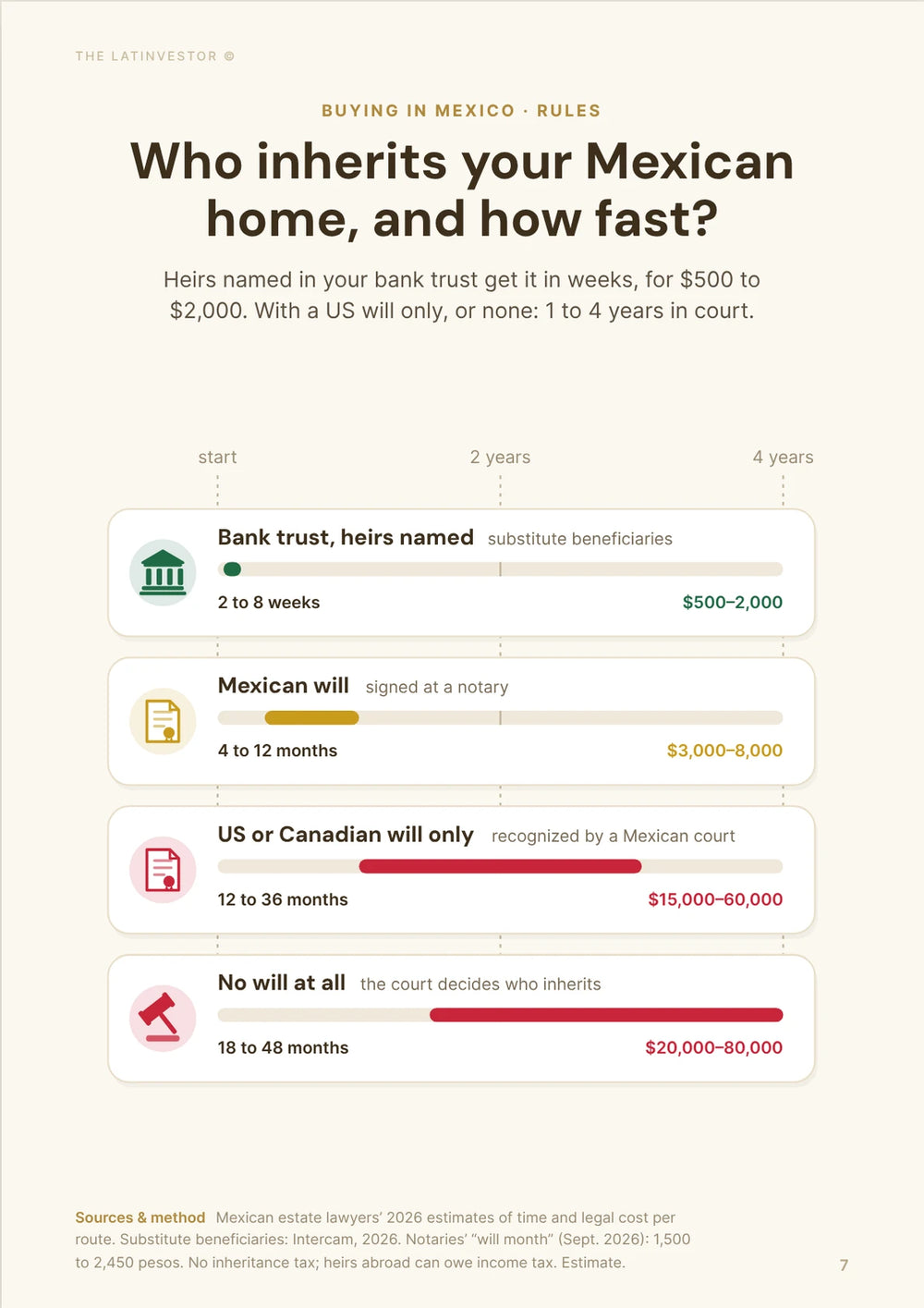
It can work, but the numbers are modest. A median $191,000 Colosio apartment renting at TuLugar's median of about $802 a month earns about 5.0% gross.
That's before vacancy, maintenance, condo fees, insurance and management. A non-resident also pays 25% tax on gross rent, which alone brings the yield down to about 3.8%.
That's acceptable if you also believe in the location. It's weak if rental cash flow is the whole plan.
It's also a good filter for new projects. If a developer asks a big premium over existing Colosio resales and local rents can't support it, you're paying for future appreciation or Airbnb performance. Know that before you sign.
Is Airbnb still a good reason to buy a condo in Colosio?
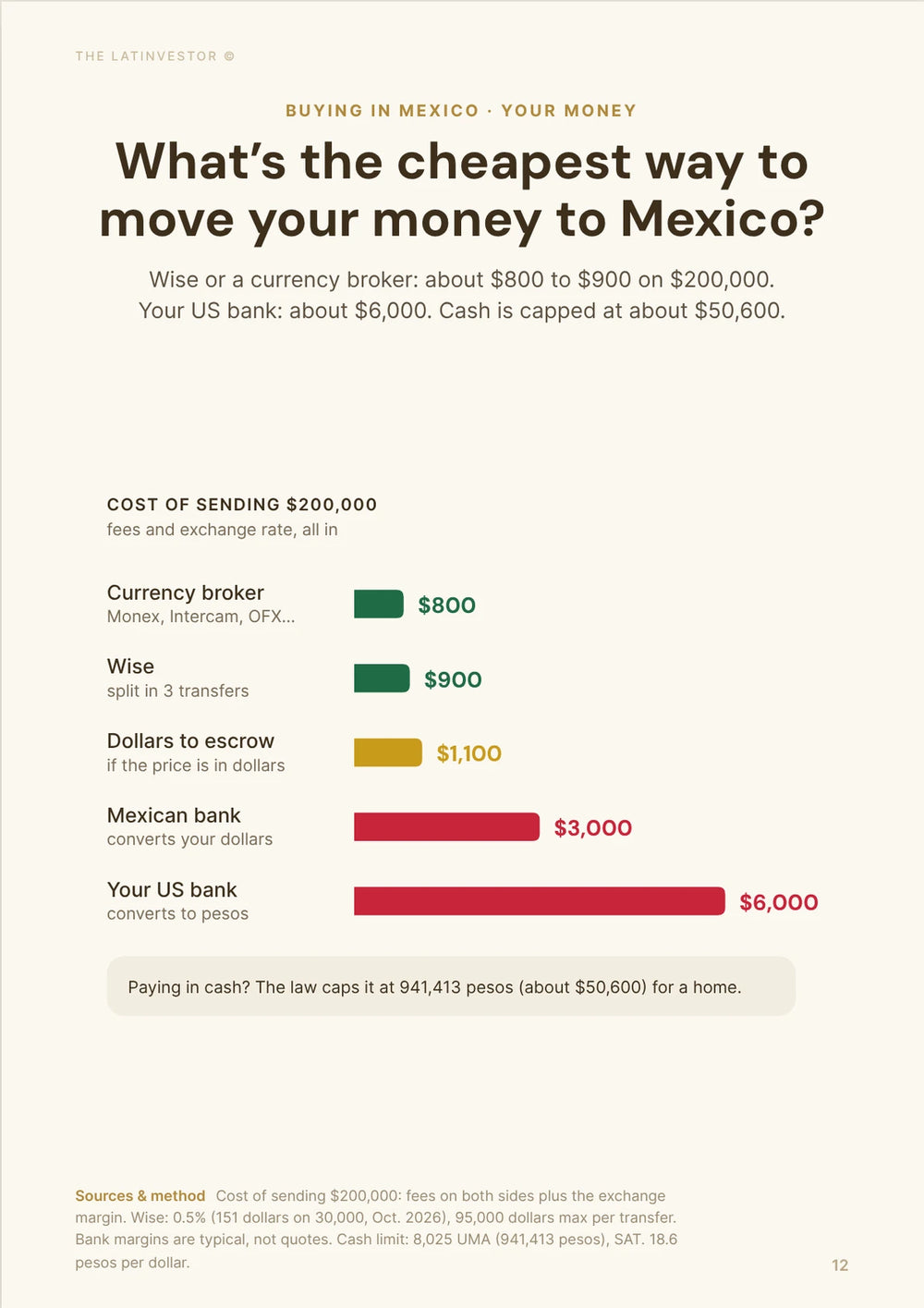
Not on its own. Playa is too crowded to buy an average condo just because short-term rentals are allowed.
AirDNA counts 6,498 active short-term rentals in Playa in September 2026, about 60% fewer than a year earlier. Over the year to September, they averaged 58% occupancy, about $103 a night and about $18,800 of revenue per listing.
Hotels are softer too. Quintana Roo's tourism observatory puts Playa's hotel occupancy at 71.27% from January to July 2026, against 75.76% a year earlier.
A Colosio Airbnb needs a reason to win: an eastern, walkable block, outdoor space, light, good reviews, a well-run building, water that doesn't run out, and an easy walk to the beach. A generic 45 m² studio in a building full of identical units has a hard job.
| Playa del Carmen rental indicator | Latest reading | What we take from it |
|---|---|---|
| Active short-term rentals (Sept. 2026) | 6,498 | Still heavy competition |
| Short-term rental occupancy | 58% | Many nights stay empty |
| Average nightly rate | About $103 | Citywide benchmark |
| Average yearly revenue per listing | About $18,800 | Before costs and tax |
| Hotel occupancy, Jan–Jul 2026 | 71.27% | Down from 75.76% a year earlier |
Could weaker tourism create a better time to buy in Colosio?
Only if sellers actually lower their prices. Softer tourism gives you arguments, but Colosio's asking prices have gone up, not down.
Hotel occupancy is about four and a half points below last year, and thousands of short-term rentals compete for the same guests. That makes rental projections easy to test.
If a Colosio condo still works with conservative occupancy and ordinary nightly rates, any recovery is a bonus. If it only works with high occupancy, the price is too high. Use that to negotiate, and compare every offer with finished units a few blocks away in Zazil-Ha.
Are sargassum and flooding serious risks for Colosio property?
Yes. In January 2026, a cold front flooded streets in Colosio and Gonzalo Guerrero, among other areas, and sargassum still hits the coast season after season.
The Navy and the state run a sargassum containment program, which helps some beaches. Still, a condo whose rental premium depends almost entirely on beach access is more exposed than one that also has restaurants, walkability and long-term renters.
Flooding varies street by street in flat, coastal Playa. Visit after heavy rain if you can, and ask shopkeepers, guards and the administrator whether the entrance floods, whether underground parking takes water, or whether one corner regularly becomes impassable.
Is buying property in Colosio safe for a foreigner?
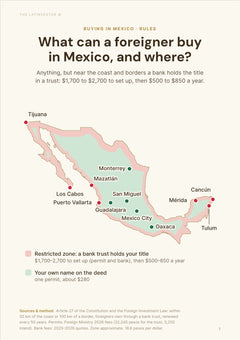
The ownership structure is. Foreigners buy residential property in Playa through a fideicomiso, a bank trust, and that's routine across the Riviera Maya.
Playa is in the restricted coastal zone. The bank holds title as trustee and you're the beneficiary, for up to 50 years, renewable. The SRE permit costs MXN 21,650, and banks charge about $550 to $800 to set it up and $550 to $700 a year.
The trust won't fix a bad title, a missing condominium regime or a unit that doesn't legally exist. Have the property itself checked independently; the fact that a bank accepted the trust doesn't prove the deal is clean.
Will it be easy to resell a Colosio condo?
A good one, yes. A generic investor unit can get stuck among dozens of near-identical ones.
TuLugar tracks about 462 listings in Colosio, and buyers can compare resales, presales and nearby neighborhoods within minutes. With Zazil-Ha only about 3% more per m², a Colosio seller has little room to ask a premium.
The units that resell well have something hard to copy: a strong eastern block, clean title, light, a practical layout, reasonable condo fees, parking, outdoor space, a cistern or a short walk to the beach. We'd rather own a simple apartment on a strong block than a highly amenitized project in a weak spot.
What would make us walk away from a Colosio property immediately?
Unclear ownership, missing permits, no water backup, or numbers that only work with an optimistic Airbnb scenario.
For a resale, the registered escritura must match the property and the seller, and the cadastral record must agree with it. Check liens, property tax, condominium documents and the seller's right to transfer.
For a development, check who owns the land and since when, the land use, the construction license, the condominium regime and the NOM-247 contract rules. A developer saying something important will be ready "later" is a reason to dig.
On the money side, a property that only pays at 75% Airbnb occupancy or with fast appreciation leaves you no margin.
| What we check | What we want | Reason to walk away |
|---|---|---|
| Ownership | Registered escritura | Seller can't prove clean ownership |
| Land history | Clear chain of title | Land bought recently from untitled occupants |
| Property record | Cadastre matches escritura | Size, owner or parcel doesn't match |
| Liens | Clean current search | Unexplained mortgage or restriction |
| Condo structure | Legally constituted unit | Unit exists mainly in sales documents |
| Construction | Valid permits | Important approval still pending |
| Water | Own cistern and pump | No backup when the network fails |
| Rental economics | Works conservatively | Needs exceptional occupancy or rates |
| Price | Clearly below Zazil-Ha equivalent | Same price per m² as Zazil-Ha |
So, is it safer to buy property in Colosio now?
Safer than a few years ago, yes. Safe enough to justify today's prices, not really.
Titling has moved: thousands of plots have gone through regularization since 2024. But the July 2026 handover of 474 titles is disputed, residents are fighting over fees and land pressure, and that dispute sits right under the lots where new condos go up.
The rest of the picture is mixed. Crime is down across the city, with homicides down 51.6% from January to August. Eastern Colosio is now part of northern central Playa. But Colosio lost water in July 2026, some streets flooded in January, and at about $3,562 per m² it's only about 3% cheaper than Zazil-Ha, against about 24% in our previous update.
The discount used to pay for the risk. It no longer does.
Our rule: buy in Colosio only on an eastern block, with a registered deed and a clean chain of title back to the land, a building with its own cistern, rental numbers that work at ordinary occupancy, and a price clearly below the same unit in Zazil-Ha. Otherwise, buy in Zazil-Ha.
Our methodology
This article estimates whether buying in Colosio carries less risk today than a few years ago, and whether the price still pays for the risk that's left. We split the question into land title, property paperwork, price, water and flooding, crime, rental income and the foreign-ownership structure.
Prices come from TuLugar's October 2026 asking-price data by neighborhood (price per m², median apartment price and median rent). The gross yield is TuLugar's median yearly rent divided by its median asking price, two separate samples, so treat it as a rough benchmark. Short-term rental figures come from AirDNA (12 months to September 2026), checked against hotel occupancy from Quintana Roo's tourism observatory (SITUR).
Title figures come from government announcements (2024 program, INSUS, July 2026 handover) and from residents' statements reported in the local press in 2026; we don't add separate announcements together. Water, flooding and infrastructure come from Aguakan and dated 2026 local reports. Crime figures are the municipality's own January–August 2026 comparison and a trailing-12-month rate based on SESNSP data; they cover the whole city, not Colosio. Foreign-ownership rules and fees come from the Foreign Affairs Ministry (SRE), and condo rules from Quintana Roo's condominium law and NOM-247.
We checked these figures in October 2026, using about 18.6 pesos per US dollar and 20.9 pesos per euro.
Limits: asking prices aren't sale prices, Colosio is a large and uneven area so neighborhood medians hide big differences between blocks, residents' figures on titles are claims rather than official counts, and citywide averages for crime or Airbnb don't describe one building.
Key sources used for this analysis include TuLugar's Playa del Carmen market data, AirDNA's Playa del Carmen market overview, SITUR Quintana Roo's hotel-occupancy series, the Quintana Roo government on the 2024 Colosio regularization, INSUS on the 1,632 Colosio titles, La Razón on the July 2026 Colosio titles, Playa del Carmen's municipal record of the Colosio titles, Noticaribe on founders disputing the July 2026 handover, Riviera Maya News on residents disputing the 474 titles, Por Esto! on INSUS title fees in Colosio (August 2026), Riviera Maya News on the decree's flat title fee, Por Esto! on pressure to sell Colosio lots (April 2026), Ruptura 360 on Colosio residents' land claims (April 2026), Aguakan on the Sector 4 water network, Riviera Maya News on the Aguakan upgrade schedule, Por Esto! on the July 2026 water cuts, Por Esto! on Colosio's low water pressure, Riviera Maya News on the January 2026 flooding, Playa del Carmen's 2026 security report, Enfemex municipal crime data, the Mexican Navy on sargassum containment, Mexico's Foreign Affairs Ministry on restricted-zone trusts, article 158 of Mexico's income tax law, the Ministry of Economy on NOM-247-SE-2021 and the Quintana Roo Condominium Property Law.