Summary
Is Querétaro a good place to live as an expat? Yes, for most people who want a safe, organized city with good jobs and schools, and who do not need the beach. By our estimate, a comfortable single life costs 45,000 to 55,000 MXN (about 2,450 to 3,000 USD) a month.
Quality of life is improving thanks to the job market and new infrastructure, but growth strains water and roads. The train to Mexico City was 30.38% built in September 2026 and could be finished in the second half of 2027.
Private hospitals such as Hospital Ángeles, Star Médica and H+ are good. A private doctor visit costs about 400 to 900 MXN, and a specialist 900 to 1,800 MXN.
There are around a dozen international and bilingual schools. Colegio Suizo, for example, charges 122,900 MXN a year in kindergarten and 205,700 MXN in high school for 2026-2027.
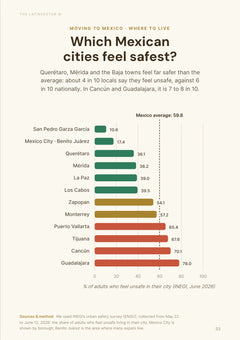
Querétaro is one of Mexico's safest large cities: 36.1% of adults felt unsafe in June 2026, down from 46.2% a year earlier, against 59.8% across Mexico's cities.
A modest single life costs about 30,000 to 40,000 MXN a month. A one-bedroom rents for about 15,560 MXN in central areas and 10,210 MXN outside the center, and a dollar buys about 18.4 pesos in October 2026.
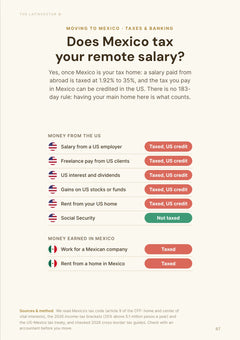
On a salary of 50,000 MXN a month, income tax takes roughly 18%, and about 22% to 25% between 80,000 and 120,000 MXN.
Most expats are American and Canadian, followed by Latin Americans, Europeans and Asians. The 2020 census counted about 3,610 recent arrivals from the United States, ahead of Venezuela and Brazil.
They live mainly in Juriquilla, Zibatá, El Refugio, Milenio III and the Centro Histórico, while Zakia and Jurica cost less. Water scarcity after several very dry years is the main reason some leave.
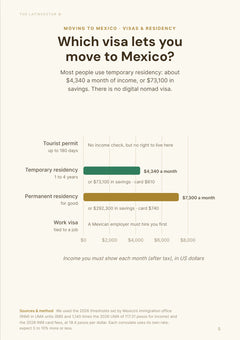
Most come on the temporary resident visa, which asks for 79,770.80 MXN a month of income or 1,337,334 MXN in savings in 2026. After four years, you can switch to permanent residency.
The full residency process often takes 1 to 4 months, and you must start the card exchange within 30 calendar days of arriving in Mexico.
Jobs are in aerospace, automotive and tech. By our estimate, mid-level expats earn 45,000 to 90,000 MXN a month, and senior roles 90,000 to 160,000 MXN.
Expats love the safety, the "organized Mexico" feel and weekend trips. They dislike the car dependence, the traffic and INM, where a one-year residency card costs 11,140.74 MXN in 2026.
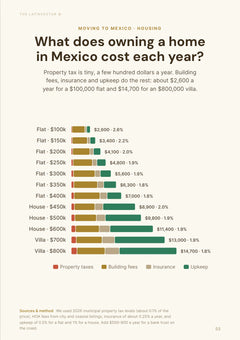
Foreigners can own property directly, as Querétaro is outside the restricted zone. Apartments cost about 22,800 to 40,700 MXN per m², and around 26,000 MXN in Juriquilla.
Bottom line: Querétaro suits working professionals, families and remote workers who value safety and order over the beach. Choose your neighborhood near your job or school, plan for a car, and check the water situation of the area before you rent or buy.

What are quality of life, healthcare, schools and safety like in Querétaro?
Is quality of life getting better or worse in Querétaro in 2026?
In 2026, the overall trajectory of quality of life in Querétaro is improving, driven by strong economic fundamentals and continued investment in infrastructure.
The most notable improvement over the past two to three years has been Querétaro's job market resilience, with unemployment staying low and the aerospace, automotive, and tech sectors continuing to expand and attract skilled workers.
However, the persistent challenge remains Querétaro's rapid population growth, which is straining water resources and causing traffic congestion on key arterial roads, especially during rush hours in areas like Juriquilla and Zibatá.
That said, the government is investing in the QroBús transit system and a Mexico City passenger train (30.38% built in September 2026, with works that could be finished in the second half of 2027), which should ease some of this pressure in the coming years.
Are hospitals good in Querétaro in 2026?
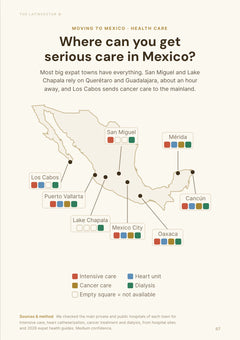
In 2026, Querétaro's best private hospitals offer quality comparable to what you would find in major North American cities, with modern equipment, shorter wait times, and many English-speaking doctors on staff.
The hospitals expats most commonly recommend include Hospital Ángeles Querétaro, Star Médica Querétaro, and H+ Hospital Querétaro (MAC), all of which have specialists across multiple disciplines and emergency services.
By our estimate, a standard private doctor consultation in Querétaro typically costs between 400 and 900 MXN (roughly 22 to 49 USD or 19 to 44 EUR), while specialist visits range from 900 to 1,800 MXN (49 to 100 USD or 44 to 85 EUR).
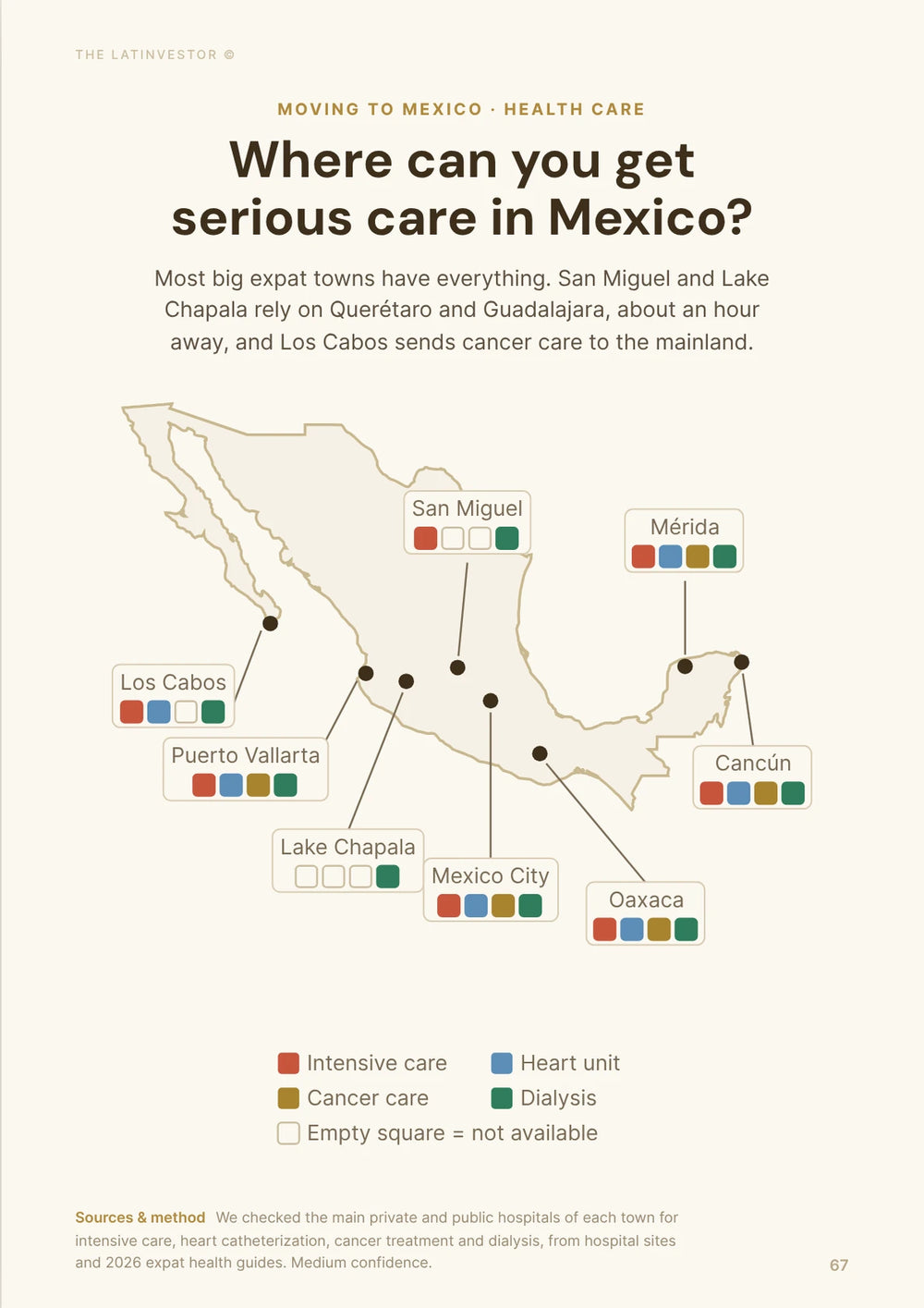
Private health insurance is strongly recommended for expats in Querétaro because while public healthcare through IMSS is available to legal residents, wait times are longer and English-speaking staff are harder to find outside the private system.
Are there any good international schools in Querétaro in 2026?
In 2026, Querétaro has around a dozen international and bilingual schools, and the overall quality is strong, with several offering IB programs and American or Canadian curricula.
The most reputable schools among expat families include John F. Kennedy The American School of Querétaro (offering IB and American-style education), International School of Querétaro (ISQ) (recently authorized for the IB Diploma Programme), and George Washington School (bilingual with American influence).
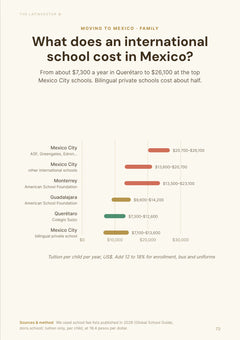
Annual tuition at international schools in Querétaro typically ranges from 120,000 to 300,000 MXN per child (roughly 6,500 to 16,500 USD or 5,850 to 14,500 EUR), with some premium campuses charging more, plus enrollment and registration fees that can add 10,000 to 60,000 MXN upfront. For example, for 2026-2027, Colegio Suizo de México charges 122,900 MXN (about 6,700 USD) a year in kindergarten and 205,700 MXN (about 11,000 USD) in high school, plus a yearly re-enrollment fee of 20,290 to 37,240 MXN.
Waitlists at popular schools like JFK can be long, especially for transition grades, so applying early is essential; public schools are generally not a practical option for expats due to language barriers and curriculum differences.
Is Querétaro a dangerous place in 2026?
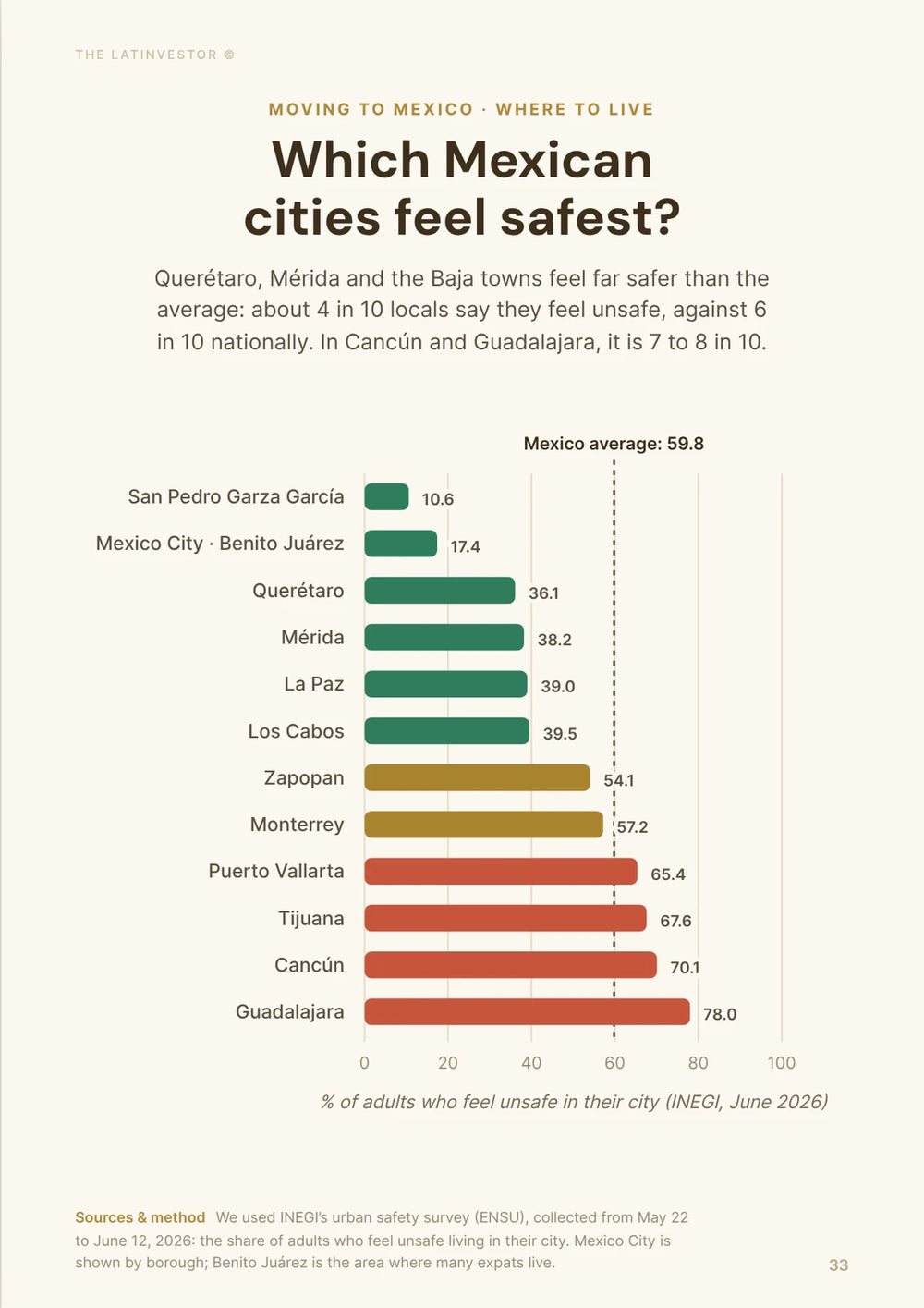
In 2026, Querétaro is one of the safest large cities in Mexico for residents and expats. In June 2026, 36.1% of adults in the city said they felt unsafe, down from 46.2% a year earlier, against 59.8% across Mexico's cities, according to INEGI's ENSU survey.
The most common safety concern for expats in Querétaro is petty crime such as pickpocketing at crowded bus stations or markets, rather than violent crime; carjackings and armed robberies are rare in the neighborhoods where expats typically live.
The safest neighborhoods in Querétaro for expats include Juriquilla (gated communities with security), Zibatá (modern planned development), El Refugio, Centro Histórico (well-patrolled UNESCO zone), and El Campanario (exclusive and secure).
Women can generally live alone safely in Querétaro, especially in these established neighborhoods; common precautions include using rideshare apps like Uber or DiDi at night rather than walking alone in poorly lit areas.
How much does everyday life cost in Querétaro in 2026?
What monthly budget do I need to live well in Querétaro in 2026?
In 2026, by our estimate, a single expat can live comfortably in Querétaro on a monthly budget of around 45,000 to 55,000 MXN (roughly 2,450 to 3,000 USD or 2,200 to 2,650 EUR), which covers a nice apartment in a good area, eating out regularly, and private health insurance.
For a more modest but still decent lifestyle, a single person can manage on 30,000 to 40,000 MXN per month (1,630 to 2,150 USD or 1,460 to 1,940 EUR), which means a smaller apartment, cooking at home more often, and using public transport instead of rideshares.
A comfortable or upscale lifestyle for a couple runs between 70,000 and 90,000 MXN per month (3,800 to 4,900 USD or 3,400 to 4,350 EUR), while a family of four with international school tuition should budget 110,000 to 160,000 MXN monthly (6,000 to 8,700 USD or 5,350 to 7,750 EUR).
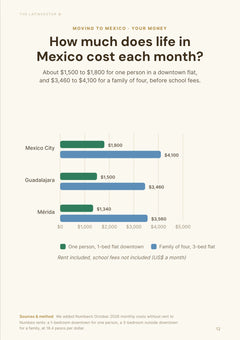
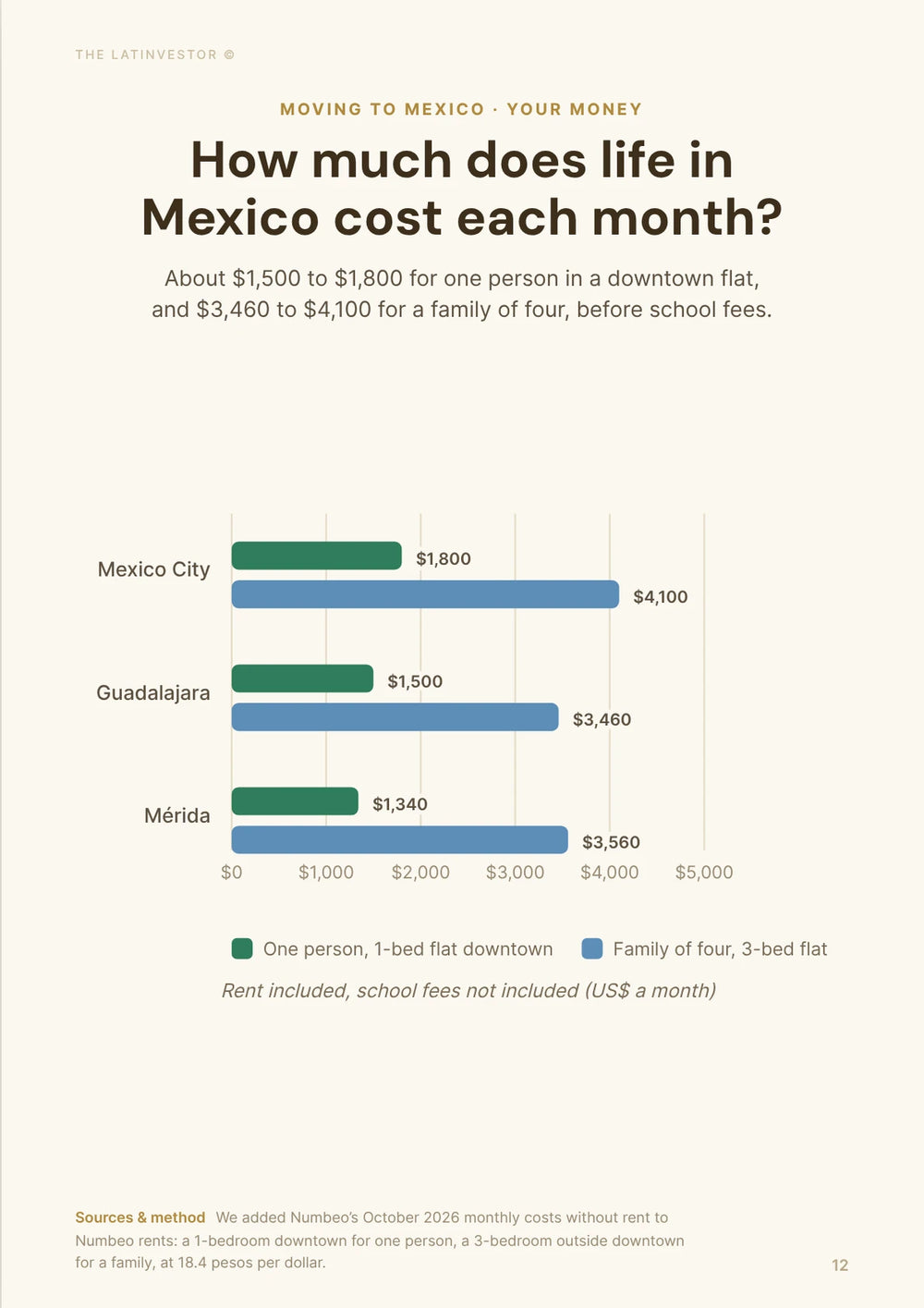
The expense category that takes up the largest share of an expat budget in Querétaro is housing, especially if you choose premium gated communities like Juriquilla or Zibatá, where rent for a nice two-bedroom can reach 18,000 to 28,000 MXN per month; international school tuition is the other major cost driver for families. Across the city, a one-bedroom rents for about 15,560 MXN (about 850 USD) a month in central areas and 10,210 MXN (about 550 USD) outside the center on Numbeo in 2026, and Wise puts other living costs, without rent, at about 15,050 MXN a month for a single person and 54,720 MXN for a family of four.
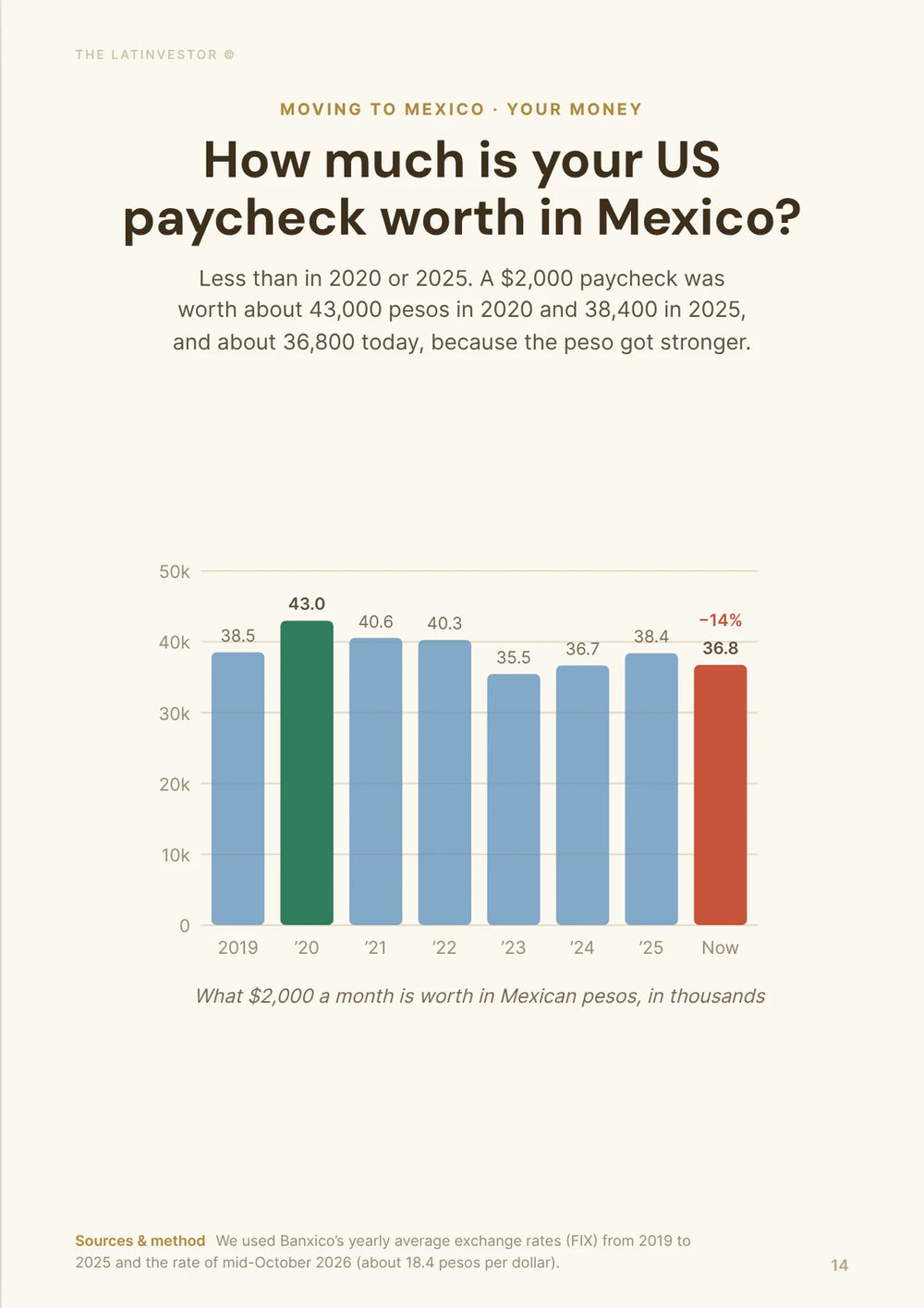
The strong peso matters too. In October 2026, a dollar buys about 18.4 pesos, far less than the 20-plus pesos it bought in early 2025, so a budget in dollars does not stretch as far as it used to.
What is the average income tax rate in Querétaro in 2026?
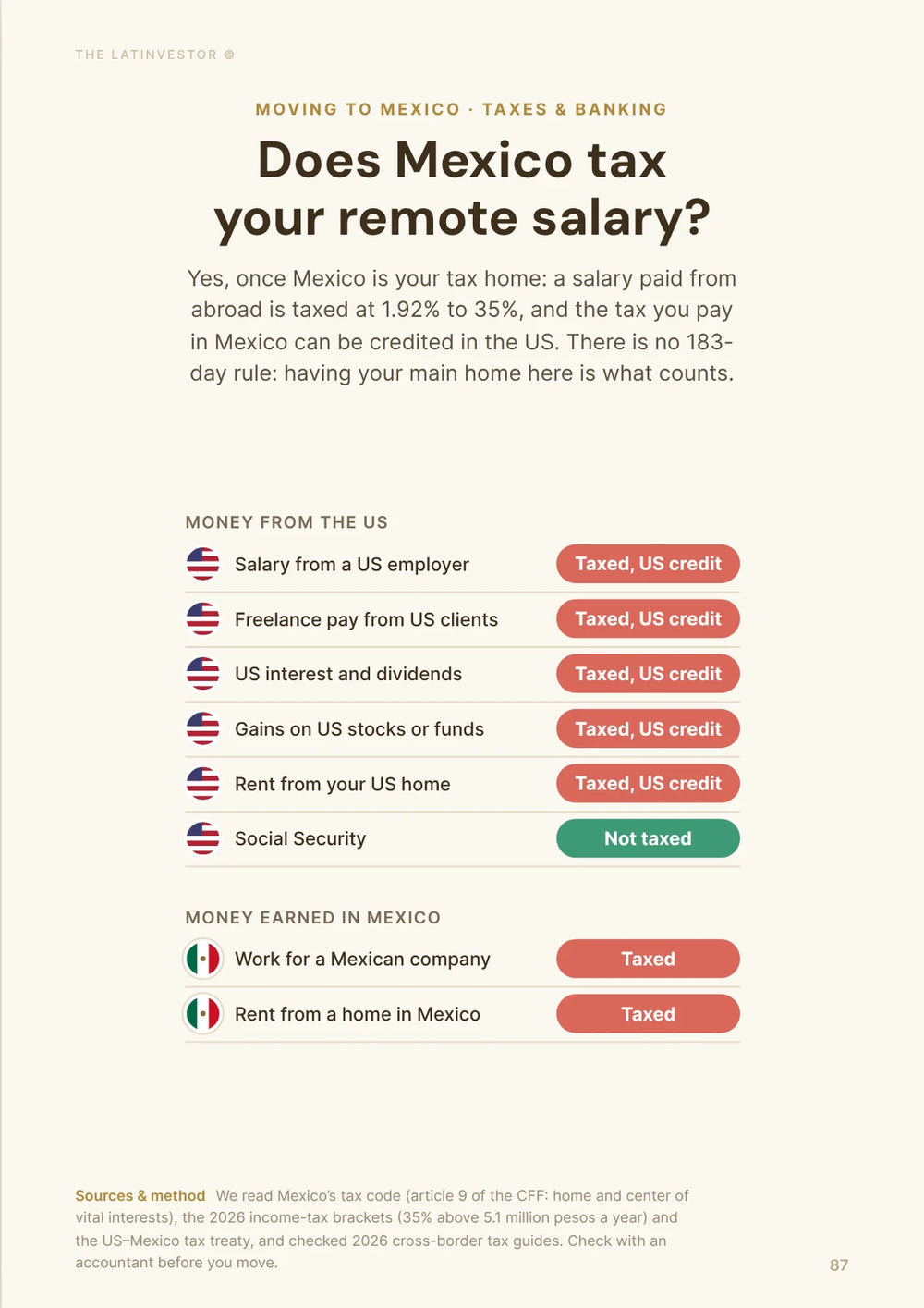
In 2026, a typical middle-income earner in Querétaro (around 50,000 MXN gross monthly salary) pays an effective income tax rate of roughly 18 percent, while higher earners (80,000 to 120,000 MXN monthly) pay about 22 to 25 percent, based on the 2026 monthly withholding table, before annual deductions.
Mexico's personal income tax (ISR) uses a progressive bracket system ranging from about 1.9 percent at the lowest income levels to a top marginal rate of 35 percent, and most expats working in professional roles fall into the 23.52 to 32 percent marginal brackets.
What kind of foreigners actually live in Querétaro in 2026?
Where do most expats come from in Querétaro in 2026?
In 2026, the largest groups of expats in Querétaro come from the United States and Canada, followed by Latin Americans (especially Venezuelans), Europeans (especially from Spain and Germany) and Asians (South Korea and Japan), many drawn by the aerospace and automotive industries.
Foreign residents make up a relatively small percentage of Querétaro's total population compared to cities like San Miguel de Allende, but the expat community is growing steadily: the 2020 census counted about 3,610 people who had moved to Querétaro municipality from the United States in the previous five years, ahead of Venezuela (about 2,590) and Brazil (about 680).
The main reason expats from these countries are drawn to Querétaro is the strong job market in manufacturing, engineering, and tech, combined with a high quality of life at a lower cost than both their home countries and Mexico City.
The expat population in Querétaro is predominantly a mix of working professionals (many in engineering, management, and supply chain roles), young families seeking good schools, and increasingly remote workers; retirees are less common here than in beach or colonial towns like Puerto Vallarta or San Miguel de Allende.
Where do most expats live in Querétaro in 2026?
In 2026, the top neighborhoods where expats concentrate in Querétaro include Juriquilla (the main expat hub with gated communities and international schools), Zibatá (modern eco-friendly planned community), El Refugio (spacious developments popular with families), Milenio III (convenient for professionals), and Centro Histórico (walkable colonial charm).
What makes these neighborhoods attractive is their combination of security (most have gated access and private security), proximity to good schools and shopping centers, and modern infrastructure including reliable internet, which is essential for remote workers.
Emerging neighborhoods that are starting to attract more expats include Zakia (newer development east of the city with good value) and Jurica (established area between downtown and Juriquilla), both offering lower prices than Juriquilla while maintaining safety and amenities.
Are expats moving in or leaving Querétaro in 2026?
In 2026, Querétaro seems to attract more expats than it loses, though no official figure confirms it, driven by the city's strong job market and relatively affordable cost of living compared to similar cities.
The main factor driving expats to move to Querétaro right now is the combination of safety, economic opportunity (especially in aerospace and tech), and the ability to maintain a high quality of life on a moderate budget.
The main factor causing some expats to leave Querétaro recently is the city's growing water scarcity problem after several very dry years and increasing traffic congestion as the population continues to boom.
Compared to similar destinations in the region, Querétaro is growing faster than San Miguel de Allende (which is more expensive and smaller) but slightly slower than Mexico City, which offers more job diversity at the cost of higher stress and pollution.
What paperwork do I need to move to Querétaro in 2026?
What visa options are popular in Querétaro in 2026?
In 2026, the three most popular visa types for expats moving to Querétaro are Residente Temporal (Temporary Resident, for 1 to 4 years), Residente Permanente (Permanent Resident, for retirees or those with family ties), and work-based visas sponsored by employers.
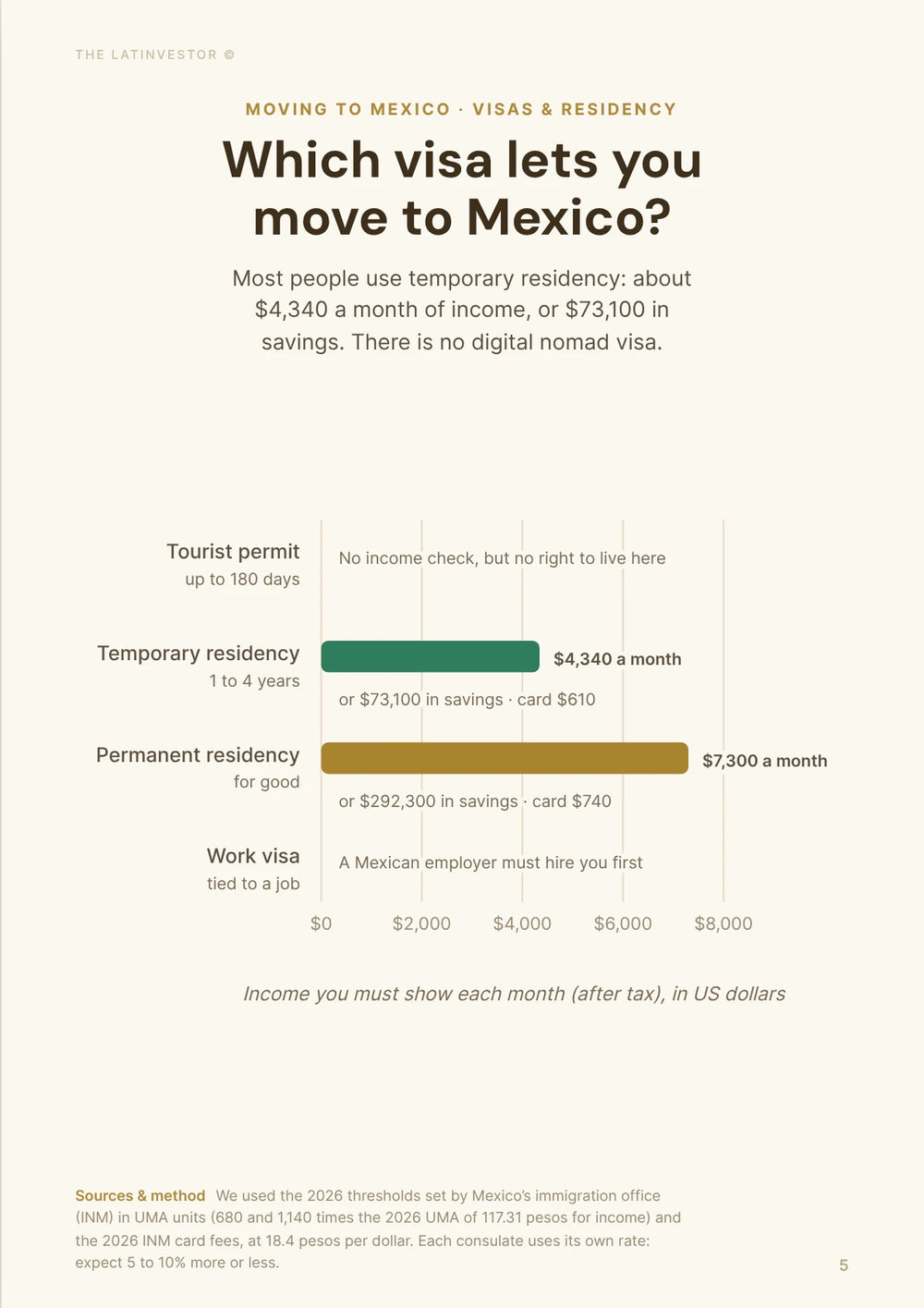
For Temporary Residency via economic solvency, you need to demonstrate either a monthly income of 79,770.80 MXN (about 4,350 USD) over the past six months or savings of 1,337,334 MXN (about 72,500 USD) over the past 12 months in 2026. These amounts are set in UMA, Mexico's official reference unit, which is updated every year, and consulates convert them into dollars differently.
Mexico does not currently offer a specific digital nomad visa, but remote workers typically apply for Temporary Residency using the economic solvency route, which allows them to live in Mexico without working for a Mexican employer.
Temporary Residency is initially granted for one year and can be renewed annually for up to four consecutive years, after which you become eligible to apply for Permanent Residency.
How long does it take to get residency in Querétaro in 2026?
In 2026, there is no official processing time, but the consular phase (outside Mexico) often takes 2 to 8 weeks, and the in-country card issuance (canje) at INM another 2 to 8 weeks, so the full process often takes 1 to 4 months. You must start the canje within 30 calendar days of entering Mexico.
Common factors that can delay the process include incomplete documentation, high demand at specific consulates leading to appointment backlogs, and new requirements such as home visits for Family Unit applications, which some applicants report have extended processing to 2 to 3 months in 2025.
To become eligible for Permanent Residency after holding Temporary Residency, an expat must live in Mexico for four consecutive years; citizenship eligibility typically requires five years of legal residency.
How hard is it to find a job in Querétaro in 2026?
Which industries are hiring the most in Querétaro in 2026?
In 2026, the top three industries hiring in Querétaro are aerospace manufacturing (with companies like Bombardier and Safran), the automotive supply chain (including Continental and other large suppliers), and IT/tech services supporting the region's growing data center investments from Amazon and Microsoft.
Getting hired in Querétaro without speaking Spanish is realistic mainly for specialized engineering, quality systems, and management roles at multinational companies, but most customer-facing, HR, and administrative positions require fluent Spanish.
The roles most accessible to foreign job seekers in Querétaro include supply chain optimization, manufacturing engineering, bilingual program management, and technical support for international clients, where fluency in English and specialized skills are valued over local language proficiency.
What salary ranges are common for expats in Querétaro in 2026?
In 2026, by our estimate, typical salary ranges for expats working in Querétaro are 45,000 to 90,000 MXN per month gross for mid-level professionals (roughly 2,450 to 4,900 USD or 2,200 to 4,350 EUR) and 90,000 to 160,000 MXN for senior or specialized roles (4,900 to 8,700 USD or 4,350 to 7,750 EUR).
Entry-level or mid-level expat positions in Querétaro typically pay 35,000 to 60,000 MXN monthly (1,900 to 3,250 USD or 1,700 to 2,900 EUR), which is enough for a comfortable single lifestyle but requires budgeting for families.
Senior management, plant leadership, or highly specialized technical roles can exceed 160,000 MXN monthly (8,700+ USD), often with additional benefits like housing allowances, car provisions, and school fee support for expat packages.
Employers in Querétaro commonly sponsor work visas for foreign hires when the role is hard to fill locally, particularly at multinational manufacturing firms and tech companies; smaller local businesses are less likely to navigate the visa sponsorship process.
What's daily life really like for expats in Querétaro right now?
What do expats love most about living in Querétaro right now?
The top things expats love most about living in Querétaro include the "organized Mexico" feel with well-maintained suburbs and reliable services, the sense of safety compared to other Mexican cities, and the easy weekend access to wine country, San Miguel de Allende, and Guanajuato.
The lifestyle benefit most frequently praised by expats in Querétaro is the ability to enjoy a high quality of life, including good restaurants, modern shopping centers, and outdoor activities, without the chaos and pollution of Mexico City.
The practical advantage expats appreciate most is the cost savings: rent, healthcare, and dining out are significantly cheaper than in the US or Europe, while infrastructure like fast fiber internet in newer areas such as Juriquilla and Zibatá and Amazon Mexico delivery make daily life convenient.
Socially, expats enjoy Querétaro's warm and welcoming local culture, the growing expat community that makes it easy to find English-speaking friends, and the proximity to cultural attractions like the UNESCO-listed Centro Histórico.
What do expats dislike most about life in Querétaro right now?
The top complaints expats have about living in Querétaro include heavy car dependency in popular neighborhoods like Juriquilla and Zibatá, worsening traffic congestion as the city grows, and water scarcity issues that have become more noticeable since the 2024 drought.
The daily inconvenience that frustrates expats the most in Querétaro is the need to drive almost everywhere, since public transit options are limited in the suburban areas where most expats live, making a car essential for school runs, shopping, and socializing.
The bureaucratic issue that causes the most headaches is dealing with Mexican immigration (INM), where appointment wait times have grown longer, requirements have tightened in 2025 and 2026, and fees for the residency card have about doubled: a one-year card costs 11,140.74 MXN (about 610 USD) in 2026.
Most expats find these frustrations manageable rather than deal-breakers, as the overall quality of life, safety, and cost advantages outweigh the inconveniences, though the water situation is a growing concern for long-term planning.
What are the biggest culture shocks in Querétaro right now?
The biggest culture shocks expats experience when moving to Querétaro include the flexible approach to schedules (appointments and meetings often start late), the importance of personal relationships in getting things done, and the prevalence of security measures like gated communities that feel unfamiliar to newcomers.
The social norm that surprises newcomers the most is the warmth and directness of Mexican hospitality: neighbors greeting you every morning, doctors giving you their personal WhatsApp number, and service providers expecting ongoing relationships rather than one-time transactions.
Another adjustment for many expats is the different rhythm of the day, with later lunch times (often 2 to 4 PM), businesses sometimes closing for extended breaks, and social events often starting an hour or more after the stated time.
Can I buy a home as a foreigner in Querétaro in 2026?
Can foreigners legally own property in Querétaro in 2026?
In 2026, foreigners can legally own property in Querétaro directly and without restrictions because the city is located inland, outside Mexico's "restricted zone" (within 50 km of coasts or 100 km of borders) where a bank trust (fideicomiso) is required.
The main condition that applies to foreigners buying in Querétaro is that you need a valid permit from the Ministry of Foreign Affairs (SRE), but this is a straightforward administrative step since the fideicomiso mechanism is generally not required for inland properties.
Foreigners can own all property types in Querétaro, including apartments, houses, and land, with the same rights as Mexican citizens, making it one of the more accessible markets for international buyers.
What is the average price per m² in Querétaro in 2026?
In 2026, apartment prices in Querétaro city range from about 22,800 to 40,700 MXN per m² (roughly 1,240 to 2,200 USD or 1,110 to 1,980 EUR) between outer areas and the center, according to Numbeo. In October 2026, Propiedades.com put apartments at about 26,000 MXN per m² in Juriquilla, 26,300 MXN in Zibatá and 31,700 MXN in Centro Sur, while new luxury projects cost more.
Property prices in Querétaro have been rising steadily over the past few years (the official SHF index shows prices up 7.31 percent across Mexico in the year to the second quarter of 2026), driven by strong demand from both local buyers and expats.
Do banks give mortgages to foreigners in Querétaro in 2026?
In 2026, mortgages for foreigners in Querétaro are available but limited, typically offered by major banks to those with legal residency, documented income, and willingness to make larger down payments than Mexican citizens.
The banks in Querétaro known to offer mortgages to foreigners include BBVA México, Santander México, and HSBC México, though each has its own eligibility criteria and may require a Mexican credit history.
Typical mortgage conditions for foreigners in Querétaro include larger down payments than for locals, who often put down 10 to 20 percent, interest rates currently in the 10 to 14 percent range (Numbeo's Querétaro sample shows about 11.99 percent for a 20-year fixed loan, and the average across Mexican mortgages was close to 10 percent in July 2026, according to BBVA), and shorter maximum terms than for Mexican borrowers.
To qualify, foreigners typically need proof of legal residency (Temporary or Permanent Resident card), at least 6 to 12 months of documented income in Mexico or abroad, and sometimes a Mexican bank account with transaction history.
Related blog posts
- Are property prices in Querétaro likely to rise?
- What are housing prices like in Querétaro now?
- Are rents still rising in Querétaro?
- Can foreigners buy property in Querétaro?
- Where is the best place to buy in Querétaro?
- How much money do you need to retire in Querétaro now? (2026)
Our methodology
This article looks at what it is like to live in Querétaro as an expat: quality of life, healthcare, schools, safety, monthly budgets, income tax, who the expats are and where they live, visas and residency, jobs and salaries, daily life, and buying a home as a foreigner.
Budgets, doctor prices and salary ranges are our own estimates, built from rents, everyday prices and local pay data. Rents come from Numbeo, living costs from Wise, apartment prices from Numbeo and Propiedades.com, the national price trend from the SHF index, school fees from Colegio Suizo's 2026-2027 fee page, safety from INEGI's ENSU survey, and the origin of recent arrivals from Data México (2020 census).
Visa and residency rules come from INM, SRE and the 2026 UMA value (117.31 MXN a day), and card fees are the 2026 federal fees. Tax rates come from SAT's 2026 ISR tables. Property rules come from Article 27 of the Constitution and SRE guidance on the restricted zone.
We checked these figures in October 2026. Peso amounts are converted at about 18.4 pesos per US dollar and 20.6 pesos per euro (October 2026).
Some points have no reliable official figure, such as the current number of expats, expat salaries, doctor prices across the city or most schools' current fees. There we gave a range, labeled it as our estimate, or kept it general. Your own costs will depend on your neighborhood and your family.
Key sources used for this analysis include INEGI INPC (Inflation), INEGI ENSU (Safety Survey), SESNSP Crime Data, Inmuebles24 Querétaro Index, INEGI ENOE (Labor Survey), INM (National Migration Institute), Mexperience, IB World Schools Directory, Banxico Interest Rates, El Universal Querétaro (ENSU results), Numbeo, Wise, Propiedades.com (Juriquilla), SHF housing price index (Q2 2026), Colegio Suizo de México (2026-2027 fees), Data México, CityLaws (2026 residency thresholds), Lorad (2026 card fees), BBVA México mortgage rates, SAT 2026 ISR tables and ADN40 (Mexico City–Querétaro train).