Summary
Yes, but only if the property works on ordinary long-term rent. Mexico's average gross rental yield is 5.79%, while the average mortgage rate is 11.42%, so most deals that need a loan, Airbnb or fast price growth don't hold up.
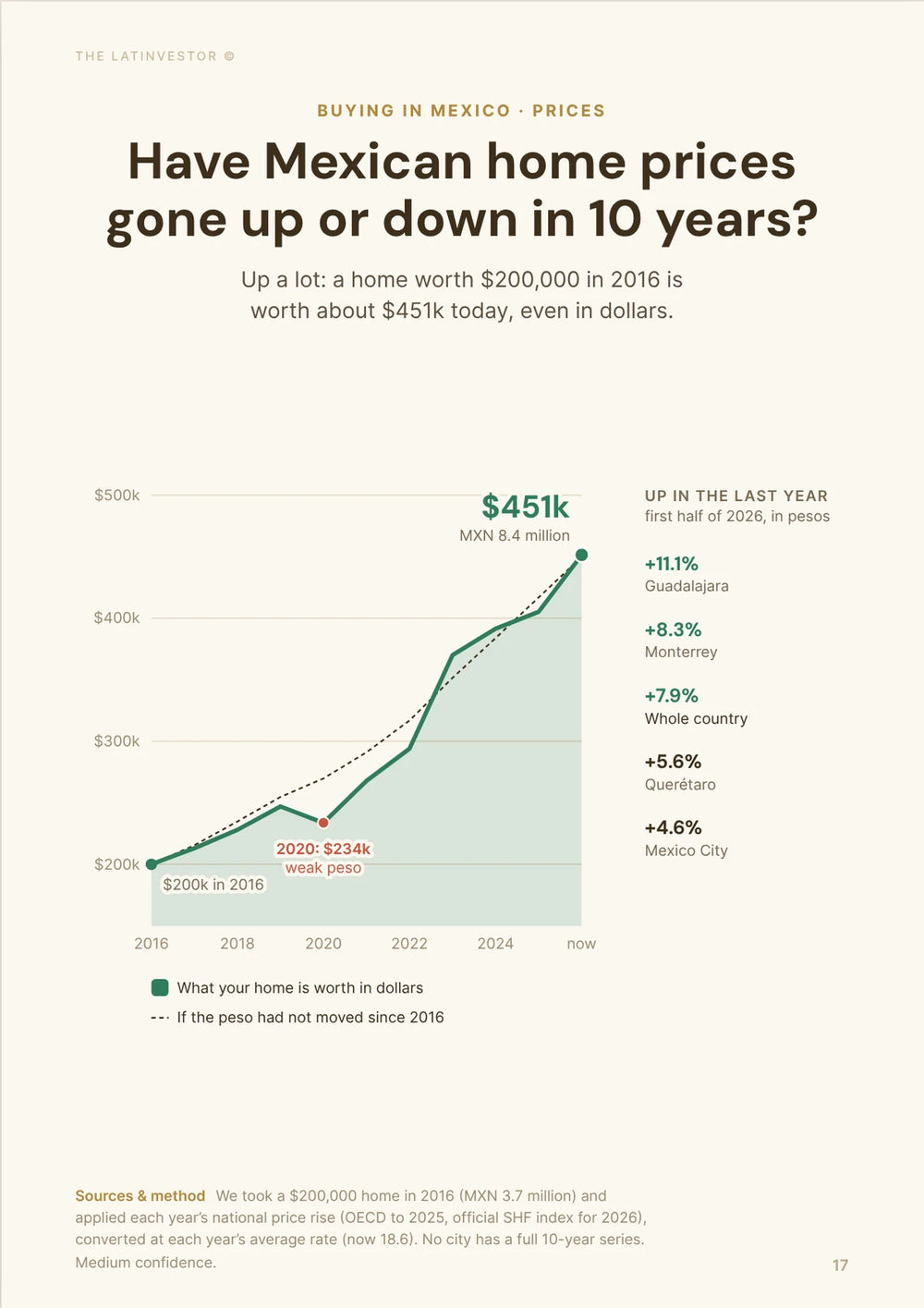
Prices keep running ahead of rents. SHF measured 7.9% national home-price growth over the first half of 2026, against inflation of about 3.4%.
A 6% gross yield is not a 6% return. On a MXN 4 million apartment, one empty month, management and a maintenance reserve already bring it down to about 4.8%.
Mexico City has the best yields among the big markets, at 6.77% gross, ahead of Puebla (6.12%) and Mérida (6.08%). Cancún is at only 4.60%.
In Mexico City, asking rents rose 9.6% in the 12 months to June 2026 while sale prices rose 4.6%, so yields there are improving. Rent increases on existing leases are capped at inflation, though, so the starting rent matters.
Guadalajara (+11.1%) and Monterrey (+8.3%) have strong tenant demand, but buyers there now pay for gains that have already happened, for yields under 6%.
A beach condo at 4.6% earns MXN 110,000 a year less than a city apartment at 6.8% for the same MXN 5 million price.
Airbnb still works for good operators, but Mexico City lost 27.8% of its active listings in a year and has a 50%-of-nights cap on the books. International tourists rose 3.9% in January–August 2026, while their spending rose only 0.9%.
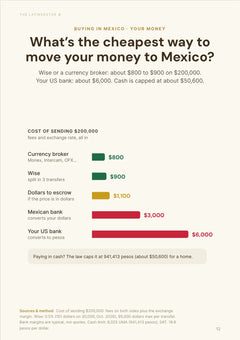
Foreigners can own and rent legally. On the coast, the SRE permit for the bank trust alone costs MXN 21,650 in 2026, before bank fees.
Closing costs run about 6–9% with a trust. Add them to a MXN 4 million purchase and a 6% listing yield falls to about 5.65% on the cash you actually put in.
A non-resident landlord is taxed 25% on gross rent, with no deductions. On a MXN 240,000 rent, that is MXN 60,000 a year.
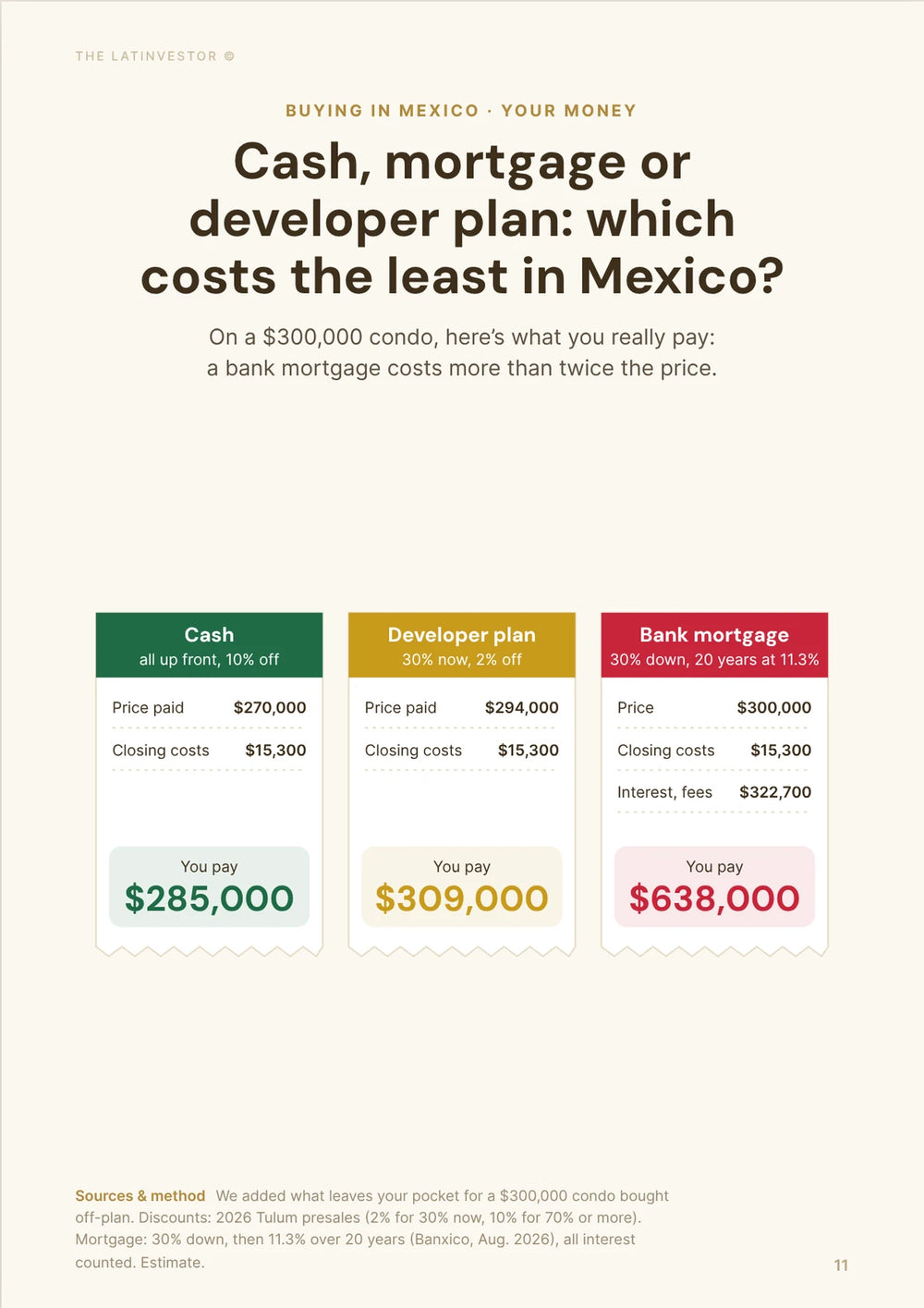
With a 70% loan at 11.42%, interest on a MXN 4 million apartment is about MXN 320,000, against MXN 240,000 of rent. Cash buyers have the edge.
The peso has weakened since early September, from under 17 to about 18.6 per dollar, so peso-priced homes are cheaper for dollar buyers than a few weeks ago; forecasters see it back between 17.3 and 18.2 by the end of 2026.
National housing demand is deep, but 389,000 homes are registered in the developer pipeline. Watch the supply on your own street, not the national deficit.
What we would buy now: a well-priced city apartment at 6.5% gross or more, with low building fees, local tenants and no expensive debt.

Why is the rental math tighter in 2026 than a few years ago?
Because prices are rising faster than rents, and borrowing is still expensive. A rental can still be worth buying, but it has to work on rent, not on hopes about appreciation or Airbnb.
Sociedad Hipotecaria Federal's latest figures show Mexican home values up 7.3% year over year in the second quarter of 2026 and 7.9% over the first half. Inflation was around 3.4% in the same release.
Yields went the other way. Global Property Guide puts Mexico's average gross yield at 5.79%, down from 5.98% in late 2025. Buyers are paying more for housing without getting proportionally more rent.
Financing makes it worse. Banco de México data quoted by SHF puts the average mortgage rate at 11.42% in the second quarter, even though Banxico's own policy rate is down to 6.50%. Borrowing at more than 11% to buy something that rents for about 6% gross rarely works.
So the good deals are still there, mostly for cash buyers, but you find them one property at a time.
Are Mexican home prices still rising faster than they should?
Yes. In several big cities, the recent pace is hard to justify with rent alone.
SHF recorded 7.9% national growth over the first half of 2026. Guadalajara rose 11.1%, Tijuana 9.7%, Puebla–Tlaxcala 8.5% and Monterrey 8.3%. Valle de México was much calmer at 4.6%.
The rise is broad: new homes gained 8.3% and condos and apartments 7.4%. Meanwhile, INEGI put GDP growth at 1.9% year over year in the second quarter, and BBVA Research counted only 0.3% more mortgages in the first half, with 0.1% less money lent in real terms. Prices are going up faster than the economy and the credit that's supposed to pay for them.
That doesn't mean prices are about to fall. It does mean you shouldn't build your numbers on another decade of 8–10% a year.
| Market | Home-price growth, first half of 2026 | What it means for a rental buyer |
|---|---|---|
| Guadalajara metro | 11.1% | Excellent recent appreciation, tougher entry price |
| Tijuana metro | 9.7% | Strong border-market pricing |
| Puebla–Tlaxcala | 8.5% | Fast appreciation from a cheaper base |
| Monterrey metro | 8.3% | Strong prices backed by a large job market |
| Querétaro metro | 5.6% | More moderate repricing |
| Valle de México | 4.6% | Better recent balance between price and rent |
| Mexico overall | 7.9% | Housing still rising well above inflation |
What rental yield can you realistically get in Mexico today?
About 5–7% gross in the stronger markets, and quite a bit less once costs come out.
Global Property Guide puts the national gross yield at 5.79%. Mexico City leads the big markets at 6.77%, followed by Puebla at 6.12%, Mérida at 6.08%, Acapulco at 5.99%, Monterrey at 5.82% and Guadalajara at 5.58%. Cancún is far lower at 4.60%.
Those are gross figures, based on asking rents and asking prices. Vacancy, condo fees, repairs, insurance, management and tax still have to come out.
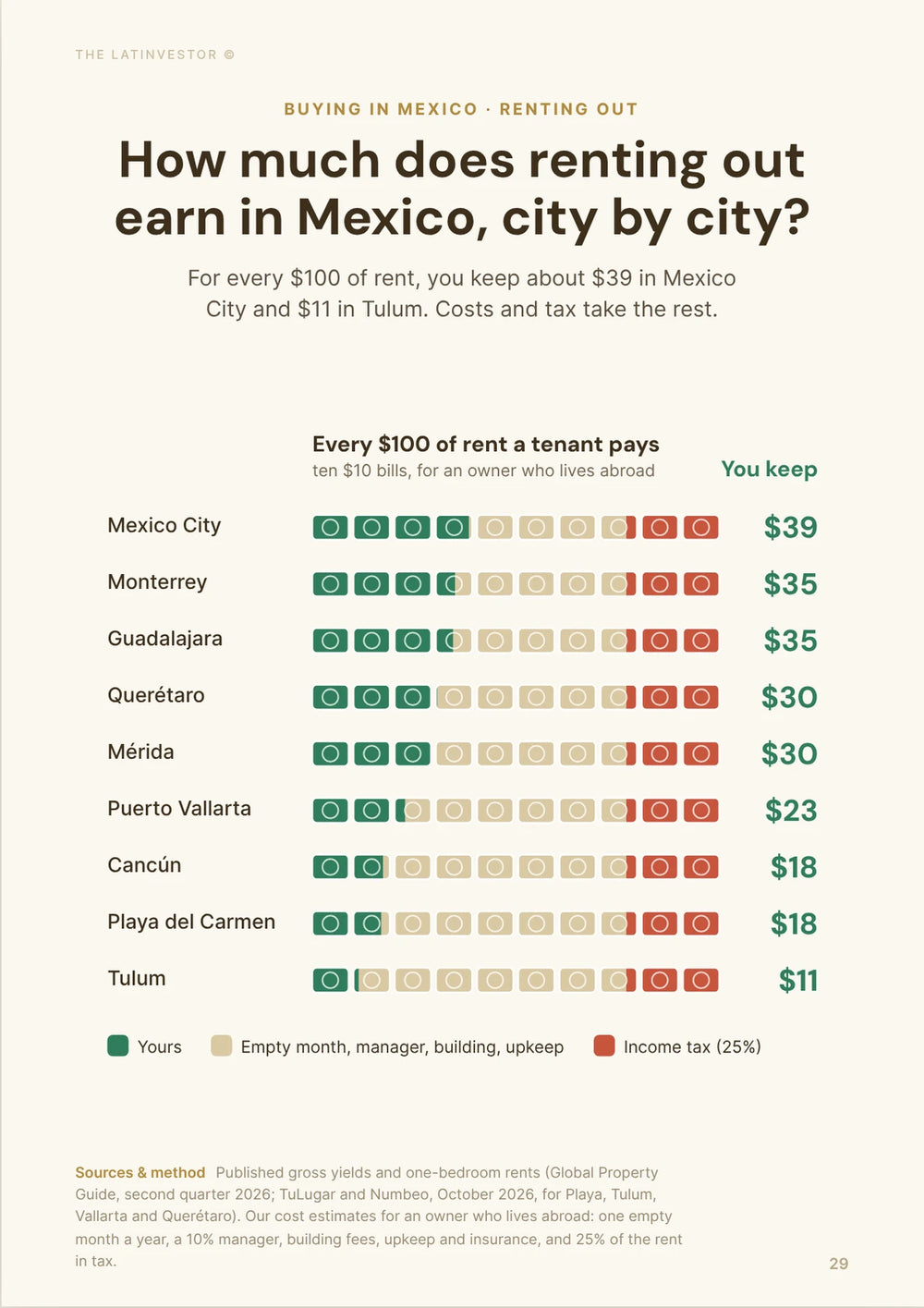
Take a MXN 4 million apartment (about USD 215,000) rented for MXN 20,000 a month. The headline yield is 6%. One empty month takes it to 5.5%. Pay 8% of collected rent for management and set aside 5% for maintenance, and you're at about 4.8% before condo fees, insurance and income tax.
So 6% gross is decent. Calling it a 6% return would be wrong.
| MXN 4m rental example | Annual amount | Yield on purchase price |
|---|---|---|
| Scheduled rent | MXN 240,000 | 6.0% |
| One vacant month | -MXN 20,000 | -0.5% |
| Management at 8% | -MXN 17,600 | -0.44% |
| Maintenance reserve at 5% | -MXN 11,000 | -0.28% |
| Income before other costs and tax | ~MXN 191,000 | ~4.8% |
Which Mexican cities give landlords the best yields now?
Mexico City, then Puebla and Mérida, which do much better than their lower international profile suggests.
Global Property Guide gives Mexico City a 6.77% average gross yield, Puebla 6.12%, Mérida 6.08%, Monterrey 5.82% and Guadalajara 5.58%. Cancún is only at 4.60%.
The gap is even wider for one-bedroom apartments: about 8.17% gross in Miguel Hidalgo and 7.48% in Roma Norte, against roughly 4% in Cancún.
The reason is simple. In Cancún, buyers also pay for the beach, holiday use and the name. A professional renting in Mexico City doesn't pay extra for any of that, so more of the price is backed by actual rent.
If you want income, the big job centers deserve at least as much attention as the resorts.
| Market | Average gross yield | Current rental case |
|---|---|---|
| Mexico City | 6.77% | Strong |
| Puebla | 6.12% | Strong for the purchase price |
| Mérida | 6.08% | Good balance |
| Acapulco | 5.99% | Decent yield, higher local risk |
| Monterrey | 5.82% | Solid rather than spectacular |
| Guadalajara | 5.58% | More appreciation-led |
| Cancún | 4.60% | Weak for a long-term income buyer |
Is Mexico City the best place to buy a rental property right now?
For an investor who wants income rather than a tourism bet, it's one of the best choices in 2026.
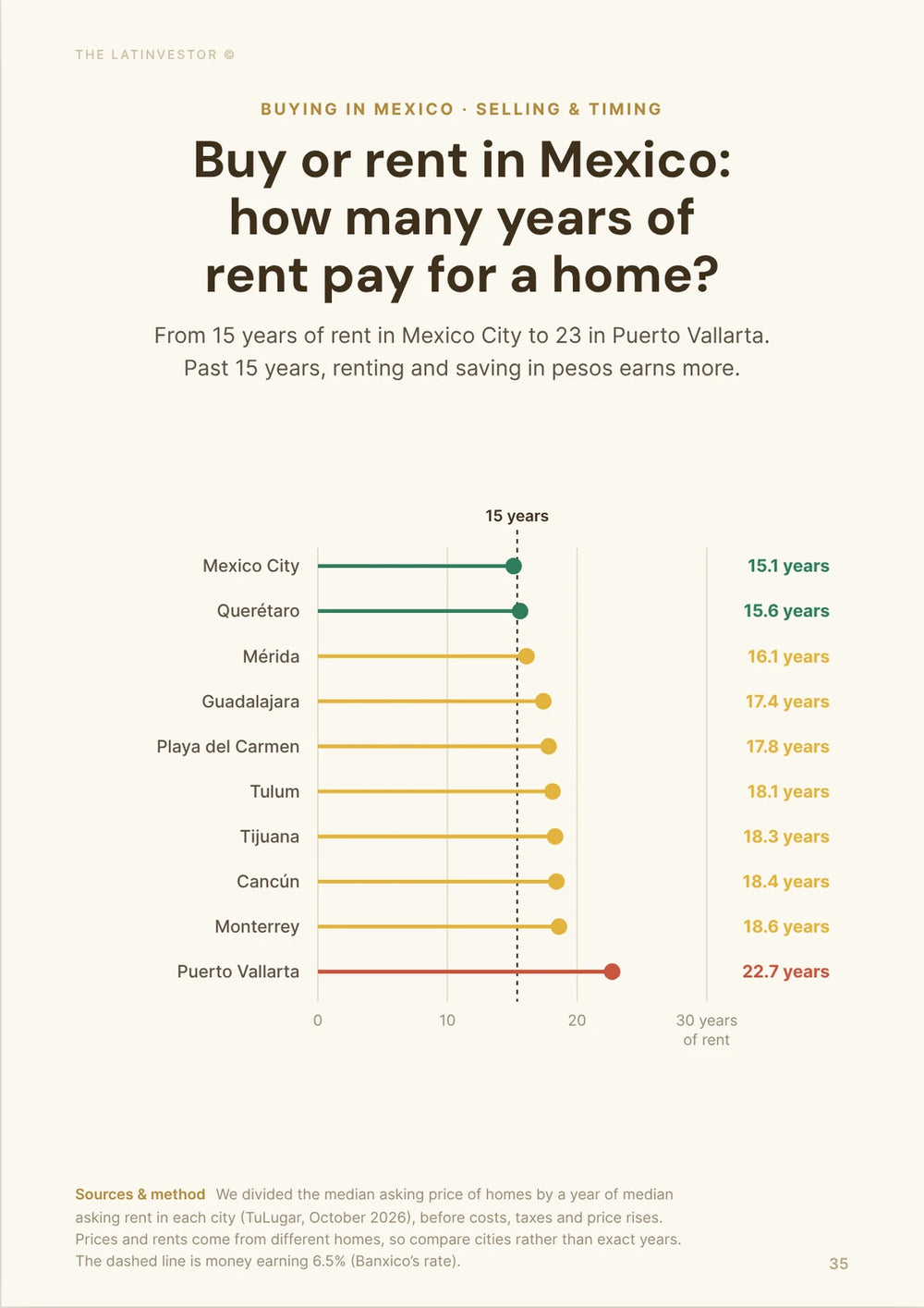
First, yield. Global Property Guide puts the city average at 6.77%. Inmuebles24's June 2026 index is higher, at 7.64% gross, or about 13.1 years of rent to pay back the price. The methods differ, so don't treat either number as exact, but both point the same way.
Second, rents are catching up with prices. Inmuebles24 measured asking rents up 9.6% in the 12 months to June 2026, to about MXN 21,900 a month for a 65 m² two-bedroom, while sale prices rose 4.6%. That's the opposite of what's happening in most of the country.
Third, demand doesn't depend on tourists. Government, finance, tech, universities and head offices fill well-located apartments all year.
The catch is the rent cap. Increases on existing leases in Mexico City are limited to the previous year's inflation, and the Supreme Court has upheld the rule. You can't fix an underpriced lease later, so the first rent you sign matters a lot. Aim for around 6.5–7% from a normal long-term lease on day one.
Is Guadalajara still attractive after property prices jumped 11%?
It can be, but today's buyer pays heavily for its recent success.
SHF says prices in the Guadalajara metro area rose 11.1% over the first half of 2026, the fastest of the big metros. Global Property Guide puts the average yield at only 5.58%.
Someone who bought a few years ago got great appreciation while collecting rent. A buyer coming in now inherits the higher price.
The fundamentals are real: a big local population, tech and service jobs, universities, manufacturing and a broad local tenant market. But at today's prices, buying a mediocre-yield apartment because the city rose 11.1% is chasing a gain that has already happened. Insist on a decent rent from day one.
Does Monterrey's industrial boom make rental property a better investment?
Monterrey is one of the most convincing long-term rental markets, but the yield is good rather than great.
Global Property Guide puts the average gross yield at 5.82%. SHF recorded 8.3% price growth in the metro area over the first half of 2026.
The strength is who pays the rent: manufacturing, corporate services, logistics, universities and a large professional workforce. That's several sources of demand instead of one seasonal one.
Nearshoring adds to it, but don't let it justify any price. Developers already know Monterrey is one of the country's big industrial stories. A 5.8% yield works for a cash buyer holding for years; it doesn't when the brochure adds a premium because it says "nearshoring."
Are Cancún and Mexico's beach markets actually good rental investments?
They can work, but their long-term rental yields are often worse than those of ordinary big cities.
Cancún averages only 4.60% gross, according to Global Property Guide, against 6.77% in Mexico City and more than 6% in Puebla and Mérida.
That gap is big. A MXN 5 million condo at 4.6% brings in MXN 230,000 of rent a year. At 6.8%, the same price brings in MXN 340,000, or MXN 110,000 more every year.
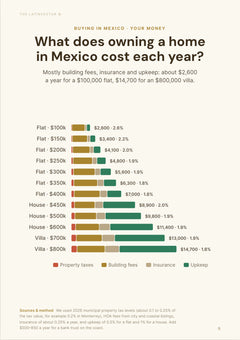
Beach condos also cost more to run: pools, lifts, gyms, security, gardens and salt-air maintenance. Owners living abroad usually need professional management too.
A beach address can still bring appreciation, personal use or a strong vacation rental. Those are real benefits, but count them separately from rental yield.
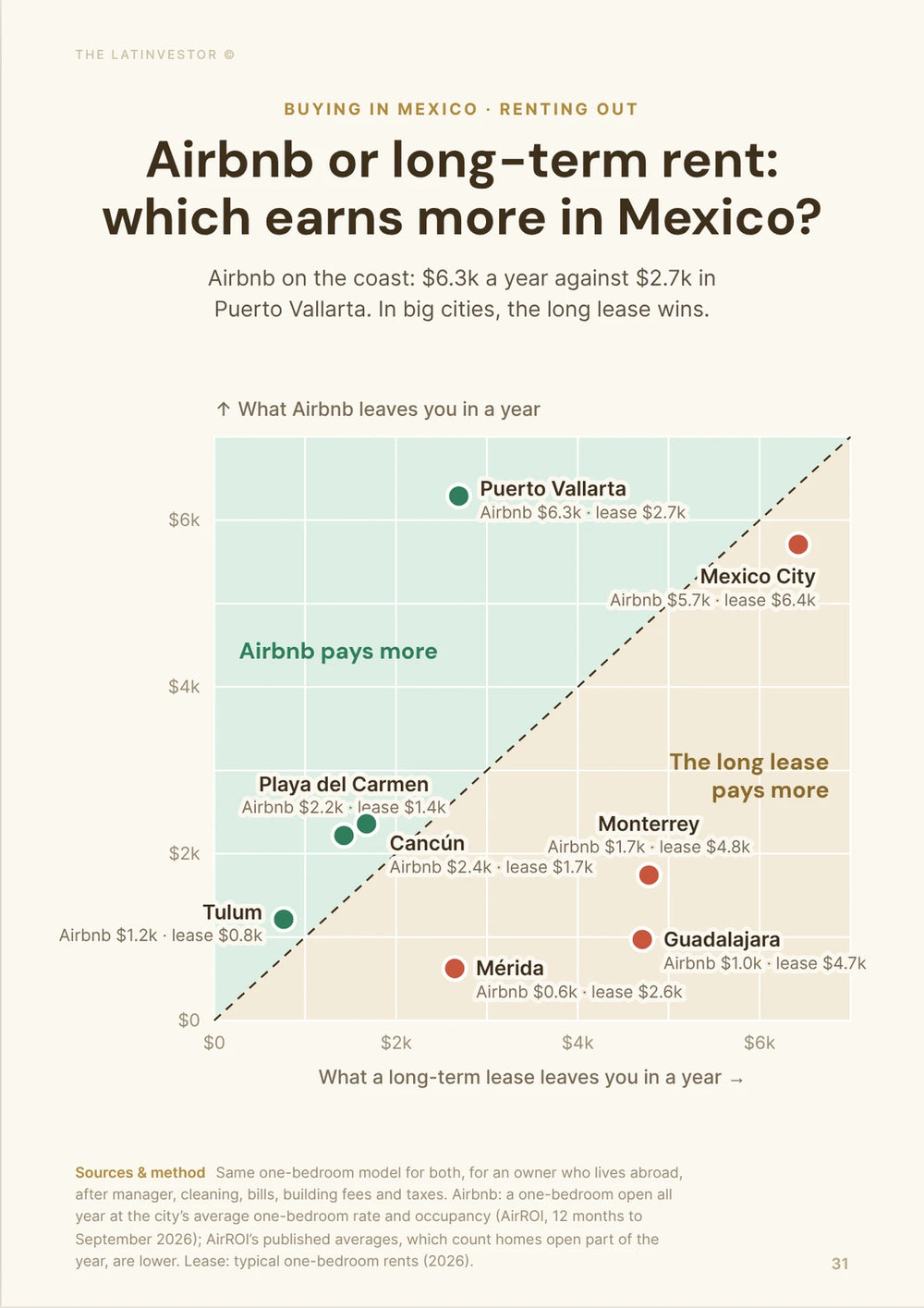
Can Airbnb still make a Mexican property much more profitable?
Yes, for the right property and a good operator. Just putting an apartment online no longer does it.
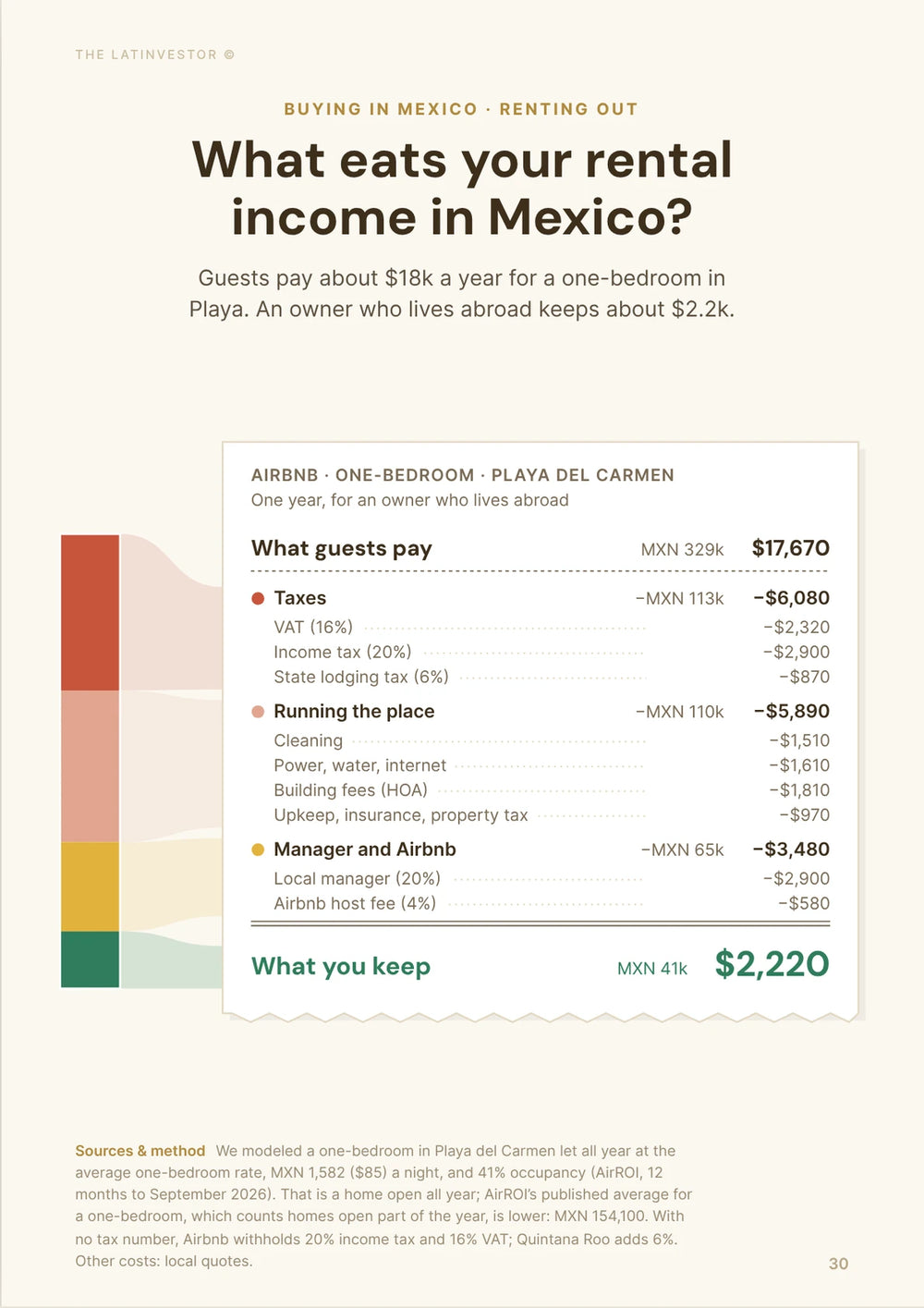
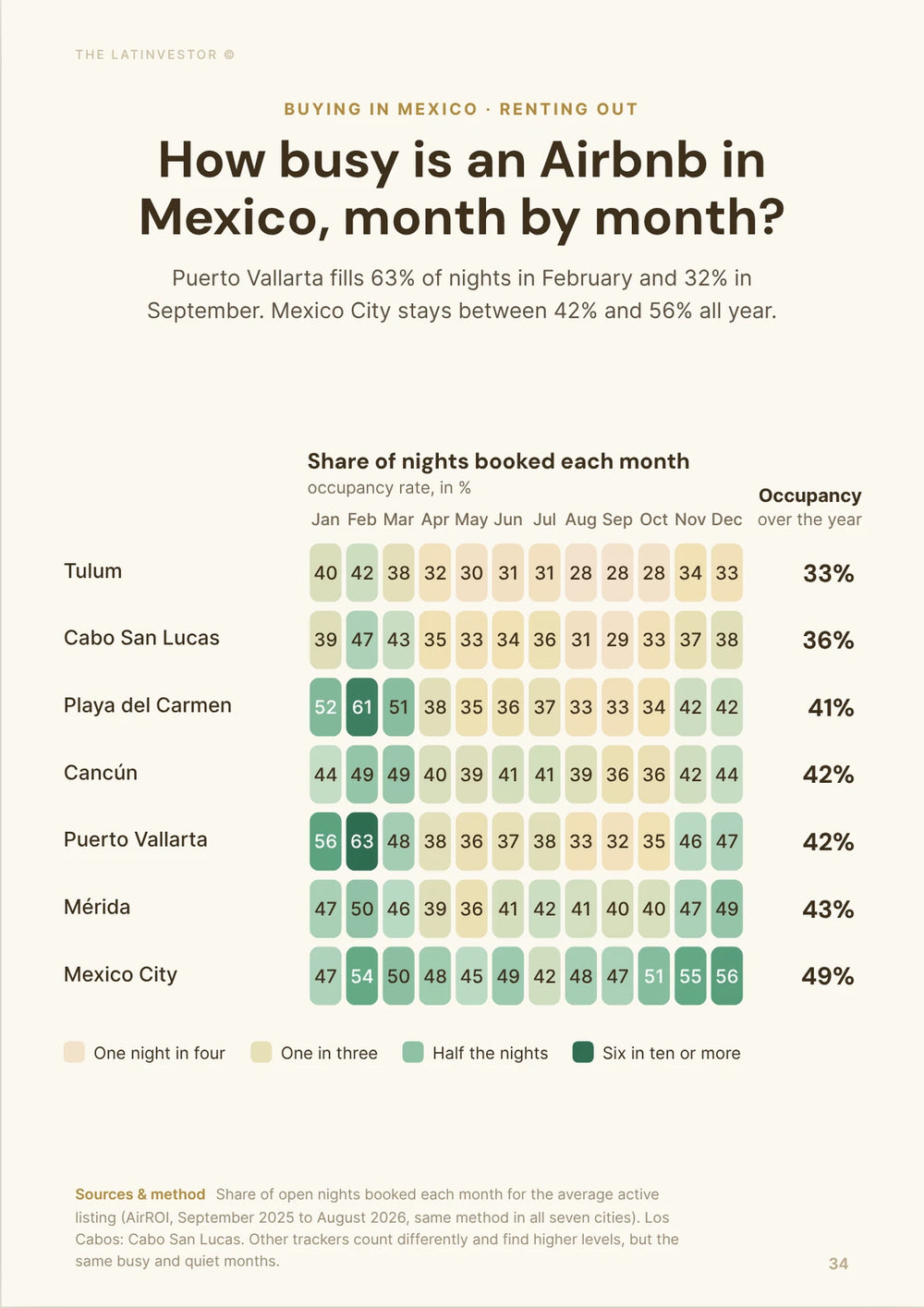
In Mexico City, AirDNA counts 25,568 active short-term listings in September 2026, 27.8% fewer than a year earlier. Over the past 12 months, they averaged 64% occupancy, USD 91 a night (about MXN 1,690) and USD 19,800 of revenue per listing (about MXN 368,000).
Fewer listings with steady occupancy suggests weaker or non-compliant operators are leaving and the rest are doing fine. But averages say little about one apartment. Reviews, photos, layout, building rules and pricing can make two neighboring units earn completely different amounts.
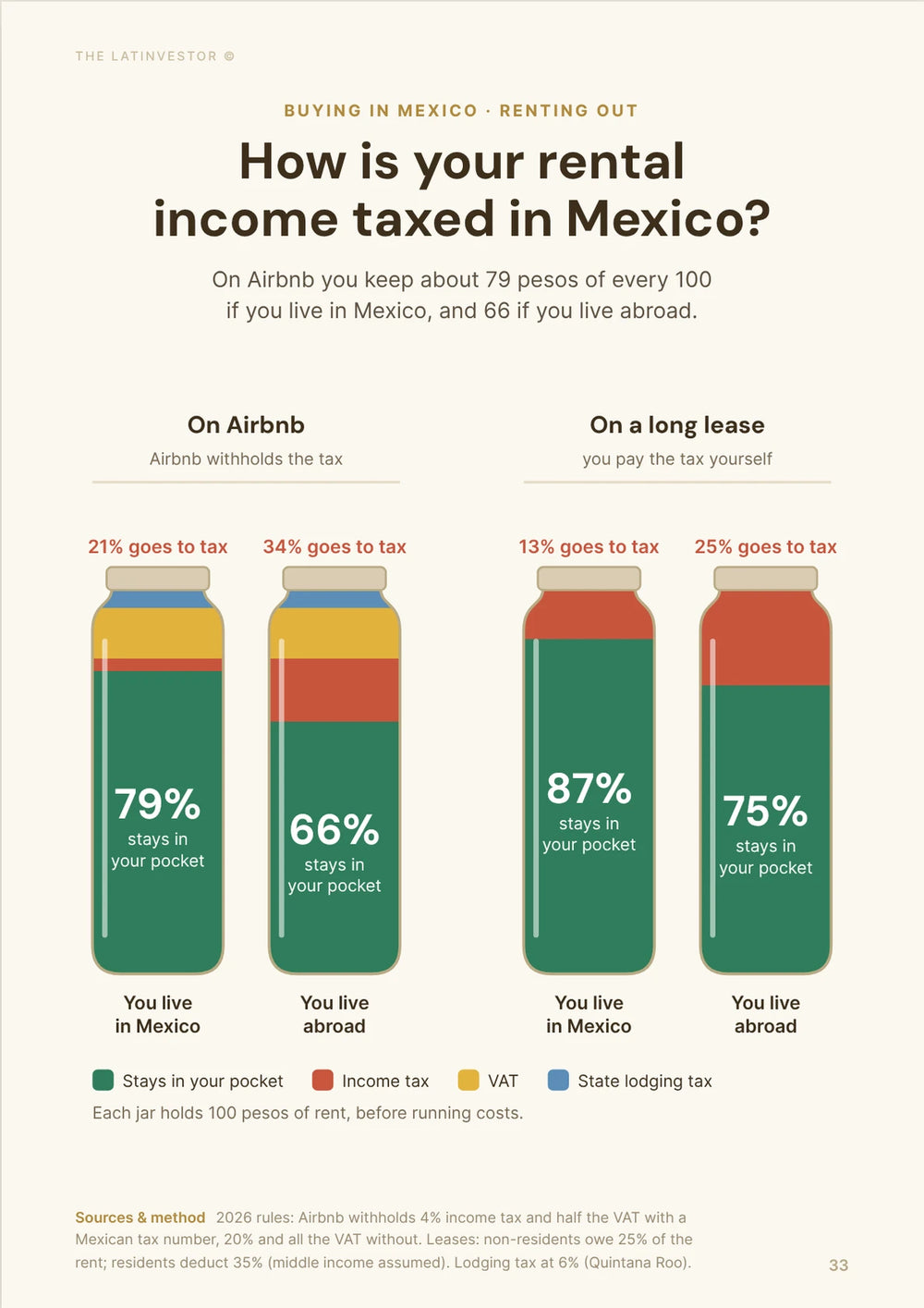
Taxes come off the top too. With a valid RFC (tax ID), the platform withholds 4% income tax on your lodging receipts; without one, 20%. VAT of 16% and the state lodging tax can apply on top, depending on your tax status. Check those numbers address by address before you pay for an "Airbnb yield."
Will Mexico City's 50% Airbnb cap actually hit your income?
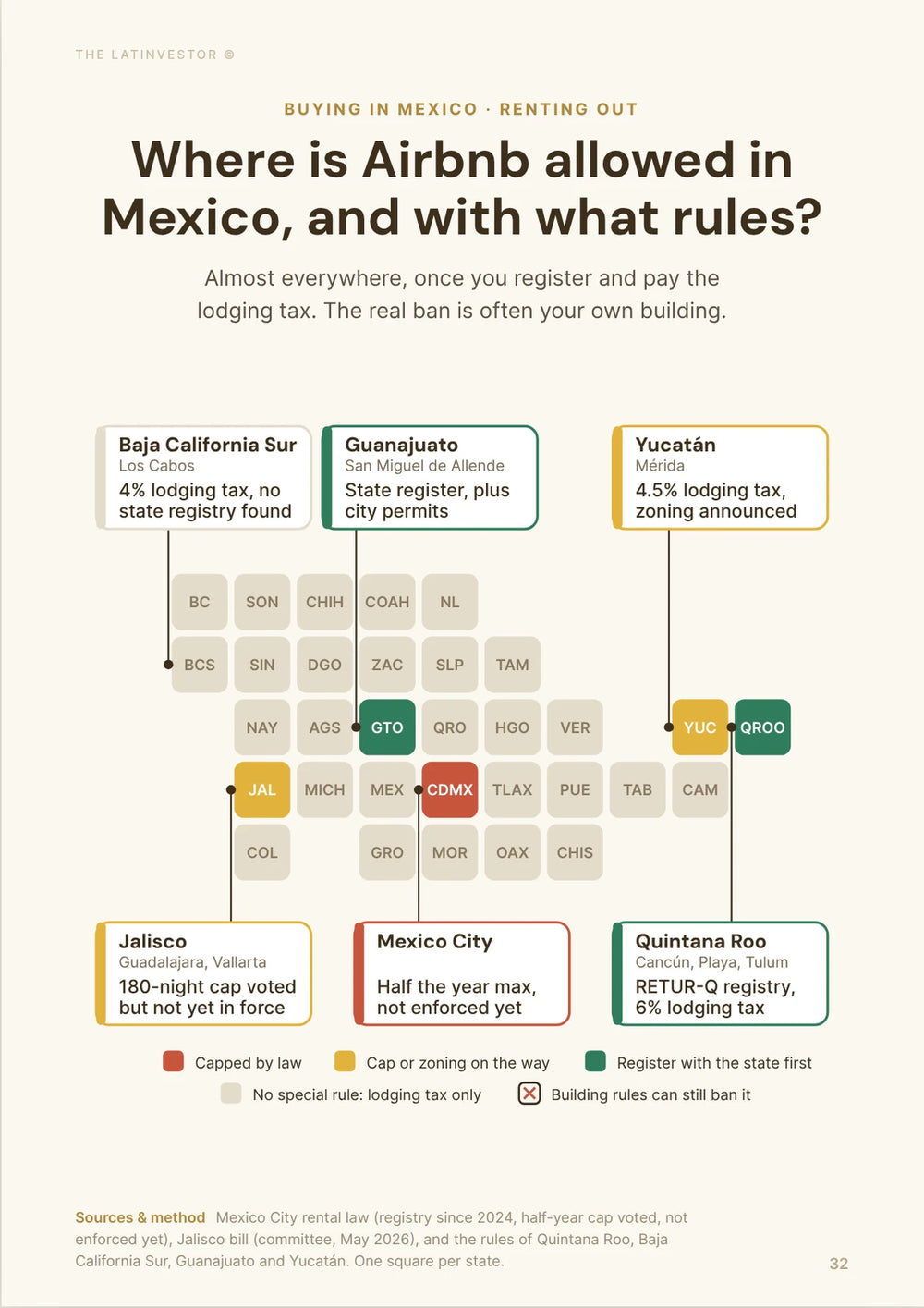
Maybe, and that uncertainty is the point: don't buy an apartment in Mexico City that only works as an Airbnb.
Mexico City's tourism law, reformed in 2024, limits platform rentals to 50% of the nights in a year, about 182 nights, and requires hosts to register. In October 2026, most of it still isn't fully enforced: deadlines have been pushed back, and hosts have filed amparos (court challenges). In August 2026, a group of small hosts was still asking the city to scrap the limit.
That makes it an open risk, not a dead letter. If the cap is enforced, an apartment that earns USD 19,800 a year at 64% occupancy can't keep that pace.
The test is simple: would you still buy if nightly rentals stopped tomorrow? If a long-term lease, or a furnished stay of 30 days or more, can't support the price, the deal depends on rules you don't control. Also check the building's own rules (reglamento de condominio) before signing. Many towers ban short stays on their own.
Does Mexico's tourism boom guarantee good vacation-rental returns?
No. You compete with other listings, not with last year's tourist count.
Mexico received 67.69 million international travelers from January to August 2026, up 6.3%, including 32.68 million tourists, up 3.9%, according to INEGI data highlighted by the Tourism Ministry. But their spending rose only 0.9%, to about USD 24.2 billion. More visitors, spending less each.
Supply matters more. In Mexico City, a quarter of short-term listings disappeared and the remaining ones held their occupancy. The reverse can happen in a resort town: arrivals rise, developers deliver hundreds of new condos, and each owner gets a smaller share.
In Cancún, Playa del Carmen, Tulum, Puerto Vallarta or Los Cabos, look at occupancy, listing counts, revenue per available night and the towers under construction nearby, not national tourism records.
Can foreigners safely own rental property in Mexico?
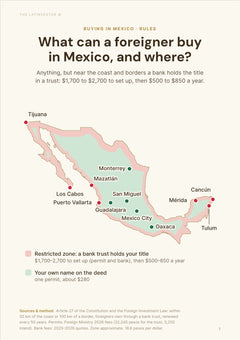
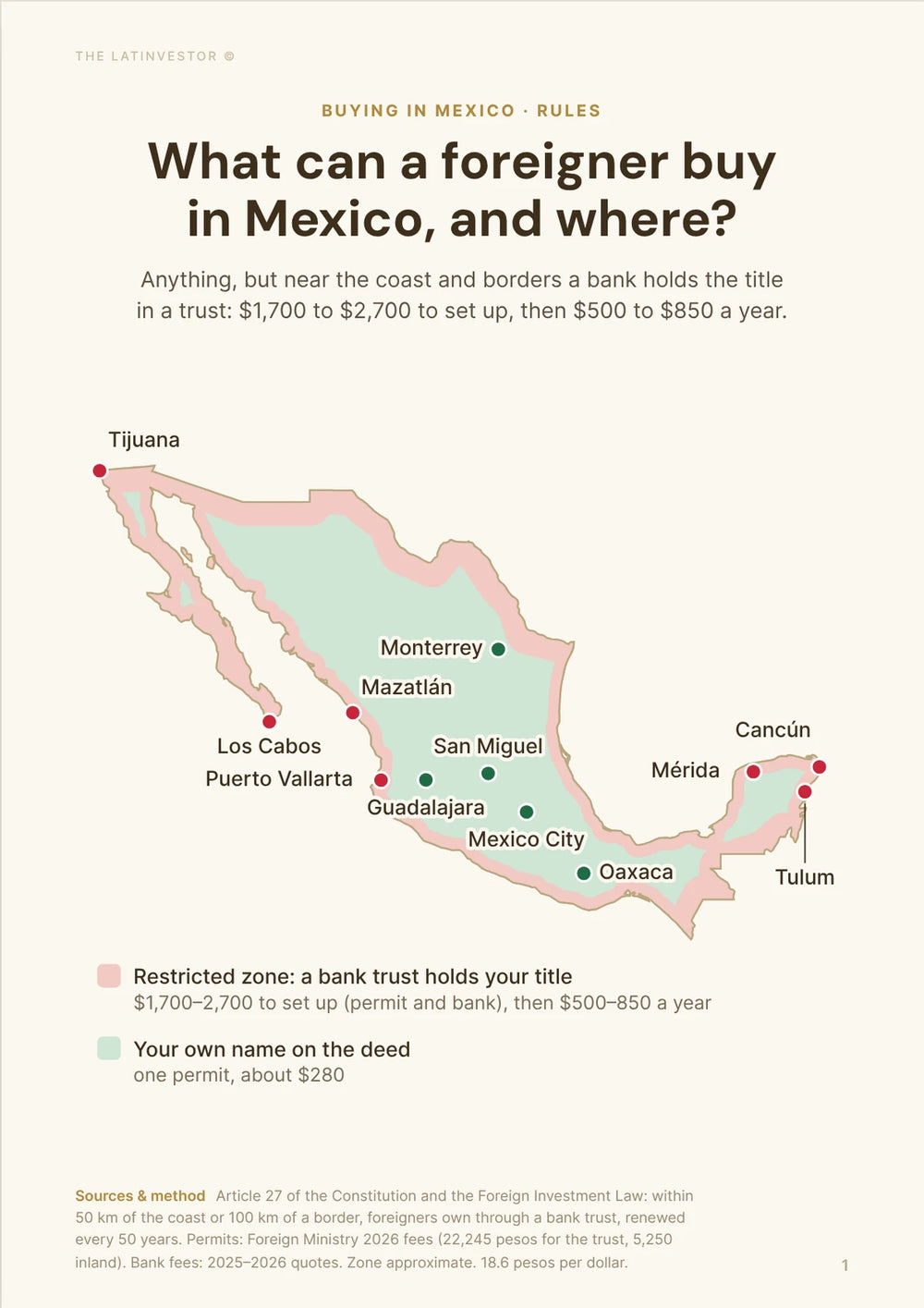
Yes, including on the coast, though coastal and border purchases usually go through a bank trust.
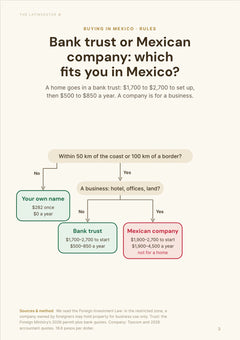
The restricted zone covers land within 50 km of the coast and 100 km of a border. There, a foreign buyer uses a fideicomiso: a Mexican bank holds title and you hold the rights to use, rent and sell. That's standard in Cancún, Playa del Carmen, Puerto Vallarta and Los Cabos.
It costs extra. The Foreign Affairs Ministry (SRE) fee for the trust permit is MXN 21,650 in 2026 (about USD 1,160), before the bank's own setup fee and an annual administration fee of roughly USD 550–700, depending on the bank.
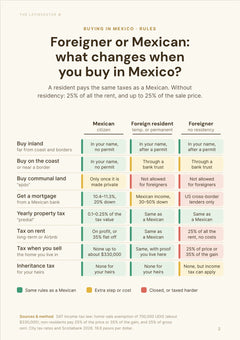
Inland markets such as Mexico City, Guadalajara and Monterrey don't need a trust. The bigger risk is weak due diligence: have a notary and an independent lawyer check title, liens, condo rules, permits and the ownership structure before money changes hands.
| Market | Typical foreign ownership route | Extra friction |
|---|---|---|
| Mexico City | Direct ownership | Low |
| Guadalajara | Direct ownership | Low |
| Monterrey | Direct ownership | Low |
| Puebla | Direct ownership | Low |
| Cancún | Fideicomiso | Bank and permit costs |
| Playa del Carmen | Fideicomiso | Bank and permit costs |
| Puerto Vallarta | Fideicomiso | Bank and permit costs |
| Los Cabos | Fideicomiso | Bank and permit costs |
Do Mexican buying costs eat too much of the rental return?
They're high enough to punish short holding periods.
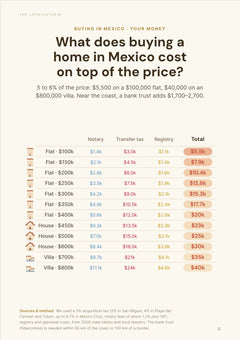
Transfer tax, notary fees, registration and certificates usually add up to about 6–9% of the price for a foreign buyer when a trust is involved, depending on the state.
Say a property is listed at MXN 4 million and rents for MXN 240,000 a year. That's 6% gross on paper. If closing costs bring the real amount invested to MXN 4.25 million, the same rent earns 5.65% on the cash you put in. Nothing about the apartment changed; you just used the right number.
Selling costs money too. That's why buying a rental for one or two years rarely makes sense unless the price is unusually good.
How much tax does a foreign landlord pay on Mexican rent?
If you don't live in Mexico for tax purposes, the rule is 25% of gross rent, with no deductions for expenses.
That comes from article 158 of the income tax law. On the MXN 240,000 example, that's MXN 60,000 a year (about USD 3,230), or 1.5 points of yield. The MXN 191,000 left after vacancy, management and maintenance drops to about MXN 131,000, around 3.3% on the price, before condo fees and insurance.
Residents taxed in Mexico are treated differently: they can deduct a flat 35% of rent instead of actual expenses, or itemize, and then pay the normal progressive rates. Some small landlords can use the simplified RESICO regime at 1–2.5% of income, if they qualify.
What to do: get an RFC before your first tenant, ask a Mexican accountant whether a tax treaty with your home country changes anything, and run your numbers with tax included. Many "6% yield" pitches quietly leave it out.
Can you make money on a Mexican rental with an 11% mortgage?
Usually not. At current rates, a local mortgage makes the cash flow worse, not better.
SHF's latest report puts Banco de México's average mortgage rate at 11.42% in the second quarter of 2026. The national gross yield is 5.79%.
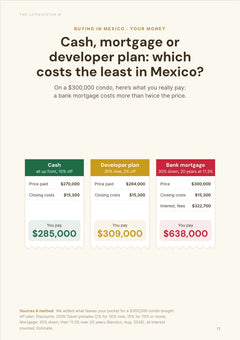
Take a MXN 4 million apartment with a 70% loan: MXN 2.8 million. At 11.42%, first-year interest alone is about MXN 320,000. A 6% yield brings in MXN 240,000 before vacancy, maintenance, condo fees or tax. You're already about MXN 80,000 short.
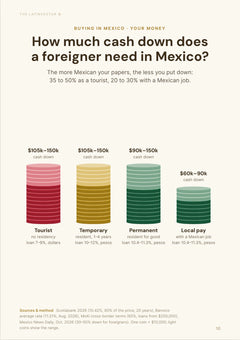
A bigger down payment helps, and some foreigners can borrow more cheaply at home. Cross-border lenders usually ask for 35–50% down. Run those cases separately. With an ordinary local mortgage, we'd rather buy in cash.
| MXN 4m property | Amount |
|---|---|
| Gross rental yield | 6.0% |
| Annual gross rent | MXN 240,000 |
| 70% mortgage | MXN 2,800,000 |
| Average mortgage rate | 11.42% |
| Approximate first-year interest | MXN 319,760 |
| Rent after interest only | -MXN 79,760 |
| Vacancy, fees, maintenance and tax | Still to pay |
Does the peso's recent slide help dollar buyers' returns?
It helps on the way in, but it works against you on the rent. The peso has weakened since early September, from under 17 to about 18.6 per dollar, so a peso-priced home is cheaper in dollars than a few weeks ago, though still a bit dearer than on the 2025 average.
In October 2026, a dollar buys about 18.6 pesos, against an average of 19.20 in 2025 and 17.73 in 2023. A MXN 4 million apartment costs about USD 215,000 today, against about USD 235,000 at 17 pesos in early September.
The rent is paid in pesos, so the exchange rate works both ways. A monthly rent of MXN 20,000 is worth about USD 1,080 now, against about USD 1,180 at 17 pesos in early September. If the peso keeps weakening while you own, your dollar return shrinks, and so does your dollar sale price.
Most forecasts made before or during the slide expect the peso to firm up again: BBVA Research sees about 17.3 pesos per dollar at the end of 2026, Banxico's analyst survey 17.57 and Citi's survey 18.20. What to do: judge the deal in pesos first, then check it still works if the peso moves 10% against you. Don't count on the exchange rate to make the numbers.
Is there really enough long-term rental demand in Mexico?
Yes, at national level. The real risk is local oversupply.
SEDATU and CONAVI's 2025 update counts 8.33 million households, about 21% of the total, living in inadequate housing. And buying is hard for many households: mortgages cost more than 11% while prices rose 7.9% in six months. That keeps people renting longer.
Supply is growing, though. BBVA Research counts 389,000 homes registered in the national housing register (RUV) as of June 2026, but only 21.4% are finished and inventory takes more than 500 days to sell.
So the national picture is fine. What hurts a landlord is ten similar towers in the same neighborhood, even while the country as a whole is short of homes.
Will Mexico's huge housing program hurt private landlords?
Not directly, for most mid-market investors, but it can matter locally.
The federal target is 1.8 million homes under Vivienda para el Bienestar over the administration's term. By September 2026, SEDATU reported about 277,000 under construction and 89,000 assigned. These homes target low-income families who earn up to about MXN 17,800 a month and don't own a home, and they mostly sell for around MXN 600,000, under an Infonavit ceiling raised from MXN 630,000 to MXN 862,000 on September 29, 2026.
That's a different tenant from someone renting a MXN 25,000 apartment in Roma Norte or an executive flat in Monterrey.
The number that matters is competing supply near your building. Before buying, check construction within walking distance, presales, half-built towers and how many near-identical units are already listed for rent.
Can property appreciation rescue a low-yield Mexican rental?
It can help, but a weak property shouldn't need another 8% a year to make sense.
Recent price growth has hidden mediocre income. A landlord earning 4% net (after costs and, for a non-resident, the 25% tax on gross rent) while the property gains 8% shows about 12% a year before selling costs and tax.
SHF reports 7.9% national growth over the first half of 2026, with Guadalajara above 11%. That's well ahead of inflation and the economy, and assuming it lasts forever is aggressive.
Test the deal with 3–4% a year of price growth instead. If a property earning about 5% net still looks good at that pace, you have a real deal, and any faster growth is a bonus.
What kind of Mexican rental property would we actually buy now?
A well-located city apartment at roughly 6–7% gross from a realistic long-term rent, with reasonable building fees and a large local tenant pool.
It should make sense before any Airbnb revenue or double-digit price growth.
At MXN 4 million, a 6.5% gross yield means MXN 260,000 of rent a year, or about MXN 21,700 a month. After normal costs, you might keep around 5% before personal tax. With only 3–4% a year of price growth, that can still be a good investment.
Compare that with a MXN 6 million resort condo at 4%: rent of MXN 240,000 a year, for MXN 2 million more capital. Condo fees, vacation-rental management and the low season shrink it further.
Today we'd rather own the first one.
| What we would look for | Attractive | Needs scrutiny | We would usually avoid |
|---|---|---|---|
| Gross rental yield | 6.5%+ | 5–6.5% | Below 5% |
| Net operating yield | Around 5%+ | Around 4–5% | Below 4% |
| Tenant demand | Large local base | Mixed local/tourist | Mostly seasonal |
| Mortgage dependence | None or cheap debt | Moderate | 11%+ debt needed |
| Airbnb dependence | Optional | Helps materially | Deal fails without it |
| Future appreciation needed | 3–4% is enough | 5–6% | 8%+ |
| Competing new supply | Limited | Growing | Heavy pipeline |
So, should you buy a Mexican rental in 2026?
Yes, especially if you're paying cash and you pick the city and the building carefully.
The best part of the market is less glamorous than the ads. Mexico City yields about 6.8% gross by Global Property Guide's count and 7.6% by Inmuebles24's, and its rents are rising faster than its prices. Puebla and Mérida are both around 6.1%. Monterrey is close to 5.8%, with a solid job base.
Cancún, at 4.6%, isn't a bad place to own, but it's a weak pure income play.
Financing is the main reason to be picky: mortgages around 11.4% cost almost twice the national gross yield. And if you live abroad, 25% of your gross rent goes to tax.
The best buys now are well-priced city apartments with roughly 6–7% gross yields, modest running costs and tenants who live and work locally. Mexico still has good rentals. The easy money is gone.
Our methodology
This article estimates whether a rental property in Mexico still pays at today's prices, rents, financing costs and taxes. We looked at what actually drives a landlord's return: price growth, rent, mortgage rates, running costs, tax, tenant demand, new supply, short-term-rental performance, regulation and foreign ownership.
Price growth comes from Sociedad Hipotecaria Federal's index of mortgaged homes, the official series. Yields come from Global Property Guide, which divides median asking rents by median asking prices, and from Inmuebles24's Mexico City index. Both use listings, so they are gross, pre-expense figures and not achieved returns. Our worked examples (MXN 4 million apartment, 70% loan) are illustrations built on those averages.
Short-term rental figures come from AirDNA, which combines Airbnb, Vrbo and Booking.com. We didn't mix them with other STR data providers. Tourism figures come from INEGI's international travelers survey, and housing supply from SEDATU and BBVA Research.
Rules on foreign ownership, trust permits and rental tax come from the Mexican Constitution, the Foreign Investment Law, SRE's published 2026 fees, the income tax law (articles 113-A, 113-F and 158) and Mexico City's laws on residential leases and tourist accommodation, with dated press reports for how far they are enforced.
We checked these figures in October 2026. Conversions use about 18.6 pesos per US dollar and 20.9 pesos per euro.
Limits: asking rents and prices are not signed leases and closed sales, city averages hide big gaps between buildings, and tax depends on your residency and any treaty. Treat the numbers as a starting point for your own checks.
Key sources used for this analysis include SHF's Q2 2026 housing-price release, Global Property Guide's Mexico rental yields, its one-bedroom, two-bedroom and three-bedroom yield data, Inmuebles24's Mexico City index (June 2026), AirDNA's Mexico City data, INEGI tourism figures for January–August 2026, BBVA Research's real estate outlook (second half 2026), SEDATU / CONAVI's 2025 housing-deficit update, SEDATU's Vivienda para el Bienestar update, SRE's 2026 fideicomiso fees, SRE's restricted-zone trust guidance, the Foreign Investment Law, the Mexican Constitution, income tax law article 158, SAT on article 113-A, the Supreme Court ruling on Mexico City rent increases, Mexico City's texts on residential rents and tourist accommodation, Excélsior on the 50% night limit (August 2026), México, ¿cómo vamos? on Q2 2026 GDP and BBVA Research's exchange-rate outlook.