Summary
Is Playa del Carmen a good place to live as an expat? Yes, for people with a comfortable foreign income who want warm weather, walkability and the Caribbean. It is no longer a small beach town: the municipality grew 110% between 2010 and 2020, to 333,800 residents.
Income and neighborhood change everything. The average monthly labor income in Quintana Roo is about MXN 9,210 ($500), while a central apartment for a foreigner often costs MXN 16,000 ($870) or more.
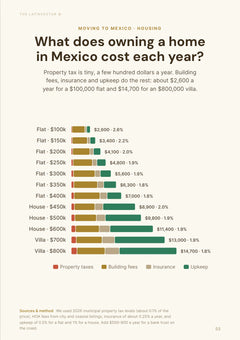
Playa is still affordable on dollars or euros, but it is not cheap Mexico anymore: central furnished one-bedrooms rent for MXN 16,000 to 17,500 (about $870 to $960), and studios around MXN 12,000 ($660). With a dollar at about 18.3 pesos, foreign budgets stretch less than in early 2025.
You can live without a car if you pick Centro, Zazil-Ha or the coastal side of Colosio. Since August 2026, the Tren Maya also links Playa to Cancún in about 49 minutes.
Safety is better than its reputation: intentional homicides fell 46.4% between January–July 2025 and the same months of 2026, and several theft categories fell too. Organized crime and nightlife risk are still real.
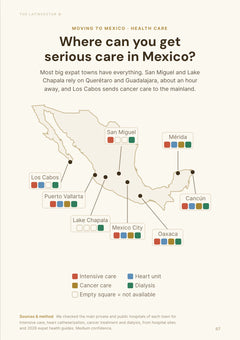
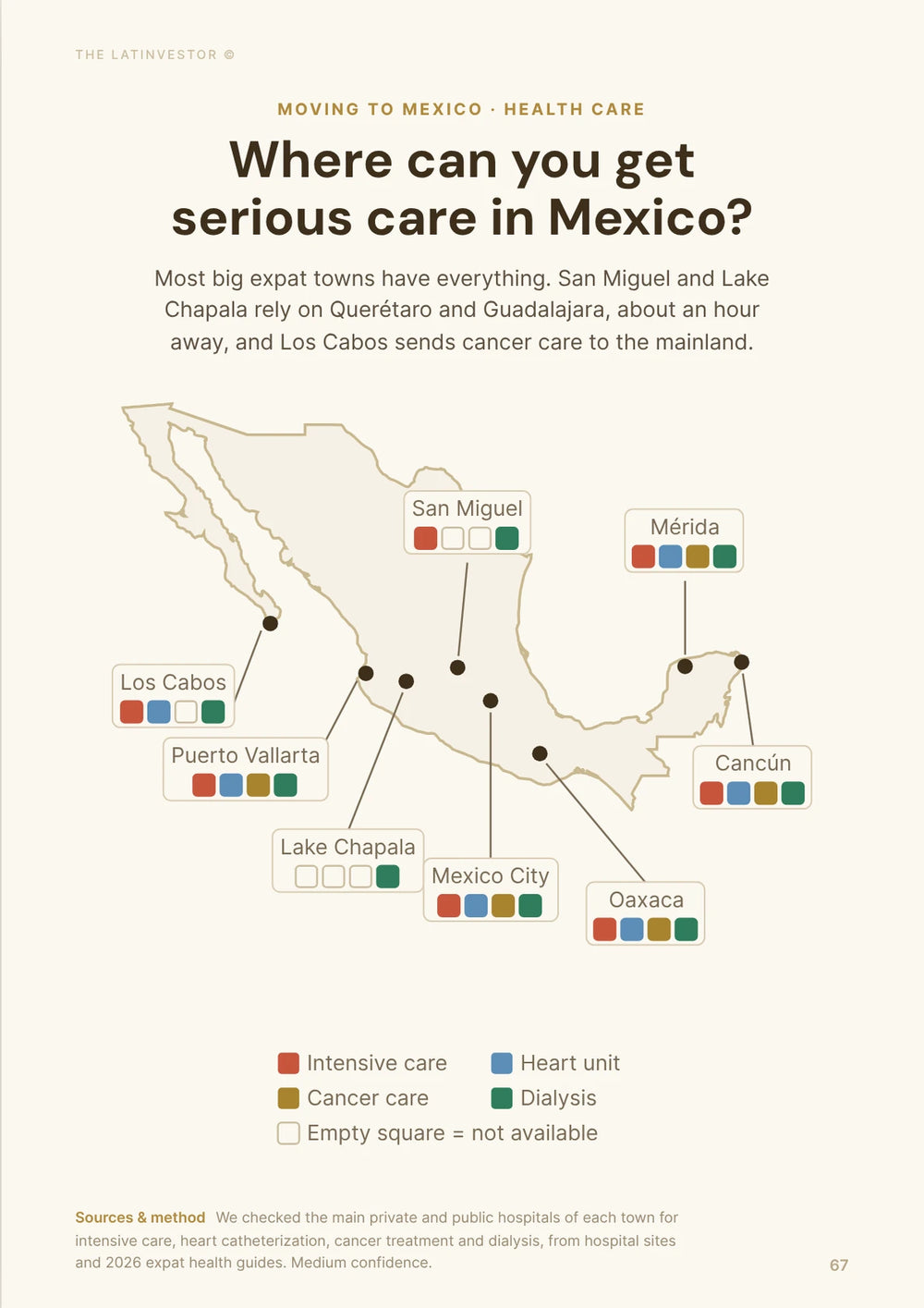
Health care is now a strength. Hospital Joya, a third-level private hospital, offers more than 30 specialties, and Cancún’s hospitals are about an hour away. Insurance still matters for anything serious.
Remote work is easy until the power goes out. Coworking day passes cost around MXN 200 to 350 (about $11 to $19), but repeated outages over 48 hours in northeastern Playa show why a backup is worth having.
Meeting people is easy, keeping friends takes more effort because many foreigners are temporary. Most of the 333,800 residents are Mexican, so a more local life is a few blocks away.
Families can do well with a good budget: housing, private schools and health care add up, but the average school commute in the municipality is only about 14.5 minutes.
Tourism shapes the center: more than 6 million visitors a year and over 46,000 hotel rooms, with 72.58% hotel occupancy in the first half of 2026. Living a few blocks inland avoids most of it.
The beach is a real reason to move, but not every month. In 2026, more than 34,000 tonnes of sargassum had been collected on Playa’s beaches by late July.
Winter weather is superb, with an average of about 26°C over the year, but the hot, humid and rainy months are much harder, and the Yucatán Peninsula sits in the hurricane zone.
Infrastructure has not kept up with growth: power cuts, flooded streets, and water outages of up to four days in some inland developments in summer 2026.
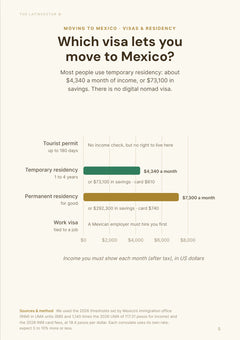
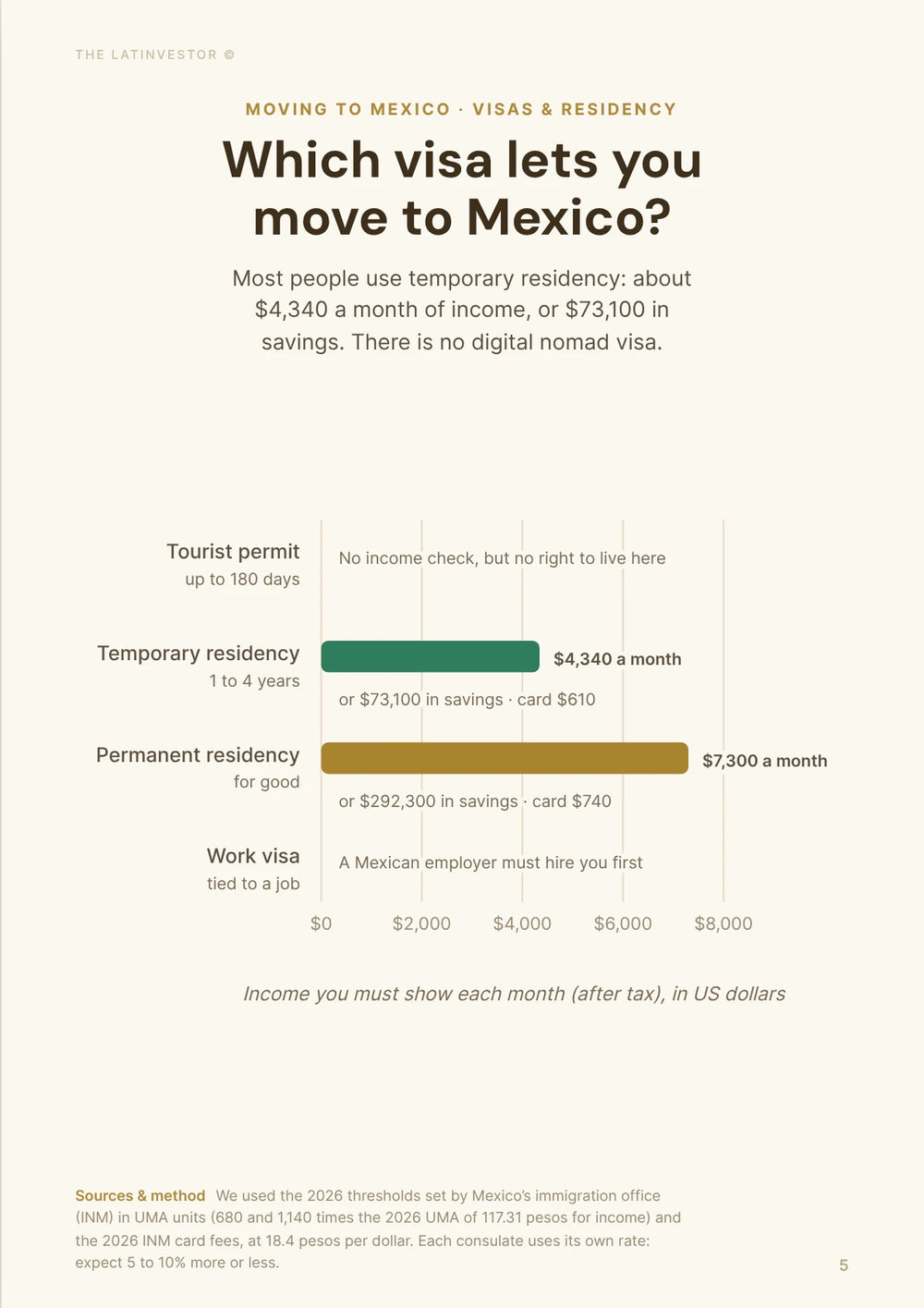
Residency is fairly simple if you qualify: in 2026, temporary residence asks for MXN 79,770.80 ($4,350) of monthly income, and the one-year residence card costs MXN 11,140.74 ($610).
Compared with Cancún and Tulum, Playa sits in a useful middle: more walkable than Cancún, easier to live in than Tulum, whose hotel occupancy fell to 66.18%. Bottom line: Playa now sells convenience and lifestyle, not bargain living, and suits remote workers, active couples, younger retirees and families with enough income.

Has Playa del Carmen become a real city rather than an expat beach town?
Playa del Carmen is now a sizeable Mexican city with a huge tourism economy, and that changes what living there as an expat actually feels like.
The municipality counted 333,800 residents in the 2020 census, according to INEGI data published through Data México. That was 110% more than in 2010. The city effectively doubled in a decade, which helps explain both its unusually broad range of services and some of its infrastructure problems today.
The population is also young. People aged 25 to 39 represented 33.7% of residents in the census. Playa therefore has a much larger working-age population than the retirement-town image sometimes suggests.
Tourism remains enormous beside that resident base. Municipal tourism authorities have reported more than six million visitors a year and over 46,000 hotel rooms. Even allowing for differences between municipal and city boundaries, Playa absorbs visitor numbers many times larger than its permanent population every year.
That combination creates a fairly unusual place to live. Playa has hospitals, supermarkets, schools, gyms, professional services and large residential neighborhoods, while a relatively small strip near the sea still operates much like an international resort.
| Indicator | Earlier point | Latest useful figure | What we can conclude |
|---|---|---|---|
| Municipal population | ~159,000 in 2010 | 333,800 in 2020 | Population more than doubled |
| Population growth | — | +110% in a decade | Infrastructure had to expand extremely quickly |
| Residents aged 25–39 | — | 33.7% | Playa has a young working-age population |
| Hotel rooms | — | 46,000+ | Tourism capacity is huge for a city this size |
| Annual visitors | — | 6 million+ reported | Tourism still shapes everyday life heavily |
Why can two expats have completely different experiences in Playa del Carmen, and who is the city actually good for?
Playa del Carmen works extremely well for some expats and disappoints others because income, neighborhood and lifestyle expectations change almost everything.
An expat living around Centro, Zazil-Ha or the better-connected parts of Colosio can walk to cafés, restaurants, gyms, supermarkets and the beach. A resident several kilometers inland may rely far more on taxis or a car and deal with heavier traffic, hotter walks, less consistent sidewalks and fewer places reachable on foot.
Income changes the picture even more. Data México reports that the average monthly labor income across Quintana Roo was about MXN 9,210 (about $500) in the first quarter of 2026. That figure is statewide rather than specific to Playa, but it gives useful perspective. A foreign remote worker paying MXN 16,000 (about $870) for a central apartment is spending considerably more on rent alone than the average local worker earns in a month.
Season matters too. Playa during the drier winter period feels very different from Playa during months of high humidity, intense rain and heavy sargassum arrivals.
Remote workers are an obvious fit. The city has good internet availability, coworking spaces, cafés, easy social contact and enough services that everyday life requires little effort once housing is sorted.
Active couples and younger retirees also get a lot from Playa. The sea, cenotes, Cozumel, gyms, diving and the wider Riviera Maya make outdoor life unusually easy. Families can do well too when their budget comfortably covers larger housing, healthcare and private schooling if needed.
The weaker fits are clear. People moving mainly to cut expenses can find much cheaper places in Mexico. Anyone craving deep cultural life may eventually find the city's museums and performing arts limited compared with Mexico City, Mérida or Guadalajara. People who hate humidity should be especially cautious about deciding after a winter visit.
So when we ask whether Playa del Carmen is good for expats, the strongest case is for people with foreign income who value warm weather, walking, social life and easy access to the Caribbean.
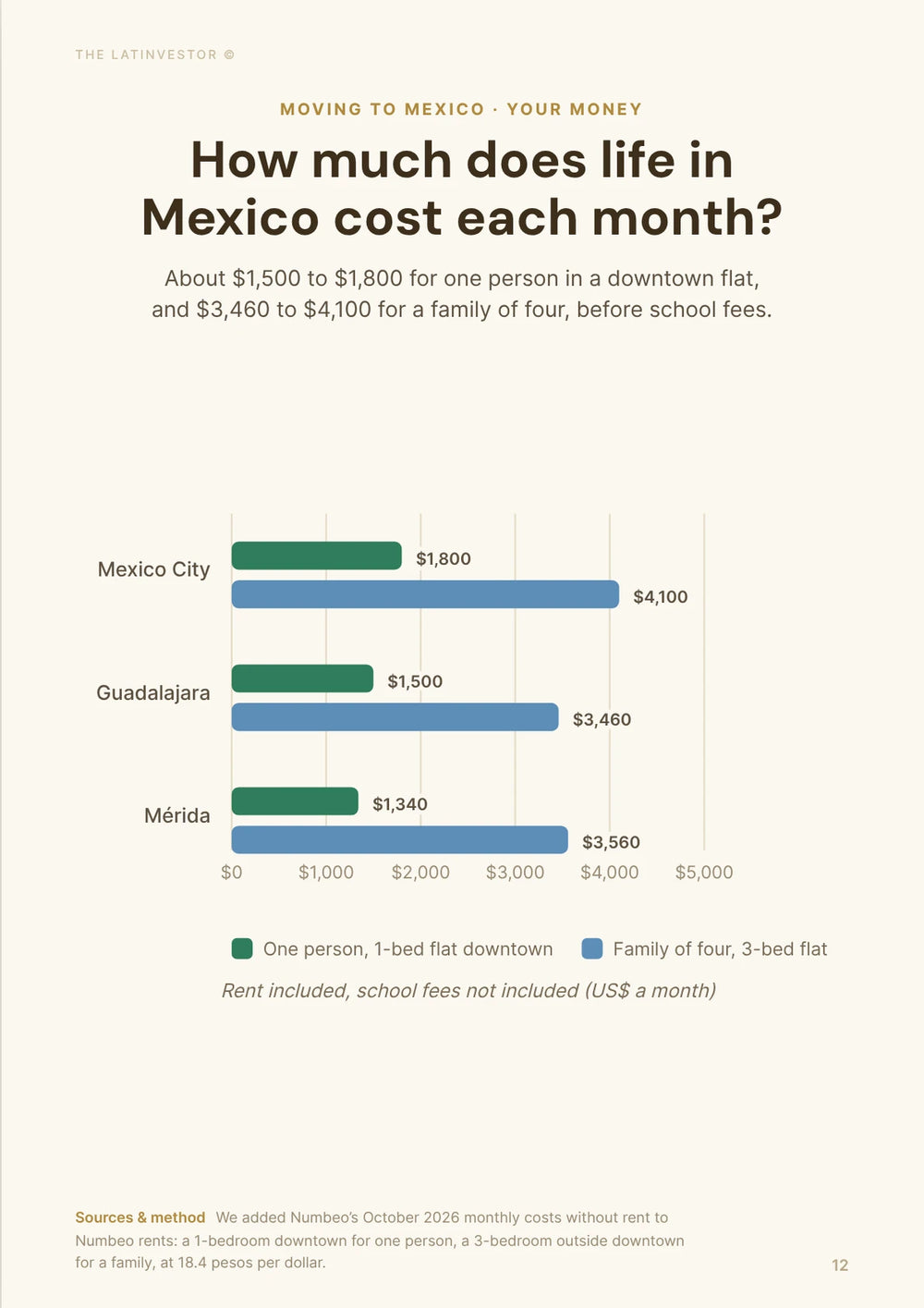
Is Playa del Carmen still affordable for expats, or has housing become too expensive?
Playa del Carmen is still affordable for many people earning in dollars or euros, but housing has become expensive enough to weaken the city's old bargain reputation.
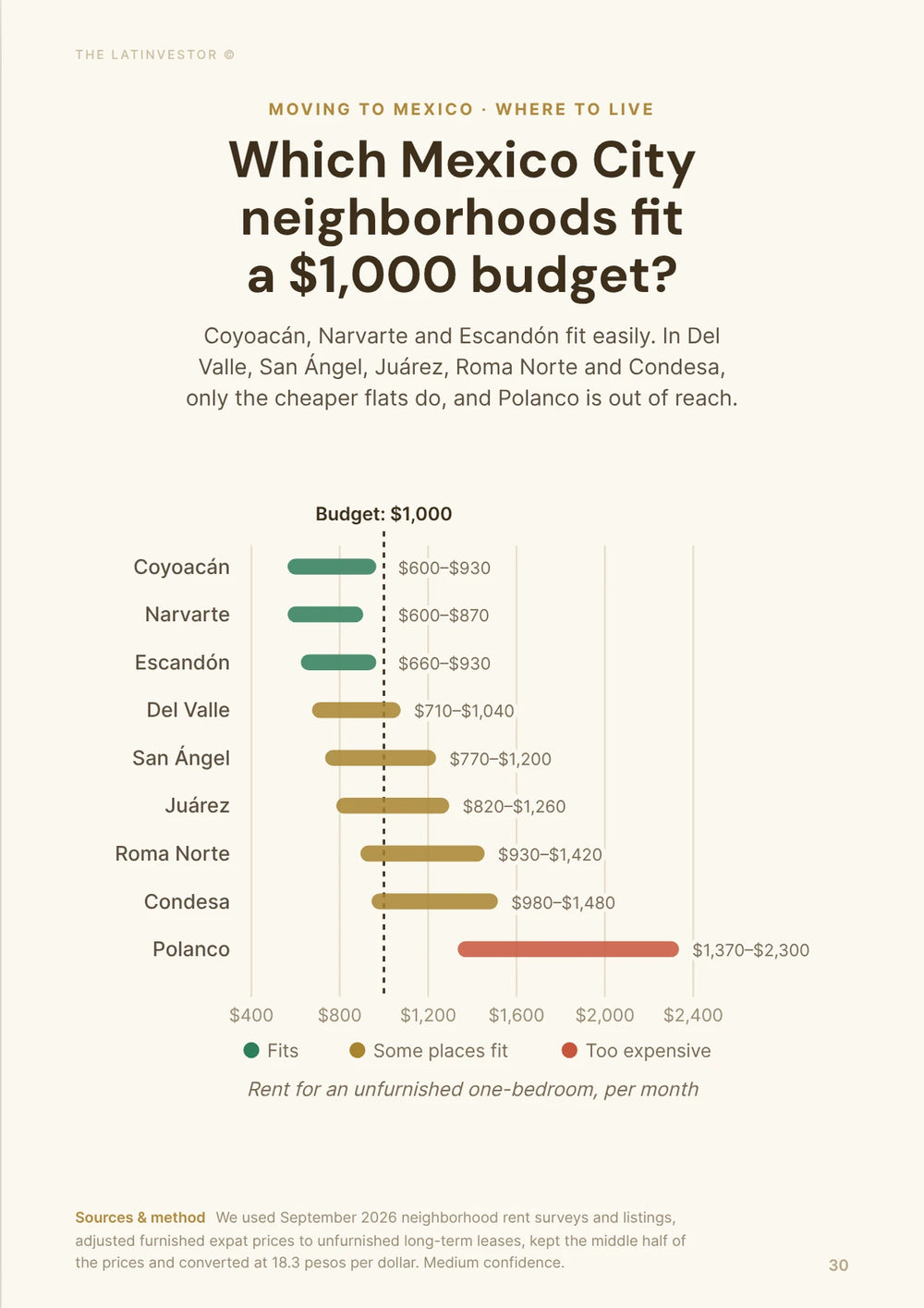
Current Inmuebles24 listings include furnished one-bedroom apartments in central Playa around MXN 16,000 to 17,500 (about $870 to $960) per month, generally before utilities. A recent compilation of Inmuebles24 and Lamudi asking rents put the citywide average for a one-bedroom at roughly MXN 16,000 (about $870), with studios around MXN 12,000 (about $660).
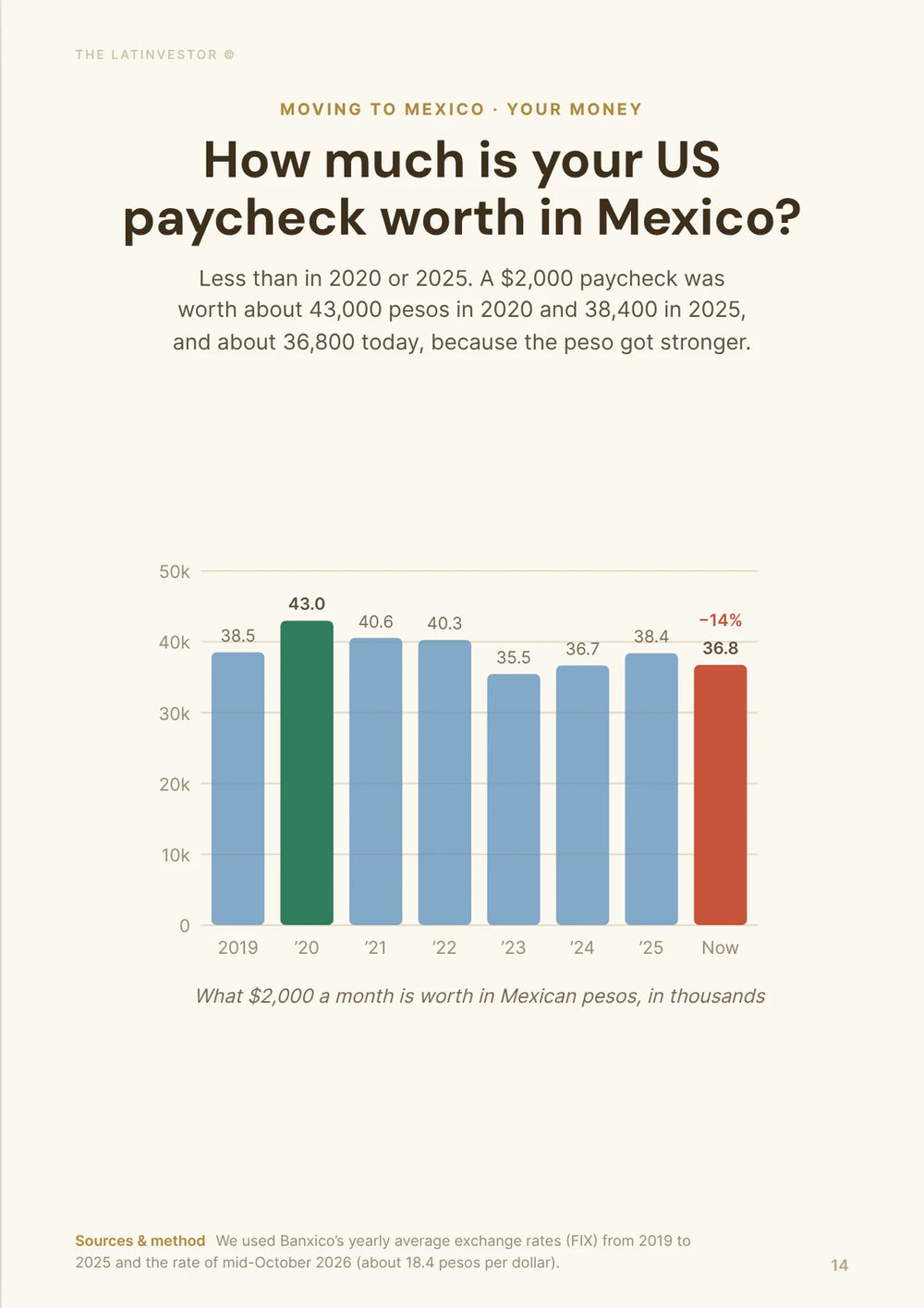
The strong peso matters too. In October 2026, a dollar buys about 18.3 pesos, far less than the 20-plus pesos it bought in early 2025, so a budget in dollars does not stretch as far as it used to.
Cheaper apartments certainly exist, especially farther from the beach. The problem is that moving inland often removes one of Playa's best features: being able to walk almost everywhere you use regularly.
Location premiums are strong because the central grid is genuinely useful. Centro, Zazil-Ha and the coastal side of Colosio put residents within walking distance of the sea, Fifth Avenue, supermarkets, restaurants, gyms and coworking spaces. Playacar adds gated-community pricing. Farther inland, more space becomes available for the same money, although the lifestyle starts looking much more car-dependent.
Everyday Mexican food and local supermarket shopping remain reasonably priced. International restaurants, imported products, beach clubs and frequent nights out quickly change the calculation. Someone cooking at home, eating in local restaurants and avoiding the tourist strip can still live for much less than in many large North American or European cities.
Tourism also keeps pressure on good residential property. Quintana Roo's tourism observatory recorded average Playa del Carmen hotel occupancy of 72.58% during the first half of 2026. That was 4.47 percentage points lower than a year earlier, so tourism is currently softer rather than booming.
Yet 72.58% occupancy is still high enough to show how deep the accommodation market remains. Playa does not need record-breaking tourism every year for well-located housing to stay expensive.
| Typical expense | Current rough level | How it feels on foreign income | Main catch |
|---|---|---|---|
| Studio | Around MXN 12,000 (about $660) citywide | Usually manageable | Quality and location vary sharply |
| Central furnished 1BR | Around MXN 16,000–17,500 (about $870–$960) or more | Moderate | Utilities often extra |
| More local 1BR | Often below central prices | Better value | Less walkable |
| Inexpensive meal | Roughly MXN 200–250 (about $11–$14) | Reasonable | Tourist areas can cost much more |
| Groceries | Moderate | Good value if buying local | Imported food gets expensive |
| Coworking day pass | Often MXN 200–350 (about $11–$19) | Affordable backup | Monthly plans vary |
Can you actually live in Playa del Carmen without a car?
Yes. Playa del Carmen remains unusually easy to live in without a car if we choose the neighborhood carefully.
Centro has a compact grid, a long pedestrian spine around Fifth Avenue and a dense mix of supermarkets, pharmacies, gyms, restaurants and smaller medical practices. Zazil-Ha and parts of Colosio extend that walkable zone farther north.
The experience changes fairly quickly inland. Playa grew faster than its pedestrian infrastructure, and many newer areas were designed around roads rather than comfortable walking. Tropical heat also changes what counts as a reasonable distance. Twenty minutes on foot can feel easy early in the morning and unpleasant at midday.
Public transport fills part of the gap. INEGI found that 31% of workers in the municipality used buses, taxis, combis or colectivos as their main transport mode in 2020, with an average work commute of about 25 minutes.
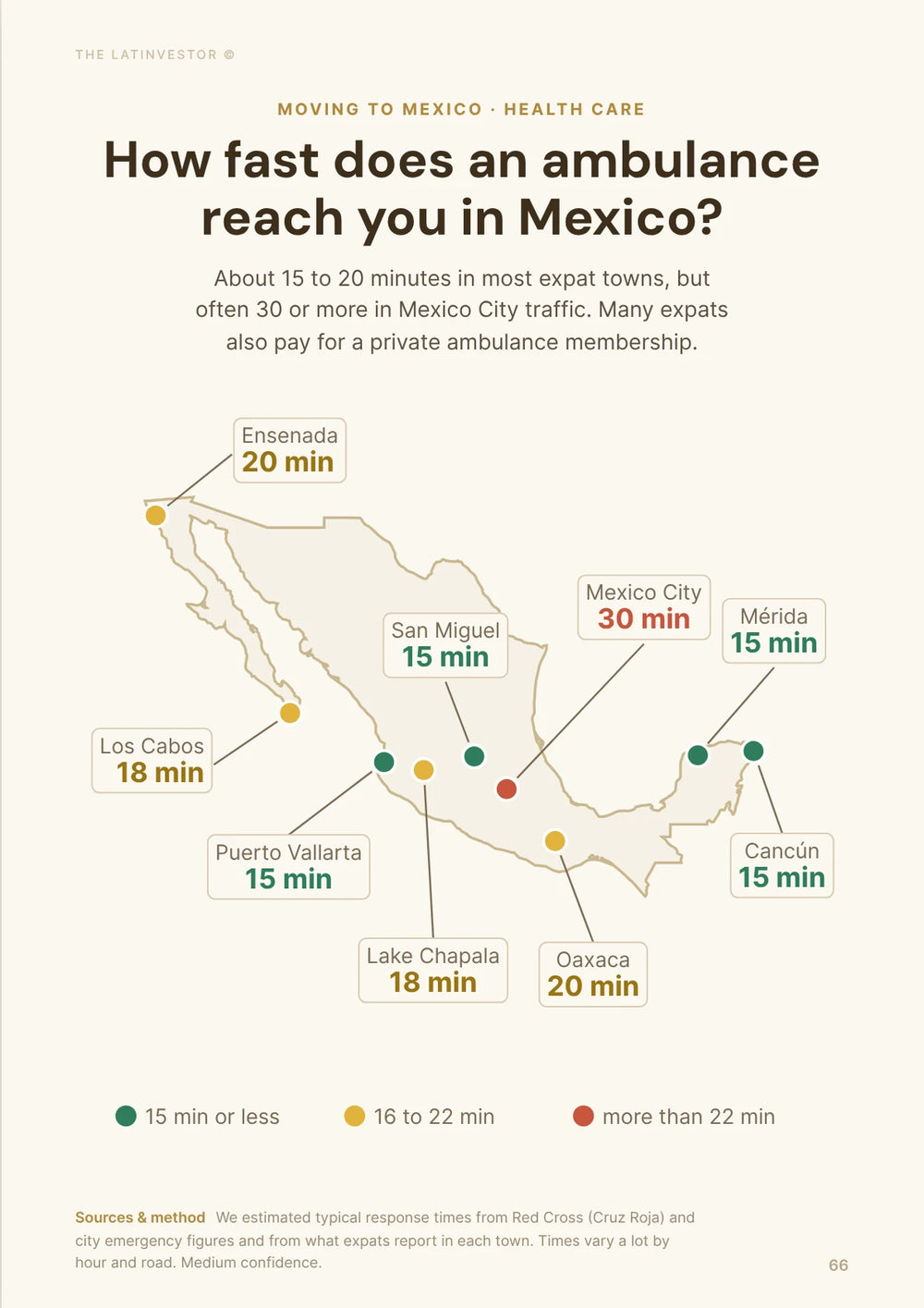
Regional transport has just improved as well. In August 2026, Tren Maya restarted commercial passenger service between Cancún and Playa del Carmen. The scheduled journey takes about 49 minutes, with four train movements per day and intermodal links intended to connect passengers with Cancún Airport and other destinations.
The service is still too limited to reorganize daily life around it, but it adds another useful option alongside ADO buses, colectivos, taxis and driving.
Is Playa del Carmen safe enough for expats right now?
Playa del Carmen is currently safer than its recent reputation suggests, although we would still treat it as a real Mexican city rather than a carefree resort bubble.
The strongest recent evidence is the homicide trend. Municipal authorities, using figures from Mexico's National Public Security System, report that intentional homicides fell from 28 cases between January and July 2025 to 15 during the same period in 2026. That is a 46.4% decline.
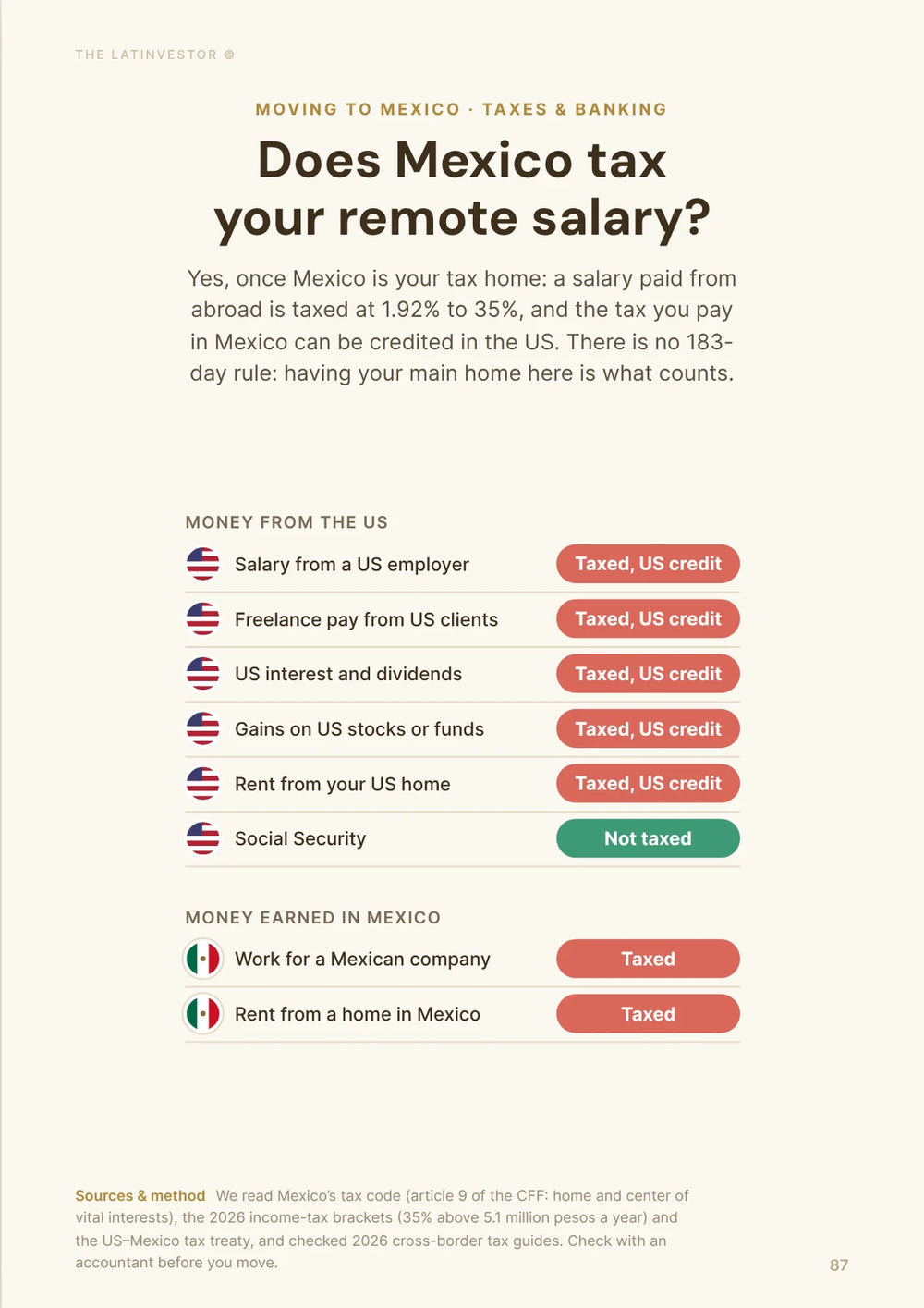
The improvement goes beyond homicide. Over the same comparison period, vehicle theft fell 45.1%, motorcycle theft fell 46%, residential burglary fell 37% and reported rape fell 30.4%. Overall robberies decreased 9.2%.
Several categories are moving in the same direction at once, which makes the improvement harder to dismiss. We should still be cautious with any local crime comparison because reporting rates and policing can influence the numbers.
Serious crime has not disappeared. Organized criminal groups remain active in Quintana Roo, particularly around drug distribution, extortion and nightlife. The risk rises considerably when alcohol, illegal drugs, isolated streets and very late nights enter the picture.
For women and people living alone, the same geography matters. Busy central streets can remain active late into the evening, while quieter side streets may feel completely different several hours later. Choosing the immediate block carefully and using established transport late at night reduces avoidable exposure.
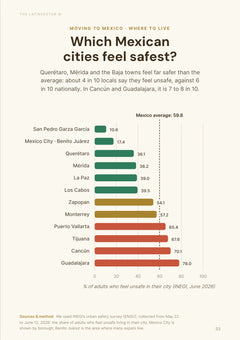
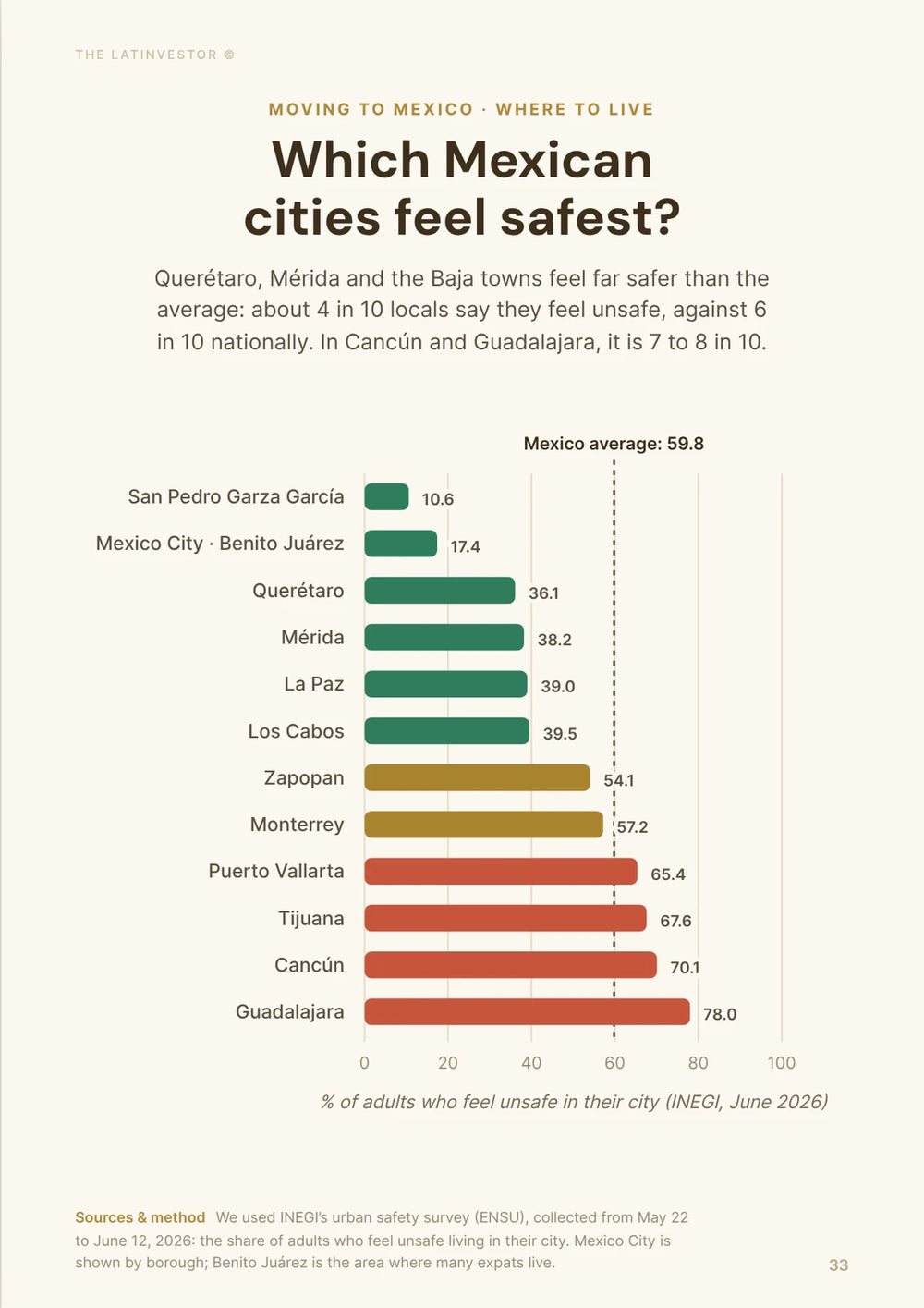
INEGI’s urban-security survey (ENSU) does not cover Playa del Carmen, but it does cover Cancún, about an hour north. In June 2026, 70.1% of adults there said they felt unsafe in their city, down from 78.8% a year earlier, against 59.8% across Mexico’s cities.
We would currently consider Playa safe enough for normal expat life with ordinary urban precautions.
| Crime category | Jan–Jul 2025 | Jan–Jul 2026 | Change |
|---|---|---|---|
| Intentional homicide | 28 | 15 | -46.4% |
| Vehicle theft | 452 | 248 | -45.1% |
| Motorcycle theft | 352 | 190 | -46.0% |
| Residential burglary | 219 | 138 | -37.0% |
| Reported rape | — | — | -30.4% |
| Overall robberies | — | — | -9.2% |
Is healthcare in Playa del Carmen good enough for expats?
Yes. Playa del Carmen now has enough private medical infrastructure that healthcare should rarely be the reason an otherwise suitable expat rejects the city.
Hospital Joya Playa del Carmen is a good example of how far the local healthcare market has developed. The hospital opened in 2023 as a third-level facility and currently advertises more than 30 specialties and subspecialties, along with operating rooms, advanced imaging and 24-hour pediatric emergency care.
That level of treatment separates Playa from smaller tropical destinations where a serious medical problem quickly means evacuation or a long trip to another city.
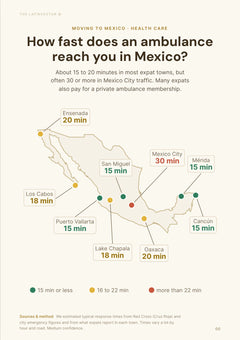
Cancún adds another layer of hospitals and specialists roughly an hour north, so residents can draw on a considerably larger medical system when something highly specialized is required.
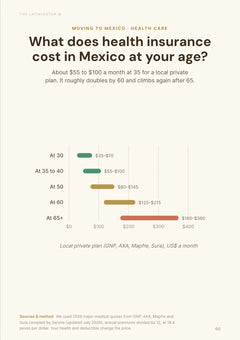
Private consultations and basic tests in Mexico can feel inexpensive to someone accustomed to US prices. Major hospitalization is another matter. Surgery, intensive care or prolonged treatment can still become costly very quickly, which is why proper health insurance belongs in any realistic long-term expat budget.
For healthy younger residents, day-to-day medical access is easy. Families and retirees should investigate insurance and specialist needs more carefully.
Is Playa del Carmen still good for remote workers?
Yes. Playa del Carmen remains one of the easier Caribbean cities for remote work, although reliable electricity deserves more attention than the coworking scene.
Home broadband is widely available in central neighborhoods, while the city has several dedicated coworking spaces and countless cafés used by remote workers. Day passes around MXN 200 to 350 (about $11 to $19) are common enough that losing home internet does not automatically destroy a workday.
Current rental listings increasingly advertise internet speeds and workspaces directly. Remote workers are established enough as a customer group that landlords now compete partly on work-from-home suitability.
Electricity is the shakier part. Municipal authorities recently intervened with CFE after repeated outages affected northeastern Playa over a 48-hour period. Officials said the causes had been identified and that work was underway to stabilize the service.
Anyone whose income depends on video calls should check the exact building, keep mobile data available and ideally have enough backup power to run a router and laptop through a short outage.
| Remote-work need | Playa currently | Our assessment | Main weakness |
|---|---|---|---|
| Home broadband | Widely available | Good | Depends on building/provider |
| Coworking | Several dedicated spaces | Very good | Extra monthly cost |
| Cafés | Abundant | Excellent | Noise can be an issue |
| Video calls | Usually straightforward | Good | Power interruptions |
| International networking | Very easy | Excellent | Community can be transient |
| Electricity | Generally functional | Mixed | Recent outages show ongoing strain |
Does Playa del Carmen have a good expat community, or is everyone just passing through?
Playa del Carmen makes it very easy to meet other foreigners, but building a stable social life takes more effort because so many people are temporary.
English is common in tourism-facing businesses, while coworking spaces, gyms, language exchanges, Facebook groups and international social events make the first few weeks unusually easy. New arrivals do not need months to find other people in a similar situation.
Census data confirms that international migration is a real part of the city's growth. Among people arriving from abroad in the five years before the 2020 census, the largest groups came from the United States, Venezuela and Colombia.
The foreign community can still look larger than it really is because expats and tourists concentrate in the same few neighborhoods. Most of the municipality's 333,800 residents are Mexican, and moving even a short distance away from Fifth Avenue changes the social environment quickly.
That gives Playa two possible lives. Someone can spend years speaking mostly English, eating in international restaurants and socializing with other foreigners. Another resident can learn Spanish, live farther from the tourist strip and build a much more local routine.
The main drawback is turnover. Remote workers leave, seasonal residents disappear for months and tourists constantly rotate through the city, so stable friendships usually require moving beyond the easiest nomad scene.
Is Playa del Carmen good for families with children?
Playa del Carmen can be excellent for families earning comfortable foreign incomes, although children make housing, schools and transport much more important than they are for a single remote worker.
Private pediatric care is available locally, including 24-hour pediatric emergency services at Hospital Joya. Bilingual and international schooling options exist in Playa and elsewhere along the Riviera Maya. Beaches, swimming, cenotes and outdoor activities also give families an unusually active environment.
The logistics can work surprisingly well. INEGI recorded an average school commute of about 14.5 minutes across the municipality in the 2020 census.
Housing is where the family budget starts climbing. A single person may happily live in a small central apartment. A family often wants two or three bedrooms, quieter streets, secure common areas and possibly a car. Playacar and newer residential developments can provide that, although monthly housing costs rise quickly.
The tropical climate is also more noticeable with young children. Midday heat limits walking, heavy rain can disrupt routines and mosquitoes become much more present during wetter periods.
For families with enough money for good housing, private healthcare and whichever school they prefer, Playa can work very well.
Do tourists make Playa del Carmen annoying to live in?
Tourism absolutely changes daily life in Playa del Carmen, but most residents can avoid the worst of it by living a few blocks away from the busiest strip.
The scale is huge. Municipal tourism officials have reported more than six million visitors annually and over 46,000 hotel rooms. Quintana Roo's tourism observatory recorded 72.58% hotel occupancy in Playa during the first half of 2026.
The more interesting part is the direction. Occupancy during that period was 4.47 percentage points below the same period in 2025. Full-year occupancy had already fallen from 75.3% in 2024 to 70.8% in 2025.
So Playa can feel saturated even while tourism is cooling somewhat. The crowding comes largely from the permanent scale of the visitor economy rather than an uninterrupted new tourism boom.
Fifth Avenue and the immediate beachfront carry most of the pressure. Prices, restaurant concepts, shops and nightlife there are designed heavily around visitors. Five or ten blocks inland, everyday life quickly becomes more local.
Is Playa del Carmen's beach still worth moving for?
Yes, but Playa del Carmen's beach can no longer be treated as a guaranteed year-round advantage because sargassum has become a major seasonal problem.
The scale during the 2026 season was hard to ignore. By early June, municipal crews said they had already removed more than 20,000 tonnes of sargassum from local beaches. One large cleanup operation removed roughly 70 tonnes in a single day. By late July, the state environment ministry (SEMA) counted 34,245 tonnes collected in Playa del Carmen in 2026, more than a third of the state total.
Those numbers put the problem well beyond the occasional patches of seaweed visitors might remember from older trips. During severe arrivals, water quality, smell and the appearance of individual beaches can change dramatically.
Municipal authorities have responded with cleanup teams, offshore barriers, monitoring and coordination with Mexico's Navy. Those measures help, but they cannot guarantee clean beaches every day because arrivals depend heavily on currents, winds and the volume reaching the coast.
Conditions also vary sharply by location and season. Winter and early spring frequently deliver the turquoise-water version of Playa that attracts people in the first place.
For someone moving specifically because they expect pristine Caribbean swimming every morning of the year, sargassum is now a serious reason to hesitate.
Is Playa del Carmen's weather actually good year-round?
Playa del Carmen has superb winter weather, while the hotter and wetter part of the year is much harder to love.
The local climate is warm and humid, with an average annual temperature around 26°C and substantial rainfall. The winter attraction is obvious: warm days, outdoor dining, swimming and virtually no cold season.
Summer brings a different routine. High humidity makes the heat feel heavier, air-conditioning becomes difficult to avoid for people working from home, and intense rain can overwhelm individual streets for short periods.
Humidity also creates small daily annoyances that holidaymakers rarely think about. Clothes dry more slowly, mold needs attention, electronics live in a harsher environment and mosquitoes become considerably more noticeable during the wet season.
Hurricane risk belongs in the same conversation. A direct major hurricane impact is uncommon in any single year, but the Yucatán Peninsula sits squarely inside the Atlantic hurricane region.
For seasonal expats spending the northern winter in Playa, climate is one of the city's best features. Year-round residents need to be comfortable with several much heavier months.
Are Playa del Carmen's infrastructure problems getting serious?
Yes. Playa del Carmen's fast growth is putting visible pressure on electricity, roads, drainage and the general quality of the urban environment.
The population growth gives us the clearest explanation. The municipality expanded by 110% between the 2010 and 2020 censuses. Building enough housing, roads, substations, drainage and public services for a population growing that quickly is difficult even with good planning.
Electricity has become one of the clearest recent examples. CFE outages were serious enough that the municipal government intervened again after repeated interruptions hit northeastern Playa over a 48-hour period. Officials said CFE had identified the causes and was working on a more stable supply.
Water is another weak point. In July and August 2026, residents of several inland developments, such as Villamar and Mundo Hábitat, reported going up to four days without running water and buying it from tanker trucks. Supply is run by the private concession holder Aguakan.
Heavy rain exposes a similar pattern. Some streets drain reasonably well, while others accumulate water quickly. Sidewalk quality also changes block by block, particularly once we leave the central tourist grid.
Playa functions normally most days, but the infrastructure gap is visible enough that someone expecting resort-level reliability everywhere will notice it.
Is it easy for an expat to settle legally in Playa del Carmen?
Mexico still gives qualifying foreigners a fairly practical route to long-term residence, which makes Playa del Carmen much easier to consider as a real home rather than a place for repeated short stays.
Mexico's temporary resident visa allows foreigners to remain in the country for more than 180 days and for up to four years. The federal government currently lists several qualifying routes, including financial solvency, family ties, property ownership and investment.
For many remote workers and retirees, financial solvency is the relevant route. Applicants need documented savings, investments, salary or pension income that meets the threshold, set in UMA, Mexico’s official reference unit (MXN 117.31 a day in 2026). In 2026, that means a monthly income of 680 UMA, MXN 79,770.80 (about $4,350), or savings of 11,400 UMA, MXN 1,337,334 (about $73,000). Exact documentation and dollar conversions vary somewhat by consulate.
A temporary resident visa application carries a US$56 federal application fee, although the visa is only the first stage of the residency process. Once in Mexico, the one-year residence card costs MXN 11,140.74 (about $610) in 2026, about twice the 2025 fee.
The process is relatively straightforward by international standards, but visitor entry and formal residency are different things. Anyone planning to make Playa a genuine long-term base should solve residency properly rather than rely on repeated tourist stays.
Is Playa del Carmen better for expats than Cancún or Tulum right now?
For many long-term expats, Playa del Carmen currently offers the best overall compromise between Cancún and Tulum.
Cancún has the strongest big-city infrastructure of the three and by far the most important airport. It also has a much larger urban area, which makes daily life more dependent on transport if we want access to both normal city services and good beaches.
Tulum offers a distinctive jungle-and-beach setting and a large international wellness scene. The trade-offs around roads, value for money and day-to-day infrastructure remain harder to ignore.
Tourism data also shows that Tulum has recently been under more pressure. Quintana Roo's tourism observatory recorded first-half 2026 hotel occupancy of 66.18% in Tulum, down 8.13 percentage points from the year before. Playa stood at 72.58%, down 4.47 points. Cancún remained stronger at 75.08%.
Playa sits in the middle geographically and functionally. The city is large enough for hospitals, supermarkets and normal urban services, yet the central neighborhoods remain compact enough for someone to walk to the sea, restaurants and cafés.
Cancún still wins for airport access and metropolitan depth. Tulum can win for someone obsessed with its particular atmosphere. Playa is usually the easier place to recommend when we weigh several everyday needs at once.
| Factor | Playa del Carmen | Cancún | Tulum |
|---|---|---|---|
| Walkable expat center | Excellent | Mixed | Mixed |
| Airport access | Very good | Excellent | Good |
| Private healthcare | Very good | Excellent | More limited |
| Easy beach access from residential core | Excellent | More fragmented | Good but dispersed |
| Value for long-term living | Moderate | Moderate | Weaker |
| Urban services | Very good | Excellent | More limited |
| International social scene | Excellent | Good | Excellent |
| H1 2026 hotel occupancy | 72.58% | 75.08% | 66.18% |
So, is Playa del Carmen a good place to live as an expat?
Yes. Playa del Carmen is still a very good place to live as an expat today, especially for people earning abroad, but the case now rests on convenience and lifestyle rather than bargain prices.
Several findings point strongly in Playa's favor. The city has grown large enough to support proper private hospitals, international schooling, supermarkets, coworking spaces and a broad restaurant scene. Central residents can genuinely live without a car. Cancún Airport remains easy to reach, while the Tren Maya service restored in August 2026 adds another link north. Mexico also continues to offer workable residency routes for foreigners who meet the requirements.
Some of the most recent evidence is encouraging. Intentional homicides during the first seven months of 2026 were 46.4% lower than during the same period a year earlier, while several theft categories also fell sharply. Playa's safety problem should therefore be taken seriously without pretending the city is moving in the wrong direction when the latest data says otherwise.
The weaknesses have become clearer too. Central one-bedroom rents around MXN 16,000 to 17,500 (about $870 to $960) weaken the old affordability argument. Power outages are still serious enough to bring municipal intervention with CFE. Hotel occupancy has softened but remains above 70%, so tourism continues to dominate the coastal core. And the collection of more than 34,000 tonnes of sargassum by late July shows how unreliable the perfect-beach image can become during a bad season.
Few alternatives combine Playa's particular set of advantages so tightly: Caribbean access, a walkable center, private healthcare, a large international community, remote-work infrastructure and a major airport roughly an hour away. Cancún offers stronger metropolitan infrastructure, Tulum has a more distinctive atmosphere, and inland Mexican cities are often cheaper.
We would therefore rate Playa del Carmen highly for remote workers, active couples, younger retirees and internationally mobile families with comfortable foreign income. Someone moving mainly for very low costs, flawless infrastructure or untouched Caribbean beaches should probably look elsewhere.
Playa has changed a lot from the cheap beach town many expats still describe online. These days it feels more like a fast-growing Caribbean city with unusually easy access to the lifestyle people came for in the first place. For the expats who actually want that combination, the answer remains a clear yes.
Our methodology
This article looks at whether Playa del Carmen is a good place to live as an expat. We split the question into what shapes daily life: housing, getting around, safety, health care, remote work, community, family life, tourism, beaches, climate, infrastructure, residency and the comparison with Cancún and Tulum.
Fast-moving topics (rents, crime, tourism, power and water outages, the train and sargassum) use 2026 data. Structural ones (population growth, age, migration, commuting) use the 2020 census from INEGI and Data México, the latest complete baseline. Tourism figures come from the municipality and Quintana Roo’s tourism reports, and we compare like-for-like periods. Crime figures come from municipal reporting based on national SESNSP data, January–July 2025 against January–July 2026, and from INEGI’s ENSU survey for Cancún, since ENSU does not cover Playa.
Rents are asking prices from Inmuebles24 and Lamudi listings, not signed leases, so they are a benchmark for a new arrival rather than a precise index. Health care is based on Hospital Joya’s own service list, the train on Tren Maya’s announcements, and outages and sargassum on municipal, state and local press reporting.
Residency rules come from Mexico’s federal government and consulates, using the 2026 UMA value of MXN 117.31 a day; card fees are the 2026 federal fees. Hurricane exposure is checked against Mexico’s National Meteorological Service and CONAGUA.
We checked these figures in October 2026. Peso amounts are converted at about 18.3 pesos per US dollar (October 2026).
We did not build a numerical score. The conclusion rests on whether Playa’s strengths still hold once housing costs, infrastructure strain, tourism pressure, bad sargassum months and the alternatives of Cancún and Tulum are put beside them. Local crime figures can be affected by reporting rates, and the outages we describe affected specific areas, not the whole city.
Key sources used for this analysis include Data México on Solidaridad's population and demographic profile, Data México on Quintana Roo labor income, INEGI census methodology and mobility data, Playa del Carmen municipal tourism reporting, Quintana Roo's January–June 2026 tourism report, Quintana Roo's full-year 2025 tourism report, SESNSP crime data, Playa del Carmen's Jan–Jul crime comparison, Hospital Joya Playa del Carmen, Inmuebles24 central rental listing, Inmuebles24 central one-bedroom listing, Inmuebles24 studio listing, Tren Maya on the Cancún–Playa del Carmen service, Playa del Carmen municipal reporting on recent CFE outages, Playa del Carmen municipal reporting on 2026 sargassum cleanup, Mexico's temporary-resident visa framework, Mexico's National Meteorological Service and CONAGUA on 2026 tropical-cyclone risk, Por Esto on INEGI’s June 2026 ENSU results for Cancún, INEGI’s June 2026 ENSU results, Ruptura 360 on SEMA’s 2026 sargassum collection figures, Por Esto on August 2026 water outages in Playa del Carmen, CityLaws on 2026 residency thresholds in UMA and Lorad on 2026 residency card fees.