Summary
Land in Mérida asks about MXN 4,370 per square meter (USD 235) at the median in October 2026. A small urban lot under 500 m² asks about MXN 1.71 million (USD 92,000).
These are asking prices on listings, not sale prices. Expect to negotiate, especially on big parcels and lots that have sat on the market for months.
By area, serviced residential lots run from about MXN 2,200/m² on the Kanasín edge to about MXN 6,500/m² in Temozón Norte, a gap of roughly 3 times.
The north is the expensive part. Temozón Norte, the Cabo Norte–Komchén corridor and Santa Gertrudis Copó sit at MXN 5,800–6,500/m², and a rare lot in Montebello asks MXN 8,000/m².
Gated subdivisions in Cholul and Conkal are the middle ground: about MXN 4,200–4,500/m² in Cholul and MXN 3,150–3,450/m² for Conkal pre-sale lots.
The cheapest realistic serviced lot costs about MXN 450,000 (USD 24,200): roughly 200 m² on the eastern or western edge of the city.
Bigger is cheaper per square meter. Lots of 500–2,000 m² ask about MXN 4,260/m², against MXN 5,080/m² for lots under 500 m², and raw land on the outskirts drops to MXN 1,200–1,700/m².
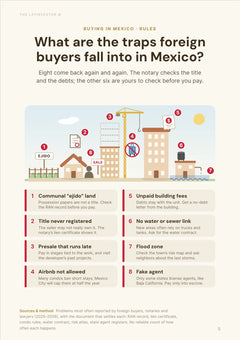
The trap right now is "investment lots" outside the city: one group sold about 10,000 plots, some with no water, power or drainage, at up to MXN 4,300/m². That's the price of a serviced lot in Mérida.
Services are the other risk. In October 2026, a JAPAY treatment plant running at 60% left 46 areas in the north with low pressure or no water.
Gated pre-sale lots tie up your money early: one Conkal project asks a MXN 50,000 reservation and a 20% down payment for delivery in December 2026, and maintenance fees start once you own.
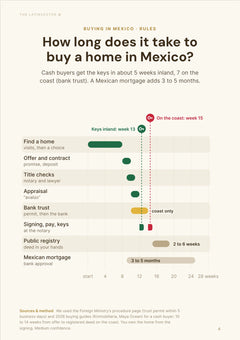
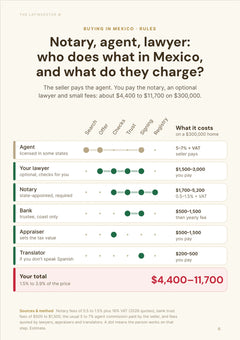
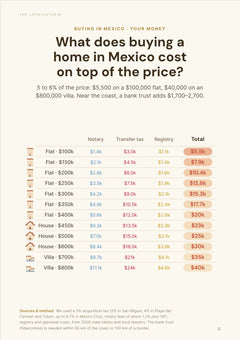
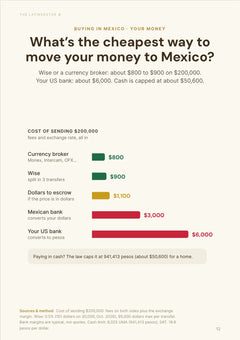
On top of the land price, budget 6–9% for closing costs and a bank trust, which foreign buyers need in Mérida.
Bottom line: for a buildable lot with services, plan on MXN 1–1.6 million in Cholul or the north, and treat anything much cheaper as a lot that still needs roads, water, permits or clean title.

What are the key land price figures in Mérida right now?
| Metric | Value |
|---|---|
| Median asking price per m², all land listings in Mérida | MXN 4,370 / m² (USD 235) |
| Median asking price, urban lot under 500 m² | MXN 1.71 million (USD 92,000), about MXN 5,080 / m² |
| Median asking price, residential lot of 500 to 2,000 m² | MXN 3.55 million (USD 191,000), about MXN 4,260 / m² |
| Most expensive area with real land supply | Temozón Norte (about MXN 6,500 / m²) |
| Established north (few vacant lots) | Montebello: one lot asks MXN 8,000 / m² |
| Most affordable area near the city | Kanasín periphery (about MXN 2,200 / m²) |
| Lowest realistic budget for a serviced lot | About MXN 450,000 (USD 24,200) for roughly 200 m² |
| Small plot (about 250 m²) | MXN 550,000 to MXN 1,625,000 |
| Medium plot (about 500 m²) | MXN 1,100,000 to MXN 3,250,000 |
| Large plot (about 1,000 m²) | MXN 2,200,000 to MXN 6,500,000 |
| Large raw parcels on the outskirts | MXN 1,200 to MXN 1,700 / m² |
| Unserviced "investment lots" outside the city | Up to MXN 4,300 / m² (USD 231) |
| Price range across the neighborhoods below | MXN 2,200 to MXN 6,500 / m² (roughly 3 times) |
Which Mérida neighborhoods have the most and least expensive land?
Temozón Norte and the Cabo Norte–Komchén corridor are the most expensive places to buy a lot, at MXN 6,200–6,500/m². The Kanasín, Umán and Sierra Papacal edges are the cheapest, at MXN 2,200–2,800/m².
The figures below are our estimates for serviced residential lots, built from 2026 listings and checked against city-wide medians. The plot prices simply multiply the price per m² by 250, 500 and 1,000 m². In practice, larger lots usually ask less per square meter (about 16% less city-wide), so read the large-plot column as a ceiling.
A few current listings to anchor the table: a 2,500 m² double lot in Temozón Norte asks MXN 5,100/m², a gated-community lot of 225 m² in Cholul about MXN 4,475/m², and a 344 m² pre-sale lot in a Conkal gated development about MXN 3,150/m². Residential lots on the Mérida–Progreso road (312 to 891 m²) ask MXN 1.87 to 5.62 million.
| Rank | Neighborhood | Asking Price per Square Meter (estimate) | Small Plot (about 250 m²) | Medium Plot (about 500 m²) | Large Plot (about 1,000 m²) | Typical Land Use | Key Pros | Key Cons | Market Segment |
|---|---|---|---|---|---|---|---|---|---|
| 1 | Temozón Norte | MXN 6,500 | MXN 1,625,000 | MXN 3,250,000 | MXN 6,500,000 | Custom home construction | Prime north Mérida location with strong infrastructure, high buyer demand, and excellent road access with utilities already in place | High prices and limited plot availability mean sellers rarely negotiate, and land here gets absorbed quickly | Prime Land |
| 2 | Cabo Norte / Komchén corridor | MXN 6,200 | MXN 1,550,000 | MXN 3,100,000 | MXN 6,200,000 | Gated community builds | Premium gated developments with paved access, installed utilities, and strong investor interest in the north Mérida corridor | HOA rules limit what you can build, higher construction standards are expected, and independent plot purchases are harder to find | Prime Land |
| 3 | Santa Gertrudis Copó | MXN 5,800 | MXN 1,450,000 | MXN 2,900,000 | MXN 5,800,000 | Spec development for resale | Close to shopping centers and hospitals in Mérida, with strong appreciation history and high resale liquidity | Traffic congestion is increasing, large plots are becoming rare, and density is rising fast in this part of Mérida | High-Value Land |
| 4 | Cholul | MXN 4,500 | MXN 1,125,000 | MXN 2,250,000 | MXN 4,500,000 | Family home builds | One of Mérida's fastest-growing zones with good road access, a mix of price points, and utilities expanding across the area | Some streets still lack drainage or paving, and many lots are inside gated developments with monthly maintenance fees | Mid-Range Land |
| 5 | Dzityá | MXN 4,000 | MXN 1,000,000 | MXN 2,000,000 | MXN 4,000,000 | Custom home construction | Quiet residential character, good access to central Mérida, and larger plots are still available at mid-range prices | Public transport is limited, some roads remain unpaved, and commercial development in Dzityá is slower than other areas | Mid-Range Land |
| 6 | Conkal | MXN 3,500 | MXN 875,000 | MXN 1,750,000 | MXN 3,500,000 | Affordable new builds | Many new gated subdivisions with paved streets and amenities, and pre-sale prices well below Cholul and the north corridor | Much of the supply is pre-sale with delivery dates still ahead, water supply is uneven in some zones, and HOA fees come on top | Mid-Range Land |
| 7 | Las Américas (outskirts) | MXN 3,500 | MXN 875,000 | MXN 1,750,000 | MXN 3,500,000 | Budget home builds | Established part of Mérida with utilities already available, lower risk for buyers, and solid road connectivity | Vacant land is very limited here, most available plots are small, and price upside is lower than emerging zones | Mid-Range Land |
| 8 | Ciudad Caucel (expansion zones) | MXN 3,200 | MXN 800,000 | MXN 1,600,000 | MXN 3,200,000 | Entry-level housing | One of the most affordable entry points in Mérida's urban area, with strong local demand and basic infrastructure already present | Further from the north zone, appreciation is slower than premium areas, and traffic congestion is growing in Ciudad Caucel | Affordable Land |
| 9 | Tixcuytún | MXN 3,000 | MXN 750,000 | MXN 1,500,000 | MXN 3,000,000 | Investment hold | Close to Mérida's premium north zones, still undervalued relative to neighbors, and infrastructure is gradually improving | Services today are limited, development is moving slowly, and there is some speculative risk for buyers who need a short timeline | Affordable Land |
| 10 | Sierra Papacal | MXN 2,800 | MXN 700,000 | MXN 1,400,000 | MXN 2,800,000 | Long-term investment hold | Near Mérida's industrial growth corridor and port area, with large plots available at low prices per square meter | Infrastructure is very limited today, the location feels remote, and buyers should expect a long wait before seeing value growth | Entry-Level Land |
| 11 | Umán outskirts | MXN 2,500 | MXN 625,000 | MXN 1,250,000 | MXN 2,500,000 | Self-build housing | Affordable land near Mérida's industrial growth zone, with improving road connections and a low entry price for self-builders | Industrial activity nearby reduces the residential appeal, and some zoning constraints could limit what you can build on certain plots | Entry-Level Land |
| 12 | Kanasín periphery | MXN 2,200 | MXN 550,000 | MXN 1,100,000 | MXN 2,200,000 | Low-cost housing builds | The lowest land prices you'll find near Mérida's urban area, with strong local demand from first-time buyers and self-builders | Crime perception is higher than other areas, infrastructure is weaker, and long-term appreciation is lower than central Mérida zones | Entry-Level Land |
Are cheap "investment lots" near Mérida a trap?
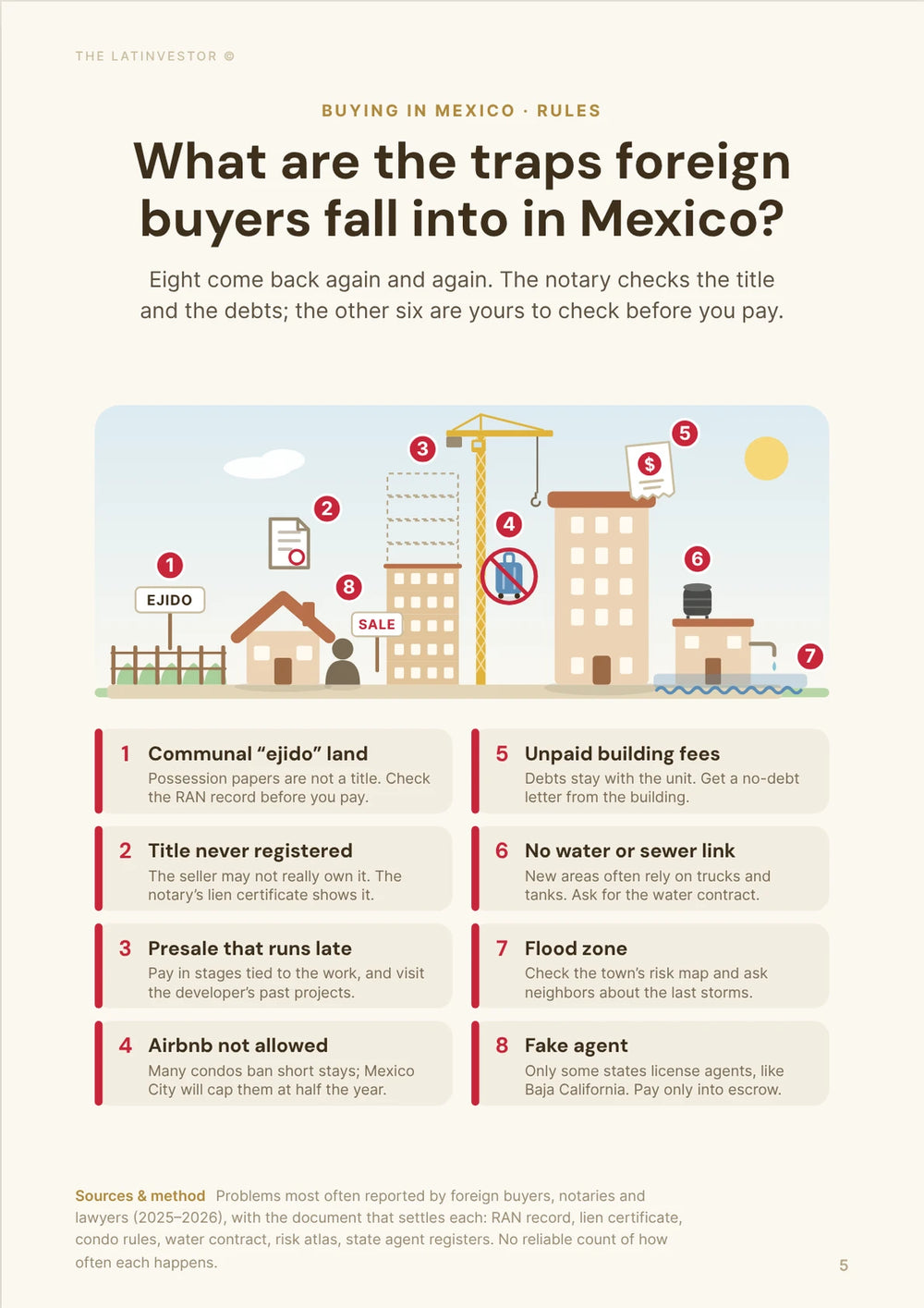
Many are. In August 2026, Por Esto reported that one group alone sold about 10,000 plots in Yucatán between 2020 and 2024, many near the coast, some on wetland, with no electricity, drinking water or drainage, at up to MXN 4,300/m² (about USD 231). The head of the local homebuilders' association (Canadevi Yucatán) called the "investment lot" a real-estate fraud.
Compare that with the city: MXN 4,300/m² is roughly the median asking price for land inside Mérida, where streets, water and power already exist. If a lot outside the city costs the same per square meter as one in Cholul, you're paying a city price for a field.
Complaints are piling up too. In the first half of 2025, 11 real-estate firms gathered 21 formal complaints at PROFECO's office for the Mérida area, mostly for land paid for and never delivered. And cheap land is often cheap because it's still ejido land: when the Tren Maya expropriated ejido land in 2025, the official valuation for Dzununcán, inside the municipality of Mérida, was only MXN 170/m².
Before any deposit, ask for: a registry certificate (Insejupy) with the seller's name and no liens, the municipal subdivision licence, the land-use approval, and proof that the land is private property, not ejido land "about to be regularized". If the seller can't show them within a week, walk away.
Can you count on water and power on a new lot in the north?
Not automatically. On October 11, 2026, the water agency JAPAY warned that its Mérida III treatment plant was running at only 60%, leaving 46 colonias, subdivisions and private developments in the north with low pressure or no water. In May 2026, a power failure at JAPAY's Mérida I plant had hit 94 colonias, and power cuts linked to demand hit the metro area earlier in the year.
This matters more for land than for a finished house. A house already has a connection and often a cistern; a lot on the edge of the north may still be waiting for the network, and the developer's brochure won't tell you how reliable it is.
What to do: ask the seller or developer for the water feasibility letter (factibilidad) from JAPAY and the CFE power letter for the lot. Budget a cistern and pump for any build in the north, and ask neighbors how often the water drops before you sign.
Should you buy a lot in a gated pre-sale development?
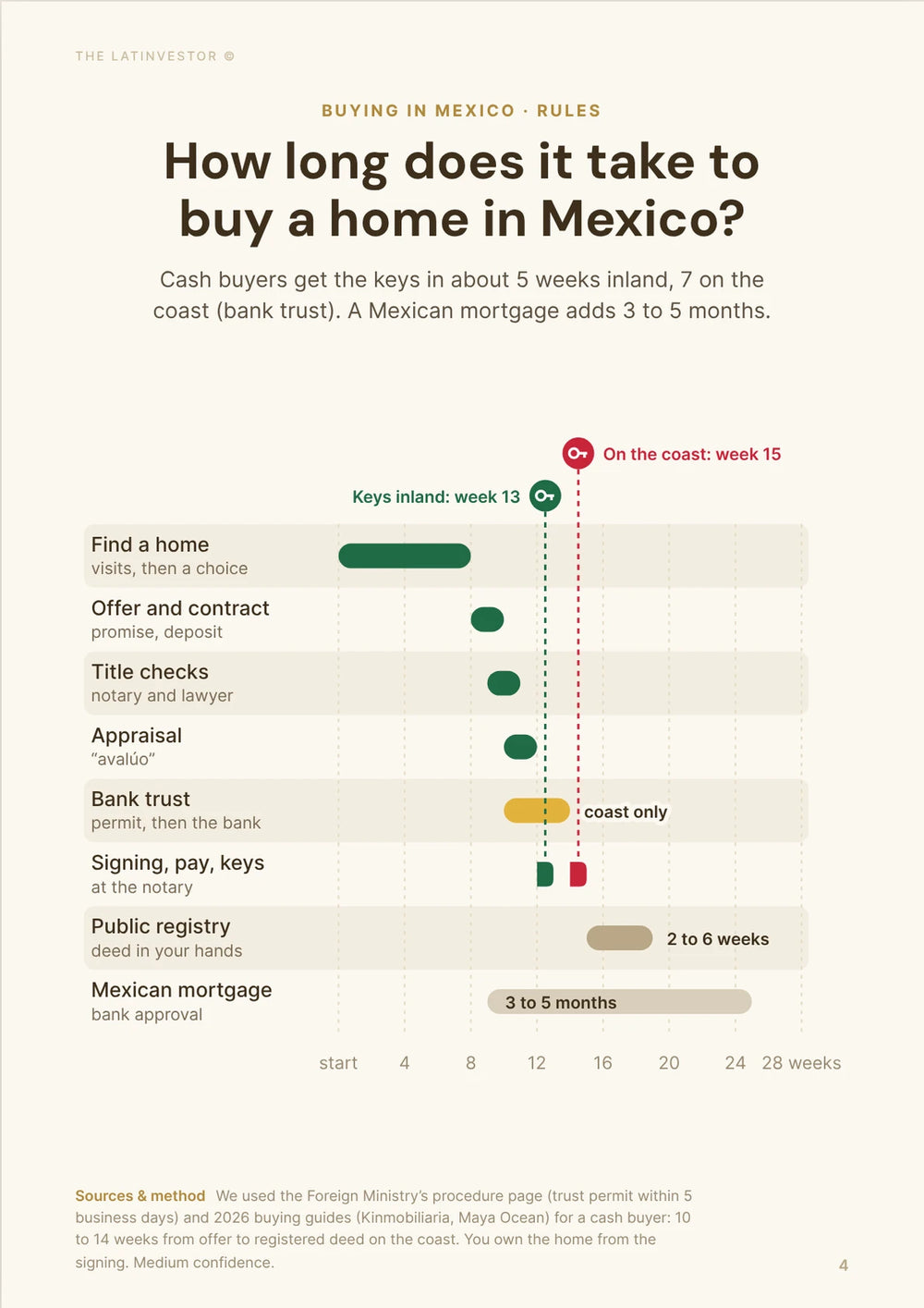
Only if you can live with waiting and with fees. Most new lots in Cholul, Conkal and Komchén are sold inside gated developments, often in pre-sale, with a wall, security, paved streets and a clubhouse included in the price.
The terms are typical of 2026: one Conkal pre-sale asks a MXN 50,000 reservation (USD 2,690) and a 20% down payment on a lot of about MXN 1.09 million, for delivery in December 2026. A Cholul development charges a maintenance fee of MXN 7 per m², about MXN 1,575 for a 225 m² lot, plus a reserve fund of two fees at signing.
The upside is real: services are planned, the streets are built, and resale to local families is easier. The downside: HOA rules decide what and how you build, and pre-sale money is at risk if the developer is late. Tie your payments to visible progress, check that the sales contract is registered with PROFECO, and confirm the developer owns the land and has the subdivision licence.
What should you know before buying land in Mérida?
- The north corridor (Temozón Norte, Cabo Norte) asks MXN 6,000–6,500/m², close to three times the Kanasín edge at about MXN 2,200/m².
- Cholul and Conkal are the middle ground: gated lots with services at MXN 3,150–4,500/m², but most come with HOA fees and building rules.
- Under MXN 800,000 you're limited to small lots on the edges (Kanasín, Umán, Sierra Papacal, parts of Ciudad Caucel), not established neighborhoods.
- Dzityá is one of the few places where you can still find larger plots at mid-range prices, around MXN 4,000/m².
- Ciudad Caucel offers cheap lots with basic services already in place. Just outside it, raw land drops to a few hundred pesos per m², but that's wholesale land with no network.
- Tixcuytún sits close to the premium north but asks about half the price. That's a bet on services arriving, not a sure thing.
- Land near the industrial corridors (Umán, Sierra Papacal) is the cheapest, but expect a 10-year horizon or more before prices catch up.
- Drainage and plot elevation still get overlooked. Two lots in the same area can behave very differently in the rainy season, so visit after a heavy rain if you can.
- A lot without confirmed water and sewage connections is harder to resell and adds hidden costs. Get the JAPAY and CFE letters before you pay.
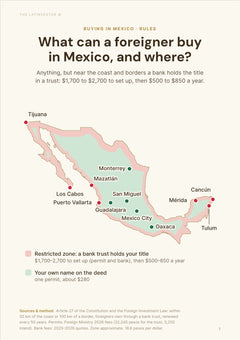
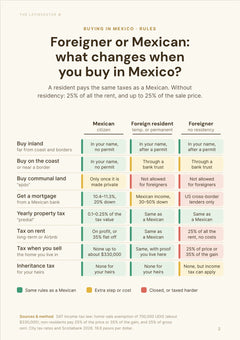
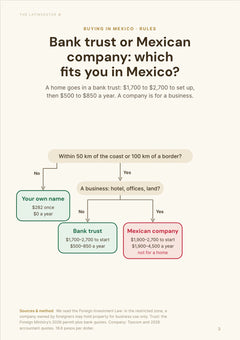
- On top of the price, foreign buyers in Mérida pay 6–9% in closing costs and need a bank trust: a MXN 21,650 government permit, about USD 550–800 to open it and USD 550–700 a year.
For land prices in other Mexican cities and the coast, see our article on how much land costs in Mexico.
Our methodology
This article estimates how much residential land costs in Mérida in 2026, city-wide and by neighborhood, and what a small, medium and large plot costs in each area.
The city-wide figures (median price per m², median lot prices by size) come from TuLugar's market data, calculated on thousands of current land listings in the municipality. The neighborhood table is our estimate: we checked 2026 listings on Pincali and other portals in each area, compared them with the TuLugar medians and with recent local press, and rounded. Plot prices are the price per m² times 250, 500 and 1,000 m².
News on investment lots, water and power comes from Por Esto and Diario de Yucatán (2025 and 2026). Closing costs and bank trust fees are the same as in our other Mérida and Mexico articles, from the SRE and 2026 adviser guides.
We checked these figures in October 2026. Conversions use about 18.6 pesos per US dollar and 20.9 pesos per euro.
Limits: these are asking prices, not sale prices, and land prices vary a lot from one street to the next with services, frontage, title and zoning. The neighborhood figures are estimates, not official data. Get a local appraisal and check the paperwork before you buy.
Key sources used for this analysis include TuLugar — Mérida market data, Por Esto — land prices north of Mérida, January 2026, Por Esto — investment lots in Yucatán, Por Esto — PROFECO complaints over land, Diario de Yucatán — Tren Maya ejido land appraisals, Diario de Yucatán — JAPAY low water pressure, October 2026, Diario de Yucatán — JAPAY failure, May 2026, Por Esto — power cuts in Mérida, Pincali — Temozón Norte lot listing, Pincali — Montebello lot listing, Pincali — Cholul gated lot listing, Pincali — Conkal pre-sale lots, Pincali — raw land next to Ciudad Caucel, Secretaría de Relaciones Exteriores — restricted-zone fideicomiso, and Homia — fideicomiso bank fees 2026.