Summary
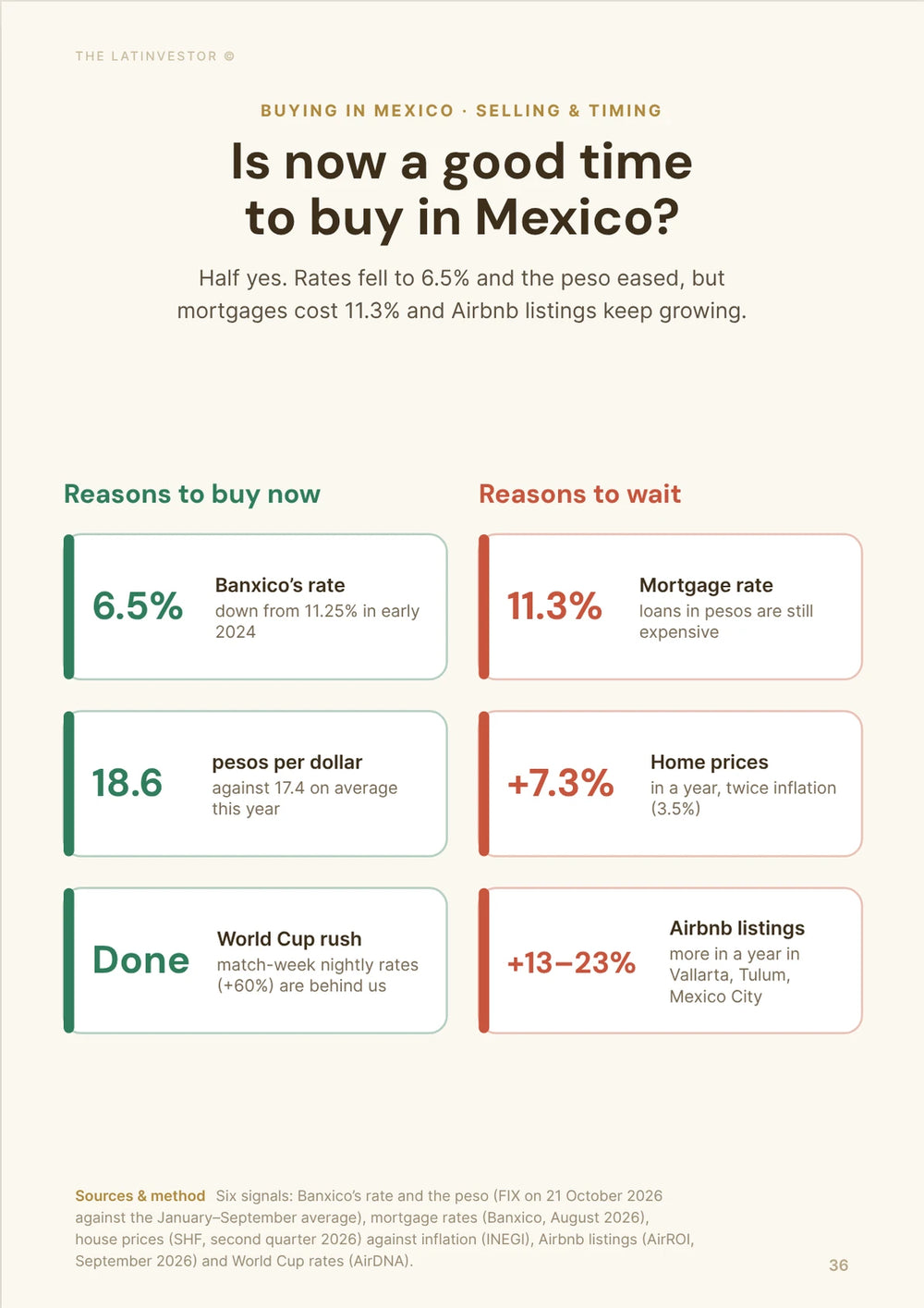
Yes, but it's slowing into a buyer's market. Tinsa data published in October 2026 put Mérida home prices up 11% in a year, while Mexico's official SHF index rose 7.3%. At the same time, about 12,816 homes are on offer.
In October 2026, apartments list at a median of about USD 2,157 per square meter (MXN 40,100) and houses at about USD 1,241 (MXN 23,100). A typical 3-bedroom house is listed around USD 272,000. These are asking prices, not sale prices.
Homes usually take 80 to 100 days to sell, and most close 5% to 8% below asking, so there is room to negotiate.
Prices are running ahead of credit: mortgage lending in Mexico was flat in the first half of 2026 (-0.1% in real terms), and loans actually granted averaged 9.99% in June 2026.
Supply is the main risk. Developers have 125 active formal projects in Mérida, a federal program plans about 50,000 low-cost homes in the metro area and nearby towns, and many lots for sale outside the city have no services at all.
Houses dominate the market. We estimate 30% to 40% of listings are new or pre-sale, clustered in Temozón Norte, Cholul, Dzityá and Conkal.
Renovated Centro neighborhoods such as Santiago and Santa Ana have gained the most, about 20% to 35% in two to three years by our estimate.
The Tren Maya cargo line was 67% complete in September 2026, with terminals at Poxilá and Progreso. Service is expected in the first half of 2027.
Many locals think homes are overpriced, especially above MXN 3 million (USD 161,000), and the classic regret is buying a cheap house far out of town.
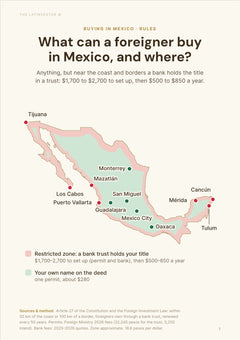
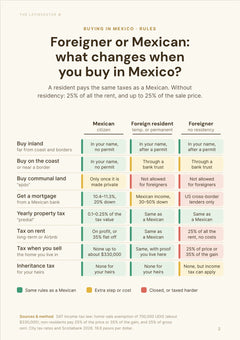
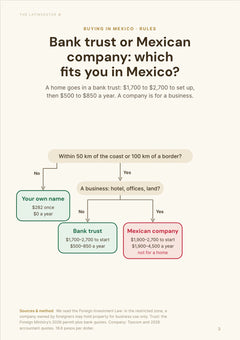
Mérida is inside Mexico's coastal restricted zone, so foreigners buy through a bank trust (fideicomiso); a Mexican company only works for business property. The SRE permit alone costs MXN 21,650 (USD 1,160).
Mérida is less volatile than the beach towns: in a normal downturn, we'd expect typical homes to drop 3% to 7%, not crash.
Long-term rents ask about USD 975 a month for a 2-bedroom apartment (MXN 18,100), a gross yield of about 6%.
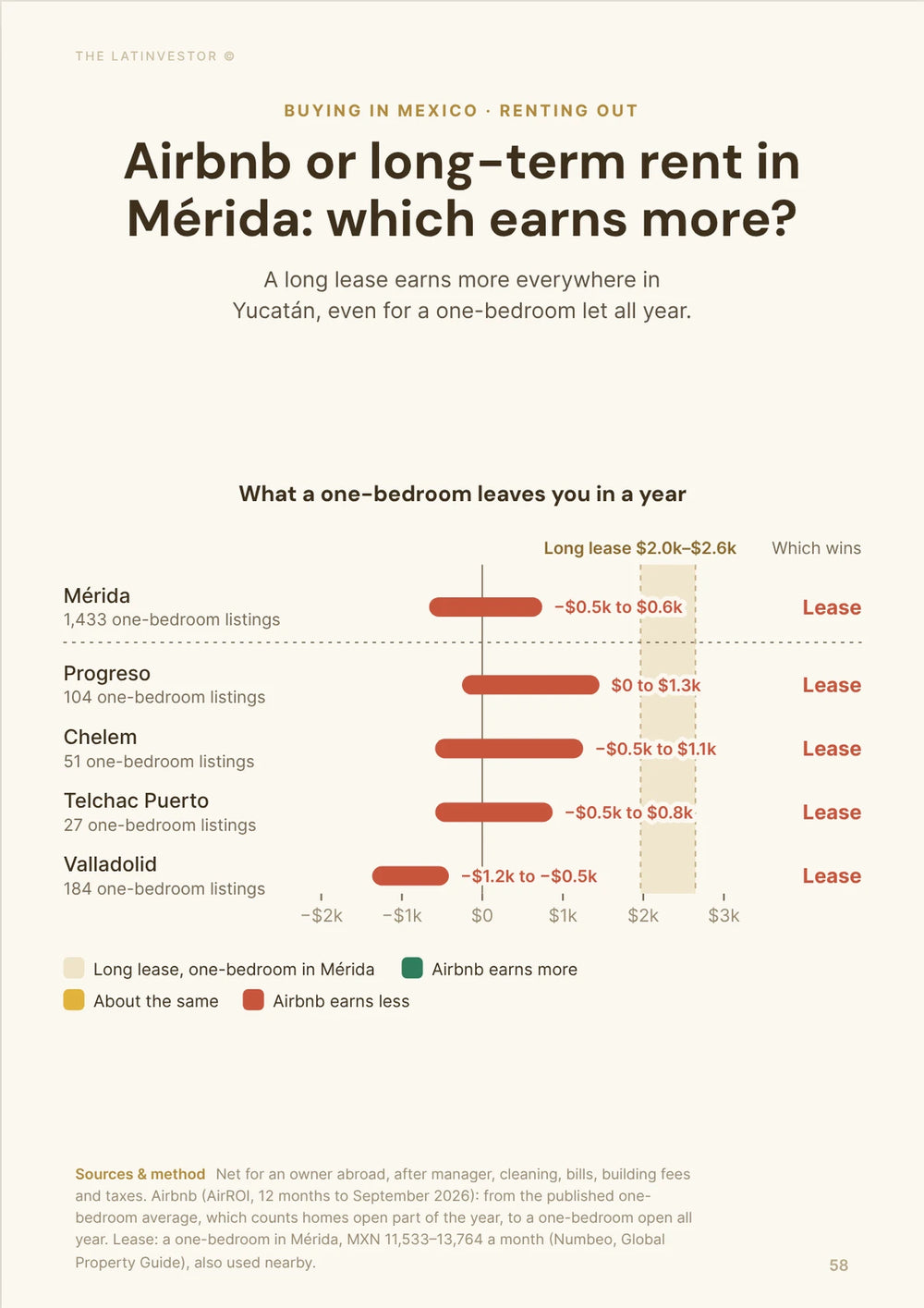
Airbnb is shrinking: AirDNA counts 4,856 active listings in September 2026, down 35.7% in a year, while the city pushes hosts to register and pay their property tax.
We expect 5% to 8% growth in peso terms over the next 12 months for good homes, with weak fringe stock lagging.
The bottom line: Mérida is still growing, but you make your money by picking the street and negotiating hard, not by riding the market.

Are home prices in Mérida still going up in 2026?
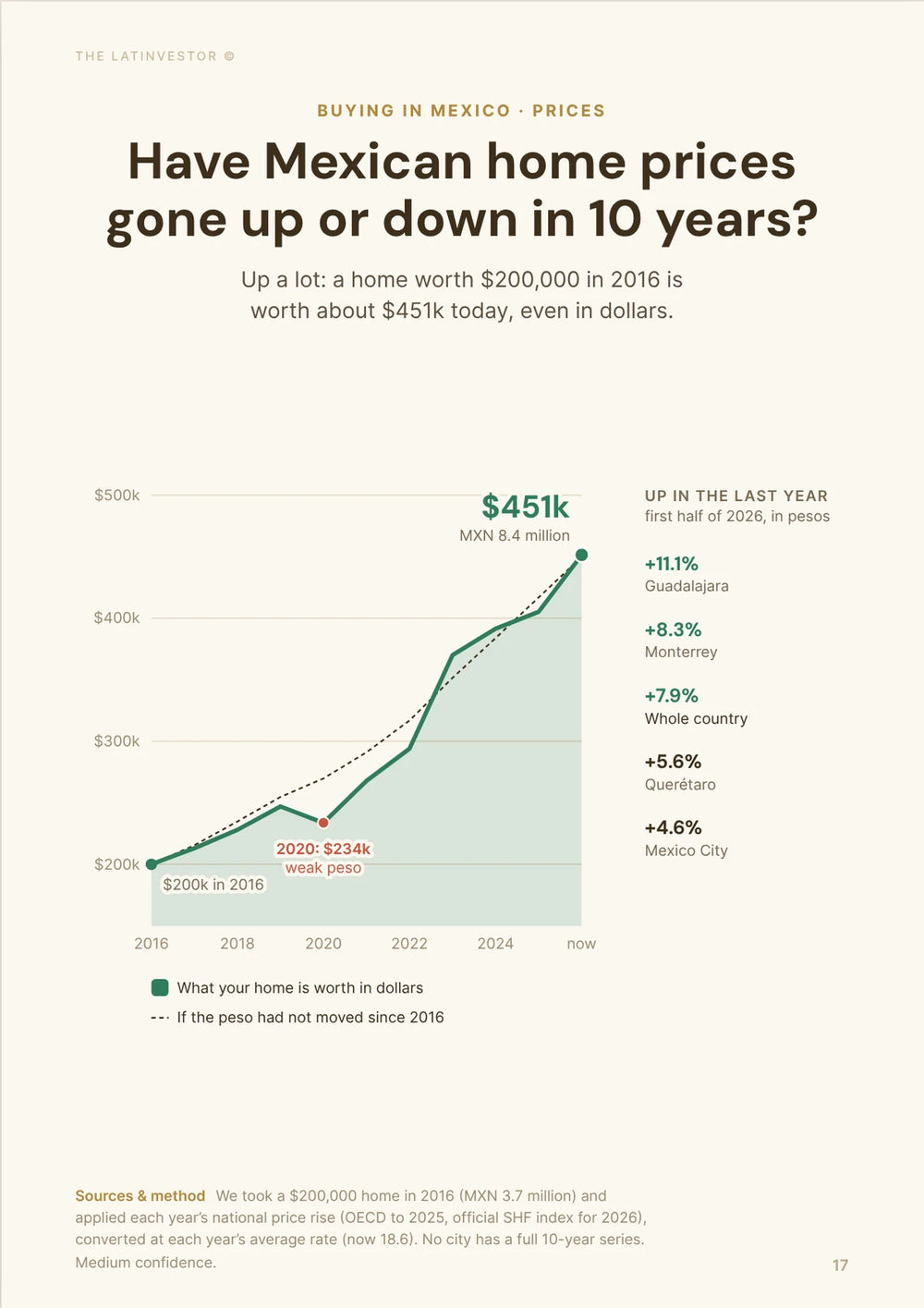
Yes. Tinsa data published by El Economista in October 2026 put Mérida home prices up 11% in a year, faster than Mexico's official SHF index, which rose 7.3% nationally in the second quarter of 2026.
The longer run is even stronger: the SHF index for Mérida rose about 61% in the five years to the end of 2025, and the Yucatán index almost doubled (+98.2%) between 2017 and the third quarter of 2025.
In October 2026, the median asking price for an apartment in Mérida is about USD 2,157 per square meter (MXN 40,100), and houses list at about USD 1,241 per square meter (MXN 23,100). A typical 3-bedroom house is listed around USD 272,000 (MXN 5,060,000).
The catch: the same Tinsa report counts about 12,816 homes on offer, so buyers have plenty of choice. Good, well-located homes keep rising; weak fringe stock moves much more slowly.
How long does it take to sell a home in Mérida?
In 2026, a normal home in Mérida usually needs about 80 to 100 days to sell if the price is realistic and the title is clean. This is our estimate from listing checks; no public database tracks it.
Well-priced homes in Centro, Santiago, Santa Ana, Temozón Norte, Cholul and Montebello can move in about 45 to 70 days, while overpriced homes or fringe new builds can sit for 120 to 180 days or more.
That's slower than the post-pandemic rush, because buyers can now compare thousands of listings and no longer feel they must grab the first decent house they see.
Are properties selling above or below asking in Mérida in 2026?
Mostly below. We estimate most homes in Mérida sell about 5% to 8% below asking, especially when the listing has been online for several months.
Fewer than 10% of homes probably sell above asking. Our confidence is moderate, because Mexico doesn't publish closed-sale versus asking-price data for Mérida.
Above-asking sales are most likely for scarce, well-renovated colonial houses in Santiago, Santa Ana and La Ermita, or for unusually good lots in Temozón Norte, Montebello and Santa Gertrudis Copó.
Are prices rising faster than buyers can borrow?
Yes, and that's the main tension in Mérida right now. Prices are up 11% in a year, but mortgage lending in Mexico was flat in the first half of 2026: the amount lent fell 0.1% in real terms and the number of loans rose just 0.3%, according to BBVA Research.
Credit isn't cheap either. Mortgages actually granted averaged 9.99% in June 2026 (ABM), and Banxico's average fixed-rate quote was 11.31% in August 2026, even though the central bank's policy rate is down to 6.50%.
So a growing share of the price rise rests on cash buyers: people moving from other Mexican cities, retirees and foreigners. Local families earning local wages are increasingly priced out, and the developers' chamber (Canadevi) expects the most activity in homes of MXN 1 to 2.5 million (USD 53,800 to 134,000), not in the premium north.
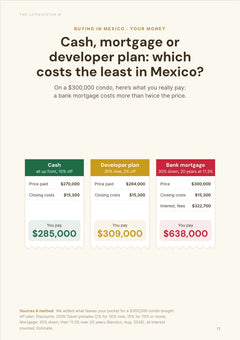
What to do: if you pay cash, use it. Sellers who need a buyer with a mortgage face a thin pool, so ask for 5% to 10% off on homes that have been listed for more than three months.
What can you actually buy in Mérida, and for how much?
You can buy a colonial house, a renovated Centro home, a modern detached house, a townhouse, a gated-community home, a small apartment, or a pre-sale house.
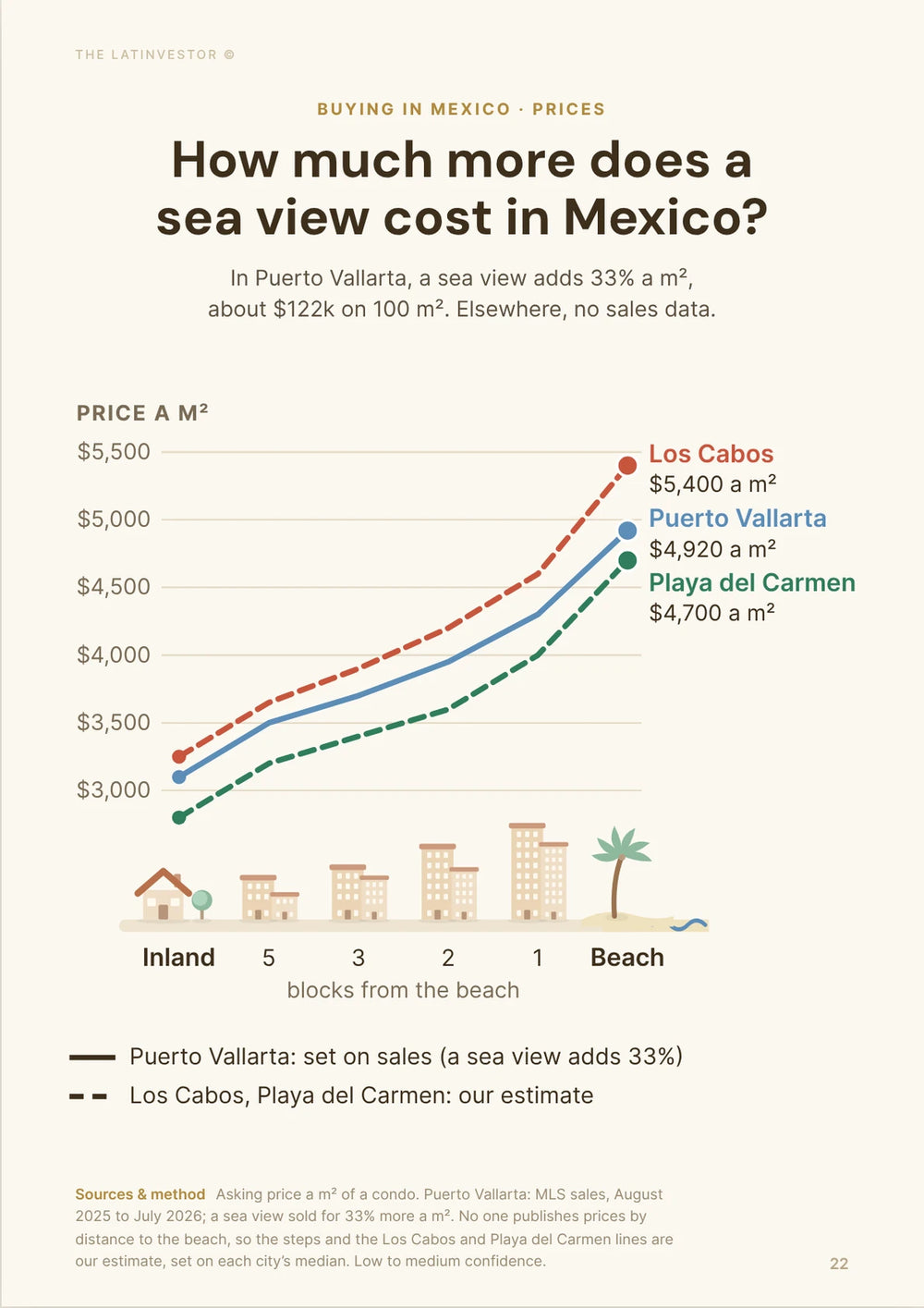
Most foreign buyers land between MXN 2.5 million and MXN 6 million (USD 134,000 to 323,000), but good colonial homes and premium north-side homes cost much more. In the north, apartments list around USD 2,328 per square meter in Montebello and USD 2,668 in Altabrisa (October 2026).
What property types dominate in Mérida right now?
Houses. Detached houses make up the largest share of listings, followed by townhouses and apartments. Apartments are growing: vertical housing is now about 30% of supply in Yucatán, according to Canadevi.
The city grew around family homes, larger lots, cars and low-rise neighborhoods, not towers.
That's why you see so many three-bedroom homes with parking, patios, pools or small gardens, especially in Cholul, Dzityá, Conkal, Las Américas, Real Montejo and the north-side suburbs.
Are new builds widely available in Mérida right now?
Yes. We estimate roughly 30% to 40% of visible listings are new, recently delivered or pre-sale units, and Canadevi counts 125 active formal developments in Mérida among its members alone.
Most new projects sit in Temozón Norte, Cholul, Dzityá, Conkal, Komchén, Santa Gertrudis Copó, Xcanatún and Tamanche.
More choice also means more to check: construction quality, road access, water pressure, drainage, heat insulation and whether the HOA and common areas are actually delivered matter more than the brochure.
Is Mérida building too many homes?
Not citywide yet, but parts of the fringe already look oversupplied. Tinsa counts about 12,816 homes on offer in the metro area, and on top of private projects, the federal Vivienda para el Bienestar program plans about 50,000 homes in Mérida, Kanasín, Umán, Progreso, Tizimín and Ticul, mostly for low-income workers at around MXN 600,000 (USD 32,300).
Those federal homes won't compete with a Centro colonial house, but they will compete with cheap new builds on the edge of the metro area, where resale is already slow.
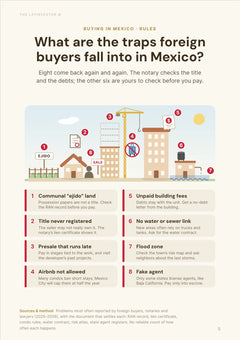
The bigger trap is land. The urban area now spreads well beyond the Periférico ring road, and many lots are sold with no water, power or approved urban plan. Canadevi says the reliability of these lots is "zero", and one local expert called them "the worst possible investment" in real estate.
Before you buy anything new, check that the project has its land-use permit and construction license from the municipality, that the land isn't of ejido origin, and that services are already connected, not promised. A Yucatán state deputy said in April 2026 that works without permits are more common than people think and often only come to light once they're public.
Which Mérida neighborhoods are gaining value fastest?
Not always the cheapest areas, and not always the famous expat ones either.
The strongest momentum sits in three groups: restored Centro neighborhoods, established inner-north neighborhoods, and new suburbs linked to infrastructure toward the north and northwest.
Which areas in Mérida are gentrifying in 2026?
The clearest gentrification is in Santiago, Santa Ana, La Ermita, San Sebastián, Mejorada, García Ginerés, Itzimná, Chuburná and parts of México and Alemán.
You see it in renovated colonial façades, boutique guesthouses, better cafés, small galleries, foreign-owned homes, restored pasta-tile floors, and old family homes turned into lifestyle properties.
In the most active pockets, we estimate good homes have gained about 20% to 35% over the past two to three years, with the biggest gains in renovated Centro stock.
That doesn't make every old Centro house a bargain: some sellers already price for foreign buyers and leave little upside.
Where are infrastructure projects boosting demand in Mérida in 2026?
Mostly along the Mérida-Progreso corridor and the north and northwest edge: Komchén, Dzityá, Tamanche, Xcanatún, Temozón Norte, Chuburná and Caucel.
The big project is the Tren Maya cargo line. It was 67% complete in September 2026, with intermodal terminals at Poxilá, just south of Mérida, and at the port of Progreso, linked by 48.7 km of new track. President Sheinbaum has said cargo service should start in the first half of 2027.
Road improvements, new commercial zones and the steady spread of services to the north add to it, but all of this arrives in phases, not at once.
We estimate announcements lift nearby land and house prices by about 5% to 12%. Don't pay that premium twice: if a listing sells "the train" or "the port", check the actual distance and timeline.
Do locals think Mérida has become too expensive?
Many do. Locals and insiders describe the market as expensive, active and more selective than in the fastest boom years.
The feeling isn't that demand is gone, but that many sellers are asking tomorrow's price today.
Do people think homes are overpriced in Mérida in 2026?
Yes, in many neighborhoods, especially compared with local wages and local rents. Local press puts the average home in Mérida at about MXN 2.24 million (USD 120,000), and notes that prices keep rising faster than salaries.
People point to the same signs: asking prices up faster than pay, listings that stay online for months, and new subdivisions far from services still asking north-side prices.
The counterargument is that Mérida earns a premium for its safety, domestic migration, hospitals, universities, airport and lower volatility than the beach markets.
For local buyers, homes above MXN 3 million (USD 161,000) are a stretch, even if foreign cash buyers can still afford them.
What are common buyer mistakes people regret in Mérida right now?
The most common one is buying too far out because the house looks cheaper, then finding that heat, traffic, poor access roads and weak resale demand make daily life harder.
The second is buying a colonial or new-build home without checking the boring details: roof waterproofing, humidity, drainage, wiring, water pressure, permits and legal title.
How hard is it for a foreigner to buy in Mérida?
It's legal and common, but slower and more paperwork-heavy than most first-time buyers expect.
Treat the legal review as part of the purchase, not a formality after the price is agreed.
Do foreigners face extra challenges in Mérida right now?
Yes, a medium level. The main one: Mérida is less than 50 km from the coast, so it sits inside Mexico's restricted zone. Foreigners can't hold the deed to a home directly; they buy through a bank trust (fideicomiso), renewable every 50 years. A Mexican company is only an option for business property, not for a home you live in.
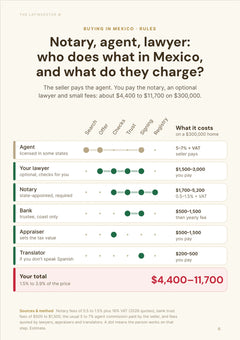
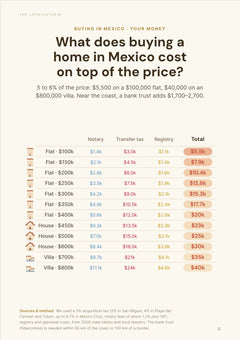
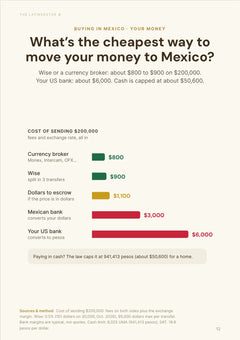
The trust adds costs: the SRE permit is MXN 21,650 (USD 1,160), banks charge roughly USD 550 to 800 to set it up and about USD 550 to 700 a year to run it, plus notary fees.
The other problems are practical: overpriced listings, title history, land of ejido origin, sending deposits from abroad, notary timing, and whether the property can really be rented short term.
Do banks lend to foreigners in Mérida in 2026?
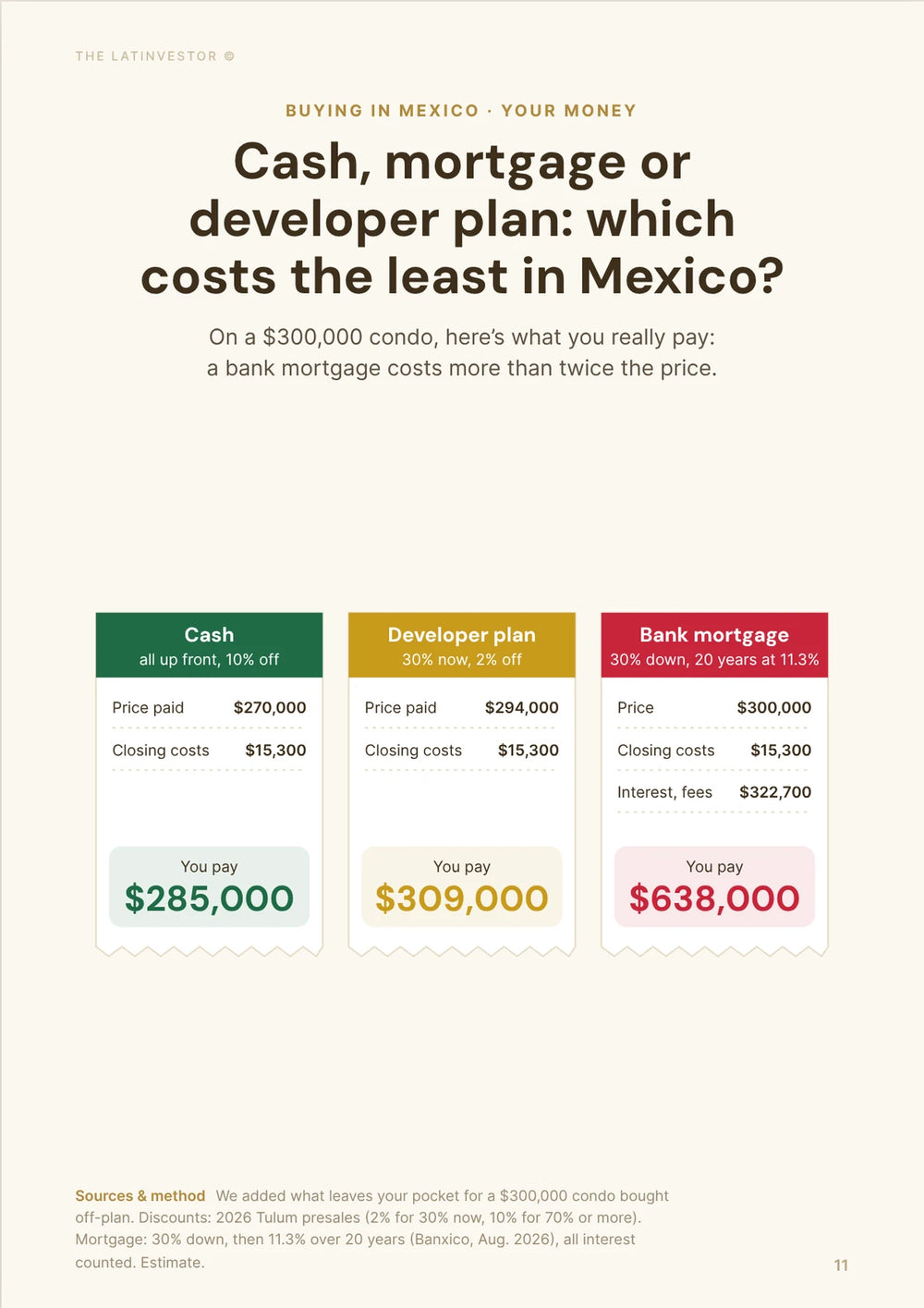
Some do, but cash, a loan from home, or a big down payment makes life much easier.
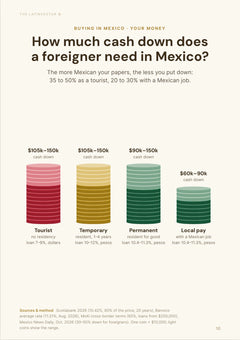
Mexican banks mostly lend to foreigners who are legal residents with Mexican income. Cross-border lenders that serve US and Canadian buyers ask for 35% to 50% down. For reference, Mexican banks averaged 9.99% on mortgages granted in June 2026 (ABM); what a foreigner pays depends on the lender and on residency.
Expect to show proof of income, bank statements, tax returns, ID, residency documents where relevant, a clean credit history and a formal appraisal.
Is Mérida safer to invest in than Tulum or Cancún?
Usually, yes. Mérida isn't risk-free, but it's less volatile than the beach markets because most demand comes from people who actually live there.
The real risk isn't that nobody wants to live in Mérida. It's overpaying for the wrong location, weak construction, or too much Airbnb optimism.
Is Mérida more volatile than nearby places in 2026?
No. Mérida looks less volatile than Tulum, Playa del Carmen and much of Cancún's investor stock, because its demand is residential and less tied to nightly tourism.
Over the past decade, Mérida mostly rose steadily, while the resort markets swung harder whenever tourism, rules, overbuilding or investor mood changed.
Is Mérida resilient during downturns historically?
Fairly. Safety, services, universities, hospitals, migration and family demand keep the market going even when speculators step back.
In past stress periods, prices slowed rather than collapsed. In a normal downturn, we'd expect typical homes to lose about 3% to 7%, not crash.
The homes that hold value best are walkable renovated houses in Santiago and Santa Ana, solid family homes in Montebello and Altabrisa, and well-located homes in García Ginerés, Itzimná and Chuburná.
Who is renting in Mérida, and is demand still growing?
Demand is real, but long-term and short-term rentals are two different businesses.
A house that suits a local family renter is not always the one that suits Airbnb guests.
Is long-term rental demand growing in Mérida in 2026?
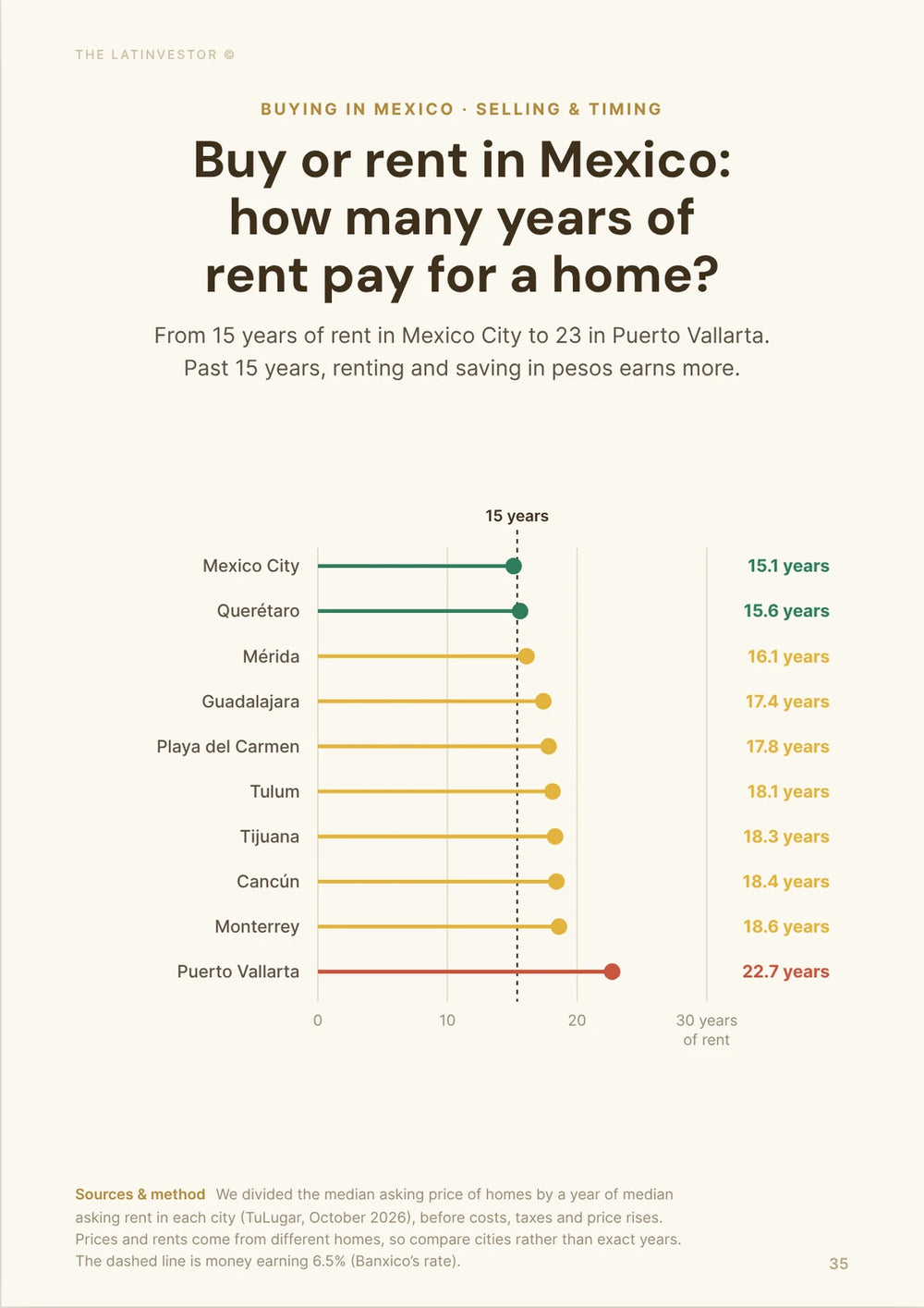
Yes. We estimate long-term demand is growing about 5% to 8% a year in the best-connected areas. Asking rents are around USD 740 a month for a 1-bedroom apartment (MXN 13,800) and USD 975 for a 2-bedroom (MXN 18,100), a gross yield of about 6% before costs.
The tenants are Mexican families moving for safety, young professionals, medical staff, students, remote workers, retirees, and foreigners who rent before they buy.
The strongest areas are Montebello, Altabrisa, Temozón Norte, Santa Gertrudis Copó, Montes de Amé, García Ginerés, Chuburná, Francisco de Montejo, Las Américas and Real Montejo.
Is short-term rental demand growing in Mérida in 2026?
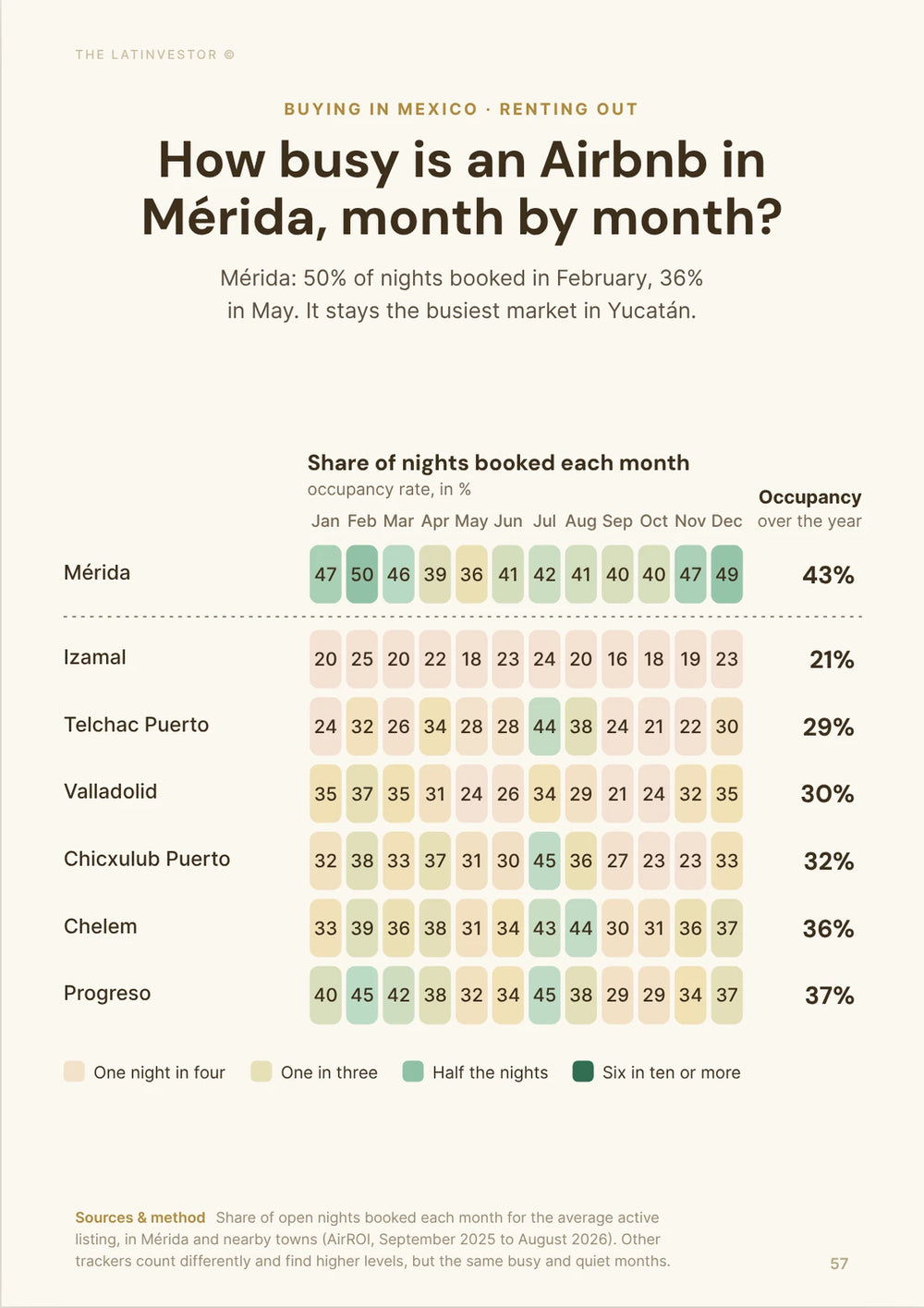
Demand holds up, but the number of hosts is falling. AirDNA puts average occupancy at 58% and the average nightly rate at USD 67 (MXN 1,250) for the year to September 2026, which works out to about USD 13,300 a year per listing (MXN 247,000).
Guests are mostly Mexican travelers, cultural tourists, visiting family, medical visitors, remote workers and foreigners using Mérida as a base for Yucatán trips.
Good Centro and north-side units do better than generic apartments in weak locations.
Is Airbnb still worth it in Mérida after the city's crackdown?
Only for well-located units run as a real business. AirDNA counts 4,856 active listings in September 2026, down 35.7% in a year, a sign that weaker hosts are leaving.
The city is pushing them out. Under its "Mérida Ordenada" plan, announced in January 2026, the municipality is identifying the owners of more than 5,000 short-stay rentals (over half in Centro) and making them pay property tax, garbage and water like any business. Yucatán's lodging tax has been 4.5% since January 2026, and the hotel lobby is asking for permits, civil protection checks and tax rules for hosts.
What to do: budget for registration, property tax, the lodging tax and income tax from day one, and check the condo rules before you buy. If the numbers only work at 70% occupancy, they don't work: the city average is 58%. A long-term lease at about 6% gross is the safer plan B.
Where are Mérida prices heading next?
No crash and no new euphoria: a more normal market with better deals for careful buyers.
The street, the build quality and the price you pay matter much more than the idea that "Mérida always goes up."
What's the 12-month outlook for demand in Mérida in 2026?
Moderately positive, strongest on the edges of Centro, in established north-side neighborhoods, and in practical family areas with services.
What will move it: mortgage rates, local wages, migration from other states, security, new supply, tourism and the Mérida-Progreso freight corridor.
Our forecast is that prices of good homes will rise about 5% to 8% in peso terms over the next 12 months, below the latest 11% annual rise, with prime homes doing better and fringe stock lagging.
That assumes no security shock, no credit squeeze and no glut in the north and northeast suburbs.
What's the 3-5 year outlook for housing in Mérida in 2026?
Still positive. We estimate about 5% to 8% a year in peso terms for good homes.
The big forces are the PMOTDUM Visión 2050 plan, growth to the north, infill in older neighborhoods, Progreso logistics and the Tren Maya cargo line.
The biggest unknown is whether Mérida can handle heat, water, traffic, roads and low-quality fringe building without losing what makes it livable.
Are demographics or other trends pushing prices up in Mérida in 2026?
Yes. People keep coming for safety, services, family life and a calmer pace.
The main groups: Mexicans moving to Yucatán from bigger cities, retirees, students, medical staff, and foreigners who rent first and then buy.
Remote work, medical and cultural tourism, the airport and Mérida's image as a safe inland base near the coast add to it.
This should continue for at least 3 to 5 years, but the gains will go to neighborhoods that stay livable, connected and well built.
What scenario would cause a downturn in Mérida in 2026?
A mix of high mortgage rates, too many new builds, weaker Airbnb income, overpriced listings, and worse traffic, heat or water.
Early warning signs: more unsold homes in Cholul, Conkal, Dzityá and the outer Temozón area, bigger discounts on Centro renovations, more empty rentals, and developers delaying new phases.
In that case, we'd expect citywide prices to fall about 3% to 7% in peso terms, and overpriced fringe or luxury stock to drop 10% to 15%.
Our methodology
This article estimates whether Mérida's property market is still growing: price trends, selling times, discounts, supply, neighborhoods, rentals and the outlook for the next 1 to 5 years.
Price trends come from SHF, Mexico's federal housing-finance agency (an index based on mortgage appraisals), and Tinsa data reported by El Economista. Asking prices per square meter come from TuLugar listings. Credit data come from Banco de México and BBVA Research, rents from Global Property Guide, and short-term rental figures from AirDNA. Local news (Por Esto, Diario de Yucatán) covers supply, permits, the Tren Maya and the city's Airbnb plan.
Ownership rules and trust fees come from the foreign ministry (SRE), with bank trust fees from a 2026 comparison. Selling times, discounts, neighborhood gains and forecasts are our own estimates from listing reviews, because no public database tracks them in Mérida.
We checked these figures in October 2026. Conversions use about 18.6 pesos per US dollar and 20.9 pesos per euro.
Keep the limits in mind: asking prices are not sale prices, Tinsa and SHF measure different things, rents are asking rents, and AirDNA and Airbnb count listings differently.
Key sources used for this analysis include Crónica on ABM mortgage rates, SHF, El Economista, TuLugar, Global Property Guide, Banco de México, BBVA Research, AirDNA, SRE, Proyectos México, Mérida PMDU, SEFOTUR, INEGI, CANADEVI Yucatán, Diario de Yucatán and Por Esto.