
Summary
It depends on your goal: for yield, buy a small apartment in Godoy Cruz, Guaymallén or central Mendoza at USD 870 to USD 1,200 per square meter; for resale and lifestyle, Quinta Sección (about USD 1,580/m²) or Chacras de Coria (about USD 2,250/m²).
The cheapest apartments are in Las Heras, at a median of about USD 727 per square meter in October 2026, against USD 1,092 for the city of Mendoza.
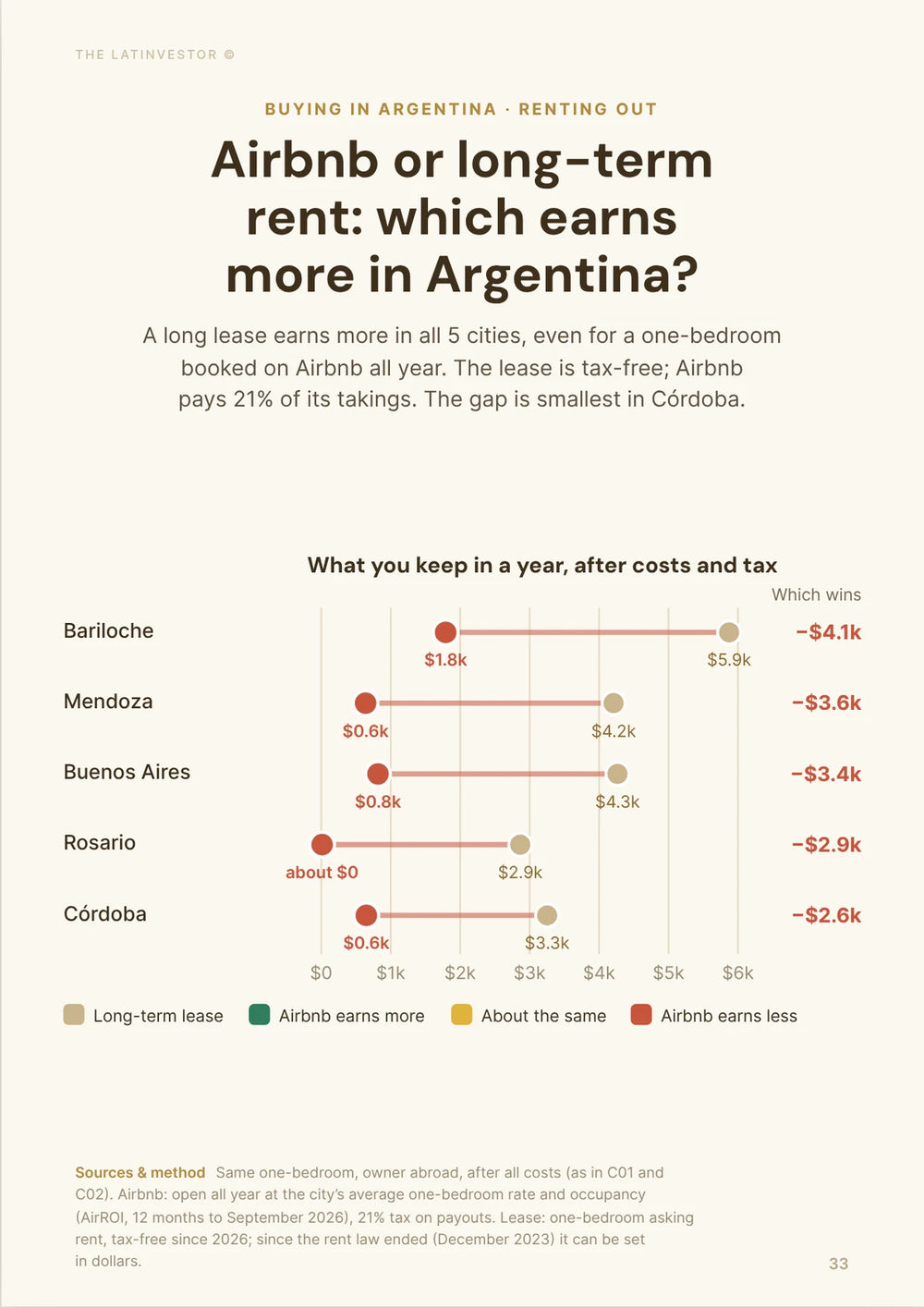
On paper, a 1-bedroom in Las Heras or Guaymallén earns about 8% to 9% gross from a long lease, against about 5% for a 2-bedroom in Quinta Sección and about 3% for a house in Chacras de Coria.
Airbnb is a thin market: occupancy averaged 38.7% across Mendoza over the year to September 2026, and active listings fell 16%.
The overcrowded spots are central blocks full of identical furnished 1-bedrooms; occupancy for 1-bedrooms was 41% and dropped to 35.8% in May.
Long-term demand is steadiest in central Mendoza, Godoy Cruz, Guaymallén and Maipú, where a city 1-bedroom lists at about ARS 558,000 a month.
Godoy Cruz and Luján de Cuyo are the areas on the move, helped by the Metrotranvía extension, which was about 80% built in September 2026.
Avoid oversupplied investor blocks, outer Las Heras (houses at about USD 545/m², cheap for a reason) and outer Guaymallén, and any building you cannot check for earthquake-resistant construction.
Quinta Sección, Bombal and Chacras de Coria held their value best, because people want to live there; Chacras apartments ask about twice the city median.
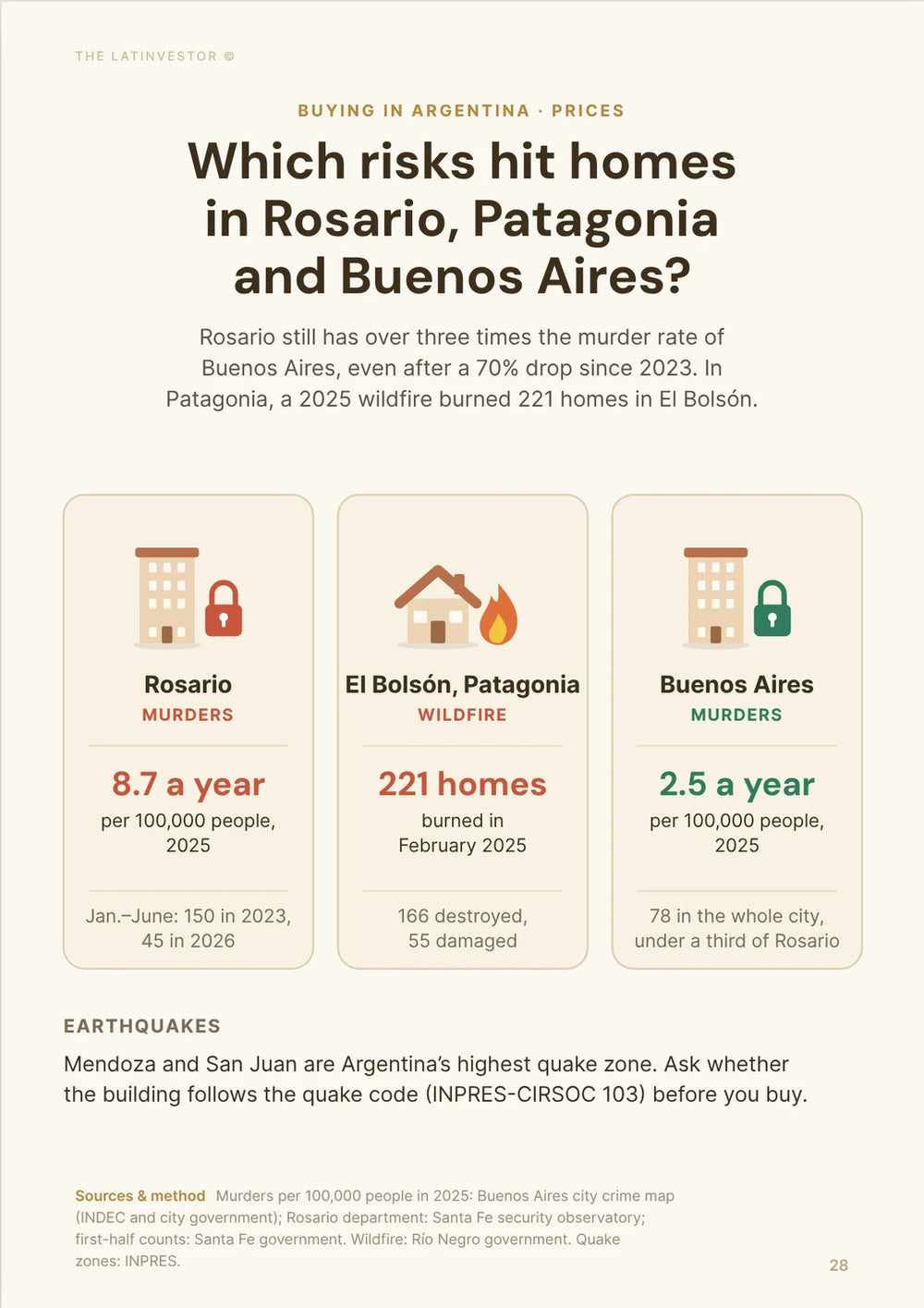
Expats mostly pick Quinta Sección, Chacras de Coria and central Mendoza, and the province's homicide rate fell to 3.2 per 100,000 in 2025.
Prices are moving up again: apartment asking prices in the province rose 6.4% in dollars in the year to September 2026, but listings for sale rose 19.1%, so buyers can negotiate.
Vineyard and rural land is a separate case: since 9 October 2026, foreign-ownership limits on rural land apply again while the Supreme Court case goes on.
Bottom line: in Mendoza, cheap areas give the yield and premium areas give the resale; pick one goal, negotiate hard with 19% more stock on the market, and budget about 21% of gross rent for tax if you are a non-resident.

How much does property cost in each area of Mendoza in 2026?
Which areas in Mendoza have the highest property prices per square meter in 2026?
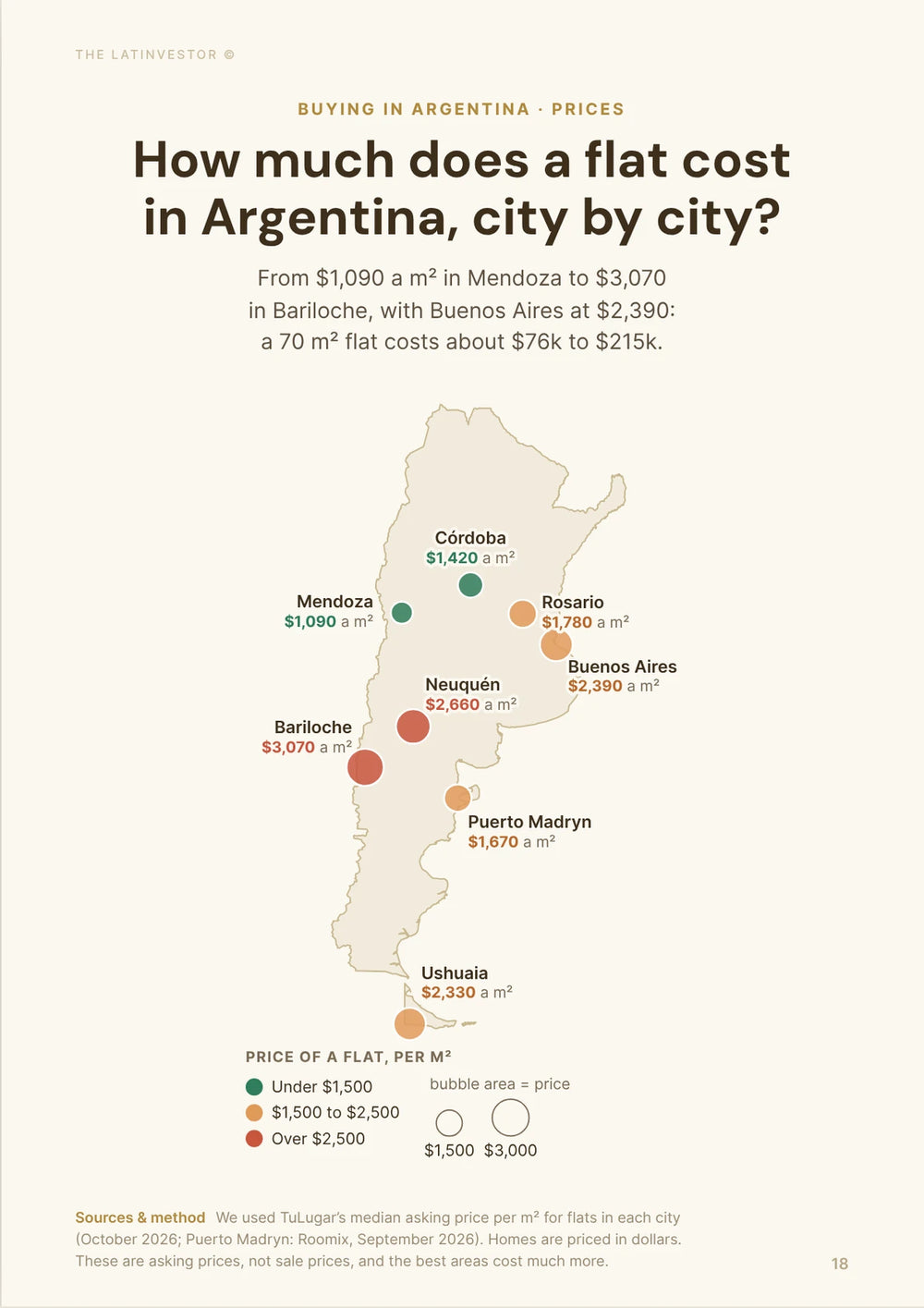
In October 2026, the most expensive apartments in Greater Mendoza are in Chacras de Coria (median asking price about USD 2,250 per square meter), Sección 10 Los Cerros (about USD 2,179) and the streets around Parque General San Martín (about USD 1,831). Quinta Sección (Sección 5) follows at about USD 1,580.
In Godoy Cruz, the top pockets are Tapón de Sevilla (about USD 1,823/m²), Villa Marta (about USD 1,742) and Bombal Sur (about USD 1,471). For comparison, the median apartment in the city of Mendoza asks about USD 1,092 per square meter, so Chacras de Coria costs about twice as much.
Houses are cheaper per square meter because the price includes land and older buildings: about USD 1,221/m² in Chacras de Coria (median house about USD 350,000) and USD 869/m² for houses in the city of Mendoza.
Each of these high-priced areas commands a premium for different reasons:
- Quinta Sección: Direct access to Parque San Martín plus quiet residential streets near downtown jobs.
- Barrio Bombal (Godoy Cruz): Classic prestige neighborhood with strong resale liquidity and local end-user demand.
- Chacras de Coria: Wine country lifestyle appeal with scarcity of well-located residential stock.
- Vistalba: Larger homes with higher build standards and strong "wine region" identity.
- Palmares and La Puntilla: Modern gated communities priced like the premium Luján corridor.
These are asking prices, not closing prices.
We checked live listings on Argenprop, Zonaprop and the licensed broker portal MendozaProp (CCPIM).
Which areas in Mendoza have the most affordable property prices in 2026?
In October 2026, the most affordable apartments in Greater Mendoza are in Las Heras (median about USD 727 per square meter), Guaymallén (about USD 867) and Maipú (about USD 970). Inside the city, the older Cuarta Este area (Sección 4) asks about USD 787/m² and Parque O'Higgins (Sección 3) about USD 907.
Houses are cheaper still: about USD 545/m² in Las Heras, USD 658 in Godoy Cruz and USD 703 in Guaymallén. Quality, age and services explain most of the gap between two houses in the same department.
The main trade-offs in these lower-priced areas include weaker public transit access in parts of Las Heras, less consolidated services in outer Guaymallén, longer commute times from non-central Maipú, and older building stock requiring more maintenance in budget Godoy Cruz streets.
We cross-checked with listings on Argenprop and Zonaprop.
Which Areas in Mendoza Offer the Best Rental Yields?
Which neighborhoods in Mendoza have the highest gross rental yields in 2026?
The cheapest areas give the best yields. A 50 m² 1-bedroom bought at the area's median price and let at the area's average rent earns about 8.8% gross a year in Las Heras, 8.4% in Guaymallén, 7.9% in the city of Mendoza, 7.4% in Godoy Cruz and 7.1% in Luján de Cuyo.
These are asking rents over asking prices, before empty months, costs and tax, so count on one to two points less in real life. Bigger units yield less: a 2 to 3-bedroom city apartment at about USD 97,000 earns about 6% gross. In premium areas it drops further, to about 5% for a 2-bedroom in Quinta Sección and about 3% for a family house in Chacras de Coria, because prices are far ahead of rents.
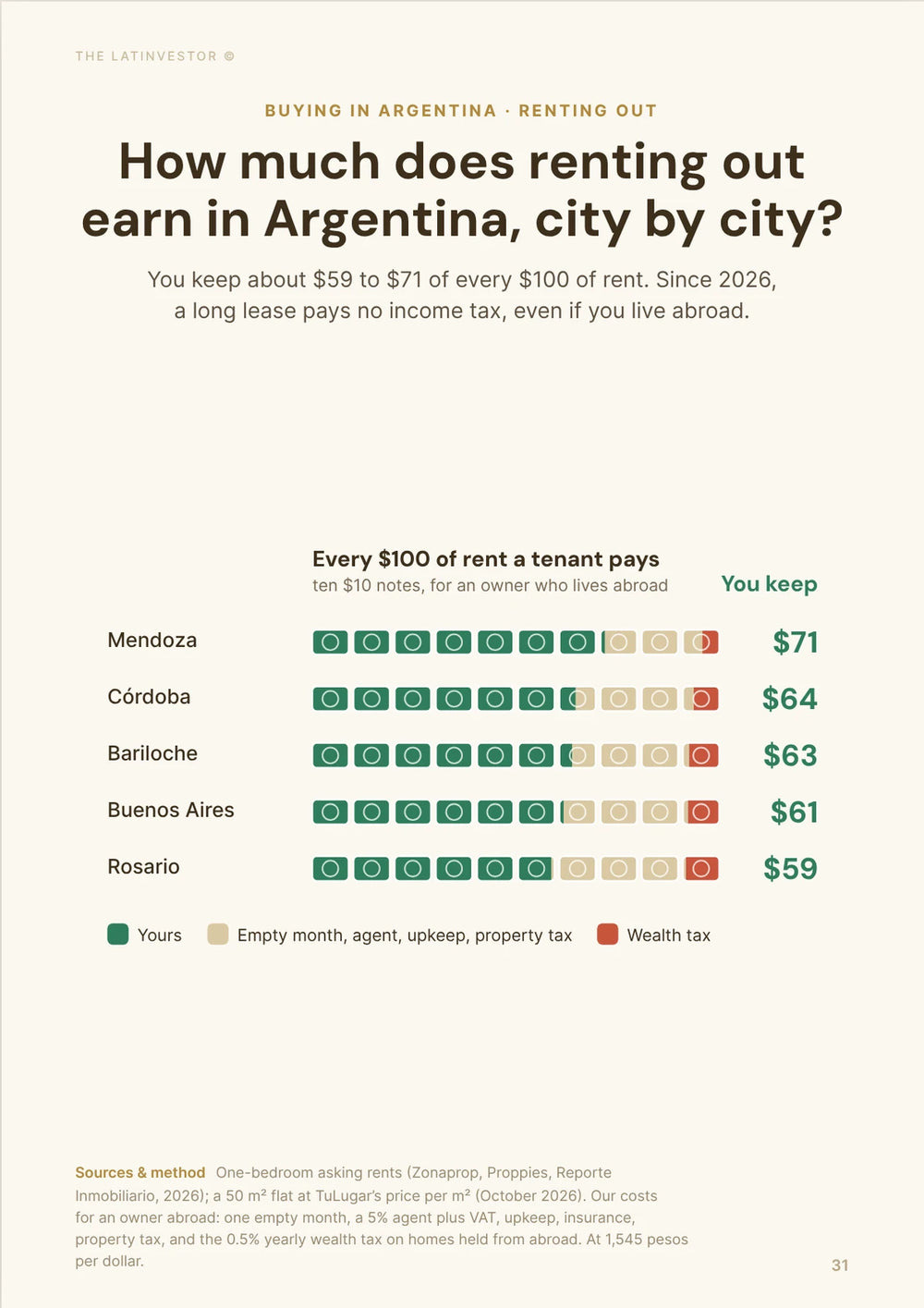
For a non-resident landlord, the long-term rent exemption of Decree 406/2026 is not confirmed, so plan on about 21% of gross rent in income tax until a tax adviser says otherwise.
These top-yielding Mendoza neighborhoods deliver higher returns for specific reasons:
- Near Universidad Nacional de Cuyo: Steady student and university staff demand keeps vacancies low.
- Godoy Cruz connected grids: Lower purchase prices combined with reliable commuter tenant demand.
- Dorrego/San José (Guaymallén): Practical locations where tenants prioritize commute over prestige.
- Luzuriaga/Coquimbito (Maipú): Stable family demand with entry prices well below capital neighborhoods.
The tax rule comes from Decree 406/2026 and Estudio Piccinini.
Which Areas in Mendoza Are Best for Short-Term Vacation Rentals?
Which neighborhoods in Mendoza perform best on Airbnb in 2026?
The areas that work best on Airbnb are Centro and Microcentro for walkability, Quinta Sección near Parque San Martín for leisure visitors, Bombal for a quieter base, and Chacras de Coria in Luján de Cuyo for wine weekends.
No source publishes Airbnb figures by Mendoza neighborhood, only for the whole city. Over October 2025 to September 2026, the 1,592 active listings averaged 38.7% occupancy and about ARS 82,512 a night. An entire-home 1-bedroom grossed about ARS 7 million a year on average and ARS 5.4 million at the median. AirROI converts at its own ARS 1,443 per dollar, so that is about USD 57 a night, USD 4,860 and USD 3,740.
On a city 1-bedroom bought at about USD 55,000, that is about 9% gross for an average listing and 7% for a median one. On a Quinta Sección 1-bedroom at about USD 97,000, it falls to roughly 4% to 5%. All of this is before the 15.5% Airbnb host fee, cleaning, utilities (about 5% of bookings) and a co-host (often about 10%).
Each of these Mendoza neighborhoods outperforms for short-term rentals due to distinct advantages:
- Centro/Microcentro: First-time visitors prioritize walkability, restaurants, and transit access.
- Quinta Sección: Premium feel with park access attracts guests seeking calm and leisure.
- Bombal: Central but quieter positioning appeals to longer-stay visitors.
- Chacras de Coria: Wine tourism and gastronomy drive strong weekend and harvest season demand.
Registration rules come from the Government of Mendoza, and tourism demand from the EMETUR tourism observatory.
Which tourist areas in Mendoza are becoming oversaturated with short-term rentals?
The pressure points are parts of Centro with heavy investor apartment stock, newer apartment clusters near major roads, and any building where Airbnb units are concentrated.
The good news is that the overall market is shrinking, not growing: active Airbnb listings in Mendoza fell 16% in the year to September 2026, as many hosts moved back to long leases. But occupancy is still low, 41% for 1-bedrooms, with a peak of 49.6% in January and February and a low of 35.8% in May.
The clearest sign of trouble in a building is dozens of near-identical furnished 1-bedrooms competing on price. Before buying for Airbnb, count the listings in the building and street, and ask the building administrator whether the rules allow short stays.
We used the INDEC hotel occupancy survey for tourism context.
Which Areas in Mendoza Are Best for Long-Term Rentals?
Which neighborhoods in Mendoza have the strongest demand for long-term tenants?
The strongest long-term demand is in Centro and the residential grids around it, the well-connected parts of Godoy Cruz, Dorrego and San José in Guaymallén, and the Luzuriaga and Coquimbito areas of Maipú.
Supply jumped in 2026: apartment rental listings rose 29% between January and August. A correctly priced apartment in these areas usually still rents within about a month, while overpriced units wait.
Different tenant profiles drive demand in each of these Mendoza neighborhoods:
- Centro (Mendoza Capital): Young professionals and service workers seeking walkable access to jobs.
- Godoy Cruz connected areas: Commuters who want affordability without sacrificing transit access.
- Dorrego/San José (Guaymallén): Practical families prioritizing value and neighborhood services.
- Luzuriaga/Coquimbito (Maipú): Families attracted by schools and retail.
- Carrodilla/La Puntilla (Luján): Families seeking "near premium corridor" quality at lower prices.
What these areas share is easy access to jobs, schools, healthcare and daily services without needing a car for every errand.
Lease rules come from DNU 70/2023. Time to rent is our estimate from listings.
What are the average long-term monthly rents by neighborhood in Mendoza in 2026?
In August 2026, a 1-bedroom apartment asked on average about ARS 558,000 a month in the city of Mendoza (USD 360), ARS 576,000 in Godoy Cruz and ARS 595,000 in Luján de Cuyo (USD 385).
The cheapest are Las Heras, at about ARS 412,000 for a 1-bedroom (USD 265), and Guaymallén, at about ARS 471,000. For 2 to 3-bedroom apartments, averages run from about ARS 636,000 in Guaymallén to ARS 754,000 in the city and ARS 869,000 in Luján de Cuyo (USD 560).
Quinta Sección is the priciest central area: TuLugar's median apartment listing was about USD 657 a month in October 2026, and Roomix puts the average at about ARS 1.22 million including building fees (USD 790).
At the top end, large houses (more than 3 bedrooms) in Luján de Cuyo, which includes Chacras de Coria, averaged about ARS 2.58 million a month (USD 1,660).
These are asking rents, not signed contracts.
Which Are the Up-and-Coming Areas to Invest in Mendoza?
Which neighborhoods in Mendoza are gentrifying and attracting new investors in 2026?
The areas drawing new buyers are the Godoy Cruz corridors with new mid-rise buildings, the Dorrego edge of Guaymallén, Luzuriaga and Coquimbito in Maipú, and Carrodilla and La Puntilla in Luján de Cuyo, which benefit from spillover demand from Chacras de Coria.
They are still well priced: Maipú apartments ask about USD 970/m² and Guaymallén about USD 867, against USD 1,200 in Godoy Cruz and USD 1,294 in Luján de Cuyo. Across the province, apartment asking prices rose 6.4% in dollars in the year to September 2026, but listings for sale rose 19.1%, so there is no price rush yet.
Which areas in Mendoza have major infrastructure projects planned that will boost prices?
The big project is the Metrotranvía (light rail) extension toward Godoy Cruz, Luján de Cuyo and the airport. In September 2026, works were about 80% complete overall, and the Godoy Cruz section was over 90%.
Areas within walking distance of the new stops in Godoy Cruz and Luján de Cuyo stand to gain most. But the Luján section still faced land possession disputes in September 2026, which can delay opening, so do not pay a premium today for a station that is not running.
In Mendoza, areas with sustained private investment and better connections have historically seen modest price gains, and new supply can cap rents even as demand rises.
We used INDEC building permits and DEIE Mendoza for construction context.
Which Areas in Mendoza Should I Avoid as a Property Investor?
Which neighborhoods in Mendoza with lots of problems I should avoid and why?
The riskiest buys are blocks in Centro with too many identical investor apartments, the outer pockets of Las Heras and Guaymallén with weak services and transit, and any building of doubtful construction quality, because Mendoza sits in a high seismic zone.
Each of these problem areas in Mendoza has specific issues:
- Oversupplied Centro clusters: Too many similar investor apartments competing on price, weak resale liquidity.
- Peripheral Las Heras: Higher tenant churn, rent collection challenges, weaker infrastructure.
- Outer Guaymallén (far from cores): Limited services, longer commutes reduce tenant quality.
- Poor construction quality zones: Seismic risk makes poorly built stock a hidden liability.
Low prices alone do not fix these areas. They would need better infrastructure, less competing stock, or a price cut big enough to make the risk worth it. Whatever the area, ask for the building's construction year and structural plans, and check the title at the provincial registry.
Seismic activity is tracked by INPRES.
Which areas in Mendoza have stagnant or declining property prices in 2026?
The areas where prices are going nowhere are investor-heavy blocks with lots of new supply, older-stock corridors with nothing new to attract buyers, and far peripheral locations where demand is purely about price.
The wider market is not falling: provincial apartment asking prices rose 6.4% in dollars in the year to September 2026, and the city median held at about USD 1,091 to USD 1,092 per square meter between September and October. But listings for sale rose 19.1% over the year, and the extra stock lands mostly in these weaker areas, where sellers have to cut to sell.
The underlying causes of price stagnation differ by area in Mendoza:
- Central investor clusters: New supply constantly entering the market dilutes demand per unit.
- Older-stock metro ring corridors: Nothing new to attract premium buyers.
- Far peripheral areas: Distance from jobs and services limits buyer and tenant pools.
We found no price trend by neighborhood, so the list of stagnant areas is our reading of listing data.
Which Areas in Mendoza Have the Best Long-Term Appreciation Potential?
Which areas in Mendoza have historically appreciated the most recently?
The areas that held their value best are Quinta Sección and Bombal, Chacras de Coria and Vistalba in Luján de Cuyo, and the edges of the premium corridor such as Carrodilla, La Puntilla and Palmares.
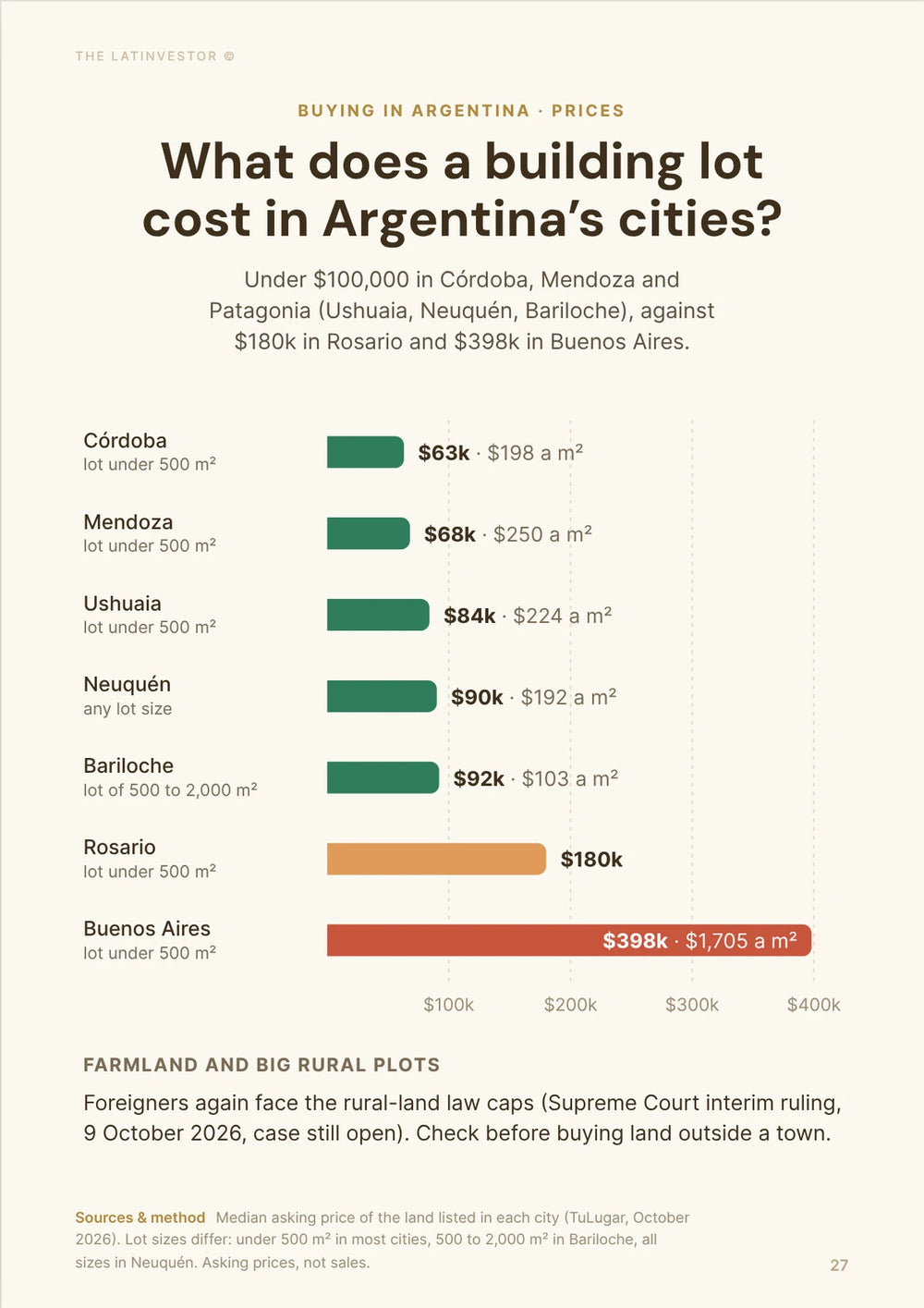
Their premium shows in today's prices: Chacras de Coria apartments ask about USD 2,250/m² and Quinta Sección about USD 1,580, against USD 1,092 for the city median.
These top-performing Mendoza areas have achieved different appreciation profiles:
- Quinta Sección: Maintained premium pricing with steady end-user demand supporting floor prices.
- Bombal: Strong resale liquidity keeps values stable even during broader market weakness.
- Chacras de Coria: Lifestyle scarcity premium has held up better than pure investment areas.
- Carrodilla/La Puntilla: Spillover demand from pricier zones has lifted relative values.
The reason is simple: buyers there include people who want to live there, not just investors, and that keeps a floor under prices in downturns.
We found no long-term price series by neighborhood, so we do not give appreciation percentages.
Which neighborhoods in Mendoza are expected to see price growth in coming years?
The areas with the best chance of price growth over the next few years are Quinta Sección and the streets near Parque San Martín, both sides of Bombal, Carrodilla and La Puntilla in Luján, Dorrego and San José in Guaymallén, and Godoy Cruz near the new Metrotranvía stops.
Each of these Mendoza neighborhoods has different growth drivers:
- Quinta Sección: Scarcity of stock near the park combined with persistent end-user demand.
- Bombal: Liquidity premium will continue attracting buyers seeking easy resale options.
- Carrodilla/La Puntilla: Value alternative to Chacras with strong family demand.
- Dorrego/San José: Yield plus practical demand from commuters supports steady appreciation.
- Select Godoy Cruz corridors: Quality new builds and the light rail attract younger buyers, though supply risk exists.
The key is limited new supply in places people want, plus demand from both residents and investors. The risk is the opposite: provincial listings for sale were up 19.1% in a year, which caps gains in areas where developers keep building.
This is our outlook, not a forecast from a source.
What Do Locals and Expats Really Think About Different Areas in Mendoza?
Which areas in Mendoza do local residents consider the most desirable to live?
Locals most want to live in Quinta Sección near Parque San Martín, Barrio Bombal (Norte and Sur, in Godoy Cruz), Chacras de Coria in Luján de Cuyo and parts of Vistalba.
Each of these locally-preferred Mendoza areas offers distinct qualities:
- Quinta Sección: Park access, quiet streets, and walkability to downtown jobs.
- Bombal: Classic residential prestige with established neighborhood character.
- Chacras de Coria: Wine country lifestyle with restaurants, boutiques, and weekend appeal.
- Vistalba: Larger properties, privacy, and proximity to vineyards.
These areas are home to established professionals, business owners and families who pay for quality of life. Their choices match what foreign buyers want (safety, services, easy resale), though locals care more about schools and family needs.
Which neighborhoods in Mendoza have the best reputation among expat communities?
Expats usually start in Centro and Microcentro, then move to Quinta Sección and the Parque San Martín area for the long term, or to Chacras de Coria for the wine country life.
Expats prefer these Mendoza neighborhoods for specific reasons:
- Centro/Microcentro: Walkability, restaurants, and easy access to services without needing Spanish fluency.
- Quinta Sección: Safe, quiet, and park access for daily quality of life.
- Chacras de Coria: Wine tourism infrastructure means English-friendly services and cultural events.
The typical expat is a retiree, a remote worker drawn by the time zone and lower costs, or someone working in wine. Safety is part of the appeal: the province's homicide rate fell from 3.5 to 3.2 per 100,000 between 2024 and 2025.
Which areas in Mendoza do locals say are overhyped by foreign buyers?
Locals point to three things: Centro apartments sold as "Airbnb machines", new "luxury" projects with nothing special around them, and Chacras de Coria homes priced like Napa or Tuscany.
Locals believe these Mendoza areas can be overvalued for specific reasons:
- Centro "Airbnb machine" apartments: Citywide Airbnb occupancy was only 38.7% over the year to September 2026.
- Marketing-driven "luxury" developments: Premium prices without matching neighborhood services or resale liquidity.
- Overpriced Chacras listings: A median 2-bedroom apartment asks about USD 342,000, a level local incomes cannot support.
Foreign buyers get pulled in by the wine story and by rental projections that ignore seasonality, the peso and how small the local rental market really is.
Which areas in Mendoza are considered boring or undesirable by residents?
Residents find the outer edges of the metro area the least appealing: parts of outer Guaymallén, outer Las Heras and non-central Maipú, where you need a car for everything and little is within walking distance.
Residents find these Mendoza areas less appealing for practical reasons:
- Outer Guaymallén (far from cores): Limited nightlife, dining, and cultural options require driving everywhere.
- Outer Las Heras: Weaker public transit and fewer neighborhood services create isolation.
- Non-central Maipú: Distance from employment centers means long commutes and less spontaneous socializing.
Prices reflect it: Las Heras houses ask about USD 545 per square meter, among the lowest in Greater Mendoza.
Are Mendoza property prices rising again in 2026?
Yes, slowly. Apartment asking prices across Mendoza province rose 6.4% in dollars in the year to September 2026. At the same time, the number of properties listed for sale rose 19.1%, so sellers are competing for buyers.
The peso matters here: the dollar rose only about 5% in 2026 while consumer prices rose about 23.6% from January to September. Mendoza got more expensive for anyone earning in dollars or euros, and peso-priced costs like building fees, works and property tax went up fast.
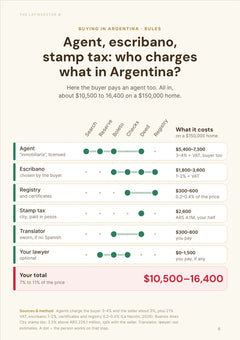
What to do: compare the asking price with the area median (for example USD 1,092/m² in the city or USD 1,200 in Godoy Cruz) and open below it. In Buenos Aires, deals closed about 4.75% under asking; with 19% more stock on the market, a Mendoza buyer can often aim for more. Add buying costs, including Mendoza's 2% stamp tax.
Can foreigners still buy vineyard land around Mendoza in 2026?
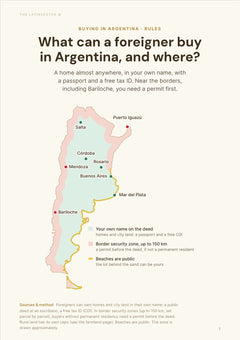
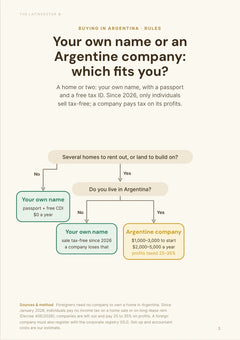
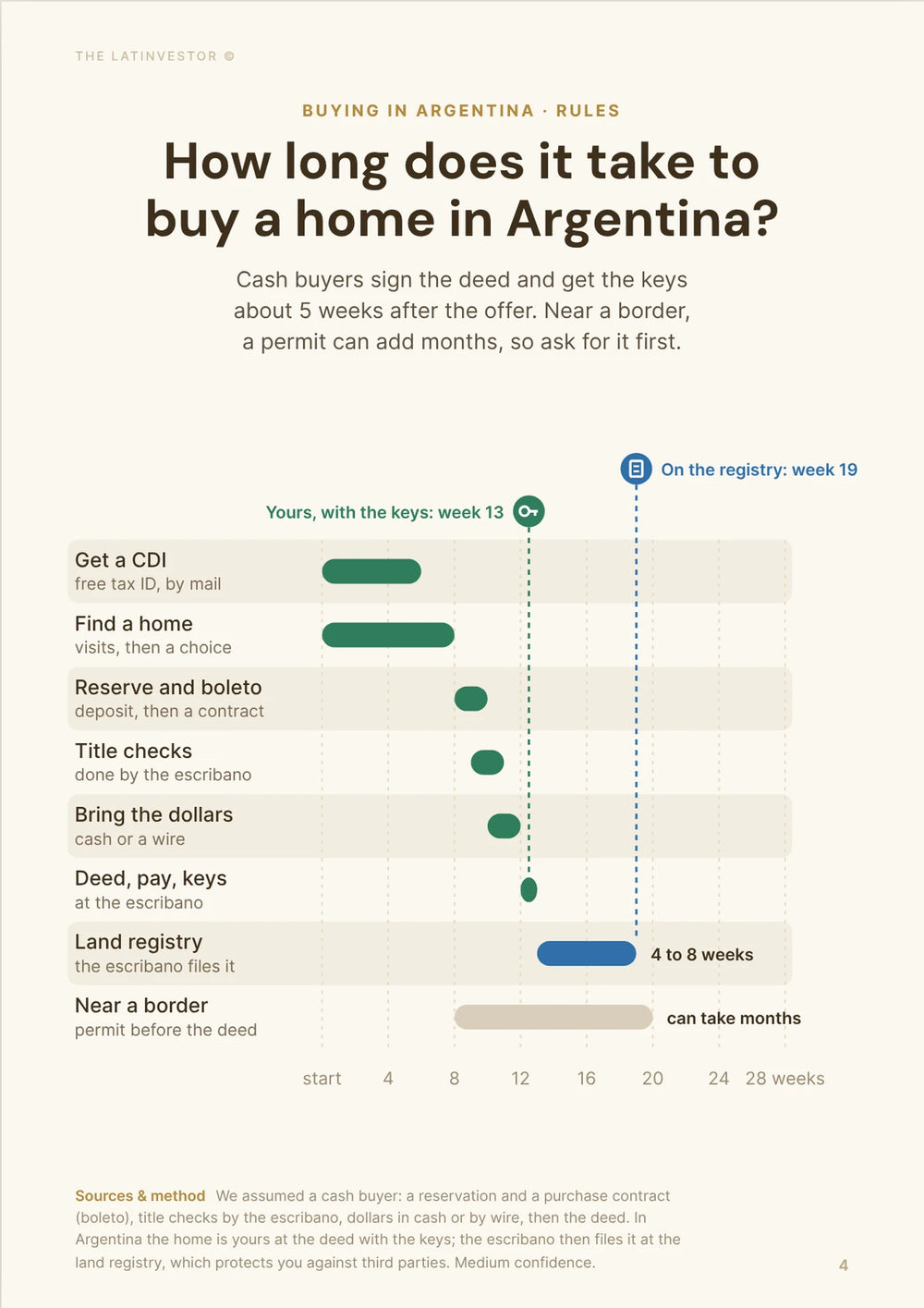
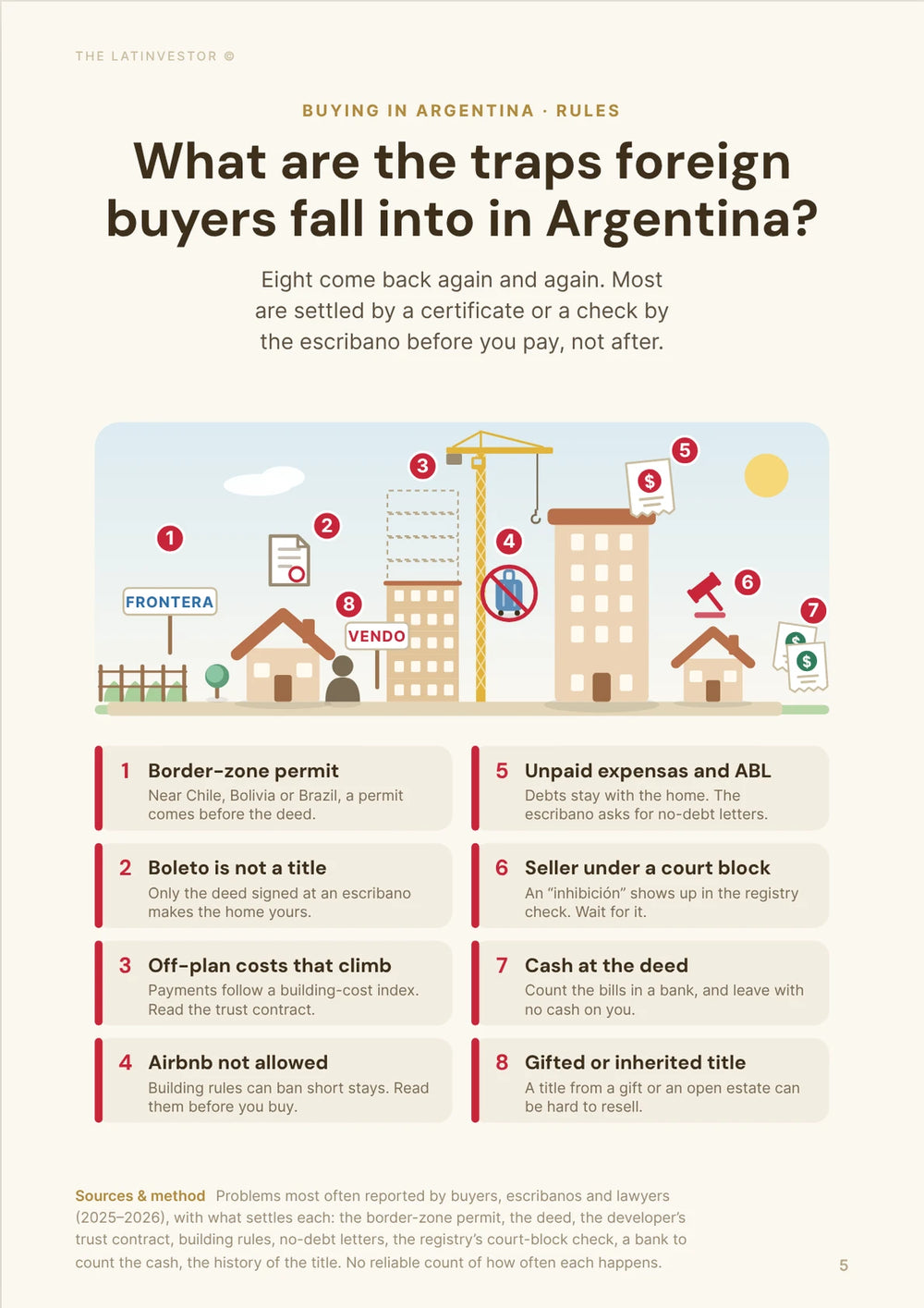
Apartments and urban lots in Chacras de Coria, Vistalba or the city are not the issue: foreigners can buy them on the same terms as Argentines. Vineyards and farmland are different.
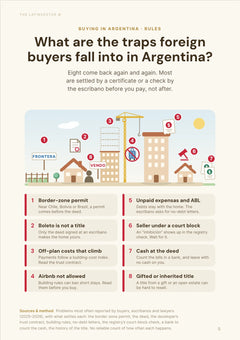
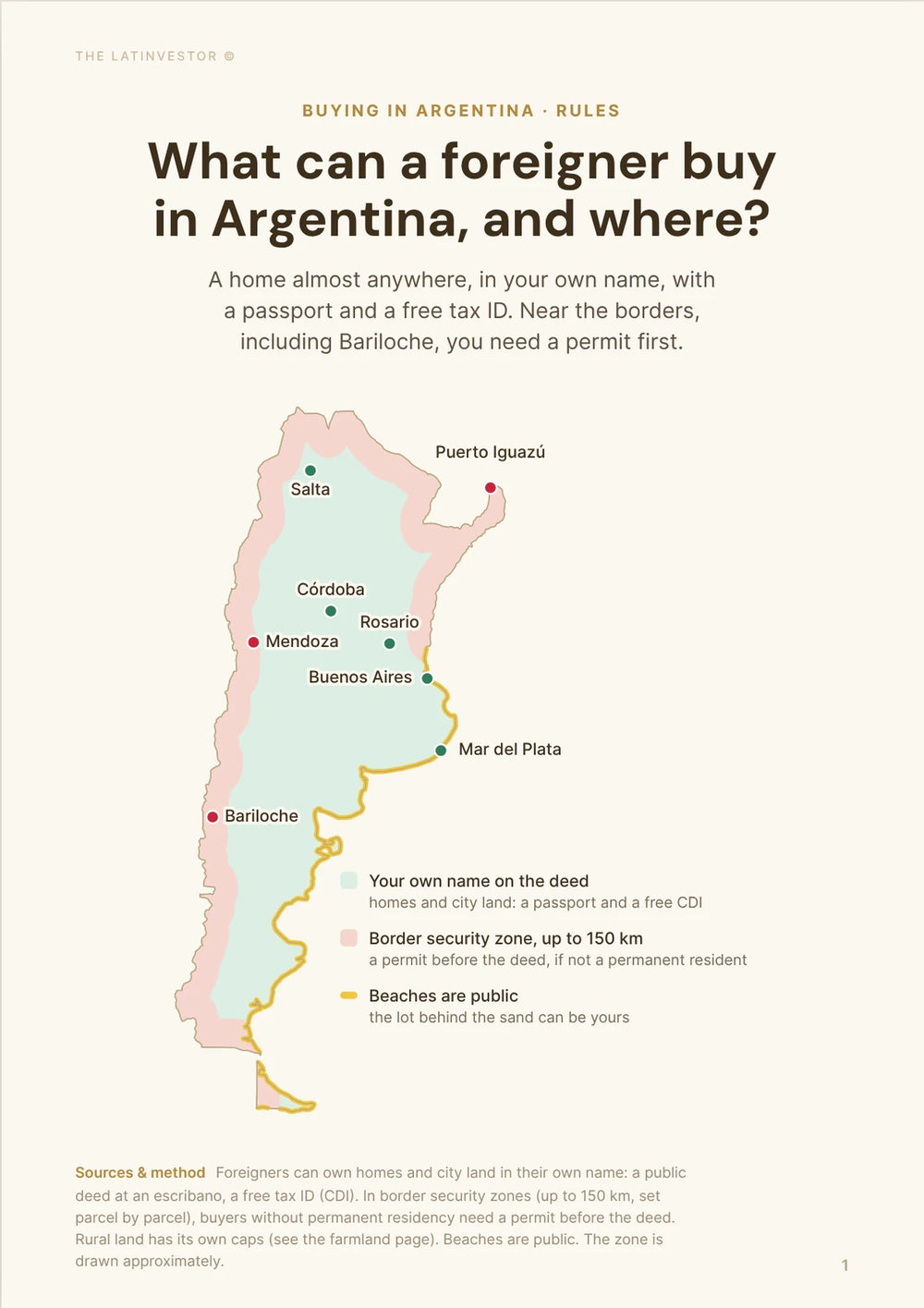
On 9 October 2026, the Supreme Court provisionally suspended the repeal of the rural land law (Ley 26.737), so foreign-ownership limits on rural land apply again until a final ruling. Mendoza is also a border province, and some land in western departments can fall inside a frontier security zone that needs separate authorization.
What to check before any deposit on a vineyard in Luján de Cuyo or the Valle de Uco: whether the parcel is classed as rural, whether it sits in a border security zone, and whether water rights come with it. Water looks better this season: the Río Mendoza runoff forecast for 2026/27 is 129% of average and the Río Tunuyán 117%.
Our methodology
This article compares the main areas of Greater Mendoza in 2026: prices per square meter, long-term and Airbnb yields, rents by department, up-and-coming areas, areas to avoid, appreciation and what locals and expats think.
Prices per square meter come from TuLugar's October 2026 medians by department and city sección, and the price trend and listing growth from the InmoUP sales observatory (September 2026). Rents come from the InmoUP rental observatory (August 2026), TuLugar and Roomix. Airbnb figures come from AirROI (October 2025 to September 2026). Yields are our own calculation from these asking prices and rents.
Rules come from Decree 406/2026 and Estudio Piccinini (rental tax), ATM Mendoza (stamp tax), Chequeado and Decree-Law 15.385 (rural and border land), and the Government of Mendoza (tourist rentals). Inflation comes from INDEC, crime from SNIC and the Metrotranvía works from MDZ.
We checked these figures in October 2026. Peso amounts are converted at about ARS 1,550 per US dollar (official and MEP rates were within 1% of each other on 22 October 2026, the blue rate about ARS 1,570), and euro amounts at about ARS 1,740 per euro.
Where we had no direct figure (Airbnb results by neighborhood, price trends by neighborhood, time to rent, closing prices in Mendoza), we used citywide data or our reading of listings and say so in the section. All prices and rents are asking figures, so real deals are usually a bit lower.
Key sources used for this analysis include TuLugar Mendoza, InmoUP sales observatory, InmoUP rental observatory, Índice Roomix, AirROI Mendoza, Argenprop, Zonaprop, MendozaProp (CCPIM), EMETUR tourism observatory, Government of Mendoza, tourist accommodation, INDEC building permits, INDEC inflation, DEIE Mendoza, MDZ, DNU 70/2023, Decree 406/2026, Estudio Piccinini, ATM Mendoza Ley Impositiva 2026, Chequeado, Decree-Law 15.385, Argentina.gob.ar CDI, BCRA reference exchange rate, SNIC crime statistics, Departamento General de Irrigación and Poder Judicial Mendoza registry guide.