Summary
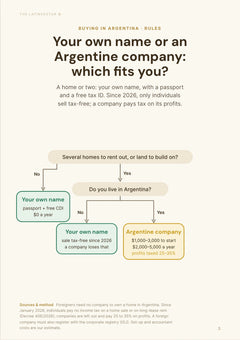
Yes. A foreigner can buy and fully own an apartment, house or shop in Argentina without residency: Article 20 of the Constitution gives foreigners the same right to buy real estate, and the only number you need is a free CDI tax ID that ARCA can take up to 30 business days to issue.
You own the property itself, with a public deed signed before a notary (escribano) and registered like any Argentine owner's. No nominee, no lease, no local partner.
A Buenos Aires, Córdoba or Rosario apartment is the easy case. The real checks are on title, liens and registry certificates, not on your passport.
Rural land is different. Law 26.737 caps foreign ownership at 15% of rural land nationally, per province and per department, and a single foreign owner at 1,000 hectares in the core farming zone.
The rules changed twice in two weeks. On 29 September 2026 the Supreme Court threw out one challenge to their repeal, then on 9 October 2026 it provisionally suspended the repeal in a case from Bariloche, so the foreign caps on rural land apply again for now.
Argentina is far from the national cap: foreigners hold about 13.38 million of 266.7 million rural hectares, roughly 5%. But more than 30 departments are already over 15%, Magallanes in Santa Cruz at about 25.8%.
Staying under 1,000 hectares is not enough, and an Argentine company does not get around the rules when foreigners hold more than 51% of it.
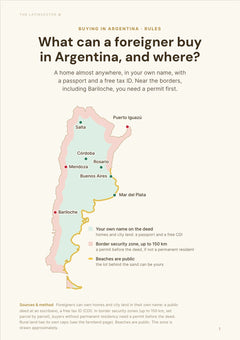
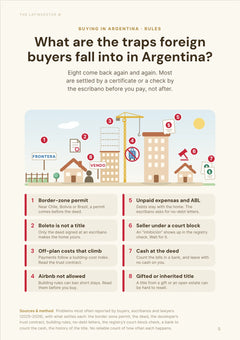
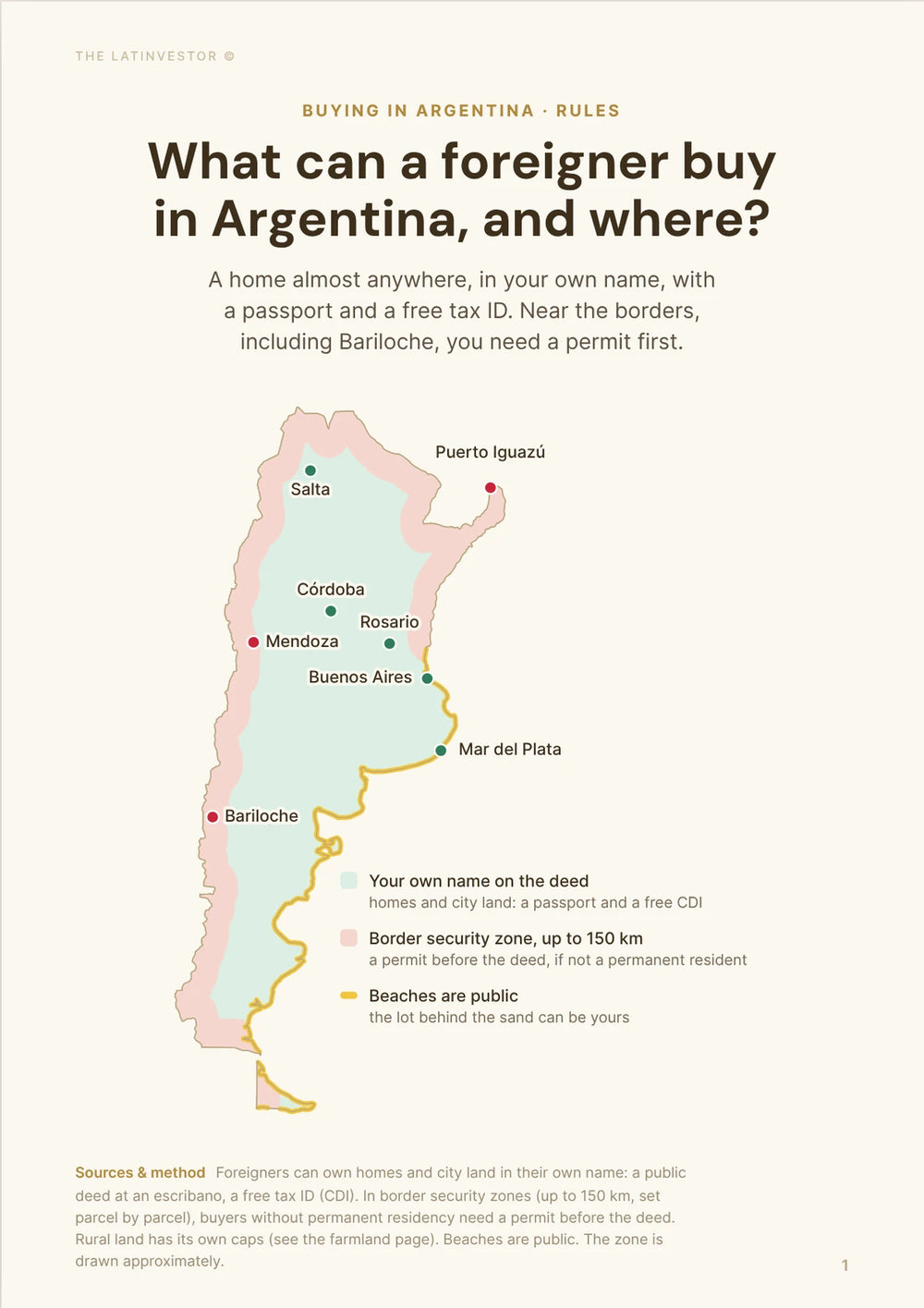
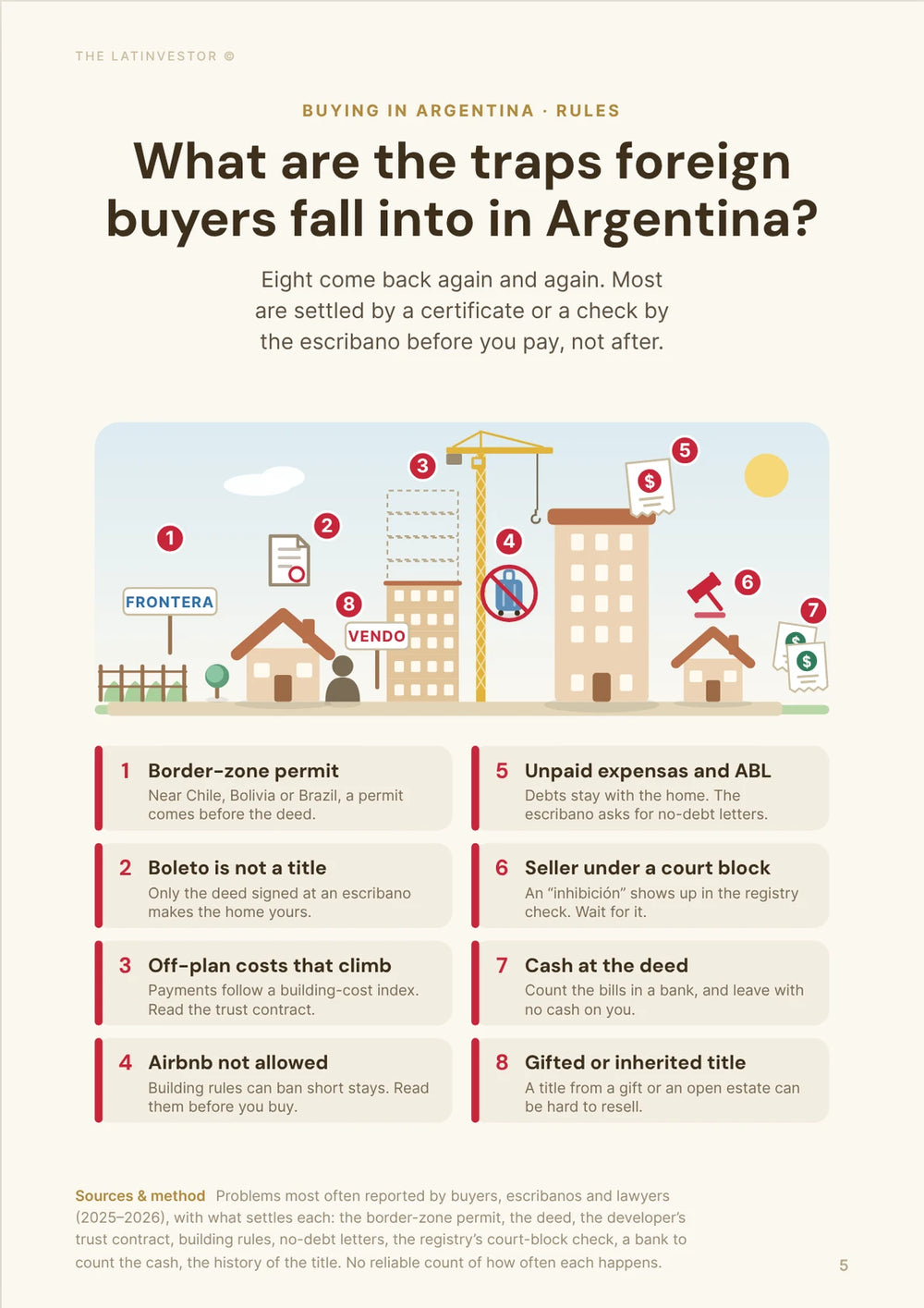
Lakefront and riverfront rural land can be off-limits, and border security zones, which can reach up to 150 km from a land border, may require prior approval (Previa Conformidad), with exemptions for listed towns and small urban lots up to 5,000 m².
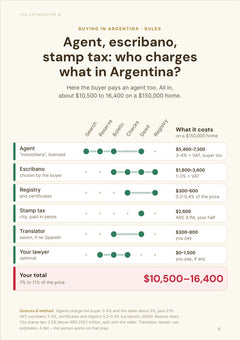
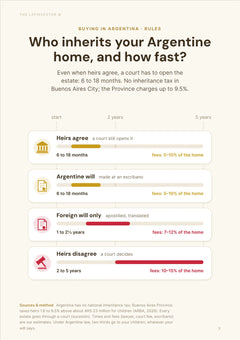
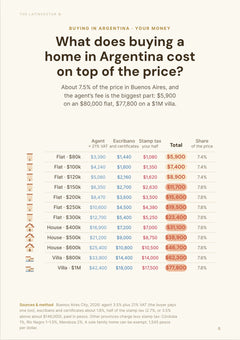
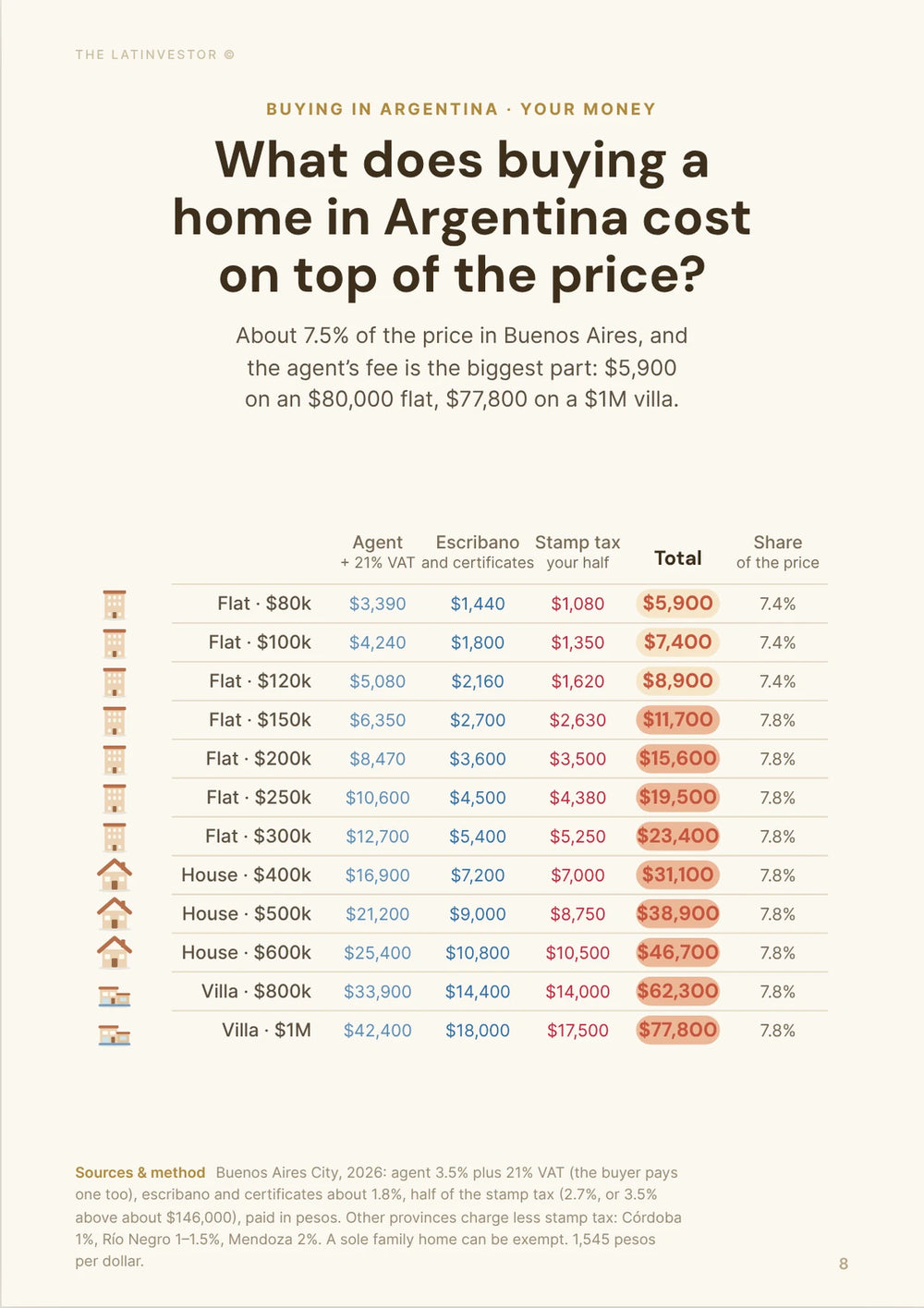
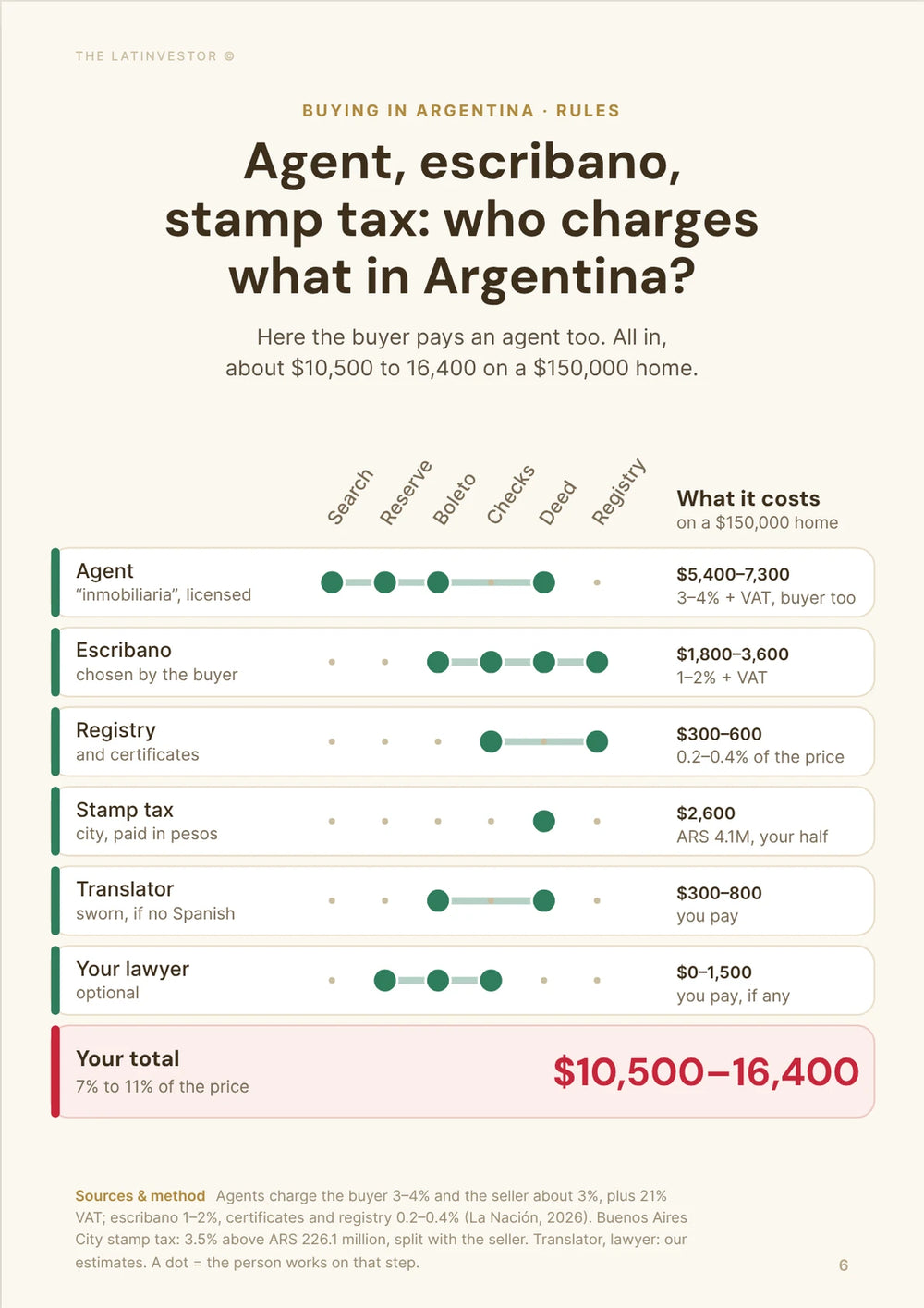
There is no extra tax for being foreign. In Buenos Aires City a buyer pays about 6% to 9% on top of the price with an agent, mostly stamp tax (2.7% or 3.5%, usually split), notary and agent fees.
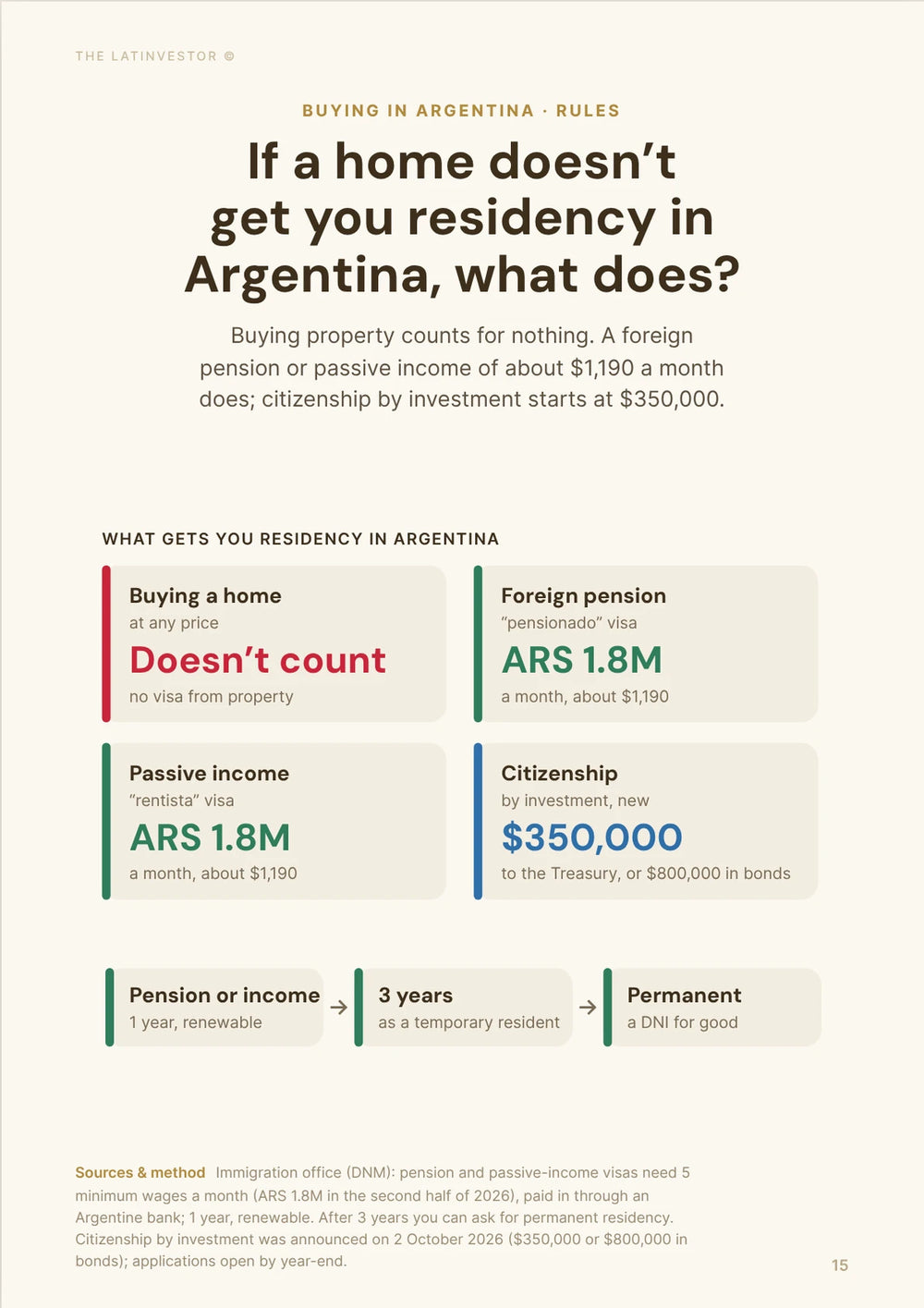
Buying a home gives no residency. The citizenship-by-investment programme announced on 2 October 2026 asks for a USD 350,000 contribution or a USD 800,000 bond, not a property.
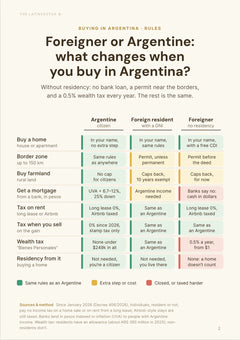
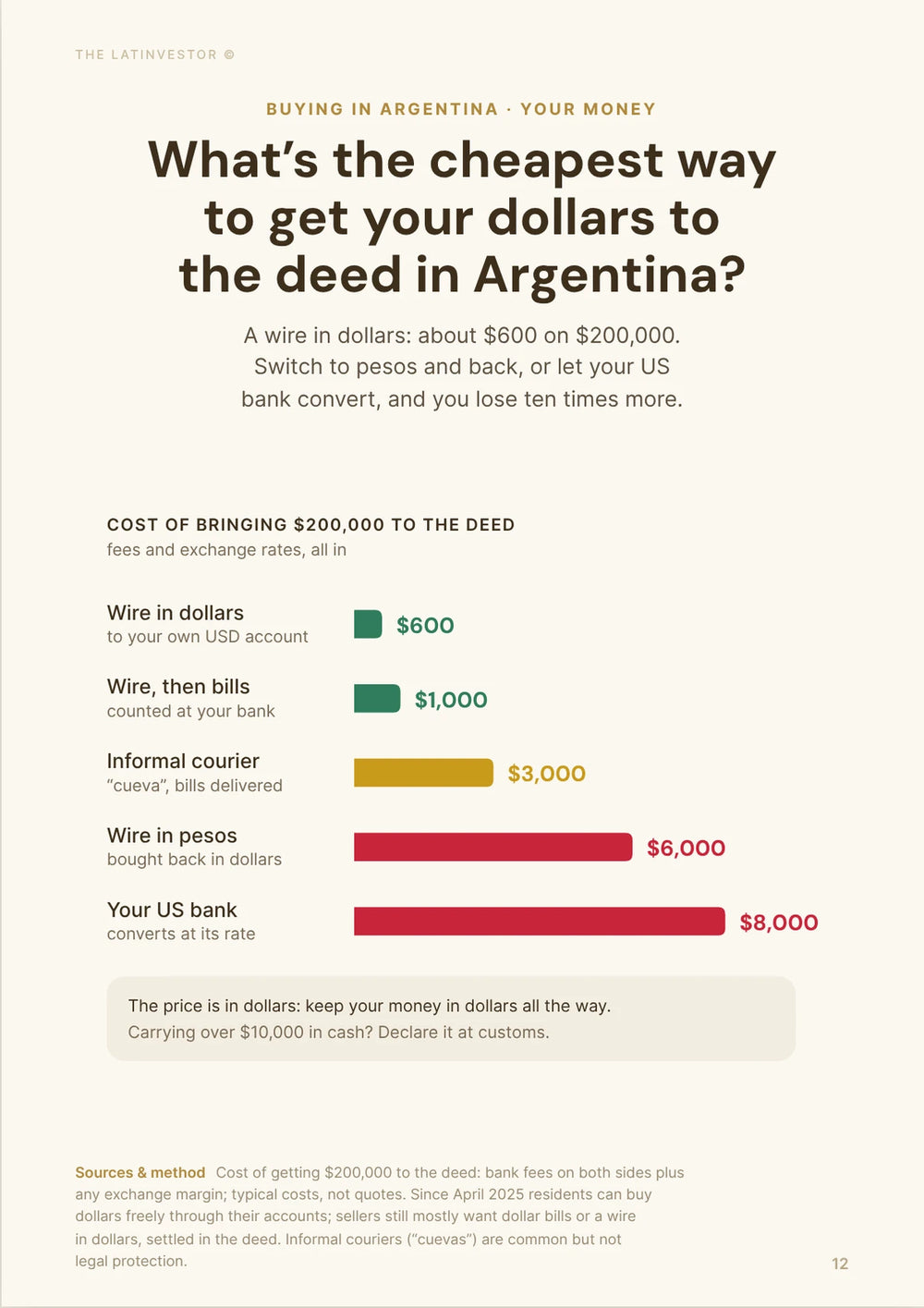
Plan to pay in dollars and in cash or by transfer: non-residents with foreign income have no confirmed access to UVA mortgages, and cash deals above ARS 275.85 million (about USD 178,000) are reported to the UIF.
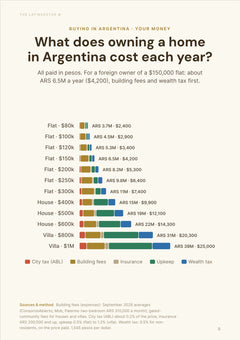
Once you own, a non-resident should budget 21% of gross rent in income tax until an adviser confirms the 2026 exemption applies, plus about 0.5% a year of wealth tax; resale gains are tax-free for individuals since 1 January 2026.
Our view: a city apartment is open to you today with manageable paperwork. Anything rural, on a lake or near the Chilean border needs a written parcel check from the notary before you pay a deposit.


What exactly can a foreigner buy in Argentina?
Yes. Foreigners can currently buy and fully own property in Argentina, including apartments, houses and commercial real estate, without first becoming Argentine residents or citizens.
The starting point is unusually clear. Article 20 of Argentina’s Constitution explicitly gives foreigners the right to possess, buy and sell real estate. For an ordinary apartment in Buenos Aires, a house in Córdoba or commercial premises in Rosario, there is no general foreign-ownership ban.
The confusion begins when people use “property” and “land” as though they were interchangeable. Argentina places special restrictions on rural land and applies another approval regime to some properties in designated border-security areas. Those rules can completely change the answer for a farm, estancia or large Patagonian estate.
For most foreigners looking for a normal urban home, though, the basic answer is simple: Argentina allows the purchase.
| Property | Can a foreigner buy it? | Main issue | How restrictive is it? |
|---|---|---|---|
| Buenos Aires apartment | Yes | Normal title and closing checks | Low |
| Urban house | Yes | Normal title and closing checks | Low |
| Commercial urban property | Yes | Normal transaction rules | Low |
| Rural land | Sometimes | Foreign rural-land limits | Potentially high |
| Border-zone property | Sometimes | Government approval rules | Depends on location |
| Certain rural waterfront land | Can be prohibited | Rural Lands Law | High |
Does a foreigner need Argentine residency to buy property?
No. Argentine residency is currently unnecessary for a foreigner buying a normal apartment, house or other urban property.
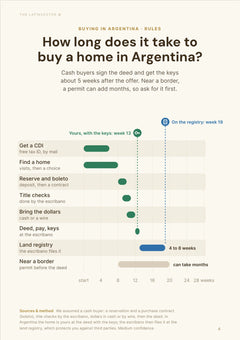
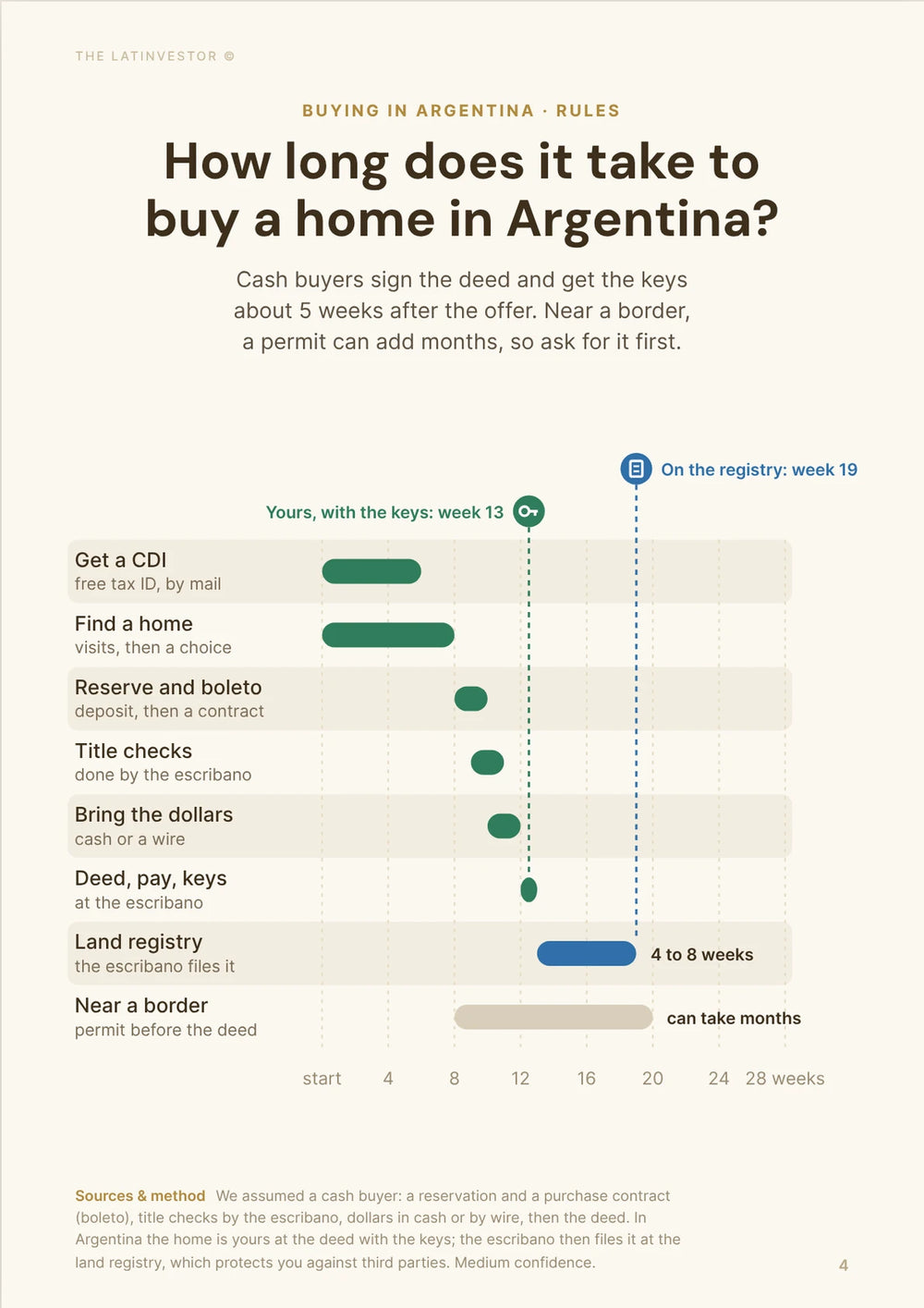
The clearest proof is Argentina's own tax system. A non-resident foreigner can get a CDI identification number from ARCA, the tax agency, precisely to acquire registrable assets such as property. The procedure covers people who have no CUIT or CUIL, works with a passport, and is free. ARCA allows up to 30 business days for non-residents, so apply before you make an offer, or have a local representative with a power of attorney do it.
That is the administrative route designed for precisely this situation: someone can own an Argentine registrable asset without already belonging to Argentina’s resident tax-and-identification system.
Residency becomes relevant in a narrower corner of the market. The Rural Lands Law exempts some foreigners who have lived continuously in Argentina for long periods, as well as certain foreigners with Argentine children or Argentine spouses who satisfy residence requirements. Those exemptions concern restricted rural land. They do not create a residency requirement for a foreigner buying an urban apartment.
A person living permanently in Europe, North America or Asia can therefore buy Argentine urban property while remaining a non-resident.
Can foreigners really own an Argentine apartment outright?
Yes. Foreigners can hold full ownership of an Argentine apartment rather than being limited to a lease, nominee arrangement or special foreigner title.
That makes Argentina considerably simpler than jurisdictions where foreigners can own condominium units but cannot own land, or where overseas buyers depend on long-term leasehold structures.
Argentine law gives foreigners the underlying right to own real estate. The purchase is then documented through the normal property system, typically with an escritura pública, or public deed, handled by an escribano and registered with the relevant property registry.
Argentina’s national property-registration law also expressly contemplates foreign and non-resident owners. Its implementing rules specify identification requirements for both resident and non-resident foreigners.
Someone buying an apartment in Palermo, Recoleta or Belgrano is buying the property itself. Foreign nationality does not turn that purchase into a lesser form of ownership.
Is buying property in Buenos Aires straightforward for a foreigner?
Usually, yes. A foreigner buying a normal Buenos Aires apartment faces paperwork and due diligence, but foreign ownership itself is rarely the difficult part.
The special Rural Lands Law applies to property outside the urban boundary. A conventional apartment in Buenos Aires therefore sits outside the main foreign-land restriction that creates most of the scary-looking rules found online.
The practical work happens around the transaction itself. The buyer needs the appropriate Argentine identification number, the title has to be checked, and the escribano obtains registry information showing the legal position of the property and the parties before the deed is executed.
For a foreign buyer, this title review is worth taking seriously. The important questions concern who legally owns the apartment, whether liens or restrictions are registered, whether the cadastral information matches the property being sold and whether the seller can validly transfer it.
Those are real risks, but they are property-purchase risks rather than a Buenos Aires ban on overseas ownership.
Why are Argentina’s rules so different for rural land?
Rural land is where foreign property ownership in Argentina becomes genuinely restrictive.
Law 26.737 defines rural land broadly as property outside the urban boundary, regardless of what the owner plans to do with it. A countryside home, agricultural property, vineyard or large undeveloped estate can therefore enter the regime even when farming is not the buyer’s objective.
Several restrictions operate at the same time. Foreign ownership is capped at 15% of rural land nationally, at the provincial level and within the relevant local administrative area. People or companies of one foreign nationality can account for no more than 30% of the foreign-owned quota. A single foreign owner is generally limited to 1,000 hectares in the country’s core agricultural zone, or an officially calculated equivalent elsewhere.
The location of the property can add further problems. Covered rural land containing or bordering a sufficiently important permanent body of water is restricted, while rural property inside a border-security zone can require additional approval.
A foreigner looking at a 70-square-meter Buenos Aires apartment and another looking at a 700-hectare estate are operating under very different rules.
| Rural-land test | Current rule | What the rule checks | Can it block a purchase? |
|---|---|---|---|
| National foreign ownership | Maximum 15% | All rural land nationally | Yes |
| Provincial foreign ownership | Maximum 15% | Rural land in each province | Yes |
| Local foreign ownership | Maximum 15% | Relevant department or equivalent | Yes |
| One nationality | Maximum 30% of foreign quota | Concentration by nationality | Yes |
| Individual holding | 1,000 ha in core zone | Buyer’s total holding | Yes |
| Equivalent-area rule | Varies by location | Land outside core zone | Yes |
Are Argentina’s foreign rural-land restrictions still in force now?
Yes, for now. Since 9 October 2026, foreign buyers have to treat the Rural Lands Law as back in force, pending a final ruling.
The story is messy. Decree 70/2023 (DNU) tried to repeal Law 26.737 in December 2023, which would have removed the national caps on foreign rural ownership. Lower courts suspended that repeal, and the Rural Lands Registry kept running its authorization system.
On 29 September 2026 the Supreme Court reversed one of those rulings, in a case brought by CECIM from La Plata, because the group had no standing. It did not say whether the decree was constitutional. Ten days later, on 9 October 2026, the Court provisionally suspended the repeal (article 154 of the decree) in a second case, brought by the environmental group Árbol de Pie in Bariloche.
The suspension lasts until the federal judge in Bariloche rules on the case. Until then, the 15% caps, the 1,000-hectare limit and the waterfront rules apply again. The Registry's procedure still asks foreigners for a habilitation certificate before buying covered rural land, and it warns that deals breaking the law can be void.
What to do: if the plot is outside a town's urban boundary, ask the notary to confirm in writing whether it is classed as rural, and make the reservation conditional on that answer. Headlines saying the law was "repealed" are out of date.
Is Argentina close to its foreign land ownership limit?
No at the national level, although the national number hides several local areas where foreigners have already crossed the statutory ceiling.
The Rural Lands Registry's latest dataset (page updated August 2025) records roughly 13.38 million hectares of foreign-held rural land out of about 266.71 million rural hectares. That works out to around 5.0%.
Five percent is nowhere near the nationwide 15% ceiling. The registry also reports that no province currently exceeds its own 15% limit.
The picture becomes much more interesting one level down. According to the latest departmental update from the same registry, more than 30 departments exceed the 15% foreign-ownership threshold.
Some differences are huge. The official dataset, for example, puts Magallanes in Santa Cruz at about 25.8% foreign ownership, while Garay in Santa Fe is around 15.7%. Many other departments remain in the low single digits.
The national percentage is therefore a poor shortcut for a specific deal. Argentina as a whole has plenty of room below the legal ceiling, yet a rural property can still sit in an area where the local foreign quota is already exhausted. For a land buyer, the department can matter more than the national average.
| Area | Rural land | Foreign-owned rural land | Foreign share |
|---|---|---|---|
| Argentina | ~266.7m ha | ~13.38m ha | ~5.0% |
| Buenos Aires Province | ~28.83m ha | ~833,500 ha | ~2.9% |
| Santa Cruz Province | ~23.48m ha | ~1.91m ha | ~8.1% |
| Magallanes, Santa Cruz | ~1.98m ha | ~509,500 ha | ~25.8% |
| Garay, Santa Fe | ~391,800 ha | ~61,600 ha | ~15.7% |
Does the 1,000-hectare rule mean a foreigner can always buy less than 1,000 hectares?
No. Staying below 1,000 hectares does not automatically make an Argentine rural-land purchase legal for a foreigner.
The famous 1,000-hectare figure applies to the designated core zone. Elsewhere, Argentina uses equivalence tables intended to reflect differences in land quality, productive capacity and location. Depending on the area, a buyer may therefore face a different effective surface limit.
More importantly, the size test is only one part of the approval. The Rural Lands Registry also checks the percentage of foreign ownership in the province and local area, the percentage already controlled by buyers of the same nationality and how much qualifying rural land the buyer already owns.
Its own administrative procedure makes those checks explicit. When an application is processed, the registry generates a technical report covering the buyer’s personal quota, the foreign-ownership percentages and the nationality percentages at provincial and local level.
A 300-hectare property can still fail even though it sits comfortably below 1,000 hectares. The exact cadastral location has to be checked before the buyer assumes the acreage is acceptable.
Can a foreigner create an Argentine company and buy restricted land through it?
Usually no. An Argentine company controlled by foreigners can still count as foreign for Argentina’s rural-land restrictions.
Law 26.737 looks at who controls the company rather than stopping at the country where the company was incorporated. An Argentine legal entity generally falls inside the foreign-ownership regime when foreign persons hold more than 51% of its capital or otherwise have enough control to determine the company’s majority decisions.
The current Rural Lands Registry procedures go further into the ownership chain. Companies holding rural land have to report changes in their ownership structure, and the registry can examine the nationality of the controlling interest or beneficial owner.
The law also targets attempts to create artificial Argentine ownership through nominees. A local shell company is therefore a poor workaround for a deal that the foreign buyer could not legally complete directly.
A company can still make sense for tax, succession, financing or genuine operating reasons. It just does not erase the rural-land rules when control remains foreign.
Can foreigners buy lakefront or riverfront land in Argentina?
Sometimes, but certain rural waterfront properties can be off-limits to foreign buyers.
The Rural Lands Law restricts foreign ownership of covered properties that contain or border bodies of water considered sufficiently significant and permanent. The implementing rules use a broad water concept that can include rivers, streams, lakes, lagoons, wetlands, glaciers and aquifers when the relevant legal criteria are met.
This deserves attention in Patagonia, where some of Argentina’s most attractive high-end rural properties sit around lakes, rivers and major natural landscapes. A beautiful lakeside estate can have a completely different legal profile from a nearby urban apartment.
The answer also depends on whether the property is legally rural. An apartment overlooking a lake inside an urban area should not casually be treated as though the Rural Lands Law automatically prohibited it simply because water is nearby.
For rural waterfront property, the water issue needs to be checked before the buyer commits serious money. It can determine whether the property may be acquired at all.
Can foreigners buy property near Argentina’s borders?
Yes in some cases, although foreign buyers can face an extra authorization process inside Argentina’s designated Border Security Zones.
The current government procedure known as Previa Conformidad covers transfers of ownership and several other forms of possession involving real estate inside those security zones. Foreign individuals and foreign companies are among the buyers who can fall within the system. Under Decree-Law 15.385 these zones can reach up to 150 km from a land border, but the mapped zone varies, so the exact parcel is what counts.
This is still a live administrative regime. A recent government internal-audit program reviewed applications decided during 2024 and the first half of 2025 and described the controls as current requirements for property transactions in border-security areas.
There are meaningful exemptions. Resolution 166/2009 exempts designated urban centers regardless of the purchaser’s nationality. Foreign individuals and companies can also qualify for an exemption for certain urban properties of no more than 5,000 square meters when the property is not being acquired for profit.
So “near the border” does not automatically mean “foreigners cannot buy.” What counts is whether the exact parcel falls inside the official security zone and whether an exemption applies.
| Situation | Can a foreigner buy? | Extra authorization likely? | Main check |
|---|---|---|---|
| Property outside a security zone | Yes, subject to other rules | No | Normal title checks |
| Exempt listed urban center | Usually yes | Generally exempt | Confirm official exemption |
| Other qualifying small urban property | Often yes | May be exempt | Size and intended use |
| Non-exempt border-zone property | Potentially | Yes | Previa Conformidad |
| Rural border-zone land | Potentially | Often yes, plus rural rules | Both legal regimes |
What paperwork does a foreigner actually need to buy property in Argentina?
A foreign buyer generally needs surprisingly little immigration status but quite a lot of clean transaction paperwork.
For a non-resident without an Argentine CUIT or CUIL, the starting point is a CDI. ARCA issues it free on a passport, and its procedure says it can be used to buy registrable assets. Foreign documents need an apostille and a sworn translation, and processing can take up to 30 business days.
That number matters at the registry stage. Argentina’s Property Registry Law says documents transferring rights over real estate cannot be registered without the required tax or identification code for the parties.
The transaction then normally goes through an escribano. Before authorizing a transfer, the escribano must review the registered title and obtain registry certification showing the legal position of the property and the parties. The final transfer is documented through the appropriate public instrument and submitted to the property registry.
A rural purchase adds another layer. The foreign buyer may need the Rural Lands Registry’s habilitation certificate before acquisition, along with water or border-zone approvals when applicable.
For an ordinary city apartment, though, the administrative hurdle is manageable. A foreign buyer does not need to become an Argentine resident first and then start the property process.
Does buying an Argentine property give a foreigner residency?
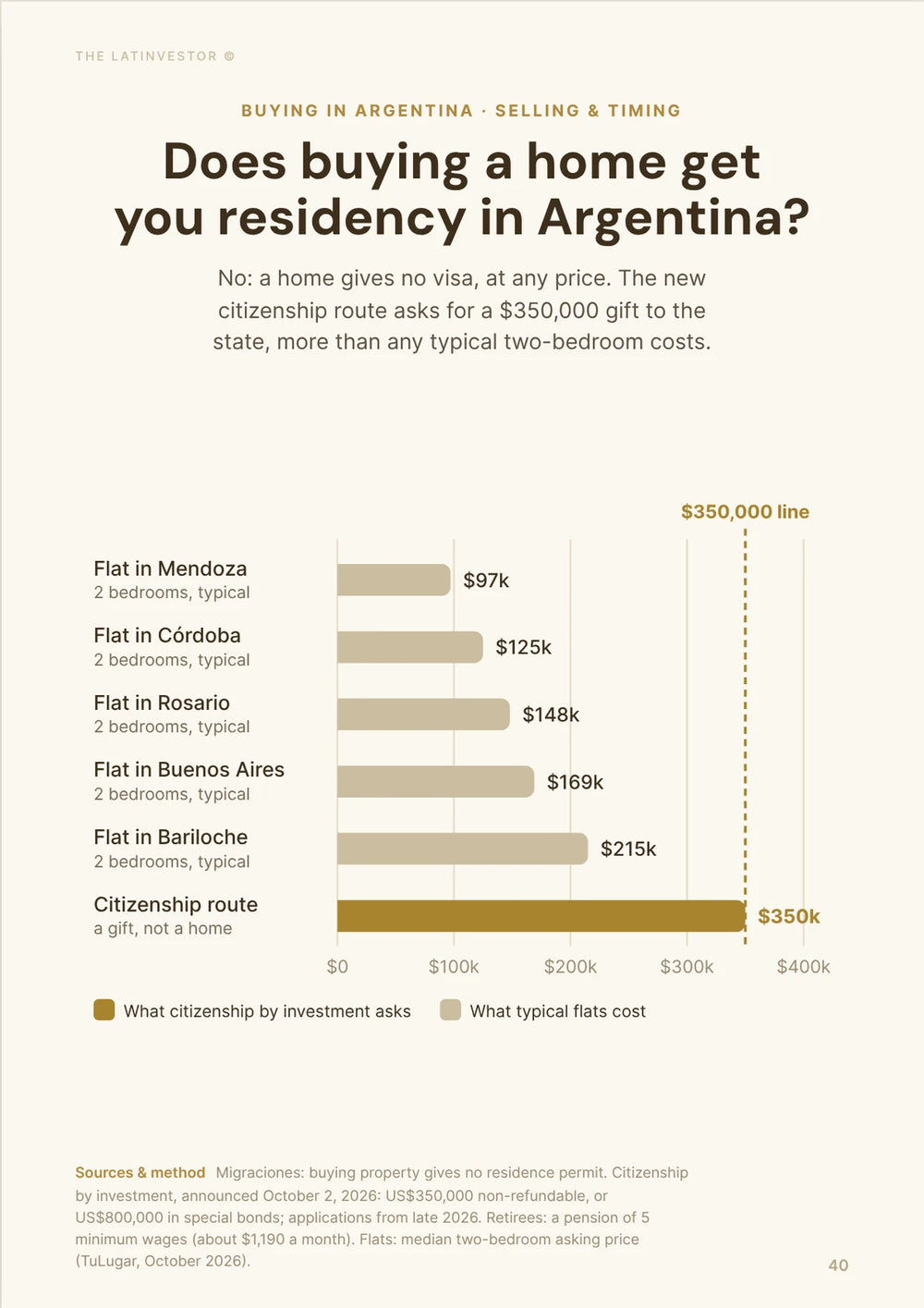
No. Buying property in Argentina does not currently give a foreign owner automatic residency.
Argentina’s immigration system uses separate residence categories. Simply putting a buyer’s name on the title of a Buenos Aires apartment does not create a golden visa or automatic permanent-residence right.
There are two routes worth knowing. Argentina gives temporary residence to rentistas who live off income from assets they own, and to pensionados with a regular foreign pension. Both require at least five times the Argentine minimum monthly wage, and rental income has to arrive through an authorized bank. The property helps only as a source of that income.
Owning property and qualifying for residence remain separate questions. A foreigner may own Argentine real estate while living abroad, and a property-related income stream may sometimes help with an immigration application. The purchase itself does not grant the status.
This is especially relevant for buyers coming from countries where real-estate investment is marketed as a direct residency program. Argentina currently works differently.
Do foreigners pay a special tax just for buying Argentine property?
There is no general national foreign-buyer surcharge simply because the purchaser is foreign.
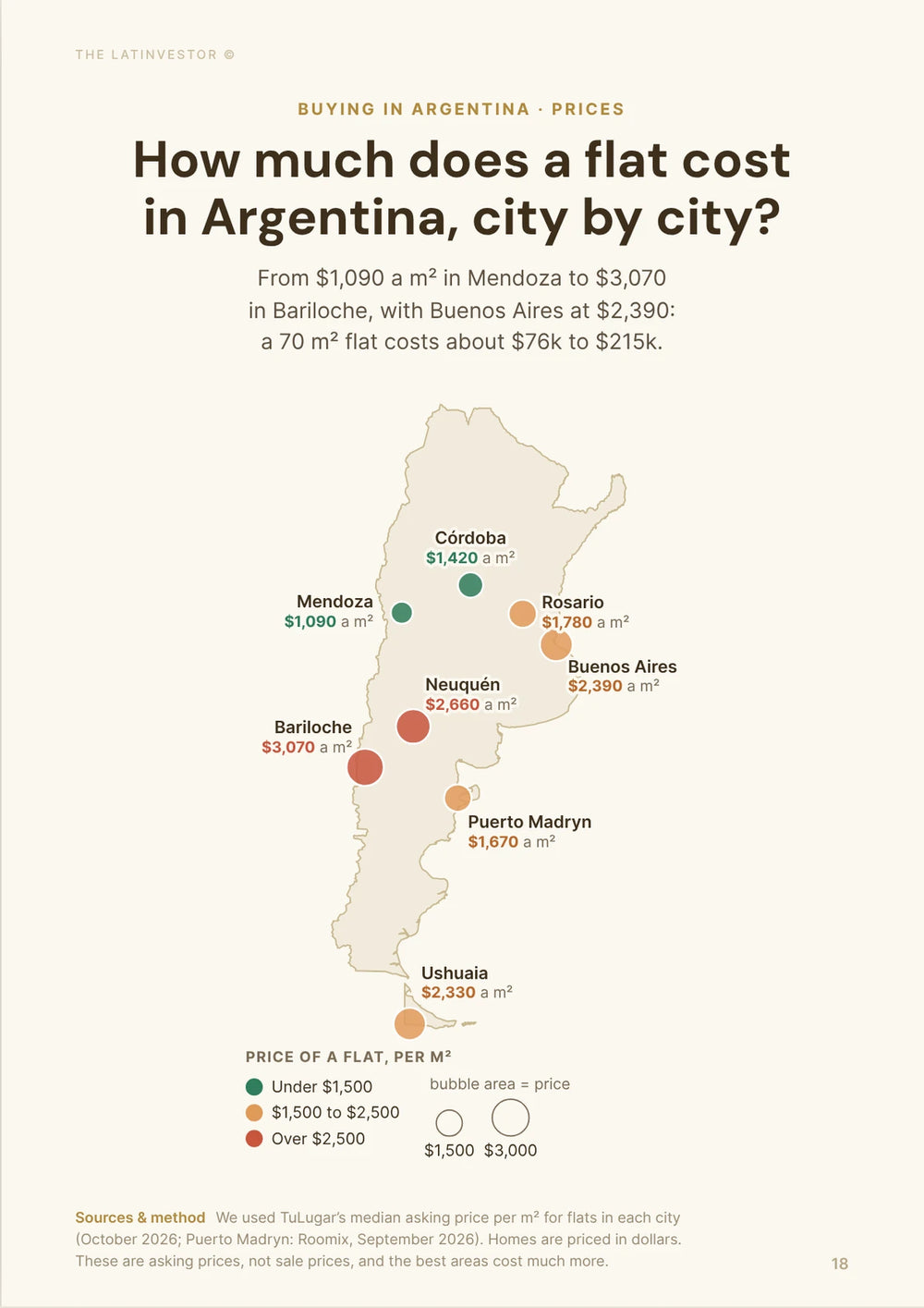
Buying still costs money, and it varies by province. In Buenos Aires City the stamp tax is 2.7% up to ARS 226.1 million of taxable value (about USD 146,000) and 3.5% above, usually split between buyer and seller. Córdoba charges 1% and Mendoza 2%. The 1.5% ITI transfer tax was abolished in July 2024.
Some exemptions do depend on the buyer. Buenos Aires City exempts a sole permanent family home up to ARS 226.1 million, but a non-resident buying a second home or a rental unit pays the full rate.
Add the notary (1% to 2% plus 21% VAT), certificates and registry (0.2% to 0.4%) and the buyer's agent (3% to 4% plus VAT). In Buenos Aires City that comes to about 6.4% to 9.4% of the price with an agent, and 2.8% to 4.6% without one.
What we do not see is a tax whose only trigger is being foreign. The foreign-specific costs show up later, on rent, and in legal work when the property is rural or in a border zone.
Which Argentine properties are most complicated for foreigners to buy?
Large rural estates, sensitive waterfront land and properties in border-security areas deserve far more caution than normal city apartments.
A Buenos Aires apartment usually keeps the analysis fairly narrow: confirm title, identity, taxes, building issues and the mechanics of the closing.
A rural property opens several more questions at once. We need to know its legal classification, exact surface area, the applicable equivalent-hectare limit, current foreign ownership in the local jurisdiction, how much land the buyer already owns and whether buyers of the same nationality are close to their quota.
Patagonia can combine several of those issues. One property might be rural, border a major permanent lake and also fall within a border-security zone. In that situation, checking only the 1,000-hectare rule would miss most of the legal problem.
Border provinces such as Mendoza, Misiones, Jujuy and Salta can create similar overlaps. Even relatively modest properties can require closer inspection because the map matters.
For foreigners, complexity rises much faster with geography than with the purchase price itself.
| Example purchase | Foreign ownership difficulty | Why |
|---|---|---|
| Apartment in Palermo | Low | Ordinary urban property |
| House in central Córdoba | Low | Ordinary urban property |
| Commercial unit in Rosario | Low | Ordinary urban property |
| Vineyard outside an urban boundary | Medium to high | Rural-land rules may apply |
| Large Pampas farm | High | Quotas and surface limits |
| Patagonian lake estate | High | Rural and water restrictions can overlap |
| Rural property near Chile | High | Rural and border rules can overlap |
Can foreigners buy property in Argentina as easily as Argentines?
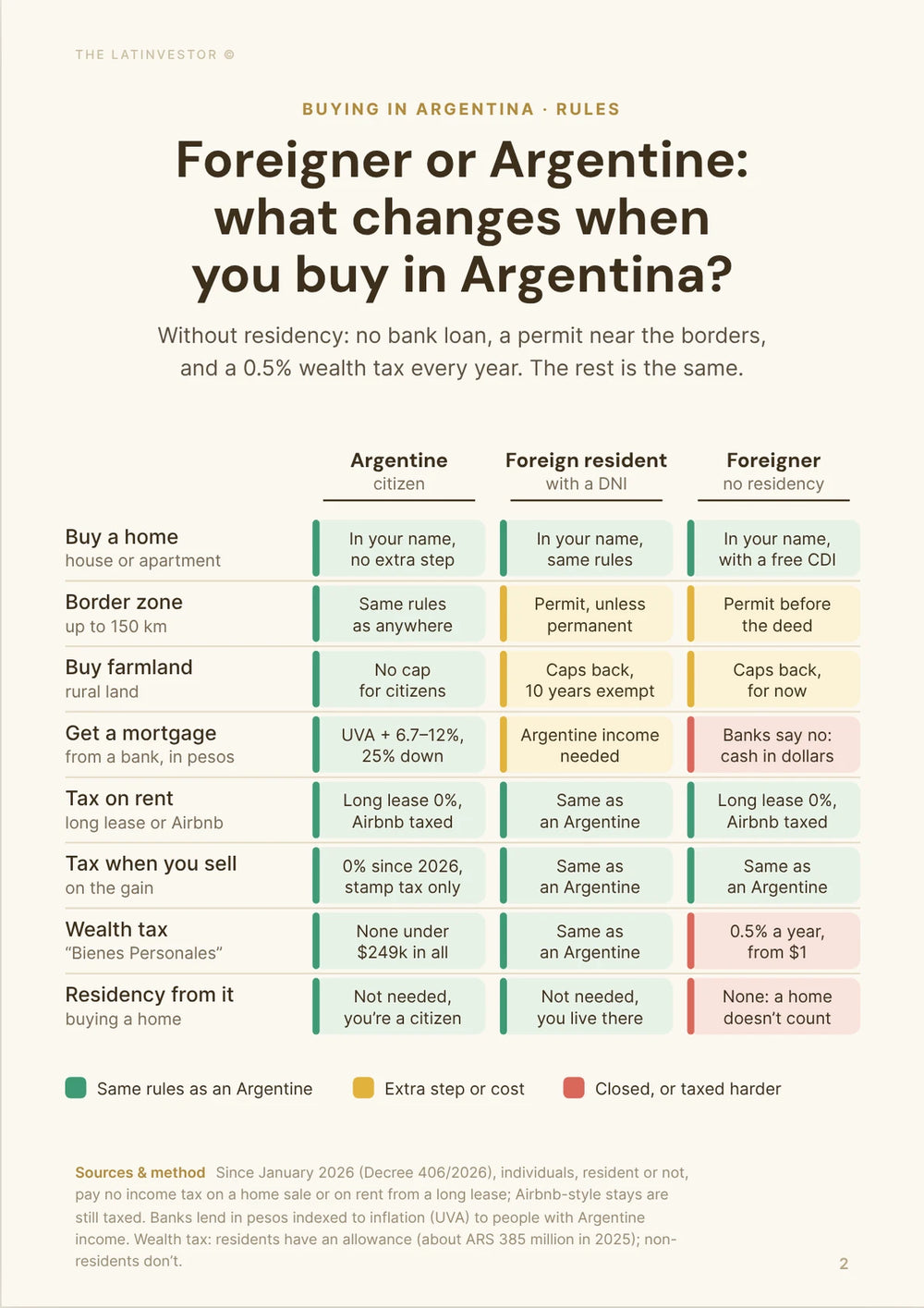
For ordinary urban property, foreigners get very close to the same ownership position as Argentines, although a non-resident will usually have a few extra administrative steps.
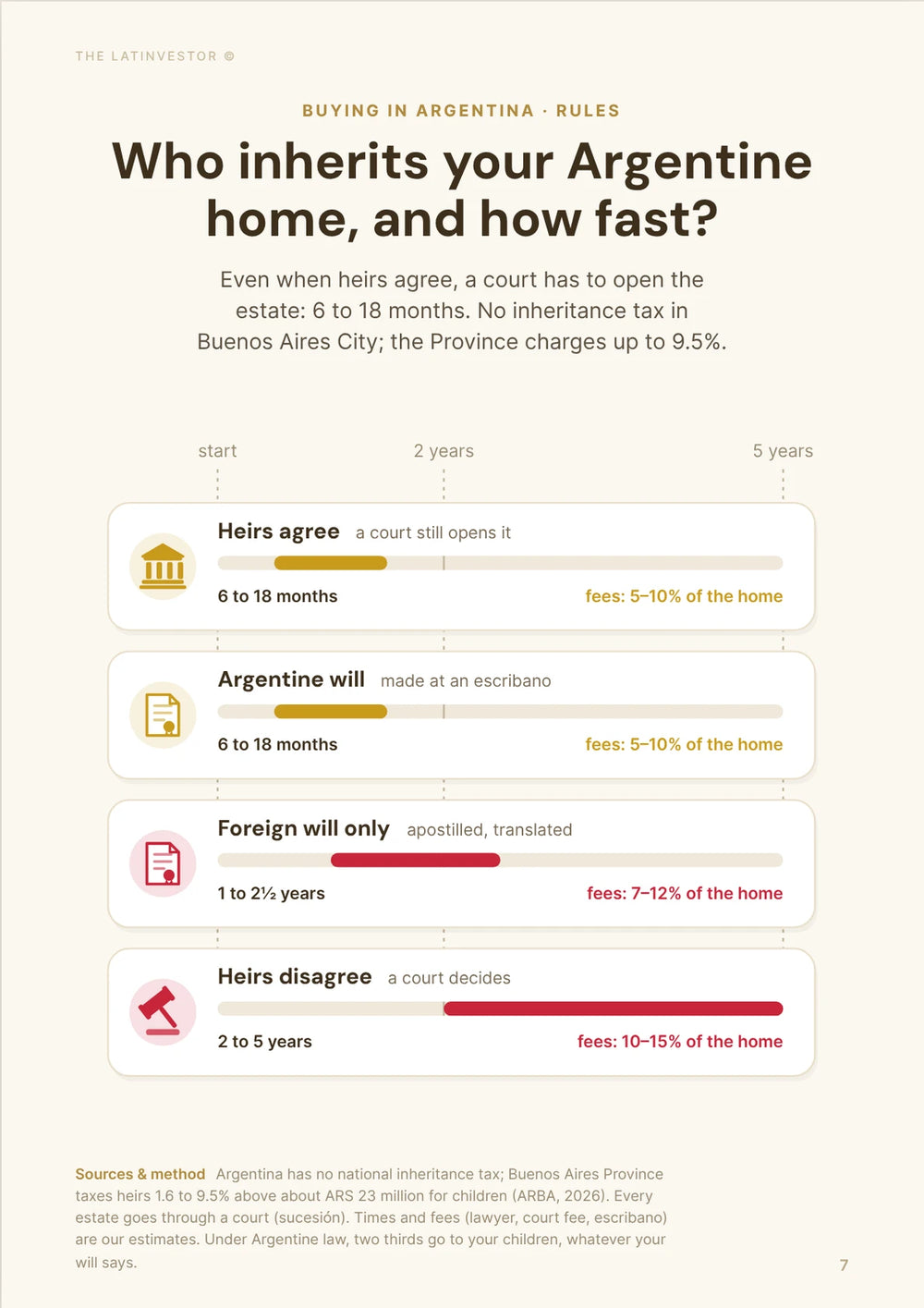
The underlying right is strong. Foreigners can own the property outright, sell it later, inherit it and use Argentina’s ordinary property-registration system. They do not need an Argentine partner to hold the title, and permanent residency is unnecessary.
The differences mostly appear around identification and particular categories of land. A foreign non-resident may need a CDI, while an Argentine already has the local identifiers used throughout the system. Rural property creates a much bigger gap because Argentine buyers generally do not face the foreign-ownership quotas imposed by Law 26.737.
Border-security areas can also create additional work for foreign purchasers, subject to the exemptions discussed above.
Calling Argentina completely nationality-blind would go too far. For the apartment market, however, the practical gap is much smaller than many foreign buyers expect.
Can you get Argentine citizenship by investing in 2026?
Not by buying a home. On 2 October 2026 the Economy Ministry announced a citizenship-by-investment programme, with applications slated to open in the fourth quarter of 2026.
The entry ticket is a non-refundable contribution of USD 350,000 to the Treasury, or USD 800,000 in a special government bond. A USD 350,000 apartment in Palermo does not count.
The detailed rules were not out yet when we checked on 22 October 2026. Wait for the implementing text before you pay anyone selling "Argentine citizenship packages", and keep the property purchase as a separate decision.
How do foreigners pay for an Argentine property in 2026?
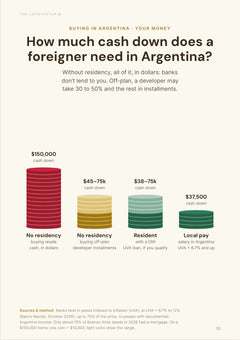
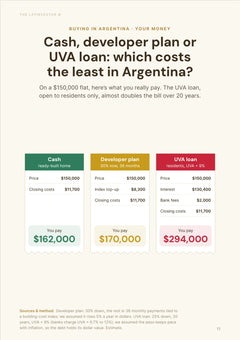
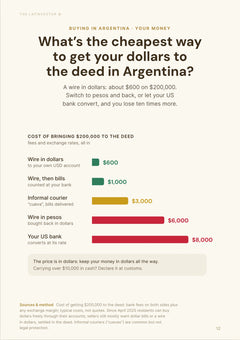
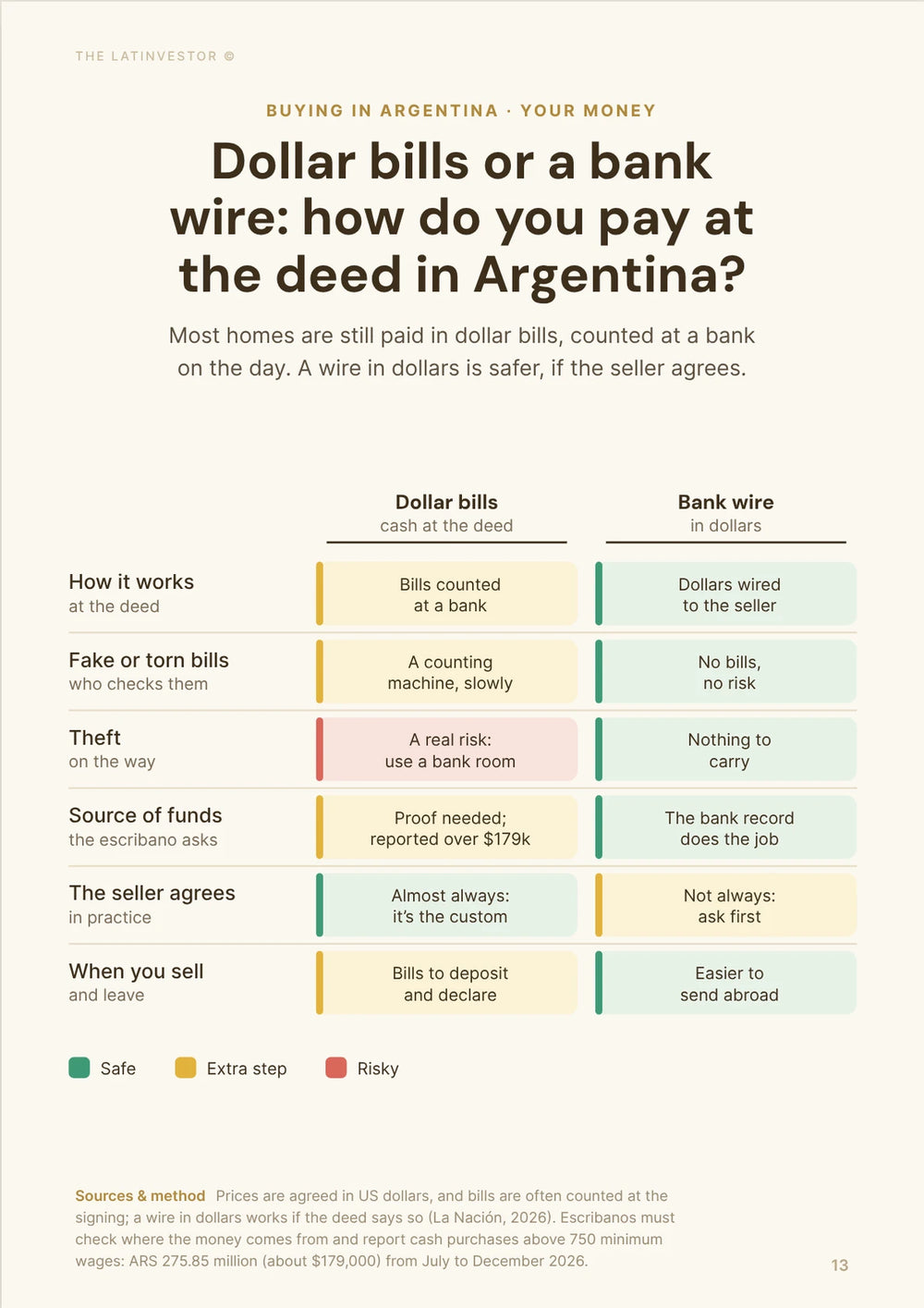
In dollars, and mostly with their own money. Homes are priced in US dollars, and a contract written in dollars has to be paid in dollars (Civil Code, articles 765 and 766). Payment is either cash counted at the deed signing or a bank transfer that the deed spells out.
Mortgages are not really an option for a foreigner. The UVA loans from Banco Nación and Banco Ciudad (from about UVA + 6.5%) are for documented local earners, and we found no bank offering them to a non-resident with only foreign income. Mortgage lending has slowed anyway: 14,237 loans in January to July 2026, against 25,160 a year earlier (BCRA via Tejido Urbano).
Cash deals above ARS 275.85 million (about USD 178,000) in the second half of 2026 are reported to the financial intelligence unit (UIF). The notary and bank will ask where the money comes from, so have your bank statements and transfer records ready.
The exchange rate is less of a trap than it used to be: the official, MEP and blue rates were within 2% of each other in October 2026, around ARS 1,550 per dollar. Pesos have been strong in real terms, so Argentina got more expensive in dollars this year.
What taxes does a foreign owner pay after buying?
Holding is fairly light, renting out is where non-residents pay more than locals. Since 1 January 2026, long-term rent to a tenant's permanent home is exempt from income tax for resident landlords (Decree 406/2026). The decree does not say whether non-residents get the same exemption (Estudio Piccinini, 29 June 2026).
Until a tax adviser confirms it, budget the standard withholding: 35% on a presumed 60% net, so 21% of gross rent. Airbnb and other short stays are not covered by the exemption, and add provincial gross-income tax.
Wealth tax (Bienes Personales) is paid at about 0.5% a year of the property's value through a local representative, with no allowance for non-residents. On a USD 150,000 apartment that is about USD 750 a year.
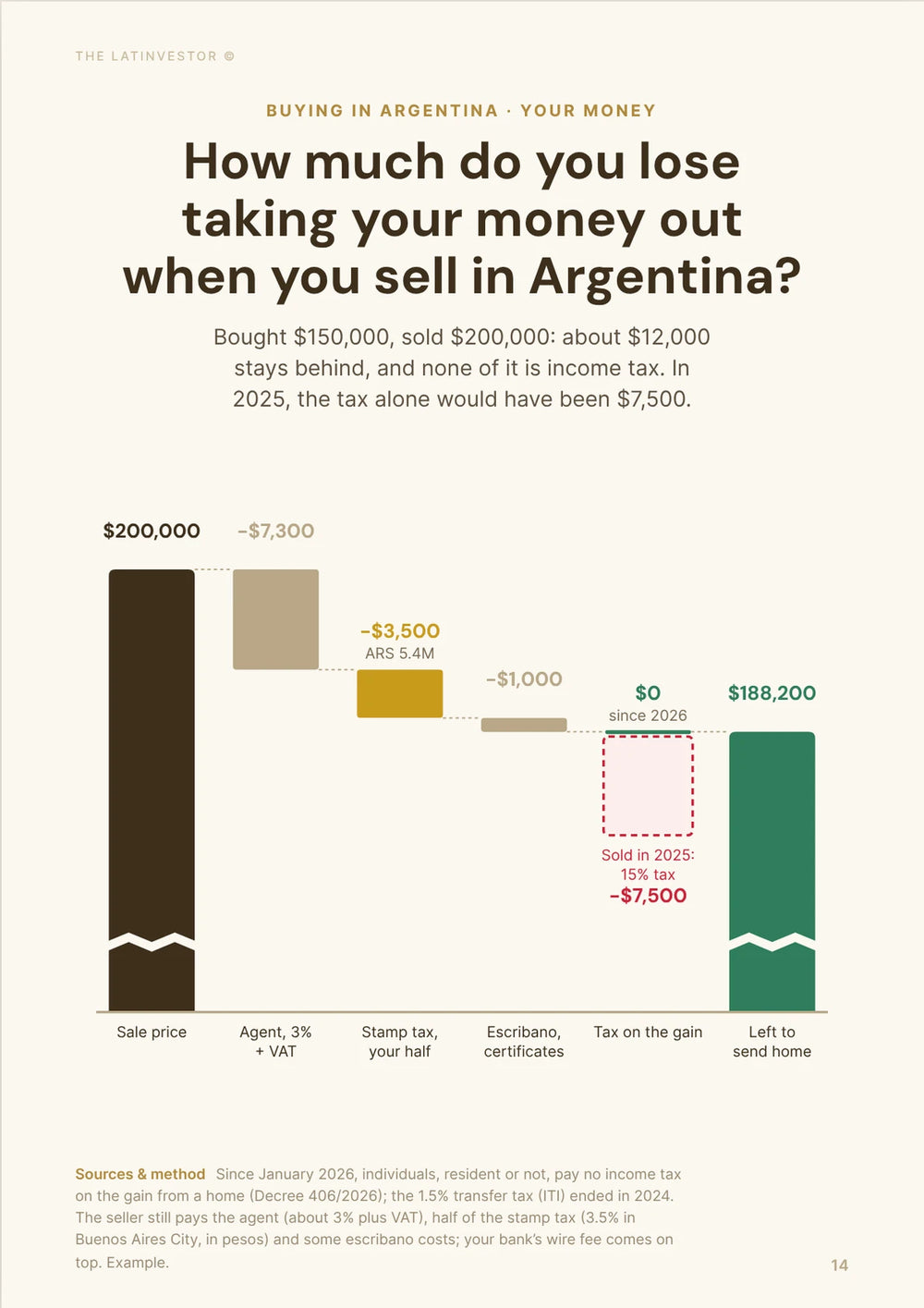
Selling is now easier: individuals, residents or not, pay no income tax on gains from property sales since 1 January 2026 (Law 27.802 and Decree 406/2026). Companies are not covered, which is one more reason to buy a city apartment in your own name.
So, can foreigners buy property in Argentina?
Yes. Foreigners can buy and fully own property in Argentina today, and a normal urban apartment or house is generally open to a non-resident foreign buyer.
The broad legal right is unusually solid because Argentina’s Constitution expressly allows foreigners to possess, buy and sell real estate. The current administrative system backs that up: non-residents can obtain the identification needed to acquire registrable property, and Argentina’s property-registration rules expressly accommodate foreign owners.
Rural land is where the easy answer stops. Since the Supreme Court's provisional decision of 9 October 2026, Law 26.737 applies again while the case goes back to Bariloche: it caps foreign rural ownership nationally and locally, limits individual holdings, controls concentration by nationality and restricts certain waterfront land.
The latest official numbers sharpen that distinction. Foreigners hold only about 5% of Argentina’s rural land overall, well below the 15% national limit, while more than 30 departments already exceed the 15% local threshold. A rural deal can therefore be blocked by its location even though Argentina as a whole is nowhere near its ceiling.
Our final judgment is straightforward: yes, foreigners can buy property in Argentina, and for ordinary urban real estate the country remains quite open. Foreign buyers only need to stop treating that broad permission as universal once they move into rural land, sensitive waterfront property or designated border areas.
Our methodology
This article explains what a foreigner can buy in Argentina, where that right stops (rural land, waterfront land, border security zones), and what a non-resident buyer pays and needs: paperwork, payment, residency and taxes.
The ownership rules come from primary law and the agencies that apply it: the Constitution, the Property Registry Law, Law 26.737 and its implementing decrees, the Rural Lands Registry's procedures and its provincial and departmental data (updated August 2025), and the Previa Conformidad procedure for border zones. The status of the rural land law comes from Chequeado's coverage of the Supreme Court decisions of 29 September and 9 October 2026.
Taxes and costs come from Decree 406/2026 and Law 27.802, Estudio Piccinini on non-resident landlords, ARCA for the CDI and Bienes Personales, the Colegio de Escribanos de la Ciudad de Buenos Aires for 2026 stamp tax rates, and La Nación for notary and agent fees. Residency and citizenship come from the Dirección Nacional de Migraciones and the government's 2 October 2026 announcement; mortgage figures from the BCRA via Tejido Urbano.
We checked these figures in October 2026. Peso amounts are converted at about ARS 1,550 per US dollar (official and MEP rates were within 1% of each other on 22 October 2026, the blue rate about ARS 1,570), and euro amounts at about ARS 1,740 per euro.
Where we had no direct figure, we said so: there is no official data on foreign buyers' share of home purchases, the rent-tax treatment of non-resident landlords is not confirmed, the citizenship programme's implementing rules were not published, and the rural land case is not finally decided. Treat this as a guide, not legal or tax advice.
Key sources used for this analysis include Article 20 of the Argentine Constitution, Property Registry Law 17,801, Rural Lands Law 26.737, Decree 274/2012, Decree 820/2016, Decree 70/2023, Chequeado on the October 2026 Supreme Court decision, the Rural Lands Registry's legal guidance, its foreign-buyer authorization procedure, provincial data, departmental data, the CDI procedure, the Previa Conformidad procedure, Resolution 166/2009, Decree-Law 15.385 on border security zones, the rentista residence procedure, the pensionado residence procedure, the citizenship-by-investment announcement, Decree 406/2026, Estudio Piccinini on non-resident landlords, ARCA on Bienes Personales, Colegio de Escribanos on 2026 stamp tax rates, Buenos Aires City stamp tax guidance, La Nación on deed costs (April 2026), and Ámbito on exchange rates.