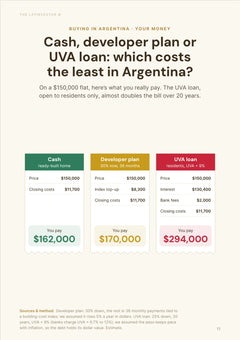
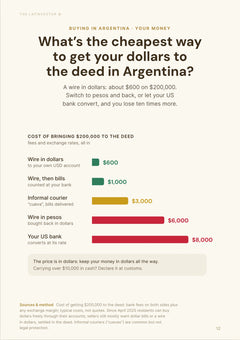
Summary
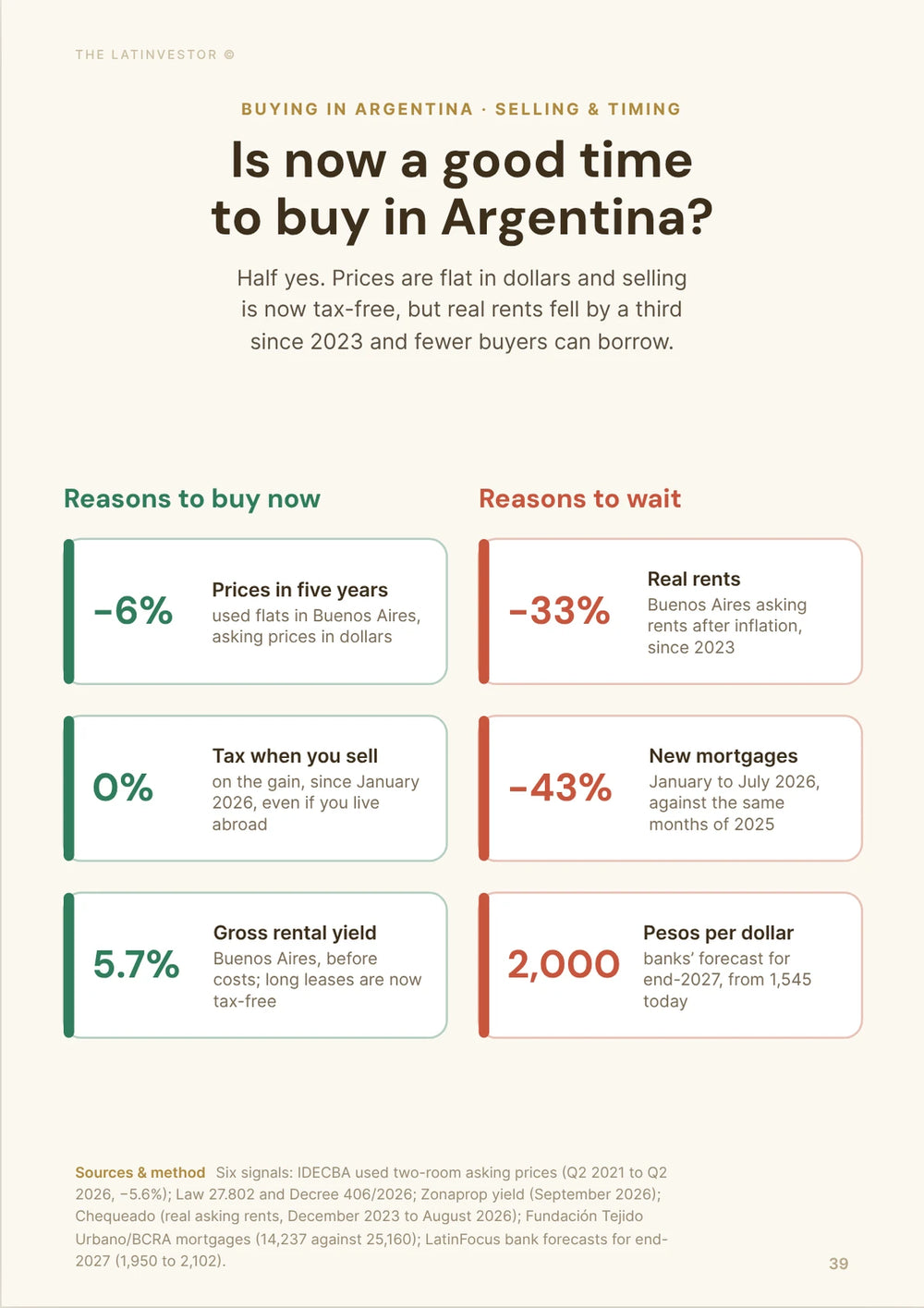
Yes, for a patient buyer who negotiates: Mendoza apartments ask about USD 1,092 per square meter in the city in October 2026, a long lease earns about 6% to 8% gross, and listings for sale are up 19.1% in a year, so you can push on price.
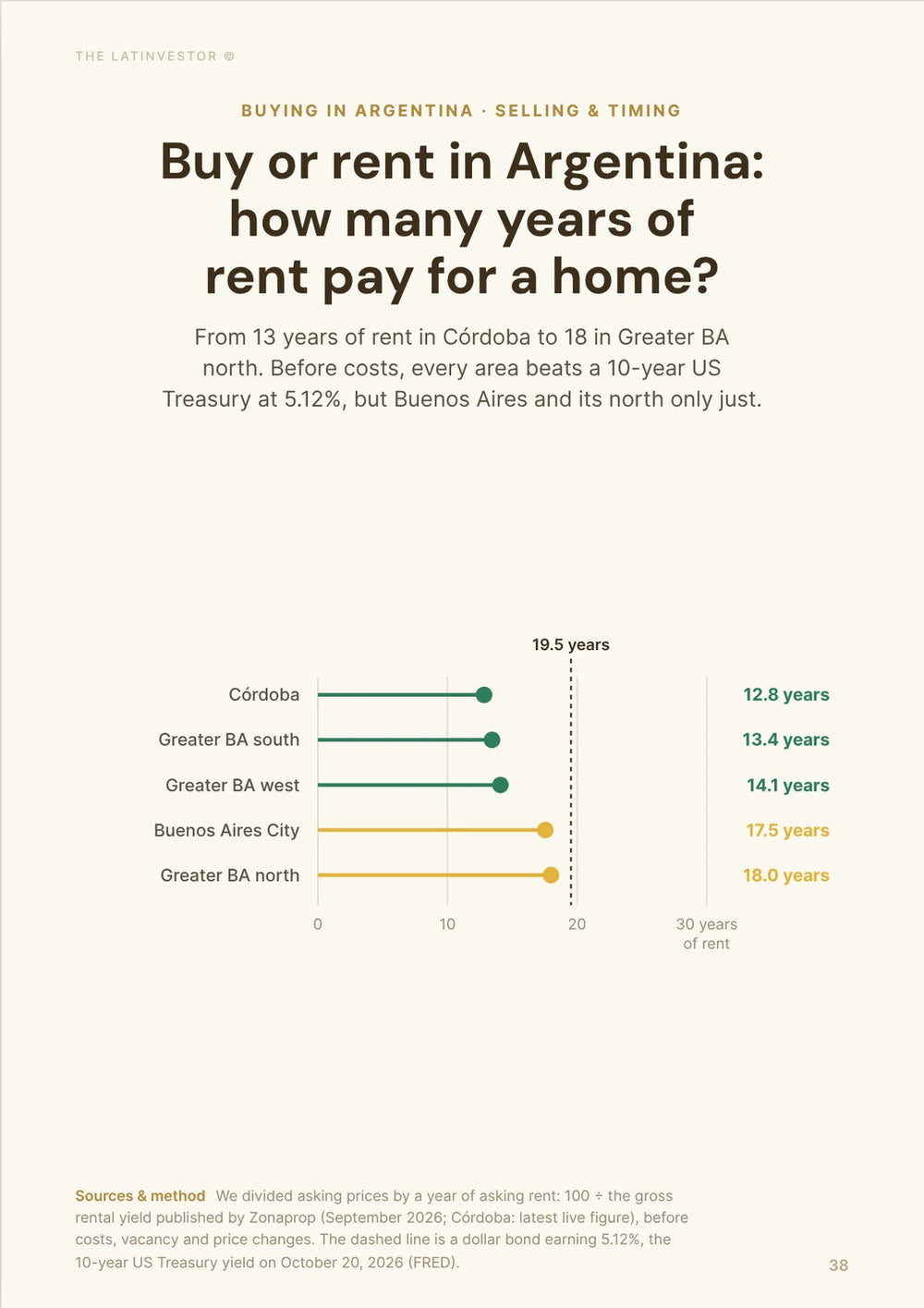
Prices are not in bubble territory: a city 1-bedroom costs about 12.6 years of asking rent and a 2 to 3-bedroom about 16.6 years.
A big drop looks unlikely because rebuilding is expensive: a mid-quality house costs about ARS 2.1 million per square meter to build in October 2026 (USD 1,360), more than the city's median resale asking price.
A sharp jump looks unlikely too: provincial apartment asking prices rose 6.4% in dollars in the year to September 2026, while stock for sale grew faster.
Mendoza is a buyer's market for ordinary or overpriced homes, with 19.1% more listings for sale over 12 months, though good apartments in Quinta Sección, Bombal and central Godoy Cruz still go quickly.
Against local incomes, homes are expensive: a USD 97,000 city 2-bedroom equals about 400 monthly minimum wages.
The Metrotranvía extension toward Godoy Cruz and Luján de Cuyo was about 80% built in September 2026, which helps nearby streets more than the whole market.
Foreigners can buy urban homes freely, but since 9 October 2026 foreign-ownership limits on rural land, vineyards included, apply again while the Supreme Court case goes on.
Finding a tenant is harder than a year ago: apartment rental listings rose 29% from January to August 2026, and rents rose less than inflation.
Sales are holding up: Mendoza recorded 8,334 property deeds from January to July 2026, only 4.8% fewer than the record start of 2025.
Resale works for practical apartments, and a round trip (buying and selling) costs roughly 10% to 13% of the price, so plan on holding at least 3 to 5 years.
Mortgages fell only 13.1% in Mendoza from January to July 2026 (871 loans), much less than nationally, and new state-funded lines capped at UVA+7.5% could help local buyers.
The strong peso makes Mendoza dearer for dollar buyers: building costs rose 33.9% in a year, while the dollar gained only about 4.9% since January.
Bottom line: it is a reasonable time to buy a 1 or 2-bedroom in Ciudad, Quinta Sección, Bombal, Godoy Cruz or Guaymallén at or below the area median, aim for about 6% gross, and budget 21% of gross rent for tax if you are a non-resident.

What do prices, rents and credit say about buying in Mendoza now?
Do real estate prices look too high in Mendoza in 2026?
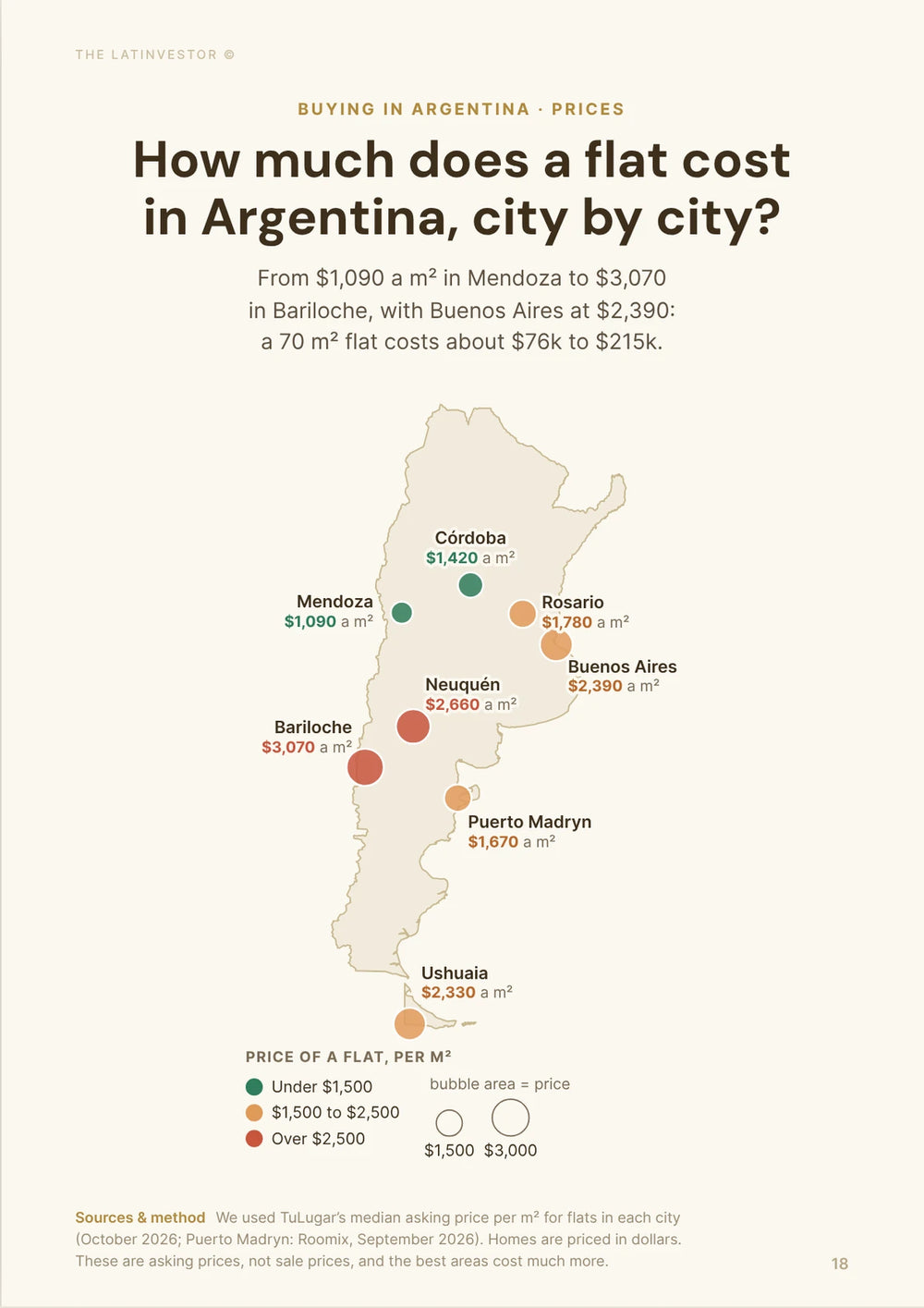
No. In October 2026, the median apartment in the city of Mendoza asks about USD 1,092 per square meter (TuLugar), and the median across the province is about USD 1,173 (InmoUP, September 2026). Godoy Cruz asks about USD 1,200, Guaymallén about USD 867, and only premium spots such as Quinta Sección (USD 1,580) and Chacras de Coria (USD 2,250) go well above that.
These are asking prices. With stock up 19.1% in a year, tired or overpriced homes usually sell below the first price, and there is room to negotiate. Mendoza has no closing-price series; in Buenos Aires, deals closed about 4.75% under asking in 2026, and a Mendoza buyer can often aim for more.
The firmest prices are in small, practical apartments in Ciudad de Mendoza, Godoy Cruz and Guaymallén, which rent and resell more easily than large houses.
Does a property price drop look likely in Mendoza in 2026?
A broad drop over the next 12 months looks unlikely. Rents still cover a decent share of the price, and building a mid-quality house costs about ARS 2.1 million per square meter (USD 1,360) before land, more than the city's median resale asking price.
Our base case is flat to mid-single-digit gains in dollars over the next year for normal apartments, after 6.4% over the last 12 months. Overpriced houses and luxury homes could fall, because that is where most of the extra stock sits.
The main risk is national: the IMF cut Argentina's 2026 growth forecast from 3.5% to 2.1% in October, and a new inflation or currency shock would push local buyers who depend on credit out of the market.
That is a risk, not our base case: monthly inflation was 1.9% in September 2026, far from the extreme years, and mortgage credit in Mendoza shrank much less than in the rest of the country.
Could property prices jump again in Mendoza in 2026?
Not across the board. Provincial apartment asking prices rose 6.4% in dollars in the year to September 2026, but the city median barely moved between September and October (USD 1,091 to USD 1,092 per square meter), and there are more homes for sale than a year ago.
Faster gains would need cheaper and easier mortgages. Mendoza has many families and professionals who want to buy but need a loan, so credit is the trigger to watch, not foreign demand.
If that happens, good apartments and well-located family houses would move first, not generic "luxury" projects.
Are we in a buyer or a seller market in Mendoza in 2026?
Mostly a buyer's market. Listings for sale in the province were up 19.1% in the 12 months to September 2026. InmoUP's count between 31 January and 31 August 2026 slipped 1.4%, so the jump came before this year and stock has stayed high since.
Good apartments in Ciudad, Quinta Sección, Bombal and the connected parts of Godoy Cruz are still not abundant, and their sellers give less ground.
You have the most room to negotiate on homes that need work, sit above the area median per square meter, or have been listed for months. Compare the asking price with the median of the area before you make an offer.
Are homes overpriced, or fairly priced in Mendoza in 2026?
Are homes overpriced versus rents or versus incomes in Mendoza in 2026?
Against rents, Mendoza is fairly priced. A 50 m² city 1-bedroom at the median price (about USD 54,600) rents for about ARS 558,000 a month (USD 360), which is about 12.6 years of rent, or 7.9% gross. A 2 to 3-bedroom at about USD 97,000 rents for about ARS 754,000 (USD 485): about 16.6 years, or 6% gross.
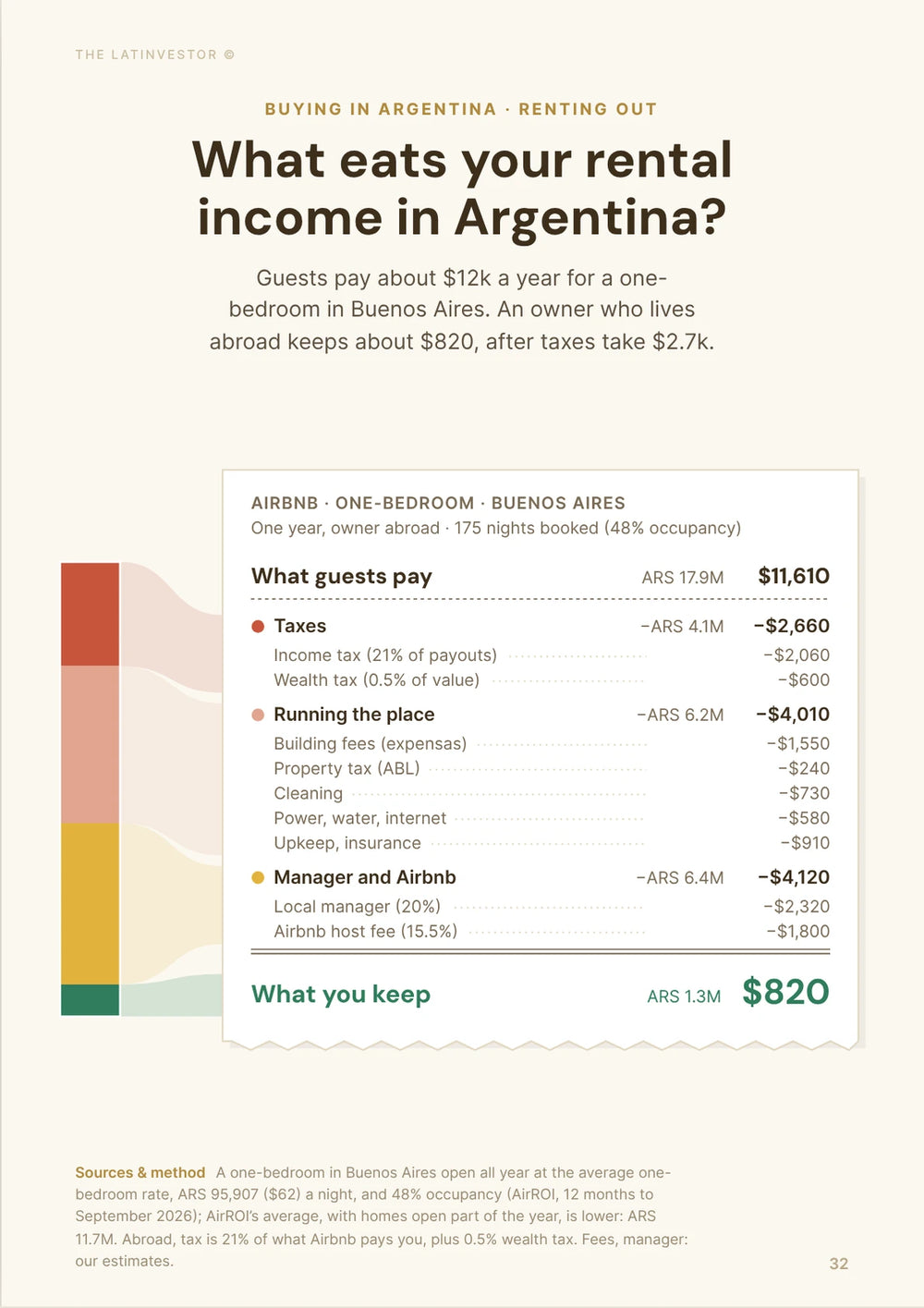
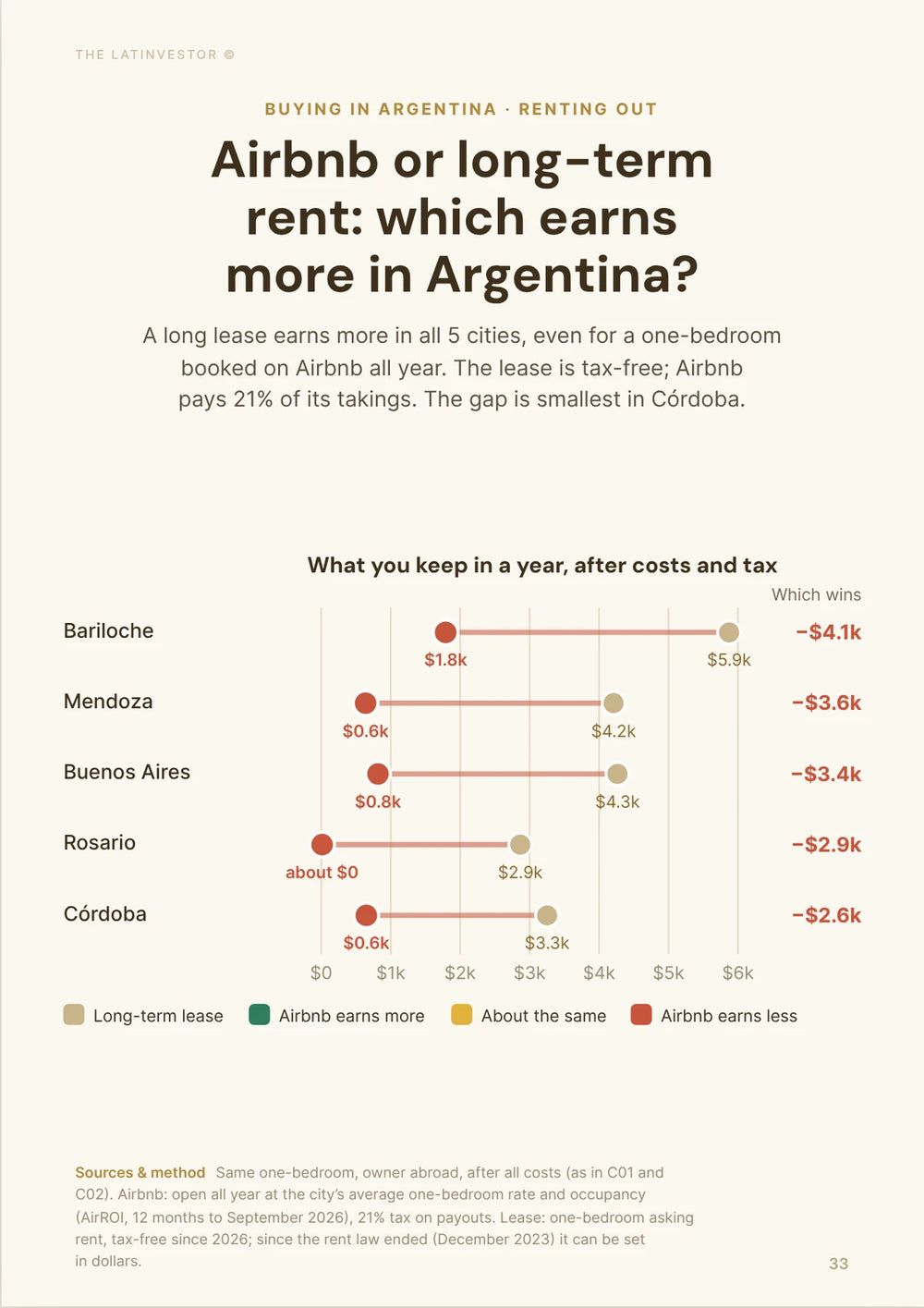
These are asking rents over asking prices, before empty months, costs and tax. A non-resident landlord should plan on about 21% of gross rent in income tax, because the 2026 exemption for long leases is not confirmed for non-residents.
Against local incomes, homes are expensive, because property is priced in dollars and wages are paid in pesos. A USD 97,000 2-bedroom is about ARS 150,000,000, around 400 times the monthly minimum wage of ARS 367,800. Most local buyers need savings, family help or a mortgage.
Are home prices above the long-term average in Mendoza in 2026?
There is no long official price series for Mendoza, so nobody can give an honest percentage. What we can see: asking prices are rising again in dollars (+6.4% in the year to September 2026 for provincial apartments) after the weak 2020 to 2023 years, but they are still below what it costs to build.
The Centro de Ingenieros de Mendoza puts an economy house (61 m²) at about ARS 1.62 million per square meter in October 2026 (USD 1,050) and a mid-quality house (136 m²) at about ARS 2.1 million (USD 1,360), land not included. The city's median apartment asks USD 1,092 per square meter, land share included.
When a resale home costs less than building a new one, prices have a floor. That is the case for most good existing apartments, but not for overpriced houses or "luxury" units in ordinary streets.
What local changes could move prices in Mendoza in 2026?
Are big infrastructure projects coming to Mendoza in 2026?
The one that matters is the Metrotranvía (light rail) extension toward Godoy Cruz, Luján de Cuyo and the airport. In September 2026, works were about 80% complete overall, and the Godoy Cruz section was over 90%.
The effect on prices will be slow and local, mostly within walking distance of the new stops. The Luján section still faced land possession disputes in September 2026, which can delay opening, so do not pay a premium today for a station that is not running.
Are zoning or building rules changing in Mendoza in 2026?
Yes, slowly. The provincial government has pushed a bill to unify building codes across the province, and the City of Mendoza updated its digital zoning map in May 2026. We could not confirm whether the provincial bill has passed.
Clearer rules help projects get started, which adds supply over time. They will not flood Mendoza with cheap new homes: building costs rose 33.9% in pesos over the year to October 2026, and new projects still have to sell above the price of decent resale apartments.
The areas most affected are the parts of Ciudad de Mendoza, Godoy Cruz, Guaymallén, Maipú and Luján de Cuyo where developers need clear height, use, parking and permit rules before buying land or renovating buildings.
Are foreign-buyer or mortgage rules changing in Mendoza in 2026?
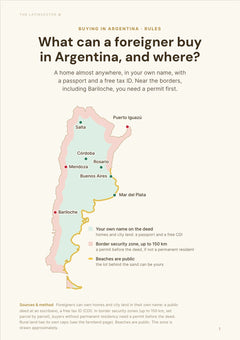
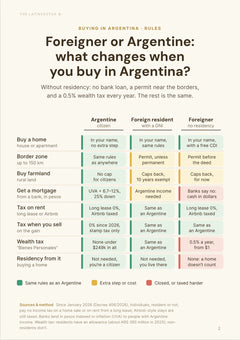
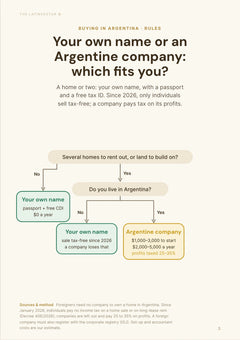
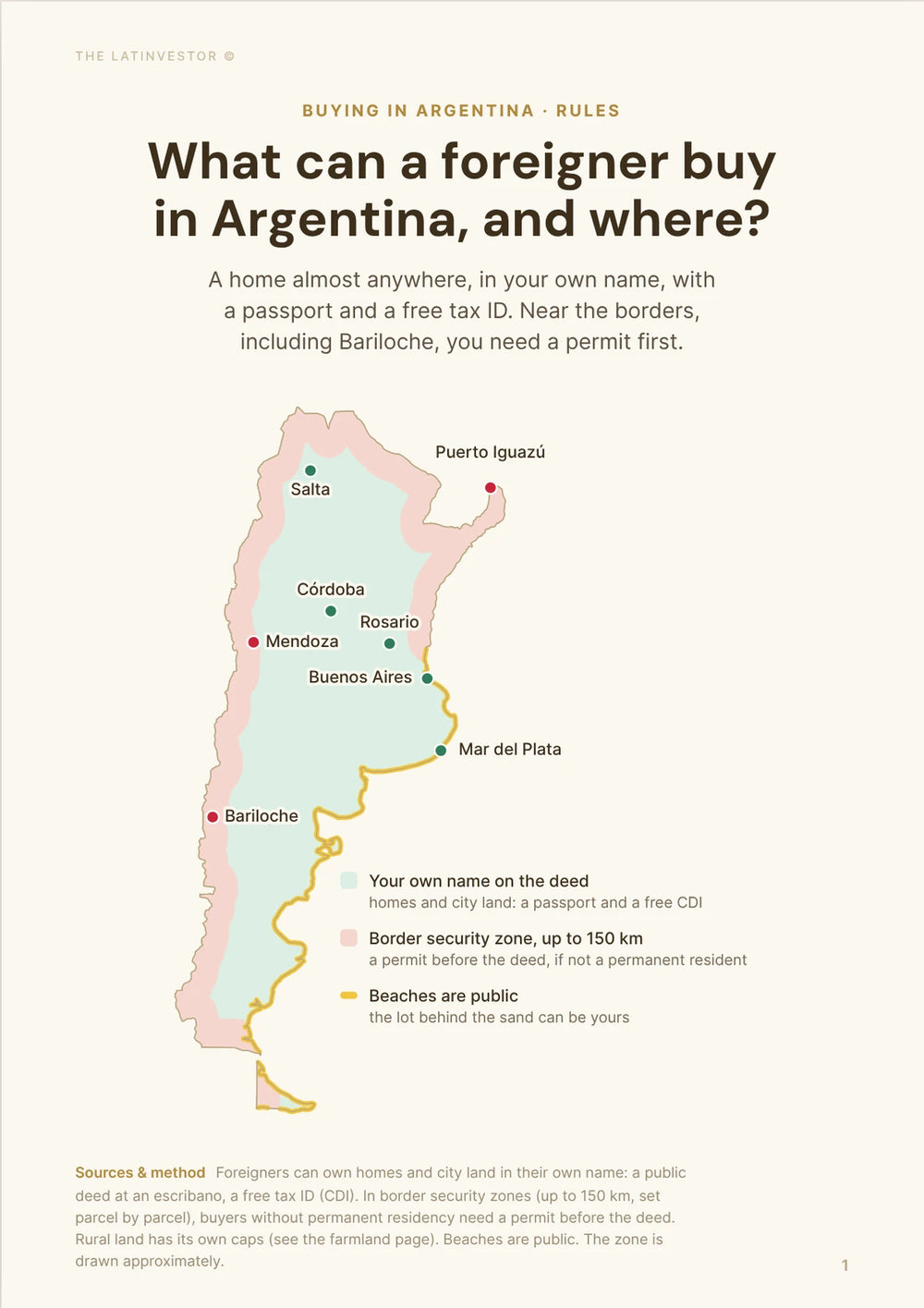
For apartments, houses and urban lots, nothing changed: foreigners buy on the same terms as Argentines. You need a tax ID (CDI, free, up to 30 business days for non-residents), and buying gives you no residency.
Rural land is different. On 9 October 2026, the Supreme Court provisionally suspended the repeal of the rural land law (Ley 26.737), so foreign-ownership limits on rural land, vineyards included, apply again until a final ruling. Some land in Mendoza's western departments can also fall inside a border security zone that needs separate authorization.
On mortgages, the change is for locals: new lines funded by the state pension fund (FGS) are capped at UVA+7.5% over at least 15 years. Non-residents with only foreign income have no confirmed access to UVA mortgages, so plan on paying cash, in dollars if the contract is in dollars.
Will it be easy to find tenants in Mendoza in 2026?
Is the renter pool growing faster than new supply in Mendoza in 2026?
No, not in 2026. Apartment rental listings tracked by InmoUP rose 29% between January and August 2026, and house listings rose 58%. Asking rents for apartments rose only 4.6% to 12.8% over the same months, while inflation was about 21.3%.
Demand is still broad: students, health workers, young professionals, tourism workers and families who cannot yet buy. But tenants now have choice, and landlords compete on price and condition.
Good, correctly priced apartments in Ciudad, Godoy Cruz and Guaymallén still let much more easily than large or expensive houses.
Are days-on-market for rentals falling in Mendoza in 2026?
Probably not, given 29% more apartments for rent. No source publishes days on market for Mendoza rentals; from listings, a correctly priced apartment in a good area still usually rents within about a month, while overpriced units and large houses can wait two months or more.
The gap between areas is clear: apartments near Quinta Sección, Sexta Sección, Centro, Bombal and good parts of Godoy Cruz go first. The rest wait for a price cut.
What lets a unit fast in Mendoza is simple: a realistic rent, manageable building fees and a location near work, universities or hospitals.
Are vacancies dropping in the best areas of Mendoza in 2026?
Not in 2026. With rental stock up sharply, empty months are more likely than a year ago, even if vacancy stays low in Quinta Sección, Sexta Sección, Centro, Bombal, Arístides, Godoy Cruz near Palmares and well-connected parts of Guaymallén.
No source measures vacancy in Mendoza. In your numbers, count at least one empty month a year for a good apartment (about 8% of gross rent), and more for a large house or a luxury home.
Tenants will accept an older building if it is close to work, universities, hospitals, Parque San Martín, shops or good bus and tram lines.
Am I buying into a tightening market in Mendoza in 2026?
Is for-sale inventory shrinking in Mendoza in 2026?
No. Listings for sale in the province were up 19.1% in the 12 months to September 2026; between 31 January and 31 August 2026, InmoUP's stock count dipped only 1.4%.
The stock of good, rentable and correctly priced homes is tighter than the headline count. Owners of good apartments are not under pressure to sell, while buyers chase the same practical areas in Ciudad, Godoy Cruz, Guaymallén and Luján de Cuyo.
Homes that qualify for a mortgage are a useful sign: they rose 1.3% to 2,136 listings, 24.56% of the stock, with the biggest increases in Luján de Cuyo, Maipú and Las Heras.
Are homes selling faster in Mendoza in 2026?
About as fast as in 2025, which was a strong year. Mendoza recorded 8,334 purchase deeds from January to July 2026, 4.8% fewer than the 8,758 of the same months of 2025, but 18.4% more than in 2024 and 30.9% more than in 2023.
There is no official selling-time series. From listings, a fairly priced apartment usually sells in about 2 to 4 months, while luxury and unusual properties can sit for many months.
Are new listings slowing down in Mendoza in 2026?
Overall, no: stock is high, and it has barely moved since January. But fresh, well-priced listings stay scarce in the most liquid areas.
Seasons matter less than pricing: many sellers still do not know where to price in dollars when the peso is strong and costs in pesos keep rising.
Some owners of rentable apartments also prefer to keep collecting rent rather than accept a lower dollar price, which keeps the best units off the market.
Is new construction failing to keep up in Mendoza in 2026?
Mid-market and affordable new supply is struggling. Nationally, construction activity was down 4.4% year on year in August 2026 (INDEC).
Costs keep climbing: the Centro de Ingenieros de Mendoza puts an economy house at about ARS 1.62 million per square meter in October 2026 (USD 1,050), up 1.89% in the month and 33.86% in a year, and a mid-quality house at about ARS 2.1 million (USD 1,360).
Land, labour, materials, taxes and financing make it hard to build new homes below the price of decent resale apartments, which supports good existing stock.
Will it be easy to sell later in Mendoza in 2026?
Is resale liquidity strong enough in Mendoza in 2026?
Yes, for mainstream homes priced realistically. More than 8,000 purchase deeds in seven months of 2026 show a deep local market.
From listings, a good apartment usually resells in about 2 to 4 months, a family house in about 3 to 6 months, and a luxury home can take much longer.
What helps resale most is daily usefulness: a manageable size, a building in good condition, services nearby, access to Ciudad, Godoy Cruz, Guaymallén, Maipú or Luján de Cuyo, and papers clean enough for a buyer's mortgage.
Is selling time getting longer in Mendoza in 2026?
For the right property, no. For an overpriced one, yes: with 19.1% more homes for sale than a year earlier, buyers compare and negotiate in dollars.
Our working ranges are about 2 to 4 months for good apartments, 3 to 6 months for normal houses, and 9 to 18 months for unusual or luxury homes.
A seller who prices 15% to 25% above the area median should expect to wait much longer, or cut.
Is it realistic to exit with profit in Mendoza in 2026?
Yes, for a buyer who avoids overpriced listings and holds long enough. Plan on 3 to 5 years at least, so rent and gradual price gains can cover transaction costs.
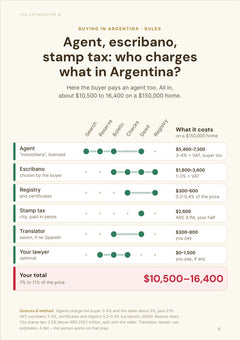
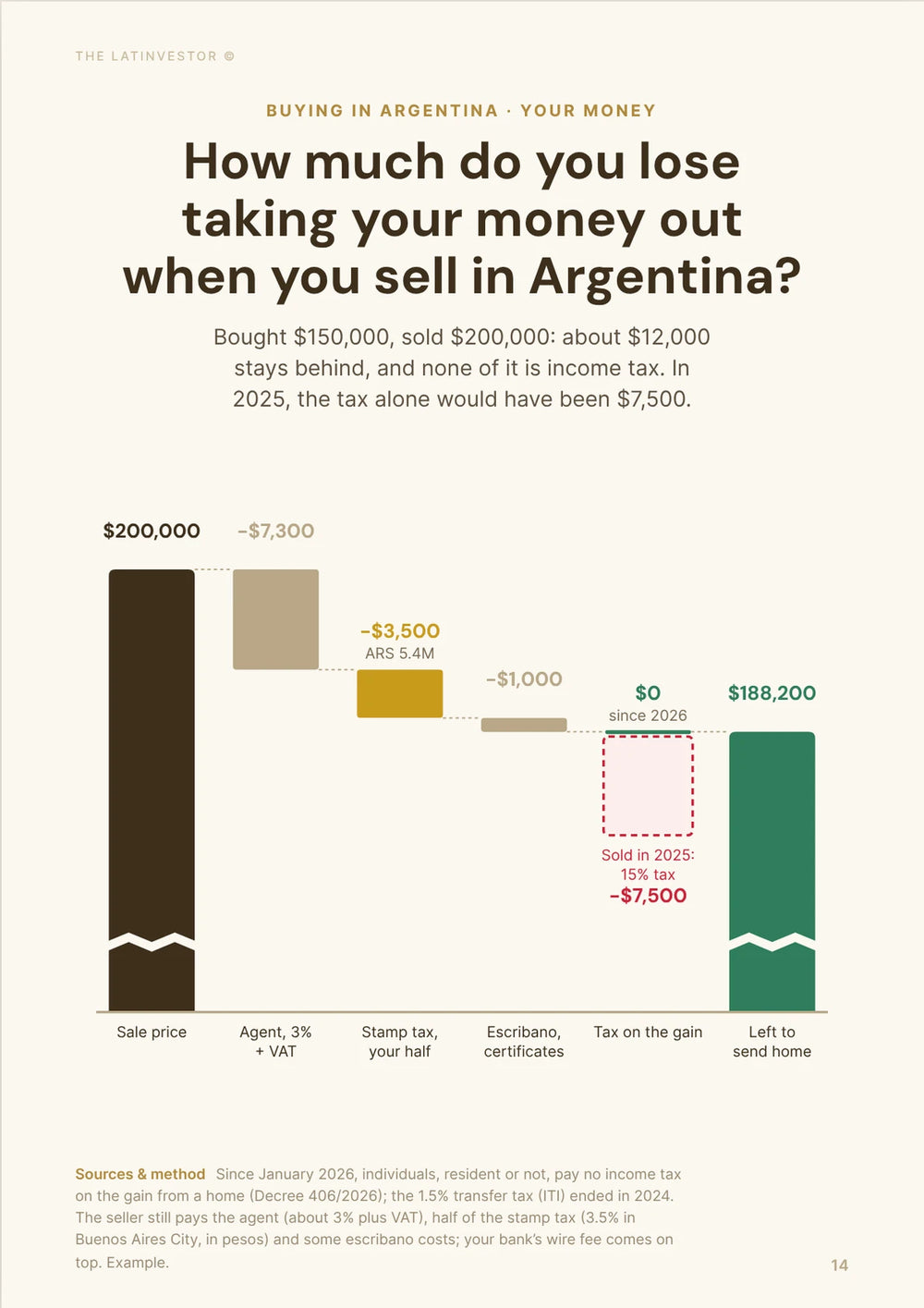
A round trip costs roughly 10% to 13% of the price: Mendoza's 2% stamp tax (usually split between buyer and seller), notary and registry fees, and agent fees on both sides. On a USD 97,000 city 2-bedroom, that is about USD 9,700 to USD 12,600 (EUR 8,640 to EUR 11,200).
The good news is on the tax side: since 1 January 2026, individuals, residents and non-residents alike, pay no income tax on the gain when they sell a home. Companies are not covered.
What raises your odds most is buying below the area median in a liquid segment, such as solid older apartments or small houses with light renovation upside in Godoy Cruz, Guaymallén or good parts of Ciudad.
Will the new mortgage lines help Mendoza prices in 2026?
They could, a little. Mendoza held up better than the rest of the country: 871 mortgages from January to July 2026, 13.1% fewer than a year earlier, against a national drop of about 43%. That is roughly one purchase deed in ten.
Since September 2026, the government has auctioned FGS pension-fund money to banks in rounds of ARS 200 billion (on 7 September and 6 October), for home loans capped at UVA+7.5%, at least 15 years, and up to 150,000 UVA, about USD 210,000 in October 2026. That covers most Mendoza apartments.
What to do: if you buy to resell later, pick a property that qualifies for a mortgage (final deed, clean title, no pending works). In Mendoza, 24.56% of listings did in August 2026, and those are the homes local buyers with a loan can actually buy. Ask the seller or agent whether the unit is "apto crédito" before you offer.
Does the strong peso make Mendoza a worse deal for dollar buyers now?
It makes it dearer, not a bad deal. The wholesale dollar rose only about 4.9% since 1 January 2026, while consumer prices rose about 23.6% from January to September. Anything priced in pesos costs much more in dollars than a year ago.
For an owner, that means building fees, property tax, repairs and works. Building costs in Mendoza rose 33.86% in pesos over the year to October 2026. Rents, on the other hand, rose only 4.6% to 12.8% from January to August, so peso costs are eating a bigger share of the rent.
What to do: negotiate the price in dollars, and budget running costs and renovation in pesos with a margin. Aim for about 6% gross at purchase, then deduct empty months, costs and, for a non-resident, about 21% of gross rent in income tax and a yearly wealth tax of 0.5% of the property's value.
Our methodology
This article asks whether October 2026 is a good time to buy residential property in Greater Mendoza: price levels against rents, incomes and building costs, the likely direction of prices, rental demand, stock for sale, resale and exit costs, and the new mortgage lines.
Prices per square meter come from TuLugar's October 2026 medians and the InmoUP sales observatory (September 2026), which also gives the 12-month price change and listing growth. Rents come from the InmoUP rental observatory (August 2026). Deeds and mortgages come from Diario Mendoza (January–July 2026), building costs from the Centro de Ingenieros de Mendoza via Diario UNO (October 2026), and the Metrotranvía works from MDZ. Yields and price-to-rent ratios are our own calculation from these asking figures.
Rules come from Decree 406/2026, Law 27.802 and Estudio Piccinini (tax on rent and resale), ATM Mendoza (stamp tax), Chequeado and Decree-Law 15.385 (rural and border land), and Argentina.gob.ar (CDI). Inflation comes from INDEC, the dollar from Infobae, and the FGS mortgage auctions from iProfesional and Bloomberg Línea.
We checked these figures in October 2026. Peso amounts are converted at about ARS 1,550 per US dollar (official and MEP rates were within 1% of each other on 22 October 2026, the blue rate about ARS 1,570), and euro amounts at about ARS 1,740 per euro.
Where we had no direct figure (closing prices, selling times, time to rent and vacancy in Mendoza), we give our own estimates from listings and say so in the section. All prices and rents are asking figures, so real deals are usually a bit lower. The 12-month price outlook is our view, not a forecast from a source.
Key sources used for this analysis include TuLugar Mendoza, InmoUP sales observatory, InmoUP rental observatory, Diario Mendoza, Mendoza Today, Centro de Ingenieros de Mendoza construction cost index, Diario UNO, MDZ, INDEC Census 2022 Mendoza, INDEC Census tables, INDEC building permits, INDEC EPH income data, INDEC inflation, BCRA reports, Mendoza DEIE, Mendoza Unified Building Code update, City of Mendoza zoning map, City of Mendoza building permits, Zonaprop Mendoza listings, Argenprop Mendoza listings, Decree 406/2026, Law 27.802, Estudio Piccinini, ATM Mendoza Ley Impositiva 2026, Chequeado, Decree-Law 15.385, iProfesional, Bloomberg Línea and Infobae.