
Authored by the expert who managed and guided the team behind the Brazil Property Pack
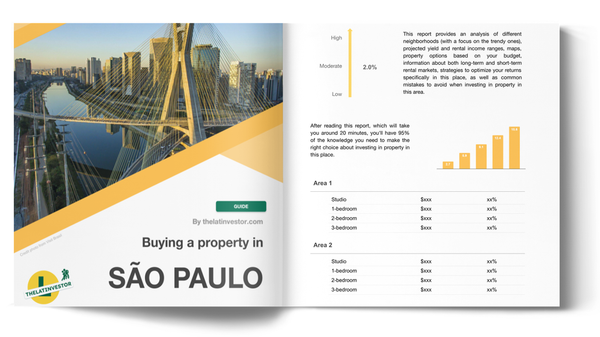
Yes, the analysis of São Paulo's property market is included in our pack
Buying property in São Paulo as a foreigner in 2026 comes with real risks, but most of them are avoidable if you know what to watch for.
This guide covers the specific scams, grey areas, and insider lessons that foreign buyers in São Paulo need to understand before signing anything.
We constantly update this blog post to reflect the latest changes in the São Paulo real estate market and Brazilian regulations.
And if you're planning to buy a property in this place, you may want to download our pack covering the real estate market in São Paulo.


How risky is buying property in São Paulo as a foreigner in 2026?
Can foreigners legally own properties in São Paulo in 2026?
As of early 2026, foreigners can legally buy and own residential property in São Paulo with almost the same rights as Brazilian citizens, which makes São Paulo one of the more accessible markets for international buyers in Latin America.
The main restriction that applies to foreigners in Brazil is about rural land and properties in border security zones, not typical São Paulo apartments or houses in neighborhoods like Jardins, Itaim Bibi, or Vila Madalena.
Since São Paulo is an urban center far from Brazil's borders, most foreign buyers simply need to obtain a CPF (Brazilian tax identification number) and follow the standard purchase process through a notary and the Registro de Imóveis, without needing any special visa, residency, or government approval.
Make sure you also read: Essential tips for buying the right property in São Paulo
What buyer rights do foreigners actually have in São Paulo in 2026?
As of early 2026, foreigners who properly register their purchase at the Registro de Imóveis in São Paulo have essentially the same ownership rights as Brazilian nationals, including the right to sell, rent, or inherit the property.
If a seller breaches a contract in São Paulo, foreign buyers can enforce their rights through Brazilian courts, though the process typically takes around two years and involves meaningful legal costs, so prevention through proper documentation is always the better strategy.
The most common mistake foreigners make in São Paulo is assuming that a signed purchase contract (contrato de compra e venda) gives them ownership, when in reality, only registration at the Registro de Imóveis creates enforceable ownership rights.
How strong is contract enforcement in São Paulo right now?
Contract enforcement in São Paulo is real but slow, with the World Bank estimating around 731 days (about two years) from filing to enforcement for commercial disputes, which is longer than what buyers from the US, UK, or most of Western Europe would expect in their home countries.
The main weakness foreigners should know about in São Paulo is that courts can be backlogged and procedures complex, which means that even if you have a strong legal case, resolving it takes time and money, making prevention through proper registry checks and clean paperwork far more valuable than relying on litigation.
By the way, we detail all the documents you need and what they mean in our property pack covering São Paulo.
Buying real estate in São Paulo can be risky
An increasing number of foreign investors are showing interest. However, 90% of them will make mistakes. Avoid the pitfalls with our comprehensive guide.

Which scams target foreign buyers in São Paulo right now?
Are scams against foreigners common in São Paulo right now?
Real estate scams targeting foreigners in São Paulo are common enough that you should assume scam attempts will happen, especially if you search in English, appear rushed, or show unfamiliarity with Brazilian registry and notary procedures.
The type of transaction most frequently targeted by scammers in São Paulo is the off-plan or pre-construction purchase and the "too good to be true" resale deal in desirable neighborhoods like Itaim Bibi, Vila Nova Conceição, or Pinheiros, where under-market prices are often bait.
Foreign buyers who are most commonly targeted in São Paulo are those who do not speak Portuguese, who are buying remotely without visiting the property, or who rely entirely on a single agent or contact without independent verification.
The single biggest warning sign that a deal may be a scam in São Paulo is when someone pushes you to send money quickly (a "reservation fee" or deposit) before you have received a fresh certidão de matrícula from the Registro de Imóveis showing the seller's name as the current owner.
What are the top three scams foreigners face in São Paulo right now?
The top three scams that foreigners most commonly face when buying property in São Paulo are the "fake seller/fake owner" scam (where someone pretends to own the property using forged documents), the "fake agent/fake listing" scam (where an unlicensed person collects fees then disappears), and the "hidden debts" scam (where the seller claims no debts exist but condominium arrears or liens transfer to you after purchase).
The most common scam in São Paulo typically unfolds like this: a convincing contact shows you a great property, creates urgency by mentioning other interested buyers, asks for a deposit or reservation fee to a personal bank account, provides documents that look official but are not verifiable through the registry, and then vanishes or delays indefinitely once you have paid.
The single most effective way to protect yourself from each of these three scams in São Paulo is to never pay any money until you have personally verified ownership through a fresh certidão de matrícula from the Registro de Imóveis, confirmed the agent's CRECI license with CRECISP, and obtained written clearance statements from the condomínio administrator showing no debts on the unit.

We did some research and made this infographic to help you quickly compare rental yields of the major cities in Brazil versus those in neighboring countries. It provides a clear view of how this country positions itself as a real estate investment destination, which might interest you if you’re planning to invest there.
How do I verify the seller and ownership in São Paulo without getting fooled?
How do I confirm the seller is the real owner in São Paulo?
The standard verification process in São Paulo is to request a fresh certidão de matrícula atualizada from the relevant Registro de Imóveis district, which will show the current legal owner's full name, the property's legal description, and the complete ownership history.
The official document foreigners should check to verify ownership in São Paulo is the certidão de matrícula issued by the Registro de Imóveis, and you should request it directly from the registry yourself rather than accepting a copy provided by the seller or agent.
The most common trick fake sellers use to appear legitimate in São Paulo is presenting old or doctored documents, using a power of attorney that was never properly notarized, or claiming to be a representative of the owner without verifiable authorization, and this happens often enough that you should treat any document not verified through official channels as marketing material rather than proof.
Where do I check liens or mortgages on a property in São Paulo?
The official registry where you check liens or mortgages on a property in São Paulo is the Registro de Imóveis for the district where the property is located, and you should request a certidão de ônus reais (encumbrance certificate) which lists any registered liens, mortgages, or legal restrictions.
When checking for liens in São Paulo, you should specifically request the most recent certidão de ônus reais and review whether there are any penhoras (seizures), hipotecas (mortgages), usufrutos (usufruct rights), or any pending legal disputes noted on the property's matrícula.
The type of lien most commonly missed by foreign buyers in São Paulo is condominium debt, because unpaid condominium fees (dívidas de condomínio) can follow the property rather than the previous owner, meaning you could inherit years of arrears that the seller never disclosed.
It's one of the aspects we cover in our our pack about the real estate market in São Paulo.
How do I spot forged documents in São Paulo right now?
The most common type of forged document used in property scams in São Paulo is a fake certidão de matrícula or a fake power of attorney (procuração), and this happens often enough that you should never trust any document sent as a PDF or WhatsApp image without independent verification.
Specific red flags that indicate a document may be forged in São Paulo include missing or incorrect registry seals, inconsistent fonts or formatting, document numbers that do not match when checked against the issuing office, and any pressure from the seller to skip verification steps or accept copies instead of originals.
The official verification method you should use to authenticate documents in São Paulo is to request certificates directly from the Registro de Imóveis yourself, and for notarial documents like powers of attorney, use the e-Notariado platform to confirm the document was actually issued by a legitimate notary.
Get the full checklist for your due diligence in São Paulo
Don't repeat the same mistakes others have made before you. Make sure everything is in order before signing your sales contract.
What "grey-area" practices should I watch for in São Paulo?
What hidden costs surprise foreigners when buying a property in São Paulo?
The three most common hidden costs that foreigners overlook when buying property in São Paulo are the ITBI transfer tax (3% of the property value, around R$30,000 or USD 5,500 or EUR 5,100 on a R$1 million property), notary and registry fees (approximately 1% to 1.8% of the value, or R$10,000 to R$18,000), and sworn translation costs if you need documents translated for foreign signatures.
The hidden cost most often deliberately concealed by sellers or agents in São Paulo is accumulated condominium debt, which sometimes happens when sellers fail to disclose months or years of unpaid fees that legally transfer to you as the new owner.
If you want to go into more details, we also have a blog article detailing all the property taxes and fees in São Paulo.
Are "cash under the table" requests common in São Paulo right now?
Requests for undeclared cash payments in São Paulo property transactions do happen, though they are less common in premium neighborhoods like Jardins or Itaim Bibi and more frequent in informal or lower-priced segments of the market.
The typical reason sellers give for requesting undeclared cash payments in São Paulo is to reduce the declared sale price and therefore pay less ITBI (transfer tax) or capital gains tax, which they may frame as a "favor" or "standard practice" to make the deal cheaper for everyone.
If you agree to an undeclared cash payment in São Paulo, you face serious legal risks including tax evasion charges, difficulty proving the full value you paid if there is a dispute, and potential problems with future resale or mortgage financing since the official records will not reflect the true transaction amount.
Are side agreements used to bypass rules in São Paulo right now?
Side agreements that bypass official rules are not rare in São Paulo, particularly in the form of informal "extras" not reflected in the public deed (escritura) or "rights assignments" (cessão de direitos) that avoid a clean registration path.
The most common type of side agreement used to circumvent regulations in São Paulo is the "contrato de gaveta" (drawer contract), which is a private agreement that the parties never register, leaving the buyer with possession but no legal ownership on the official records.
If a side agreement is discovered by authorities in São Paulo, foreigners face risks including the agreement being declared void or unenforceable, tax penalties for undeclared transactions, and potential loss of the property if the "real" legal owner (according to the registry) decides to sell or encumber it.

We made this infographic to show you how property prices in Brazil compare to other big cities across the region. It breaks down the average price per square meter in city centers, so you can see how cities stack up. It’s an easy way to spot where you might get the best value for your money. We hope you like it.
Can I trust real estate agents in São Paulo in 2026?
Are real estate agents regulated in São Paulo in 2026?
As of early 2026, real estate agents in São Paulo are regulated under federal law (Lei 6.530/1978), which means that anyone acting as a property broker must be licensed and registered with the professional council.
A legitimate real estate agent in São Paulo should have a valid CRECI (Conselho Regional de Corretores de Imóveis) registration number, which proves they are licensed to practice in the state of São Paulo.
Foreigners can verify whether an agent is properly licensed in São Paulo by asking for their CRECI number and checking it directly with CRECISP, the São Paulo regional broker council, which maintains a public database of registered professionals.
Please note that we have a list of contacts for you in our property pack about São Paulo.
What agent fee percentage is normal in São Paulo in 2026?
As of early 2026, the standard real estate agent commission in São Paulo for residential sales is around 6% of the purchase price, though this can vary depending on the property type and negotiation.
The typical range of agent fee percentages that covers most transactions in São Paulo is between 5% and 6%, with luxury properties sometimes seeing slightly different arrangements depending on the complexity of the deal.
In São Paulo, the seller typically pays the agent commission, though this can be negotiated between the parties, and buyers should always clarify upfront who is responsible for the fee to avoid surprises at closing.
Get the full checklist for your due diligence in São Paulo
Don't repeat the same mistakes others have made before you. Make sure everything is in order before signing your sales contract.
What due diligence actually prevents disasters in São Paulo?
What structural inspection is standard in São Paulo right now?
The standard structural inspection process for property purchases in São Paulo is less formalized than in markets like the US or UK, meaning buyers often need to proactively hire their own inspector rather than relying on a mandatory inspection requirement.
A qualified inspector in São Paulo should check the electrical panel capacity and wiring, plumbing systems and water pressure, evidence of water infiltration (especially in bathrooms and balconies), and any signs of structural cracks or settling that might indicate foundation issues.
In São Paulo, the type of professional qualified to perform structural inspections is typically a civil engineer (engenheiro civil) registered with CREA (the regional engineering council), who can provide a technical report (laudo técnico) documenting the property's condition.
The most common structural issues that inspections reveal in São Paulo properties are water infiltration problems (very common in older buildings), outdated electrical systems that cannot handle modern loads, and hidden repairs masked by fresh paint or cosmetic renovations.
How do I confirm exact boundaries in São Paulo?
The standard process for confirming exact property boundaries in São Paulo depends on whether you are buying an apartment (where the matrícula and building documentation define your unit) or a house/land (where you may need to verify physical boundaries against registry records).
The official document that shows the legal boundaries of a property in São Paulo is the certidão de matrícula from the Registro de Imóveis, which contains the property's legal description, and for land, you may also need to review any registered surveys (memoriais descritivos).
The most common boundary dispute that affects foreign buyers in São Paulo involves houses or land in areas with irregular subdivisions, where the physical fence or wall does not match what is registered, which is particularly common in some parts of Butantã, Morumbi, or areas undergoing regularization (REURB).
If you need to physically verify boundaries on the ground in São Paulo, you should hire a licensed surveyor (topógrafo) or a civil engineer who can compare the property's physical limits with the legal description in the registry documents.
What defects are commonly hidden in São Paulo right now?
The top three defects that sellers frequently conceal from buyers in São Paulo are water infiltration damage (common), major upcoming condominium works like elevator or façade repairs that will raise fees (common), and paperwork gaps where documents do not cleanly match the registry history (sometimes happens).
The inspection technique that helps uncover hidden defects in São Paulo is to request and review the condomínio meeting minutes (atas de assembleia) from the past two to three years, which will reveal any upcoming special assessments, structural problems in the building, or disputes that might affect your unit.

We have made this infographic to give you a quick and clear snapshot of the property market in Brazil. It highlights key facts like rental prices, yields, and property costs both in city centers and outside, so you can easily compare opportunities. We’ve done some research and also included useful insights about the country’s economy, like GDP, population, and interest rates, to help you understand the bigger picture.
What insider lessons do foreigners share after buying in São Paulo?
What do foreigners say they did wrong in São Paulo right now?
The most common mistake foreigners say they made when buying property in São Paulo is trusting the person (the agent, the seller, or a helpful contact) more than they trusted the official registry documents, which led to problems that could have been avoided with simple verification.
The top three regrets foreigners most frequently mention after buying in São Paulo are paying money before ownership was properly verified at the Registro de Imóveis, assuming Brazilian contracts work like contracts in their home country, and not budgeting enough time for the bureaucratic process.
The single piece of advice experienced foreign buyers most often give to newcomers in São Paulo is to make every "yes" conditional on registry proof, meaning you should never commit money or sign final documents until you have personally verified the matrícula and ônus reais certificates.
The mistake foreigners say cost them the most money or caused the most stress in São Paulo was discovering hidden condominium debts or unregistered encumbrances after they had already paid, because reversing a transaction in Brazil is slow, expensive, and uncertain.
What do locals do differently when buying in São Paulo right now?
The key difference in how locals approach buying property in São Paulo compared to foreigners is that Brazilians instinctively treat the cartório (notary) and Registro de Imóveis as the center of the transaction, while foreigners often focus on the agent or the contract and miss the registry step until too late.
A verification step locals routinely take that foreigners often skip in São Paulo is checking the certidão negativa de débitos de condomínio (a statement from the building administrator showing no condominium debts) and reviewing the atas de assembleia (meeting minutes) to understand upcoming costs or disputes.
The local knowledge advantage that helps São Paulo residents get better deals is their awareness of which neighborhoods are genuinely appreciating versus which are hyped by agents, plus their network connections that surface off-market properties before they hit listings in areas like Pinheiros, Vila Madalena, or Perdizes.
Don't buy the wrong property, in the wrong area of São Paulo
Buying real estate is a significant investment. Don't rely solely on your intuition. Gather the right information to make the best decision.

What sources have we used to write this blog article?
Whether it's in our blog articles or the market analyses included in our property pack about São Paulo, we always rely on the strongest methodology we can and we don't throw out numbers at random.
We also aim to be fully transparent, so below we've listed the authoritative sources we used, and explained how we used them and the methods behind our estimates.
| Source | Why it's authoritative | How we used it |
|---|---|---|
| Registro de Imóveis do Brasil | Official portal describing registry certificates and what they cover. | We used it to define which certificates prove ownership in São Paulo. We also used it to translate registry procedures into buyer actions. |
| Planalto (Lei 5.709/1971) | Official federal law on foreign acquisition of rural land. | We used it to clarify restrictions that apply to foreigners. We used it to prevent confusion about what foreigners can legally buy. |
| CRECISP | São Paulo's regional broker council with official fee guidance. | We used it to establish normal commission ranges in São Paulo. We used it to help readers spot fee quotes that seem suspicious. |
| ANOREG/SP | São Paulo notary and registry association publishing official fee tables. | We used it to estimate notary and registry costs in early 2026. We used it to sanity-check any "extra fees" that might be added. |
| Fórum Brasileiro de Segurança Pública | Research organization behind Brazil's main annual public safety statistics. | We used it to quantify the broader fraud environment in Brazil. We used it to calibrate scam risk without exaggeration. |
| e-Notariado (Colégio Notarial do Brasil) | Official platform for verifying notarial acts under CNJ rules. | We used it to explain how powers of attorney are safely verified. We used it to reduce the risk of forged documents. |
| World Bank Doing Business 2020 | Standardized methodology comparing contract enforcement across cities. | We used it to estimate how long enforcement takes in São Paulo courts. We treated it as a benchmark and cross-checked with other sources. |
| FIPE (Índice FipeZAP) | Long-running, transparent index tracking São Paulo residential prices. | We used it to describe the price trend and market vibe in early 2026. We used it to explain where pricing pressure comes from. |
| Ministério das Relações Exteriores | Brazilian government's consular guidance for foreigners needing CPF. | We used it to confirm the first steps a foreign buyer must take. We used it as the authoritative baseline for CPF requirements. |
| Prefeitura de São Paulo (REURB) | City housing authority describing land regularization programs. | We used it to explain risks of irregular subdivisions in São Paulo. We used it to warn buyers when a cheap deal has legal issues. |

We created this infographic to give you a simple idea of how much it costs to buy property in different parts of Brazil. As you can see, it breaks down price ranges and property types for popular cities in the country. We hope this makes it easier to explore your options and understand the market.