
Authored by the expert who managed and guided the team behind the Brazil Property Pack
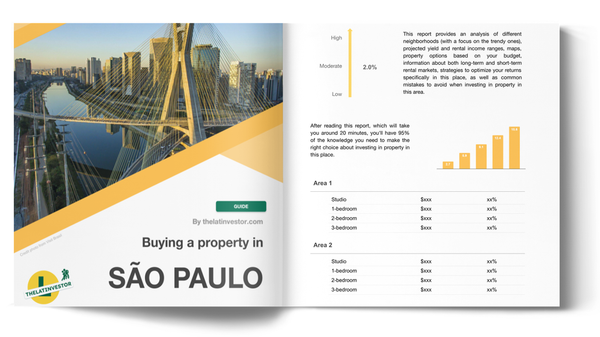
Yes, the analysis of São Paulo's property market is included in our pack
São Paulo is Brazil's financial heart and the largest city in South America, attracting retirees who want urban energy, world-class healthcare options, and a vibrant cultural scene without the price tags of major North American or European capitals.
In this guide, we break down exactly how much money you need to retire in São Paulo in 2026, from bare-bones survival budgets to full luxury living, with real numbers drawn from official Brazilian sources.
We also cover current housing prices in São Paulo and update this blog post regularly so you always have accurate information.
And if you're planning to buy a property in this place, you may want to download our pack covering the real estate market in São Paulo.


How much money do I need to retire in São Paulo right now?
What's the absolute minimum monthly budget to survive in São Paulo?
The absolute minimum monthly budget to survive in São Paulo in 2026 is around R$ 7,500, which works out to roughly $1,400 or €1,200 at current exchange rates.
At this level, your spending covers a small studio apartment in a safe but modest neighborhood, basic groceries anchored to staples like rice, beans, and vegetables, public transportation via the city's extensive bus and metro system, essential utilities, and a minimal healthcare provision.
Living on this budget in São Paulo means accepting a compact living space (around 30 to 35 square meters), cooking almost all your meals at home, skipping most paid entertainment, and relying heavily on the public SUS healthcare system rather than private clinics, which can feel risky if you need specialized care quickly.
What lifestyle do I get with $2,000/month in São Paulo in 2026?
As of early 2026, $2,000 per month (around R$ 10,800) in São Paulo gives you a basic but workable lifestyle where you can cover essentials comfortably, though you will need to watch your spending carefully.
For housing, you can realistically afford a 30 to 45 square meter apartment in neighborhoods like Cambuci, Liberdade, Santa Cecília, Saúde, or Jabaquara, with rents typically running R$ 1,900 to R$ 2,800 ($350 to $520 or €300 to €450) plus building fees and IPTU.
You will be able to enjoy São Paulo's many free cultural offerings like Paulista Avenue museums on free days, Ibirapuera Park, and neighborhood street markets, plus occasional meals at local "por quilo" restaurants, but regular dining at upscale spots or private gym memberships will stretch your budget thin.
The main limitation at this budget in São Paulo is healthcare: you will likely rely on a mix of SUS public services and basic private coverage, which means potentially longer waits for specialists and limited choice of hospitals compared to what a higher budget allows.
What lifestyle do I get with $3,000/month in São Paulo in 2026?
As of early 2026, $3,000 per month (around R$ 16,100) in São Paulo provides a comfortable city lifestyle where you can enjoy the city without constantly tracking every expense.
At this budget, you can afford a 45 to 70 square meter apartment in desirable neighborhoods like Vila Mariana, Paraíso, Perdizes, or even smaller units in Pinheiros or Moema, with rents typically between R$ 3,500 and R$ 5,000 ($650 to $930 or €560 to €800) including building fees.
Dining out becomes a regular pleasure rather than a rare treat, with access to São Paulo's incredible food scene from Japanese in Liberdade to Italian in Bixiga, plus you can afford gym memberships, streaming services, occasional weekend trips to the coast at Guarujá or Santos, and cultural events with paid admission.
The key upgrade from the $2,000 budget is healthcare: at R$ 16,000, you can budget R$ 1,800 to R$ 2,500 monthly for a decent private health plan, giving you access to better hospitals like Einstein or Sírio-Libanês networks and shorter wait times for specialists.
What lifestyle do I get with $5,000/month in São Paulo in 2026?
As of early 2026, $5,000 per month (around R$ 26,900) gives you an upper-comfortable lifestyle in São Paulo, while $10,000 per month (around R$ 53,800) moves you firmly into luxury territory with essentially no financial constraints on daily life.
At $5,000 monthly, you can rent a spacious 70 to 120 square meter apartment in premium neighborhoods like Jardins, Itaim Bibi, Higienópolis, or Moema for R$ 8,000 to R$ 12,000 ($1,500 to $2,200 or €1,280 to €1,920), while $10,000 monthly opens doors to the most exclusive buildings in Vila Nova Conceição or Alto de Pinheiros with full amenities, 24-hour security, and premium finishes.
At these levels, you gain access to São Paulo's finest experiences: regular dining at acclaimed restaurants like D.O.M. or A Casa do Porco, memberships at premium gyms and clubs, domestic help (cleaner, cook), private driver services when needed, top-tier healthcare at hospitals like Albert Einstein without worrying about plan limits, and regular travel within Brazil and internationally.
How much for a "comfortable" retirement in São Paulo in 2026?
As of early 2026, a comfortable retirement in São Paulo requires around R$ 12,000 per month, which equals approximately $2,230 or €1,920.
We recommend adding a 20% safety buffer on top of this baseline, bringing your target to R$ 14,500 per month ($2,700 or €2,320), because São Paulo rents and healthcare costs can jump unexpectedly, and currency fluctuations may affect your purchasing power if your income comes from abroad.
The comfortable budget covers expenses that a bare-bones budget cannot: a proper one or two bedroom apartment in a good neighborhood rather than a cramped studio, a reliable private health insurance plan with access to quality hospitals, regular meals out, occasional domestic travel, gym membership, and a financial cushion so that one unexpected expense does not derail your month.
How much for a "luxury" retirement in São Paulo in 2026?
As of early 2026, a luxury retirement in São Paulo requires around R$ 25,000 per month, which equals approximately $4,650 or €4,000.
This budget allows for a premium apartment of 100 square meters or more in top buildings with full amenities (pool, gym, concierge) for R$ 10,000 to R$ 15,000 monthly ($1,860 to $2,790 or €1,600 to €2,400), plus domestic staff such as a weekly cleaner and occasional cook, top-tier private healthcare without coverage limits, a car and driver when needed, and regular fine dining.
The most popular luxury neighborhoods for retirees in São Paulo are Jardins (for walkability and restaurants), Itaim Bibi (modern high-rises and nightlife), Vila Nova Conceição (quiet elegance near Ibirapuera Park), Higienópolis (classic architecture and cultural institutions), and Alto de Pinheiros (leafy streets and family atmosphere).
The main advantage of a luxury budget beyond comfort is optionality: you never have to choose between healthcare quality and other spending, you can handle any emergency without financial stress, and you can spontaneously travel, host family, or pursue hobbies without budgeting anxiety.

We have made this infographic to give you a quick and clear snapshot of the property market in Brazil. It highlights key facts like rental prices, yields, and property costs both in city centers and outside, so you can easily compare opportunities. We’ve done some research and also included useful insights about the country’s economy, like GDP, population, and interest rates, to help you understand the bigger picture.
What are the real monthly expenses for retirees in São Paulo in 2026?
What is a realistic monthly budget breakdown by category in São Paulo?
A realistic monthly budget breakdown for a single retiree in São Paulo in 2026 looks roughly like this at the comfortable level (R$ 12,000 or $2,230 / €1,920): housing takes about R$ 5,900 ($1,100 / €945), food and groceries about R$ 2,200 ($410 / €350), healthcare about R$ 2,200 ($410 / €350), utilities and connectivity about R$ 900 ($165 / €145), transport about R$ 450 ($85 / €70), and miscellaneous spending about R$ 350 ($65 / €55).
Housing costs, including rent plus condomínio (building fee) plus IPTU (property tax), typically consume 45% to 50% of the total monthly budget in São Paulo, making it by far the largest expense category for retirees.
Food and groceries generally take 15% to 20% of the budget, with the DIEESE basic food basket in São Paulo sitting at around R$ 845 ($157 / €135) for staples alone, though most retirees spend R$ 1,200 to R$ 2,500 depending on eating habits.
The budget category that varies most based on personal choices in São Paulo is healthcare: you can spend as little as R$ 800 monthly with a basic plan and SUS backup, or R$ 4,000 or more for comprehensive private coverage at premium hospitals.
What fees surprise foreigners most after moving to São Paulo?
The three fees that surprise foreigners most in São Paulo are: condomínio (building maintenance fees) which can run R$ 800 to R$ 3,000 ($150 to $560 / €130 to €480) monthly even for renters, IPTU (property tax) which is sometimes passed to tenants and adds R$ 200 to R$ 800 monthly equivalent, and cartório costs for notarizing, translating, and registering documents which add up quickly when setting up your life in Brazil.
When first arriving in São Paulo, foreigners should budget R$ 2,000 to R$ 5,000 ($370 to $930 / €320 to €800) for one-time setup costs including certified document translations, notary fees at cartórios, initial deposits for utilities and internet, and potentially an immigration lawyer or accountant consultation to get tax and visa matters sorted correctly.
What's the average rent for a 1-bedroom or a 2-bedroom in São Paulo in 2026?
As of early 2026, the average monthly rent for a 1-bedroom apartment (around 45 square meters) in São Paulo is approximately R$ 2,800 ($520 / €450), while a 2-bedroom apartment (around 70 square meters) averages R$ 4,400 ($820 / €700), based on the citywide FipeZAP index of R$ 62.56 per square meter.
For a 1-bedroom in São Paulo, rents range from around R$ 1,800 ($335 / €290) in more affordable neighborhoods like Jabaquara or Saúde to R$ 5,500 ($1,020 / €880) or more in premium areas like Jardins or Itaim Bibi.
For a 2-bedroom, the range runs from approximately R$ 3,000 ($560 / €480) in value neighborhoods like Tatuapé or Santana to R$ 9,000 ($1,670 / €1,440) or higher in upscale districts like Vila Nova Conceição or Moema.
Neighborhoods offering the best value for retirees seeking affordable rent in São Paulo include Saúde, Jabaquara, Cambuci, Liberdade, and Santana, all of which have good metro access, local amenities, and rents below the city average while maintaining reasonable safety.
By the way, we've written a blog article detailing what are the latest rent data in São Paulo.
What do utilities cost monthly in São Paulo in 2026?
As of early 2026, total monthly utilities plus connectivity for a typical retiree apartment in São Paulo run between R$ 450 and R$ 1,200 ($85 to $225 / €70 to €190), depending on air conditioning use, apartment size, and how much time you spend at home.
Breaking it down individually: electricity typically costs R$ 200 to R$ 450 ($37 to $85 / €32 to €72) monthly based on Enel's published tariffs, water and sewage regulated by SABESP runs R$ 80 to R$ 250 ($15 to $46 / €13 to €40), and gas (where applicable) adds R$ 50 to R$ 200 ($9 to $37 / €8 to €32).
Internet service in São Paulo typically costs R$ 100 to R$ 200 ($19 to $37 / €16 to €32) monthly for reliable fiber connections, while mobile phone plans with good data allowances run R$ 50 to R$ 100 ($9 to $19 / €8 to €16), bringing combined connectivity to R$ 150 to R$ 300 monthly.
What's the monthly food and transportation budget for one person in São Paulo in 2026?
As of early 2026, a single retiree in São Paulo should budget approximately R$ 1,500 to R$ 2,700 ($280 to $500 / €240 to €430) monthly for food and R$ 250 to R$ 500 ($46 to $93 / €40 to €80) for transportation, depending on lifestyle choices.
For groceries when cooking at home, a realistic monthly range is R$ 1,000 to R$ 1,400 ($185 to $260 / €160 to €225), keeping in mind that the DIEESE basic food basket for São Paulo sits at R$ 845 for staples only, and most retirees want more variety including fresh produce, proteins, and some imported items.
Dining out regularly versus cooking at home makes a significant difference: eating lunch at "por quilo" restaurants daily adds roughly R$ 600 to R$ 1,000 ($110 to $185 / €95 to €160) monthly, while regular dinners at mid-range restaurants can easily add another R$ 800 to R$ 1,500 ($150 to $280 / €130 to €240).
For transportation, using public transit (metro and buses at R$ 5.30 per ride with monthly passes available) costs R$ 200 to R$ 350 ($37 to $65 / €32 to €55) monthly for regular use, while relying on ride-hailing apps like 99 or Uber pushes that to R$ 500 to R$ 1,000, and owning a car adds R$ 1,500 or more monthly once you factor in parking, insurance, fuel, and maintenance.
Get fresh and reliable information about the market in São Paulo
Don't base significant investment decisions on outdated data. Get updated and accurate information with our guide.

Can I retire in São Paulo if I want to buy property in 2026?
What's the average home price in São Paulo in 2026?
As of early 2026, the average home price in São Paulo sits around R$ 11,900 per square meter according to the FipeZAP index, which means a typical 45 square meter one-bedroom apartment costs approximately R$ 535,000 ($99,500 / €85,600), a 70 square meter two-bedroom runs around R$ 833,000 ($155,000 / €133,000), and a 100 square meter three-bedroom reaches R$ 1,190,000 ($221,000 / €190,000).
Prices in São Paulo vary dramatically by neighborhood: more affordable areas like Jabaquara, Saúde, or Tatuapé may see prices around R$ 8,000 to R$ 10,000 per square meter ($1,500 to $1,860 / €1,280 to €1,600), while premium districts like Jardins, Itaim Bibi, or Vila Nova Conceição can exceed R$ 18,000 to R$ 25,000 per square meter ($3,350 to $4,650 / €2,880 to €4,000).
For retirees in São Paulo, apartments in well-maintained buildings with elevators and basic amenities (pool, gym, 24-hour security) typically offer the best value, as they provide the convenience and safety older residents appreciate without the maintenance burden of a standalone house, and resale liquidity tends to be better in the apartment market.
Please note that you will find all the information you need in our pack about properties in São Paulo.
What down payment do foreigners usually need in São Paulo in 2026?
As of early 2026, foreigners purchasing property in São Paulo should plan for a down payment of 40% to 60% of the purchase price, and in practice many foreign buyers end up paying cash because Brazilian mortgage financing for non-residents is difficult to obtain; for a typical R$ 833,000 ($155,000 / €133,000) two-bedroom apartment, that means having R$ 333,000 to R$ 500,000 ($62,000 to $93,000 / €53,000 to €80,000) ready upfront.
Yes, foreigners generally face much higher down payment requirements than Brazilian residents in São Paulo: local buyers with documented income history can sometimes secure mortgages with 20% to 30% down through banks like Caixa Econômica Federal or Itaú, while foreigners without Brazilian income documentation typically find banks unwilling to lend or requiring substantially larger deposits.
We have a document entirely dedicated to the mortgage process in our pack about properties in São Paulo.
What's the all-in monthly cost to own in São Paulo in 2026?
As of early 2026, the all-in monthly cost to own a typical 70 square meter apartment in São Paulo (excluding any mortgage payment) runs approximately R$ 1,200 to R$ 3,500 ($225 to $650 / €190 to €560), and if you have a mortgage, that can add R$ 5,000 to R$ 6,000 or more depending on the loan amount and terms.
The ownership costs include condomínio (building maintenance fee) at R$ 800 to R$ 2,500 ($150 to $465 / €130 to €400) depending on building amenities, IPTU (annual property tax paid monthly equivalent) at R$ 200 to R$ 800 ($37 to $150 / €32 to €130), and a maintenance/insurance reserve of R$ 200 to R$ 500 ($37 to $93 / €32 to €80) for repairs and unexpected building assessments.
In São Paulo, the typical monthly condomínio for a mid-range building runs R$ 1,000 to R$ 1,800 ($185 to $335 / €160 to €290), while IPTU varies significantly by neighborhood and property value but often works out to R$ 300 to R$ 600 ($55 to $110 / €50 to €95) monthly equivalent when annualized.
The hidden ownership cost that catches new buyers off guard in São Paulo is "rateio extra," which are special assessments that buildings levy on owners for major repairs or improvements like elevator replacement, facade work, or pipe upgrades; these can suddenly add R$ 500 to R$ 2,000 or more to your monthly costs for extended periods.
By the way, we also have a blog article detailing the property taxes and fees in São Paulo.
Is buying cheaper than renting in São Paulo in 2026?
As of early 2026, comparing a typical 70 square meter apartment in São Paulo, renting costs approximately R$ 4,400 ($820 / €700) monthly while owning the same property (if purchased cash) costs around R$ 1,500 to R$ 2,500 ($280 to $465 / €240 to €400) monthly in condomínio, IPTU, and maintenance, but if you need a mortgage, the monthly payment alone can exceed R$ 5,000 to R$ 6,000, making ownership significantly more expensive month-to-month.
Based on the FipeZAP price-to-rent ratio of approximately 16 years in São Paulo, the break-even point where buying becomes financially advantageous over renting typically falls around 10 to 15 years for cash buyers when you account for maintenance, taxes, and opportunity cost of capital, though this varies by neighborhood and property condition.
Key factors that make buying more attractive for retirees in São Paulo include having cash to avoid expensive Brazilian mortgage rates (often 10% or higher annually), planning to stay long-term (10 years or more), wanting to lock in housing costs against future rent inflation, and desiring the stability of ownership; conversely, renting remains more attractive if you want flexibility to move neighborhoods, prefer not to tie up capital, or are uncertain about your long-term plans in Brazil.

We did some research and made this infographic to help you quickly compare rental yields of the major cities in Brazil versus those in neighboring countries. It provides a clear view of how this country positions itself as a real estate investment destination, which might interest you if you’re planning to invest there.
What visas, taxes, and healthcare costs should I plan for in São Paulo in 2026?
What retirement visa options exist in São Paulo in 2026?
As of early 2026, the main retirement visa option for foreigners in Brazil is the VITEM XIV (retiree/pensioner visa), which typically costs R$ 400 to R$ 600 ($75 to $110 / €65 to €95) in government fees for the initial application, though total costs including document preparation can run higher.
The key financial requirement to qualify for Brazil's retirement visa is proof of a pension or retirement income of at least $2,000 per month (approximately R$ 10,800 / €1,720) that will be transferred to Brazil, documented through official pension statements, bank records, and translated/notarized paperwork.
Annual visa renewal costs in São Paulo typically run R$ 1,000 to R$ 2,500 ($185 to $465 / €160 to €400) when you include government fees, certified translations of updated documents, notary costs at cartórios, and potentially some legal or accountant assistance; the process requires submitting updated proof of income and maintaining your registration with the Federal Police.
The most common visa mistake foreign retirees make in São Paulo is underestimating documentation requirements and processing times: failing to get documents properly apostilled or translated before arriving, letting deadlines slip, or not maintaining proper records of income transfers can create serious complications with renewals or even jeopardize your legal status.
Do I pay tax on foreign income in São Paulo in 2026?
As of early 2026, if you become a Brazilian tax resident (generally after 183 days in Brazil within a 12-month period), you should plan as if Brazil will tax your worldwide income, which could include pensions, investment returns, rental income, and other foreign-sourced earnings at progressive rates up to 27.5%.
Different types of foreign income receive different treatment: foreign pensions are generally taxable in Brazil, investment income (dividends, capital gains, interest) is typically taxable, and U.S. Social Security may be partially or fully taxable depending on treaty interpretation and individual circumstances; there is no blanket exemption for any category.
Brazil has tax treaties with several countries including Japan, France, Spain, and others that may affect how your foreign income is taxed and help prevent double taxation, but notably Brazil does not have a comprehensive tax treaty with the United States, which means American retirees need careful planning to manage potential double taxation on certain income types.
The single most important tax rule foreign retirees should understand before moving to São Paulo is that becoming a tax resident triggers worldwide income reporting obligations through mechanisms like Carnê-Leão (monthly tax payments on certain incomes), and failing to properly declare and pay can result in significant penalties; hiring a Brazilian accountant before you move is strongly advised.
What health insurance do retirees need in São Paulo in 2026?
As of early 2026, most foreign retirees in São Paulo purchase private health insurance plans costing R$ 800 to R$ 3,500 ($150 to $650 / €130 to €560) monthly depending on age, coverage level, and hospital network, though costs for retirees over 60 can run significantly higher due to age-based pricing.
Foreigners can technically access Brazil's public SUS healthcare system, as it is universal in principle, but in practice you need a CPF (tax ID) and registration at a local health post, wait times for specialists can be long, and many foreign retirees prefer private coverage for faster access to English-speaking doctors and premium hospitals like Albert Einstein, Sírio-Libanês, or Oswaldo Cruz.
A realistic total annual healthcare budget for a retiree in São Paulo, including private insurance premiums plus out-of-pocket costs for medications, dental care, vision, and uncovered treatments, runs R$ 25,000 to R$ 55,000 ($4,650 to $10,200 / €4,000 to €8,800), with the wide range reflecting differences in age, health status, and coverage choices.
Buying real estate in São Paulo can be risky
An increasing number of foreign investors are showing interest. However, 90% of them will make mistakes. Avoid the pitfalls with our comprehensive guide.

What sources have we used to write this blog article?
Whether it's in our blog articles or the market analyses included in our property pack about São Paulo, we always rely on the strongest methodology we can … and we don't throw out numbers at random.
We also aim to be fully transparent, so below we've listed the authoritative sources we used, and explained how we used them and the methods behind our estimates.
| Source | Why It's Authoritative | How We Used It |
|---|---|---|
| IBGE (Brazilian Statistics Agency) | Brazil's official source for inflation and economic indicators. | We used IBGE data to anchor 2026 purchasing power. We also validated that our budget estimates track recent inflation trends. |
| FipeZAP Sale Price Index | Brazil's most cited home price index with clear methodology. | We used São Paulo's R$ 11,900/m² average as our baseline. We translated per-square-meter prices into typical apartment purchase costs. |
| FipeZAP Rent Index | Widely used transparent rent index from large market listings. | We used São Paulo's R$ 62.56/m² rent baseline for all housing estimates. We computed buy-versus-rent comparisons from both FipeZAP reports. |
| DIEESE Basic Food Basket | Long-running monthly price survey used nationwide. | We used São Paulo's R$ 845.95 basket as a food cost floor. We scaled up for realistic retiree diets including dining out. |
| SPTrans | Official fare table for São Paulo buses and transit passes. | We used the R$ 5.30 fare to price monthly transport budgets. We modeled integrated fare usage for mixed bus and metro routines. |
| Enel Distribuição São Paulo | Published utility tariff schedule from the electricity provider. | We converted typical kWh usage into bill ranges. We added buffers for taxes, fees, and seasonal variation. |
| ARSESP/SABESP Tariffs | Official state regulator publication for water and sewage rates. | We estimated water and sewage costs from typical consumption. We added buffers for sewage charges and building shared costs. |
| ANS (Health Insurance Regulator) | Sets allowed caps for regulated health plan adjustments. | We used ANS guidance as a guardrail for healthcare cost projections. We budgeted higher for older ages since plan prices vary significantly. |
| Brazilian Government Visa Portal | Official consular guidance for retirement visa requirements. | We anchored the $2,000/month income requirement from this source. We used it as a hard constraint for minimum budget planning. |
| Receita Federal (Tax Authority) | Official guidance on monthly tax reporting for certain incomes. | We flagged that foreign income can trigger monthly Carnê-Leão reporting. We sized a tax and accountant buffer in our budgets. |
| QuintoAndar DataHouse | Large platform dataset with clear methodology notes. | We used it to cross-check São Paulo price levels and neighborhood rankings. We triangulated QuintoAndar data with FipeZAP for accuracy. |

We made this infographic to show you how property prices in Brazil compare to other big cities across the region. It breaks down the average price per square meter in city centers, so you can see how cities stack up. It’s an easy way to spot where you might get the best value for your money. We hope you like it.
Related blog posts