
Summary
In 2026, it is a decent time to buy in Punta Cana if you buy a finished unit at a fair price: a typical 2-bedroom in Punta Cana-Bávaro asks $240,000 to $260,000 and rents for about $1,500 a month on a long lease. It is a bad time to overpay for a generic off-plan condo.
Prices are firm, not cheap: apartments ask about $2,278 per m² (CLIC, June 2026), from about $1,969 in Bávaro to about $3,428 in Cap Cana (Evalua, September 2026). These are asking prices, not sales.
We think a broad price drop in the next 12 months is unlikely, but nobody publishes a credible price forecast or a price index for Punta Cana, so we give no yearly % change.
Buyers have the upper hand on new-build condos: about 40% of the 1,138 condos Evalua tracked in September 2026 were off-plan, and RE/MAX counts more than 50 off-plan projects in its local sample.
Against rents, good units are not bubble-priced: a $250,000 2-bedroom renting at $1,500 costs about 14 years of rent, a 7.2% gross yield, and nets about 3.7% before income tax.
The new infrastructure is modest: the Terminal B airport expansion already opened in April 2024, the Nisibón-Uvero Alto road works started on 22 April 2026, and a 105-room Novotel near the airport is planned for 2027.
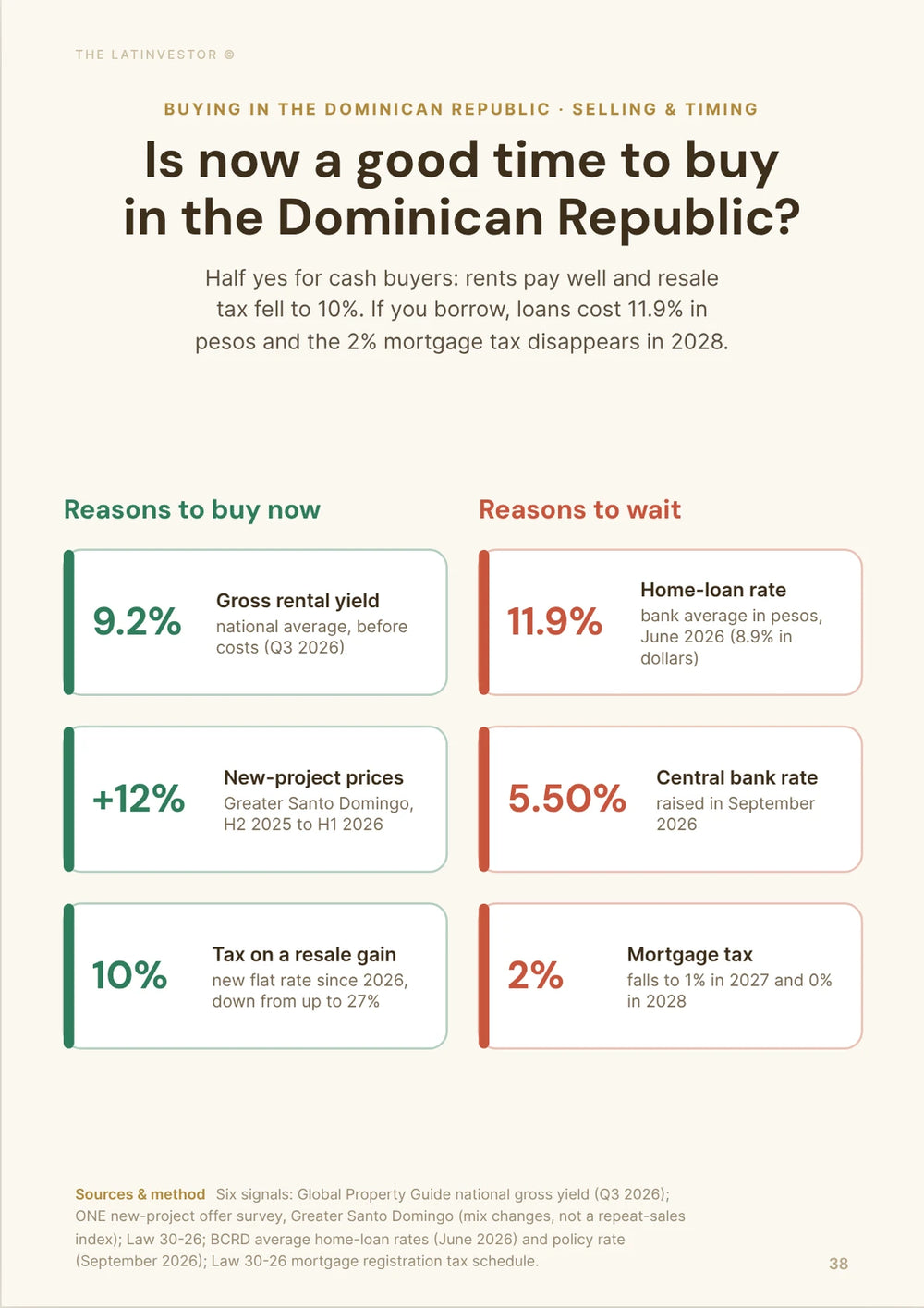
Rules stay open to foreigners. Law 30-26 cut the mortgage registration tax to 2% in 2026 (0 from 2028) and set a flat 10% tax on gains, while dollar housing loans averaged 8.87% in June 2026.
Long-term tenants are there: CLIC's March 2026 median asks are $1,150 for a 1-bedroom and $1,500 for a 2-bedroom. Ask much more and the unit sits.
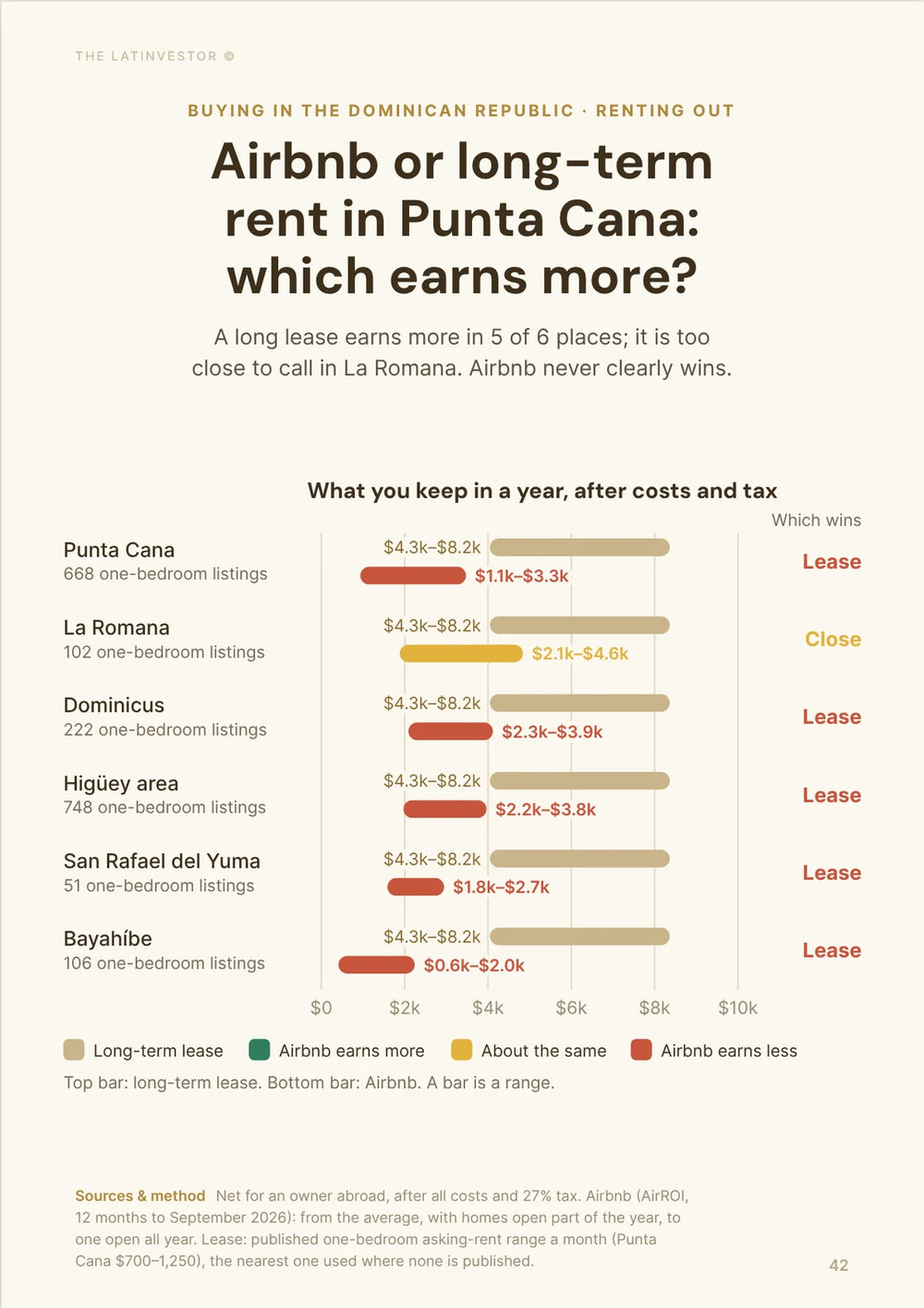
Airbnb is crowded: the average Punta Cana listing was booked only 36.4% of nights over the 12 months to September 2026 (AirROI), and an average 2-bedroom open all year nets about 1.4% before tax.
Too many condos is the main risk for resale prices: tourism is up (6.38 million international passengers at the airport in January-June 2026, +19.3%), but rental supply grew faster.
2026 also brought record sargassum (about 9 million tonnes in the region from January to June) and hurricane season runs until 30 November: visit in summer before you sign.
Selling later takes time and money: buying and selling cost about 7.5% to 11.5% of the price, or $18,000 to $27,600 on a $240,000 condo, so plan to hold about 5 years.
Bottom line: buy finished or nearly finished, with clean title and condo rules that suit your plan, aim for at least 6.5% gross on long-term rent, negotiate hard on off-plan, and skip any deal that only works with a full Airbnb calendar.


Prices, price-drop risk and who has the upper hand in Punta Cana right now
Do real estate prices look too high in Punta Cana in 2026?
In 2026, Punta Cana prices look firm but not crazy. Ordinary finished condos in proven areas are fairly priced against rents, while generic off-plan units and Cap Cana's top end look expensive.
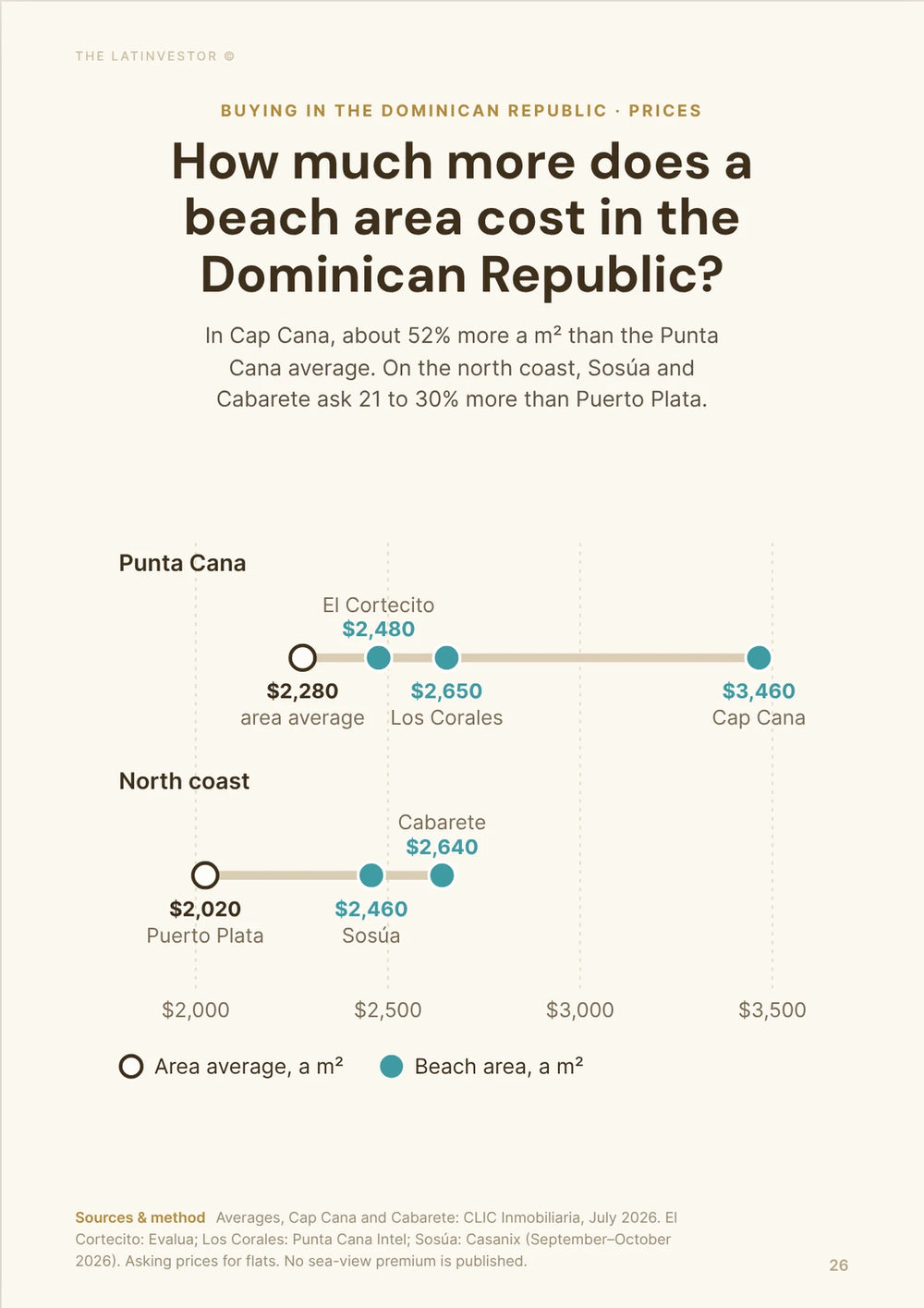
Punta Cana-Bávaro apartments ask a median of about $2,278 per m² (CLIC, June 2026, 12,854 listings, Cap Cana excluded), and La Altagracia province about $2,455 per m² (Casanix, October 2026). Finished condos in Bávaro ask about $1,969 per m², Cocotal about $2,675 and Cap Cana about $3,428 (Evalua, September 2026).
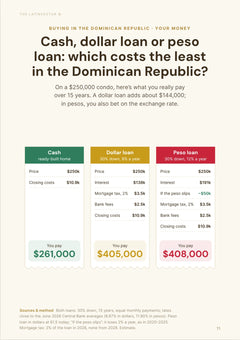
The median 2-bedroom asks about $240,000 (RE/MAX) to $260,000 (Casanix). Prices are set by foreign buyers, tourism income and cash, not by local salaries.
In the listings we saw, the easiest units to negotiate are inland Bávaro condos, Verón and unproven off-plan projects. Finished units in Punta Cana Village, Cocotal, Cana Bay and Cap Cana hold their price better.
Does a property price drop look likely in Punta Cana in 2026?
In 2026, a broad price drop over the next 12 months looks unlikely to us for finished homes in proven areas. Weak off-plan condos and overpriced villas are where prices can slip, and some already sit for months.
Nobody publishes a credible price forecast for Punta Cana, so we removed the old "5% down to 6% up" range: it had no source behind it.
The main local risk is the cost of credit. The central bank raised its policy rate from 5.25% to 5.50% in September 2026, and the average housing loan was 8.87% in dollars and 11.90% in pesos in June. That hurts local buyers and developers more than cash-paying foreigners.
The second risk is supply: if many off-plan buyers try to resell at delivery, they compete with the developers still selling new units with payment plans.
Could property prices jump again in Punta Cana in 2026?
In 2026, a broad new price surge in Punta Cana looks unlikely. Too many similar condos are coming. Jumps are possible only in scarce stock: real beachfront, golf-front units, and the best of Cap Cana and Punta Cana Village.
The demand side is strong. Punta Cana airport handled 6.38 million international passengers in January to June 2026, up 19.3% on a year earlier.
But tourists mostly book resorts, and Airbnb supply grew faster than demand: AirROI counts 2,446 active listings with 36.4% average occupancy. That caps what investors can pay for a standard rental condo.
Are we in a buyer or a seller market in Punta Cana in 2026?
In 2026, Punta Cana is a buyer's market for ordinary new-build condos and a mild seller's market for scarce finished homes in the best areas.
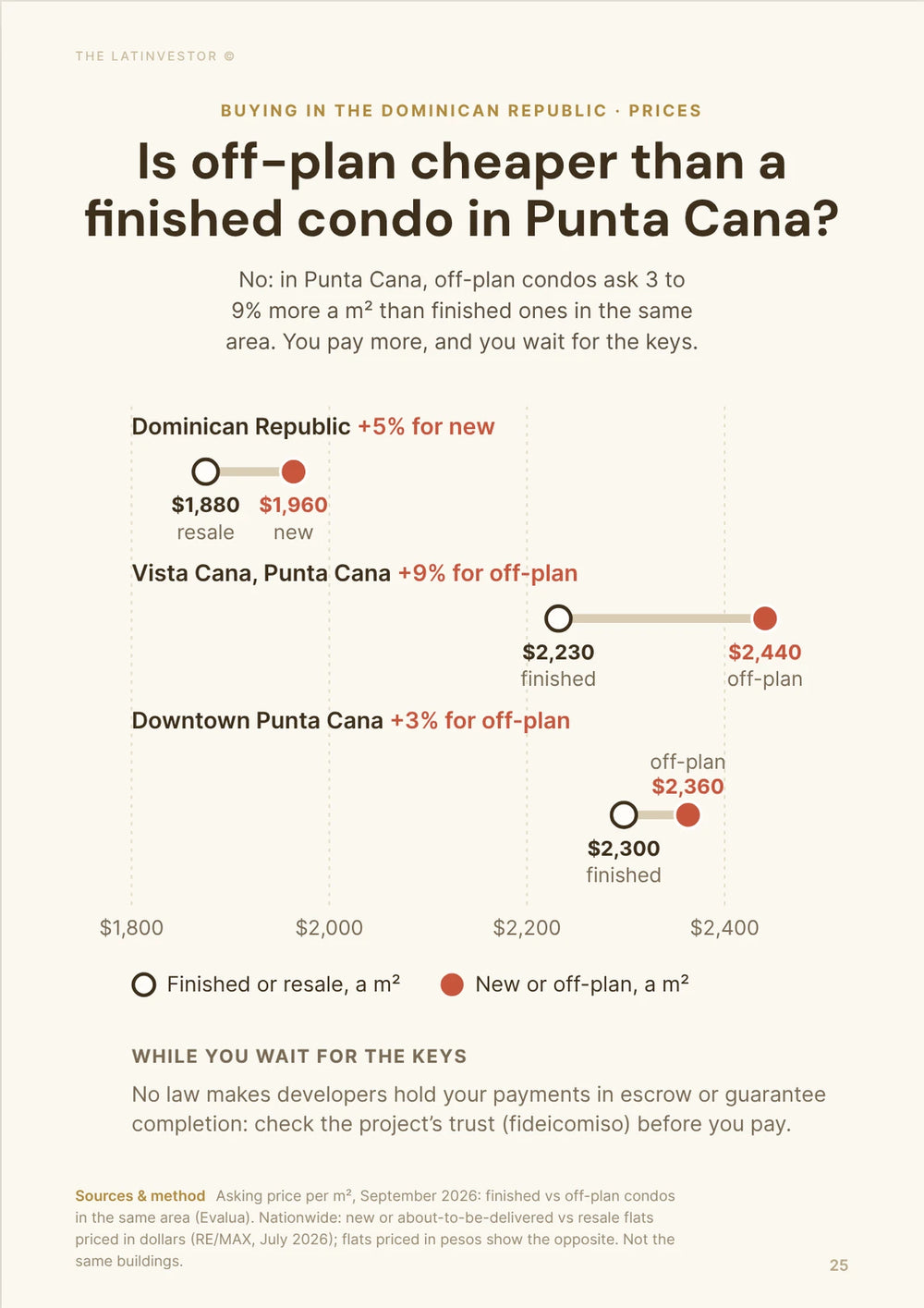
The off-plan share tells the story: 459 of the 1,138 condos Evalua tracked in September 2026 were off-plan, about 40%. Off-plan condos ask $2,621 per m² on average against $2,648 for finished ones, so you are not getting a real discount for taking the construction risk.
There is no months-of-inventory figure for Punta Cana, so we dropped the old "4 to 6 months" and "15% to 25% of listings need a price cut" estimates. What we see in listings: realistic resales in proven areas sell within a few months, generic units sit much longer.
What to do: on off-plan, ask for a discount for cash, furniture or closing costs included, and a delivery date with penalties in the contract. On a scarce finished unit, don't expect much off the asking price.
Are homes overpriced, or fairly priced in Punta Cana in 2026?
Are homes overpriced versus rents or versus incomes in Punta Cana in 2026?
In 2026, good Punta Cana condos look fairly priced against rents, but very expensive against local incomes.
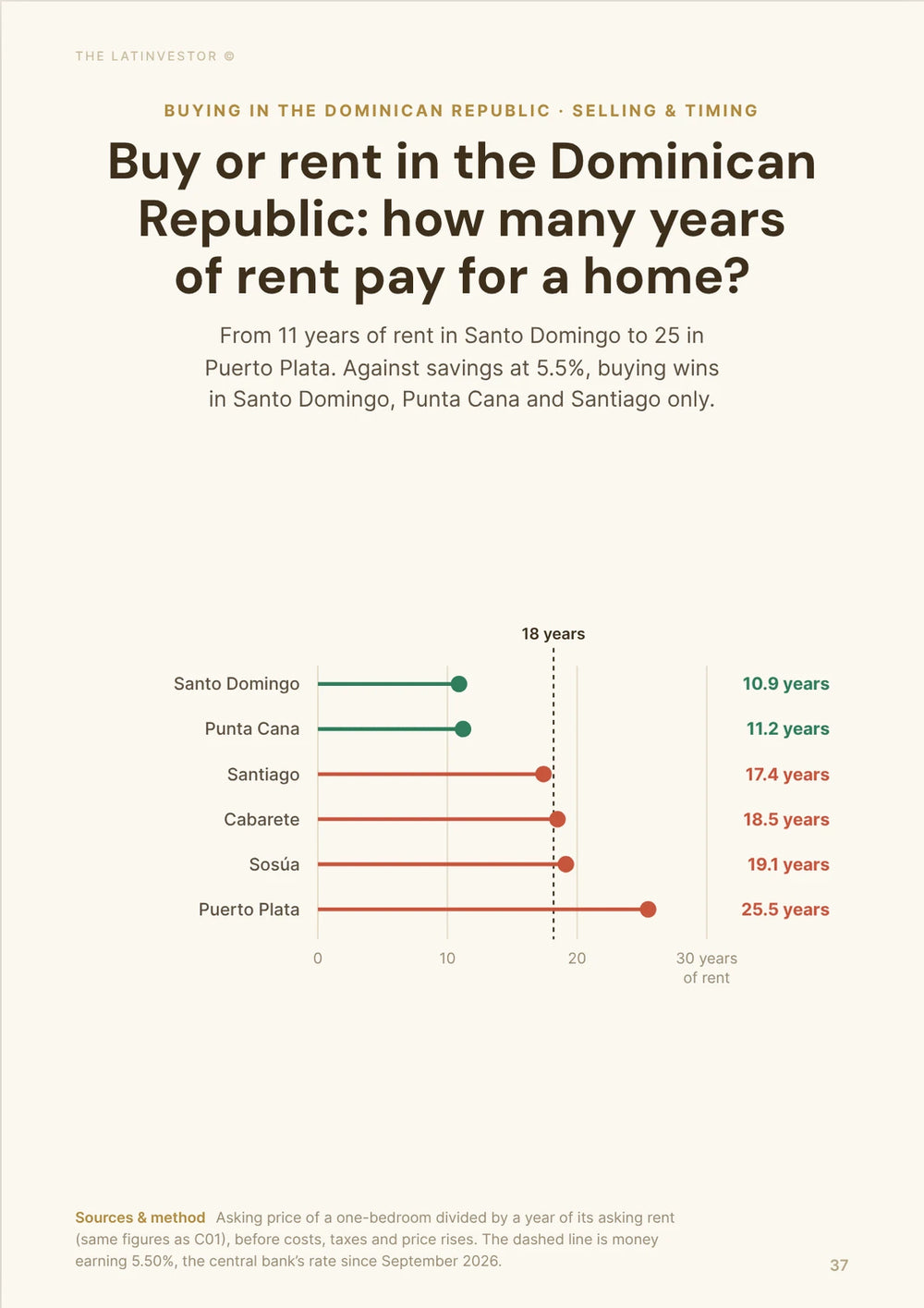
A 2-bedroom at $250,000 renting at the CLIC median of $1,500 a month costs about 14 years of rent, a 7.2% gross yield. A price-to-rent ratio of 12 to 16 is usually seen as balanced.
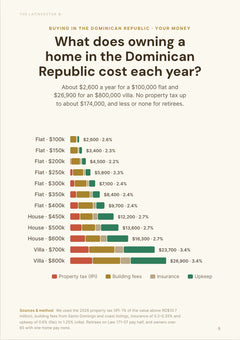
Net, it is thinner: with one month empty, 10% management, about $200 a month of condo fees, 1% a year for upkeep and insurance, and about $760 of IPI, that unit nets about 3.7% before income tax. As a non-resident, budget for Dominican income tax on that profit (the general rate for non-residents is 27%).
Global Property Guide's 9.07% gross yield for Punta Cana (Q3 2026) uses prime asking figures ($1,250 for a 1-bedroom, $1,800 for a 2-bedroom). Treat it as a ceiling, not what you will keep.
Against local incomes, a $240,000 condo (about RD$14.8 million) is out of reach for most Dominican households. The buyers are foreigners, the diaspora and wealthy locals, which is why prices depend on tourism and foreign demand.
Are home prices above the long-term average in Punta Cana in 2026?
In 2026, Punta Cana prices are clearly above their pre-2020 level, especially in Cap Cana and on the beach. We can't put a reliable number on the gap: there is no repeat-sales price index for Punta Cana.
For the same reason, we removed the old "25% to 50% above pre-2020" and "3% to 8% in the last 12 months" figures. Be wary of anyone who quotes a precise yearly rise for Punta Cana.
What we can measure: construction input costs rose only 1.94% in the year to June 2026 (ONE ICDV), and inflation was 5.12% in the year to September 2026. Building costs are not pushing prices up much right now.
What local changes could move prices in Punta Cana in 2026?
Are big infrastructure projects coming to Punta Cana in 2026?
In 2026, there is no single big project that will lift Punta Cana prices. The large airport works are already done: Terminal B was inaugurated in April 2024.
The 2026 projects are smaller. The reconstruction of the Nisibón-Uvero Alto road started on 22 April 2026, which helps the Uvero Alto corridor, and a 105-room Novotel near the airport was announced for 2027.
Daily life depends more on the basics: roads in Bávaro, water, sewage and power. National electricity tariffs are frozen in October 2026 (most of Bávaro and Punta Cana is on CEPM, a private grid), but outages still happen, so a building with a full generator is worth paying for.
Are zoning or building rules changing in Punta Cana in 2026?
In 2026, there is no new anti-buyer zoning rule in Punta Cana. The pressure is on permits: environmental checks, water, sewage and road capacity for new condo projects.
The effect is mixed. Slower approvals can hold back weak projects, which supports finished stock, but they also delay off-plan delivery. Developers in the east have complained about stalled tourism and environment permits.
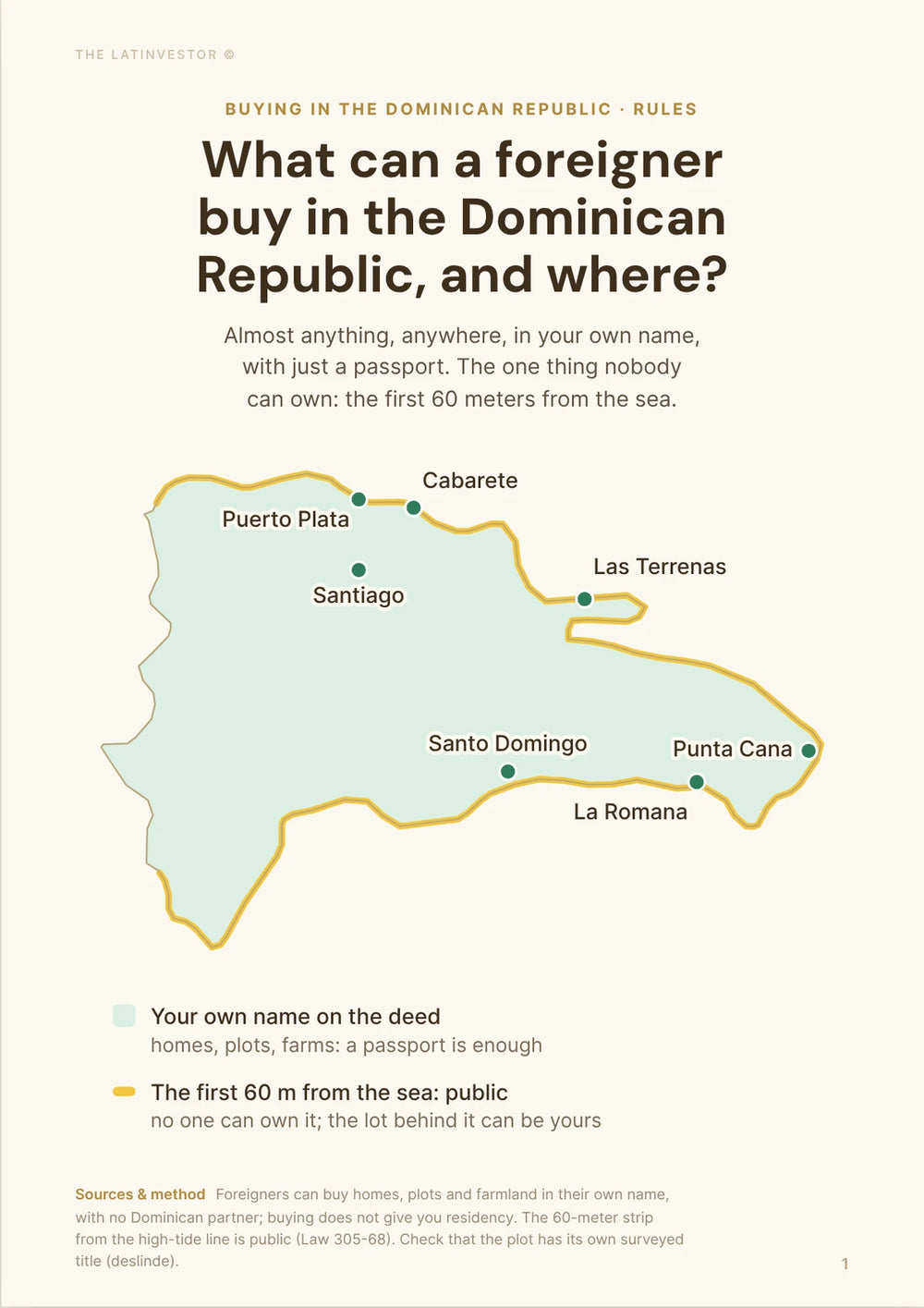
On the coast, the 60 m public strip from high tide (Law 305-68) still applies, so check where a beachfront lot or building really sits before you pay a beach premium.
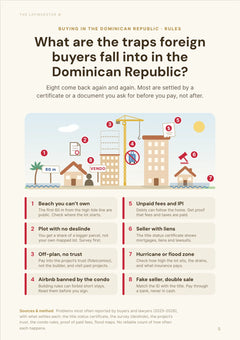
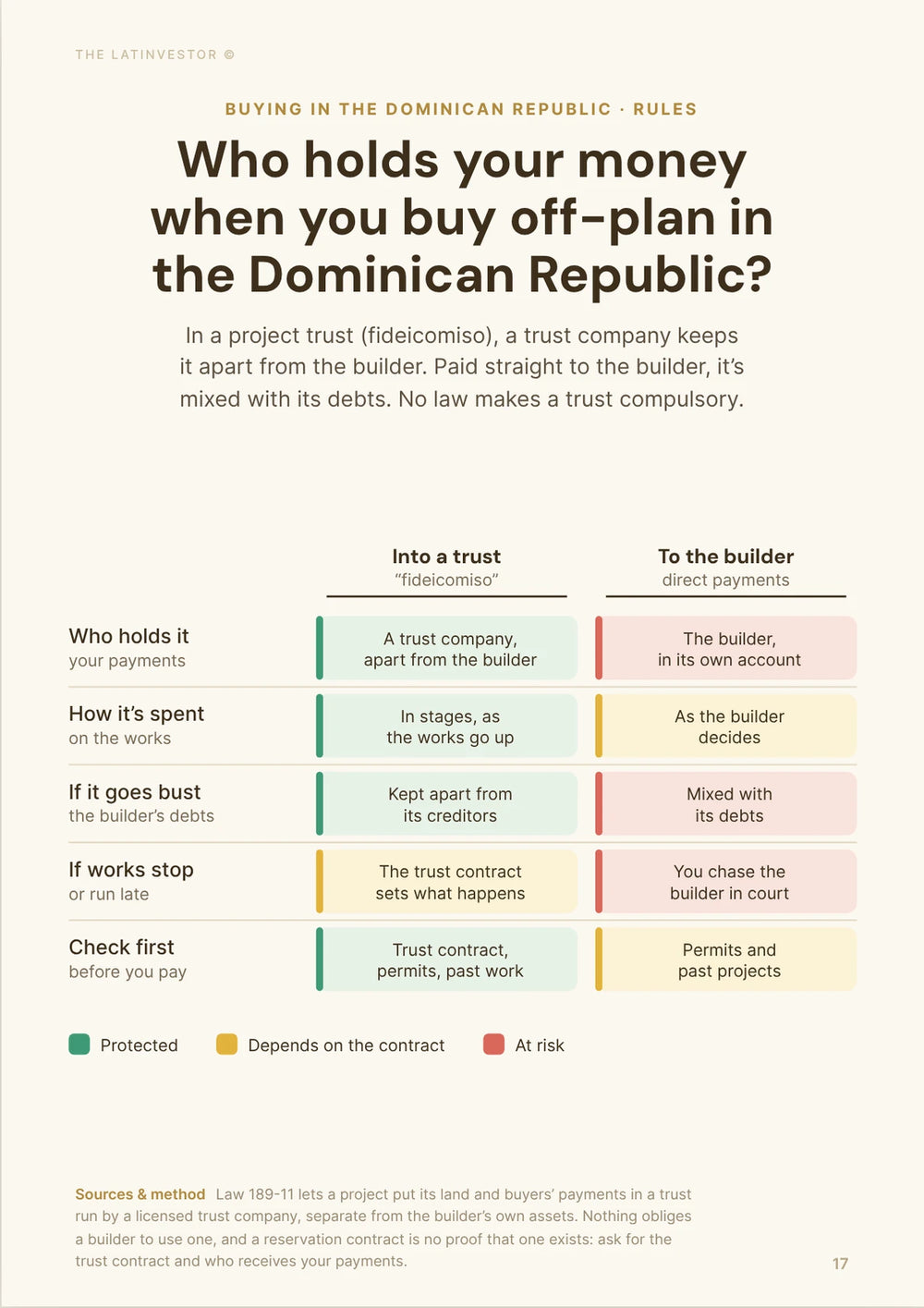
What to check: the construction license, the environmental permit, the fideicomiso (trust) holding your payments, and whether the project is approved by Confotur if the seller promises tax exemptions.
Are foreign-buyer or mortgage rules changing in Punta Cana in 2026?
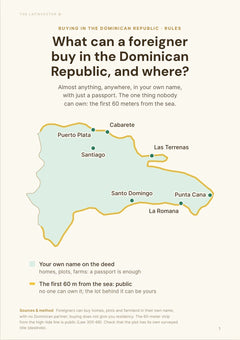
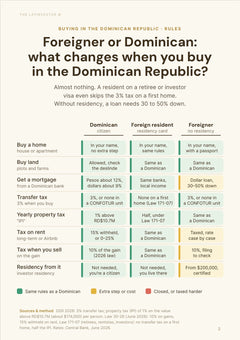
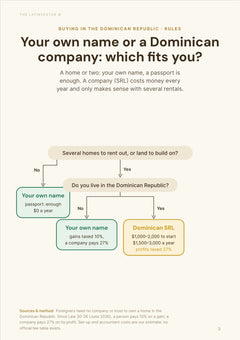
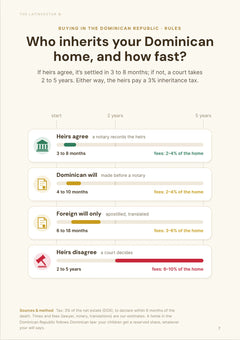
In 2026, foreigners can still buy in Punta Cana in their own name, without residency, with the same title as a local. What changed is tax.
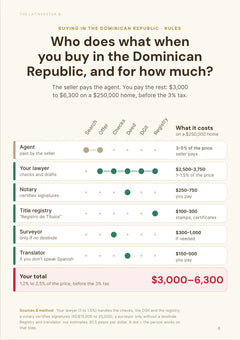
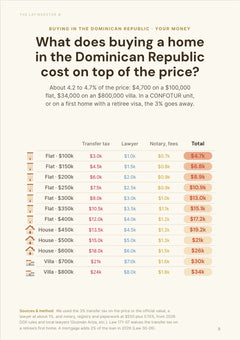
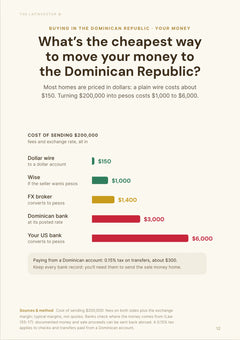
Law 30-26 (June 2026) kept the 3% transfer tax, cut the mortgage registration tax to 2% of the loan in 2026, 1% in 2027 and 0 from 2028, and set a flat, final 10% tax on gains when an individual sells. Buying costs are about 4.5% to 6.5% of the price, or 1.5% to 3.5% on a valid Confotur first purchase.
Confotur is the open question. The law kept the exemptions (3% transfer tax on a first purchase, usually 15 years of IPI) but added a rule that you can't use two incentive regimes on the same operation, and lawyers say its effect on Confotur is still unclear. On a $250,000 condo, the transfer tax at stake is $7,500.
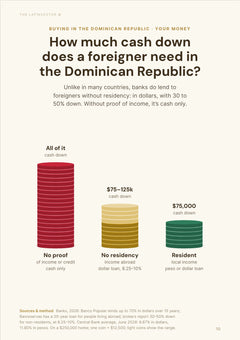
Financing stays hard for non-residents: brokers report 30% to 50% down payments and 10 to 15 year terms, and no bank publishes a binding rate for them. Many Punta Cana buyers pay cash.
Will it be easy to find tenants in Punta Cana in 2026?
Is the renter pool growing faster than new supply in Punta Cana in 2026?
In 2026, long-term renter demand in the best areas looks slightly ahead of good supply. Short-term rental supply, on the other hand, is ahead of demand.
Demand comes from tourism workers, expats, remote workers and visitors: airport traffic rose 19.3% in the first half of 2026. CLIC puts long-term occupancy above 90% for well-priced units.
The supply signal is Airbnb: 2,446 active listings, 1,010 of them 2-bedrooms, and the 40% off-plan share in Evalua's sample means more units are on the way. Every unit that fails on Airbnb ends up looking for a long-term tenant.
Are days-on-market for rentals falling in Punta Cana in 2026?
In 2026, a well-priced long-term rental in Punta Cana Village, Cocotal, Los Corales or Downtown usually finds a tenant within a few weeks. Overpriced or inland units can sit for 2 months or more. No one publishes rental days-on-market, so these are our estimates from listings.
The benchmark to price against: in Punta Cana-Bávaro, the median asking rent was $1,150 for a 1-bedroom and $1,500 for a 2-bedroom in March 2026 (CLIC). By sector, medians go from about $650 in Pueblo Bávaro and $1,250 in Bávaro to $2,450 in Punta Cana Village and $2,500 in Cap Cana.
Furniture, reliable internet and backup power make the difference: tenants pay more and decide faster when the unit works during an outage.
Are vacancies dropping in the best areas of Punta Cana in 2026?
In 2026, long-term vacancy in the best areas looks low and stable. There is no official figure; CLIC puts long-term occupancy above 90%, and we estimate 5% to 7% vacancy for well-priced furnished units in Punta Cana Village, Cocotal, Los Corales or El Cortecito.
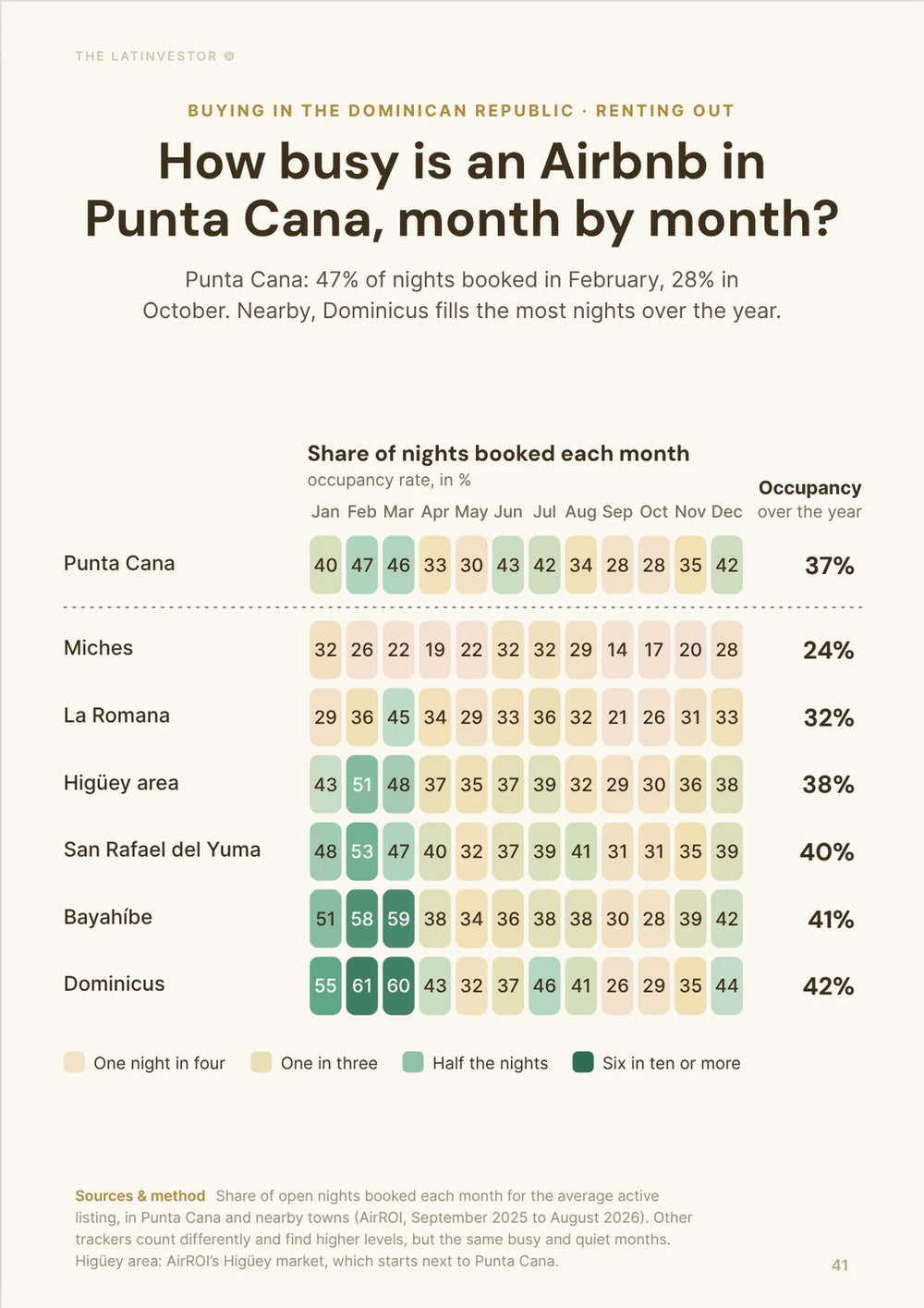
Short-term rentals are a different story: the average Punta Cana Airbnb was booked 36.4% of nights over the 12 months to September 2026 (AirROI). Occupancy swings from about 28% in September and October to about 47% in February and March.
Don't confuse hotel occupancy with Airbnb occupancy: resorts can be full while condos sit empty.
Is it still worth buying in Punta Cana to run an Airbnb?
This is what most buyers ask in 2026, and the honest answer is: only for a unit that beats the average. The average one barely pays.
A 2-bedroom entire home in Punta Cana averages RD$7,182 (about $115) a night at 36% occupancy (AirROI, October 2025 to September 2026). Open all year, that grosses about RD$943,700 (about $15,300). After Airbnb's 15.5% host fee, 20% management, 5% for utilities and internet, condo fees, upkeep and IPI, a $250,000 unit keeps about 1.4% before income tax. The same unit on a long lease at $1,500 nets about 3.7%.
The rules are not the problem yet. MITUR's draft tourist accommodation registry (RENATUR), put out for consultation on 20 May 2026, was withdrawn on 20 July 2026 and moved to a dialogue table with the sector, with no new date. The real gatekeeper is your building: condo bylaws (Law 5038) can ban short stays.
What to check before you buy: the reglamento (condo rules) on short stays, real booking data for similar units in the same building, and whether the price still works on a long lease. If the deal only works with a full Airbnb calendar, walk away.
Am I buying into a tightening market in Punta Cana in 2026?
Is for-sale inventory shrinking in Punta Cana in 2026?
In 2026, it depends on what you buy. Good finished resales with clean title in proven areas are scarce. New-build stock is plentiful and still growing.
CLIC counted 12,854 apartment listings in Punta Cana-Bávaro in June 2026, and about 40% of Evalua's condo sample is off-plan. There is no comparable series to say whether the total is rising or falling year on year.
Prime stock stays tight because owners of good rental units are not forced to sell while dollar rents hold up.
Are homes selling faster in Punta Cana in 2026?
In 2026, good homes sell faster than weak ones. From what we see in listings, a realistic finished condo in a known community sells in roughly 1 to 3 months, an ordinary resale condo in 3 to 6 months, and villas often take 6 months or more.
Overpriced off-plan resales are the slowest, because they compete with developers selling the same kind of unit with payment plans. No official selling-time data exists for Punta Cana.
Are new listings slowing down in Punta Cana in 2026?
In 2026, we see no sign that new listings are slowing in Punta Cana. Developers are still launching and marketing projects, even if finished prime stock is limited.
Listings and buyer interest peak around the high season (December to March). Don't read a big online supply as a big supply of finished, deliverable units: many listed units are not built yet.
Is new construction failing to keep up in Punta Cana in 2026?
In 2026, new construction is not failing to keep up in Punta Cana overall. If anything, there is too much of the same small condo. It is short only in finished, well-located homes with good roads, water and power.
Building costs are not the bottleneck: construction inputs rose only 1.94% in the year to June 2026. Permits and infrastructure are: projects that wait for environmental or tourism approvals deliver late.
More construction does not mean more good investment stock. Check the developer's delivered projects before you trust a delivery date.
Is Punta Cana building too many condos?
For small tourist condos, yes. RE/MAX counts more than 50 off-plan projects in its Punta Cana sample, and 459 of the 1,138 condos Evalua tracked in September 2026 were off-plan.
Most of them sell the same product: 1- and 2-bedroom units marketed as Airbnb investments. Tourism is growing, but the average Airbnb was booked only 36.4% of nights over the last 12 months.
What it means for you: off-plan prices are negotiable, resale of a generic condo will be slow, and long-term rents may soften in crowded areas. An October 2026 snapshot of Bávaro listings (Apartamentos en RD) showed a median of $900 across all sizes, below CLIC's $1,250 in March; the samples differ, so it is a warning, not a measured drop.
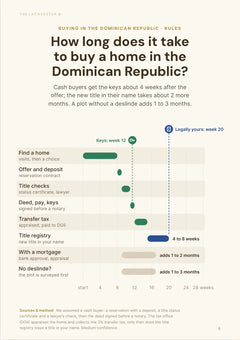
What to check: the developer's track record, the fideicomiso holding your payments (a trust is not a guarantee of completion), late-delivery penalties in the contract, and the deslinde (individual surveyed title, RD$18,000 to RD$60,000 and 30 to 90 days if it is missing).
Do sargassum and hurricane season change when you should buy?
They don't make Punta Cana a bad buy, but they should change how you choose. About 9 million tonnes of sargassum built up in the region from January to June 2026, a record against 8.3 million in 2025 (University of South Florida figures, reported by Dominican Today on 9 July 2026). The east coast, Bávaro and Punta Cana, gets hit most.
Beachfront units pay the most for it: summer guests complain and leave lower ratings. The Environment Ministry inspected sargassum handling at more than 15 hotels from Uvero Alto to Cabeza de Toro.
Hurricane season runs from 1 June to 30 November, so October and November are still in it. Los Corales also saw street flooding on 5 January 2026.
What to do: visit in summer, ask the building who cleans the beach and how often, look at the street after heavy rain, and get an insurance quote covering hurricane and flood damage (with the deductible) before you sign. Use that as a negotiation point on beachfront prices.
Will it be easy to sell later in Punta Cana in 2026?
Is resale liquidity strong enough in Punta Cana in 2026?
In 2026, resale is fine for well-priced condos in known communities, and weak for luxury villas, poor locations and units bought too expensively off-plan.
From what we see in listings, a normal condo priced right sells in roughly 3 to 6 months. Villas and luxury homes take longer.
What helps most when you sell: a simple, rentable 1- or 2-bedroom layout in a name buyers know, such as Punta Cana Village, Cocotal, Cana Bay, Los Corales, El Cortecito or Cap Cana, with an individual surveyed title (deslinde) and clear condo rules.
Is selling time getting longer in Punta Cana in 2026?
In 2026, selling time is getting longer for overpriced and generic units, not for good homes priced realistically.
Our estimate: 3 to 6 months for a realistic condo, 6 months or more for villas, and a year or more for overpriced luxury homes or off-plan resales competing with the developer.
Sales drag because buyers can compare dozens of similar condos online. A unit without beach access, good management or a known community name is easy to skip.
Is it realistic to exit with profit in Punta Cana in 2026?
In 2026, selling at a profit is realistic for a well-bought unit held several years, and unlikely for an overpaid off-plan condo flipped quickly.
Plan to hold about 5 years. Buying, selling, empty months and upkeep can easily wipe out a short price gain.
The round trip costs about 7.5% to 11.5% of the price: 4.5% to 6.5% to buy (3% transfer tax, lawyer, notary) and 3% to 5% agent commission when you sell. On a $240,000 condo, that is $18,000 to $27,600 (about RD$1.1 million to RD$1.7 million), before the 10% tax on any gain.
The best way to improve your odds: buy below comparable finished units in an area where both tenants and future buyers exist, not the most expensive unit in a new launch.
Our methodology
This article estimates whether 2026 is a good time to buy residential property in Punta Cana-Bávaro: condos, apartments, townhouses and villas, from Bávaro and Downtown to Cocotal, Punta Cana Village and Cap Cana.
Prices are asking prices from CLIC Inmobiliaria (June 2026), Evalua (September 2026), RE/MAX Metropolitana and Casanix (October 2026), not closed sales. Rents come from CLIC (March 2026), gross yields from Global Property Guide (Q3 2026), and Airbnb figures from AirROI only (October 2025 to September 2026). Rates, inflation and tourism come from the Banco Central (BCRD), Revista Mercado and MITUR, and construction costs from ONE.
Tax rules come from the text of Law 30-26, DGII and lawyers' notes on Confotur, buying costs from 1122, and infrastructure dates from official government announcements.
We checked these figures in October 2026. Conversions use about 61.5 Dominican pesos per US dollar.
Where we had no direct figure (selling times, rental speed, long-term vacancy), we estimated it from listings and said so. We left out any price forecast and yearly price change, because no reliable index exists for Punta Cana. Your own result will depend on the building, the price you negotiate, the condo fees, your financing and how long you hold.
Key sources used for this analysis include CLIC Inmobiliaria price per m² report, CLIC Inmobiliaria Punta Cana rents, CLIC H1 2026 report, Evalua Punta Cana condos, RE/MAX Metropolitana Punta Cana price guide, Casanix La Altagracia apartments, Apartamentos en RD, Global Property Guide rental yields, Global Property Guide price history, AirROI Punta Cana, Host My Spot, Banco Central de la República Dominicana, BCRD tourism statistics, BCRD September 2026 rate decision, BCRD inflation to September 2026, Revista Mercado on airport traffic, MITUR SITUR statistics, ONE tourism datasets, ONE 2022 census, ONE ICDV construction cost index, MITUR Confotur project search, Pellerano & Herrera on Confotur and Law 30-26, Law 30-26, DGII IPI property tax, Law 5038 on condominiums, 1122 on closing costs, Tropical Assets on financing, El Inmobiliario and ACOPROVI on permit delays, Diario Financiero on Terminal B, Presidency on the Nisibón-Uvero Alto road, Presidency on the Accor airport hotel, Presidency on electricity tariffs, Environment Ministry sargassum operation, INDOMET hurricane season notice, Bávaro Digital on Los Corales flooding, Registro Inmobiliario, IMF Dominican Republic country page and Properstar Punta Cana price data.