Summary
A 3-bedroom house in the main towns of Argentine Patagonia lists at a median of about USD 250,000 to USD 305,000 in October 2026 (Ushuaia, Neuquén and Bariloche), while simple houses in Esquel, Puerto Madryn or El Calafate can still be found under USD 150,000.
There is no Patagonia-wide median: per built square meter, houses list at about USD 2,000 in Bariloche, USD 1,718 in Ushuaia, USD 1,514 in Neuquén and USD 1,208 in El Calafate.
The cheapest livable house costs roughly USD 85,000 to USD 130,000, usually a small older house that still needs work before winter.
In Bariloche, the median 2-bedroom house lists at about USD 180,000 and the median 3-bedroom at USD 305,000, so the third bedroom adds about 69%, mostly because it comes with a bigger plot.
Bigger houses are cheaper per square meter: the median 4-bedroom house in Bariloche asks about USD 370,000 and houses with 5 bedrooms or more about USD 450,000.
A new or nearly new house usually costs roughly 15% to 25% more than a similar older one, which is what you pay for insulation and heating that work in a Patagonian winter.
Land drives the price: a residential lot lists at a median of about USD 84,000 in Ushuaia, USD 90,000 in Neuquén and USD 92,000 in Bariloche, and a chacra of 2,000 to 10,000 m² near Bariloche at about USD 277,000.
The cheapest areas are Esquel (apartments about USD 1,333 per square meter), El Bolsón, Puerto Madryn and the east of Bariloche, while Llao Llao, Arelauquen, Villa La Angostura and San Martín de los Andes run from about USD 600,000 to USD 2 million for good houses.
Budget about 5.5% to 9% on top of the price for stamp tax, notary, registry and broker, so roughly USD 13,750 to USD 22,500 on a USD 250,000 house.
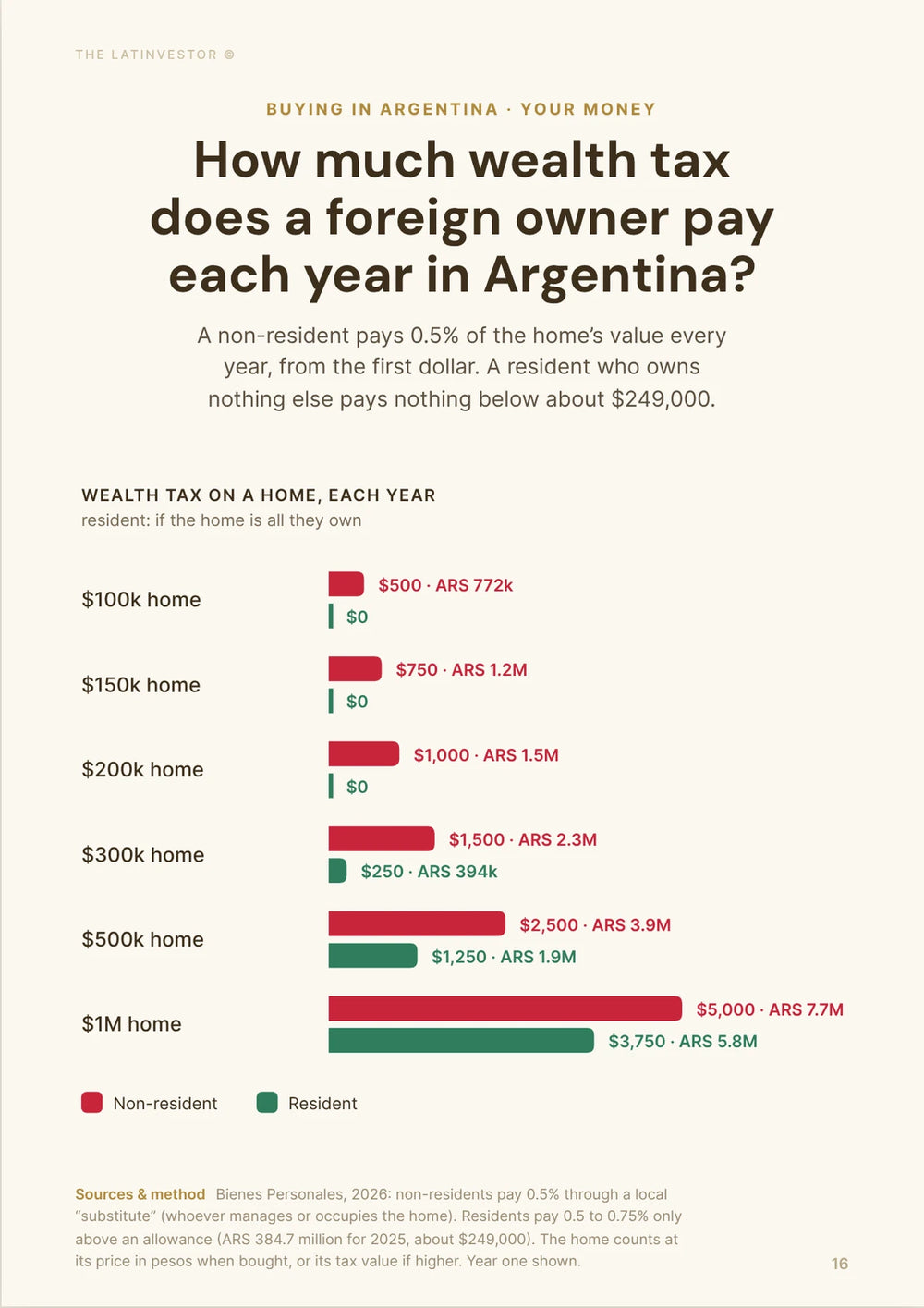
Running a house is the real surprise: roughly ARS 150,000 to ARS 450,000 a month in utilities (USD 97 to USD 290), much more in a badly insulated house from June to September, plus about 0.5% a year in wealth tax for a non-resident owner.
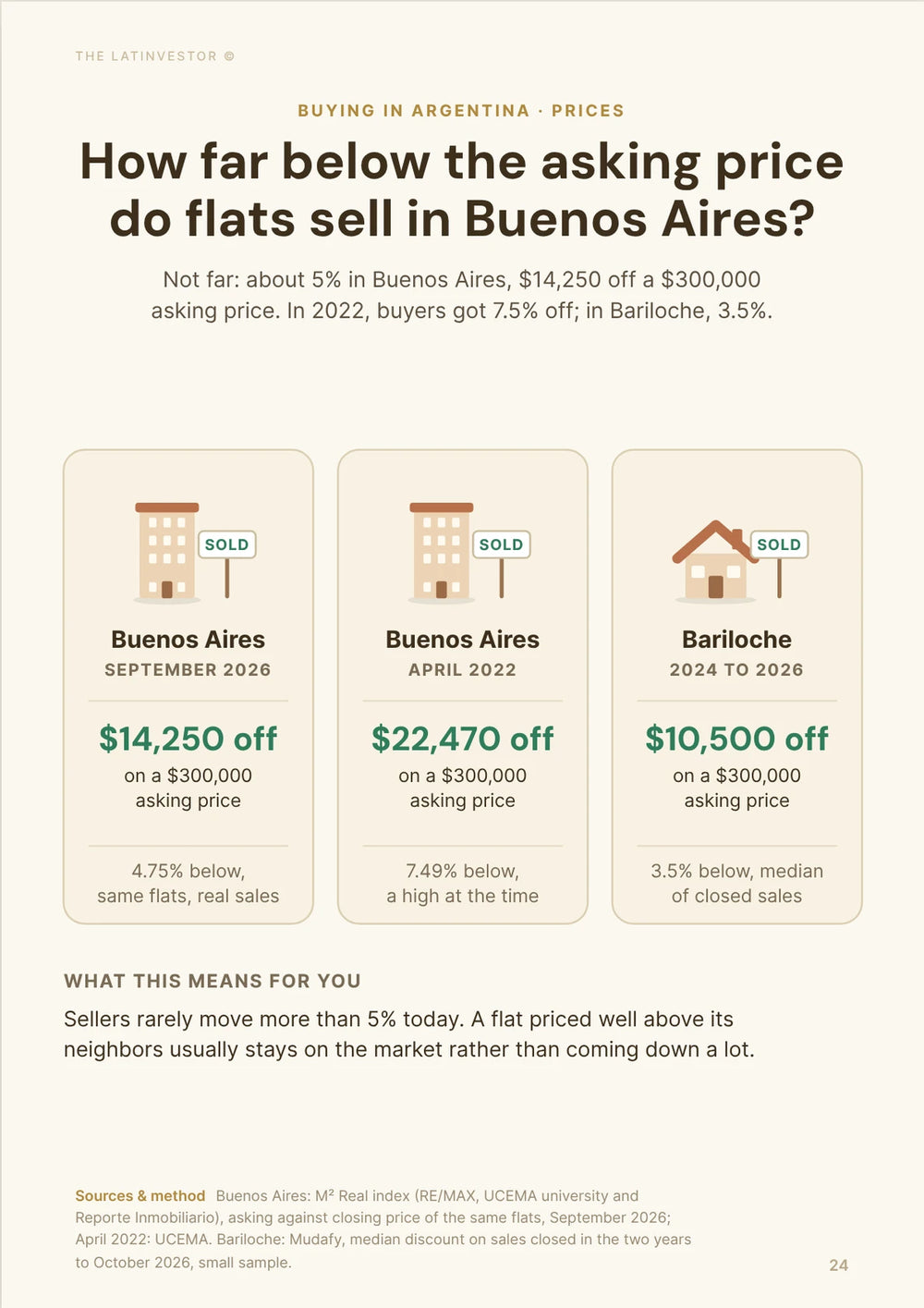
Asking prices are rising in dollars: Bariloche asking prices are up about 17.8% over 12 months on the Roomix Index, yet tracked sales there close about 3.5% below the listing price.
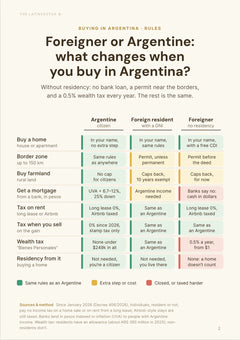
Plan to pay cash: mortgage loans fell 43% in Argentina between January and July 2026, and non-residents with only foreign income have no confirmed access to them.
Since the Supreme Court decision of 9 October 2026, the 15% caps on foreign ownership of rural land are back for now, so any chacra or lake plot outside the urban grid needs a check before a deposit.
Our take: compare every Patagonian house with its town's price per square meter, add the winter-readiness bill (roof, insulation, heating) to the price, and negotiate hard on anything listed for months.

What does a house cost in each Patagonian town?
What's the median house price in Patagonia?
Patagonia is not one market. A house in Neuquén, the oil-and-services capital, a cabin in El Bolsón and a lake house near Bariloche have very little in common, so a single average for the region would mislead you. We give medians town by town instead.
In October 2026, the median 3-bedroom house lists at about USD 250,000 in Ushuaia, USD 260,000 in Neuquén and USD 305,000 in Bariloche. In Bariloche, the median of all houses for sale is about USD 300,000 (EUR 267,000).
Per built square meter, houses list at about USD 2,000 in Bariloche, USD 1,718 in Ushuaia, USD 1,514 in Neuquén and around USD 1,208 in El Calafate, where the median of all homes for sale was about USD 137,000 on a small sample of 17 listings.
We do not give an average: a thin layer of lake-view and gated houses pulls it far above what most buyers pay. At the median price, expect an older 2 or 3-bedroom house of roughly 130 to 160 m² built, with a garden and basic heating, away from the lakefront.
What's the cheapest livable house budget in Patagonia?
The cheapest livable house in Patagonia costs roughly USD 85,000 to USD 130,000 (EUR 75,700 to EUR 116,000). For reference, the median 1-bedroom house in Bariloche lists at about USD 120,000, but there are only around 30 of them.
At this level, livable means a small older house with working heating, basic services, legal access and no urgent structural problem. It does not mean a modern, turnkey home.
You find these houses in Esquel (Ceferino, Badén), Puerto Madryn (Pujol, Perón), the outer areas of Neuquén (Valentina Sur, Confluencia) and the cheaper side of Bariloche (Ñireco, Las Victorias, El Frutillar).
A low price often hides the costs that hurt in winter: weak insulation, an old roof, damp, unfinished extensions, a bad access road or paperwork problems. Check them before you count the house as cheap.
How much do 2 and 3-bedroom houses cost in Patagonia?
In Bariloche, the median 2-bedroom house lists at about USD 180,000 (EUR 160,000) and the median 3-bedroom at about USD 305,000 (EUR 272,000). The 3-bedroom median is about USD 260,000 in Neuquén and USD 250,000 in Ushuaia.
Across the main towns, most 2-bedroom houses ask roughly USD 90,000 to USD 220,000, with Esquel and Puerto Madryn at the low end and Bariloche or Villa La Angostura at the top. Most 3-bedroom houses ask roughly USD 150,000 to USD 350,000, and good ones in lake areas go higher.
In Bariloche, going from the median 2-bedroom to the median 3-bedroom adds about USD 125,000, or 69%. You are not only paying for a room: the 3-bedroom house usually comes with a larger plot and a better family location.
How much do 4-bedroom houses cost in Patagonia?
In Bariloche, the median 4-bedroom house lists at about USD 370,000 (EUR 329,000), or about USD 1,890 per built square meter. Across Patagonia, most 4-bedroom houses ask roughly USD 250,000 to USD 650,000.
Houses with 5 bedrooms or more list at a median of about USD 450,000 in Bariloche. The range is very wide, from about USD 300,000 for an older family house to well over USD 1 million for a lake-view home.
Above that, the market is thin and mostly made of lodge-style houses in Llao Llao, Arelauquen, Villa La Angostura or San Martín de los Andes, where a few ask more than USD 2 million. Some are partly hotels or rental businesses, so compare them carefully.
How much do new-build houses cost in Patagonia?
A new or nearly new house usually costs roughly 15% to 25% more than a similar older one. Applied to the Bariloche median of USD 2,000 per square meter, that is about USD 2,300 to USD 2,500, and well-finished houses in good areas ask more.
No portal publishes this premium for Patagonia, so treat it as a rough range from comparing listings. You pay it for double glazing, insulation, efficient heating and fewer repairs in the first winters, which matter a lot in Bariloche, San Martín de los Andes and Ushuaia.
Building costs rose too: INDEC's construction cost index was up 31.3% over 12 months in September 2026, faster than the dollar, so a new house is not getting cheaper in dollars. Compare a new house with an older one plus its renovation budget.
How much do houses with land cost in Patagonia?
A house on a large plot in Patagonia usually costs roughly USD 350,000 to USD 1.5 million (EUR 312,000 to EUR 1,340,000). The value comes from the land: views, lake access, forest, privacy and what you are allowed to build.
Land alone gives the floor. A residential lot of 500 to 2,000 m² near Bariloche lists at a median of about USD 92,000, and a quinta or chacra of 2,000 to 10,000 m² at about USD 277,000. In Neuquén the median lot asks about USD 90,000 (USD 192 per m²), and an urban lot under 500 m² in Ushuaia about USD 84,000 (USD 224 per m²).
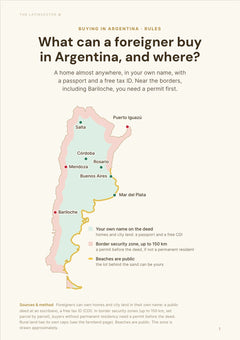
The price jumps near lakes, ski access and the Andean valleys close to Chile. Those are also the places where rural-land and border-zone rules can apply to a foreign buyer (see below).
Where are houses cheapest and most expensive in Patagonia?
Which neighborhoods have the lowest house prices in Patagonia?
The lowest house prices are in Esquel (Ceferino, Badén), Puerto Madryn (Pujol, Perón), outer Neuquén (Valentina Sur, Canal V, Confluencia) and the east of Bariloche (Ñireco, Las Victorias, El Frutillar).
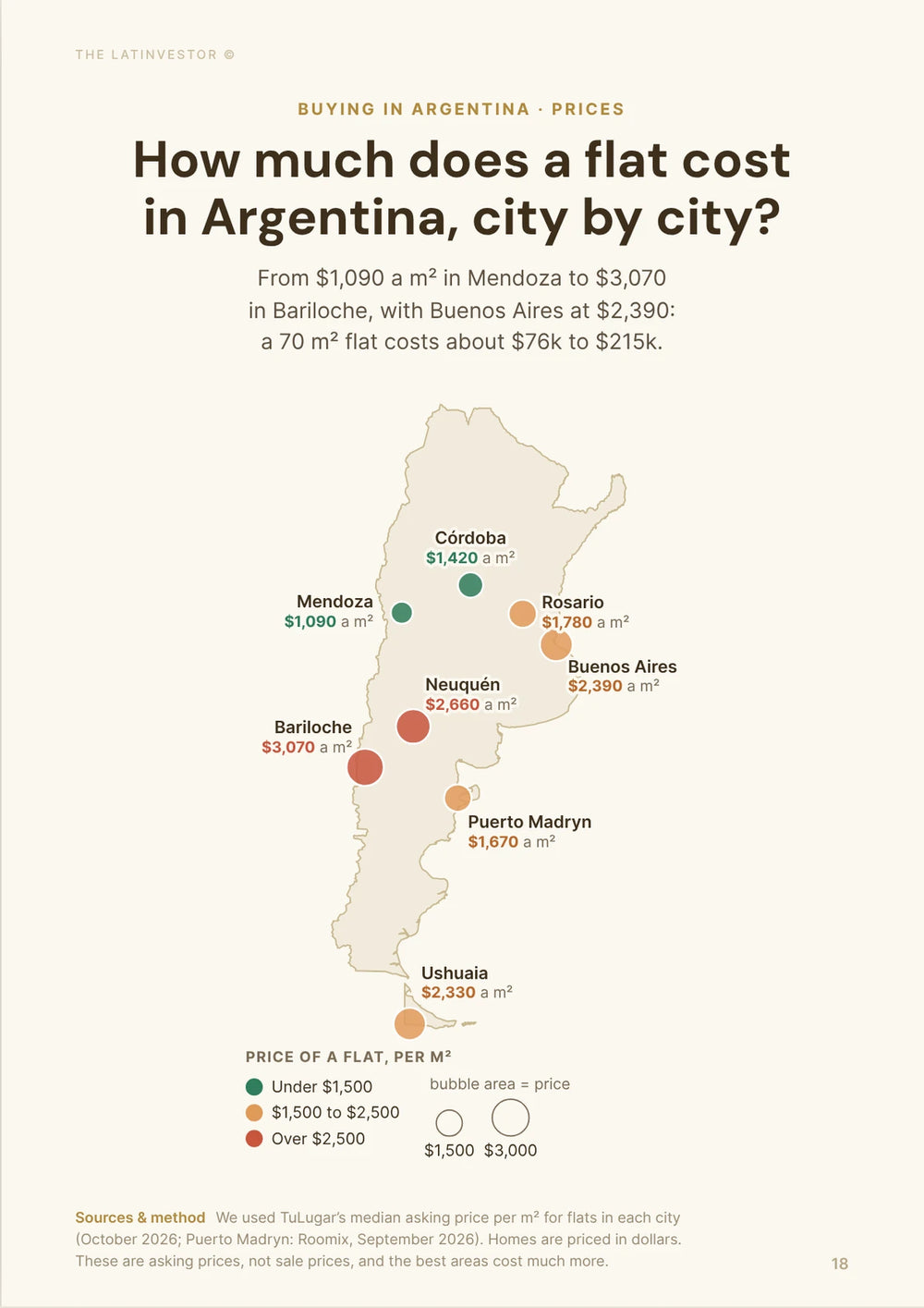
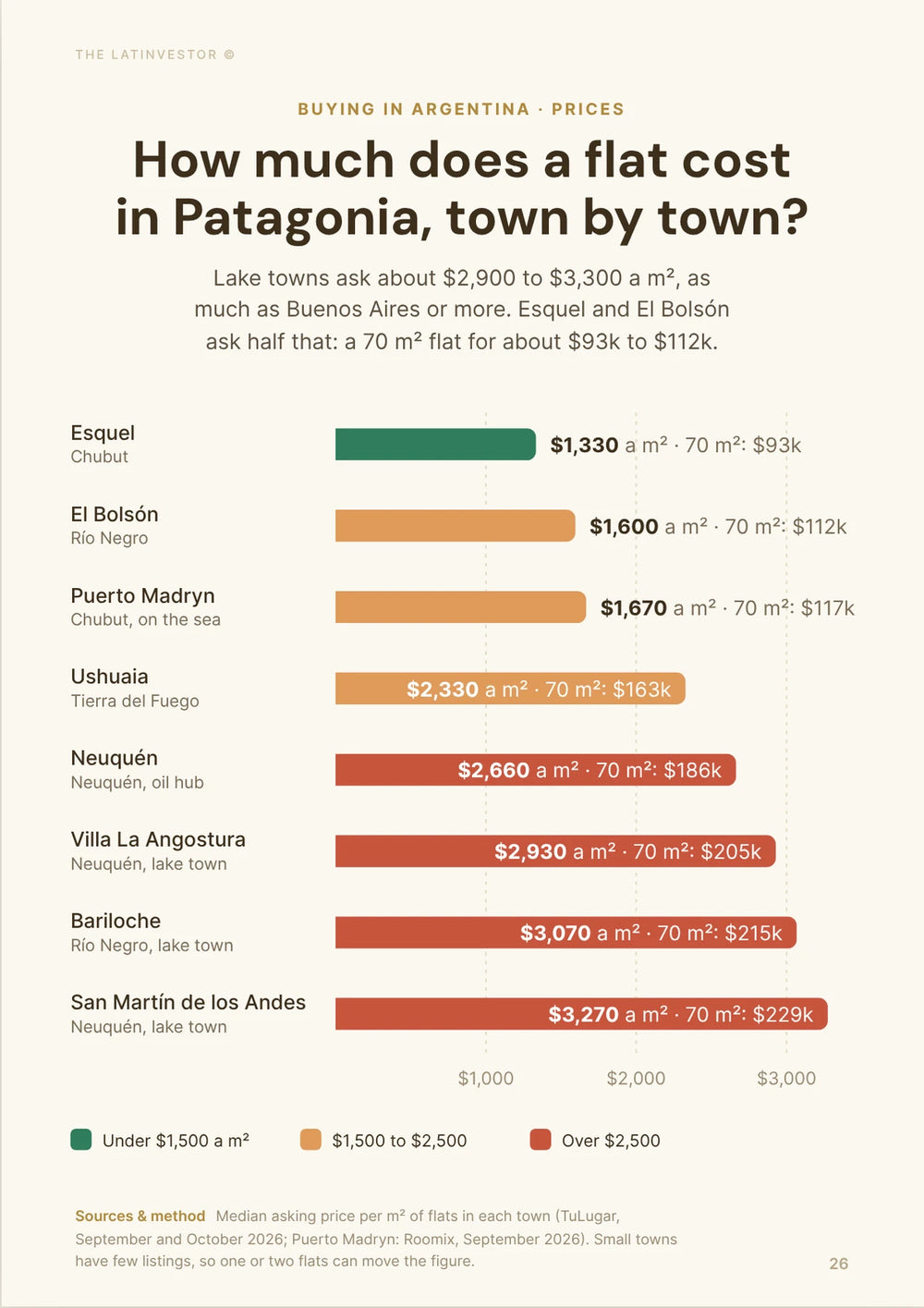
In these areas, a normal house costs roughly USD 85,000 to USD 220,000 (EUR 75,700 to EUR 196,000). Apartment medians show the gap between towns: about USD 1,333 per square meter in Esquel, USD 1,595 in El Bolsón and USD 1,667 in Puerto Madryn, against USD 3,067 in Bariloche. Inside Bariloche, Las Victorias lists at about USD 1,867.
They are cheaper because they are far from lake views, tourist streets and the easy winter roads, so buyers judge them on running costs rather than lifestyle. You will need a car.
Which neighborhoods have the highest house prices in Patagonia?
The highest house prices are in Bariloche (Arelauquen, Llao Llao, Circuito Chico, Melipal), Villa La Angostura (Puerto Manzano, Cumelén, Las Balsas) and San Martín de los Andes (Chapelco Golf, Las Pendientes, Altos del Chapelco).
Good houses there cost roughly USD 600,000 to USD 2 million (EUR 534,000 to EUR 1,780,000), and a few trophy homes ask more. Apartment medians confirm the ranking: about USD 3,936 per square meter in Melipal, USD 3,274 in San Martín de los Andes and USD 2,928 in Villa La Angostura.
Buyers pay for scarce lake access, mountain views, privacy and strong seasonal rental demand. The typical buyer is a high-income Argentine family, a foreign second-home buyer or someone who wants a house that can also work as a holiday rental.
How much do houses cost near the city center in Patagonia?
Houses near the center usually cost roughly USD 150,000 to USD 450,000 (EUR 134,000 to EUR 401,000). The central zones that matter are Bariloche Centro and Belgrano, Neuquén Centro and Santa Genoveva, and the centers of San Martín de los Andes, Puerto Madryn, Esquel and Ushuaia.
Along the main access roads (Bariloche's Avenida Bustillo and the airport road, Ruta 22 in Neuquén, Ushuaia's main corridors), houses usually ask roughly USD 160,000 to USD 450,000.
Near well-known schools, such as Woodville and Primo Capraro in Bariloche or the bilingual-school areas of Neuquén, houses usually ask roughly USD 200,000 to USD 650,000. School names here are location markers, not rankings.
In the areas foreigners like most, west Bariloche, Circuito Chico, Llao Llao, Villa La Angostura, San Martín de los Andes, El Bolsón and Trevelin, a comfortable house usually costs roughly USD 250,000 to USD 900,000.
How much do houses cost in the suburbs in Patagonia?
A suburban house in Patagonia usually costs roughly USD 110,000 to USD 350,000 (EUR 98,000 to EUR 312,000), except in the premium lake suburbs, which cost more than the centers.
In the ordinary suburbs, houses often cost roughly 15% to 40% less than in the center. The apartment medians show it near Bariloche: about USD 2,133 per square meter in Dina Huapi against USD 3,065 in Bariloche Centro.
The suburbs people look at most are Dina Huapi near Bariloche, Plottier and Centenario near Neuquén, Vega Maipú near San Martín de los Andes, Trevelin near Esquel, the outer neighborhoods of Puerto Madryn, and Río Pipo or Andorra in Ushuaia. Check road access in winter and whether the house is on the gas network.
What areas in Patagonia are improving and still affordable?
The improving and still affordable areas are Esquel, Trevelin, El Bolsón, Lago Puelo, Dina Huapi, Plottier, Centenario, the outer neighborhoods of Puerto Madryn and the ordinary family areas of Neuquén.
A typical house there costs roughly USD 100,000 to USD 250,000 (EUR 89,000 to EUR 223,000).
What improves them is jobs and access, not new cafés: Vaca Muerta oil work around Neuquén, tourism spilling over from Bariloche, and airport work. The Chapelco terminal near San Martín de los Andes was doubled in size in August 2026, Esquel started airport car-park works in September 2026 with a larger expansion announced on 19 October, and Puerto Madryn is negotiating a modernization of its airport.
What extra costs should I budget for a house in Patagonia right now?
What are typical buyer closing costs for houses in Patagonia right now?
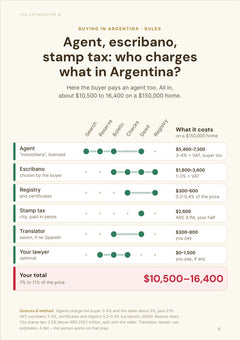
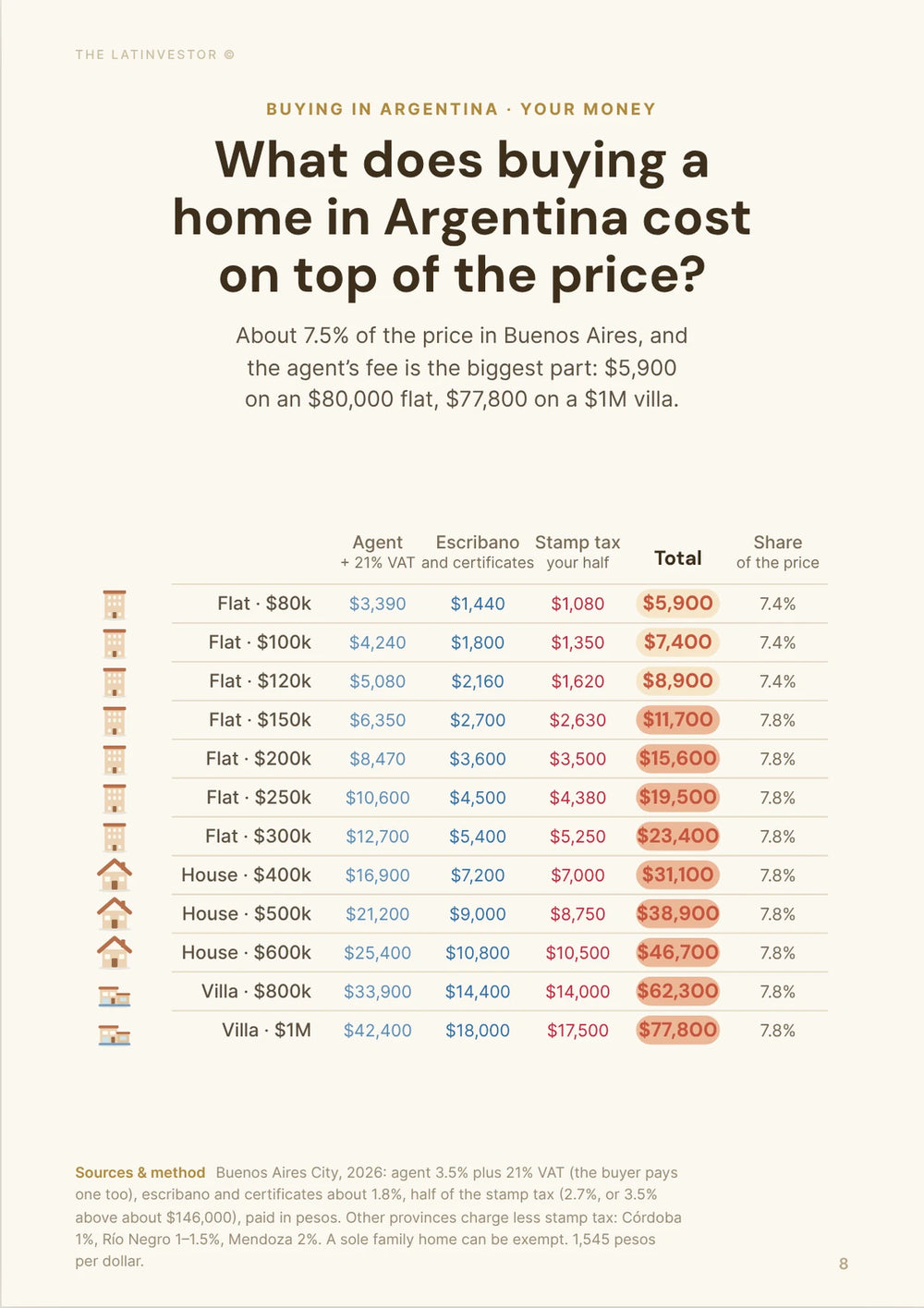
Buyer closing costs for a house in Patagonia come to about 5.5% to 9% of the price, so a USD 250,000 house needs roughly USD 13,750 to USD 22,500 on top.
The items are your share of the provincial stamp tax, the notary (escribano) at 1% to 2% plus VAT, certificates and registry at 0.2% to 0.4%, and the buyer's broker fee, usually 3% to 4% plus 21% VAT. The broker is often the biggest item; stamp tax is the biggest tax.
Stamp tax depends on the province. In Río Negro (Bariloche, El Bolsón, Dina Huapi), it is 1% when the special fiscal value is up to ARS 55 million (about USD 35,500) and 1.5% above. In Neuquén (Neuquén city, San Martín de los Andes, Villa La Angostura), it is about 2.5% in total (a Roomix figure, not confirmed by an official source), usually split with the seller. Chubut, Santa Cruz and Tierra del Fuego have their own rates, so ask the notary for a written estimate.
Two old costs are gone: the 1.5% ITI transfer tax was abolished in July 2024, and since 1 January 2026 individuals, residents or not, pay no income tax on the gain when they resell.
How much are property taxes on houses in Patagonia right now?
A normal house pays roughly ARS 300,000 to ARS 2.1 million a year in provincial property tax and municipal charges (USD 195 to USD 1,350). Lake houses and large plots pay more. We found no official typical amount, so ask the seller for the last bills.
The tax is based on a provincial fiscal value, usually far below the market price, which is why it looks low next to Europe or North America.
A non-resident owner also pays Bienes Personales (wealth tax) at about 0.5% a year with no allowance, through a local representative. On a house valued at USD 300,000 for tax purposes, that is up to about USD 1,500 a year.
How much is home insurance for a house in Patagonia right now?
Home insurance costs roughly ARS 280,000 to ARS 980,000 a year (USD 180 to USD 630), more for high-value houses.
The price depends on rebuild value, wildfire exposure, wooden construction, snow load, theft, distance from the fire brigade and whether you rent to tourists. A house at the forest edge can be much harder to insure, so get a quote before you sign.
What are typical utility costs for a house in Patagonia right now?
A normal 2 or 3-bedroom house costs roughly ARS 150,000 to ARS 450,000 a month in utilities (USD 97 to USD 290), with winter months far higher in the mountains and in the far south.
Gas and heating are the big line, roughly ARS 70,000 to ARS 350,000 a month in winter, then electricity, water and municipal services, internet, and firewood or backup heating where needed.
Ask the seller for last winter's gas bills, and check whether the house is on the gas network or runs on bottled gas, which costs much more.
What are common hidden costs when buying a house in Patagonia right now?
A basic inspection costs roughly ARS 420,000 to ARS 1.1 million (USD 270 to USD 710). Deeper checks by an architect, engineer or surveyor, including the plot boundaries and the gas installation, can reach ARS 2.8 million (USD 1,810).
The real money is in the works: heating upgrades, roof repairs, damp treatment, insulation, septic or water fixes, tree clearing and furniture. On an older house, light work often comes to roughly USD 15,000 to USD 40,000.
Fire is the risk people underestimate. The early-2025 fire around El Bolsón affected 221 homes, 166 destroyed and 55 damaged. Check the distance to the forest edge, firebreaks and the slope around the plot.
Road access is the other one: on 18 October 2026, Route 40 near Puerto Arauco, Villa La Angostura, was fully closed after a slope collapse. Ask how the road to the house behaves in winter and after storms.
What do locals and expats say about the market in Patagonia?
Do people think houses are overpriced in Patagonia?
Many locals think houses in Bariloche, Villa La Angostura and San Martín de los Andes are overpriced, and see better value in Esquel, Trevelin, Puerto Madryn and the Neuquén suburbs.
The gap with local incomes is easy to see. A median 3-bedroom house in Neuquén asks about USD 260,000, while a 2-bedroom flat there rents for about ARS 1.58 million a month (USD 1,020, May 2026). Prices follow tourism, second homes and dollar savings, not local wages.
A well-priced house can sell within a few months, while overpriced lake houses often sit for a year or more. We found no published time-on-market figure for Patagonia.
The strong peso adds to the feeling: inflation was 33.4% over the 12 months to September 2026 while the dollar rose only about 4.9% since January, so everything paid in pesos, works, labour and local taxes, got more expensive in dollars.
Are prices still rising or cooling in Patagonia?
Asking prices are firm in dollars, but there is no Patagonia-wide index, so any single regional figure would be a guess. In Bariloche, the Roomix Index shows asking prices up about 17.8% over 12 months (all home types, October 2026), and the TuLugar apartment median moved from USD 2,983 to USD 3,039 per square meter between August and September.
Real sales are calmer. Tracked Bariloche sales closed a median 3.5% below the listing price, and in Buenos Aires, where closing prices are published, they were 0.4% lower than a year earlier in September 2026.
Credit is not helping: mortgage loans fell from 25,160 to 14,237 between January and July (−43% on 2025). Over the next 6 to 12 months, expect well-insulated, well-located houses with clean papers to hold their price, and tired or overpriced ones to sit longer and sell at bigger discounts.
How much can you negotiate on a house in Patagonia, and will you pay cash?
Less than many buyers hope on good houses, more on tired ones. Tracked Bariloche sales closed a median 3.5% below asking; on older houses that have been online for months, 5% to 10% off is still realistic.
Use the town's price per square meter as your yardstick: about USD 2,000 for houses in Bariloche, USD 1,718 in Ushuaia and USD 1,514 in Neuquén. A house asking well above that without a view, new finishes or a large plot is overpriced. Then get quotes for roof, insulation and heating before you make an offer, and deduct them.
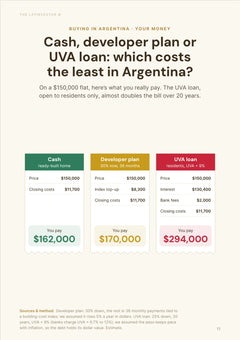
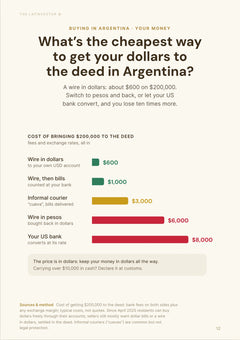
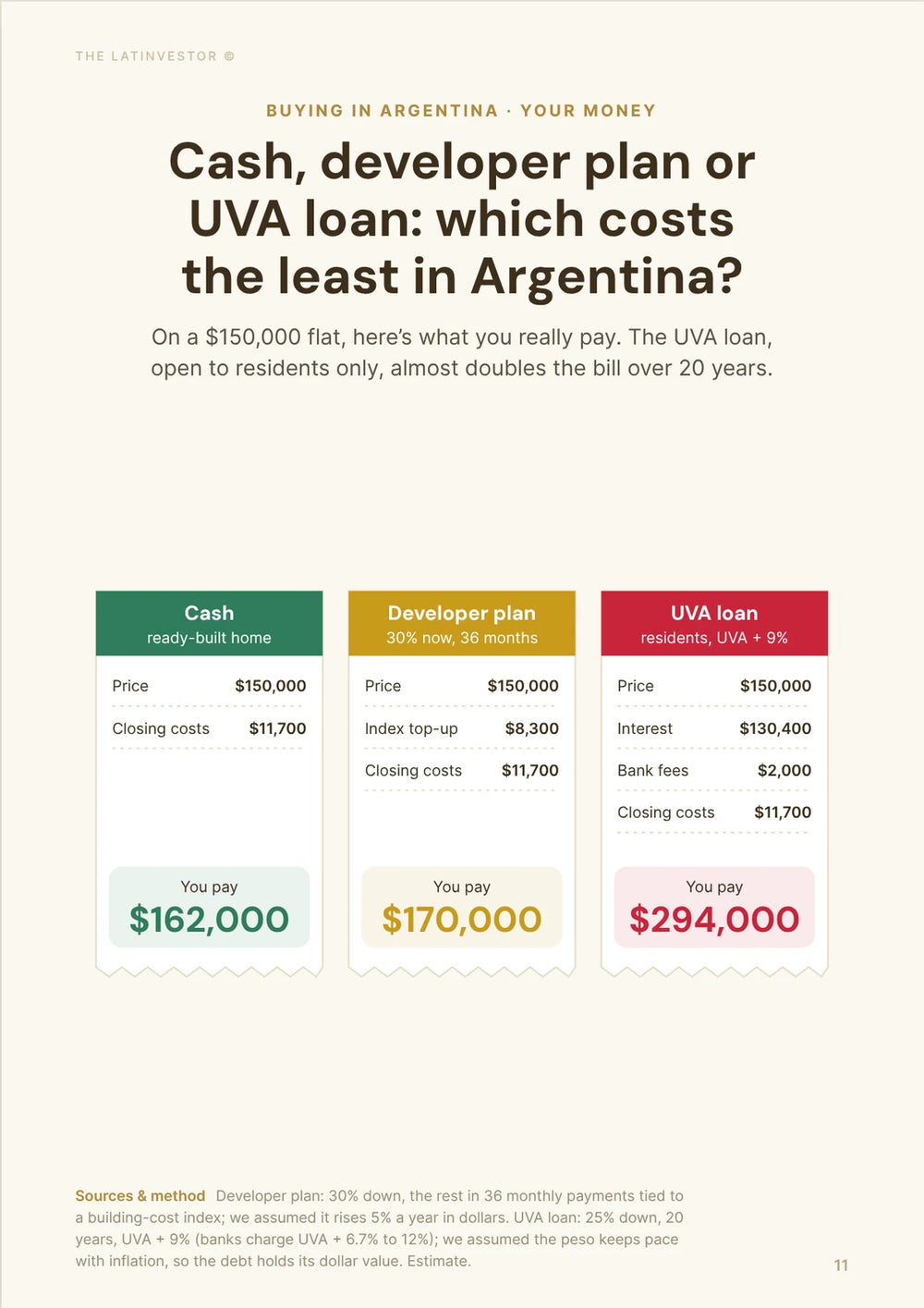
Expect to pay cash. Houses are priced in US dollars, a contract in dollars must be paid in dollars (Civil Code, arts. 765–766), and non-residents with only foreign income have no confirmed access to UVA mortgages. Bring the money through a bank so the notary can document its origin: cash deals above ARS 275,850,000 (about USD 178,000) are reported to the financial intelligence unit (UIF) in the second half of 2026.
Can foreigners still buy a house with land in Patagonia after the October 2026 ruling?
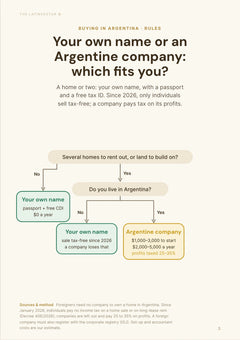
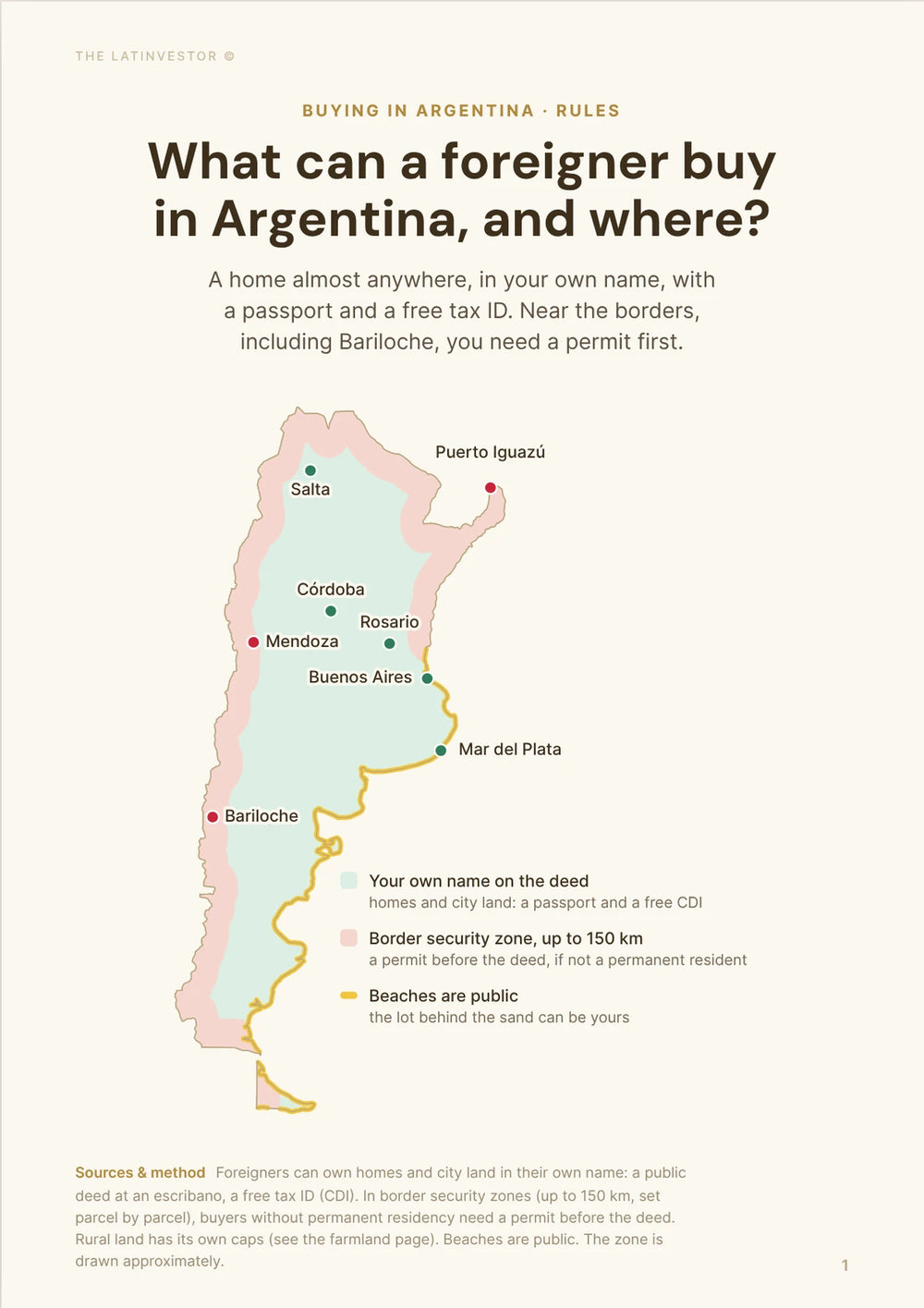
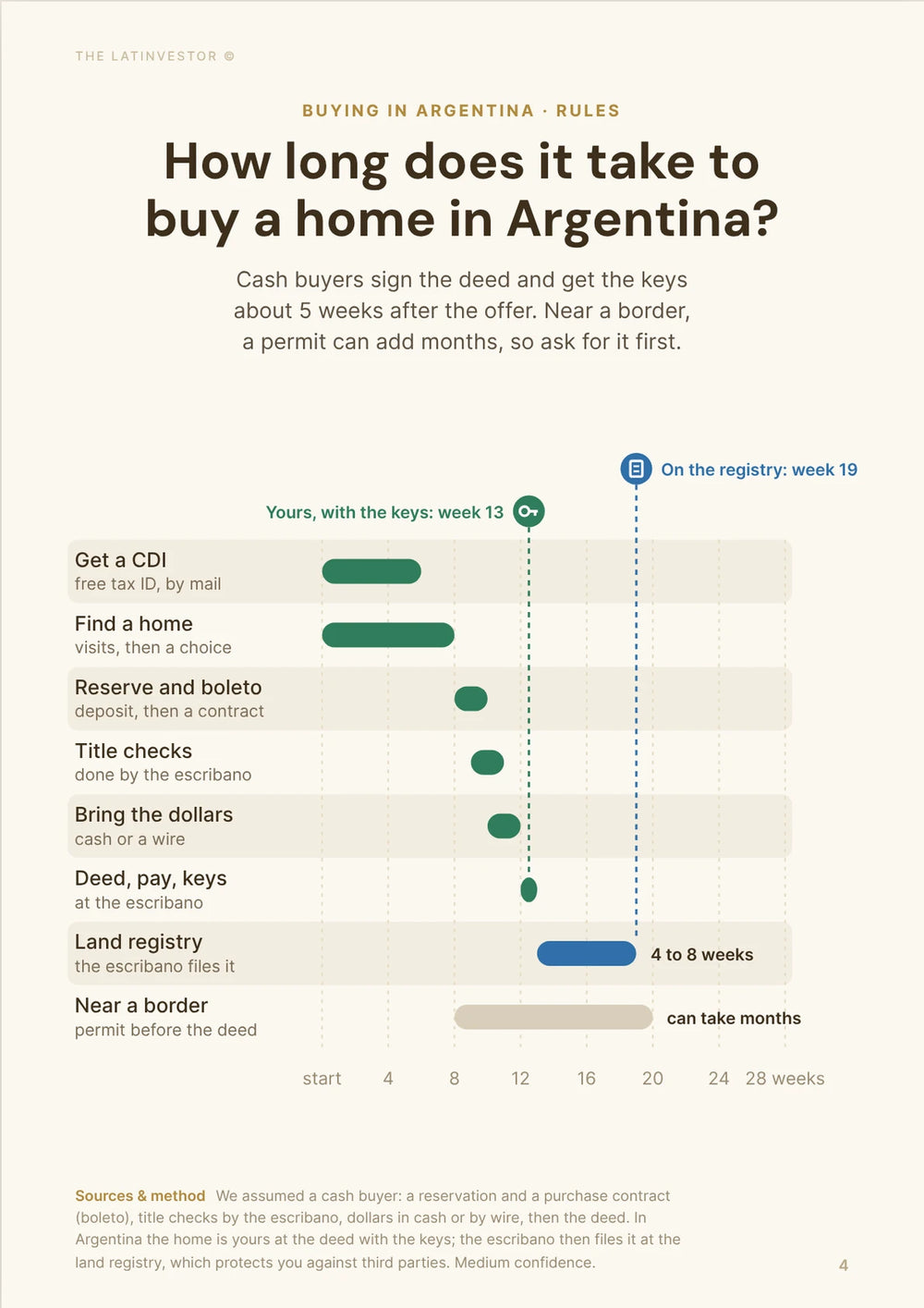
For a house in town, yes: a non-resident foreigner can buy in his own name with a tax ID (CDI), a public deed before a notary and registration. Buying gives no residency on its own.
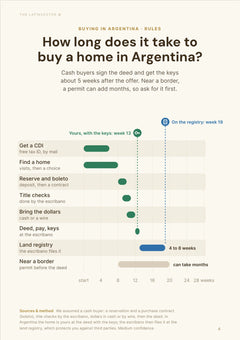
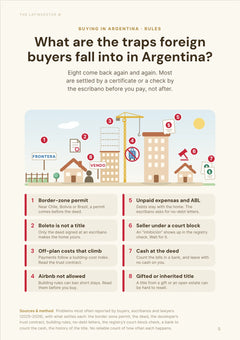
For rural land it changed this month. On 9 October 2026, the Supreme Court provisionally suspended the repeal of the Rural Land Law (Law 26.737), in a case sent back to Bariloche. Until a final ruling, the limits apply again, including the 15% caps on foreign ownership of rural land, with extra rules near lakes and rivers. Border security zones near Chile (Decree-Law 15.385) are a separate check.
What to do: before paying a deposit on a chacra, an estancia or a lakefront plot outside the urban grid, ask the notary to confirm in writing whether the parcel is classed as rural and whether it sits in a border zone, and make that a condition of the reservation.
Our methodology
This article estimates what a house costs in Argentine Patagonia in October 2026: town medians by bedroom count, the cheapest livable budget, new-build and land prices, the gap between areas, and the costs of buying and owning a house. Chilean Patagonia is not covered.
House medians, prices per square meter and land prices come from TuLugar's town pages (houses for Bariloche, Neuquén and Ushuaia; apartments only for San Martín de los Andes, Villa La Angostura, El Bolsón and Esquel) and the Roomix Index (El Calafate, Puerto Madryn, Bariloche trend). The negotiated discount comes from Mudafy's tracked Bariloche sales. Where no house median exists, we used apartment medians to show the gap between towns and gave house ranges as rounded estimates from Properati, Zonaprop and Argenprop listings.
Buying costs come from the 2026 Río Negro and Neuquén stamp-duty schedules, Roomix and standard notary, registry and broker fees; tax rules from ARCA, national law and Decree 406/2026; the land-law update from Chequeado; mortgage volumes from Tejido Urbano via CPAU; inflation and building costs from INDEC; fire and road risks from the Río Negro government and Villa La Angostura municipality.
We checked these figures in October 2026. Peso amounts are converted at about ARS 1,550 per US dollar (official and MEP rates were within 1% of each other on 22 October 2026, the blue rate about ARS 1,570), and euro amounts at about ARS 1,740 per euro.
Where we had no direct figure, we said so: there is no Patagonia-wide price index or house median, no published house median for Esquel, Puerto Madryn, San Martín de los Andes or Villa La Angostura, and no local study of the new-build premium. Neighborhood ranges, property tax, insurance, utilities and works are rough estimates. All portal figures are asking prices, which usually sit above final sale prices.
Key sources used for this analysis include TuLugar Bariloche, TuLugar Neuquén, TuLugar Ushuaia, TuLugar San Martín de los Andes, TuLugar Villa La Angostura, TuLugar El Bolsón, TuLugar Esquel, Roomix El Calafate, Roomix Puerto Madryn, Roomix Bariloche, Mudafy Bariloche, Properati Neuquén, Properati Bariloche, Properati San Martín de los Andes, Properati Villa La Angostura, Properati Esquel, Zonaprop Puerto Madryn, Zonaprop Ushuaia, Río Negro stamp-duty schedule 2026, Neuquén stamp-duty schedule 2026, ARCA, Camuzzi Gas del Sur, Chequeado, Reporte Inmobiliario M² Real, CPAU, INDEC and Infobae.