Summary
Yes. A foreigner buying a home within 50 km of the coast or 100 km of a border still needs a fideicomiso in 2026, and the SRE still charges MXN 21,650 (about USD 1,160) for each new trust permit.
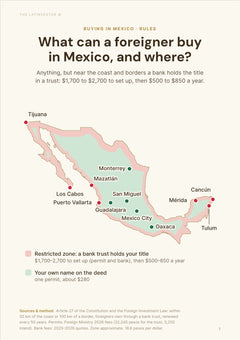
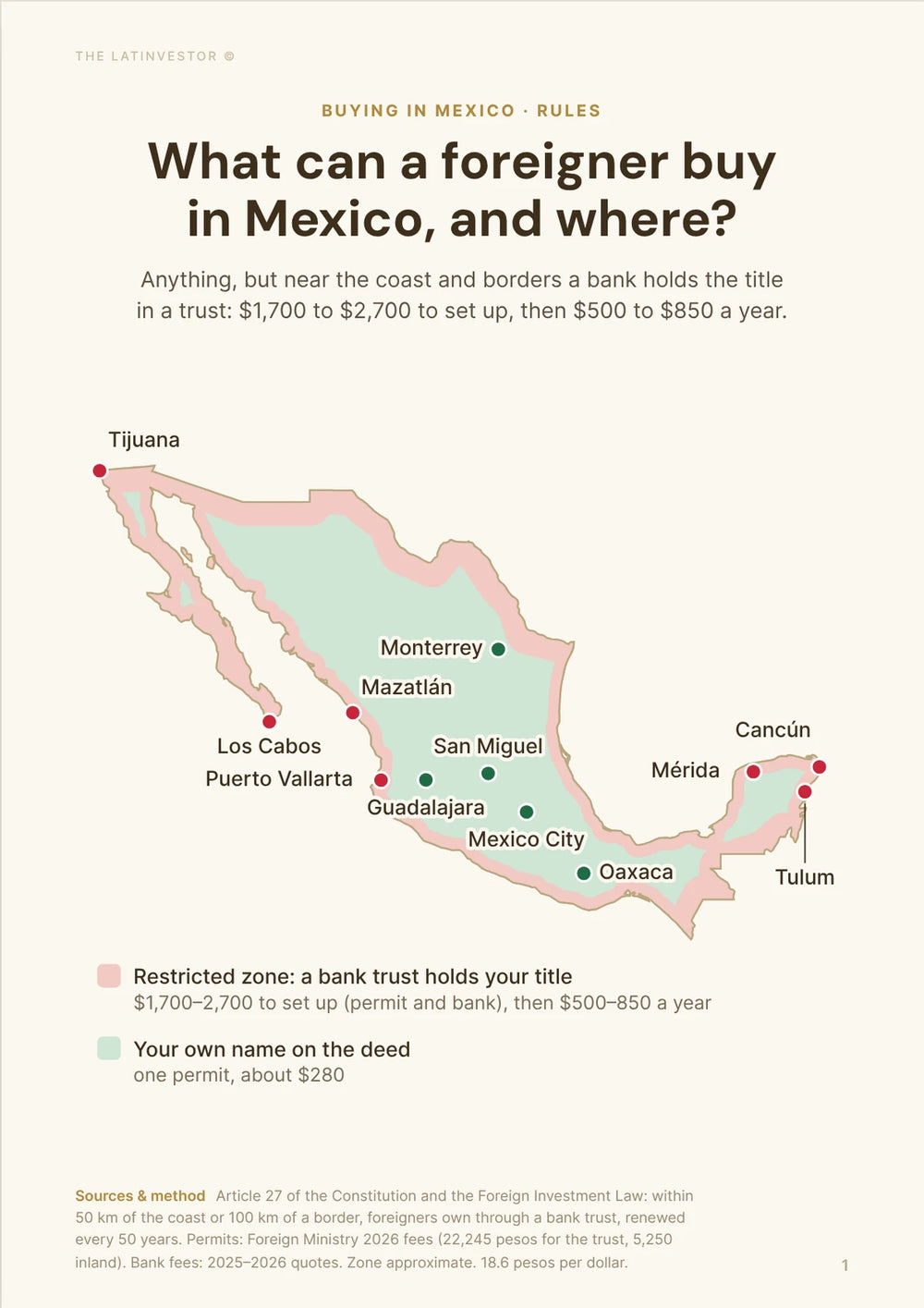
The rule is about location, not nationality. Inland, in places like Mexico City or San Miguel de Allende, foreigners take title in their own name. In Tulum, Cancún, Puerto Vallarta or Los Cabos, they can't.
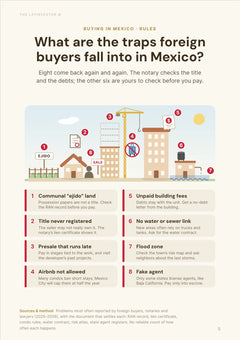
The 50 km band covers whole cities, not just the beachfront. A house with no ocean view can still be inside it, so check where the registered parcel sits, not what the listing says.
What changed in 2026 is the paperwork. A June 2026 decree cut the SRE's maximum processing time for a trust permit from 5 to 3 business days and folded several documents into the online form. The ownership rule didn't move.
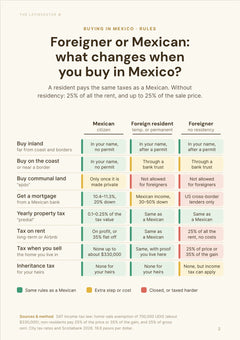
Permanent residency doesn't help. Even after 15 years as a permanent resident, you are still a foreigner for this rule. Only naturalization changes that.
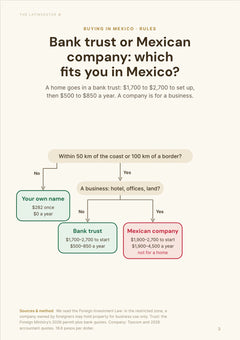
A Mexican company can own restricted-zone property directly only for genuine non-residential use. Setting up a company (around MXN 35,000 to 50,000 just to form it) to hold one vacation condo is not a clean way around the trust.
Renting the condo out doesn't change anything either. A fideicomiso already lets you earn rental income, and Airbnb use doesn't turn a home into commercial property.
The bank holds legal title, but you keep the rights to use, rent, sell and pass on the property. You can sell any time, and you can name substitute beneficiaries for your children.
The 50-year term is renewable. Extending on time costs MXN 9,740 plus MXN 595 in SRE fees in 2026, so year 50 is a renewal date, not a loss.
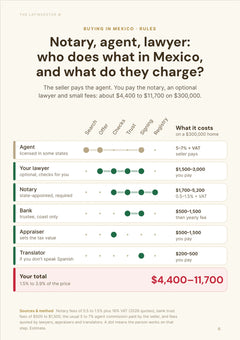
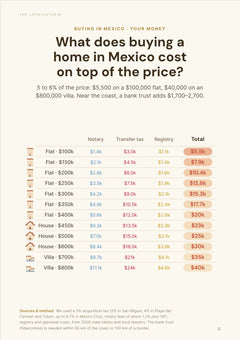
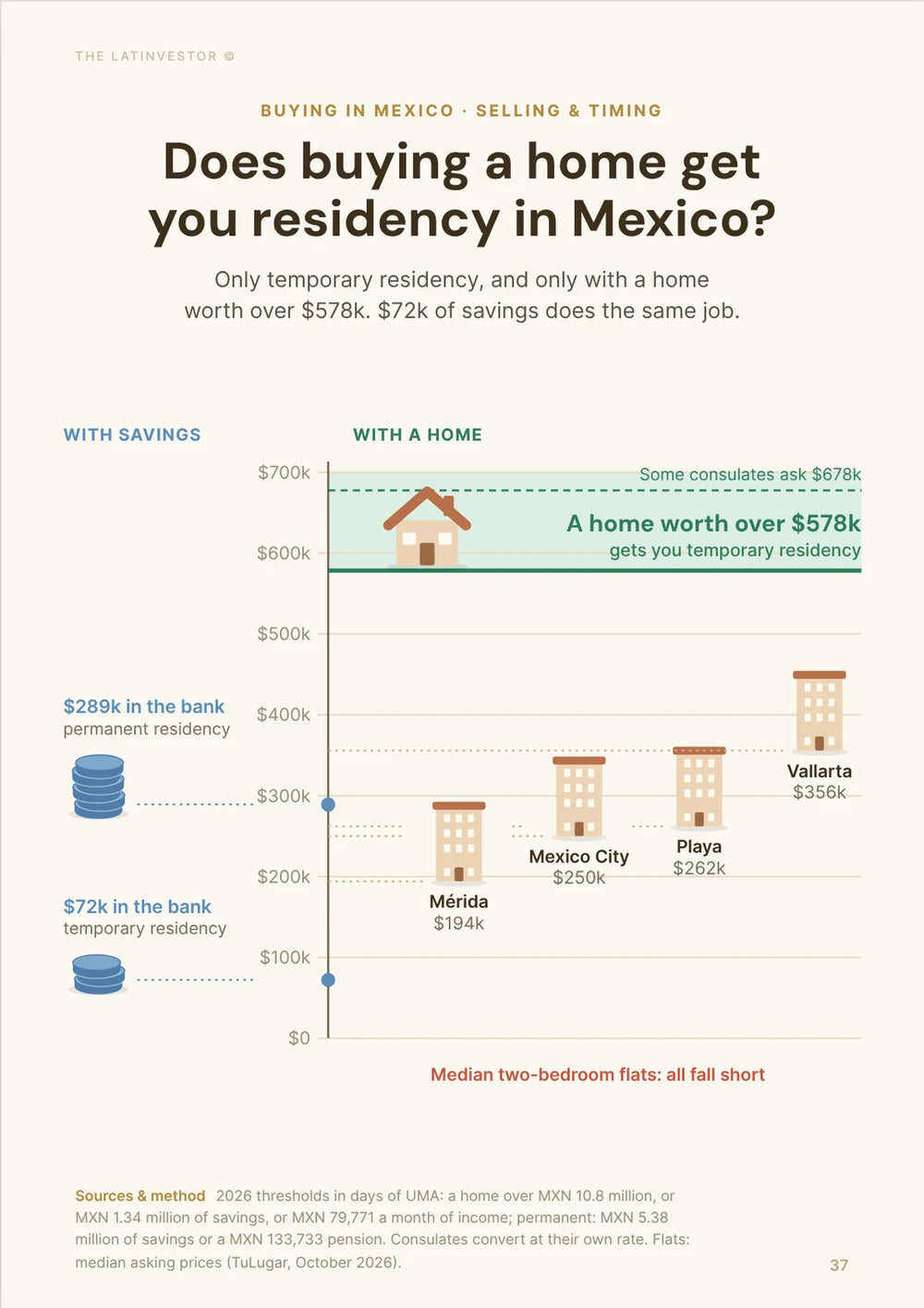
On top of the SRE permit, banks charge roughly USD 550 to 800 to open the trust and USD 550 to 700 a year to run it, according to 2026 broker comparisons. USD 600 a year over 20 years is USD 12,000.
Nothing in Congress is about to abolish the trust. A February 2026 Senate initiative would add more checks on fideicomisos, and the big Foreign Investment Law reform the Senate passed on 30 September 2026 is about national-security screening of companies, not homes.
The real risk right now is the property, not the trust. Quintana Roo's urban development agency had flagged 123 irregular developments by August 2026, and a fideicomiso can't fix a bad title or a project with no permits.
Bottom line: budget for the fideicomiso if you buy on the coast or near the border, and spend your energy checking the title, permits and developer before any money moves.

Why is the fideicomiso still required in 2026?
Because the Constitution hasn't changed. A foreigner buying a home in the restricted coastal or border zone still needs a fideicomiso today.
The underlying law has not disappeared. Article 27 of the Mexican Constitution prevents foreigners from holding direct title to land within 50 kilometers of the coastline and 100 kilometers of an international border. Mexico’s Foreign Investment Law then provides the fideicomiso as the mechanism foreigners use to buy there.
The rule is easy to misunderstand because foreigners can own Mexican real estate directly elsewhere in the country. Someone buying an apartment in Mexico City can generally take title personally. Someone buying a condo in Tulum cannot use the same structure.
Mexico’s own government practice removes much of the ambiguity. The Secretaría de Relaciones Exteriores, or SRE, still has an active procedure specifically for authorizing restricted-zone fideicomisos, still charges a federal fee for those permits and recently updated the forms used by banks to administer them.
So for the typical foreign buyer looking at Cancún, Playa del Carmen, Tulum, Puerto Vallarta, Riviera Nayarit or Los Cabos, the fideicomiso remains part of the purchase.
| Purchase | Can a foreign individual hold direct title? | Fideicomiso needed? | Current rule |
|---|---|---|---|
| Home inside coastal restricted zone | No | Yes | Still applies |
| Home inside border restricted zone | No | Yes | Still applies |
| Home outside restricted zone | Yes | No | Direct ownership available |
| Restricted-zone commercial property bought personally | No | Generally yes | Foreign individual still lacks direct title |
| Certain non-residential property bought through a qualifying Mexican company | Yes | Not necessarily | Company exception can apply |
Did Mexico recently get rid of the fideicomiso requirement?
No. Mexico has recently made some fideicomiso paperwork simpler, but foreigners have not gained a new right to own coastal residential land directly.
A federal simplification agreement published in the Diario Oficial on 16 June 2026 changed the SRE process for several Article 27 procedures. For a new restricted-zone fideicomiso, information that previously appeared across separate requirements is now built into the SIPAC27 application, including the buyer, trustee bank, intended use, property dimensions and distance from the border or federal maritime zone.
The reform changes how the application is handled. It leaves Article 27 of the Constitution and Articles 11 to 14 of the Foreign Investment Law intact.
The easiest current check is almost mundane: after simplifying the procedure, the government continues to publish a specific SRE-02-005 procedure called “Permiso para la constitución de fideicomisos en zona restringida del territorio nacional.” Mexico streamlined the fideicomiso it already had rather than removing it.
So if someone tells you "Mexico just dropped the fideicomiso," ask them for the Diario Oficial reference. There isn't one.
Where in Mexico do foreigners actually need a fideicomiso?
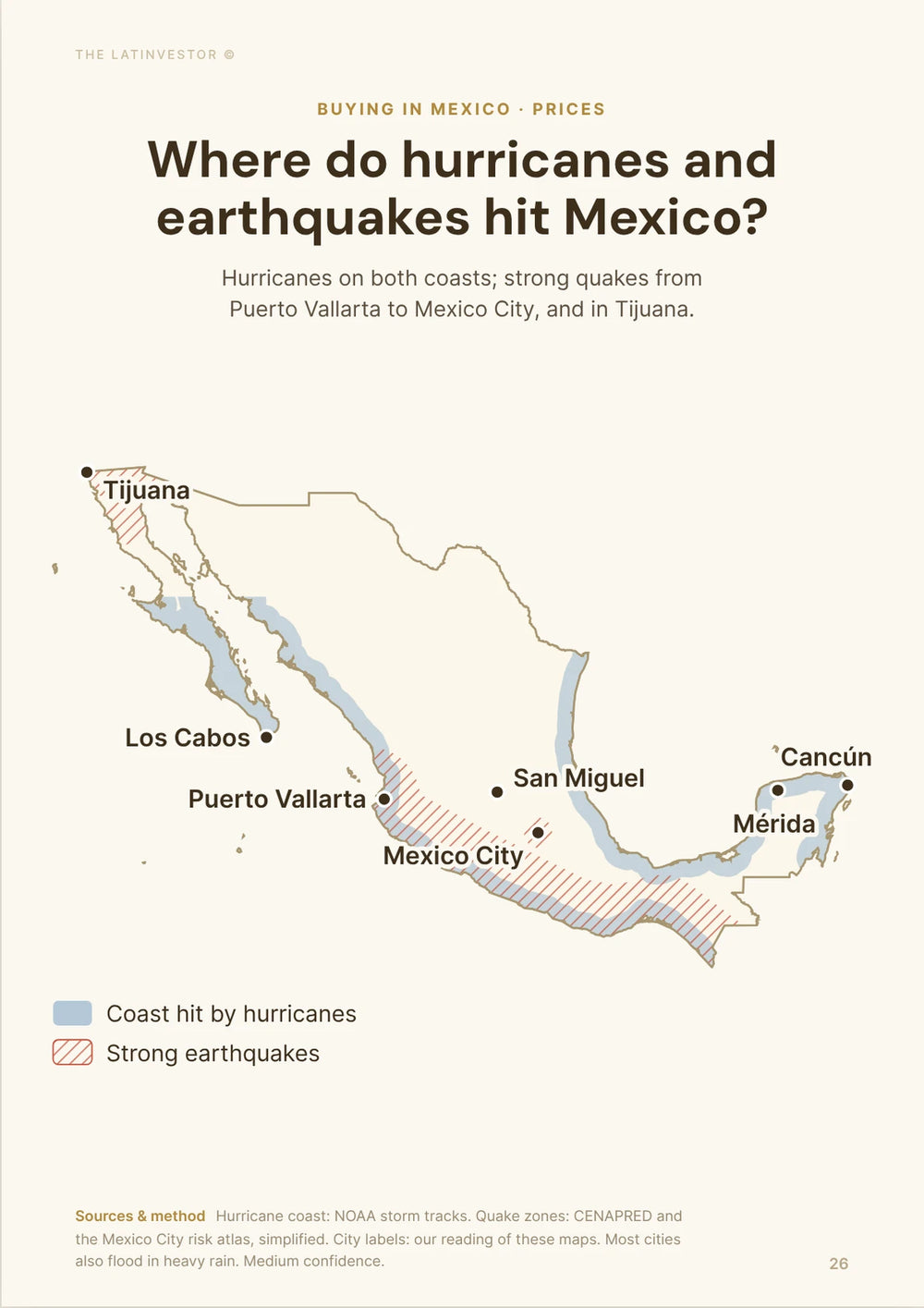
Foreign buyers currently need a fideicomiso only when the property falls inside Mexico’s restricted zone: 50 kilometers from a coastline or 100 kilometers from an international border.
That covers a huge share of the Mexican locations foreigners most often associate with second homes.
Cancún, Tulum and Playa del Carmen sit inside the Caribbean coastal strip. Los Cabos is obviously inside it. Puerto Vallarta and nearby Riviera Nayarit properties are also coastal. Baja California combines coastal exposure with the 100-kilometer border restriction in the north.
Move far enough inland and the structure changes. Foreigners can generally acquire direct title in places such as Mexico City and San Miguel de Allende, subject to the standard constitutional foreign-buyer declaration and closing formalities.
The actual parcel matters more than the marketing description. “Beach property” has no special legal definition here. A house can be several neighborhoods inland and remain inside the 50-kilometer band.
| Example | Restricted zone? | Typical foreign home purchase |
|---|---|---|
| Tulum | Yes | Fideicomiso |
| Playa del Carmen | Yes | Fideicomiso |
| Cancún | Yes | Fideicomiso |
| Puerto Vallarta | Yes | Fideicomiso |
| Los Cabos | Yes | Fideicomiso |
| Mexico City | No | Direct title |
| San Miguel de Allende | No | Direct title |
Does the 50-kilometer rule apply only to beachfront homes?
No. A foreigner can need a fideicomiso for a Mexican property with no beach access, no ocean view and no obvious connection to the coast.
The coastal restricted zone stretches roughly 31 miles inland. That is wide enough to cover entire urban areas and development corridors rather than simply the first row of beachfront buildings.
The border restriction goes even farther, reaching 100 kilometers, or roughly 62 miles, from an international boundary.
This is why we would never decide whether a fideicomiso is required from an estate agent describing something as “coastal,” “near the beach” or “inland.” The legally useful question is where the registered parcel sits relative to the coastline or border.
For properties close to the boundary, that distance should be verified during the legal review rather than guessed from Google Maps or a listing description.
Can foreigners own property directly in Mexico outside the restricted zone?
Yes. Foreigners can currently buy ordinary Mexican real estate directly in their own names when the property sits outside the restricted zone.
This is why the blanket statement “foreigners need a bank trust to own property in Mexico” is misleading.
Outside the coastal and border strips, Mexican law allows a foreign purchaser to acquire title after accepting the Article 27 constitutional convention. In practical terms, the foreign buyer agrees to be treated as a Mexican national regarding that property and not seek diplomatic intervention from their home country over it.
The purchase can then be formalized before a Mexican notary and registered in the buyer’s name.
Nationality alone does not trigger a fideicomiso. The combination of foreign ownership and restricted-zone land does.
Does Mexican permanent residency let foreigners skip the fideicomiso?
No. A permanent resident who remains a foreign national still needs a fideicomiso for the usual residential purchase inside Mexico’s restricted zone.
Permanent residency creates broad rights to live in Mexico, but it does not turn someone into a Mexican citizen for Article 27 purposes.
Mexico’s Foreign Investment Law generally gives permanent-resident foreigners treatment similar to Mexican investment in many areas. The law specifically carves out the sections dealing with activities reserved to the state and restricted-zone real estate, however.
An American who has lived permanently in Mexico for 15 years still faces the same restricted-zone ownership rule when buying a personal condo in Playa del Carmen as a newly arrived American buyer.
Naturalization is different because the buyer becomes a Mexican national. Permanent residency by itself does not produce that result.
Can a foreigner avoid a fideicomiso by opening a Mexican company?
Sometimes, but opening a Mexican company does not give a foreign buyer a universal way around the fideicomiso rule.
The real distinction is what the restricted-zone property will be used for.
Under Article 10 of the Foreign Investment Law, a Mexican company that admits foreign investors can directly acquire restricted-zone property when it is genuinely destined for non-residential activities. The company then has to notify the SRE.
Mexican companies admitting foreign investment cannot use the same direct-ownership route for restricted-zone residential property. Residential use sends the transaction back into the fideicomiso framework.
The regulations give useful examples. Commercial, industrial and service properties can count as non-residential. Property being developed for sale can also qualify, as can certain tourism and time-share structures. A house used simply as housing for the owner or another person falls on the residential side.
That makes a company perfectly logical for some developers, hotels and operating businesses. It is much less convincing when someone is creating an entity solely to hold one vacation condo.
| Buyer structure | Property use | Direct restricted-zone title? | Fideicomiso position |
|---|---|---|---|
| Foreign individual | Personal home | No | Required |
| Foreign individual | Investment/rental property | No | Usually required |
| Foreign-owned Mexican company | Residential home | Generally no through company exception | Fideicomiso still relevant |
| Foreign-owned Mexican company | Genuine commercial use | Can be possible | May be avoided |
| Mexican developer | Development for sale | Can qualify | Depends on structure and use |
If I rent out my Mexico condo, can I stop using a fideicomiso?
No. Renting out a Mexican coastal condo does not suddenly give its foreign owner direct title to restricted-zone land.
The Foreign Investment Law anticipates that fideicomiso beneficiaries may earn money from the property. Article 12 covers the use and enjoyment of the real estate as well as income and other returns produced from it.
So a foreign owner can have a fideicomiso and still operate the property economically.
Where things become less straightforward is the Mexican-company exception. The regulations distinguish residential property from genuine commercial, tourist, industrial and service uses. A hotel business is easy to place on the commercial side. One condo used by its owner for part of the year and rented to tourists during the rest is far less persuasive as a reason to claim direct corporate ownership.
We would be cautious about any pitch that says, “Just Airbnb it and the property becomes commercial.” The legal classification depends on the real structure and use of the asset, not simply whether rental income exists.
Does the bank own my Mexican home if I use a fideicomiso?
Technically the Mexican bank holds legal title as trustee, while the foreign beneficiary receives the rights to use, enjoy, rent, sell and economically benefit from the property.
That sounds more alarming than it usually is in practice, partly because the word “bank” makes people imagine the bank buying the property for itself.
The bank is acting as fiduciary. It holds the property according to the trust agreement and cannot simply treat the house as its own corporate asset.
At the same time, saying that the foreign buyer owns the land in exactly the same legal way as a Mexican citizen would go too far. The structure exists precisely because Article 27 prevents foreigners from acquiring direct ownership in the restricted zone.
The beneficiary rights are broad enough to make the property behave much like an owned asset economically. The legal route underneath those rights remains different.
That is why foreign owners can sell, rent, improve and pass on fideicomiso property while still technically lacking direct title to the land.
Can foreigners sell a Mexico property held in a fideicomiso?
Yes. A foreign owner can sell a Mexican property held through a fideicomiso without waiting for the trust’s 50-year term to end.
The sale simply has an extra institutional layer because the trustee bank forms part of the registered ownership structure.
Depending on the transaction, beneficiary rights can be transferred, the existing arrangement can be changed or a new structure can be established for the purchaser. A Mexican notary coordinates the property transfer and the bank handles the required fiduciary actions.
The SRE’s current procedures explicitly deal with changes to fideicomisos, assignments of beneficiary rights and their eventual extinction. The system was built with property transfers in mind.
For buyers comparing a fideicomiso with direct inland ownership, this extra administration is real. It adds paperwork, bank involvement and cost. It does not prevent the property from being sold.
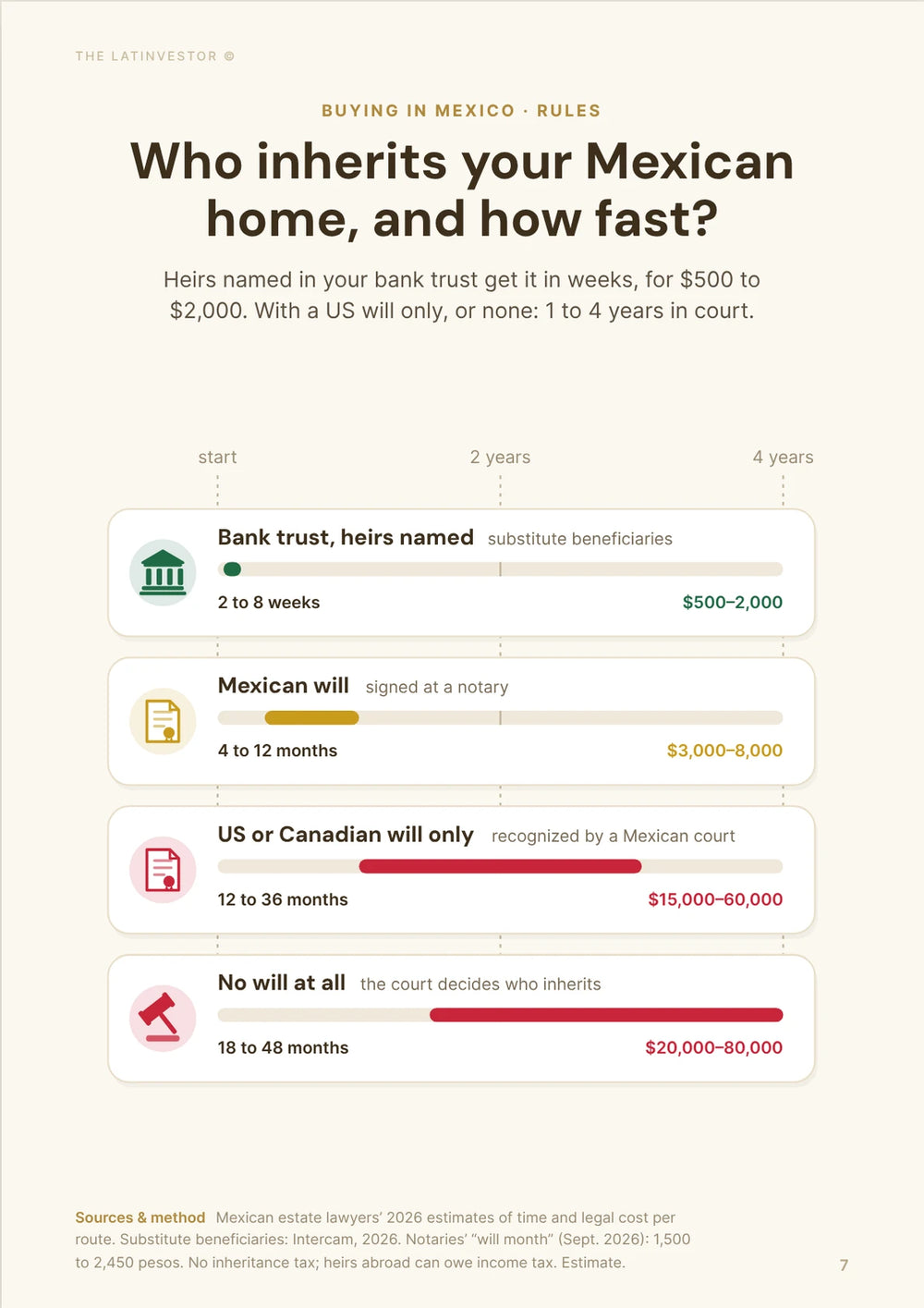
Can my children inherit a Mexico property held in a fideicomiso?
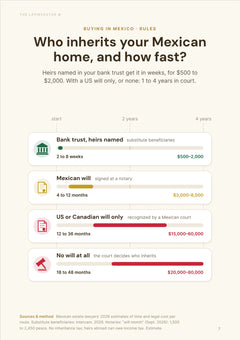
Yes. Foreign buyers can name substitute beneficiaries in a fideicomiso, which can make passing a Mexican property to family considerably easier than the 50-year trust terminology suggests.
Current SRE procedures explicitly recognize substitute beneficiaries, and Mexican fiduciary banks routinely incorporate beneficiary succession into trust documents.
This is one feature worth getting right when the fideicomiso is first drafted. Someone buying a USD 600,000 property in Los Cabos has more at stake than simply choosing the cheapest trustee bank. The identity of substitute beneficiaries and the instructions governing succession can eventually become far more important than a small difference in annual fees.
Mexican tax and estate consequences still depend on the people involved and the way the transfer happens, so the beneficiary clause should fit the owner’s actual estate plan.
Do I lose my Mexico property when the fideicomiso reaches 50 years?
No. Mexico’s 50-year fideicomiso term can be extended, so reaching year 50 does not automatically make a foreign owner lose the property.
Article 13 of the Foreign Investment Law expressly allows restricted-zone fideicomisos to be renewed at the interested party’s request.
The SRE has a specific procedure for extending an existing fideicomiso. In 2026 it costs MXN 9,740 (about USD 524) if you file on time, or MXN 10,615 if you file late, plus MXN 595 for receipt and review.
So describing a fideicomiso as a “50-year lease” gives buyers the wrong idea. The 50 years refer to the authorized trust period, and Mexican law provides for extensions.
Owners still need to handle the renewal correctly. A renewable legal term should not be confused with a perpetual document that never needs attention.
| Question | Current answer |
|---|---|
| Maximum standard fideicomiso term | 50 years |
| Can the term be extended? | Yes |
| Does year 50 automatically mean losing the property? | No |
| Does the SRE have a formal extension procedure? | Yes |
| Federal extension fee in 2026 | MXN 9,740 + 595 |
How much does a fideicomiso cost in Mexico now?
The current federal SRE fee for authorizing a new restricted-zone fideicomiso is MXN 21,650, before the trustee bank’s own charges and the normal costs of buying Mexican real estate.
That is about USD 1,160. The SRE publishes it itself, so you don't have to rely on a broker's estimate. The fee is set each year in the tax rules and took effect on 1 January 2026, so cost guides from previous years show a different number.
Bank charges vary much more, and they are negotiable. A 2026 comparison by the broker Homia puts the opening fee at about USD 550 (Banorte) to USD 800 (HSBC), and the annual fee at about USD 550 to 700, with BBVA and Banamex around USD 600. These are third-party figures, not official bank tariffs, and VAT can come on top. Ask two or three banks for a written quote before the notary picks one for you.
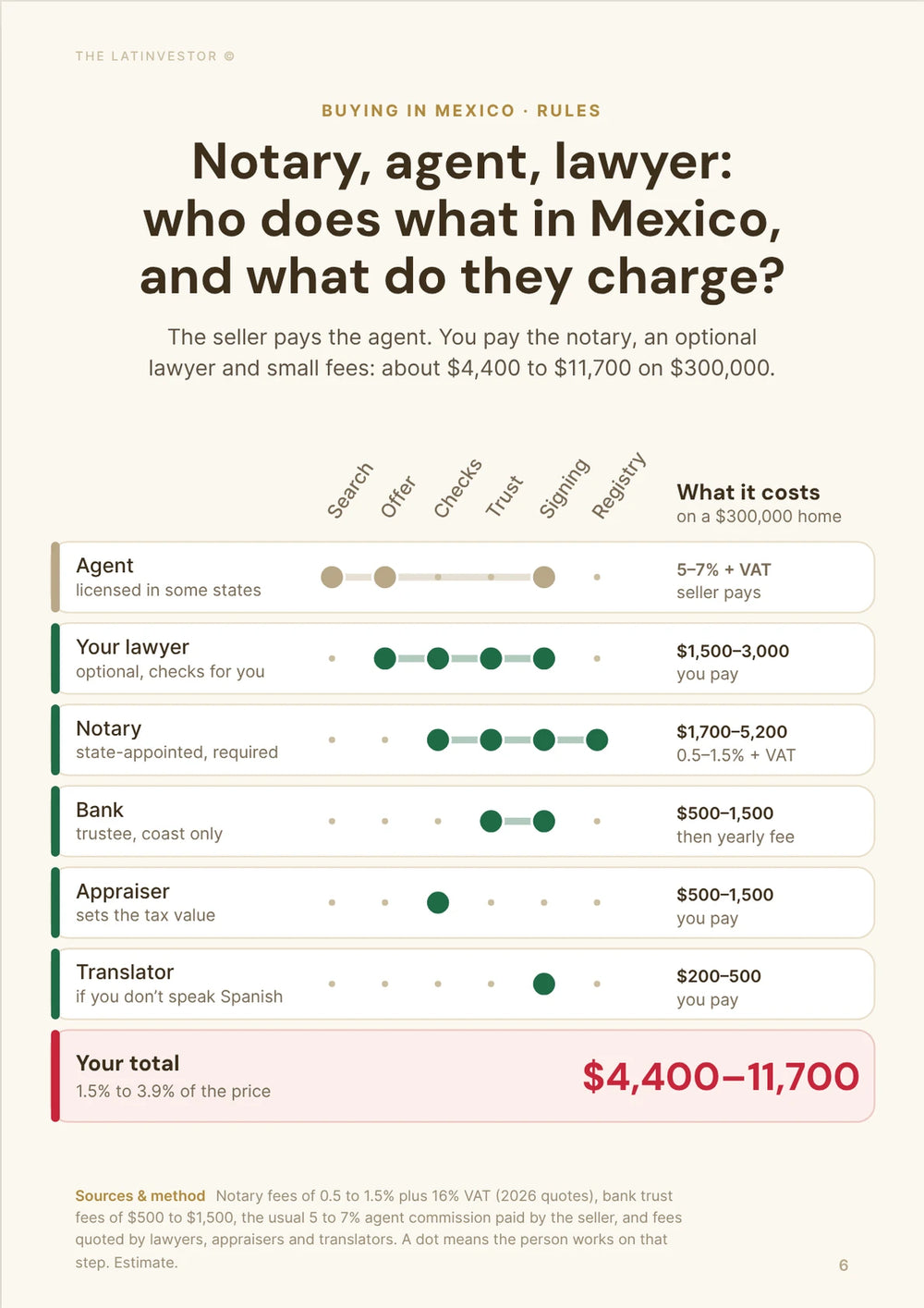
Then come the costs that would exist even without a fideicomiso: acquisition tax, notary fees, registration, certificates and appraisal. All in, foreign buyers usually plan for 6 to 9% of the price in closing costs when a trust is involved.
Over a long holding period, the recurring fee deserves attention. Paying USD 600 a year for 20 years adds up to USD 12,000 before any fee increases. On a high-value coastal home that may remain fairly minor. On a cheap investment property with a tight rental yield, it can have a noticeable effect on returns.
Has Mexico made fideicomisos easier to set up lately?
Yes. Mexico has recently simplified the administrative side of restricted-zone fideicomisos, even though the basic ownership rule remains firmly in place.
The June 2026 decree moved several required pieces of information directly into the SRE application form, cut separate document requirements across Article 27 procedures and reduced the SRE's maximum time to issue a trust permit from 5 to 3 business days.
The SRE’s current process asks for details such as the foreign beneficiary, fiduciary bank, duration, intended property use, measurements and distance from the coastline or border through the official filing system.
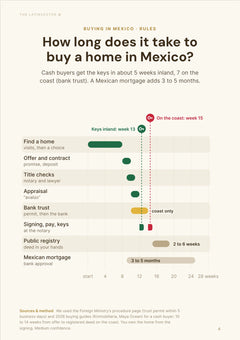
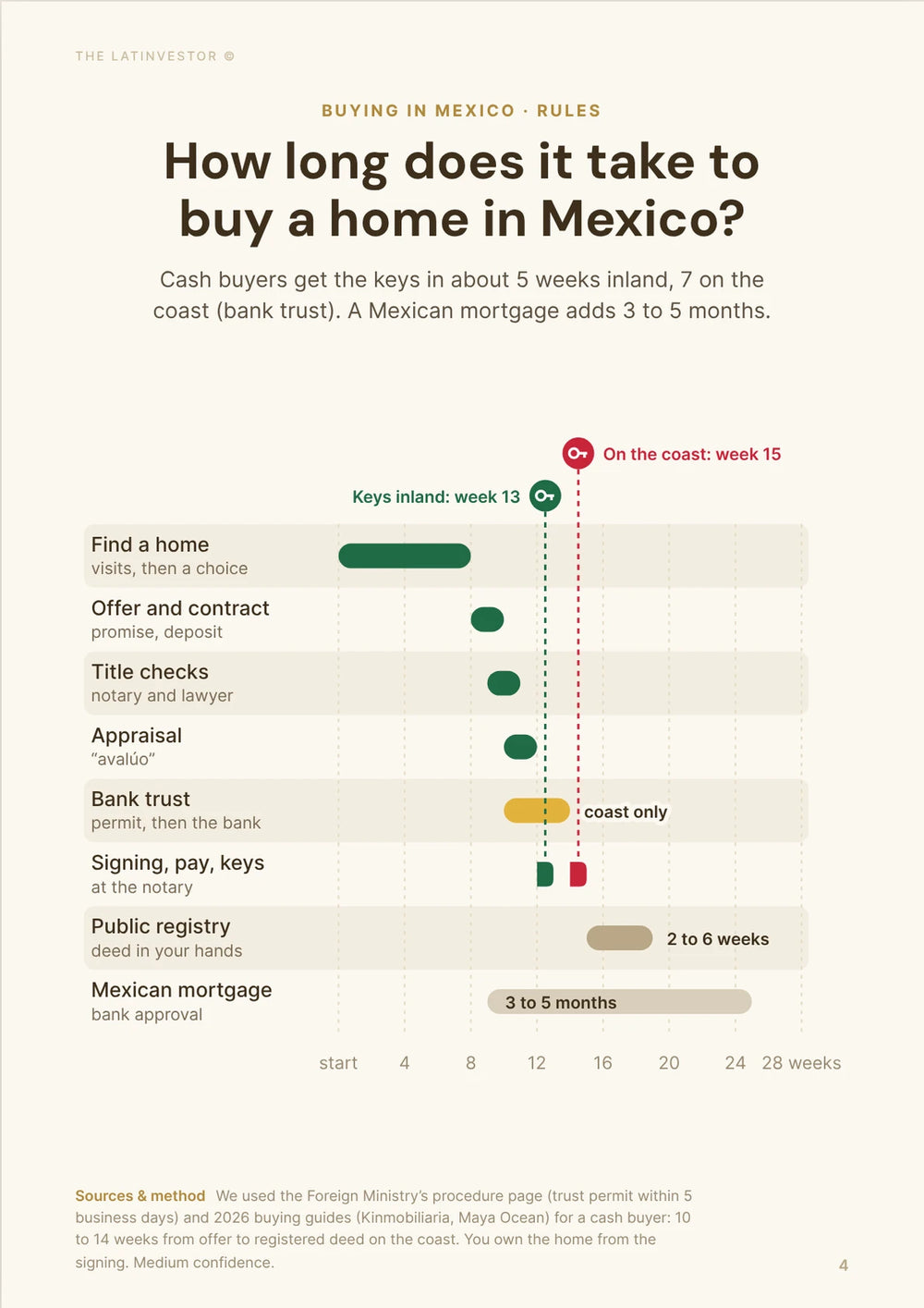
That helps, but the SRE permit is only one part of buying a Mexican property. The buyer still needs the bank, notary, title review, closing documentation and registration process.
For someone buying in Tulum or Los Cabos today, the practical update is simple: the fideicomiso paperwork has been modernized, while the legal structure itself remains.
Is Mexico actually moving toward abolishing fideicomisos?
For now, no. The most recent serious legislative movement we found points toward tighter oversight of restricted-zone fideicomisos rather than their abolition.
A Senate initiative introduced in February 2026 proposed adding stronger controls to the Foreign Investment Law. Among other things, it called for identification of the ultimate beneficiary, certified property records, confirmation that the property is not tied up in litigation, stronger due diligence by fiduciary banks and restrictions aimed at nominee arrangements designed to evade the law.
Mexico's Legislative Information System shows that proposal as referred to Senate committees, and we found no sign it has moved since. It is not law.
Still, the proposal is useful context. Lawmakers discussing reform are looking at how fideicomisos should be monitored, not preparing foreign buyers for unrestricted direct ownership of coastal homes.
There have been attempts over the years to liberalize Article 27. None has produced the constitutional change that a foreign buyer in Puerto Vallarta or Cancún could rely on today.
Does the 2026 Foreign Investment Law reform change anything for home buyers?
No, not for someone buying a home. The reform the Senate approved on 30 September 2026 adds a national-security review for foreign takeovers of companies in sensitive sectors. It doesn't touch the restricted zone or the fideicomiso articles.
President Sheinbaum sent the bill on 30 August 2026. It targets deals where a foreign investor would hold more than 49% of a Mexican company that operates in sectors like energy, transport, telecoms, mining, digital systems or personal data, above an asset threshold the national foreign investment commission will set. Land is only covered when it is essential to that kind of infrastructure. The bill is now with the Chamber of Deputies.
Why it matters to you anyway: it is the bill people search for when they see "Mexico foreign investment law 2026" in the news, and some sellers use it to create urgency ("buy before the new law"). For a condo in a fideicomiso, there is nothing to rush for. If you own property through a foreign-owned Mexican company that does more than hold real estate, ask your lawyer whether your sector is on the list.
Is a fideicomiso itself the big risk when buying property in Mexico?
Usually no. A badly checked property can be a much bigger problem than the fideicomiso holding it.
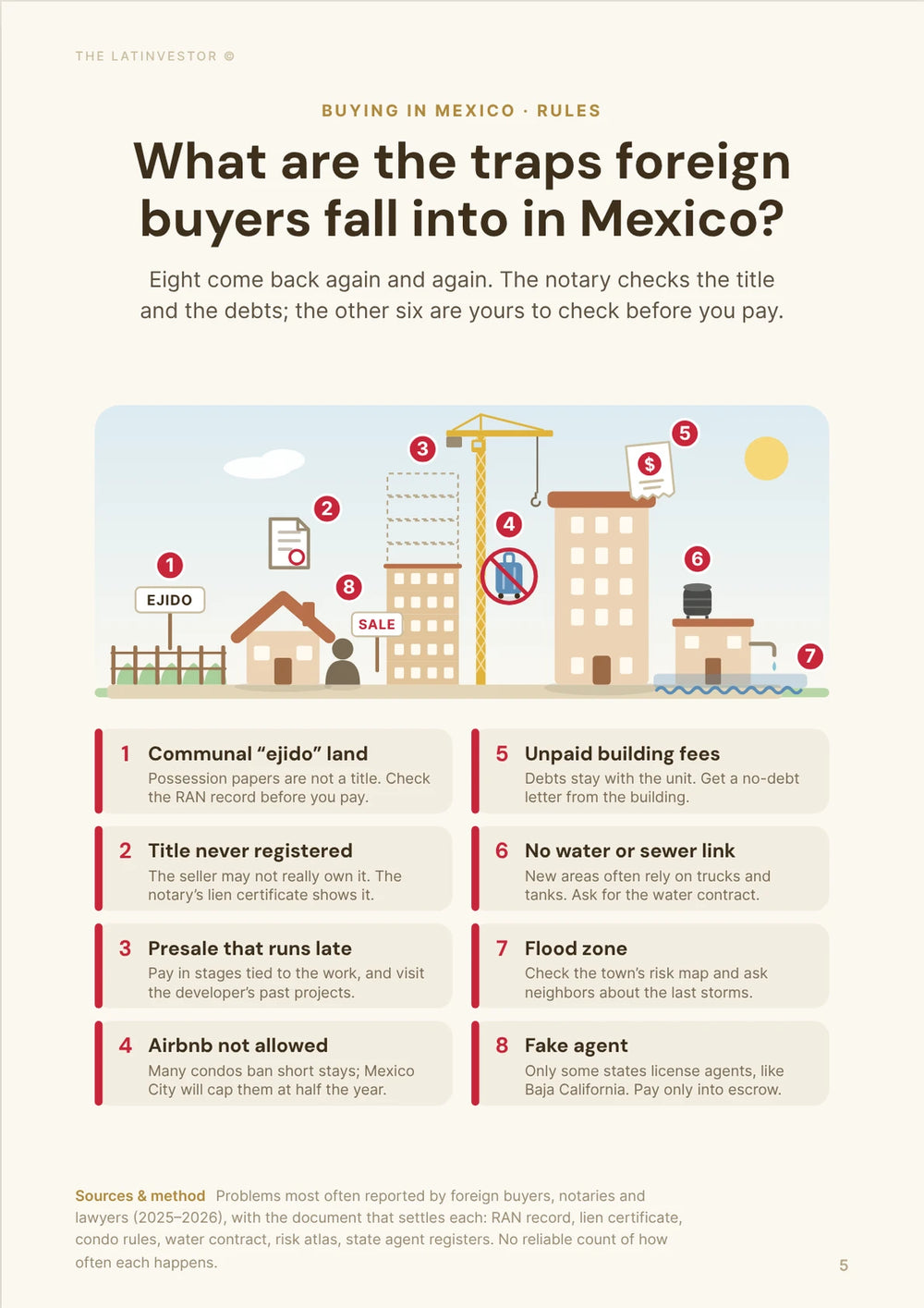
Foreign buyers often fixate on the bank trust because it feels unfamiliar. The expensive problems can come from the underlying real estate: unclear title, liens, improperly regularized construction, condominium issues, zoning restrictions, litigation or land whose legal status was never properly verified.
A fideicomiso cannot clean up defective ownership. If the seller cannot legally transfer the property, adding a trustee bank does not repair the title history.
The February 2026 Senate proposal is revealing here as well. Its proposed safeguards concentrate on ultimate beneficiaries, registered ownership, legal regularity and pending litigation. Those are exactly the areas where a superficially normal transaction can hide a serious problem.
We would spend less time worrying about the existence of a fideicomiso and more time making sure the notary and independent legal adviser have properly checked what is going into it.
Does a fideicomiso protect you from the land fraud cases on the Caribbean coast?
No. A fideicomiso only holds what the seller can legally transfer, and the 2026 fraud cases in Quintana Roo are mostly about land and projects that were never clean to begin with.
The numbers are not small. Quintana Roo's urban development agency (Sedetus) had 123 irregular developments on its blacklist by August 2026, mostly in Tulum, Isla Mujeres, Playa del Carmen and Cancún, up from 92 in June 2025. President Sheinbaum said some plots there had been "sold six or eight times." In Playa del Carmen, more than 50 buyers of the SÚUT project, foreigners among them, say they paid a total of about MXN 214 million (about USD 11.5 million) for apartments that were never delivered after construction stopped in 2024.
In most of these cases, buyers paid a developer under a private presale contract long before any fideicomiso existed. The trust is set up at the deed, so during construction it protects nothing. What to do before paying anything:
- Get a recent certificate of no liens (certificado de libertad de gravámenes) from the Public Registry and check the seller is the registered owner.
- For a presale, ask for the land deed, the construction license and, in Quintana Roo, the state urban congruence certificate, and check Sedetus has not flagged the project.
- Pay deposits into an escrow or a bank guarantee trust, not to the developer's account.
- Have your own lawyer, not the developer's, review the contract, and choose the notary yourself.
Should I use a fideicomiso or a Mexican company to buy property?
For a foreigner buying one coastal home for personal use, a fideicomiso is usually the straightforward choice today; a Mexican company starts making more sense when there is a genuine business reason for owning through a company.
Looking only at the annual trust fee can make the company option seem cheaper than it really is.
A Mexican company creates its own work. Forming one costs around MXN 35,000 to 50,000 in professional and notary fees (about USD 1,880 to 2,690), and then come accounting, monthly tax filings, corporate records and compliance every year. More importantly, the foreign-investment rules still distinguish residential from non-residential restricted-zone property, so simply incorporating a company does not guarantee direct ownership of a vacation home.
The economics look different for someone developing 20 condos, running a hotel or holding property as part of an operating business. There, corporate ownership can serve a real commercial purpose and the non-residential exception may become important.
For someone buying a single Puerto Vallarta condo to use for a few months each year, building a company solely to avoid a fideicomiso is usually solving the wrong problem.
So, do I still need a fideicomiso to buy in Mexico?
Yes, if you are a foreigner buying a normal residential property inside Mexico’s coastal or border restricted zone, you still need a fideicomiso as of now.
The answer changes once the property moves outside that zone. Foreigners can generally take direct title inland, which is why someone buying in Mexico City faces a different ownership structure from someone buying in Tulum.
There are also narrower exceptions involving Mexican companies and genuinely non-residential property. Those exceptions matter for developers and operating businesses but do little for the typical foreigner purchasing one beach home.
Recent developments reinforce that conclusion. Mexico has updated and simplified the fideicomiso process, the SRE charges MXN 21,650 for a new restricted-zone trust permit in 2026, and the only reform ideas on the table add oversight rather than remove the trust. None of those developments gives foreign individuals direct title to coastal residential land.
Our conclusion is clear: the fideicomiso requirement is still fully relevant for foreign residential buyers in Mexico’s restricted zone. What has become easier lately is some of the bureaucracy around it. The ownership rule that makes the fideicomiso necessary is still there.
Our methodology
This article answers one question: does a foreigner still need a fideicomiso to buy in Mexico in 2026, and what does it cost? We separated the things that often get mixed up: what the Constitution says, where the property is, who buys it, how it's used, and whether recent changes touched the ownership rule.
The rules come from Article 27 of the Constitution, the Foreign Investment Law and its regulation: the 50 km and 100 km restricted zone, the fideicomiso, direct ownership inland, the renewable 50-year term and the residential versus non-residential test for companies. We then checked the SRE's current procedures and its 2026 fee table to confirm the system is still running.
Government fees (MXN 21,650 for a new permit, MXN 9,740 plus 595 for an extension) come straight from the SRE, updated in September 2026. Bank fees and company setup costs come from 2026 market comparisons, not official tariffs, so we show them as approximate ranges.
For recent news, we used the June 2026 Diario Oficial simplification decree, the February 2026 Senate initiative and its status in the Legislative Information System, press coverage of the Foreign Investment Law reform approved by the Senate on 30 September 2026, and July and August 2026 reporting on irregular developments in Quintana Roo.
We checked these figures in October 2026. Conversions use about 18.6 pesos per US dollar and 20.9 pesos per euro.
Limits: bank fees change by bank, property value and negotiation; fraud figures come from a state agency and press reports, not court rulings; and the reform bills can still change. This is general information, not legal advice for a specific purchase.
Key sources used for this analysis include: Article 27 of the Mexican Constitution, the Foreign Investment Law, SRE on the restricted-zone trust permit, SRE on 2026 Article 27 fees, SRE on direct purchases outside the restricted zone, SRE on non-residential purchases by Mexican companies, SRE on extending or changing a trust, the June 2026 Diario Oficial simplification agreement, the February 2026 Senate initiative, the Legislative Information System, Foley on the 2026 Foreign Investment Law reform, Crónica on the Senate vote, Por Esto on irregular developments in Quintana Roo, Riviera Maya News on the 123 blacklisted developments (August 2026), Por Esto on the SÚUT case in Playa del Carmen, Homia on 2026 bank trust fees, Tandazo on company formation costs and Compass Abroad on 2026 closing costs.