
Summary
São Paulo’s property market is heading into a slower, more selective phase: asking prices rose only 3.64% in the 12 months to September 2026 (FipeZAP), a small loss after 4.58% inflation, while unsold new stock keeps piling up.
Sales volume still looks strong. Secovi-SP counted 121,064 new homes sold in the 12 months to August 2026, up 10.2%, but the value of those sales fell 4.4%: buyers are moving to cheaper homes.
Minha Casa, Minha Vida is doing the heavy lifting. Subsidized economic units made up 71% of new-home sales in August 2026.
Prices are creeping, not booming. The average ready apartment asks R$12,206 per m², against R$10,015 for the national FipeZAP index, which rose faster at 5.51%.
The biggest risk is supply. Developers launched 154,769 homes in 12 months against 121,064 sold, and new homes for sale reached 98,018 in August, up 51% in a year. In June, unsold stock covered 9.6 months of sales, against 6.8 a year earlier.
Studios are where it pinches most: mid- and high-end stock of units up to 30 m² rose 71% in the year to June 2026, to about 10,900, or 12 months of sales, and São Paulo’s Airbnb listings grew 66% in a year.
Mortgages still hurt. The Selic fell to 13.75% in September, but private banks lend at about 11.8% plus TR, so a 50 m² average flat needs a household income of about R$19,000 a month.
Rents beat prices: asking rents rose 6.22% in 12 months to R$65.78 per m², and Pinheiros reaches R$100.
Buying to rent is a hard sell. A 6.43% gross yield drops to about 5.5% after the 15% withholding a non-resident pays, far below the 13.75% Selic.
The top end is split. Vila Nova Conceição’s high-end sales reached R$853 million in the first half of 2026 (+50.6% in deals), while high-end and luxury new-home sales fell 39%.
Prime addresses aren’t running away either. Itaim Bibi asks R$19,989 per m² and Pinheiros R$18,260, but Pinheiros fell 0.3% in a year and Itaim Bibi rose only 3.4%.
Water is a new worry: the Cantareira system was at 41.1% at the end of September, and nightly pressure cuts of about 8 hours were still running in October.
Our view: no crash and no new boom. Lower rates should first clear the unsold stock. Buy scarce locations at a negotiated price, and be very careful with generic studios.


Why is São Paulo’s property market so hard to read right now?
Because it looks strong if you count homes sold, weaker if you look at what buyers spend, and crowded if you look at how many new apartments are coming.
Secovi-SP counted 10,813 new homes sold in August 2026, up 36.9% on August 2025. Over 12 months, sales reached 121,064 units, up 10.2%. That hardly looks like a downturn.
Yet the value of those 12-month sales fell 4.4%, to R$60.2 billion. In the first half of the year, the value of homes sold dropped 5.5% after adjusting for construction costs, and the value of launches fell 11.8%. More homes change hands, but they are cheaper ones.
Minha Casa, Minha Vida explains most of that shift: economic units were 71% of sales and 77% of launches in August.
Prices tell a quieter story. FipeZAP’s ready-apartment index rose 3.64% in the 12 months to September, below inflation. Rents rose 6.22%.
So São Paulo has several markets at once: subsidized housing drives the volume, middle-class buyers are squeezed by credit, landlords gain from expensive homeownership, and the best prime streets attract buyers who barely need a mortgage.
| Part of the market | What we see now | What it suggests |
|---|---|---|
| New-home sales, 12 months to Aug. 2026 | 121,064 units, +10.2% | Demand remains large |
| New-home launches, 12 months to Aug. 2026 | 154,769 units, +25% | Supply is growing faster |
| Value of 12-month sales | R$60.2bn, -4.4% | Buyers are shifting toward cheaper homes |
| MCMV/economic share of sales, Aug. 2026 | 71% | Affordable housing drives the volume |
| Private-bank mortgage rates, Sept. 2026 | About 11.8% + TR | Middle-market affordability remains difficult |
| Asking rents, 12 months to Sept. 2026 | +6.22%, against +3.64% for prices | More housing demand is staying in the rental market |
Are home prices in São Paulo still going up?
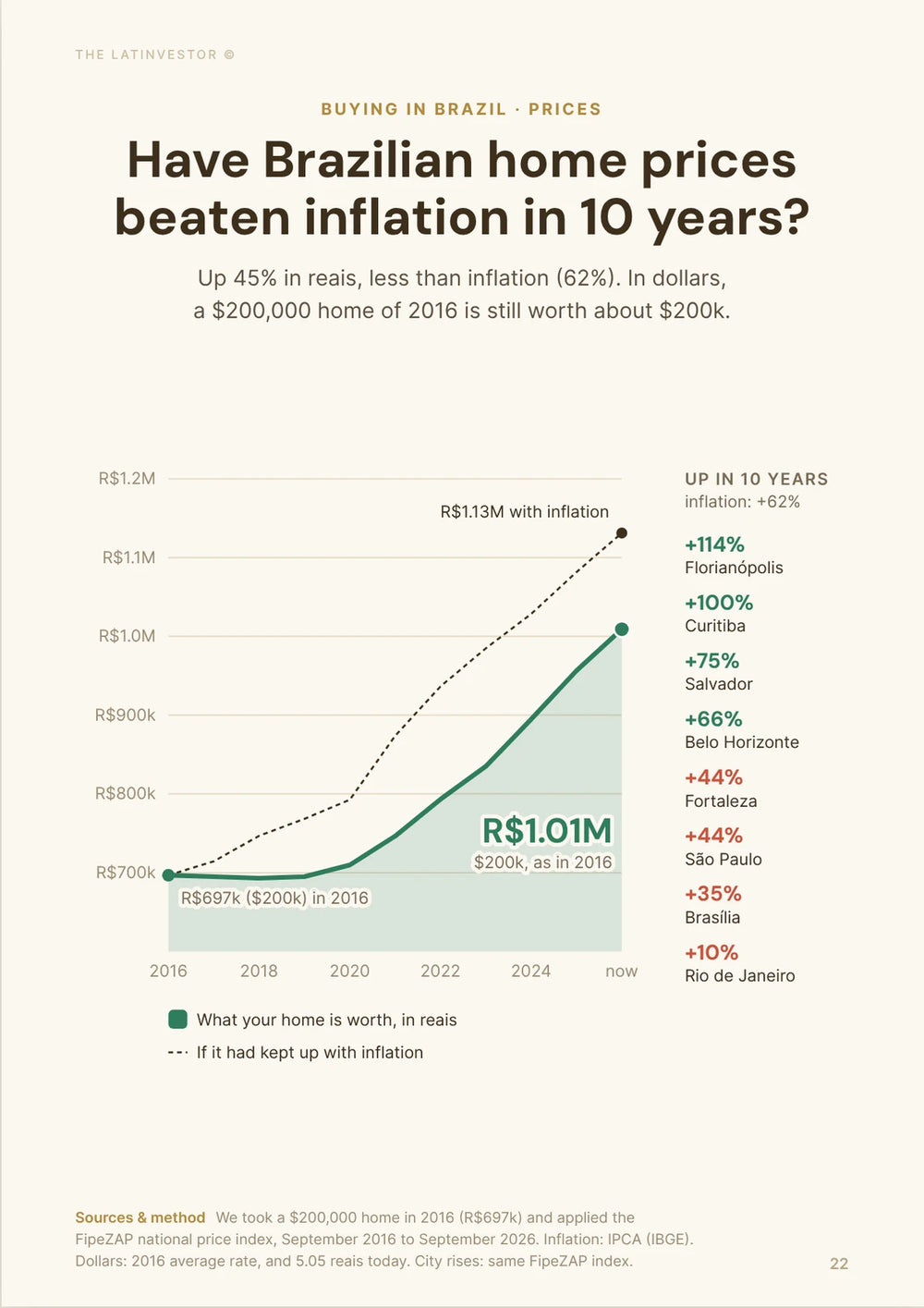
Yes, but slowly: FipeZAP’s average asking price for a ready apartment reached R$12,206 per m² in September 2026, up 3.64% in a year. That’s no longer a boom.
The index was at R$11,900 at the end of 2025, R$11,995 in March and R$12,045 in May. Annual growth went from about 4.6% at the end of 2025 to 4.2% in May and 3.64% in September.
São Paulo is also lagging the rest of the country. The national FipeZAP index rose 5.51%, to R$10,015 per m².
With IPCA inflation at 4.58% over the same 12 months, São Paulo prices fell about 0.9% in real terms. Owners keep their value in reais, but lose a little purchasing power.
That’s how a Brazilian housing market corrects: not with falling nominal prices, but with a few years of increases at or below inflation.
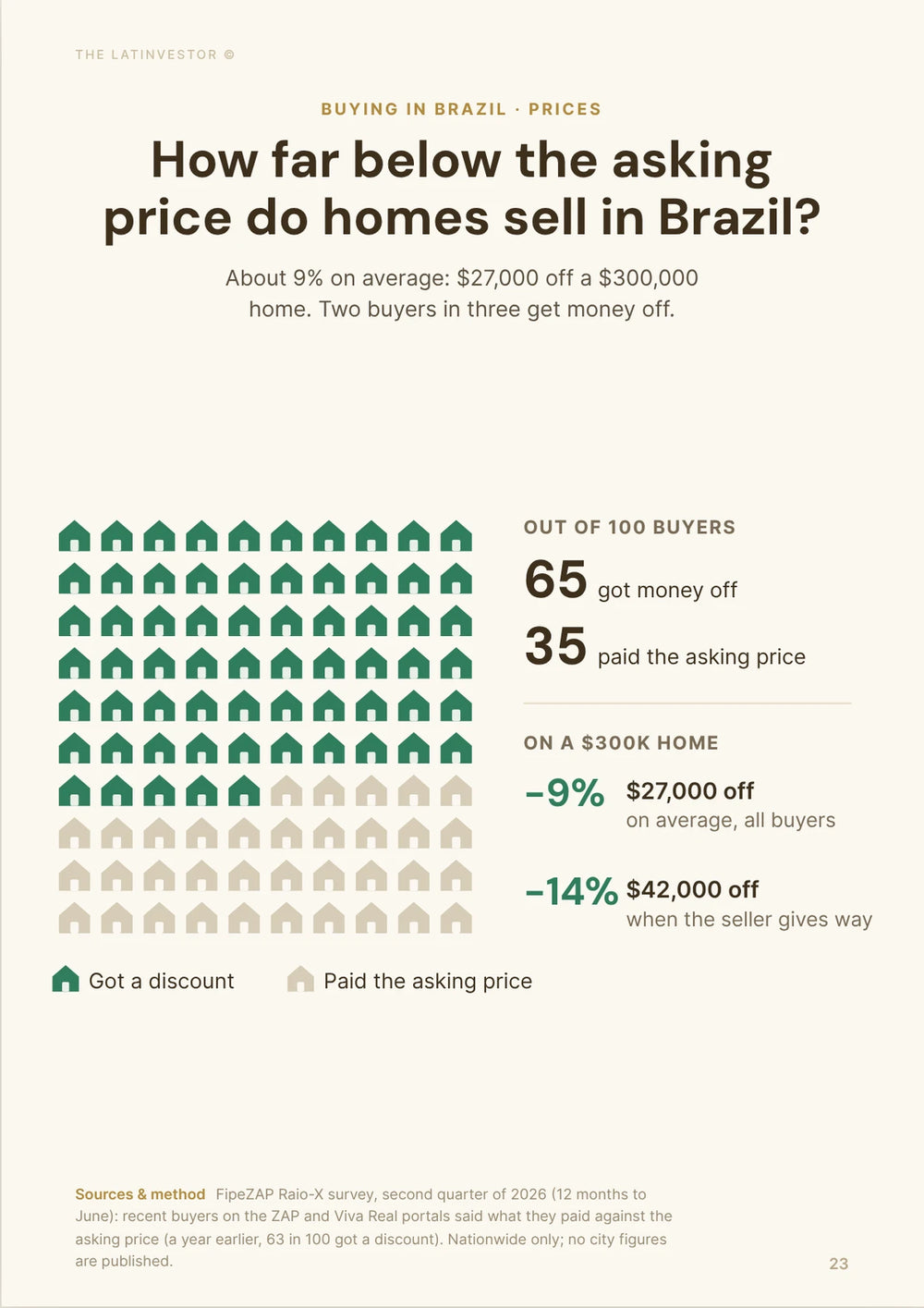
And these are asking prices. FipeZAP’s buyer survey for the second quarter of 2026 found an average discount of 9% on closed sales across its cities, and 14% when the buyer got one.
| Period | Average São Paulo asking price | 12-month increase |
|---|---|---|
| End-2025 | R$11,900/m² | +4.6% |
| March 2026 | R$11,995/m² | +4.3% |
| May 2026 | R$12,045/m² | +4.2% |
| September 2026 | R$12,206/m² | +3.64% |
Are people still buying property in São Paulo?
Yes, in large numbers: buyers took 121,064 new homes in the 12 months to August 2026, so demand has not collapsed.
Secovi-SP counted roughly 103,300 new-home sales in 2024 and almost 113,000 in 2025. The first half of 2026 brought 58,182 sales, 1.8% more than a year earlier.
Month by month, developers sold 10,857 new homes in March, 9,588 in April, 9,993 in May, 9,308 in June and 10,813 in August.
The catch is what is being sold. In August, 80.6% of units sold cost up to R$400,000, and 68% were two-bedrooms. Only 400 three- and four-bedroom units sold that month.
So the sales record tells you São Paulo still needs housing. It doesn’t tell you a R$1 million or R$2 million conventional apartment is easy to sell.
Is Minha Casa, Minha Vida carrying São Paulo’s housing market?
Yes. Without Minha Casa, Minha Vida, São Paulo’s new-home market would look much softer.
In 2024, Secovi-SP counted about 57,500 economic-segment sales out of roughly 103,300. The share reached 70.6% in the first half of 2026 and 71% in August, when 7,707 of 10,813 units sold were economic.
Credit explains it. Since April 2026, the program’s Faixa 4 lends at about 10% a year to families earning up to R$13,000 a month, for homes up to R$600,000, and Faixa 3 now covers homes up to R$400,000. Private banks charge about 11.8% plus TR.
For a buyer deciding whether a monthly payment works, that gap matters more than a 3% or 4% move in the price. Developers build what buyers can finance, which is why unit sales stay high while the total value of sales falls.
For a foreign investor, this matters in two ways. You can’t use these programs, and the cheap units they produce compete with yours for tenants and resale buyers.
Is São Paulo building too many apartments?
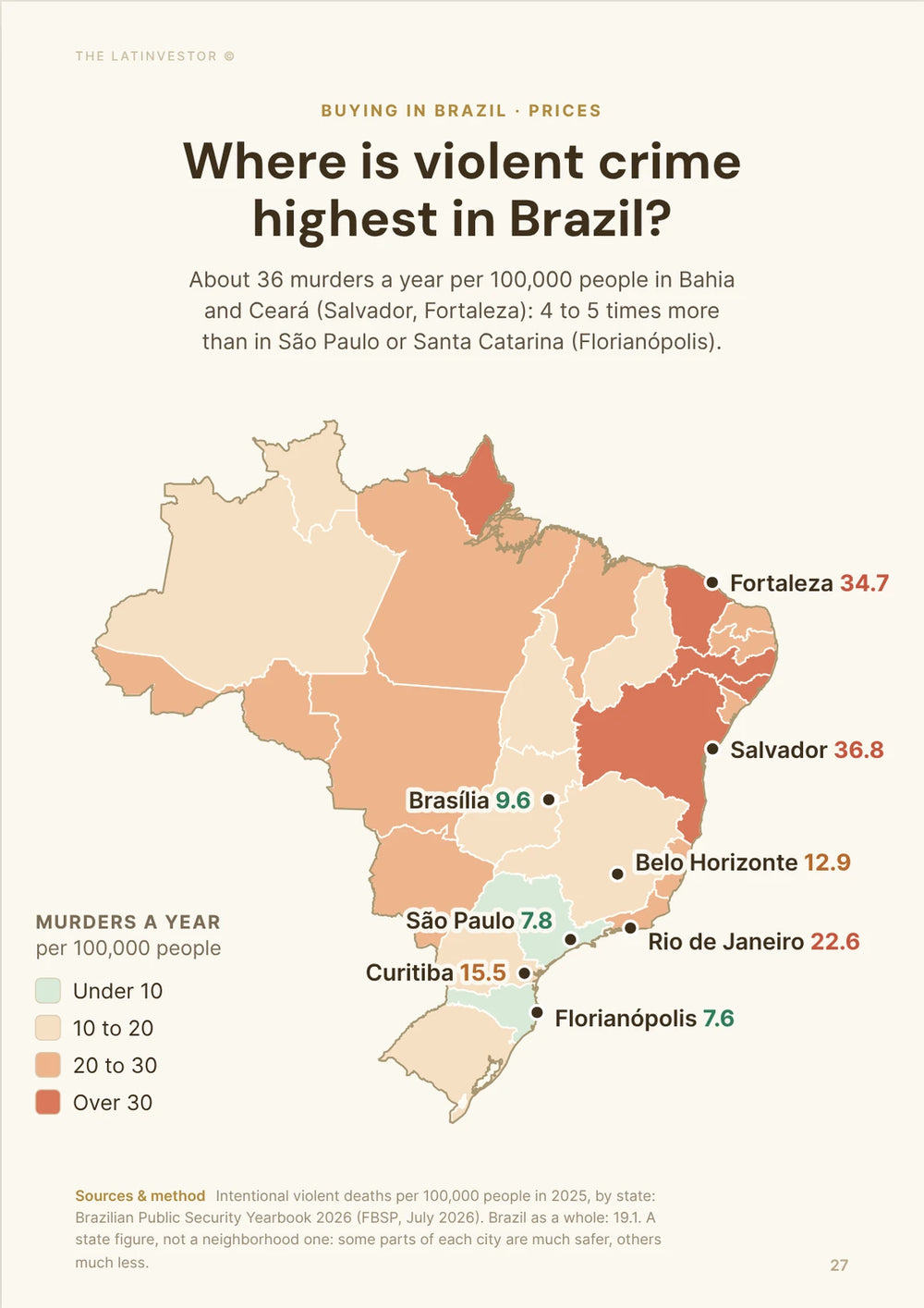
Yes. Developers are launching far more than buyers absorb, and it’s the clearest risk for the next part of the cycle.
In 2024, launches (about 104,400) and sales (about 103,300) were almost matched. In 2025, developers launched roughly 139,700 units while buyers took close to 113,000.
The gap has widened in 2026. In the 12 months to August, Secovi-SP counted 154,769 launches against 121,064 sales, about 33,700 more homes than the market absorbed. August alone brought 17,797 launches, more than double a year earlier.
New homes for sale went from about 60,700 at the end of 2024 to 98,018 in August 2026, up 50.7% in a year. In June, that stock covered 9.6 months of sales, against 6.8 months in June 2025. In the mid and high end, it’s about 13 months, up from 7 in 2024.
Most of that stock isn’t finished: 52% is under construction, 47% is still on plan and only 1% is ready. So developers can still slow down before São Paulo has a real glut of empty, finished flats.
What to do with that: on a new project, ask how many units are still unsold, push for a discount, a parking space or better payment terms, and compare with resale listings nearby. And check that the project has a patrimônio de afetação (a ring-fenced project fund) before paying anything.
| Market balance | 2024 | 2025 | 12 months to Aug. 2026 |
|---|---|---|---|
| New homes launched | ~104,400 | ~139,700 | 154,769 |
| New homes sold | ~103,300 | ~113,000 | 121,064 |
| Difference | ~1,100 | ~26,700 | ~33,700 |
| New homes for sale | ~60,700 at year-end | Rising | 98,018 |
| Months of supply (June) | — | 6.8 (June 2025) | 9.6 (June 2026) |
Should you buy a studio in São Paulo right now?
Only with a very good reason and a very good price: studio stock is rising fastest, and you’ll compete with thousands of nearly identical units.
Secovi-SP data reported in September 2026 put the unsold stock of new mid- and high-end units of up to 30 m² at about 10,900 in June 2026, up 71% in a year (subsidized units aren't in this count). That’s 12 months of sales, against 5 months in June 2025. In June, units of 30 to 45 m² made up 70% of launches and 64% of sales, at an average ticket of about R$317,000 ($62,800).
Small units also cost more per m². Across FipeZAP cities, one-bedrooms ask R$12,260 per m², about 36% more than two-bedrooms at R$8,989. You pay a premium for a product that is now abundant.
The Airbnb exit is getting tighter too. AirROI counted 34,925 active São Paulo listings in the 12 months to September 2026, up 66%, with occupancy around 40%. A one-bedroom grossed about R$32,800 a year on average, before the platform fee, cleaning, condo fees and the 15% withholding for a non-resident. Since the STJ’s May 2026 ruling, a residential building can require the approval of two-thirds of the owners before units go on Airbnb. And HIS and HMP affordable units, common among new studios, can’t legally be used for short stays at all.
If you still want one: buy within a few minutes’ walk of a metro station, check the unit isn’t classed HIS or HMP, get the building’s written rules on short stays, and look at how many similar launches are coming within 1 km. And compare with resale studios in finished buildings nearby: their owners can’t offer payment plans, so they are often the ones cutting the price.
Are high mortgage rates still hurting São Paulo property buyers?
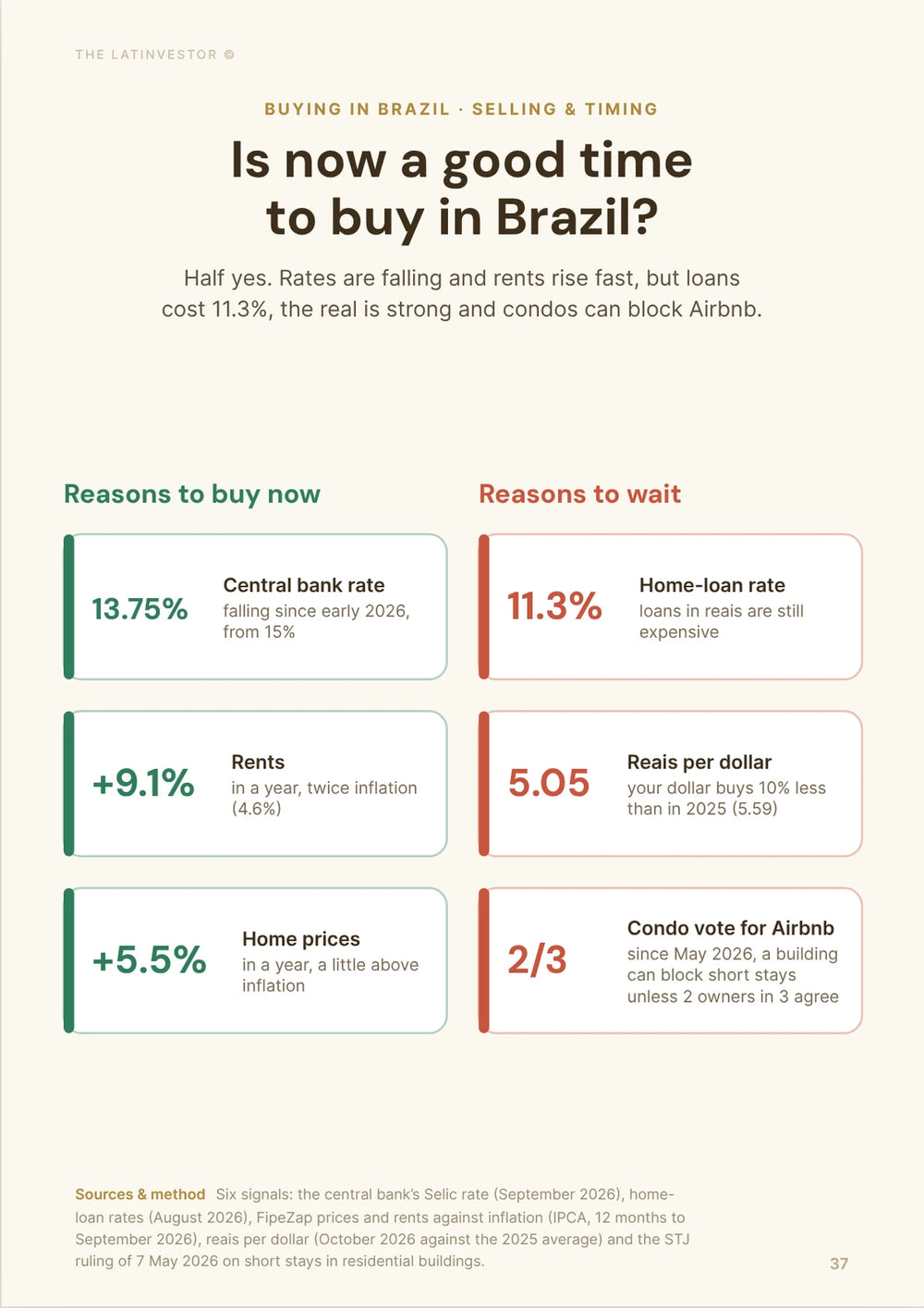
Yes. Rates have started to fall, but credit is still expensive enough to keep many middle-class buyers out.
After holding the Selic at 15% for a long stretch, the Banco Central started cutting. On September 16, 2026, it went from 14% to 13.75%. The next Copom meeting is on November 3 and 4.
In September, private banks charged about 11.8% a year plus TR on housing loans, according to the Banco Central. Caixa’s average was lower, at 7.98% plus TR, but your offer depends on your profile and the credit line.
Take an average 50 m² apartment at R$12,206 per m²: about R$610,000 ($121,000). With 20% down, the loan is about R$488,000. On a 35-year SAC loan at 11.8%, the first payment is about R$5,700 before TR and insurance. With banks capping payments at 30% of income, the household needs about R$19,000 a month.
Credit is moving anyway. SBPE savings-funded housing loans reached R$132.5 billion nationwide from January to August 2026, up 37.5% on a year earlier (ABECIP). Buyers who can borrow are borrowing.
A foreigner who doesn’t live in Brazil will almost always pay cash, since banks usually ask for nationality, naturalization or permanent residency.
Are São Paulo rents stronger than property prices now?
Yes. Asking rents rose 6.22% in the 12 months to September 2026, against 3.64% for sale prices.
FipeZAP put the city’s average asking rent at R$65.78 per m² in September. It’s the most expensive state capital for rent. In the priciest areas, rents reach about R$100 per m² in Pinheiros, R$94 in Itaim Bibi, R$85 in Moema and R$84 in Jardins. Vila Mariana is around R$73.
High borrowing costs explain a lot of it. A household that delays buying still needs a home, so it stays in the rental pool and pushes rents up.
That also helps owners: renting the flat out has become more valuable, which keeps sellers from cutting prices too fast.
| São Paulo indicator (Sept. 2026) | Level | 12-month change |
|---|---|---|
| Ready-apartment asking price | R$12,206/m² | +3.64% |
| Average asking rent | R$65.78/m² | +6.22% |
| Pinheiros asking rent | ~R$100/m² | — |
| Itaim Bibi asking rent | ~R$94/m² | — |
| Moema asking rent | ~R$85/m² | — |
| Vila Mariana asking rent | ~R$73/m² | — |
Does buying to rent out in São Paulo make sense with the Selic at 13.75%?
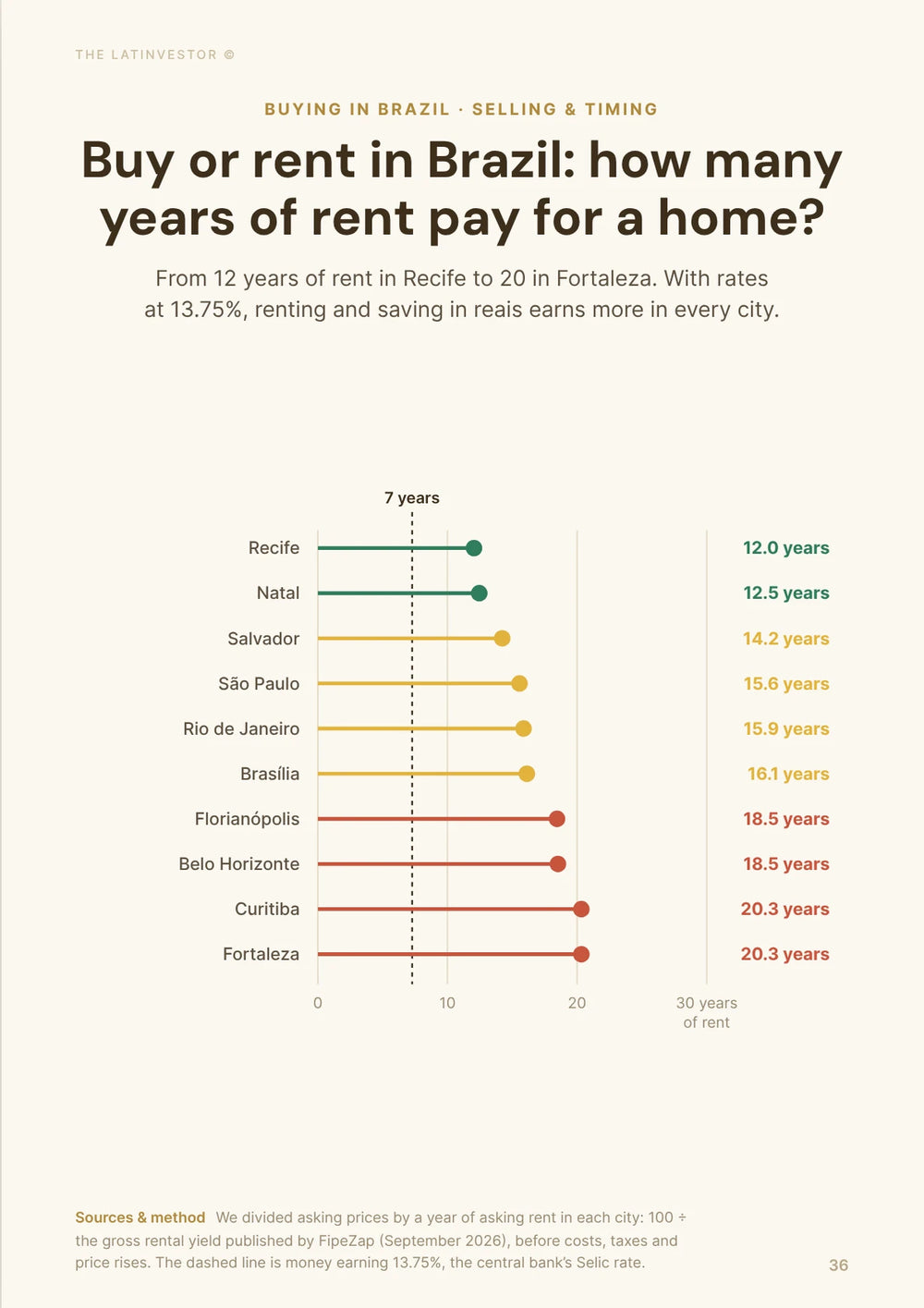
Rarely on income alone: a typical São Paulo apartment yields about 6.43% gross, while Brazilian fixed income pays close to the 13.75% Selic without a tenant.
That’s FipeZAP’s September 2026 city average, before any costs. By neighborhood, our rough estimate from asking rents and prices gives about 8% in Centro and República, 6.6% in Pinheiros, 6.2% in Moema, 5.9% in Vila Mariana and around 5.6% in Itaim Bibi and Jardins.
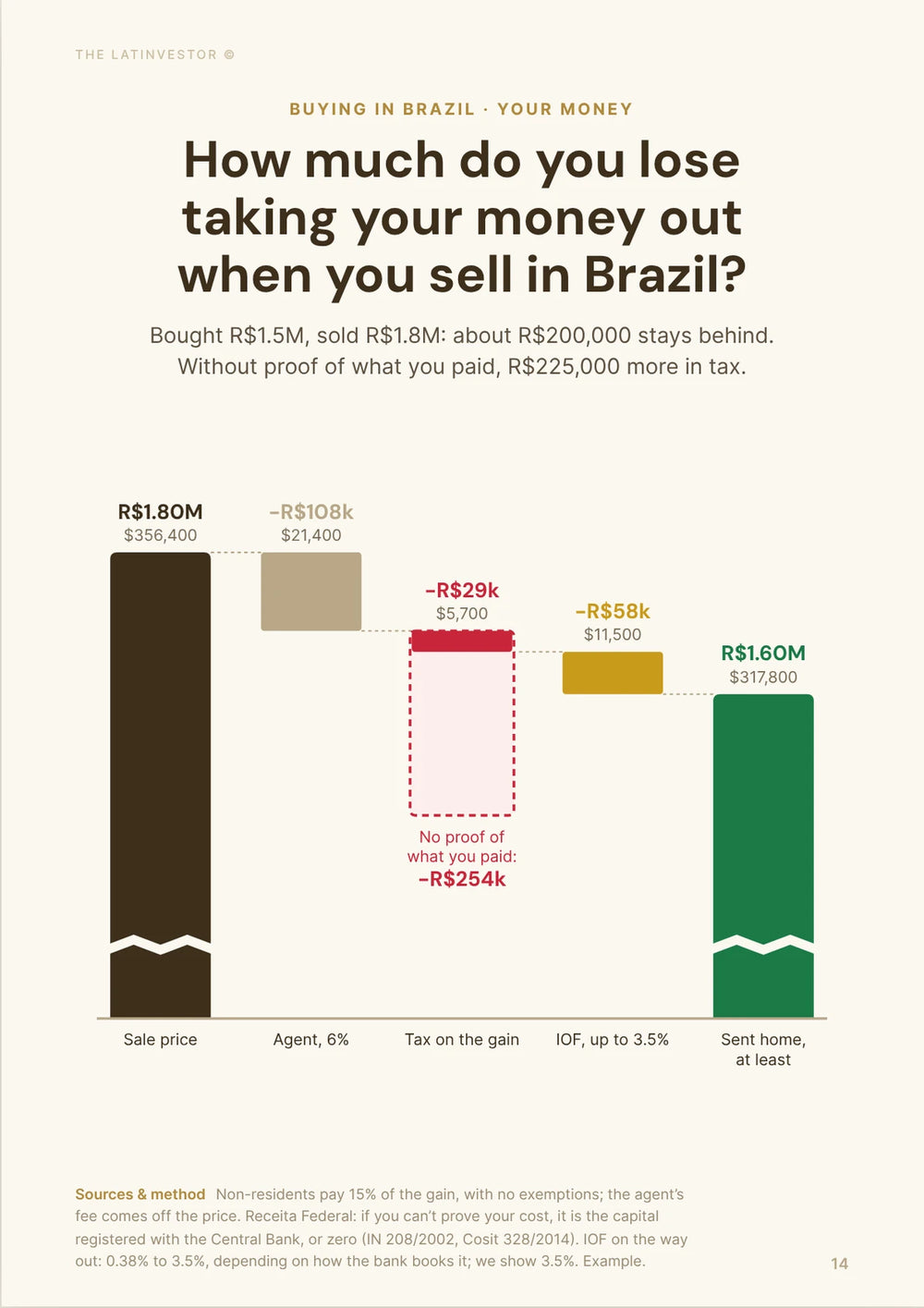
A non-resident landlord has 15% of the gross rent withheld at source, which takes 6.43% down to about 5.5%. Then come empty months, repairs, management and the agent’s fee. On a long lease, the tenant pays the condo fee and IPTU, but you pay them whenever the flat is empty.
Borrowing makes it worse: paying 11.8% plus TR to buy an asset yielding 6% gross only works if you buy far below market.
Some deals still work: a unit bought well below asking, near a metro, with low condo fees, in a building without a pipeline of competing launches nearby. But “São Paulo property always goes up” isn’t a reason to accept a mediocre yield, especially when prices rose less than inflation this year.

Is São Paulo’s luxury market slowing down, or only new launches?
Mostly the new launches. Resale deals on the best streets are still strong, while high-end new-home sales have dropped hard.
Pilar analyzed ITBI records (sales actually registered with the city) for the first half of 2026. Vila Nova Conceição reached about R$853 million of high-end sales, with the number of deals up 50.6% to 119. Itaim Bibi reached about R$674 million, up 21.6%, and its median ticket jumped from R$4.6 million to R$5.75 million ($1.14 million). Jardim América hit R$561.5 million, but one R$230 million sale on Rua México explains much of it.
Not every prime area is winning. Pinheiros lost 25% of its high-end sales value and 14.6% of its deals, while Santa Cecília doubled to R$154 million. In Jardim Europa, deals fell 23.5% but the median ticket rose 32%.
New luxury is another story. Brain counted high-end and luxury new-home sales down 39% in the first half of 2026, and launches down 53%. In June, developers sold only 1.9% of their stock above R$5 million.
So wealthy buyers are still paying for scarce streets, but they are buying finished homes rather than new projects at launch prices. If you buy new at the top end, there’s room to negotiate.
| Prime area | High-end sales, H1 2026 | What stands out |
|---|---|---|
| Vila Nova Conceição | ~R$853m, 119 deals | Deals up 50.6% |
| Itaim Bibi | ~R$674m, ~70 deals | Median ticket up to R$5.75m |
| Jardim América | ~R$562m | One R$230m sale drives the jump |
| Santa Cecília | ~R$154m, 27 deals | Value up 116% |
| Pinheiros | Value -25% | Deals down 14.6% |
Which parts of São Paulo’s property market look strongest now?
The apartments that are hard to copy: a great street, a metro stop without a wall of competing launches, a scarce layout, or a price low enough for subsidized buyers.
FipeZAP’s September 2026 figures put Itaim Bibi at R$19,989 per m², Pinheiros at R$18,260, Jardins at R$18,028, Moema at R$16,520 and Vila Mariana at R$14,879. Listing data put Centro and República around R$9,810.
Even prime addresses aren’t running away. FipeZAP shows Pinheiros down 0.3% over the past year and Itaim Bibi up 3.4%, while Moema rose 5.0%. You pay for the address, not for momentum.
The uncomfortable middle is where we’d be careful: units too expensive for subsidized credit but generic enough to compete with many new projects.
New metro lines can lift a location, but they also attract developers. If zoning allows thousands of new flats around a station, much of the transport premium gets eaten by supply. Check what can be built around the exact property over the next few years, not just how fashionable the district is.
Does São Paulo’s water shortage matter for buyers?
It does now: the city’s main reservoir system is low, and nightly pressure cuts are already in place.
The Cantareira system, which supplies much of the metro area, was at 41.1% at the end of September 2026, and the water agency ANA moved it into its “attention” band from October 1, with a cap on withdrawals. The state also kept nighttime pressure reductions of about 8 hours in October.
This doesn’t mean taps run dry, but buildings with small storage tanks and upper floors feel it first. Before you buy, ask the building manager how big the reservoir and tanks are, whether residents had water cuts this year, and whether the condo has budgeted for pumps or extra storage. It’s a cheap question that can save a lot of trouble.

Will lower interest rates make São Paulo property boom again?
Lower rates should help, but the first effect will probably be faster sales of the unsold stock, not a new price surge.
The Selic is at 13.75% after the September cut, and the Focus survey expects 13.25% by the end of 2026. That’s still very high: cuts this small won’t make mortgages cheap.
The conventional middle market has the most to gain. Lower-income buyers already have Minha Casa, Minha Vida, and the very wealthy pay mostly cash. Middle- and upper-middle-income families are the ones who react to mortgage rates.
But there are 98,018 new homes for sale, up about 61% since the end of 2024. Cheaper credit will help absorb them before any real shortage appears.
A stronger price rise needs three things together: much lower mortgage rates, rising sales, and developers launching less, so that stock stops growing. We’re not there yet.
Could São Paulo property prices actually fall?
In some buildings and oversupplied pockets, yes. A citywide nominal crash is still unlikely.
The supports are still there: high transaction volumes, a big pool of subsidized buyers, rents rising faster than prices, firm demand on prime streets, and stock that is mostly not finished yet.
The risk sits where supply is easy to copy. Developers launched about 33,700 more units than buyers absorbed in the 12 months to August. If that continues while credit stays expensive, competing projects will have to work harder to sell.
Much of the pressure shows up as hidden discounts rather than lower list prices: better payment plans, covered fees, bigger broker bonuses. Resale owners can’t do the same, so a seller of a generic studio surrounded by new launches may simply have to cut. Guru dos Imóveis saw 1,398 listings cut their asking price in São Paulo in September 2026 alone.
A real fall becomes more likely if rates stay high, jobs weaken and launches keep running ahead of sales for a few more years. For now, the correction is uneven: weak properties lose value in real terms, scarce ones keep rising.
Where is São Paulo’s property market heading?
Toward a slower, more selective phase: small nominal price gains, stronger rents, steady demand for subsidized and prime homes, and more pressure on generic apartments where developers built too much.
Demand is still there: 121,064 new homes sold in 12 months, and rents up 6.22%. What changed is the price at which demand works. About 71% of new-home sales are economic units, and conventional mortgages still cost around 11.8% plus TR.
Supply will decide how the next two years go. Launches of 154,769 in 12 months, well above sales, mean buyers can be more demanding, especially on new projects.
Hasta’s model, based on FipeZAP, projects about 3.69% over the next 12 months, to around R$12,656 per m². That’s a model, not a promise, but it fits the picture: slow nominal growth, roughly flat in real terms.
We don’t expect São Paulo property to crash, and we wouldn’t bet on another broad boom. Good rental apartments near the metro, and scarce streets like Vila Nova Conceição, Itaim Bibi and the best parts of Jardins, should do better than the average.
Simply owning property in São Paulo is no longer a plan. The next stage rewards the right apartment, bought at a negotiated price.
Our methodology
This article estimates where São Paulo’s housing market is heading by looking separately at sales, prices, credit, new supply, rents, investor returns and the prime market, rather than at one headline number.
New-home sales, launches, unsold stock and months of supply come from Secovi-SP’s monthly survey (latest data: August 2026, published in October). Prices, rents and gross yields come from FipeZAP’s September 2026 reports, which track asking prices, not closing prices. Neighborhood yields are our own estimates from asking rents and prices, and the Centro and República price comes from A Corrida dos Bairros listing data. High-end resale data come from Pilar’s analysis of ITBI records, and luxury new-home data from Brain.
Rates come from the Banco Central (Selic decision of September 16, 2026, and average housing-loan rates for September 2026), and housing credit volume from ABECIP. Inflation is IBGE’s IPCA. Short-stay figures come from AirROI only, and are not mixed with other providers. Short-stay rules come from the STJ’s May 2026 decision and São Paulo’s HIS and HMP rules; water data from ANA and the São Paulo state government.
We checked these figures in October 2026. Conversions use about 5.05 reais per US dollar and 5.65 reais per euro.
Limits: asking prices are higher than closing prices (FipeZAP found a 9% average discount in its 2026 buyer survey); Secovi-SP covers new homes only; Pilar and Brain are private datasets; our mortgage example ignores TR, insurance and fees; and the Hasta projection is a model, not an official forecast.
Key sources used for this analysis include Secovi-SP’s monthly São Paulo property-market research, Secovi-SP’s August 2026 data via Portas, Secovi-SP’s June 2026 data via Banco Safra, Portas on compact launches (June 2026), Portas on studio stock, FipeZAP with its September 2026 sale report and September 2026 rental report, Portas on FipeZAP’s average discount, Hasta’s FipeZAP panel, Guru dos Imóveis, A Corrida dos Bairros (República), Pilar’s high-end sales study via Portas, Brain via Mercado&Consumo, the Banco Central’s September 2026 Selic decision, the Banco Central’s housing-loan rates, ABECIP, the Ministry of Cities’ Minha Casa, Minha Vida rules, IBGE’s IPCA, AirROI São Paulo, the STJ’s May 2026 decision, Exame on HIS and HMP units, ANA on the Cantareira system and the São Paulo state government on water security.