Summary
Property in Cabo San Lucas is expensive, but a typical home there still sells for about $250,000, not $1 million. That's the median of 173 closed sales in the 12 months to June 2026, and a separate H1 2026 MLS count landed at $258,000.
The million-dollar image comes from wider Los Cabos averages. In Q2 2026, eight sales above $10 million made up about a third of the region's $409.8 million in sales. With no such deals in Q3, the average sale fell to $748,306 in one quarter.
A $250,000 budget still buys something real, mostly in North Cabo (median $176,000) or Centro ($223,500). It buys residential Cabo, not postcard Cabo.
A good two-bedroom condo takes about $300,000 to $450,000. Condos in Cabo proper closed at a median of $260,000, but those include older and smaller units.
Online prices run well above what actually sells. Condo listings across Los Cabos asked a median of $371,000 in October 2026, while condos in Cabo San Lucas closed at $260,000 and the Q3 Los Cabos condo median was $346,356.
Houses aren't much pricier than condos: $236,000 versus $260,000 at the median, but condos cost about a third more per square foot ($251 against $190).
Location moves the price far more than property type. Beach & Marina's $825,000 median is 4.7 times North Cabo's.
El Tezal is still the middle ground, with condos asking a median of $374,000 against $569,000 in El Médano.
Pedregal and the Corridor are another market. The San José Corridor's H1 2026 median was $3.05 million, against $373,000 in the Cabo Corridor and $258,000 in Cabo San Lucas.
Sales are slowing without a price crash. Q3 2026 was the weakest quarter since 2020 for Los Cabos (178 sales, down 36% from Q2), yet sold condos only slipped 8.9% at the median.
Buyers have room to negotiate: Los Cabos residential sales closed at 93.2% of asking in Q3, and Cabo San Lucas had about 30.6 months of supply in mid-2026.
Water is the risk nobody puts in a brochure. In July 2026 the governor proposed tying new building permits in Los Cabos to proof of water supply, and in September parts of Cabo San Lucas were on emergency water rotation.
Cabo is very expensive by Mexican standards. A $250,000 home is about 3.6 times Mexico's median home value of MXN 1.3 million.
Budget another 6% to 9% on top for closing costs, including Los Cabos' 3% acquisition tax. With $500,000 in total, shop at around $460,000 to $470,000.
In practice: $250,000 gets you in, $350,000 to $500,000 gets you real choice, and the Cabo from travel ads usually needs seven figures.

Does property in Cabo San Lucas really cost $1 million now?
No. A typical sale in Cabo San Lucas closes much closer to $250,000. Luxury deals elsewhere in Los Cabos pull the broader averages way up.
The headline numbers swing a lot. Cabo Real Estate Services' Los Cabos MLS data shows 279 residential sales worth $409.8 million in Q2 2026, which puts the average near $1.47 million. Eight of those sales were above $10 million and added up to $141.6 million, more than a third of the quarter's money.
In Q3 2026 there wasn't a single $10 million sale, and the average fell to $748,306, down 49.1% in three months. Prices didn't halve. A handful of trophy homes simply didn't trade. The more stable number is the condo median: $346,356 in Q3, down 8.9% from Q2.
Cabo San Lucas proper looks very different. An H1 2026 analysis of the regional MLS recorded 86 residential closings in the Cabo San Lucas zone, with a median sale price of $258,000. Laidback Legacy's 12-month count to June 2026, based on 173 closed sales in Cabo proper, landed at $250,000.
So there are two honest answers, depending on what you mean by "Cabo." In Los Cabos, million-dollar homes account for most of the money spent. A typical sale inside Cabo San Lucas costs a fraction of that.
| Recent measure | Price | What it actually describes | How we read it |
|---|---|---|---|
| Los Cabos Q2 2026 average sale | ~$1.47M | Includes eight $10M+ sales | Heavily skewed upward |
| Los Cabos Q3 2026 average sale | $748K | Same market, no $10M+ sales | Shows how fast averages swing |
| Los Cabos Q3 2026 condo median | $346K | Middle condo sale across Los Cabos | Better picture of the wider market |
| Cabo San Lucas H1 2026 median | $258K | 86 closed residential sales in the Cabo zone | Strong local benchmark |
| Cabo proper 12-month median | $250K | 173 closed sales to June 2026 | Confirms the local figure |
What can $250,000 actually buy in Cabo San Lucas?
A $250,000 budget still buys real property in Cabo San Lucas, usually a condo or a modest home away from the beachfront. You have to be flexible on location, views and amenities.
The sales data shows this is a real part of the market, not a few odd listings. North Cabo's median sold price was $176,000 over the 12 months to June 2026, and Centro's was $223,500. Across Cabo proper, houses sold at a median of $236,000 and condos at $260,000.
The cheap end hasn't disappeared from listings either. In October 2026, a two-bedroom unit at Bahía del Tezal was listed at $190,000 on the MLS. That's a single listing, not a typical price, but units like it do show up outside Médano and the Marina.
What you lose at $250,000 is the Cabo most tourists know: direct beach access, open ocean views, walking to Médano, big terraces and resort services.
So $250,000 is a credible entry price. It buys residential Cabo, not postcard Cabo.
How much does a good condo in Cabo San Lucas cost now?
A good two-bedroom condo in Cabo San Lucas generally costs around $300,000 to $450,000 if you want real choice without paying luxury prices.
The lower end still trades. Two-bedroom units outside the beachfront zone show up in the low to mid $200,000s, and El Tezal and nearby residential areas have plenty in the $300,000s.
Closed sales give another anchor. Condos in Cabo proper closed at a median of $260,000, but that includes older, smaller and less central units. If you're coming from the US or Canada and want a modern two-bedroom with a pool, gated amenities and a decent location, expect to pay above that median.
Near $500,000, the trade-offs get much easier: better views, newer buildings, bigger terraces and stronger rental locations. From about $800,000, prime tourist Cabo is within reach.
| Condo budget | What buyers can realistically expect now | Main compromise |
|---|---|---|
| Under $250K | Genuine condo options still exist | Location, age, size or views |
| $250K–$350K | Good selection outside beachfront Cabo | Usually no direct beach access |
| $350K–$500K | Modern two-bedroom inventory with better amenities | Best locations still expensive |
| $500K–$800K | Stronger views, size and rental appeal | Premium developments cost more |
| $800K+ | Beach, Marina and luxury options become realistic | Higher HOA and acquisition costs |
Are Cabo listing prices running ahead of what actually sells?
Yes. Asking prices in Los Cabos sit well above recent sale prices, so the number on a listing is where the talk starts, not where it ends.
In October 2026, TuLugar's listing data put the median asking price for a condo across Los Cabos at $371,000, and $325,000 for a two-bedroom. Condos that actually closed in Cabo San Lucas over the 12 months to June had a median of $260,000. The Q3 Los Cabos condo median, which includes pricier San José and Corridor sales, was $346,356.
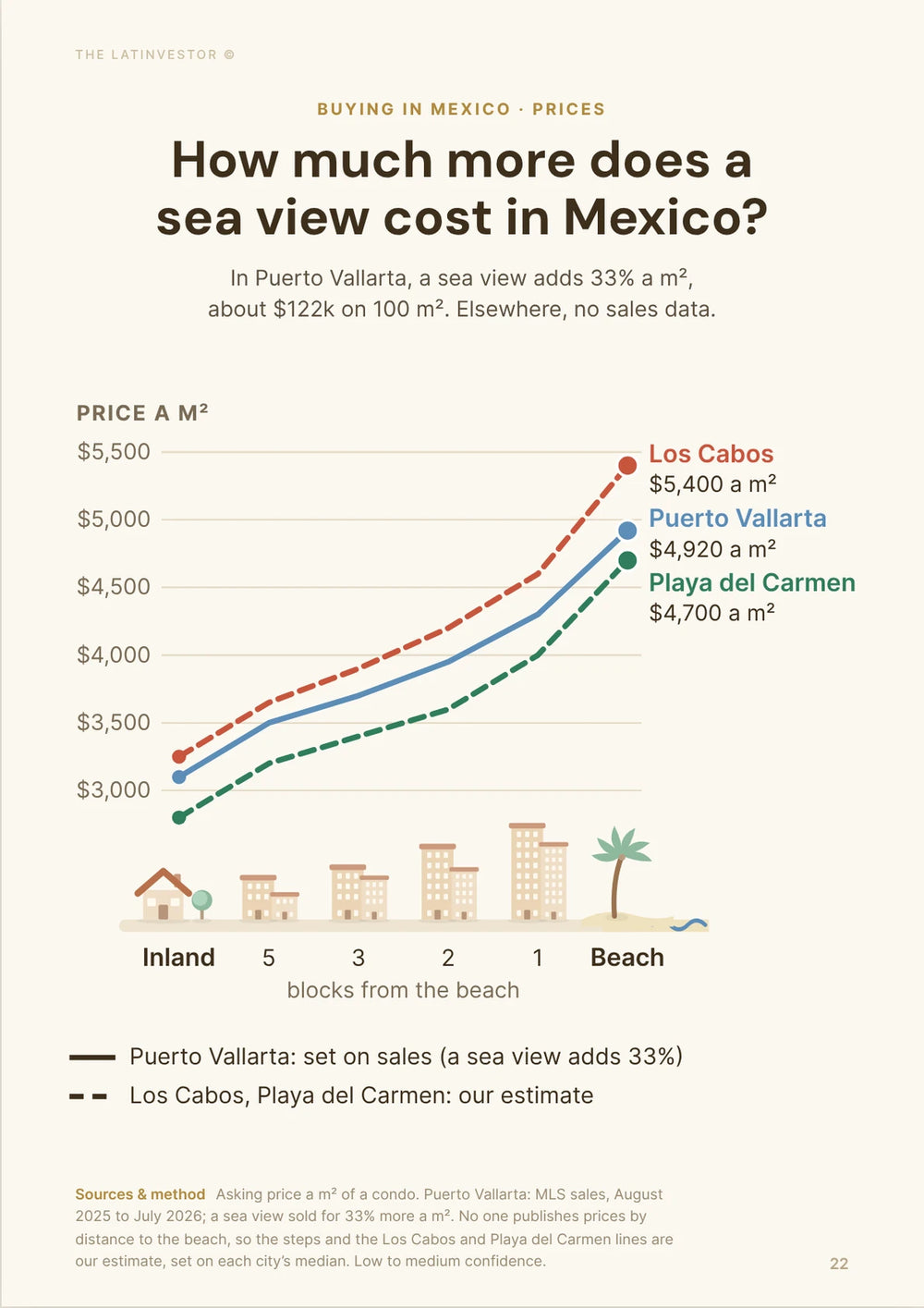
The per-area numbers point the same way. Listings asked a median of about $3,071 per square meter for condos across the municipality. Condos that sold in Cabo proper went for about $251 per square foot, or roughly $2,700 per square meter. The areas don't match exactly, but the gap is real, and sellers at the median rarely close at their first price.
What to do: ask your agent for MLS sold comparables from the last six months, ideally in the same building, before you make an offer. Anchor on price per square meter of air-conditioned space, not on the asking price. Treat any listing that's been up for more than six months as open to an offer below what the seller hopes for.
Are houses in Cabo San Lucas much more expensive than condos?
Not really. Houses and condos sell for similar prices, and houses usually give you more space because many sit in cheaper parts of town.
The 12-month data puts the median closed house at about $236,000 and the median condo at $260,000. That sounds odd, since house listings often run into the high six figures or millions.
Location explains most of it. Many ordinary houses trade in Centro and North Cabo, while condos cluster near the beach, the views and the foreign buyers.
Price per square foot shows the difference. Condos sold for about $251 per air-conditioned square foot, houses for about $190. Buyers paid around a third more per square foot for condos, even though total prices were similar.
Online, detached homes still look far more expensive than sales suggest. Big villas sit on the market longer, so at any moment the portals are full of expensive houses that haven't sold.
If you care more about space than the beach, a house stretches your budget much further than a condo.
Which parts of Cabo San Lucas are actually expensive?
Beach & Marina is by far the expensive part of Cabo San Lucas, with a median sale of $825,000 against $223,500 in Centro and $176,000 in North Cabo.
That gap tells you more than any citywide average. Beach & Marina's median is about 3.7 times Centro's and 4.7 times North Cabo's. Per square foot, it's $485 versus $153 in North Cabo.
These are really different markets in the same town. North Cabo is mostly local residential demand. Centro mixes ordinary housing with being close to downtown. Beach & Marina adds scarce land, walkability, tourists, vacation-rental demand and the best stretch of coast.
Property type matters much less. The median house and condo in Cabo proper were only $24,000 apart. Moving across town can change the typical price by more than $600,000.
So settle the location first. The neighborhood can change the answer several times over before you even look at bedrooms or finishes.
| Cabo San Lucas area | Median sold price (12 months to June 2026) | Premium vs North Cabo | Market character |
|---|---|---|---|
| North Cabo | $176K | — | Mainly residential |
| Centro | $223.5K | +27% | Central mixed market |
| Beach & Marina | $825K | +369% | Tourism, beach and premium condos |
Is El Tezal still one of the cheaper places to buy near central Cabo?
El Tezal is still one of the better compromises in Cabo San Lucas if you want a newer condo and easy access without paying Beach & Marina prices.
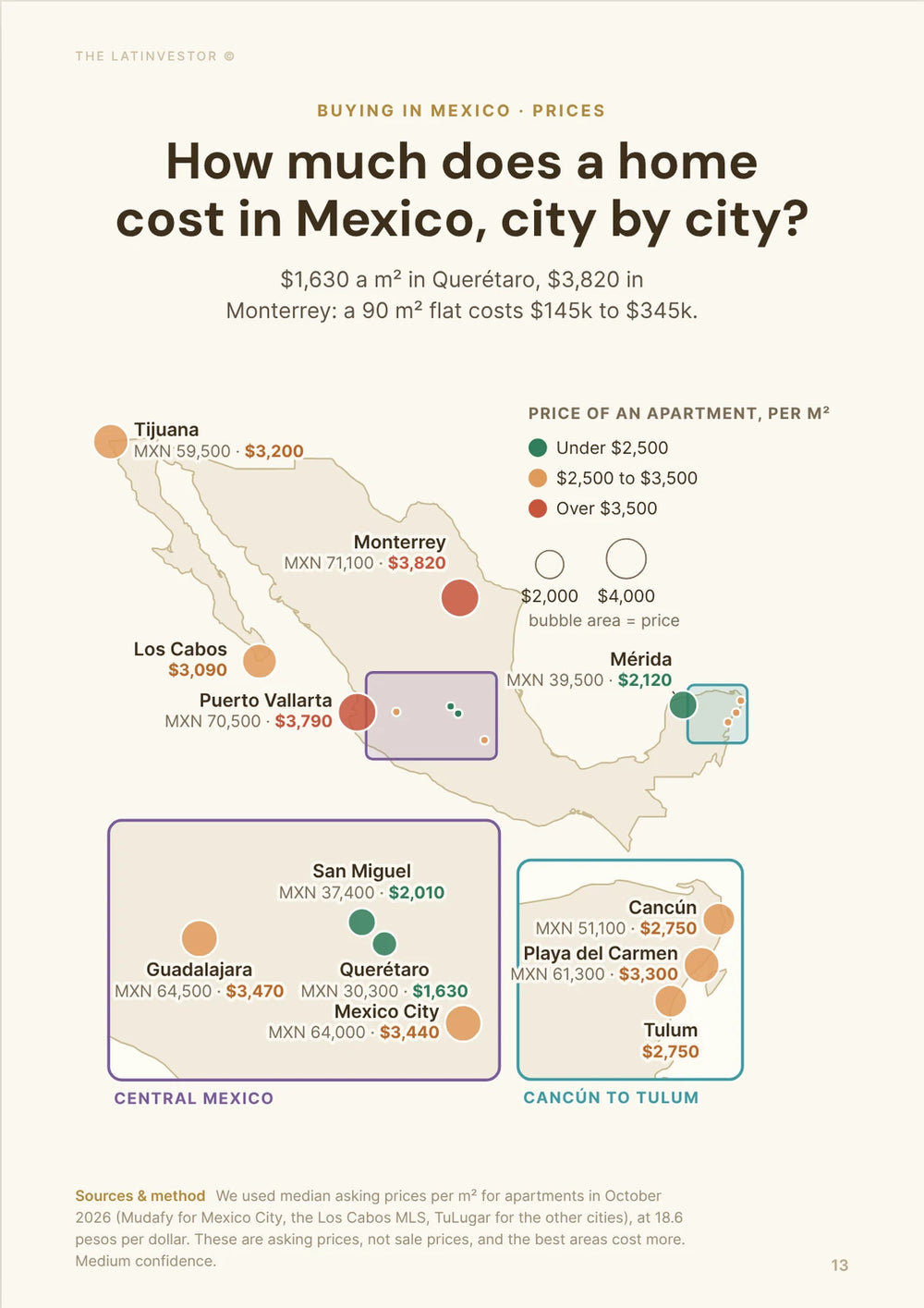
In October 2026, El Tezal condo listings asked a median of $374,000, or about $2,778 per square meter, against $569,000 in El Médano. Many two-bedroom units sit in the $300,000s, while newer projects and strong ocean views go higher.
It works because it sits just behind the tourist strip. You can reach downtown, Médano and the Corridor fairly easily without paying the land premium for direct beach access. The trade-off is that it's hilly and car-dependent, and the "ocean view" is often a distant one.
That difference can be worth hundreds of thousands of dollars. A modern two-bedroom around $325,000 in El Tezal and an $825,000 median sale in Beach & Marina are both sold abroad as "Cabo condos," but they're in very different price brackets.
El Tezal has grown more built-up and more expensive, so "cheap" would be wrong. It's still the obvious place to look if you have about $300,000 to $450,000 and want a fairly polished Cabo property.
How expensive are Médano Beach and the Cabo Marina now?
Médano Beach and the Marina are genuinely expensive, with Beach & Marina sales at a median of about $825,000 and better units easily over $1 million.
The premium makes sense once you look at what you're paying for. This is the small part of Cabo where you get the beach, restaurants, nightlife and the Marina within walking distance. There's very little land left to build more of that.
Even here, $825,000 isn't a minimum. The October 2026 condo asking median in El Médano was $569,000, and older, smaller Marina units still show up in the mid $200,000s.
At the other end, large beachfront condos, penthouses and new luxury residences reach several million dollars.
A single Médano price is close to useless. A small older Marina condo and a new beachfront residence can be minutes apart and still compete in completely different markets. If you insist on central, walkable, beach-side Cabo, expect to spend far more than the town median.
Has Pedregal become a multimillion-dollar market?
Yes, for houses. Pedregal is firmly a multimillion-dollar market, and using its prices to describe Cabo gives a wildly inflated picture of what ordinary property costs.
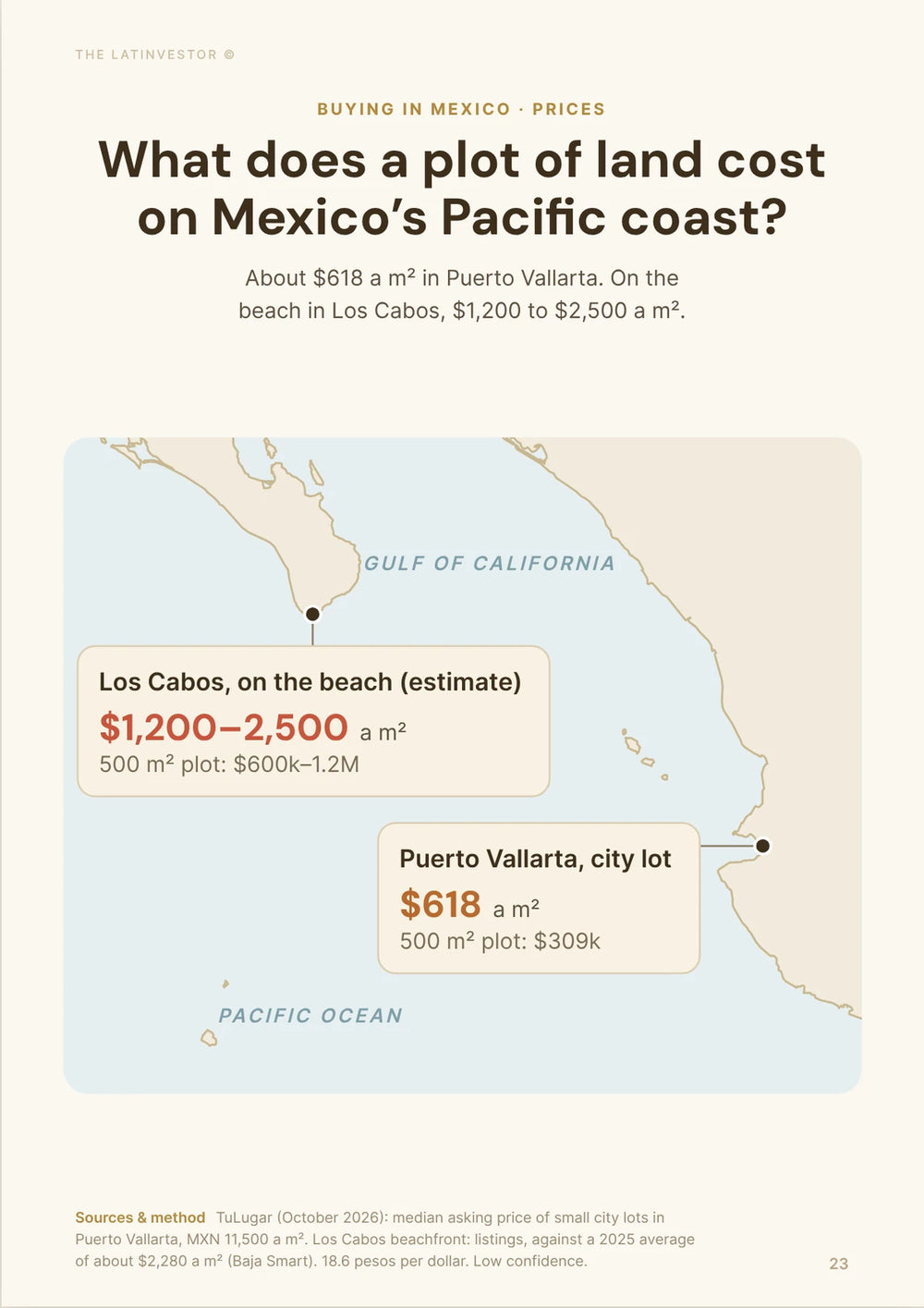
Villa listings commonly start in the low millions and go well above $10 million, and real sales happen at those levels. Christie's counted 11 home sales in Pedregal in the first nine months of 2026, one of the most active high-end home communities in Los Cabos. Across Cabo proper, the 23 sales above $1 million in the 12 months to June 2026 had a median of $1,967,000.
Condos are the exception. Pedregal condo listings asked a median of $465,000 in October 2026, a way into the area without villa money.
The gap with ordinary Cabo is huge. A $3 million villa is about twelve times the local median sale.
Pedregal earns its premium through gated security, hillside ocean views, large villas, being close to downtown and a long reputation with foreign buyers. It shows how expensive Cabo can get, but it tells you almost nothing about the minimum budget to own there.
Is the Cabo Corridor more expensive than Cabo San Lucas?
Yes, the Cabo Corridor costs more than Cabo San Lucas overall, and the gap becomes enormous in its best resort communities.
H1 2026 MLS data puts the median residential sale at $258,000 in Cabo San Lucas and $373,000 in the Cabo Corridor, about 45% more.
That still understates the top end. Between Cabo San Lucas and San José del Cabo there are resort and golf communities where homes regularly cost several million dollars. In September 2026, listings in the Palmilla–Corridor area asked a median of about $5,658 per square meter, nearly double the $3,071 Los Cabos condo median.
This is why online Cabo prices jump around so much. "Cabo," "Cabo San Lucas," "Los Cabos" and "the Corridor" get used loosely, but they describe very different markets.
The safest comparison keeps Cabo San Lucas proper separate. Once Corridor resorts, San José's luxury communities and Pacific-side projects come into the data, the typical price climbs fast.
| Area | H1 2026 median residential sale | Difference from Cabo San Lucas | What dominates the market |
|---|---|---|---|
| Cabo San Lucas | $258K | — | Mixed local and international demand |
| Cabo Corridor | $373K | +45% | Condos, resorts and residential communities |
| San José del Cabo | $420K | +63% | Broader upscale residential market |
| San José Corridor | $3.05M | +1,082% | Heavy luxury concentration |
Are Cabo San Lucas property prices still going up?
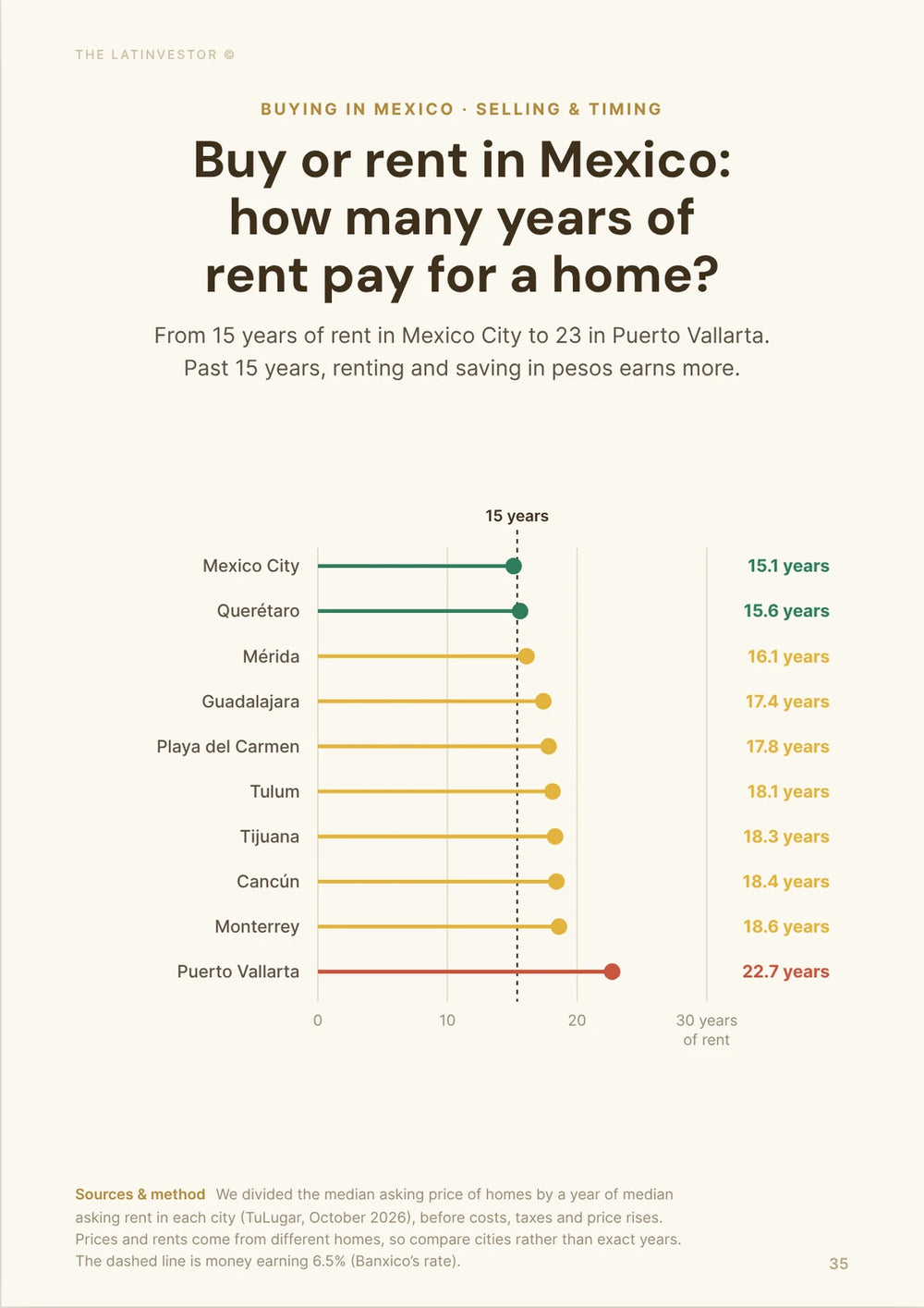
Over five years, yes, by a lot. In 2026, prices are holding rather than climbing, while sales clearly slow.
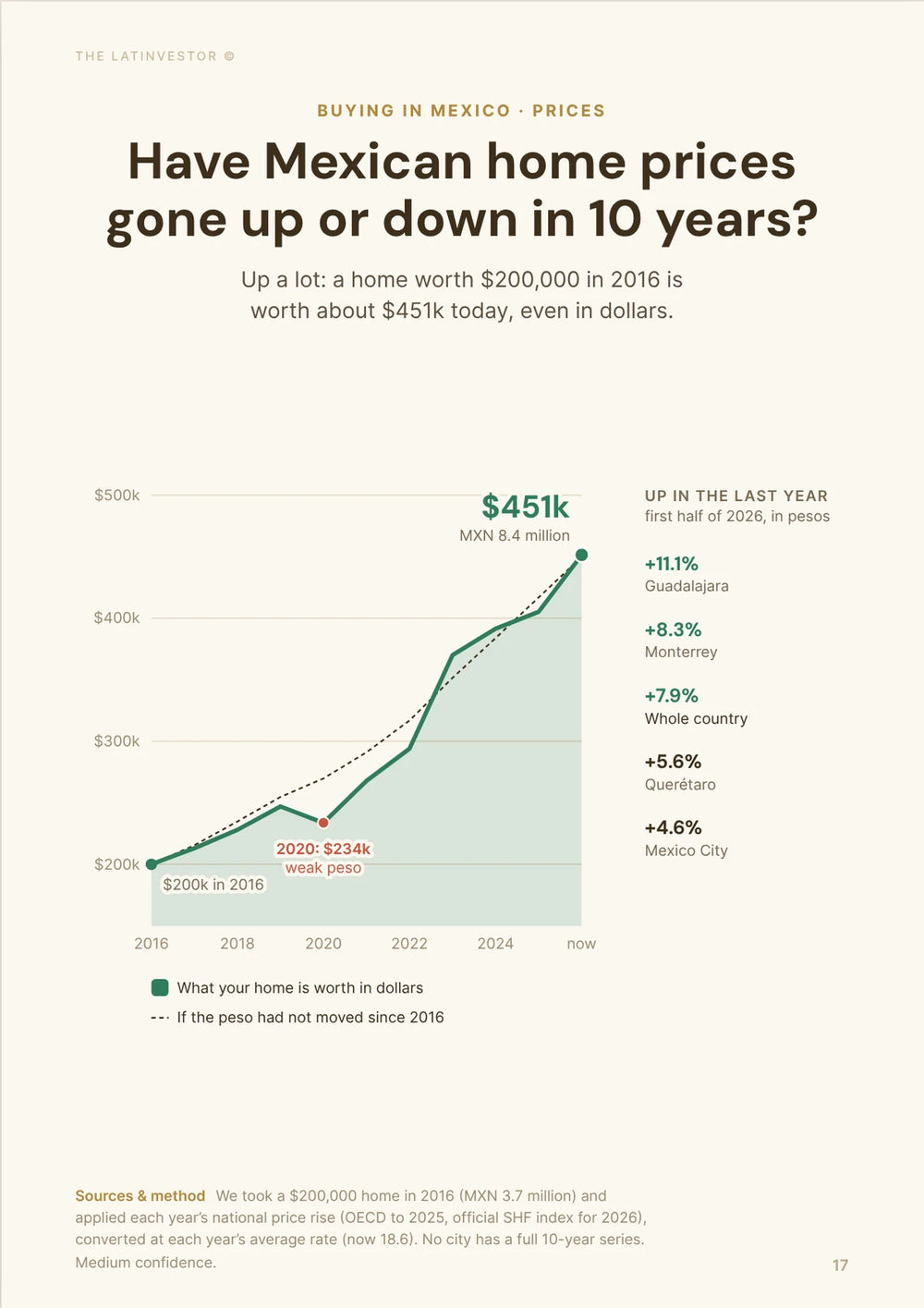
SHF's mortgage-based price index for Los Cabos rose about 96% in the five years to late 2025, against about 56% for Mexico as a whole. Few markets in the country moved that fast.
In 2026, the official index is still rising nationally, up 7.9% in the first half of the year. Baja California Sur wasn't among the five fastest-rising states this time (all at 10.6% or more), but it's still the second most expensive state for housing, with an average appraisal of MXN 2.62 million (about $141,000).
That index covers mortgage-financed homes across the state, mostly local buyers. Cabo's foreign market is cash-heavy and full of luxury homes and presales, so the index tells you the direction for the region, not what a Médano condo did.
The resale data is the counterweight. Cabo San Lucas recorded only 86 residential closings in H1 2026 in one MLS analysis, against 439 active listings in July. The Los Cabos condo median then dipped 8.9% from Q2 to Q3.
Prices are still high and the long-term trend is up, but buyers have far more choice than in the post-pandemic boom.
Did Cabo prices drop after the weakest quarter since 2020?
Not much. Sales fell hard in 2026, but sale prices only softened at the edges. You'll find a soft market with stubborn sellers, not a crash.
Cabo Real Estate Services called Q3 2026 the weakest quarter for Los Cabos since 2020: 178 residential sales worth $133.2 million, down 36% in sales and 68% in dollar volume from Q2. Christie's count for January to September, over a wider area, shows 1,260 sales, down 11.4% from a year earlier, with dollar volume down 13.5% to $1.12 billion. In the Cabo San Lucas area (including the Cabo Corridor), sales fell 18.1%.
Supply is deep. Cabo San Lucas had 439 active residential listings in July 2026 against 86 closings in the first half, or about 30.6 months of supply. A balanced market is usually around five to six months, though Cabo's second-home and luxury mix makes that comparison rough.
Yet prices have barely moved. Christie's average price for homes under $1 million was down just 0.5% year on year, and condos under $1 million were down 5.1%. Sellers are cutting a few points, not slashing.
For a buyer, that means time and choice, but don't wait for a 20% drop. The data doesn't show one coming.
How much can buyers negotiate on Cabo property today?
You can usually get several percentage points off the asking price, and the biggest discounts are on expensive homes and listings that have sat for months.
In Q3 2026, Los Cabos residential sales closed at 93.2% of their last asking price, up from 89.9% in Q2: condos at 93.6% and houses at 92.5%. Christie's January to September numbers show the same pattern: 95.9% for condos under $1 million and 94.9% for homes under $1 million.
Luxury sellers give up more. Homes over $1 million closed at 92.5% of asking, luxury condos at 93.5%.
That adds up in dollars. A 5% cut on a $500,000 property is $25,000. A 7% cut on a $2 million villa is $140,000.
Time on market is your best lever. Christie's average was about 250 days for homes and condos under $1 million, and 494 days for condos over $1 million. A listing that's been up for over a year is a very different negotiation from a fresh $300,000 condo. Check the original listing date and every price cut before you make an offer.
| Segment (Jan–Sep 2026) | Average sale-to-list ratio | Approx. discount from latest ask | Example |
|---|---|---|---|
| Homes under $1M | 94.9% | 5.1% | ~$25.5K off $500K |
| Condos under $1M | 95.9% | 4.1% | ~$20.5K off $500K |
| Homes over $1M | 92.5% | 7.5% | ~$150K off $2M |
| Condos over $1M | 93.5% | 6.5% | ~$130K off $2M |
Could Cabo's water shortage hit what you buy?
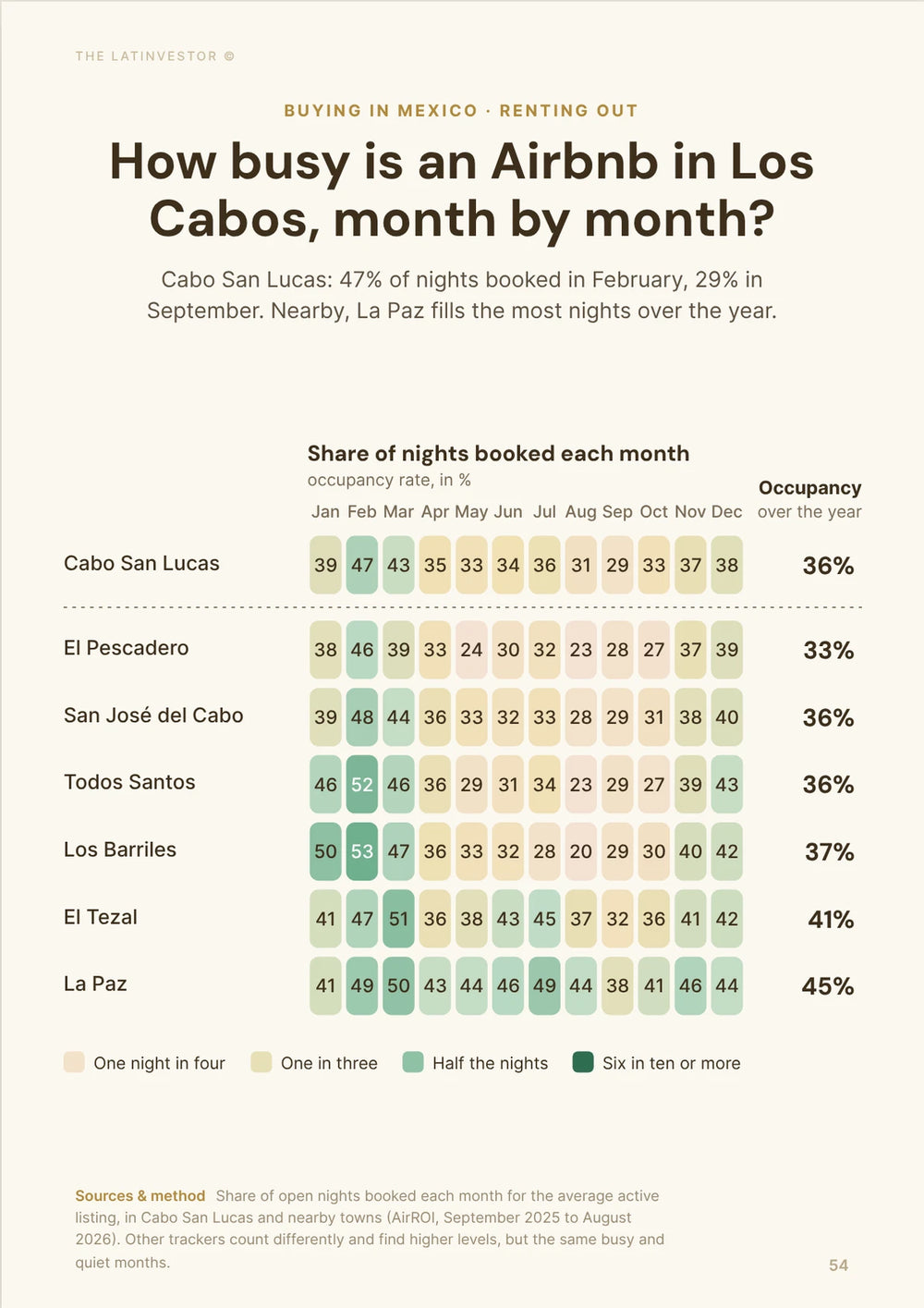
Yes. Water is the biggest open risk in Cabo right now, and it can affect both your daily life and which new projects get built.
On July 17, 2026, Baja California Sur governor Víctor Castro said the state may refuse permits for new developments in Los Cabos and La Paz unless developers can prove they have enough water. It's a proposal for now, not a law, and existing permits would likely stay valid. But new projects could face tougher checks and longer delays.
The shortage is already real on the ground. On September 1, 2026, a ruptured seawater intake shut down Cabo San Lucas' first desalination plant, and in late September the city put neighborhoods like Las Palmas, Lomas del Valle and Los Cangrejos II on an emergency water rotation, on top of the usual daily schedule. In late 2025, residents of more than ten neighborhoods reported going over a month without piped water.
What to do: ask the HOA or seller how many days a week water arrives, how big the cistern is, and what was spent on water trucks last year. For a presale, ask for the developer's water feasibility letter from OOMSAPAS before paying any deposit. If permits tighten, existing buildings with reliable water could hold their value better than projects still on paper.
Is Cabo San Lucas expensive compared with the rest of Mexico?
Yes, very, even before you reach the beachfront and luxury communities.
SHF data put Mexico's median mortgage-backed home appraisal at MXN 1.30 million (about $69,900) in Q2 2026, with an average of MXN 1.96 million (about $105,000).
Baja California Sur is already the second most expensive state, with an average of MXN 2.62 million (about $141,000). Cabo's typical $250,000 sale works out to about MXN 4.65 million, nearly twice the state average and about 3.6 times the national median.
That's why Cabo can look affordable to a Californian and extremely expensive within Mexico. Next to San Diego or Orange County, a $350,000 condo feels attainable. Next to most Mexican cities, it's a huge premium.
Cabo is basically an international second-home market sitting on top of a Mexican town, which is why its prices are spread so wide.
How much extra does it cost to actually buy a Cabo property?
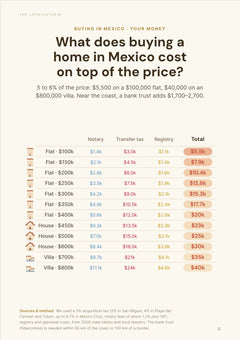
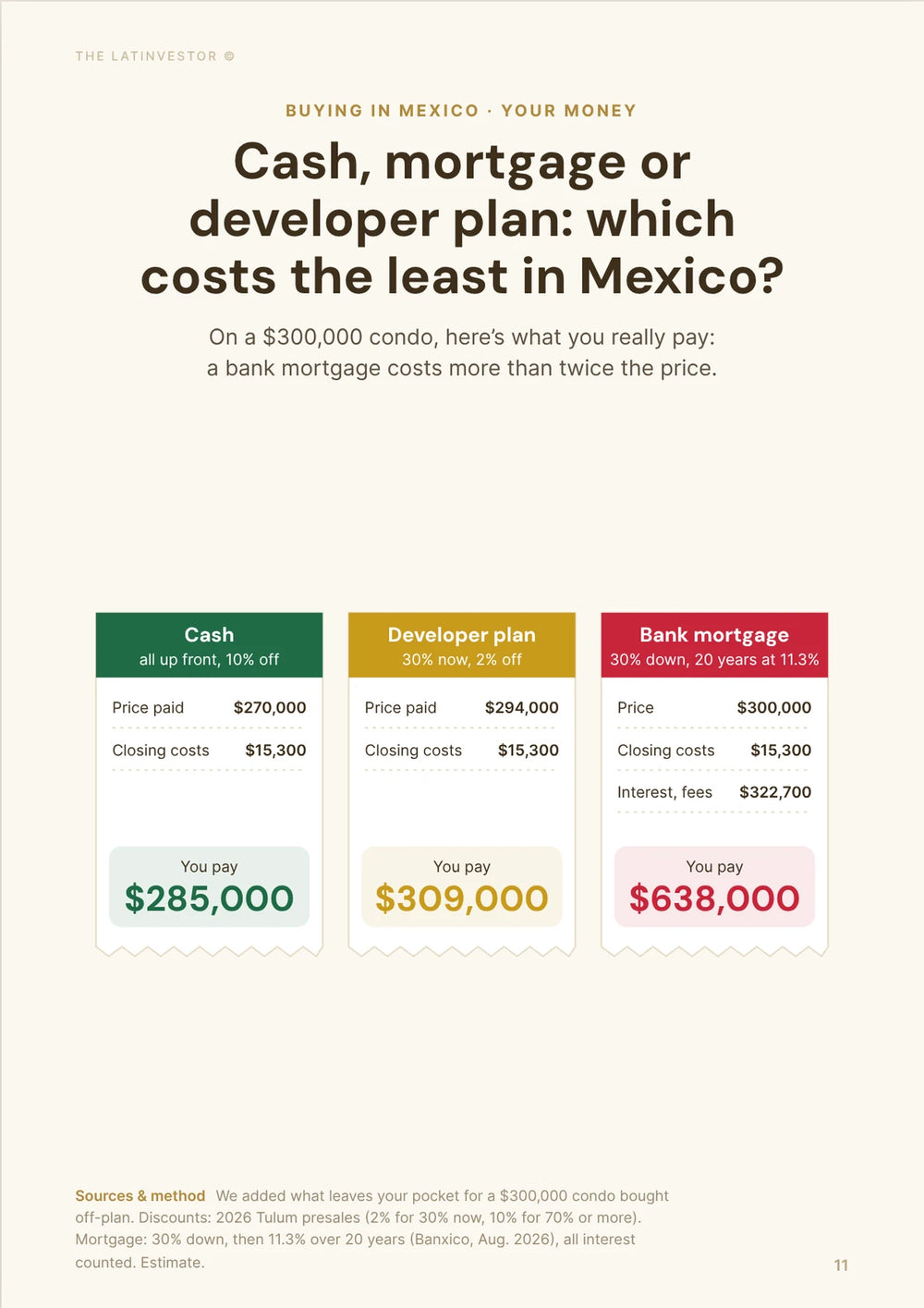
Budget roughly another 6% to 9% on top of the price for closing costs as a foreign buyer, or $30,000 to $45,000 on a $500,000 purchase.
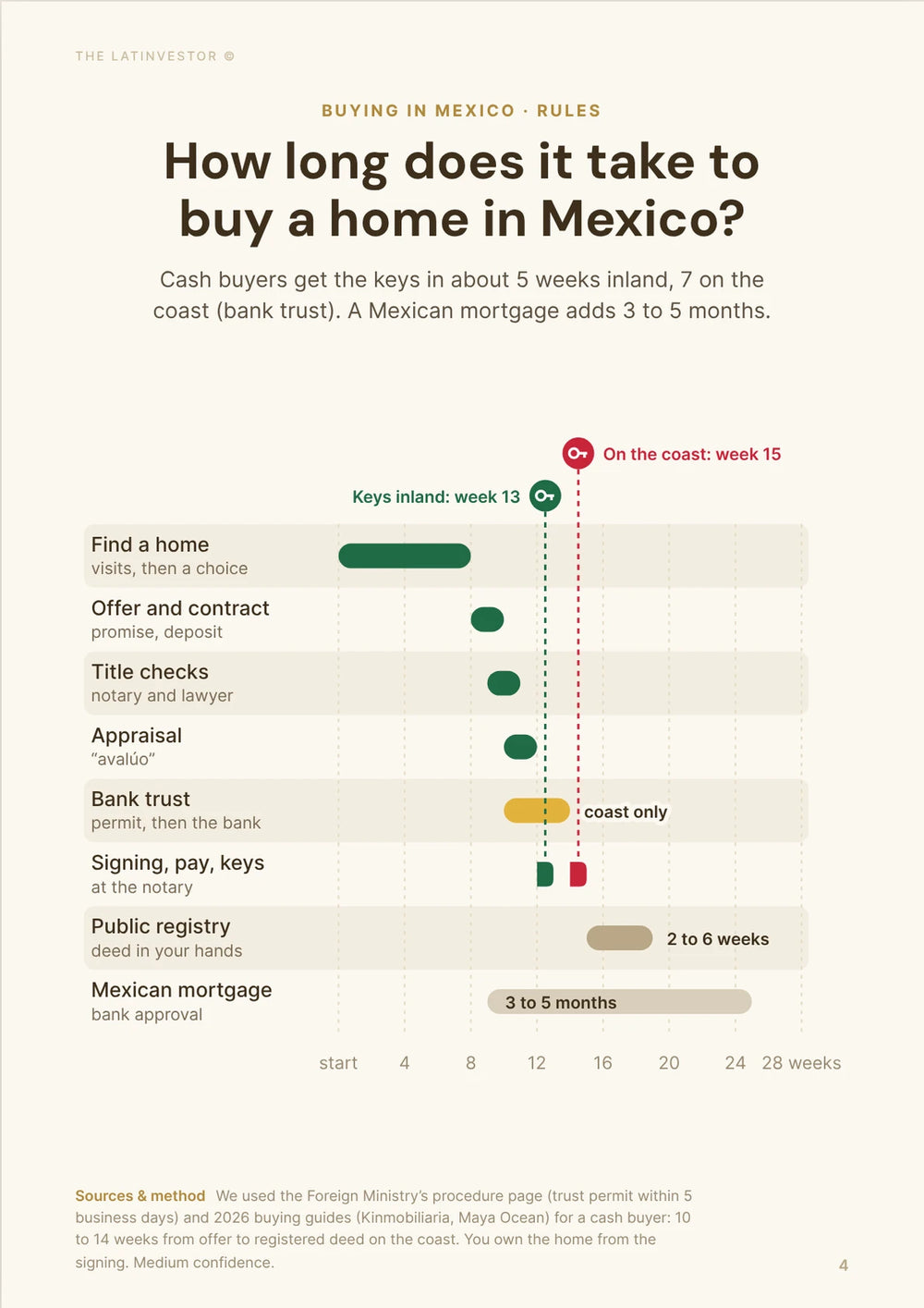
One recent change catches people out. Los Cabos raised its acquisition tax (ISABI) from 2% to 3%, and older guides still quote 2%. On top of that come public registry charges, notary fees and a few transaction-specific costs.
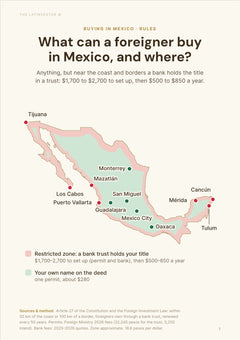
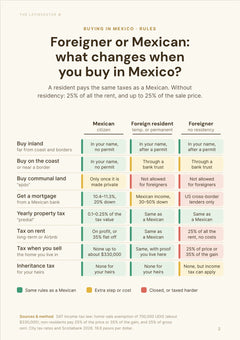
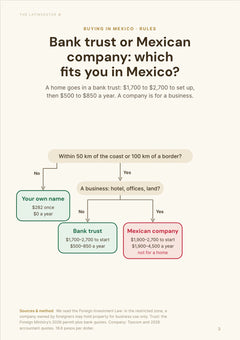
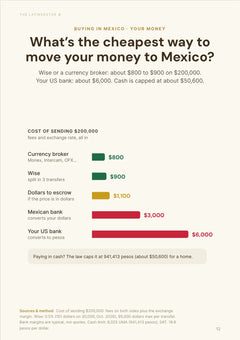
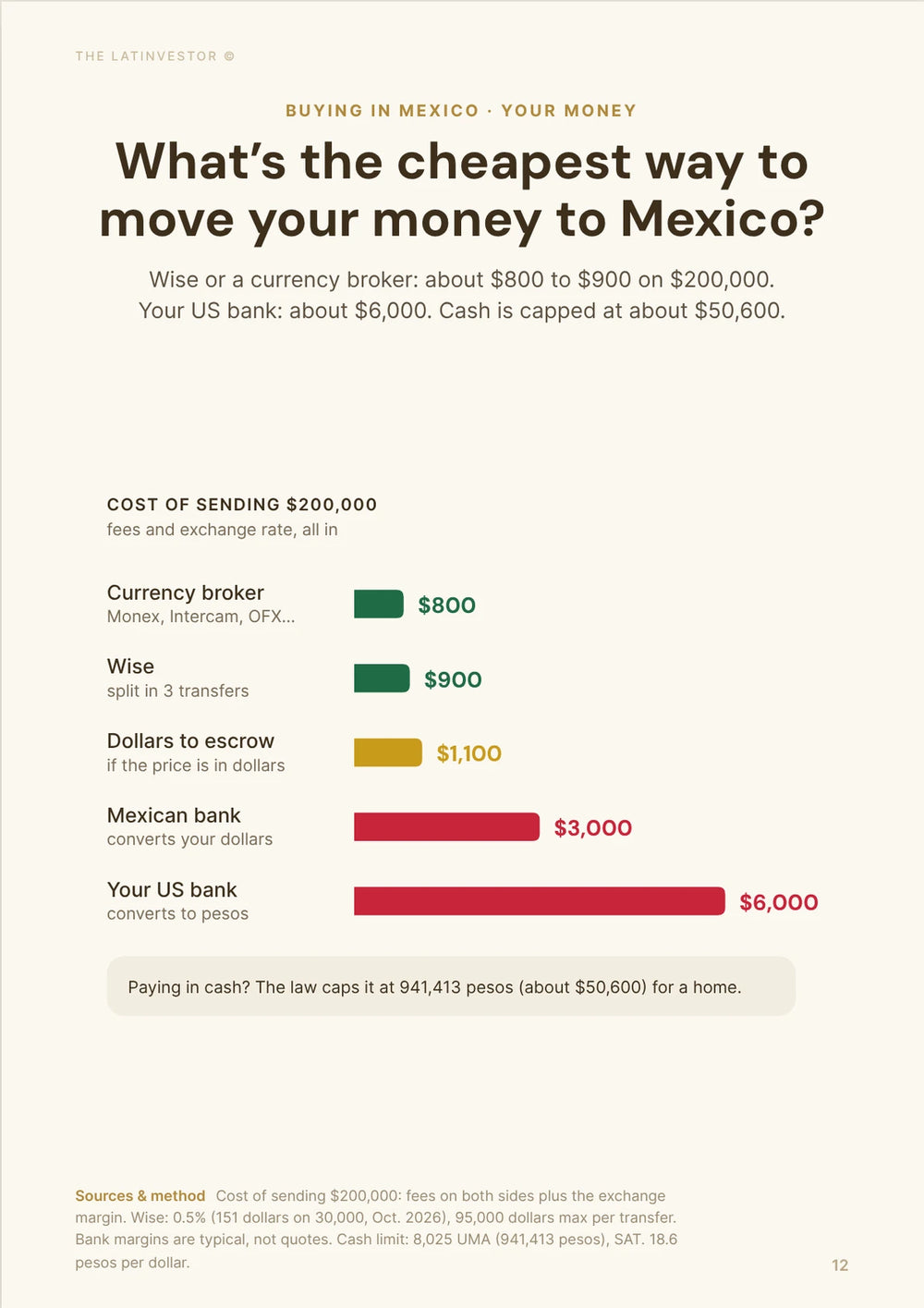
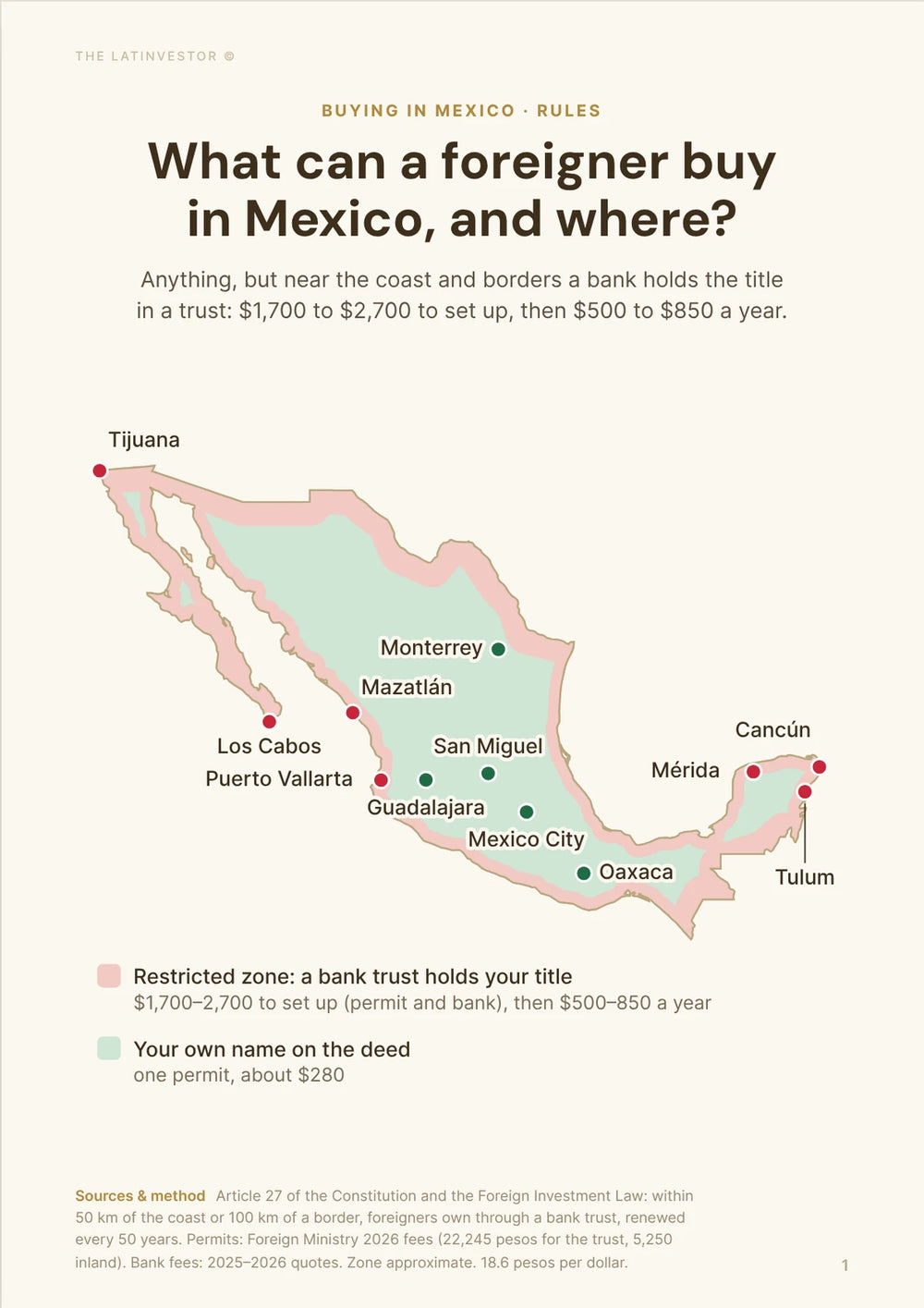
Cabo San Lucas sits in Mexico's restricted coastal zone, so a foreign buyer of a home holds it through a bank trust (fideicomiso). The Foreign Ministry permit alone costs MXN 21,650 (about $1,160) in 2026, and banks typically charge around $550 to $800 to set up the trust, plus a similar annual fee.
Legal help, escrow, valuation, certificates and title insurance can push the total higher. A simple purchase lands around 6% to 7%, and complicated ones can reach 9%.
This changes what you can afford. With exactly $500,000 available, don't shop for a $500,000 property. A realistic ceiling is about $460,000 to $470,000 if the same money also covers closing costs.
| Property price | 6% extra | 9% extra | Practical acquisition total |
|---|---|---|---|
| $250K | $15K | $22.5K | $265K–$272.5K |
| $350K | $21K | $31.5K | $371K–$381.5K |
| $500K | $30K | $45K | $530K–$545K |
| $750K | $45K | $67.5K | $795K–$817.5K |
| $1M | $60K | $90K | $1.06M–$1.09M |
How much money do you really need for a good property in Cabo San Lucas?
Around $350,000 to $500,000 is the sweet spot if you want a good Cabo San Lucas property without paying for the luxury version.
At $250,000 you can still buy, but the search narrows to older condos, North Cabo, Centro and places without good views.
Around $350,000 the market opens up. Modern two-bedroom condos in areas like El Tezal become realistic, and you're no longer chasing only the cheapest units.
At $500,000 you get much more freedom on size, condition, building quality and views. Toward $750,000, stronger vacation-rental locations and good ocean-view units come into play.
Around $1 million you can compete for prime Beach & Marina property and higher-end resort units. Several million brings Pedregal villas and the Corridor's luxury communities into the conversation.
Owning property in Cabo San Lucas and owning the Cabo from travel ads are two different things. The first can happen in the mid six figures. The second often needs seven.
So, how expensive is property in Cabo San Lucas now?
Property in Cabo San Lucas is expensive, but $300,000 to $500,000 is a far more useful reference for ordinary buyers than the million-dollar averages from the wider Los Cabos market.
The best evidence comes from closed sales. One H1 2026 MLS analysis put the Cabo San Lucas median at $258,000, and a separate count of 173 closed sales over 12 months came in at $250,000. Two different samples, $8,000 apart.
That baseline changes fast with location: $176,000 in North Cabo, $223,500 in Centro and $825,000 in Beach & Marina. Pedregal villas take you into the millions, and resort communities along the Corridor can cost even more.
For a practical budget: about $250,000 is where real options start, $350,000 to $500,000 is where you get comfortable choice, and $500,000 to $800,000 is where quality, location and views improve a lot.
The market also gives buyers something they didn't have in the boom years: time and choice. Q3 2026 was the slowest quarter since 2020, supply is deep, and homes close several points below asking. But the long-term price trend is still up and sellers aren't panicking, so waiting for a crash isn't a plan.
Before you sign, check two things the price won't tell you: how reliable the building's water supply is, and how much you'll really pay once the 3% acquisition tax and trust costs are added.
Our methodology
This article estimates how expensive property in Cabo San Lucas really is, keeping Cabo San Lucas proper separate from the wider Los Cabos, Cabo Corridor and San José markets.
Closed sales carry the most weight because they show where buyers and sellers actually agreed. We used Laidback Legacy's 12-month MLS data to June 2026 for local medians, property types and neighborhoods, Vansirius' H1 2026 MLS report for area medians, active listings and months of supply, Cabo Real Estate Services' Q3 2026 Los Cabos report for averages, condo medians, sale-to-list ratios and the slowdown, and Christie's January to September 2026 MLS review for year-on-year trends, days on market and luxury segments.
For asking prices we used TuLugar's October 2026 listing data (municipality and neighborhood medians), DEDALO's mapped listing clusters and individual MLS listings. These are asking prices, not sale prices, and we label them that way. The long-term trend comes from the official SHF housing price index (national and state, Q2 2026) and its five-year Los Cabos series as published by Global Property Guide.
Purchase rules and costs come from Mexico's Foreign Ministry (restricted zone and trust permit fees), the Baja California Sur Congress and Snell & Wilmer on the 3% acquisition tax, and 2026 bank fee comparisons for the trust. Water information comes from the Los Cabos city government and local press.
We checked these figures in October 2026. Peso amounts use about 18.6 pesos per US dollar and 20.9 pesos per euro.
Limits: MLS data leaves out most developer and off-market sales, Los Cabos-wide numbers mix very different areas, quarterly averages swing with a few luxury deals, and the SHF index tracks mortgage-financed homes, not Cabo's cash market.
Key sources used for this analysis include Cabo Real Estate Services, Los Cabos residential market report Q3 2026, Laidback Legacy, Cabo San Lucas closed sales, Vansirius, Baja California Sur market report H1 2026, Christie's International Real Estate Cabo, market report, TuLugar, Los Cabos market data, DEDALO, Los Cabos listing clusters, Baja Buyers Guide, Bahía del Tezal listings, Sociedad Hipotecaria Federal, housing price index Q2 2026, IIEG, SHF index report by state Q2 2026, UnoTV on home prices by state, Global Property Guide, Mexico price history, Mexico's Foreign Ministry on restricted-zone trusts, Foreign Ministry permit costs, Homia on 2026 trust bank fees, Baja California Sur Congress on the Los Cabos ISABI reform, Snell & Wilmer on the ISABI increase, Los Cabos city government on the September 2026 water rotation, Gringo Gazette on the governor's water and permits proposal and Posta on neighborhoods without water.