
Authored by the expert who managed and guided the team behind the Brazil Property Pack
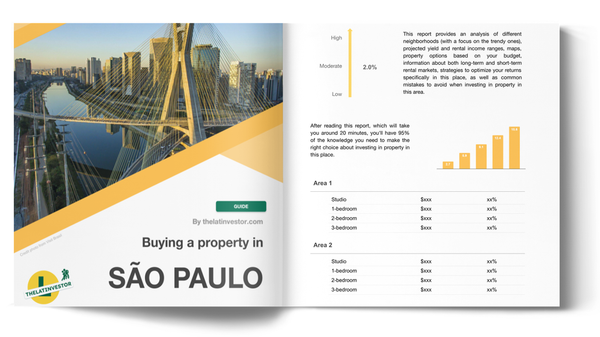
Yes, the analysis of São Paulo's property market is included in our pack
São Paulo is a city that rewards those who plan carefully, and punishes those who underestimate its complexity.
This guide gives you the honest numbers, the real neighborhoods, and the practical advice you need to decide if São Paulo is right for you in 2026.
We constantly update this blog post to reflect the latest changes in cost of living, visa rules, and market conditions.
And if you're planning to buy a property in this place, you may want to download our pack covering the real estate market in São Paulo.
Is São Paulo a good place to live in 2026?
Is quality of life getting better or worse in São Paulo in 2026?
As of early 2026, quality of life in São Paulo is mixed but trending slowly upward for those who can afford the right neighborhood and minimize their commute.
The biggest improvement over the past two to three years has been the expansion of the metro network and the growth of app-based services, which make daily errands and getting around São Paulo significantly easier than before.
However, the persistent challenge in São Paulo remains housing affordability, with rent inflation running well above general inflation for over a year, squeezing budgets even for middle-income residents.
So while infrastructure and convenience have improved, the financial pressure to live in a good location has increased at the same time, creating a city where experience quality depends heavily on what you can pay.
Are hospitals good in São Paulo in 2026?
As of early 2026, private hospitals in São Paulo are among the best in Latin America and meet or exceed Western European and North American standards for specialized care.
The hospitals most commonly recommended by expats include Hospital Israelita Albert Einstein in Morumbi, Hospital Sírio-Libanês in Bela Vista, and Hospital Alemão Oswaldo Cruz near the Paulista area.
A standard doctor consultation at a premium private hospital in São Paulo typically costs between R$600 and R$1,000, which translates to roughly $110 to $185 USD or €95 to €160 EUR at current exchange rates.
Private health insurance is strongly recommended for expats in São Paulo, as it provides faster access to specialists, English-speaking staff, and predictable costs, while the public SUS system serves more as a safety net than a primary option for most foreigners.
Are there any good international schools in São Paulo in 2026?
As of early 2026, São Paulo has the largest selection of international schools in Brazil, with dozens of options ranging from American and British curricula to French, German, and IB programs.
The most reputable international schools among expat families include Graded - The American School of São Paulo, Avenues São Paulo, and St. Paul's School, all of which have long track records and strong university placement.
Annual tuition at top international schools in São Paulo typically ranges from R$120,000 to R$220,000 per child, which works out to roughly $22,000 to $41,000 USD or €19,000 to €35,000 EUR depending on the school and grade level.
Waitlists at the most popular international schools in São Paulo can be long, especially for early-years entry points and mid-year arrivals, while public schools are generally not a practical option for expats due to language and curriculum differences rather than quality concerns.
Is São Paulo a dangerous place in 2026?
As of early 2026, São Paulo is not uniformly dangerous, but it does require street-smart routines, as most expats experience the city as manageable rather than threatening when they follow basic precautions.
The most common safety concern for expats in São Paulo is phone theft and street robbery, particularly in crowded areas and on public transport, rather than violent crime, which tends to concentrate in peripheral neighborhoods far from where most foreigners live.
The neighborhoods generally considered safest for expats in São Paulo include Jardins, Itaim Bibi, Vila Nova Conceição, Moema, Pinheiros, and Vila Mariana, all of which have good building security, walkable streets, and active commercial life.
Women can generally live alone safely in São Paulo, especially in the neighborhoods mentioned above, though the common precautions include avoiding flashy phones in public, being aware of surroundings after dark, and using ride apps rather than walking alone late at night.
Recent property scams aimed at foreign buyers in São Paulo
Flats sold by owners already being sued elsewhere, and deposits taken against a matrícula nobody pulled. The cases that keep coming back, and how to check who and what you are dealing with.
How much does everyday life cost in São Paulo in 2026?
What monthly budget do I need to live well in São Paulo in 2026?
As of early 2026, a single person living comfortably in a nice neighborhood in São Paulo should budget between R$10,000 and R$16,000 per month, which is roughly $1,850 to $3,000 USD or €1,600 to €2,550 EUR.
For a modest but decent lifestyle in São Paulo, a single person can manage on R$6,000 to R$9,000 per month, or about $1,100 to $1,700 USD or €950 to €1,450 EUR, though this means living further from central neighborhoods or in a smaller apartment.
A more comfortable or upscale lifestyle in São Paulo, including a spacious apartment in Jardins or Itaim Bibi, regular dining out, gym membership, and some travel, requires R$16,000 to R$25,000 per month for a single person, or about $3,000 to $4,650 USD or €2,550 to €4,000 EUR.
Housing is by far the largest expense category in São Paulo, typically consuming 40% to 50% of your monthly budget, with rent plus condominium fees plus utilities easily reaching R$5,000 to R$10,000 per month for a one-bedroom in a desirable area.
What is the average income tax rate in São Paulo in 2026?
As of early 2026, a typical middle-income earner in São Paulo on a formal employment contract (CLT) pays an effective combined tax rate of around 20% to 26%, including both income tax (IRPF) and social security contributions (INSS).
Brazil uses a progressive income tax system with brackets ranging from 0% for monthly income up to approximately R$2,259 to a top marginal rate of 27.5% for income above roughly R$4,665 per month, plus INSS contributions that are capped at a ceiling of around R$988 per month in 2026.

We did some research and made this infographic to help you quickly compare rental yields of the major cities in Brazil versus those in neighboring countries. It provides a clear view of how this country positions itself as a real estate investment destination, which might interest you if you’re planning to invest there.
What kind of foreigners actually live in São Paulo in 2026?
Where do most expats come from in São Paulo in 2026?
As of early 2026, the top countries of origin for foreigners living in São Paulo include Angola, Bolivia, Venezuela, Cuba, Guinea-Bissau, Haiti, and Morocco, alongside a significant presence of professionals from the United States, Portugal, France, and other European countries.
São Paulo's foreign-born population represents a relatively small percentage of the city's 12 million residents, but the absolute numbers are significant, with the city's immigrant services reporting tens of thousands of assistance cases annually.
The main reasons expats are drawn to São Paulo vary by origin: Latin American and African migrants often come for economic opportunity and family ties, while European and North American expats typically arrive for corporate assignments, entrepreneurship, or lifestyle choices.
The expat population in São Paulo is predominantly working professionals, including corporate transferees, entrepreneurs, and tech workers, though there is also a growing community of digital nomads and a smaller contingent of retirees attracted by the lower cost of living compared to their home countries.
Where do most expats live in São Paulo in 2026?
As of early 2026, the neighborhoods where expats concentrate most heavily in São Paulo include Pinheiros, Vila Madalena, Itaim Bibi, Vila Nova Conceição, Jardins (Jardim Paulista, Jardim América, Jardim Europa), Moema, Vila Mariana, Paraíso, and Brooklin.
What makes these São Paulo neighborhoods attractive to expats is the combination of walkability, good building security with 24-hour doormen, proximity to international schools and hospitals, and dense clusters of restaurants, cafés, and services that cater to an international clientele.
Emerging neighborhoods in São Paulo that are starting to attract more expats include parts of Perdizes and Higienópolis for those seeking a more traditional Brazilian feel at lower rents, and Campo Belo for those working in the southern business corridor who want newer buildings and easier airport access.
Are expats moving in or leaving São Paulo in 2026?
As of early 2026, São Paulo continues to see a net inflow of foreign professionals, as the city remains Brazil's dominant hub for multinational companies, tech startups, and regional headquarters.
The main factor driving expats to move to São Paulo right now is career opportunity, as the city concentrates Brazil's best-paying jobs in finance, tech, consulting, and corporate management in a way that no other Brazilian city can match.
The main factor causing some expats to leave São Paulo is the combination of high housing costs and punishing commutes, which pushes some to relocate to smaller Brazilian cities like Florianópolis or to return home after completing a work assignment.
Compared to similar destinations in Latin America, São Paulo's expat trend is more stable than Buenos Aires (which has economic volatility) and less tourism-driven than Mexico City, making it a steadier destination for career-focused professionals.
We have prepared 12 documents to help you invest well in São Paulo
What each bairro costs, what it rents for, how long it sits before it sells. Plus the things nobody writes down: what the condomínio and the IPTU take every month, and which certificates have to be clean before you pay anything.
What paperwork do I need to move to São Paulo in 2026?
What visa options are popular in São Paulo in 2026?
As of early 2026, the three most popular visa types for expats moving to São Paulo are the work-related residence permit (sponsored by an employer), the digital nomad visa (VITEM XIV), and family reunification visas for those with Brazilian spouses or family members.
For the work residence visa, the main eligibility requirements include having a formal job offer from a Brazilian company, documentation of your qualifications, a clean criminal record, and your employer must submit a labor market justification to the authorities.
Brazil does offer a digital nomad visa, called VITEM XIV, which requires proof of employment with a foreign company, a minimum income of $1,500 USD per month or $18,000 USD in savings, private health insurance valid in Brazil, and a criminal background check from your home country.
The digital nomad visa is valid for one year and can be renewed for one additional year, while work residence permits typically follow the employment contract duration and can lead to longer-term residency with continued employment.
How long does it take to get residency in São Paulo in 2026?
As of early 2026, the typical processing time to obtain temporary residency in Brazil ranges from a few weeks to three months, depending on visa category, consulate workload, and completeness of your documentation.
Common factors that can delay residency applications in São Paulo include missing or incorrectly apostilled documents, peak season backlogs at the Federal Police (especially December through February), and complications with employer-sponsored applications that require additional labor market justification.
For permanent residency, most expats must live legally in Brazil for at least four years before becoming eligible, though some categories like family reunification or significant investment can shorten this timeline, and naturalization as a Brazilian citizen requires a minimum of four years of permanent residency.

We created this infographic to give you a simple idea of how much it costs to buy property in different parts of Brazil. As you can see, it breaks down price ranges and property types for popular cities in the country. We hope this makes it easier to explore your options and understand the market.
How hard is it to find a job in São Paulo in 2026?
Which industries are hiring the most in São Paulo in 2026?
As of early 2026, the industries hiring most actively in São Paulo are technology and software development, financial services and fintech, professional services (consulting, legal, audit), agribusiness headquarters functions, and consumer goods companies with regional operations.
It is realistic for expats to get hired in São Paulo without speaking Portuguese if they target multinational companies, tech startups with international teams, or regional headquarters where English is the working language, though learning Portuguese significantly expands opportunities and improves daily life.
The types of roles most accessible to foreign job seekers in São Paulo include senior specialist positions in finance, data science, product management, and engineering, as well as regional leadership roles where international experience and language skills (English, Spanish, or other languages) add clear value that local candidates may not have.
What salary ranges are common for expats in São Paulo in 2026?
As of early 2026, typical gross salary ranges for expats working in São Paulo span from R$18,000 to R$80,000 or more per month, which translates to roughly $3,300 to $15,000 USD or €2,900 to €12,800 EUR, depending heavily on industry, seniority, and whether you have a local or expatriate contract.
For entry-level or mid-level expat positions in São Paulo, salaries typically range from R$12,000 to R$25,000 gross per month, or about $2,200 to $4,650 USD or €1,900 to €4,000 EUR, which is competitive locally but modest by global standards.
Senior or specialized expat roles in São Paulo, such as directors, country managers, or highly sought-after technical specialists, can command R$35,000 to R$80,000 or more gross per month, equivalent to roughly $6,500 to $15,000 USD or €5,600 to €12,800 EUR.
Employers in São Paulo do sponsor work visas for foreign hires, but typically only when the role is difficult to fill locally, such as specialized technical positions, senior leadership, or roles requiring specific language skills or international experience.
Everything a foreign buyer should know before buying in São Paulo
The pack also covers what the condomínio and the IPTU take every month, and which certificates have to be clean before you pay anything.
What's daily life really like for expats in São Paulo right now?
What do expats love most about living in São Paulo right now?
The things expats love most about living in São Paulo include the incredible food and restaurant scene, the endless cultural activities and nightlife, and the fact that you never run out of new things to discover in a city this large and diverse.
The lifestyle benefit most frequently praised by expats in São Paulo is the convenience of services: from same-day delivery of almost anything, to gyms open until midnight, to private healthcare that schedules appointments quickly, the city is built for busy professionals who value their time.
The practical advantage expats appreciate most in São Paulo is the depth of the job market, which offers career opportunities that simply do not exist elsewhere in Brazil or much of Latin America, making it easier to build a professional network and advance your career.
The social and cultural aspect that makes São Paulo particularly enjoyable for expats is the city's openness and diversity, as Paulistanos are generally welcoming to foreigners and the city's immigrant history means international faces and accents are completely normal in daily life.
What do expats dislike most about life in São Paulo right now?
The top complaints expats have about living in São Paulo include the brutal traffic and commute times, the constant vigilance required against petty theft, and the high cost of living well (especially rent in good neighborhoods).
The daily inconvenience that frustrates expats most in São Paulo is the commute, as even with ride apps and metro expansion, getting across the city during rush hour can easily consume two to three hours of your day if you live and work in different zones.
The bureaucratic issue that causes the most headaches for expats in São Paulo is the CPF and document culture, where opening a bank account, signing a lease, or even buying a phone plan requires a chain of paperwork, notarizations, and in-person appointments that can feel endless.
For most expats, these frustrations are manageable rather than deal-breakers, especially once you establish routines, live close to work, and learn which bureaucratic steps can be outsourced to a despachante (document fixer).
What are the biggest culture shocks in São Paulo right now?
The biggest culture shocks expats experience when moving to São Paulo include the extreme importance of personal relationships in getting things done, the security-first mindset visible in gated buildings and constant vigilance, and the Brazilian approach to time and scheduling that can feel relaxed to the point of chaos.
The social norm that surprises newcomers most in São Paulo is the warmth and physical closeness of interactions, as Brazilians typically greet with kisses on the cheek, stand closer during conversation, and ask personal questions that might feel intrusive in Northern European or North American cultures.
The aspect of daily routines in São Paulo that takes the longest for expats to adjust to is the late schedule, where dinner reservations at 9 or 10 PM are normal, business meetings can start late and run long, and the city's energy peaks well after what many foreigners consider bedtime.

We made this infographic to show you how property prices in Brazil compare to other big cities across the region. It breaks down the average price per square meter in city centers, so you can see how cities stack up. It’s an easy way to spot where you might get the best value for your money. We hope you like it.
Can I buy a home as a foreigner in São Paulo in 2026?
Can foreigners legally own property in São Paulo in 2026?
As of early 2026, foreigners can legally own urban property in São Paulo with relatively few restrictions, making apartment and house purchases in the city straightforward from a legal standpoint as long as you have a CPF (Brazilian tax ID).
The specific restrictions that apply to foreigners buying property in São Paulo relate mainly to rural land and properties in border or protected areas, which are subject to federal law limitations under Lei 5.709/1971, but standard urban apartments and houses in São Paulo do not fall under these restrictions.
In practical terms, foreigners can own apartments, houses, and commercial urban property in São Paulo without needing residency, though you will need a CPF, a Brazilian bank account for transactions, and should expect the purchase process to involve notary steps and registration that can take several weeks.
What is the average price per m² in São Paulo in 2026?
As of early 2026, the average price per square meter for residential property in São Paulo is approximately R$11,900, which translates to roughly $2,200 USD or €1,900 EUR, though prices vary dramatically by neighborhood.
Property prices in São Paulo have trended upward over the past two to three years, with appreciation running above inflation in most desirable neighborhoods, driven by persistent housing demand and limited new supply in central areas.
Do banks give mortgages to foreigners in São Paulo in 2026?
As of early 2026, mortgages for foreigners in São Paulo are available but limited, with approval much easier for those who have Brazilian residency status and can prove local income, while non-residents without Brazilian income often find it very difficult to qualify and frequently buy in cash instead.
The banks most commonly mentioned as willing to work with foreign applicants in São Paulo include Caixa Econômica Federal, Santander Brasil, and Itaú, though all require extensive documentation and typically prefer applicants with established Brazilian banking history.
Typical mortgage conditions for foreigners in São Paulo include down payments of 20% to 50% of the property price, interest rates in the range of 10% to 14.5% per year, and maximum loan terms of 10 to 20 years, which are significantly more restrictive than what Brazilians with full credit history can access.
To qualify for a mortgage in São Paulo, foreigners typically need a valid CPF, proof of income (ideally Brazilian income, though some brokers work with foreign income), a Brazilian bank account with transaction history, a clean credit record, and full documentation of the property being purchased.
The bairros and projects in São Paulo that are most overpriced
A Faria Lima address is being charged for streets that are a fifteen minute walk from it, and no parking space comes with it. Where prices sit furthest from what places earn and resell for.
What sources have we used to write this blog article?
Whether it's in our blog articles or the market analyses included in our property pack about São Paulo, we always rely on the strongest methodology we can ... and we don't throw out numbers at random.
We also aim to be fully transparent, so below we've listed the authoritative sources we used, and explained how we used them and the methods behind our estimates.
| Source | Why it's authoritative | How we used it |
|---|---|---|
| Receita Federal (IRPF 2026 tables) | Brazil's official tax authority publishing the actual law. | We used it to compute realistic 2026 payroll income tax examples. We also used the brackets and deductions to estimate effective tax rates for common expat salaries. |
| INSS (social security contribution table) | Official social security agency with actual contribution bands. | We used it to estimate 2026 payroll deductions and net salary. We also used the contribution ceiling to avoid overstating deductions for higher earners. |
| SSP-SP (crime statistics portal) | São Paulo state government's official crime data release. | We used it to describe current crime patterns and recent trends. We cross-checked it with international safety context and expat lived-reality guidance. |
| DataZAP/FipeZAP (rent index report) | Published report behind a widely cited index with disclosed methodology. | We used it to describe rent inflation and the direction of São Paulo rents going into 2026. We used it to keep rent budgeting consistent with observed market trends. |
| DIEESE (basic food basket report) | Long-running reference for cost-of-living staples in Brazil. | We used it to anchor grocery and food cost expectations with a São Paulo-specific benchmark. We used it to avoid guesswork on essential expenses. |
| Graded - The American School of São Paulo | School's direct publication of fees for the current academic year. | We used it to give concrete 2025-26 tuition figures in BRL. We used it as a benchmark for international school pricing in São Paulo. |
| Avenues São Paulo | School's direct tuition disclosure with what's included. | We used it to show how all-in tuition can look in São Paulo's premium international segment. We used it to anchor the upper end of realistic school budgets. |
| FIPE (FipeZAP methodology) | Leading Brazilian research institute explaining the index publicly. | We used it to justify why FipeZAP is a credible proxy for housing price levels. We used it as the methodological reference for price-per-square-meter estimates. |
| Brazilian Migration Law (Lei 13.445/2017) | Official consolidated federal legislation text. | We used it to ground visa and residency discussion in what the law actually allows. We used it to avoid relying on hearsay about popular visas. |
| Polícia Federal (RNM/CRNM FAQ) | Federal authority that actually issues immigrant registration. | We used it to state concrete timelines foreigners must follow after residency approval. We used it to make the paperwork section operational rather than vague. |
| Hospital Israelita Albert Einstein | Hospital's own published guidance for private appointment pricing. | We used it to anchor a credible doctor appointment cost range in São Paulo. We triangulated this with the broader private versus SUS care discussion. |
| Banco Central do Brasil (PTAX) | Official FX reference rate publisher in Brazil. | We used it to give a defensible BRL to USD and EUR translation anchor for expats budgeting in foreign currency. We used it only as a reference rate, not a promise of what your bank will quote. |

We have made this infographic to give you a quick and clear snapshot of the property market in Brazil. It highlights key facts like rental prices, yields, and property costs both in city centers and outside, so you can easily compare opportunities. We’ve done some research and also included useful insights about the country’s economy, like GDP, population, and interest rates, to help you understand the bigger picture.


