

Summary
Is Punta Del Este a good place to live as an expat? Yes, for people who want a safe beach town with good services and can live with strong seasons. By our estimate, a comfortable single life costs 88,000 to 130,000 pesos a month (about $2,200 to $3,250).
The town is moving from a summer resort to a year-round place, with more restaurants, coworking spaces and clinics open all year. Finding a year-round lease in December or January is still hard.
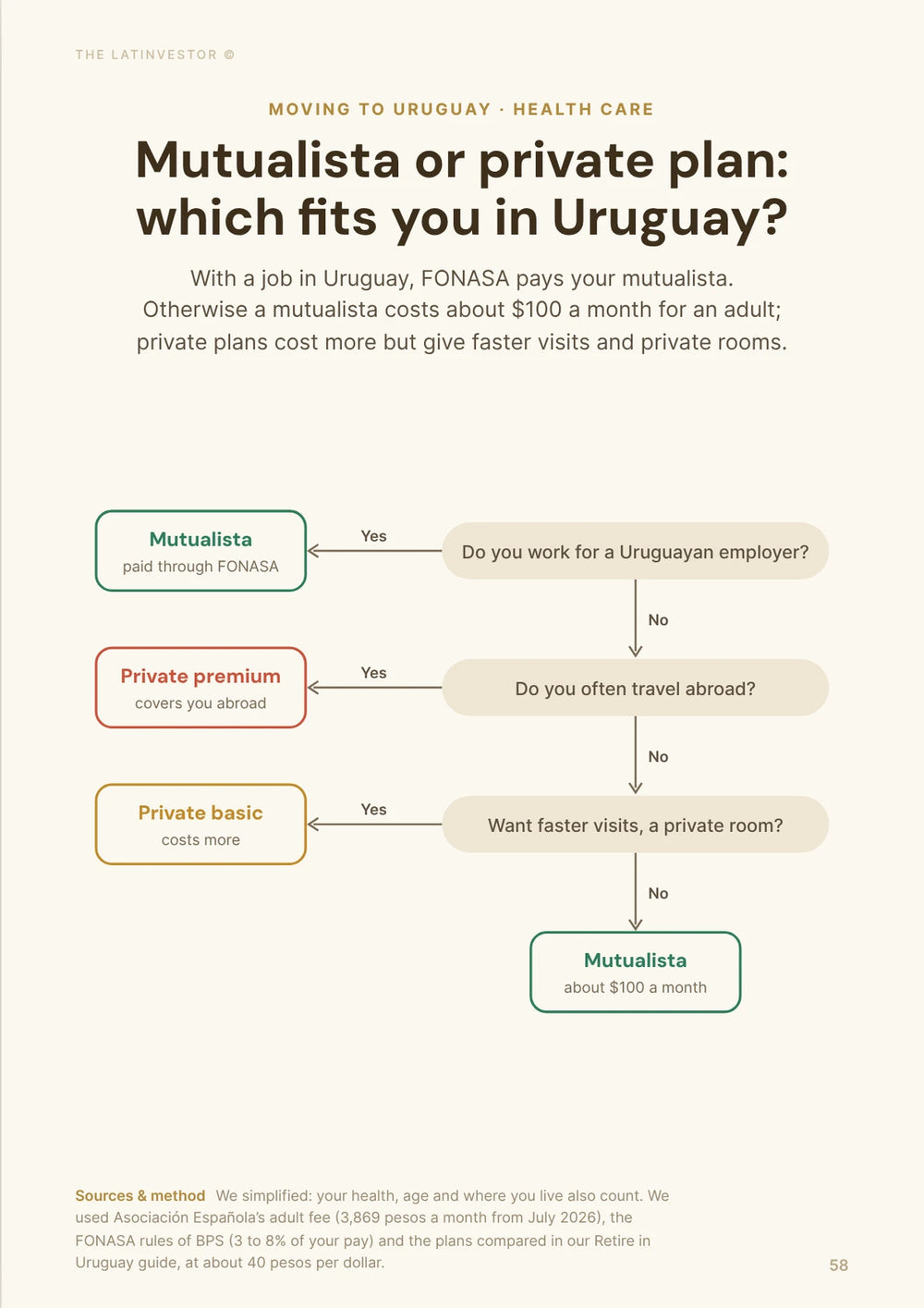
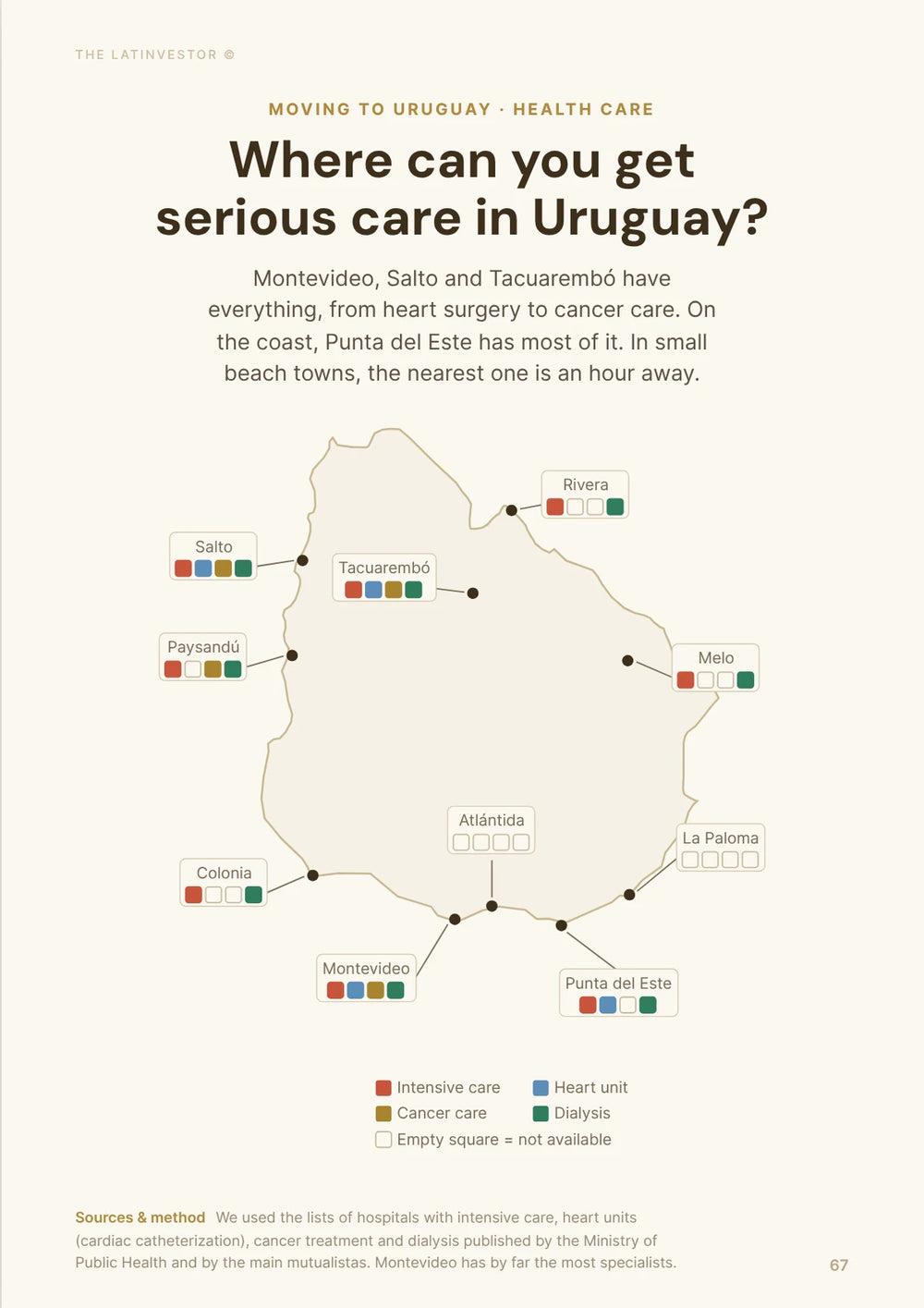
Private healthcare is good: Sanatorio Cantegril and SEMM-Mautone are the main options. With a mutualista plan, a doctor visit costs 180 to 460 pesos.
There are four to five well-regarded international schools, such as International College and Woodside. Fees run about 240,000 to 680,000 pesos a year, but the schools do not publish them.
It is one of the safest resort cities in South America, but not crime-free: the Maldonado department recorded 12 homicides in the first half of 2026, up from 8 a year earlier. Summer burglaries in holiday homes are the main worry.
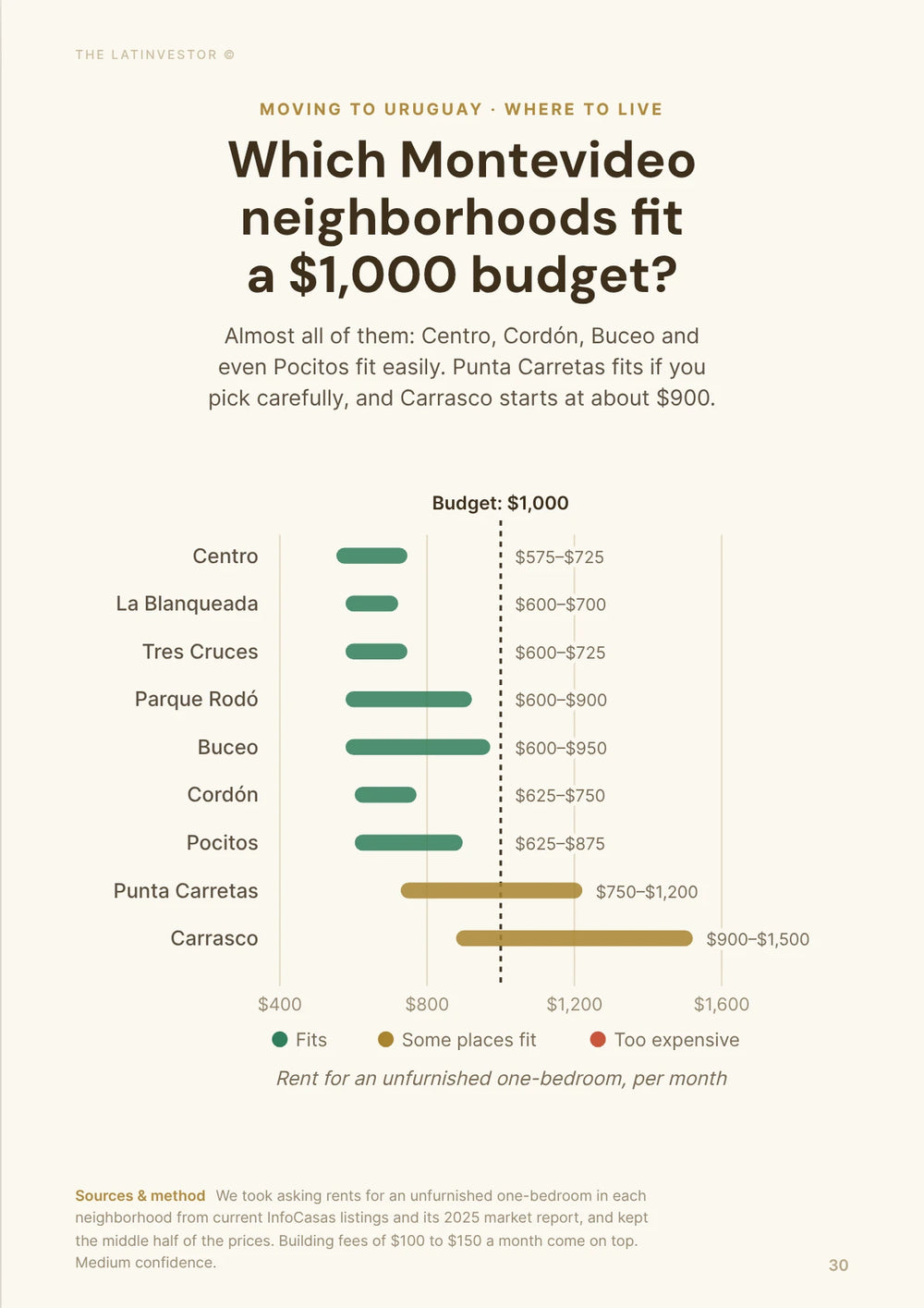
A modest life costs 60,000 to 80,000 pesos a month. Housing is the biggest cost, with a central one-bedroom at about 31,000 to 44,000 pesos on a year-round lease, and summer rents can double or triple.
Income tax is moderate: by our calculation, 4% to 14% on salaries of 100,000 to 200,000 pesos a month, plus 18% to 23% in social contributions. New tax residents can still choose a regime of up to 11 years for foreign investment income.
Most foreigners come from Argentina, Brazil and the United States. In the 2023 census, 5.8% of Maldonado residents were born abroad, the highest share in Uruguay. They live on the Península, in Roosevelt, Aidy Grill, La Barra, Cantegril or San Rafael.
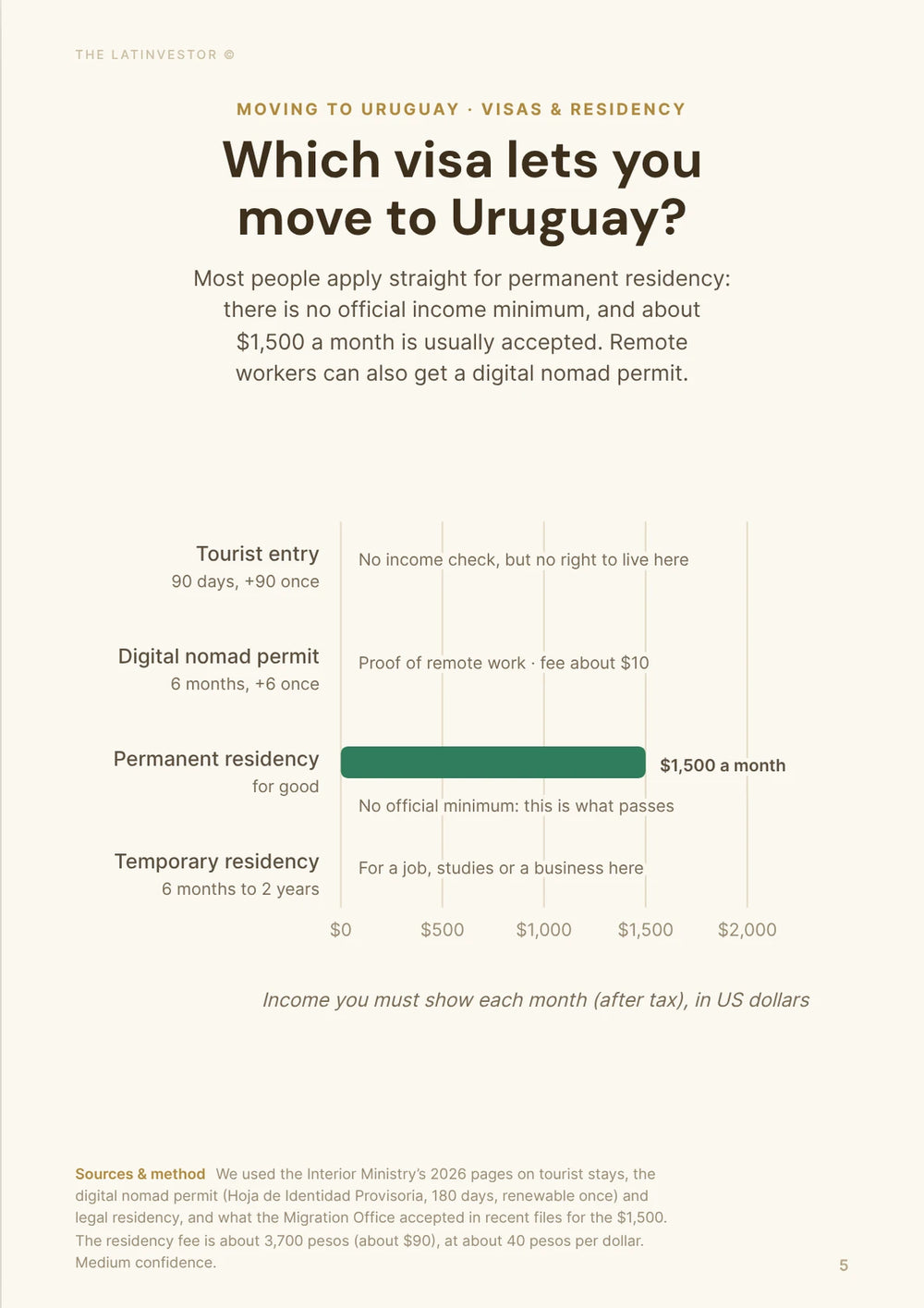
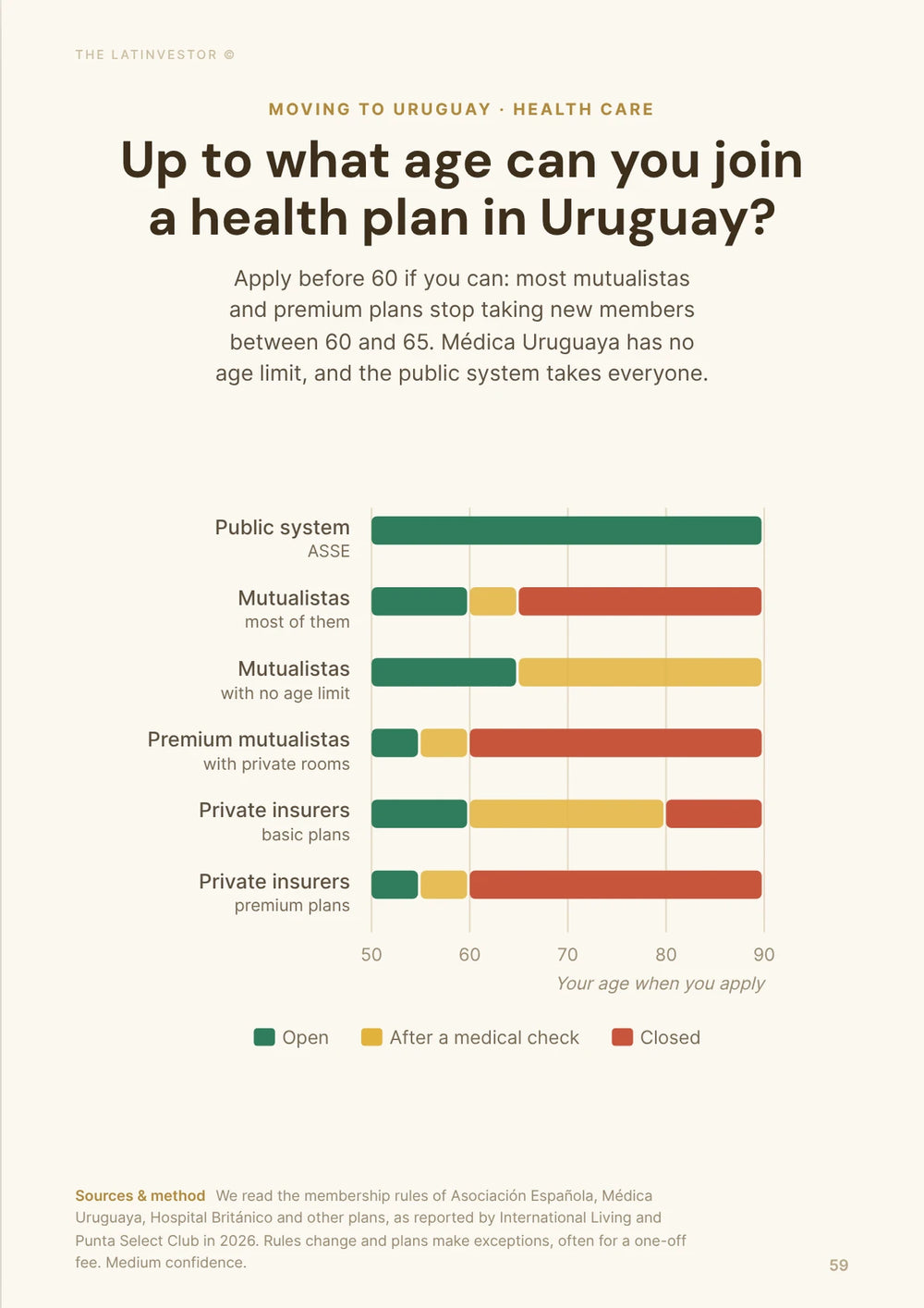
The main visa routes are regular residency, the 6-month digital nomad permit, and residency based on a pension or passive income, as Uruguay has no separate retiree visa.
Residency usually takes several months, sometimes up to a year. You can apply for permanent residency directly, and citizenship needs three years of residence with a family, five years if single.
Local jobs are mostly in tourism, real estate and construction, and you need Spanish. By our estimate, expat salaries run 60,000 to 150,000 pesos a month, and up to 350,000 for senior hotel managers.
Expats love the beaches, the safety and the pace. They dislike the seasonality, the need for a car and reservations booked weeks ahead from December to February.
Foreigners can buy any property with the same rights as Uruguayans. Apartments ask about 146,000 pesos per m² (about $3,650), from 135,000 on the Península to 165,000 in La Barra.
Mortgages are hard to get without income in Uruguay. The new Abriendo Puertas program finances up to 95% over 25 years, but only for qualifying first-time buyers.
Bottom line: Punta Del Este suits retirees, remote workers and families who like a quiet winter and have a foreign income. Bring cash rather than counting on a local mortgage, and budget at least 88,000 pesos a month for a comfortable life.


What are quality of life, healthcare, schools and safety like in Punta Del Este?
Is quality of life getting better or worse in Punta Del Este in 2026?
In 2026, the quality of life in Punta Del Este is improving overall, driven by population growth, infrastructure investments, and an expanding year-round services sector.
The factor that has improved the most in Punta Del Este over the past two to three years is the shift from purely seasonal tourism to year-round living, which has brought more restaurants, coworking spaces, and healthcare services that stay open outside the summer months.
However, the persistent challenge in Punta Del Este remains housing affordability during high season, as landlords continue to prioritize short-term summer rentals over stable year-round leases, which can make finding a place to live frustrating for newcomers arriving in December or January.
Are hospitals good in Punta Del Este in 2026?
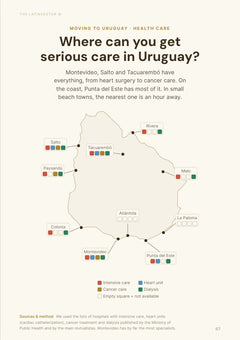
In 2026, hospital quality in Punta Del Este is good by Latin American standards, with private facilities offering care comparable to mid-tier Western European clinics, though public options are more basic.
The hospitals expats most commonly recommend in Punta Del Este are Sanatorio Cantegril for its central location and English-speaking staff, Sanatorio SEMM-Mautone for its wide range of specialties, and the public Hospital Departamental de Maldonado for emergencies when private coverage is not available. In October 2026, Sanatorio Cantegril also highlighted its two specialized high-complexity centers (IMAE), for heart care and for joint surgery.
The typical cost for a standard doctor consultation in Punta Del Este ranges from about 180 to 460 Uruguayan pesos (roughly 4.50 to 11 USD or 4 to 10 EUR) if you are a member of a mutualista healthcare plan, depending on whether you see a general practitioner or a specialist under the local copay system. Seeing a doctor without membership costs considerably more.
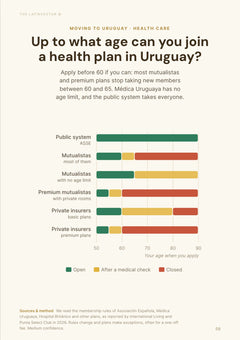
Private health insurance is strongly recommended for expats in Punta Del Este because it provides faster appointments, access to English-speaking doctors, and priority care during the crowded summer season when demand spikes.
Are there any good international schools in Punta Del Este in 2026?
In 2026, Punta Del Este has a small but solid selection of international and bilingual schools, with around four to five well-regarded options that cater specifically to expat families and internationally mobile children.
The most reputable international schools among expat families in Punta Del Este are International College, which offers an international curriculum from Early Years to Year 12, Woodside School for its bilingual approach, and Instituto Uruguayo Argentino (IUA) for families seeking a Spanish-English bilingual environment.
The typical annual tuition fee for international schools in Punta Del Este ranges from about 240,000 to 680,000 Uruguayan pesos (roughly 5,950 to 17,000 USD or 5,350 to 15,000 EUR), depending on the grade level and specific school, according to a small sample of fees reported in October 2026, as the schools do not publish their fees online.
Waitlists for popular international schools in Punta Del Este can be long, especially for entry points like kindergarten and first grade, while public schools are an option but are taught entirely in Spanish and may require children to adapt to a different curriculum.
Is Punta Del Este a dangerous place in 2026?
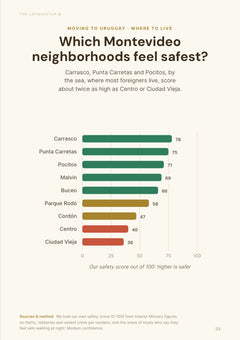
In 2026, Punta Del Este is not considered dangerous for expats, and it remains one of the safest resort cities in South America, though visitors should take normal precautions against petty crime, and the Maldonado department did record 12 homicides in the first half of 2026, up from 8 a year earlier.
The most common safety concerns expats should be aware of in Punta Del Este are property theft during the summer season, when holiday homes and rentals become targets for opportunistic thieves, and occasional bag snatches in crowded tourist areas during peak months.
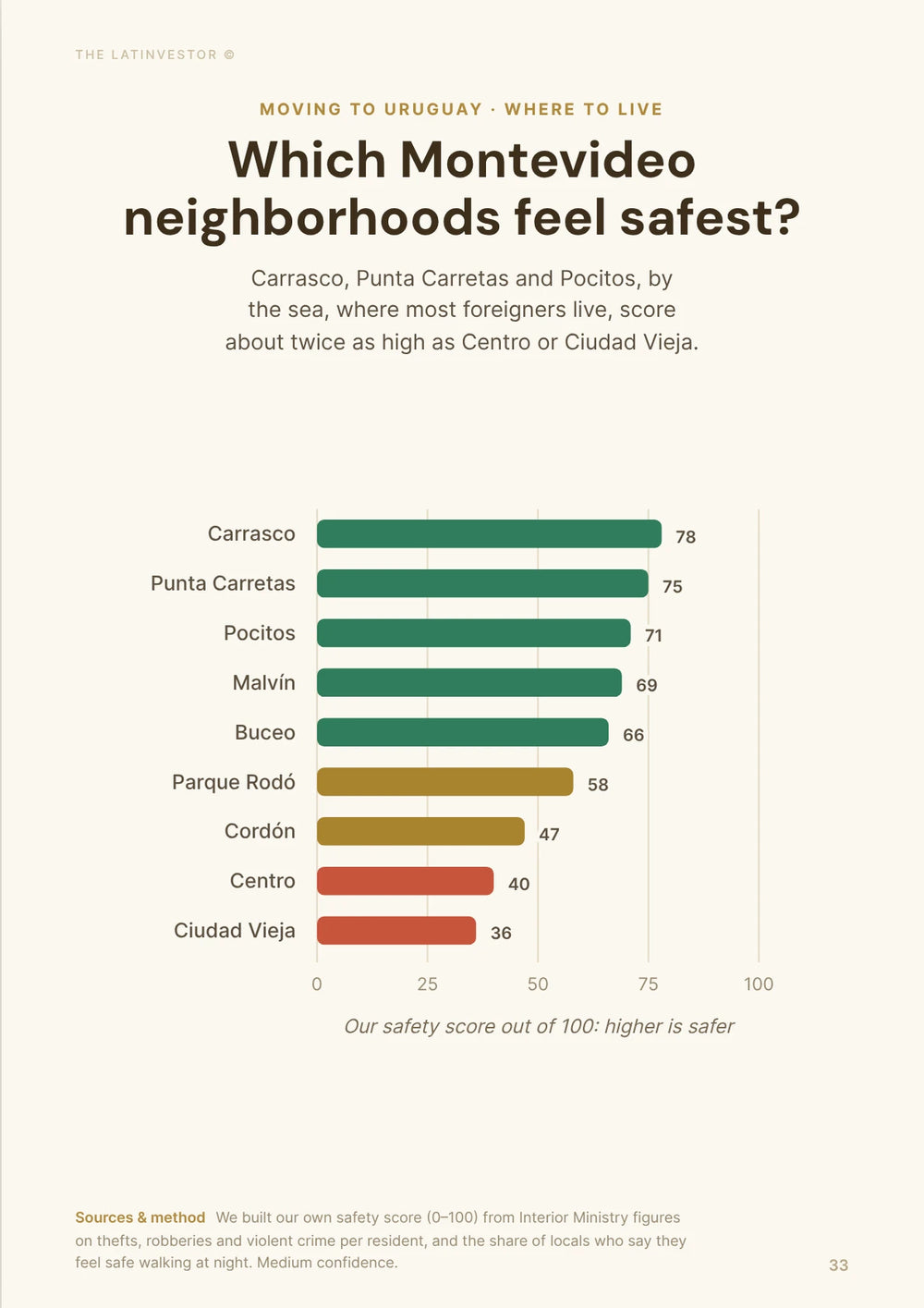
The neighborhoods generally considered safest for expats in Punta Del Este include the Península for its walkability and constant foot traffic, Roosevelt and Aidy Grill for their year-round residential feel, and Cantegril or San Rafael for families seeking quieter, gated communities.
Women can generally live alone safely in Punta Del Este, and the commonly recommended precautions are choosing buildings with a doorman or portero, avoiding isolated streets late at night in the off-season when some areas feel empty, and staying aware in crowded summer spots where pickpockets operate.
How much does everyday life cost in Punta Del Este in 2026?
What monthly budget do I need to live well in Punta Del Este in 2026?
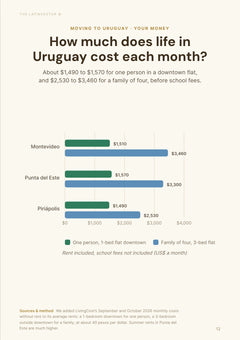
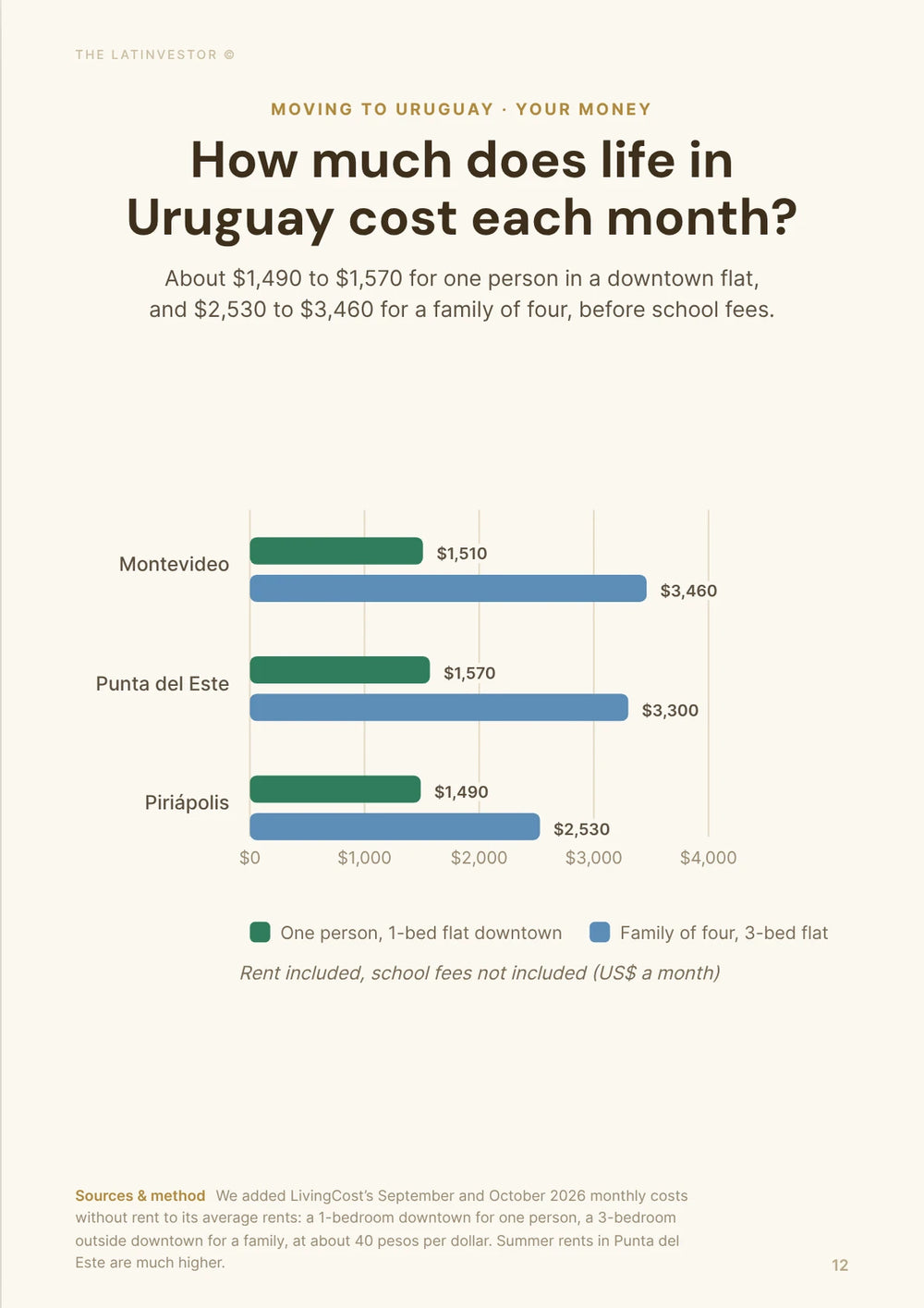
In 2026, by our estimate, a single person needs roughly 88,000 to 130,000 Uruguayan pesos per month (about 2,200 to 3,250 USD or 1,960 to 2,900 EUR) to live comfortably in Punta Del Este while renting in a good neighborhood.
For a modest but decent lifestyle in Punta Del Este, expect to spend around 60,000 to 80,000 Uruguayan pesos monthly (about 1,490 to 1,990 USD or 1,330 to 1,780 EUR), which means choosing a simpler apartment further from the beach and cooking at home most days.
A more comfortable or upscale lifestyle in Punta Del Este requires around 130,000 to 200,000 Uruguayan pesos monthly (about 3,250 to 5,000 USD or 2,900 to 4,450 EUR), which covers a nicer apartment, regular dining out, and leisure activities.
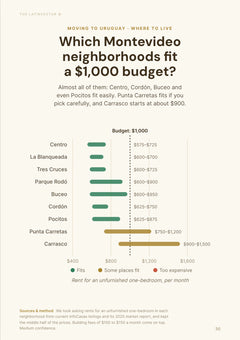
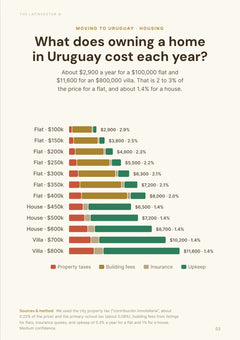
The expense category that takes up the largest share of a monthly budget in Punta Del Este is housing (a one-bedroom in the center rents for about 31,000 to 44,000 Uruguayan pesos a month on a year-round lease in 2026, roughly 770 to 1,090 USD), and what makes this city unique is the extreme seasonal swing where off-season rents can double or triple during the December to February summer period if you're on a short-term lease.
What is the average income tax rate in Punta Del Este in 2026?
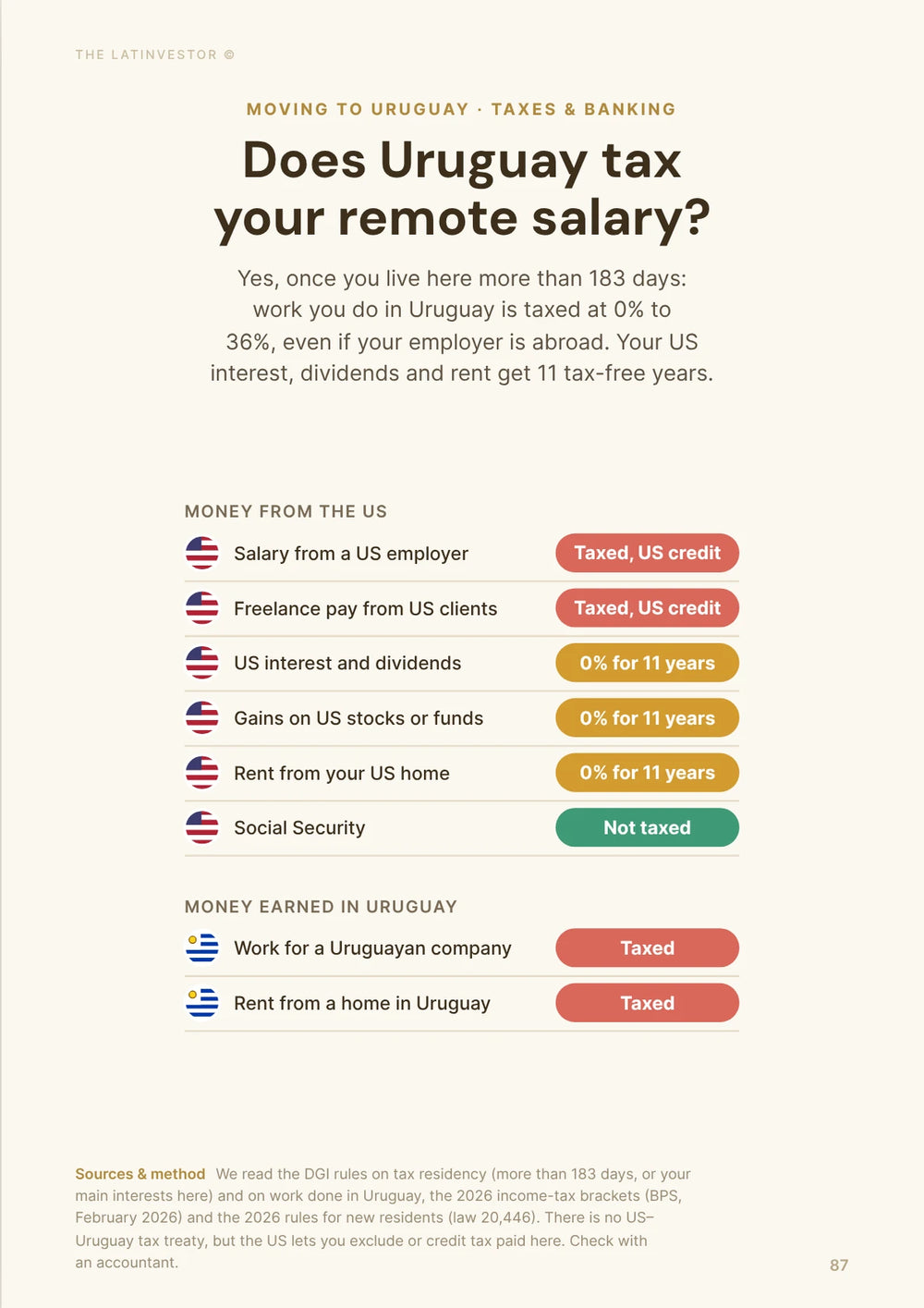
In 2026, by our calculation, the effective income tax rate for a typical middle-income employee in Punta Del Este ranges from about 4% to 14% on gross salaries of 100,000 to 200,000 Uruguayan pesos a month (roughly 2,500 to 5,000 USD), plus about 18% to 23% in social security and health contributions, while income such as rent is taxed separately at flat rates (12% for rental income).
Uruguay's income tax brackets for residents range from 0% on the lowest earnings (up to 48,048 pesos a month in 2026) up to a top marginal rate of 36% for the highest earners, though even well-paid professionals pay no more than about 17% effective on salaries of up to 300,000 pesos a month, by our calculation. Since January 2026, more types of foreign investment income are taxed for Uruguayan tax residents, although new tax residents can still choose a temporary regime of up to 11 tax years for qualifying foreign investment income, under conditions revised in 2026.
What kind of foreigners actually live in Punta Del Este in 2026?
Where do most expats come from in Punta Del Este in 2026?
In 2026, the top countries of origin for expats living in Punta Del Este are Argentina, Brazil, and the United States, with a smaller but growing number from Europe, particularly Spain and the United Kingdom.
The approximate foreign resident population in Punta Del Este is difficult to pin down precisely, as no recent figure exists for the city: in the 2023 census, 5.8% of residents of the broader Maldonado department were born abroad, the highest share among Uruguay's departments, and the foreign presence rises significantly during summer months.
The main reason expats from Argentina and Brazil are drawn to Punta Del Este is geographic proximity combined with Uruguay's political stability, lower crime rates, and favorable tax policies that make it an attractive alternative to their home countries.
The expat population in Punta Del Este is predominantly a mix of retirees seeking a peaceful coastal lifestyle, remote workers and digital nomads attracted by the new visa options, and working professionals in real estate, hospitality, or international education.
Where do most expats live in Punta Del Este in 2026?
In 2026, the top neighborhoods where expats concentrate in Punta Del Este are the Península for its walkability and services, Roosevelt and Aidy Grill for year-round convenience, La Barra for a bohemian beach vibe, and Cantegril or San Rafael for families seeking quieter residential streets.
What makes these neighborhoods attractive to expats in Punta Del Este is the combination of year-round infrastructure like supermarkets, pharmacies, and restaurants that stay open outside summer, plus reliable internet and proximity to schools and healthcare facilities.
An emerging neighborhood in Punta Del Este that is starting to attract more expats is Manantiales, which offers newer developments, a trendy restaurant scene, and slightly lower prices than the ultra-premium José Ignacio area just up the coast.
Are expats moving in or leaving Punta Del Este in 2026?
In 2026, the trend for expat migration in Punta Del Este looks like a net inflow, although no official figure measures it precisely, driven by Uruguay's stability, remote work policies, and the ongoing appeal of coastal living in a safe environment.
The main factor driving expats to move to Punta Del Este right now is the combination of Uruguay's digital nomad visa, favorable tax treatment for foreign-sourced income, and the post-pandemic shift toward remote work that makes a beach lifestyle more accessible.
The main factor causing some expats to leave Punta Del Este recently is the high cost of living during summer season and the extreme quiet of winter months, which can feel isolating for those expecting year-round urban energy.
Compared to similar destinations in the region like Florianópolis in Brazil or coastal Argentina, Punta Del Este stands out for its political stability and safety, which continues to attract expats even as living costs remain higher than some alternatives.
What paperwork do I need to move to Punta Del Este in 2026?
What visa options are popular in Punta Del Este in 2026?
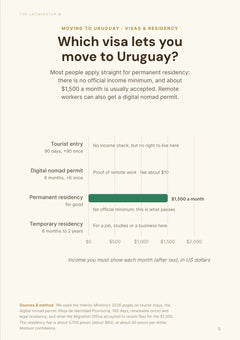
In 2026, the three most popular visa types for expats moving to Punta Del Este are the standard legal residency permit for those planning to settle long-term, the digital nomad permit for remote workers, and residency based on a pension or passive income for retirees (Uruguay has no separate retiree visa: retirees apply for regular residency and show their income).
The main eligibility requirements for the most commonly used expat visa in Punta Del Este, the standard residency permit, include providing a clean criminal record, proof of income or financial means, a vaccination certificate, and completing the application through Uruguay's National Migration Office.
Punta Del Este does offer a digital nomad visa, officially called the Provisional Identity Card or Hoja de Identidad Provisoria, which allows remote workers to stay for six months initially, with the option to extend for another six months or transition to permanent residency.
The typical validity period for the most popular expat visas in Punta Del Este is six months for the digital nomad permit, which can be renewed once, while temporary residency usually lasts six months to two years, renewable, and you can also apply for permanent residency directly, without holding temporary residency first.
How long does it take to get residency in Punta Del Este in 2026?
In 2026, obtaining temporary residency in Punta Del Este usually takes several months, sometimes up to a year, as there is no guaranteed processing time, depending on your category and how quickly you can gather all required documents.
Common factors that can delay the residency application process in Punta Del Este include missing apostilles on foreign documents, incomplete translations, and backlogs at the National Migration Office during peak application periods, while having a local lawyer can significantly speed things up.
An expat does not need to hold temporary residency first to apply for permanent residency in Uruguay, and citizenship requires three years of legal residence for people with a family in Uruguay and five years for single applicants, plus demonstrating ties to the country.
How hard is it to find a job in Punta Del Este in 2026?
Which industries are hiring the most in Punta Del Este in 2026?
In 2026, the top three industries currently hiring the most in Punta Del Este are hospitality and tourism, real estate and property services, and construction, all driven by the city's continued growth as a year-round destination for wealthy residents and visitors.
It is generally not realistic for expats to get hired in Punta Del Este without speaking Spanish, unless they work in international schools, luxury real estate targeting foreign buyers, or remote positions for companies outside Uruguay.
The types of roles most accessible to foreign job seekers in Punta Del Este include positions at international schools, property management for foreign-owned vacation rentals, hospitality management in upscale hotels and restaurants, and specialized services like yacht maintenance or high-end event planning during the summer season.
What salary ranges are common for expats in Punta Del Este in 2026?
In 2026, by our estimate, the typical salary range for expats working locally in Punta Del Este is about 60,000 to 150,000 Uruguayan pesos per month (roughly 1,490 to 3,750 USD or 1,330 to 3,350 EUR), with significant variation depending on industry and seniority.
The salary range for entry-level or mid-level expat positions in Punta Del Este is typically 50,000 to 80,000 Uruguayan pesos per month (about 1,240 to 1,990 USD or 1,110 to 1,780 EUR) for roles like hotel reception, which is modest but can be supplemented by lower living costs in the off-season.
The salary range for senior or specialized expat roles in Punta Del Este, such as hotel general managers, international school directors, or luxury real estate agents, can reach 150,000 to 350,000 Uruguayan pesos per month (about 3,750 to 8,700 USD or 3,350 to 7,800 EUR), the range a 2026 salary guide gives for senior hotel managers.
Employers in Punta Del Este do not commonly sponsor work visas for foreign hires because Uruguay's system ties work authorization to residency status, meaning most employers expect you to already have legal permission to work before offering a position.
What's daily life really like for expats in Punta Del Este right now?
What do expats love most about living in Punta Del Este right now?
The top things expats love most about living in Punta Del Este are the stunning beaches and natural beauty, the high level of personal safety compared to other South American destinations, and the relaxed pace of life that still includes good restaurants and cultural events.
The lifestyle benefit most frequently praised by expats in Punta Del Este is the work-life balance, where you can finish a productive remote work session and be at the beach within minutes, enjoying fresh seafood and a glass of Uruguayan wine by evening.
The practical advantage expats appreciate most in Punta Del Este is the reliable infrastructure, including fast fiber optic internet throughout most residential areas, clean drinking water, and well-maintained roads that make daily life genuinely easy.
The social and cultural aspect that makes Punta Del Este particularly enjoyable for expats is the welcoming attitude of Uruguayans, who are known for being patient, friendly, and genuinely interested in meeting foreigners, which helps newcomers integrate more quickly than in many other countries.
What do expats dislike most about life in Punta Del Este right now?
The top complaints expats have about living in Punta Del Este are the extreme seasonality that makes the city feel like two different places, the high cost of imported goods and electronics, and the limited job market for those who need local employment.
The daily inconvenience that frustrates expats the most in Punta Del Este is the lack of public transportation outside the main urban core, which essentially requires owning or renting a car if you live anywhere beyond the Península or Roosevelt corridor.
The bureaucratic issue that causes the most headaches for expats in Punta Del Este is the slow pace of government offices and the multiple steps required to complete residency paperwork, which can take much longer than expected if you don't have a local lawyer guiding you.
These common frustrations are generally manageable rather than deal-breakers for most expats in Punta Del Este, as long as you plan ahead for seasonal price swings, accept the need for a vehicle, and budget extra time for administrative processes.
What are the biggest culture shocks in Punta Del Este right now?
The biggest culture shocks expats experience when moving to Punta Del Este are the dramatic transformation between ghost-town winters and packed summers, the assumption that everyone has a car for basic errands, and the way local life and ultra-luxury tourism exist side by side with little in between.
The social norm that surprises newcomers the most in Punta Del Este is how late everything runs, from dinner reservations starting at 9 or 10 PM to shops closing for extended lunch breaks, which can be frustrating if you're used to North American or Northern European schedules.
The aspect of daily routines that takes the longest for expats to adjust to in Punta Del Este is the intense summer reservation culture, where you need to book restaurants, beach clubs, and even medical appointments weeks in advance during December through February, a stark contrast to the walk-in ease of the off-season.
Can I buy a home as a foreigner in Punta Del Este in 2026?
Can foreigners legally own property in Punta Del Este in 2026?
In 2026, foreigners can legally own property in Punta Del Este with no restrictions, enjoying the same ownership rights and legal protections as Uruguayan citizens.
The specific restrictions that apply to foreigners buying property in Punta Del Este are minimal, with the only notable consideration being that very large rural parcels may require additional regulatory compliance, but this rarely affects standard residential or urban property purchases.
Foreigners can own all property types in Punta Del Este, including apartments, houses, beachfront villas, land, and commercial real estate, with no limitations based on nationality or residency status.
What is the average price per m² in Punta Del Este in 2026?
In 2026, the median asking price per square meter for apartments in Punta Del Este is roughly 146,000 Uruguayan pesos (about 3,650 USD or 3,250 EUR), from about 135,000 pesos on the Península to 152,000 pesos in Playa Mansa and 165,000 pesos in La Barra, though prices vary dramatically by location and property type.
Property prices in Punta Del Este have trended upward over the past two to three years, with the strongest gains in prime beachfront areas and slower growth in more inland neighborhoods, driven by strong foreign demand and limited supply in top locations.
Do banks give mortgages to foreigners in Punta Del Este in 2026?
In 2026, mortgages for foreigners in Punta Del Este are available but limited, with most foreign buyers opting for cash purchases or financing through their home countries because local bank requirements are stricter for non-residents.
The banks in Punta Del Este known to offer mortgages to foreigners, though with tougher conditions, include Banco Hipotecario del Uruguay (BHU), which dominates the mortgage market, and select private banks like Santander Uruguay and Itaú Uruguay that occasionally work with qualified international buyers.
There are no standard mortgage conditions for foreigners in Punta Del Este: banks such as BHU lend mainly against verifiable, stable income in Uruguay, so non-residents should expect to pay a large share of the price themselves and get stricter terms than local residents. In October 2026, the government launched Abriendo Puertas, a first-home program that can finance up to 95% of the price over 25 years, but only for households that qualify.
The documents and eligibility requirements foreigners typically need to qualify for a mortgage in Punta Del Este include proof of stable income from verifiable sources, a clean credit history, a local Uruguayan bank account, and often the establishment of residency or at least a strong financial relationship with the lending bank.
Related blog posts
- How much are the rents in Punta Del Este right now? (2026)
- Is right now a good time to buy a property in Punta Del Este? (2026)
- What are the best areas for real estate in Punta Del Este? (2026)
- How much do villas really cost in Punta Del Este today? (2026)
- How's the real estate market doing in Punta Del Este? (2026)
- Moving to Uruguay? Here's everything you need to know (2026)
Our methodology
This article looks at what it is like to live in Punta Del Este as an expat: quality of life, healthcare, schools, safety, monthly budgets, income tax, who the expats are and where they live, visas and residency, jobs and salaries, daily life, and buying a home as a foreigner.
Budgets and salary ranges are our own estimates, built from rents, everyday prices and local pay data. Rents and living costs come from Numbeo, LivingCost and Expatistan (small samples for a town this size), home prices from TuLugar's median asking prices, healthcare costs from official mutualista copay lists, and population and crime figures from INE and the police.
Visa and residency rules come from the official Uruguayan government procedure pages and Decree 238/022. Tax figures come from DGI and BPS 2026 scales: the effective rates are our own calculation for a single employee, including the deduction for social contributions.
We checked these figures in October 2026. Peso amounts are converted at about 40.2 pesos per US dollar and 45 pesos per euro (October 2026).
Some points have no reliable recent figure, such as the share of foreigners in the city itself, expat salaries, residency processing times, school fees or yearly price growth. There we gave a range labeled as our estimate, softened the claim or left the number out. Asking prices are not final sale prices, and summer prices can be far above the figures here.
Key sources used for this analysis include INE Maldonado Profile, Ministry of the Interior (AECA), Asociación Española, Sanatorio Cantegril, Residencia Legal Portal, Digital Nomad Permit Page, International College, Properstar, XE Currency, Global Property Guide, Numbeo, LivingCost, TuLugar asking prices (October 2026), Ministry of Health copay list (July 2026), INE 2023 census departmental profiles, first-half 2026 homicide figures (FM Gente), DGI 2026 IRPF scales, DGI on foreign income (July 2026), DGI instructions for new residents (October 2026), permanent residency procedure, OpenShores salary guide, BHU loan requirements and Abriendo Puertas program.