Summary
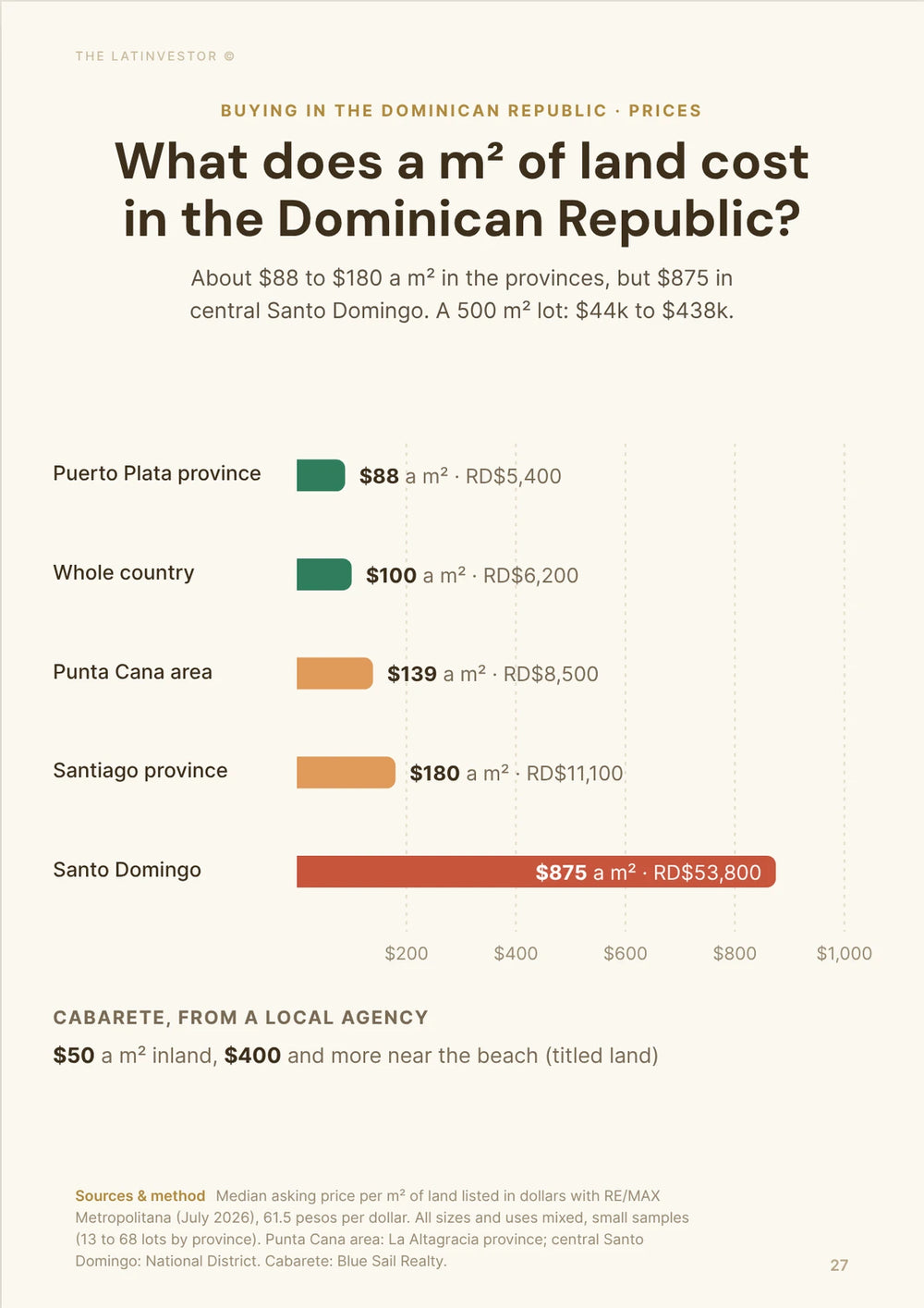
In 2026, a building lot in Punta Cana's resort areas asks about $310 per m² (median of 42 priced plots we read on Casanix in October 2026). The RE/MAX median for the whole La Altagracia province is much lower, at $139 per m² (July 2026), because it mixes in farm and development land.
The typical priced plot in Punta Cana-Bávaro and Cap Cana is big: a median of about 1,940 m² for a median asking price of $537,500.
The cheapest entry is inland: a 376 m² lot in Verón asks RD$1,693,440 (about $27,500), and some developers advertise 180 to 260 m² lots there from $10,045.
Beach-side Bávaro has the highest median in our ranking: about $283 to $525 per m² in El Cortecito and Las Iguanas, with $525,000 asked for 1,000 m² near the sand.
Cap Cana is where the biggest tickets are: 25 priced lots from $171 to $741 per m², half of them between $300 and $362. Punta Cana Village asks about $314 to $331.
Vista Cana and Ciudad Las Canas are the middle of the market, at about $115 to $268 per m². Verón, Uvero Alto, Boca de Yuma and the Higüey area are the cheap end, at about $40 to $75.
So the gap is big: the beach-side median is about 5.5 times the price per m² of an inland lot in Verón or Uvero Alto.
Prices are not clearly going up: no index tracks land, construction input costs rose only 1.94% in the 12 months to June 2026, and RE/MAX counts more than 50 off-plan projects competing for buyers in its Punta Cana sample.
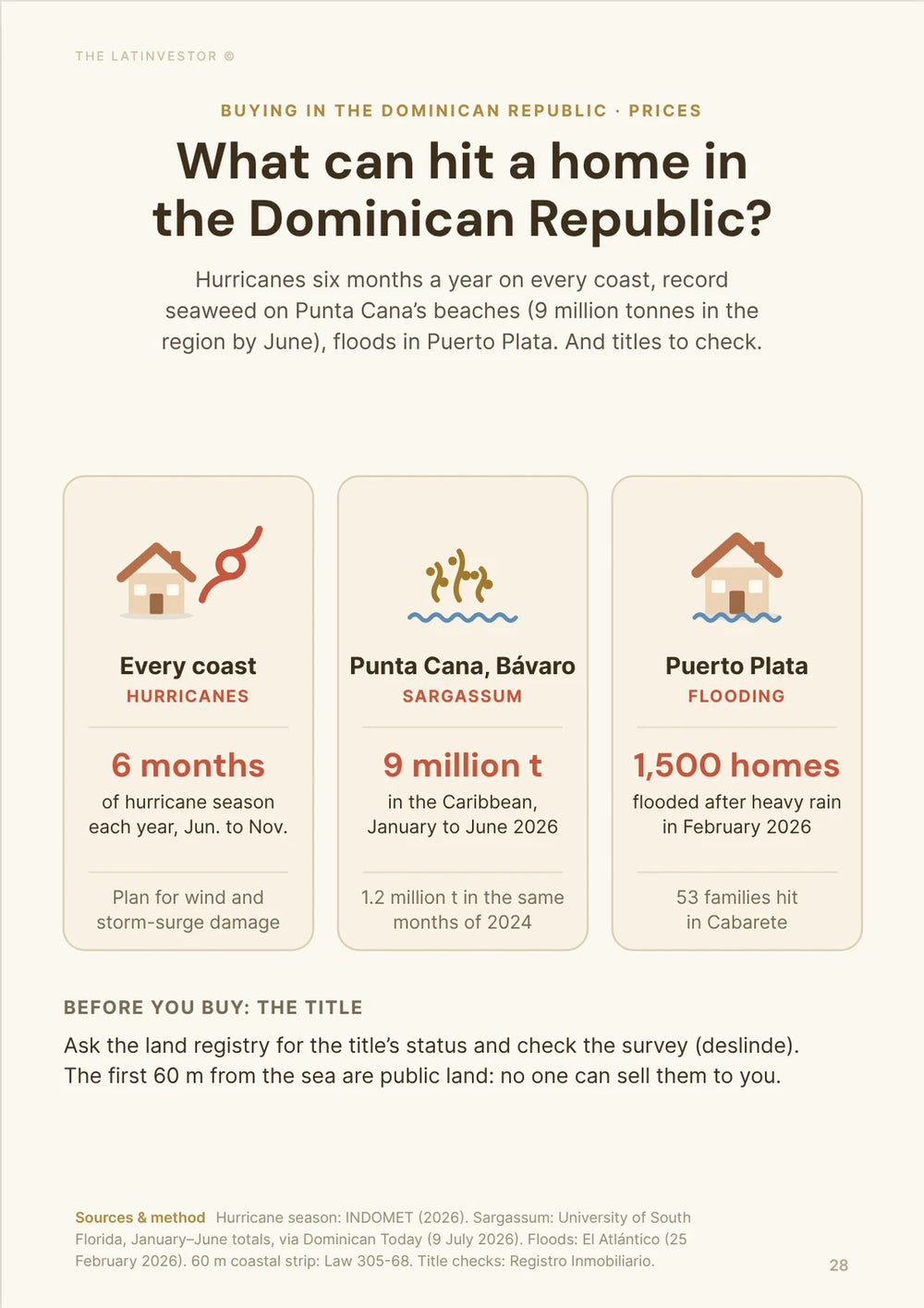
A beach plot costs about double an inland one, but the first 60 meters from high tide are public, and about 9 million tonnes of sargassum had piled up in the region by June 2026, a record.
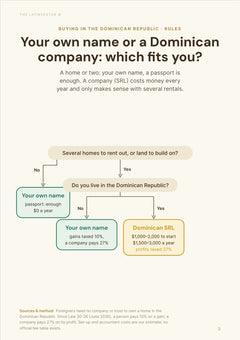
On top of the price, budget 4.5% to 6.5% for closing costs: $13,500 to $19,500 on a $300,000 lot. Add RD$18,000 (about $295) to RD$60,000 (about $975) for a deslinde if the plot has no individual survey.
Bottom line: use about $300 per m² as the reference for a gated resort lot, $150 to $250 inland in Vista Cana or Ciudad Las Canas, and under $75 in Verón. These are asking prices from small samples, so compare 5 to 10 lots of the same size and negotiate.


A quick summary table
| Metric | Value |
|---|---|
| Area with the highest median price per m² in our ranking | Beach-side Bávaro (El Cortecito, Las Iguanas): about $283 to $525 per m², median near $363 (3 plots, October 2026) |
| Most expensive single lots | Cap Cana: up to $741 per m², and tickets up to $5.5 million for large estates |
| Most affordable area in our ranking | Verón and the inland north (Uvero Alto, Lagunas de Nisibón): about $40 to $75 per m² |
| Median asking price per m², resort areas | About $310 per m² (42 priced plots in Punta Cana-Bávaro and Cap Cana, Casanix, October 2026) |
| Median asking price per m², La Altagracia province | $139 per m² (RE/MAX, 68 dollar listings, July 2026; includes farm and development land) |
| Median plot asking price, resort areas | $537,500 for a median size of about 1,940 m² |
| Lowest realistic starting budget | About $10,000 to $30,000 for a 180 to 380 m² lot in Verón or around Higüey |
| Asking price of a small plot (under 750 m²) | About $10,000 to $30,000 in Verón and Higüey; $96,000 to $195,000 in Vista Cana and Ciudad Las Canas |
| Asking price of a plot of about 1,000 m² | About $65,000 (Boca de Yuma), $275,000 (Vista Cana), $295,000 to $370,000 (Cap Cana, Punta Cana Village) and $525,000 (El Cortecito, near the beach) |
| Asking price of a large parcel (3,000 to 5,300 m²) | About $400,000 to $1.9 million, or $100 to $350 per m² |
| Price gap between the top and bottom of the ranking | About 5.5 times per m² (beach-side Bávaro median near $363 vs about $65 in Verón and Uvero Alto) |
| Price spread across single lots | From about $39 per m² (Verón) to $741 per m² (Cap Cana) |
Punta Cana neighborhoods in 2026 ranked by land purchase price
This table ranks 10 areas of Punta Cana and La Altagracia from the most to the least expensive, based on the median price per m² of the building plots we found listed in October 2026 (mostly Casanix, plus Encuentra24 for Verón).
Samples are small: 1 to 25 priced plots per area. Cocotal, Los Corales, Arena Gorda, Macao, Friusa and Pueblo Bávaro had no lot with both a price and a size in what we read, so they are not ranked. Use the ranges as a first filter, not as a valuation.
| Rank | Neighborhood | Asking Price per Square Meter (plots we saw, Oct 2026) | Example Plot Asking Prices | Typical Plot Size | Typical Land Use | Key Pros | Key Cons | Market Segment |
|---|---|---|---|---|---|---|---|---|
| 1 | Bávaro beach side (El Cortecito, Las Iguanas) | About $283 to $525, median near $363 (3 plots) | $525,000 for 1,000 m² in El Cortecito; $330,000 for 908 m² and $600,000 for 2,122 m² in Las Iguanas | 900 to 2,100 m² | Beach villa or small rental building | Walk to the beach, the strongest tourist rental demand in the area, utilities generally available | Very few lots left, the 60 m public strip on beachfront plots, sargassum, and some plots with complicated title histories | Prime Land |
| 2 | Punta Cana Village (and La Villa) | About $314 to $331 (2 plots) | $349,000 for 1,053 m²; $310,000 for 986 m² in La Villa | About 1,000 m² | Family home build | Next to the international airport, schools and everyday services nearby, utilities already connected | Few lots for sale, community fees and strict building rules, airport noise in some streets | Prime Land |
| 3 | Cap Cana (including Caletón) | About $171 to $741, half between $300 and $362, median near $318 (25 plots) | $295,000 for 927 m²; $330,000 to $370,000 for 1,021 to 1,126 m² in Caletón; $860,000 for 1,959 m²; $5.5 million for 18,149 m² | 900 to 4,000 m², some estates above 7,000 m² | Luxury villa build | Fully serviced gated resort with paved roads, utilities, marina, golf and 24-hour security; steady interest from international buyers | High community fees, strict architectural rules, the biggest tickets in the area, and many competing villa and condo projects nearby | Prime Land |
| 4 | Ciudad Las Canas | About $256 to $268 (2 plots) | $140,000 for 547 m²; $195,000 for 728 m² | 500 to 750 m² | Family home build | Smaller lots inside a gated project, so a much lower total ticket than Cap Cana | Only two priced lots, community fees to add, and you should check which roads and utilities are already delivered | High-Value Land |
| 5 | Punta Cana large parcels (along the main corridors) | About $100 to $350, median near $250 (5 parcels) | $400,000 for 4,000 m²; $454,720 for 3,248 m²; $1.31 million for 4,378 m²; $1.33 million to $1.86 million for 5,320 m² | 3,200 to 5,300 m² | Villa project or small development | Room for several units, lower price per m² than a single resort lot | Big ticket, zoning and permits to check, and a land-use no-objection from MITUR for tourism projects | Development Land |
| 6 | Vista Cana | About $115 to $267, median near $195 (5 plots) | $95,758 for 557 m²; $106,000 for 480 m²; $275,000 for 1,030 m²; $230,000 for 2,000 m²; $516,200 for 2,647 m² | 500 to 2,600 m² | Home or rental build | Master-planned inland community, prices well below the coast and the gated resorts | No beach (you drive to it), many competing condo projects, and infrastructure that depends on each phase | Mid-Range Land |
| 7 | Verón | About $39 to $73 (2 lots and 1 large parcel) | RD$1,693,440 (about $27,500) for 376 m²; developer lots advertised from $10,045 for 180 to 260 m²; $8.66 million for about 12.7 hectares | 180 to 400 m² | Self-build and local housing | The cheapest entry close to Bávaro, an active local market and a growing population | Drainage and utilities uneven from street to street, informal building in parts, and a higher risk of plots without their own deslinde | Affordable Land |
| 8 | Uvero Alto inland (Lagunas de Nisibón) | About $65 (1 subdivision) | From $97,500 for 1,500 m², lots up to 6,000 m² | 1,500 to 6,000 m² | Long-term hold | Large plots at some of the lowest prices in the province, close to the north-coast resorts | Remote, limited utilities and services today, and the weakest resale market | Entry-Level Land |
| 9 | Boca de Yuma | About $65 (1 plot) | $65,000 for 1,000 m² | About 1,000 m² | Vacation home build | Quiet fishing village on the south coast, cheap for a coastal area | Far from the Punta Cana airport and resorts, few services and very thin resale demand | Entry-Level Land |
| 10 | Higüey area | About $64 to $65 (2 plots) | $19,049 for 293 m²; $13,160 for 205 m² | 200 to 300 m² | Local housing | Provincial capital with services and a local buyer base, very low entry price | Inland city with no tourist rental demand, and plots aimed at local buyers | Entry-Level Land |
Key insights about land purchase prices in Punta Cana
The spread is big. The beach-side lots in Bávaro ask a median near $363 per m², about 5.5 times the roughly $65 asked in Verón or Uvero Alto. Single lots go from about $39 to $741 per m².
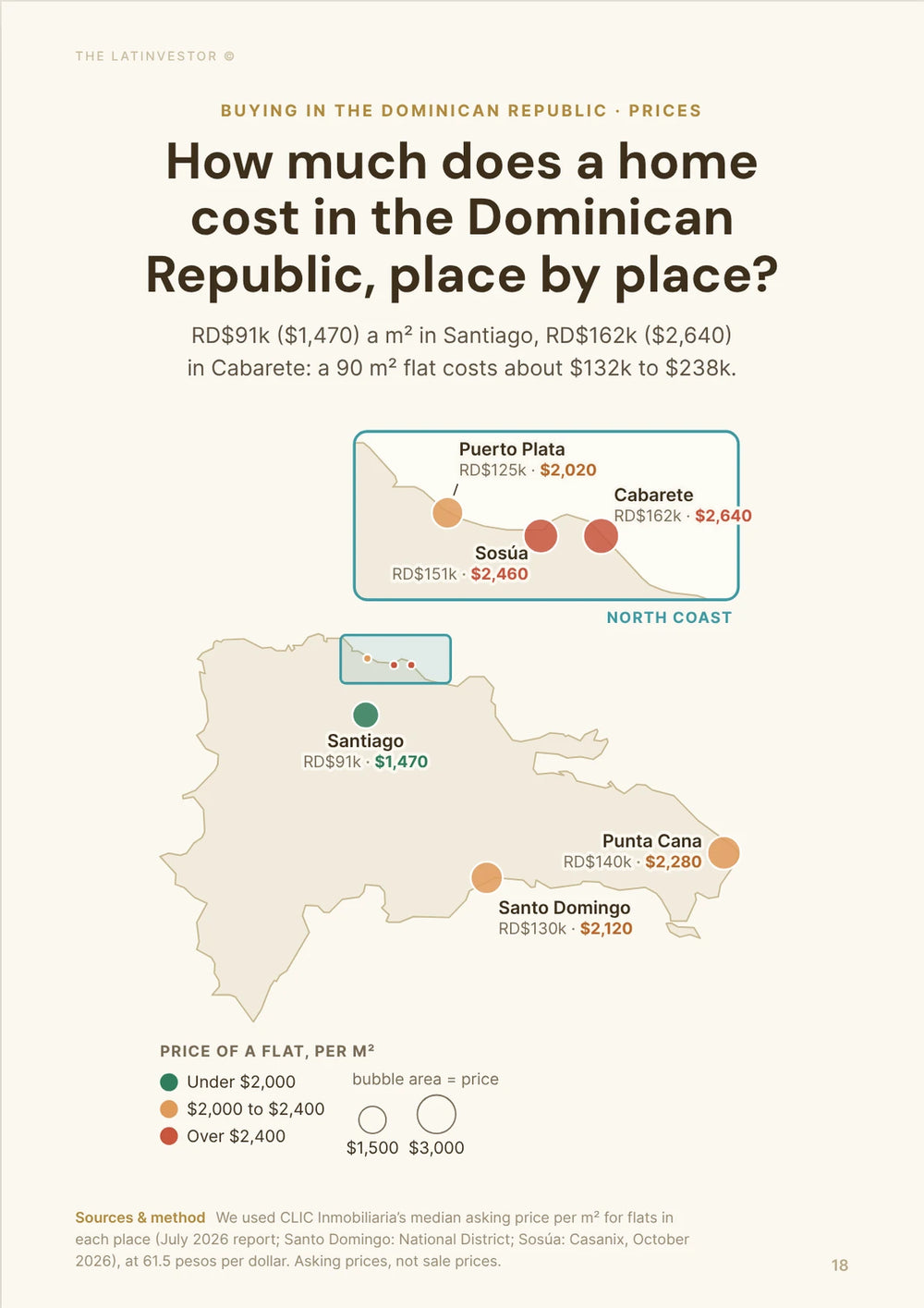
Gated communities sell services, not just land: roads, water, power backup and security. Cap Cana lots mostly ask $300 to $362 per m², more than twice the $139 province median from RE/MAX.
Size changes the price per m², but not always the way you think. In Cap Cana, estates above 7,000 m² ask about $290 to $333 per m², close to the median, while some 1,557 to 2,700 m² lots ask $525 to $741. On the main corridors, parcels of 3,200 to 5,300 m² ask $100 to $350. Always compare plots of the same size.
Inland is where your money goes further. Vista Cana asks about $115 to $267 per m² and Ciudad Las Canas about $260, against $360 and more near the beach a few kilometers away.
The resort median hides a cheap local market. Verón lots of 180 to 400 m² start around $10,000 to $30,000, but they are aimed at local buyers and often come with weaker drainage, utilities and paperwork.
Infrastructure explains most price gaps between neighbors. Before you compare two prices, check paved road access, water, a power connection and whether the plot has its own survey.
Many popular areas have almost no free lots. In October 2026 we found no plot with both a price and a size in Cocotal, Los Corales or Arena Gorda: there, ask local agents and developers directly for lots that aren't online.
Are land prices still going up in Punta Cana in 2026?
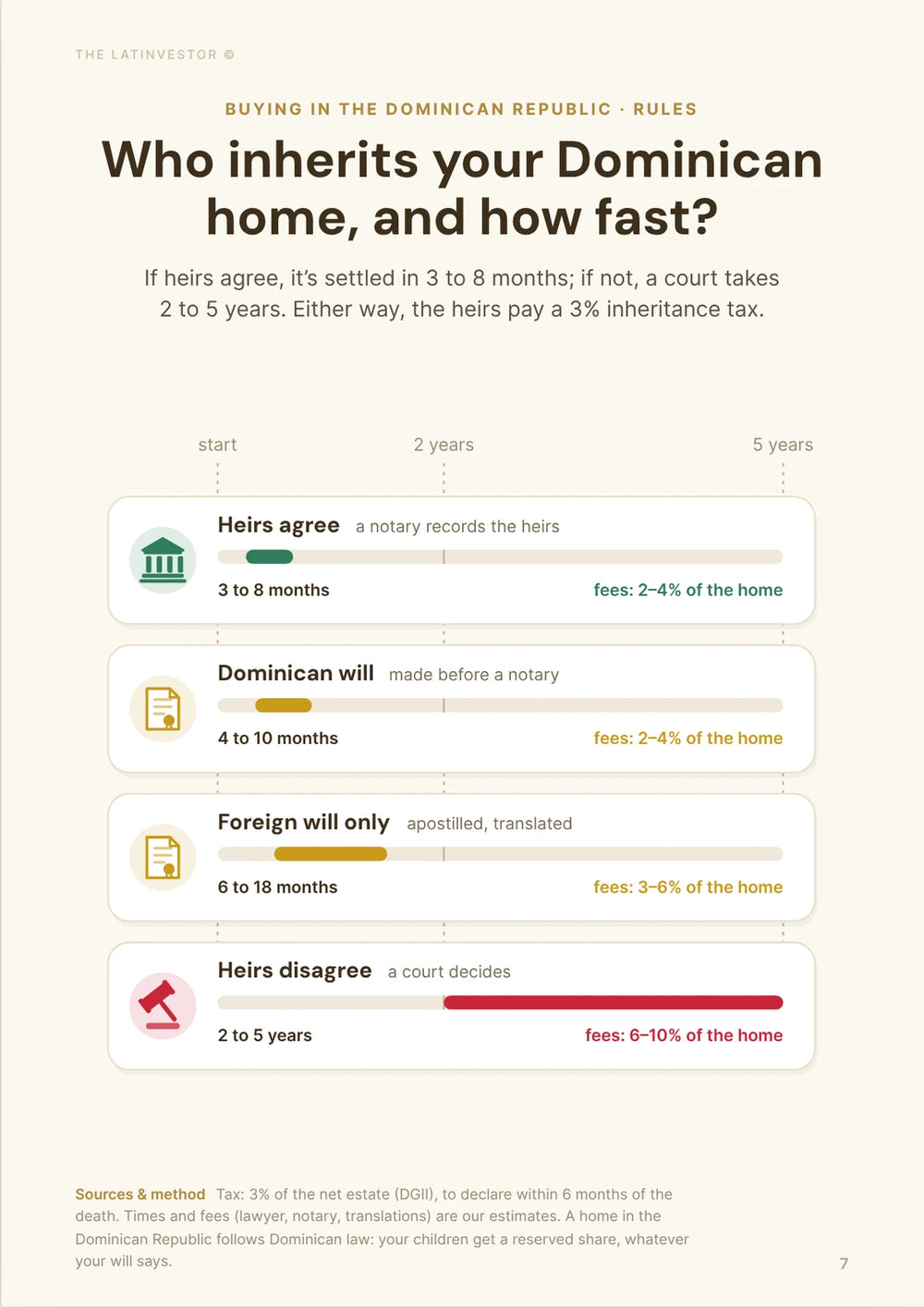
Nobody can give you a reliable number. There is no land price index in the Dominican Republic, and portals show asking prices, not sales. Be wary of anyone who quotes a precise yearly rise for Punta Cana land.
Demand is there: Punta Cana airport handled 6.38 million international passengers in January to June 2026, up 19.3% (Revista Mercado). Building a house isn't getting much more expensive either, with construction input costs up only 1.94% in the 12 months to June 2026 (ONE).
But supply is heavy. RE/MAX counts more than 50 off-plan projects in its Punta Cana sample, and Airbnb occupancy stays around 36% (AirROI) because the number of units grew as fast as tourism. Developers compete hard for buyers, which limits how far land owners can push their prices.
The peso is about 61.5 per dollar in October 2026, about 3% stronger than in January (63.5). If you pay in dollars for a lot listed in pesos, like many in Verón, it costs you a bit more than at the start of the year.
What to do: ask the agent for 3 recent closed sales in the same project or street, not listings. Make your offer from those, and push harder on lots that have been online for months.
Is a beach plot in Punta Cana worth the extra money in 2026?
A plot near the sand costs about double. In El Cortecito and Las Iguanas, lots ask about $283 to $525 per m², against about $115 to $267 for inland plots in Vista Cana.
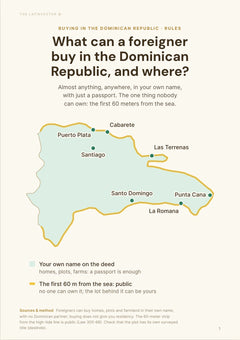
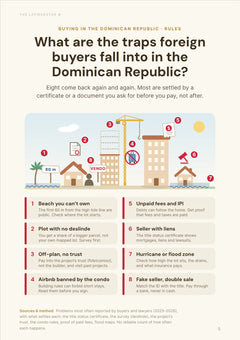
Part of the beach isn't yours. The first 60 meters from the high-tide line are a public strip under Law 305-68: you can't build there or fence it off. Have a surveyor draw that line on the plan before you sign.
Sargassum is a real cost in 2026. About 9 million tonnes had piled up in the region from January to June 2026, a record against 8.3 million in 2025 (University of South Florida, reported by Dominican Today on 9 July 2026). The east coast beaches, Bávaro and Punta Cana included, get hit the most.
Hurricane season runs from June to the end of November. Coastal plots take the wind, the storm surge and higher insurance bills, so ask about past flooding and check the plot's height above sea level.
Our take: a beach plot makes sense if you'll use it yourself or rent it as a premium villa. For a plain family house, a plot 5 to 10 minutes inland often costs half as much per m².
What will a plot in Punta Cana really cost you on top of the price?
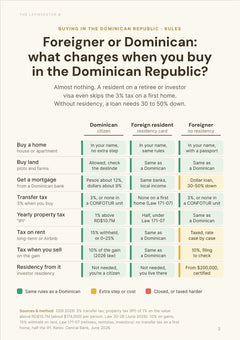
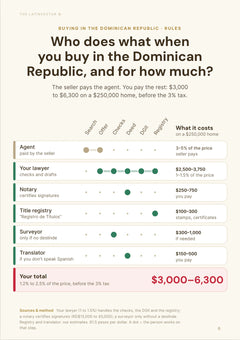
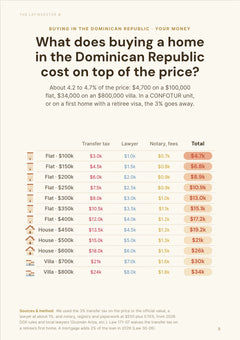
Closing costs run about 4.5% to 6.5% of the price in 2026 (1122 Real Estate, July 2026). The biggest part is the 3% transfer tax, charged on the higher of your price and the DGII appraisal, plus a lawyer at about 1% to 1.5% and notary and registry fees. On a $300,000 lot, that's $13,500 to $19,500.
Confotur rarely helps on bare land. Its transfer-tax exemption covers the first purchase of a unit in an approved tourism project, so check the exact project on MITUR's Confotur search before you count on it.
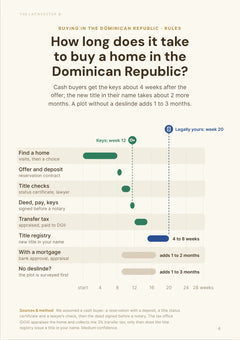
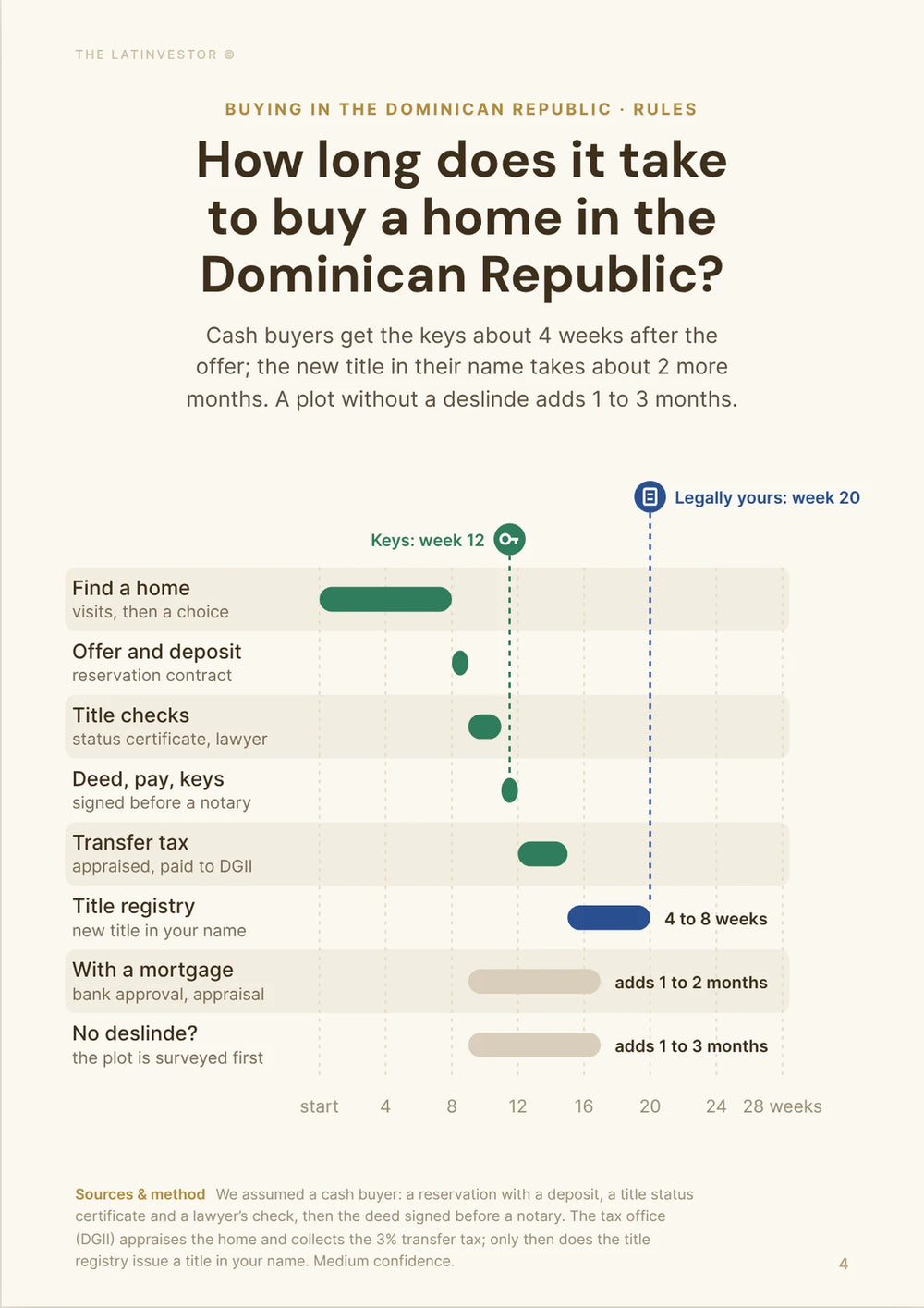
If the plot has no individual survey yet, add a deslinde: about RD$18,000 (about $295) to RD$60,000 (about $975), and 30 to 90 days. Avoid plots held only under a "constancia anotada", a share of a bigger parcel without defined limits.
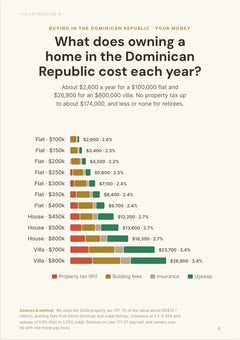
Holding bare land is cheap. The 1% IPI only applies to the part of your combined appraised property above RD$10,695,494 (about $174,000) in 2026, so a $150,000 lot alone stays below it. A house built on it later may not. In gated communities, also ask for the yearly community fees before you buy.
When you sell, Law 30-26 (in force since June 2026) taxes an individual's gain at a flat 10%. The agent's commission, usually 3% to 5%, is normally paid by the seller.
Our methodology
This article estimates what a residential building plot costs in Punta Cana and the rest of La Altagracia province in 2026: a median price per m², 10 areas ranked by price, typical plot budgets, and the costs of buying and holding land.
The province median comes from the RE/MAX Metropolitana land price guide (data collected on 24 July 2026, 68 dollar listings in La Altagracia). The area ranges come from the plots we read on Casanix on 22 and 23 October 2026 (the first three pages of La Altagracia land listings): we divided each asking price by its area, removed duplicates and listings with unclear sizes, and kept lots with both a price and a size. The Verón lots come from two Encuentra24 ads updated in September and October 2026.
Closing costs and deslinde costs come from 1122 Real Estate (July 2026). The transfer tax, IPI threshold and capital gains rules come from DGII and Law 30-26, Confotur from MITUR, and the coastal strip from Law 305-68. Airport traffic comes from Revista Mercado, construction costs from the ONE index reported by El Día, Airbnb occupancy from AirROI, and sargassum from the University of South Florida as reported by Dominican Today.
We checked these figures in October 2026. Conversions use about 61.5 Dominican pesos per US dollar.
These are asking prices from small samples, not closed sales, and a few prime lots can move a range a lot. Where an area had only one or two priced plots, we say so in the table. Where we had no priced lot at all (Cocotal, Los Corales, Arena Gorda, Macao), we left the area out instead of guessing. Your own price will depend on the plot's size, title, access, utilities and how long it has been for sale.
Key sources used for this analysis include RE/MAX Metropolitana land price guide, RE/MAX Metropolitana Punta Cana price guide, Casanix land listings in La Altagracia, Encuentra24 Verón lot, Encuentra24 Verón developer lots, 1122 Real Estate closing costs 2026, DGII IPI property tax, Law 30-26, MITUR Confotur search, Ministry of Environment on the 60-meter strip, Registro Inmobiliario, El Día on the ONE construction cost index, Revista Mercado on airport traffic, AirROI Punta Cana, Dominican Today on record sargassum, INDOMET hurricane season, Banco Central de la República Dominicana and Oficina Nacional de Estadística (ONE).