Summary
Most people need about $2,500-$3,500 a month for a comfortable single-person retirement in Panama, or roughly $3,000-$4,500 for a couple. If there is little or no guaranteed pension income, that usually means something closer to $600,000-$900,000 of invested capital for a moderate long retirement, with $1 million or more providing much more room.
The famous $1,000 figure is an immigration threshold, not a realistic retirement budget for most foreign renters. In some parts of Panama, rent alone can absorb most or all of it.
Location changes the answer more than almost any lifestyle tweak. Moving from a central Panama City apartment to Boquete or David can reduce annual housing costs enough to shift the portfolio requirement by well into six figures.
Guaranteed income changes the savings target even more dramatically. A retiree spending $2,500 a month with a dependable $2,000 pension only needs investments to finance the remaining $500 monthly gap.
That is why two people living the same Panama lifestyle can need radically different net worth. Under a 3.9% withdrawal framework, the difference between financing $500 and $3,000 a month from investments is roughly $769,000.
Healthcare is the budget line most likely to surprise older retirees. Local care can remain affordable, but broad international insurance after 65 can become a rent-sized monthly expense.
Owning a mortgage-free home can make a very large difference, but mainly because it removes years of rent rather than because Panama property taxes are unusually important. Avoiding $900 a month of rent is equivalent to about $277,000 of portfolio capital at a 3.9% withdrawal rate.
Boquete is still cheaper than Panama City, but the old ultra-cheap retirement story no longer fits particularly well. David is the more credible option for someone trying to keep total spending around $1,500-$2,000 a month.
Panama's retiree discounts are real and useful, especially for restaurants, medicine, medical care, electricity and travel. They help at the margin, but they do not reduce the biggest recurring costs enough to rescue an underfunded retirement plan.
The strongest financial setup is usually some combination of dependable pension income, controlled housing costs, a separate cash reserve and investments large enough to cover only the remaining spending gap. Panama remains flexible enough that changing city, housing and healthcare choices can move the required retirement capital by hundreds of thousands of dollars.


Can you really retire in Panama on $1,000 a month?
For most foreign retirees today, $1,000 a month is far too tight for a comfortable retirement in Panama.
The figure appears everywhere because Panama’s Pensionado program requires a qualifying lifetime pension of at least B/.1,000 a month, with the balboa effectively equal to the US dollar. Panama’s National Migration Service still lists that threshold, along with a reduced $750 requirement for applicants who personally own qualifying Panamanian property worth more than $100,000.
For couples, Panama also allows both spouses’ pensions to be combined to reach the $1,000 minimum. Each dependent requires another $250 a month of demonstrated financial capacity.
Those are immigration rules. Actual spending starts at a very different level.
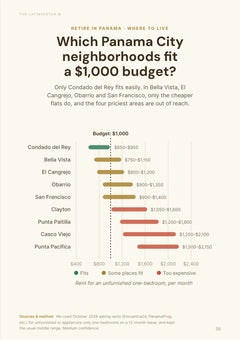
Current housing figures illustrate the gap. A one-bedroom apartment can cost around $700 in Boquete, roughly $400-$550 in David depending on location and quality, and around $875 outside central Panama City. In central parts of Panama City, roughly $1,260 for a one-bedroom is a reasonable current reference point.
At $700 rent, 70% of a $1,000 pension disappears before groceries, healthcare, electricity, internet, transportation or flights home.
Someone who already owns a mortgage-free home can get much closer to living on $1,000-$1,500. A renter has much less room. We would use the $1,000 Pensionado figure to understand residency eligibility, not to set a retirement budget.
| Panama retirement measure | Approximate amount | What it tells us | Useful for budgeting? |
|---|---|---|---|
| Pensionado minimum pension | $1,000/month | Residency eligibility | No |
| Reduced pension with qualifying property | $750/month | Residency eligibility | No |
| One dependent | +$250/month | Immigration solvency | No |
| Boquete 1-bedroom | ~$700/month | Housing cost | Yes |
| David 1-bedroom | ~$400-$550/month | Housing cost | Yes |
| Panama City 1-bedroom | ~$875-$1,300 | Housing cost | Yes |
Why do Panama retirement estimates vary so wildly?
Panama retirement estimates range from barely $1,500 to more than $5,000 a month because location, healthcare and pension income change the calculation dramatically.
Housing creates the easiest difference to see. A retiree paying $500 in David starts each month roughly $800 ahead of someone renting a $1,300 apartment in Panama City.
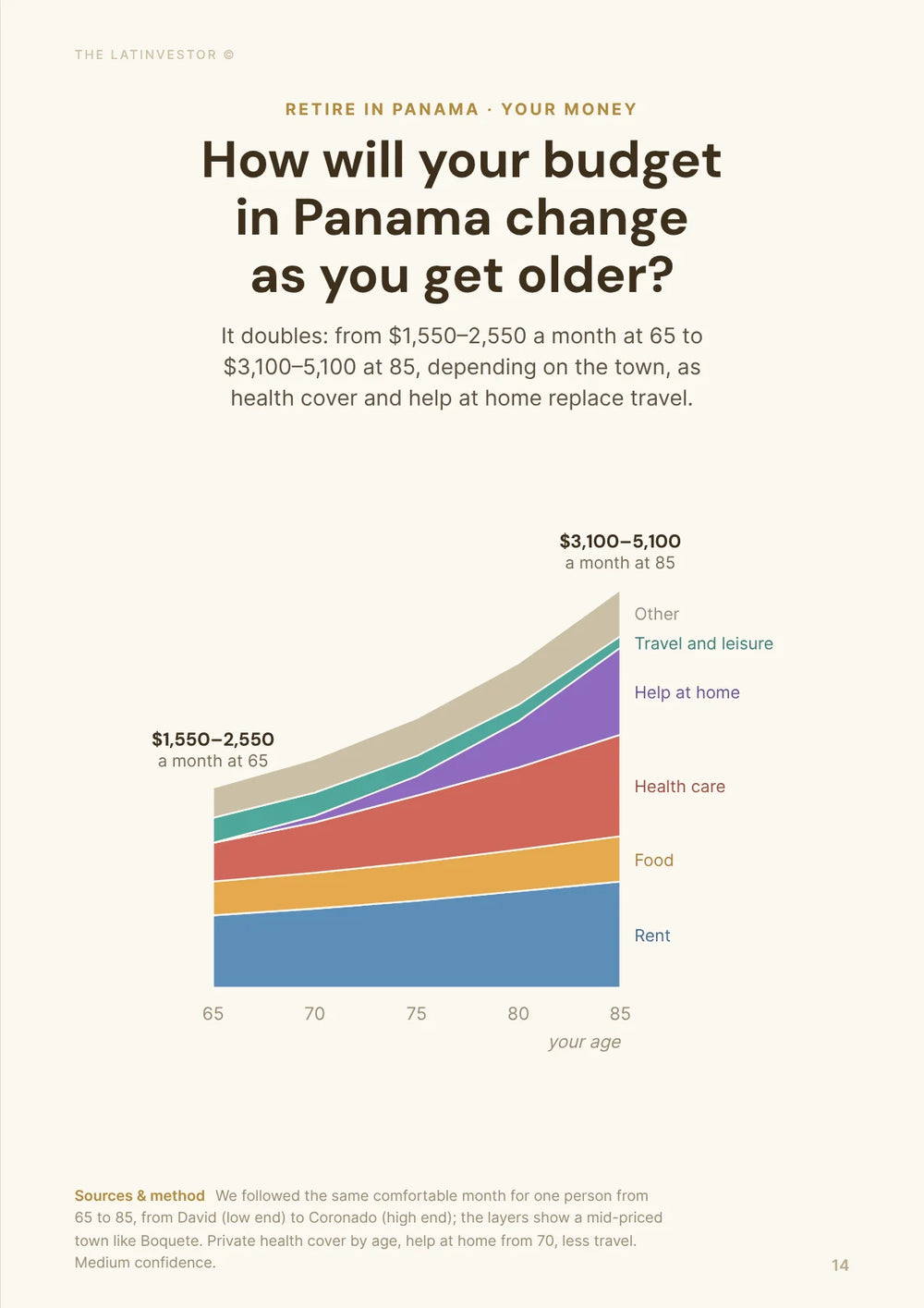
Healthcare can create another several-hundred-dollar monthly gap. A healthy retiree in their 50s using local private care and modest insurance has a very different cost profile from someone in their 70s who wants broad international medical coverage.
Then comes the biggest variable: guaranteed income.
Imagine two retirees who each spend $3,000 a month. One receives a $2,500 pension, so investments need to provide only $500. The other receives no pension and has to withdraw the whole $3,000 from savings.
Morningstar’s latest retirement-income research continues to use 3.9% as its base-case starting withdrawal rate for a 30-year retirement with inflation-adjusted spending and a 90% probability of money remaining.
At 3.9%, funding a $500 monthly shortfall requires about $154,000. Funding the whole $3,000 requires about $923,000.
Same Panama lifestyle, roughly $769,000 difference in required investments. This is why monthly spending and total savings have to be calculated separately.
How much does one person need to retire comfortably in Panama?
A single retiree should currently plan on roughly $2,000-$2,500 a month for a sensible lifestyle outside expensive parts of Panama City, with $2,500-$3,500 giving much more breathing room.
Recent cost datasets put ordinary non-rent spending for one person in Panama at roughly $800-$900 a month before we add a proper allowance for private healthcare, travel and irregular expenses.
Housing then changes the total quickly. Add a $600-$800 apartment in a lower-cost area and the basic calculation already moves toward $1,400-$1,700.
That lower range can work, especially for someone who cooks often, uses local services and does not travel much. There is very little slack, though. A dental procedure, flight home, insurance increase or broken appliance can suddenly turn a cheap month into an expensive one.
Around $2,000-$2,500, a single retiree has much more room for private healthcare, restaurants, taxis, hobbies and occasional travel.
At $3,000 or more, Panama feels comfortable in most places outside premium Panama City neighborhoods unless expensive international insurance or frequent long-haul travel absorbs the extra money.
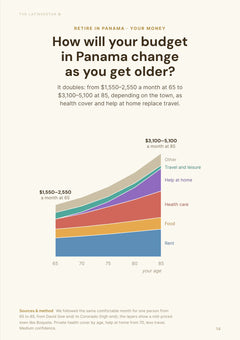
| Monthly category | Careful budget | Comfortable budget | Higher-comfort budget |
|---|---|---|---|
| Housing | $600-$750 | $800-$1,100 | $1,300+ |
| Food and restaurants | $300-$400 | $450-$600 | $700+ |
| Utilities and internet | $100-$175 | $150-$225 | $250+ |
| Healthcare and insurance | $250-$450 | $350-$650 | $700+ |
| Transport | $50-$150 | $150-$300 | $400+ |
| Travel, leisure and surprises | $150-$300 | $350-$600 | $700+ |
| Approximate total | $1,450-$2,225 | $2,250-$3,475 | $4,000+ |
How much does a couple need to retire comfortably in Panama?
A couple can currently live comfortably in many parts of Panama on roughly $3,000-$4,000 a month.
Two retirees rarely need twice the budget of one retiree because rent, internet, appliances and many household expenses are shared.
A couple paying $1,000 for an apartment, for example, still pays $1,000 rather than $2,000. Food, medical expenses, flights and leisure rise much more directly with the second person.
That is why a $2,500 single-person budget does not become a $5,000 couple’s budget automatically.
For a couple living in Boquete, David or another mid-cost area, around $3,000 can cover a good rental, regular restaurants, local transportation and private healthcare if medical costs are reasonable.
Around $3,500-$4,000 gives more space for travel and insurance increases. Panama City, expensive housing or broad international medical coverage can push a couple toward $4,500-$6,000 without anything particularly extravagant happening.
For most couples asking us for one practical planning figure, $3,500 a month is a much better starting point than the official residency minimums.
How much more does Panama City cost than Boquete or David?
Choosing Panama City over Boquete or David can raise the amount of retirement capital you need by well into six figures.
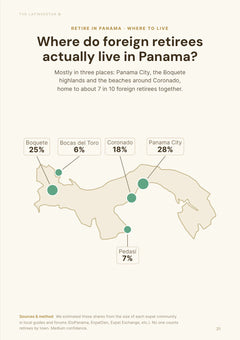
Current one-bedroom rents give us the clearest comparison. Panama City runs from about $875 outside the center to about $1,260 in central areas, Boquete roughly $700 to $825, and David around $400-$550 for many ordinary apartments.
Suppose a retiree pays $700 in Boquete instead of $1,300 in central Panama City. The $600 monthly difference becomes $7,200 a year.
At a 3.9% withdrawal rate, supporting that extra $7,200 every year requires about $185,000 of additional portfolio capital.
David can widen the gap further.
Climate also affects the comparison. Panama City’s heat and humidity make air conditioning a regular expense for many retirees. Boquete’s elevation and cooler temperatures can reduce cooling use substantially. Panama’s electricity regulator currently shows residential rates varying by consumption level and distributor, and heavy air-conditioning use can turn utilities into a meaningful monthly bill.
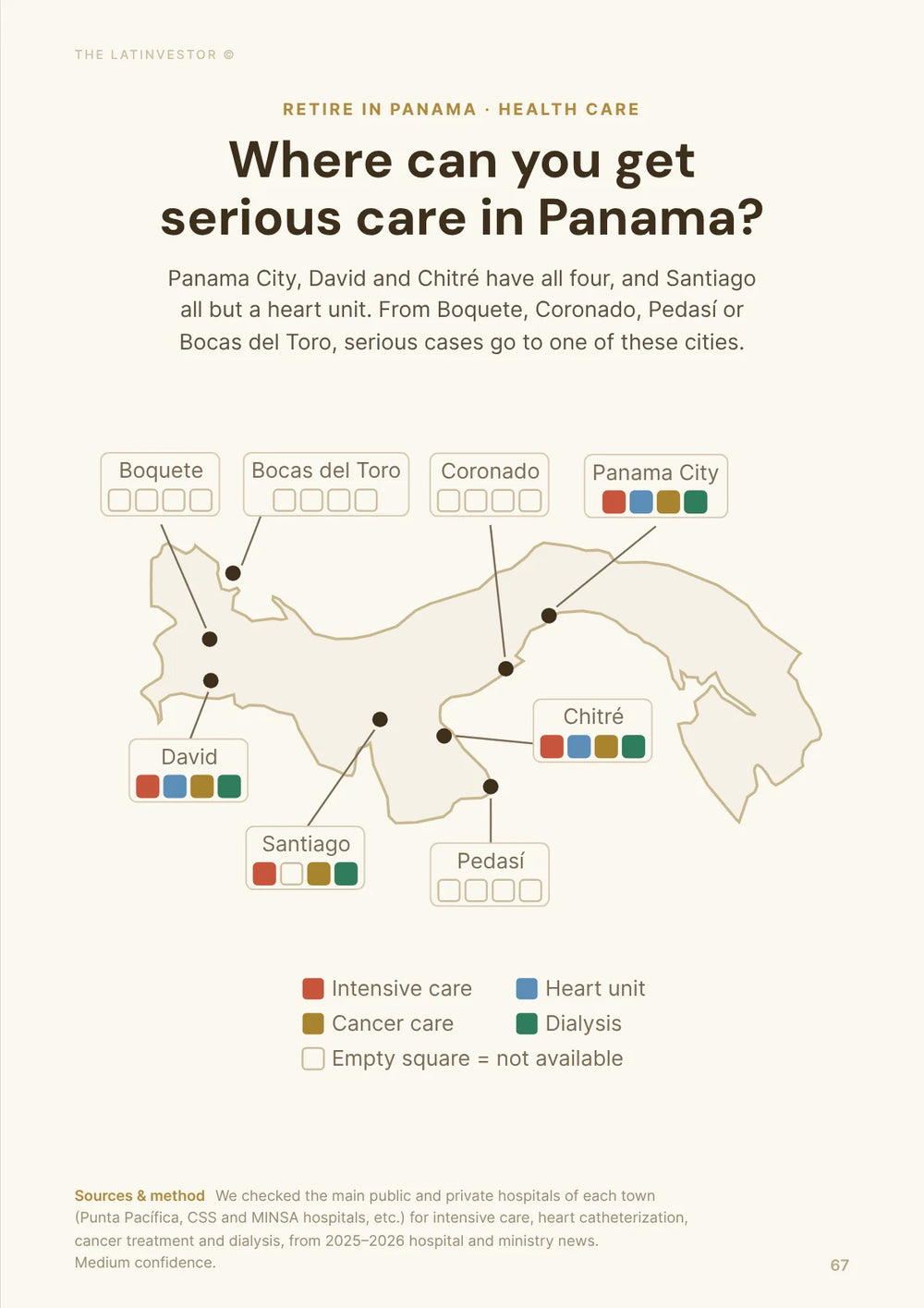
Panama City earns some of that premium back through better access to major private hospitals, restaurants, entertainment and international flights. People who use those things constantly may find the higher cost worthwhile.
Someone whose main goal is making retirement assets last has a much easier calculation in Boquete or David.
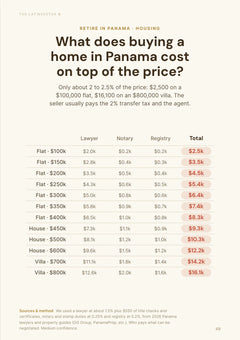
| Location | Typical 1-bed reference | Approx. annual rent | Portfolio needed to fund rent at 3.9% |
|---|---|---|---|
| David | ~$400-$550 | $4,800-$6,600 | ~$123k-$169k |
| Boquete | ~$700 | ~$8,400 | ~$215k |
| Panama City, outside center | ~$875 | ~$10,500 | ~$269k |
| Panama City, central areas | ~$1,300+ | ~$15,600+ | ~$400k+ |
Is Boquete still cheap enough for retirement?
Boquete is still cheaper than Panama City, but these days it makes more sense to call it good value than genuinely cheap.
Current one-bedroom rents are generally around $700, with larger and better-located properties quickly moving beyond $1,000.
That remains attractive beside many North American cities and is clearly below much of Panama City. Yet Boquete has spent years developing around retirees, foreign residents and tourism. Furnished rentals, imported groceries, international restaurants and expatriate-focused services all reflect that demand.
The cooler climate helps. Lower air-conditioning use can shave money from monthly utilities, and walking can replace some transport costs for retirees who choose the right part of town.
A realistic single-retiree budget in Boquete currently starts around $1,800-$2,000 if spending is controlled. Roughly $2,500-$3,000 gives a much easier lifestyle.
The old image of moving to Boquete and living extremely well on $1,000 belongs to a cheaper version of the town.
Can you still retire cheaply in David?
David is currently one of the clearest examples that a lower-cost Panama retirement still exists.
Listings typically put basic one-bedroom apartments somewhere around $400-$550, and Numbeo's average is even lower at about $350, although available data for David is much thinner than for Panama City.
Even at $500, housing costs roughly half what a modest Panama City apartment may cost.
If a retiree saves $550 every month on rent, that becomes $6,600 annually. At a 3.9% withdrawal rate, the lower housing cost is equivalent to needing roughly $169,000 less retirement capital.
David also functions as a normal regional city rather than a resort community. That gives retirees access to supermarkets, hospitals and local services without as much expatriate pricing.
The compromise is lifestyle. David is hotter than Boquete, a car can become more useful, and retirees wanting mountain weather or a large foreign social scene may spend a lot of time going elsewhere.
Still, someone determined to keep spending around $1,500-$2,000 a month has a much more credible chance in David than in central Panama City.
How much should retirees budget for healthcare in Panama?
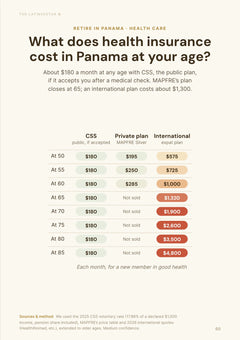
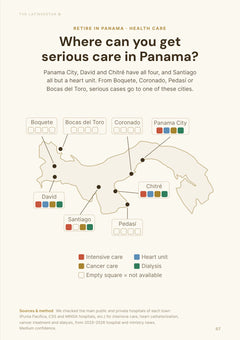
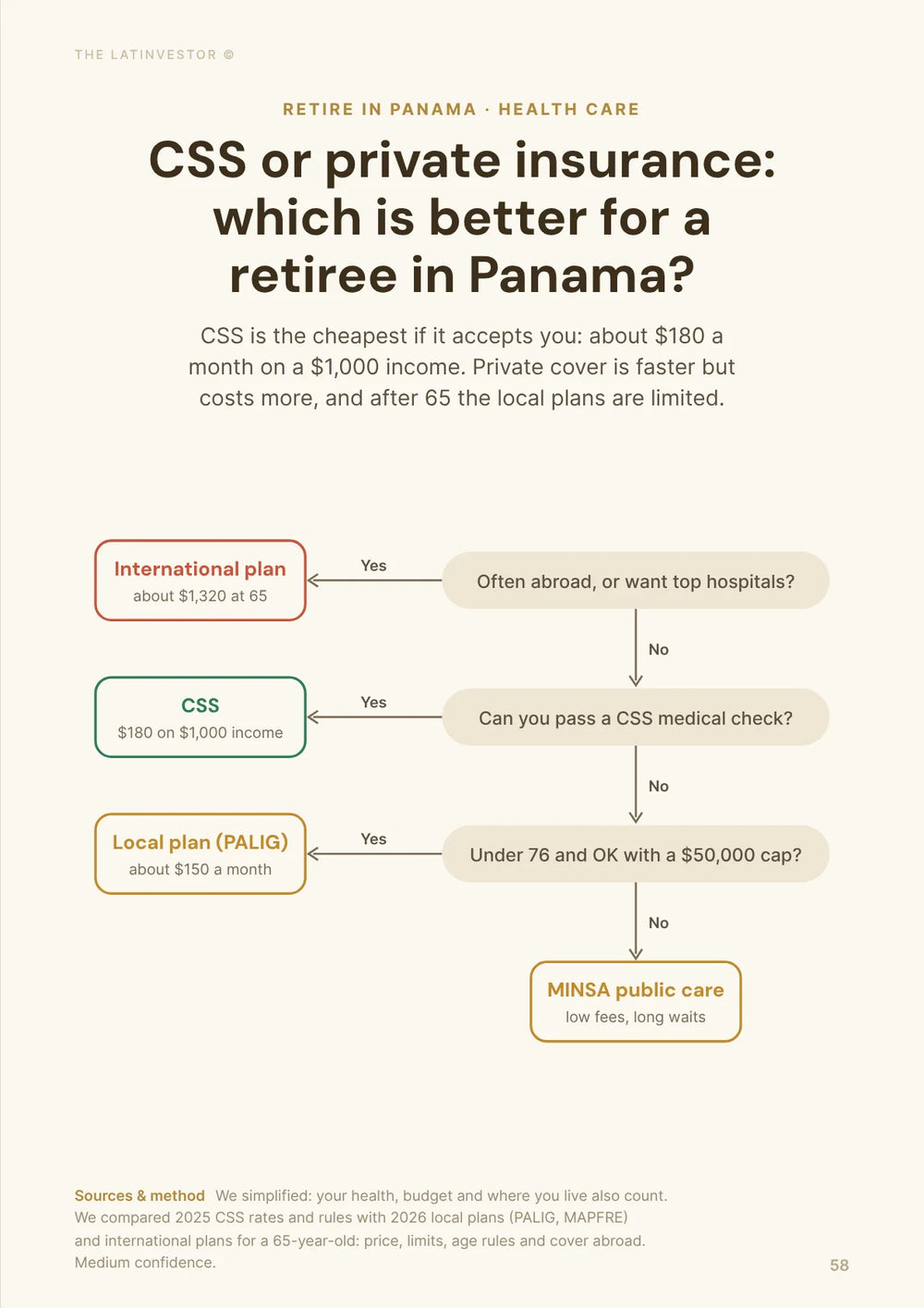
Healthcare can easily add $300-$1,000 a month to a Panama retirement budget, and older retirees should take the upper end seriously.
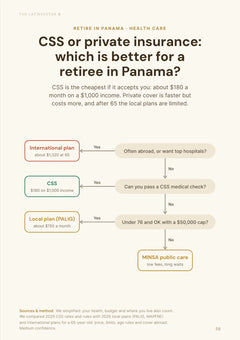
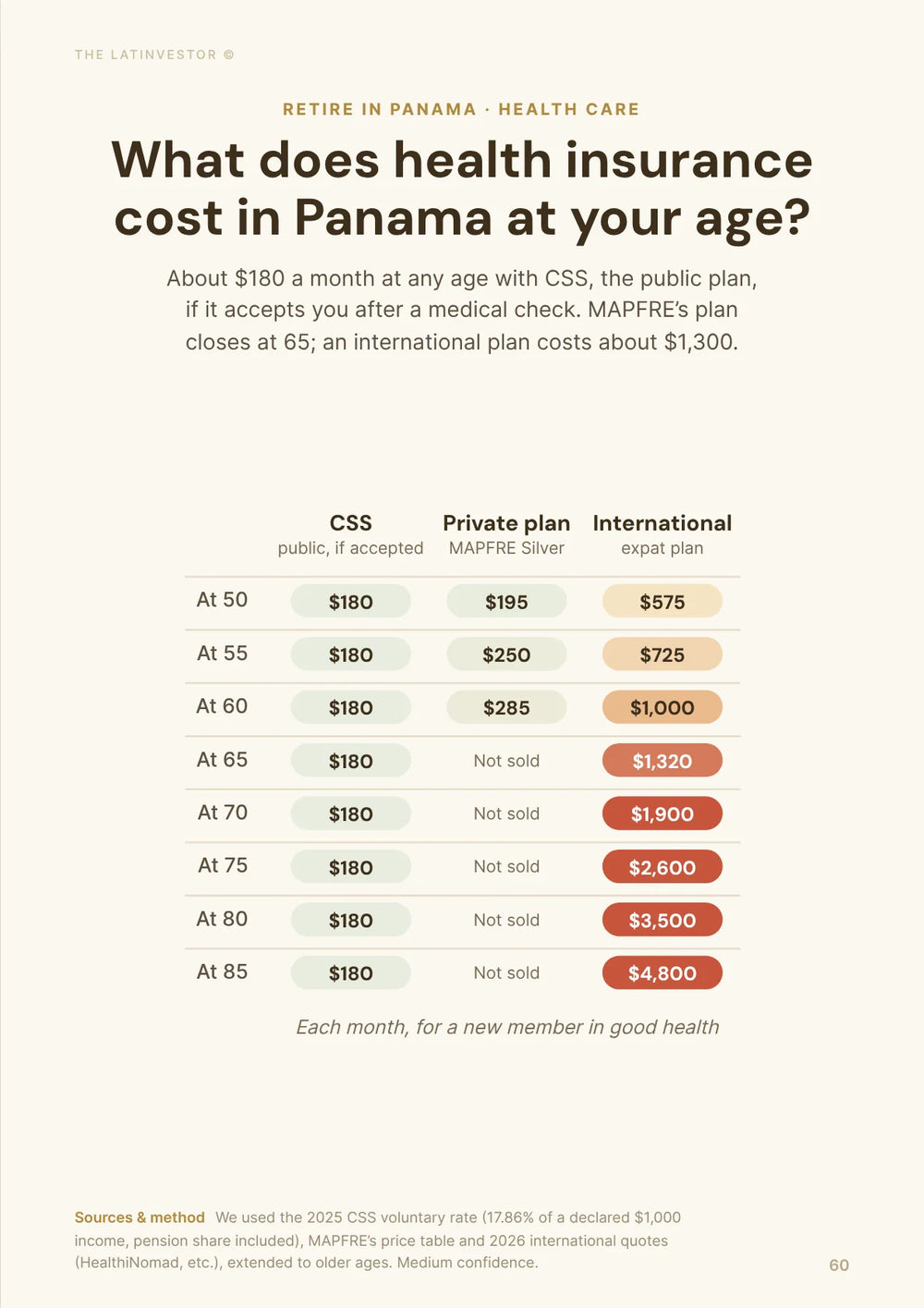
Private treatment in Panama often costs much less than uninsured care in the United States, which is one reason the country remains attractive to retirees. Insurance becomes more expensive with age, however, and broad international policies are a different product from inexpensive local medical care.
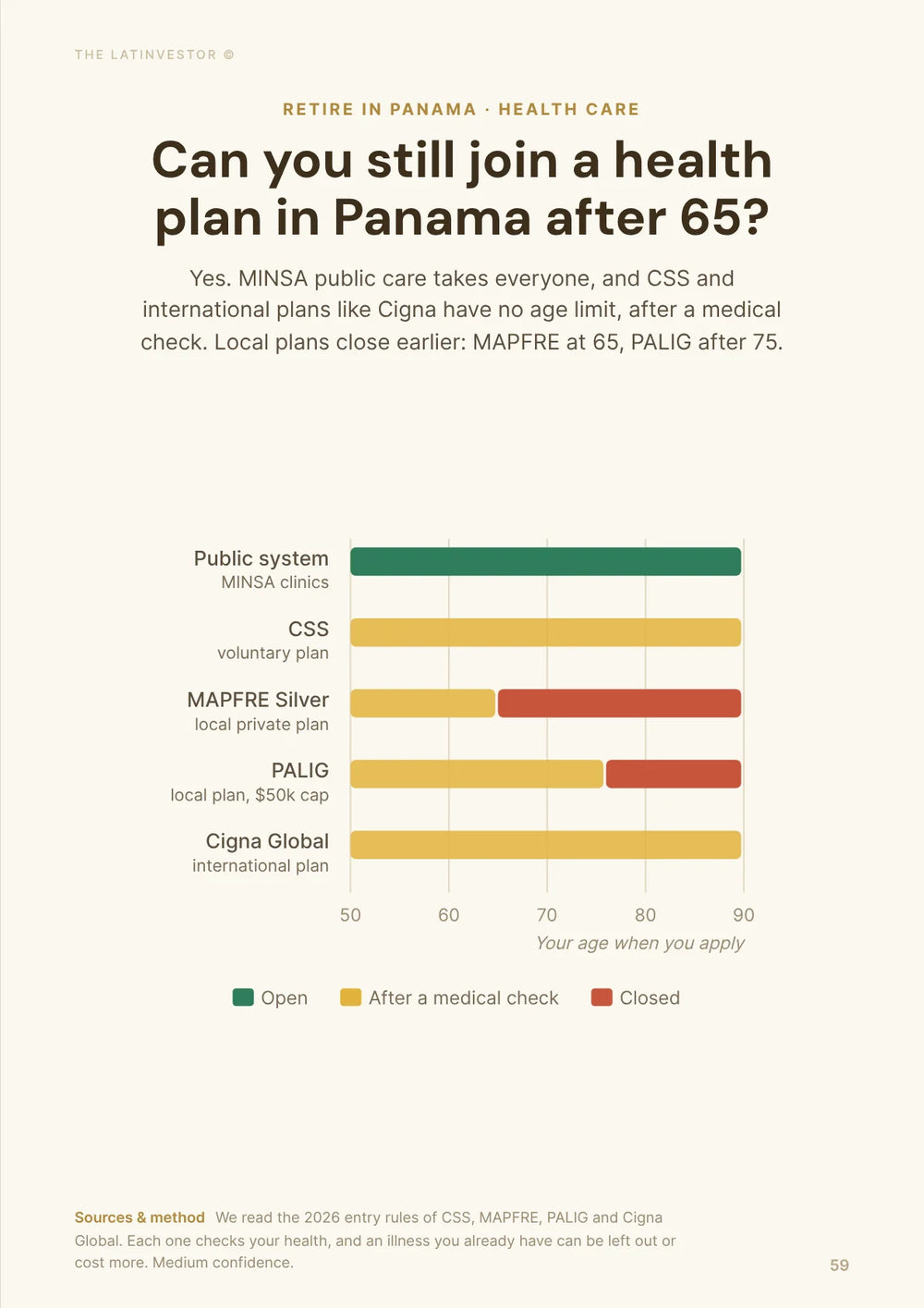
Prices vary a lot by insurer, age and coverage, so treat any single figure with care. As a local reference, MAPFRE's Solución Classic plan is indicated at about $180-$220 a month at ages 60 to 64, with new members accepted up to 65. Broad international plans usually cost more, often several thousand dollars a year.
After 65, quotes can climb toward $6,000-$12,000 a year depending on age, deductible, medical history, insurer and geographic coverage.
At that point healthcare can cost as much as rent in a lower-cost Panamanian city.
A retiree paying $350 a month spends $4,200 annually. At $800 a month, that becomes $9,600. The $5,400 gap between those two cases would require roughly $138,000 more invested capital at a 3.9% withdrawal rate if the portfolio has to finance it indefinitely.
This is one area where a wide range is more honest than a tidy average. Age and coverage choices really do change the answer.
| Healthcare setup | Rough annual range | Monthly equivalent | Budget impact |
|---|---|---|---|
| International coverage, roughly age 50-65 | ~$3,500-$5,500 | ~$290-$460 | Moderate |
| International coverage, 65+ | ~$6,000-$12,000 | ~$500-$1,000 | Potentially major |
| Local insurance / local private care | Often lower | Varies widely | Can reduce spending |
| Self-insurance | Unpredictable | Unpredictable | Requires larger cash reserves |
Do Panama’s retiree discounts actually save much money?
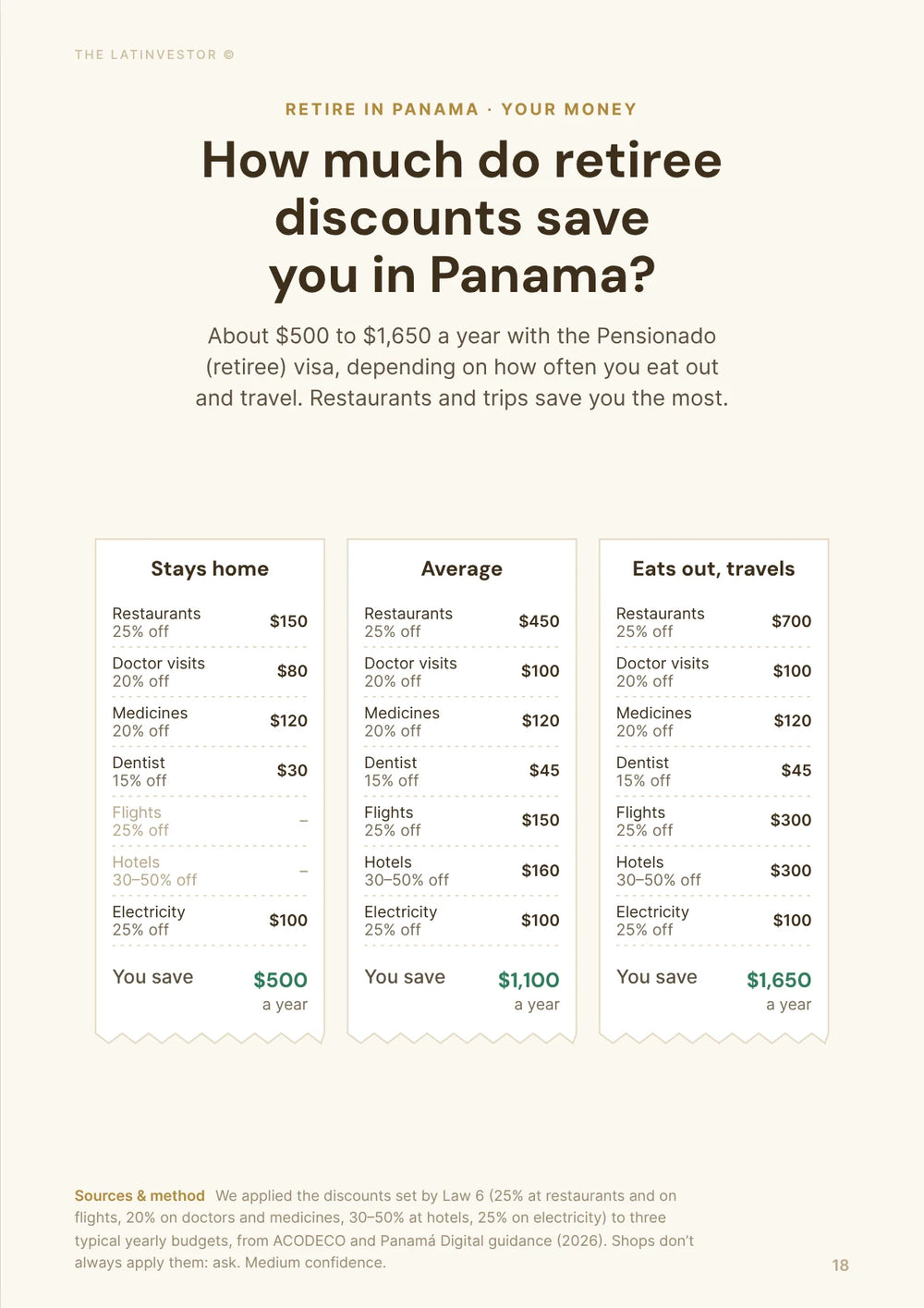
Panama’s retiree discounts can save hundreds of dollars over time, especially on healthcare, restaurants and travel, but we would treat them as a bonus rather than build the whole budget around them.
ACODECO, Panama’s consumer-protection authority, currently confirms a remarkably broad set of statutory benefits under Law 6.
Eligible retirees can receive 25% off restaurant meals, 20% off medicines, 20% off medical and surgical fees, 15% off private hospitals and clinics, 25% off airline tickets, 50% off many entertainment activities, 30% off eligible public and intercity transport, 25% off water bills and 25% off electricity consumption up to 600 kWh.
The discounts are still actively enforced. ACODECO reported 93 complaints involving failures to respect retirement benefits during the first two months of 2026, including 14 cases involving the 25% restaurant discount. The authority had already imposed first-instance sanctions totaling B/.16,000.
That recent enforcement data shows both sides of the system: the benefits are real, and retirees occasionally have to insist on receiving them.
A retiree spending $300 a month in qualifying restaurants could theoretically save $75. Regular medicines, doctor visits, domestic hotels and flights add further savings.
Rent and normal supermarket groceries remain largely untouched, so the biggest lines in most retirement budgets stay intact.
Does buying a home make retirement in Panama much cheaper?
Owning a mortgage-free home can cut the income needed for retirement in Panama by $700-$1,300 a month depending on where you would otherwise rent.
Take a retiree avoiding $900 of monthly rent. That saves $10,800 a year.
Using Morningstar’s current 3.9% base-case withdrawal rate, generating $10,800 from investments every year would require roughly $277,000 of portfolio capital.
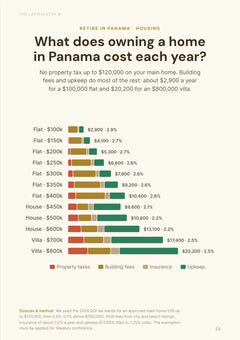
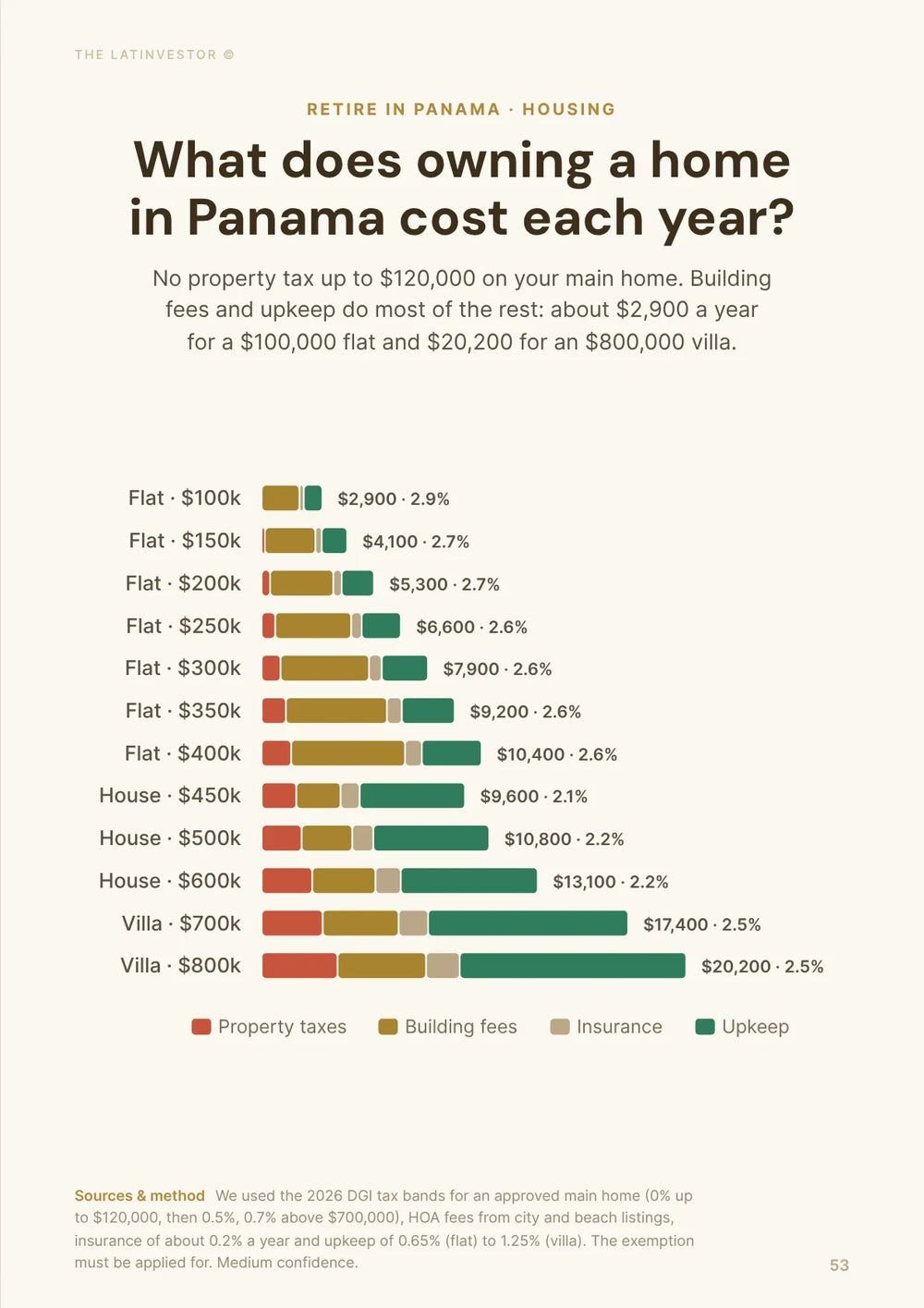
Property ownership does come with maintenance, condominium charges, insurance and taxes. Panama’s tax treatment of a qualifying principal residence is currently fairly light: the General Directorate of Revenue lists a 0% property-tax rate up to $120,000 of taxable value, 0.5% from $120,001 to $700,000, and 0.7% above $700,000.
A mortgage-free retiree can therefore live on considerably less monthly income than a renter without necessarily facing large annual property taxes.
The Pensionado program also lowers its pension threshold to $750 for someone who personally owns qualifying Panamanian real estate worth more than $100,000.
The larger saving still comes from eliminating years of rent. That is where ownership can change the retirement equation by hundreds of thousands of dollars.
Should you rent before buying a retirement home in Panama?
Most new retirees should rent in Panama first because choosing the wrong town is much more expensive than paying rent for a year.
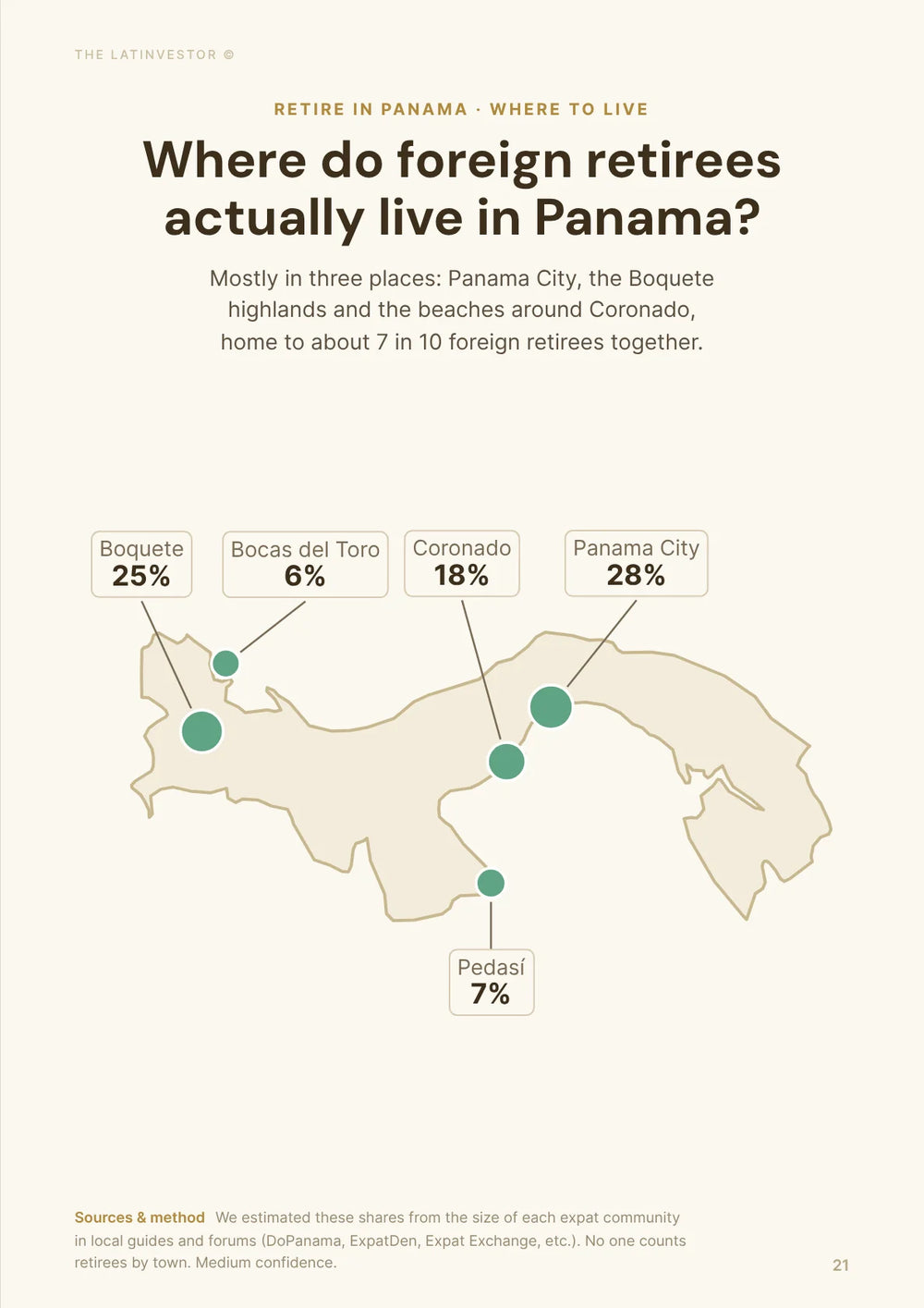
Panama City, Boquete and David offer genuinely different daily lives.
Panama City brings major hospitals, restaurants, airports and dense urban life. Boquete offers cooler weather and a large retirement community. David costs less and functions more like an ordinary Panamanian regional city.
A spreadsheet cannot tell someone which compromise will become annoying after six months.
Renting also reveals expenses that rarely appear in relocation budgets: how much air conditioning you actually use, whether you need a car, how often you travel to Panama City for medical care, what imported foods you keep buying and which neighborhoods feel practical after dark or in heavy rain.
A retiree who buys a $200,000 property immediately and regrets the location has a much harder problem than someone who dislikes a $900 rental.
For long-term residents, buying can make excellent financial sense. Renting first simply gives that decision better information.
Is food still cheap for retirees in Panama?
Food in Panama is still fairly affordable if retirees eat local products, while imported habits can make the grocery bill look surprisingly familiar.
Current Panama City estimates put basic groceries for one person around $325 a month before restaurants and premium imported products.
An inexpensive restaurant meal can still come in around $11.50, while a mid-range meal for two is commonly around $47.50.
A single retiree who shops locally and cooks often can reasonably target around $350-$450 a month for food. A couple might spend around $650-$850.
Imported cheese, wine, health foods, specialty products and familiar North American or European brands can move those figures much higher. Panama has excellent logistics and supermarkets precisely because importing these products is easy; easy availability does not make them cheap.
Restaurant spending is where Pensionado discounts help most. Eligible retirees can currently receive 25% off individual restaurant meals under Panama’s Law 6.
So the stereotype that food in Panama is extremely cheap needs some updating. Local eating is inexpensive. An imported lifestyle costs considerably more.
Does Panama’s tax system really help foreign retirees?
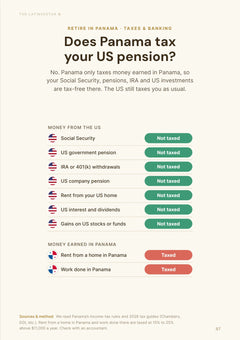
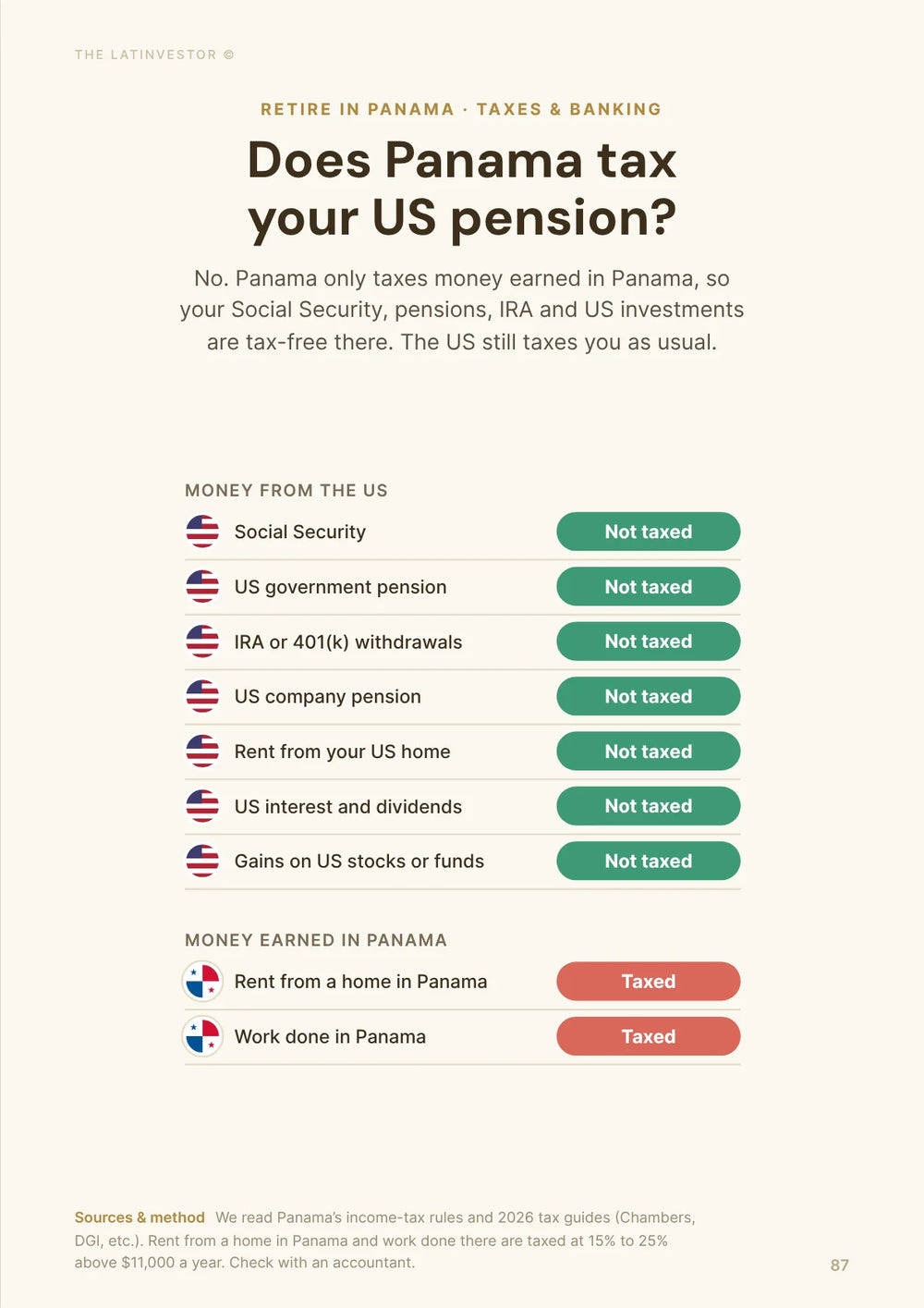
Panama’s territorial tax system can make retirement significantly cheaper for people living on foreign-source income, although their original country may still tax them.
Panama generally taxes income sourced inside Panama rather than automatically taxing residents on worldwide income.
Current individual income-tax rates remain 0% on taxable Panamanian income up to $11,000, 15% from $11,000 to $50,000 and 25% above that level.
For a retiree receiving qualifying pension or investment income from abroad, Panama itself may therefore take relatively little income tax.
The catch depends on nationality and previous tax residence.
US citizens generally remain subject to US federal tax rules while living abroad. Other countries have their own residency, departure-tax and pension rules.
For some retirees, Panama’s tax structure creates a major advantage. For others, their home-country tax bill follows them. We would calculate that separately instead of assuming that moving to Panama automatically makes retirement income tax-free.
Does using the US dollar make retirement in Panama easier?
Panama’s dollar-based economy makes retirement planning much easier for people whose pension and investments are already in US dollars.
The balboa trades at one-to-one parity with the dollar, and US banknotes are used throughout Panama.
A US retiree therefore avoids the exchange-rate problem that appears in many overseas retirement destinations.
Consider someone receiving a fixed $3,000 pension while living in a country whose currency gains 20% against the dollar. Local expenses suddenly become much more expensive in dollar terms even before domestic inflation changes.
Panama largely removes that risk for dollar-funded retirees.
Someone receiving euros, pounds or Canadian dollars still faces currency movements against the US dollar, of course.
Dollarization does not freeze prices either. Rent, medical insurance and food can still become more expensive over a 20- or 30-year retirement. It simply removes one large source of unpredictability from the calculation. Panama's inflation was 2.8% over the year to September 2026, according to INEC.
How much investment capital do you need to retire in Panama with no pension?
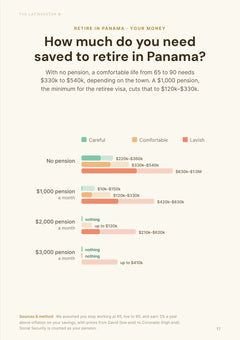
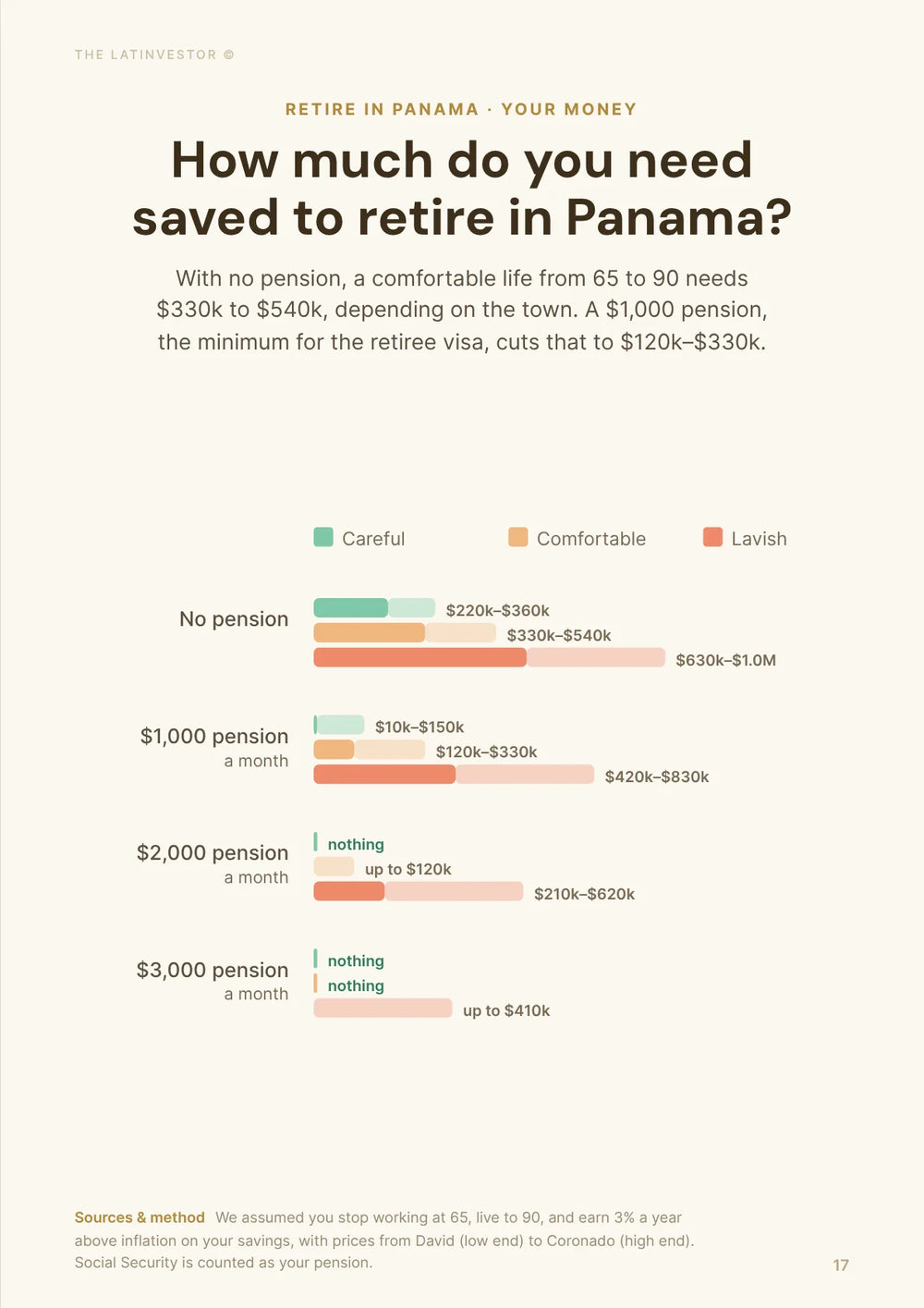
Someone relying entirely on investments currently needs roughly $615,000 to fund a $2,000 monthly Panama lifestyle, $769,000 for $2,500 and $923,000 for $3,000 under Morningstar’s 3.9% base case.
Morningstar’s latest retirement-income research still puts 3.9% at the center of its fixed, inflation-adjusted withdrawal analysis for a 30-year retirement and a 90% success target.
That means every $100,000 of portfolio supports roughly $3,900 of first-year spending under that framework.
A retiree spending $24,000 a year therefore needs about $615,000. At $36,000 a year, the calculation rises to roughly $923,000.
Morningstar also points out that retirees willing to reduce spending after bad market years can potentially start higher than 3.9%. For a simple long-term benchmark, though, 3.9% gives us a useful conservative comparison across Panama lifestyles.
A person with no pension should therefore be careful with claims that Panama makes retirement possible with $200,000 or $300,000. Those numbers can work when spending is extremely low, retirement is shorter, property is already owned or other income exists.
For an investment-funded retirement lasting several decades, the numbers are usually much larger.
| Monthly spending | Annual spending | Portfolio at 3.9% |
|---|---|---|
| $1,500 | $18,000 | ~$462,000 |
| $2,000 | $24,000 | ~$615,000 |
| $2,500 | $30,000 | ~$769,000 |
| $3,000 | $36,000 | ~$923,000 |
| $3,500 | $42,000 | ~$1.08M |
| $4,000 | $48,000 | ~$1.23M |
| $5,000 | $60,000 | ~$1.54M |
How much do you need to retire in Panama if you already get Social Security or a pension?
A reliable $2,000-$3,000 monthly pension can reduce the investment portfolio needed for Panama retirement by hundreds of thousands of dollars.
Suppose a retiree wants to spend $2,500 a month and receives $2,000 from Social Security or another lifelong pension.
The portfolio has to produce $500 a month, or $6,000 a year.
At 3.9%, that gap corresponds to about $154,000 of investments.
Without the pension, the same $2,500 lifestyle would require roughly $769,000. Guaranteed income has reduced the portfolio requirement by more than $600,000.
At a $3,000 monthly lifestyle with a $2,000 pension, roughly $308,000 covers the $1,000 monthly gap under the same calculation.
This is probably the most important distinction in the entire Panama retirement debate. Net worth by itself tells us surprisingly little.
Someone with $300,000 invested and a strong lifetime pension can be in a far safer position than someone with $600,000 and no guaranteed income at all.
| Monthly spending | Guaranteed income | Monthly gap | Portfolio for gap at 3.9% |
|---|---|---|---|
| $2,000 | $1,500 | $500 | ~$154,000 |
| $2,500 | $1,500 | $1,000 | ~$308,000 |
| $2,500 | $2,000 | $500 | ~$154,000 |
| $3,000 | $1,500 | $1,500 | ~$462,000 |
| $3,000 | $2,000 | $1,000 | ~$308,000 |
| $4,000 | $2,000 | $2,000 | ~$615,000 |
How much emergency cash should you keep when retiring in Panama?
A retiree moving to Panama should keep at least several months of spending liquid, and a full year of expenses is a reasonable target for anyone relying heavily on investments.
Moving abroad creates irregular bills that a normal monthly budget hides.
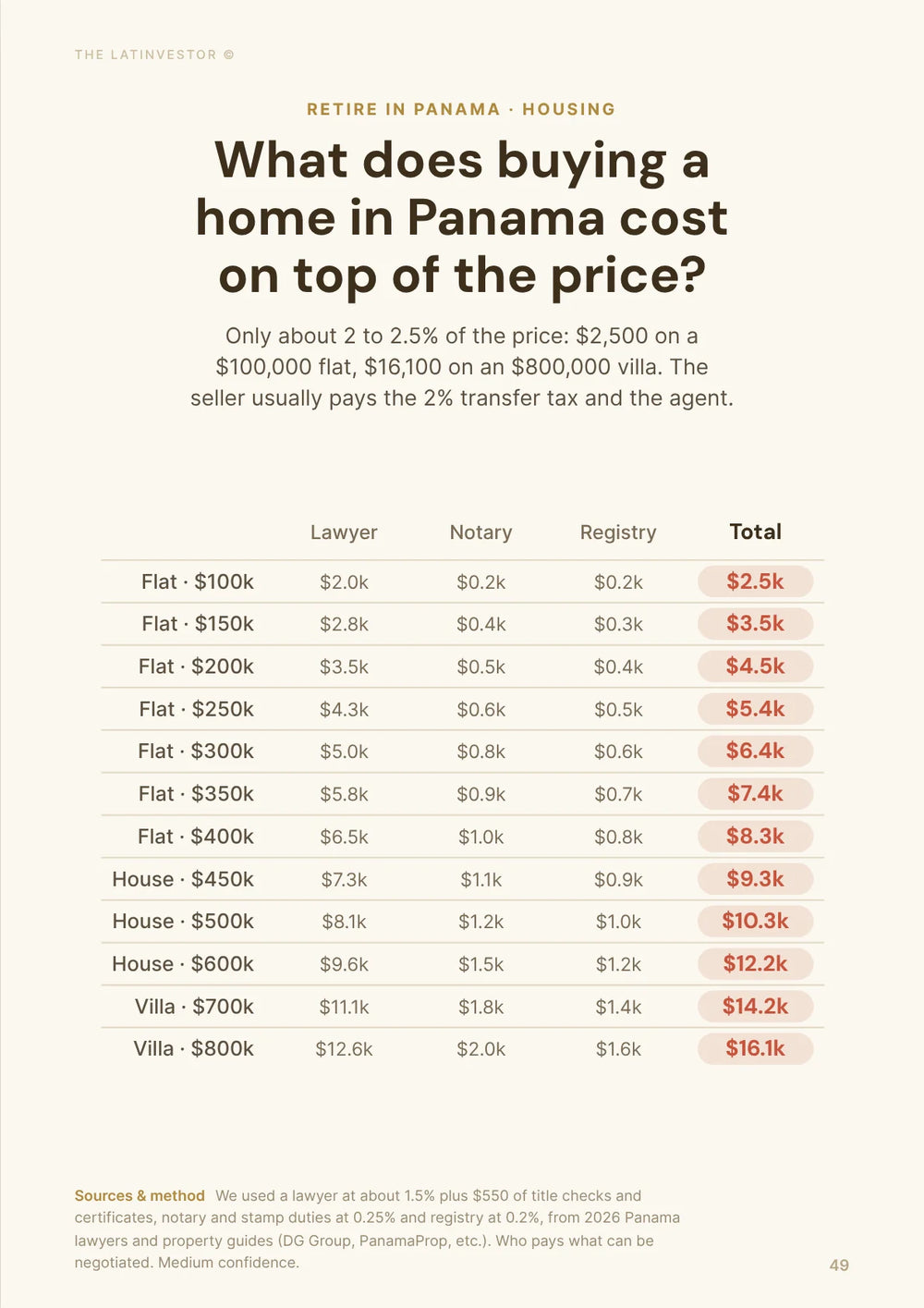
Rental deposits, lawyers, immigration paperwork, furniture, flights, cars, medical deductibles and emergency travel can all arrive close together.
For someone spending $2,500 a month, six months of expenses equals $15,000 and twelve months equals $30,000. At $3,500 a month, the same range becomes $21,000-$42,000.
Healthcare makes liquidity especially useful. Insurance can have deductibles, exclusions, waiting periods or reimbursement delays, while self-insured retirees need enough cash to pay private hospitals directly.
Morningstar’s current retirement research also emphasizes the danger of bad market returns early in retirement. Keeping cash available can reduce the need to sell investments during a sharp downturn simply to pay normal bills.
We would keep emergency reserves separate from the portfolio number used in the 3.9% calculation.
What does a genuinely comfortable retirement in Panama cost now?
A genuinely comfortable Panama retirement currently costs about $2,500-$3,500 a month for one person and roughly $3,000-$4,500 for a couple in most locations.
At that level, a retiree can usually afford decent housing, private healthcare, regular restaurants, air conditioning when needed, taxis or a modest car budget, hobbies, occasional travel and the inevitable expensive month.
Below $2,000, Panama can still work for one person. Housing becomes much more important, and David or another lower-cost area makes the calculation easier than Panama City.
Around $2,500-$3,000, a single retiree has far fewer daily compromises in Boquete and most communities outside central Panama City.
At $4,000 or more, one person can live very comfortably in much of the country. Premium Panama City housing, frequent international flights and expensive medical insurance can still push spending higher.
For couples, roughly $3,500 is the planning number we find most useful. It sits well above survival budgeting while remaining far below what many couples spend in major US cities.
So how much money do you really need to retire in Panama?
Most people planning to retire in Panama today should target roughly $2,000-$2,500 a month for a careful single-person lifestyle, $2,500-$3,500 for a comfortable one, and around $3,000-$4,500 for a comfortable couple.
The savings target then depends on guaranteed income.
A retiree receiving $2,000 a month and spending $2,500 has only a $500 monthly shortfall. Morningstar’s current 3.9% base-case withdrawal rate puts the portfolio needed to cover that gap at about $154,000, before emergency reserves.
With no pension, financing the same $2,500 lifestyle requires roughly $769,000. A $3,000 monthly lifestyle takes the figure to about $923,000. At $4,000, it moves above $1.2 million.
Location can change those requirements by close to $200,000 through housing alone. Healthcare can add another six-figure capital requirement for older retirees carrying expensive international insurance.
That leaves us with a fairly clear answer.
Someone receiving a dependable $2,000-$3,000 monthly pension, holding perhaps $150,000-$300,000 of additional investments and keeping a separate cash reserve can be in a strong position to retire in Panama.
Someone with little or no guaranteed income should think closer to $600,000-$900,000 for a moderate investment-funded retirement. Around $1 million or more gives much more flexibility for better housing, travel and rising medical costs.
Panama still offers retirees a wide range of price points. David can support a relatively lean lifestyle, Boquete sits in the middle, and Panama City can cost several thousand dollars more each year.
That flexibility is currently Panama’s biggest financial advantage for retirees. The country lets someone adjust housing, location and lifestyle enough to move the required retirement capital by hundreds of thousands of dollars.
Our methodology
We approached the question “How much money do you need to retire in Panama?” by separating the variables that actually change the answer instead of relying on one cost-of-living average or the Pensionado visa minimum. We looked at housing and location, everyday spending, healthcare, renting versus owning, guaranteed retirement income, taxation, retiree benefits and the amount of spending that ultimately has to be funded from investments.
Legal thresholds were treated as legal thresholds, not as lifestyle budgets. Panama’s National Migration Service was used for the Pensionado pension requirements, including the $1,000 monthly minimum, the reduced $750 threshold tied to qualifying property ownership and the additional financial-capacity requirement for dependents.
For retiree benefits, we relied on Panama’s Law 6 framework and ACODECO guidance and enforcement data. Those sources were used to distinguish statutory discounts on restaurants, medicines, medical services, hospitals, flights, entertainment and electricity from the larger expenses that remain largely unaffected, such as rent and normal supermarket spending.
Tax assumptions were kept separate from living costs. Panama’s General Directorate of Revenue was used for property-tax bands, individual income-tax brackets and the treatment of foreign-source income, while Ministry of Economy and Finance material was used to confirm the territorial-tax framework.
We normalized recurring costs into monthly or annual figures so that location and lifestyle differences could be compared on the same basis. Housing differences between Panama City, Boquete and David were then translated into equivalent annual spending and, where useful, into the amount of portfolio capital needed to support that spending.
For investment-funded retirement, we used Morningstar’s current 3.9% base-case starting withdrawal rate for a 30-year retirement with inflation-adjusted spending and a 90% success target. We applied the same rate consistently across the examples rather than changing the assumption from one scenario to another. The framework is used as a planning benchmark, not as a personalized withdrawal rule.
Healthcare was kept as a wide range because age, coverage, deductible, medical history and geographic scope can move the cost substantially. Rents come from Numbeo (October 2026) and current Encuentra24 listings. We last checked the figures in October 2026. We also kept emergency cash outside the portfolio figures used in the 3.9% calculations so that short-term liquidity and long-term income generation were not mixed together.
Key sources used for this analysis include Panama’s National Migration Service on Pensionado requirements, Panama’s Official Gazette text of Law 6, ACODECO’s Law 6 manual, ACODECO’s current retiree-benefit guidance, ACODECO’s 2026 enforcement data, Panama DGI property-tax guidance, Panama DGI individual income-tax guidance, Panama DGI instructions on foreign-source income, ASEP electricity tariffs, INEC consumer-price data, INEC housing and rental-payment census tables, Morningstar’s withdrawal-rate research, Morningstar’s State of Retirement Income research, Panama’s Superintendency of Banks on the dollarized monetary system, the IRS on US citizens living abroad, the US Social Security Administration on overseas payments, and the US Department of State on healthcare and payment practices in Panama.