Summary
Yes. Foreigners can buy homes, condos and land in Mexico, and they do it at scale: the SRE handled 7,849 direct foreign purchases outside the restricted zone and 6,817 new beach-and-border trusts in 2024.
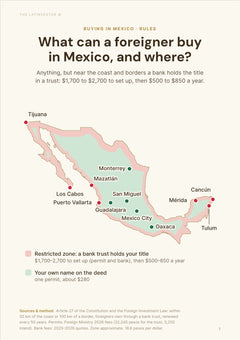
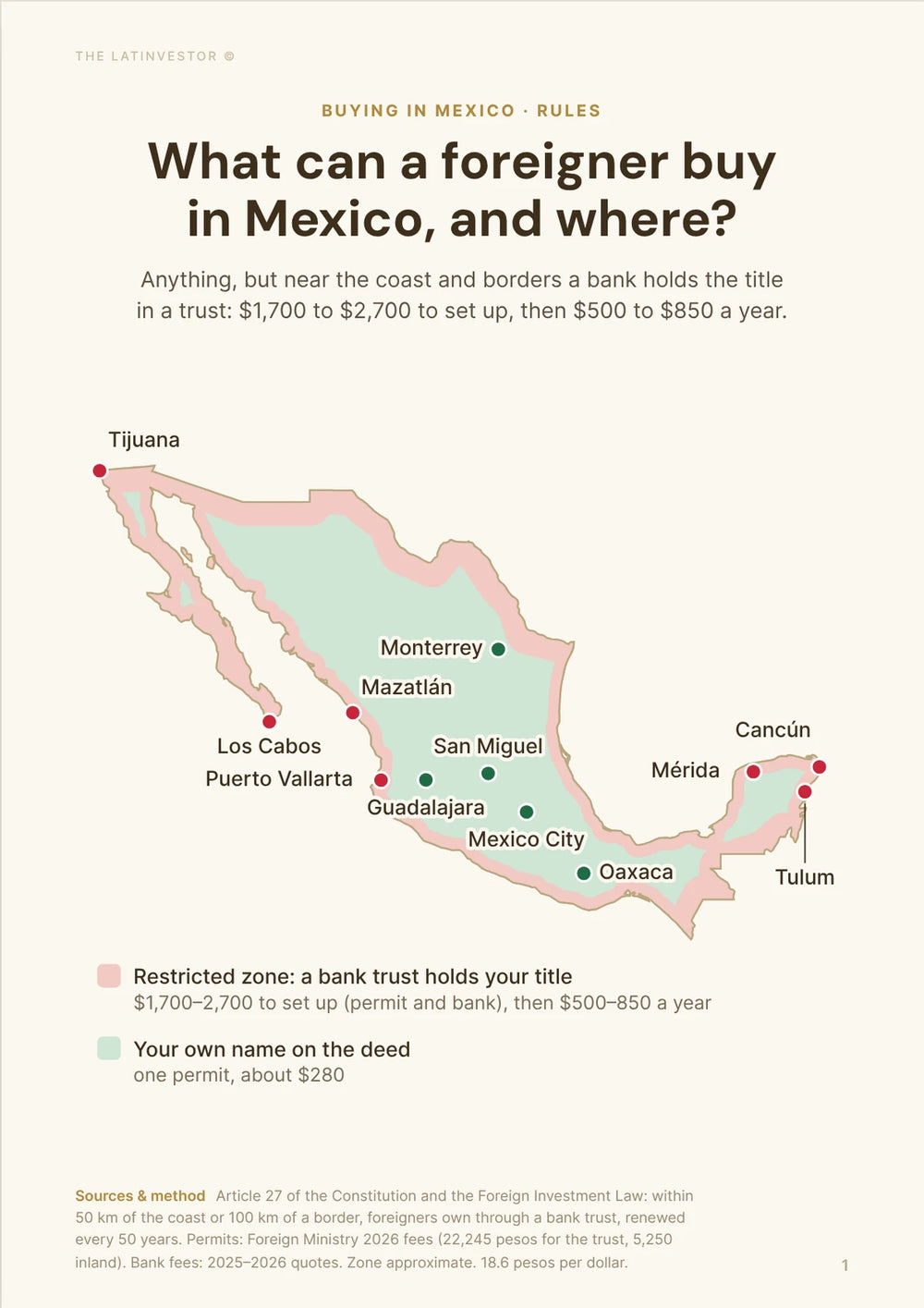
The rule that matters is distance. Within 50 km of a coast or 100 km of a border, a foreign individual can't hold the deed directly and uses a bank trust, the fideicomiso. Everywhere else, the deed goes in your own name.
That's why Cancún, Tulum, Puerto Vallarta, Los Cabos and almost all of Baja run on trusts, while Mexico City, Guadalajara or San Miguel de Allende are owned directly.
If the location is borderline, the SRE can ask INEGI to check the exact coordinates, which takes about 20 business days.
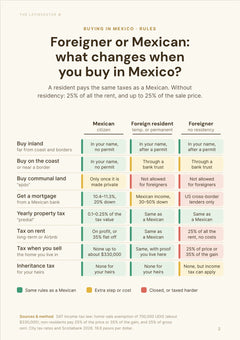
Inland, the paperwork is a one-off SRE agreement that costs MXN 5,250 (about USD 282) in 2026, then a normal notary deed.
In a trust, the bank holds title but you keep the use, the rent, the resale value and the right to name heirs. The trust lasts 50 years and can be extended for MXN 595 plus MXN 9,740 if you apply on time.
Trusts are routine, not a loophole: the SRE issued 33,036 new trust permits between 2020 and 2024, with a peak of 8,336 in 2022.
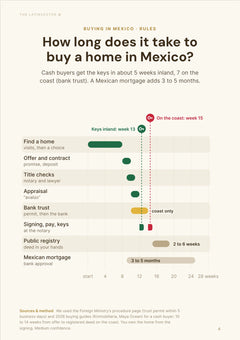
Don't plan on the beach rule disappearing. A reform passed the lower house in 2013 and has been stuck in the Senate since. The only 2026 change is speed: since June, the SRE has 3 business days instead of 5 to issue a trust permit.
The SRE trust permit costs MXN 21,650 (about USD 1,160). Bank fees come on top: roughly USD 550 to USD 800 to open the trust and USD 550 to USD 700 a year, according to a 2026 broker comparison.
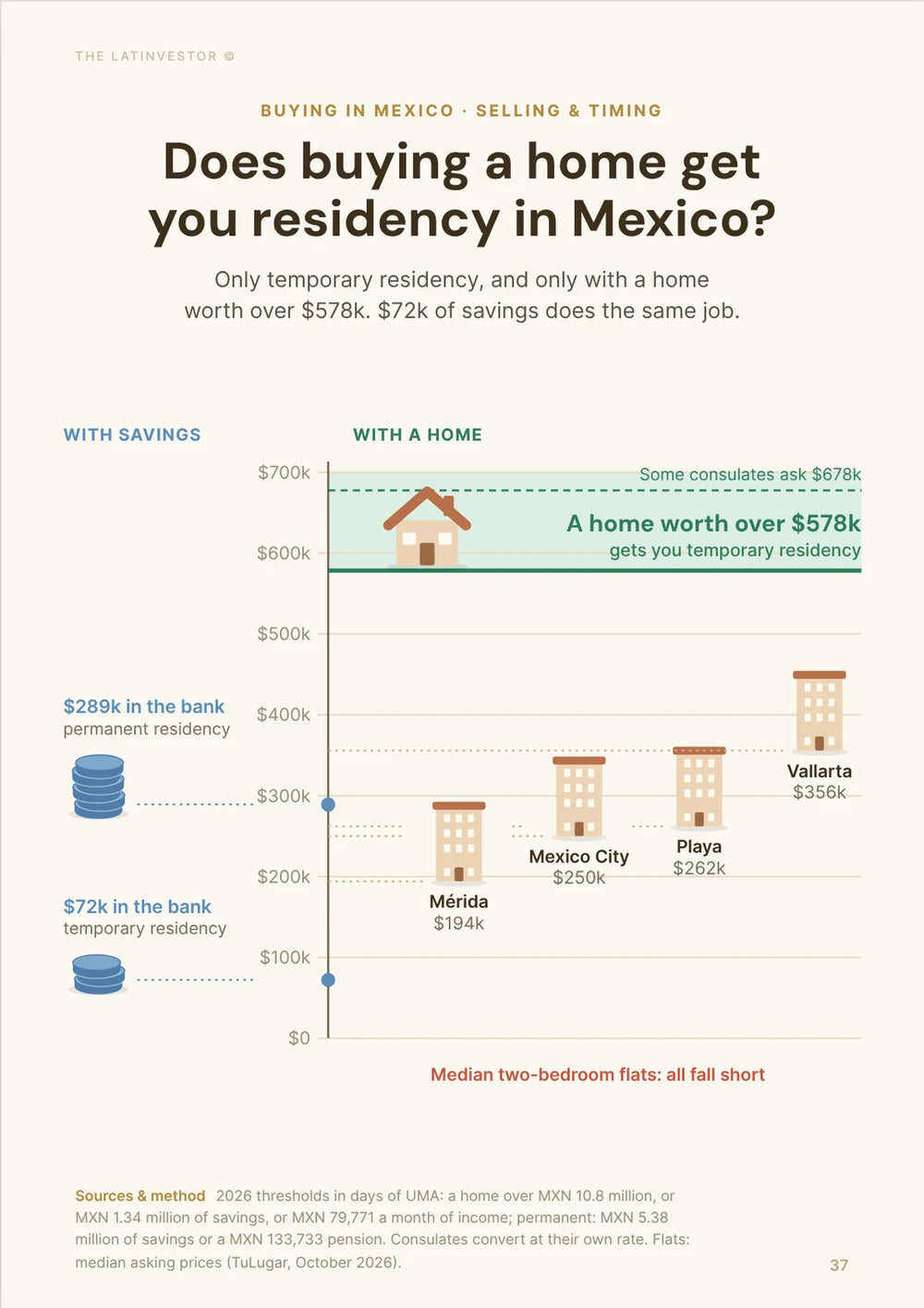
You don't need residency to buy. A property worth more than about MXN 10.76 million (about USD 578,000) can support a temporary-residency application, but the purchase doesn't give you residency by itself.
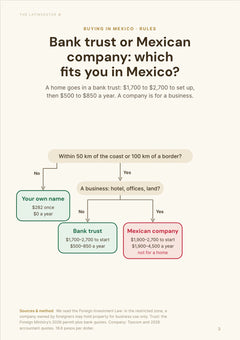
A Mexican company can own coastal property directly only for non-residential use, and must report it to the SRE within 60 business days. It isn't a way around the trust for a holiday home.
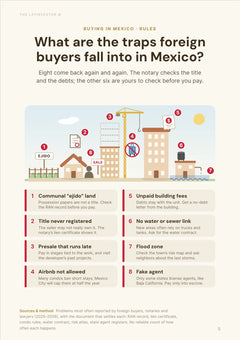
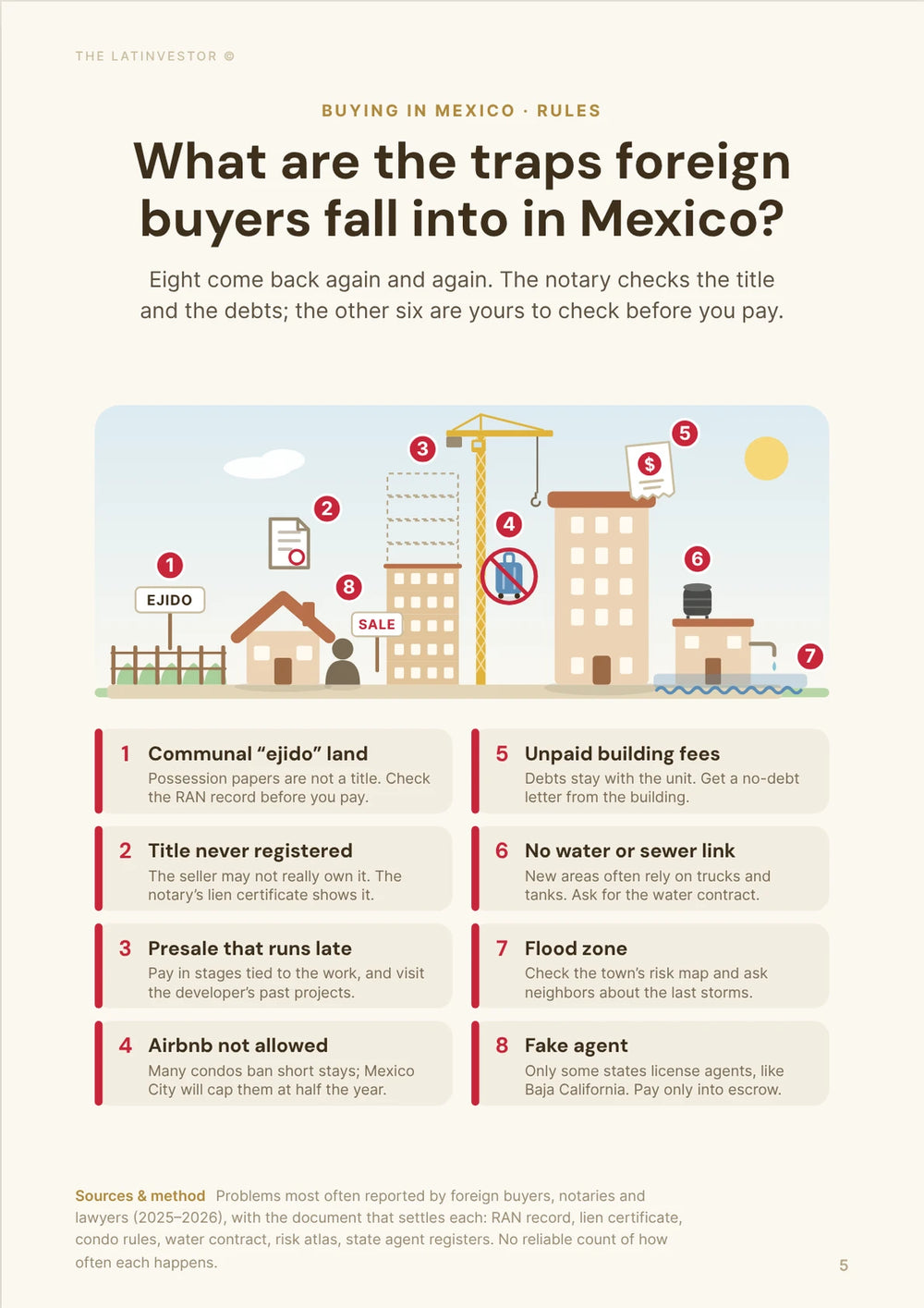
The real risks sit in the property, not your passport: unclear title, liens, ejido land and pre-sales. Quintana Roo's urban development ministry issued 116 alerts in 2025 about projects without the required permits.
So the answer is yes. Check how the property must be held, then spend most of your effort on the title, the permits and where your deposit goes.

Where can you own the deed yourself, and where do you need a trust?
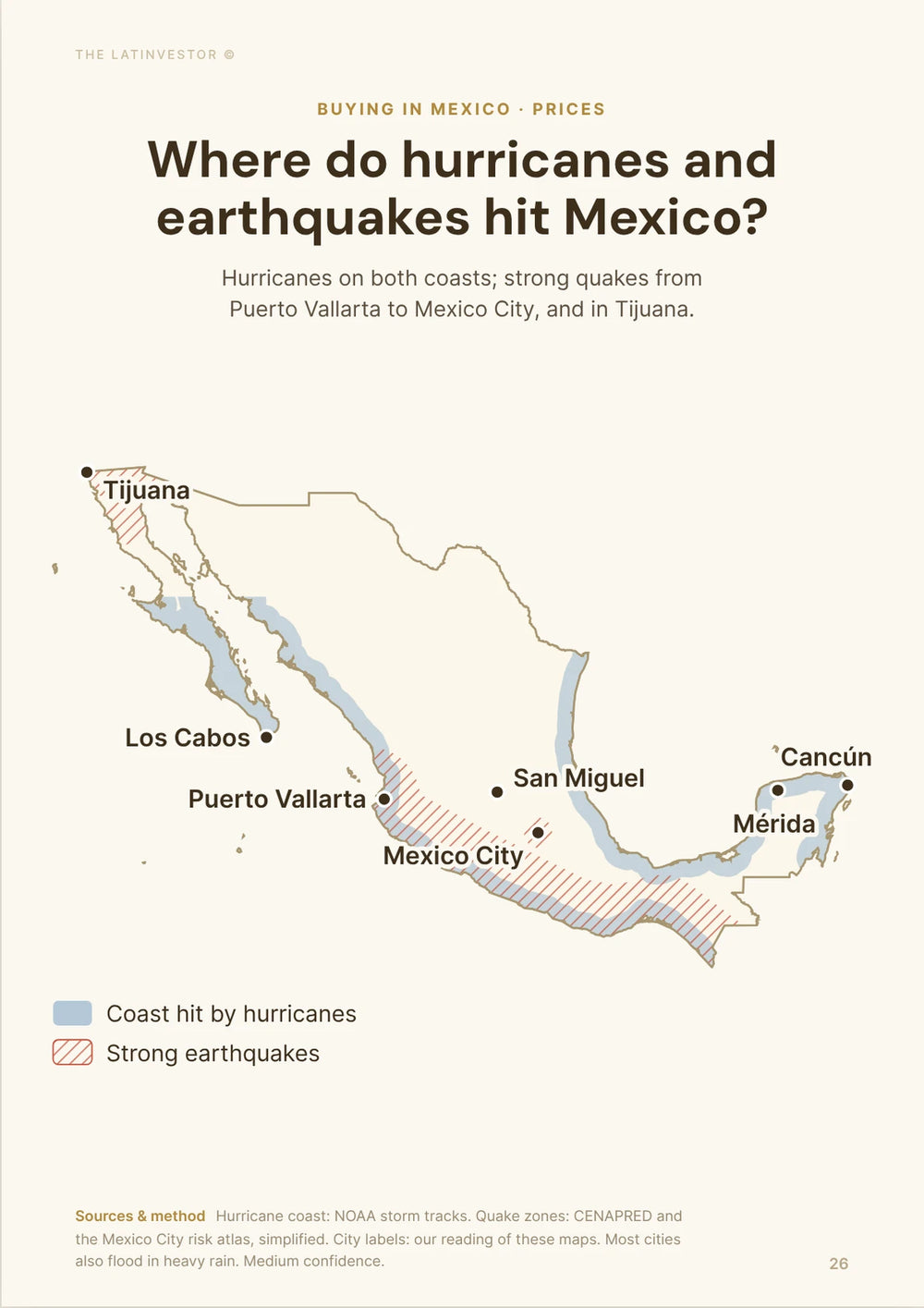
You can own the deed yourself anywhere more than 50 km from the coast and 100 km from a border; inside those limits, foreign individuals buy through a bank trust.
Article 27 of Mexico’s Constitution sets this up. It lets foreigners acquire Mexican real estate if they accept Mexican jurisdiction over that property. The restriction applies within 100 kilometers of an international border and 50 kilometers of the coastline, an area known as the zona restringida.
Outside that zone, a foreign individual can hold the property directly after completing the required process with Mexico’s Ministry of Foreign Affairs, or SRE. Inside the zone, a foreigner buying residential property normally uses a fideicomiso, a trust in which a Mexican bank holds title for the foreign beneficiary.
An audit of SRE activity found 7,849 applications involving foreign acquisitions outside the restricted zone in 2024, while the ministry authorized 6,817 new restricted-zone fideicomisos that year. Both systems handle thousands of foreign purchases a year.
| Where is the property? | Can a foreigner buy? | Normal structure | Who holds legal title? | Typical market |
|---|---|---|---|---|
| Outside the restricted zone | Yes | Direct ownership | Foreign buyer | Mexico City |
| Within 50 km of the coast | Yes | Fideicomiso for residential property | Mexican bank as trustee | Cancún |
| Within 100 km of a border | Yes | Fideicomiso for residential property | Mexican bank as trustee | Tijuana |
| Restricted zone, qualifying non-residential use | Yes | Mexican corporate ownership can be used | Mexican company | Commercial or hotel project |
Why do so many people think foreigners cannot own property in Mexico?
Foreigners can own Mexican property directly across most of the country; the confusion comes from the fact that many places foreigners want to buy are inside the restricted zone.
Mexico’s Constitution really does prevent foreigners from taking direct title to land within 50 kilometers of the coast or 100 kilometers of an international border. Someone researching Cancún, Tulum, Playa del Carmen, Puerto Vallarta, Los Cabos or almost anywhere in Baja California will therefore keep encountering fideicomisos.
The picture changes in the interior. Foreign buyers purchasing qualifying property in Mexico City, Guadalajara, San Miguel de Allende and many other inland markets can generally hold title directly once the federal requirements are satisfied.
Most English-language content about buying in Mexico is about the beach, so the exception gets more airtime than the rule.
Where exactly is Mexico’s restricted zone?
Mexico’s restricted zone covers land within 50 kilometers of a coastline and 100 kilometers of an international border, and foreign individuals cannot hold direct title to any land inside those limits. Only Mexican companies can, and only for non-residential use.
Those distances come directly from Article 27 of the Mexican Constitution. They apply according to the location of the individual property rather than simply according to its state or municipality.
The SRE still has a formal procedure for borderline cases. Its currently published guidance says that when there is doubt about whether a property sits inside the restricted zone, the ministry can consult INEGI using the property’s geographic or UTM coordinates. The SRE gives an approximate response time of 20 business days for that determination.
| Property location | Direct foreign title? | What normally happens |
|---|---|---|
| Less than 50 km from a coastline | No | Residential buyer uses a fideicomiso |
| Less than 100 km from an international border | No | Residential buyer uses a fideicomiso |
| Beyond both limits | Yes | Foreign buyer can hold direct title |
| Location is uncertain | Must be checked | SRE can request an INEGI determination |
Can foreigners directly own a house in Mexico outside the restricted zone?
Yes. Foreigners buying property outside Mexico’s restricted zone can hold the deed directly in their own name.
The process comes from Article 27 of the Constitution and Article 10-A of the Foreign Investment Law. The foreign buyer agrees to consider themselves Mexican with respect to the property and accepts Mexican jurisdiction if a dispute arises over it.
This provision is often called the Calvo clause. It does not change the buyer’s nationality. It simply means the buyer cannot ask their own government to intervene diplomatically over the property.
The SRE currently charges MXN 5,250 to receive, review and, where appropriate, approve this foreign-acquisition agreement. That fee is specifically listed in the ministry’s 2026 schedule.
Once the purchase has been formalized through the appropriate Mexican notary and entered in the relevant Public Registry of Property, the foreign buyer holds direct title.
For an inland purchase with clean title, this is routine. The SRE fee is about USD 282, and the notary handles the rest.
How does a fideicomiso work when a foreigner buys beachfront property in Mexico?
A Mexican fideicomiso gives a foreign buyer broad control over residential property in the restricted zone while an authorized Mexican bank holds the formal title as trustee.
The SRE authorizes the trust. The bank becomes the fiduciario, or trustee, and the foreign purchaser becomes the beneficiary.
The Foreign Investment Law gives that beneficiary the right to use and enjoy the property and to receive the economic benefits it produces. Mexican consular guidance also recognizes the beneficiary’s ability to transfer the rights and arrange for them to pass to successors.
So a foreigner buying a condo in Cancún or Puerto Vallarta can live in it, benefit from its value, transfer the beneficial rights and designate successor beneficiaries, subject to the trust terms and applicable Mexican law.
The important legal difference is the name appearing as holder of title. In an ordinary direct purchase, that is the foreign owner. With restricted-zone residential property, it is the trustee bank acting under the fideicomiso.
| Property right | Foreign fideicomiso beneficiary |
|---|---|
| Live in and use the property | Yes |
| Receive economic benefits | Yes |
| Transfer the beneficiary rights | Yes |
| Designate successor beneficiaries | Yes |
| Hold the land title personally | No |
| Bank holds title for its own economic benefit | No |
Does the Mexican bank control your house under a fideicomiso?
No. In a properly structured fideicomiso, the Mexican bank holds title as trustee while the foreign beneficiary keeps the main economic rights over the property.
A normal tenant cannot capture all of a property’s appreciation, transfer the owner’s interest to another buyer or designate who should succeed to that ownership interest. A fideicomiso beneficiary can transfer the beneficial rights and receive the value associated with them.
The bank still adds an administrative layer. The trustee has obligations under the trust, certain changes or transfers involve the bank, and buyers generally pay setup and recurring trustee fees.
That makes fideicomiso ownership more cumbersome than direct ownership, particularly for someone buying an inland home where no trust is needed.
But the bank does not get to treat the home as an ordinary asset of its own simply because its name appears on title. The trust exists for the beneficiary under the terms of the fideicomiso agreement.
Do foreigners lose their Mexican property after 50 years?
No. A Mexican fideicomiso can initially run for up to 50 years, and the Foreign Investment Law expressly allows its duration to be extended.
Article 13 of the Foreign Investment Law establishes the maximum 50-year term and then allows the interested party to request an extension. The SRE currently maintains a specific procedure for extending an existing fideicomiso and lists separate government fees for doing so.
The ministry’s current fee schedule charges MXN 595 for receiving and examining a timely extension request and MXN 9,740 for issuing the authorization. In dollars, that is about USD 32 plus USD 524. An overdue extension carries a higher charge, so put the expiry date in your calendar, and ask for it in writing when you buy an older trust.
The expiry date still needs to be managed, especially when older trusts have passed through several owners. But a buyer acquiring property through a fideicomiso today is not simply buying a right that automatically disappears after 50 years.
Is the fideicomiso just a loophole foreigners use to get around Mexican law?
No. The fideicomiso is written into Mexican federal law, administered by the SRE and used thousands of times every year.
According to the federal audit of SRE records, the ministry granted 33,036 permits for new restricted-zone fideicomisos between 2020 and 2024. New permits rose from 3,862 in 2020 to 8,336 in 2022 before easing to 7,324 in 2023 and 6,817 in 2024.
Activity surged after 2020, peaked in 2022 and remained well above the 2020 level afterward. Even the lower 2024 figure was 76% higher than in 2020.
The ministry also granted 1,216 permits to modify existing fideicomisos over the same five-year period, bringing total constitution and modification permits to 34,252.
As seen above, 2024 also brought 7,849 applications involving foreign acquisitions outside the restricted zone. Mexico is running two mature foreign-purchase systems in parallel, not occasionally making exceptions for overseas buyers.
| SRE fideicomiso permits | 2020 | 2021 | 2022 | 2023 | 2024 |
|---|---|---|---|---|---|
| New fideicomisos | 3,862 | 6,697 | 8,336 | 7,324 | 6,817 |
| Modifications | 49 | 182 | 307 | 386 | 292 |
| Total | 3,911 | 6,879 | 8,643 | 7,710 | 7,109 |
Is Mexico about to let foreigners own beachfront property directly?
No. In October 2026, the 50 km coastal and 100 km border rules are still in force, and no reform to remove them is moving.
The idea is old. In 2013, the Chamber of Deputies voted 356 to 119 to let foreigners hold direct title to homes in the restricted zone, but the amendment never cleared the Senate and the state legislatures. A May-June 2026 article from the American Bar Association still describes it as stuck in the Senate. If an agent tells you the trust will "soon be optional", treat it as a sales line.
What did change in 2026 is speed. An SRE simplification agreement, published in the federal gazette on June 16, 2026, cut the maximum review time for a new trust permit, a change of purpose or an extension from 5 to 3 business days. The fee didn't move: still MXN 21,650 for a new permit.
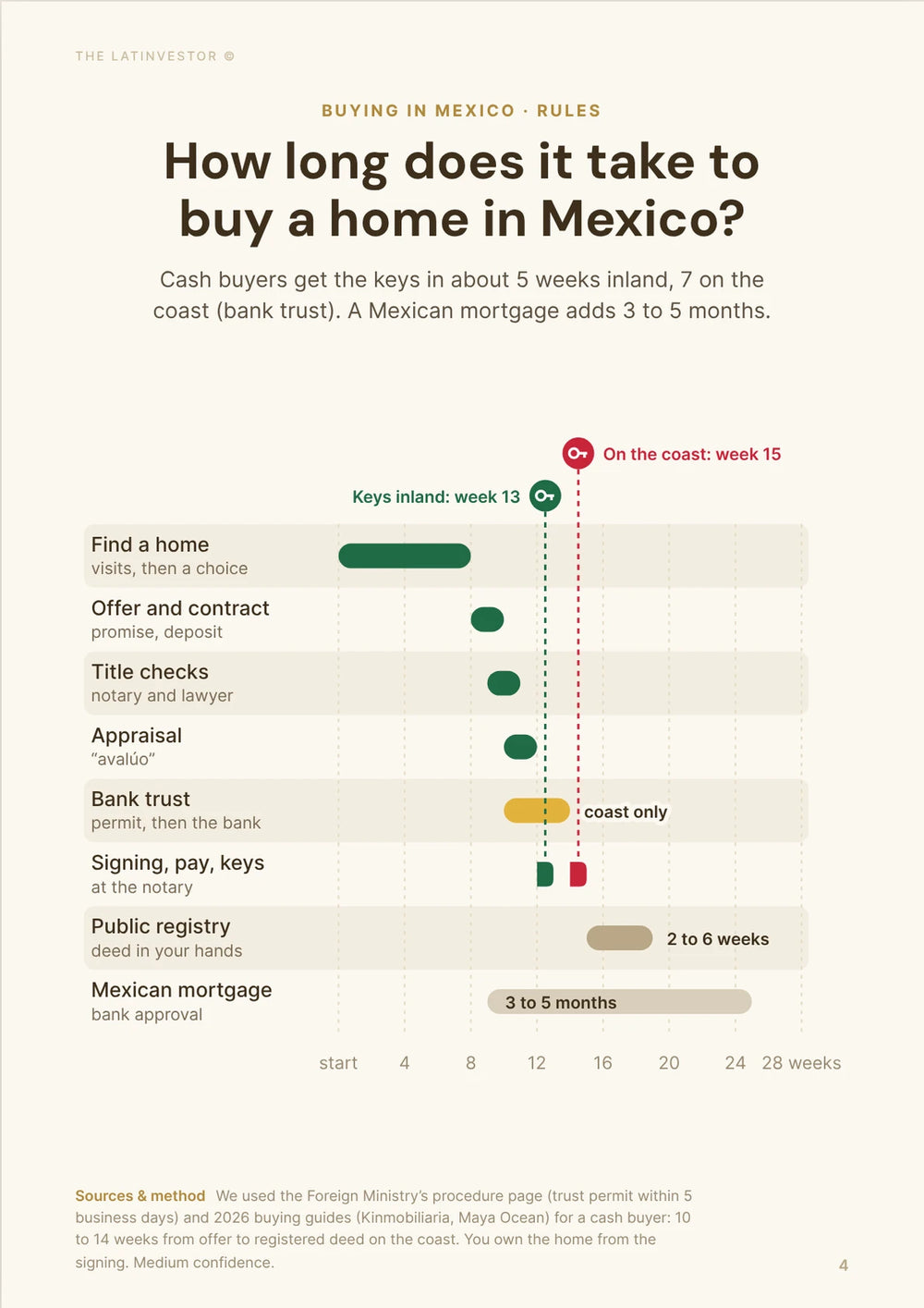
In practice, the permit is rarely what slows a closing anymore. The bank's own file review, the notary's checks and the seller's paperwork take longer. Ask the bank and the notary for a written timeline before you sign a promise-to-buy contract with a penalty date.
How much does a fideicomiso cost in 2026?
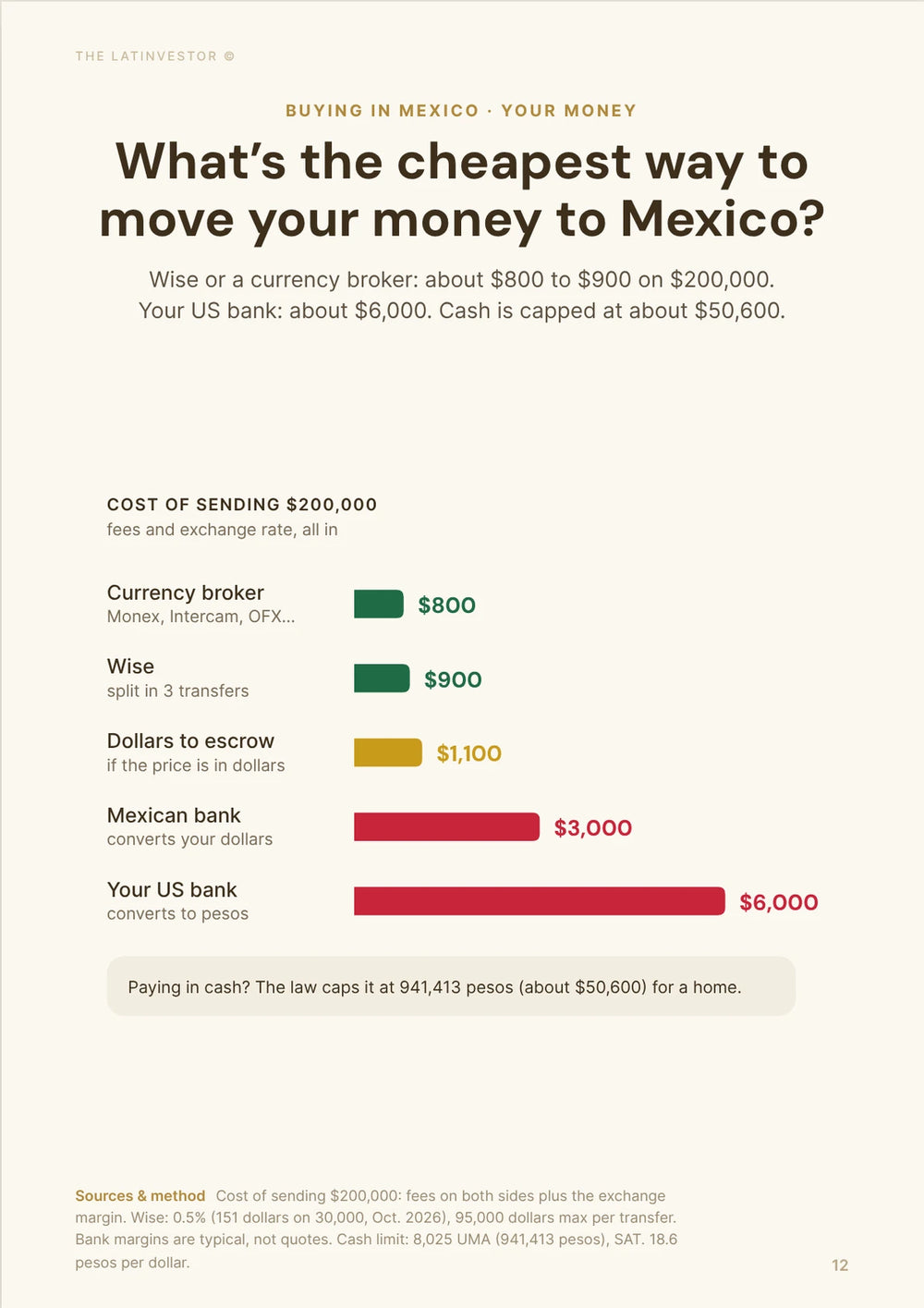
The SRE permit costs MXN 21,650 (about USD 1,160) in 2026, and the bank usually adds an opening fee of roughly USD 550 to USD 800 plus USD 550 to USD 700 a year.
Outside the restricted zone, the SRE charges MXN 5,250 (about USD 282) for the foreign-acquisition agreement. No bank is involved.
Inside the zone, the federal permit alone is a bit more than four times that. The bank fees are the bigger cost over time. A 2026 comparison published by the broker Homia lists opening fees of about USD 550 at Banorte, USD 600 at Banamex, USD 650 at BBVA, USD 700 at Scotiabank and USD 800 at HSBC, with annual fees in the USD 550 to USD 700 range. These are third-party figures, not bank tariffs, so get a written quote from two banks and negotiate: over 20 years, a USD 150 gap in the annual fee adds up to USD 3,000.
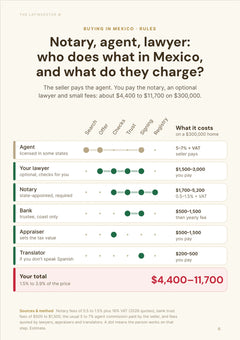
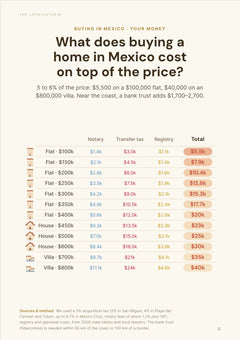
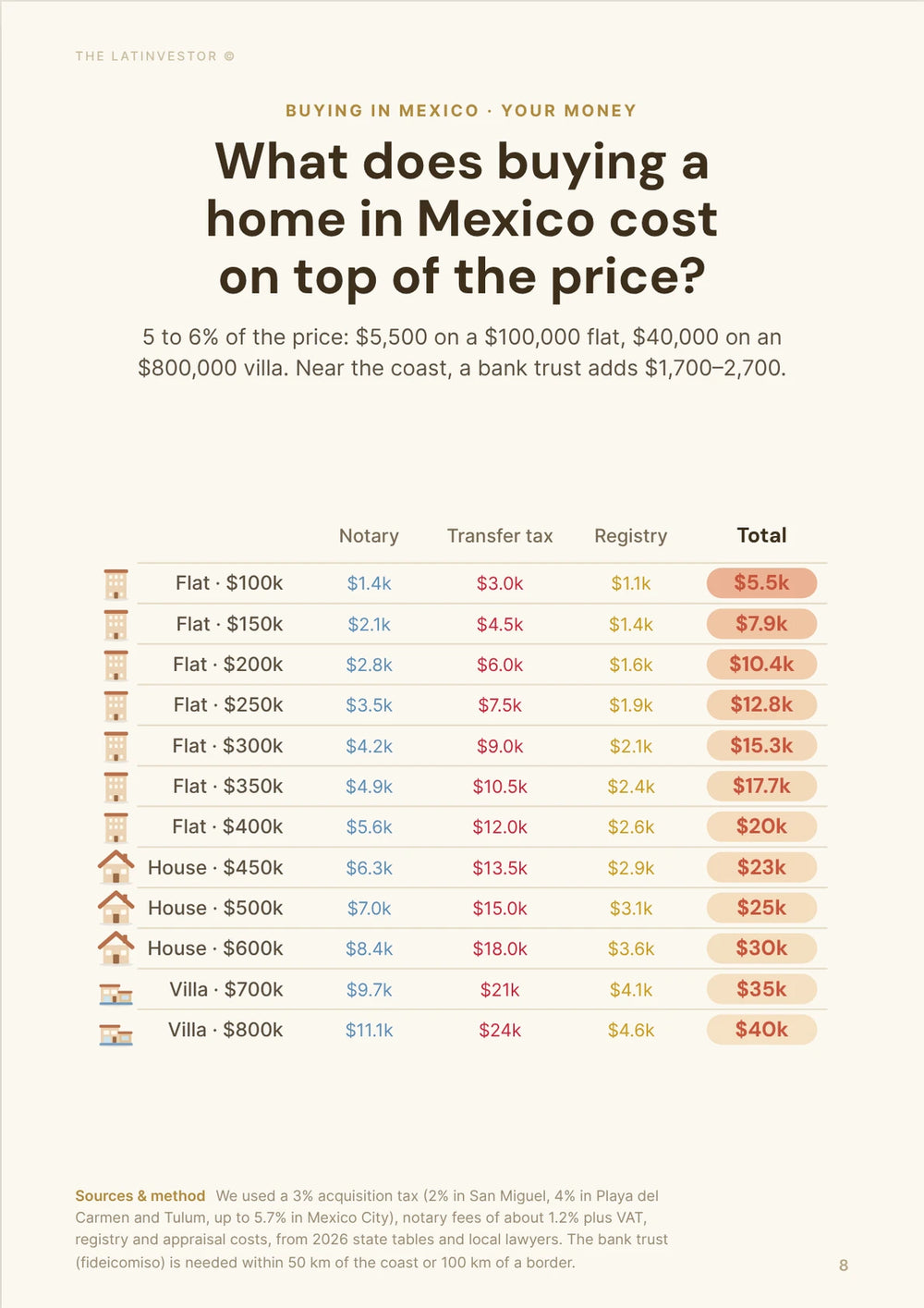
A Mexican property purchase can also involve acquisition tax, notarial fees, registration, certificates, appraisals and other local expenses. A fideicomiso normally adds a bank setup charge and recurring trustee fees as well. These vary a lot by state and price. As a rough planning figure, a 2026 Compass Abroad guide puts total buyer closing costs at 6% to 9% of the price, trust included where needed. Your notary can give you an exact estimate for a specific property.
| Current federal procedure | Government fee |
|---|---|
| Foreign acquisition outside restricted zone | MXN 5,250 |
| New restricted-zone fideicomiso permit | MXN 21,650 |
| Timely fideicomiso extension: review | MXN 595 |
| Timely fideicomiso extension: issuance | MXN 9,740 |
| Qualifying non-residential corporate acquisition notice | MXN 1,475 |
Do foreigners need Mexican residency to buy property?
No. A foreigner can buy property in Mexico without first becoming a temporary or permanent resident.
Property rights and immigration status are handled separately. Owning a house does not require someone to live permanently in Mexico, and a buyer does not need a Mexican residence card simply to complete a qualifying real-estate purchase.
Mexico allows sufficiently valuable real-estate ownership to support one route toward temporary residency. In 2026, consulates set the bar at a property worth more than 91,710 days of UMA, about MXN 10.76 million (about USD 578,000). Some quote it straight in dollars with their own conversion: the Las Vegas consulate lists USD 624,405. Check the figure with the consulate where you will apply, and make sure the value on your deed clears it. A deed written at a low value to save tax can cost you this route.
Even then, buying the property does not automatically produce residency. The owner must make a separate immigration application and meet the requirements for that category.
For someone buying a lower-priced condo or vacation home, the purchase may provide no immigration benefit at all.
Can foreigners use a Mexican company to buy coastal property directly?
Sometimes. A qualifying Mexican company with foreign investment can directly acquire restricted-zone property for non-residential activities, while residential property follows different rules.
Article 10 of the Foreign Investment Law makes that distinction explicit.
A Mexican company that allows foreign investment can acquire restricted-zone real estate directly when the property is used for non-residential purposes. The acquisition must then be reported to the SRE within 60 business days.
This can make sense for real commercial operations such as certain hotels, industrial sites or other business projects.
A foreign buyer purchasing a beach house or residential condo cannot assume that incorporating a Mexican company automatically removes the fideicomiso requirement. Residential use is treated separately under the law.
The practical question is what the property will legally be used for. A corporate structure designed for a genuine business and one created merely to hold a personal vacation home are not the same transaction.
What is the biggest legal risk when a foreigner buys property in Mexico?
For most foreign buyers, weak title due diligence is a bigger danger than the foreign-ownership restriction itself.
The nationality rules are relatively clear once we know where the property is located. Problems become harder when the seller’s ownership, liens, debts, registry records or land regime are unclear.
A normal purchase should eventually be formalized through a public deed and registered in the relevant Public Registry of Property. Mexican government guidance treats registration as a key part of giving the ownership rights legal effect against third parties.
Before reaching that point, the buyer needs to know whether the seller actually holds transferable title and whether the property carries mortgages, liens or unpaid obligations.
Mexican consular guidance specifically tells buyers to verify mortgages and outstanding property-tax and water payments. Depending on the property, we would also want the cadastral details, seller identity, condominium debts and chain of title checked.
This is where a seemingly simple bargain can become expensive. A correctly structured fideicomiso over clean private property is routine compared with a cheap property whose underlying ownership cannot be properly established.
| What needs checking? | What can go wrong? | Where the answer usually comes from |
|---|---|---|
| Registered ownership | Seller lacks transferable title | Public Registry |
| Mortgages and liens | Property is already encumbered | Registry certificates |
| Property tax | Unpaid obligations remain | Municipal records |
| Water charges | Outstanding local debts | Local authority/provider |
| Seller identity | Wrong person attempts transfer | Deed and identification |
| Land regime | Property may still be ejido land | Agrarian and property records |
Why should foreigners be especially careful with ejido land in Mexico?
Ejido land can expose a foreign buyer to far more serious ownership problems than an ordinary coastal fideicomiso.
Ejidos belong to Mexico’s social agrarian land system. Rights over an ejido parcel do not automatically equal ordinary private title that can freely be sold to any buyer.
That distinction matters in rural areas and in some fast-developing regions where land that looks commercially attractive may have an agrarian history.
Mexico’s National Agrarian Registry has a formal process through which qualifying parcels can adopt dominio pleno and move from social ownership into private ownership. Until the required steps have genuinely been completed, a buyer should not assume that possession, a private contract or assurances from local intermediaries provide the same protection as registered private title.
The word “ejido” should trigger deeper investigation immediately.
We would be considerably more comfortable with a standard fideicomiso over verified private beachfront property than with an informal arrangement involving land whose transition out of the ejido system remains incomplete.
Can foreigners sell or leave Mexican property to their children?
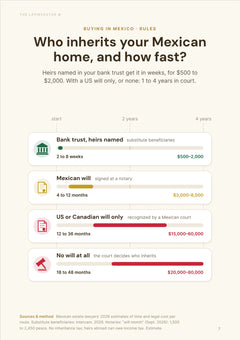
Yes. Foreign owners can sell Mexican property and arrange for it to pass to heirs or other successor beneficiaries.
For directly owned property outside the restricted zone, a foreign owner can sell through the normal Mexican conveyancing process, with the usual tax, notarial and registration requirements.
A fideicomiso works differently because the foreigner is transferring beneficial rights rather than personally transferring the land title.
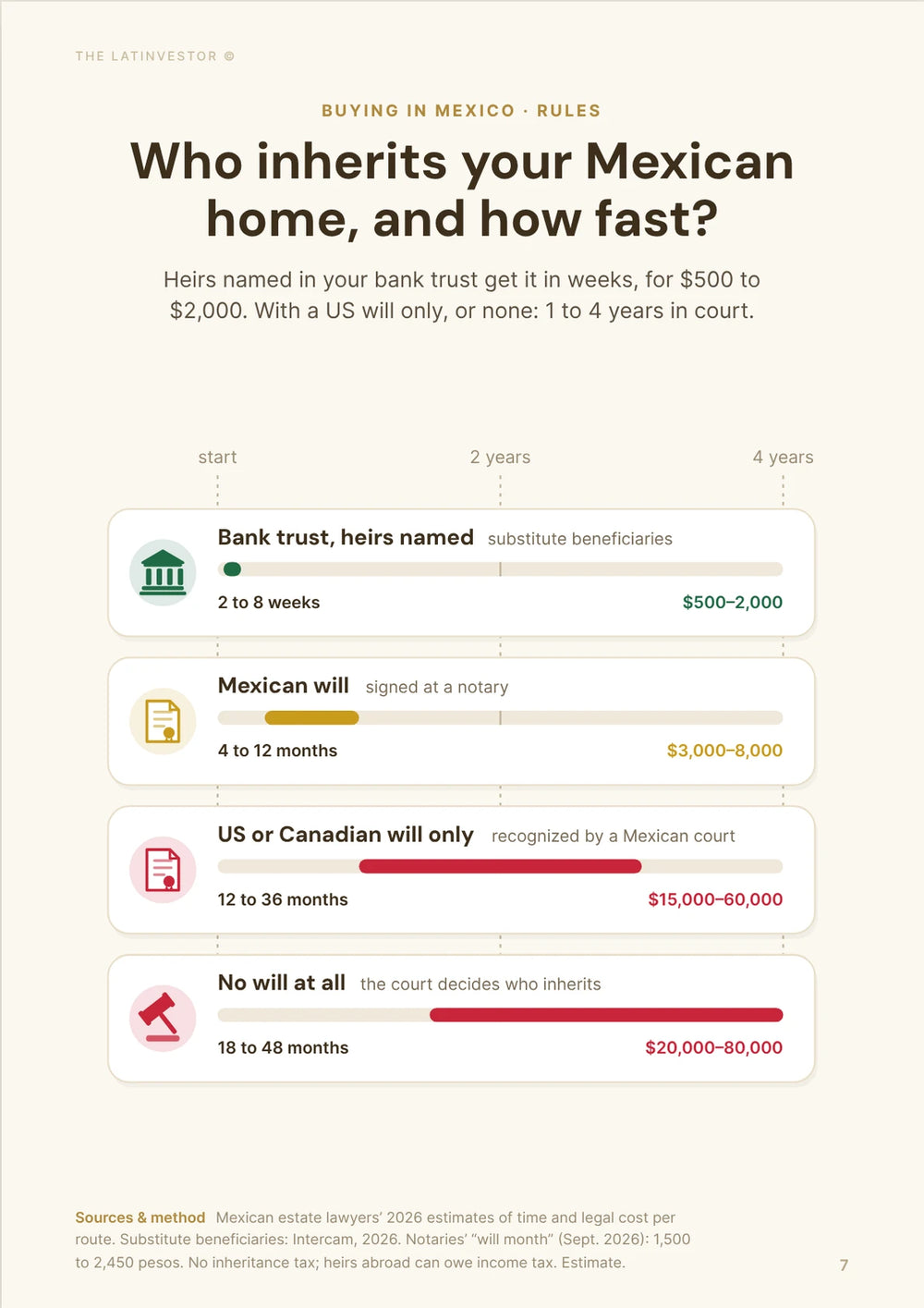
Mexican consular guidance confirms that those fideicomiso rights can be transferred and can pass through inheritance arrangements. The trust can also designate substitute or successor beneficiaries.
That can be particularly useful for estate planning because the succession instructions can already form part of the fideicomiso structure.
Transfers still require paperwork, and the trustee bank will normally be involved. The SRE also maintains procedures covering modifications and termination of restricted-zone trusts.
So a foreign buyer is not locked into coastal property indefinitely. The main inconvenience is the extra administrative layer whenever the beneficial ownership changes.
Does using a Mexican notary make the property purchase safe?
A Mexican notary is essential to a normal property purchase, but buyers still need their own due diligence.
The role of a notario público in Mexico is much more substantial than the role usually associated with a notary public in the United States or similar countries.
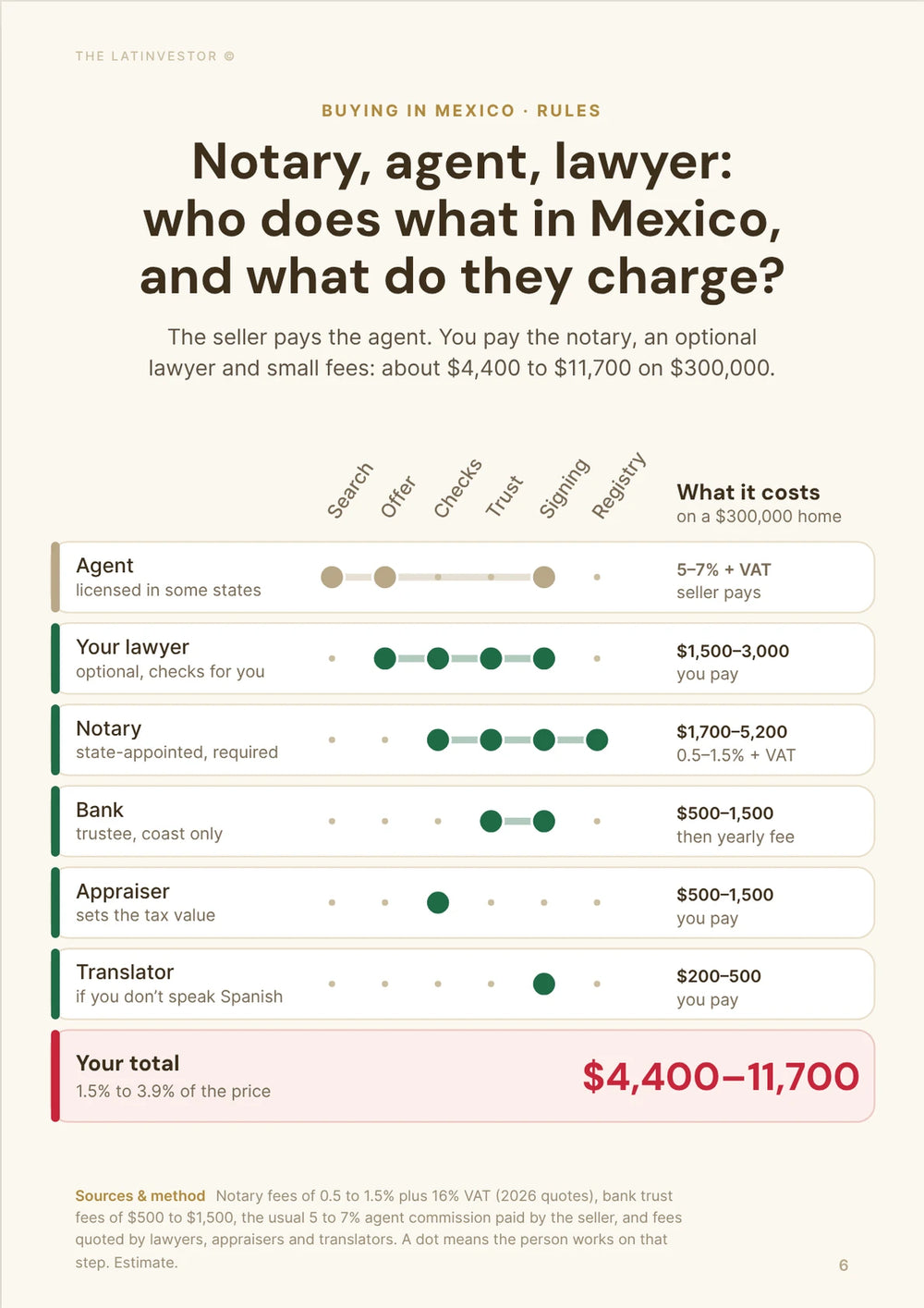
Mexican notaries are legally trained public officials who play a central role in formalizing real-estate transactions. The deed, taxes, legal formalities and registration process normally pass through the notary.
Still, a foreign buyer purchasing a complicated property should not assume that the presence of a notary answers every commercial and legal question. A notary’s institutional role is different from hiring a lawyer specifically to challenge the contract, investigate unusual risks or negotiate solely for the purchaser.
The difference becomes more important with pre-construction purchases, properties with an ejido history, unusual corporate structures, title inconsistencies or large investments.
For a clean resale apartment, the process may be routine. The more unusual the deal becomes, the less sensible it is to rely on a single layer of review.
Is buying pre-construction property in Mexico riskier for foreigners?
Yes. Foreigners can legally buy pre-construction property in Mexico, but the biggest risks come from the developer and the project rather than from the buyer’s nationality.
A future fideicomiso tells us how the finished property can eventually be held. It does not tell us whether the building will actually be delivered on time, whether the developer is financially strong, or whether the final unit will match what was promised.
With a completed resale property, we can inspect the building, examine an existing title and investigate many obligations before committing.
Pre-construction buyers are paying against something that still has to be built. That creates exposure to construction delays, developer failure, permit issues, contract weaknesses and changes to the finished product.
The payment schedule deserves just as much scrutiny as the future ownership structure. If large deposits are being paid long before the final deed or fideicomiso exists, we need to understand exactly what protects that money and what happens if the project fails.
For a foreign buyer looking at a new coastal development, spending weeks worrying about the fideicomiso while barely reviewing the developer contract puts the attention in the wrong place.
Are pre-sale scams in the Riviera Maya getting worse?
Yes, enough that the state is publishing warnings: Quintana Roo's urban development ministry (Sedetus) issued 116 alerts in 2025 about real estate projects without the required permits.
The alerts covered Tulum, Puerto Morelos, Bacalar, Isla Mujeres, Benito Juárez (Cancún) and Othón P. Blanco. In April 2026, the local paper Por Esto described the usual pattern: a pre-sale of lots or units near Tulum, Puerto Morelos or Playa del Carmen, priced well below built property, with a MXN 10,000 to 50,000 deposit (about USD 538 to USD 2,690) taken against a simple receipt, then the sellers disappear.
What to do: look up the project on the Sedetus site before paying anything; ask for the land-use permit, the environmental impact authorization and the urbanization or construction license; check that the land is private property and not ejido; and never pay a deposit without a written contract that names the seller, the trust bank and what happens to your money if the project stops. A price that looks too good for an area with cenotes, roads and amenities usually is.
So what should a foreign buyer focus on?
On the property, not the passport: foreigners can buy in Mexico, and the idea that the law broadly blocks foreign ownership is wrong.
Across most of Mexico, foreigners can hold real estate directly after completing the federal requirements. Within 50 kilometers of a coast or 100 kilometers of an international border, residential buyers normally acquire the economic and beneficial rights through a bank fideicomiso because direct foreign title is constitutionally restricted.
The fideicomiso does add cost and paperwork. It also means a foreign buyer in Puerto Vallarta or Cancún holds the property differently from someone buying in Mexico City. Those differences are real and worth understanding before signing anything.
They haven’t stopped the system from becoming routine. Federal records show 33,036 new restricted-zone trust permits between 2020 and 2024, and since June 2026 the SRE has 3 business days to issue one.
Where we would be much more careful is the property itself: unclear title, ejido land, unpaid liens, pre-sales without permits or a seller whose rights haven’t been checked. Those problems can threaten the purchase much more directly than the buyer’s passport.
A foreigner can legally acquire meaningful, transferable and inheritable property rights in Mexico, including in the country’s major coastal markets. The location determines how those rights are held. Once that part is understood, the real work is making sure the property being bought is legally clean.
Our methodology
This article answers a simple question, whether foreigners can buy and hold property in Mexico, and the practical questions that follow: where a trust is needed, what it costs, how long the rights last, and where buyers actually get into trouble.
The rules come from the Mexican Constitution (Article 27), the Foreign Investment Law and the procedures and 2026 fee schedule published by the Ministry of Foreign Affairs (SRE). The change in permit deadlines comes from the SRE simplification agreement published in the federal gazette on June 16, 2026. Volumes of foreign purchases and trust permits come from the federal audit office’s review of SRE activity for 2020 to 2024.
Bank trust fees and total closing costs are not published by any official source in a comparable way. We used 2026 broker and adviser guides (Homia, Compass Abroad) and present them as estimates. The residency threshold comes from 2026 Mexican consulate requirement sheets. For risks, we relied on the Ley Agraria, the National Agrarian Registry, PROFECO, NOM-247-SE-2021, Quintana Roo’s Sedetus alerts and local press reports from 2025 and 2026.
We checked these figures in October 2026. Conversions use about 18.6 pesos per US dollar and 20.9 pesos per euro. Official fees are given to the peso.
Limits: bank fees vary by bank, property and negotiation, consulates apply their own calculation for residency, and the local press reports on pre-sale fraud describe patterns, not a national count. None of this replaces a review of the specific property by a notary and your own lawyer.
Key sources used for this analysis include: the Mexican Constitution, the Foreign Investment Law, SRE costs and processing times, SRE guidance for purchases outside the restricted zone, SRE guidance for restricted-zone trusts, the June 2026 SRE simplification agreement, the Auditoría Superior de la Federación’s 2024 SRE audit, the American Bar Association on the restricted zone (2026), Tropicasa on the 2013 lower-house vote, Homia’s 2026 fideicomiso cost comparison, Compass Abroad on notary and closing costs, the San Diego consulate’s property-based residency requirements, the Las Vegas consulate’s 2026 temporary-residency requirements, official consular property-acquisition guidance, the Ley Agraria, the National Agrarian Registry on dominio pleno, PROFECO on buyer rights, NOM-247-SE-2021, Ruptura 360 on Sedetus’s 116 alerts and Por Esto on pre-sale fraud (April 2026).