Summary
How much money do you need to retire in Honduras? About L 39,000 to L 64,500 ($1,450 to $2,400) a month for a comfortable life on the mainland, depending on the city, and L 67,200 to L 94,100 ($2,500 to $3,500) on Roatan. Add a 20% buffer on top.
The bare minimum is about L 24,200 to L 29,600 ($900 to $1,100) a month on the mainland, and at least L 48,400 ($1,800) on Roatan, where rent eats most of the budget.
At $2,000 a month, you live a comfortable middle-class life on the mainland. The average one-bedroom in central Tegucigalpa rents for L 12,141 ($450).
At $3,000, Roatan starts to feel manageable. At $10,000, you live in outright luxury, with premium West Bay rentals listed from $1,500 to $3,000 a month.
Prices rose 6.28% over the year to September 2026, so keep a buffer of about $290 to $480 a month on the mainland.
Luxury starts around $4,500 a month on the mainland and $7,000 on Roatan. Help is affordable: about L 9,400 ($350) a month for a full-time housekeeper.
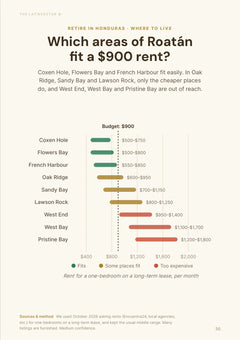
Rent depends mostly on where you live. On Roatan, a one-bedroom costs L 22,000 to L 29,000 ($820 to $1,080) and a two-bedroom L 34,000 to L 45,000 ($1,260 to $1,670), and West Bay is the priciest area.
Utilities run $120 to $220 a month on the mainland. On Roatan, electricity costs L 8.95 ($0.33) per kWh above 150 kWh a month, so AC gets expensive fast.
Food and transport cost about $380 to $770 a month for one person on the mainland, and more on Roatan.
Home prices are hard to pin down: a 70 m² apartment in Tegucigalpa costs roughly $110,000 to $190,000, and West Bay beachfront condos list at $4,550 to $5,350 per m².
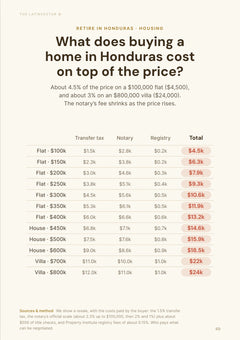
Most foreigners buy in cash. Buying costs about 4.5% of the price on a $100,000 home, and there is no reliable break-even point against renting.
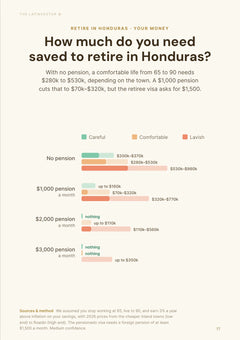
The Pensionado residence asks for a foreign pension of at least $1,500 a month, and the Rentista residence $2,500 of passive income. A 2026 exceptional route can accept half these amounts, case by case.
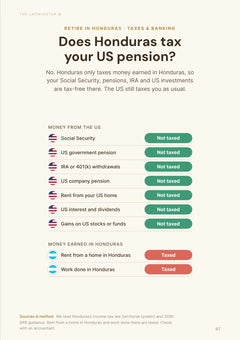
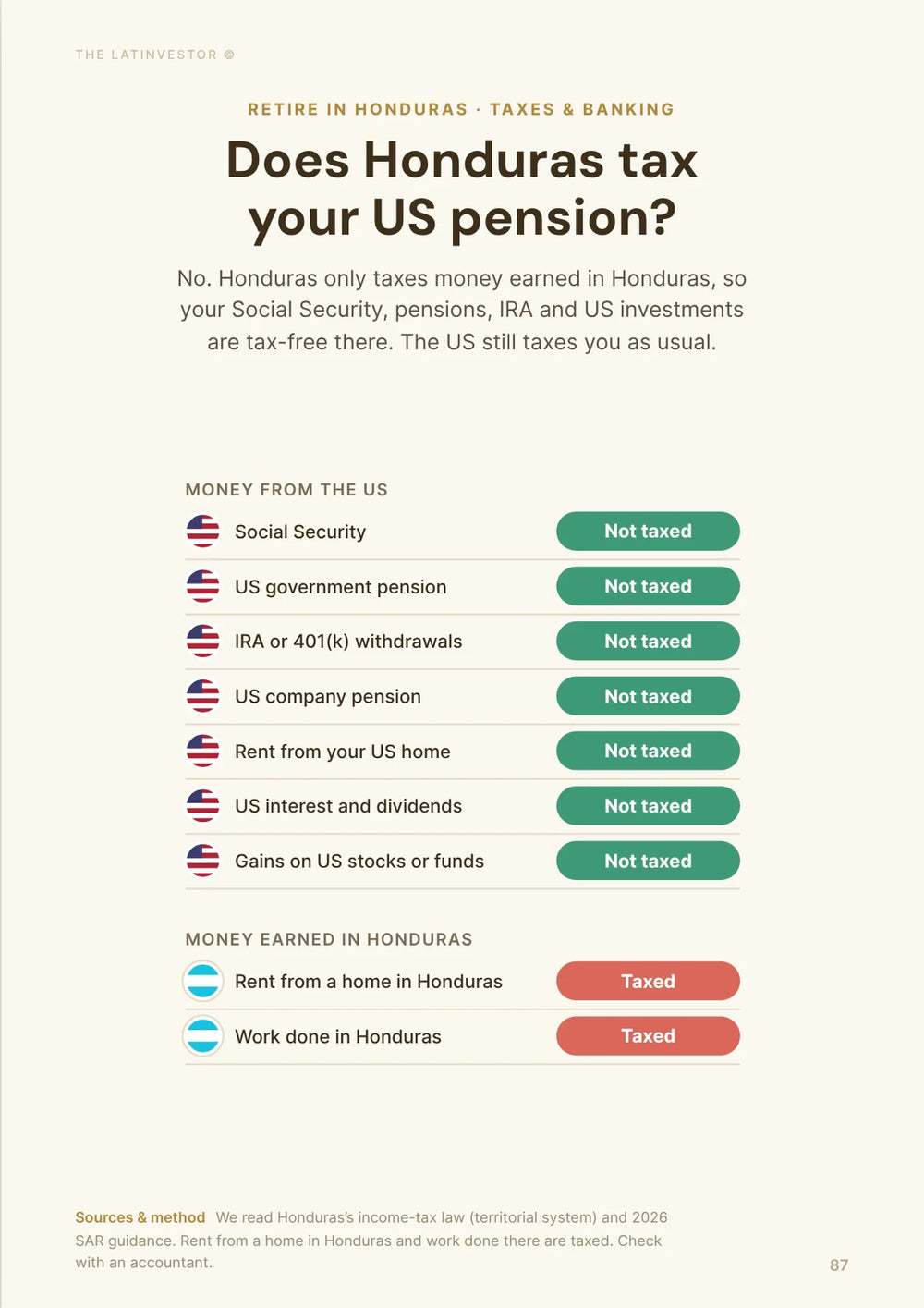
Taxes are light: Honduras only taxes income earned in Honduras, so foreign pensions and US Social Security are not taxed there, and property tax is at most 0.35% a year.
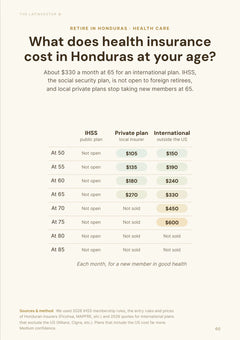
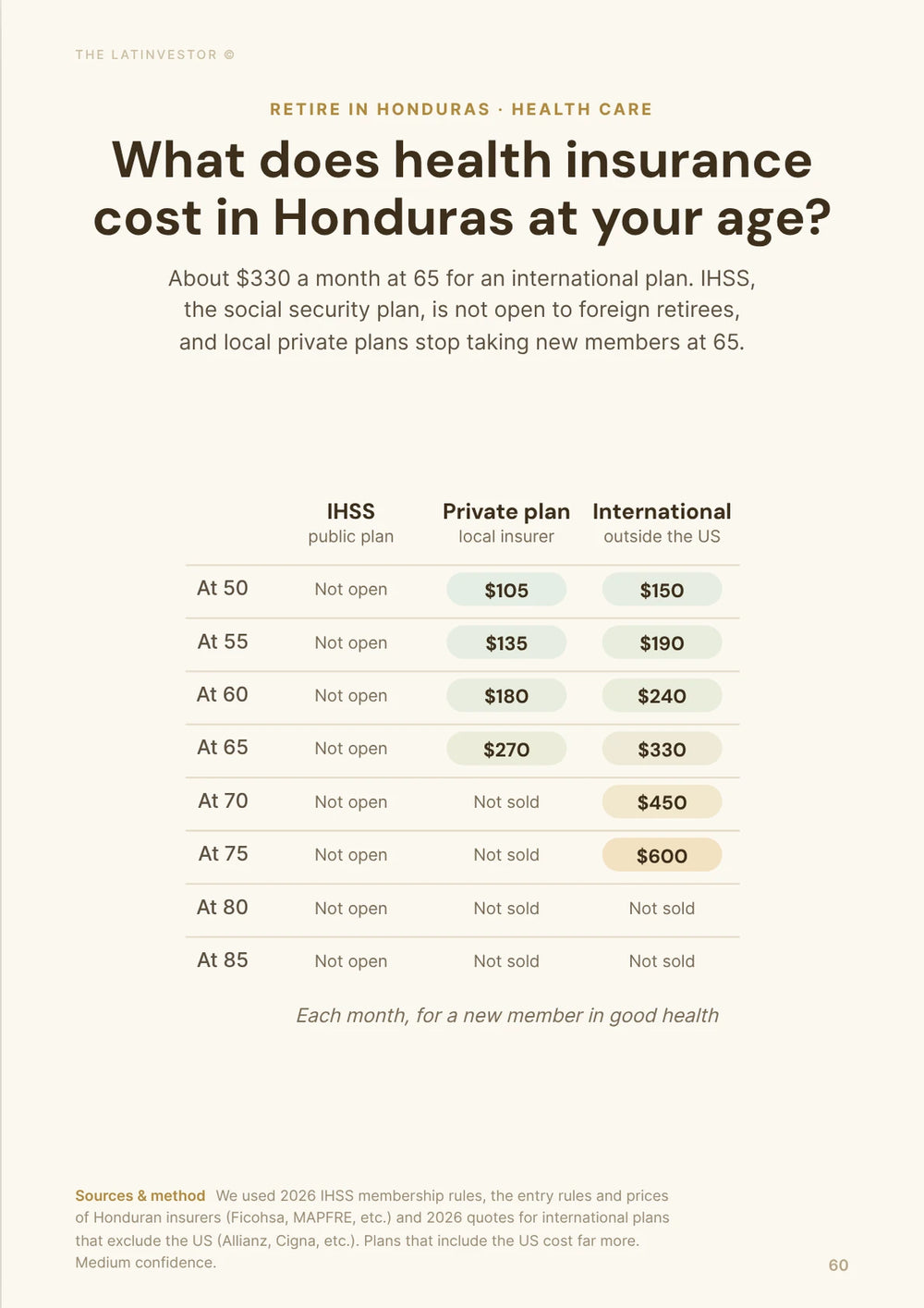
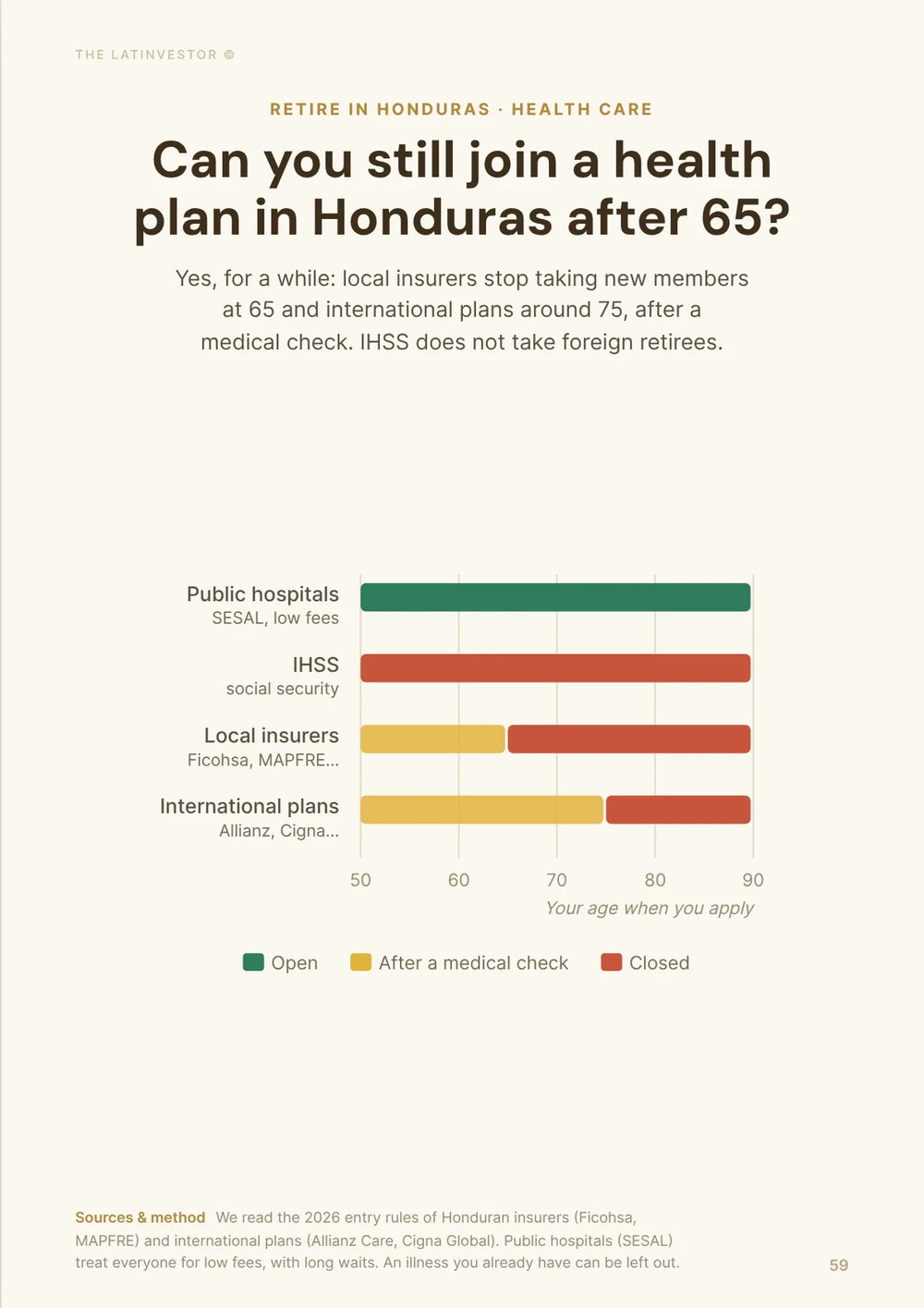
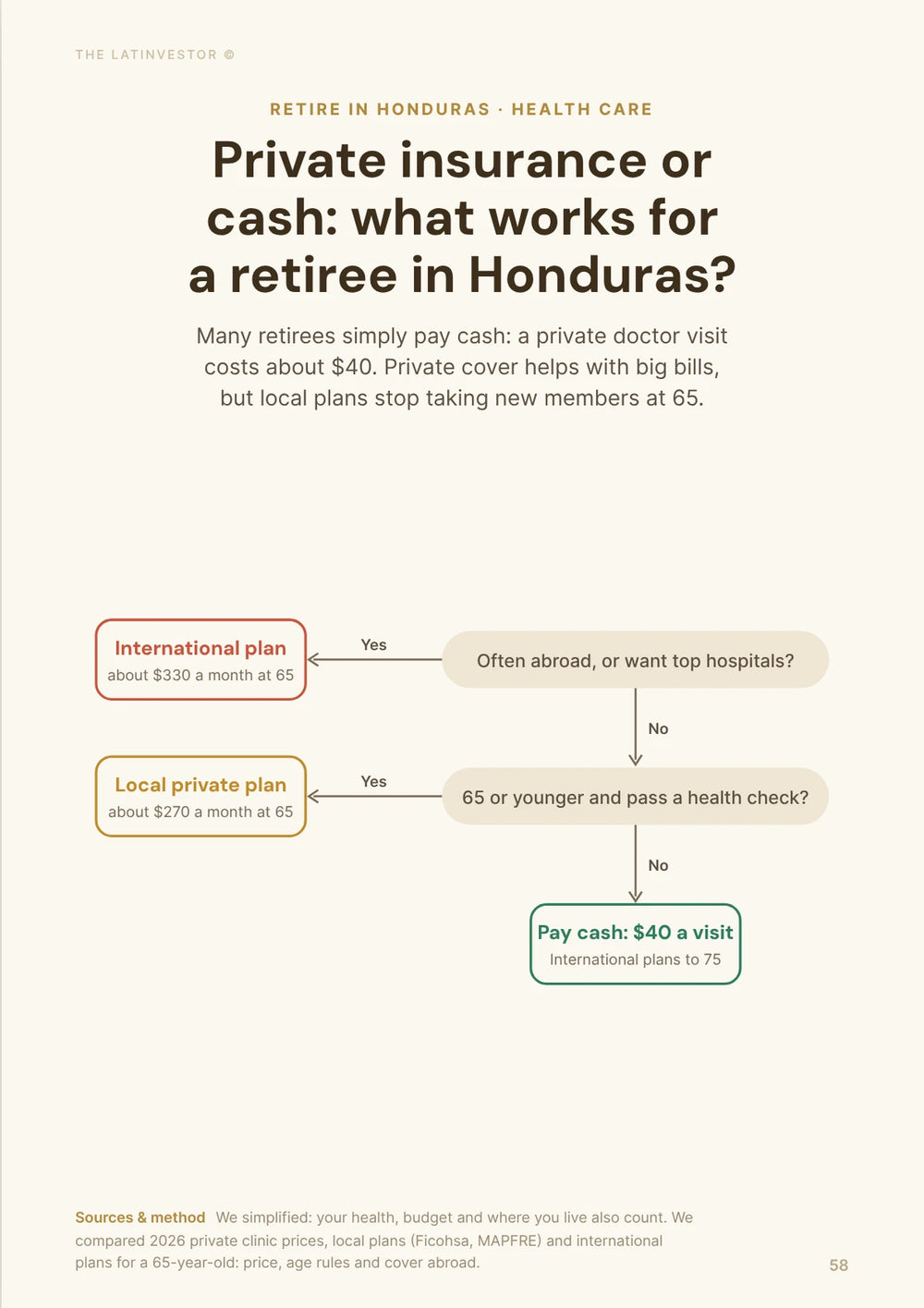
A local health plan costs about L 7,300 ($270) a month at 65 and an international plan about L 8,900 ($330). Local insurers stop taking new members at 65.


What lifestyle can each budget buy you in Honduras?
What's the absolute minimum monthly budget to survive in Honduras?
The absolute minimum monthly budget to survive in Honduras in 2026 is roughly L 24,200 to L 29,600 ($900 to $1,100) on the mainland, by our estimate, while Roatan will cost you at least L 48,400 ($1,800) because rent alone eats most of your money there.
At this survival budget in Honduras, you cover a small one-bedroom apartment outside prime zones, basic groceries, public transport or cheap taxis, minimal eating out, and a very lean healthcare allowance.
The trade-offs at this level in Honduras are significant: you will likely skip air conditioning to save on electricity, avoid restaurants almost entirely, have no emergency cushion, and live in neighborhoods that may feel less secure or convenient than expat-preferred areas.
What lifestyle do I get with $2,000/month in Honduras in 2026?
At the end of 2026, a budget of $2,000 per month (about L 53,800) in mainland Honduras gives you a comfortable middle-class lifestyle with regular dining out, a gym membership, and enough room for domestic travel and occasional flights home.
For housing at $2,000 per month, you can afford a decent one-bedroom or small two-bedroom apartment in safer, expat-friendly neighborhoods like Lomas del Guijarro or La Alameda in Tegucigalpa, typically paying L 12,000 to L 18,300 ($450 to $680) in monthly rent. For reference, the average one-bedroom in central Tegucigalpa rents for about L 12,141 ($450), according to Numbeo (October 2026).
At this budget level in Honduras, you can enjoy local activities like weekend trips to Copan Ruinas or Lake Yojoa, regular visits to cafes and mid-range restaurants, and joining local fitness or social clubs that many expats frequent.
The main limitation at $2,000 per month in Honduras is that you will still need to watch your electricity usage carefully, especially if you rely on air conditioning, and you may not have much buffer for medical emergencies or unexpected repairs.
What lifestyle do I get with $3,000/month in Honduras in 2026?
At the end of 2026, a budget of $3,000 per month (about L 80,700) in Honduras puts you in the "very comfortable" category on the mainland, and this is where Roatan starts feeling manageable rather than tight.
For housing at $3,000 per month, you can afford a nicer apartment in buildings with generator backup, 24-hour security and parking, in neighborhoods such as Palmira or El Hatillo in Tegucigalpa, where listings often start around L 18,300 to L 26,400 ($680 to $980) a month, and premium towers cost more.
At this budget level in Honduras, you can dine out several times a week at quality restaurants, take regular weekend trips to the Caribbean coast or the Bay Islands, and afford more reliable private transportation through taxis or a hired driver when needed.
The key upgrade from $2,000 to $3,000 per month in Honduras is peace of mind: you gain a stronger healthcare plan with dental and vision coverage, you can run air conditioning without anxiety, and you have a real buffer for the unexpected expenses that catch many retirees off guard.
What lifestyle do I get with $5,000/month in Honduras in 2026?
At the end of 2026, a budget of $5,000 per month (about L 134,000) delivers high comfort on the mainland with premium housing choices and frequent travel, while $10,000 per month (about L 269,000) puts you in outright luxury territory with household staff, top-tier private healthcare, and international trips whenever you want.
For housing, $5,000 per month opens up spacious apartments or houses in the best mainland neighborhoods with full amenities, while $10,000 per month on Roatan gets you beachfront condos or villas in West Bay, with premium rentals listed from about L 40,000 to L 80,000 ($1,500 to $3,000). For comparison, an ordinary two-bedroom on Roatan rents for L 34,000 to L 45,000 ($1,260 to $1,670).
At the $5,000 to $10,000 range in Honduras, you can hire household help, enjoy fine dining regularly, take diving trips and island-hopping adventures, access concierge medical services, and maintain a lifestyle that rivals what wealthy locals enjoy without ever worrying about electricity bills or unexpected costs.
How much for a "comfortable" retirement in Honduras in 2026?
At the end of 2026, a comfortable retirement in Honduras costs about L 39,000 to L 64,500 ($1,450 to $2,400) a month on the mainland, and L 67,200 to L 94,100 ($2,500 to $3,500) on Roatan, where imported goods and tourism pricing push costs higher. By our estimate, that is about $1,450 in La Ceiba or Copan Ruinas and $1,850 in Tegucigalpa, with the top of the range giving you more room to spare.
We recommend adding a 20% buffer on top of your comfortable target: about L 7,800 to L 12,900 ($290 to $480) a month on the mainland and L 13,400 to L 18,800 ($500 to $700) on Roatan, to handle electricity spikes, imported goods in tourist areas, and sudden food or transport price jumps. Prices rose 6.28% over the year to September 2026 (Banco Central de Honduras), so the buffer matters.
A comfortable retirement budget in Honduras covers things that a basic budget does not: a stronger healthcare plan with regular checkups, dining out several times per week, weekend trips within the country, reliable air conditioning, a small emergency fund, and the ability to live in safer neighborhoods with better infrastructure.
How much for a "luxury" retirement in Honduras in 2026?
At the end of 2026, a luxury retirement in Honduras requires about L 121,000 per month ($4,500) on the mainland and roughly $7,000 (about L 188,000) on Roatan, where housing and imported lifestyle costs scale quickly.
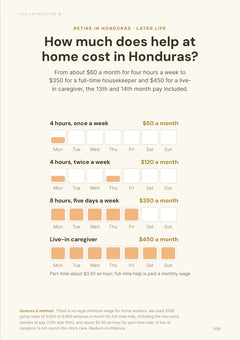
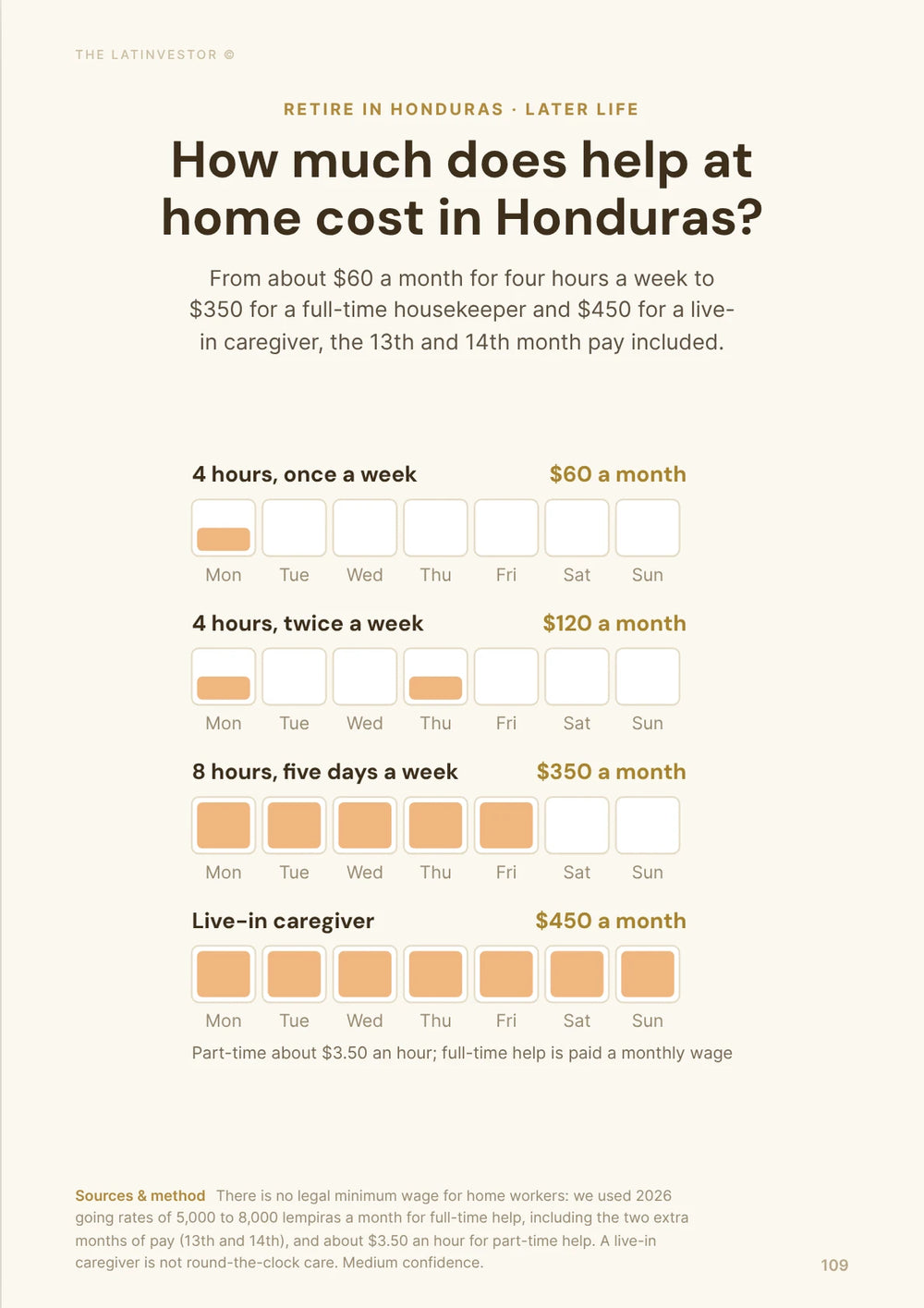
Luxury retirement in Honduras means premium apartments or houses with 24-hour security, backup generators, pools and full-service amenities, plus household staff, a private driver, top-tier international health insurance and regular fine dining. High-end listings often run L 53,800 to L 108,000 ($2,000 to $4,000) a month for housing alone. Honduras has no legal minimum wage for home workers, so pay is agreed with each worker: about L 9,400 ($350) a month for a full-time housekeeper and L 12,100 ($450) for a live-in caregiver, 13th and 14th month pay included.
The most popular luxury retirement neighborhoods in Honduras are Lomas del Guijarro and El Hatillo in Tegucigalpa for mainland living, and West Bay or Sandy Bay on Roatan for those who want the Caribbean island lifestyle with easy access to diving and beaches.
The main advantage of a luxury budget in Honduras, beyond comfort, is access to the best private healthcare in the country, the ability to fly out for specialized medical care when needed, and the security infrastructure that lets you live without the daily safety calculations that lower-budget retirees often face.
What are the real monthly expenses for retirees in Honduras in 2026?
What is a realistic monthly budget breakdown by category in Honduras?
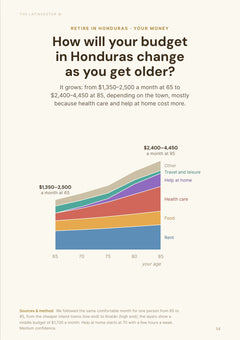
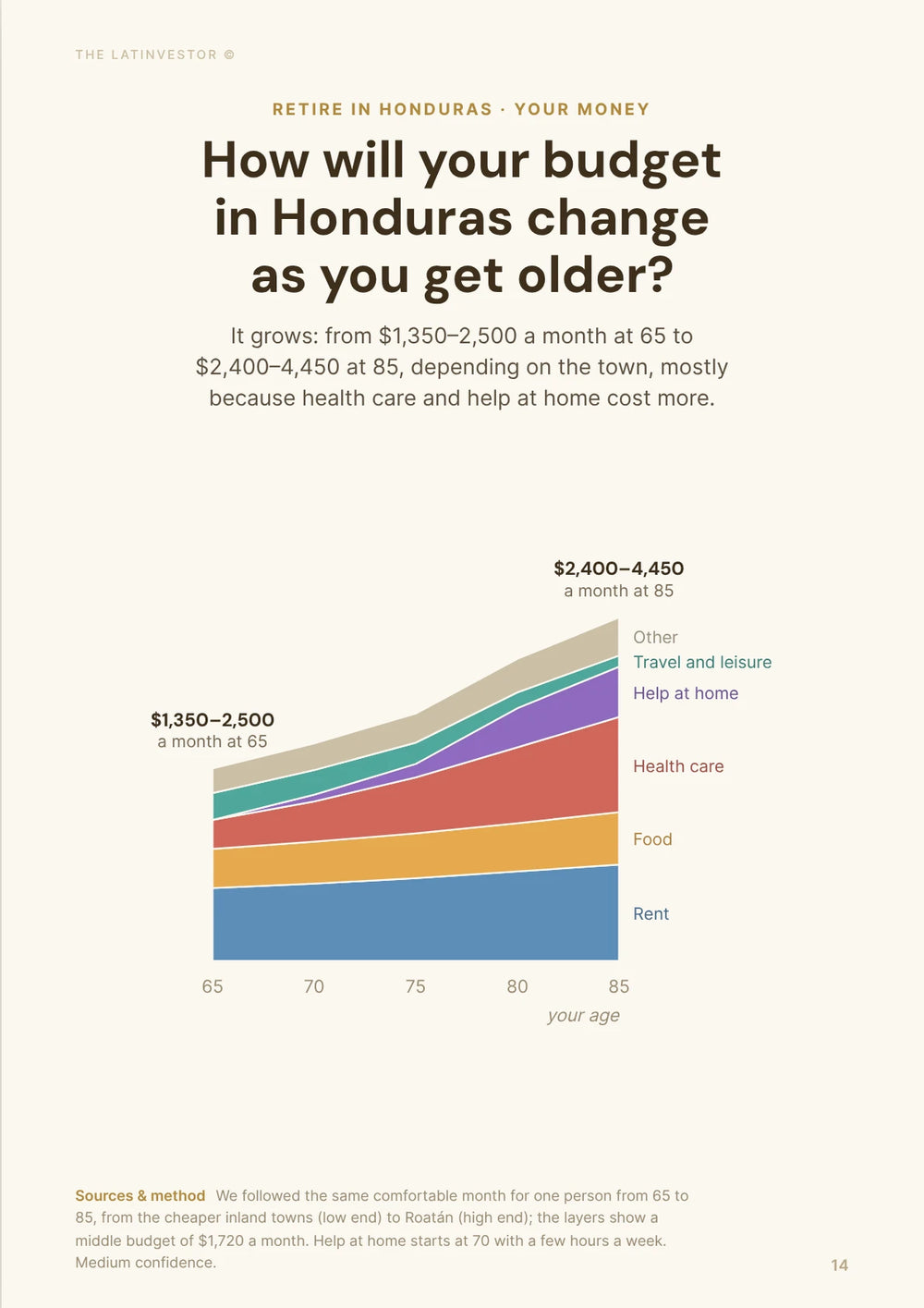
A sample monthly budget for a comfortable mainland retirement at $2,200 (L 59,200) could look like this: rent $450, utilities $180, food $450, transport $180, healthcare $250, home help $120, entertainment $250, and miscellaneous $320.
In this sample, rent takes about 20% of the budget, L 12,100 ($450) a month. That share depends mostly on where you live: on Roatan, a one-bedroom costs L 22,000 to L 29,000 ($820 to $1,080), so rent takes a much bigger part of the budget.
Food and groceries in Honduras usually account for about 18% to 22% of your budget on the mainland, roughly L 10,800 to L 14,800 ($400 to $550), but this can climb to 25% or more on Roatan where imported goods carry a tourism markup.
The budget category that varies most in Honduras based on lifestyle choices is electricity, because air conditioning usage can swing your utility bill from L 2,700 ($100) to over L 8,100 ($300) monthly depending on how much you use it and your building's tariff structure.
What fees surprise foreigners most after moving to Honduras?
The top three hidden fees that surprise foreigners in Honduras are electricity volatility (AC usage can cause wild bill swings), residency document costs (apostilles, translations, police checks, and medical certificates add up fast), and the "gringo premium" on Roatan where many prices are quoted in USD and marked up for tourists.
For one-time setup and administrative fees when first arriving in Honduras, budget roughly L 16,100 to L 40,300 ($600 to $1,500) by our estimate, to cover residency costs, legal help, document legalizations, local police clearances, medical exams, utility deposits and the various "timbres" (official stamps) required at each government step. Government immigration fees alone are reported at about L 8,100 ($300).
What's the average rent for a 1-bedroom or a 2-bedroom in Honduras in 2026?
At the end of 2026, a one-bedroom apartment in Tegucigalpa rents for about L 12,141 ($450) in the centre and L 12,569 ($465) outside it (Numbeo, October 2026), while on Roatan a one-bedroom costs L 22,000 to L 29,000 ($820 to $1,080) and a two-bedroom L 34,000 to L 45,000 ($1,260 to $1,670).
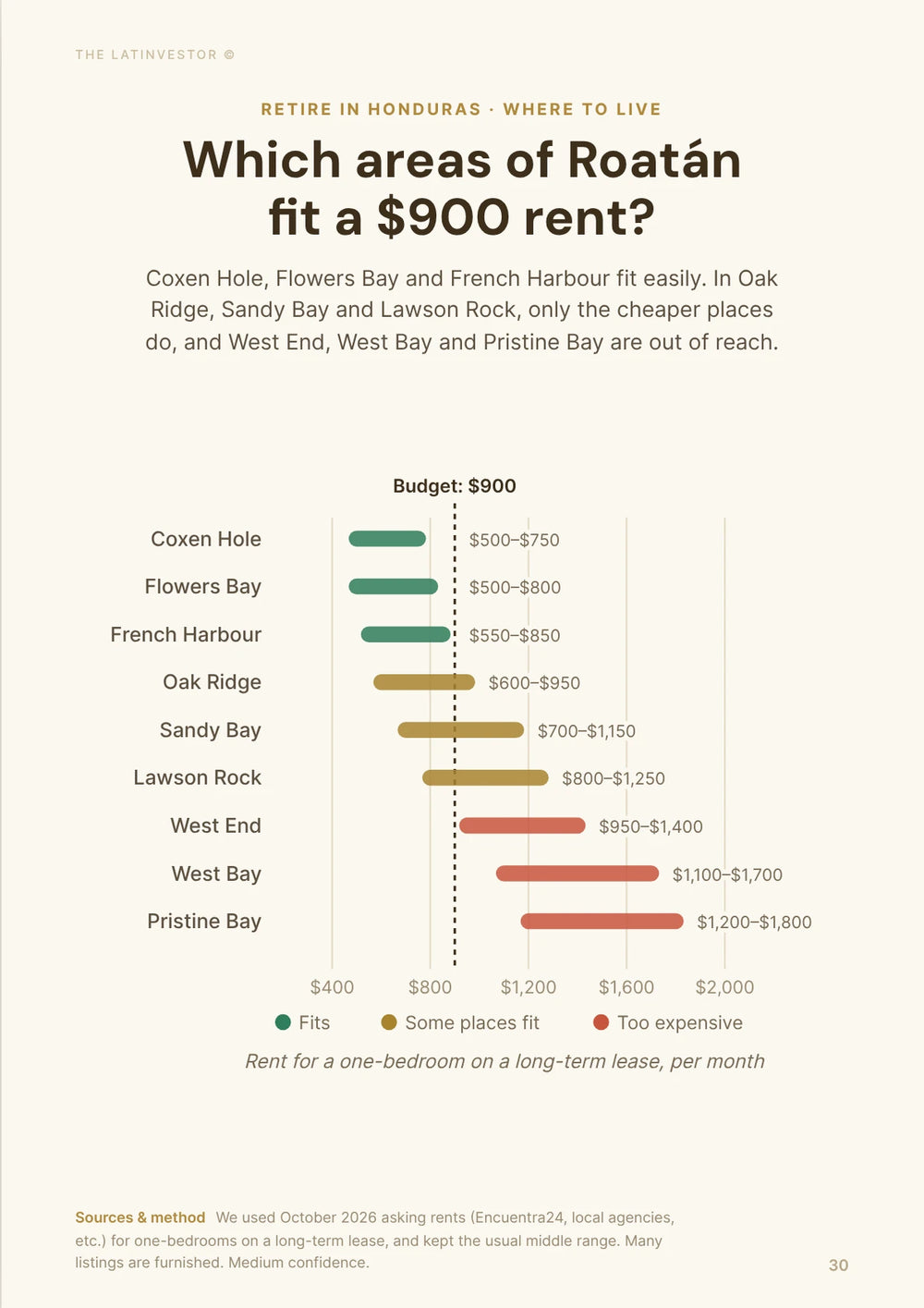
Realistic rents for a one-bedroom go from about $450 in Tegucigalpa to L 25,500 to L 37,600 ($950 to $1,400) in West End and L 29,600 to L 45,700 ($1,100 to $1,700) in West Bay on Roatan, with most mainland expat-friendly areas falling in the L 10,800 to L 16,100 ($400 to $600) range.
For a 2-bedroom, budget neighborhoods on the mainland start around L 14,800 ($550) while upscale Tegucigalpa areas like Lomas del Guijarro run L 21,500 to L 26,900 ($800 to $1,000), with a secure two-bedroom there listed at L 25,677 ($955) in September 2026. In San Pedro Sula, two-bedroom listings run about L 21,600 to L 37,800 ($805 to $1,410).
The neighborhoods offering the best rent value for retirees in Honduras are Colonia Kennedy and parts of La Alameda in Tegucigalpa, Colonia Trejo in San Pedro Sula, and French Harbour, where a one-bedroom costs about $550 to $850, or Jonesville on Roatan if you want island life without the West Bay premium.
What do utilities cost monthly in Honduras in 2026?
At the end of 2026, total monthly utilities for a typical retiree apartment in Honduras, internet and phone included, run about L 3,180 to L 5,900 ($120 to $220) on the mainland. Numbeo's October 2026 average in Tegucigalpa is L 3,833 ($145) for electricity, water and garbage in an 85 m² apartment, plus L 928 ($35) for internet. On Roatan, bills run higher, about L 5,400 to L 9,400 ($200 to $350) by our estimate, because of more AC use: since September 2026, the island utility RECO charges L 8.95 ($0.33) per kWh above 150 kWh a month, after an average 3.28% rise.
Breaking down individual utilities in Honduras, by our estimate, electricity typically costs L 1,590 to L 5,400 ($60 to $200) depending heavily on AC use, water runs about L 400 to L 800 ($15 to $30), and cooking gas is roughly L 530 to L 800 ($20 to $30) monthly.
Internet and mobile phone service in Honduras typically cost L 1,300 to L 2,200 ($50 to $80) monthly combined, with home internet averaging L 928 ($35) in Tegucigalpa and basic mobile plans starting at L 265 ($10) though most expats spend L 530 to L 795 ($20 to $30) for plans with enough data.
What's the monthly food and transportation budget for one person in Honduras in 2026?
At the end of 2026, by our estimate, a combined monthly food and transportation budget for one person in Honduras runs about L 10,200 to L 20,700 ($380 to $770) on the mainland, while Roatan pushes this to L 16,700 to L 32,300 ($620 to $1,200) due to import markups and more taxi reliance.
For groceries in Honduras, a single retiree cooking mostly at home can expect to spend L 8,100 to L 12,100 ($300 to $450) monthly on the mainland, with basic staples like rice, beans, eggs, and local produce being very affordable while imported items like cheese, wine, and specialty foods cost significantly more.
Dining out in Honduras adds roughly L 5,400 to L 10,800 ($200 to $400) monthly if you eat at restaurants regularly, compared to cooking at home, with a cheap restaurant meal at about L 200 ($7) in Tegucigalpa, a three-course dinner for two at a mid-range place at about L 875 ($33) according to Numbeo (October 2026), and upscale restaurants running L 810 to L 1,300 ($30 to $50) per person.
Transportation in Honduras costs about L 2,200 to L 5,900 ($80 to $220) monthly using public buses and occasional taxis, while owning a car or scooter adds fuel, insurance, and maintenance that can push your transport costs to L 10,800 to L 16,100 ($400 to $600) or more monthly. Petrol cost about L 33.17 ($1.23) a litre in Tegucigalpa in October 2026.
Can I retire in Honduras if I want to buy property in 2026?
What's the average home price in Honduras in 2026?
At the end of 2026, home prices in Honduras are hard to pin down, because few sales are published. Numbeo's October 2026 figures for Tegucigalpa, based on very few answers, put apartments at about L 42,231 ($1,570) per m² outside the centre and L 73,496 ($2,730) in the centre, so a typical 70 m² apartment would cost roughly L 2,960,000 to L 5,110,000 ($110,000 to $190,000). On Roatan, West End listings work out to about $1,800 to $2,000 per m², or about L 3,360,000 to L 3,760,000 ($125,000 to $140,000) for 70 m², while beachfront condos in West Bay list at $4,550 to $5,350 per m².
The realistic price range for property in Honduras spans from about L 1,880,000 ($70,000) for modest mainland apartments in La Ceiba to well over L 5,380,000 ($200,000) for beachfront condos on Roatan, and often much more, with many "normal comfort" mainland listings falling in the L 2,150,000 to L 4,300,000 ($80,000 to $160,000) range.
For retirees in Honduras, mainland apartments in established neighborhoods like Lomas del Guijarro or Colonia Trejo often offer the best value because they come with existing security infrastructure, proximity to medical facilities, and lower ongoing maintenance costs than standalone houses or island properties that require more upkeep and import-heavy repairs.
What down payment do foreigners usually need in Honduras in 2026?
At the end of 2026, most foreign buyers in Honduras pay cash. When a bank does lend to a foreigner, there is no standard rule, but expect a large down payment: at 30% to 50%, a L 2,690,000 ($100,000) property would need L 807,000 to L 1,340,000 ($30,000 to $50,000) upfront.
Foreigners in Honduras generally face higher down payment requirements than locals because Honduran banks are cautious about lending to non-residents without strong local income history, and interest rates tend to be high compared to US or European mortgages, which is why many foreign retirees simply buy with cash to avoid financing complications.
What's the all-in monthly cost to own in Honduras in 2026?
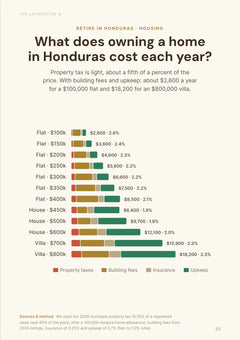
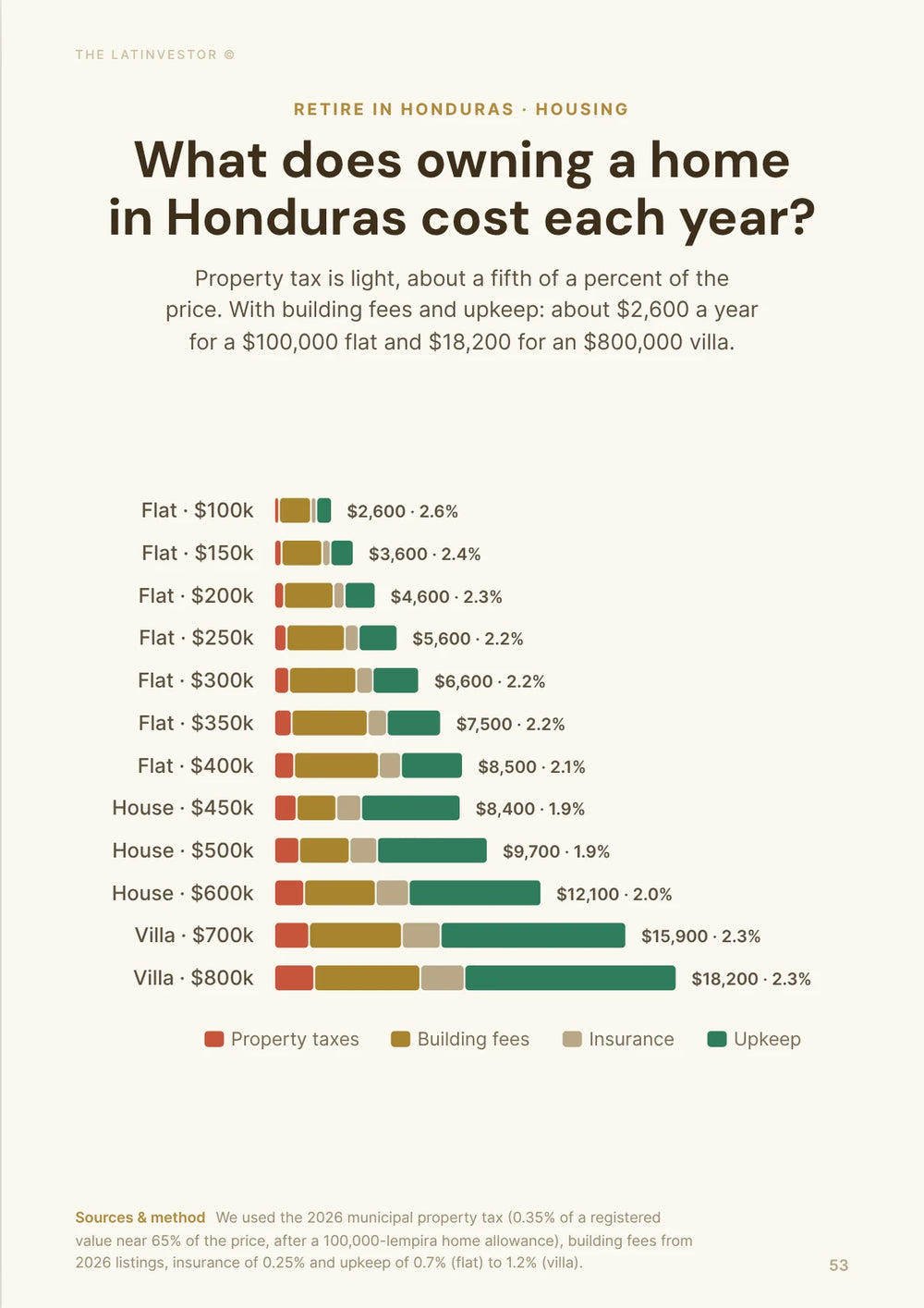
At the end of 2026, the all-in monthly cost to own a typical L 3,230,000 ($120,000) property in Honduras (paid in cash) runs, by our estimate, about L 7,100 to L 18,300 ($265 to $680) including property taxes, HOA fees if applicable, insurance, maintenance reserve, and utilities.
The all-in monthly ownership figure in Honduras includes property tax and municipal fees (L 400 to L 1,590, or $15 to $60), HOA or condo fees if you are in a building (L 1,300 to L 5,400, or $50 to $200), insurance (L 810 to L 1,590, or $30 to $60), maintenance reserve (L 1,300 to L 3,800, or $50 to $140), and utilities (L 3,180 to L 5,900, or $120 to $220).
Property tax in Honduras is relatively low: the municipal rate is at most 0.35% a year of the registered value, which is usually below the market price, so it typically runs L 400 to L 1,590 ($15 to $60) monthly depending on your municipality and the property's cadastral value, while HOA or maintenance fees in buildings with amenities like security and generators commonly add L 1,300 to L 5,400 ($50 to $200) monthly.
The hidden ownership cost that catches new buyers off guard in Honduras is the generator and backup power expense, because frequent power outages in many areas mean you either pay for a building with generator service built into HOA fees, or you budget for your own generator plus fuel and maintenance, which can add L 2,700 to L 5,400 ($100 to $200) monthly in some situations.
Is buying cheaper than renting in Honduras in 2026?
At the end of 2026, a L 3,230,000 ($120,000) mainland property costs about L 7,100 to L 10,800 ($265 to $400) a month to own, by our estimate, versus about L 12,100 to L 16,100 ($450 to $600) to rent a similar place. Buying looks cheaper on paper, but that leaves out the cash you tie up, the buying costs and how long a resale can take.
There is no reliable break-even point: it depends on the price, the rent and how long you stay. Buying costs come first, about 4.5% of the price on a $100,000 home (the 1.5% transfer tax plus notary and registry fees), plus the return you give up on your cash, and a resale can take time in a less liquid market.
The key factors that make buying more or less attractive for retirees in Honduras are: the special foreign ownership restrictions near coasts and borders (Decree 90-90 requires extra legal diligence for beach areas), the lack of transparent pricing that makes it easy to overpay, and whether you have the patience to navigate title searches and legal processes that are more complex than in countries with more developed real estate markets.
What visas, taxes, and healthcare costs should I plan for in Honduras in 2026?
What retirement visa options exist in Honduras in 2026?
At the end of 2026, the main retirement options in Honduras are the Pensionado (pensioner) and Rentista (stable income) residencies. Government immigration fees are reported at about L 8,100 ($300); with legal help, translations and certificates, the first year often costs L 16,100 to L 40,300 ($600 to $1,500) by our estimate.
To qualify as a pensionado, you need a foreign pension of at least $1,500 (L 40,300) a month; as a rentista, you need at least $2,500 (L 67,200) a month of passive income from abroad. Under exceptional residency rules issued in 2026 (reported in February), the authorities can accept, case by case, applicants with at least half these amounts ($750 or $1,250), but it is not a general cut. Exact documents are listed in the official INM (Instituto Nacional de Migracion) guidelines.
By our estimate, annual visa renewal in Honduras typically costs L 8,100 to L 20,200 ($300 to $750) including government fees, required document updates, and the legal or gestor assistance that most foreigners use to navigate the bureaucracy more smoothly.
The most common visa mistake foreign retirees make in Honduras is underestimating the document legalization burden, because apostilles, translations, local police clearances, and medical certificates all have expiration dates, and if any document expires during your application process, you may need to start over and pay again.
Do I pay tax on foreign income in Honduras in 2026?
At the end of 2026, Honduras generally operates on a territorial or source-based tax system, which means purely foreign-source income like US Social Security, foreign pensions, or investment income from abroad is typically not subject to Honduran income tax.
Foreign pensions, Social Security payments from abroad, and investment income earned outside Honduras are generally exempt from Honduran taxation under the source-of-income principle, though if you earn any income within Honduras (such as local rental income, local employment, or a Honduras-based business) that income would be taxable under Honduran law.
Honduras has limited tax treaty coverage compared to major expat destinations, so you should consult with a tax professional about your specific situation and home country obligations, since the US taxes citizens on worldwide income regardless of residence.
The single most important tax rule foreign retirees should understand before moving to Honduras is that "source of income" determines taxation: income earned from Honduran sources gets taxed in Honduras, while income with a foreign source generally does not, but your immigration status (pensionado, rentista) may affect specific exemptions so professional advice is worth the investment.
What health insurance do retirees need in Honduras in 2026?
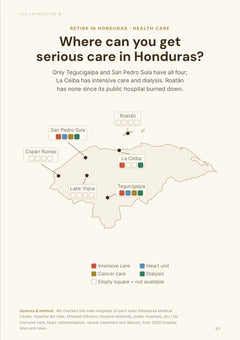
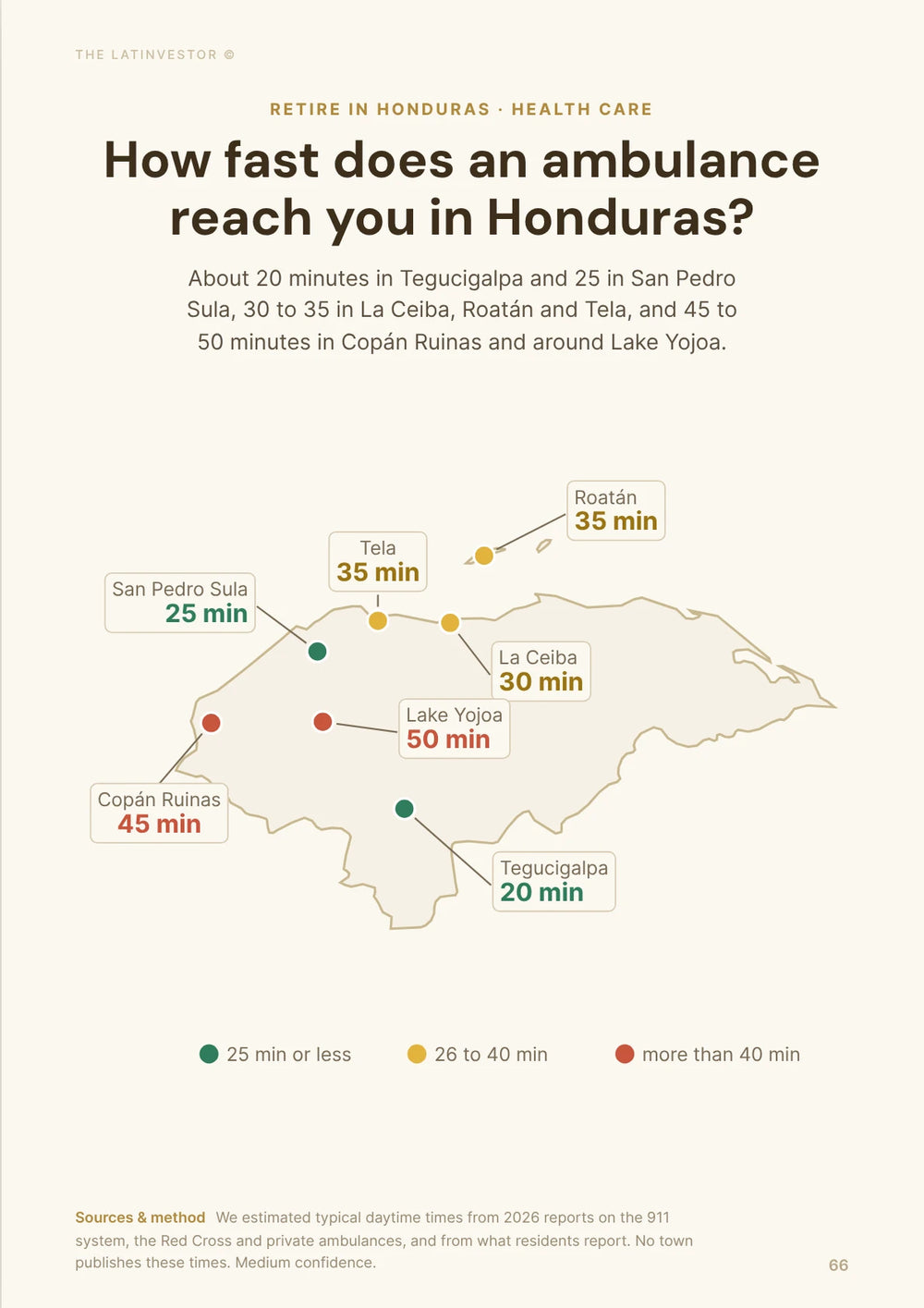
At the end of 2026, retirees in Honduras should plan on private health insurance or an international health plan. At 65, a local private plan costs about L 7,300 ($270) a month and an international plan that excludes the US about L 8,900 ($330), for a new member in good health. Local insurers stop taking new members at 65 (MAPFRE's Plan Amigo then keeps you until 75), and on Roatan, make sure your plan covers medical evacuation to the mainland.
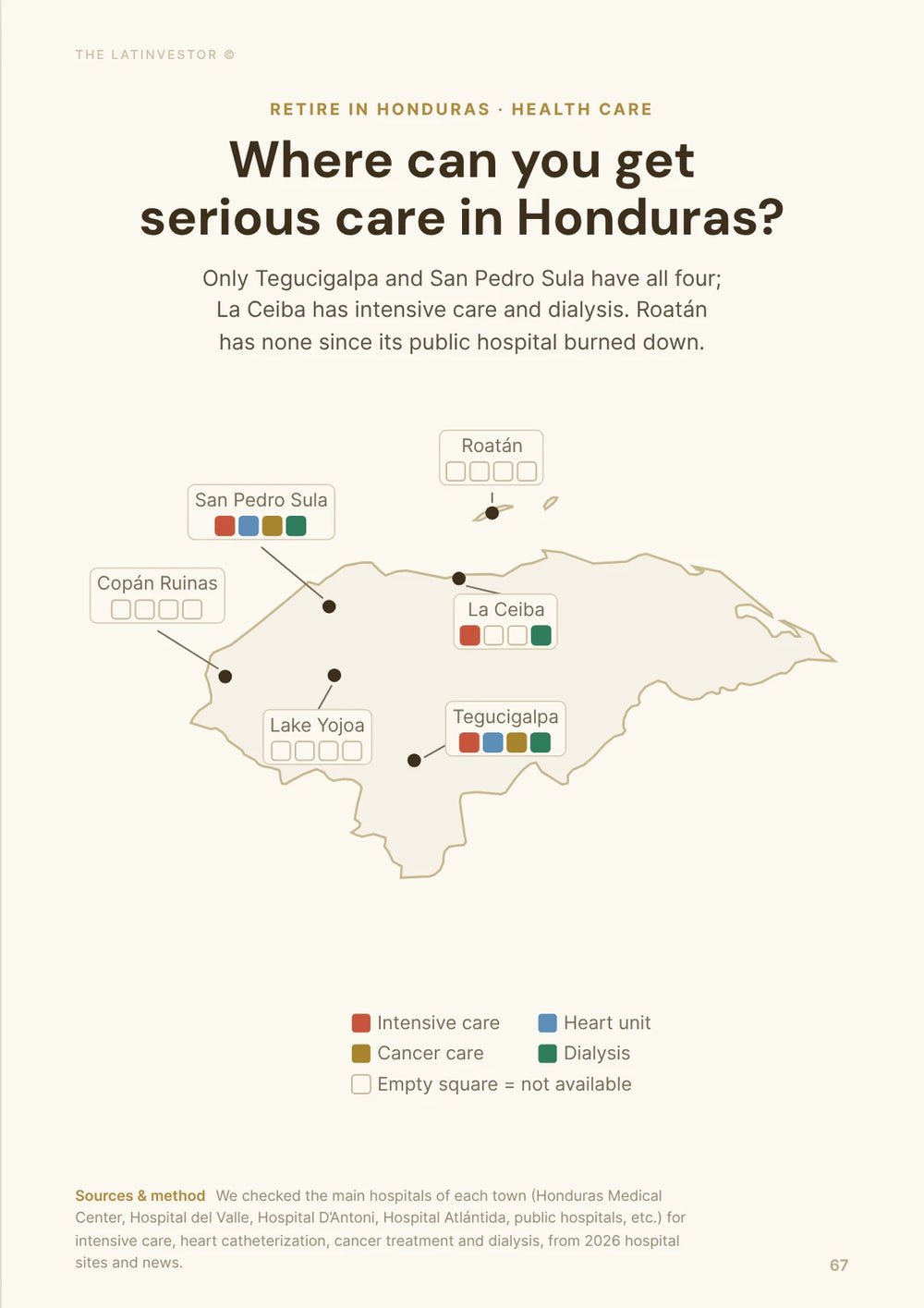
Foreigners in Honduras can technically access public healthcare, but most retirees choose private care because public facilities often have long wait times, limited specialist availability, and quality that varies significantly by location, making private clinics and hospitals the practical choice for non-emergency and specialized care. IHSS, the social security plan, is not open to foreign retirees.
On top of the premium, plan for doctor visits, about L 1,100 ($40) for a private consultation, plus lab tests, medicines and dental care. We have no reliable figure for the yearly total: it depends mostly on your health and on whether your plan includes evacuation cover.
Related blog posts
- Is right now a good time to buy a property in Honduras? (2026)
- What are the best areas for real estate in Honduras? (2026)
- Moving to Honduras? Here's everything you need to know (2026)
- How much do houses cost in Honduras today? (2026)
- How much should a land really cost in Honduras today? (2026)
Our methodology
This article estimates how much a single retiree needs each month to live in Honduras, from a bare-minimum budget to a luxury one, on the mainland and on Roatan. We cover rent, utilities, food, transport, health care, residency, taxes, and what changes if you buy a home instead of renting.
We built each budget line by line. Rents come from Numbeo averages for Tegucigalpa, Encuentra24 listings and our own Roatan rent study, and home prices from Numbeo and Century 21 Roatan listings. Everyday prices come from Numbeo, electricity from CREE tariff sheets (including RECO on Roatan), and inflation from the Banco Central de Honduras.
Residency rules come from INM, the SGJD checklists and the Library of Congress, tax rules from the SAR, the income tax law and PwC, and foreign ownership rules from Decree 90-90. Health insurance prices come from local insurers such as MAPFRE and from international plans.
We checked these figures at the end of 2026, in October. Lempira amounts use the BCH rate of about 26.89 lempiras per US dollar, against about 26.4 in January 2026, so the lempira lost about 2% against the dollar this year.
Where we had no direct figure (the minimum and luxury budgets, the cost of owning, the yearly health bill), we estimated it from several sources and rounded it, or we said there is no reliable number. Home prices are especially hard to measure in Honduras, because few sales are published. Your own costs will depend on where you live, your health and your habits.
Key sources used for this analysis include Banco Central de Honduras inflation (via SECMCA), BCH Monetary Program 2025-2026, Instituto Nacional de Migracion Residencies, SGJD Pensionado Requirements, Global Property Guide Honduras, SAR Honduras ISR Portal, Numbeo Tegucigalpa, Numbeo Roatan, Decree 90-90 (TSC Honduras), CREE Honduras Tariff Sheets, El Heraldo (BCH exchange rate), CREE (RECO tariffs, Roatan), our Roatan rent study, Century 21 Roatan, Library of Congress, PwC Tax Summaries and MAPFRE Honduras.