
Summary
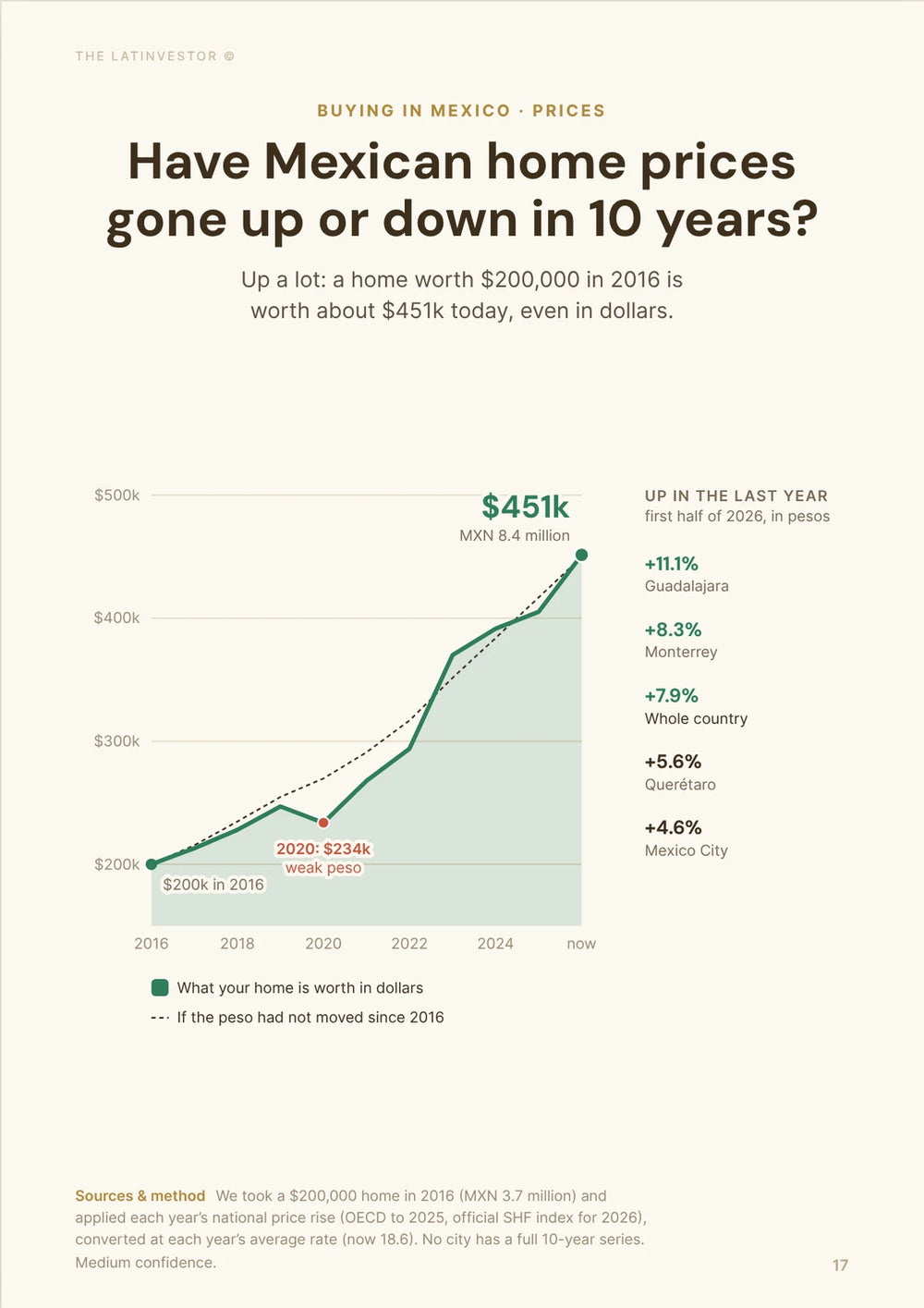
Yes, but it's slowing down. The official SHF index was up 9.99% in a year in the Guadalajara metro in the second quarter of 2026, against 7.3% for Mexico as a whole. The pace eased from 12.3% in the first quarter.
Selling takes longer than prices suggest. A normal resale needs about 70 to 90 days by our estimate, and homes usually close about 7% to 10% below the asking price.
Prices are rising on a market that isn't borrowing more: mortgage lending in Mexico fell 0.1% in real terms in the first half of 2026, and Banxico's average mortgage quote was still 11.31% in August. Cash buyers set the pace and have the upper hand when they negotiate.
What's for sale is mostly apartments in the center and houses farther out. In October 2026, the median asking price is about USD 262,000 (MXN 4.87 million) for an apartment and USD 273,000 (MXN 5.08 million) for a house, on TuLugar.
Providencia is the priciest area for apartments, at about USD 4,440 per m², against USD 3,310 in Centro. The new Line 4 light rail carried more than 820,000 people in its first month, but there's no proof yet that it has lifted prices along the line.
The new risk is water: since October 15, 2026, SIAPA has been rationing water in 627 neighborhoods of the metro area, about 42% of them, until at least March 2027.
Many locals think the best areas are overpriced: a home at MXN 5 million to MXN 10 million is out of reach for most local families with mortgages at 10% to 11%.
Foreigners can buy directly in Guadalajara, with no bank trust (fideicomiso). Getting a loan is the hard part: cross-border lenders usually want 35% or more down.
Guadalajara is less volatile than beach markets, and its suburbs are rising too: Tlajomulco +10.5% and Tlaquepaque +9.9% in the second quarter of 2026, against +9.6% in the city of Guadalajara.
Rents keep up with prices: +8.6% in the year to June 2026, with a 2-bedroom at about MXN 18,700 a month. Short-term rentals are tighter, with AirDNA at 55% occupancy and about USD 11,300 a year per listing.
A Jalisco tax reform approved in committee in July 2026 targets owners of several homes and short-term rentals. It isn't law yet, but investors should price it in.
Our estimate for the next 12 months is 5% to 8% nominal growth, slower than in 2025. For dollar buyers, the peso has weakened since early September (from under 17 to about 18.6 per dollar), so peso-priced homes cost less in dollars than a few weeks ago, though still a bit more than at the 2025 average rate.
The bottom line: the market is still growing, but it now rewards well-priced homes in good areas and punishes overpriced ones. Pay cash if you can, negotiate hard on anything listed for months, and check the water supply before you sign.

Are Guadalajara prices still rising, or is the market cooling?
Still rising, but cooling a little. The SHF index, which tracks appraised values of homes bought with a mortgage, was up 9.99% in a year in the Guadalajara metro in the second quarter of 2026, against 7.3% for Mexico as a whole.
Quarter by quarter, the pace slowed: 12.3% in the first quarter and 9.99% in the second (11.1% on average over the first half), with the city of Guadalajara itself at 9.6%. Asking prices tell the same story: +9.7% in the 12 months to June 2026 on Inmuebles24, against 3.6% inflation.
The gap between prices and buyers is the real story. Good homes in Americana, Lafayette, Providencia, Chapalita and Colomos Providencia still sell, while many sellers keep asking prices that local buyers can't finance. Overpriced homes sit, and usually need a discount.
How long does it take to sell a home in Guadalajara?
About 70 to 90 days for a normal resale, by our estimate. No public source tracks days on market in Guadalajara.
A well-priced apartment in Americana, Lafayette, Providencia or Chapalita can go in 45 to 60 days, while a large overpriced house can stay listed for more than 120 days. Luxury houses above MXN 15 million can sit for months.
Compared with 2024 and 2025, buyers are more selective: they still want good locations, but they walk away from weak buildings, bad parking and unrealistic prices.
Do homes sell below asking in Guadalajara?
Yes, most do. Homes in Guadalajara usually close about 7% to 10% below the first asking price, with 8% a fair working figure. That's our estimate: no public source tracks closing prices against asking prices in the city.
Selling above asking is rare. It happens mostly with well-priced apartments in Americana, Lafayette, Providencia and Chapalita, in buildings with parking, security and clear condominium rules.
The gap is bigger on older houses, over-renovated homes and listings that have been online for months. If you pay cash, ask for 8% to 10% off anything listed for more than two or three months.
Who is still buying when mortgages aren't growing?
Mostly cash buyers. In the first half of 2026, the amount lent for mortgages in Mexico fell 0.1% in real terms and the number of loans rose only 0.3%, according to BBVA Research, while Guadalajara prices rose about 10% to 12% a year on the SHF index.
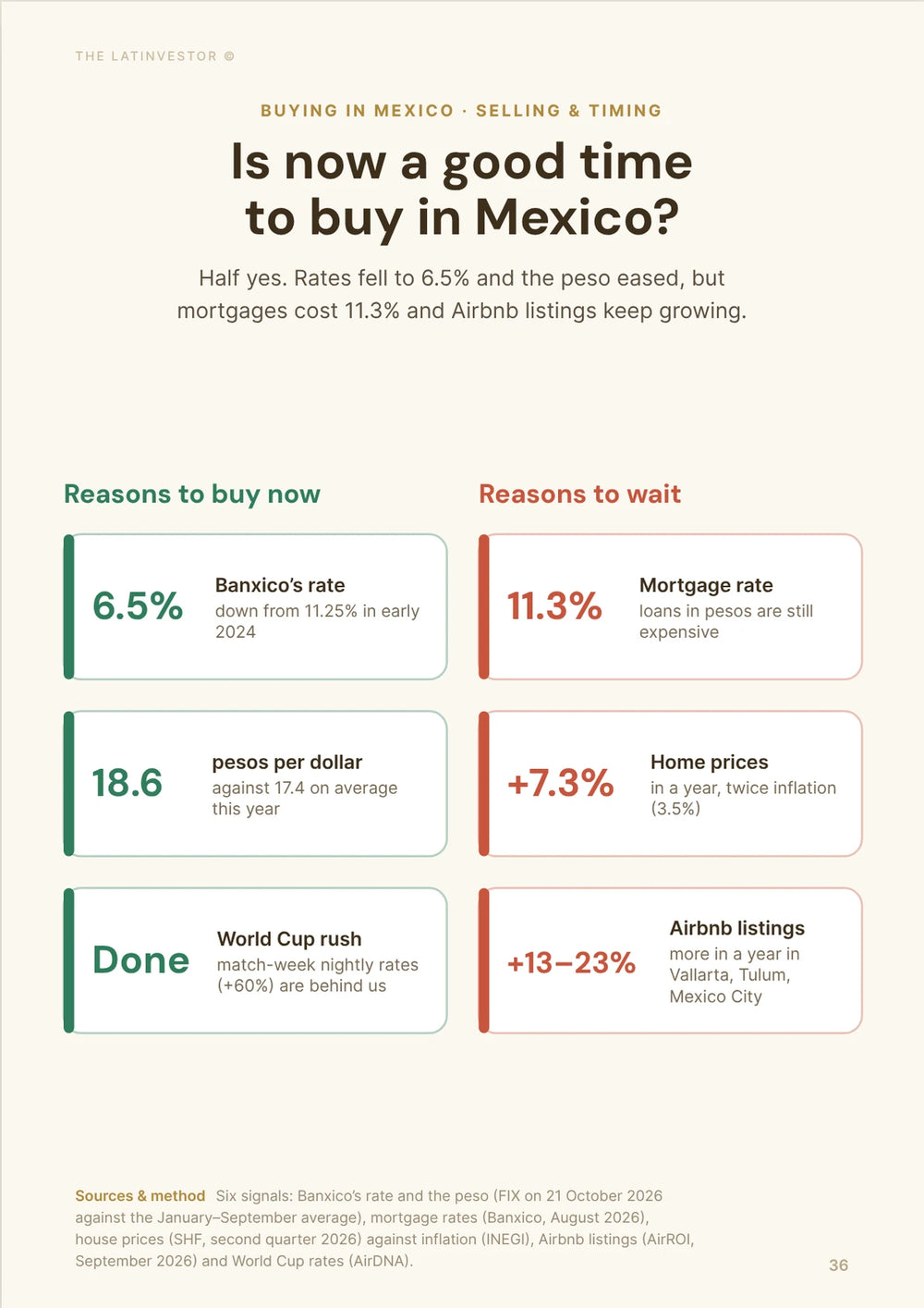
Credit is still expensive. New mortgages averaged about 10.1% a year in March 2026, and Banxico's average fixed-rate quote was 11.31% in August, even though the central bank rate is down to 6.50%. Analysts surveyed by Citi in October 2026 expect no further cut in 2026 or 2027, so don't wait for cheaper loans.
What this means for you: a cash buyer is the buyer sellers want, so use it. Walk away from listings priced well above the neighborhood median per m². If you need a loan, get it approved before you negotiate, not after.
What are people actually buying in Guadalajara?
Apartments in the central and west-side neighborhoods, and houses in the established family areas and the suburbs. A foreign buyer can buy all of it: apartments, resale houses, townhouses, homes in gated communities (cotos) and pre-sale condos.
In October 2026, the median asking price in the city is about USD 262,000 (MXN 4.87 million) for an apartment and USD 273,000 (MXN 5.08 million) for a house, on TuLugar. After the usual negotiation, expect to pay less.
The real question isn't whether you can buy, but whether the home has clean title, clear condominium rules, good construction and a price that matches the neighborhood.
What property types dominate in Guadalajara right now?
Apartments dominate the central market, because most new projects in Americana, Lafayette, Centro, Moderna and Chapultepec are vertical buildings. Houses still dominate family demand in established neighborhoods and the suburbs.
Per m², the gap is huge: apartments ask about USD 3,520 per m² (MXN 65,500) and houses about USD 1,290 (MXN 24,000), because houses are bigger, older and often farther out. By size, a 1-bedroom apartment asks about USD 210,000 (MXN 3.91 million), a 2-bedroom about USD 289,000 (MXN 5.38 million), and a 3-bedroom house only about USD 136,000 (MXN 2.53 million), since many of those are small older homes in outer areas.
Apartments took over the center because land is scarce, old low-rise buildings are being replaced, and developers can fit more units near restaurants, offices, universities and transit.
Are new builds widely available in Guadalajara right now?
For apartments, yes; for houses, not really. By our estimate, new builds make up about 20% to 30% of the listings in the most active areas, almost all of them apartments.
Most new projects are in Americana, Lafayette, Moderna, Centro, Chapultepec, the edges of Providencia, Arcos Vallarta, the Zapopan corridors and parts of Tlajomulco near Line 4. New detached houses are mostly in gated communities in Zapopan and Tlajomulco.
A new apartment usually asks about 15% to 25% more per m² than a similar older one, by our estimate. Before paying that, check what you get: parking, water storage, and whether the developer has delivered other projects on time.
Which neighborhoods are improving fastest in Guadalajara?
Mostly the central, west-side and transit-linked ones. That can mean upside, but also noise, construction, parking pressure and overpricing.
Which areas in Guadalajara are gentrifying?
The clearest signs are in Americana, Lafayette, Moderna, Santa Tere, Centro Histórico and Arcos Vallarta. Old houses in Americana are turning into cafés and offices, mid-rise apartments are replacing low-rise homes near Chapultepec, and Santa Tere is getting more food tourism.
Prices show it. In October 2026, apartments ask about USD 4,440 per m² (MXN 82,600) in Providencia, USD 3,990 (MXN 74,200) in Chapalita, USD 3,710 (MXN 69,000) in Americana and USD 3,310 (MXN 61,500) in Centro, on TuLugar. In the year to June 2026, Centro posted the biggest rise in asking prices on Inmuebles24.
Not every area is rising: Inmuebles24 shows asking prices in Jardines Vallarta down 23.2% in a year. Gentrification here goes block by block, so one street can feel polished while the next still has old pipes and noise.
Is the new Line 4 boosting demand in Guadalajara?
For renters, yes; for prices, it's too early to say. Line 4 of the light rail opened on December 15, 2025 and carried more than 820,000 people in its first month. It links Tlajomulco and Tlaquepaque to Guadalajara.
That makes the south of the metro area (Tlajomulco, Las Juntas, Santa Fe) easier to live in without a car, which helps rental demand. But there's no proof yet that it has lifted prices along the line.
If you buy for the line, buy within walking distance of a station with safe access. A station 2 km away with no sidewalk is worth little.
Will the water cuts hurt property values in Guadalajara?
Not across the board, but they can hurt the wrong building. Since October 15, 2026, SIAPA has been rationing water (tandeos) in 627 of the metro area's 1,506 neighborhoods, about 42%, and the first stage runs until March 2027. Water pressure in the system is down about 30%.
It isn't only a cheap-area problem. Some neighbors were without water before the official start, in Oblatos, Blanco y Cuéllar and Valle del Álamo in Guadalajara, and Bugambilias and Las Águilas in Zapopan.
What to do: look up the address on SIAPA's rotation calendar before you make an offer, and ask the neighbors how often the water really comes. Check the size of the underground cistern (aljibe) and the roof tank (tinaco), and test the pump. A home with good water storage is worth more right now, and one without it is a reason to negotiate.
Do locals think Guadalajara is overpriced?
In the best areas, many do. The mood isn't panic, but it isn't easy optimism either: locals feel priced out, while agents point to steady demand from professionals, investors, families and foreigners.
Do people think homes are overpriced in Guadalajara?
Many locals and insiders think homes are overpriced in Americana, Providencia, Chapalita, Colomos Providencia, Country Club and, in Zapopan, Puerta de Hierro and around Andares.
The argument is simple: wages haven't kept up with prices, mortgages cost about 10% to 11% a year, and a home at MXN 5 million to MXN 10 million (USD 269,000 to USD 538,000) is hard for most local families to finance.
The other side: Guadalajara has a big economy, universities, hospitals, tech jobs and little central land. Better value is in Huentitán, Tonalá, El Salto and parts of Tlajomulco, which are closer to local budgets.
What are common buyer mistakes people regret in Guadalajara right now?
The most common one is buying a trendy apartment in Americana, Lafayette or Chapultepec without checking parking, building rules, noise, short-term rental limits and the real monthly fees.
The second is buying a cheaper house in Tlajomulco, Tonalá, El Salto or Huentitán without testing the commute, checking the water supply and pricing the renovation honestly. With the water cuts, that last check matters more than ever.
How easy is it for foreigners to buy in Guadalajara?
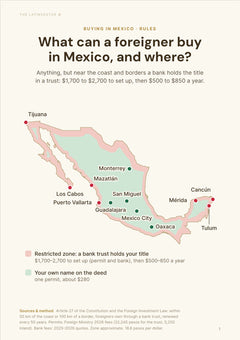
Legally, it's one of the simpler Mexican cities, because it is not on the coast or near a border. The hard part is checking the property, not the right to buy it.
Do foreigners face extra challenges in Guadalajara right now?
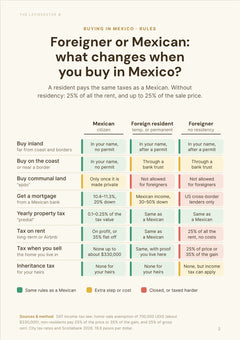
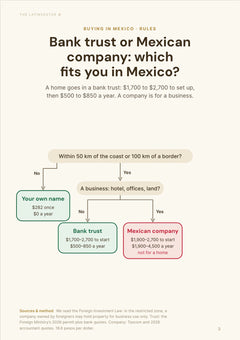
Some, but they're mostly practical. Guadalajara is outside the restricted zone, so a foreigner can hold the title directly, without a bank trust (fideicomiso). You sign the foreign ministry's (SRE) agreement to be treated as a Mexican for that property, and the notary handles the identity and anti-money-laundering checks.
The real traps are local: paying a premium in a trendy area, missing a condominium rule against Airbnb, underestimating traffic, or buying on a street where the water and parking are worse than the listing says.
Do banks lend to foreigners in Guadalajara?
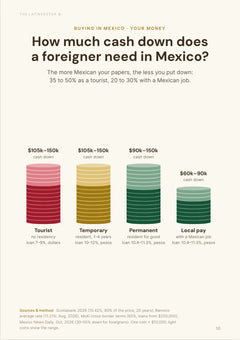
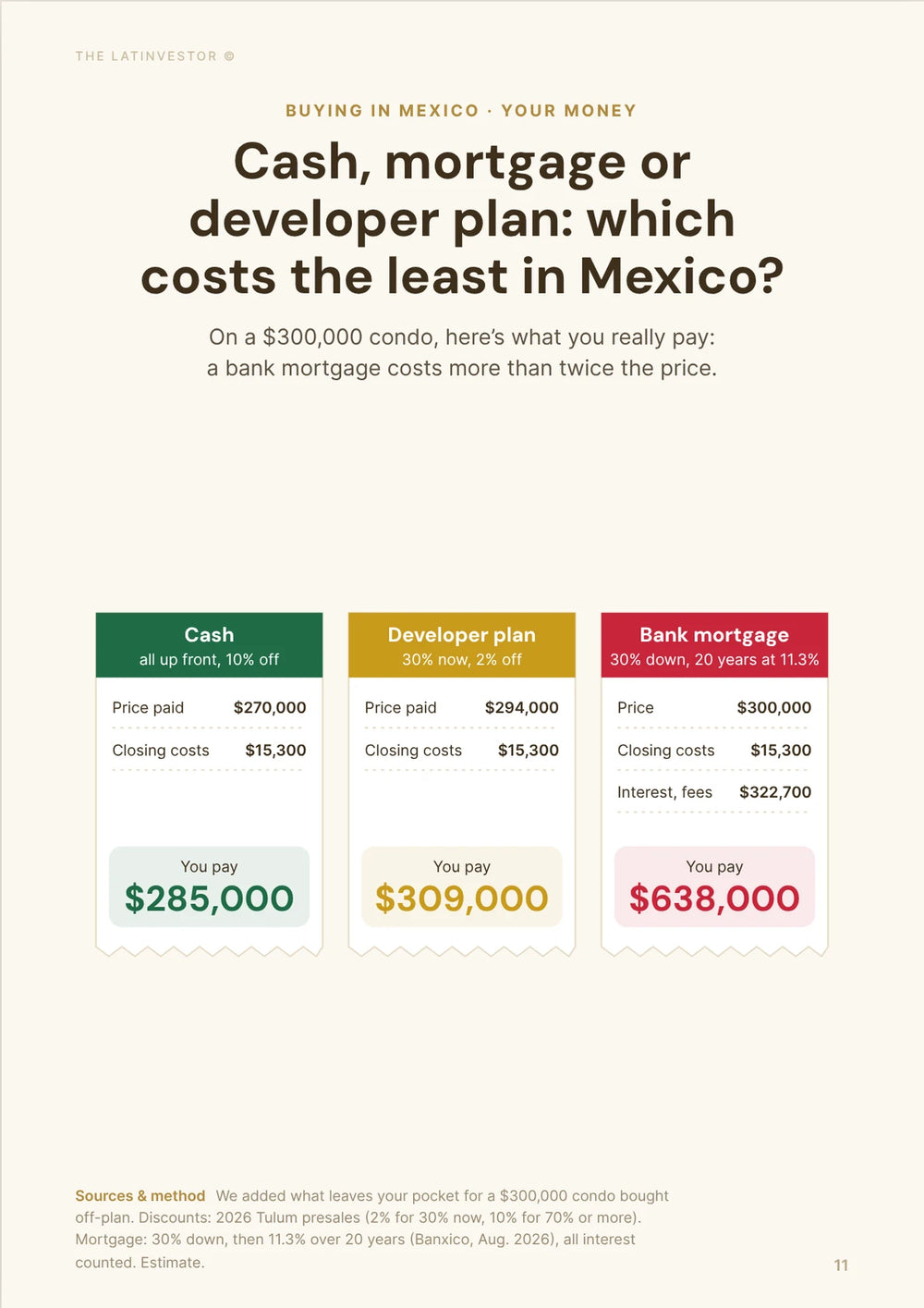
Some do, mostly to legal residents with Mexican income. Non-residents paid abroad usually go through cross-border lenders, which ask for about 35% to 50% down (50% to 65% loan-to-value).
Rates are high. New peso mortgages averaged about 10.1% in March 2026 and the average quote was 11.31% in August, and a foreign applicant should expect to pay at the upper end or more. There's no published rate for foreigners.
Banks ask for legal ID, immigration status, tax documents, bank statements, proof of where the money comes from, credit history and income they can verify.
How risky is buying in Guadalajara compared to nearby markets?
Moderately. The city is more stable than a beach market, but more uneven than the established family areas of Zapopan.
Is Guadalajara more volatile than nearby places?
Less than Puerto Vallarta, which depends on tourism, but more than prime Zapopan, where neighborhoods are more uniform. It's also easier to resell in than Tonalá or El Salto, because central demand is deeper.
The suburbs are not lagging, though. In the second quarter of 2026, the SHF index rose 10.5% in a year in Tlajomulco and 9.9% in Tlaquepaque, against 9.6% in Guadalajara and 9.2% in Zapopan. The whole metro area rose much faster than the Mexico City area (+4.6% in the first half).
Is Guadalajara resilient during downturns historically?
Fairly. The city has universities, hospitals, services, factories and tech jobs, so it doesn't depend on one industry. Over five years (end of 2020 to end of 2025), the SHF index rose about 66% in the metro area, against 56% nationally.
In past slowdowns, prices in good areas generally flattened rather than collapsed, while investor apartments took longest to sell. Family houses and practical apartments in Providencia, Chapalita, Jardines del Bosque, Colomos and Arcos Vallarta held value best.
Is rental demand still strong in Guadalajara?
For long-term rentals, yes. Short-term rentals are a different story: more supply, more rules, and the World Cup boost is over.
Is long-term rental demand growing in Guadalajara?
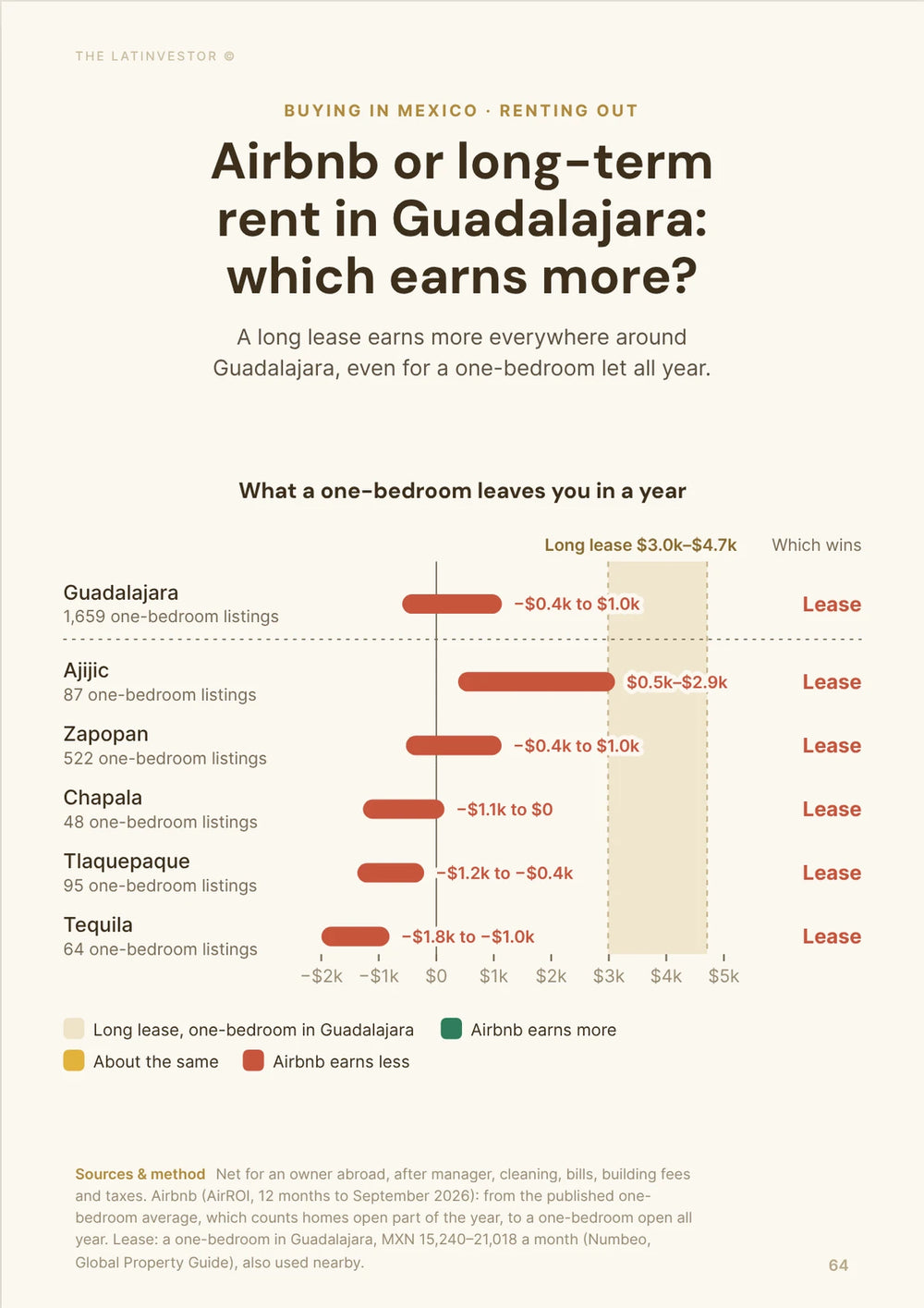
Yes, and rents prove it. They rose 8.6% in the 12 months to June 2026 on the Inmuebles24 index, more than twice the 3.6% inflation. A typical 2-bedroom of 65 m² asks about MXN 18,700 a month (about USD 1,000).
One reason is that many locals can't afford to buy at today's prices and mortgage rates, so they keep renting. Tenants are young professionals, students, medical workers, families, remote workers and foreigners who rent before buying.
Demand is strongest in Americana, Lafayette, Providencia, Chapalita, Arcos Vallarta, Santa Tere, Centro, Zapopan Centro and the south of the metro area near Line 4.
Is short-term rental demand growing in Guadalajara?
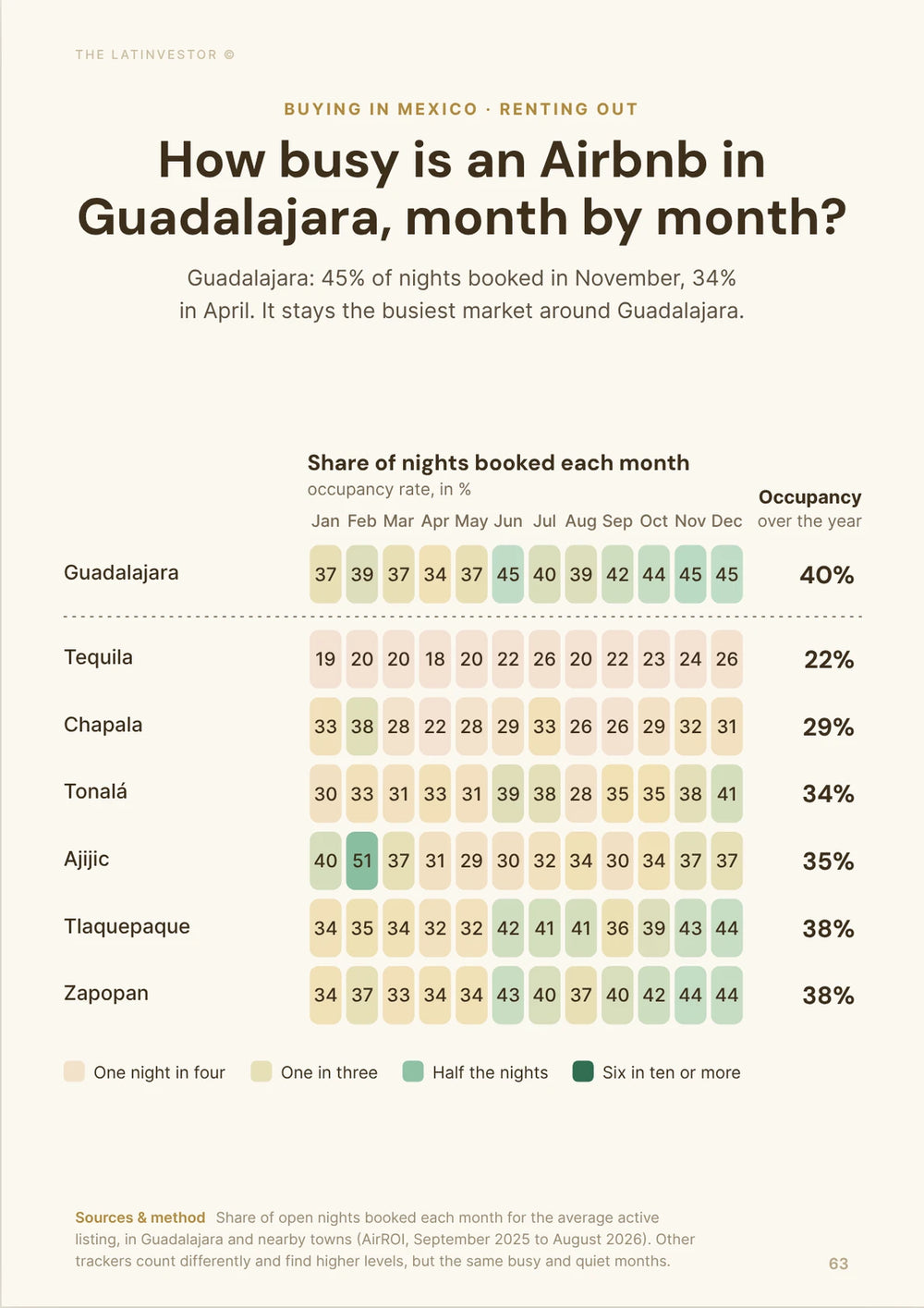
Demand is steady, but there's a lot of competition. AirDNA counted about 6,371 active listings in the city in September 2026, with an average occupancy of 55%, a nightly rate of about USD 60 (MXN 1,120) and about USD 11,300 (MXN 210,000) a year per listing.
That's a bit less than a 2-bedroom earns on a long lease, before the extra costs of furnishing, cleaning and management. The World Cup pushed short-term rates up 78.4% year on year during the tournament in 2026, but that was a one-off, not a normal year.
Guests are business travelers, Mexican tourists, medical visitors, event-goers and digital nomads. Before you buy for Airbnb, read the condominium rules: many buildings limit or ban it. And a bill approved by a Jalisco Congress committee on May 25, 2026 would cap homes that aren't the owner's main residence at 180 nights a year in Guadalajara; it still needs a full vote.
Will Jalisco's new property taxes hit investors in Guadalajara?
Not yet, but they could from 2027 if you own several homes or rent short term. On July 16, 2026, a Jalisco Congress committee approved a reform of the state tax law, the cadastre law and the urban code, with higher taxes on people who hold many homes for investment or short-term rental.
It also asks cities to update cadastral values so expensive homes pay more property tax (predial), and mentions a transfer tax aimed at luxury homes. A separate proposal from May 2026 suggests a progressive levy of 5% to 11% on short-term rentals run by owners of several properties. No final rates are law yet, and the reform would only apply from January 1 of the year after it's published.
What to do: if you buy one home to live in, this probably changes little. If you buy a second home to rent out, or a large house in Country Club or Providencia, run your numbers with a higher predial and an extra tax on rental income, and ask the notary what is pending before you sign.
What's the outlook for Guadalajara property prices?
Positive, but slower. Expect growth in good areas, slow sales for weak listings, and real downside if you overpay.
What's the 12-month outlook for demand in Guadalajara?
Positive but selective. Our estimate is 5% to 8% nominal price growth over the next 12 months, below the 9.99% of the year to the second quarter of 2026. No official forecast exists for the city.
What will drive it: mortgage rates that aren't coming down, local jobs, the water cuts, transit improvements and how many new investor apartments come on the market. The World Cup is behind us, so that boost is gone.
For dollar buyers, the exchange rate has turned in their favor lately. The peso traded under 17 per dollar in early September 2026 and is now at about 18.6, so a peso-priced home costs about 9% less in dollars than a few weeks ago. It's still a bit stronger than its 2025 average of 19.2, and BBVA's pre-September forecast of about 17.3 by the end of 2026 now looks optimistic for the peso, so don't plan on either direction.
What's the 3-5 year outlook for housing in Guadalajara?
Moderately positive: about 25% to 40% cumulative nominal growth in good neighborhoods over 3 to 5 years, if there is no major shock. That's our estimate, and after inflation, taxes and costs the real gain will be much lower.
The projects that matter are Line 4, denser building along transit corridors, more people moving back into the Centro Histórico, job growth on the Zapopan side and more apartment buildings in central areas.
The biggest question is whether growth can last with the problems piling up: affordability, water supply, traffic, construction quality and too many investor apartments.
Are demographics or other trends pushing prices up in Guadalajara?
Yes. The metro area is large, has jobs, and is full of renters who want to live near work, universities and services. Young professionals are staying, students move near campuses, and families move outward when the center gets too expensive.
Other trends add to it: remote work, people moving to Americana and Lafayette for the lifestyle, investors buying apartments, and better transit in the south. The strongest growth will likely stay in well-located buildings with real day-to-day demand.
What scenario would cause a downturn in Guadalajara?
The most likely one: mortgages staying around 11%, buyers running out of budget, too many new investor apartments, weak Airbnb income now that the World Cup is over, and a water crisis that drags on past March 2027.
The warning signs would be bigger discounts, apartments listed for more than 120 days, developers offering more incentives, furnished rentals cutting prices, and more sellers in Americana, Lafayette and Centro accepting lower offers.
A downturn would probably be moderate: by our estimate, flat to -3% in established family areas, -3% to -7% for ordinary resale homes and -8% to -15% for overpriced investor condos.
Our methodology
This article estimates whether the Guadalajara property market is still growing: how fast prices rise, how long homes take to sell, who is buying, where prices are moving, and what could slow things down.
For the trend, we start with the official SHF housing price index (second quarter of 2026) and IIEG Jalisco's breakdown by municipality, then check it against asking prices from TuLugar (October 2026) and the Inmuebles24 Guadalajara index (June 2026). Credit data come from Banxico and BBVA Research, and rental data from Inmuebles24 and AirDNA. Where no source publishes a figure (days on market, discount to asking price, new-build share, forecasts), we say it is our estimate.
The rules for foreign buyers come from the SRE. The water cuts come from SIAPA's 2026 program as reported by local press, and the tax reform from the Jalisco Congress and local press.
We checked these figures in October 2026. Conversions use about 18.6 pesos per US dollar and 20.9 pesos per euro.
Keep in mind that asking prices are not sale prices, that the SHF index only covers homes bought with a mortgage, and that prices change from one block to the next.
Key sources used for this analysis include the SHF housing price index, IIEG Jalisco, Global Property Guide, TuLugar, the Inmuebles24 Guadalajara index, Propiedades.com, Lamudi, Banxico, BBVA Research, El Financiero on the Citi survey, AirDNA, SITEUR, UnoTV on the water cuts, Crónica Jalisco on the water cuts, Crónica Jalisco on the tax reform, the Jalisco Congress, the SRE, IMEPLAN, UDG TV on the 180-night cap and Data México.