
Summary
In 2026, it is a reasonable time to buy in the Dominican Republic if you pay a fair price for an easy-to-rent unit: a typical 2-bedroom in Punta Cana-Bávaro asks $240,000 to $260,000 and rents for about $1,500 a month long term.
The economy is doing well: activity grew 4.5% from January to August 2026 (BCRD), remittances reached $9.49 billion in the first nine months, and 9.2 million visitors arrived from January to September.
Prices are firm, not cheap. Apartments ask about $2,000 per m² nationally (CLIC, June 2026). There is no reliable national price index, so be wary of anyone quoting a precise yearly price rise.
We think a national price drop in the next 12 months is unlikely. But weak off-plan condos and overpriced villas already sit for months and get price cuts.
Money got a bit more expensive: the central bank raised its rate to 5.50% in September 2026, and housing loans averaged 8.87% in dollars and 11.90% in pesos in June. Many foreign buyers pay cash.
The peso is about 3% stronger than in January 2026 (61.5 per dollar vs about 63.5), so a dollar buyer gets slightly fewer pesos than at the start of the year.
Good apartments cost about 14 years of asking rent in Santo Domingo and Punta Cana. The 9.21% gross yield often quoted for the country uses prime asking figures, not what you keep.
The new Pedernales tourism zone is still years away: the government says the Cabo Rojo airport should open in July 2027 and the first 580-room hotel in February 2027.
Law 30-26 changed the numbers in June 2026: gains on a sale are now taxed at a flat 10%, the mortgage registration tax drops from 2% this year to 0 in 2028, and the 3% transfer tax stays.
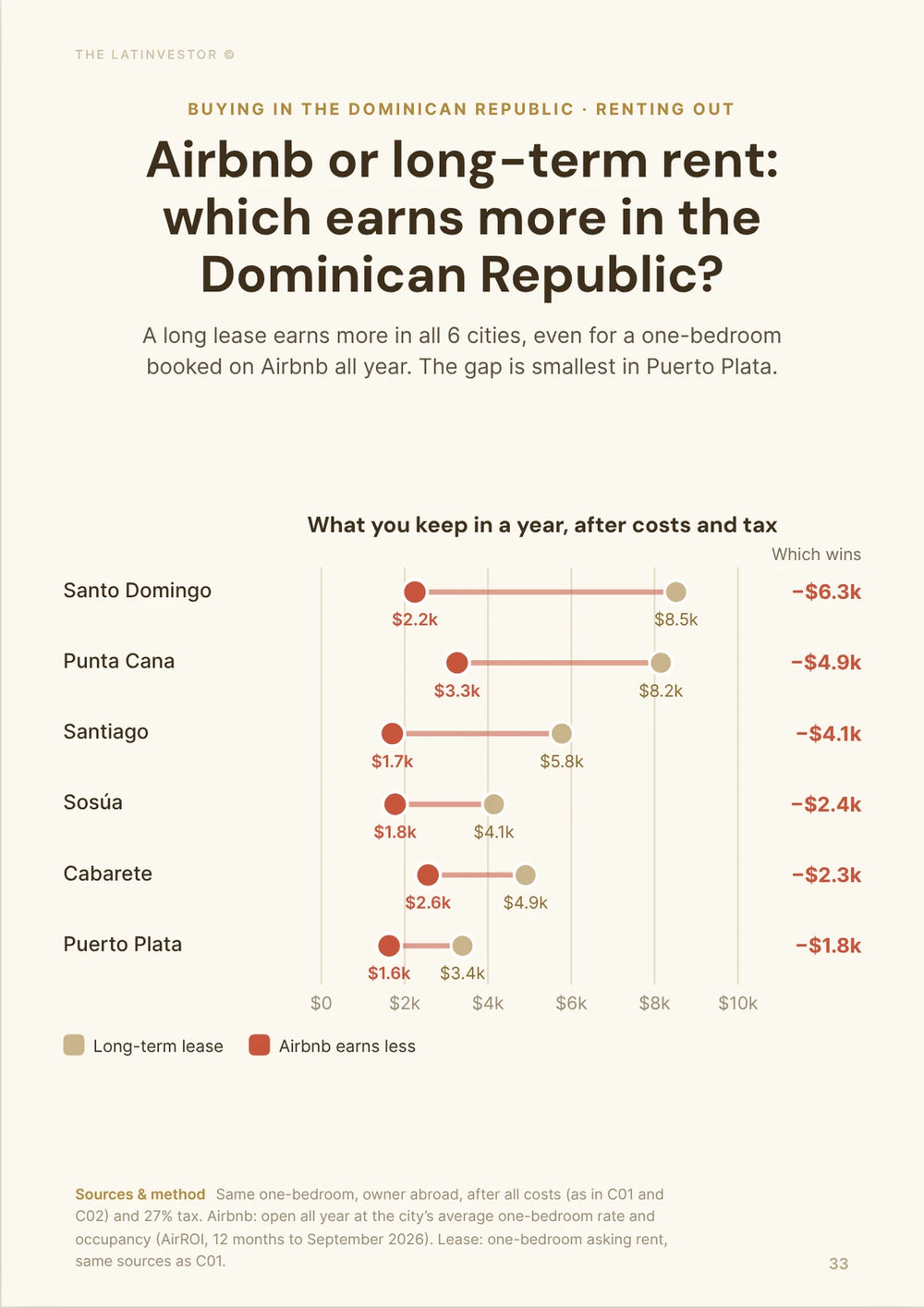
Good long-term rentals find tenants, but Airbnb is crowded: the average Punta Cana listing was booked only 36.4% of nights over the last 12 months (AirROI), even though airport traffic rose 19.3%.
Punta Cana has a big pipeline: RE/MAX counts more than 50 off-plan projects in its sample. That gives you room to negotiate, and it is the main risk for resale prices.
Buying and selling costs about 7.5% to 11.5% of the price round trip, so on a $200,000 home you need $15,000 to $23,000 of gain just to break even. Plan to hold about 5 years.
Bottom line: buy finished or nearly finished units with clean title in proven areas, aim for about 7% gross yield on long-term rent (what a Punta Cana 2-bedroom gets at $1,500 a month), negotiate hard on off-plan, and skip the deal if it only works on Airbnb.


Prices, price-drop risk and who has the upper hand right now
Do real estate prices look too high in the Dominican Republic in 2026?
In 2026, prices in the Dominican Republic look firm but not crazy. Ordinary apartments in good areas are fairly priced against rents, while prime beach condos and luxury villas look expensive.
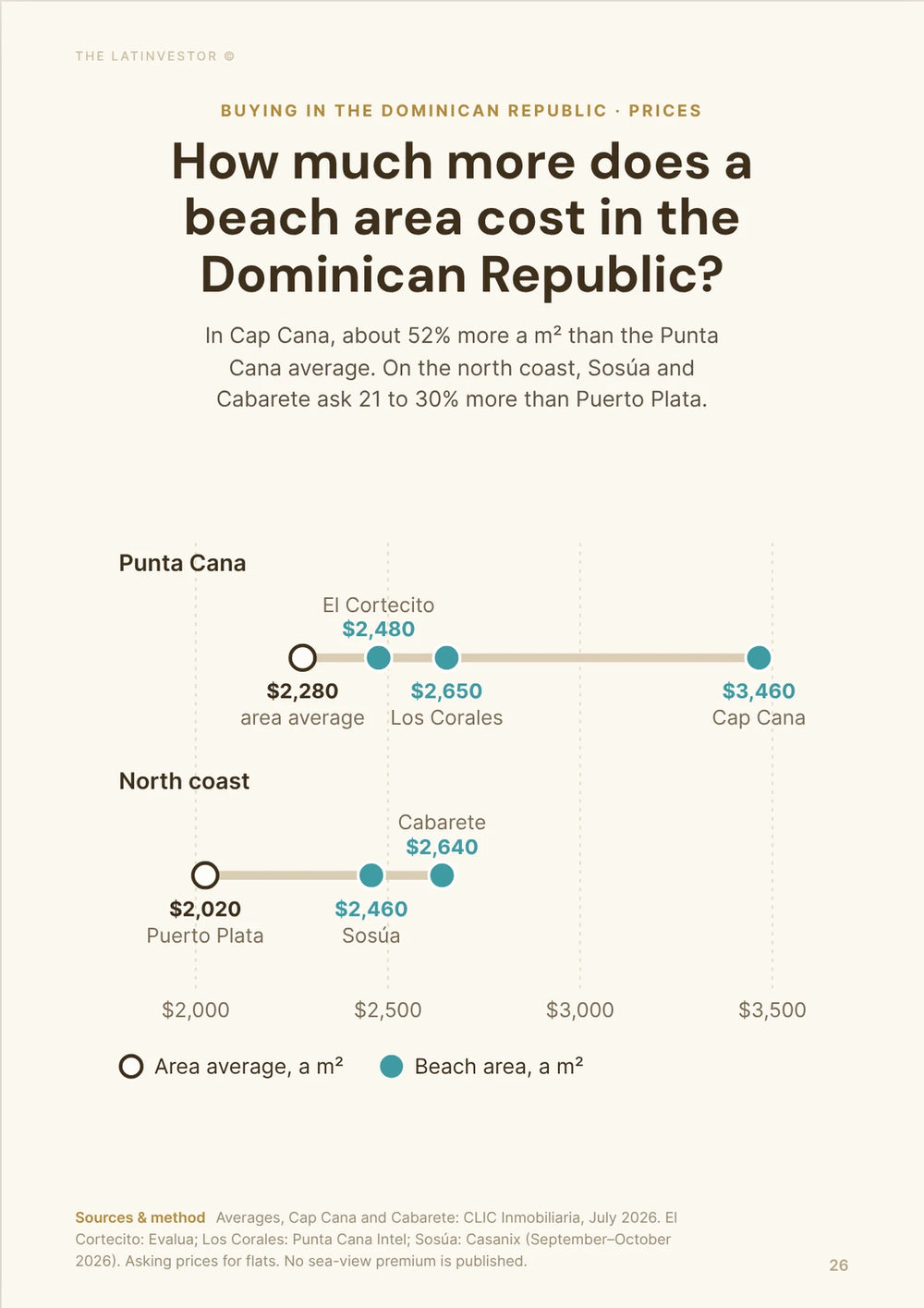
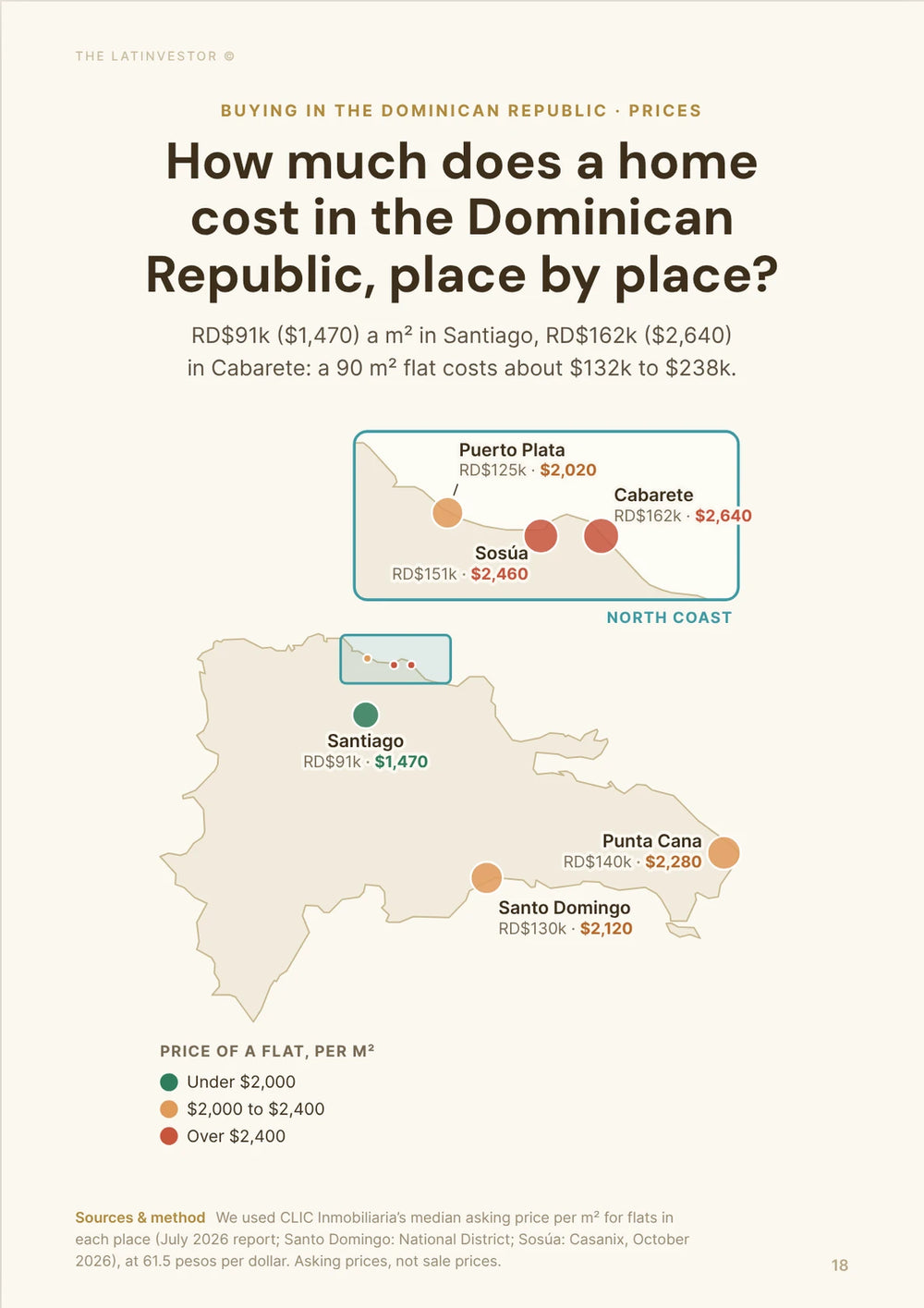
Apartments ask a median of about $2,000 per m² nationally (CLIC, June 2026, 65,160 listings) and about $1,902 per m² in RE/MAX's July 2026 sample. Houses ask about $1,417 per m² (Casanix, October 2026).
The gap between areas is large. In Santo Domingo, Piantini asks about $2,721 per m² and Naco $2,378, while Santo Domingo Este asks about $1,120. Punta Cana-Bávaro apartments ask about $2,278 per m², and Cap Cana is far above that.
In the listings we saw, sellers of good units in Piantini, Naco, Cap Cana and Punta Cana Village hold their price, while stale listings in weaker Bávaro projects, older Santo Domingo houses and remote villas sit for months and get cut.
Coastal prices are set by tourism, diaspora money and cash buyers, not by local salaries. That keeps prime areas strong, but it also means a few weak tourist seasons would hit them first.
We used asking-price data carefully, because the Dominican Republic has limited public closed-sale data.
We also checked listings ourselves to separate prime-area strength from ordinary overpriced stock.
Does a property price drop look likely in the Dominican Republic in 2026?
In 2026, a meaningful national price drop over the next 12 months looks unlikely to us. Demand is still supported by tourism, remittances, foreign buyers and an economy that grew 4.5% from January to August 2026.
Nobody publishes a credible price forecast for the country, so we won't invent one. Our read: prime city and tourism areas should hold, while weak off-plan projects and overpriced villas are where prices can slip.
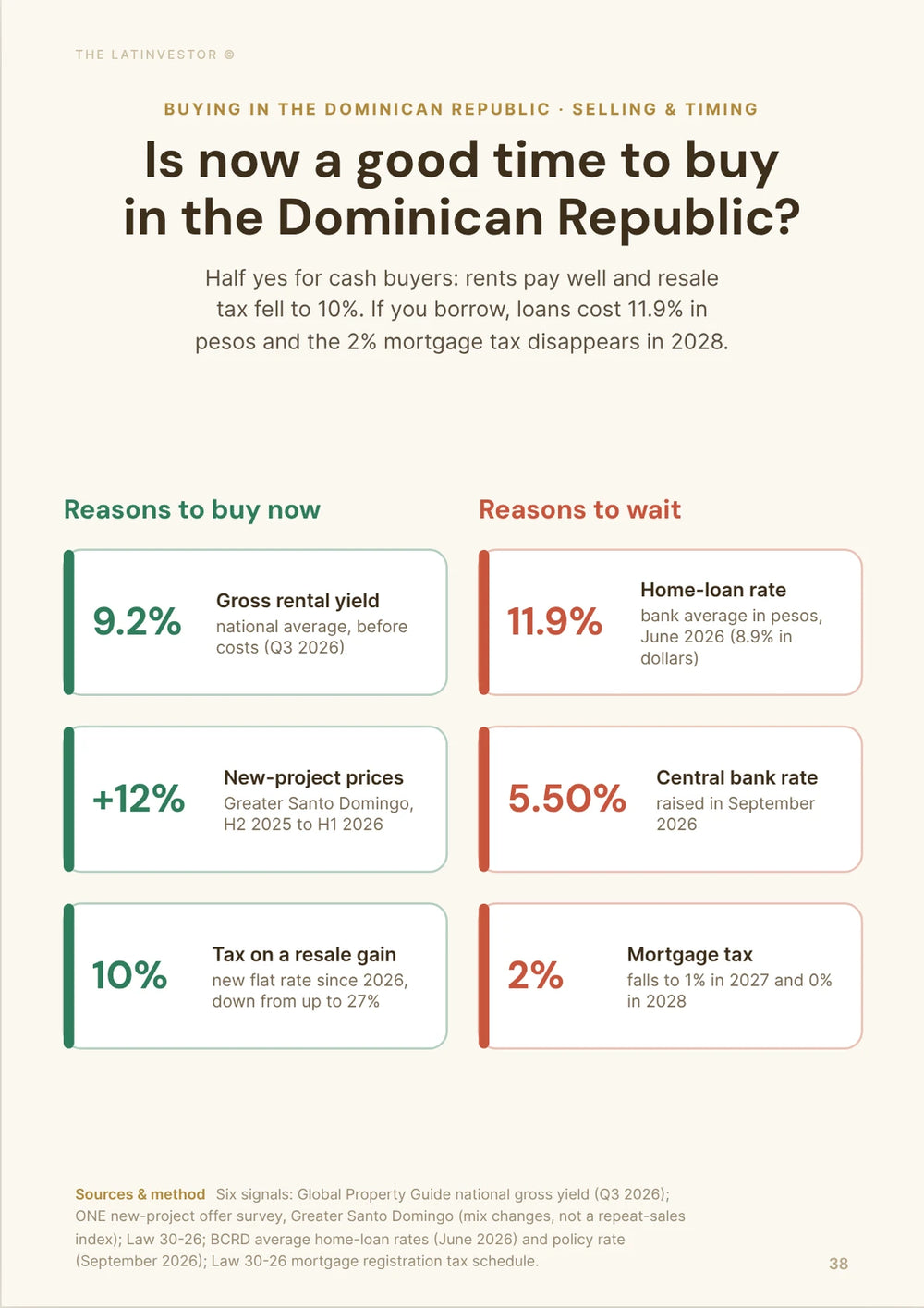
The main local risk is the cost of credit. The central bank raised its policy rate from 5.25% to 5.50% in September 2026, and the average housing loan was 11.90% in pesos in June. That squeezes local buyers who need a mortgage.
It is a slow squeeze, not a shock. Inflation was 5.12% over the year to September 2026, and mortgage lending is still growing: the stock of mortgages was up 11.5% year on year in July 2026 (Superintendencia de Bancos).
We treated mortgage pressure as the main risk because it directly affects local affordability.
We then adjusted the risk down because cash and foreign buyers are still active in prime Dominican Republic locations.
Could property prices jump again in the Dominican Republic in 2026?
In 2026, a new national price surge in the next 12 months looks unlikely too. The places where prices can still jump are small and scarce: good beachfront in Cap Cana and Punta Cana, Las Terrenas, and the best towers in Piantini, Naco and La Esperilla.
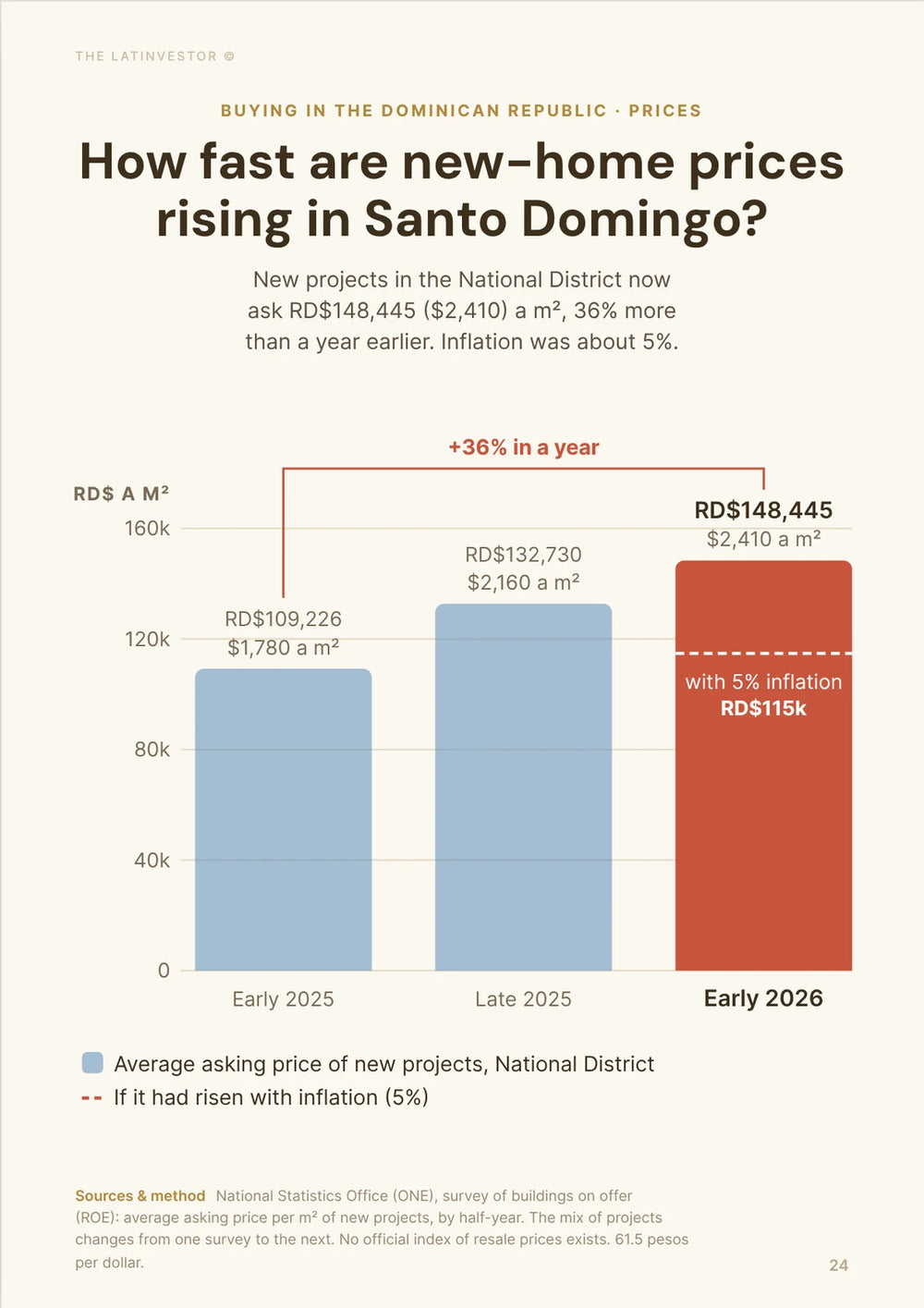
There are real signs of upward pressure in new buildings: in Greater Santo Domingo, new-project offer prices rose 12.2% between the last two ONE surveys (second half of 2025 to first half of 2026). That is offer prices in new projects, not a measure of resale prices.
The biggest demand trigger is tourism. Punta Cana airport handled 6.38 million international passengers in January to June 2026, up 19.3%, and tourism money feeds rents, buyer confidence and developer pricing.
We gave more weight to areas with both tourist renters and local buyers.
We also scored submarkets ourselves to avoid treating every beach location as equally strong.
Are we in a buyer or a seller market in the Dominican Republic in 2026?
In 2026, the Dominican Republic is a mild seller's market for scarce, good units and a buyer's market for ordinary new-build condos, especially in Punta Cana.
There is no national months-of-inventory figure. What we see in listings: realistic resale homes in proven areas sell within a few months, while overpriced or generic units sit much longer and often need a price cut or quiet negotiation.
In practice, sellers only hold the upper hand when the property is genuinely scarce. On a standard off-plan condo, you are the one with options.
We did not give a months-of-inventory number because official national listing data does not exist.
We cross-checked our own listing review with financing pressure and tourism demand.
Do the rate hike and the stronger peso change the timing?
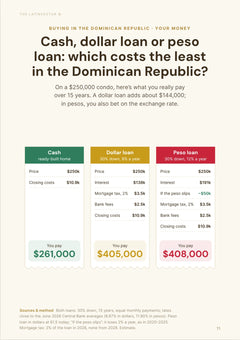
A little, not much. In September 2026 the central bank raised its policy rate from 5.25% to 5.50%. In June, before the hike, the average housing loan was 8.87% in dollars and 11.90% in pesos.
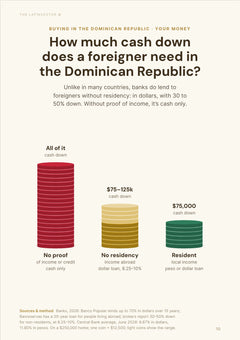
If you need a loan as a foreigner, expect worse terms than that average: brokers report 30% to 50% down payments and 10 to 15 year terms, and no bank publishes a binding rate for non-residents. Banco BDI listed dollar mortgages at 8.9% to 11.4% in May 2026.
The peso moved the other way from what was expected: in December 2025, the central bank's survey of analysts expected about 67 per dollar by the end of 2026. Instead, it started 2026 at about 63.5 per dollar, strengthened to about 59 to 60 in March, and is about 61.5 in October. Your dollars buy about 3% fewer pesos than in January.
For a dollar-priced condo this changes nothing. It matters for peso costs (lawyer, notary, furniture, renovation) and for peso rents: a RD$60,000 rent is now worth about $975 to you, not $945.
What to do: if you finance, ask for a fixed period in writing and compare at least two banks. If you pay cash, use the rate hike in negotiation: local buyers who need a mortgage are fewer, and sellers know it.
Average loan rates are BCRD June 2026 figures; individual quotes depend on the bank and your profile.
Are homes overpriced, or fairly priced in the Dominican Republic in 2026?
Are homes overpriced versus rents or versus incomes in the Dominican Republic in 2026?
In 2026, homes in the Dominican Republic look fairly priced against rents in good areas, but expensive against local incomes, especially in dollar-priced Santo Domingo towers and beach resort zones.
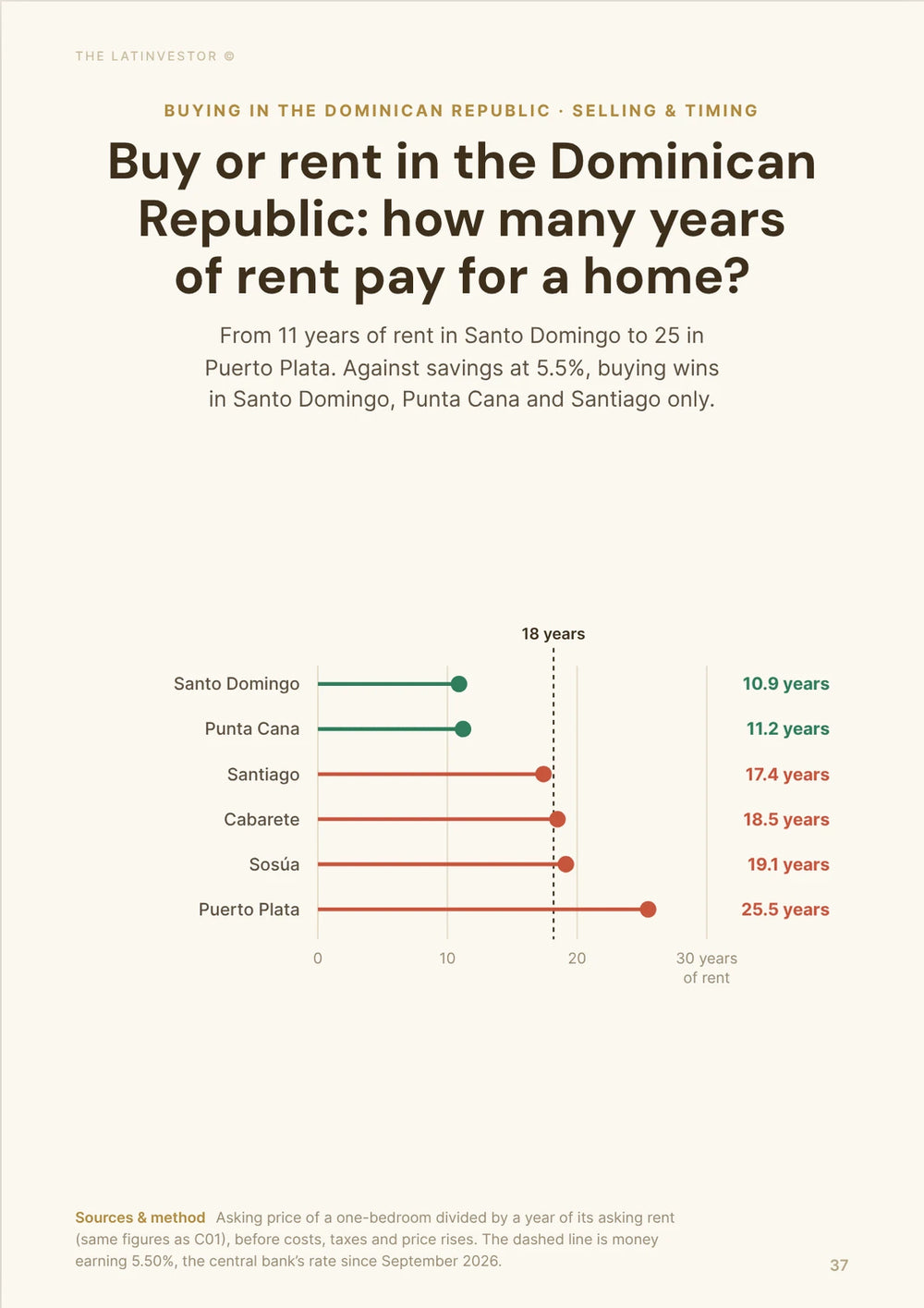
A 2-bedroom in Punta Cana-Bávaro asks $240,000 to $260,000 and rents for about $1,500 a month (CLIC, March 2026). That is about 14 years of rent, or a 7.2% gross yield. In Santo Domingo, a $245,000 2-bedroom against a $1,500 rent in Naco gives a similar ratio.
A price-to-rent ratio of 12 to 16 is usually seen as balanced, so income-producing units are not bubble-priced when the rent is real. Global Property Guide's national 9.21% gross yield (about 11 years of rent) uses prime asking figures: your net yield will be much lower once you pay condo fees, vacancy, upkeep and tax.
Against incomes the picture is less comfortable. Many central Santo Domingo and coastal homes cost far more than a normal Dominican household can pay without savings, remittances or foreign income.
We separated rent affordability from local income affordability because the buyer pools are different.
We computed price-to-rent as asking price divided by 12 months of asking rent.
Are home prices above the long-term average in the Dominican Republic in 2026?
In 2026, prices in the Dominican Republic look above their pre-2020 trend, especially in prime tourism zones. We can't put a precise number on it: there is no reliable national price index for the country.
For the same reason, ignore any precise "prices rose X% this year" claim for the whole country. The hard data points we have: construction input costs rose only 1.94% in the year to June 2026 (ONE ICDV), while new-project offer prices in Greater Santo Domingo rose 12.2% between the last two ONE surveys.
After inflation, prices still look above the last normal cycle, but not so far above rents and building costs that a national crash is the likely scenario.
We compared current prices with pre-2020 trend levels rather than treating old prices as a target.
We also adjusted our view for the permanent rise in tourism and foreign-buyer demand.
What local changes could move prices in the Dominican Republic in 2026?
Are big infrastructure projects coming to the Dominican Republic in 2026?
In 2026, the biggest infrastructure project for property is the Pedernales and Cabo Rojo tourism zone in the southwest. It could lift nearby land and housing over time, but it is not an instant price guarantee.
Don't count on fast dates. In August 2026, Sigmund Freund, the official in charge of the projects, said the Cabo Rojo airport terminal should be finished in December 2026 and the airport operational in July 2027. The first hotel (Iberostar, 580 rooms) is planned for February 2027, with about 1,700 hotel rooms by the end of 2027.
Until flights and hotels are running, buying land there is a bet on government dates. Elsewhere, better roads and airport capacity matter more for Punta Cana, Bávaro, Santiago, Puerto Plata and Santo Domingo.
We only gave strong weight to projects with official backing and visible progress.
Opening dates are the government's own projections, not verified progress.
Are zoning or building rules changing in the Dominican Republic in 2026?
The main rule change is the slow move toward territorial planning under Law 368-22 and the National Territorial Planning Plan, not one sudden national building ban.
In 2026, the effect on prices should be mildly positive for legal, well-permitted homes and mildly negative for risky projects in sensitive coastal or fast-growing areas.
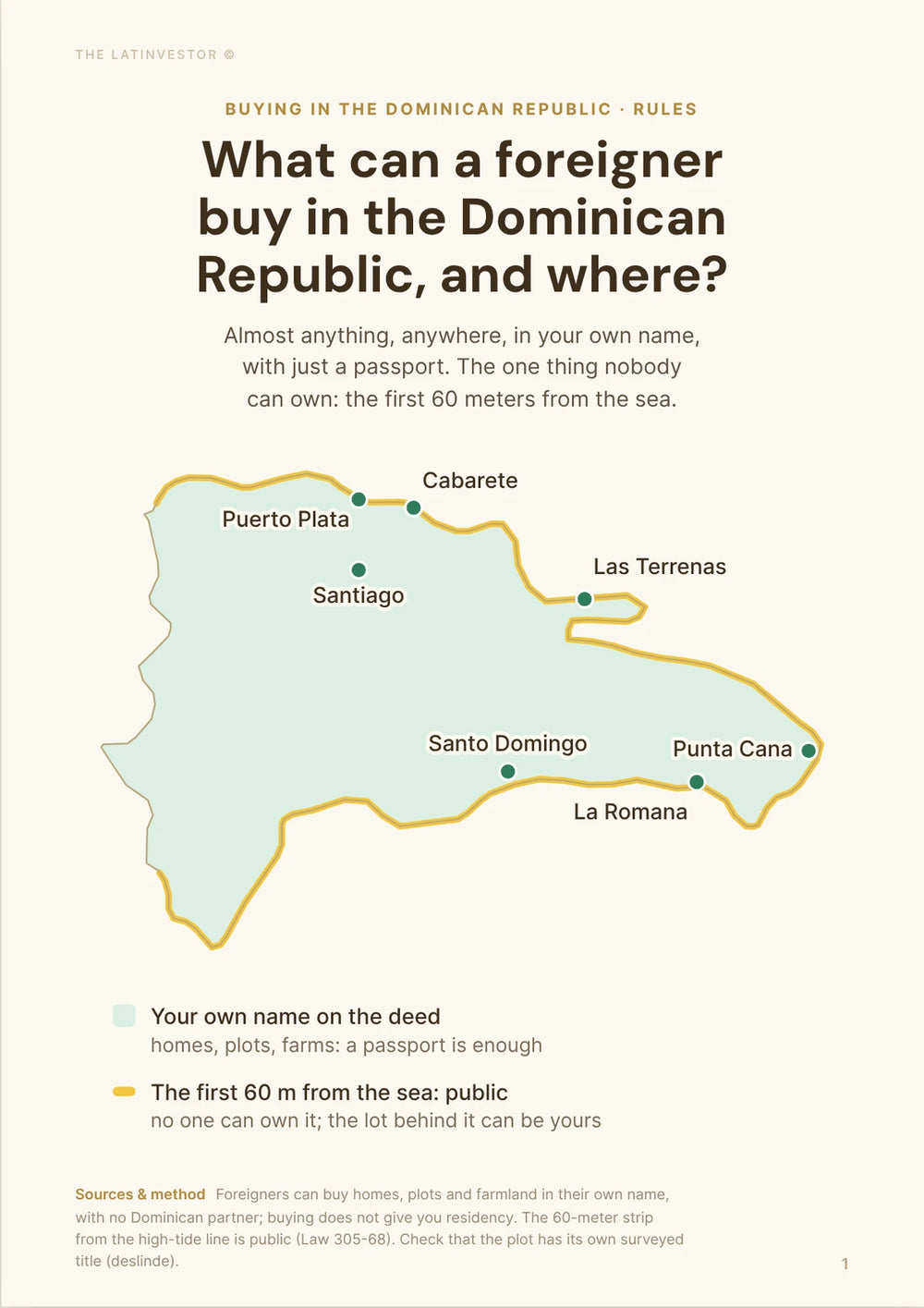
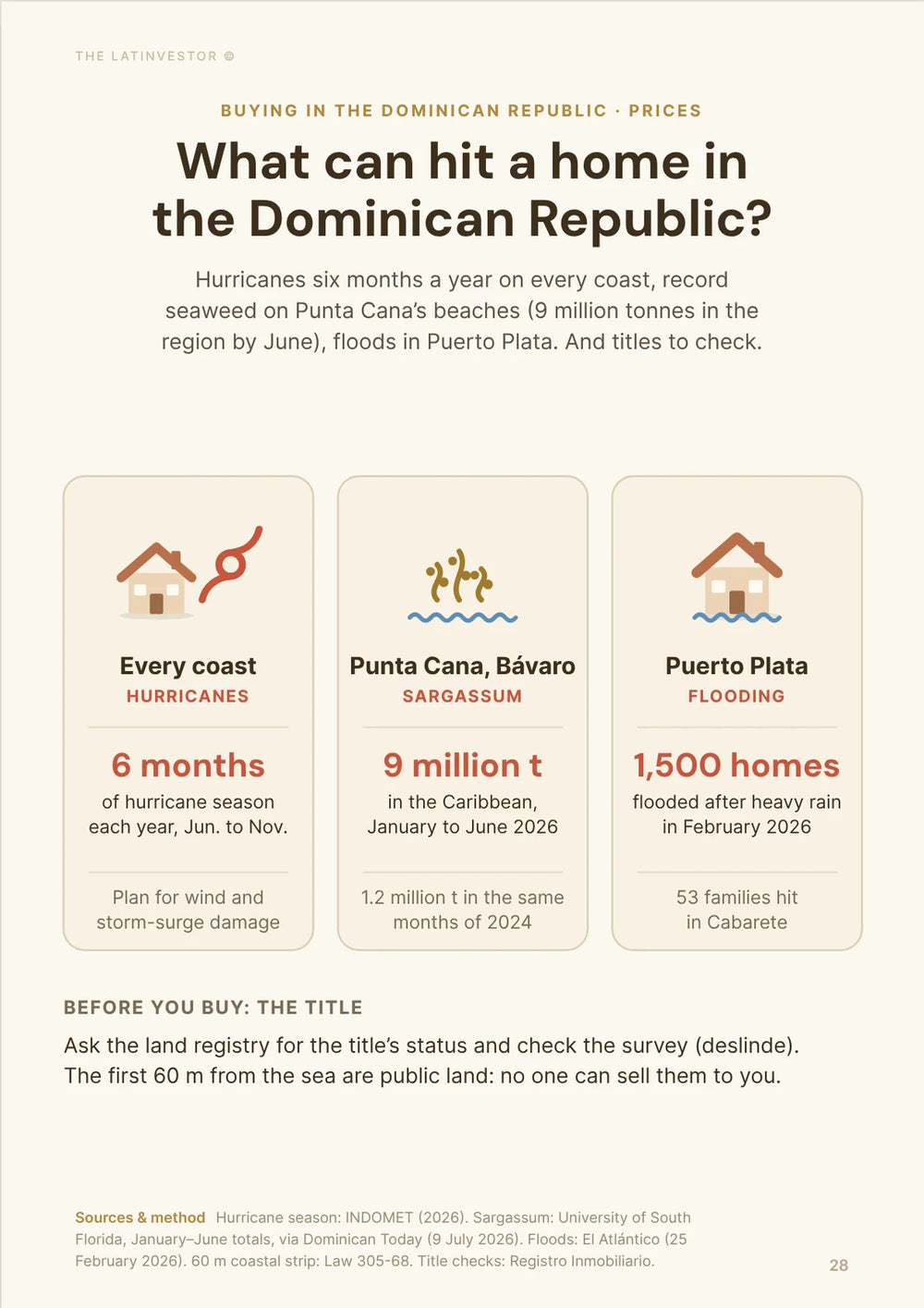
The areas most affected are Las Terrenas, Samaná, Cabarete, Miches, Bávaro, Cap Cana and Pedernales. There, zoning, the 60 m public coastal strip, environmental permits and title checks can change what a property is really worth.
We translated planning law into buyer risk rather than assuming an immediate price shock.
We weighted coastal checks more heavily because legal mistakes there are costly.
Are foreign-buyer or mortgage rules changing in the Dominican Republic in 2026?
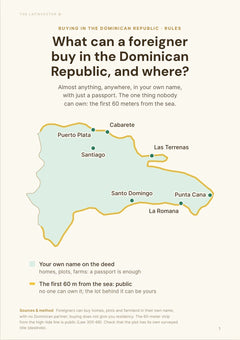
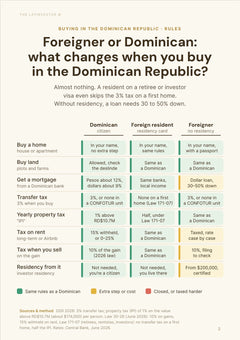
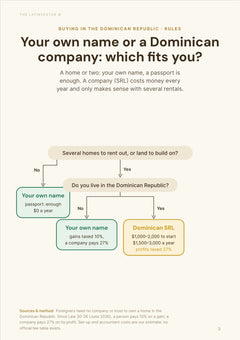
In 2026, there is no move against foreign buyers: you can still buy in your own name, without residency, with the same title as a local. The changes that matter are tax changes and the cost of credit.
Law 30-26 (June 2026) cut the mortgage registration tax to 2% of the loan in 2026, 1% in 2027 and 0 from 2028. That makes financing a little cheaper to set up, but the interest rate matters far more.
On rates, the trend turned the wrong way: the central bank raised its policy rate to 5.50% in September 2026. Expect banks to stay careful with income proof and loan-to-value, especially for non-residents.
Enforcement is getting more formal too: tax registration, title checks, condo documents and rental income reporting in popular foreign-buyer areas.
We treated financing cost as the main rule-like constraint on buyers.
We also checked incentive risk for low-cost housing and tourism-linked projects.
What did Law 30-26 change for property buyers in 2026?
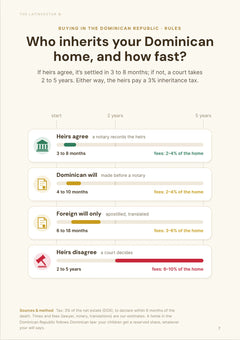
Law 30-26, the tax reform in force since June 2026, is the biggest change for owners this year. It did not touch the 3% transfer tax you pay when you buy.
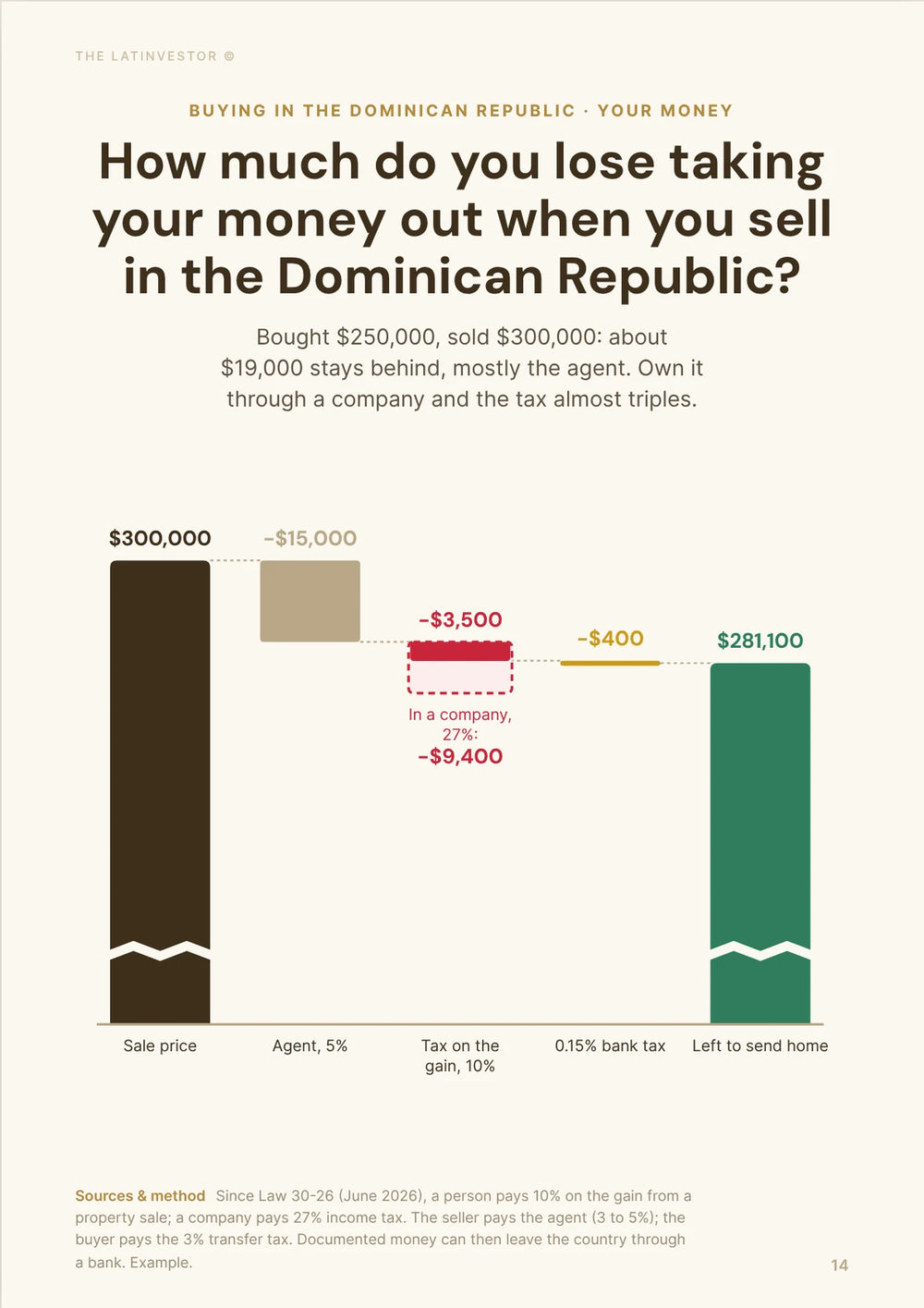
Selling is now simpler: individuals pay a flat, final 10% on the gain. Before, gains were taxed at 27% after an inflation adjustment. Your main home is exempt if you reinvest in a new one within 6 months, and so are owners over 65 selling their main home.
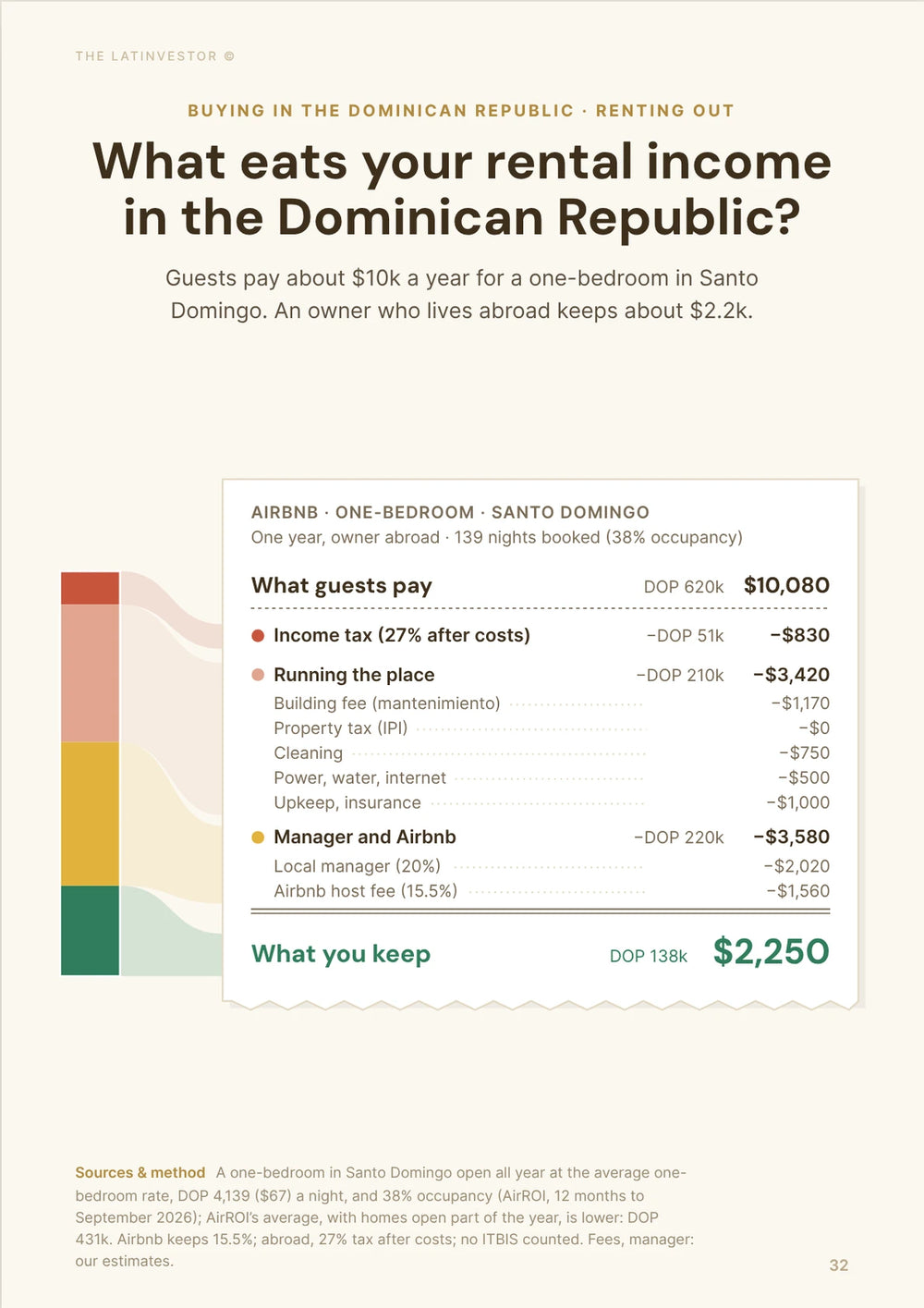
Renting: when a company pays rent to an individual landlord, it now withholds 15% instead of 10%. As a non-resident, budget for Dominican income tax on your rental profit (the general rate for non-residents is 27%).
Confotur is the open question. The law kept the Confotur tourism incentives, but added a rule that you can't use two incentive regimes on the same operation, and lawyers say its effect on Confotur is still unclear. If a project sells you on Confotur, check it on MITUR's Confotur search and ask your lawyer to confirm the exemption in writing.
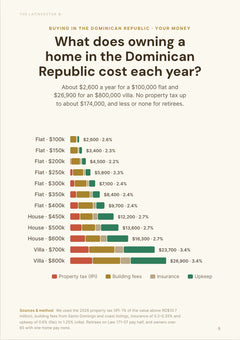
The annual property tax (IPI) did not change: 1% of the combined appraised value above RD$10,695,494 (about $174,000) for individuals in 2026.
Ask a Dominican accountant before you rely on any exemption.
Will it be easy to find tenants in the Dominican Republic in 2026?
Is the renter pool growing faster than new supply in the Dominican Republic in 2026?
In 2026, long-term renter demand is probably growing a bit faster than good rental supply in the best areas, while the national market looks closer to balanced. On the coast, short-term rental supply looks too big for demand: the average Airbnb is booked only about a third of the nights.
Demand signals are solid: remittances were $8.43 billion from January to August 2026, up 6.5% (BCRD), visitors passed 9.2 million in the first nine months, and jobs keep pulling people to Santo Domingo, Santiago and Punta Cana.
Supply is the issue on the coast. Developers are building: construction was the fastest-growing sector in August 2026 (+7.9%). But new stock is often small tourist condos, not the family apartments local tenants want.
We separated tourism rentals from normal long-term rentals because they behave differently.
We also scored rental areas ourselves for location, tenant depth and management risk.
Are days-on-market for rentals falling in the Dominican Republic in 2026?
In 2026, a well-priced long-term rental in a good area usually finds a tenant within a few weeks. Generic or overpriced units can sit for 2 to 4 months. No one publishes official days-on-market data, so these are our estimates from listings.
The fast movers are well-priced apartments with parking and backup power in Piantini, Naco, Evaristo Morales, Punta Cana Village, Los Corales, Cap Cana or central Santiago.
The benchmark to price against: in Punta Cana-Bávaro, the median long-term asking rent was $1,150 for a 1-bedroom and $1,500 for a 2-bedroom in March 2026 (CLIC). Ask much more than that and you wait.
We used listing behavior and tourism pressure as proxies because official rental days-on-market data does not exist.
Are vacancies dropping in the best areas of the Dominican Republic in 2026?
In 2026, vacancy for good long-term rentals in the best areas looks low: CLIC puts prime Piantini under 4%, and for normal long-term units in good areas we estimate 5% to 7%.
Short-term rentals are a different story. The average Airbnb was booked only 32% of nights nationally over the 12 months to September 2026, and 36.4% in Punta Cana (AirROI). Even good, well-managed units leave many nights empty.
What gets the most inquiries: furnished units with parking, a generator or inverter, decent building management and clear condo rules.
We treated long-term vacancy as an estimate because there is no national rental vacancy registry.
Am I buying into a tightening market in the Dominican Republic in 2026?
Is for-sale inventory shrinking in the Dominican Republic in 2026?
In 2026, it depends on what you buy. Good, well-priced resale homes in proven areas are scarce, while new-build stock is plentiful and still growing.
The listing count shows it: CLIC counted 65,160 active apartment listings nationwide in June 2026, 12,854 of them in Punta Cana-Bávaro alone. There is no comparable series to say whether that number is going up or down year on year.
Prime inventory stays tight because owners of good rental units don't feel forced to sell while tourism income and dollar rents hold up.
We stayed cautious because the Dominican Republic does not publish a national listing inventory index.
We also checked listings ourselves to separate scarce resale homes from abundant off-plan supply.
Are homes selling faster in the Dominican Republic in 2026?
In 2026, good homes in the Dominican Republic sell faster than weak ones. From what we see, a realistic prime condo can sell in 1 to 3 months and an ordinary resale apartment in 3 to 6 months. No official selling-time data exists.
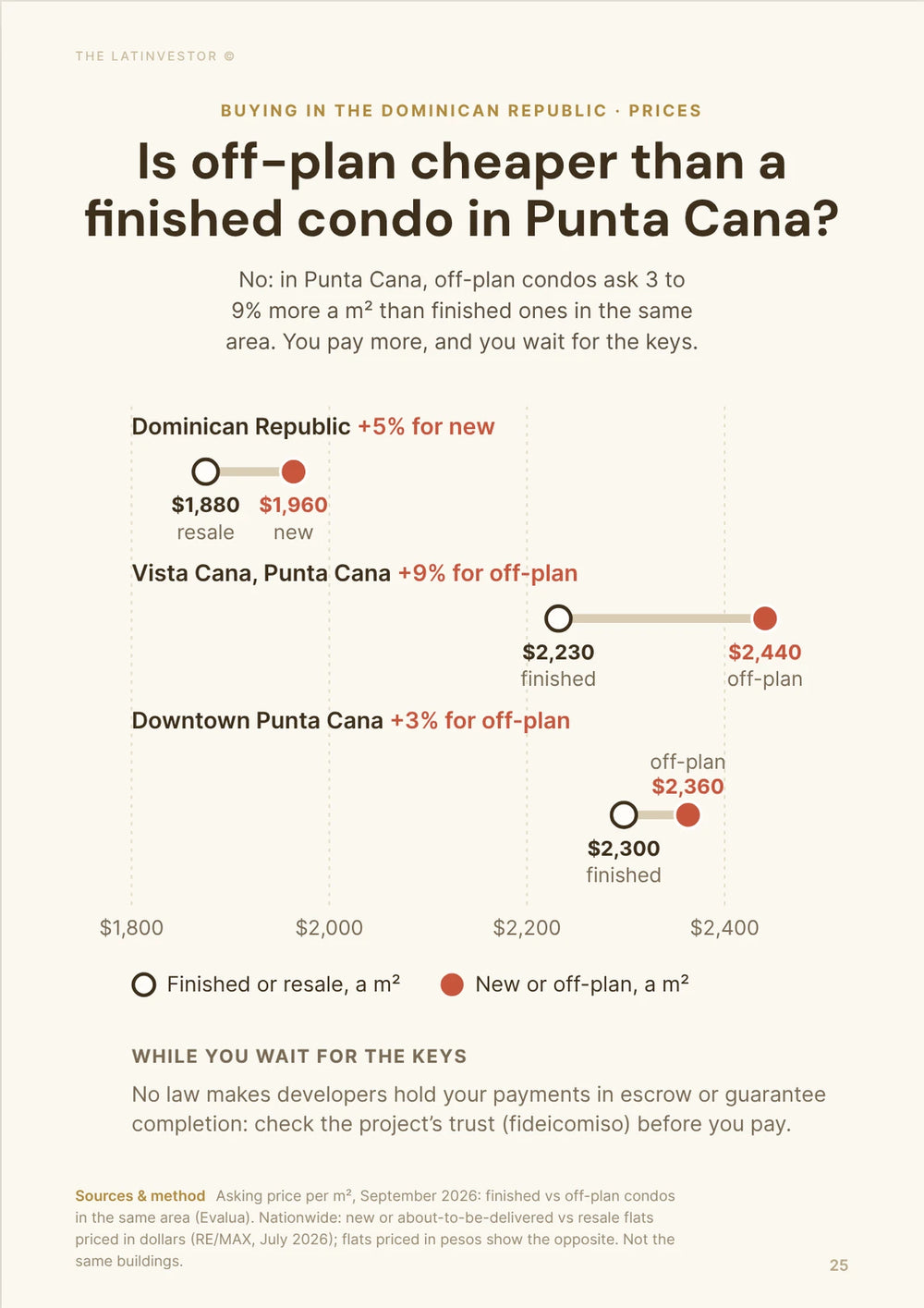
Overpriced villas and ordinary new-build resales can take 6 to 12 months, especially in Punta Cana, where resellers compete with developers still selling new units with payment plans.
We treated selling time as an estimate because public transaction-speed data is thin.
We checked whether demand came from local buyers, foreign buyers or rental investors before judging how easy a sale is.
Are new listings slowing down in the Dominican Republic in 2026?
In 2026, we see no sign that new listings are slowing nationally. Developers are still active in Santo Domingo and the tourism corridors, even while prime resale listings stay scarce.
Listing activity is usually stronger around the high tourist season and the holidays, but the current level does not look unusually low outside the best buildings, beachfront and most sought-after neighborhoods.
We did not claim a national shortage because off-plan supply is still very visible.
We used our own checks to see where new listings are abundant but not necessarily attractive.
Is new construction failing to keep up in the Dominican Republic in 2026?
In 2026, new construction is probably not keeping up in the best Santo Domingo and Santiago neighborhoods, but there is no shortage across every segment. In Punta Cana, the risk is the opposite.
Construction slowed in 2025 and picked up in 2026: it grew 7.9% year on year in August 2026, the fastest of any sector. Input costs are rising slowly (+1.94% in the year to June 2026), so builders are not being priced out.
The real bottleneck is land, financing and infrastructure in the exact areas where buyers and tenants want to be, not permits alone.
We separated paper supply from completed, usable and well-located supply.
We also looked at whether new projects match real tenant demand, not only buyer brochures.
Is Punta Cana building too many condos?
Many buyers ask this in 2026, and the honest answer is: for small tourist condos, yes, there is too much on the way.
RE/MAX counts more than 50 off-plan projects in its Punta Cana sample, and CLIC found 12,854 apartment listings in Punta Cana-Bávaro in June 2026. Many of these units are sold to buyers who plan to rent them on Airbnb.
Tourism is growing, but rentals grew faster. Punta Cana airport traffic rose 19.3% in the first half of 2026, yet the average Punta Cana Airbnb was booked only 36.4% of nights and grossed RD$749,226 (about $12,200) over the last 12 months (AirROI, all listings, including part-time ones).
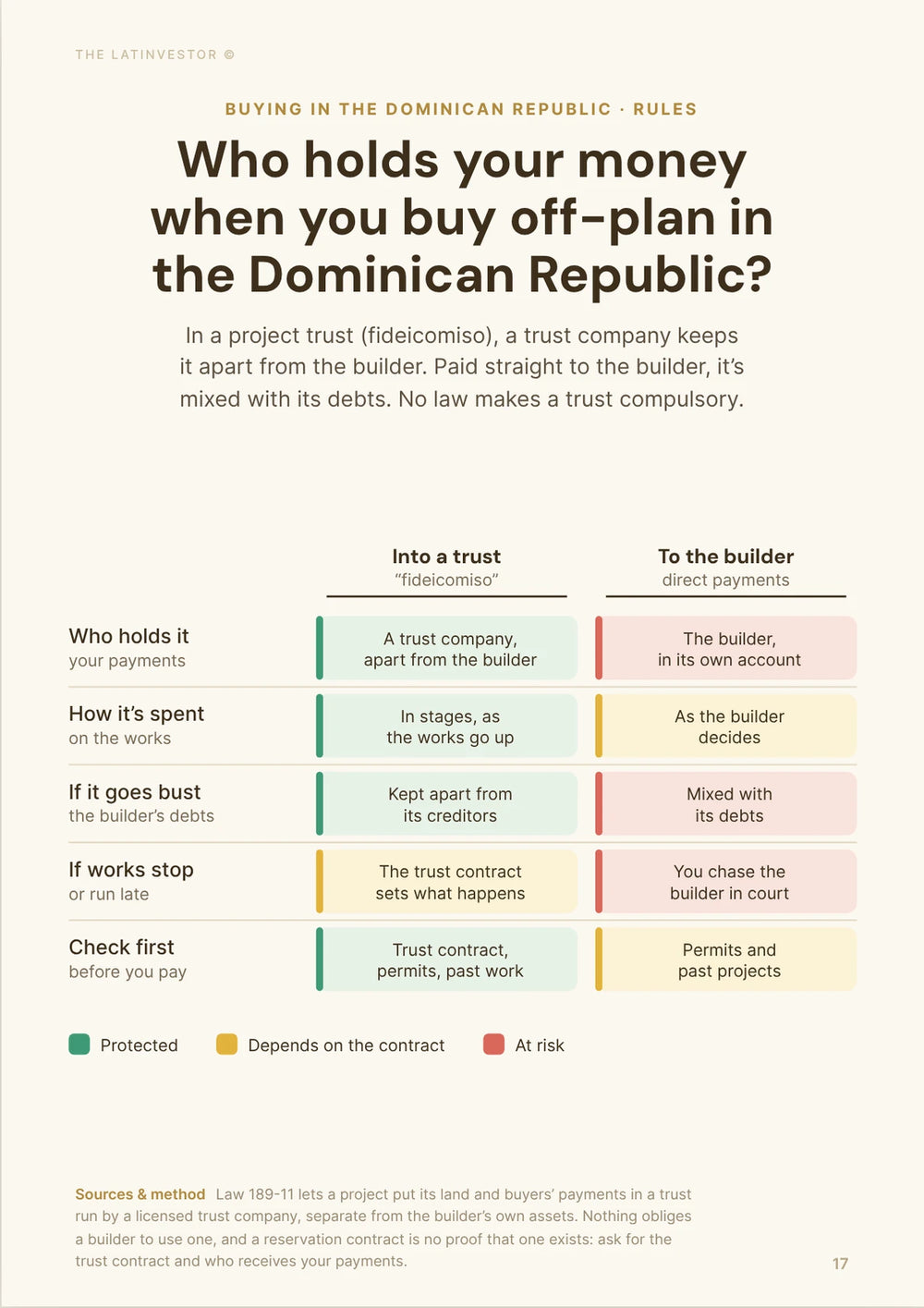
What this means for you: off-plan prices are negotiable, resale of a generic condo will be slow, and every unit that fails on Airbnb ends up competing for long-term tenants at $1,150 to $1,500 a month.
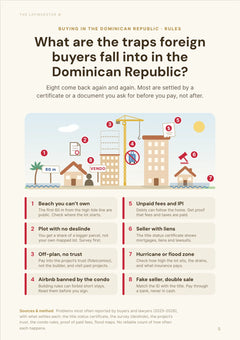
What to check: the developer's delivered projects, the fideicomiso (trust) holding your payments, the condo rules on short stays, and the rent the unit would get long term. If the price only makes sense with a full Airbnb calendar, walk away.
AirROI's annual revenue is an average of all listings, including those not open all year.
Will it be easy to sell later in the Dominican Republic in 2026?
Is resale liquidity strong enough in the Dominican Republic in 2026?
In 2026, homes in the Dominican Republic sell reasonably well when they have clear title, a realistic price and broad appeal. Remote villas, oversized luxury units and badly documented property are much harder to sell.
From what we see in listings, realistic resale homes usually sell in roughly 3 to 6 months. Rare prime units go faster and overpriced ones sit much longer.
The thing that helps most when you sell: a normal-sized apartment or house in a proven area such as Piantini, Naco, Evaristo Morales, central Santiago, Punta Cana, Bávaro, Cap Cana, Las Terrenas or Puerto Plata, with an individual surveyed title (deslinde).
We judged how easy a resale is by buyer depth, rental usefulness and legal clarity.
We also scored whether a property appeals to locals, diaspora buyers and foreign investors.
Is selling time getting longer in the Dominican Republic in 2026?
In 2026, selling time is not clearly getting longer for good properties, but it is for listings priced 10% to 20% above comparable homes.
Our estimate for most realistic listings is 3 to 6 months, from under 3 months for rare prime units to 12 months or more for remote villas or overpriced new-build resales.
The main reason sales can drag is affordability: with peso housing loans around 11.90%, fewer local buyers can chase expensive dollar-priced listings.
We treated selling time as an estimate because official days-on-market data does not exist.
We also separated price-sensitive local demand from cash and foreign-buyer demand.
Is it realistic to exit with profit in the Dominican Republic in 2026?
In 2026, the chance of selling at a profit is medium to high for a well-bought property held several years, and low for overpriced off-plan units or remote villas bought at peak prices.
Plan to hold about 5 years. Buying, selling, vacancy and upkeep can easily wipe out a short-term price gain.
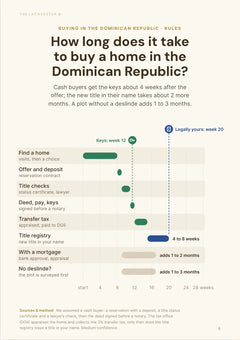
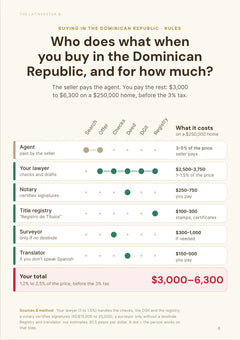
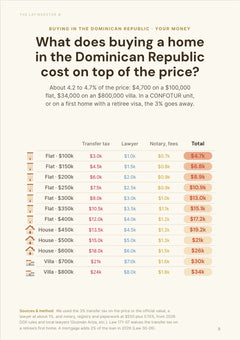
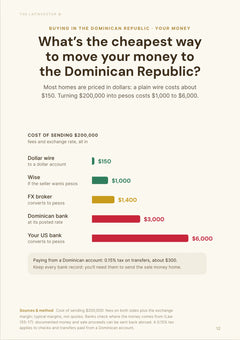
The round trip costs about 7.5% to 11.5% of the price: 4.5% to 6.5% to buy (3% transfer tax, lawyer, notary) and 3% to 5% agent commission when you sell. On a $200,000 home, that is $15,000 to $23,000 (about RD$922,000 to RD$1.4 million), before the 10% tax on any gain.
The best way to improve your odds is to buy below comparable prices in an area where both tenants and future buyers exist, rather than counting on fast appreciation in a speculative location.
We added buying costs and the seller's agent commission to get the round-trip cost.
We also used our own resale model for vacancy, maintenance, management and selling costs.
Related blog posts
- Where is the best place to buy in the Dominican Republic?
- Moving to the Dominican Republic? Here's everything you need to know
- How much money do you need to retire in the Dominican Republic now?
- What are housing prices like in the Dominican Republic?
- Can a foreigner get a mortgage in the Dominican Republic?
- Will property prices keep rising in the Dominican Republic?
Our methodology
This article estimates whether 2026 is a good time to buy residential property in the Dominican Republic: apartments, condos, houses and villas, with a focus on Santo Domingo, Santiago, Punta Cana-Bávaro and the north coast.
Prices are asking prices from CLIC Inmobiliaria (June 2026), RE/MAX Metropolitana (July 2026) and Casanix (October 2026), not closed sales. Rents come from CLIC (March 2026) and Casanix, gross yields from Global Property Guide (Q3 2026), and Airbnb figures from AirROI only (October 2025 to September 2026). Macro figures (growth, inflation, remittances, the policy rate and loan rates) come from the Banco Central (BCRD), construction costs and new-project prices from ONE, and the mortgage stock from the Superintendencia de Bancos.
Tax rules come from the text of Law 30-26 and DGII, buying costs from 1122 and Inmobiliaria Puntual, Confotur rules from MITUR and lawyers' notes, and the Pedernales timeline from the government statements reported in August 2026.
We checked these figures in October 2026. Conversions use about 61.5 Dominican pesos per US dollar.
Where we had no direct figure (selling times, inventory, long-term vacancy outside Piantini), we estimated it from listings and said so, and we left out any national price-change figure because no reliable index exists. Your own result will depend on the building, the price you negotiate, the condo fees, your financing and how long you hold.
Key sources used for this analysis include Banco Central de la República Dominicana, BCRD economic outlook 2026, BCRD 2025 economic report, BCRD September 2026 rate decision, BCRD exchange rates, BCRD inflation to September 2026, BCRD activity index to August 2026, BCRD remittances January-August 2026, BCRD remittances January-September 2026, Superintendencia de Bancos mortgage stock, Banco BDI reference rates, Oficina Nacional de Estadística, ONE ICDV construction cost index, Incaribemedia on ONE's new-project survey, CLIC price per m² report, CLIC H1 2026 report, CLIC Punta Cana rents, RE/MAX Metropolitana national price guide, RE/MAX Metropolitana Punta Cana price guide, Casanix house prices, Casanix Naco rents, AirROI Punta Cana, MITUR SITUR tourism statistics, El Inmobiliario on 2026 visitor arrivals, Revista Mercado on airport traffic, El Dinero on Pedernales, World Bank Dominican Republic outlook, U.S. State Department investment climate statement, Global Property Guide price history, Global Property Guide rental yields, Global Property Guide mortgage rates, National Territorial Planning Plan, Law 30-26, DGII IPI page, DGII low-cost housing guide, 1122 on closing costs, Tropical Assets on Confotur, Tropical Assets on financing, MITUR Confotur search and MOPC.