
Summary
Is Toluca a good place to live as an expat? Yes, for professionals working in its industrial corridor who want cooler weather and cheaper housing than Mexico City. By our estimate, a single person lives comfortably on MXN 30,000 to MXN 45,000 a month.
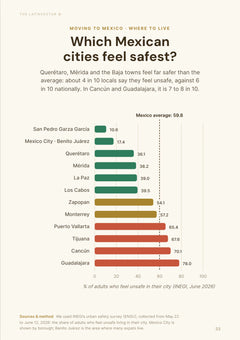
Quality of life is improving a little on safety, but residents still feel unsafe: 71.0% of adults in June 2026, down from 75.5% in March, against 59.8% across Mexico's cities.
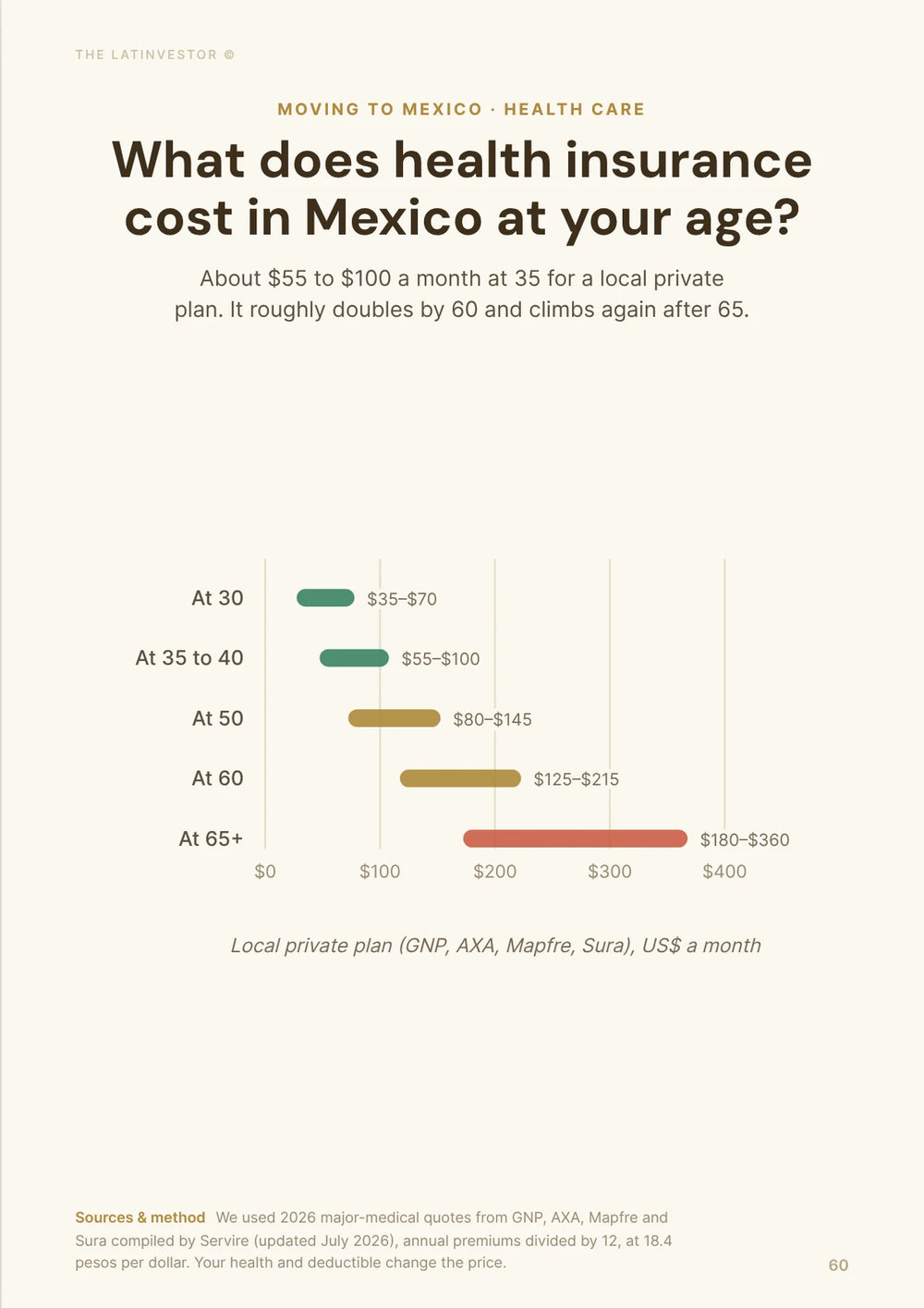
Private hospitals such as Hospital Ángeles Metepec are good. A general practitioner starts at around MXN 400 on Doctoralia, and private insurance is strongly recommended.
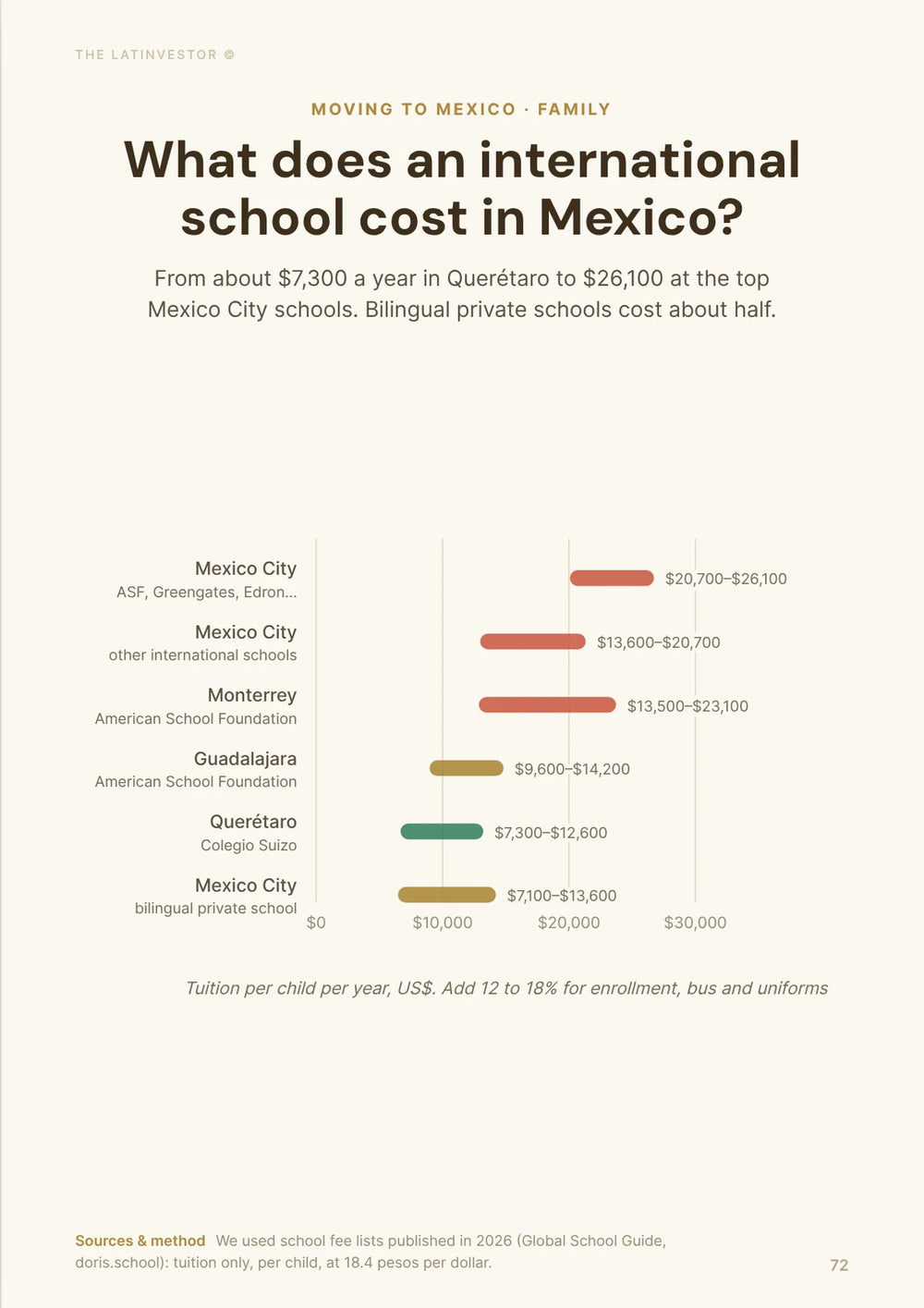
Cumbres, Colegio Argos and Peterson are the best-known schools. Fees vary widely, so ask each school; the top international schools in Mexico City charge about MXN 165,000 to MXN 354,000 a year.
Safety depends on the neighborhood. Expats favor Metepec (San Jerónimo Chicahualco, La Asunción, Bellavista) and Colonia Universidad in Toluca.
Housing takes 30% to 40% of the budget. A central one-bedroom rents for about MXN 13,000 on Numbeo, and Livingcost puts a single resident's average spending at about MXN 18,300 a month.
On a local salary of MXN 25,000 to MXN 100,000 a month, income tax takes roughly 14% to 24%. The top 35% rate applies above about MXN 5.1 million a year.
Most expats are Americans and Canadians, then Spanish and Germans, working in car manufacturing, food processing and logistics. They are a small share of the metro population.
Expats arrive mainly through corporate moves, and some leave because Toluca has fewer English-speaking services and a smaller social scene than Mexico City.
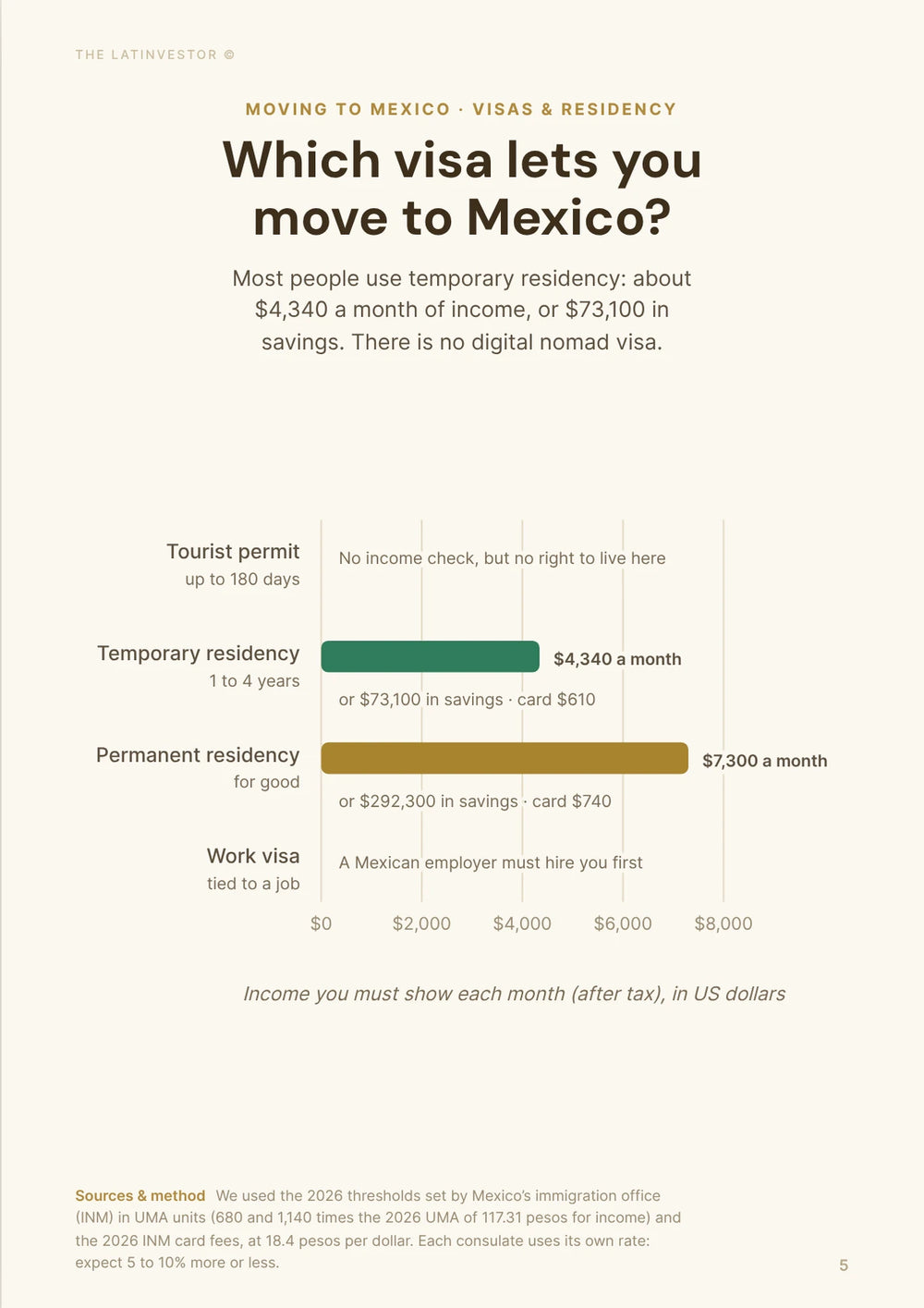
Most come on the Temporary Resident Visa, which asks for MXN 79,770.80 a month of income or MXN 1,337,334 in savings in 2026. Getting it often takes six to twelve weeks.
Car and auto-parts makers, food processing and logistics hire the most. By our estimate, professional expat salaries run from MXN 45,000 to MXN 160,000 gross a month.
Expats love the cool climate, the lower costs and Mexico City about an hour away, now also by the El Insurgente train since February 2026. They dislike the cold nights, below 5°C in winter, and the car dependence.
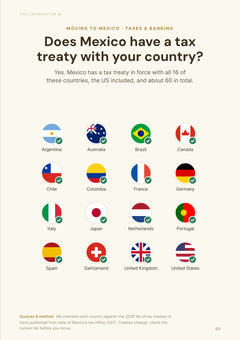
Foreigners can buy directly in their own name, since Toluca is outside the restricted zone (100 km from borders, 50 km from coasts), so no fideicomiso is needed.
Apartments cost roughly MXN 18,000 per m² outside the center and MXN 25,600 in the center, and prices rose 7.31% across Mexico in the year to the second quarter of 2026. Mortgages for foreigners exist but are hard to get, at about 10% or more.
Bottom line: Toluca suits industry professionals and families who want space and a calm pace near the capital. Choose Metepec or a secure area, budget for heating, and learn Spanish.

What are quality of life, healthcare, schools and safety like in Toluca?
Is quality of life getting better or worse?
In 2026, quality of life in Toluca is showing modest improvement, particularly on safety indicators, while affordability remains stable compared to nearby Mexico City.
The most notable improvement in Toluca over the past two to three years has been the reduction in high-impact crime rates, with the local government reporting declines of over 30% in certain categories, though residents still feel unsafe: 71.0% of adults in June 2026, down from 75.5% in March, according to INEGI.
However, housing prices in Toluca have been rising steadily in line with national trends tracked by SHF's housing price index, which means good rental deals in premium neighborhoods like Metepec go quickly, creating pressure for newcomers.
Are hospitals good?
Hospital quality in Toluca ranges from good to very good, particularly in the private sector, though public facilities may have longer wait times compared to North American or Western European standards.
The hospitals most commonly recommended by expats in the Toluca and Metepec area include Hospital Ángeles Metepec, which is part of a well-known private network, and Centro Médico de Toluca, which appears in international stroke-care quality initiatives.
A standard private consultation with a general practitioner in Toluca in 2026 starts at around MXN 400 (roughly USD 22, or EUR 20) on Doctoralia, and specialists charge more.
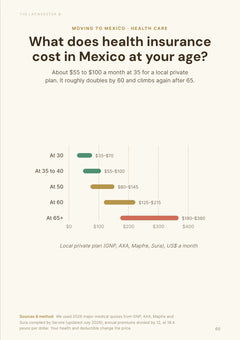
Private health insurance is strongly recommended for expats in Toluca because it provides faster access, predictable costs, and coverage for major medical events, even though public options like IMSS exist for residents.
Are there any good international schools?
Toluca and its neighboring Metepec area offer several solid international and bilingual school options, with quality ranging from good to excellent depending on the institution.
The most reputable international schools among expat families in Toluca include Cumbres International School Toluca, Colegio Argos in Metepec, and Peterson Schools, which is part of a respected network across Mexico.
Annual tuition fees at international schools in Toluca vary widely by school and grade, and most schools add a one-time enrollment fee, so ask each school for its 2026-27 fee schedule; for reference, the top international schools in Mexico City charge about MXN 165,000 to MXN 354,000 a year (roughly USD 8,950 to USD 19,000, or EUR 8,050 to EUR 17,500).
Waitlists at the most in-demand schools in Metepec can be long, especially for early years and transition grades, while public schools are generally not a practical option for expat children who need an English-first curriculum.
Is Toluca a dangerous place?
Toluca is not uniformly dangerous, but safety levels vary significantly by neighborhood (71.0% of adults in Toluca felt unsafe in June 2026, against 59.8% across Mexico's cities), and expats should plan like they would in any large city with some areas requiring more caution than others.
The most common safety concerns for expats in Toluca include opportunistic theft, car break-ins, and occasional reports of verbal harassment, particularly in less-trafficked areas or when walking alone at night in unfamiliar neighborhoods like San Pablo Autopan or San Cristóbal Huichochitlán.
The safest neighborhoods for expats in Toluca are generally found in Metepec (areas like San Jerónimo Chicahualco, La Asunción, and Bellavista) and in Toluca proper (Colonia Universidad, Centro, and Santa Ana Tlapaltitlán), where controlled-access buildings and higher foot traffic are common.
Women can live alone safely in Toluca, though it is commonly recommended to choose secure housing in well-lit areas, use ride-hailing apps like Uber or DiDi at night, and avoid isolated streets after dark.
 Moving to Mexico
How much does everyday life cost in Toluca in 2026?
What monthly budget do I need to live well?
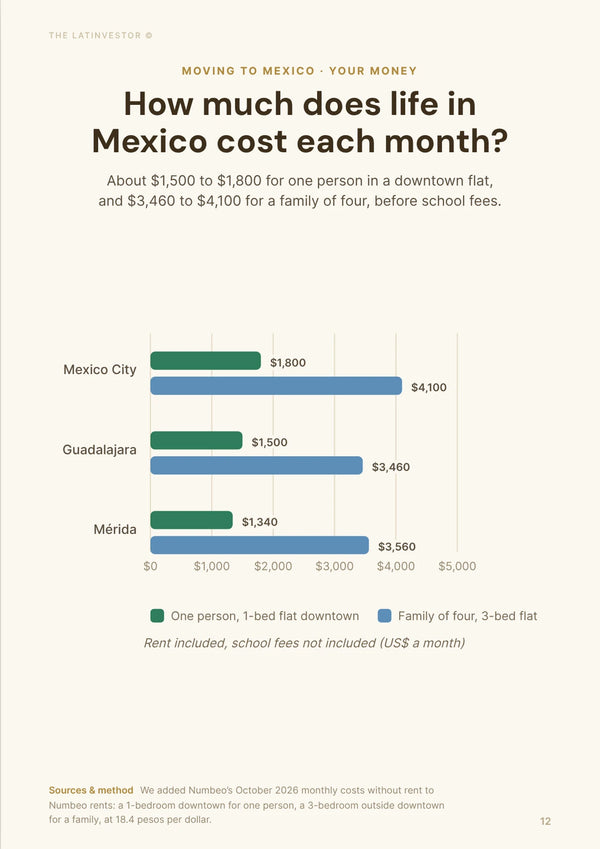
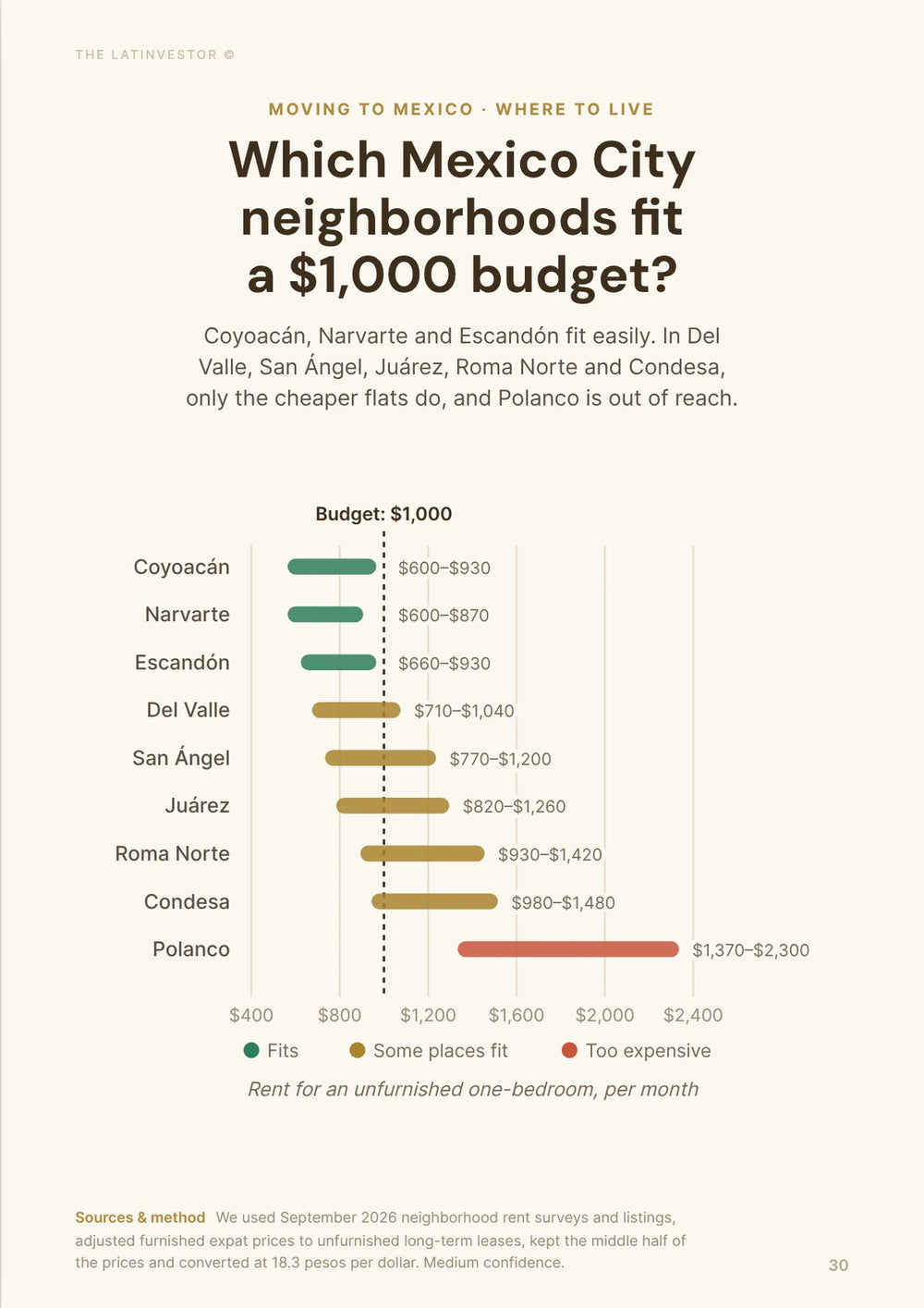
By our estimate, a single person needs approximately MXN 30,000 to MXN 45,000 per month (roughly USD 1,630 to USD 2,450, or EUR 1,460 to EUR 2,200) to live comfortably in Toluca with a good apartment, regular dining out, and a modest social life. For comparison, Livingcost puts the average spending of a single resident, rent included, at about MXN 18,300 (about $990) a month, and a one-bedroom in the center rents for about MXN 13,000 (about $710) on Numbeo.
For a more modest but decent lifestyle in Toluca, a single person can manage on around MXN 20,000 to MXN 28,000 per month (roughly USD 1,090 to USD 1,520, or EUR 980 to EUR 1,370), covering a simpler apartment, groceries, public transport, and basic healthcare.
For a more comfortable or upscale lifestyle in Toluca with a premium apartment in Metepec, private healthcare, frequent dining out, and a car, a single person should budget MXN 50,000 to MXN 70,000 per month (roughly USD 2,700 to USD 3,800, or EUR 2,450 to EUR 3,400).
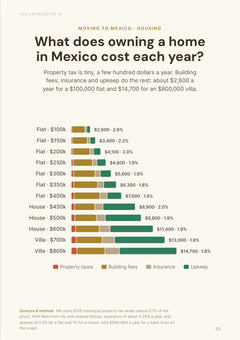
Housing typically takes the largest share of a monthly budget in Toluca, often accounting for 30% to 40% of total expenses, especially if you prioritize newer buildings with heating (important given Toluca's cold nights at 2,600 meters altitude) and secure parking.
What is the average income tax rate?
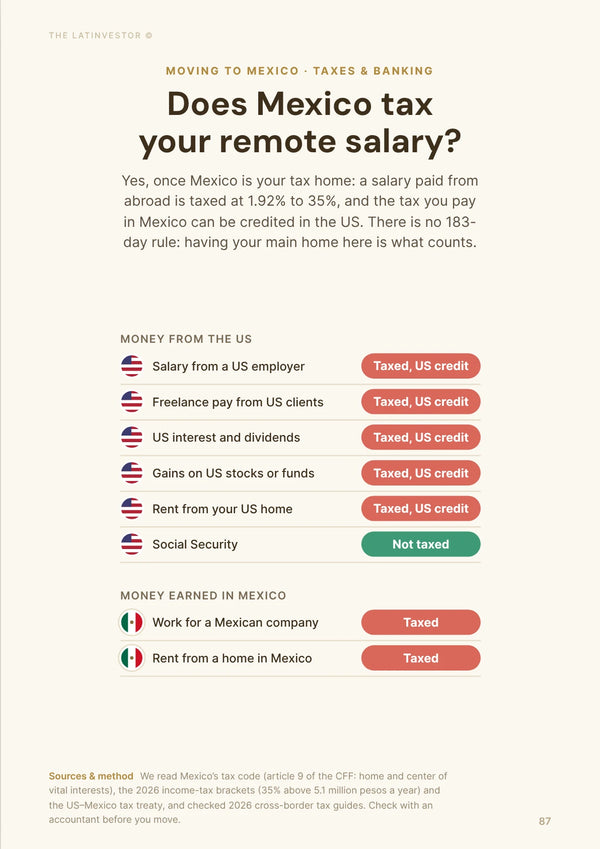
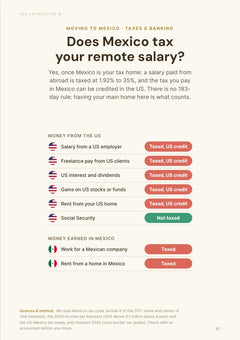
The effective income tax rate for a typical middle-income earner in Toluca (and all of Mexico) is approximately 14% to 24% for a salary of MXN 25,000 to MXN 100,000 a month under the 2026 withholding table, depending on deductions and whether you are a salaried employee or an independent contractor.
Mexico's progressive income tax system (ISR) has marginal rates ranging from 1.92% on very low incomes up to 35% on earnings above approximately MXN 5.1 million per year (MXN 425,642 a month in 2026), though most expats with professional salaries fall into the 23.52% or 30% marginal brackets while paying a lower effective rate.
What kind of foreigners actually live in Toluca in 2026?
Where do most expats come from?
Most expats in Toluca come from the United States and Canada, followed by smaller communities from European countries (especially Spain and Germany) and other Latin American nations, reflecting the city's industrial and binational family connections.
The total number of foreign residents in Toluca is relatively small compared to major expat hubs like Mexico City or coastal areas, likely a small share of the metropolitan population, though there is no recent official count at municipality level.
The main reason expats from these countries are drawn to Toluca is employment in the automotive, manufacturing, and logistics sectors, where multinational companies frequently rotate international staff or hire specialized professionals.
The expat population in Toluca is predominantly working professionals and binational families, rather than retirees or digital nomads, which distinguishes it from beach destinations or Mexico City's trendy neighborhoods.
Where do most expats live?
Expats in Toluca tend to concentrate in Metepec (particularly neighborhoods like San Jerónimo Chicahualco, La Asunción, and Bellavista) and in select areas of Toluca city (such as Colonia Universidad, Centro, and Santa Ana Tlapaltitlán).
These neighborhoods attract expats because they offer gated communities (fraccionamientos) with security, proximity to international schools and shopping centers, and easier access to the services and amenities that internationally oriented families typically need.
Emerging areas gaining interest from expats include some newer developments along the Toluca-Metepec corridor and parts of San Mateo Oxtotitlán, where modern housing is becoming available at slightly lower price points than the most established premium pockets.
Are expats moving in or leaving Toluca?
Toluca is experiencing a modest net inflow of expats, driven primarily by corporate rotations and new manufacturing investments in the region, rather than a large-scale lifestyle migration.
The main factor drawing expats to Toluca right now is the expansion of industrial operations in the automotive, logistics, and food and beverage sectors, which creates demand for specialized professionals and plant managers.
The main factor causing some expats to leave Toluca is the relatively limited international infrastructure compared to Mexico City, including fewer English-first services, a smaller social scene, and less cultural entertainment variety.
Compared to similar industrial cities in Mexico like Querétaro or Aguascalientes, Toluca sees steadier but less dramatic expat growth, largely because it lacks the same level of marketing as a "lifestyle destination" despite offering comparable affordability and job opportunities.
 70+pages
What paperwork do I need to move to Toluca in 2026?
What visa options are popular in Toluca?
The three most popular visa types for expats moving to Toluca are the Temporary Resident Visa (via economic solvency), employer-sponsored work visas, and family unity visas for those with Mexican spouses or relatives.
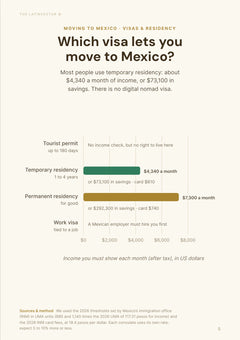
The Temporary Resident Visa for economic solvency requires proof of a monthly income of 680 UMA, MXN 79,770.80 (about $4,350), over the past six months, or savings of 11,400 UMA, MXN 1,337,334 (about $72,500), held for the past twelve months in 2026. Each consulate converts this into dollars, usually around USD 4,200 to USD 4,400 a month or USD 70,000 to USD 73,000 in savings.
Mexico does not have a dedicated digital nomad visa, but the Temporary Resident Visa functions similarly, allowing remote workers to live in the country for up to four years while earning income from sources outside Mexico.
The Temporary Resident Visa is initially valid for one year and can be renewed annually for up to four years total, after which holders may apply for permanent residency if they meet the requirements.
How long does it take to get residency?
Getting temporary residency in Mexico (including Toluca) often takes around six to twelve weeks end-to-end, though there is no official processing time, assuming documents are ready and consulate appointments are available.
Common factors that can delay the process include difficulty getting timely consulate appointments (which can take two to four weeks), incomplete documentation, and processing backlogs at local INM offices, while having all paperwork perfectly prepared tends to speed things up.
To become eligible for permanent residency in Mexico, an expat must hold temporary residency for four consecutive years, after which they can apply for a permanent resident card that does not require renewal.
How hard is it to find a job in Toluca in 2026?
Which industries are hiring the most?
The top three industries hiring the most in Toluca are automotive and auto parts manufacturing, food and beverage processing, and logistics and warehousing, all of which benefit from the city's position in Mexico's central industrial corridor.
Getting hired in Toluca without speaking Spanish is realistic mainly in multinational companies for specialized roles like engineering, plant management, and finance, but for most local positions, Spanish fluency is a strong advantage or requirement.
The types of roles most accessible to foreign job seekers in Toluca include plant engineering and operations leadership, quality assurance specialists, supply chain managers, and IT professionals supporting manufacturing systems.
What salary ranges are common for expats?
By our estimate, typical gross salaries for expats working in professional roles in Toluca range from MXN 45,000 to MXN 160,000 per month (roughly USD 2,450 to USD 8,700, or EUR 2,200 to EUR 7,800), depending on seniority and specialization.
Entry-level or mid-level expat positions in Toluca, such as junior engineers or analysts, typically pay MXN 45,000 to MXN 90,000 per month (roughly USD 2,450 to USD 4,900, or EUR 2,200 to EUR 4,400).
Senior or specialized expat roles in Toluca, including plant managers, operations directors, and regional leaders, typically pay MXN 90,000 to MXN 300,000 per month (roughly USD 4,900 to USD 16,500, or EUR 4,400 to EUR 14,500), often with additional benefits like transport, meals, or relocation support.
Employers in Toluca's industrial sector commonly sponsor work visas for foreign hires in specialized roles, though they generally prefer candidates who already have the technical skills needed and can operate comfortably in bilingual teams.
 70+pages
What's daily life really like for expats in Toluca right now?
What do expats love most about living in Toluca right now?
The things expats love most about living in Toluca are the cool, high-altitude climate (a relief from Mexico's typical heat), the significantly lower cost of living compared to Mexico City, and the ability to reach the capital in about an hour for weekend culture or hybrid work, now also by train: since February 2026, the El Insurgente line runs all the way from Toluca to Observatorio in Mexico City.
The lifestyle benefit most frequently praised by expats in Toluca is the relaxed pace of life combined with access to modern amenities, good restaurants, and shopping centers, without the traffic congestion and chaos of bigger Mexican cities.
The practical advantage expats appreciate most in Toluca is the value for money on housing, where the same budget that gets a small apartment in a trendy Mexico City neighborhood can secure a spacious home with parking and green space in Metepec.
The social and cultural aspect that makes Toluca enjoyable for expats is the strong emphasis on family life and local traditions, including excellent regional food, weekend markets, and easy access to nearby natural attractions like Nevado de Toluca.
What do expats dislike most about life in Toluca right now?
The main complaints expats have about living in Toluca are the limited international infrastructure (fewer English-speaking services than Mexico City), the reliance on cars for getting around most neighborhoods, and the persistent need to stay alert about personal security in certain areas.
A daily inconvenience that frustrates many expats in Toluca is the cold weather at night (temperatures can drop below 5°C in winter), which catches many newcomers off guard since they expected Mexico to be warm year-round, and not all housing has adequate heating.
The bureaucratic issue that causes the most headaches for expats in Toluca is navigating local government offices and INM procedures, which often require multiple visits, long waits, and Spanish-language paperwork with limited English support available.
Most expats consider these frustrations manageable rather than deal-breakers, especially once they adjust their expectations, learn some Spanish, and build local networks that help navigate the system.
What are the biggest culture shocks in Toluca right now?
The biggest culture shocks expats experience when moving to Toluca are the central role of extended family in daily life, the blend of formal processes with informal flexibility in how things actually get done, and the unexpectedly cold climate at 2,600 meters altitude.
The social norm that surprises newcomers most in Toluca is how much daily life revolves around family obligations and children's school schedules, which can make networking and socializing different from what expats are used to in more individualistic cultures.
The aspect of daily routines that takes longest for expats to adjust to in Toluca is the flexible approach to time and schedules, where meetings may start late, businesses may close unexpectedly for local holidays, and patience becomes an essential skill.
 70+pages
Can I buy a home as a foreigner in Toluca in 2026?
Can foreigners legally own property?
Foreigners can legally own property in Toluca directly and without restrictions because the city is located outside Mexico's "restricted zone" (the area within 100 km of borders or 50 km of coastlines).
The main condition that applies to foreigners buying property in Toluca is that they must obtain a permit from the Ministry of Foreign Affairs if purchasing through certain structures, though in practice most purchases in Toluca can be done via straightforward direct ownership (fee simple).
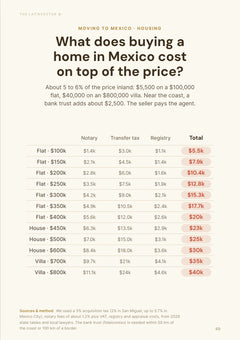
Foreigners in Toluca can own all property types, including apartments, houses, and land, without needing the fideicomiso (bank trust) arrangement that is required in coastal and border areas.
What is the average price per m²?
Apartments in Toluca cost roughly MXN 18,000 per square meter outside the center (roughly USD 980, or EUR 880) and MXN 25,600 in the center (roughly USD 1,390, or EUR 1,250), according to Livingcost's mid-2026 estimates, with premium neighborhoods in Metepec reaching higher levels; there is no reliable official average for the city.
Property prices in Toluca have been rising steadily over the past few years, in line with national trends tracked by SHF's housing price index (up 7.31% across Mexico in the year to the second quarter of 2026), driven by continued demand from both local buyers and the spillover effect of Mexico City's expensive market.
Do banks give mortgages to foreigners?
Mortgages for foreigners in Toluca are available but limited, with stricter requirements than for Mexican citizens, and many foreign buyers end up purchasing with cash or arranging financing from their home country.
Banks in Mexico that are known to offer mortgages to foreigners include Santander México, HSBC México, and Scotiabank México, though availability and terms can vary significantly based on residency status and income documentation.
Mortgage conditions for foreigners in Toluca depend heavily on the bank and on residency status, but expect a larger down payment, an interest rate at or above the market average of about 10% (BBVA, July 2026) and shorter terms, which are less favorable than what Mexican nationals typically receive.
To qualify for a mortgage as a foreigner in Toluca, you typically need to provide proof of legal residency (temporary or permanent), documented income for at least two years, tax filings (either Mexican or foreign with apostille), and a clean credit history.
Our methodology
This article looks at what it is like to live in Toluca as an expat: quality of life, healthcare, schools, safety, monthly budgets, income tax, who the expats are and where they live, visas and residency, jobs and salaries, daily life, and buying a home as a foreigner.
Budgets and salary ranges are our own estimates, built from rents, everyday prices and local pay data. Rents come from Numbeo, Vivanuncios and Propiedades.com, average spending and apartment prices from Livingcost, price trends from the official SHF index, safety from INEGI's ENSU survey and doctor fees from Doctoralia.
Visa and residency rules come from SRE, INM and the 2026 UMA value (MXN 117.31 a day). Tax rates come from SAT's 2026 ISR tables. Property rules come from SRE's restricted-zone guidance.
We checked these figures in October 2026. Peso amounts are converted at about 18.4 pesos per US dollar and 20.5 pesos per euro (October 2026).
Some points have no reliable official figure, such as the number of expats in Toluca, school fees, expat salaries or mortgage terms for foreigners. There we gave a range, labeled it as our estimate, or kept it general. Asking prices and rents are listing prices, not what every buyer or tenant pays.
Key sources used for this analysis include INEGI, Banco de México, SESNSP, IMSS, SHF, Propiedades.com, Vivanuncios, INM, SEDUI Edomex, OECD Taxing Wages, U.S. State Department, INEGI's ENSU survey (June 2026), Doctoralia, Numbeo, Livingcost, SHF housing price index (Q2 2026), CityLaws (2026 residency thresholds), SAT 2026 ISR tables, BBVA México mortgage rates, Mexican Presidency (El Insurgente train) and International Schools Database.