Summary
Buying in the Dominican Republic is legal and safe on paper for foreigners, but most losses happen in one place: money paid before anyone checked the title, which costs only about RD$1,000 (about $16) to do at the Registro de Títulos.
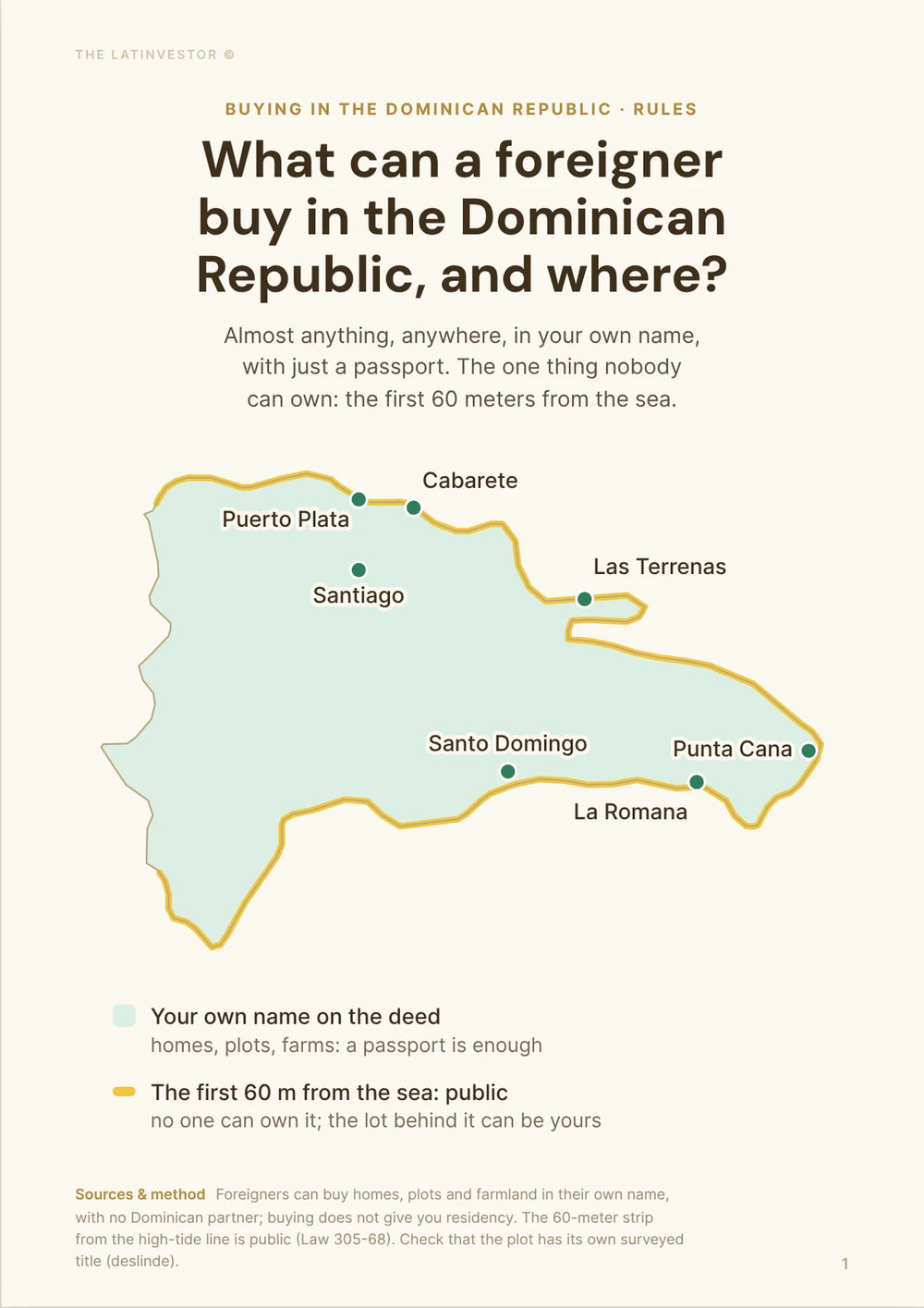
Foreigners can buy in their own name with the same title as locals. The main legal limit is the 60-meter public coastal strip from the high-tide line, which nobody can own.
Courts protect you, but slowly. The country ranked 76th out of 143 in the World Justice Project's 2025 Rule of Law Index (up from 86th), and scored 37 out of 100 on corruption perceptions in February 2026.
Scams are real and recent. In February 2025, prosecutors arrested the people behind the "Guepardo" case: fake projects in Bávaro and La Romana, 122 alleged victims and about $18 million moved.
The top three traps are reservation deposits paid too early, sellers who are not the real owner, and hidden debts. A fresh Certificación del Estado Jurídico del Inmueble shows the owner, mortgages and court entries.
Unpaid IPI property tax and condo fees are the debts buyers miss most. IPI is 1% of combined appraised value above RD$10,695,494 (about $174,000) in 2026.
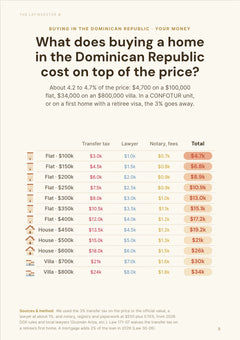
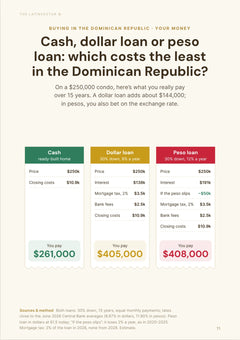
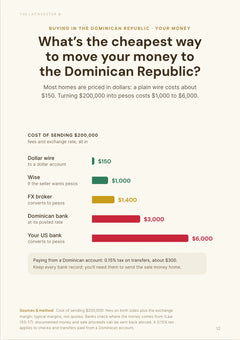
Budget 4.5% to 6.5% of the price for closing costs, including the 3% transfer tax: $6,000 (about RD$369,000) on a $200,000 home. With a valid Confotur first purchase, it drops to about 1.5% to 3.5%.
Under-declaring the price is a bad deal since Law 30-26. On a $200,000 home declared at $150,000, you might save $1,500 of transfer tax, then pay $5,000 more of the new 10% capital gains tax when you resell.
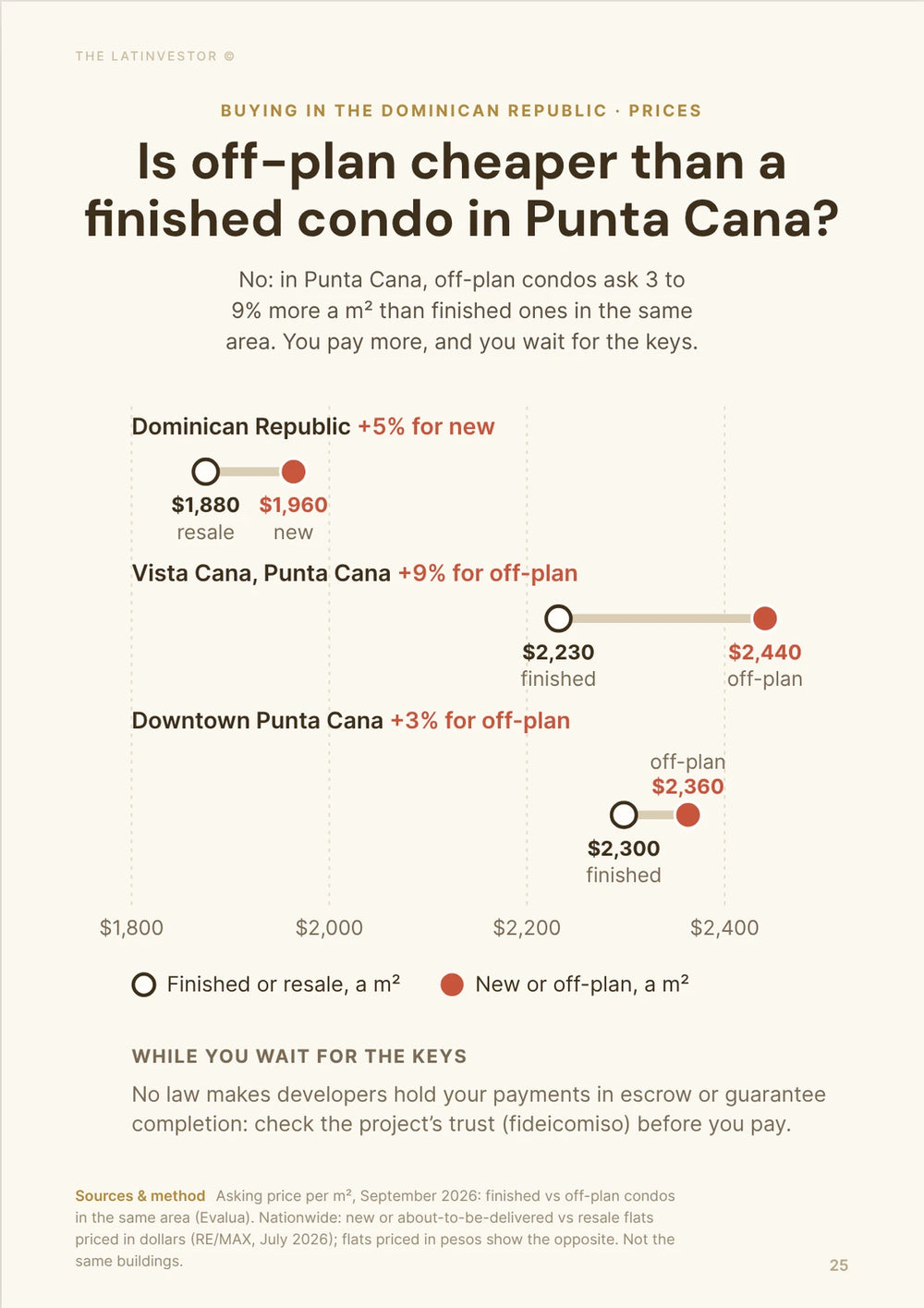
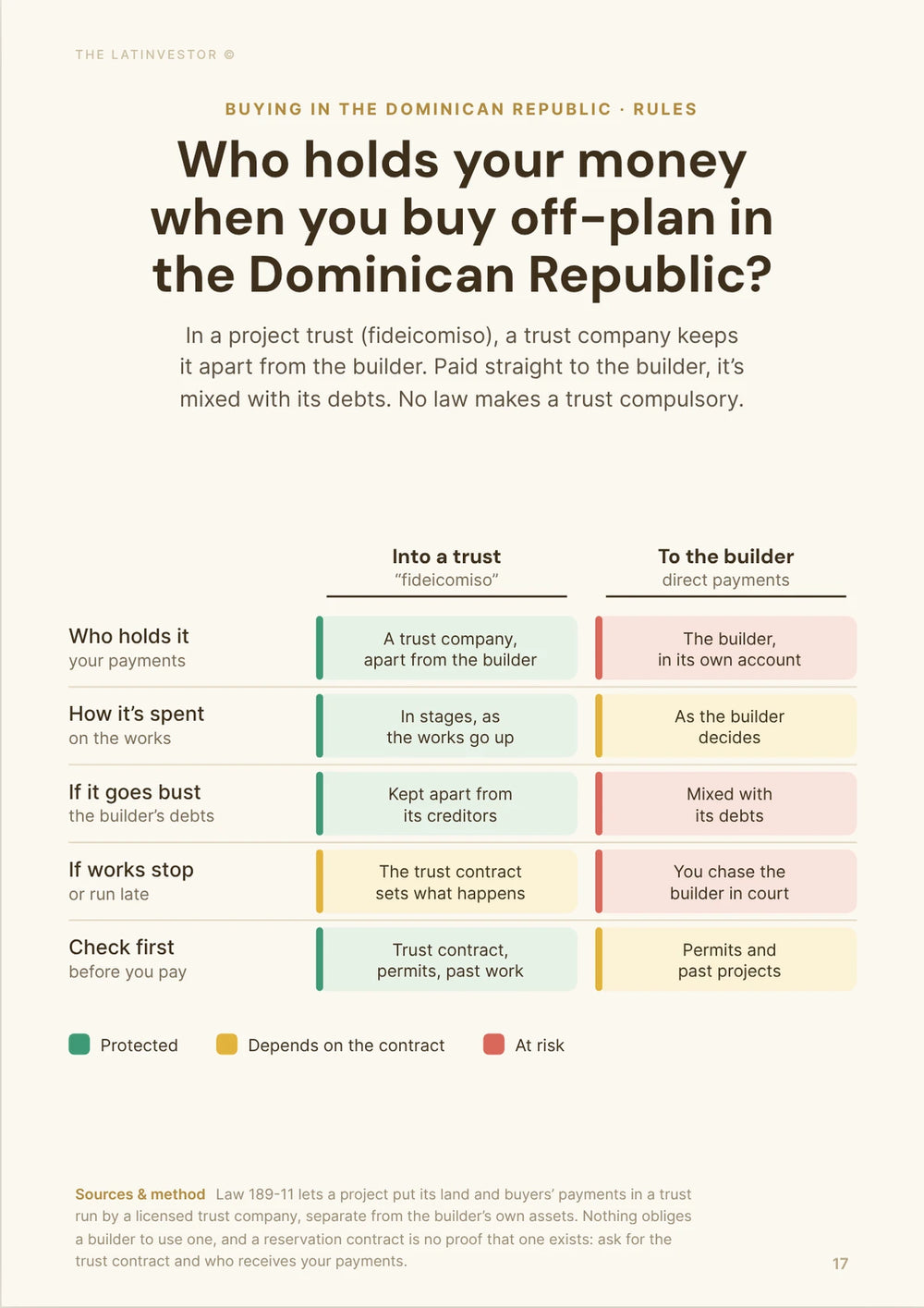
Off-plan buying has no general legal escrow in the country. Your protection depends on the project's fideicomiso (Law 189-11) and your contract, and RE/MAX counts 50+ off-plan projects in its Punta Cana sample alone.
Check any Confotur promise on MITUR's project search: it only covers the first purchase of units named in the resolution. Without its IPI exemption, a unit appraised at $300,000 pays about RD$77,500 (about $1,260) a year.
Agents need no license. Commissions are usually 3% to 5%, normally paid by the seller.
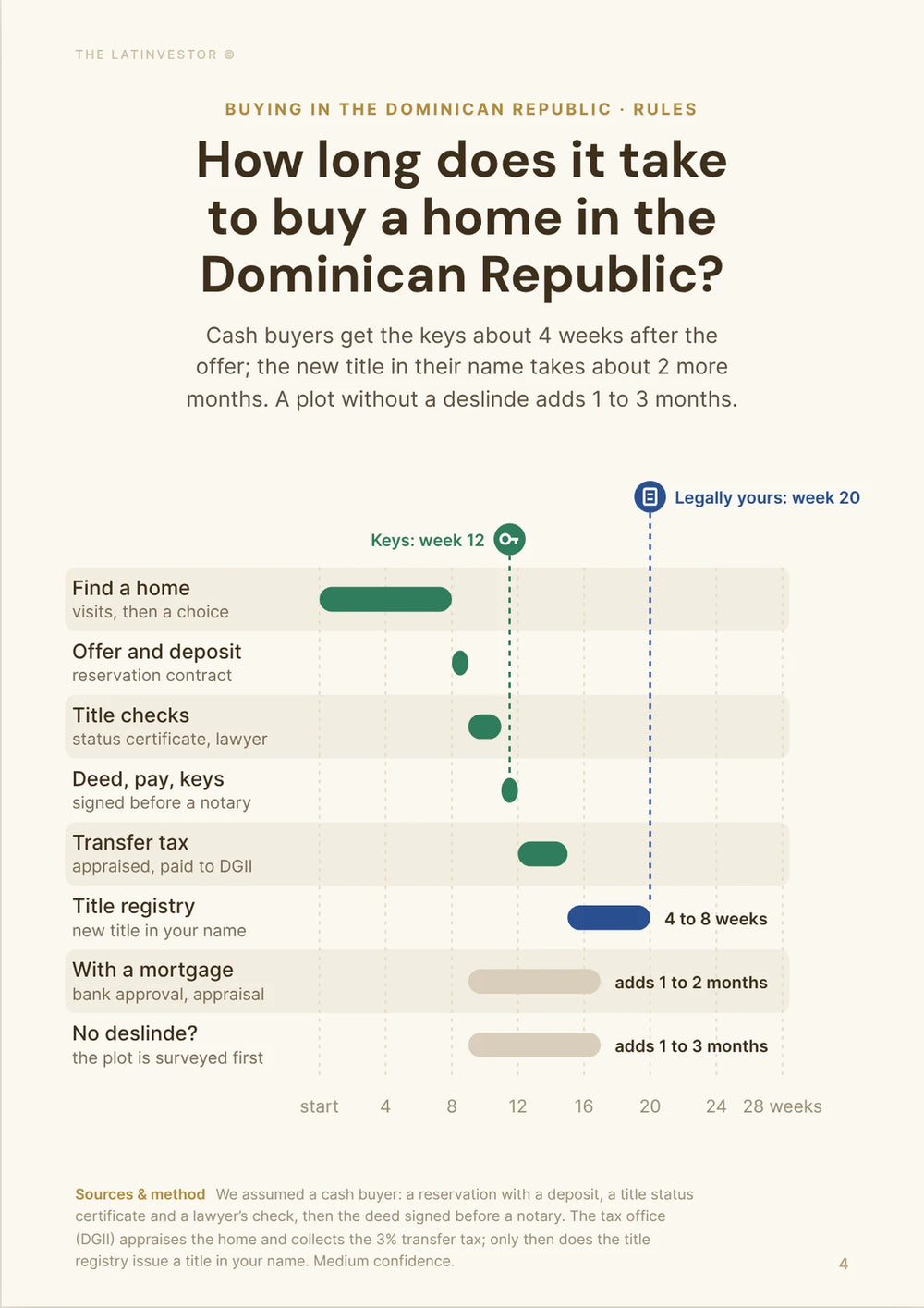
Hire your own civil engineer and surveyor. A deslinde (individual surveyed title), if missing, costs about RD$18,000 (about $295) to RD$60,000 (about $975) and takes 30 to 90 days.
Bottom line: pay nothing until your own lawyer has the registry certificate in hand, keep any reservation small and refundable in writing, and declare the real price.


Your rights as a foreign buyer, and how far the courts will protect them
Can foreigners legally own properties in the Dominican Republic in 2026?
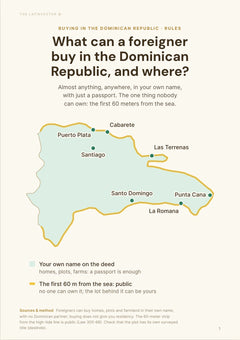
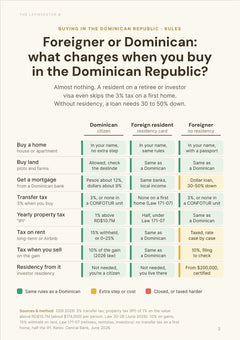
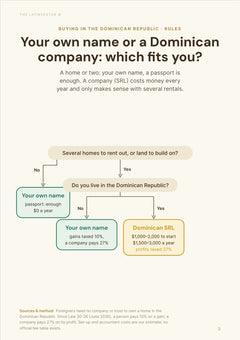
Yes. In 2026, foreigners can own property in the Dominican Republic with the same rights as Dominican citizens. You don't need residency, and the title is the same as a local's. Law 108-05 sets up the registry that records it.
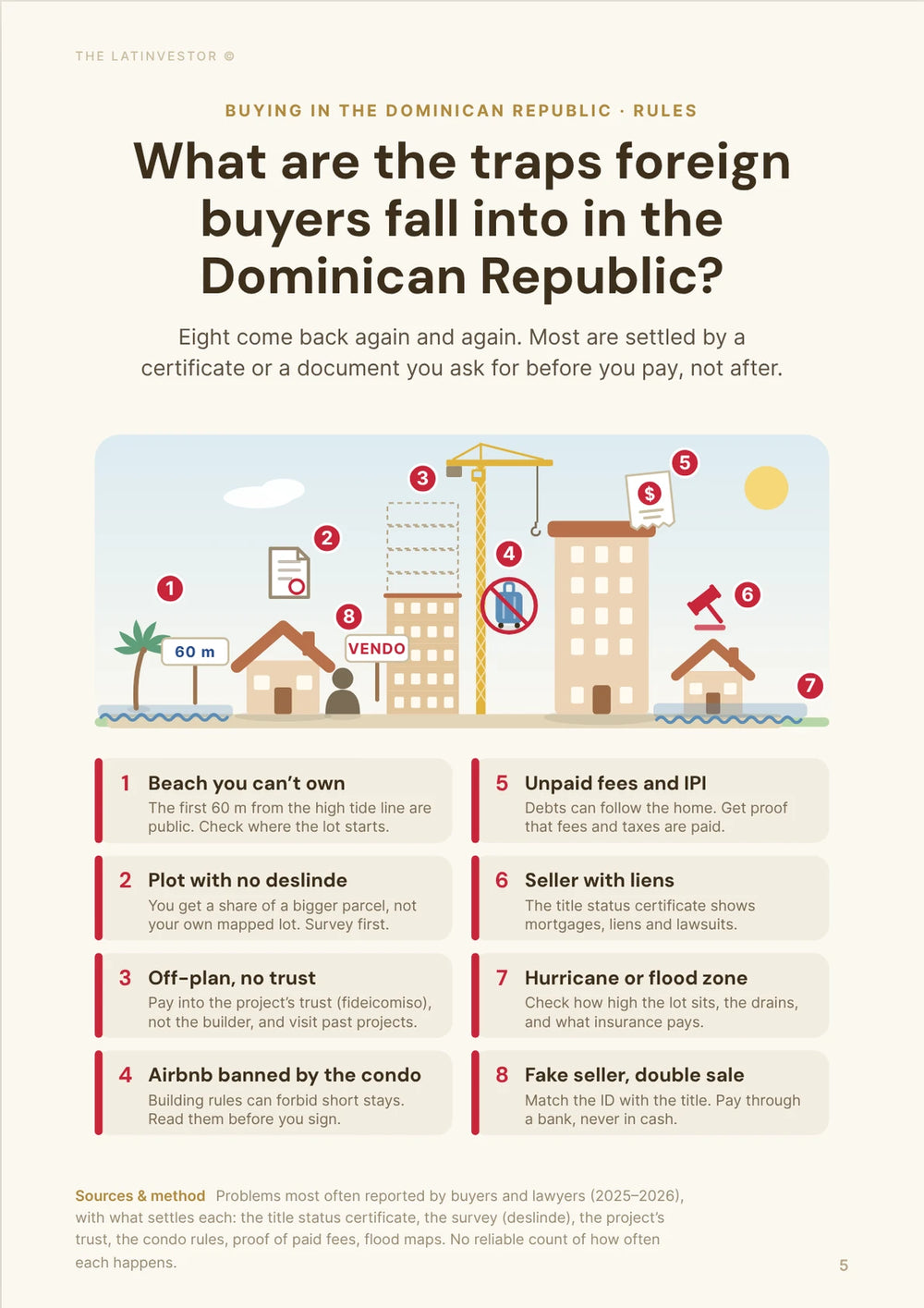
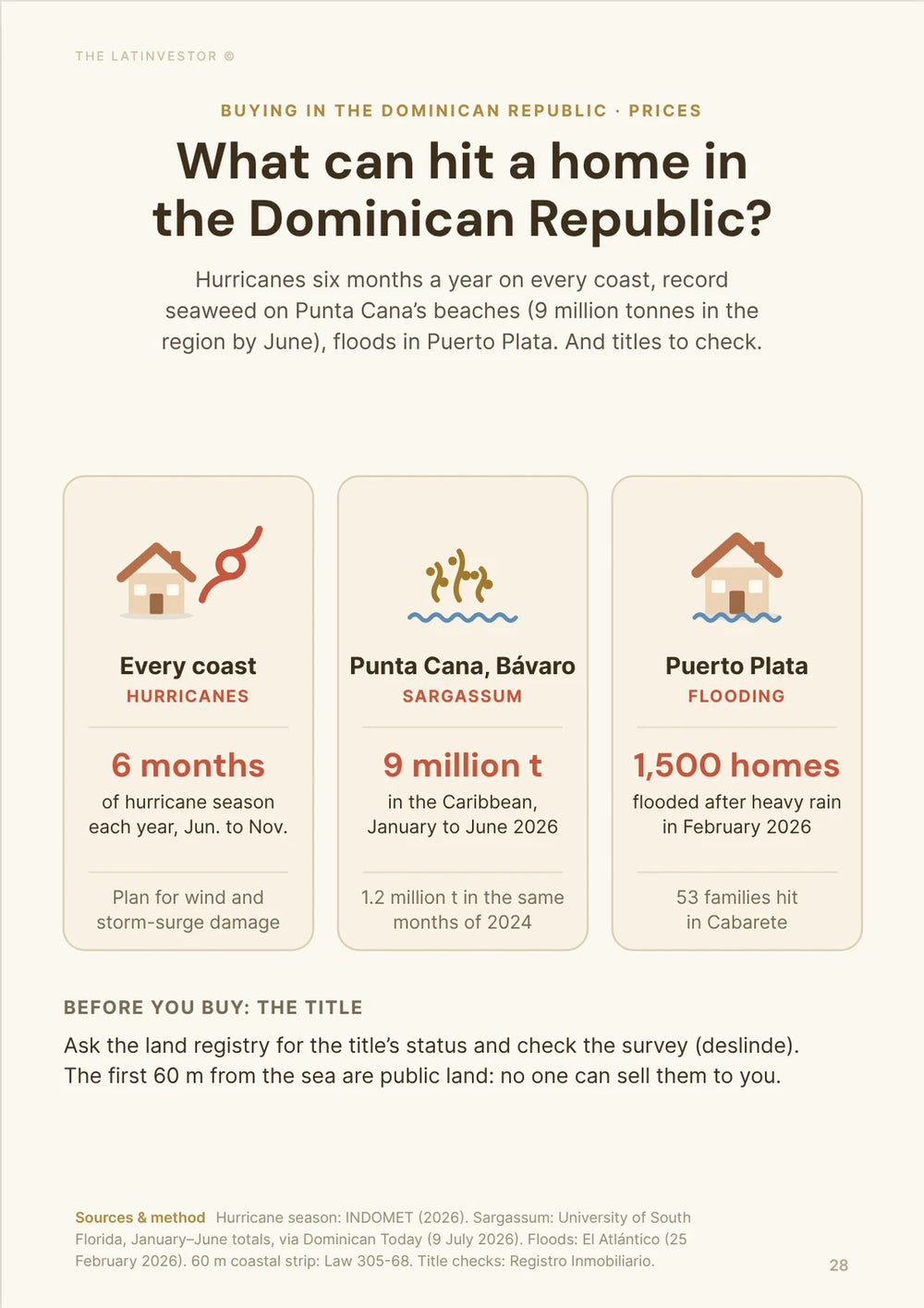
The main limit is the coast: the 60-meter strip measured from the high-tide line is public land under Law 305-68. A beachfront home can sit right next to it, but you can't own or fence that strip. Land in protected areas can carry extra restrictions too.
Most foreigners buy in their own name. Some use a Dominican company (SRL) or a fideicomiso (trust), usually for several properties or for estate planning, but that adds yearly accounting costs.
Buying doesn't give you residency on its own. Investor residency needs a certified investment of at least $200,000 and a separate application.
What really matters is not your passport but whether the property is properly registered in the Registro Inmobiliario (Land Registry) and whether the transfer follows the official DGII and registry steps.
What buyer rights do foreigners actually have in the Dominican Republic in 2026?
You have the right to register your ownership, to request official certificates on any property's legal status, and to go to Dominican courts if something goes wrong.
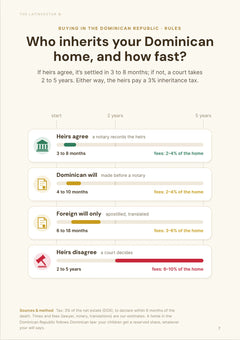
If a seller breaches the contract, you can sue in the Land Courts (Tribunales de Tierras). But a contested case often takes several years, so checking before you pay protects you far better than suing after.
The most common mistake is thinking a signed contract or a deposit receipt protects you like a registered title. It doesn't. Your ownership only becomes solid once the transfer is registered in your name at the Registro de Títulos.
How strong is contract enforcement in the Dominican Republic right now?
Real but slow. The Dominican Republic ranked 76th out of 143 countries in the World Justice Project's 2025 Rule of Law Index (published October 2025), up from 86th the year before, one of the biggest jumps in the world.
Corruption is still a concern: the country scored 37 out of 100 in Transparency International's index published in February 2026, 99th out of 182 countries, after five years of slow improvement.
The main weakness for you is practical: courts move slowly, disputes can drag on for years, and everything happens in Spanish. If you don't speak it, you depend fully on your lawyer, so pick one who works only for you.
Which scams target foreign buyers in the Dominican Republic right now?
Are scams against foreigners common in the Dominican Republic right now?
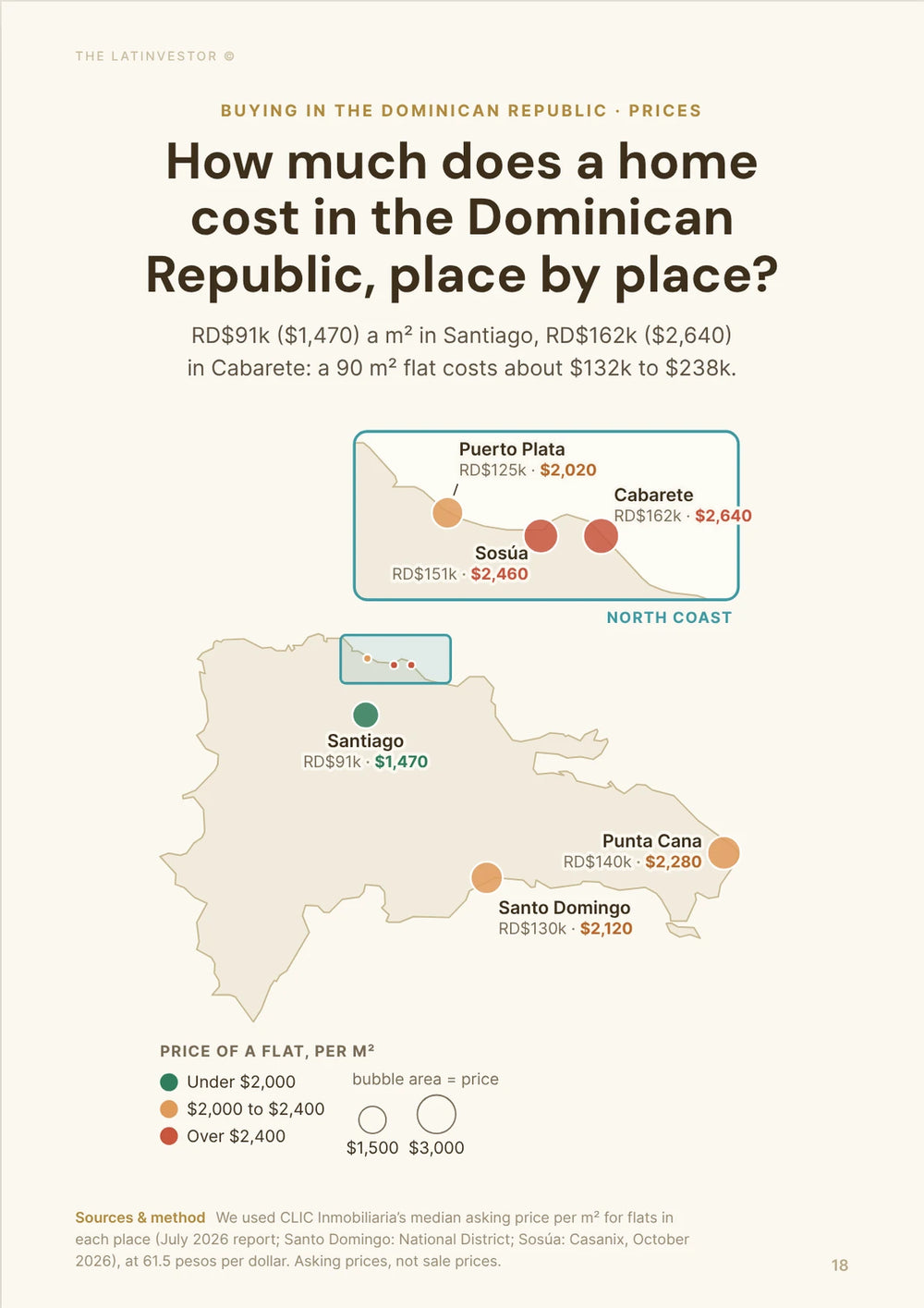
Common enough that you should expect at least one suspicious deal during your search, especially in Punta Cana, Las Terrenas, Cabarete and Sosúa.
The "Guepardo" case shows how it works. In February 2025, prosecutors arrested the alleged leaders of a company that sold fake apartment and lot projects in Bávaro and La Romana below market price. Press reports count 122 alleged victims, including US citizens and Canadians, and about $18 million moved.
Off-plan condos and "reservation deposit" deals are the main targets, because money changes hands before anyone checks the paperwork.
The typical victim is a first-time foreign buyer who doesn't speak Spanish, shops remotely and feels pushed to "lock in" a deal fast.
The biggest warning sign: someone asks for a deposit before you can check the property's legal status at the registry. A real seller has nothing to hide.
What are the top three scams foreigners face in the Dominican Republic right now?
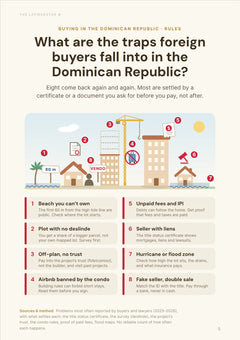
The top three are reservation deposit traps (you pay to "hold" a unit before checking it exists and is free of debts), fake or partial owners (the seller can't transfer a clean title), and hidden debts (mortgages, liens or tax arrears that show up after you paid).
The classic version goes like this: a broker shows you an attractive property, pushes you to pay a deposit now to "beat other buyers," sends photos or copies instead of registry certificates, then disappears or asks for more money to "fix" a problem.
One step stops all three: pay nothing until your lawyer has a fresh Certificación del Estado Jurídico del Inmueble from the Registro de Títulos. It shows the current owner, mortgages and court entries, and costs about RD$1,000 (about $16).
Is it safe to buy off-plan in Punta Cana in 2026?
It can be, but the law doesn't protect your money by default. There is no general legal escrow for off-plan sales in the Dominican Republic. Your protection depends on the project's fideicomiso (a trust under Law 189-11) and on what your contract says.
A fideicomiso is not a completion guarantee. It manages the land and payments, but if the project stalls, what you get back depends on the trust's terms. Read who the fiduciary is, where your money goes, and what happens if the developer fails.
The risk is concentrated in Punta Cana: RE/MAX counts 50+ off-plan projects in its sample there, and buyers are betting on delivery dates two or three years out. Some disputes are already public: buyers of one off-plan project in Punta Cana said in February 2025 that they had paid almost the full price (one buyer US$142,800 between 2019 and 2021) without delivery; the developer denies any fraud.
What to check before you sign: the building permit, the fideicomiso contract, the Confotur resolution if the developer promises tax exemptions, and the developer's finished projects (visit one). Pay only into the trust's bank account, tie payments to construction milestones, and get a written penalty or refund clause for late delivery. Keep the first reservation small and refundable in writing.
How do I verify the seller and ownership in the Dominican Republic without getting fooled?
How do I confirm the seller is the real owner in the Dominican Republic?
Ask for the property's title number and parcel details, then have your lawyer order a Certificación del Estado Jurídico del Inmueble from the Registro de Títulos. It shows the registered owner and whether they can sell.
Check the Certificado de Título too, but don't accept a photocopy or a screenshot from a broker. Only a freshly issued registry certificate shows the situation today.
The usual trick of fake sellers is to show old copies of the title and say a new certificate is "unnecessary" or "takes too long." Treat that pushback as a red flag. If the seller signs through a power of attorney, have your lawyer check it is real and still valid.
Where do I check liens or mortgages on a property in the Dominican Republic?
At the Registro Inmobiliario, through the same Certificación del Estado Jurídico del Inmueble. It lists every active entry (asientos vigentes), including mortgages and court notes.
Ask for the certificate showing all "cargas y gravámenes" (charges and encumbrances) and make sure there is no active mortgage, court annotation or pending claim.
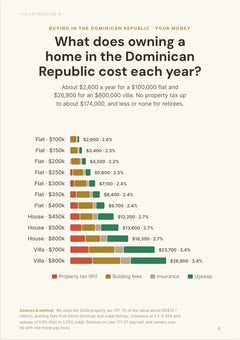
The debts buyers miss most are unpaid IPI property tax and unpaid condo fees, because they don't show on a quick title check. In 2026, IPI is 1% a year on the combined DGII-appraised value of an owner's properties above RD$10,695,494 (about $174,000), so many sellers of mid-priced homes owe nothing, but owners of several properties or expensive villas often do.
Ask the seller for a DGII certificate showing no IPI debt, and a letter from the condo administrator showing fees are paid up to the closing date.
How do I spot forged documents in the Dominican Republic right now?
The most common fake is a forged or outdated title certificate. Clever forgeries are not that frequent, but misleading buyers with old or unofficial papers happens often, so never rely on a document you didn't get fresh from the registry.
Red flags: scans instead of originals, missing registry stamps or signatures, being told you can't request your own copy, or details that don't match what the broker said (owner name, surface, unit number).
The fix is simple: request the certificate yourself or through your own lawyer. When the registry issues it to you, a forgery has nowhere to hide.
What "grey-area" practices should I watch for in the Dominican Republic?
What hidden costs surprise foreigners when buying a property in the Dominican Republic?
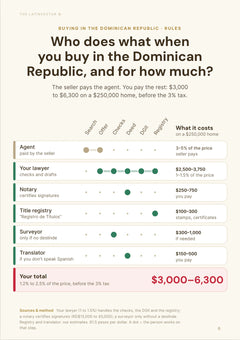
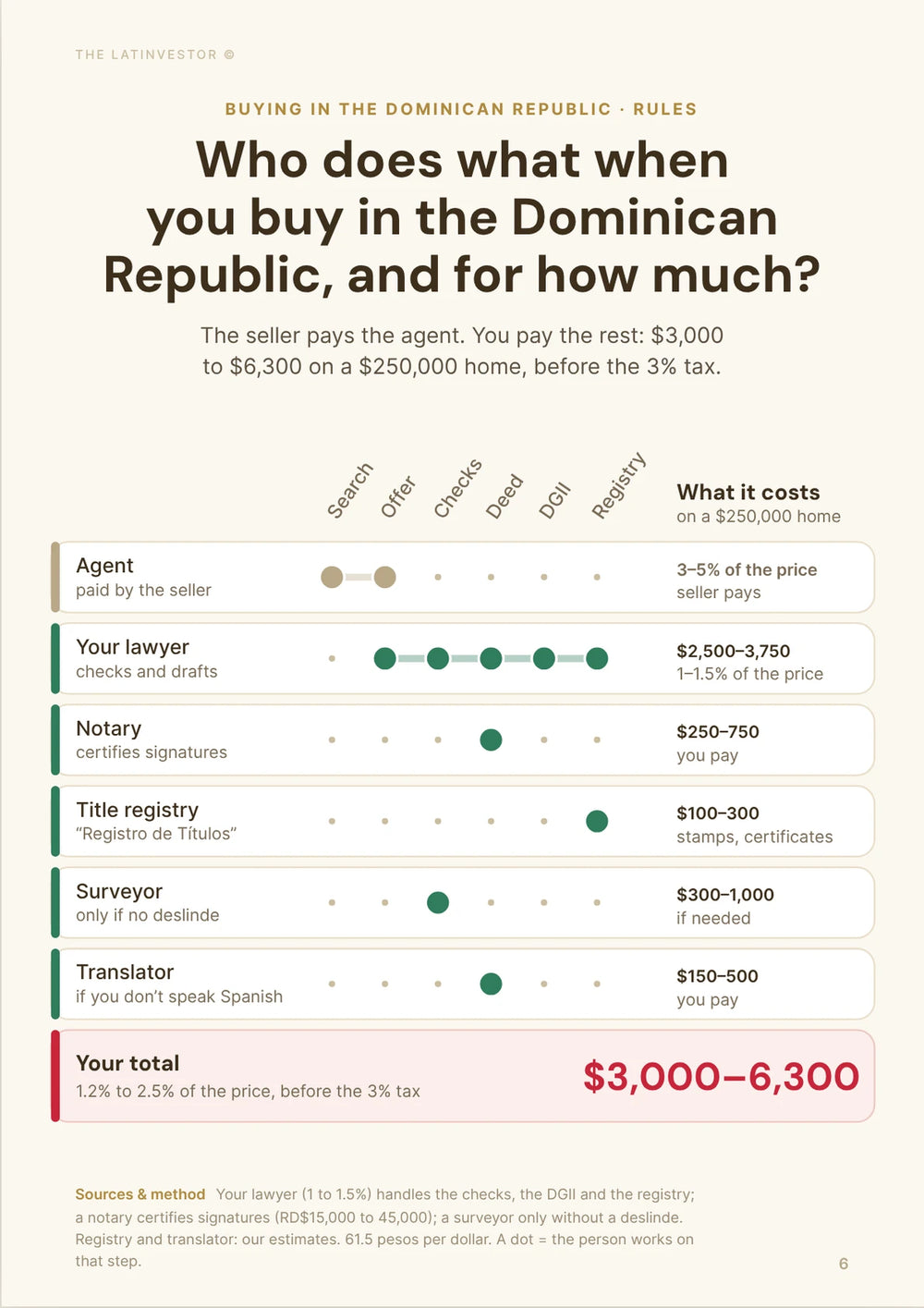
Closing costs first. Budget about 4.5% to 6.5% of the price in 2026. That covers the 3% transfer tax, a lawyer at 1% to 1.5%, the notary and small registry fees. On a $200,000 home, the transfer tax alone is $6,000 (about RD$369,000). The transfer tax is charged on the higher of the price and the DGII appraisal.
Then yearly costs: IPI property tax of 1% above RD$10,695,494 (about $174,000) of combined appraised value, condo fees, insurance and, in many areas, a generator or inverter for blackouts.
Last, the seller's unpaid bills: back IPI or condo fees can become your problem at closing. Always ask for a DGII certificate of no debt and the condo administrator's letter before you pay the balance.
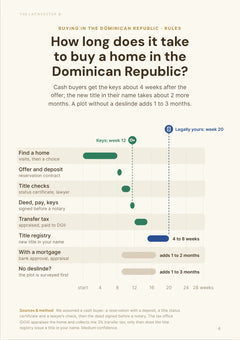
If the title still needs a deslinde (individual survey), add about RD$18,000 (about $295) to RD$60,000 (about $975) and 30 to 90 days.
Are "cash under the table" requests common in the Dominican Republic right now?
Yes. You'll often hear about a "discount for cash" or a suggestion to declare a lower price in the deed to cut the 3% transfer tax.
Sellers present it as a favor or as normal practice. The real reason is usually to shrink their own tax on the sale or hide income.
The risks for you: a tax audit, a lower official purchase price that inflates your taxable gain when you resell, and being seen as part of tax evasion, which can cause trouble with banks, residency or future deals.
Are side agreements used to bypass rules in the Dominican Republic right now?
Yes, especially in off-plan deals: informal "reservation receipts" and verbal promises on delivery dates, finishes or payment plans that never make it into the main contract.
The most common one is a split payment: part of the price paid in cash or through untraceable channels, with only the rest showing in the documents sent to the registry and DGII.
If it comes out, you risk unpaid taxes plus penalties, losing any promise made outside the contract, and in serious cases a fraud or money-laundering investigation. Banks also ask where your money comes from when you sell and send funds abroad, and a deed that doesn't match your transfers makes that harder.
Does under-declaring the price still save money after Law 30-26?
Usually not. Law 30-26 (June 2026) changed the tax on resale for individuals: you now pay a flat, final 10% on the gain. A fake low purchase price makes that gain bigger on paper.
A simple example: you pay $200,000 but the deed says $150,000. If the DGII appraisal is also below $150,000, you save 3% of $50,000, so $1,500 of transfer tax. Sell later for $250,000 and your taxable gain is $100,000 instead of $50,000: that's $5,000 more tax at 10%. You end up about $3,500 worse off, before any fines.
And the saving often doesn't exist at all: the 3% is charged on the higher of the declared price and the DGII appraisal, so if DGII values the home above your declared price, you pay on DGII's figure anyway.
What to do: declare the real price, pay by traceable bank transfer, and keep the deed, transfers and receipts. They are your proof of cost when you sell, and banks will ask for them.
Can I trust real estate agents in the Dominican Republic in 2026?
Are real estate agents regulated in the Dominican Republic in 2026?
No. In 2026, real estate agents in the Dominican Republic need no government license. Anyone can call themselves an agent, and no official body checks their skills or ethics.
The closest thing to a credential is membership in the Asociación de Agentes y Empresas Inmobiliarias (AEI). It promotes ethical standards, but membership is voluntary and it is not a license.
You can check AEI membership on aei.com.do. Still, use agents to find and compare properties, and rely on the registry and your own lawyer for the checks.
What agent fee percentage is normal in the Dominican Republic in 2026?
In 2026, agent commissions in the Dominican Republic are usually around 3% to 5% of the sale price. There is no legal rate: it is negotiated, and some resort or exclusive listings ask more.
The seller or developer normally pays it from the sale price, so buyers usually pay no agent fee. Confirm it in writing before you sign anything.
If you hire a buyer's agent to search for you, that's a separate deal: agree on the fee in writing up front.
What due diligence actually prevents disasters in the Dominican Republic?
What structural inspection is standard in the Dominican Republic right now?
Very little is standard. Many foreign buyers only do a quick walk-through, which is why those who avoid problems hire their own engineer.
A good inspection checks the foundation, roof and waterproofing, electrics, plumbing, water leaks, salt corrosion on metal (near the coast) and any cracks that could point to earthquake weakness.
Hire a civil engineer (ingeniero civil) or an architect with building experience, chosen by you, not by the seller or developer.
The usual findings are leaks and damp hidden under fresh paint, poor drainage, rusted rebar and fittings near the sea, weak waterproofing on roofs and terraces, and bad electrical work. Hurricane season runs from 1 June to 30 November, so also ask how windows, shutters and roofs held up in past storms.
How do I confirm exact boundaries in the Dominican Republic?
Check that the property has a deslinde, meaning a surveyed, individual title that matches the registry, and then check on the ground that what you see is what is registered.
The official boundaries are in the approved survey plan held by the registry (Dirección de Mensuras Catastrales), which should match the description in your Certificación del Estado Jurídico del Inmueble.
The classic problem is land without a deslinde, often held under an old "constancia anotada" (a share of a larger parcel). The fence line may not match the record, and you can end up in a dispute with neighbors or with a smaller plot than you paid for. Avoid it, or make the deslinde a condition of the sale: it costs about RD$18,000 (about $295) to RD$60,000 (about $975) and 30 to 90 days if nothing is disputed.
To check on the ground, hire an agrimensor (licensed surveyor) who compares the registered plan with the property and confirms they match.
What defects are commonly hidden in the Dominican Republic right now?
The three most hidden defects are leaks and damp (common, often painted over), failing roofs and waterproofing (common in houses and condos), and electrical or plumbing problems that show up after you move in (less common, mostly in older buildings or rushed projects).
To find them: use a moisture meter on walls, look for rust on any exposed metal near the coast, run every tap and circuit during the visit, and go back during or after rain to see how water drains. Ask whether the building has a backup generator and who pays for its fuel: blackouts are still part of life in many areas.
Is the Confotur tax exemption still safe to count on in 2026?
Mostly, but check it yourself. Confotur (Law 158-01) exempts the first purchase of a unit in an approved tourism project from the 3% transfer tax, and usually from IPI for 15 years. On a $200,000 unit, that's $6,000 (about RD$369,000) saved at closing.
The catch: it only covers the units and the project named in the resolution, for the first buyer. Resales, units outside the approved phase, and expired resolutions don't get it, even if the brochure says "Confotur."
Law 30-26 (June 2026) did not repeal Confotur. But it added a rule that you can't use two incentive regimes on the same operation, and lawyers say its effect on Confotur is still unclear. Don't pay a premium for a tax break that may not apply to you.
What to do: look up the project on MITUR's Confotur search (confotur.mitur.gob.do/consulta), ask for the resolution number and check your unit is in it. Without the IPI exemption, a unit appraised at $300,000 pays about RD$77,500 (about $1,260) a year of IPI.
What insider lessons do foreigners share after buying in the Dominican Republic?
What do foreigners say they did wrong in the Dominican Republic right now?
The mistake foreigners mention most is paying before they checked the property's legal status at the registry, because the place "felt right" and they trusted the broker or developer.
The top three regrets: not hiring their own lawyer from day one, paying a deposit under pressure instead of walking away, and assuming a big developer name or slick marketing meant clean paperwork.
The advice experienced buyers give most: the paperwork is the asset, not the pool view. Your position is only as strong as what you can check and register.
The most expensive mistake: finding title problems or debts after paying, when the only options left are a long court case or losing the deposit.
What do locals do differently when buying in the Dominican Republic right now?
Locals treat the registry certificates as the starting point, not an extra, and they walk away fast if a seller resists checks.
They also go themselves, or send someone they trust, to the local Registro de Títulos office to get the certificates, instead of accepting what the seller or broker sends.
And they know things you don't yet: which developers deliver and which don't, which areas have messy title histories, and when a price is low because something is wrong rather than because it's a deal.
Related blog posts
- What are the property taxes and fees in the Dominican Republic?
- Can foreigners buy and own property in the Dominican Republic?
- Can foreigners buy and own land in the Dominican Republic?
- Can you get residency in the Dominican Republic by buying property?
Our methodology
This article covers the legal and practical risks of buying property in the Dominican Republic as a foreigner: ownership rights, scams, title and debt checks, grey-area practices, agents, inspections, off-plan buying and tax exemptions.
Legal rules come from official sources first: Law 108-05 and the Registro Inmobiliario for titles and certificates, Law 305-68 and the Environment Ministry for the coastal strip, Law 189-11 and DGII for fideicomisos, and the Migration Directorate for residency. Court and governance rankings come from the World Justice Project (2025 index) and Transparency International (index published February 2026). Fraud cases come from Pro Consumidor and Dominican press reports.
Tax figures come from DGII (IPI threshold, transfer tax) and Law 30-26 (capital gains, June 2026). Closing costs and deslinde costs come from 1122 Real Estate (July 2026), agent commissions from InstaDigs (October 2026), Confotur rules from MITUR and Tropical Assets, and the off-plan count from RE/MAX.
We checked these figures in October 2026. Conversions use about 61.5 Dominican pesos per US dollar.
Where we had no direct figure (how common scams are, how long court cases last, which defects are hidden most), we estimated it from public cases and buyer reports, and say so. Your own risks will depend on the property, the seller, the title history and the lawyer you hire.
Key sources used for this analysis include Registro Inmobiliario (RI), Registro Inmobiliario FAQ, Law 108-05 (Registro Inmobiliario), DGII Transfer Guide, DGII IPI Tax Guide, DGII IPI 2026 threshold, Law 30-26, Ministry of Finance (ITI), Environment Ministry (60-meter strip), Dirección General de Migración, MITUR Confotur search, Pro Consumidor, World Justice Project Rule of Law Index, Transparency International (CPI), 1122 Real Estate closing costs 2026, InstaDigs, Tropical Assets, RE/MAX Metropolitana, ONESVIE and AEI (Real Estate Association).