



Summary
It can be, but the numbers are thin. A two-bedroom condo asks about $232,000 and rents for around MXN 20,000 a month, which is a 5.5% gross yield and roughly 2.6% after costs, before income tax.
Foreigners can own and rent here directly. San Miguel is outside the restricted zone (50 km from the coast, 100 km from the borders), so you don't need a bank trust.
Long-term rents for a one-bedroom run from about MXN 11,900 outside the center to MXN 19,300 in Centro. Furnished two-bedrooms outside Centro list between MXN 11,500 and 25,000.
The average Airbnb in town earned $22,600 over the last 12 months, at 42% occupancy and $163 a night (AirDNA, September 2026).
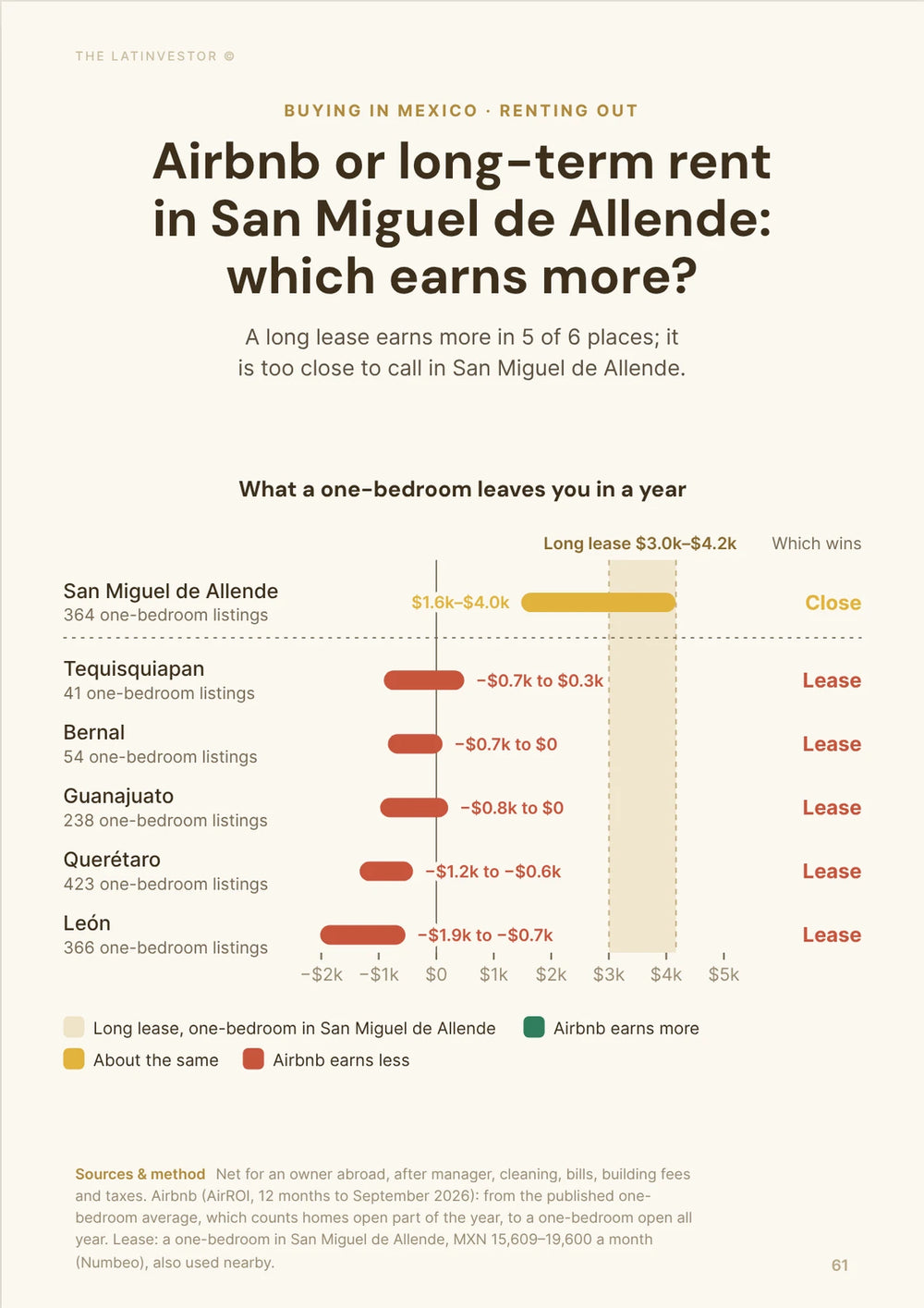
Once a manager takes 25% and Airbnb's host fee takes 16%, a short-term rental nets about 2.7%, roughly the same as a long lease, with far more work and risk.
Tax is where many foreign owners get caught. A non-resident landlord can owe 25% of gross rent, with no deductions: MXN 60,000 a year on MXN 240,000 of rent.
Plan on about one empty month a year for a long lease. For a short-term rental, 58% of nights stay empty on average, mostly in the June to September rains.
Tenants pay most in Centro, Guadiana and Ojo de Agua, but purchase prices there are higher too. Cheaper areas like Zirándaro, Guadalupe and La Lejona often give a better yield.
Parking, outdoor space and good water pressure move rents more than fancy kitchens. Furnished units rent faster in this expat town.
There's no rent cap. Most landlords raise rents roughly in line with inflation, which was 3.69% for 2025.
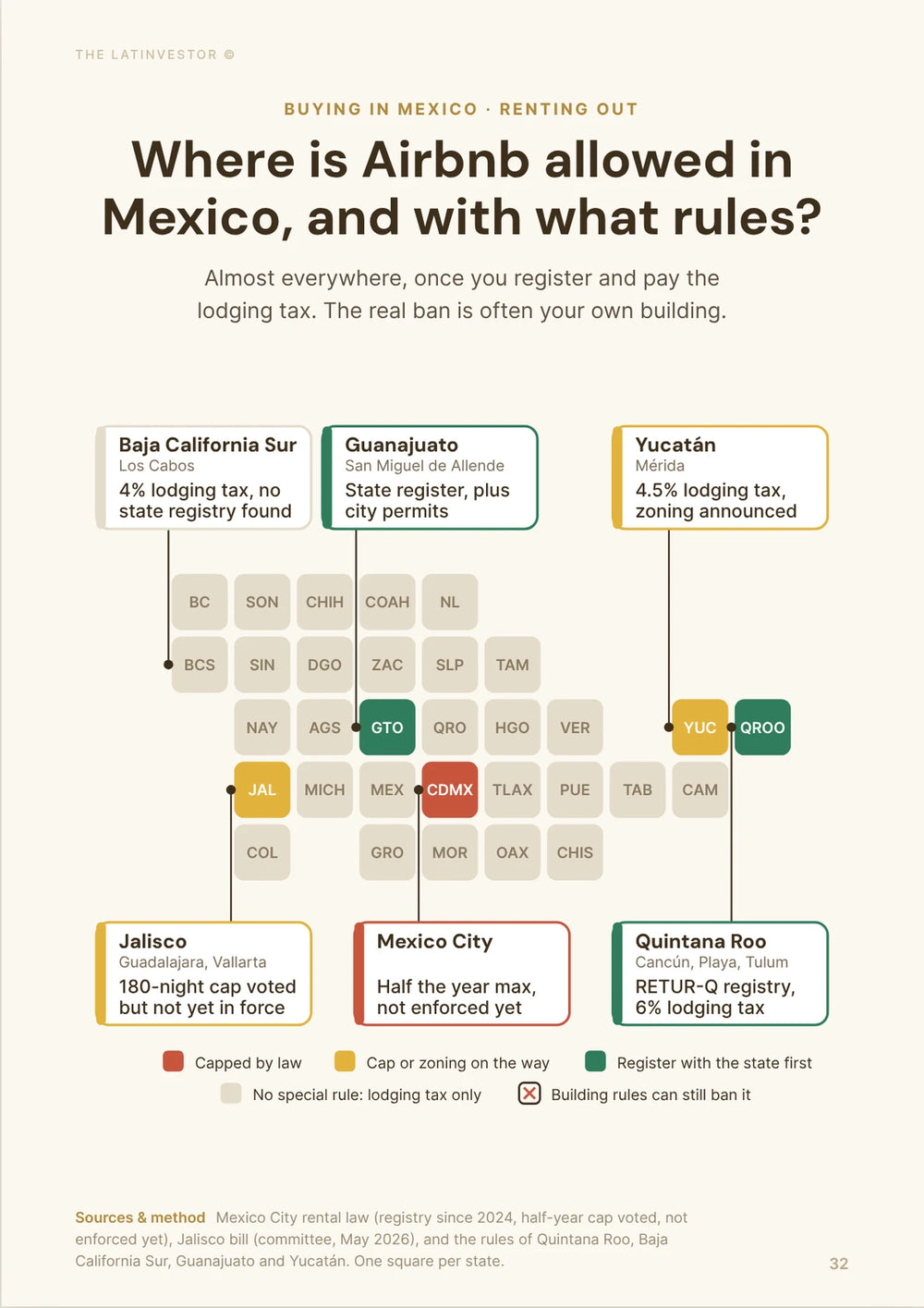
Airbnb is legal under Guanajuato's 2020 platform law, with free state registration and a 4% lodging tax that the platform collects. There's no cap on nights.
AirDNA now counts 2,010 active listings, 53% fewer than a year ago, while revenue per listing nearly doubled. Fewer, better-run listings are taking the demand.
Getting out is slow. Homes took a median 6 months to sell in 2026 and sold for about 96% of the asking price.
Our view: buy only if the property works as a long-term rental at a price you'd be happy to hold for years. Treat Airbnb income as a bonus, not the plan.

Can a foreigner legally buy and rent out a property in San Miguel de Allende?
Can a foreigner own-and-rent a residential property in San Miguel de Allende?
Yes. In 2026 a foreign individual can own residential property in San Miguel de Allende and rent it out, without special restrictions.
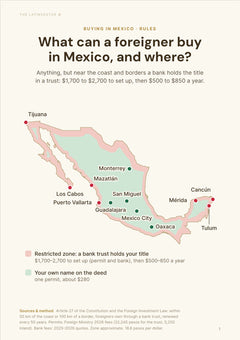
Most foreigners here hold title directly in their own name. That's possible because the city is far inland, outside Mexico's restricted zone, which covers land within 50 km of the coast and 100 km of the borders.
So the bank trust (fideicomiso) that buyers need in Cancún or Puerto Vallarta doesn't apply here. You save the SRE trust permit, which alone costs MXN 21,650 in 2026, plus the bank's yearly fee. All you sign is the SRE foreigner agreement, MXN 5,250 once.
Do I need residency to rent out in San Miguel de Allende?
No. You don't need Mexican residency to rent out a property here, and plenty of owners run their rentals from abroad.
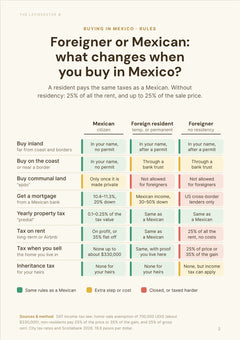
You do need a Mexican tax ID (RFC) in practice. Without one, Airbnb and other platforms withhold 20% of your income instead of 4%.
A Mexican bank account helps but isn't required. Most remote owners use a local property manager who collects rent, handles repairs and deals with the accountant.
Does Airbnb or a long lease make more money in San Miguel de Allende?
Is long-term renting more profitable than short-term in San Miguel de Allende?
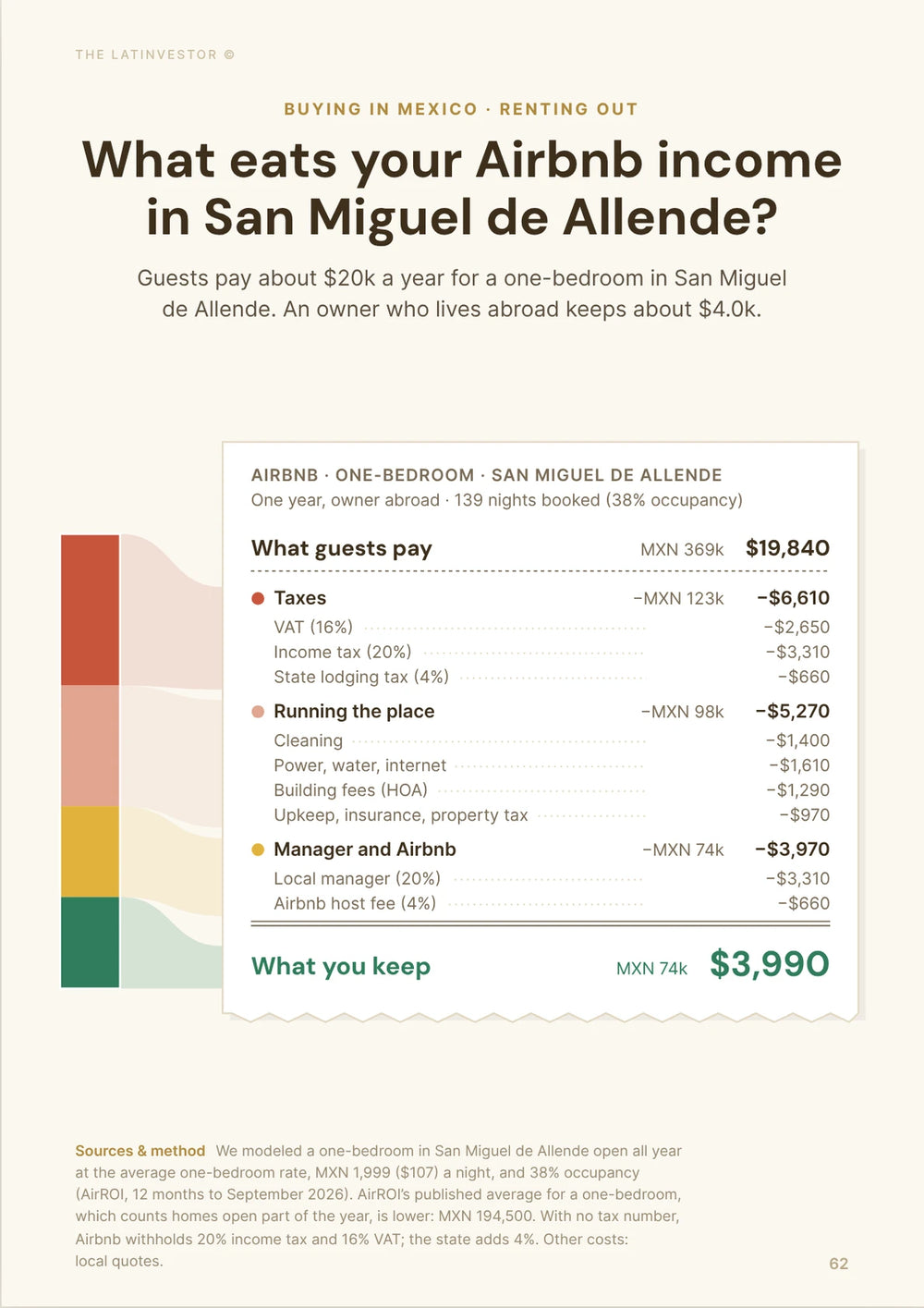
Short-term renting brings in more revenue, but not much more profit. The average short-term rental in San Miguel earned $22,600 (about MXN 420,000) over the 12 months to September 2026, according to AirDNA.
A two-bedroom on a long lease at around MXN 20,000 a month brings in MXN 240,000 a year ($12,900 or €11,500).
The gap closes fast once you pay for running a short-term rental. With a manager at 25% (MXN 105,000) and Airbnb's host-only fee at 16% if you're on it (MXN 67,200), plus utilities, cleaning supplies and furniture wear, both options end up with similar net income.
Short-term still makes sense for walkable Centro homes with terraces and character, which pull wedding and weekend guests. For a plain condo outside the center, a long lease is less work for about the same money.
What's the average gross rental yield in San Miguel de Allende?
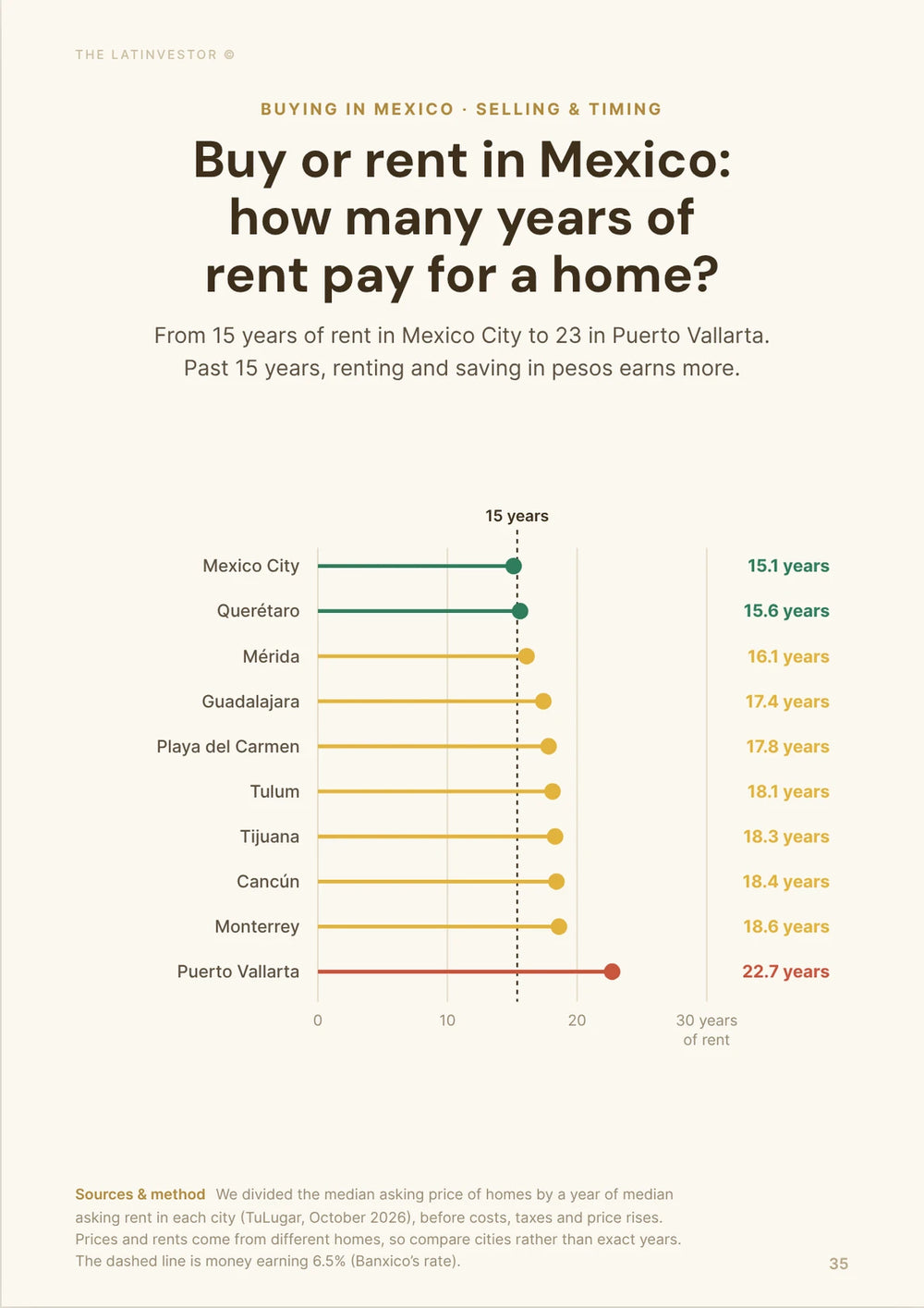
About 5.5% gross for a typical two-bedroom condo on a long lease. That's MXN 240,000 of yearly rent on a median asking price of $232,000 (MXN 4.32 million).
For comparison, the national average gross yield is 5.79%, so San Miguel is slightly below.
Smaller units and condos outside Centro usually do better than large colonial houses, whose median asking price is $355,000 for three bedrooms.
What's the realistic net rental yield after costs in San Miguel de Allende?
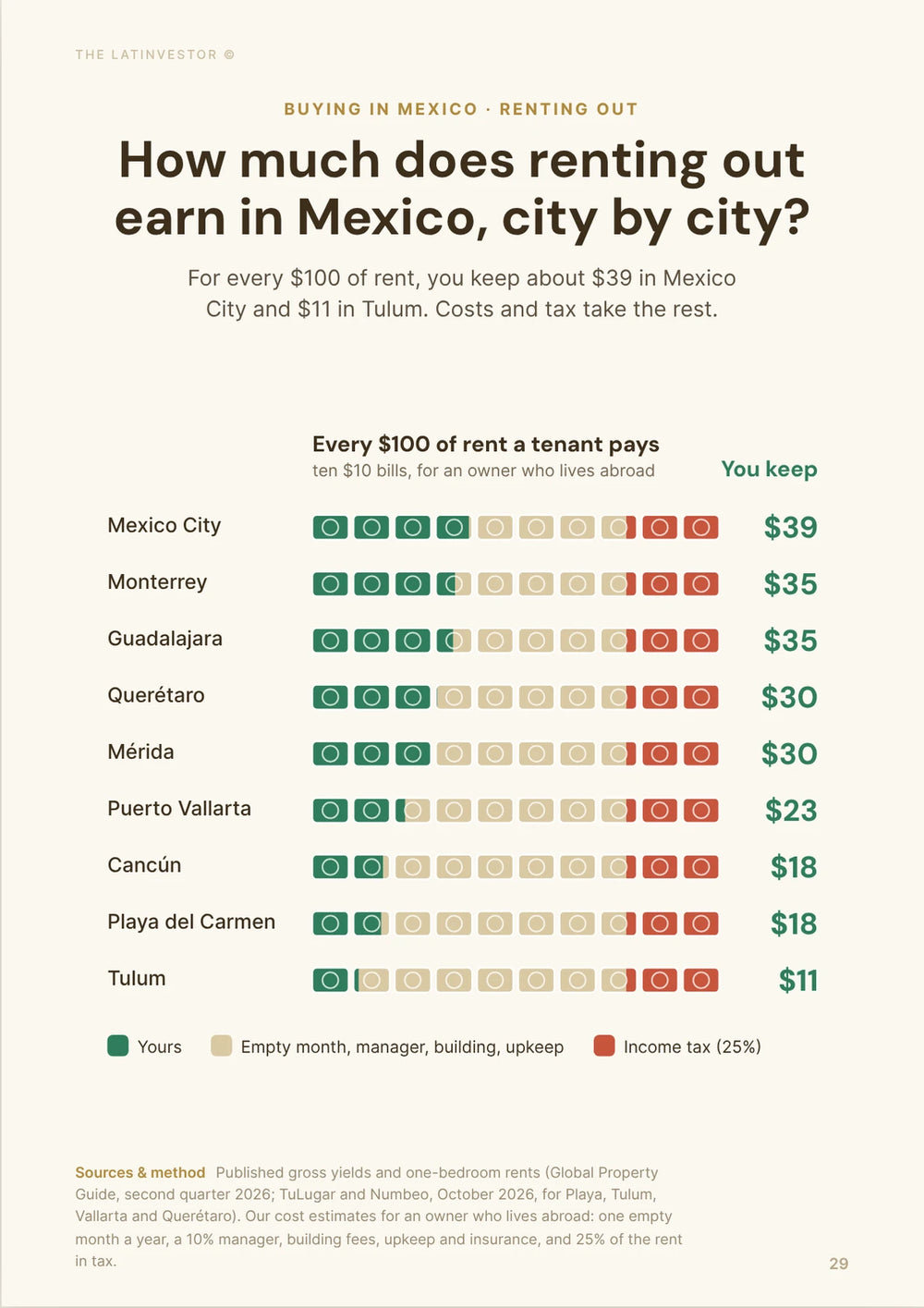
About 2.6% to 3.6% for a long lease, before income tax. On our MXN 4.32 million two-bedroom, the MXN 240,000 of rent shrinks to about MXN 111,000 once you pay for the costs below.
The main costs: one empty month (MXN 20,000), a 10% manager (MXN 22,000), building fees of about MXN 3,000 a month (MXN 36,000), property tax (around MXN 8,000, our estimate) and a repair reserve of 1% of the price (MXN 43,200).
Skip the repair reserve and you're near 3.6%. Old colonial houses with rooftops, cisterns and stone walls usually need more than 1% a year, not less.
What monthly rent can I get in San Miguel de Allende?
A one-bedroom rents for about MXN 19,300 ($1,040 or €922) a month in Centro and MXN 11,900 ($639 or €569) outside it, according to Numbeo data from August 2026.
Furnished two-bedrooms outside Centro list between MXN 11,500 ($618) in Zirándaro and MXN 25,000 ($1,340) in La Lejona or San Antonio. Around MXN 20,000 is a fair middle for a decent one.
Studios rent for less than a one-bedroom. Three-bedroom furnished homes in gated areas like La Serena list around MXN 30,000 ($1,610).
Parking, a terrace and walking distance to the Jardín push a unit to the top of these ranges.
How much tax will you really pay on rent in San Miguel de Allende?
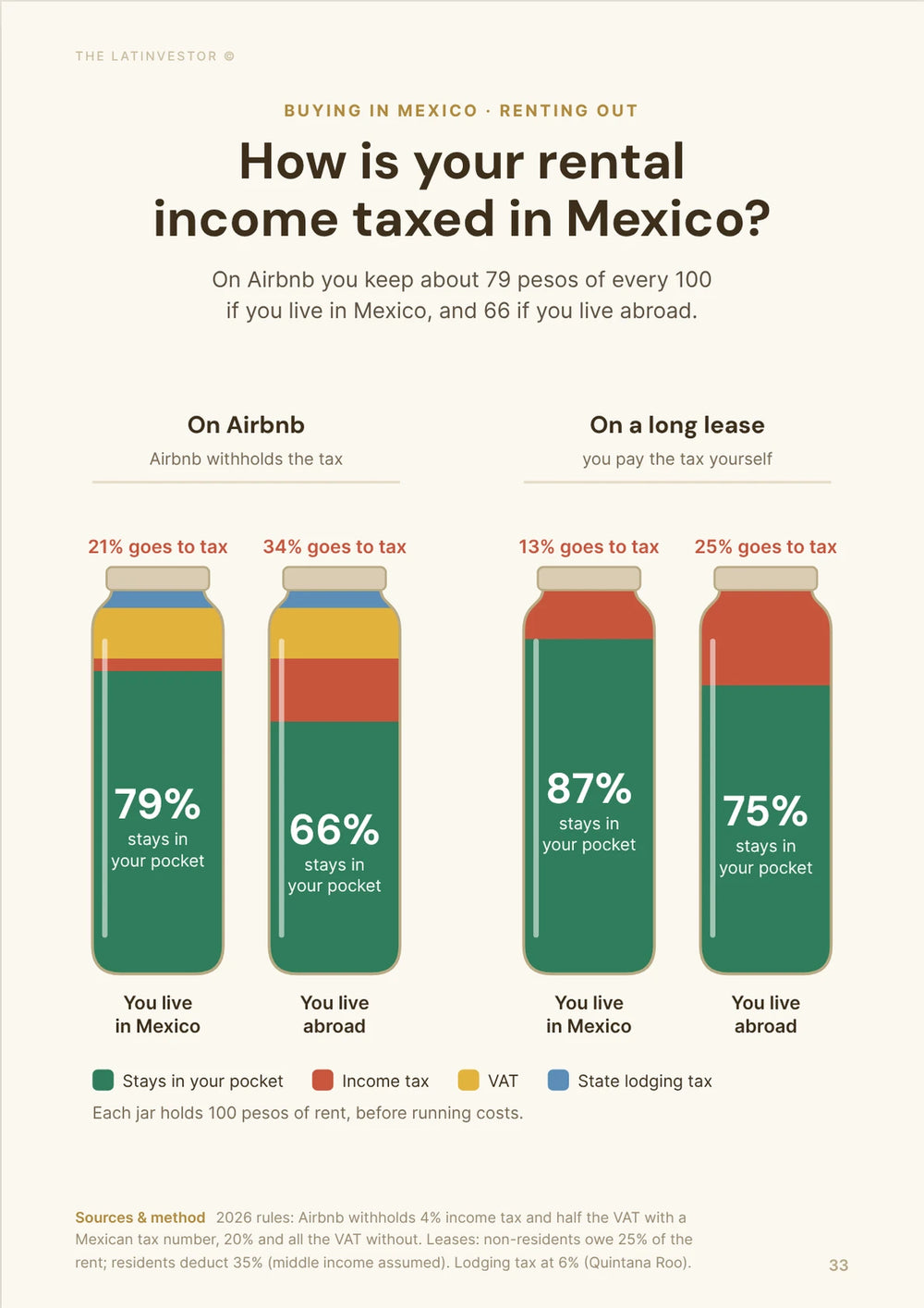
More than most buyers expect. A landlord who lives outside Mexico can owe 25% of gross rent in income tax, with no deduction for costs. On MXN 240,000 of rent, that's MXN 60,000 ($3,230) a year.
That one line takes our two-bedroom's net yield from about 2.6% to about 1.2%. If you live in Mexico and are a tax resident, you are taxed like a local instead, with a 35% flat deduction for expenses or the reduced RESICO regime if you qualify.
On Airbnb, the platform withholds 4% income tax if you've given it a valid RFC, and 20% if you haven't. That 4% isn't always your final bill. Guanajuato's 4% lodging tax is collected by the platform on top of the nightly rate.
What to do: get your RFC before your first booking, and pay a local accountant to pick your regime before you sign a lease. The regime choice can be worth more than a month of rent each year.
What does it really cost to hold a rental in San Miguel de Allende?
What's the total "all-in" monthly cost to hold a rental in San Miguel de Allende?
For a long-term two-bedroom, plan on roughly MXN 10,800 a month ($581) on average once you spread out vacancy, management, building fees, property tax and repairs, before income tax.
Building fees alone run MXN 2,500 to 5,500 a month in gated communities. Property tax is lower than many owners expect from the US, but not as low as some guides say: the city's 2026 table charges marginal rates of 0.234% to 0.354% of the fiscal value, not 0.10% to 0.16%. A home with a MXN 3 million fiscal value pays MXN 9,490 a year, 15% less if you pay in January.
A short-term rental costs much more to run. Management at 20% to 30% of revenue is the biggest line, followed by the platform fee, utilities, cleaning and replacing worn furniture.
What's the typical vacancy rate in San Miguel de Allende?
For a long lease, budget about one month empty a year, and up to a month and a half if your unit is far from Centro. That's our estimate based on tenant turnover in this expat market, not an official figure.
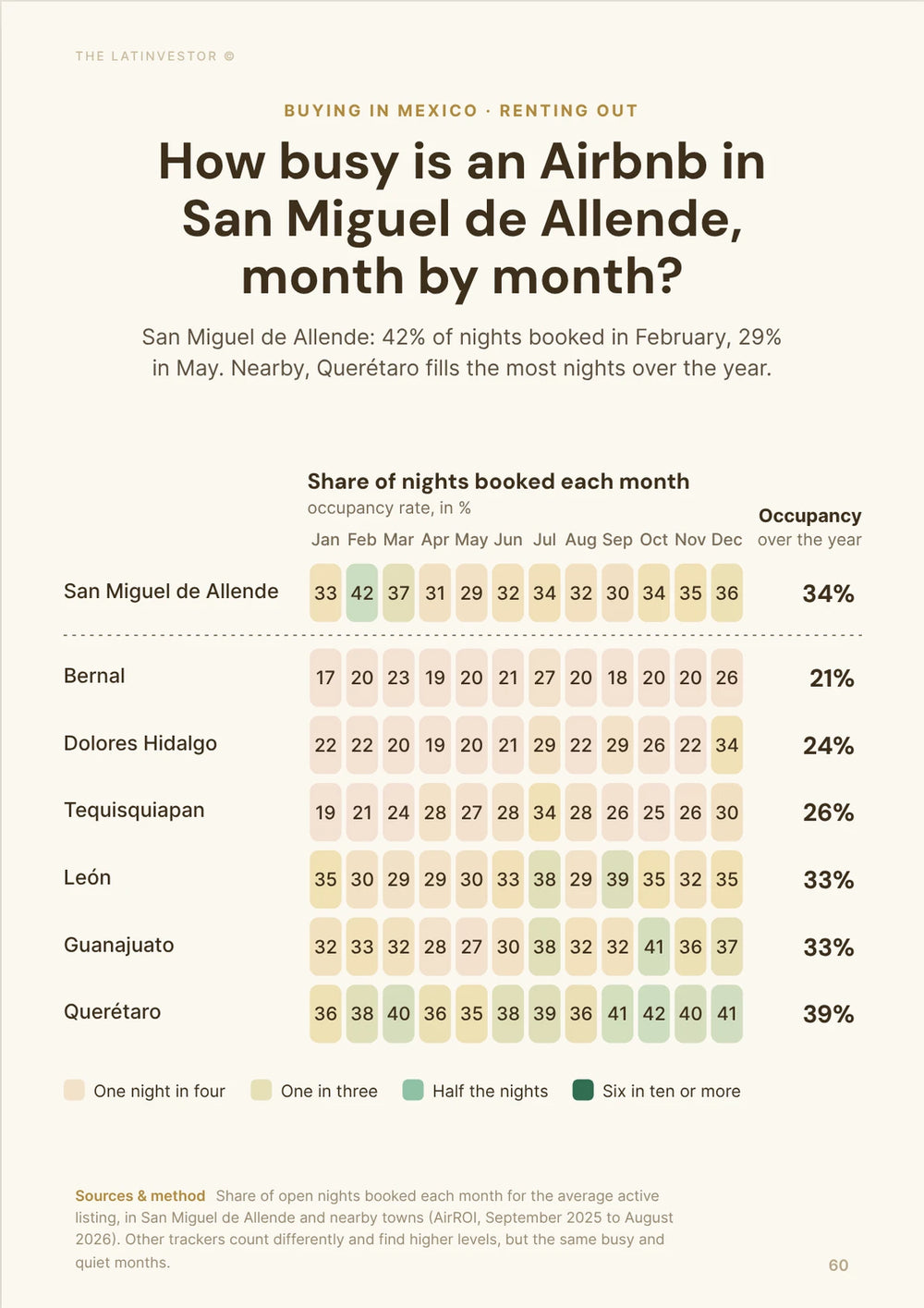
For short-term rentals, 58% of nights stayed empty on average over the last 12 months (42% occupancy, according to AirDNA).
Turnover peaks in late spring and early summer, when snowbirds and seasonal residents head north. Try to have leases end in October or November, when demand comes back.
Which San Miguel de Allende neighborhoods are worth buying in for rent?
Which neighborhoods have the highest long-term demand in San Miguel de Allende?
Centro, San Antonio and Guadiana get the most long-term demand. They're walkable and colonial, and that's what most expat tenants come for.
Families and long-term residents who want space and parking look at Los Frailes, La Lejona and Zirándaro, which are quieter and mostly car-based.
Artists and students tend to pick San Antonio and Guadalupe, close to the art schools and language institutes. Retirees with bigger budgets also ask for Ojo de Agua.
Which neighborhoods have the best yield in San Miguel de Allende?
Guadalupe, La Lejona, Zirándaro and Mesa de Malanquín usually beat Centro on yield. Purchase prices there are lower, while rents stay reasonable because they're close enough to town.
In Centro, condos ask about MXN 41,690 per square meter, and buyers pay a premium for the address that rent doesn't fully match. A furnished two-bedroom in Zirándaro lists at MXN 11,500 to 14,500 a month, against MXN 25,000 for similar ones in La Lejona.
Before buying in any of these areas, check how long similar units have sat on the rental portals. If they sit for months, the yield on paper won't happen.
Where do tenants pay the highest rents in San Miguel de Allende?
Centro, Guadiana and Ojo de Agua. Larger furnished apartments and houses there commonly ask MXN 25,000 to 45,000 a month ($1,340 to $2,420), and luxury homes go higher.
What tenants pay for is walking to the Jardín Principal, colonial architecture and an established expat scene. They're mostly retirees and remote workers from the US and Canada, plus people on long creative stays.
What do tenants actually want in San Miguel de Allende?
What features increase rent the most in San Miguel de Allende?
Parking, outdoor space and fast internet. Parking matters most, because Centro's cobbled streets are narrow and street spots are rare. By our estimate it adds something like 10% to 20% to the rent.
Luxury kitchen appliances are overrated. Many expat tenants eat out a lot and won't pay more for them.
A cheap upgrade that pays: a good pressure pump and enough water storage (tinaco and cistern). The aquifer serving the Upper Laja basin is being drained, and tenants notice water problems fast.
Do furnished rentals rent faster in San Miguel de Allende?
Yes. Most tenants here are expats, snowbirds and medium-stay visitors who arrive with suitcases, so furnished units usually rent a few weeks faster.
Furnished units also ask more, often 15% to 25% by our estimate, but you pay for wear and replacement. Keep it a plain residential lease: hospitality-style extras like cleaning service can make the rent subject to 16% VAT.
How regulated is long-term renting in San Miguel de Allende?
Can I freely set rent prices in San Miguel de Allende?
Yes. There's no rent cap in Guanajuato. You set the starting rent, and increases follow whatever the lease says.
Most landlords tie the yearly increase to inflation, which INEGI put at 3.69% for 2025. Write the formula into the lease so there's nothing to argue about at renewal.
What's the standard lease length in San Miguel de Allende?
Twelve months is standard, though 3 to 6 month contracts are common in this expat market.
Landlords usually ask for one month's rent as a deposit (MXN 12,000 to 25,000 for a typical two-bedroom), sometimes plus a guarantor (fiador) or a legal guarantee policy (póliza jurídica), which costs the tenant 30% to 50% of a month's rent.
The deposit comes back at the end, minus damage or unpaid rent. Spell out the return timeline in the lease, since the Civil Code leaves the details to the contract.
How does short-term renting really work in San Miguel de Allende?
Is Airbnb legal in San Miguel de Allende?
Yes. Guanajuato's 2020 platform lodging law explicitly allows it, and there's no cap on the number of nights you can rent.
You register for free online in the state tourism registry. The certificate is issued on submission and lasts three years. You also need civil liability insurance and written house rules.
The state's 4% lodging tax is withheld by the platform, and the federal income tax and VAT go through SAT. The real risk for a non-compliant host is a tax bill with penalties, not a shutdown.
Hoteliers are pushing municipalities to write their own rules. As of August 2026 talks were still going, with no date, so check with the municipality before buying a unit that only works as an Airbnb.
What's the average short-term occupancy in San Miguel de Allende?
About 42% over the 12 months to September 2026, up from roughly a third a year earlier, according to AirDNA.
Well-reviewed Centro homes with good amenities do much better than the average. Poorly placed or poorly run listings do much worse.
Bookings peak from November to April, at Semana Santa, Day of the Dead and on wedding weekends. They're weakest in the June to September rainy season.
What's the average nightly rate in San Miguel de Allende?
$163 a night (about MXN 3,030 or €145) over the 12 months to September 2026, 5.5% less than a year earlier.
Basic studios can go for around MXN 1,200 ($64.5) a night, while large homes with pools and views ask MXN 8,500 ($457) or more. Prices jump on holidays and wedding weekends.
Is short-term rental supply saturated in San Miguel de Allende?
Less than a year ago. AirDNA counted 2,010 active listings in September 2026, about half as many as a year earlier (more on that below).
Centro, San Antonio, Guadiana and Ojo de Agua still have the most competition, and only top listings fill well there. Quieter areas with parking and outdoor space, like La Lejona, Guadalupe or near the Calzada de la Estación, can stand out more easily.
Why did half of San Miguel's Airbnb listings disappear in a year?
The weak listings dropped out. AirDNA counts 2,010 active listings in September 2026, 53% fewer than a year earlier, while yearly revenue per listing almost doubled to $22,600 and occupancy rose to 42%.
Fewer listings sharing the same visitors means each remaining one books more nights. But the nightly rate fell 5.5% to $163, so hosts are winning on volume, not on price.
Don't read too much into the exact size of the drop. Data providers count "active" listings differently, and one year of one source isn't a trend. What it does tell you is that the market rewards well-run listings and pushes out casual ones.
What to do: if you buy for Airbnb, budget on AirDNA's average, not on the top 10% you see in agents' projections. Ask the seller or agent for 12 months of real booking statements for the exact unit.
Will you be able to sell your San Miguel rental when you want out?
Yes, but slowly and probably below asking. Homes that sold between January and September 2026 took a median 6 months from listing to closing, and over a fifth took more than a year.
Sellers got about 96% of their asking price. Of all price changes recorded, 92% were cuts, with a median cut of 6.3%. The market is flat, not falling: the median sale price stayed around $385,000 all year.
Supply is the issue. Listings rose from 593 to 860 between May 2025 and May 2026, and 69% of buyers whose nationality is known come from the United States, so the market depends on one pool of buyers.
What to do: since prices are flat, the yield is most of your return. Use the long list of homes for sale to negotiate, and don't assume a price rise will cover thin rental income.
Related blog posts
- Are rents still rising in San Miguel de Allende?
- How much are property taxes and fees in San Miguel de Allende?
- Is now a good time to buy property in San Miguel de Allende?
- How much money do you need to retire in San Miguel de Allende now? (2026)
- Where is the best place to buy in San Miguel de Allende?
- Are property prices in San Miguel de Allende likely to rise?
Our methodology
This article estimates what a foreign buyer can really earn from renting out a property in San Miguel de Allende: rents, gross and net yields, short-term rental results, costs, tax and the rules.
Yields come from current asking rents divided by median asking prices for the same kind of property. Net yields subtract vacancy, management, building fees, property tax and a repair reserve, with each assumption stated in the text. Short-term figures come from a single provider, AirDNA, so we don't mix sources in one calculation.
The rules come from official texts: the Mexican Constitution and SRE for ownership, SAT and the income tax law for tax, the Guanajuato platform lodging law and the state Civil Code for renting.
We checked these figures in October 2026. Conversions use about 18.6 pesos per US dollar and 20.9 pesos per euro.
Limits: asking rents and prices aren't signed leases or closing prices, AirDNA averages mix all property sizes, and your tax depends on your residency and regime. Some figures, like vacancy and management fees, are our estimates and are labeled as such.
Key sources used for this analysis include AirDNA's San Miguel de Allende data, Live in San Miguel's 2026 sales report, TuLugar's market page, Propiedades.com's Centro values, Vivanuncios rental listings, Realty San Miguel, The Rio Times (Numbeo rents, 2026), Global Property Guide, the Mexican Constitution, SRE's fideicomiso guidance, income tax law article 158, SAT on article 113-A, SAT on VAT article 20, Guanajuato's platform lodging law, the Guanajuato Civil Code, BnbCalc's Guanajuato guide, The Mexico Handbook, Observatorio Turístico and DataTur.