Summary
Is Rio de Janeiro a good place to live as an expat? Yes, if you can afford a good Zona Sul or Barra neighborhood and accept staying alert on the street. By our estimate, a comfortable single life costs R$10,000 to R$20,000 ($1,990 to $4,000) a month.
Quality of life is improving for higher earners, but housing is the big pressure: asking rents rose 15.9% over the year to July 2026.
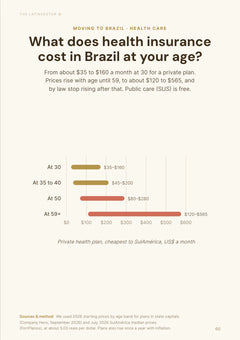
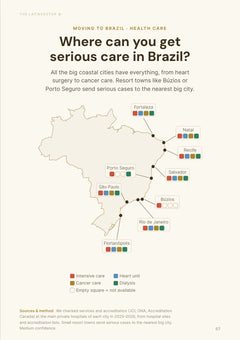
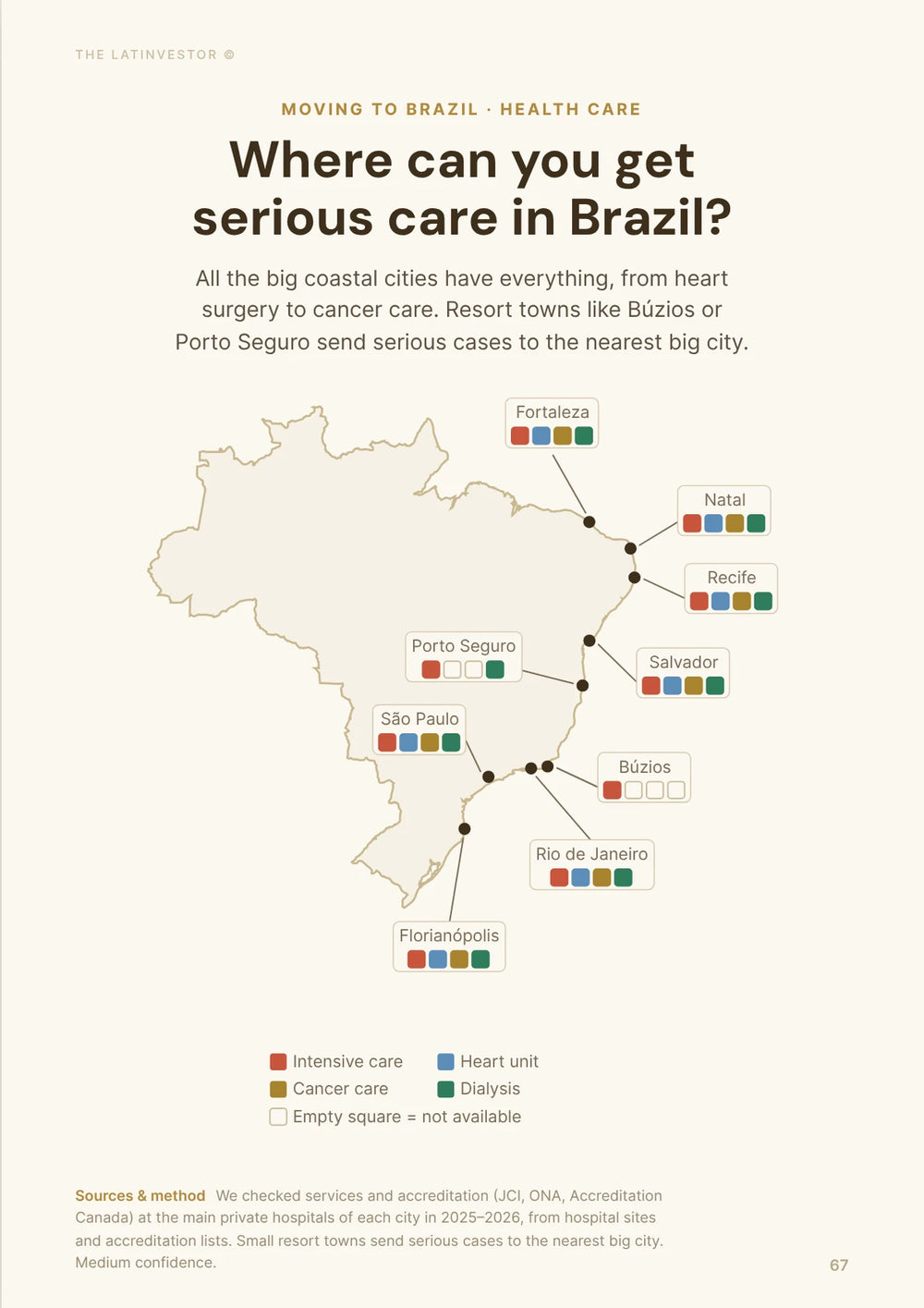
Private hospitals like Copa D'Or, São Lucas Copacabana and Samaritano Botafogo meet Western standards. A private doctor visit usually costs R$200 to R$700, so private insurance is worth it.
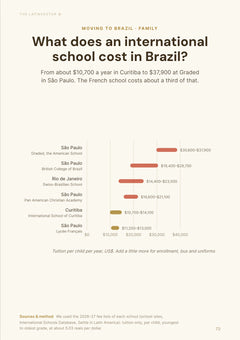
Rio has around 10 international schools. Fees for 2026-2027 run about R$57,000 to R$120,000 a year at the schools that publish them, and waitlists can be long.
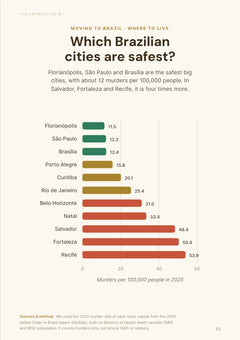
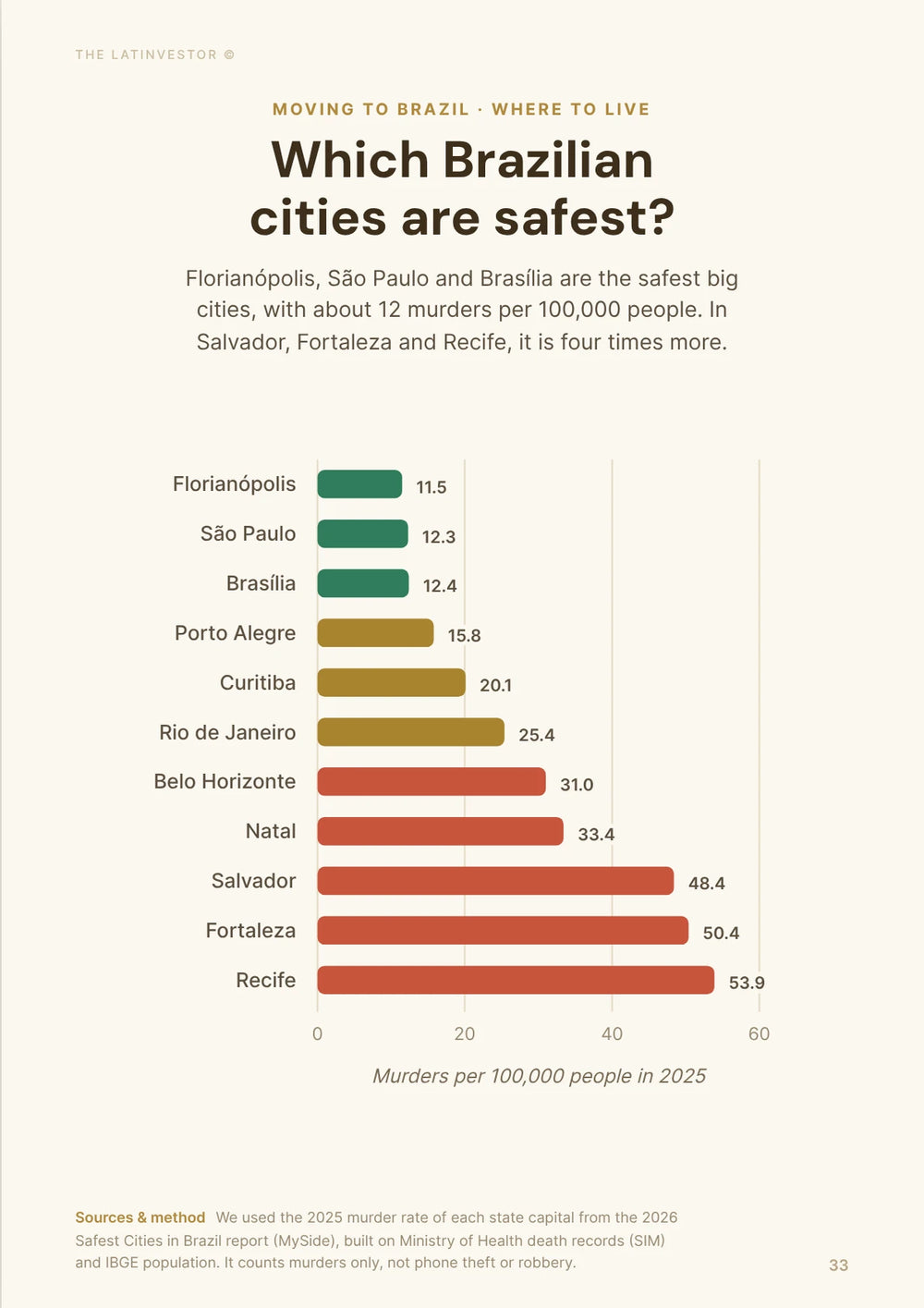
Safety depends on the neighborhood and the hour. The state of Rio recorded 2,940 intentional homicide victims in 2025, about the same as in 2024, and phone theft is the main risk for expats.
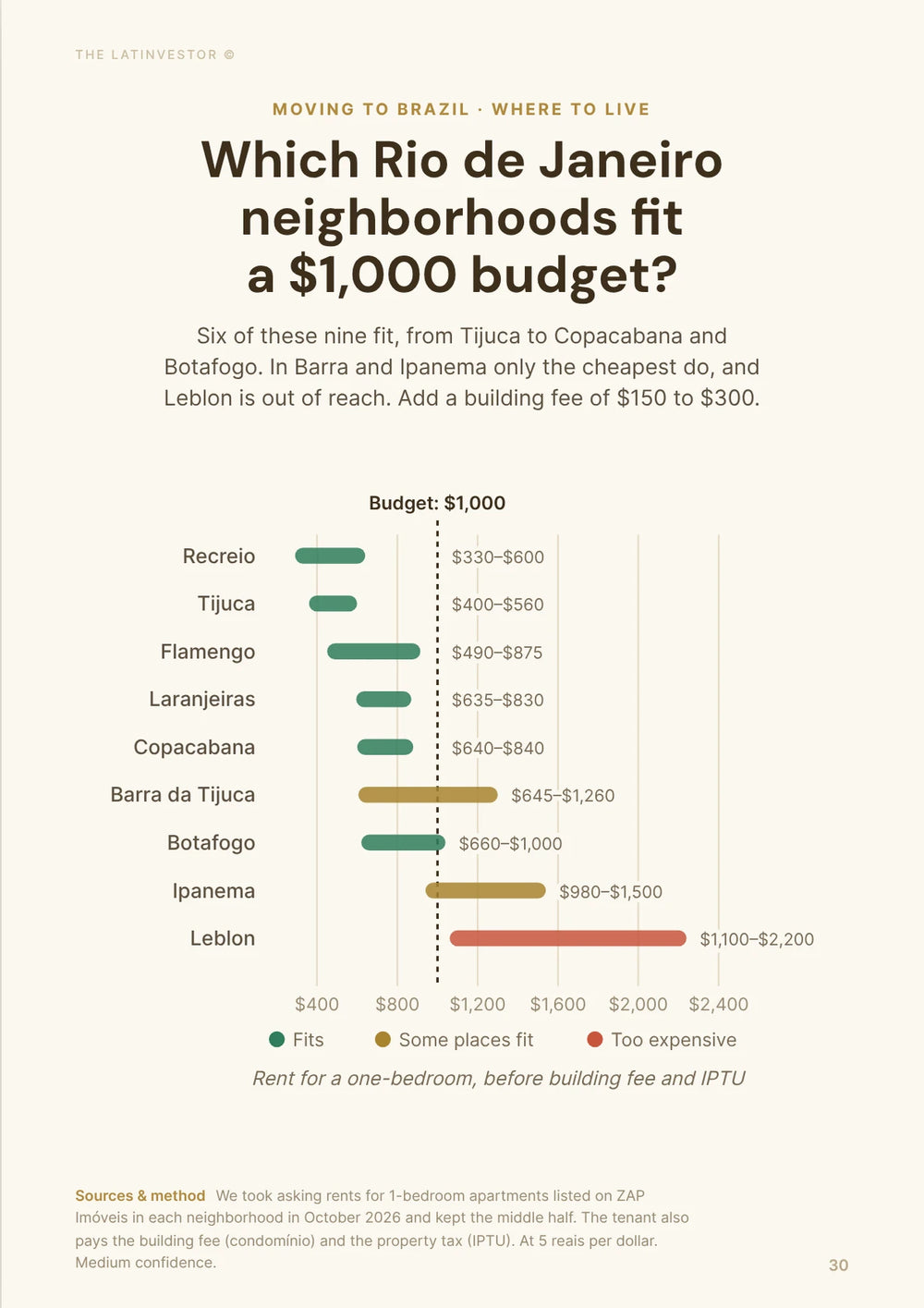
A modest life outside the premium areas costs R$5,000 to R$8,000 a month. Rents average R$53.20 per m² citywide, but about R$107 in Ipanema and R$120 in Leblon.
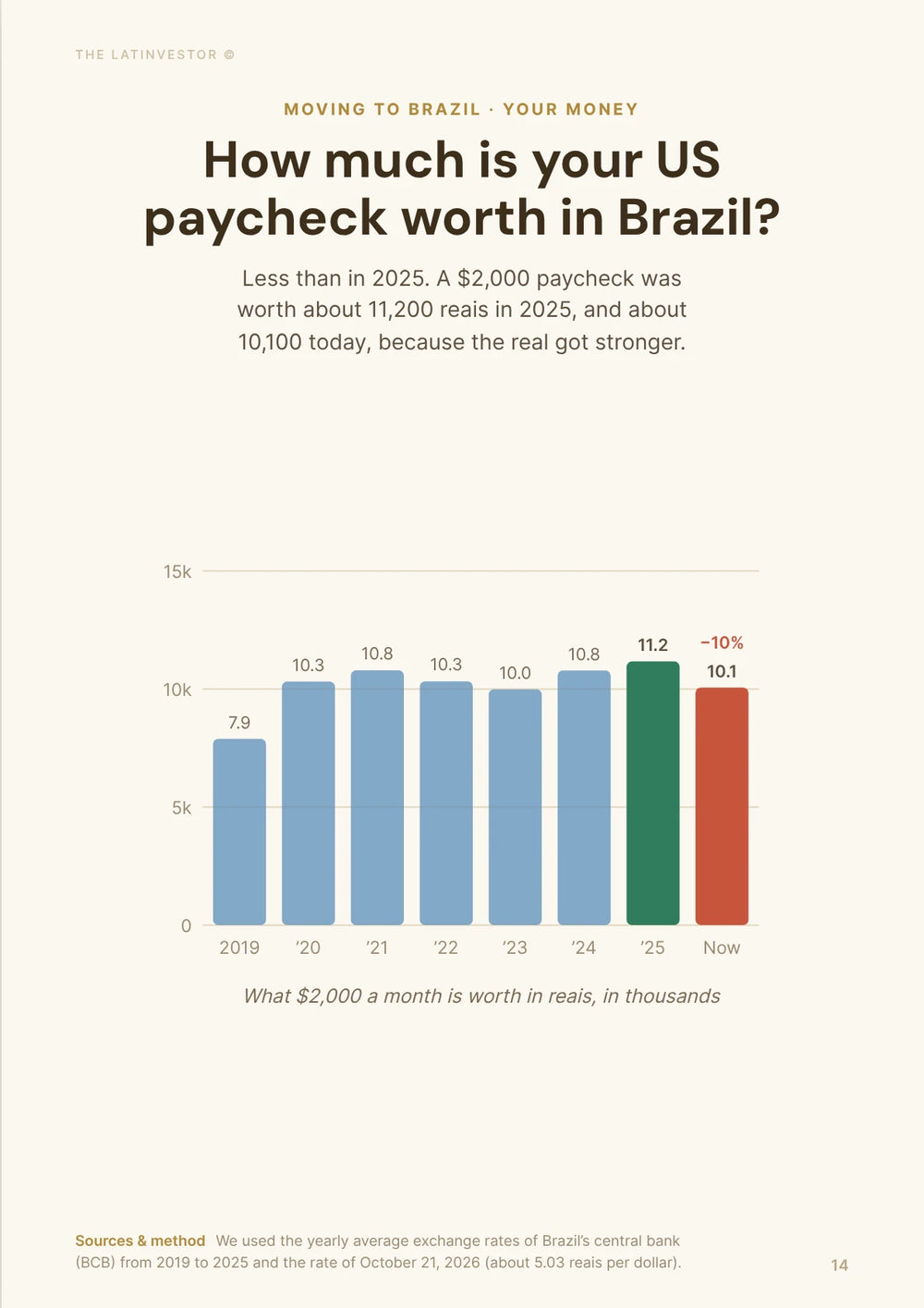
The real is strong: a dollar bought about 5.0 reais in October 2026, against more than 6 at the start of 2025, so foreign incomes stretch less than before.
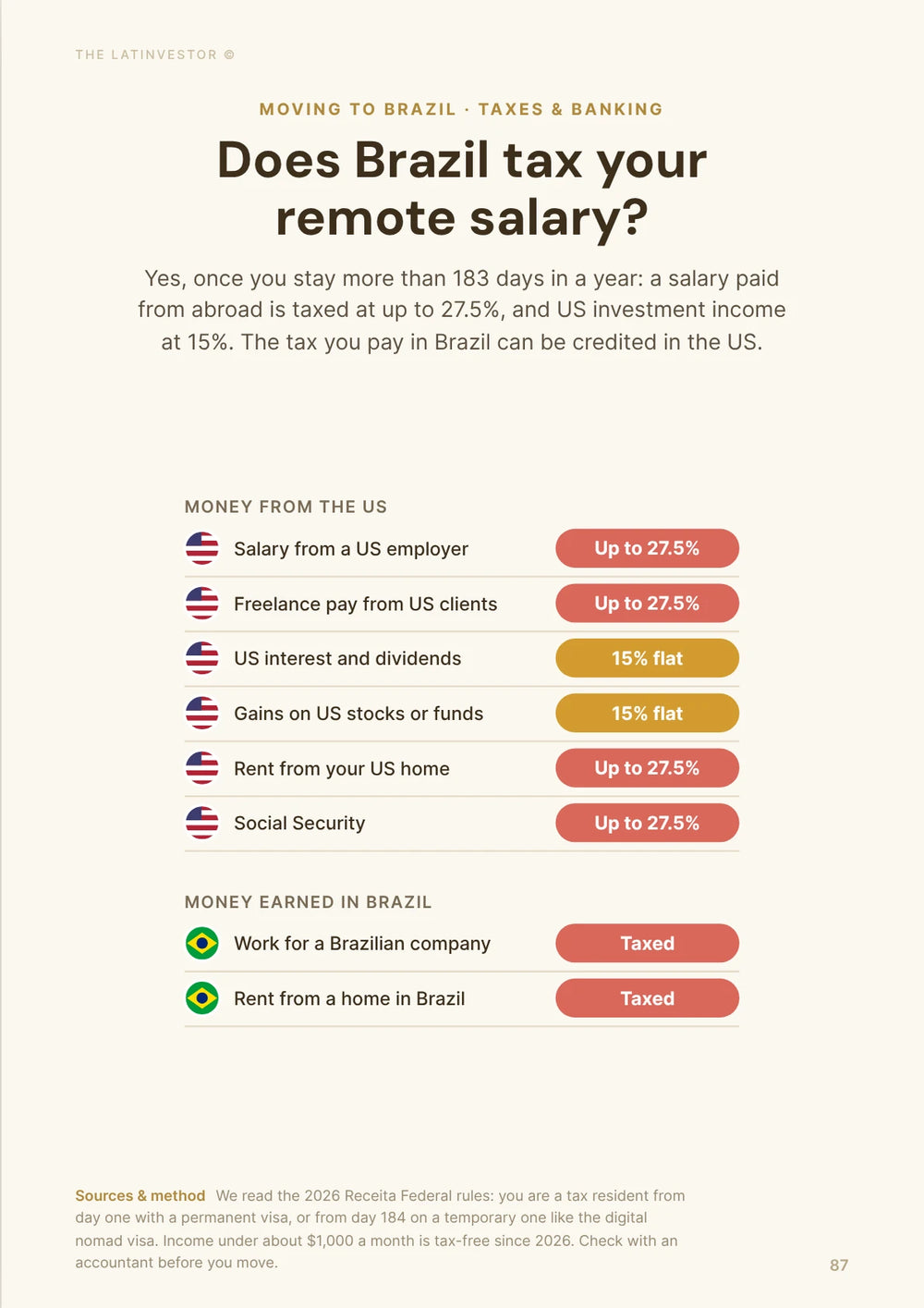
Income tax is federal. On R$8,000 to R$15,000 a month, an employee pays about 13% to 20%, and income up to R$5,000 a month is tax-free since 2026.
Brazil has few foreigners: about 1 million people born abroad, 0.5% of the population. In Rio, expats come from Venezuela, other Latin American countries, the US and Europe, often for energy or multinational jobs.
Expats live mostly in Zona Sul (Ipanema, Leblon, Copacabana, Botafogo) and Barra da Tijuca. Brazil processed over 3,800 digital nomad visa requests in the third quarter of 2025.
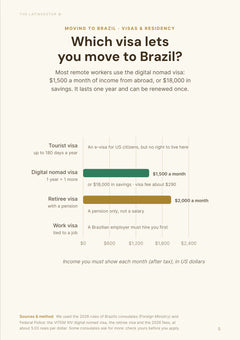
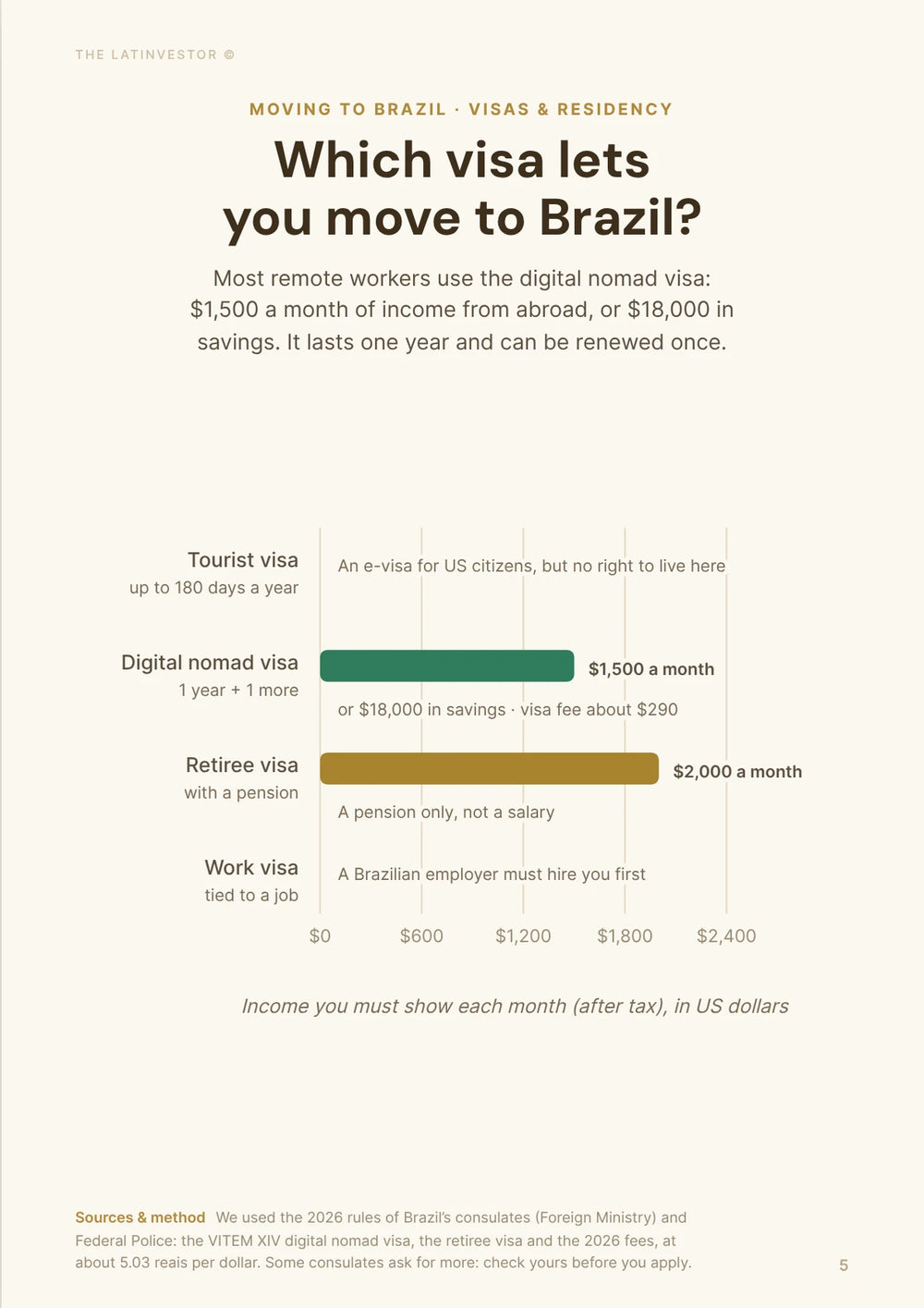
The digital nomad visa needs $1,500 a month of foreign income or $18,000 in savings, and lasts one year, renewable once. Work visas and family reunion are the other common routes.
Citizenship usually needs four years of residence, or one year with a Brazilian spouse or child. Federal Police appointments are the usual bottleneck after arrival.
Jobs for foreigners are mostly in oil and gas, tech, finance and multinationals. By our estimate, expat salaries run R$10,000 to R$45,000 ($1,990 to $8,950) a month, depending on the package.
Expats love the beaches, the mountains and the easy friendships. They dislike the constant security awareness, the traffic and the CPF and bank paperwork.
Bottom line: foreigners can buy freely, but homes cost about R$11,300 per m² on average and R$28,750 in Leblon, and mortgages start around 10% a year. Rio rewards those who pick their micro-neighborhood carefully.


What are quality of life, healthcare, schools and safety like in Rio de Janeiro?
Is quality of life getting better or worse in Rio de Janeiro in 2026?
In 2026, quality of life in Rio de Janeiro is improving for higher-income residents who can afford comfortable neighborhoods, private healthcare, and convenient transportation, though challenges remain uneven across the city.
The most noticeable improvement in Rio de Janeiro over the past two to three years has been the growth of the digital nomad and remote work community, which has brought new coworking spaces, international-friendly services, and a more cosmopolitan feel to neighborhoods like Botafogo and Ipanema.
However, rent prices in Rio de Janeiro have risen sharply, with asking rents up 15.9% over the year to July 2026 and similar double-digit growth in areas like Zona Sul, making housing affordability a persistent challenge for anyone on a tighter budget or looking to live in the most desirable expat neighborhoods.
Are hospitals good in Rio de Janeiro in 2026?
In 2026, private hospitals in Rio de Janeiro meet or exceed Western European and North American standards for acute care, while public healthcare through SUS can be excellent for certain services but is less predictable for everyday expat needs.
The hospitals most commonly recommended by expats in Rio de Janeiro include Copa D'Or in Copacabana, Hospital São Lucas Copacabana, and Samaritano Botafogo, all of which offer English-speaking staff and international-standard facilities.
A private doctor consultation in Rio de Janeiro in 2026 usually costs somewhere between R$200 and R$700 (around $40 to $140 USD or €36 to €120 EUR), depending on the doctor and the clinic, and specialists at the top hospitals tend to sit at the upper end of that range or above.
Private health insurance is strongly recommended for expats in Rio de Janeiro because it provides faster access, better language support, and more predictable service compared to navigating the public system on your own.
Are there any good international schools in Rio de Janeiro in 2026?
In 2026, Rio de Janeiro has around 10 international schools offering quality education, with most following IB, American, British, French, or German curricula that meet global standards.
The most reputable international schools among expat families in Rio de Janeiro include Escola Americana do Rio de Janeiro (EARJ) with campuses in Gávea and Barra da Tijuca, The British School with sites in Botafogo, Urca, and Barra, and Escola Suíço-Brasileira known for its trilingual programs.
Annual tuition fees at international schools in Rio de Janeiro for the 2026-2027 school year typically range from about R$57,000 to R$120,000 per year (approximately $11,500 to $24,000 USD or €10,000 to €21,500 EUR) at the schools that publish their fees, from R$57,460 at Lycée Molière to R$118,337 in the final grades at Escola Suíço-Brasileira, with top-tier IB diploma schools at the higher end.
Waitlists at popular international schools in Rio de Janeiro can be long, especially for early years and IB diploma programs, while public schools are rarely chosen by expats unless the family is fluent in Portuguese and has strong local support.
Is Rio de Janeiro a dangerous place in 2026?
In 2026, Rio de Janeiro is not uniformly dangerous, but safety varies dramatically by neighborhood and daily routine (the state of Rio recorded 2,940 victims of intentional homicide in 2025, virtually the same as the 2,938 of 2024), meaning expats who choose their location carefully and follow local precautions can live comfortably.
The most common safety concerns for expats in Rio de Janeiro are opportunistic street crime like phone snatchings in crowded areas, petty theft on beaches when belongings are left unattended, and the need to avoid displaying expensive jewelry or electronics while walking.
The neighborhoods generally considered safest for expats to live in Rio de Janeiro include Leblon, Ipanema, Lagoa, Jardim Botânico, Gávea, Urca, Botafogo, Humaitá, and Barra da Tijuca, all of which have higher police presence and doorman buildings.
Many women live alone in Rio de Janeiro without problems, especially in Zona Sul neighborhoods, although risk depends on the street and the time of day, so the usual advice is to choose buildings with 24/7 doormen, avoid isolated routes at night, use ride-hailing apps like Uber, and stay aware of their surroundings in crowded areas.
How much does everyday life cost in Rio de Janeiro in 2026?
What monthly budget do I need to live well in Rio de Janeiro in 2026?
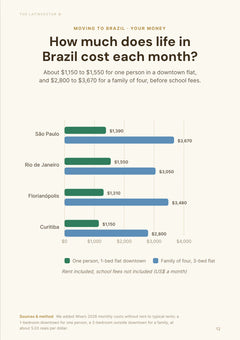
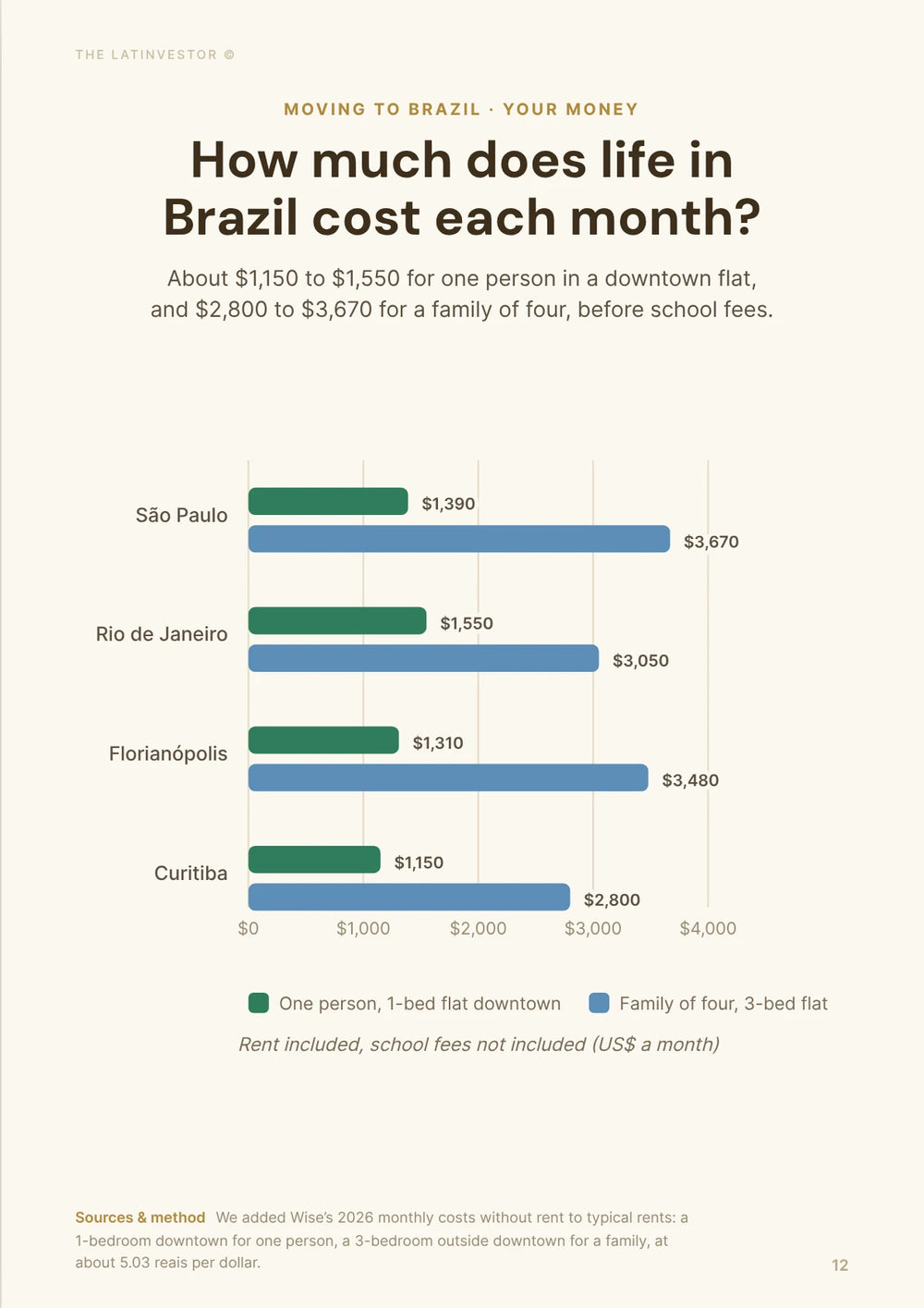
In 2026, by our estimate, a single person needs approximately R$10,000 to R$20,000 per month (around $1,990 to $4,000 USD or €1,780 to €3,550 EUR) to live comfortably in a good neighborhood in Rio de Janeiro. For comparison, Wise puts a basic month for one person, with a central one-bedroom, at about R$7,774.
For a modest but decent lifestyle in Rio de Janeiro, including a basic apartment outside the premium Zona Sul areas, a single person can manage on around R$5,000 to R$8,000 per month ($1,000 to $1,590 USD or €890 to €1,420 EUR), though this requires more careful budgeting.
A more comfortable or upscale lifestyle in Rio de Janeiro, with a nice apartment in Ipanema, Leblon, or Barra da Tijuca, regular dining out, and full access to leisure activities, typically requires R$20,000 to R$35,000 per month ($4,000 to $6,950 USD or €3,550 to €6,200 EUR) for a single person.
The real has also strengthened: a dollar bought about 5.0 reais in October 2026, against more than 6 reais at the start of 2025, so a budget earned in dollars or euros stretches less than it did a year or two ago.
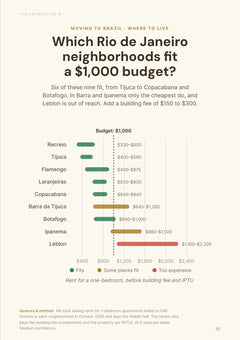
Housing takes up the largest share of a monthly budget in Rio de Janeiro, with asking rents averaging R$53.20 per square meter across the city in July 2026 and premium areas charging much more, about R$107 in Ipanema and R$120 in Leblon, making location choice the biggest factor in your overall expenses.
What is the average income tax rate in Rio de Janeiro in 2026?
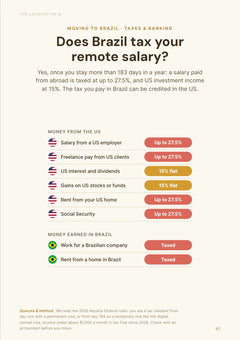
In 2026, the effective income tax rate for a typical middle-income employee in Rio de Janeiro (earning around R$8,000 to R$15,000 gross per month) is about 13% to 20% by our calculation, after the social security (INSS) deduction and with no dependants. Income tax is federal, so the rate is the same anywhere in Brazil.
Brazil's personal income tax (IRPF) brackets in 2026 start at 0% for monthly taxable income up to R$2,428.80 and rise progressively to a top marginal rate of 27.5% for income above R$4,664.68, and since January 2026 a new reduction makes income up to R$5,000 a month (about $1,000) tax-free, with lower tax up to R$7,350.
What kind of foreigners actually live in Rio de Janeiro in 2026?
Where do most expats come from in Rio de Janeiro in 2026?
In 2026, the largest expat groups in Rio de Janeiro come from Venezuela (driven by regional migration), other Latin American countries, the United States, and European nations like Portugal, France, and Germany, often connected to multinational companies or the oil and gas sector.
Brazil's foreign-born population grew from about 592,000 in 2010 to about 1 million in 2022 according to IBGE census data, though this still represents only about 0.5% of Brazil's total population (there is no recent official count for the city of Rio itself), making it a relatively low-immigration country compared to OECD standards.
Expats from North America and Europe are often drawn to Rio de Janeiro by job opportunities in energy, finance, and multinational corporations, while Latin Americans frequently come for economic reasons, and a growing number of digital nomads arrive for the lifestyle and favorable visa conditions.
The expat population in Rio de Janeiro is a diverse mix of working professionals in sectors like oil and gas, digital nomads attracted by the remote work visa, retirees seeking a better quality of life, and families transferred by multinational employers.
Where do most expats live in Rio de Janeiro in 2026?
In 2026, the most popular neighborhoods for expats in Rio de Janeiro are concentrated in Zona Sul (including Ipanema, Leblon, Copacabana, Botafogo, Flamengo, Jardim Botânico, Gávea, Lagoa, and Urca) and in the West Zone (particularly Barra da Tijuca and São Conrado).
These neighborhoods attract expats because they combine relative safety with walkability, beach access, international restaurants, coworking spaces, and buildings with 24/7 doormen, creating a convenient lifestyle that feels both cosmopolitan and distinctly Brazilian.
Botafogo and Santa Teresa are emerging as up-and-coming neighborhoods in Rio de Janeiro, attracting younger expats and digital nomads with their more affordable rents, vibrant arts scenes, coworking cafés, and proximity to Zona Sul without the premium prices.
Are expats moving in or leaving Rio de Janeiro in 2026?
In 2026, Rio de Janeiro appears to be experiencing a net inflow of expats, though there is no official count for the city, driven by Brazil's digital nomad visa program and renewed interest from remote workers seeking affordable coastal living with a strong international community.
One of the main factors driving expats to move to Rio de Janeiro right now is the combination of the digital nomad visa's low income requirement ($1,500 per month), favorable exchange rates for those earning in dollars or euros, and the city's unbeatable outdoor lifestyle.
The main factor causing some expats to leave Rio de Janeiro recently has been the sharp rise in rent prices, particularly in Zona Sul, combined with ongoing concerns about street crime and the bureaucratic challenges of obtaining a CPF and navigating local banking.
Compared to similar destinations in South America like Medellín or Buenos Aires, Rio de Janeiro's expat inflow is growing steadily, though Brazil processed over 3,800 digital nomad visa requests in Q3 2025 alone, representing a 47% quarter-on-quarter increase.
What paperwork do I need to move to Rio de Janeiro in 2026?
What visa options are popular in Rio de Janeiro in 2026?
In 2026, the three most popular visa types for expats moving to Rio de Janeiro are the Digital Nomad Visa (VITEM XIV), employer-sponsored work visas, and family reunion visas for those with Brazilian spouses or children.
The Digital Nomad Visa, which is the most accessible option for remote workers, requires proof of employment or service contracts with a foreign company, a minimum monthly income of $1,500 USD or bank savings of at least $18,000 USD (some consulates ask for more), valid health insurance, and a clean criminal background check.
Yes, Brazil offers a Digital Nomad Visa (VITEM XIV) introduced in January 2022, which allows foreigners to live and work remotely in Brazil for up to one year, renewable for an additional year, as long as they work for a company located outside of Brazil and meet the income requirements.
The Digital Nomad Visa is initially valid for one year and can be renewed once for another year through the Federal Police's MigranteWeb portal, giving a maximum stay of two years under this visa category.
How long does it take to get residency in Rio de Janeiro in 2026?
In 2026, a temporary visa application like the Digital Nomad Visa often takes a few weeks when applying from abroad, though times vary by consulate, and you then need a Federal Police appointment after arrival to register and receive your CRNM residence card, which can take several more weeks in Rio.
Common factors that can delay the residency process in Rio de Janeiro include missing apostilles or translations on documents, scheduling difficulties for Federal Police appointments, and errors in the online application forms, while having all documents correctly prepared from the start can significantly speed things up.
Permanent (indefinite) residency in Brazil does not come automatically after a set number of years on a temporary visa: some permits, such as work residence, can be converted after two years, the digital nomad permit cannot, and marriage to a Brazilian citizen gives direct access to residence. Citizenship usually needs four years of residence, or one year with a Brazilian spouse or child.
How hard is it to find a job in Rio de Janeiro in 2026?
Which industries are hiring the most in Rio de Janeiro in 2026?
In 2026, the industries hiring the most in Rio de Janeiro are oil and gas (with Petrobras and international energy companies based in the city), tourism and hospitality, and professional services including finance, consulting, and technology.
It is realistic for expats to get hired in Rio de Janeiro without speaking Portuguese only if they target multinational companies, tech startups with international teams, or specialized roles in energy and engineering, but customer-facing and local business positions almost always require fluency.
The types of roles most accessible to foreign job seekers in Rio de Janeiro include senior engineering and technical positions in the oil and gas sector, IT specialists and developers at tech companies, English teachers at language schools, and management roles at multinational corporations with regional offices in Brazil.
What salary ranges are common for expats in Rio de Janeiro in 2026?
In 2026, by our estimate, the typical salary range for expats working in Rio de Janeiro varies widely from R$10,000 to R$45,000 gross per month (approximately $1,990 to $8,950 USD or €1,780 to €8,000 EUR) depending on industry, seniority, and whether the position includes an expatriate package.
Entry-level or mid-level expat positions in Rio de Janeiro typically pay R$10,000 to R$20,000 gross per month (around $1,990 to $4,000 USD or €1,780 to €3,550 EUR), common in areas like technology, marketing, and education.
Senior or specialized expat roles in Rio de Janeiro, particularly in oil and gas, finance, or executive management, typically pay R$25,000 to R$50,000 gross per month ($5,000 to $9,950 USD or €4,450 to €8,900 EUR), with some director-level positions offering additional benefits like housing and school fee support.
Employers in Rio de Janeiro do sponsor work visas, but mainly for candidates with specialized skills that are difficult to find locally, as companies have to justify the hire, and labor law generally requires at least two-thirds of a company's staff to be Brazilian.
What's daily life really like for expats in Rio de Janeiro right now?
What do expats love most about living in Rio de Janeiro right now?
The top things expats love most about living in Rio de Janeiro are the incredible natural beauty with beaches and mountains in one city, the strong neighborhood identities that create a sense of community, and the spontaneous, warm social culture of the locals known as Cariocas.
The lifestyle benefit most frequently praised by expats in Rio de Janeiro is the ability to live an outdoor life year-round, whether that means morning beach runs, sunset drinks at a kiosk in Ipanema, or hiking in Tijuca Forest on weekends.
The practical advantage expats appreciate most in Rio de Janeiro is the favorable exchange rate for those earning in dollars or euros, which makes the city surprisingly affordable for a comfortable lifestyle compared to major cities in North America or Europe.
The social and cultural aspect that makes Rio de Janeiro particularly enjoyable for expats is how easily friendships form, with Brazilians being genuinely open and inclusive, inviting newcomers to social gatherings, beach days, and neighborhood parties with little formality.
What do expats dislike most about life in Rio de Janeiro right now?
The top complaints expats have about living in Rio de Janeiro are the constant need to be security-conscious (watching phones, avoiding certain areas at night), the frustrating traffic that makes commutes unpredictable, and the complexity of setting up banking and official documents.
The daily inconvenience that frustrates expats the most in Rio de Janeiro is the informal approach to time and scheduling, where appointments, service calls, and even social plans often start late or get rescheduled without much notice, requiring patience and flexibility.
The bureaucratic issue that causes the most headaches for expats in Rio de Janeiro is obtaining a CPF (tax ID number) and opening a bank account, which involves multiple trips to government offices, specific documentation, and long waiting times, especially for those unfamiliar with Portuguese.
These common frustrations are generally manageable rather than deal-breakers for most expats in Rio de Janeiro, as the lifestyle benefits tend to outweigh the annoyances once you adapt to local rhythms and build a support network.
What are the biggest culture shocks in Rio de Janeiro right now?
The biggest culture shocks expats experience when moving to Rio de Janeiro are how dramatically quality of life depends on your exact micro-location (two adjacent neighborhoods can feel like different cities), the constant awareness required around personal security, and the importance of doorman buildings as essential infrastructure.
The social norm that surprises newcomers the most in Rio de Janeiro is the fluid approach to personal space and physical affection, where even casual acquaintances greet each other with kisses on the cheek and conversations happen at close proximity, which can feel intense for those from more reserved cultures.
One aspect of daily routines in Rio de Janeiro that takes time for expats to adjust to is the late schedule, with dinners often starting late in the evening, shops opening late, and weekend beach days extending well into the evening, requiring a complete reset of meal times and sleep patterns.
Can I buy a home as a foreigner in Rio de Janeiro in 2026?
Can foreigners legally own property in Rio de Janeiro in 2026?
In 2026, foreigners can legally own urban property in Rio de Janeiro with essentially the same rights as Brazilian citizens, making Brazil one of the more open countries in Latin America for international real estate investment.
The main restrictions that apply to foreigners buying property in Rio de Janeiro relate to rural land and properties near national borders or in certain strategic zones, but standard apartments and houses in the city have no ownership limitations for non-Brazilians.
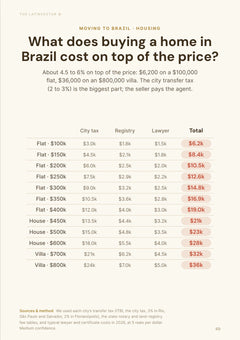
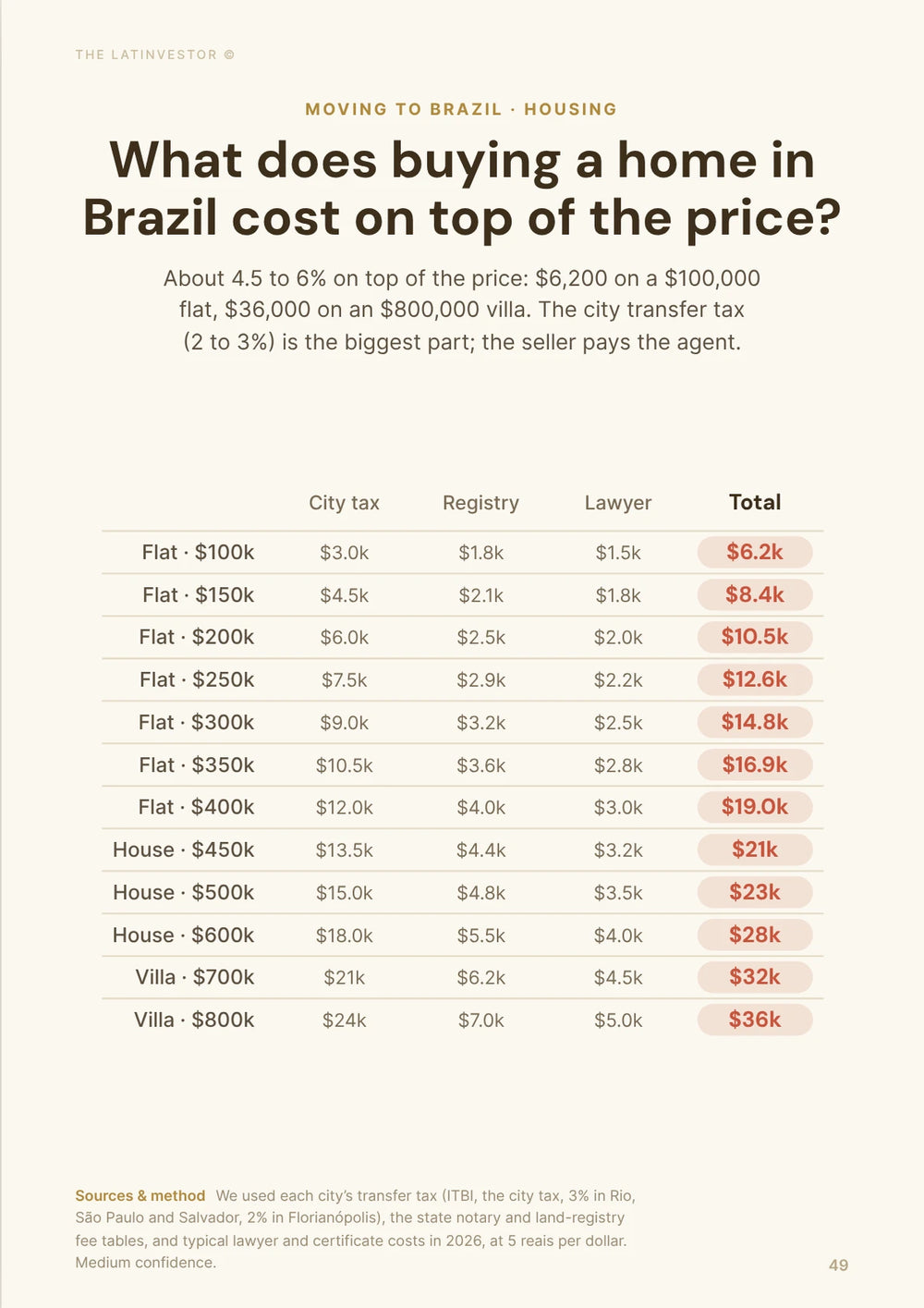
Foreigners can own apartments, houses, and commercial properties in Rio de Janeiro without restrictions, though they will need to obtain a CPF (Brazilian tax ID), conduct thorough title searches, and work with a reputable notary to ensure the transaction is properly registered.
What is the average price per m² in Rio de Janeiro in 2026?
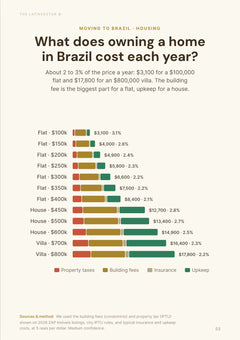
In 2026, the average asking price for residential property in Rio de Janeiro is approximately R$11,300 per square meter (around $2,250 USD or €2,000 EUR per m²; R$11,302 in the FipeZAP index for September 2026), though prices vary enormously by neighborhood, with Leblon (about R$28,750 per m²) and Ipanema (about R$26,600) commanding more than twice the city average.
Property prices in Rio de Janeiro have been rising over the past two to three years, with the FipeZAP sales index showing 5.6% growth over the 12 months to September 2026, driven by increased demand from both local buyers and foreign investors attracted by favorable exchange rates.
Do banks give mortgages to foreigners in Rio de Janeiro in 2026?
In 2026, mortgages for foreigners in Rio de Janeiro are available but limited, typically requiring legal residency, a local banking relationship, and proof of income that Brazilian banks can verify, making cash purchases more common among international buyers.
The banks in Rio de Janeiro most known to work with foreigners on mortgages include Banco do Brasil, Caixa Econômica Federal, and Itaú, though each has specific requirements and approval rates vary significantly.
Typical mortgage conditions for foreigners in Rio de Janeiro include a down payment of at least 20% to 30% of the property value, and often more without a Brazilian credit history, interest rates starting around 10% to 12% a year plus the TR index in October 2026 (from about 10.3% at Caixa to 12% at Itaú, with the Selic policy rate at 13.75%), and maximum loan terms of up to 30 to 35 years depending on the bank and borrower profile.
Documents foreigners typically need to qualify for a mortgage in Rio de Janeiro include a valid CPF, proof of legal residency or visa status, income verification (ideally from Brazilian sources), bank statements showing financial stability, and a clean credit history in Brazil if available.
Related blog posts
- Where are property prices in Rio de Janeiro heading?
- How much does property cost in Rio de Janeiro?
- Are rents still rising in Rio de Janeiro?
- Is now a good time to buy property in Rio de Janeiro?
- Where is the best place to buy in Rio de Janeiro?
- How much money do you need to retire in Rio de Janeiro now? (2026)
Our methodology
This article looks at what it is like to live in Rio de Janeiro as an expat: quality of life, healthcare, schools, safety, monthly budgets, income tax, who the expats are and where they live, visas and residency, jobs and salaries, daily life, and buying a home as a foreigner.
Budgets and salary ranges are our own estimates, built from rents, everyday prices and pay data, and cross-checked with Wise, Numbeo and the Robert Half 2026 salary guide. Rents come from the QuintoAndar-Imovelweb index, home prices from FipeZAP and oAbitat, safety figures from Rio's ISP, and population figures from the 2022 census and OBMigra.
Visa and residency rules come from the Ministry of Justice, Itamaraty and the Federal Police. Tax rules come from Receita Federal's 2026 tables; we calculated effective tax rates ourselves for an employee with no dependants, after social security. School fees come from the International Schools Database for 2026-2027.
We checked these figures in October 2026. Real amounts are converted at about 5.02 reais per US dollar and 5.63 reais per euro (October 2026).
Some points have no reliable official figure for the city, such as the number of foreigners living in Rio, expat salaries, a typical doctor fee or the city homicide rate (we used the state figure). There we gave a range, labeled it as our estimate, or left the number out. Asking prices are not final sale prices, and your own costs will depend on your neighborhood and habits.
Key sources used for this analysis include IBGE Cidades e Estados, FipeZAP Index, Receita Federal IRPF Tables, IPEA Atlas da Violência, Itamaraty Digital Nomad Visa Page, DIEESE Basic Food Basket Survey, OBMigra Portal de Imigração, ISP Rio de Janeiro Women's Safety Reports, Banco Central do Brasil Focus Report, Rede D'Or Hospital Recognitions, QuintoAndar-Imovelweb rent index, Wise cost of living, FipeZAP sale prices (September 2026), oAbitat neighborhood prices, ISP Segurança em Números (2025 data), Doctoralia consultation prices, International Schools Database, IBGE 2022 census immigration results, OBMigra's 2026 annual report, Ministry of Justice digital nomad rules, Robert Half 2026 salary guide, MySide bank mortgage rates, Selic rate (September 2026) and BCB PTAX exchange rates.