
Summary
Barely. In October 2026, the median asking price for a house in Lake Chapala is about USD 1,700 per square meter, and asking prices have been flat to slightly down in recent months, while Mexico's official house price index rose 7.3% in a year.
A typical 3-bedroom house is listed around USD 436,000 and a 2-bedroom condo around USD 350,000. These are asking prices; local brokers put the average 2025 sale at about USD 360,000, roughly 2% below 2024.
Homes take about 90 to 140 days to sell, and most close at 94% to 98% of the asking price, so plan on negotiating 2% to 6%.
The market is mostly resale houses: new builds are only about 10% to 20% of listings, mainly in west Ajijic, San Antonio Tlayacapan and the Jocotepec side.
The areas moving fastest are Riberas del Pilar, San Antonio Tlayacapan and west Ajijic, where we estimate prices rose 12% to 25% over two to three years. Line 5 to Guadalajara airport opened in June 2026, and the Guadalajara end of the road to Chapala got a MXN 2.5 billion rebuild.
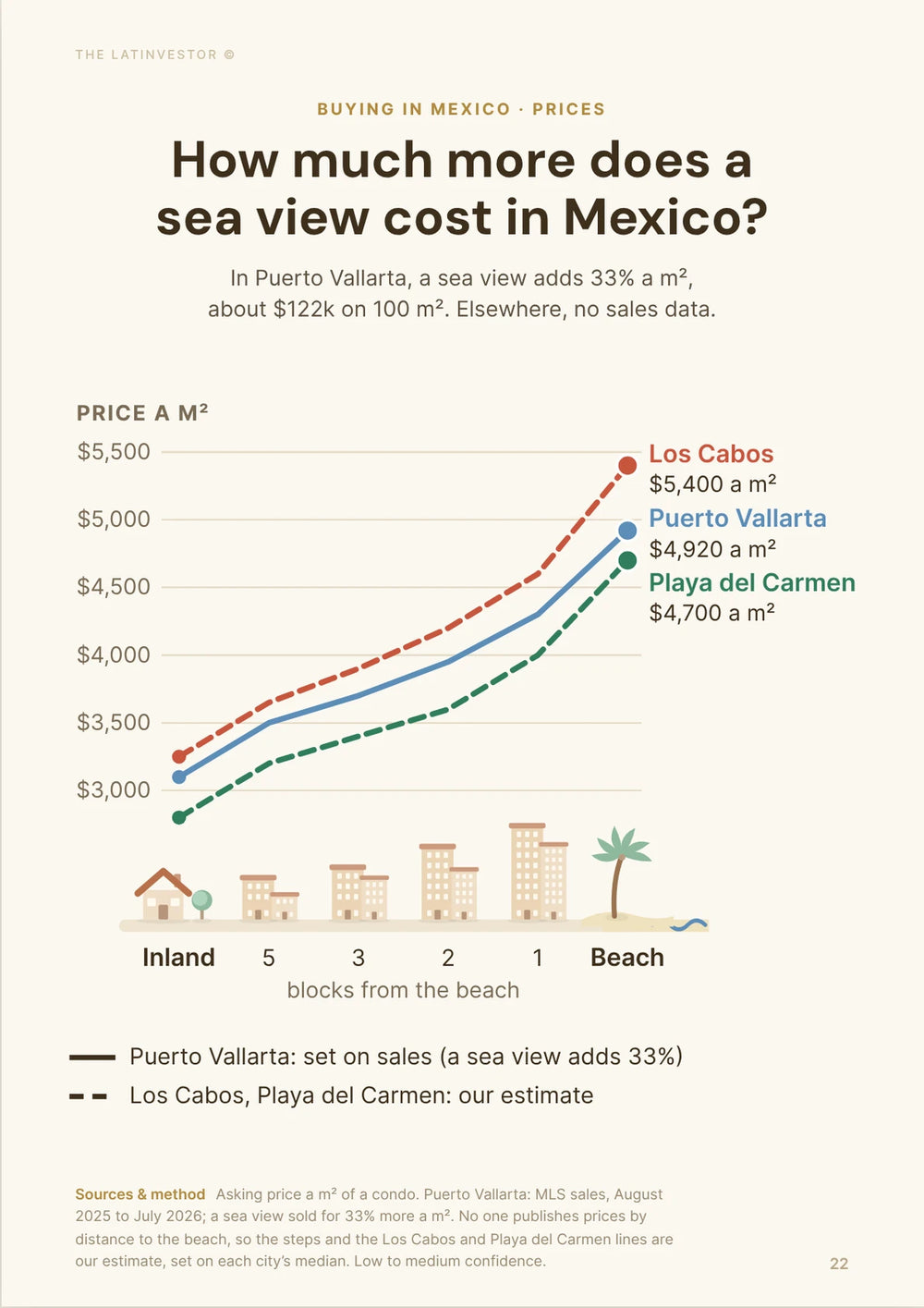
Locals see prime Ajijic and La Floresta as expensive. The classic regret is overpaying for a lake view on a hillside home that needs work.
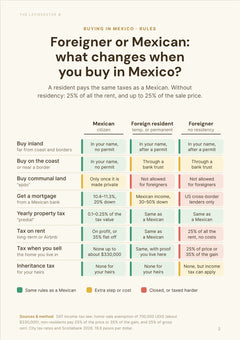
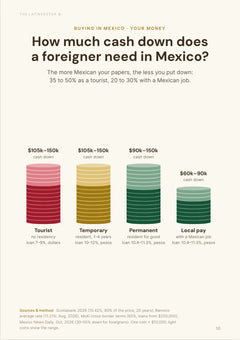
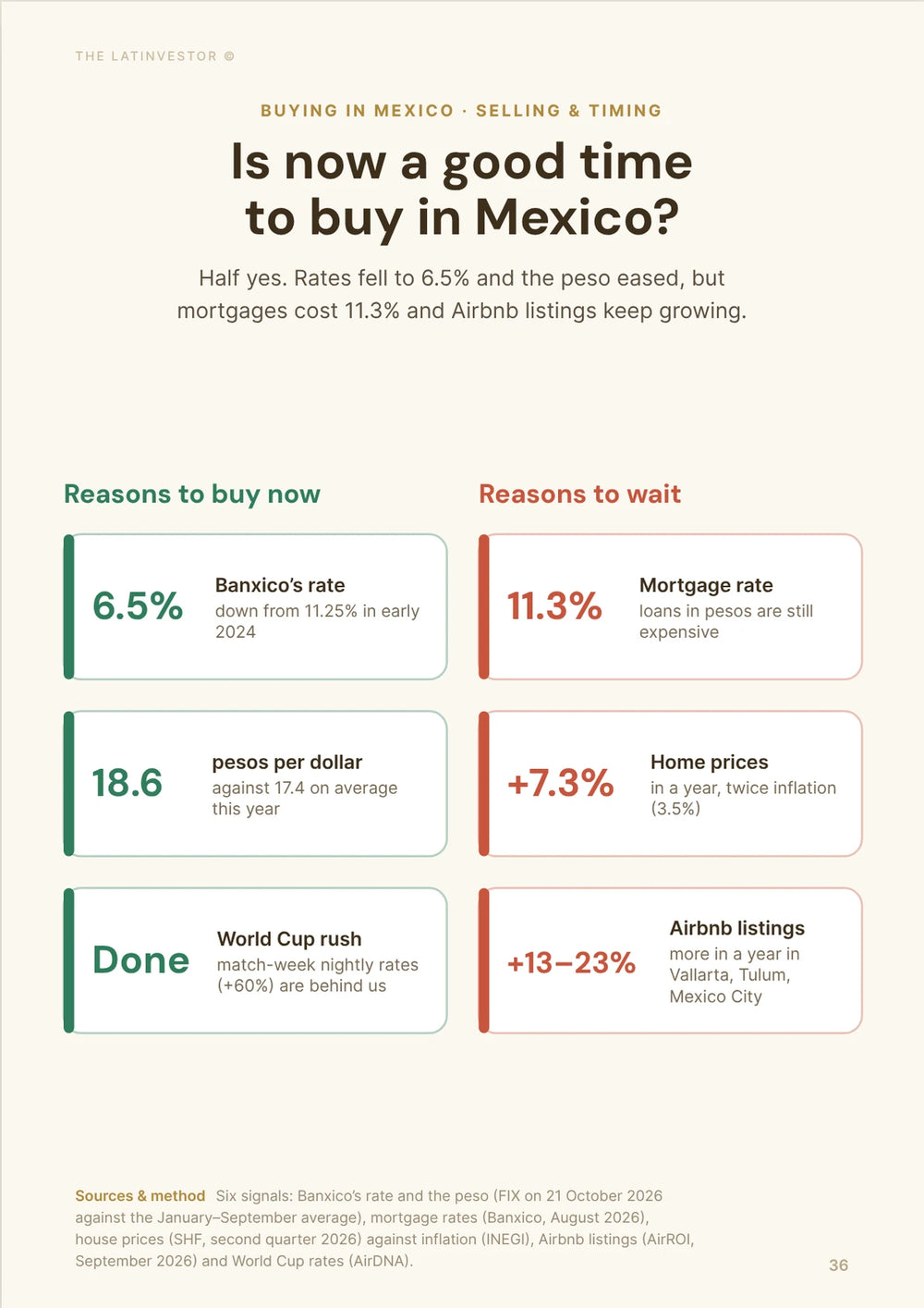
Foreigners can hold the deed directly here, with no fideicomiso, because the lake is outside the restricted zone. Financing is the hard part: Mexican banks averaged 10.13% on new mortgages in March 2026, and cross-border lenders ask for 35% to 50% down.
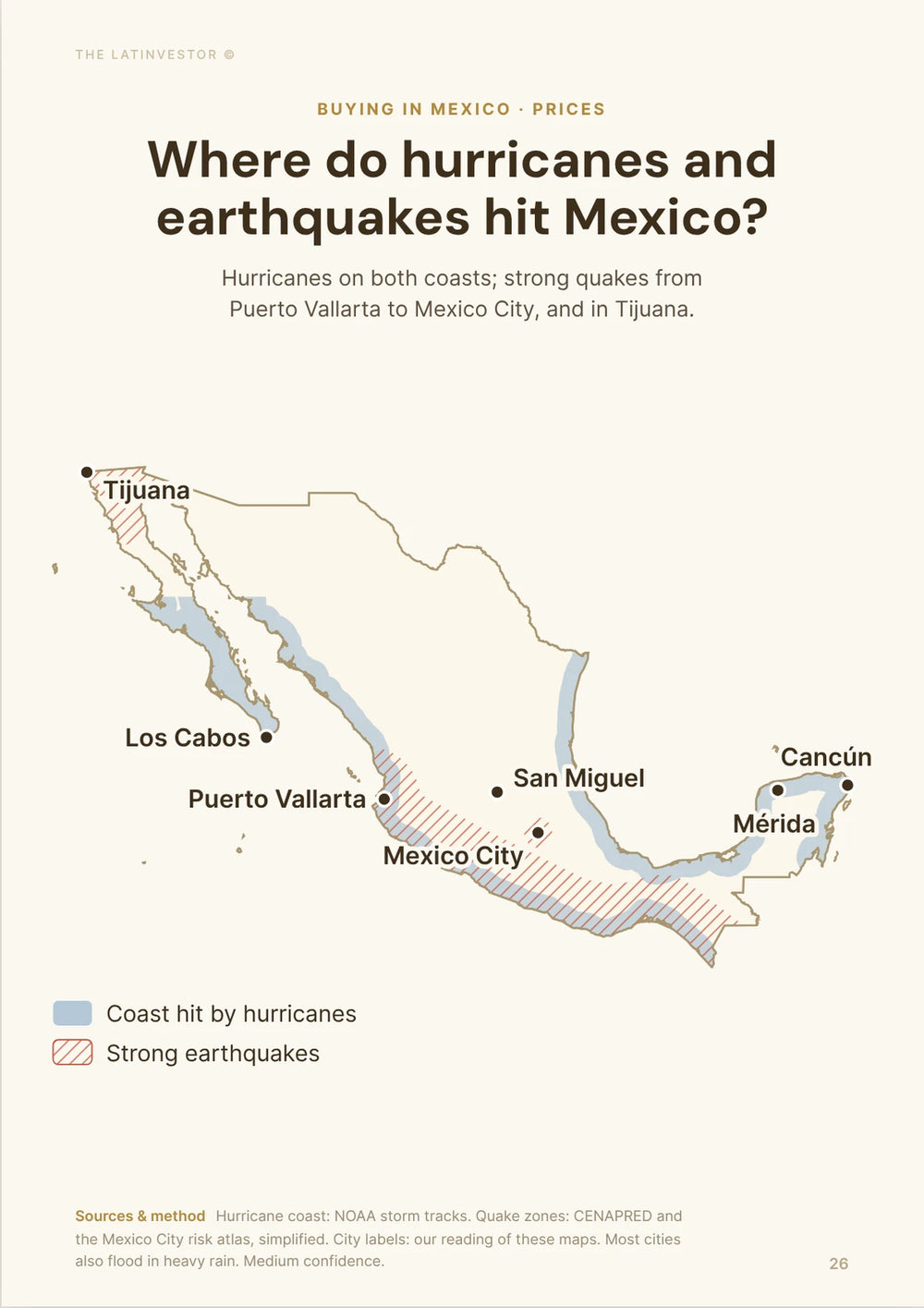
The February 2026 cartel violence after the killing of "El Mencho" put Chapala on the US embassy's stay-home list for a few days. We found no sign of a price drop, but it gives buyers a talking point, and Jalisco stays at Level 3 on the US travel advisory.
The lake was at 69.89% of capacity on 23 September 2026, down from 76.26% in October 2025. It's not a crisis, but water supply should be on every buyer's checklist.
In a downturn, typical homes would likely drop 5% to 12%, with walkable Ajijic and La Floresta holding up best.
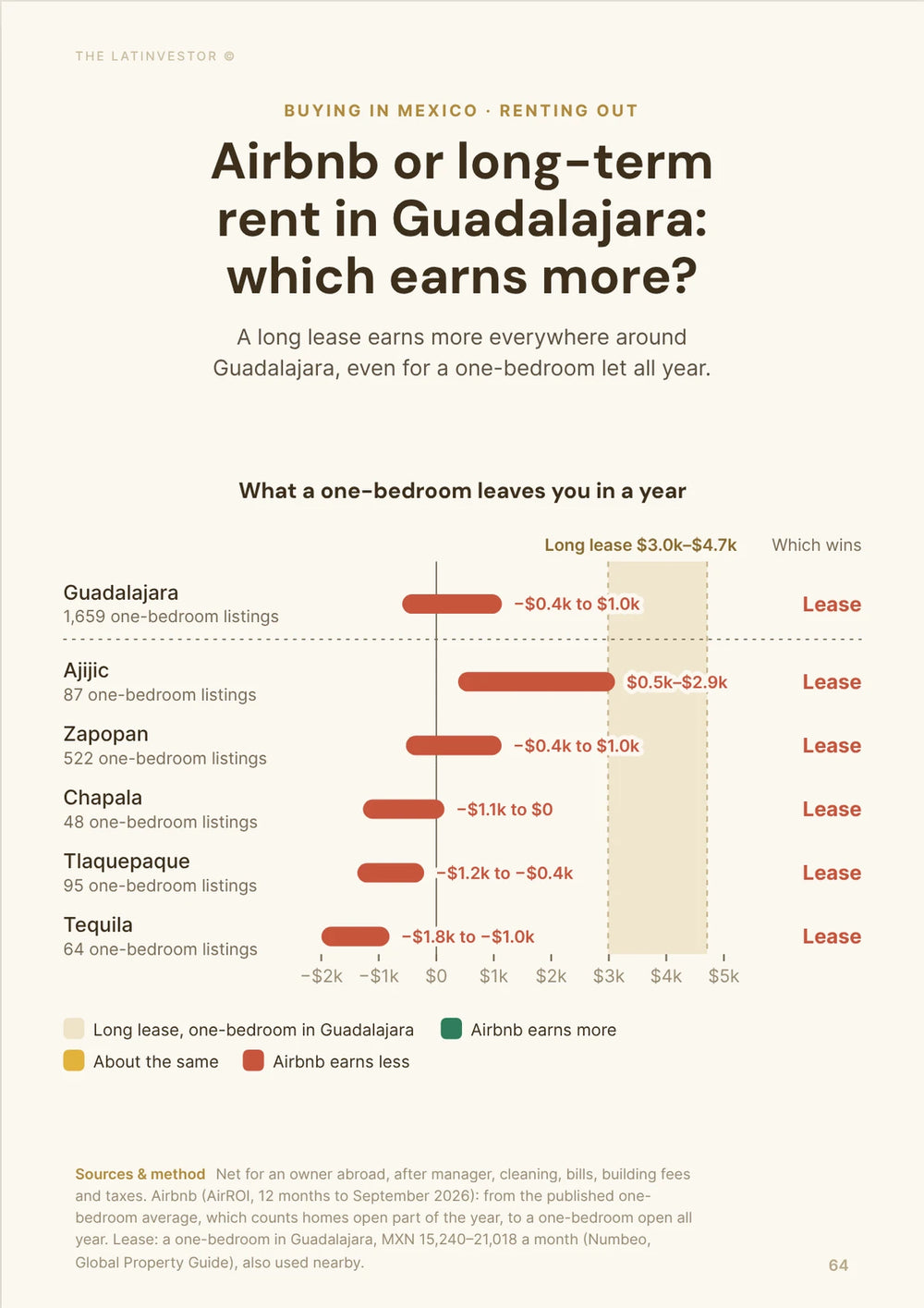
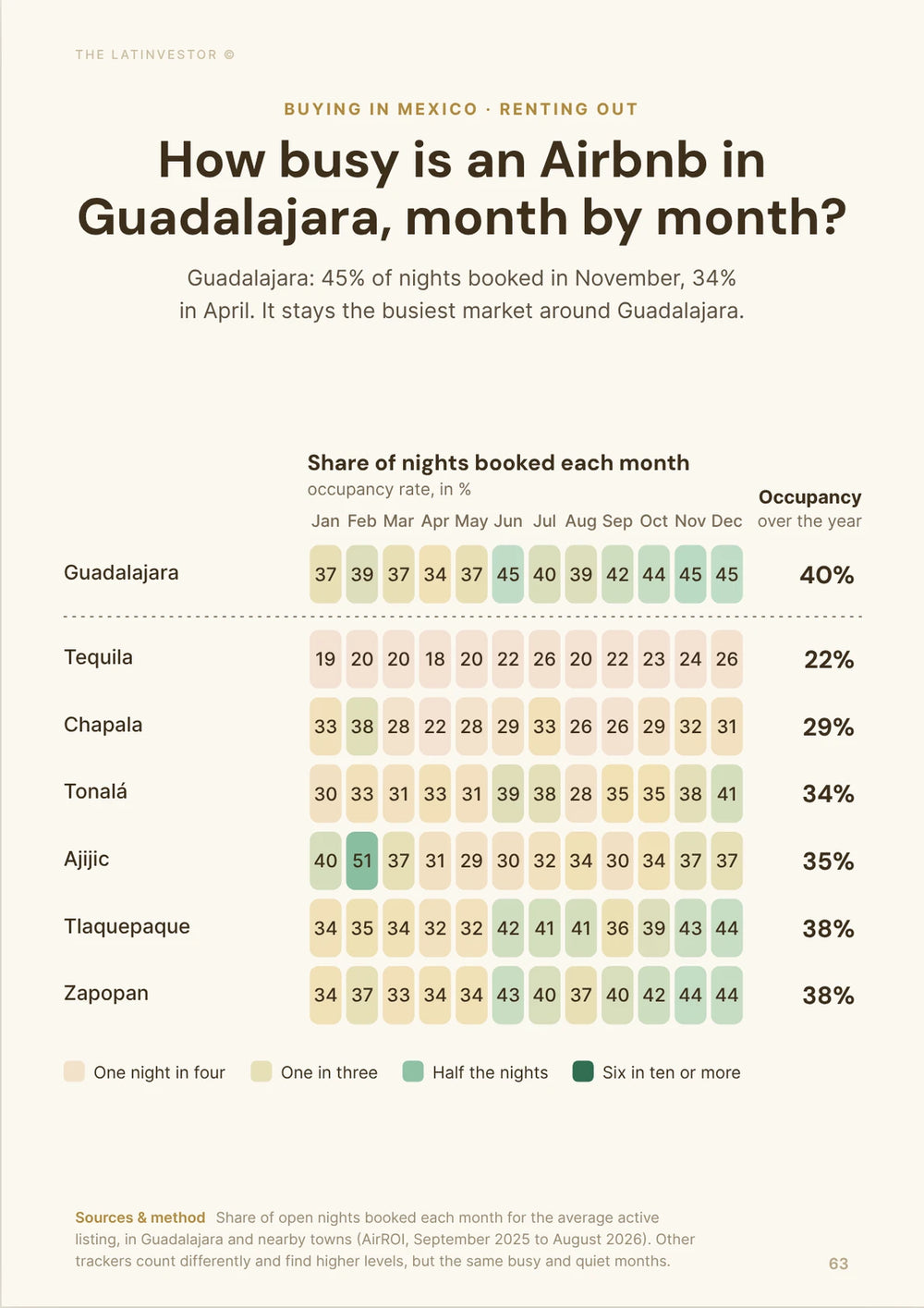
Short-term rentals are shrinking: AirDNA counts 506 active listings in September 2026, down 48.4% in a year, with 48% occupancy and USD 99 a night.
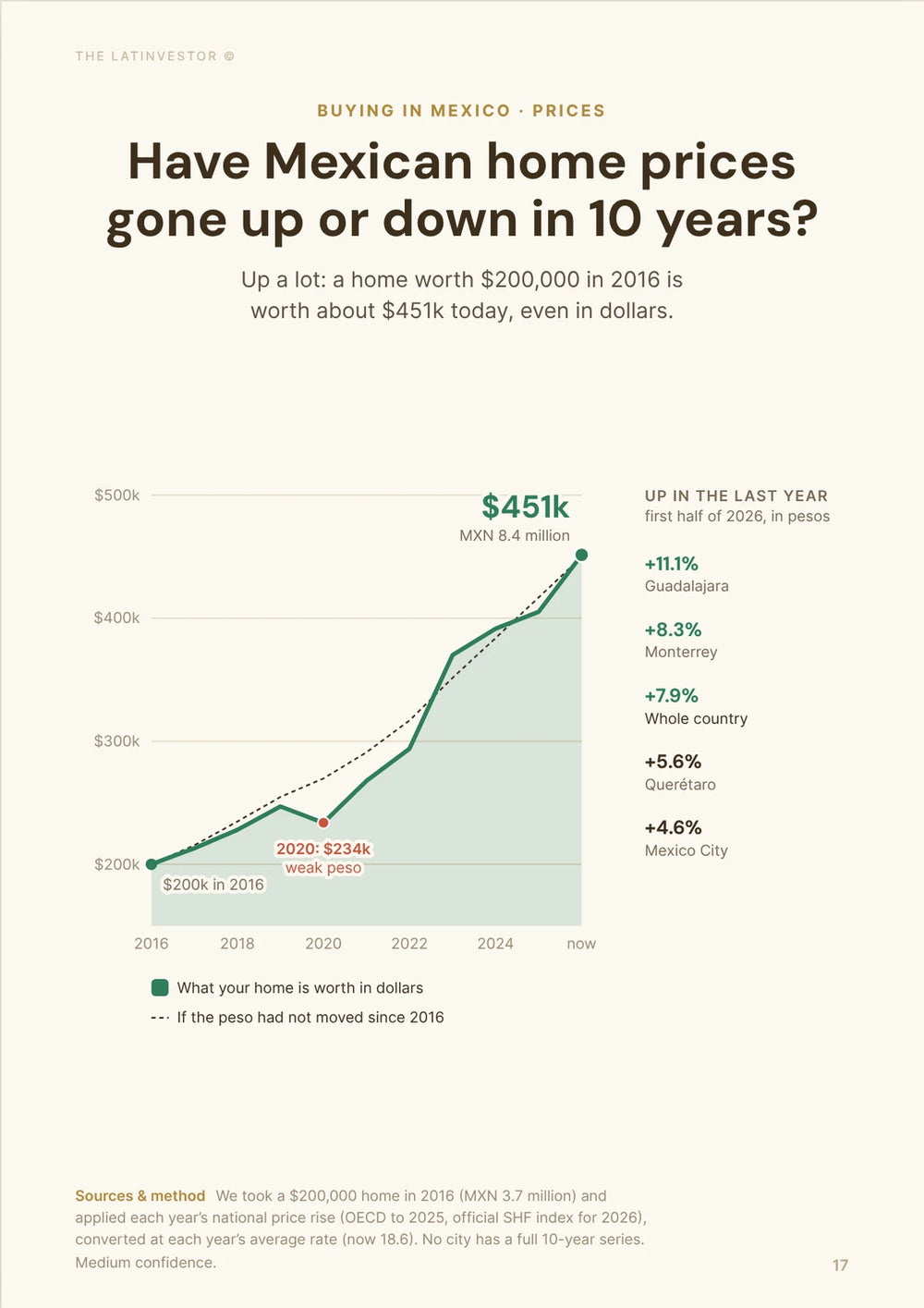
We expect 4% to 7% growth in peso terms over the next 12 months for good homes, but flat dollar asking prices mean little real upside for overpriced listings. The peso's slide since September (from under 17 to about 18.6 per dollar) helps dollar buyers only on homes priced in pesos.
The bottom line: the market is still alive for walkable, renovated, well-priced homes, but it's a buyer's negotiation now, not a boom.

Are prices in Lake Chapala still going up, or just asking prices?
Asking prices in Lake Chapala are flat in 2026. In October 2026, the median asking price for a house is about USD 1,702 per square meter (MXN 31,700), and condos list at about USD 2,433 per square meter (MXN 45,300). Condo asking prices even slipped from USD 2,497 in August to USD 2,449 in September, a small drop on a small sample.
A typical 3-bedroom house is listed around USD 436,000 (MXN 8,110,000) and a 2-bedroom condo around USD 350,000 (MXN 6,510,000). Residential land lists at about USD 333 per square meter (MXN 6,190). Around 640 properties are for sale across the Chapala municipality, which includes Ajijic.
The gap with the rest of Mexico is the real story. The national house price index from SHF rose 7.3% in the year to Q2 2026, but bank mortgage lending was flat (-0.1% in real terms in the first half of 2026). At the lake, local brokers put the average 2025 sale at about USD 360,000 (MXN 6,700,000), roughly 2% below 2024. Most homes here are priced in dollars for cash buyers, so the national peso boom doesn't show up.
What to do: use USD 1,700 per square meter of built area as your reference for a house. Anything well above that needs a real reason (lake view, walkable Ajijic, recent renovation). Ask the agent for sold prices of similar homes, not other listings, and don't pay for "the market is rising" in dollars.
Is the Lake Chapala market slowing down in 2026?
How long does a home take to sell in Lake Chapala right now?
In 2026, a home in Lake Chapala takes about 90 to 140 days to sell, so plan on three to five months.
That average hides big differences. A well-priced home in Ajijic village, La Floresta, San Antonio Tlayacapan, Riberas del Pilar or west Ajijic can sell in 45 to 90 days, while an overpriced lake-view villa can sit for more than 180 days.
Compared with 2024 and 2025, the market feels slower for ordinary listings, but still healthy for homes that are walkable, renovated, legally clean and easy for foreign retirees to understand.
How much below asking do homes sell for in Lake Chapala?
Most homes in Lake Chapala sell for about 94% to 98% of the asking price in 2026, so a normal discount is 2% to 6%.
We estimate that fewer than 10% of homes sell above asking. Our confidence is moderate, because many deals are private and there's no public database of sale prices against list prices.
The homes most likely to sell at or above asking are renovated single-level homes in Ajijic village, La Floresta, San Antonio Tlayacapan, Riberas del Pilar, Upper Ajijic and good gated lake-view communities. On a listing that has sat for six months, you can push well beyond 6%.
What kinds of homes can you realistically buy in Lake Chapala?
What property types dominate in Lake Chapala right now?
Lake Chapala listings are mostly detached houses and villas, with fewer condos, gated-community homes, renovation projects and lots. Houses outnumber condos by roughly nine to one on the main listing index.
The biggest group is 2-bedroom and 3-bedroom houses built for retirees, snowbirds and foreign buyers who want outdoor space.
That's because Ajijic, Chapala town, San Antonio Tlayacapan, Riberas del Pilar and the nearby villages grew as low-rise lake communities, not as apartment districts.
Are new builds easy to find in Lake Chapala right now?
New builds exist, but they're probably only about 10% to 20% of active listings in 2026. Most of the market is resale.
Most new homes are in west Ajijic, San Antonio Tlayacapan, Chapala Haciendas, the Jocotepec side, and newer gated communities between Ajijic and Chapala.
Which neighborhoods are improving fastest in Lake Chapala in 2026?
Which areas in Lake Chapala are gentrifying in 2026?
The clearest gentrifying areas in 2026 are Riberas del Pilar, San Antonio Tlayacapan, west Ajijic, Upper Ajijic, La Cristina, Chapala Haciendas, and parts of Chapala town near the malecón.
You see it in renovated older homes, more English-speaking services, cafés, wellness businesses, small galleries, better rental finishes, and more homes marketed directly to US and Canadian retirees.
We estimate the most wanted of these pockets gained about 12% to 25% in nominal price over the past two to three years, mostly in walkable areas next to Ajijic. Most of that gain came before 2026, as asking prices have been flat this year.
Is new infrastructure pushing prices up around the lake?
A little, mostly on the east side. Infrastructure helps most along the Guadalajara airport to Chapala corridor: Chapala town, San Antonio Tlayacapan, Riberas del Pilar and Chapala Haciendas.
Two projects were finished in June 2026. Line 5 Mi Macro Aeropuerto, a 32 km electric bus line with nine stations, now links the airport area to Guadalajara's transit network. The Guadalajara end of the Carretera a Chapala, the main road to the lake, was rebuilt on a 6.4 km stretch for MXN 2.5 billion (about USD 134 million). On top of that, the airport operator GAP has a 2025 to 2029 investment program for Guadalajara airport.
In our experience, announced projects add only about 2% to 5% to prices nearby, and finished, useful access improvements can support 5% to 12% in the best-connected pockets. The Line 5 buses don't reach the lake, so don't pay extra in Ajijic because of them.
Do locals think Lake Chapala is overpriced?
Do people think homes are overpriced in Lake Chapala in 2026?
Yes, for the prime areas. Many locals and agents think homes in Ajijic, La Floresta and prime lake-view spots are expensive, and see Riberas del Pilar, San Antonio Tlayacapan and Chapala Haciendas as more realistic.
Their reasons are simple: asking prices rose faster than local wages, many homes are priced in US dollars, and older homes often need serious renovation after purchase. At around USD 1,700 per square meter for a house, Lake Chapala asks big-city prices in a small-town market.
The other side of the argument: Lake Chapala isn't priced for local incomes. Foreign retirees, Guadalajara buyers, walkability, healthcare and the mild weather all justify some premium. Sellers price against US and Canadian retirement budgets, not local salaries.
What are common buyer mistakes people regret in Lake Chapala right now?
The most common regret is paying too much for a lake view and ignoring renovation needs, slope, drainage, access roads, or the real cost of keeping up an older hillside home.
The second is buying too far from services. Many retirees find out later that daily life is much easier in Ajijic, San Antonio Tlayacapan, Riberas del Pilar or Chapala town than in isolated spots around the lake, especially once they stop driving.
How easy is it for foreigners to buy in Lake Chapala in 2026?
Do foreigners face extra challenges in Lake Chapala right now?
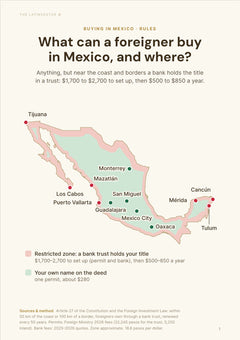
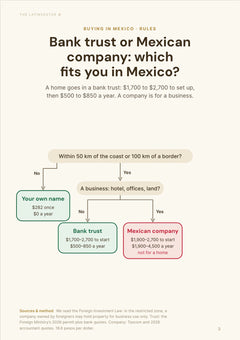
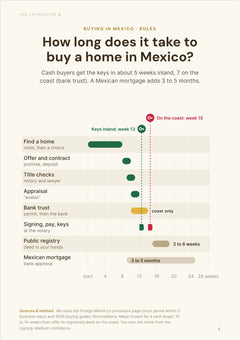
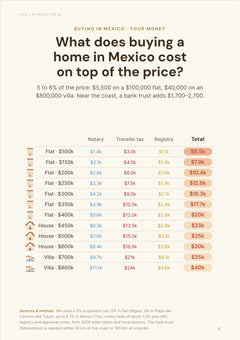
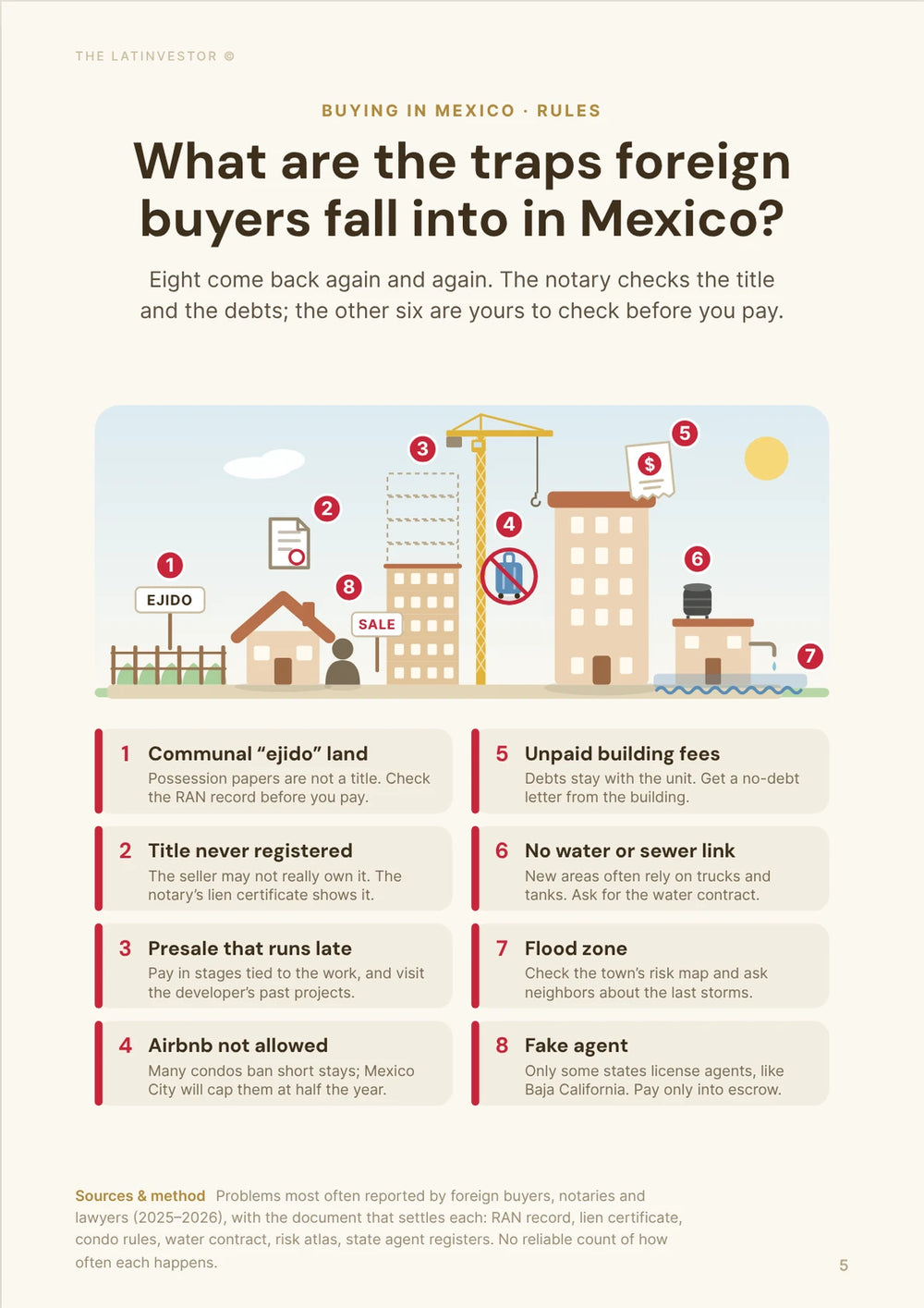
Less than on the coast. Lake Chapala is inland and far from the border, so it's outside Mexico's restricted zone: a foreigner can hold the deed in their own name, with no bank trust (fideicomiso) and no yearly trust fee of around USD 550 to 700.
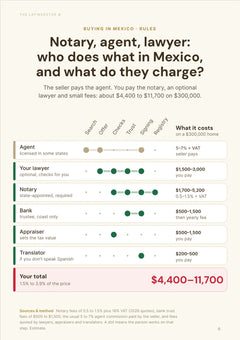
You still sign an agreement with the foreign ministry (SRE) in which you agree to be treated as a Mexican for that property. It costs MXN 5,250 in 2026, and the notary handles it as part of the purchase.
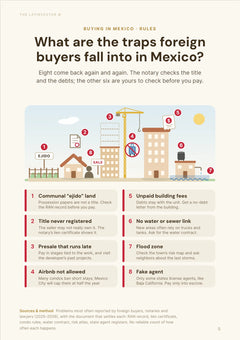
The real challenges are practical: checking old titles and possible ejido land, understanding Spanish contracts, avoiding informal promises, checking construction quality, and dealing with sellers or agents who price homes for foreign cash buyers.
Do banks lend to foreigners in Lake Chapala in 2026?
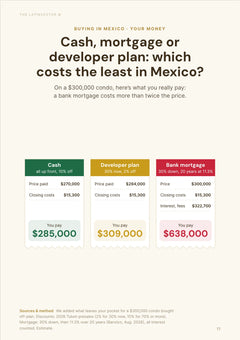
Some do, but most foreign buyers at the lake pay cash, because it's simpler and faster.
Mexican banks charged an average of 10.13% on new mortgages in March 2026, and quoted 11.31% on fixed-rate loans in August 2026. Foreigners usually pay more. Cross-border lenders that work with US and Canadian buyers ask for 35% to 50% down.
Expect to show your passport, immigration status, tax details, bank statements, proof of income, credit history and a property appraisal, sometimes with translated or apostilled documents.
Did the 2026 cartel violence in Jalisco change anything for Lake Chapala buyers?
Not on prices so far, but it changed the mood. On 22 February 2026, the army killed "El Mencho", the head of the Jalisco New Generation Cartel. Gunmen burned vehicles and blocked roads across Jalisco, and the US embassy told Americans in Guadalajara, Puerto Vallarta and Chapala to stay home. Things calmed down within a few days and flights resumed.
We found no data showing a price drop at the lake afterwards: asking prices have stayed flat, not fallen. But Jalisco is still at Level 3 ("Reconsider travel") on the US travel advisory as of June 2026, and some buyers postponed scouting trips. That's one reason sellers of slow-moving homes are more open to offers.
What to do: visit before you buy and spend time in the exact street, not just the town. Ask the seller's agent how many showings were cancelled this year, and use a long listing time to negotiate. Prefer homes on main, well-lit roads close to services, and check your insurance covers the home while you're away.
Is the lake's water level a risk for buyers right now?
It's a risk to watch, not a crisis. Lake Chapala was at 69.89% of its capacity on 23 September 2026, after the rainy season, compared with 76.26% in October 2025 and 77.55% at the end of 2025.
The lake supplies more than 60% of Guadalajara's water, and the 2024 drought took more than 2 meters off its level. A low lake means a shoreline that moves away from "lakefront" homes, more debate about pumping water to the city, and nervous buyers.
What to do: ask where the home's water comes from (town network, well or truck), how big the cistern (aljibe) and roof tank are, and how many hours of supply the street gets in April and May, the driest months. For a home close to the shore, check how far the water was in 2024, and don't pay a lakefront premium for a view of mud.
How risky is buying in Lake Chapala compared to other nearby markets?
Is Lake Chapala more volatile than nearby places in 2026?
Not more volatile, but less liquid. Lake Chapala is harder to resell in than Guadalajara, less dependent on hotels than Puerto Vallarta, and more dependent on foreign retirees than most inland Jalisco towns.
Prices here tend to move slowly. The risk isn't a crash, it's that the wrong property can take many months to resell, as the 180-plus days on some lake-view villas show.
Is Lake Chapala resilient during downturns historically?
Fairly. Retirees, foreign residents, the climate, healthcare access and the closeness to Guadalajara keep a base level of demand even in bad years.
In a serious downturn, typical homes would likely drop 5% to 12%. Overpriced luxury or remote homes could fall more and take one to three years to recover.
The homes that hold value best are walkable Ajijic homes, La Floresta, single-level homes near services, and well-kept homes in San Antonio Tlayacapan and Riberas del Pilar.
Is rental demand in Lake Chapala holding up in 2026?
Is long-term rental demand growing in Lake Chapala in 2026?
Yes, moderately. The strongest demand is for furnished, secure, single-level homes near services.
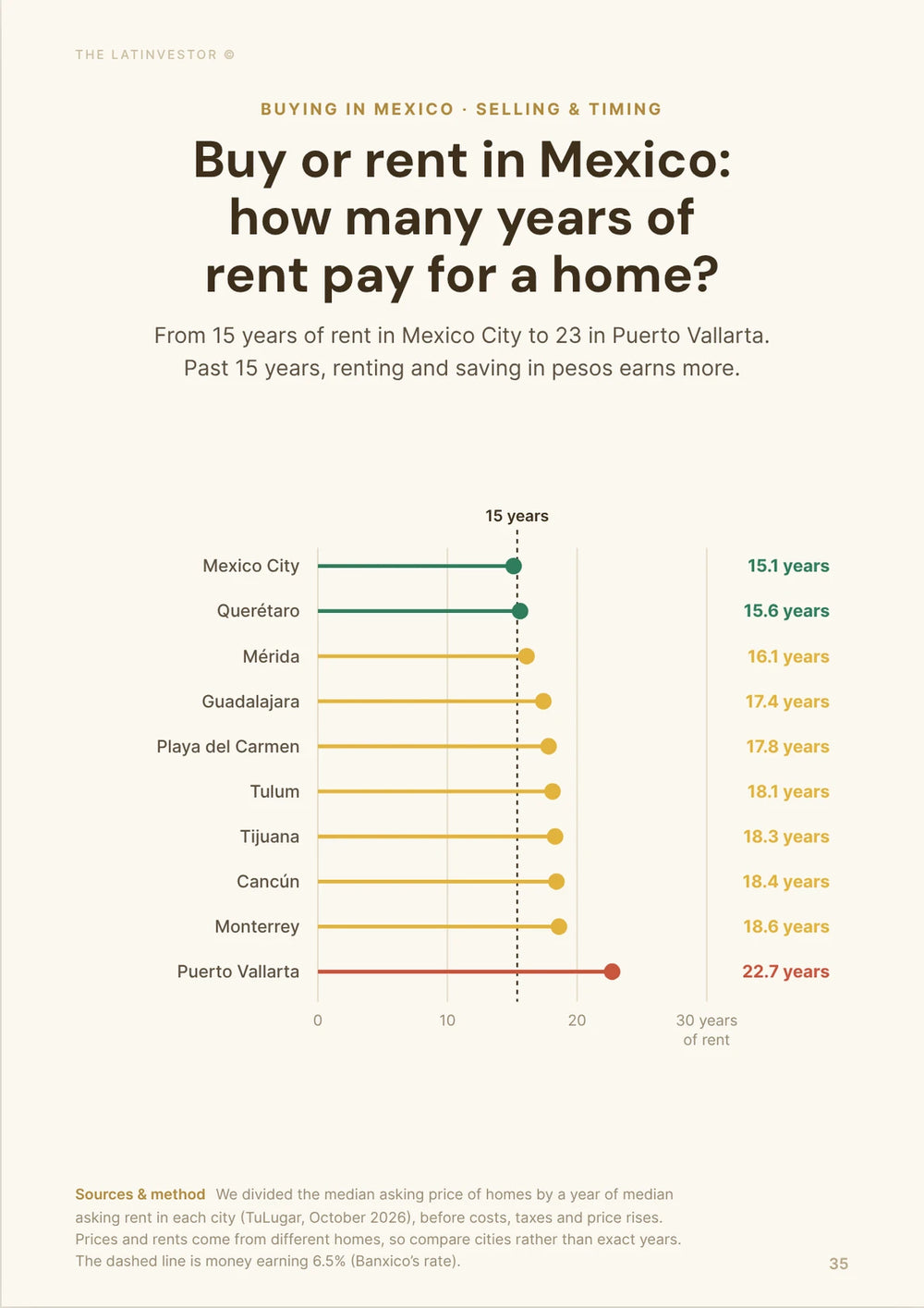
Tenants are mostly foreign retirees, snowbirds, people testing the area before buying, remote workers, and some Guadalajara households. With mortgage rates above 10%, many newcomers rent for a year before buying.
The best long-term rental areas are Ajijic, La Floresta, San Antonio Tlayacapan, Riberas del Pilar, Chapala town, west Ajijic and some communities on the Jocotepec side.
Why have half the Airbnbs in Lake Chapala disappeared?
The short-term rental market is shrinking fast. AirDNA counts 506 active listings in the Chapala municipality in September 2026, down 48.4% in a year.
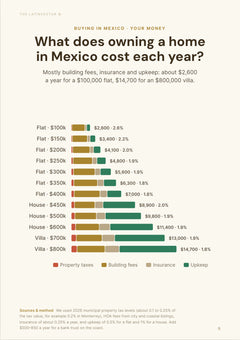
The listings that remain do reasonably well: 48% occupancy, USD 99 a night on average (MXN 1,840), and about USD 15,900 a year in revenue per listing (MXN 296,000). That's not much on a USD 350,000 home, before cleaning, management and taxes.
Many owners seem to have switched to long-term tenants, who are steadier at the lake. Taxes also add up: platforms withhold 4% income tax plus 16% VAT, and Jalisco charges a lodging tax of 4% to 5% depending on the source. If you're buying for Airbnb income, check the condo or HOA rules first and run the numbers with long-term rent as your base case.
What are the realistic short-term and long-term projections for Lake Chapala in 2026?
What's the 12-month outlook for demand in Lake Chapala in 2026?
Positive but selective. Demand will stay strongest for renovated, walkable and legally clean homes.
What will shape it: mortgage rates, the peso, the wealth of US and Canadian retirees, airport access, water, and security headlines. The peso has weakened since early September, from under 17 to about 18.6 per dollar, which makes life at the lake and peso-priced homes cheaper for anyone living on dollars than a few weeks ago, though still a bit dearer than on the 2025 average of 19.2.
Our base case is 4% to 7% price growth in peso terms over the next 12 months for good homes, with weaker growth for remote or renovation-heavy ones. In dollars, expect flatter numbers, as 2026 asking prices already show.
What's the 3–5 year outlook for housing in Lake Chapala?
Continued but slow growth. We think well-located homes can gain 20% to 35% in nominal terms over three to five years if demand stays steady.
The things most likely to shape it are the Guadalajara airport expansion, better access along the airport corridor, and limited new housing in west Ajijic, San Antonio Tlayacapan and the Jocotepec side.
The biggest unknown is water. Buyer confidence can turn quickly if the lake level, drainage or water supply becomes a serious problem.
Are demographics or other trends pushing prices up in Lake Chapala in 2026?
Yes. The area keeps attracting foreign retirees, older lifestyle buyers, Guadalajara households and people who want a slower life by the lake.
The main shifts are retirement migration into Ajijic, growth in San Antonio Tlayacapan and nearby villages, and steady demand from people who want services without living in Guadalajara. Remote work, snowbird stays, healthcare, Ajijic's Pueblo Mágico status and the mild climate add to it.
These pressures should last at least three to five years, unless water, overpricing or a weaker US and Canadian retiree economy cools demand.
What scenario would cause a downturn in Lake Chapala in 2026?
The most likely trigger would be a mix of weaker US and Canadian retiree wealth, a swinging peso, high mortgage rates, water stress, new security scares, and sellers who refuse to cut overpriced listings.
The warning signs to watch: more price cuts in Ajijic and La Floresta, homes taking more than 180 days to sell, fewer foreign buyers visiting, weaker demand for furnished rentals, and more stale lake-view luxury listings.
A downturn would probably be moderate: 5% to 12% off typical homes, and deeper cuts for remote, overpriced or renovation-heavy ones.
Our methodology
This article estimates where the Lake Chapala property market stands in 2026: prices, selling times, discounts, neighborhoods, financing, risks, rentals and the outlook.
Prices come from the TuLugar market index for the Chapala municipality (asking prices, October 2026), checked against a July 2026 report by a local Ajijic agent. National trends come from SHF's house price index (Q2 2026) and BBVA Research. Short-term rental figures come from AirDNA, for the whole municipality. Lake levels come from the state water commission's figures as reported by local press, and infrastructure from GAP, SITEUR and official announcements.
Ownership rules come from the foreign ministry (SRE), mortgage rates from Banco de México, and tax rates from SAT rules and Jalisco tax advisers. Selling times, discounts, neighborhood gains and forecasts are our own estimates from listing reviews, because no public database tracks them at the lake.
We checked these figures in October 2026. Conversions use about 18.6 pesos per US dollar and 20.9 pesos per euro.
Keep the limits in mind: asking prices are not sale prices, the condo sample is small, many deals are private, and AirDNA data mixes Ajijic with the rest of the municipality.
Key sources used for this analysis include TuLugar, SHF, Banco de México, BBVA Research, AirDNA, IIEG Chapala, IIEG Ajijic, SECTUR, SRE, GAP, SITEUR, Azteca Jalisco, Lago Montaña Real Estate and the IMF.