Summary
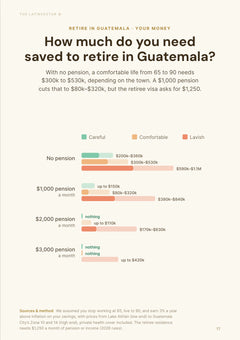
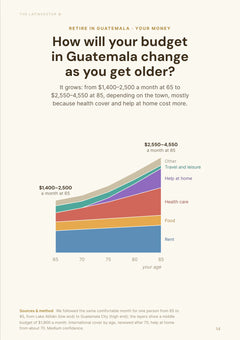
How much money do you need to retire in Guatemala? About $2,500 (Q19,100) a month for a comfortable life in Guatemala City's best zones. It costs less elsewhere: about $2,400 in Antigua and $1,400 around Lake Atitlan. Add a 25% buffer on top.
The bare minimum is around Q6,900 ($900) a month, with a very lean life. Rent is the catch: the average one-bedroom outside central Guatemala City costs Q4,161 ($545).
At $2,000 a month, life is comfortable, but you choose between a nice apartment and a car. A one-bedroom averages Q6,698 ($875) in central Antigua and Q3,995 ($525) outside the centre.
At $3,000, you rarely think twice about spending: two-bedrooms list for about Q5,500 to Q9,000 ($720 to $1,180) in Zona 15. At $10,000, money is no longer a constraint.
Prices rose 4.69% over the year to September 2026, which is why a buffer matters.
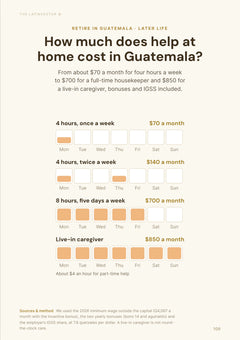
Luxury starts around Q45,800 ($6,000) a month. Help costs more than many expect: about Q5,300 ($700) a month for a full-time housekeeper once wages, bonuses and IGSS are paid.
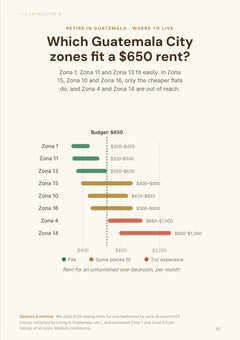
Rent is the biggest line. A one-bedroom in Guatemala City averages Q6,312 ($825) in the centre, and Zona 14 is the priciest at Q6,100 to Q9,900 ($800 to $1,300).
Utilities, internet and phone run about Q920 to Q1,400 ($120 to $180) a month. Food and transport together cost about Q3,400 to Q5,000 ($450 to $650) for one person.
A typical apartment in Guatemala City's good zones costs Q1,380,000 to Q2,450,000 ($180,000 to $320,000). The median asking price of a two-bedroom was about $209,000 (Q1,600,000) in October 2026.
Many foreigners pay cash. When a loan is possible, some lenders ask for 20% down, but conditions vary a lot from bank to bank.
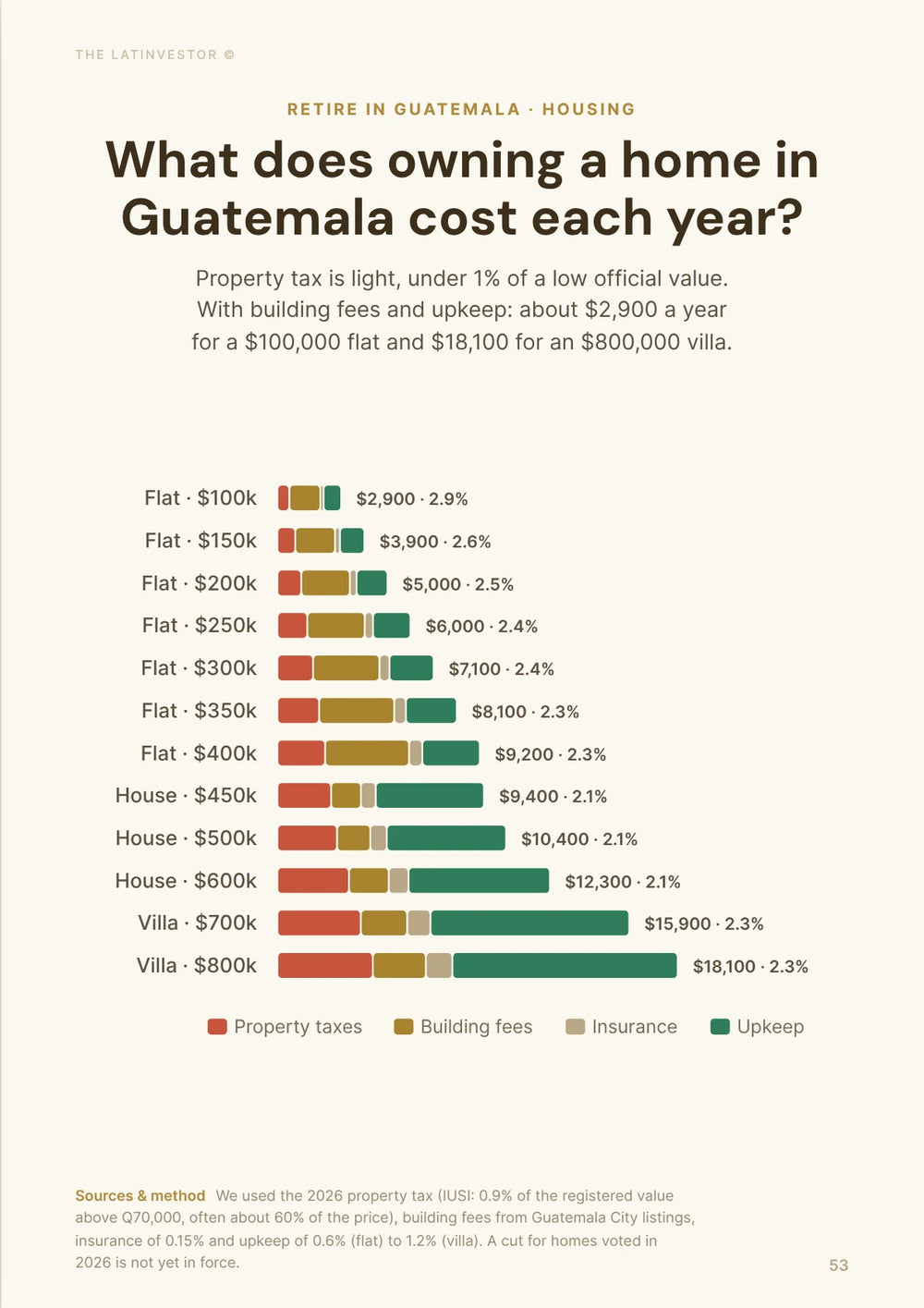
Property tax (IUSI) is 0.2% to 0.9% of the registered value, and from 26 November 2026 a main home can be exempt under certain conditions.
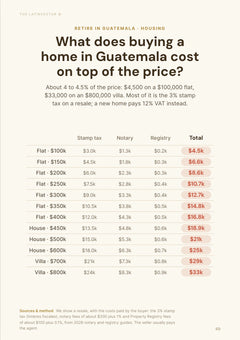
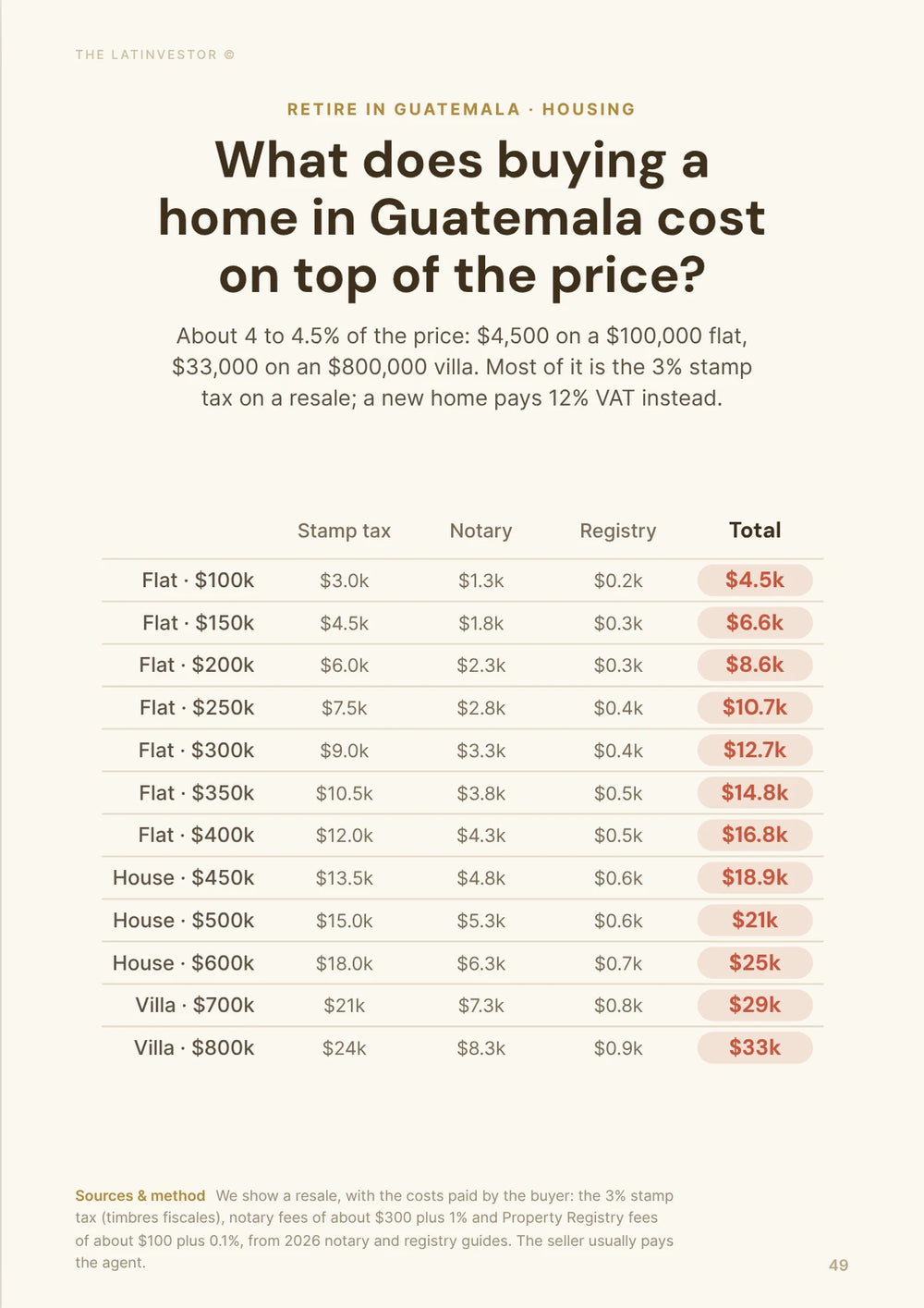
Buying costs about 4% to 4.5% of the price on a resale, and there is no reliable break-even point: renting keeps you flexible.
Permanent residence as a Pensionado or Rentista costs Q3,200 ($425) in fees and asks for $1,250 a month of income, plus $300 per dependent.
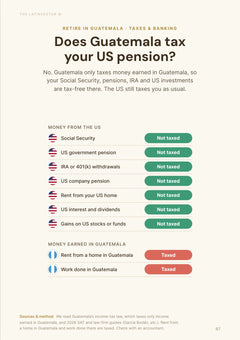
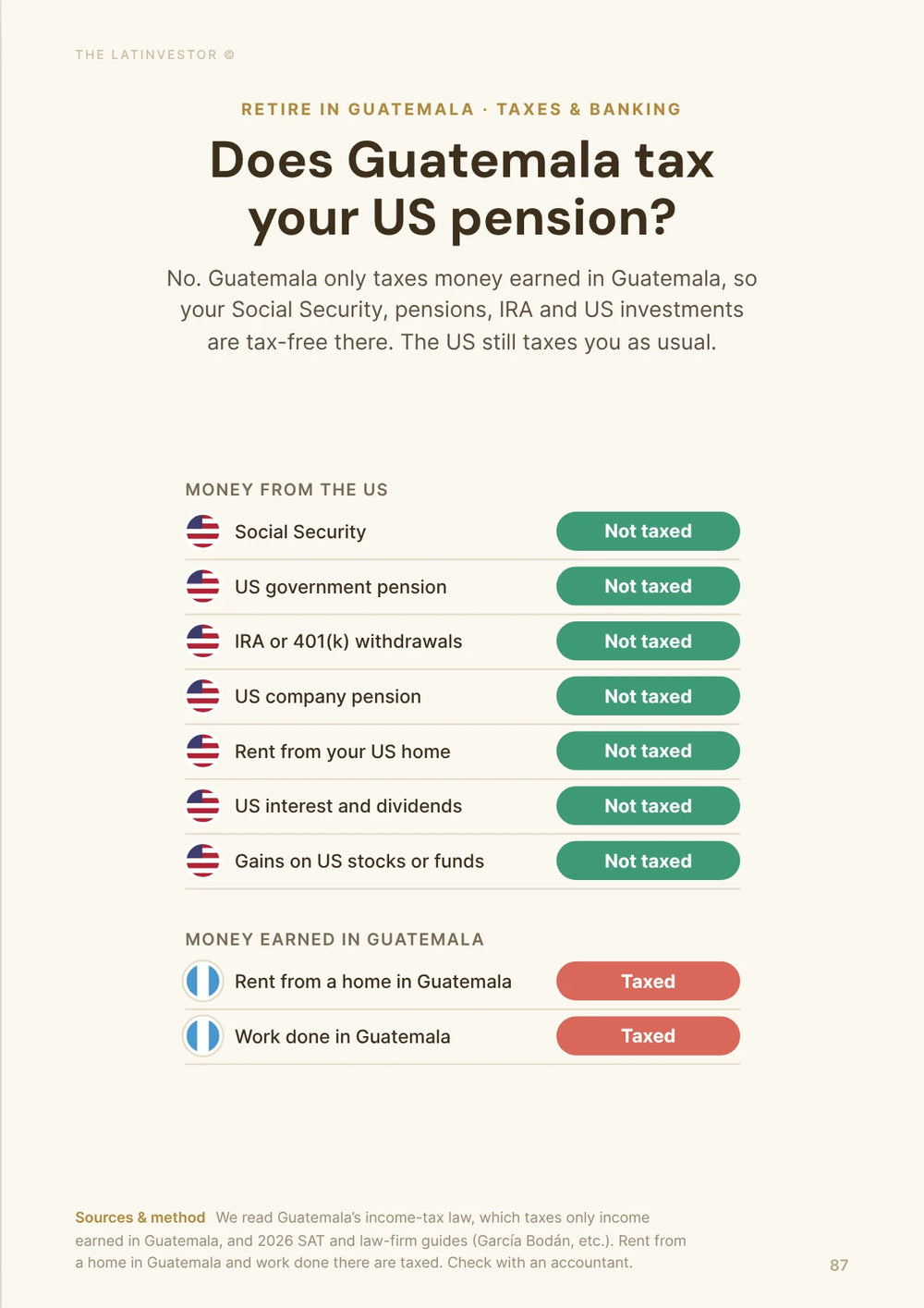
Taxes are a strong point: Guatemala only taxes income earned in Guatemala, so foreign pensions and US Social Security are not taxed there. Rent from a Guatemalan property is taxed at 10%.
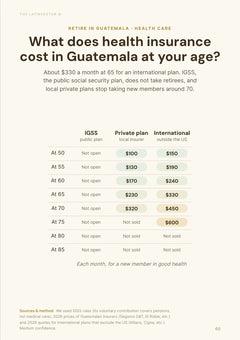
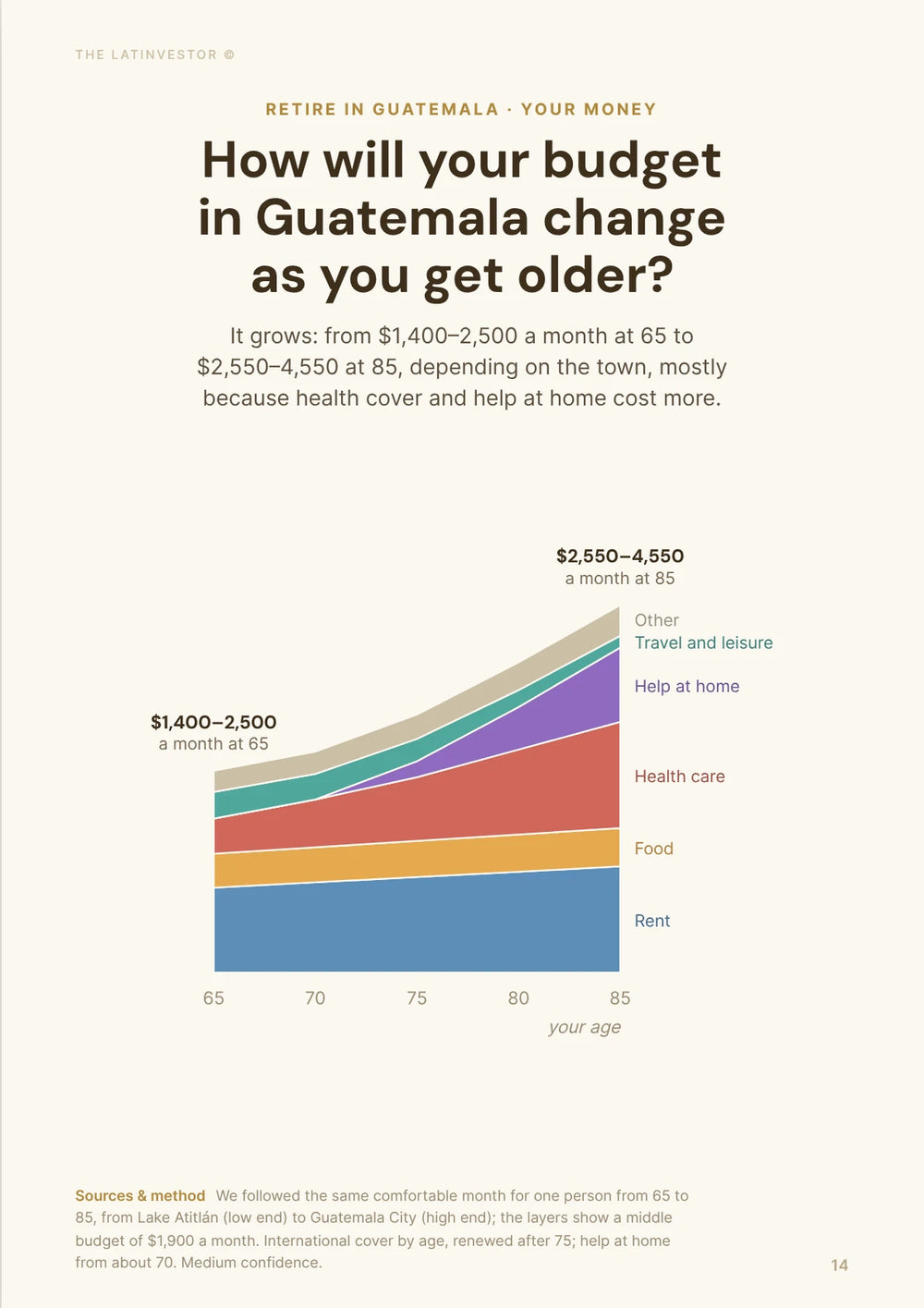
Health care is mostly private: about Q1,800 ($230) a month at 65 for a local plan and Q2,500 ($330) for an international one, and local insurers stop taking new members around 70.

What lifestyle can each budget buy you in Guatemala?
What's the absolute minimum monthly budget to survive in Guatemala?
The absolute minimum monthly budget to survive in Guatemala as a single retiree in 2026 is around Q6,900 ($900) a month, by our estimate, and that assumes a very lean lifestyle with few comforts.
This minimum budget covers rent for a small apartment outside the prime expat zones, groceries for cooking at home, electricity and water, buses, and a small buffer for a doctor's visit. Rent is the hard part: the average one-bedroom outside central Guatemala City costs Q4,161 ($545), according to Numbeo (October 2026), so on this budget you need a cheaper, older place or a smaller town.
Living on this minimum in Guatemala means accepting older buildings without modern amenities, very limited dining out or entertainment, relying heavily on public buses instead of taxis, and hoping you stay healthy since comprehensive medical care is not included in this bare-bones budget.
What lifestyle do I get with $2,000/month in Guatemala in 2026?
At the end of 2026, a budget of $2,000 per month (about Q15,300) in Guatemala allows for a comfortable middle-class expat lifestyle with enough room for occasional treats without constantly watching every quetzal you spend.
With $2,000 monthly, you can afford a nice one-bedroom or a simple two-bedroom in popular expat areas like Antigua, Panajachel on Lake Atitlan, or Guatemala City's Zona 10 or Zona 14. In October 2026, a one-bedroom averaged Q6,698 ($875) in central Antigua and Q3,995 ($525) outside the centre, and Q6,312 ($825) in central Guatemala City, while small one-bedrooms in Panajachel list for about Q3,820 ($500).
This budget opens up Spanish lessons at one of Antigua's renowned language schools, regular visits to local markets in Chichicastenango, weekend trips to volcanic hot springs near Quetzaltenango, and joining expat social clubs that organize hikes and cultural outings throughout the Guatemalan highlands.
The main limitation at $2,000 per month is that you will need to choose between certain luxuries, for example you can have a nice apartment or a car but probably not both, and unexpected medical expenses could strain your budget if you do not have a separate emergency fund set aside.
What lifestyle do I get with $3,000/month in Guatemala in 2026?
At the end of 2026, a budget of $3,000 per month (about Q23,000) in Guatemala provides a very comfortable lifestyle where you rarely have to think twice about everyday spending decisions or worry about covering unexpected costs.
At this budget level, you can rent a spacious two-bedroom in Guatemala City's Zona 15 or Zona 16 (Cayala area): two-bedrooms list for about Q5,500 to Q9,000 ($720 to $1,180) in Zona 15 and Q8,000 to Q14,000 ($1,050 to $1,830) in Zona 14. Restored colonial homes near Antigua's central park and lakefront homes in Santa Cruz La Laguna are also within reach, but their rents vary too much from one listing to the next to give a reliable range.
This income level unlocks regular fine dining at Guatemala City's top restaurants like Flor de Lis or Tamarindos, membership at private clubs with pools and tennis courts, weekend getaways to beach towns like Monterrico on the Pacific coast, and enrollment in specialty activities like coffee tours in the Antigua valley or textile workshops with local Maya weavers.
The key upgrade from $2,000 to $3,000 per month in Guatemala is peace of mind: you can comfortably afford private healthcare consultations without hesitation, maintain a small emergency fund that grows each month, and say yes to social invitations without doing mental math first.
What lifestyle do I get with $5,000/month in Guatemala in 2026?
At the end of 2026, $5,000 per month (about Q38,300) provides an upper-end expat lifestyle in Guatemala, while $10,000 per month (about Q76,700) puts you in true luxury territory where money is simply not a constraint in daily life.
At the $5,000 level, you can rent a modern three-bedroom apartment in Guatemala City's Cayala development or Zona 14, where even large two-bedrooms list for up to Q14,000 ($1,830). At $10,000, fully staffed colonial homes in Antigua or private lakefront estates in San Marcos La Laguna are within reach, but there are too few listings to give a reliable price range.
In this range, you gain access to Guatemala's best private hospitals like Hospital Herrera Llerandi for routine checkups without appointments, personal drivers who know the safest routes through Guatemala City, weekly housekeeping and gardening staff, membership at exclusive clubs like the Guatemala Country Club, and the ability to fly business class for regular trips back home or weekend escapes to Belize or Costa Rica.
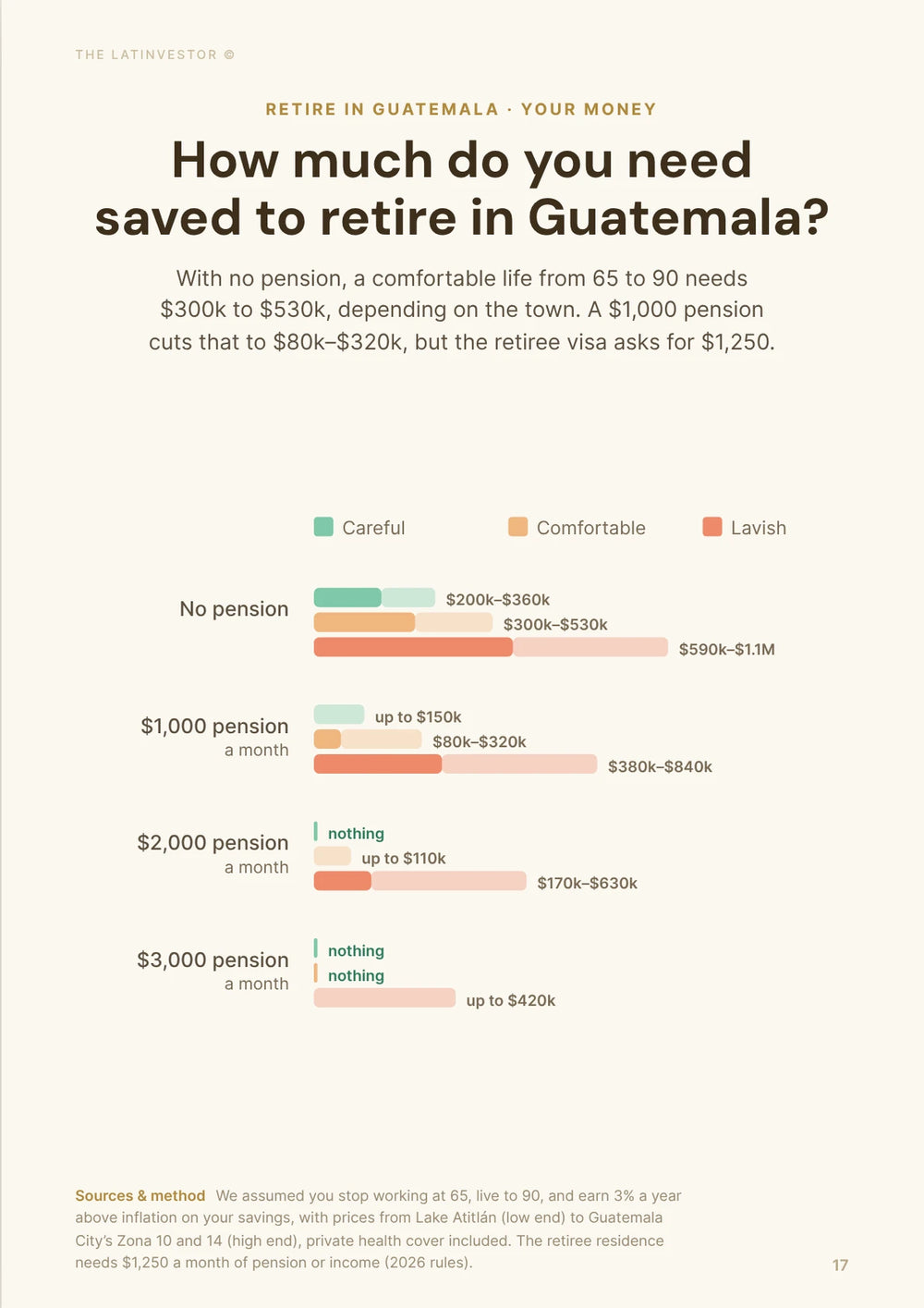
How much for a "comfortable" retirement in Guatemala in 2026?
At the end of 2026, a comfortable retirement in Guatemala costs about Q19,100 ($2,500) a month in Guatemala City's best zones, which gives you real breathing room. It depends a lot on where you live: by our estimate, about $1,400 a month around Lake Atitlan, $2,400 in Antigua and $2,500 in Guatemala City's Zona 10 and Zona 14.
We recommend adding a 25% buffer on top of your planned budget: if you calculate needing $2,000 per month, you should actually have access to $2,500 (an extra $500, about Q3,800) to cover inflation, currency swings or repairs. Prices rose 4.69% over the year to September 2026, up from 3.37% in August (INE), so the buffer is not a luxury.
A comfortable budget in Guatemala covers what a basic budget cannot: reliable private healthcare with a clinic you trust, safe and convenient transportation options like regular taxi or rideshare use instead of crowded buses, quality housing in a neighborhood with good security, occasional domestic travel to explore Guatemala's diverse regions, and a genuine social life with dining out and activities that make retirement enjoyable rather than just survivable.
How much for a "luxury" retirement in Guatemala in 2026?
At the end of 2026, a luxury retirement in Guatemala takes about Q45,800 ($6,000) a month, which lets you live without real financial trade-offs.
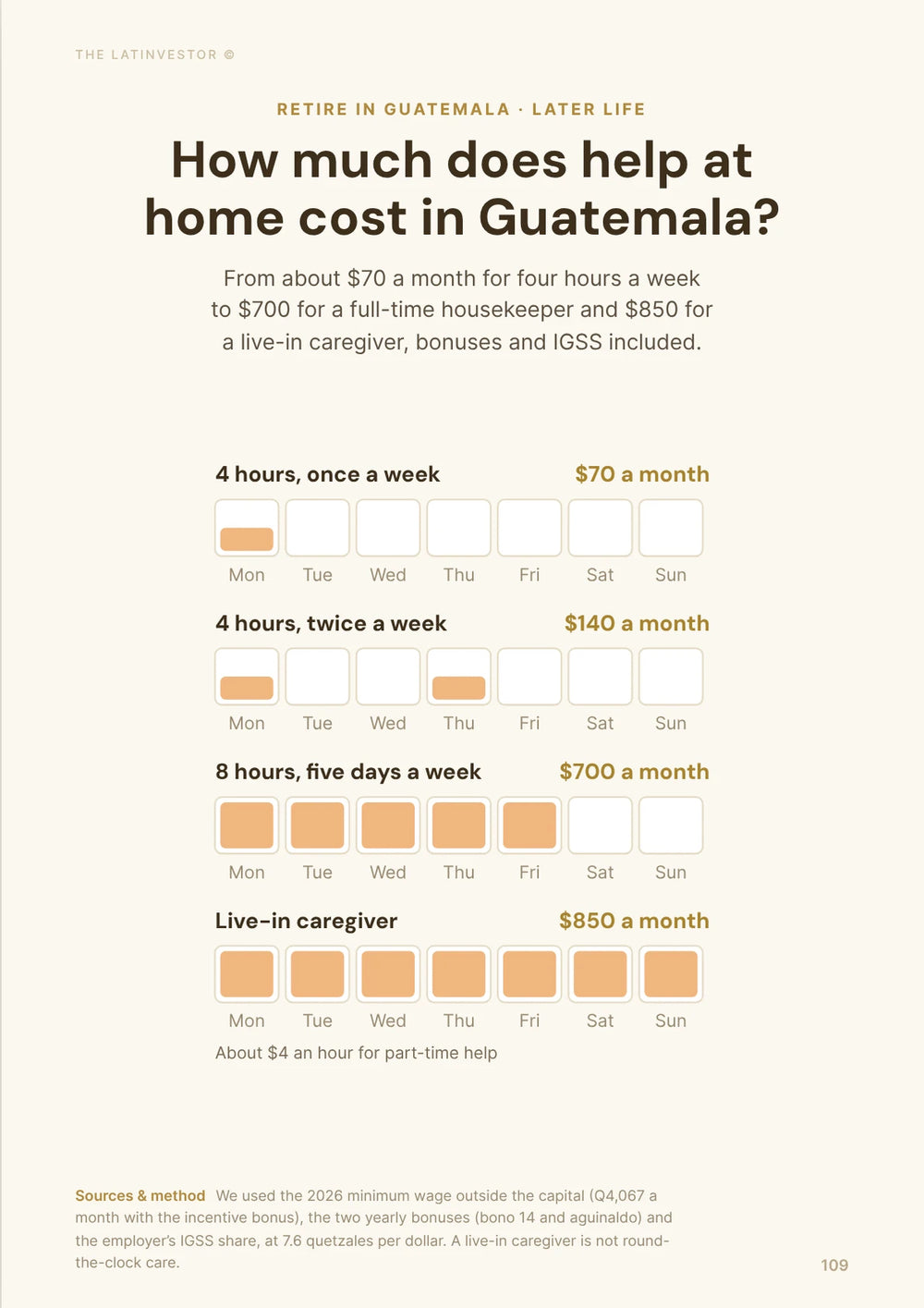
At this level, luxury in Guatemala means a premium apartment or house in the best gated developments, with rents of Q15,300 to Q22,900 ($2,000 to $3,000) a month, full-time help at home, a personal driver, top private hospitals like Sanatorio Nuestra Senora del Pilar, and frequent international travel. Help costs more than many expect: a full-time housekeeper costs about Q5,300 ($700) a month once the 2026 minimum wage, the two yearly bonuses and IGSS contributions are paid, so a housekeeper and a cook together cost about Q10,700 ($1,400).
Retirees seeking luxury in Guatemala typically choose Guatemala City's Zona 14 (near the business district and best hospitals), Zona 15 Vista Hermosa (quieter, with excellent security), Zona 16 Cayala (modern mixed-use development with walkable amenities), or historic homes in Antigua's central blocks within walking distance of the famous Santa Catalina Arch.
Beyond comfort, the main advantage of a luxury budget in Guatemala is genuine integration into local high society and access to experiences most tourists never see, such as private invitations to Antigua's best restored colonial estates, exclusive art openings in Guatemala City's Cuatro Grados Norte district, or reserved tables at the country's most celebrated restaurants during Semana Santa festivities.
What are the real monthly expenses for retirees in Guatemala in 2026?
What is a realistic monthly budget breakdown by category in Guatemala?
A realistic monthly budget for a retiree in Guatemala in 2026 at the comfortable level, about $2,500 (Q19,100) a month, could look like this: $900 for rent, $180 for utilities and connectivity, $550 for food, $150 for transport, $300 for health care, and $420 for entertainment, travel and a buffer fund.
Housing is the largest line, $900 or about 36% of this sample budget, with rent ranging from Q4,200 to Q10,700 ($550 to $1,400) a month depending on location and apartment quality.
Food and groceries in Guatemala generally account for 20% to 25% of a retiree's monthly budget, with costs ranging from Q1,900 to Q4,200 per month ($250 to $550) depending on how often you cook at home versus eating out at restaurants.
The budget category that varies most dramatically based on personal choices in Guatemala is transportation: a retiree using only public buses might spend just Q300 to Q700 monthly ($40 to $90), while someone using daily rideshares or owning a car could easily spend Q2,700 to Q5,400 monthly ($350 to $700).
What fees surprise foreigners most after moving to Guatemala?
The three hidden costs that surprise foreigners most in Guatemala are immigration-related fees that recur annually, security expenses that are essentially mandatory in certain neighborhoods (guard services, alarm systems, secure building HOAs), and the expectation of private healthcare even though a public system technically exists.
When first arriving in Guatemala, foreigners should budget for one-time setup costs: permanent residence costs Q3,200 ($425) in government fees ($25 to file and $400 when it is granted), document translations and notarizations cost Q770 to Q2,300 ($100 to $300), plus a rental deposit (usually one month's rent) and furniture if the apartment is unfurnished.
What's the average rent for a 1-bedroom or a 2-bedroom in Guatemala in 2026?
At the end of 2026, a one-bedroom apartment in Guatemala City rents for about Q6,312 ($825) in the centre and Q4,161 ($545) outside it (Numbeo averages), while a two-bedroom costs about Q5,500 to Q14,000 ($720 to $1,830) a month, depending on the zone.
For a one-bedroom apartment, budget areas like Zona 1, Zona 11 or Zona 13 cost about Q2,300 to Q4,800 ($300 to $630) a month, Zona 10 and Zona 16 Cayala run about Q3,600 to Q6,900 ($470 to $900), and Zona 14 is the priciest at Q6,100 to Q9,900 ($800 to $1,300).
Two-bedroom apartments follow a similar pattern in Guatemala: more affordable options in Zona 12 or San Cristobal (Mixco) start at Q5,000 to Q6,500 ($650 to $850) a month, Zona 15 Vista Hermosa runs about Q5,500 to Q9,000 ($720 to $1,180), and upscale two-bedrooms in Zona 14 reach Q8,000 to Q14,000 ($1,050 to $1,830).
Retirees seeking the best value for affordable rent in Guatemala often find success in Jocotenango (just outside Antigua but much cheaper), Ciudad Vieja (a quieter colonial town nearby), Panajachel (on Lake Atitlan with good infrastructure), or Guatemala City's Zona 11 and parts of Zona 12 where you get safety and amenities without premium pricing.
What do utilities cost monthly in Guatemala in 2026?
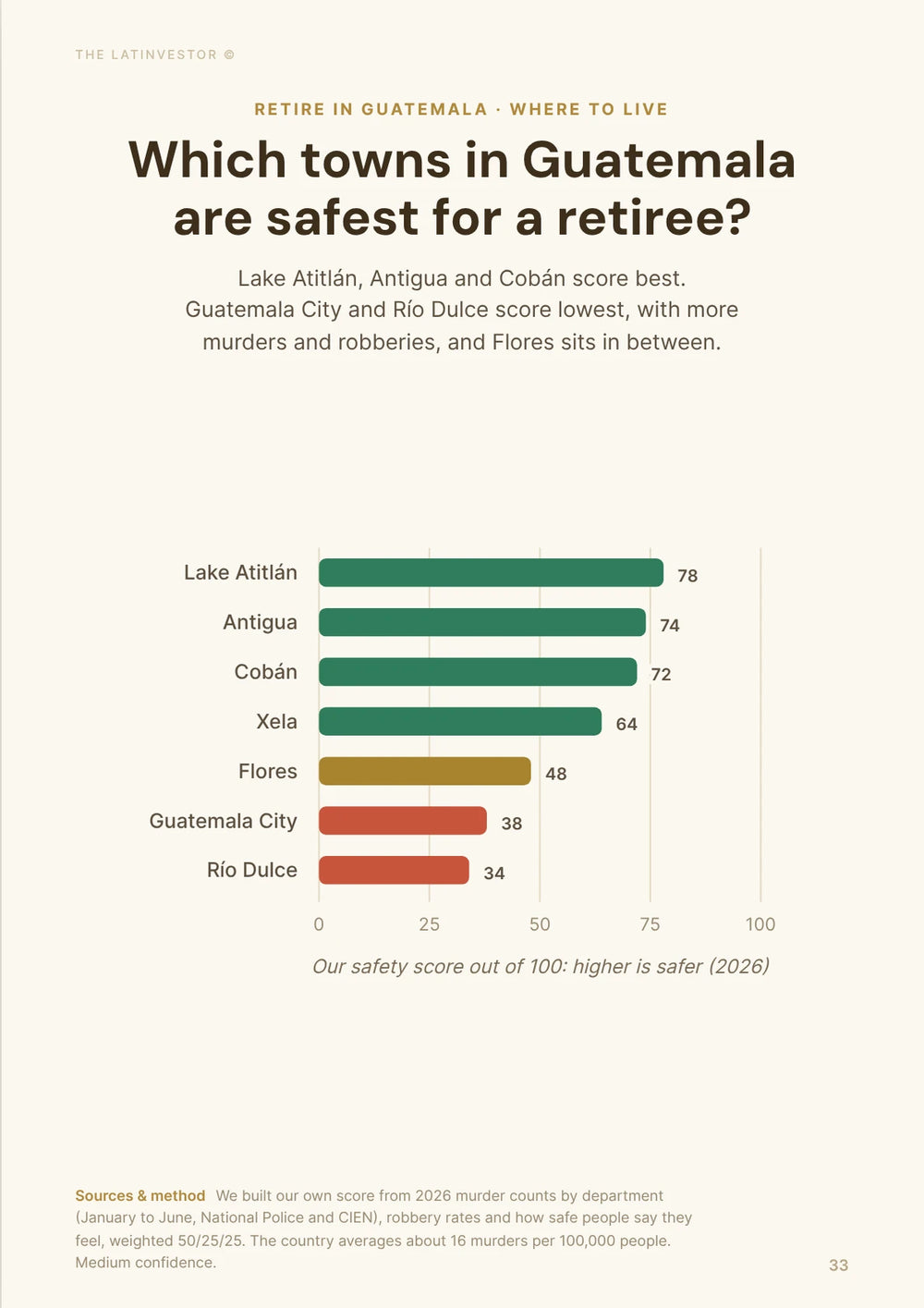
At the end of 2026, total monthly utilities for a typical retiree apartment in Guatemala, internet and phone included, run about Q920 to Q1,400 ($120 to $180). Numbeo's October 2026 average for an 85 m² apartment is Q555 ($73) for electricity, water and garbage in Guatemala City and Q440 ($58) in Antigua, and air conditioning in warmer regions can push electricity much higher.
Electricity is most of that bill, and it depends on whether you use fans or AC. Water from EMPAGUA in Guatemala City is usually a small bill, and many apartments use electric water heaters, so there is often no separate gas bill.
Home internet averages Q352 ($46) a month in Guatemala City and Q478 ($63) in Antigua, while mobile phone plans with good data run Q110 to Q230 ($15 to $30) a month through Tigo or Claro.
What's the monthly food and transportation budget for one person in Guatemala in 2026?
At the end of 2026, a single retiree in Guatemala should budget about Q3,400 to Q5,000 ($450 to $650) a month for food and transport combined, by our estimate. It varies a lot with your eating habits and how you get around.
For groceries alone, a single retiree cooking mostly at home can spend Q1,500 to Q2,700 ($200 to $350) a month by our estimate, with local markets like La Terminal in Guatemala City or Antigua's main mercado offering the best prices for fresh produce, while imported goods at supermarkets like PriceSmart or La Torre cost more. For reference, the official urban food basket is about Q967 ($125) per person a month (INE, September 2026), but it doesn't match what most foreigners buy.
Dining out adds up: a simple comida corrida (set lunch) at a local comedor runs Q30 to Q50 ($4 to $7), a cheap restaurant meal averages Q52 ($6.81) in Guatemala City and Q67.50 ($8.84) in Antigua, and a three-course dinner for two at a mid-range place costs about Q382 ($50). Frequent restaurant-goers may spend Q3,400 to Q5,400 ($450 to $700) a month on food.
Transportation costs in Guatemala depend heavily on your choices: relying on public buses (chicken buses, or Transmetro in the capital) keeps costs to Q300 to Q700 ($40 to $90) a month, a mix of buses and Uber runs Q900 to Q1,700 ($120 to $220), while owning a car adds fuel, insurance and maintenance totaling Q2,700 to Q5,400 ($350 to $700) a month. Petrol cost about Q10.42 ($1.36) a litre in Guatemala City in October 2026.
Can I retire in Guatemala if I want to buy property in 2026?
What's the average home price in Guatemala in 2026?
At the end of 2026, a typical apartment that foreign retirees target in Guatemala City's desirable zones (Zona 10, 14, 15 or 16) costs about Q1,380,000 to Q2,450,000 ($180,000 to $320,000). There is no national house price index, so these are market estimates: in October 2026, the median asking price of a two-bedroom apartment on TuLugar was about $209,000 (Q1,600,000), or Q19,259 ($2,520) per m².
Property prices in Guatemala vary dramatically by location: affordable condos in less central areas or smaller cities start around Q770,000 ($100,000), mid-range options in good Guatemala City neighborhoods or Antigua's outskirts run Q1,150,000 to Q1,900,000 ($150,000 to $250,000), while premium properties in Cayala, central Antigua, or lakefront Lake Atitlan can exceed Q3,800,000 ($500,000).
For retirees in Guatemala, newer condominiums in secure developments often provide the best value because they include 24-hour security, covered parking, backup generators, and building maintenance in the HOA fee, eliminating many headaches that come with owning a standalone house where you manage all security and upkeep yourself.
What down payment do foreigners usually need in Guatemala in 2026?
At the end of 2026, many foreigners buying property in Guatemala pay cash, because local mortgages for non-residents are limited and need a lot of paperwork. When a loan is possible, some lenders finance up to 80% of the price (a 20% down payment) for buyers who meet their criteria, but conditions vary a lot from one bank to another.
Banks usually want proof of local income, your residency status and sometimes a Guatemalan guarantor. On a property costing Q1,900,000 ($250,000), a 20% down payment is Q380,000 ($50,000), and Q570,000 to Q950,000 ($75,000 to $125,000) if the bank asks for 30% to 50%.
What's the all-in monthly cost to own in Guatemala in 2026?
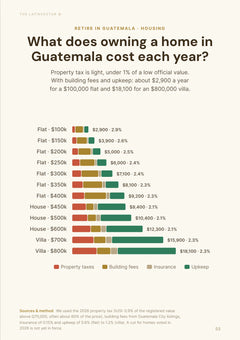
At the end of 2026, the all-in monthly cost to own a typical $250,000 apartment in Guatemala without a mortgage runs about Q3,400 to Q6,500 ($450 to $850) a month by our estimate, covering building fees, utilities, property tax and a maintenance reserve.
The monthly ownership costs in Guatemala break down as follows: HOA and security fees typically run Q1,100 to Q2,700 ($150 to $350), utilities add Q770 to Q1,500 ($100 to $200), the annual IUSI property tax averaged monthly comes to Q190 to Q920 ($25 to $120), and a prudent maintenance reserve of 1% of the property value per year adds about Q1,600 ($210) a month.
Property tax in Guatemala, called IUSI (Impuesto Unico Sobre Inmuebles), uses tiered rates from 0.2% to 0.9% of the registered value, which is often well below the market price. For typical expat properties, that means about Q2,300 to Q11,000 ($300 to $1,440) a year, while building fees in secure buildings with amenities range from Q1,100 to Q3,100 ($150 to $400) a month. A reform voted in July 2026 (Decree 18-2026) exempts a main home from IUSI under certain conditions from 26 November 2026.
The ownership cost that catches new buyers off guard in Guatemala is the building's fondo de reserva or special assessment for major repairs, which can be a one-time charge of Q7,700 to Q38,000 ($1,000 to $5,000) when elevators, water tanks, or facades need replacement, so always ask about the building's reserve fund status before purchasing.
Is buying cheaper than renting in Guatemala in 2026?
At the end of 2026, renting a two-bedroom apartment in a prime Guatemala City zone costs about Q7,000 to Q14,000 ($915 to $1,830) a month, while owning a similar apartment bought without a mortgage costs about Q3,400 to Q6,500 ($450 to $850) a month in running costs. That gap looks big, but it leaves out the cash you tie up in the purchase and the buying costs.
There is no reliable break-even point: it depends on the price, the rent and how long you stay. Buying costs come first: about 4% to 4.5% of the price on a resale (mostly the 3% stamp tax, plus notary and registry fees), or 12% VAT instead on a new build, plus the return you give up by putting your capital in property.
Several Guatemala-specific factors tilt the buy-versus-rent decision: if you want flexibility to move between Antigua, Lake Atitlan, and Guatemala City as seasons change, renting wins; if you crave the security of a single, well-fortified home base in one of Guatemala City's gated developments and plan to stay long-term, buying likely pays off; and if you are nervous about managing a property from abroad when you travel, renting removes that headache entirely.
What visas, taxes, and healthcare costs should I plan for in Guatemala in 2026?
What retirement visa options exist in Guatemala in 2026?
At the end of 2026, the main retirement option in Guatemala is permanent residence as a Pensionado or Rentista. It costs Q3,200 ($425) in government fees ($25 to file and $400 when it is granted). It does not expire, but you must show proof of your income again every five years.
To qualify for Guatemala's pensionado residence, you must demonstrate a stable monthly income of at least $1,250 (about Q9,600), plus an additional $300 (about Q2,300) per dependent; this income can come from government pensions, private retirement funds, or passive investment income.
After obtaining pensionado status in Guatemala, you must pay an annual foreigner's fee of $40 (about Q306), update your data each year, and renew your status certificate, bringing total annual visa-related costs to roughly Q770 to Q2,300 ($100 to $300) when you include notarizations and document renewals.
The most common visa mistake foreign retirees make in Guatemala is underestimating processing delays, as official timelines say 15 days but real-world waits often stretch to several months or even years due to bureaucratic backlogs, so maintaining valid temporary status while your permanent application processes is essential to avoid legal complications.
Do I pay tax on foreign income in Guatemala in 2026?
At the end of 2026, Guatemala operates a territorial tax system, meaning residents are generally only taxed on Guatemalan-source income and foreign-source income like US pensions, Social Security payments, or overseas investment dividends is typically not subject to Guatemalan income tax.
For retirees specifically, foreign pension income and Social Security benefits received from outside Guatemala are usually not taxed locally, foreign investment income and dividends from non-Guatemalan sources are similarly exempt, but any income you earn from activities within Guatemala, such as rental income from a Guatemalan property or local business profits, is taxed locally: rent from a Guatemalan property at 10% under the rules for real estate income, and local business profits at 5% to 7% under the simplified regime.
Guatemala has not signed double taxation treaties with any country, so you cannot offset Guatemalan taxes against your home country liability or vice versa, and US citizens remain subject to worldwide taxation by the IRS regardless of where they live.
The single most important tax rule for foreign retirees to understand in Guatemala is that while foreign income is generally exempt, establishing tax residency (staying 183+ days per year) may trigger reporting obligations and you should consult a Guatemalan accountant in your first year to clarify your specific situation and avoid surprises.
What health insurance do retirees need in Guatemala in 2026?
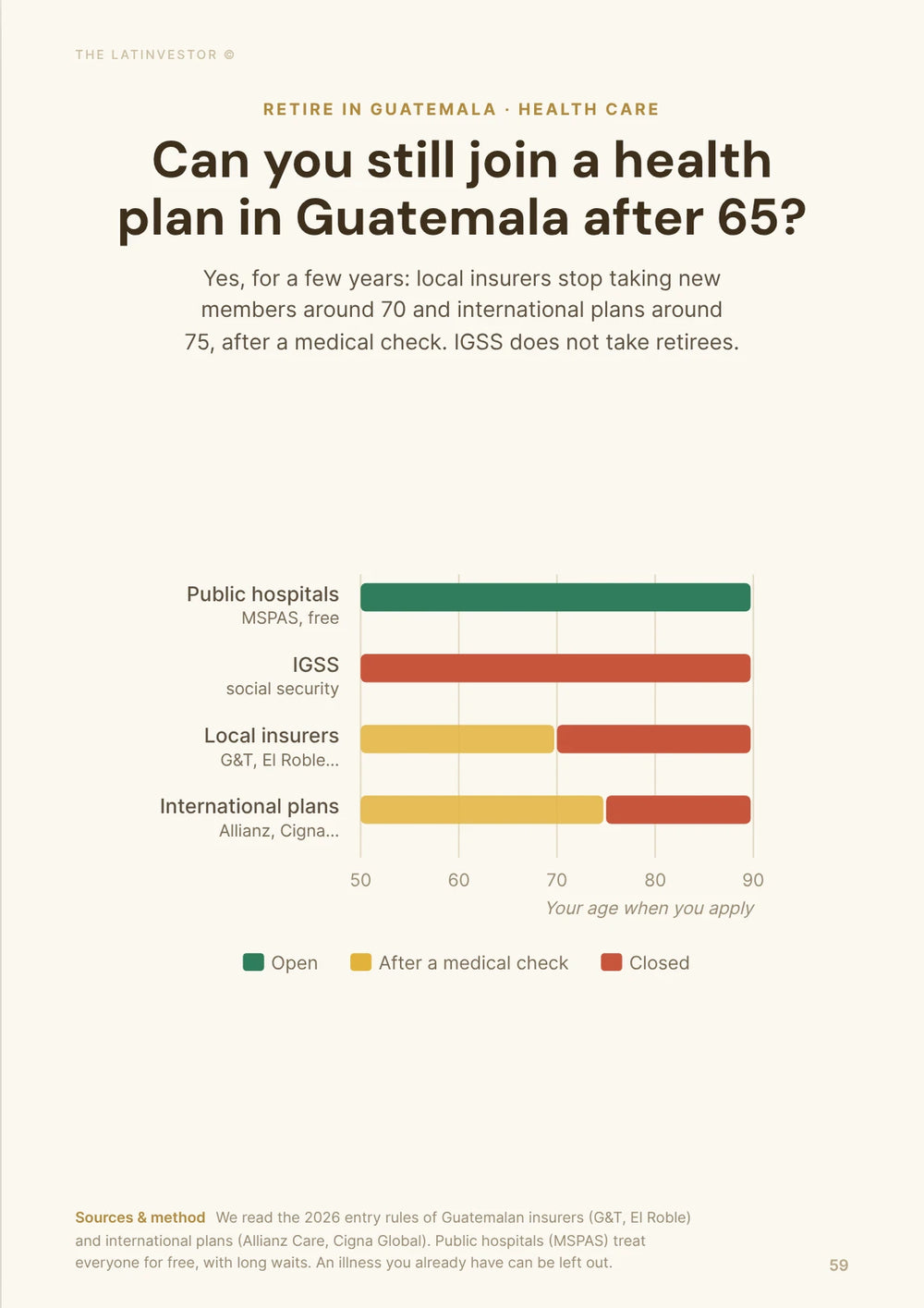
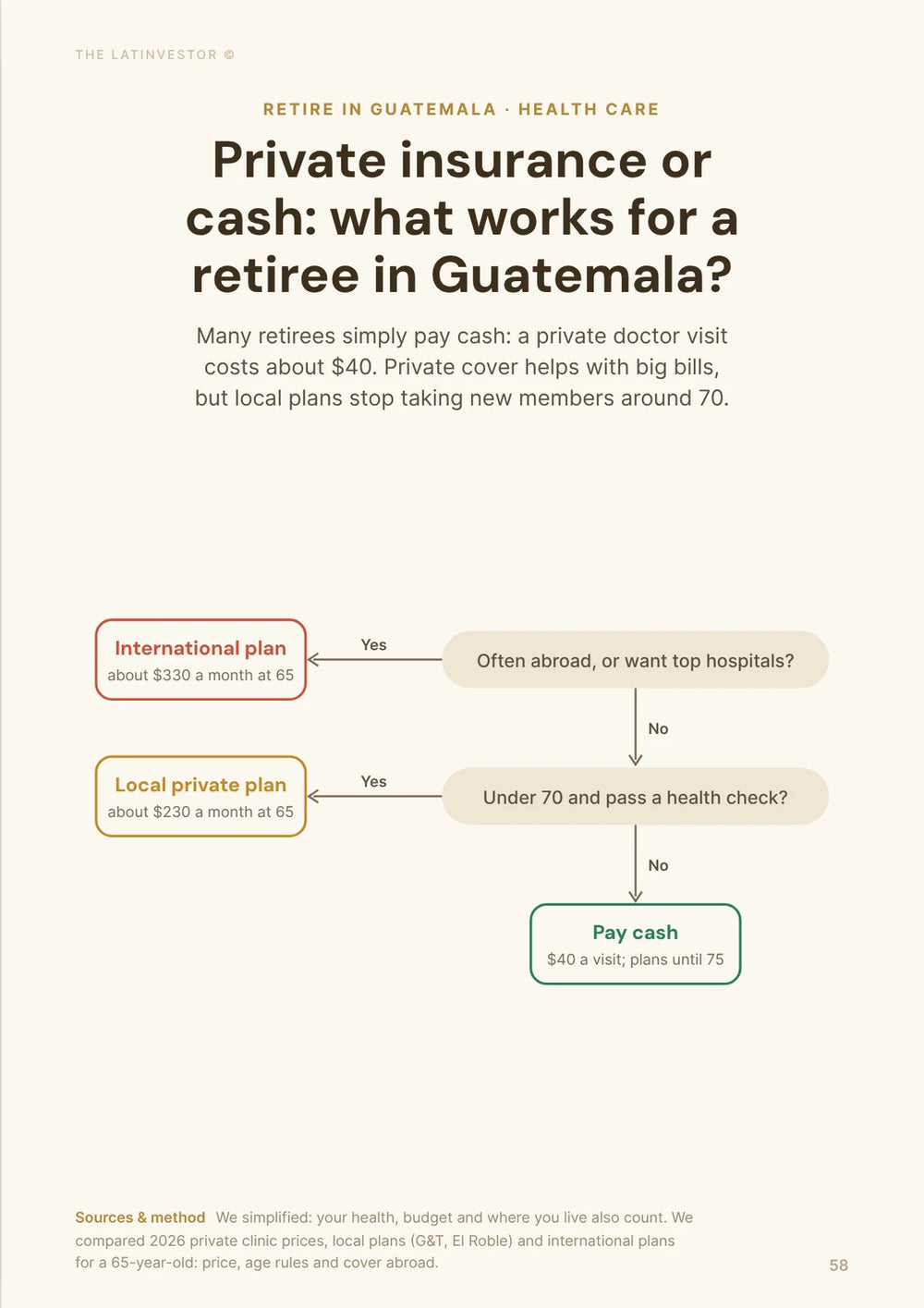
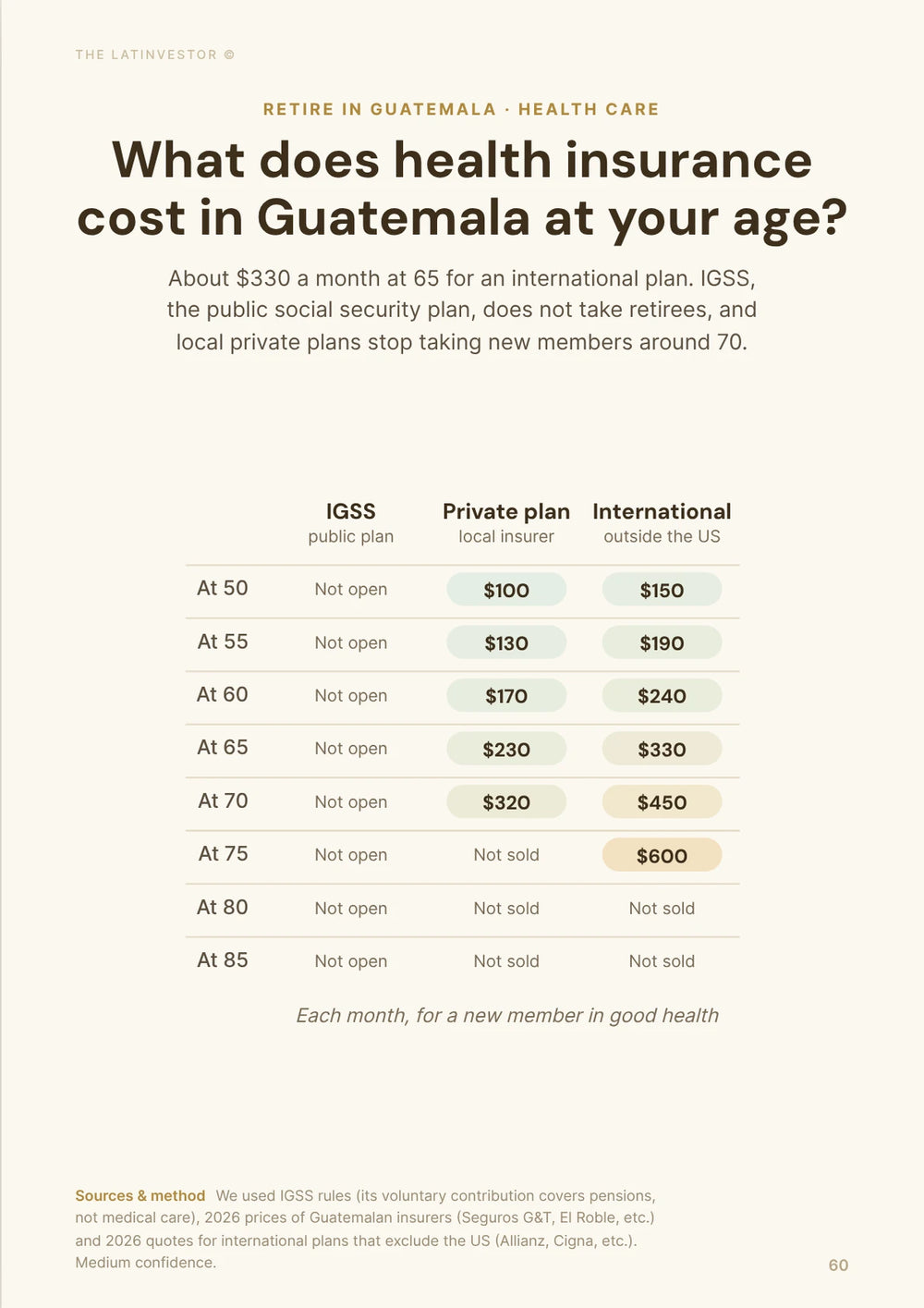
At the end of 2026, most foreign retirees in Guatemala need private health insurance or a solid health budget. At 65, a local private plan costs about Q1,800 ($230) a month and an international plan that excludes the US about Q2,500 ($330), for a new member in good health. Local insurers stop taking new members around 70 (El Roble's Roblemed accepts them up to 69).
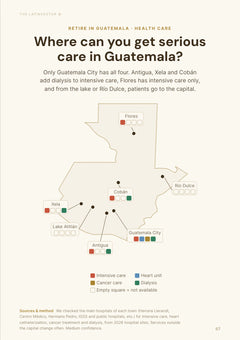
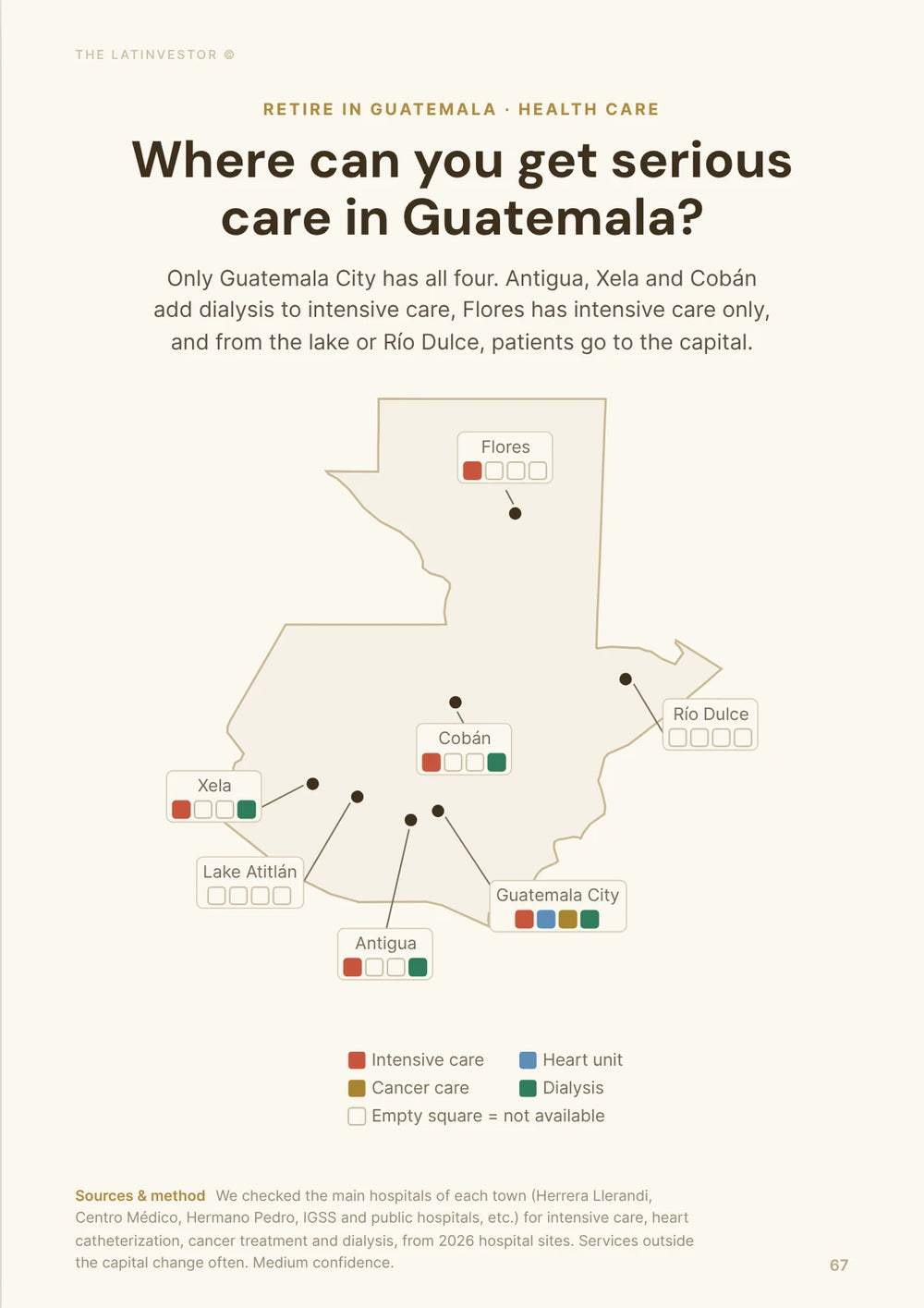
Foreigners in Guatemala can technically access public healthcare through the MSPAS system, but in practice, public facilities face capacity constraints and long waits, so nearly all expat retirees rely on private hospitals like Hospital Herrera Llerandi, Sanatorio Nuestra Senora del Pilar, or Hospital Universitario Esperanza for anything beyond emergencies. IGSS, the social security plan, does not take retirees.
On top of the premium, plan for doctor visits, about Q310 ($40) for a private consultation, plus tests, medicines and dental care, which plans often cover only in part. We have no reliable figure for the yearly total: it depends mostly on your health, and healthy retirees spend far less than those with a chronic condition.
Related blog posts
- Is right now a good time to buy a property in Guatemala? (2026)
- What are the best areas for real estate in Guatemala? (2026)
- Moving to Guatemala? Here's everything you need to know (2026)
- How much do houses cost in Guatemala today? (2026)
- How much should a land really cost in Guatemala today? (2026)
Our methodology
This article estimates how much a single retiree needs each month to live in Guatemala, from a bare-minimum budget to a luxury one. We cover rent, utilities, food, transport, health care, residence, taxes, and what changes if you buy a home instead of renting.
We built each budget line by line. Rents come from Numbeo averages for Guatemala City and Antigua and from listings compiled by Apartamentos Modernos, and home prices from TuLugar listings. Everyday prices come from Numbeo and the INE food basket, utilities from CNEE and EMPAGUA, fuel from the Ministry of Energy and Mines, and help at home from the 2026 minimum wage set by MINTRAB.
Residence rules and fees come from the Instituto Guatemalteco de Migracion and Consortium Legal, tax rules from PwC and the income tax law, and property tax from the IUSI law and Decree 18-2026. Health insurance prices come from local insurers such as El Roble and from international plans.
We checked these figures at the end of 2026, in October. Quetzal amounts use the Banco de Guatemala rate of about 7.64 quetzales per US dollar, almost the same as in January 2026 (about 7.67).
Where we had no direct figure (the minimum and luxury budgets, the yearly health bill, the rent of a staffed colonial home), we estimated it from several sources and rounded it, or we said there is no reliable number. Your own costs will depend on where you live, your health and your habits.
Key sources used for this analysis include Banco de Guatemala, INE Guatemala, Numbeo, Expatistan, Instituto Guatemalteco de Migracion, CNEE, Ministerio de Energia y Minas, EMPAGUA, Contraloria General de Cuentas, PwC Tax Summaries, Consortium Legal, TuLugar, Apartamentos Modernos, MINTRAB (minimum wage), Decree 18-2026 (IUSI reform) and El Roble.