Chile has become one of the most attractive retirement destinations in South America, offering modern infrastructure, excellent healthcare options, and a stable economy.
In this guide, we break down exactly how much money you need to retire comfortably in Chile in 2026, covering everything from minimum survival budgets to luxury living costs.
We constantly update this blog post with the latest housing prices in Chile and real cost-of-living data so you can plan with confidence.

How much money do I need to retire in Chile right now?
What's the absolute minimum monthly budget to survive in Chile?
The absolute minimum monthly budget to survive as a foreign retiree in Chile in 2026 is around 1,080,000 CLP (approximately 1,200 USD or 1,100 EUR) in a lower-cost city, or closer to 1,350,000 CLP (1,500 USD or 1,380 EUR) if you want a safety buffer in Santiago.
At this minimum level in Chile, your basic expenses are covered: a small one-bedroom or studio apartment in a non-premium neighborhood, home-cooked meals with very limited dining out, public transportation, and either basic private health coverage or access to the public Fonasa system with some out-of-pocket costs.
Living on this survival budget in Chile means accepting significant trade-offs, including choosing outer Santiago neighborhoods like La Florida or Puente Alto over central areas, skipping most restaurants and entertainment, and relying heavily on the metro and bus system rather than taxis or rideshares.
What lifestyle do I get with $2,000/month in Chile in 2026?
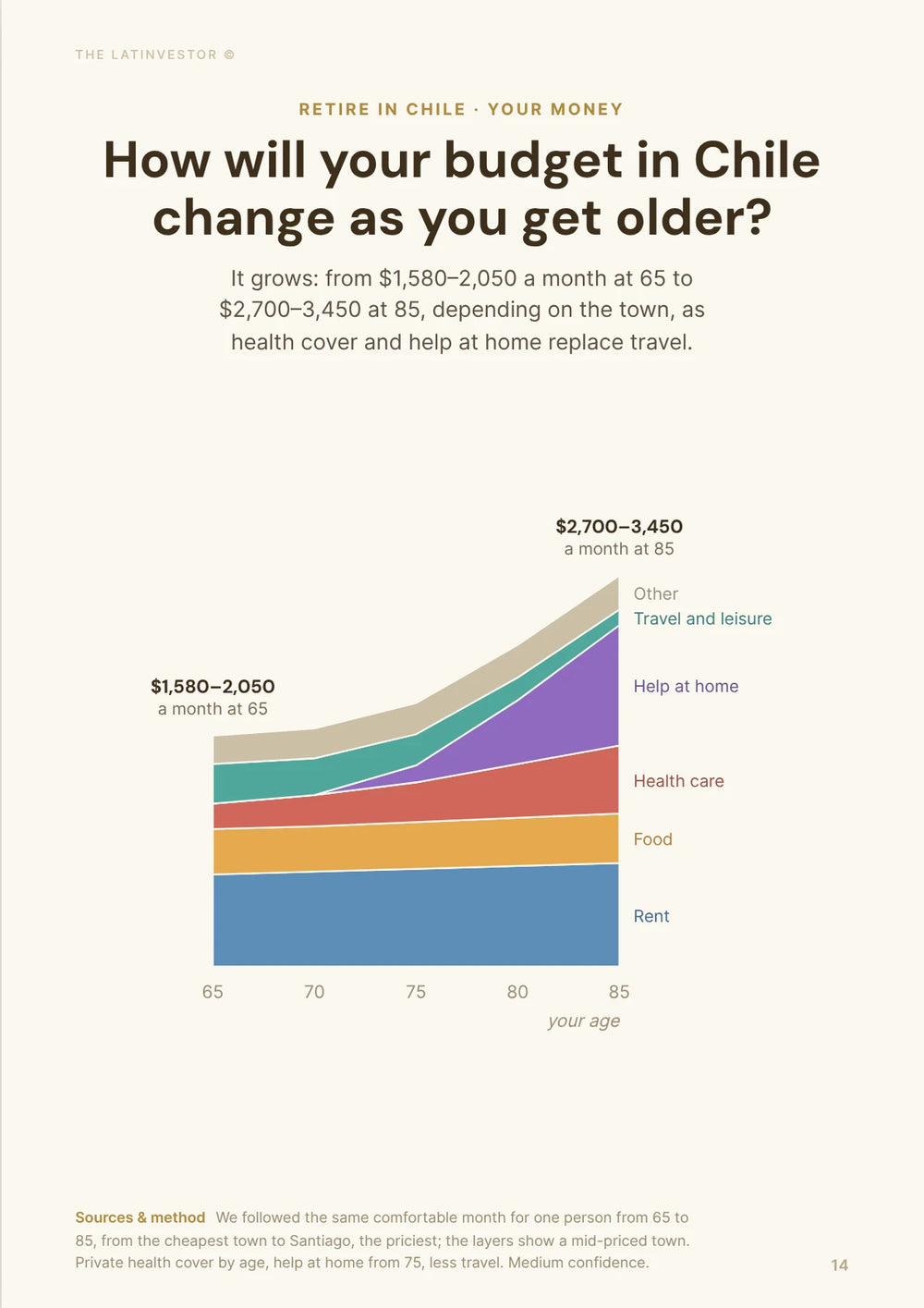
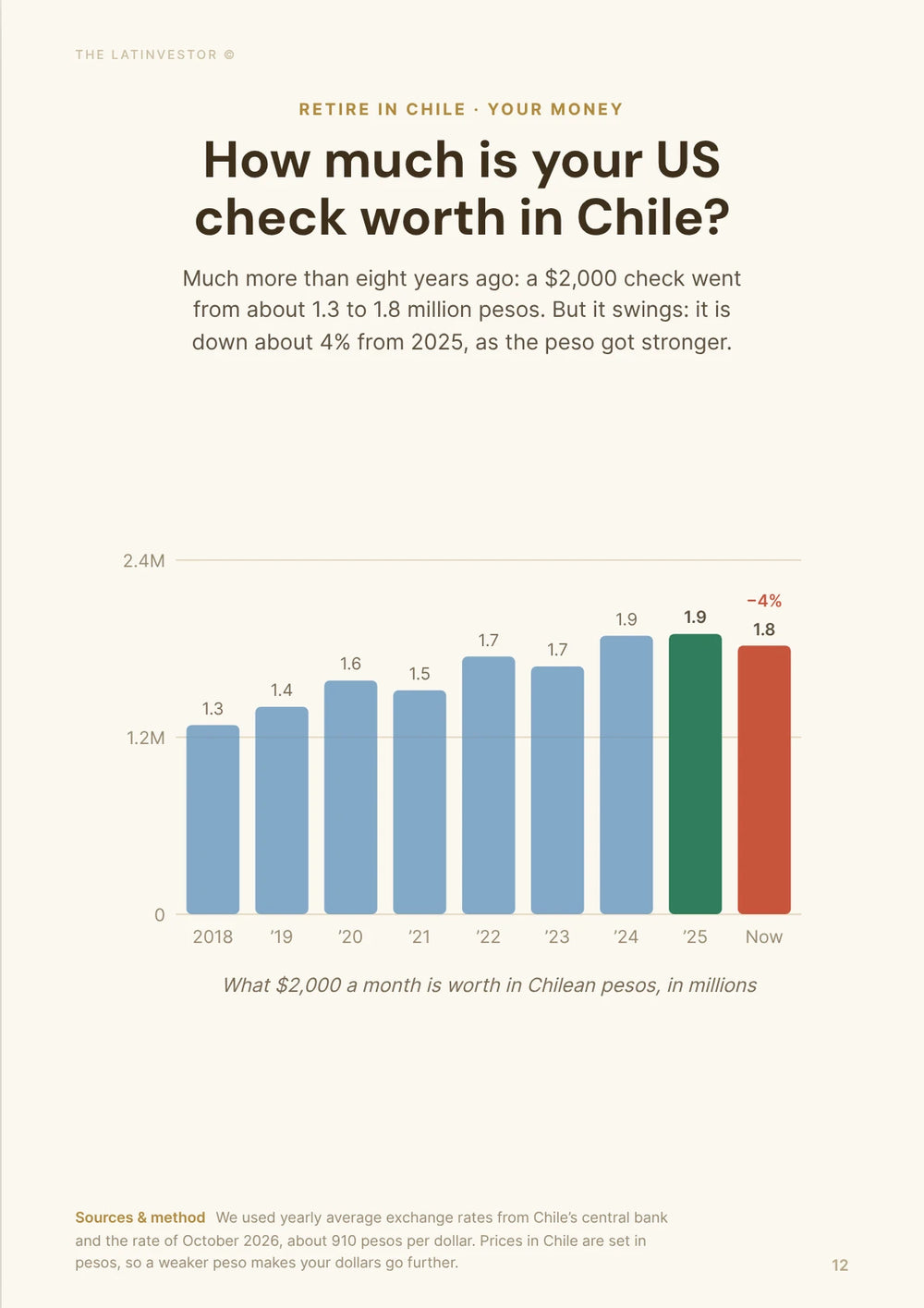
As of early 2026, a budget of 2,000 USD per month (around 1,800,000 CLP or 1,840 EUR) gives you a solid "comfortable-simple" lifestyle for one person in most parts of Chile, and a modest but comfortable lifestyle in Santiago.
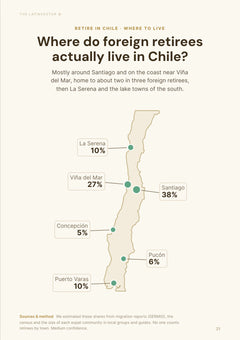
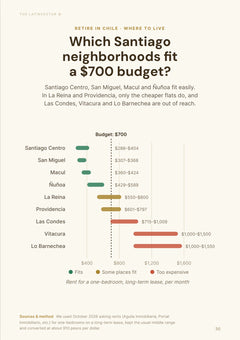
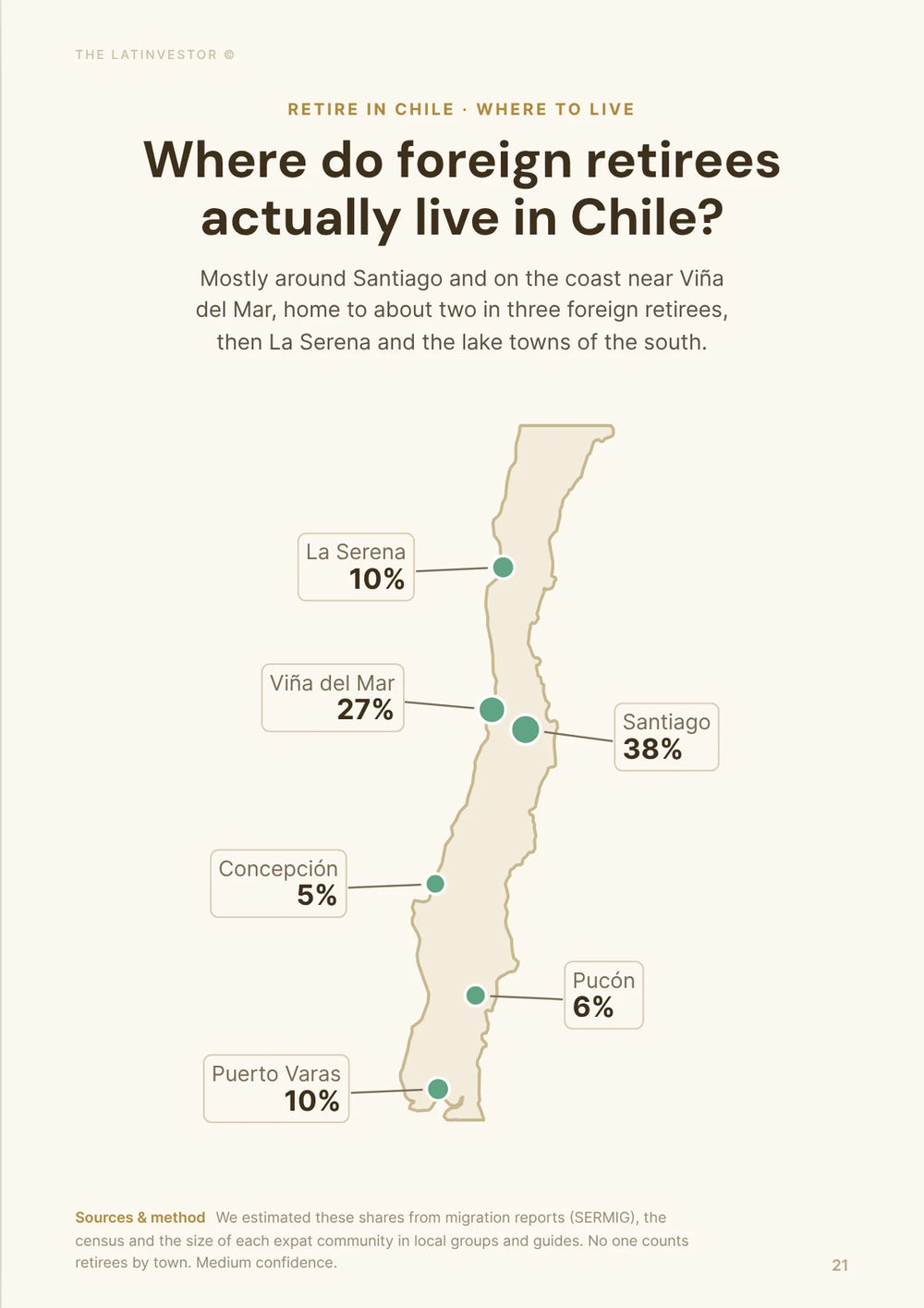
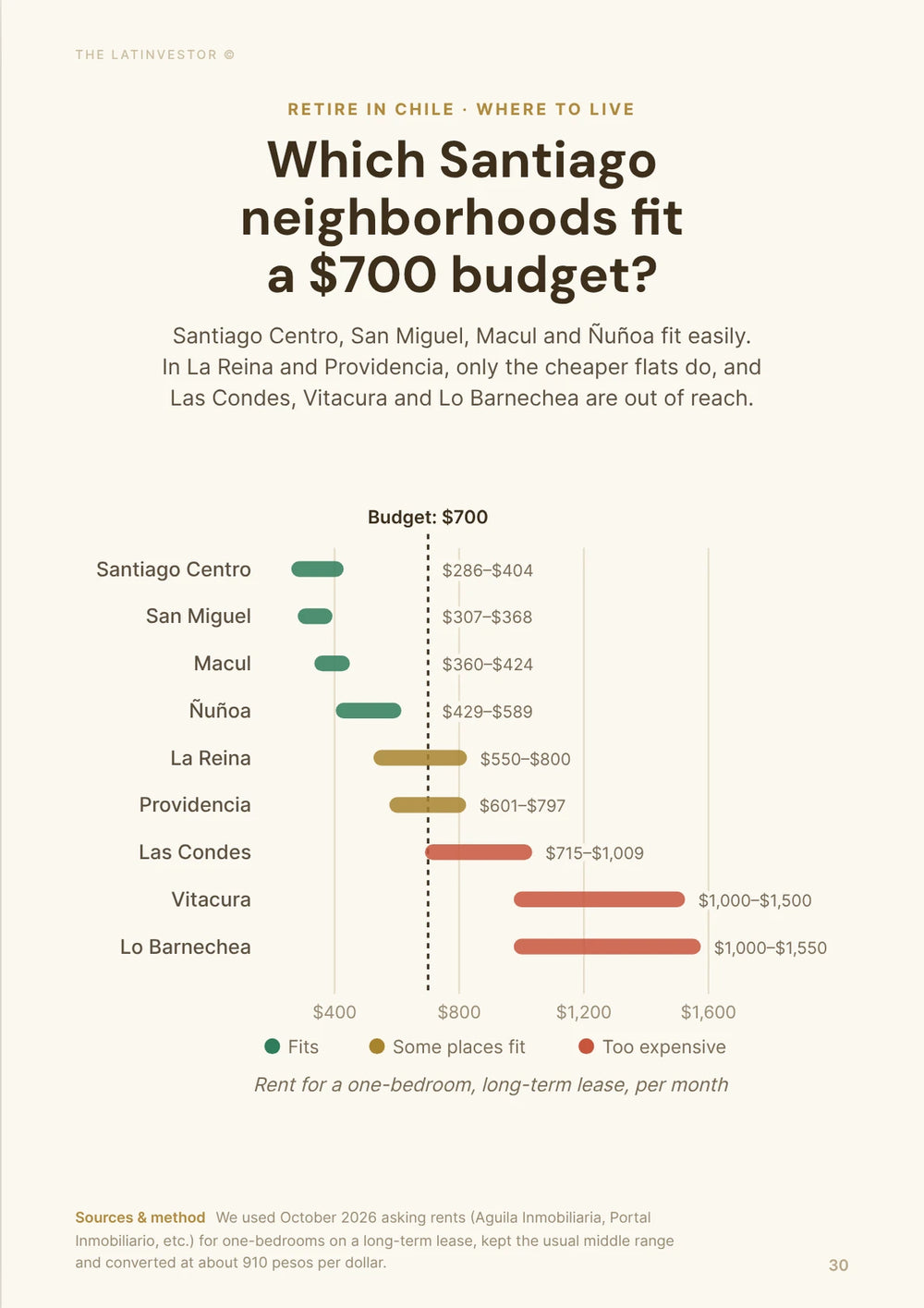
With 2,000 USD monthly in Chile, you can afford a decent one-bedroom apartment in neighborhoods like Ñuñoa, Macul, Santiago Centro, Independencia, or La Florida, typically costing between 450,000 to 650,000 CLP (500 to 720 USD or 460 to 660 EUR) per month, or stretch further in regional cities like Viña del Mar, La Serena, or Puerto Varas.
At this budget level in Chile, you can enjoy a few meals out per week at local restaurants, join a neighborhood gym, use public transport freely with occasional Uber rides, and take weekend trips to the coast or wine country a few times per year.
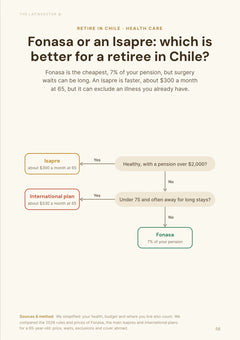
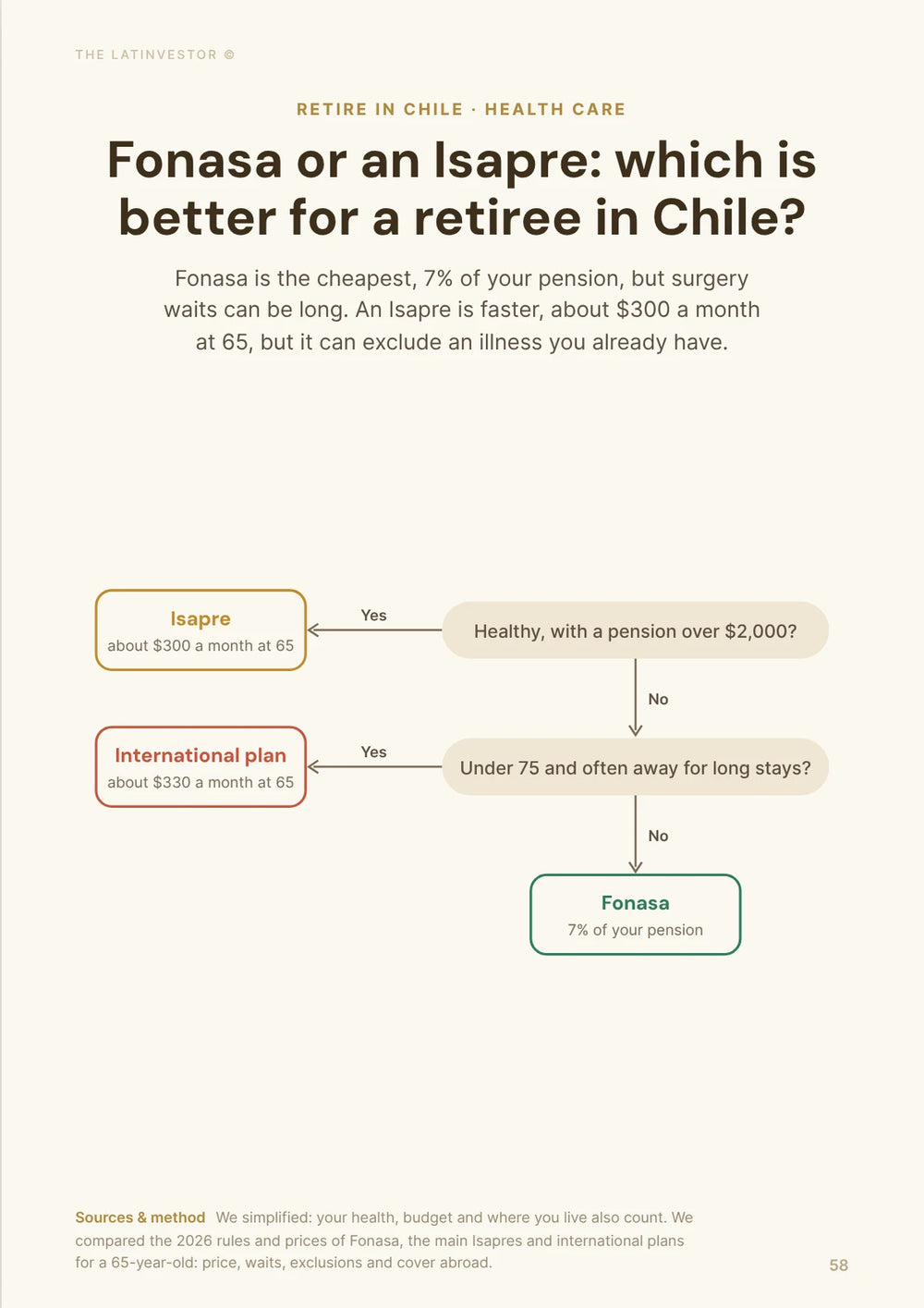
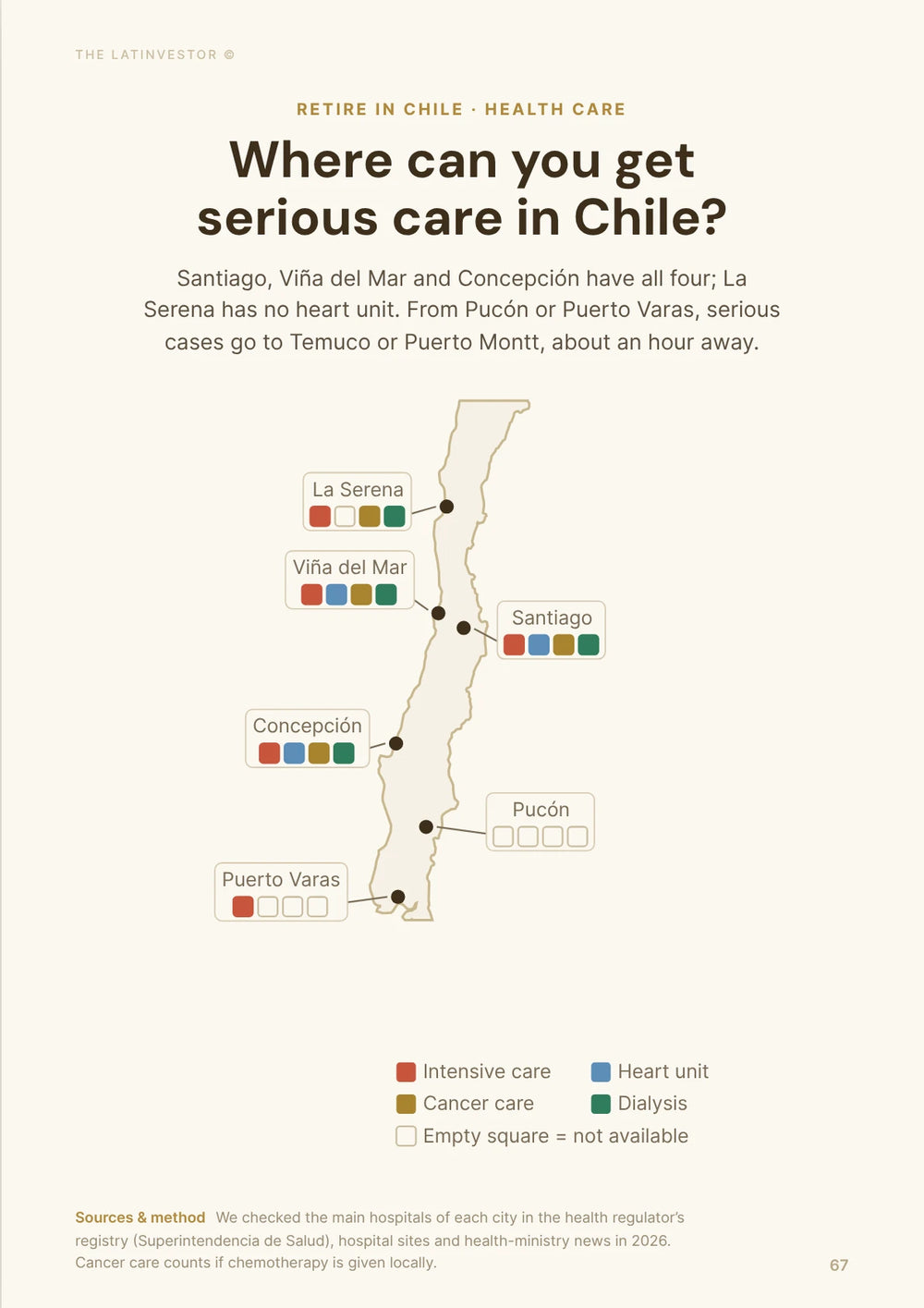
The main limitation at 2,000 USD monthly in Chile is healthcare: you will likely need to choose between a basic private Isapre plan with higher copays or rely mostly on Fonasa (the public system), which means longer wait times for specialist appointments and less flexibility in choosing providers.
What lifestyle do I get with $3,000/month in Chile in 2026?
As of early 2026, a budget of 3,000 USD per month (around 2,700,000 CLP or 2,760 EUR) provides a very comfortable lifestyle for one retiree in Chile, including in Santiago's most desirable neighborhoods.
With 3,000 USD monthly in Chile, you can afford a well-located one-bedroom or even a two-bedroom apartment in popular areas like Providencia, premium pockets of Ñuñoa, or parts of La Reina, typically costing 650,000 to 950,000 CLP (720 to 1,050 USD or 660 to 970 EUR) per month, with modern amenities and building security.
At this level in Chile, dining out becomes a regular pleasure rather than an occasional treat: you can eat at quality restaurants several times a week, afford a good gym membership or yoga classes, take domestic flights to Patagonia or the Atacama Desert, and enjoy Chile's excellent wine scene without worrying about the bill.
The key upgrade from 2,000 to 3,000 USD monthly in Chile is healthcare flexibility: you can now afford a stronger private Isapre plan that covers more specialists, shorter wait times, and access to Chile's best private clinics like Clinica Alemana or Clinica Las Condes without stressing about copays.
What lifestyle do I get with $5,000/month in Chile in 2026?
As of early 2026, a budget of 5,000 USD per month (around 4,500,000 CLP or 4,600 EUR) provides an upper-comfort or semi-luxury lifestyle in Chile, while 10,000 USD monthly (9,000,000 CLP or 9,200 EUR) puts you firmly in full luxury territory.
At 5,000 USD monthly in Chile, you can rent a premium apartment in Las Condes, Vitacura, or Lo Barnechea for 1,100,000 to 1,600,000 CLP (1,200 to 1,800 USD or 1,100 to 1,650 EUR) with high-end amenities like pools, gyms, and concierge services, while 10,000 USD opens the door to penthouse units, gated communities, or owning with a comfortable mortgage payment.
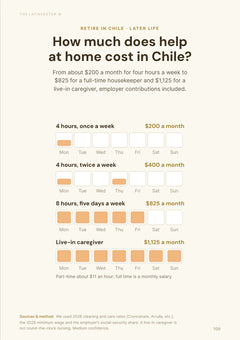
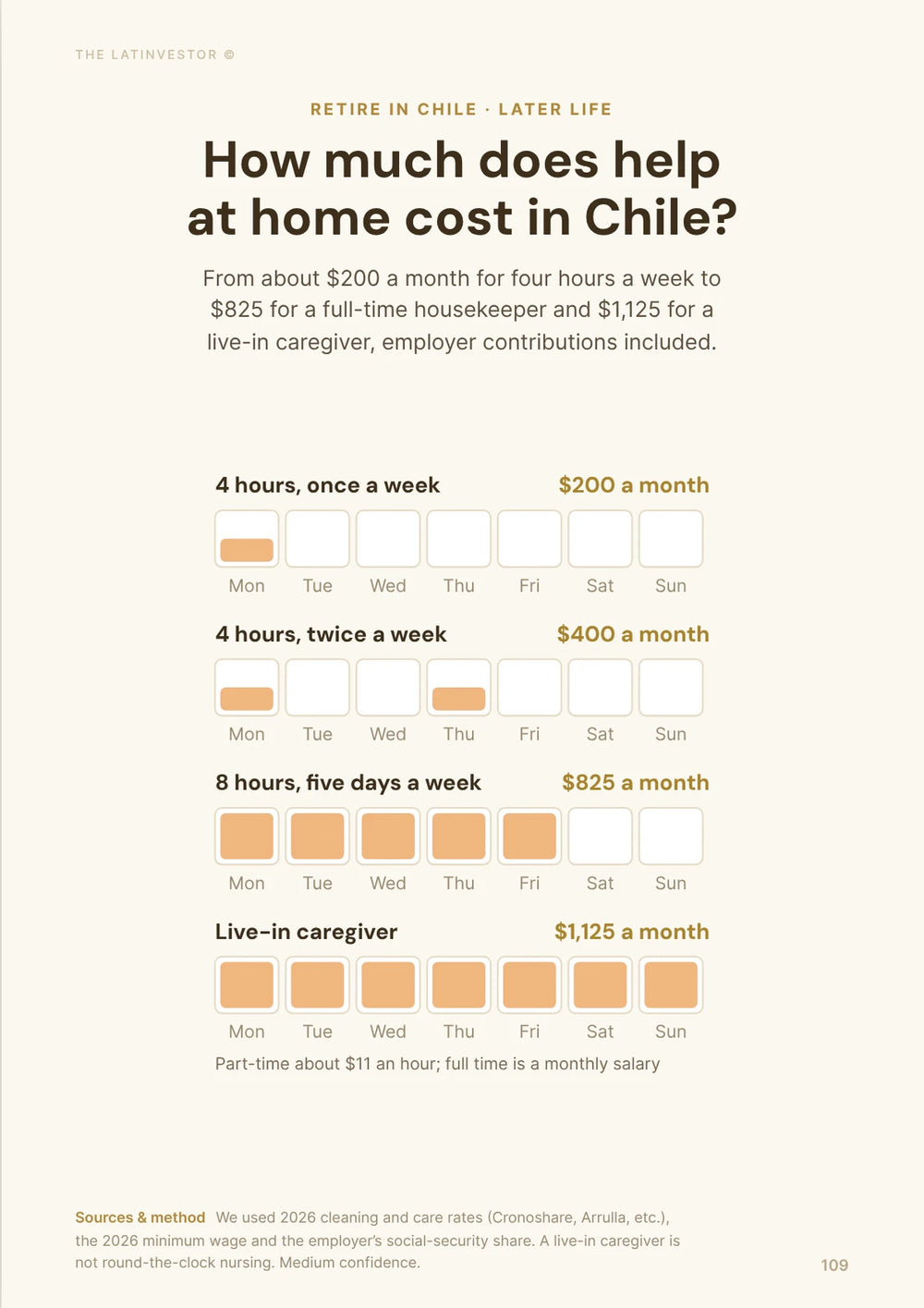
In the 5,000 to 10,000 USD range in Chile, you gain access to premium experiences unique to the country: private wine tours in the Maipo and Colchagua valleys, ski season passes at Portillo or Valle Nevado, membership at Santiago's exclusive Club de Golf Los Leones, regular business-class flights to Buenos Aires or Lima, and the ability to hire part-time domestic help for cleaning or cooking.
How much for a "comfortable" retirement in Chile in 2026?
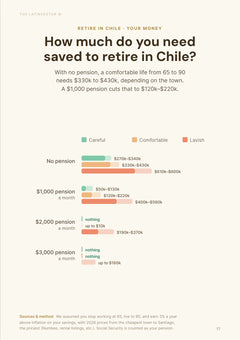
As of early 2026, a confident planning target for a comfortable one-person retirement in Chile is around 2,700,000 CLP (3,000 USD or 2,760 EUR) per month in Santiago, or approximately 2,250,000 CLP (2,500 USD or 2,300 EUR) in regional cities like Viña del Mar, La Serena, or Puerto Varas.
We recommend adding a 20% monthly buffer on top of your base budget in Chile, which means setting aside an extra 540,000 CLP (600 USD or 550 EUR) in Santiago, because Chile's housing contracts and many expenses are tied to the UF (an inflation-indexed unit), and as a foreigner you are more exposed to currency fluctuations between your home currency and the Chilean peso.
A comfortable retirement budget in Chile covers several categories that a basic budget does not: a stronger private health insurance plan with lower copays, occasional domestic travel to places like Patagonia or the Lake District, regular dining at quality restaurants, gym or wellness memberships, and a financial cushion for unexpected expenses like dental work or home repairs.
How much for a "luxury" retirement in Chile in 2026?
As of early 2026, a luxury retirement in Chile requires a monthly budget of 5,400,000 to 7,200,000 CLP (6,000 to 8,000 USD or 5,520 to 7,360 EUR) in Santiago's premium neighborhoods, though 4,500,000 CLP (5,000 USD or 4,600 EUR) already feels luxurious in many non-Santiago markets.
A luxury retirement budget in Chile covers premium housing in gated communities or high-rise towers with amenities (1,500,000 to 2,500,000 CLP or 1,700 to 2,800 USD per month), comprehensive private healthcare at top clinics, a personal vehicle or frequent ride-hailing, domestic staff for cleaning and cooking, and regular international travel without budget constraints.
The most popular neighborhoods for luxury retirement living in Chile include Las Condes, Vitacura, and Lo Barnechea in Santiago (known for their tree-lined streets, international schools, and upscale shopping at places like Parque Arauco), as well as coastal areas like Zapallar, Cachagua, and Reñaca for those seeking a beach lifestyle.
The main advantage of a luxury budget in Chile beyond comfort is financial resilience: you can absorb unexpected peso devaluations, medical emergencies, or extended trips abroad without disrupting your lifestyle, and you have the flexibility to help family members visit or to maintain a second residence in another Chilean region.
What are the real monthly expenses for retirees in Chile in 2026?
What is a realistic monthly budget breakdown by category in Chile?
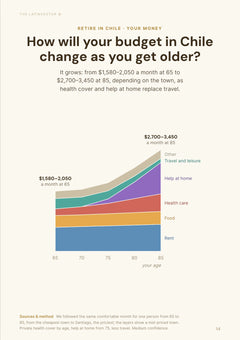
A realistic monthly budget breakdown for a comfortable single retiree in Santiago, Chile in 2026 looks roughly like this: rent (810 to 1,170 USD or 745 to 1,075 EUR), utilities and telecom (110 to 200 USD or 100 to 185 EUR), food (400 to 580 USD or 370 to 535 EUR), transport (55 to 160 USD or 50 to 150 EUR), healthcare (225 to 450 USD or 205 to 415 EUR), and discretionary spending (270 to 540 USD or 250 to 500 EUR).
Housing typically consumes the largest share of a retiree's budget in Chile, accounting for around 30 to 40% of total monthly expenses, which translates to approximately 810,000 to 1,170,000 CLP (900 to 1,300 USD or 830 to 1,195 EUR) for a well-located one-bedroom apartment in Santiago.
Food and groceries generally take up 15 to 20% of the monthly budget in Chile, ranging from 400,000 to 580,000 CLP (450 to 650 USD or 415 to 600 EUR) depending on how often you cook at home versus dining out at restaurants.
The budget category that varies most depending on personal lifestyle choices in Chile is healthcare: some retirees spend only 200,000 CLP (220 USD) monthly by relying on Fonasa (the public system), while others spend 500,000 CLP (550 USD) or more on comprehensive private Isapre plans with access to premium clinics.
What fees surprise foreigners most after moving to Chile?
The top three hidden fees that surprise foreigners in Chile are: gastos comunes (building maintenance and HOA fees that can add 50,000 to 150,000 CLP monthly in modern towers), UF-linked rent increases (your peso rent rises automatically with inflation because leases are quoted in UF), and the endless notarization costs (nearly every official document, from rental contracts to bank accounts to visa paperwork, requires paid notary stamps).
When first arriving in Chile, foreigners should budget for one-time setup costs of approximately 500,000 to 1,000,000 CLP (550 to 1,100 USD or 510 to 1,015 EUR), which typically includes a rental deposit (usually one month's rent), notary fees for the lease contract, RUT (tax ID) processing, initial health insurance enrollment, and basic furnishings if renting unfurnished.
What's the average rent for a 1-bedroom or a 2-bedroom in Chile in 2026?
As of early 2026, the average monthly rent for a one-bedroom apartment in mainstream Santiago neighborhoods is around 10 to 12 UF (approximately 450,000 to 540,000 CLP, 500 to 600 USD, or 460 to 550 EUR), while a two-bedroom typically runs 14 to 18 UF (approximately 630,000 to 810,000 CLP, 700 to 900 USD, or 645 to 830 EUR).
For a one-bedroom in Chile, the realistic rent range spans from about 360,000 CLP (400 USD or 370 EUR) in budget neighborhoods like Puente Alto or San Bernardo, up to 900,000 CLP (1,000 USD or 920 EUR) or more in premium areas like Las Condes or Vitacura.
For a two-bedroom in Chile, you can find options starting around 540,000 CLP (600 USD or 550 EUR) in more affordable comunas like Macul or La Florida, rising to 1,350,000 CLP (1,500 USD or 1,380 EUR) or higher in Santiago's upscale eastern neighborhoods.
The neighborhoods offering the best value for retirees seeking affordable rent in Chile include Ñuñoa (walkable, with good restaurants and parks), Independencia (close to downtown, improving rapidly), Santiago Centro in select blocks near Parque Forestal, and Macul (quiet, residential, near universities and green spaces).
What do utilities cost monthly in Chile in 2026?
As of early 2026, total monthly utilities for a typical retiree apartment in Chile run approximately 110,000 to 160,000 CLP (120 to 180 USD or 110 to 165 EUR) for a small unit, or 160,000 to 225,000 CLP (180 to 250 USD or 165 to 230 EUR) for larger apartments or heavy heating and cooling usage.
The typical monthly breakdown in Chile is roughly 35,000 to 60,000 CLP (40 to 65 USD) for electricity, 15,000 to 25,000 CLP (17 to 28 USD) for water, and 20,000 to 40,000 CLP (22 to 45 USD) for gas (which varies significantly by season and whether your building uses gas for heating, hot water, or cooking).
Internet and mobile phone service in Chile typically cost 25,000 to 45,000 CLP (28 to 50 USD or 26 to 46 EUR) combined per month, with home fiber internet running around 15,000 to 25,000 CLP and mobile plans with generous data around 10,000 to 20,000 CLP.
What's the monthly food and transportation budget for one person in Chile in 2026?
As of early 2026, a combined monthly food and transportation budget for one person in Chile ranges from approximately 360,000 to 720,000 CLP (400 to 800 USD or 370 to 735 EUR), depending heavily on lifestyle choices around dining out and how you get around.
For groceries in Chile, a single retiree cooking mostly at home can expect to spend 225,000 to 315,000 CLP (250 to 350 USD or 230 to 320 EUR) monthly at supermarkets like Jumbo, Lider, or Unimarc, while those who shop at farmers' markets (ferias) can often reduce costs by 10 to 20%.
Dining out regularly in Chile makes a noticeable difference: a frugal retiree eating mostly at home might spend 300,000 CLP (330 USD) total on food, while someone enjoying restaurants several times a week will easily reach 580,000 CLP (650 USD) or more, especially in Santiago neighborhoods with quality dining options like Providencia or Lastarria.
Transportation in Santiago using the integrated metro and bus system (Red Movilidad) costs around 55,000 to 90,000 CLP (60 to 100 USD or 55 to 90 EUR) monthly for regular use, while adding frequent Uber or taxi rides pushes the total to 110,000 to 180,000 CLP (120 to 200 USD), and owning a car adds fuel, insurance, and maintenance costs that can easily exceed 300,000 CLP monthly.
Can I retire in Chile if I want to buy property in 2026?
What's the average home price in Chile in 2026?
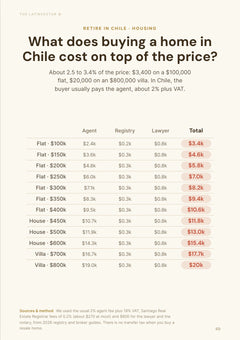
As of early 2026, the average apartment price in Santiago, Chile is around 74 UF per square meter (approximately 3,330,000 CLP, 3,700 USD, or 3,400 EUR per square meter), meaning a typical 60 square meter apartment costs roughly 4,450 UF (200,000,000 CLP, 222,000 USD, or 204,000 EUR).
Prices in Chile vary dramatically by location: affordable comunas like Puente Alto or San Bernardo offer apartments around 45 to 55 UF per square meter (150,000 to 185,000 USD for 60 sqm), while premium neighborhoods like Vitacura or Lo Barnechea can exceed 120 UF per square meter (400,000 USD or more for the same size).
For retirees in Chile, well-located apartments in established buildings (rather than houses) typically offer the best value because they include security, often have lower maintenance costs per square meter, and are easier to rent out or resell if your plans change, particularly in walkable neighborhoods like Ñuñoa, Providencia, or Santiago Centro near parks.
What down payment do foreigners usually need in Chile in 2026?
As of early 2026, foreign retirees purchasing property in Chile should plan for a down payment of 30% (around 60,000,000 CLP, 67,000 USD, or 61,500 EUR on a typical Santiago apartment), though some buyers without local income history may face requirements of 40% or more.
Yes, foreigners generally face higher down payment requirements than Chilean locals in Chile because local banks evaluate mortgage applications based on documented income and credit history in the Chilean system, which most foreign retirees lack initially, although those who establish banking relationships and can demonstrate stable foreign pension income sometimes qualify for down payments closer to 20 to 25%.
What's the all-in monthly cost to own in Chile in 2026?
As of early 2026, the all-in monthly cost to own a typical 60 square meter apartment in Santiago, Chile (with a mortgage) runs approximately 1,080,000 to 1,620,000 CLP (1,200 to 1,800 USD or 1,100 to 1,655 EUR), depending on your down payment size, building fees, and current interest rates.
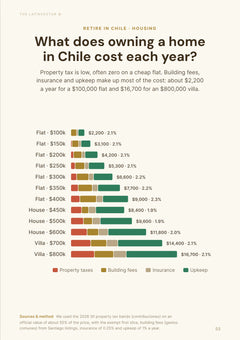
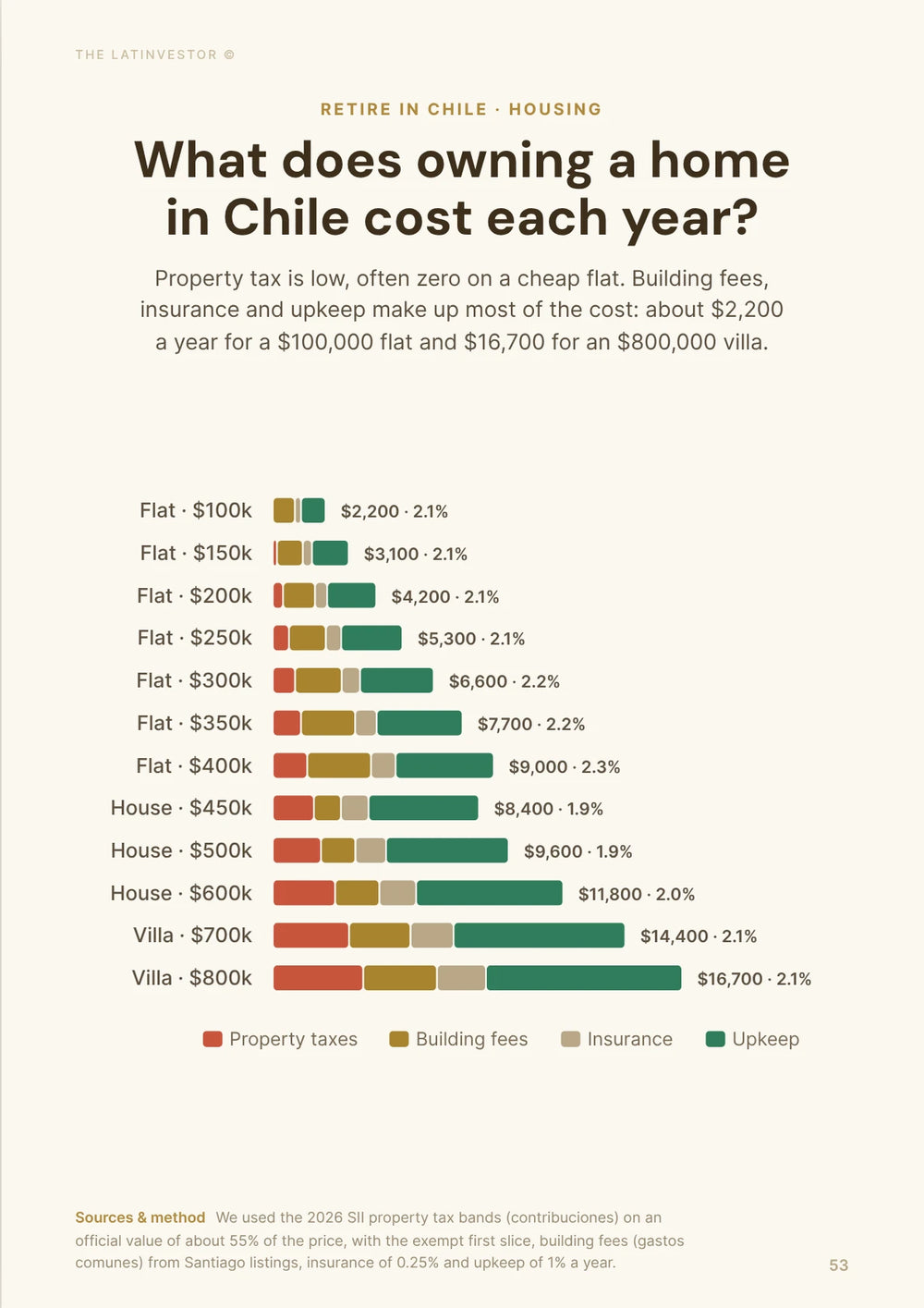
This all-in ownership figure in Chile includes your monthly mortgage payment (UF-denominated, meaning it adjusts with inflation), contribuciones (property tax), gastos comunes (building HOA and maintenance fees), home insurance (often required by the lender), and a reserve for repairs and unexpected maintenance.
Typical monthly property tax (contribuciones) in Chile runs 50,000 to 150,000 CLP (55 to 165 USD) depending on the assessed value, while gastos comunes (HOA fees) in modern Santiago buildings often range from 60,000 to 180,000 CLP (65 to 200 USD) monthly depending on amenities like pools, gyms, and 24-hour security.
The hidden ownership cost that catches new buyers off guard in Chile is the UF-linked nature of mortgage payments: even though your interest rate is fixed, the UF itself rises with inflation, so your peso-denominated payment increases over time, which can be a shock for buyers used to fixed-payment mortgages in other countries.
Is buying cheaper than renting in Chile in 2026?
As of early 2026, renting is typically cheaper than buying on a pure monthly cash-flow basis in Chile: a one-bedroom apartment that rents for 450,000 CLP (500 USD) monthly might cost 1,100,000 to 1,400,000 CLP (1,200 to 1,550 USD) monthly to own with a mortgage, making renting 50 to 65% cheaper in immediate outlay.
The typical break-even point where buying becomes financially advantageous over renting in Chile is around 8 to 12 years, depending on how much your down payment could have earned elsewhere, the UF appreciation rate, and whether you eventually sell or continue holding the property.
The key factors that make buying more attractive for retirees in Chile include: the psychological security of owning in a country where you plan to stay long-term, the hedge against UF-linked rent increases (since your asset also appreciates in UF), and the ability to leave property to heirs, while renting remains smarter for those uncertain about their long-term plans, those who prefer liquidity, or those who arrived recently and want flexibility to explore different neighborhoods before committing.
What visas, taxes, and healthcare costs should I plan for in Chile in 2026?
What retirement visa options exist in Chile in 2026?
As of early 2026, the main retirement visa option in Chile is the Residencia Temporal for "Jubilados y Rentistas" (retirees and people with passive income), which costs approximately 90,000 to 180,000 CLP (100 to 200 USD or 92 to 185 EUR) in government fees depending on your nationality, plus notarization and document translation costs.
To qualify for the retirement visa in Chile, you must demonstrate stable passive income (pension, investments, or rental income) sufficient to support yourself, with most sources suggesting a minimum of around 1,000 to 1,500 USD monthly, though there is no single official threshold published, and immigration officers evaluate applications holistically based on your documentation.
Annual visa renewal costs in Chile typically run 90,000 to 180,000 CLP (100 to 200 USD) in government fees, plus approximately 50,000 to 100,000 CLP for associated notarizations and paperwork, with renewals required annually until you qualify for permanent residence (usually after one to two years of continuous legal residence).
The most common visa mistake foreign retirees make in Chile is underestimating processing times and document requirements: applications often take several months, all foreign documents need apostilles and certified translations, and missing paperwork can restart the entire process, so starting early and working with a reputable immigration lawyer is strongly recommended.
Do I pay tax on foreign income in Chile in 2026?
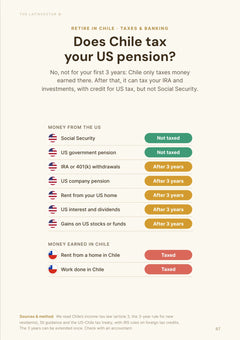
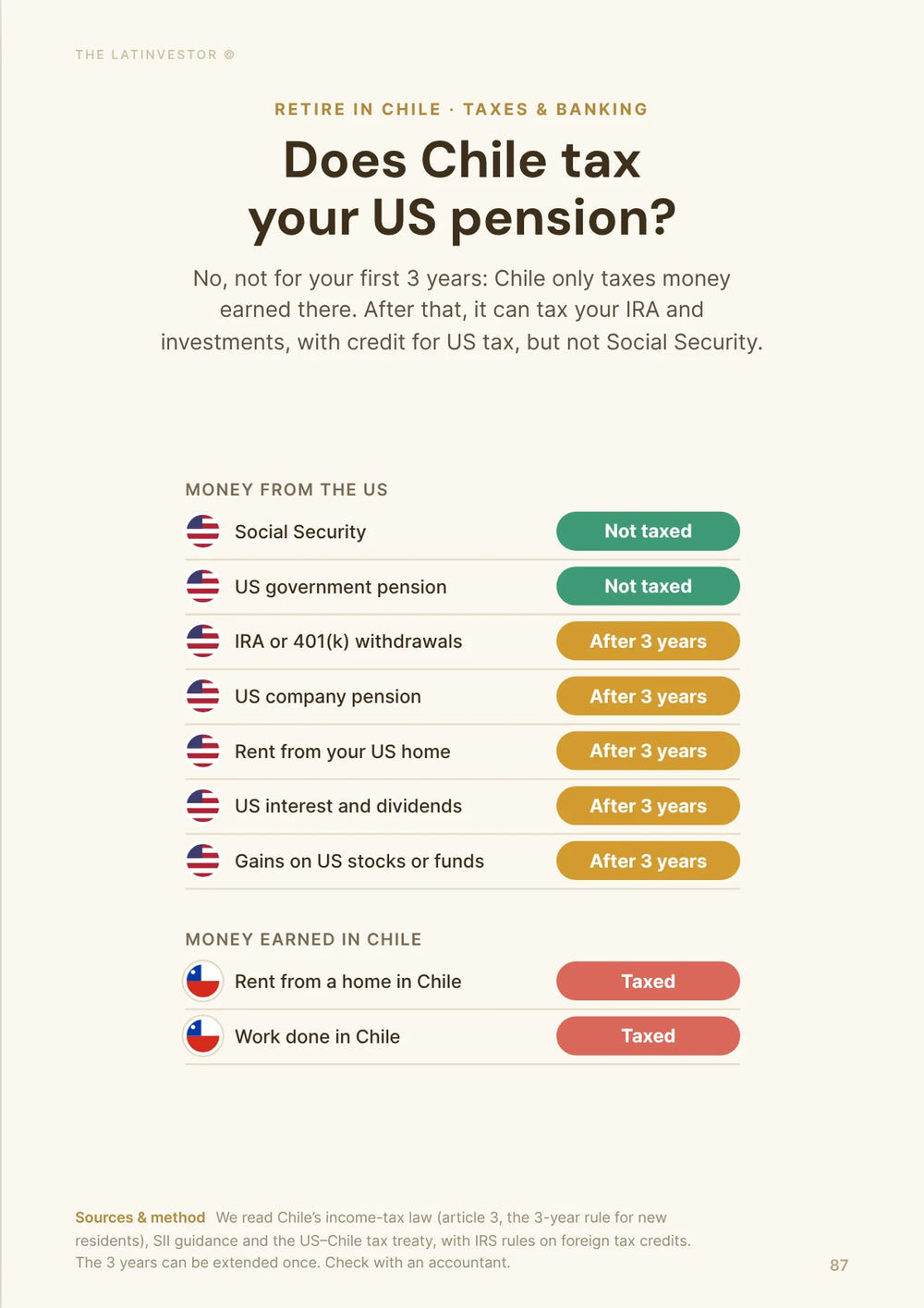
As of early 2026, foreign income taxation in Chile depends on your tax residency status: during your first three years, you may benefit from a transitional regime that taxes only Chilean-source income, but after establishing tax residency (generally by living in Chile more than 183 days per year), you become subject to Chilean tax on your worldwide income at progressive rates up to 40%.
In Chile, foreign pensions are generally taxable once you become a tax resident, foreign investment income (dividends, interest, capital gains) is also subject to Chilean tax, and US Social Security benefits may be taxable in Chile though bilateral tax treaty provisions can affect the final calculation.
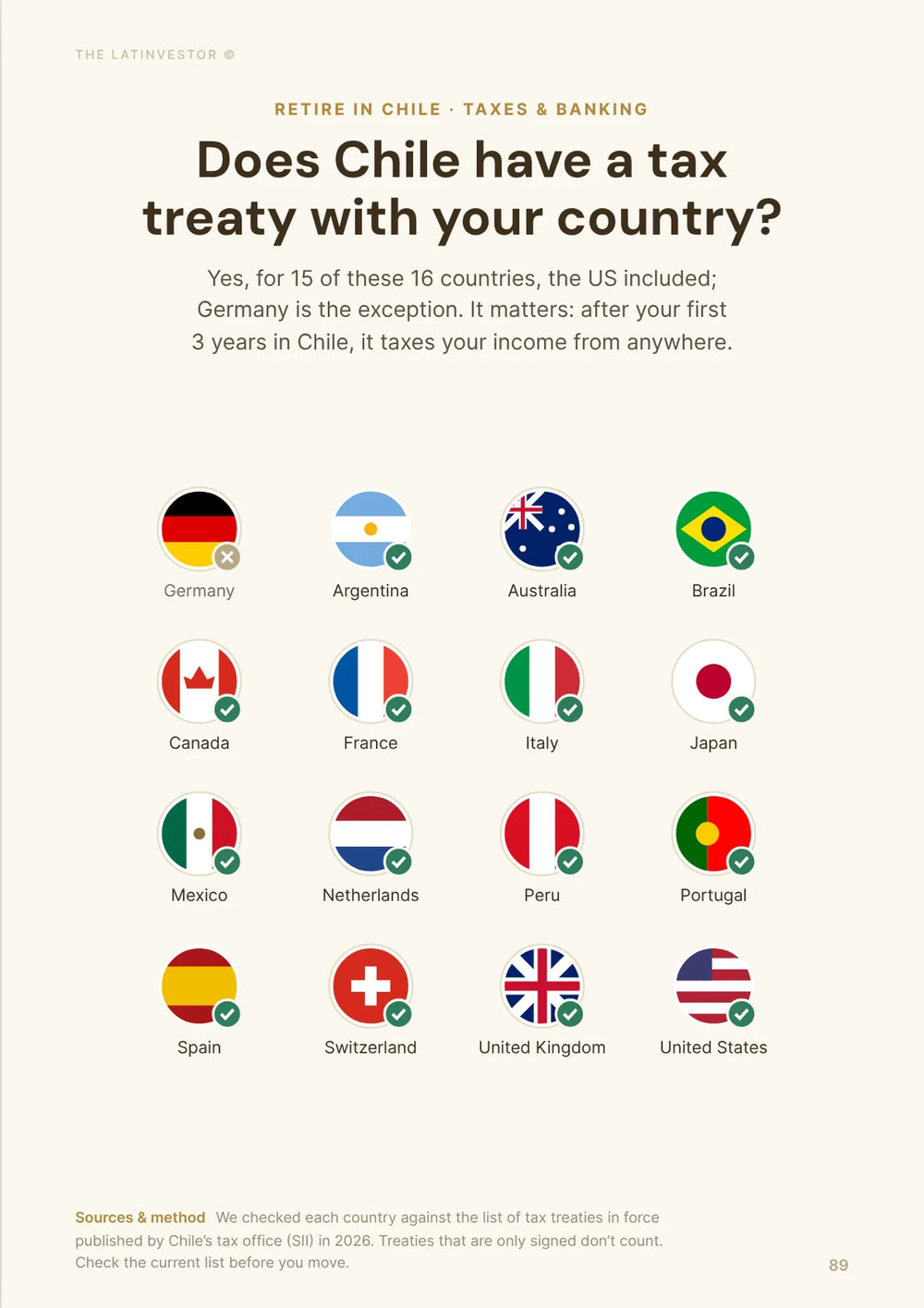
Chile has tax treaties with several major countries including the United States, United Kingdom, Spain, and Canada, which can help prevent double taxation by allowing credits for taxes paid abroad, though the specific treatment of each income type varies by treaty and requires careful planning.
The single most important tax rule foreign retirees should understand before moving to Chile is the three-year transitional period: if you structure your affairs correctly during this window, you can defer or reduce taxation on foreign income, but once you become a full tax resident, Chile's tax authority (SII) will expect you to report and potentially pay tax on all worldwide income, making early consultation with a Chilean tax professional essential.
What health insurance do retirees need in Chile in 2026?
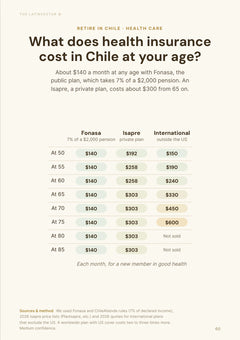
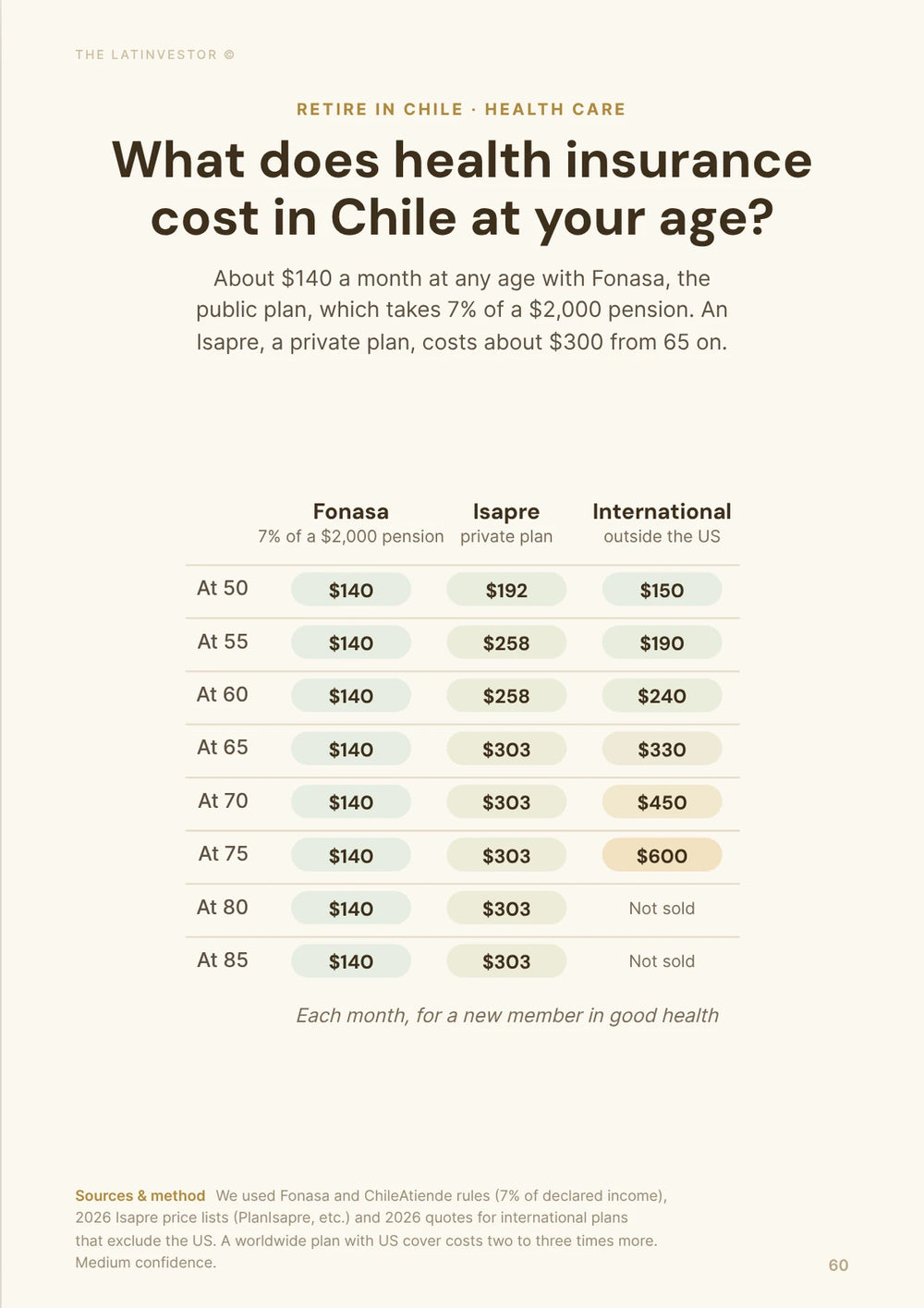
As of early 2026, retirees in Chile need either public health coverage through Fonasa or private coverage through an Isapre, with private plans for retirees typically costing 225,000 to 450,000 CLP (250 to 500 USD or 230 to 460 EUR) monthly depending on age, health status, and coverage level.
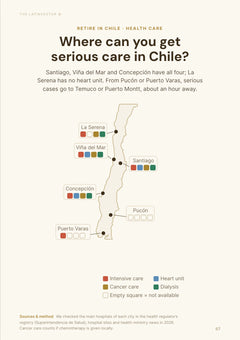
Foreigners can access public healthcare through Fonasa in Chile once they have legal residence and register with the system, which provides access to a network of public hospitals and clinics at low cost, though wait times for specialists and elective procedures are often longer than in the private system.
A realistic total annual healthcare budget for a retiree in Chile, including insurance premiums, copays for doctor visits, prescription medications, and occasional out-of-pocket expenses for tests or specialists, is approximately 4,500,000 to 7,200,000 CLP (5,000 to 8,000 USD or 4,600 to 7,360 EUR), with higher amounts for those preferring premium private clinics like Clinica Alemana or Clinica Las Condes.
Related blog posts
- Is right now a good time to buy a property in Chile? (2026)
- What are the best areas for real estate in Chile? (2026)
- Moving to Chile? Here's everything you need to know (2026)
- How much do houses cost in Chile today? (2026)