Summary
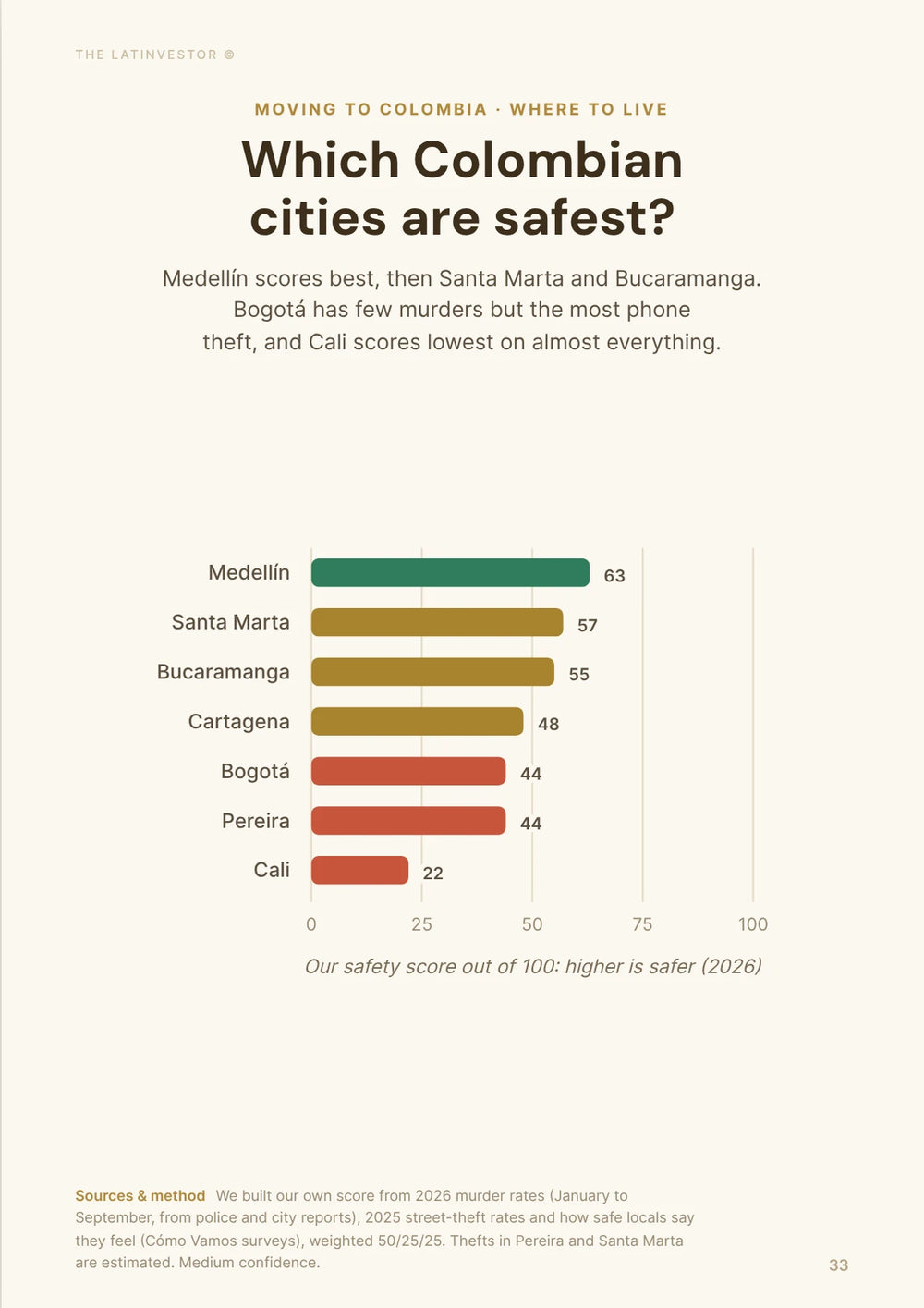
Is Cali a good place to live as an expat? Yes, for people who earn in dollars or euros, love salsa and warm weather, and accept that safety takes more effort than in Bogota or Medellin. By our estimate, a comfortable single life costs about COP 5 to 7 million (about $1,570 to $2,200) a month.
Safety is the main catch: homicides rose 14% to 1,065 in 2025, and the city counted 846 more by the end of September 2026. Expats stick to Pance, Ciudad Jardin, Granada and El Penon.
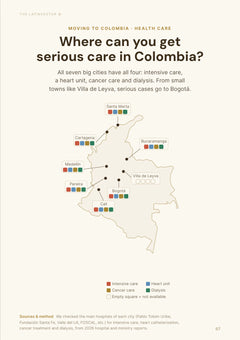
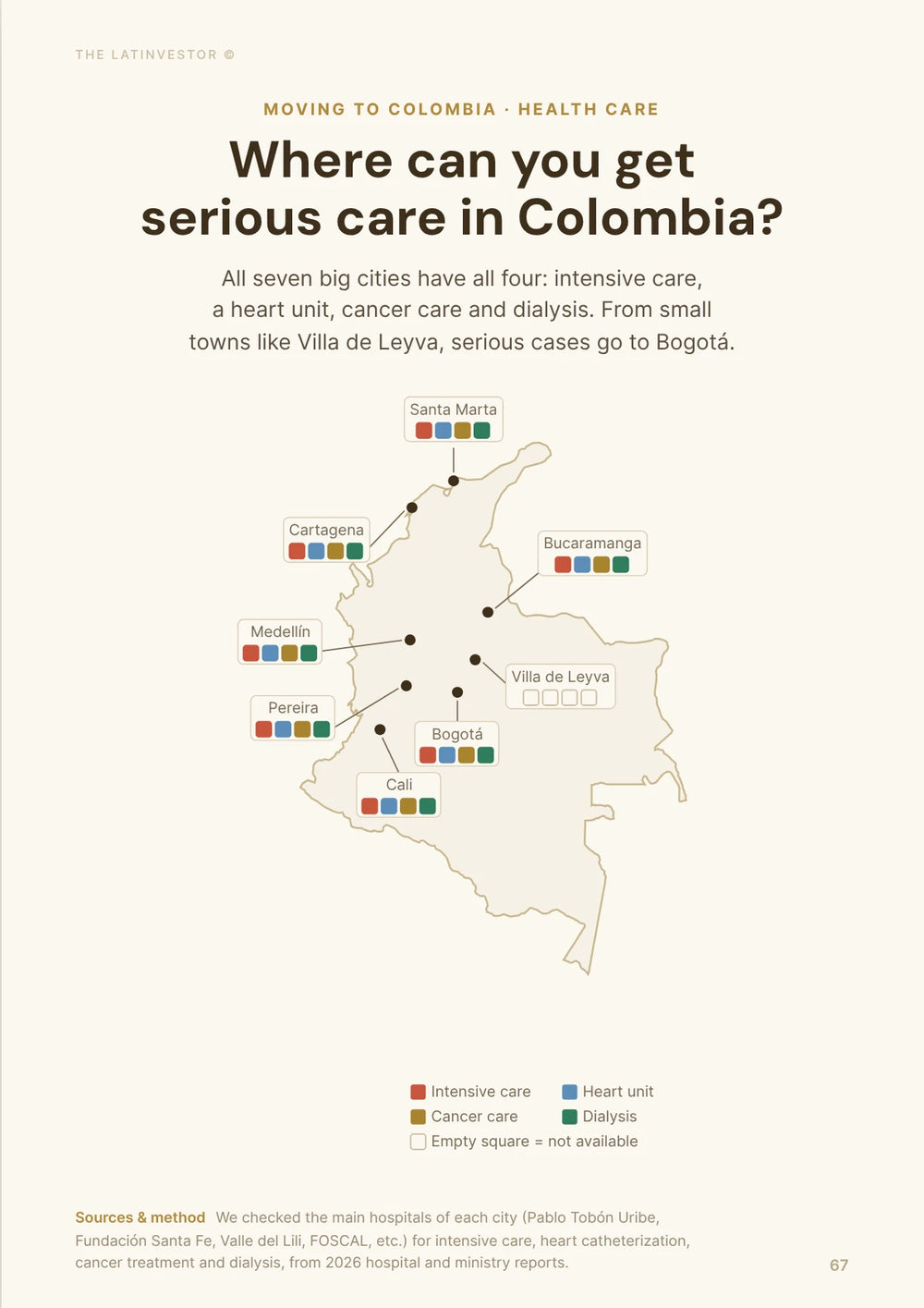
Private healthcare is excellent: Fundacion Valle del Lili and Clinica Imbanaco, which ranked 11th in Latin America in 2026. A general doctor visit costs COP 80,000 to COP 160,000.
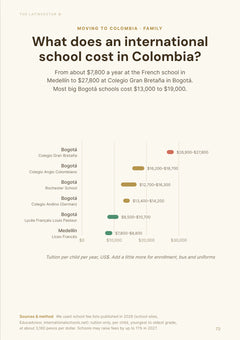
Cali has about seven international or bilingual schools, fewer than Bogota or Medellin. Fees are rarely published, and private schools may raise them by up to 11.24% for 2027.
Prices are rising faster again: inflation in Cali reached 6.76% over the year to September 2026. And with a dollar at about 3,175 pesos, roughly 15% fewer than in January, foreign budgets stretch less.
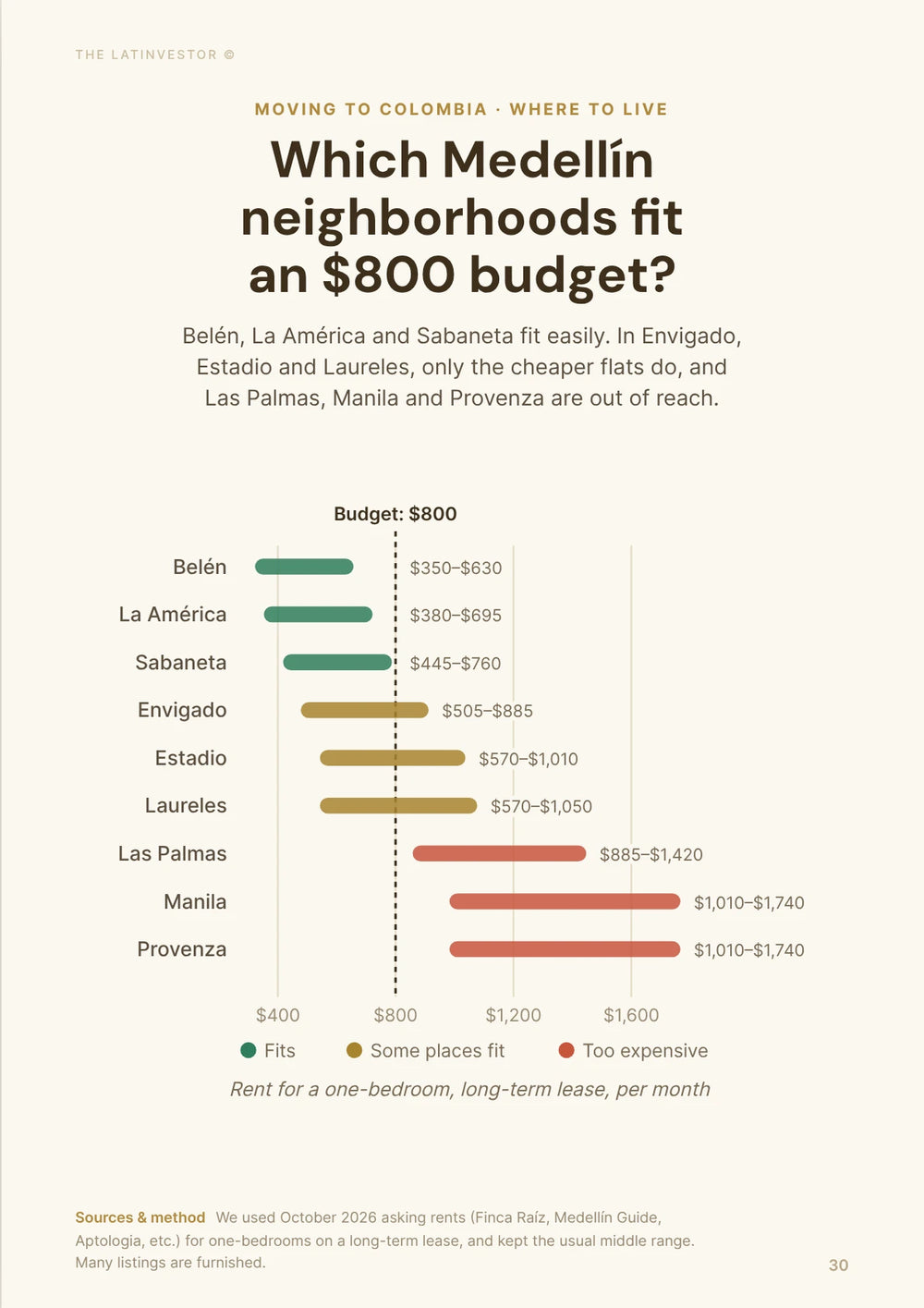
Rent is Cali's big advantage: a central one-bedroom costs about COP 1.49 million on Numbeo, roughly 40% less than in Medellin. A one-bedroom in El Penon rents for about COP 2.4 million.
A modest single life costs COP 3 to 4 million a month, and an upscale one with a large apartment, private healthcare and a car COP 10 to 14 million, by our estimate.
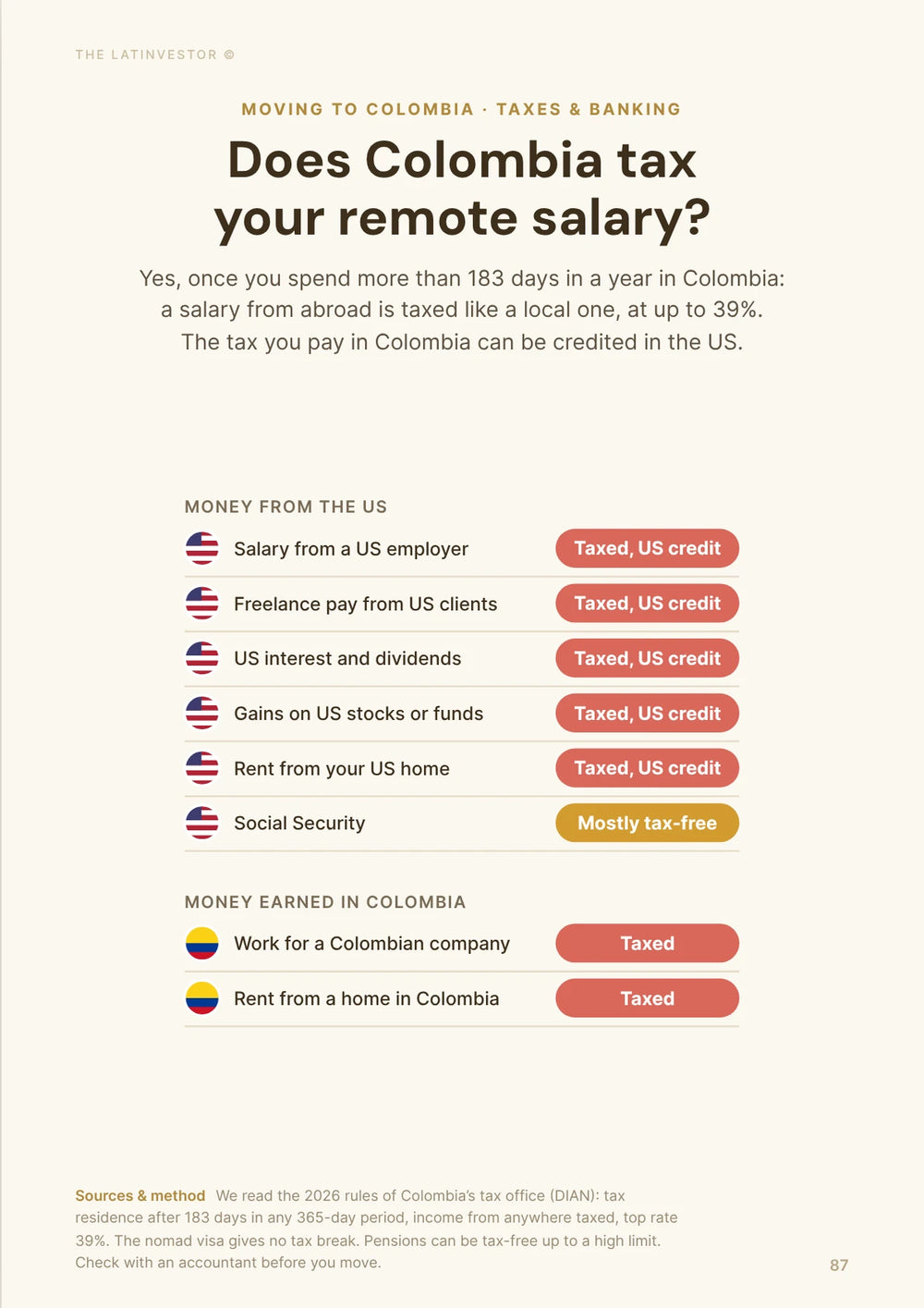
Income tax is lighter than the 39% top rate suggests: on COP 120 to 180 million a year, a salaried tax resident pays roughly 4% to 9% of gross salary. After 183 days in Colombia, your worldwide income is taxed.
Most foreigners in Cali are Venezuelan, and other expats are few. They come for salsa, partners and lower costs, and attract fewer pure retirees than Medellin.
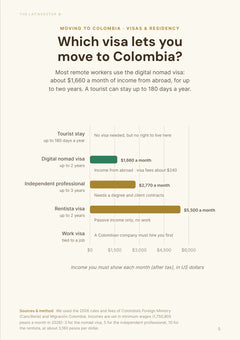
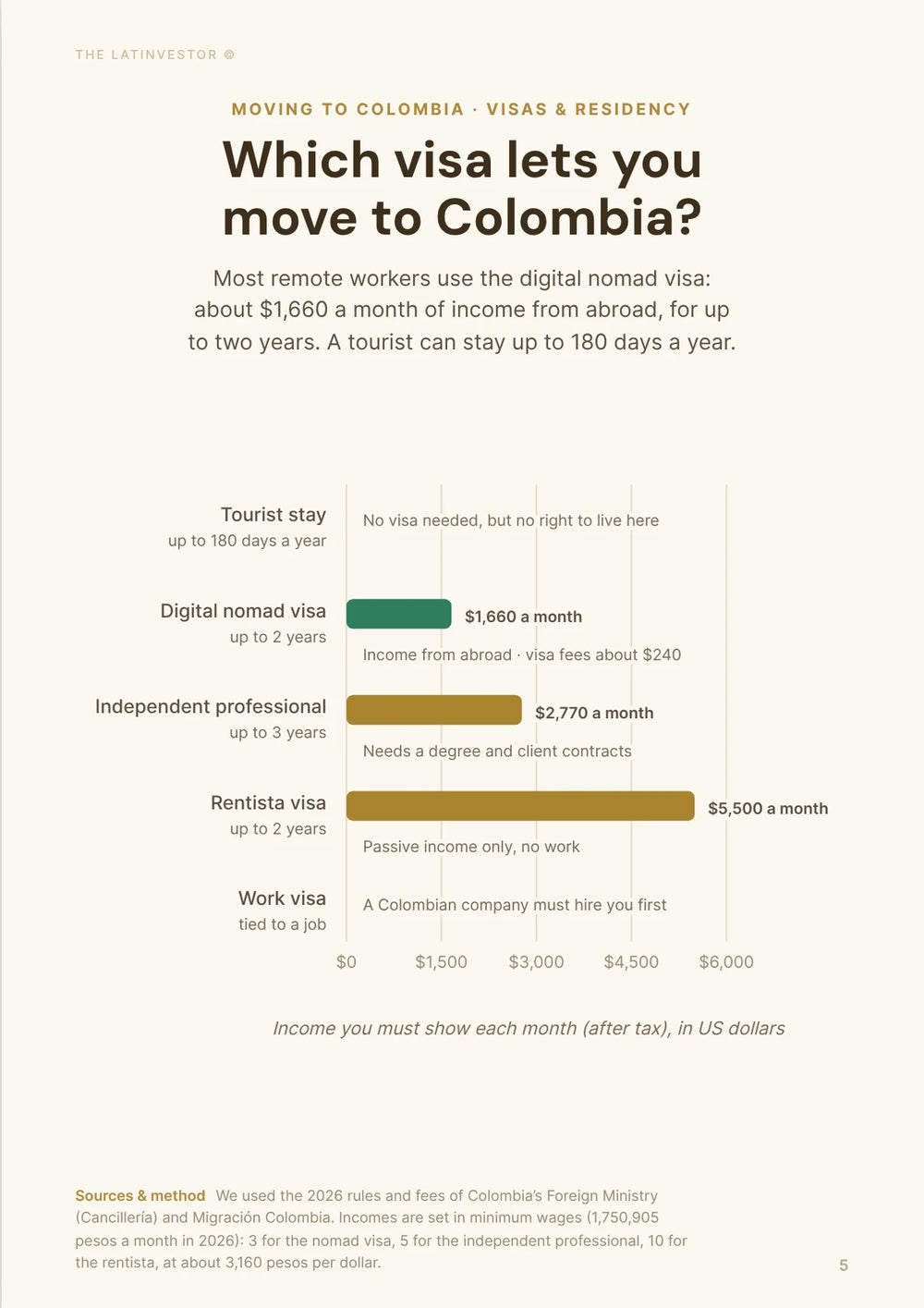
The digital nomad visa needs COP 5,252,715 a month in 2026, three times the minimum wage, and lasts up to two years. Other expats use M visas for work, marriage or pension income.
Cancilleria aims to decide visas within 30 calendar days after the study fee is paid. Permanent residency comes after five years on an M visa, and citizenship after five more years as a resident.
Local jobs are scarce without Spanish. By our estimate, expat salaries range from COP 3 to 40 million a month, against a minimum wage of COP 1,750,905, and visa sponsorship is less common than in Bogota.
Expats love the salsa scene, the warm weather (rarely below 20°C) and easy weekend trips to the Pacific and the coffee region. They dislike hiding their phone on the street and slow, Spanish-only paperwork.
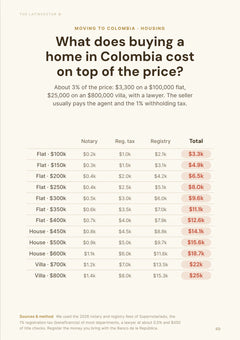
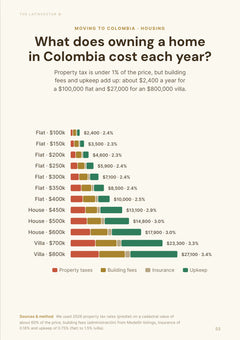
Foreigners can buy property like locals. Apartments ask about COP 4.3 million per m² on average, COP 5.3 million in Ciudad Jardin and COP 6.3 million in Pance. Mortgages exist, at about 12.4% to 16.4%, with at least 30% down.
Bottom line: Cali gives you more for your money than Medellin, but only if you pick a safe neighborhood first, budget for private health insurance, and keep good street habits.

What are quality of life, healthcare, schools and safety like in Cali?
Is quality of life getting better or worse in Cali in 2026?
In 2026, quality of life in Cali is mixed: the economy is stable, but inflation has picked up again (prices in Cali rose 6.76% over the year to September 2026, against 6.29% nationally), and progress on safety has stalled.
The homicide count had been the big improvement, falling to 938 in 2024, but it rose 14% to 1,065 in 2025, the highest in four years. By the end of September 2026, Cali had recorded 846 homicides, although September alone was 16% below September 2025.
However, the persistent challenge that remains in Cali is the street-level security perception, as petty theft and the need to carefully manage where and when you travel continues to shape daily life far more than in cities like Bogota or Medellin.
Are hospitals good in Cali in 2026?
In 2026, Cali's top private hospitals meet or exceed North American and Western European standards, with two institutions holding internationally recognized accreditations including the prestigious Joint Commission International certification.
The hospitals expats most commonly recommend in Cali are Fundacion Valle del Lili, which is often the default choice for complex medical care, and Clinica Imbanaco, known for its specialty centers and English-speaking staff availability, which ranked 11th among Latin America's hospitals in the 2026 IntelLat ranking.
A standard doctor consultation in Cali in 2026 costs between COP 80,000 and COP 160,000 (approximately 25 to 50 USD or 22 to 45 EUR) for a general practitioner in private practice, while specialist visits usually cost more, depending on the specialty and the clinic.
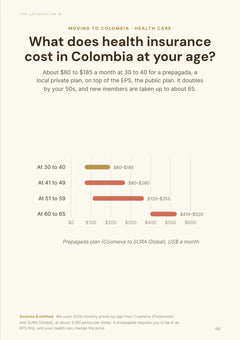
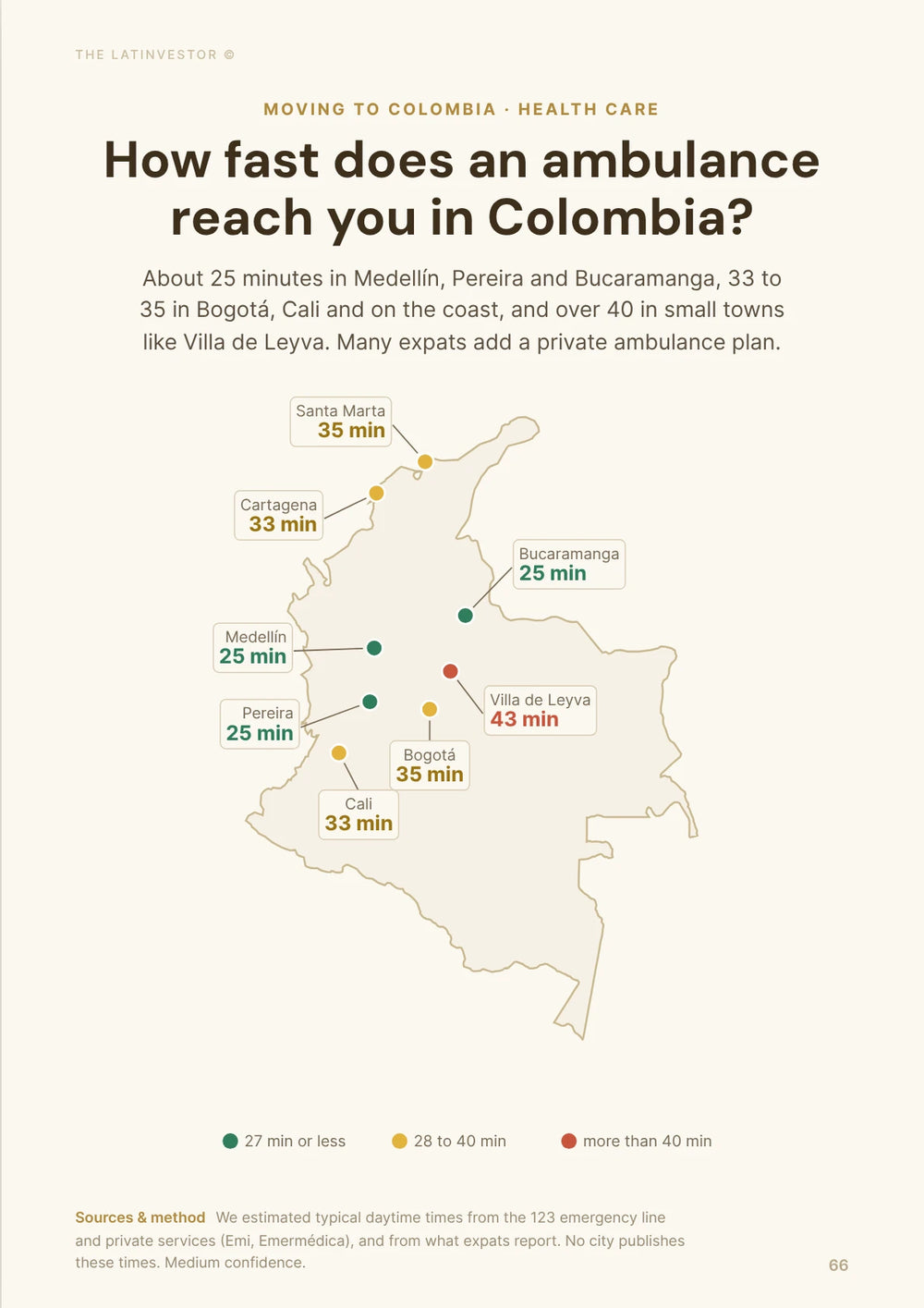
Private health insurance is strongly recommended for expats in Cali because while the public EPS system provides affordable coverage, it involves longer wait times and Spanish-heavy bureaucracy that most foreigners find challenging to navigate without local support.
Are there any good international schools in Cali in 2026?
In 2026, Cali has a small but solid selection of about seven international or bilingual schools that meet genuine international curriculum standards, which is fewer options than Bogota or Medellin but enough to find a good fit for most expat families.
The international schools most popular among expat families in Cali are Colegio Bolivar, widely considered the flagship American-style international school, Colegio Aleman de Cali (Deutsche Schule) for German curriculum, and Colegio Colombo Britanico for British-influenced bilingual education.
Annual tuition fees for international schools in Cali vary a lot by school and grade, and most schools do not publish them online: one bilingual school, Aspaen Liceo Tacurí, lists COP 17.7 million to COP 21.5 million a year (approximately 5,550 to 6,750 USD or 4,950 to 6,050 EUR), and top-tier schools like Colegio Bolivar usually cost more once enrollment fees and extras are included. For 2027, the Ministry of Education allows private schools to raise their fees by up to 11.24%.
Waitlists for popular international schools in Cali can be long, especially for early years and key transition grades, so families should plan at least 6 to 12 months ahead, while public schools are generally not a practical option for expat children due to language barriers and curriculum differences.
Is Cali a dangerous place in 2026?
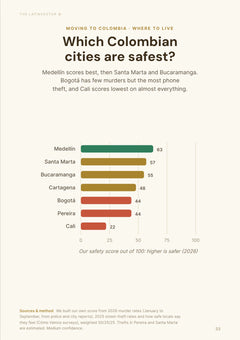
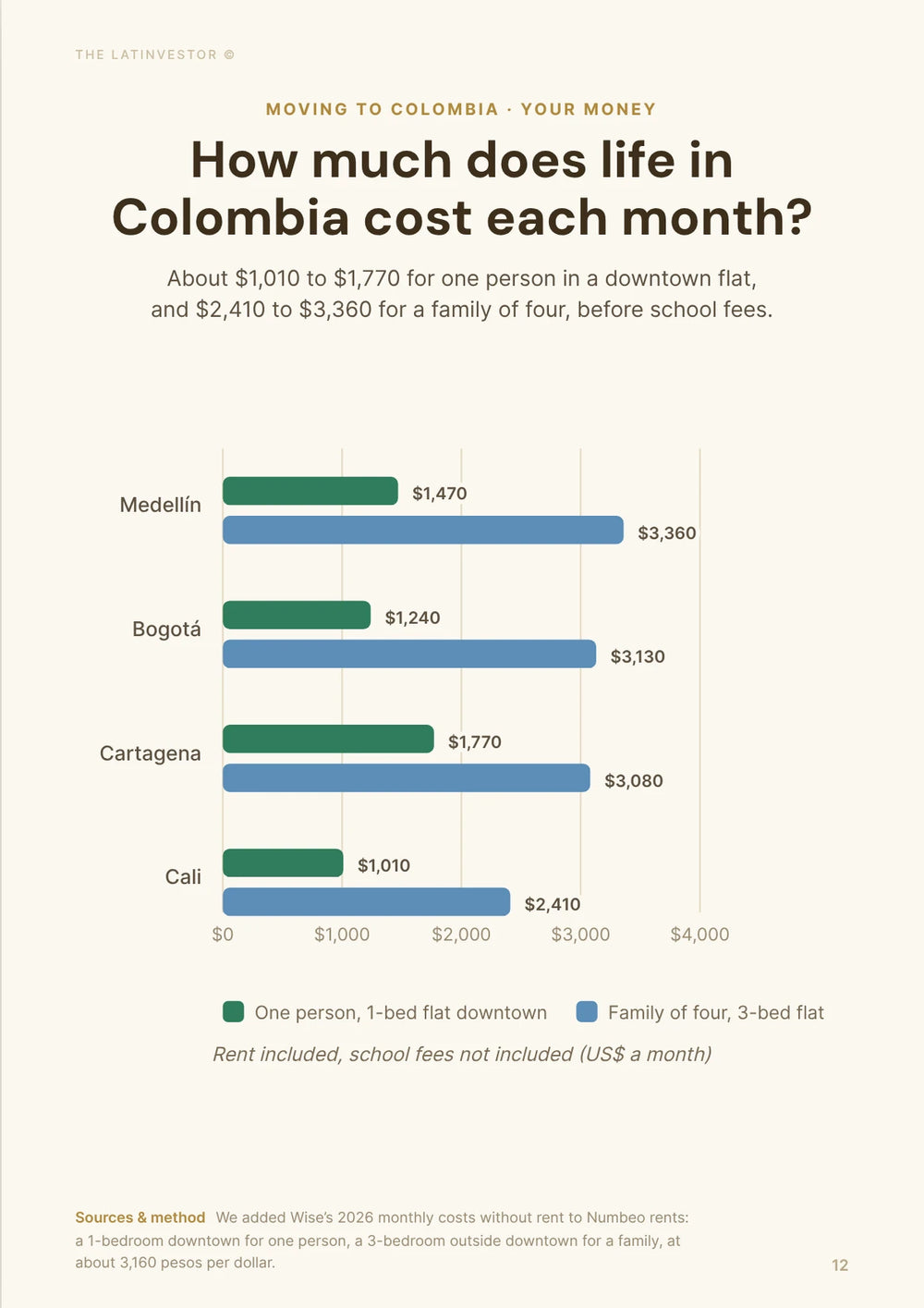
In 2026, Cali remains a city that requires more active safety management than Bogota or Medellin, with 1,065 homicides in 2025, with crime concentrated in specific neighborhoods while tourist and expat-favored areas are considerably safer when basic precautions are followed.
The most common safety concerns for expats in Cali are phone snatching on the street (locals call it "not giving papaya," meaning do not make yourself an easy target), taxi-related scams when not using apps, and the risk of scopolamine drugging in nightlife settings, which requires never accepting drinks or items from strangers.
The neighborhoods generally considered safest for expats to live in Cali are Pance and Ciudad Jardin in the south, which offer gated communities and family-friendly environments, and Granada and El Penon in the west-central area, which have walkable streets, restaurants, and secure apartment buildings.
Women can live alone safely in Cali, and many do, particularly in secure buildings in the south and west zones, though the common recommendations include using ride-hailing apps at night instead of walking, keeping phones out of sight on the street, and being extra cautious about meeting people from dating apps.
How much does everyday life cost in Cali in 2026?
What monthly budget do I need to live well in Cali in 2026?
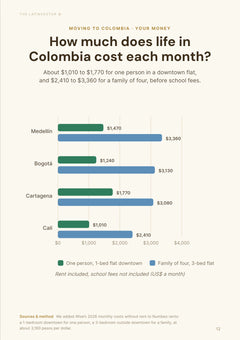
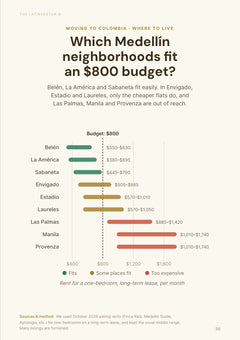
In 2026, by our estimate, a single expat can live comfortably in Cali on a budget of COP 5 to 7 million per month (approximately 1,570 to 2,200 USD or 1,400 to 1,970 EUR), which covers a secure apartment in a good neighborhood (a one-bedroom in El Peñón rents for about COP 2.4 million, or about $760, and in Ciudad Jardín about COP 2.1 million, or about $660), eating out regularly, and using ride-hailing for transport.
For a more modest but still decent lifestyle in Cali, a single person can manage on COP 3 to 4 million per month (around 940 to 1,260 USD or 840 to 1,120 EUR), living in a mid-range neighborhood, cooking at home frequently, and using public transport.
A more comfortable or upscale lifestyle in Cali, including a large apartment in premium areas like Ciudad Jardin, private healthcare, regular dining at upscale restaurants, and a car, requires COP 10 to 14 million per month (approximately 3,150 to 4,400 USD or 2,800 to 3,950 EUR) for a single person or couple, as a large apartment in Ciudad Jardín alone often rents for COP 5.75 million (about $1,810).
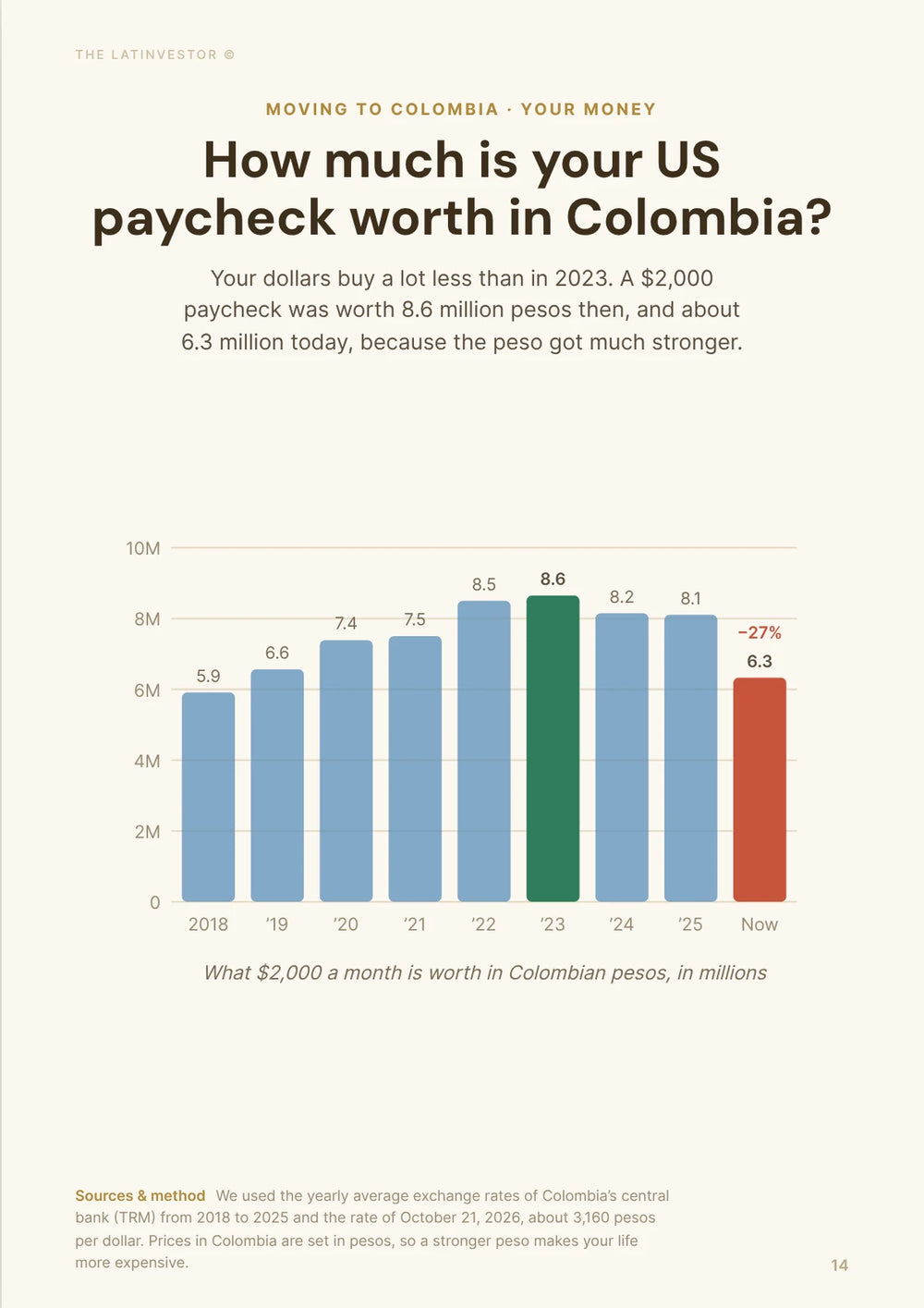
The peso has also strengthened a lot in 2026: in October 2026, a dollar buys about 3,175 pesos, roughly 15% fewer than in January, so budgets in dollars or euros stretch less than they did a year ago.
Housing typically takes up the largest share of a monthly budget in Cali, but what makes Cali unique compared to Bogota or Medellin is that rent is notably lower: a central one-bedroom rents for about COP 1.49 million (about $470) on Numbeo, roughly 25% less than in Bogota and 40% less than in Medellin, meaning expats can allocate more toward lifestyle expenses like dining out and weekend trips to the nearby Pacific coast or coffee region.
What is the average income tax rate in Cali in 2026?
In 2026, by our estimate, a salaried middle-income expat who is tax resident and earns around COP 120 to 180 million annually (roughly 38,000 to 56,500 USD or 33,500 to 50,500 EUR) in Cali pays an effective income tax rate of approximately 4 to 9 percent of gross salary, after mandatory pension and health contributions and the standard 25% exempt income (capped at 790 UVT, about COP 41.4 million in 2026).
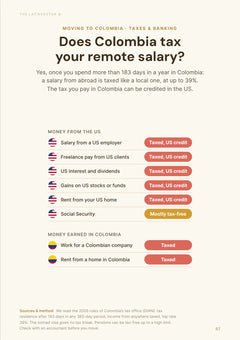
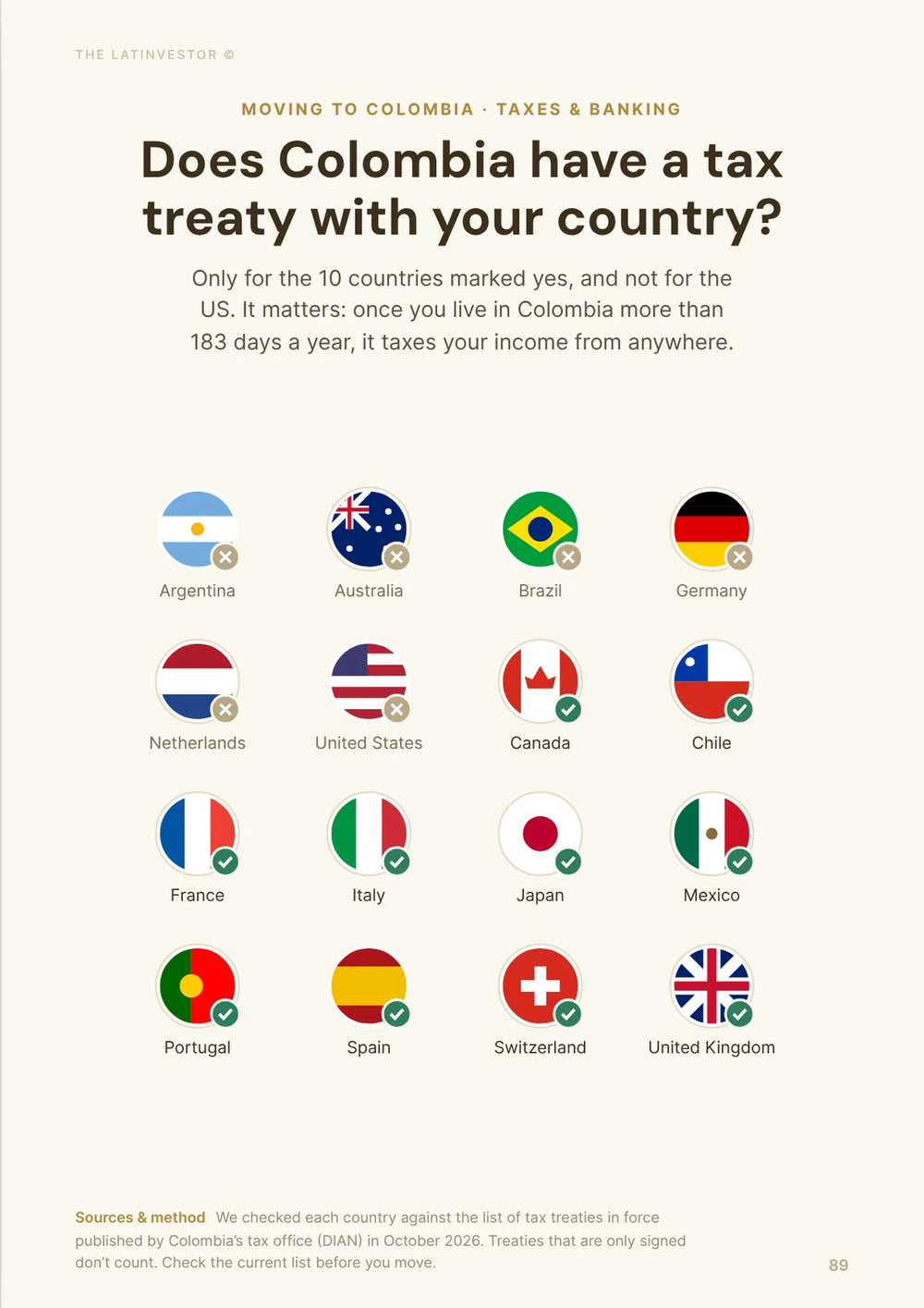
Colombia's income tax brackets for residents range from 0 percent on the lowest incomes up to a top marginal rate of 39 percent for very high earners, but the effective rate is significantly lower than the marginal rate because the system allows deductions for pension contributions, health insurance, dependents, and housing interest. You become tax resident after more than 183 days in Colombia within any 365-day period, and residents are taxed on their worldwide income, including remote work for foreign clients.
What kind of foreigners actually live in Cali in 2026?
Where do most expats come from in Cali in 2026?
In 2026, the largest group of foreign residents in Cali by far is Venezuelans who migrated during the humanitarian crisis, followed by Americans, Spaniards, and other Latin Americans who came for business, relationships, or the famous salsa culture.
The total foreign resident population in Cali is relatively small compared to Medellin or Cartagena; no recent official count by nationality is published for the city, but Venezuelans make up most of it and the community of expats from other countries is much smaller.
The main reasons expats are drawn to Cali include the world-renowned salsa dancing scene, binational relationships with Colombian partners, work in the region's agro-industry and manufacturing sectors, and the significantly lower cost of living compared to other Colombian expat hubs.
The expat population in Cali is a mix of working professionals, digital nomads taking advantage of the affordable lifestyle, and a smaller group of retirees, though the city attracts fewer pure retirees than places like Medellin because Cali requires more active safety management.
Where do most expats live in Cali in 2026?
In 2026, the neighborhoods where expats most commonly live in Cali are Ciudad Jardin and Pance in the south, which offer suburban security and green spaces, and Granada and El Penon in the west-central area, which provide a more urban, walkable lifestyle with restaurants and nightlife nearby.
What makes these Cali neighborhoods attractive to expats is the combination of secure building access, proximity to good restaurants and services, and the ability to manage daily life without constantly worrying about safety, which is a more pressing concern in Cali than in other Colombian cities.
San Antonio, the historic bohemian neighborhood, is an emerging area that attracts younger expats and digital nomads who appreciate its charm and art scene, though safety varies block by block especially at night, so it requires more local knowledge to navigate well.
Are expats moving in or leaving Cali in 2026?
In 2026, Cali is seeing a steady but modest inflow of purpose-driven foreigners rather than a large wave, with most newcomers arriving through relationships, specific job opportunities, or a genuine passion for salsa culture rather than random digital nomad exploration.
The main factor driving expats to move to Cali right now is the cost advantage, as the city offers significantly lower rents and living expenses than Medellin while still providing access to excellent private healthcare, decent infrastructure, and proximity to nature.
The main factor causing some expats to leave Cali is the security management overhead, as the need to constantly plan routes, avoid certain areas, and remain vigilant wears on some people over time, especially those who moved from safer expat-friendly cities.
Compared to Medellin, which has become saturated with digital nomads and experienced significant rent inflation (a central one-bedroom rents for about COP 2.58 million there, or about $810, against COP 1.49 million in Cali), Cali remains under the radar and offers better value, though it will likely never become as mainstream because it demands more adaptation and local integration.
What paperwork do I need to move to Cali in 2026?
What visa options are popular in Cali in 2026?
In 2026, the three most popular visa types for expats moving to Cali are the V (Visitor) Digital Nomad visa for remote workers, the M (Migrant) visa for those with work contracts, spousal relationships, or pension income, and the R (Resident) visa for long-term settlement after qualifying time.
The most commonly used expat visa, the Digital Nomad visa, requires proof of remote work for a foreign company, a minimum monthly income of COP 5,252,715 in 2026 (about $1,650), which is three times the minimum wage, valid health insurance covering Colombia, and bank statements from the past three months.
Colombia does offer an official digital nomad visa (Visa V Nomadas Digitales) introduced in 2022, which allows remote workers to stay legally for up to two years while working for foreign clients, and it has become one of the most accessible digital nomad visas in Latin America due to its relatively low income threshold.
The Digital Nomad visa is granted for up to two years depending on the reviewing officer and costs about COP 752,700 in study and issuance fees (about $240), and renewal requires reapplying before expiration with updated documentation, though many expats eventually transition to an M visa for more stability.
How long does it take to get residency in Cali in 2026?
In 2026, Cancilleria's service standard is a decision within up to 30 calendar days after the study fee is paid, though this varies based on document completeness and the specific visa category, and it can take longer if more documents or an interview are requested.
Common factors that can delay the residency application process in Cali include incomplete document translations, missing apostilles on foreign documents, bank statements that do not clearly show the required income threshold, and applying during peak periods when the Ministry receives high volumes.
To become eligible for permanent residency (R visa) in Colombia, an expat must typically hold an M visa continuously for five years, though certain categories like investors or parents of Colombian children may qualify sooner, and citizenship then requires five more years as a resident (R visa) holder, or less for spouses of Colombians and Latin Americans, plus passing a Spanish and civics exam.
How hard is it to find a job in Cali in 2026?
Which industries are hiring the most in Cali in 2026?
In 2026, the industries hiring the most in Cali are services and BPO (business process outsourcing) operations, the healthcare sector which benefits from Cali's strong hospital infrastructure, and agro-industry and manufacturing which are deeply rooted in Valle del Cauca's economy as a major sugar and coffee processing region.
Getting hired in Cali without speaking Spanish is generally unrealistic for most local employment opportunities, as the city is less internationally oriented than Bogota and most employers expect fluent Spanish, though remote workers earning foreign income can thrive without strong Spanish skills.
The types of roles most accessible to foreign job seekers in Cali are English teaching positions, remote roles at multinational companies with Colombian operations, specialized consulting in industries like healthcare or agribusiness, and entrepreneurial ventures where the foreigner brings unique skills or capital.
What salary ranges are common for expats in Cali in 2026?
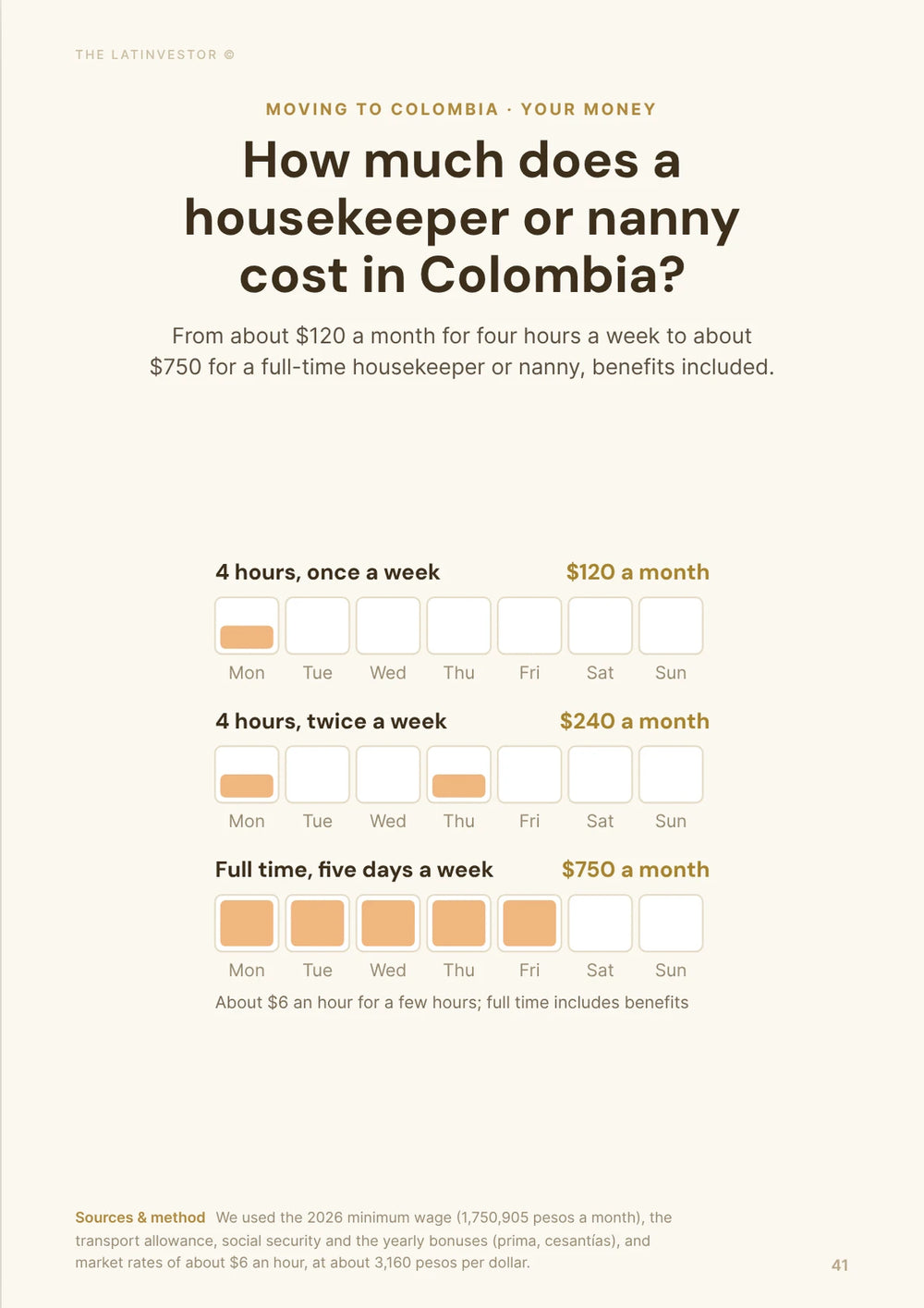
In 2026, by our estimate, typical salaries for expats working in Cali range widely from COP 3 to 40 million per month (approximately 940 to 12,500 USD or 840 to 11,000 EUR), depending heavily on whether the role is local or with a multinational and whether it requires specialized skills. For reference, Colombia's minimum wage is COP 1,750,905 a month in 2026 (about $550).
Entry-level and mid-level expat positions in Cali, such as English teaching or junior roles at local companies, typically pay COP 3 to 8 million per month (approximately 940 to 2,500 USD or 840 to 2,250 EUR), which requires a modest lifestyle but is livable given Cali's low costs.
Senior or specialized expat roles at multinationals, international NGOs, or in technical fields like engineering or healthcare can command COP 15 to 40 million per month (approximately 4,700 to 12,500 USD or 4,200 to 11,000 EUR), though such positions are less common in Cali than in Bogota.
Employers in Cali sponsor work visas less frequently than in Bogota simply because fewer multinationals have large operations there, so expats should treat visa sponsorship as possible but not guaranteed and consider alternative visa pathways like the digital nomad or investment visa.
What's daily life really like for expats in Cali right now?
What do expats love most about living in Cali right now?
The things expats love most about living in Cali are the authentic salsa culture that permeates daily life unlike anywhere else in the world, the warm "eternal summer" climate that rarely drops below 20°C, and the access to genuinely excellent private healthcare at a fraction of US or European costs.
The lifestyle benefit most frequently praised by expats in Cali is the city's location as a gateway to incredible nature, with the Farallones mountains, Pacific coast beaches, and coffee region all within a few hours, making weekend adventures easy and affordable.
The practical advantage expats appreciate most in Cali is the cost of living, with rents about 40 percent lower than in Medellin for a central one-bedroom, allowing people to enjoy a higher standard of living on the same budget or save more while maintaining comfort.
The social and cultural aspect that makes Cali particularly enjoyable for expats is the warmth and openness of Calenos, who are known throughout Colombia for their friendliness and love of celebration, making it easier to build genuine local friendships than in more reserved cities.
What do expats dislike most about life in Cali right now?
The top complaints expats have about living in Cali are the constant need for security awareness that affects daily routines, the heavy traffic congestion especially during peak hours on main corridors, and the challenge of navigating bureaucracy entirely in Spanish with limited English support.
The daily inconvenience that frustrates expats the most in Cali is the "phone hiding" culture, where you cannot casually use your smartphone on the street or in taxis without risking theft, which feels restrictive for people accustomed to freely browsing their phones while walking.
The bureaucratic issue that causes the most headaches for expats in Cali is the EPS health system enrollment process, which involves multiple office visits, extensive paperwork, and Spanish-only interactions that can take months to complete for someone without local help or fluent Spanish.
These frustrations are manageable rather than deal-breakers for most expats who commit to Cali, as the trade-off of lower costs, great healthcare access, and authentic culture compensates for the inconveniences, but they do filter out people who want an "easy" expat experience.
What are the biggest culture shocks in Cali right now?
The biggest culture shocks expats experience when moving to Cali are how dramatically safety can change from one block to the next within the same neighborhood, the importance of building relationships before getting things done in business or bureaucracy, and the intensity of the nightlife and party culture.
The social norm that surprises newcomers the most in Cali is the concept of "Colombian time," where meetings and social events routinely start 30 minutes to an hour late and this is considered completely normal, which requires a mental adjustment for punctuality-focused foreigners.
The aspect of daily routines that takes the longest for expats to adjust to in Cali is the midday heat management, as locals structure their days around avoiding the intense afternoon sun, with many businesses closing for extended lunch breaks and social activities happening later in the evening than in Northern countries.
Can I buy a home as a foreigner in Cali in 2026?
Can foreigners legally own property in Cali in 2026?
In 2026, foreigners can legally own property in Colombia including Cali with full ownership rights, as Colombian law does not restrict foreign property ownership for residential or commercial real estate in most areas.
The specific conditions that apply to foreigners buying property in Cali are primarily practical rather than legal: you will need to register the foreign investment with the Banco de la Republica if you want repatriation protections for your funds, and all transactions must go through a notary with proper title verification.
Foreigners in Cali can own apartments, houses, and commercial properties without restriction, and while rural land near border areas has some limitations, these do not affect typical urban or suburban property purchases in the Cali metropolitan area.
What is the average price per m² in Cali in 2026?
In 2026, the median asking price for apartments in Cali is about COP 4.3 million per square meter (approximately 1,350 USD or 1,210 EUR), and it rises to about COP 5.3 million in Ciudad Jardin (approximately 1,670 USD or 1,490 EUR) and COP 6.3 million in Pance (approximately 1,980 USD or 1,770 EUR per square meter).
Property prices in Cali have trended moderately upward over the past two to three years, roughly tracking inflation, though the city has not experienced the dramatic price spikes seen in Medellin's popular neighborhoods, making Cali still relatively affordable for buyers.
Do banks give mortgages to foreigners in Cali in 2026?
In 2026, mortgages for foreigners in Cali are available but limited, as most Colombian banks prefer applicants with residency visas, proven local income, and strong documentation, making the process more complex than for Colombian nationals.
The banks in Cali most known to work with foreign buyers are Bancolombia, Davivienda, and BBVA Colombia, though each has different requirements and appetite for foreign borrowers depending on visa status and income documentation.
Typical mortgage conditions for foreigners in Cali include a down payment of at least 30 percent (banks finance up to 70% of a standard, non-social-housing home, and often less for foreigners), interest rates of about 12.4 to 16.4 percent on peso loans (non-VIS rates in early October 2026), and terms of 15 to 20 years.
To qualify for a mortgage as a foreigner in Cali, you typically need a valid long-term visa (M or R category preferred), proof of stable income whether local or foreign, bank statements showing financial capacity, and sometimes a Colombian credit history, which many foreigners lack initially.
Our methodology
This article looks at what it is like to live in Cali as an expat: quality of life, healthcare, schools, safety, monthly budgets, income tax, who the expats are and where they live, visas and residency, jobs and salaries, daily life, and buying a home as a foreigner.
Budgets and salary ranges are our own estimates, built from rents, everyday prices and local pay data. Rents come from Numbeo and Aptologia listings, living costs from Wise and Expatistan, home prices from Colombia Bound's analysis of asking prices, and mortgage rates from Superfinanciera data. Inflation comes from DANE, homicide counts from the city's security figures reported by El País and Caracol Radio, and hospital rankings from the Health Ministry.
Visa and residency rules come from Cancilleria and Migracion Colombia, with the 2026 income thresholds set as multiples of the minimum wage. Tax rules come from DIAN, the 2026 UVT value and PwC, and our effective tax rate assumes a salaried tax resident using the standard 25% exempt income. School information comes from the schools themselves, Doris and the Ministry of Education.
We checked these figures in October 2026. Peso amounts are converted at about 3,175 pesos per US dollar and 3,560 pesos per euro (October 2026).
Some points have no reliable recent figure, such as the number of foreigners in Cali by nationality, expat salaries, specialist visit prices or the fees of each international school. There we gave a range labeled as our estimate, described the situation without a number, or left the number out. Asking prices are not final sale prices, and your own costs will depend on your neighborhood, your family and your habits.
Key sources used for this analysis include DANE, Banco de la Republica, Cancilleria, MinSalud, Policia Nacional, Medicina Legal, Cali Como Vamos, Lonja de Propiedad Raiz de Cali, Migracion Colombia, Acreditacion en Salud, DANE inflation figures (Portafolio, September 2026), El País Cali on 2025 homicides, Cali security figures for September 2026 (Caracol Radio), Health Ministry on the 2026 IntelLat hospital ranking, Doctoralia, Doris international school list, Ministry of Education 2027 school fee rules, Numbeo, Expatistan, Wise, Aptologia, Colombia Bound, Superfinanciera mortgage rates (La República), Cancilleria digital nomad visa, DIAN 2026 UVT resolution, PwC Colombia tax summaries and official TRM exchange rate (Portafolio).