Summary
Is Bogotá a good place to live as an expat? Yes, for most people who earn well, speak some Spanish and keep daily life in one part of the city. In 2025, the city welcomed almost 2 million international tourists, about 6% more than a year earlier.
Visitor numbers paused in 2026, down 5.1% from January to July, but Bogotá keeps getting easier for foreigners to enter, stay in and navigate.
Security is improving but not relaxed: 14.9% of residents were victims of a crime in 2025, down from 17.7% in 2023, and personal theft makes up about three-quarters of cases.
Where you live matters most. Chapinero, Rosales, Chicó, Parque 93 and Usaquén cost more, but they cut commuting and make daily life much easier.
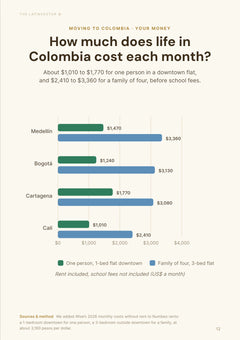
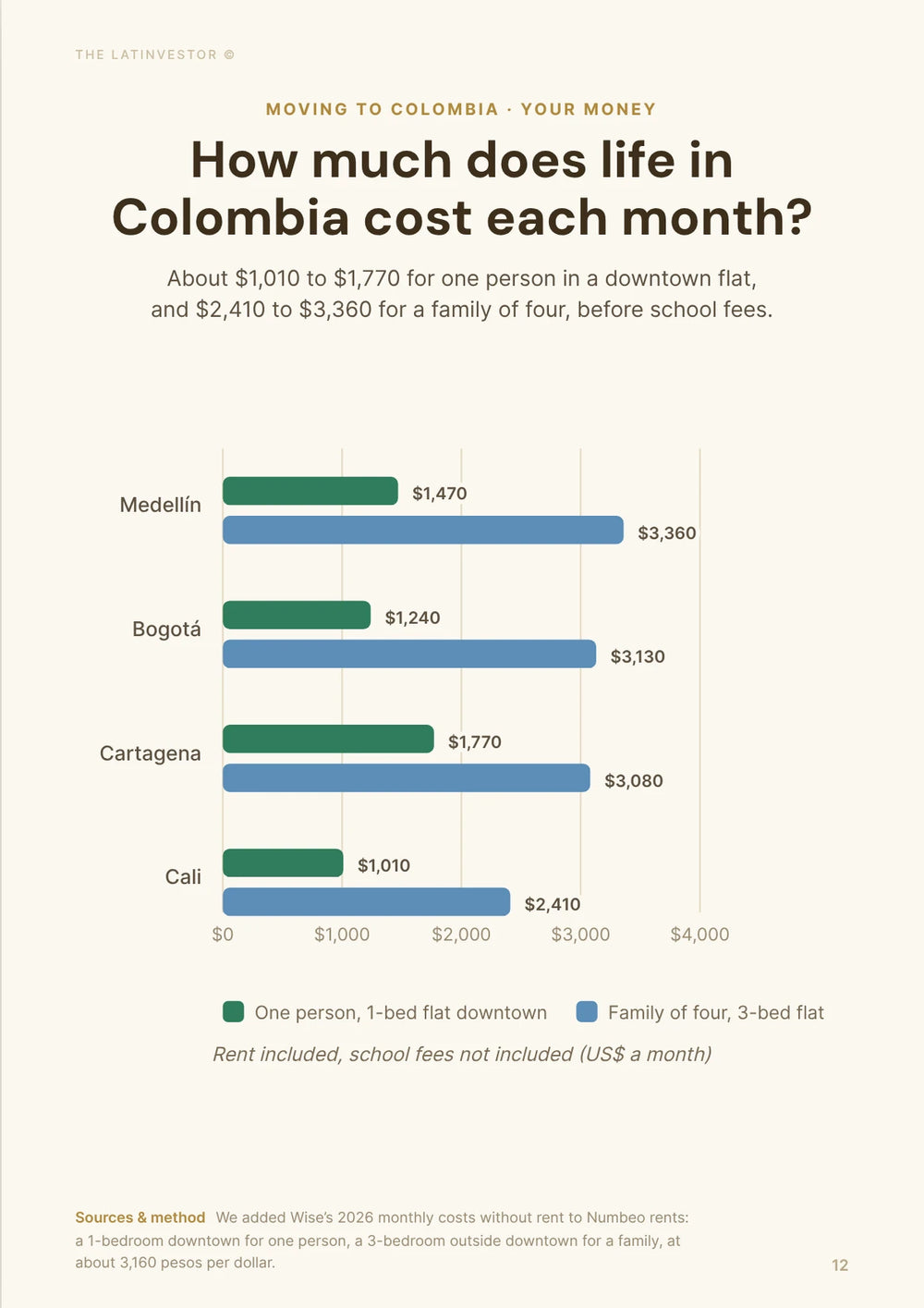
Bogotá is affordable on a foreign income, not cheap: Expatistan puts one person’s monthly costs, rent included, at about COP 5.3 million ($1,680), and a furnished 85 m² apartment in an expensive area at about COP 4.8 million.
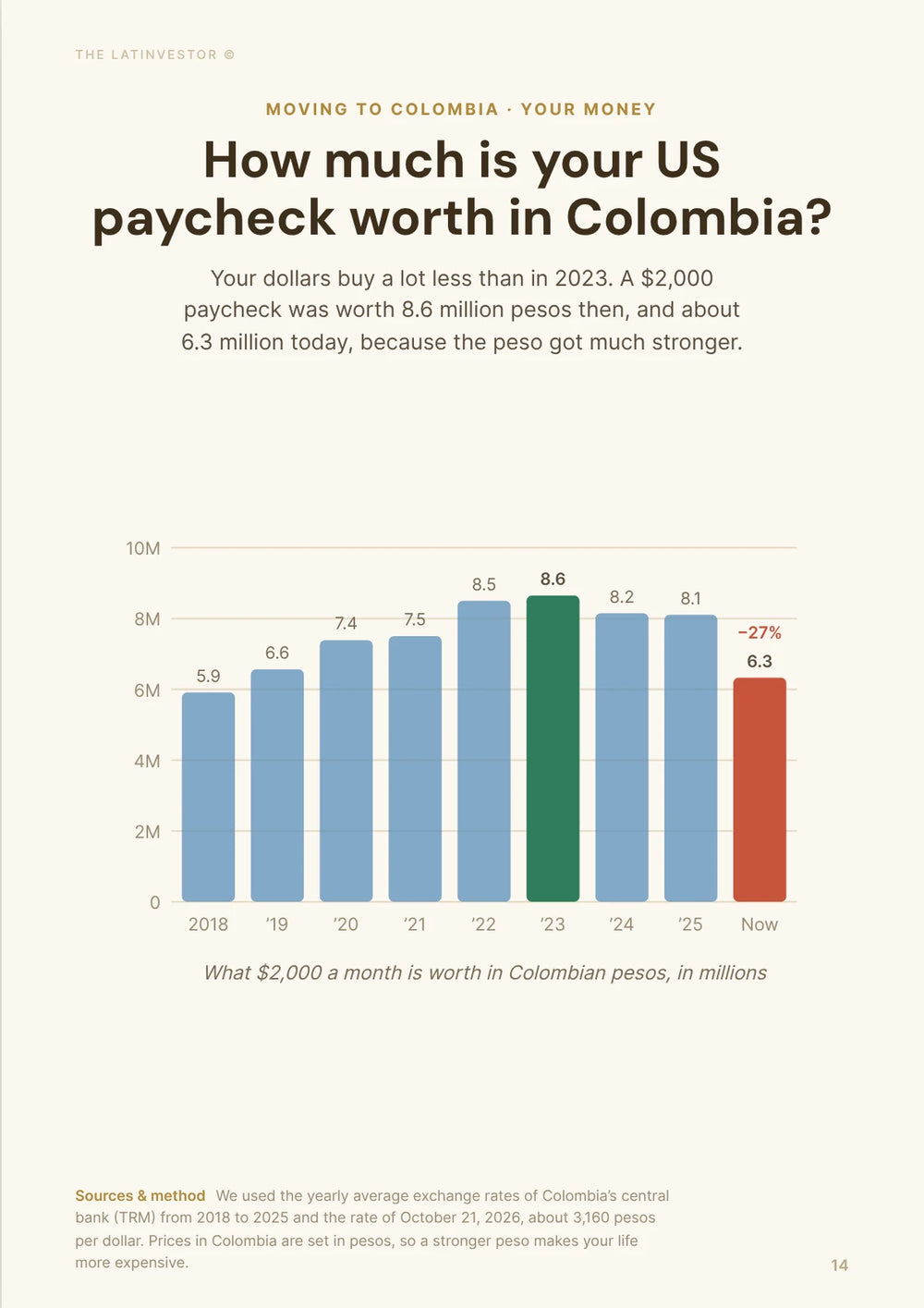
The peso gained roughly 19% against the dollar in 2026, so a dollar now buys about 3,175 pesos and stretches less far than in 2025.
Traffic is the biggest daily cost: an evening 10-kilometer drive takes almost 43 minutes, and Metro Line 1, 81.25% built in July 2026, is not running yet.
The weather suits people who dislike heat: at about 2,640 meters, Bogotá stays cool and often grey all year.
The city has depth for long stays, and 95.5% of foreign tourists say they want to come back.
Life in English is possible in a few premium places, but most of the city’s more than seven million residents live in Spanish.
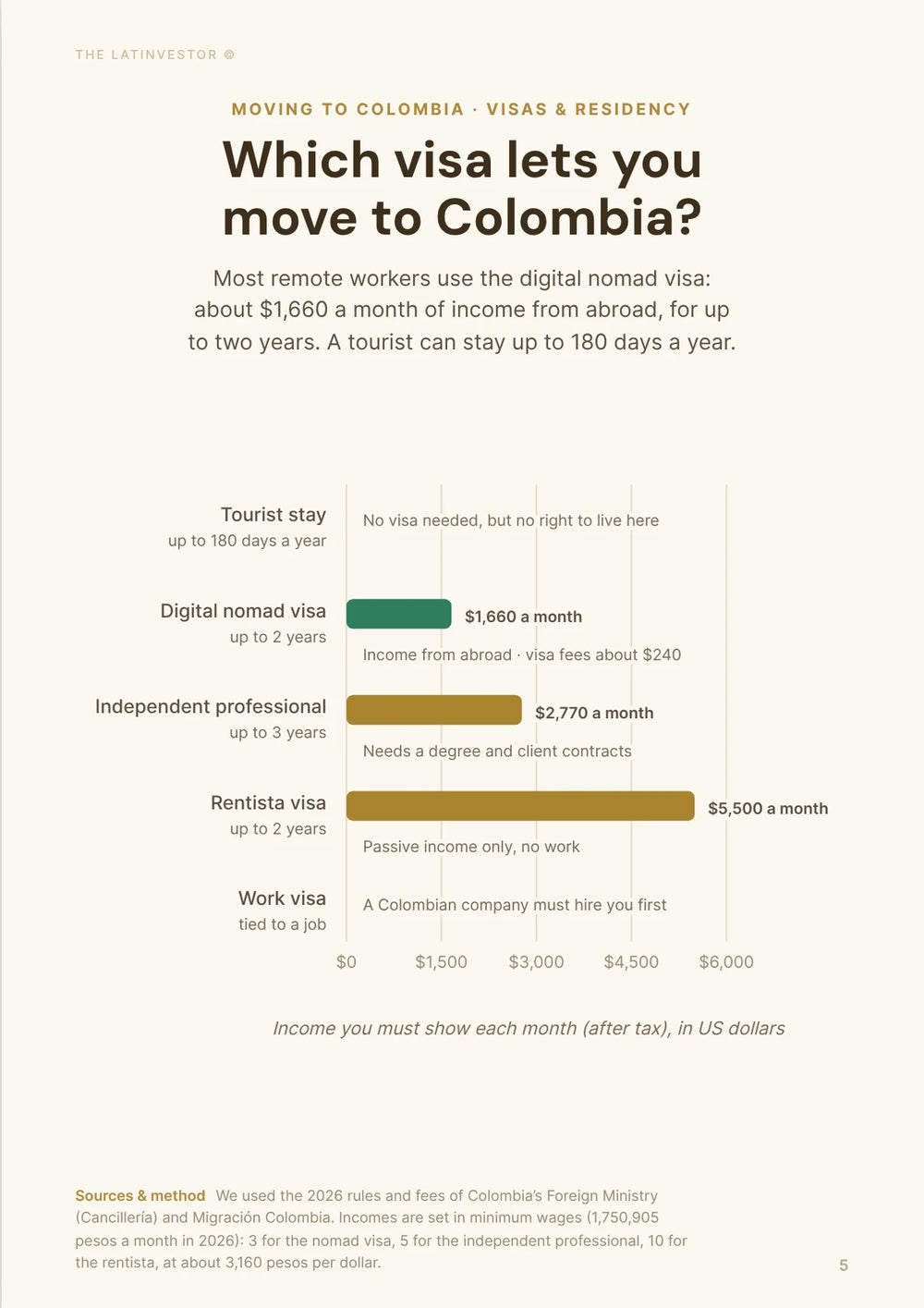
Remote workers get a good setup: UTC-5 all year and a digital nomad visa if they earn at least COP 5,252,715 a month.
Healthcare is a real strength: Fundación Santa Fe de Bogotá ranks 3rd in Latin America in the 2026 IntelLat ranking, and LaCardio 8th.
Families have many international schools, but fees are high: COP 51.1 million to COP 58.9 million a year at Colegio Anglo Colombiano.
Air quality is a downside: Bogotá’s PM2.5 baseline of around 16 µg/m³ is far above the WHO guideline of 5.
Bottom line: pick Medellín for ease and Bogotá for depth. Bogotá is even slightly cheaper than Medellín now, at COP 5.3 million against COP 5.9 million a month for one person, and works best for remote workers, Spanish speakers and well-funded families.

Is Bogotá actually getting better for expats?
Bogotá is a more attractive expat city today than it was a few years ago, although the improvement is much clearer in international connectivity and local amenities than in everyday mobility or security.
Bogotá received almost 2 million international tourists in 2025, according to the city's Tourism Observatory, around 6% more than a year earlier under its traveller-survey methodology. That was also above the roughly 1.90 million recorded before the pandemic in 2019. International tourism has therefore moved beyond a simple post-pandemic recovery.
The 2026 numbers are more mixed. International tourist arrivals were down 5.1% year over year between January and July, at 1,039,025, according to the Tourism Observatory. That looks more like a pause in visitor growth after a record year than evidence that foreigners are losing interest in Bogotá.
Tourism infrastructure has expanded with that demand. The city had more than 14,000 active registered tourism providers by the spring, with tourist accommodation representing close to 60% of them. Tourism employment was also about 10% higher year over year in the latest available quarter.
None of those figures proves Bogotá is pleasant to live in. They do show that the city is becoming easier for foreigners to enter, stay in and navigate commercially. That removes some of the friction expats would have faced a decade ago.
Security and traffic have improved much less decisively. Those two problems still dominate our judgment of Bogotá as a place to live.
Is Bogotá safe enough for expats right now?
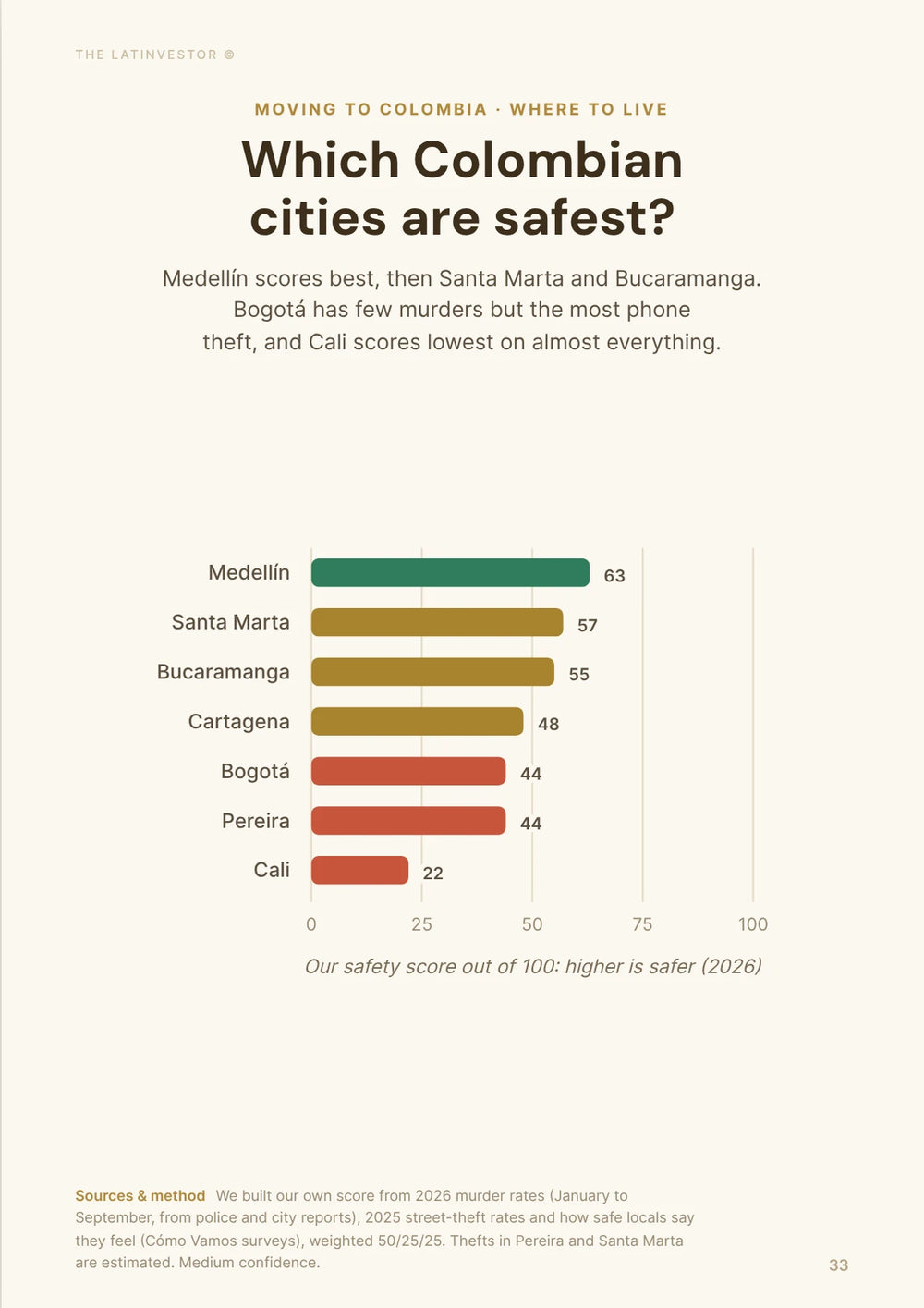
Bogotá is currently safe enough for many expats to build a normal life, but street crime is common enough that living there requires habits people from safer cities may find exhausting.
The Bogotá Chamber of Commerce's latest completed victimization survey found that 14.9% of respondents had experienced at least one crime during 2025. The figure was 15.3% a year earlier and 17.7% in 2023.
That three-year direction is encouraging. Neighborhood perceptions improved even faster: 43.6% of residents said their own neighborhood was safe, compared with only 31.8% a year earlier.
There is still a huge gap between improvement and comfort. About 66% of residents believed insecurity across Bogotá had increased, even though that figure has fallen from almost 88% in 2021. Personal theft accounted for nearly three-quarters of victimization captured by the latest survey.
Official crime data point the same way. Bogotá recorded 1,173 homicides in 2025, about 14.8 per 100,000 residents, and figures for the start of 2026 showed homicide falling 12.5%, from 176 cases during the first two months of 2025 to 154 during the same period in 2026. For the typical expat experience, we would still give that less weight than the theft numbers. A foreign resident is far more likely to adjust daily behavior because of phone theft, robbery or opportunistic crime than because of homicide risk.
In practice, that means keeping a phone away on certain streets, thinking about where to walk after dark, using ride-hailing more often and paying attention around ATMs and nightlife areas. Plenty of Bogotá residents do these things automatically. Expats need to decide whether they are comfortable doing the same.
| Bogotá security measure | 2023 | 2024 | 2025 | What we see |
|---|---|---|---|---|
| Victimization rate | 17.7% | 15.3% | 14.9% | Slowly improving |
| Residents saying insecurity increased | 76.0% | 69.3% | 66.0% | Improving, still very high |
| Residents calling their neighborhood safe | — | 31.8% | 43.6% | Strong improvement |
| Share of victimization involving personal theft | — | — | 74.7% | Main everyday risk |
Which Bogotá neighborhoods are actually good for expats?
For most expats, Bogotá becomes dramatically easier to live in once daily life is concentrated in Chapinero, Rosales, Chicó, Parque 93 or Usaquén.
The neighborhood decision affects far more than the apartment. It changes commuting time, walkability, restaurant access, perceived security and how often someone needs a car or ride-hailing app.
Chapinero gives younger professionals the best overall mix. Zona G, Quinta Camacho, Chapinero Alto and nearby areas put restaurants, cafés, gyms, nightlife and business districts relatively close together. Individual blocks can still feel very different, so visiting the exact street before signing a lease is important.
Rosales is calmer, greener and more expensive. Chicó and Parque 93 have a polished, corporate feel and work particularly well for people who want restaurants, offices and modern apartments within a compact area.
Usaquén makes more sense for many families. It has good restaurants and services but feels more residential than central Chapinero. Its weakness is obvious once someone regularly needs to travel south.
Teusaquillo deserves more attention from expats than it normally gets. It is central, greener and often offers more space for the money. The trade-off is a thinner concentration of the premium infrastructure foreigners often expect.
La Candelaria is excellent for museums, historic Bogotá and short stays. We would rarely make it the default recommendation for someone relocating without already knowing the city well.
Bogotá rewards a slightly counterintuitive housing strategy: paying more for location can improve quality of life enough to justify the extra rent.
| Area | Best fit | Feel | Cost level | Main drawback |
|---|---|---|---|---|
| Chapinero | Young professionals | Social, dense, central | High | Uneven street by street |
| Rosales | Higher-income professionals | Quiet, upscale | Very high | Price |
| Chicó / Parque 93 | Professionals, couples | Polished, convenient | Very high | Less local character |
| Usaquén | Families, couples | Residential | High | Far north |
| Teusaquillo | Value-conscious residents | Local, central, greener | Medium | Fewer premium expat services |
| La Candelaria | Culture-first short stays | Historic, lively by day | Medium | Less comfortable at night |
Is Bogotá still cheap for expats?
Bogotá is still affordable on a strong foreign income, but calling Bogotá a cheap Latin American capital now needs qualification.
Expatistan's October 2026 cost database estimates monthly expenses, rent included, at around COP 5.3 million (about $1,680) for one person and COP 10.6 million (about $3,350) for a family of four. That makes Bogotá cheaper than about 69% of the 95 cities in its worldwide sample.
The Latin American comparison tells a different story. The same database currently places Bogotá 5th most expensive of the 17 Latin American cities it tracks. It even estimates Bogotá slightly below Medellín, where one person spends about COP 5.9 million a month.
Ordinary local consumption remains attractive. Numbeo's October 2026 Bogotá data puts a simple restaurant meal around COP 25,000 (about $8), a mid-range dinner for two around COP 135,000 (about $43) and a regular cappuccino around COP 8,000. Expatistan puts a business-district lunch menu with a drink closer to COP 36,000.
Housing creates the biggest gap between local Bogotá and expat Bogotá. Expatistan's October 2026 furnished-rental estimates put an 85-square-meter apartment in an expensive area around COP 4.8 million (about $1,510) a month and a 45-square-meter studio around COP 3 million (about $950). Numbeo puts an ordinary central one-bedroom at about COP 2.5 million. Premium new buildings in Rosales, Chicó or Parque 93 can easily exceed those figures.
A foreigner earning $4,000 or $5,000 a month can still buy a level of services, dining and convenience that would cost much more in New York, London or Paris. Someone earning a local professional salary faces a much tighter equation.
The strong peso is the other change. It gained roughly 19% against the dollar in 2026 up to September, and a dollar now buys about 3,175 pesos (October 2026), so a dollar budget does not stretch as far as it did in 2025.
| Current Bogotá expense | Approximate level | What it tells us |
|---|---|---|
| Single-person monthly estimate | COP 5.3m | Manageable on foreign income |
| Family-of-four monthly estimate | COP 10.6m | School fees can push this much higher |
| Furnished 85 m², expensive area | ~COP 4.8m/month | Premium Bogotá costs real money |
| Furnished 45 m² studio, expensive area | ~COP 3.0m/month | Solo expat housing premium |
| Simple restaurant meal | ~COP 25,000 | Eating out remains affordable |
| Mid-range dinner for two | ~COP 135,000 | Strong value for foreign earners |
Will Bogotá traffic ruin your quality of life?
Bogotá traffic can absolutely damage an expat's quality of life if home, work and social life are spread across the city.
TomTom measured an average 10-kilometer drive at 31 minutes and 45 seconds in 2025, almost two minutes slower than a year earlier. During the evening rush, the same 10 kilometers took 42 minutes and 51 seconds.
Across a full year, TomTom calculated 153 hours lost to rush-hour congestion. That is more than six complete days.
Bogotá's own Mobility Observatory confirms the recent deterioration. Its monitored 10-kilometer travel time fell from 39.7 minutes in 2022 to 34 minutes in 2024 before climbing again to 36.2 minutes in 2025 on the main corridors it tracks.
The average citywide speed was only around 23 km/h.
Bogotá does have one unusually strong alternative. The city currently reports around 590 kilometers of permanent cycle routes, and cycling is embedded in everyday transportation far more deeply than in most Latin American capitals.
That helps if the distances are sensible. It cannot fix a lifestyle that regularly requires crossing Bogotá from north to south.
Relief from the metro is still some way off. Line 1, the city’s first metro line, was 81.25% complete at the end of July 2026, but it is not yet carrying daily passengers.
For someone relocating, we would choose the neighborhood around the two or three places that matter most during the week. A cheaper apartment 12 kilometers away can quickly become the more expensive choice once the lost hours are counted. And yes, those hours add up.
| Bogotá mobility measure | Latest figure | Practical meaning |
|---|---|---|
| Average 10 km drive | 31m 45s | Slow even before the worst rush |
| Morning-rush 10 km | 35m 30s | Heavy congestion |
| Evening-rush 10 km | 42m 51s | A major daily penalty |
| Rush-hour time lost annually | 153 hours | More than 6 full days |
| Average city speed | ~23 km/h | Structural problem |
| Permanent cycle routes | ~590 km | Useful alternative in the right areas |
Is Bogotá's weather actually pleasant?
Bogotá has excellent weather for people who dislike heat and surprisingly bad weather for people arriving in Colombia expecting the tropics.
At roughly 2,640 meters above sea level, Bogotá stays cool throughout the year. Typical temperatures hover around the low-to-mid teens Celsius, with daytime highs frequently around the high teens.
There is almost no traditional hot season. Air conditioning is generally unnecessary, and running, walking and cycling can be comfortable year-round.
The city can also feel grey for long stretches. Rain arrives frequently, sunlight can disappear quickly and apartments without good exposure sometimes feel colder indoors than the thermometer suggests.
Altitude is the other adjustment. Bogotá sits substantially higher than Denver. New residents sometimes notice breathlessness, headaches or poorer exercise performance during their first days.
Anyone who loves mild temperatures may consider Bogotá's climate one of its biggest strengths. Anyone picturing shorts, swimming pools and permanent Colombian sunshine has picked the wrong city.
Is Bogotá interesting enough to live in for years?
Bogotá has enough food, music, museums, coffee, nightlife and cultural variety to keep most city-oriented expats interested long after the novelty wears off.
Scale helps. Bogotá is Colombia's political, financial, university and cultural center, so its entertainment ecosystem does not depend on foreign visitors.
Chapinero alone contains several different versions of the city. Zona G has high-end restaurants, Quinta Camacho has cafés and bars, while the areas closer to the hills become quieter and more residential. Zona T and Parque 93 add another nightlife and restaurant cluster farther north. La Candelaria brings museums, colonial architecture and university life.
The city's tourism research gives us another clue. International visitors consistently rate Bogotá's cultural offer and hospitality highly, and 95.5% of foreign tourists in the 2025 Tourism Observatory survey said they intended to return.
Bogotá also avoids a problem that can appear in heavily expat-oriented destinations: foreigners are a small part of a much larger local city. It is relatively easy to leave the international bubble.
That gives Bogotá an advantage over smaller destinations for anyone considering several years rather than several months. There is simply more city to discover.
Can you live comfortably in Bogotá without speaking Spanish?
An English-speaking expat can function in Bogotá, but living there without Spanish leaves a large part of the city inaccessible.
English works reasonably often in international hotels, premium restaurants, multinational companies and some private medical settings. Everyday Bogotá is different.
Landlords, building staff, delivery drivers, repair workers, government offices, banks, taxi drivers and neighborhood businesses overwhelmingly operate in Spanish. Even when someone can eventually find an English speaker, routine tasks become slower.
The social cost is bigger. Bogotá has more than seven million residents in the city proper, and most social life takes place in Spanish. Restricting friendships to English speakers dramatically reduces what is available.
Spanish improves several parts of expat life at once: negotiating housing, handling bureaucracy, making Colombian friends, understanding neighborhoods and dealing with minor problems before they become stressful.
Someone arriving with basic Spanish can improve quickly because daily exposure is unavoidable. We would consider that willingness to learn one of the strongest predictors of whether an expat will actually enjoy Bogotá long term.
Is Bogotá good for digital nomads and remote workers right now?
Bogotá is currently an excellent remote-work base for someone working with the Americas, especially if the job removes the need for a daily commute.
Internet availability is rarely the limiting factor in the neighborhoods most foreigners consider. Fiber connections are common in modern apartment buildings, while Bogotá has a large supply of coworking spaces and laptop-friendly cafés.
Time zone is another advantage that tends to be overlooked. Colombia stays on UTC-5 throughout the year. Bogotá therefore lines up naturally with companies in the United States and remains workable for Europe with an earlier start.
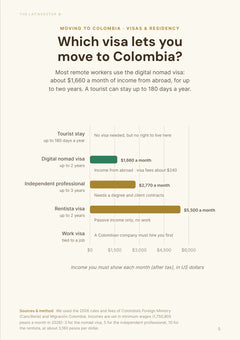
Colombia's digital-nomad visa also remains unusually accessible by international standards. The Foreign Ministry requires qualifying applicants to work remotely for foreign companies or operate an eligible digital business, hold health insurance and demonstrate income equal to at least three Colombian minimum monthly salaries during the previous three months.
The 2026 minimum salary is COP 1,750,905, so three salaries work out to COP 5,252,715 (about $1,650) a month. The visa can be granted for as long as two years and can include qualifying beneficiaries.
Foreigners from visa-exempt countries can also enter for shorter stays under the normal immigration rules, provided they are not being paid by a Colombian employer.
Remote work removes Bogotá's worst recurring problem—the commute—while preserving most of its advantages. That makes the city considerably more attractive to a remote employee than to someone who needs to cross it twice every weekday.
Is healthcare in Bogotá good enough for expats?
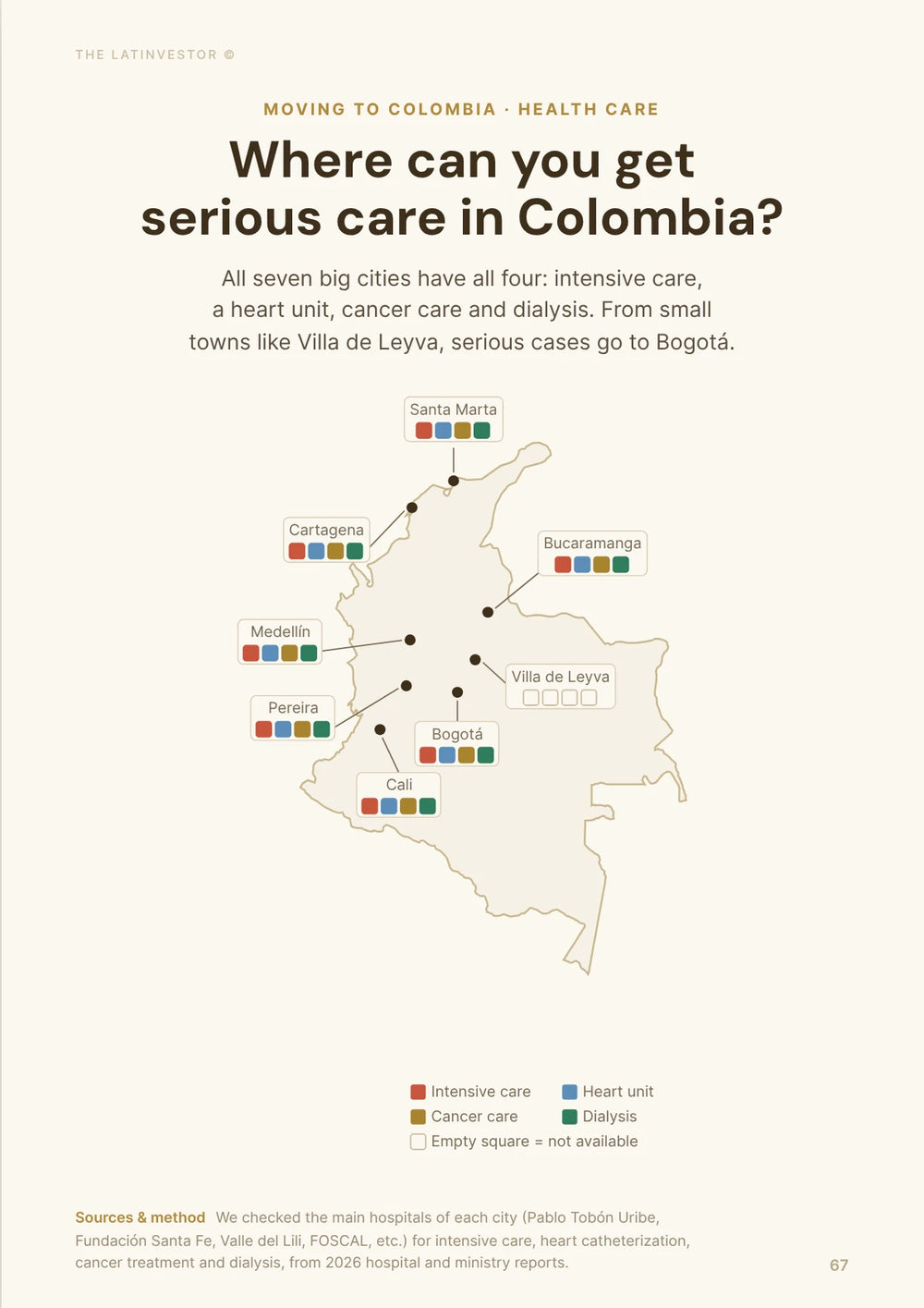
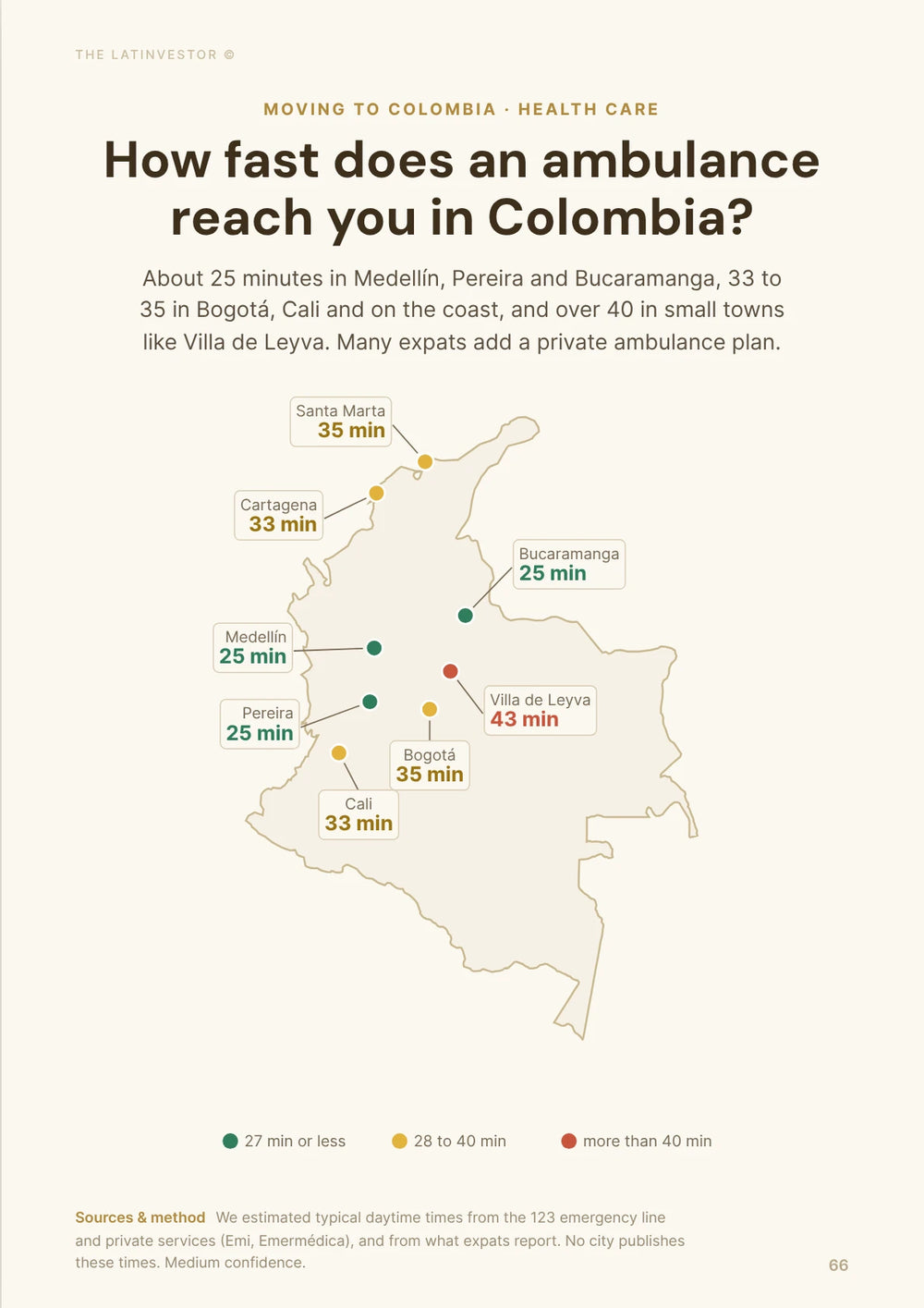
Bogotá has some of the best private healthcare in Latin America, so medical care should rarely be a reason for a well-insured expat to reject the city.
Fundación Santa Fe de Bogotá was ranked the best hospital in Colombia and third in Latin America in the 2026 IntelLat hospital ranking, published in September 2026. LaCardio came 8th and Clínica del Country 30th.
Bogotá also has LaCardio, Clínica del Country, Clínica Reina Sofía and other large private providers covering complex specialties. The depth of specialists available in the capital is difficult for smaller Colombian cities to match.
National healthcare statistics look less impressive. Colombia has very broad formal health coverage, but OECD comparisons continue to show lower satisfaction and weaker health outcomes than the organization's averages.
Those two observations can coexist. A foreigner with solid insurance and the ability to use leading private institutions experiences a much stronger part of the system than Colombia's national averages suggest.
Fundación Santa Fe even has a dedicated international-patient service and holds Magnet recognition for nursing excellence. For retirees, families or people who expect to need specialist medicine, Bogotá's healthcare infrastructure is a serious advantage.
Is Bogotá a good city for expat families?
Bogotá can be an excellent family base when the household can afford northern neighborhoods, private healthcare and international schooling.
The city has established American, British, French, German, Swiss and IB-oriented schools. That gives relocating families far more choice than they would find in most Colombian cities.
School location needs to drive the housing decision. A child attending school in northern Bogotá while a parent repeatedly travels toward the center can turn the family schedule into hours of traffic every day.
The same geography works in the family's favor when everything is clustered. Usaquén and other northern residential areas give access to parks, private hospitals, malls, restaurants, sports clubs and many of the city's international schools.
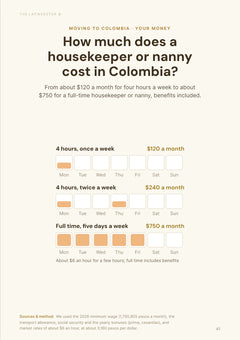
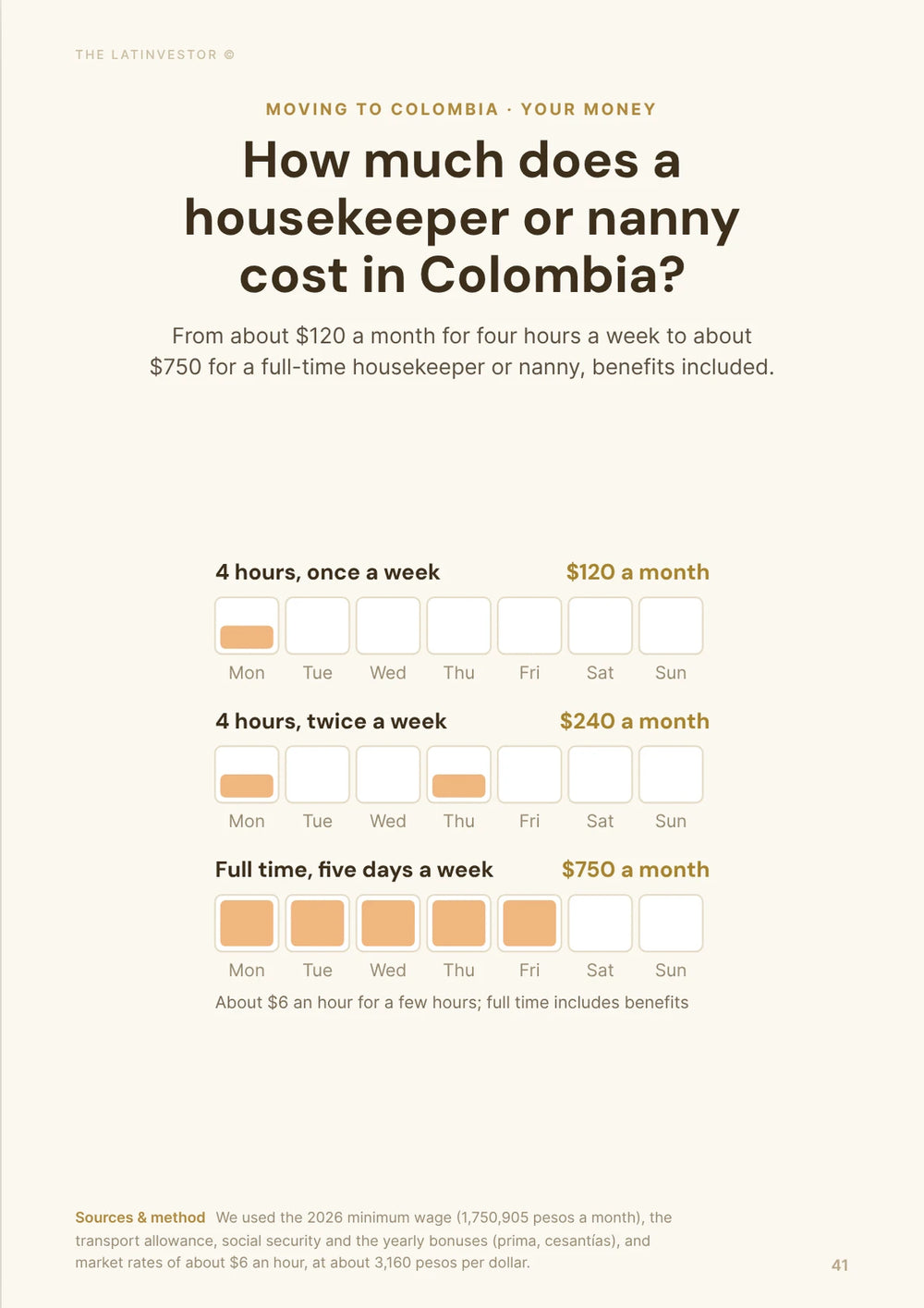
Domestic help and childcare are also substantially more affordable for a family earning in dollars or euros than in North America or Western Europe.
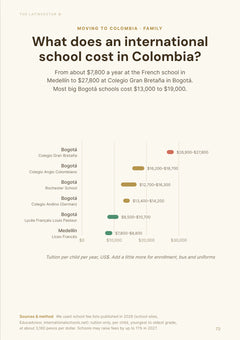
International education is where the cheap-Bogotá story usually falls apart. At Colegio Anglo Colombiano, for example, a year costs COP 51.1 million to COP 58.9 million (about $18,500) for 2026-2027, depending on the grade. Once a household pays premium rent and two private-school bills, the budget stops looking remotely comparable with that of a single remote worker in Chapinero.
| Family factor | Bogotá today | Our read |
|---|---|---|
| International school choice | Extensive | Major strength |
| Private healthcare | Excellent | Major strength |
| Family-friendly northern neighborhoods | Several | Strong |
| Domestic help | Relatively affordable | Valuable for foreign earners |
| School-run traffic | Potentially severe | Location must be planned carefully |
| International-school costs | High | Biggest budget surprise |
Is renting in Bogotá difficult for a foreigner?
Finding an apartment in Bogotá is easy; qualifying for the lease you actually want can be annoying without Colombian financial history.
Traditional leases often involve income documentation, a guarantor or a rental-insurance approval process. Someone who earns a comfortable foreign salary can therefore encounter more paperwork than expected simply because the income and credit history sit outside Colombia.
Furnished and medium-term rentals solve that problem. They also cost more.
That creates a recurring mistake among new arrivals: using Airbnb-style housing as the reference price for Bogotá and concluding that local rents are much higher than they really are.
We would usually rent furnished for the first few weeks, test the commute at different times of day and walk the surrounding streets during both daytime and evening. Only then would we sign a longer lease.
That approach is particularly useful in Chapinero, where two apartments separated by a few blocks can offer noticeably different noise, hills, traffic and street atmosphere.
Is Bogotá's air pollution bad enough to worry about?
Bogotá's air pollution is a genuine downside for long-term residents, especially anyone with asthma or other respiratory sensitivities.
The city's Environmental Observatory tracks PM2.5 across Bogotá and has made reducing the weighted annual concentration an explicit policy target.
Bogotá's own long-term clean-air planning has used a PM2.5 baseline around 16 micrograms per cubic meter. The World Health Organization's annual guideline is 5 micrograms per cubic meter, so Bogotá remains far from what would be considered ideal long-term exposure.
Air quality also changes significantly by area. Southwestern Bogotá tends to suffer more from heavy traffic, freight, industrial activity and particulate pollution than neighborhoods toward the greener eastern hills.
Bogotá's high elevation and local meteorological conditions can make pollution episodes more noticeable.
The environmental picture is better in other respects. The eastern mountains are immediately accessible from the city, Bogotá has a huge cycling culture, and municipal monitoring generally finds distributed tap water meeting Colombian drinking-water standards.
For a healthy resident the pollution problem may remain background friction. For someone choosing a city specifically around respiratory health, we would treat it as a meaningful reason to look elsewhere.
Is Bogotá better for expats than Medellín?
Bogotá is the better Colombian city for expats who want depth and variety, while Medellín still wins for people who mainly want an easier day-to-day lifestyle.
Bogotá has the stronger professional ecosystem, more specialized healthcare, a larger restaurant and cultural scene, more international institutions and Colombia's main air hub.
Medellín is much easier to like immediately. Its warmer climate, smaller scale and concentrated foreigner-friendly neighborhoods make the first few months simpler.
Bogotá starts making more sense once the time horizon gets longer. Someone building a career, raising children, using specialized medicine or wanting the cultural range of a national capital can eventually find Medellín limiting by comparison.
The reverse also holds. A remote worker who mainly wants pleasant weather, cafés, nightlife and a manageable routine may gain very little from Bogotá's extra scale while experiencing far more traffic.
Current cost comparisons no longer give Medellín an automatic win either. Expatistan now even puts Bogotá slightly below Medellín, at about COP 5.3 million a month for one person against COP 5.9 million (October 2026), although the comparison depends heavily on neighborhood and housing type.
We would pick Medellín for ease and Bogotá for depth.
Who actually enjoys living in Bogotá as an expat?
Bogotá works best for an expat who earns well, speaks some Spanish, likes big cities and can organize daily life within a small part of Bogotá.
Remote workers are particularly well positioned. They can live in Chapinero, Chicó or Usaquén, avoid daily peak-hour travel and spend foreign-currency income on services that remain relatively affordable.
Spanish-speaking professionals can get even more from the city because Bogotá has Colombia's deepest corporate, academic and cultural networks.
Families also have a strong case when the budget covers international schooling and housing close to school. Retirees who value access to major hospitals may prefer Bogotá over smaller Colombian cities despite the colder weather.
The fit deteriorates quickly for someone who hates urban vigilance, needs hot weather, expects to function entirely in English or plans a long cross-city commute.
| Expat profile | Bogotá fit | Main reason |
|---|---|---|
| Remote worker with foreign income | Excellent | Avoids commuting while keeping city advantages |
| Spanish-speaking professional | Excellent | Strong professional and social depth |
| Well-funded international family | Very good | Schools, healthcare and services |
| Retiree prioritizing specialist medicine | Good | Excellent private hospitals |
| English-only short-term nomad | Fair | Easy enough to function, harder to integrate |
| Hot-weather seeker | Poor | Bogotá stays cool all year |
| Long-distance daily commuter | Poor | Traffic becomes part of everyday life |
| Very security-sensitive resident | Poor | Constant street awareness can become tiring |
So, is Bogotá a good place to live as an expat?
Yes. Bogotá is currently a good place to live as an expat, and for the right person it can be one of the strongest long-term city options in northern South America.
We are more confident about that conclusion than a simple reading of Bogotá's reputation would suggest. The latest victimization survey shows three consecutive readings moving in the right direction. International tourism has recovered beyond its pre-pandemic scale. The city has one of Colombia's deepest international flight networks, a large remote-work ecosystem and private hospitals that rank among Latin America's best.
The weaknesses are equally measurable. An evening 10-kilometer drive can take almost 43 minutes. Roughly one person in seven in the latest Chamber of Commerce survey reported experiencing a crime. PM2.5 remains well above the WHO's ideal annual level. Premium housing also removes much of the bargain suggested by simplistic Colombia cost-of-living comparisons.
A lot therefore depends on how someone builds life inside the city.
Living in Chapinero or the north, working remotely, speaking Spanish and earning in a strong foreign currency removes several of Bogotá's biggest problems at the same time. Traffic becomes occasional rather than daily. Better neighborhoods reduce some security friction. Private healthcare becomes affordable. Restaurants, taxis, delivery services and domestic help remain accessible.
A resident commuting across Bogotá every day gets almost the opposite experience.
Our answer is a clear yes, with a narrower target than Bogotá's boosters sometimes suggest. Bogotá is especially good for expats who want a culturally deep, genuinely Colombian capital and are willing to trade some ease for everything that comes with a city of this scale.
For someone searching for effortless tropical expat life, Bogotá would be a strange choice. For someone who wants a serious city and knows how to choose the right neighborhood, it is currently a much better choice than its old reputation implies.
Our methodology
This article looks at whether Bogotá is a good place to live as an expat. We cover security, neighborhoods, cost, traffic, climate, culture, language, remote work, healthcare, family life, renting and air quality, and compare the city with Medellín.
We used recent first-hand data: the Bogotá Tourism Observatory for visitor numbers, the Chamber of Commerce’s 2025 victimization survey and the city’s Security Secretariat for crime, TomTom and the Mobility Observatory for traffic, Expatistan and Numbeo (October 2026) for costs and rents, and the 2026 IntelLat ranking for hospitals.
Visa rules come from Colombia’s Foreign Ministry: the digital nomad visa asks for three times the 2026 minimum wage of COP 1,750,905. School fees come from the schools’ own 2026-2027 fee schedules, and air quality from the city’s Environmental Observatory and the WHO.
We checked these figures in October 2026. Peso amounts are converted at about 3,175 pesos per US dollar (October 2026).
We kept unlike measures apart: crime against perceived safety, local prices against expat housing, visitor growth against long-term livability, and national health outcomes against the private hospitals an insured expat uses. Cost databases are crowd-sourced and rents are asking prices, so your own budget will depend on your neighborhood and habits.
Key sources used for this analysis include Bogotá Tourism Observatory's 2025 traveller study, 2026 tourism bulletins, Bogotá Chamber of Commerce victimization survey, Bogotá city crime data, TomTom Traffic Index, Bogotá Mobility Observatory, Expatistan, Numbeo, Colombian Foreign Ministry's visa guidance, OECD Colombia health profile, Fundación Santa Fe de Bogotá's IntelLat ranking material, Bogotá Environment Secretariat's Plan Aire, World Health Organization's PM2.5 guideline, Bogotá's official drinking-water monitoring, Bogotá Tourism Observatory figures to July 2026, the Chamber of Commerce’s 2025 survey report, Bogotá’s Security Secretariat 2025 report, Bogotá city government on Metro Line 1 progress (July 2026), Expatistan Medellín, the Health Ministry on the 2026 IntelLat ranking, the Foreign Ministry’s 2026 digital nomad visa rules, Colegio Anglo Colombiano 2026-2027 fees and Portafolio on the peso’s rise in 2026.